ENZYMES Enzymes are part of the group of

- Slides: 18
ENZYMES
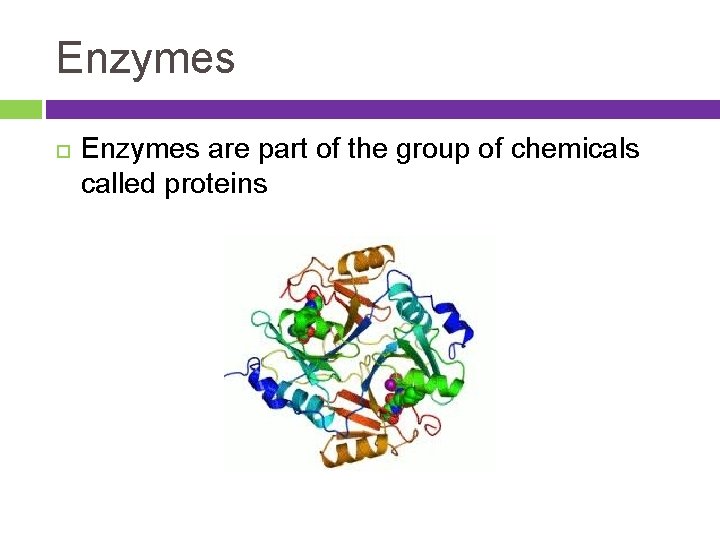
Enzymes are part of the group of chemicals called proteins
Enzymes - Enzymes are part of the group of chemicals called proteins There are 2 groups of protein: Fibrous long and stringy and form many of the structural elements of the body. (Eg. Collagen in muscles and tendons, keratin in hair, nails)
Enzymes - - - Enzymes are part of the group of chemicals called proteins There are 2 groups of protein: Fibrous long and stringy and form many of the structural elements of the body. (Eg. Collagen in muscles and tendons, keratin in hair, nails) Globular these are much-folded into a ball shape, and perform many of the regulatory processes of the body (eg. Hormones such as insulin, transporters such as haemoglobin) http: //www. youtube. com/watch? v=AFb. PHlh. I 13
Enzymes Act as biological catalysts, controlling the speed of chemical reactions in all organisms.
Enzymes Act as biological catalysts, controlling the speed of chemical reactions in all organisms. Without enzymes, metabolism would go too slowly for life to exist.
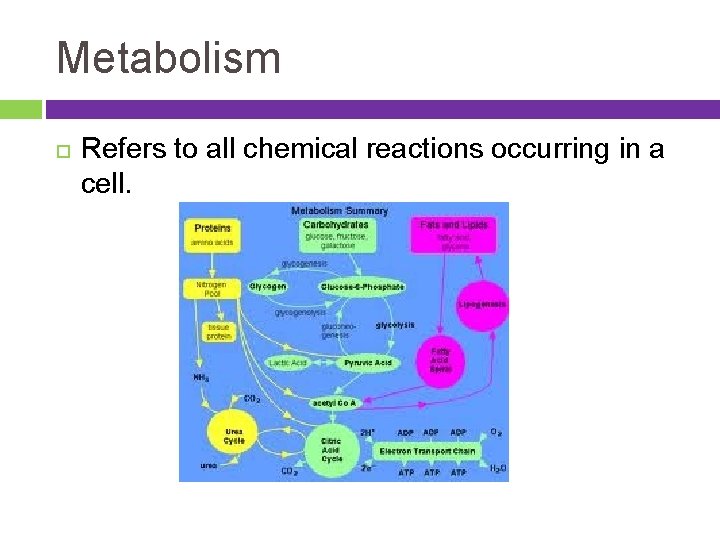
Metabolism Refers to all chemical reactions occurring in a cell.
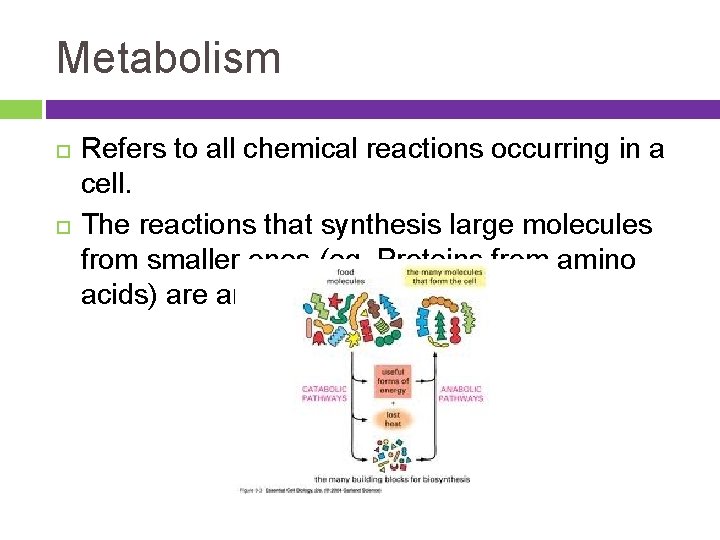
Metabolism Refers to all chemical reactions occurring in a cell. The reactions that synthesis large molecules from smaller ones (eg. Proteins from amino acids) are anabolism.
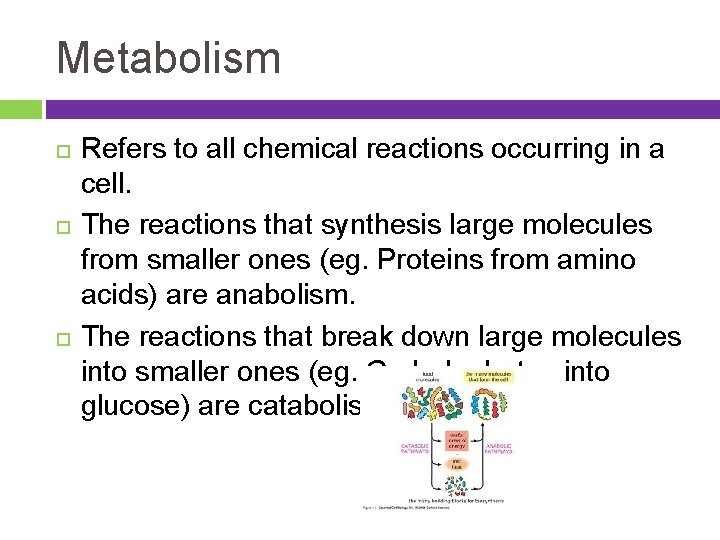
Metabolism Refers to all chemical reactions occurring in a cell. The reactions that synthesis large molecules from smaller ones (eg. Proteins from amino acids) are anabolism. The reactions that break down large molecules into smaller ones (eg. Carbohydrates into glucose) are catabolism.
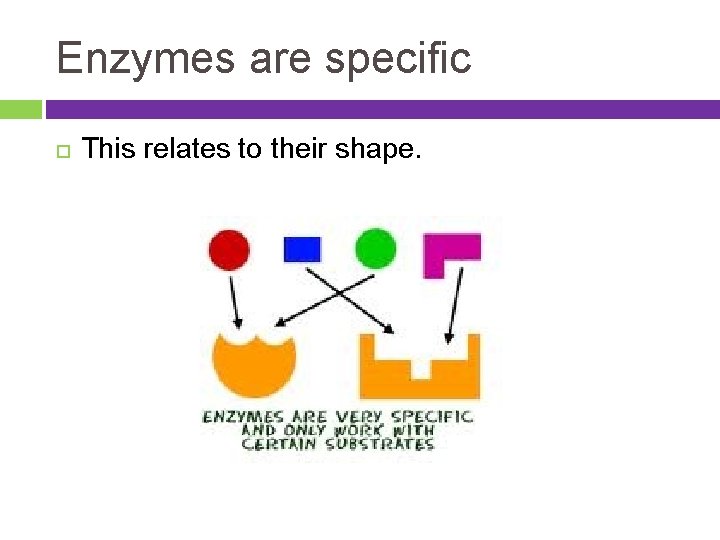
Enzymes are specific This relates to their shape.
Enzymes are specific This relates to their shape. Each enzyme has a particular shape, determined by the sequence of amino acids it is made of.
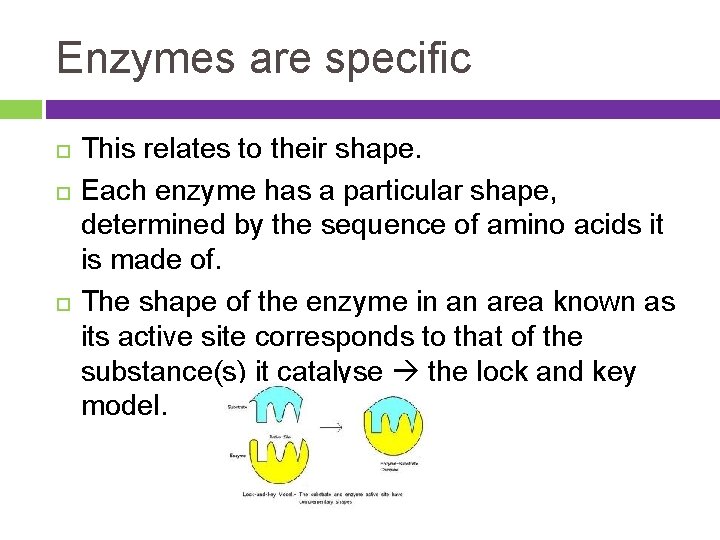
Enzymes are specific This relates to their shape. Each enzyme has a particular shape, determined by the sequence of amino acids it is made of. The shape of the enzyme in an area known as its active site corresponds to that of the substance(s) it catalyse the lock and key model.
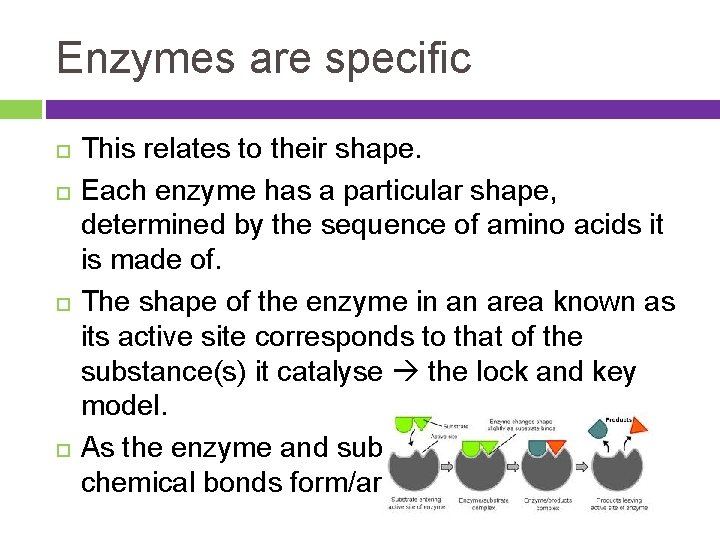
Enzymes are specific This relates to their shape. Each enzyme has a particular shape, determined by the sequence of amino acids it is made of. The shape of the enzyme in an area known as its active site corresponds to that of the substance(s) it catalyse the lock and key model. As the enzyme and substrate fit together, chemical bonds form/are broken.
Enzymes are specific This relates to their shape. Each enzyme has a particular shape, determined by the sequence of amino acids it is made of. The shape of the enzyme in an area known as its active site corresponds to that of the substance(s) it catalyse the lock and key model. As the enzyme and substrate fit together, chemical bonds form/are broken. The enzyme’s active site changes it’s shape slightly when combined with the substrate (called an induced fit).
Enzymes are specific This relates to their shape. Each enzyme has a particular shape, determined by the sequence of amino acids it is made of. The shape of the enzyme in an area known as its active site corresponds to that of the substance(s) it catalyse the lock and key model. As the enzyme and substrate fit together, chemical bonds form/are broken. The enzyme’s active site changes it’s shape slightly when combined with the substrate (called an induced fit). This distorts the substrate molecule(s) making reaction more likely.
http: //www. youtube. com/watch? v=Ei. MBsg. NZh -M http: //www. youtube. com/watch? v=ok 9 esggz. N 18&feature=related
Enzymes Are not consumed or broken down in reactions, so one enzyme molecules can catalyse the same reaction many times and do so at a very fast rate.
Enzymes Are not consumed or broken down in reactions, so one enzyme molecules can catalyse the same reaction many times and do so at a very fast rate. Because their shape is maintained by weak hydrogen bonds, enzymes are susceptible to denaturing at high temperatures. As the hydrogen bonds are broken, and the enzyme loses its shape, it can no longer catalyse the reaction.