Environmental Medicine Heat and Cold Related Illness and
- Slides: 48
Environmental Medicine: Heat and Cold Related Illness and Injuries S. Terez Malka, MD Joseph Turner, MD
Goals and Objectives Describe the spectrum of heat and cold-related illness and injuries from minor to severe Understand the pathophysiology of heat and cold-related illness Discuss evidence based diagnostic, preventative, and treatment modalities
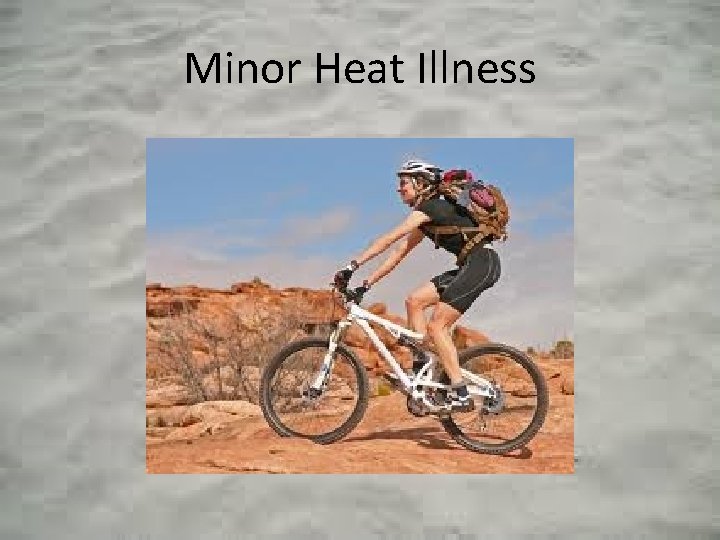
Minor Heat Illness
“She feels a tightness around her wrist as her watchband cuts into her flesh. Just beneath her skin surface her blood vessels swell to carry the hot blood away from her overheated organs to her sweat-cooled exterior. Her heart, meanwhile, must pump furiously to keep them running full. ” “She feels weak all over. Painful knots are forming in her biceps and calves. . . Heat cramps, perhaps the result of sweating so much of the sodium from her body. Her heart can’t pump quite enough blood to keep all her dilated veins filled and still supply the oxygen demands of her muscles. Blood flow to her brain slackens. Her head pounds and she feels nauseous. ” -Peter Stark Last Breath
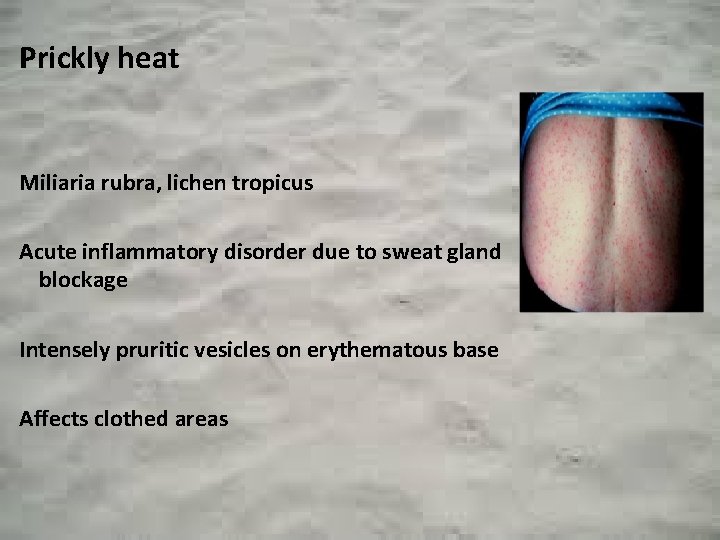
Prickly heat Miliaria rubra, lichen tropicus Acute inflammatory disorder due to sweat gland blockage Intensely pruritic vesicles on erythematous base Affects clothed areas
Prickly Heat Treatment Topical and/or systemic corticosteroids Chlorhexidene cream or lotion Salicylic acid if localized Oral erythromycin if pustular
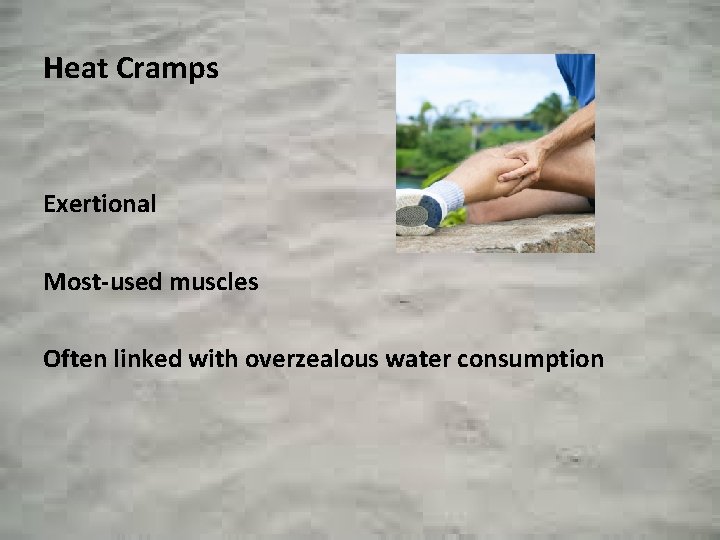
Heat Cramps Exertional Most-used muscles Often linked with overzealous water consumption
Heat Cramp Treatment Field: Oral rehydration solution or salt solution Hospital: Oral repletion or IV normal saline
Heat Edema Swelling of feet and ankles Typically seen in the elderly Treat with elevation and compression garments
Moderate Heat Illness
“Trickles of sweat swell to rivulets. Every nine seconds, each of her two million sweat glands suddenly contracts and squirts a few drops of moisture through her pores, each hour spilling out over half a gallon of sweat. She periodically drinks but the human body can’t absorb water from the stomach more rapidly than a little over a quart an hour. Even while drinking copiously, she’s slowly becoming dehydrated. ” “At an air temperature of over 95 degrees, sweating is the body’s only means of cooling itself, straining up the switchbacks, she’d reach heatstroke temperature within 10 to 12 minutes without the sweat that evaporates from her skin surface, assuming that her sweat evaporates easily, which on this day is a problem. ”
Heat Syncope As cutaneous vessels dilate, thoracic blood volume decreases Protracted standing leads to blood pooling in lower extremities Often seen immediately AFTER exertion
Heat Syncope Treatment Prevention! Flex leg muscles when standing Maintain euhydration Sit or lie down if prodromal vertigo, nausea, or weakness occur
Heat Exhaustion Water depletion or salt depletion Malaise, fatigue, headache, vertigo, nausea, cramps, presyncope, or syncope Normothermia or temperature < 40 degrees Normal mental status
Heat Exhaustion Treatment Oral or IV hydration Move to cool environment Rest Check electrolytes if severe or not improving
Preventing Heat-related Illness Light-colored, loose clothing Drink cool, lower osmol. Fluids (<200 m. Osm/L) The elderly and individuals with cardiac disease should avoid high temperatures and externally cool Use extra caution in high humidity
Acclimatization Daily exposure to exertion and heat for 1 -2 weeks àPlasma volume expansion àEarlier sweating àLowered sweat electrolyte concentration Process is delayed by salt intake
Severe Heat Illness
“Now her bike is tumbling down an embankment. . . It might have been different if she’d landed in the shade. Though her skin glistens with sweat, the high humidity prevents it from evaporating and cooling her. As she lies comatose in the hot sun her systems fail so profoundly and in so many ways it is difficult to track. 105. . . 106 degrees. . . Seizures ripple through the muscles of her arms and legs and torso. 107. . . 108. . . 109, she vomits repeatedly. 110. . . 111, the heat begins to destroy her cells. Proteins melt and distort, and the mitochondria degenerate. The heat sears the fine tubes insider her kidneys and kills liver cells. . . It causes hemorrhaging through her body. . . And damages the thin sheathing inside her blood vessels. . . triggering the clotting cascade. Her blood begins to coagulate inside her veins and arteries. ”
Heat stroke Temperature > 40. 5 and CNS dysfunction “It does not take long to either boil an egg or cook neurons. ” -D. Hamilton
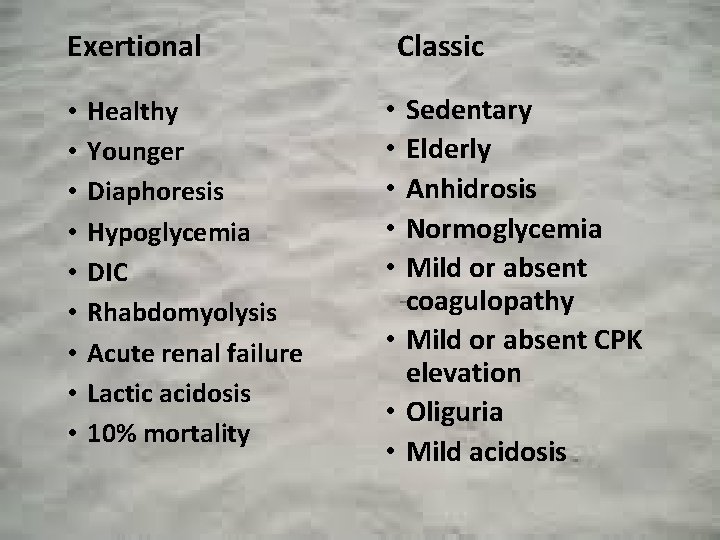
Exertional • • • Healthy Younger Diaphoresis Hypoglycemia DIC Rhabdomyolysis Acute renal failure Lactic acidosis 10% mortality Classic Sedentary Elderly Anhidrosis Normoglycemia Mild or absent coagulopathy • Mild or absent CPK elevation • Oliguria • Mild acidosis • • •
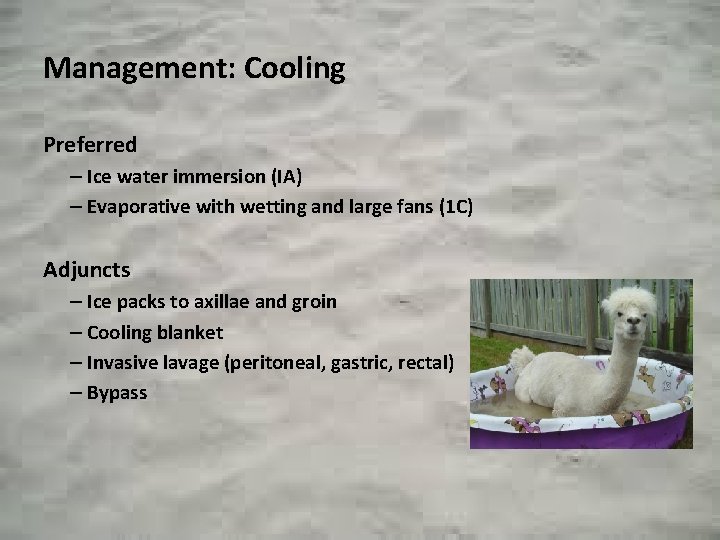
Management: Cooling Preferred – Ice water immersion (IA) – Evaporative with wetting and large fans (1 C) Adjuncts – Ice packs to axillae and groin – Cooling blanket – Invasive lavage (peritoneal, gastric, rectal) – Bypass
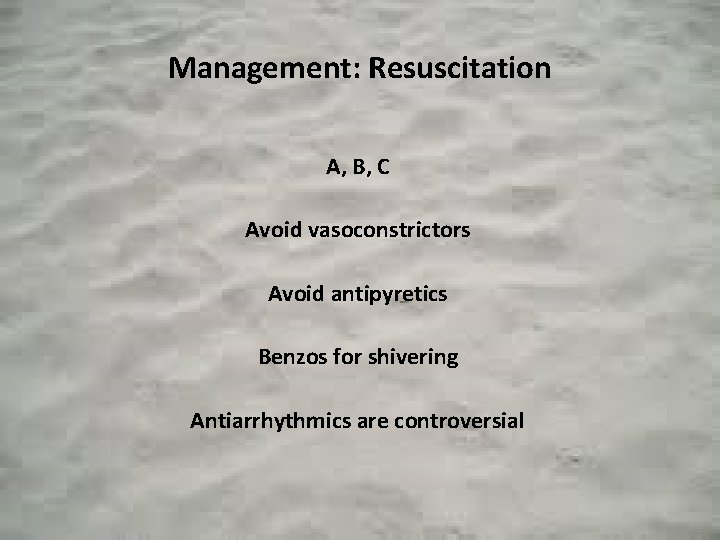
Management: Resuscitation A, B, C Avoid vasoconstrictors Avoid antipyretics Benzos for shivering Antiarrhythmics are controversial
Heat-related Illness Summary Consider heat stroke in all altered or febrile patients Prevention is critical Rapid cooling is the key therapy
Cold-Related Illness and Injury “The cold remains a mystery, more prone to fell men than women, more lethal to the thin and well muscled than to those with avoirdupois, and least forgiving to the arrogant and the unaware. ” -Peter Stark
Yahoo Answers “Has anyone heard of trench foot? If so could someone please explain to me wats the cure for it thanks. Im asking for a friend whose too embarrassed about his feet to get them seen to. ”
Yahoo Answers A. “It’s like athletes foot gone mad. ” B. “It would usually be amputated until the discovery of penicillin. ” C. “I think its when your foot gets really soggy and doesn’t get the opportunity to dry out and then it starts to go all manky. ” D. “I have this condition. In bed I have to have 2 pairs of socks on my feet. I have this problem since I was born. Sorry there is no cure. ”
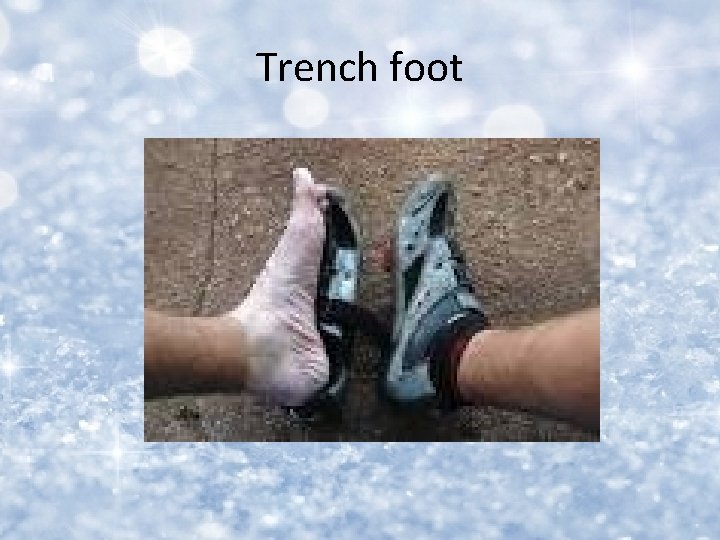
Trench foot
Trench Foot Pale, mottled, pulseless, immobile Anesthesia may be prolonged or permanent May progress to gangrene Treatment: prevention, oral prostaglandins
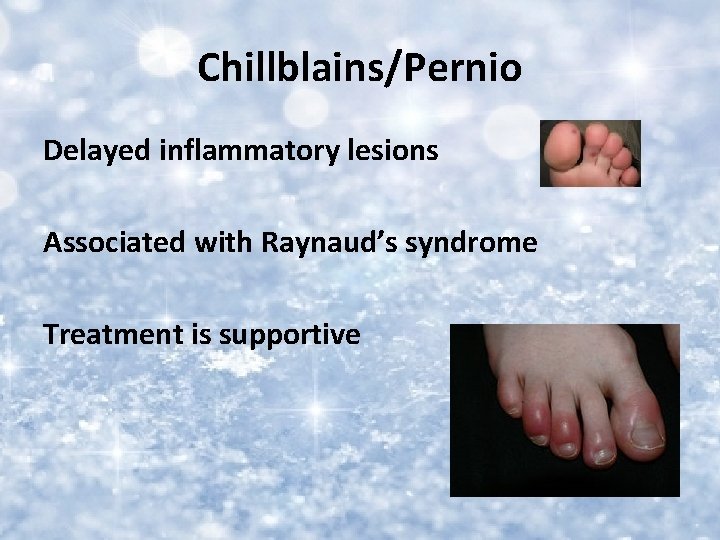
Chillblains/Pernio Delayed inflammatory lesions Associated with Raynaud’s syndrome Treatment is supportive
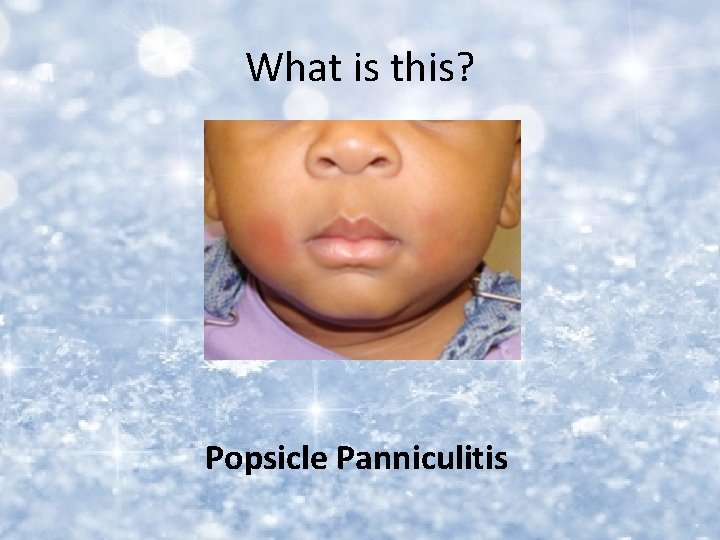
What is this? Popsicle Panniculitis
Yahoo Answers: How and why does frostbite occur? A. Dead cells B. Blood freezes C. There’s no way to know, that’s why doctors are for. D. Why don’t you google it, you IDIOT. Bonus question: Best treatment for frostbite? “Fire for fire, ice for ice. Some icy cool water should do the trick. ”
Frostbite Pathophysiology • Vasoconstriction • Extracellular ice crystals pull fluid from intracellular spaces • Endothelial destruction • Rewarming inflammatory cascade edema and local thrombosis
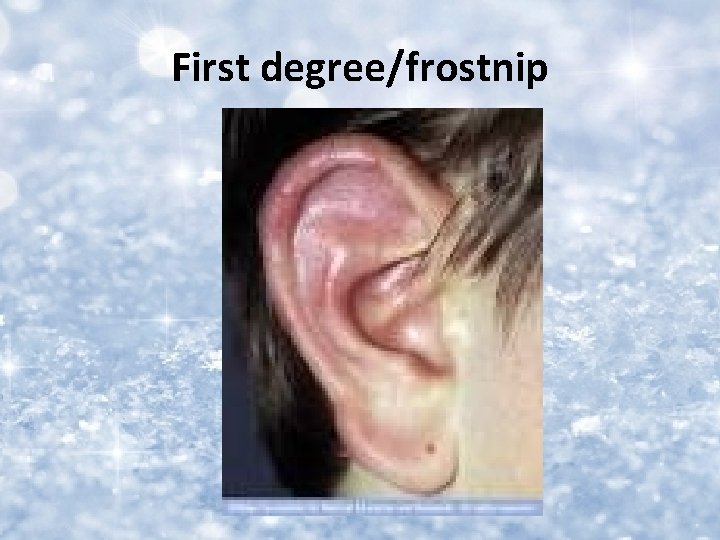
First degree/frostnip
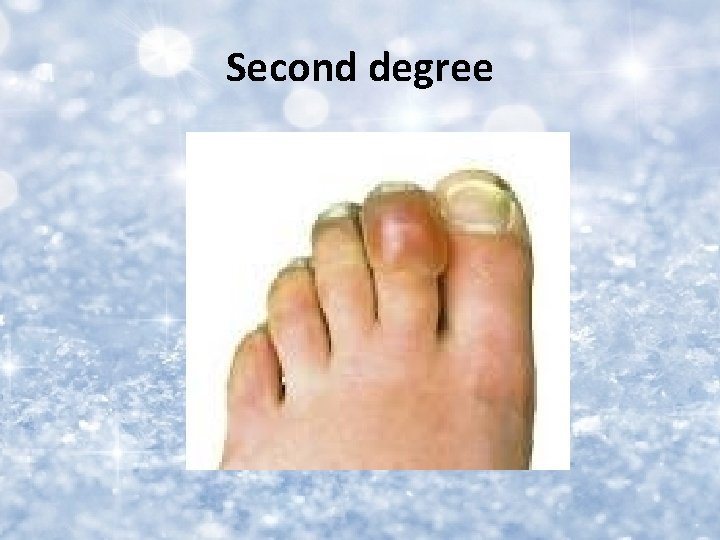
Second degree
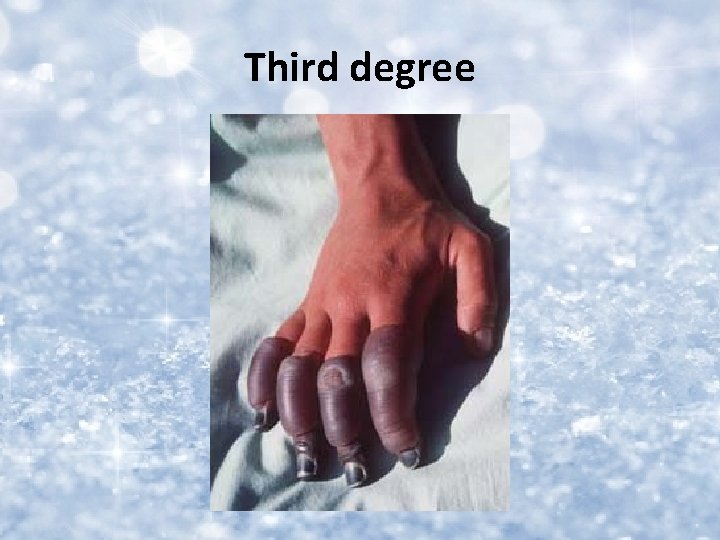
Third degree
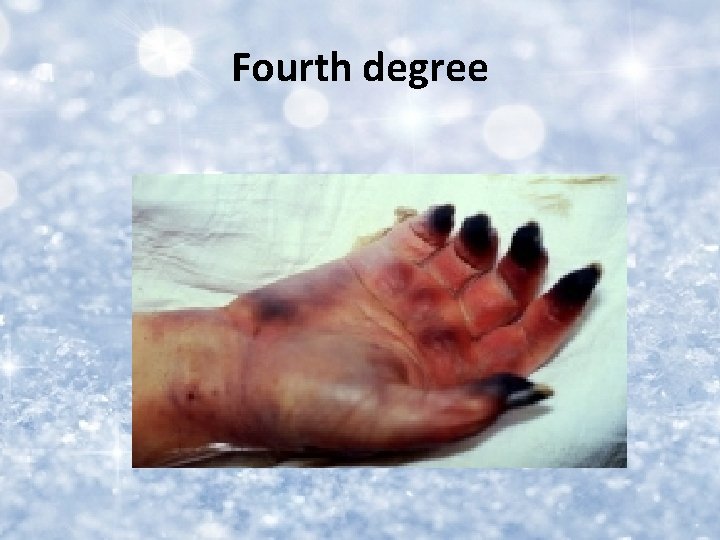
Fourth degree
Frostbite treatment Immobilize and protect from further injury Do not warm if refreezing is likely Stabilize core temperature first Immerse part in circulating 37 -42 degree water • Ibuprofen • Analgesia • Standard burn care following warming with delayed surgery (1 -2 weeks) • •
Frostbite tips and tricks • Mittens are warmer than gloves • Looser clothing is warmer than tight • Walking is the best way to warm cold feet
Hypothermia • 32 -37 degrees: shivering, vasoconstriction, increased metabolic rate • 24 -32 degrees: depressed metabolic rate • < 24 degrees: Autonomic compensatory mechanisms inactive
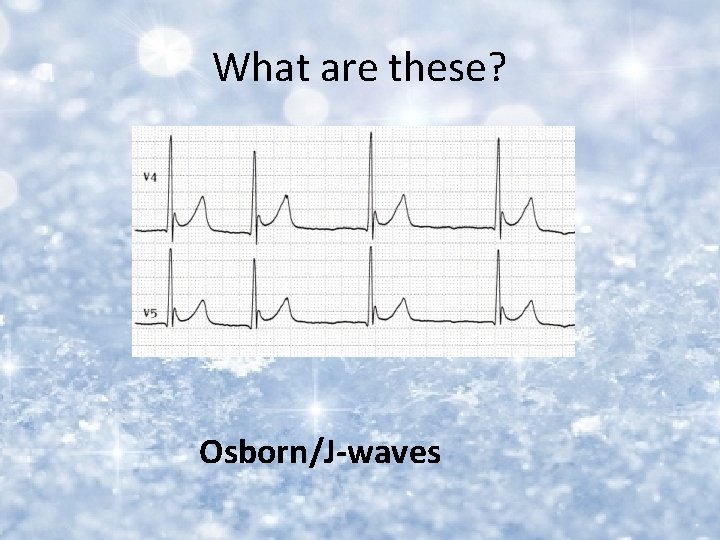
What are these? Osborn/J-waves
Clinical presentation • May be vague • Decreased activity, flat or less communicative, slurred speech, ataxia • Often associated with other injury or illness or with ingestion “No psychiatric disorder improves when the patient is cold. ”
Paradoxical undressing Uncertain cause Urban hypothermia victims may be mistaken for victims of sexual assault.
“Patients who are cold, stiff, and cyanotic, with fixed pupils and inaudible heart tones. . . continue to be successfully resuscitated. Embarrassingly, some patients still recover completely in the morgue. ” -Rosen’s
Management/treatment • Trauma precautions • A, B, C’s • Rewarming – “Early concern with Active External Rewarming was voiced by Duguid and colleagues in 1961, when 20 of their 23 patients died. ” – Core rewarming with warm IV fluids and warm oxygen FIRST – External warming with warm blankets, Bair hugger, local heat devices – Severe cases require thoracic, gastric, or rectal lavage, or bypass.
Afterdrop “In 1980, 16 shipwrecked Danish fishermen were hauled to safety after an hour and a half in the frigid North Sea. They then walked across the deck of the rescue ship, stepped below for a hot drink, and dropped dead, all 16 of them. ”
Hypothermia Summary • “You’re not dead until you’re warm and dead. ” • Consider hypothermia in all altered patients • Warm quickly and aggressively • Warm inside to out • You’re not done when they’re warm: assess for comorbidities