Documentation for CPST For North Community Clinicians Jody




- Slides: 36
Documentation for CPST For North Community Clinicians Jody Davis June 2015
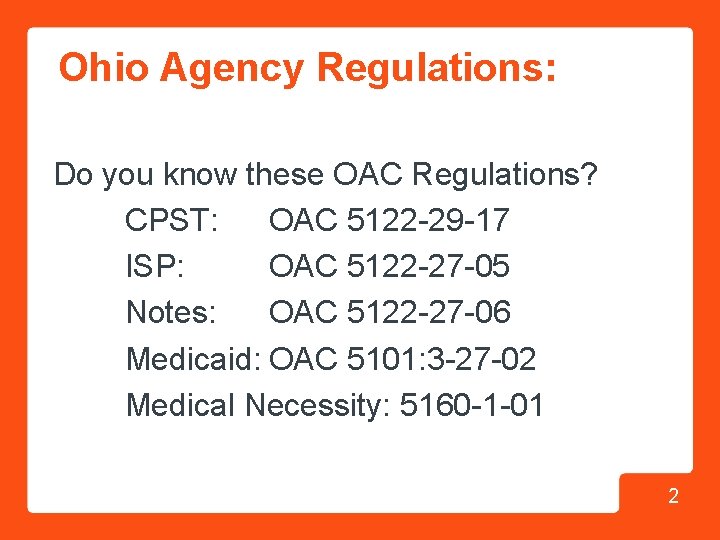
Ohio Agency Regulations: Do you know these OAC Regulations? CPST: OAC 5122 -29 -17 ISP: OAC 5122 -27 -05 Notes: OAC 5122 -27 -06 Medicaid: OAC 5101: 3 -27 -02 Medical Necessity: 5160 -1 -01 2
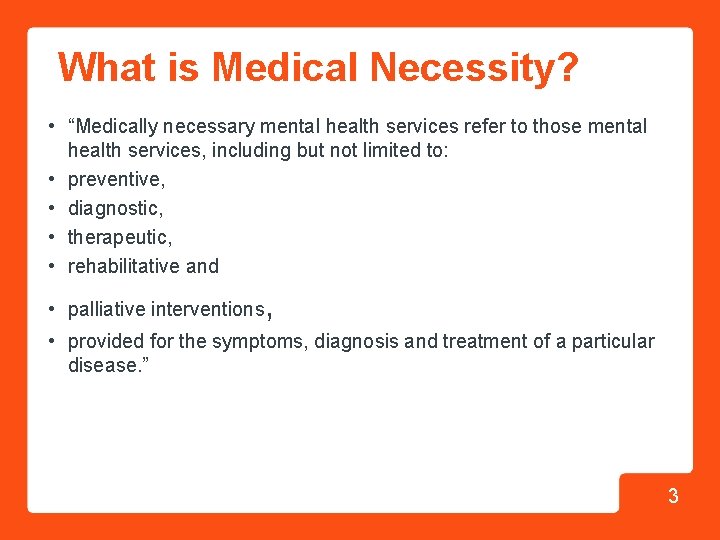
What is Medical Necessity? • “Medically necessary mental health services refer to those mental health services, including but not limited to: • preventive, • diagnostic, • therapeutic, • rehabilitative and • palliative interventions, • provided for the symptoms, diagnosis and treatment of a particular disease. ” 3
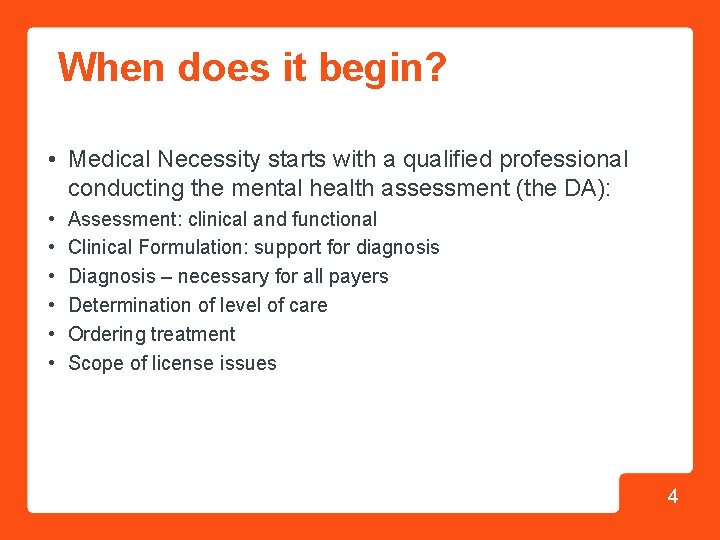
When does it begin? • Medical Necessity starts with a qualified professional conducting the mental health assessment (the DA): • • • Assessment: clinical and functional Clinical Formulation: support for diagnosis Diagnosis – necessary for all payers Determination of level of care Ordering treatment Scope of license issues 4
How do we do it? • Clinical needs are identified through the mental health assessment • Clinical needs are transferred to the consumer's Individual Service Plan • Progress toward goals are documented in the consumer's progress notes • Interventions: • Interventions to assist the client in their goals are considered “medically necessary”, when documented in relationship to their mental health symptoms. • Medically necessary services must be documented as such to be Medicaid reimbursable. • Documentation that a service has been provided is not sufficient to document medical necessity. 5
The Medicaid Service limits • The service limits for non ACA clients is: • • 104 hours (416 units) of CPST per fiscal year. 24 hours (24 units) of Pharmacologic Management per fiscal year. 52 hours (208 units) of Individual/Group Counseling per fiscal year. 2 hours (2 units) of Diagnostic Assessment by an physician per fiscal year. • 4 hours (4 units) of Diagnostic Assessment by a non-physician per fiscal year. • 60 days of Partial Hospitalization per fiscal year. 6
Good Documentation. It’s Worth The Effort • • Enhances approval rates. Ensures timely processing. Decreases the number of state hearings. Satisfies funding needs. The current reimbursement rate is $21. 33 per 15 minutes or $85. 32 hourly. – 50 hours = $4, 266. 00 – 100 hours = $8, 532. 00 – 150 hours = $12, 798. 00
Utilization of CPST in MITS If you are an individual who has access to MITS, you are able to view how many CPST units have been paid out to the current date for a recipient. 1. Log onto the MITS portal and select “Eligibility Search. ” 2. Enter in the client identification information and the procedure code H 0036. 3. Enter today’s date in the “From DOS” and “To DOS” fields and then click the “Search” button. 4. Look towards the bottom of the page and see the “Service Limitation” panel. This shows how many hours of CPST have been paid out for the recipient our of their total annual benefit of 104 hours. If the amount is at 104 hours, any further claims would be denied for payment in MITS. Providers must then seek approval of additional hours by submitting a Prior Authorization Request. (see handout) 8
Utilization in MITS 9
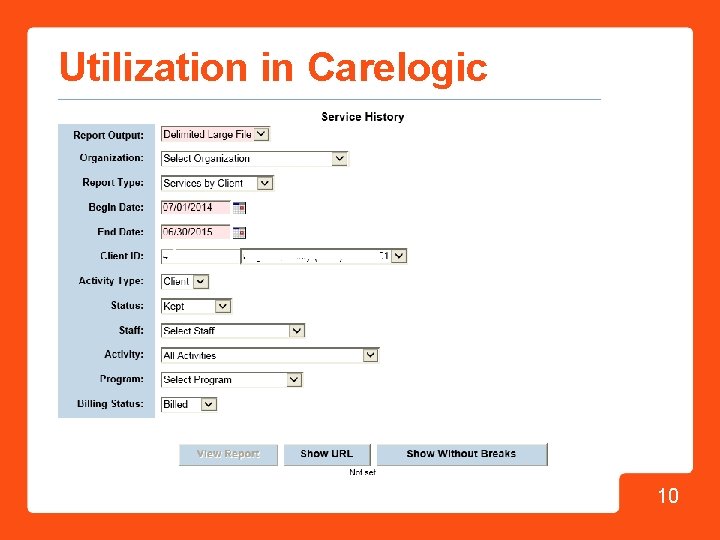
Utilization in Carelogic 10
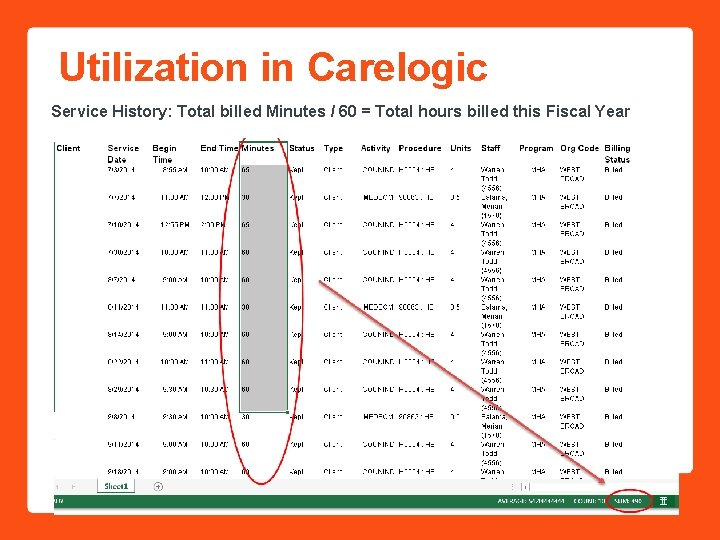
Utilization in Carelogic Service History: Total billed Minutes / 60 = Total hours billed this Fiscal Year 11
Good Clinical Documentation - Provide specific, individualized examples of client functioning and progress, as well as the CPST functions and interventions provided by your agency. - Treatment interventions must be more specific than the generalized interventions on the Treatment Plan. - Provide specific, individualized information. Avoid over use of generalizations i. e. Assist, Educate, Teach coping skills - Avoid non-specific language i. e. Empower - Avoid providing a lot of past history. If some history is determined necessary, it should be limited and directly pertain to today’s medically necessary services. - “If it’s not documented, it never happened”
Clinical Documentation Teaching Modality The emphasis an agency places on teaching new skills to improve independence and overall functioning must be evident. i. e. A note that repeatedly states that the worker “assists” the recipient does not represent skill development efforts. - - Indicating that your agency “teaches coping skills” does not provide adequate information for comprehensive review. Rather, individualized examples of how coping skills are taught, specific to the recipient’s needs and functioning level, must be provided.
What are Billable CPST Activities? • • • Assessment of needs Managing basic needs Daily living skills / ADLs Coordination of ISP Symptom Monitoring Crisis Management Advocacy and outreach Education and training (client directed) Barriers to education and employment Positively impact own environment 14
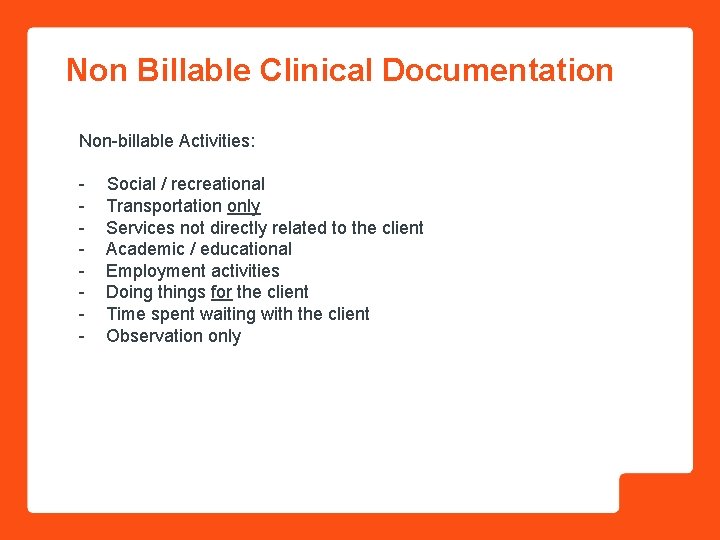
Non Billable Clinical Documentation Non-billable Activities: - Social / recreational Transportation only Services not directly related to the client Academic / educational Employment activities Doing things for the client Time spent waiting with the client Observation only
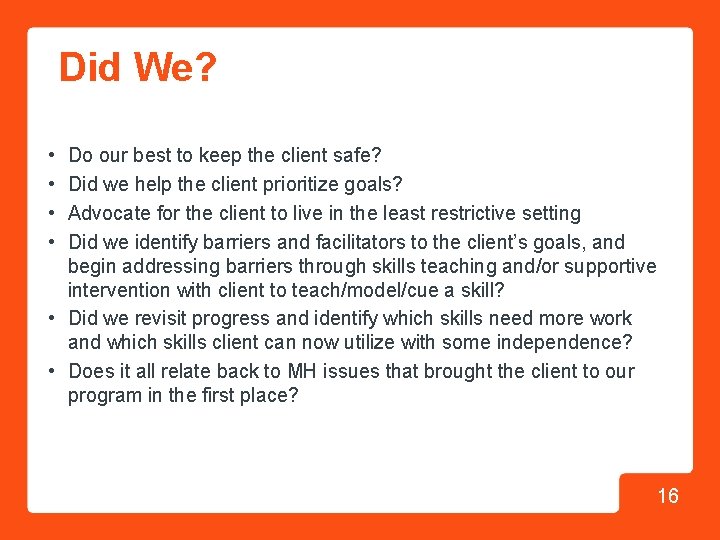
Did We? • • Do our best to keep the client safe? Did we help the client prioritize goals? Advocate for the client to live in the least restrictive setting Did we identify barriers and facilitators to the client’s goals, and begin addressing barriers through skills teaching and/or supportive intervention with client to teach/model/cue a skill? • Did we revisit progress and identify which skills need more work and which skills client can now utilize with some independence? • Does it all relate back to MH issues that brought the client to our program in the first place? 16
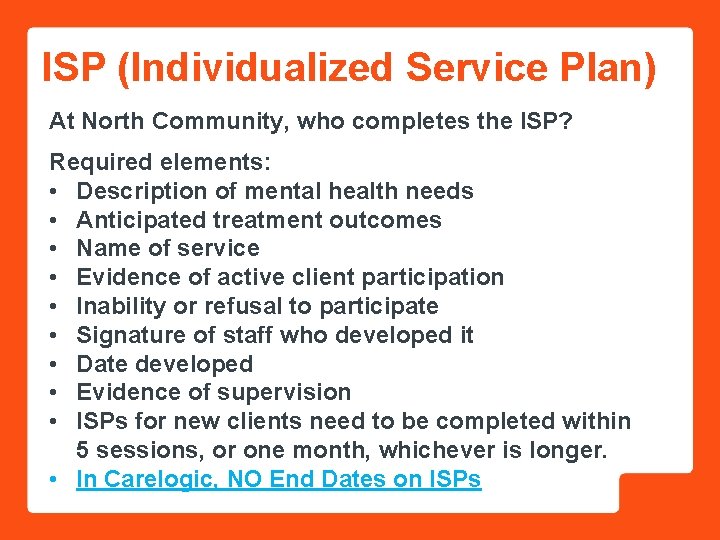
ISP (Individualized Service Plan) At North Community, who completes the ISP? Required elements: • Description of mental health needs • Anticipated treatment outcomes • Name of service • Evidence of active client participation • Inability or refusal to participate • Signature of staff who developed it • Date developed • Evidence of supervision • ISPs for new clients need to be completed within 5 sessions, or one month, whichever is longer. • In Carelogic, NO End Dates on ISPs
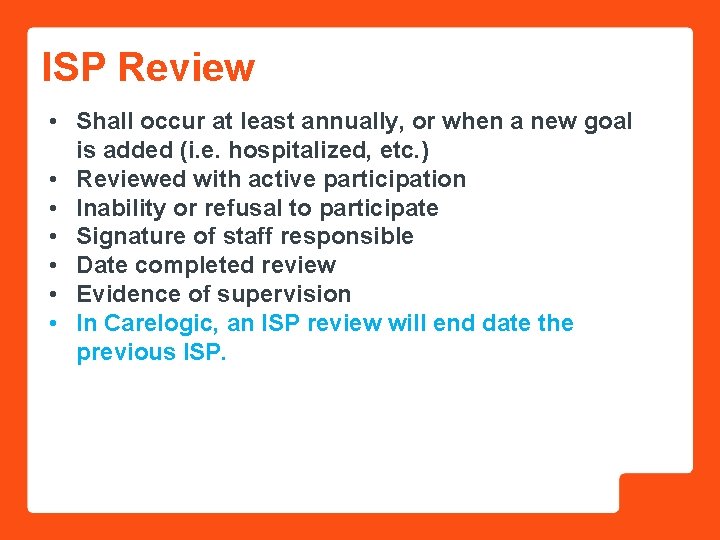
ISP Review • Shall occur at least annually, or when a new goal is added (i. e. hospitalized, etc. ) • Reviewed with active participation • Inability or refusal to participate • Signature of staff responsible • Date completed review • Evidence of supervision • In Carelogic, an ISP review will end date the previous ISP.
Progress Notes • • Tied to ISP goals and objectives Describe the intervention specified in the service plan Progress toward the specified goals and objectives Client progress or lack of progress Significant changes or events Recommendations for modifications to the ISP, if applicable Goal is signed by End of Day, must be signed within 24 hours “Recovery is what clients do. Facilitate recovery is what we do. ” 19
Type of Progress Notes • CSP Progress Note • Counseling Progress Note • Who/When are each one of these used?
Ethics • “Recognition that case management is guided by the principles of autonomy, beneficence, non-maleficence, and justice. ” (Code of Professional Conduct for Case Managers, 2009) • Other principles that are relevant to case management? • Social benefit • Accountability
Ethics Application • • Name some ways that you can enhance (or enact): Your client’s autonomy Social benefit via interactions with your client Justice as a case manager Non-maleficence and beneficence Accountability between you and your client? Between you and your colleagues?
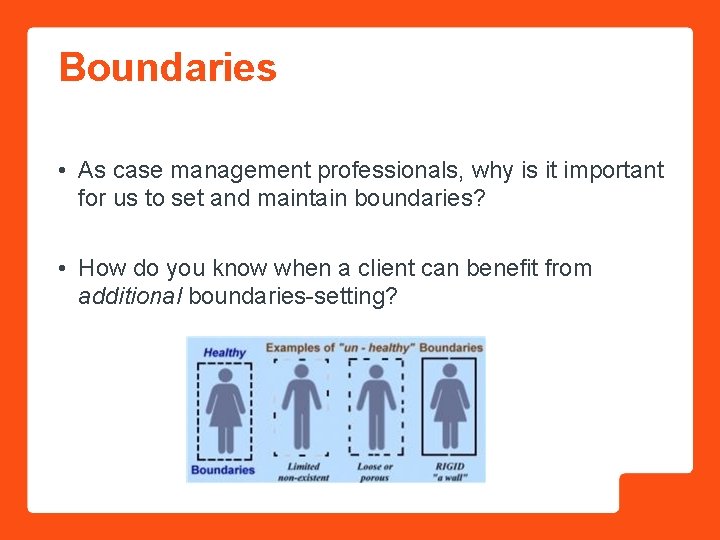
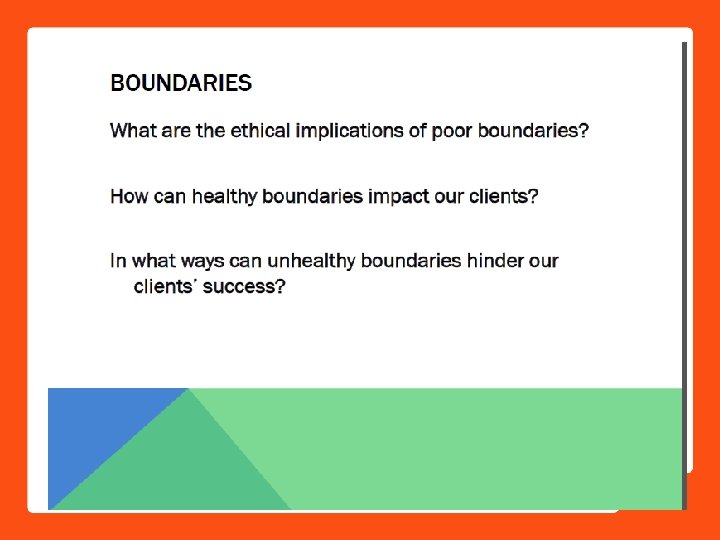
Boundaries • As case management professionals, why is it important for us to set and maintain boundaries? • How do you know when a client can benefit from additional boundaries-setting?
BURNOUT “…a state of chronic stress that leads to physical and emotional exhaustion, cynicism and detachment, and feelings of ineffectiveness and lack of accomplishment. ” (Carter, 2013)
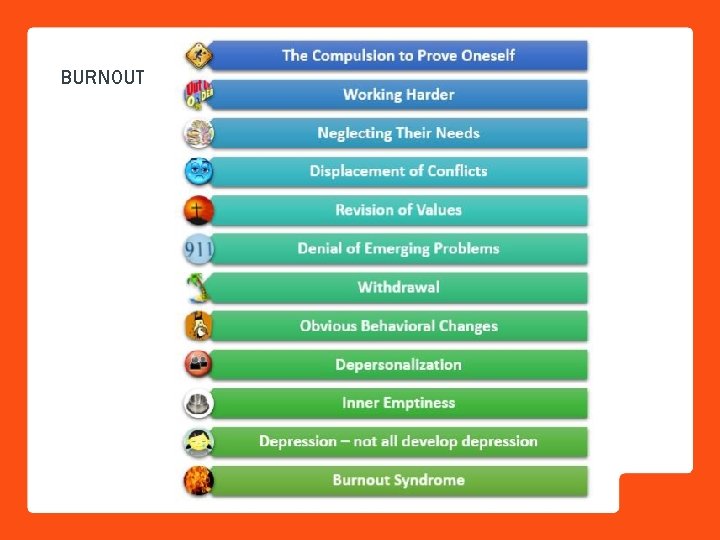
BURNOUT
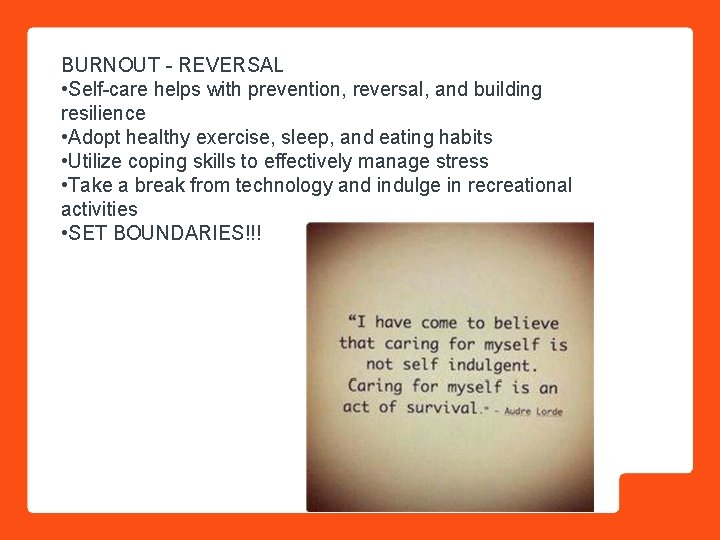
BURNOUT - REVERSAL • Self-care helps with prevention, reversal, and building resilience • Adopt healthy exercise, sleep, and eating habits • Utilize coping skills to effectively manage stress • Take a break from technology and indulge in recreational activities • SET BOUNDARIES!!!
Clients recover more quickly when: • • • They have hope They have insight Have meaningful activities Spirituality is considered Culture is understood, differences valued Education, Socialization needs are identified Holistic approaches considered Trusting relationships are developed Strengths focus, best practices merged Collaborate on the plan Family, Community involvement when possible Clinicians do what they say they’ll do, are “there” for clients 30
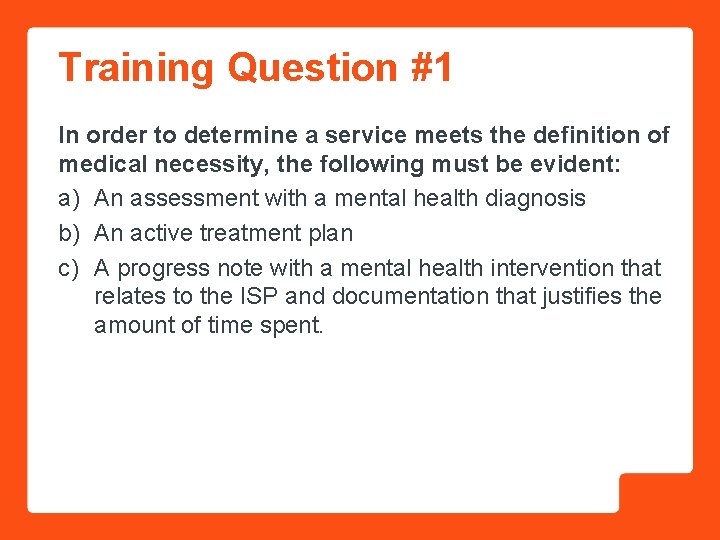
Training Question #1 In order to determine a service meets the definition of medical necessity, the following must be evident: a) An assessment with a mental health diagnosis b) An active treatment plan c) A progress note with a mental health intervention that relates to the ISP and documentation that justifies the amount of time spent.
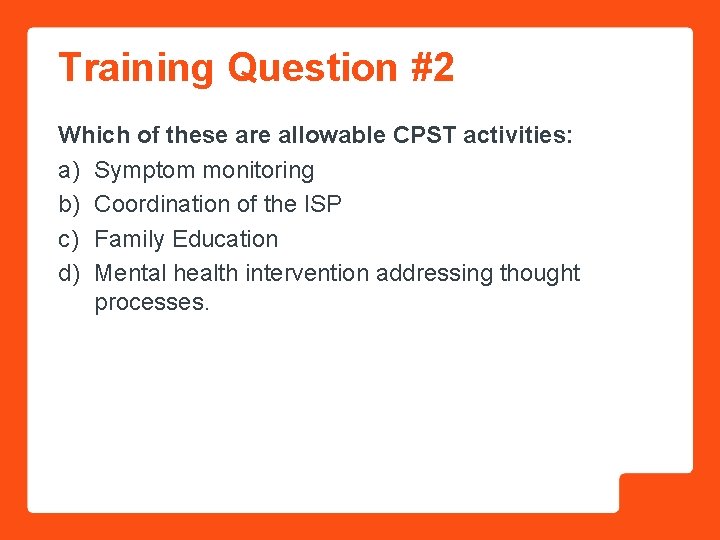
Training Question #2 Which of these are allowable CPST activities: a) Symptom monitoring b) Coordination of the ISP c) Family Education d) Mental health intervention addressing thought processes.
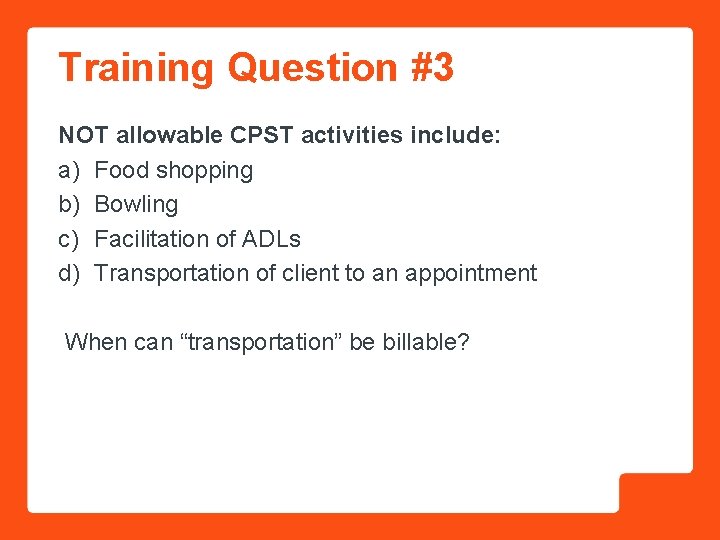
Training Question #3 NOT allowable CPST activities include: a) Food shopping b) Bowling c) Facilitation of ADLs d) Transportation of client to an appointment When can “transportation” be billable?
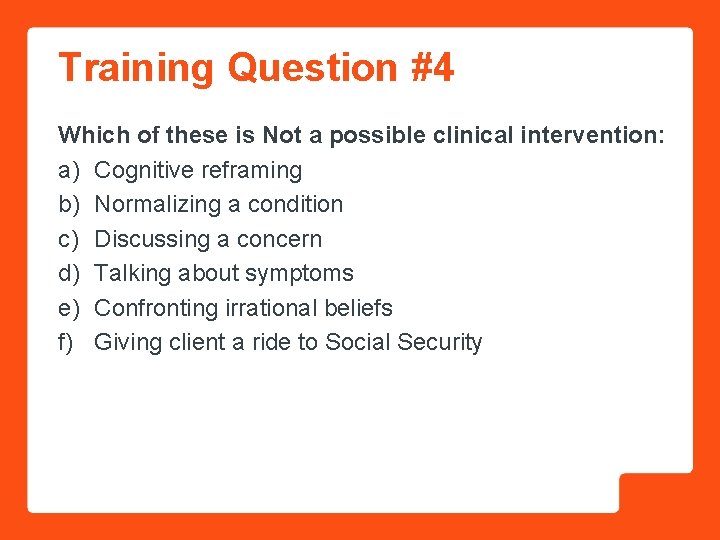
Training Question #4 Which of these is Not a possible clinical intervention: a) Cognitive reframing b) Normalizing a condition c) Discussing a concern d) Talking about symptoms e) Confronting irrational beliefs f) Giving client a ride to Social Security
Training Question #5 The following are good examples of measurable goals / objectives: a) Client will decrease symptoms b) Client will be able to identify 4 of their mental health symptoms c) Client will be able to name and describe the purpose of each of their medications. d) Client will learn 2 relaxation techniques and practice them 5 times a week e) Client will get better
Questions 36