DIPLOMA Ayurvedic Practitioners Course Module 2 3 rd

- Slides: 46
DIPLOMA Ayurvedic Practitioners Course Module 2 3 rd & 4 th November 2018 2
Asthma (Svasa Roga) & Kasa (Cough)
Svasa Roga (asthma) The Allopathic perspective
Svasa Roga (asthma) The Allopathic perspective • Common lung condition causes occasional breathing difficulties • Affects people of all ages • Often starts in childhood • Currently no cure • Treatments to keep the symptoms under control • Flu jab recommended if someone has asthma
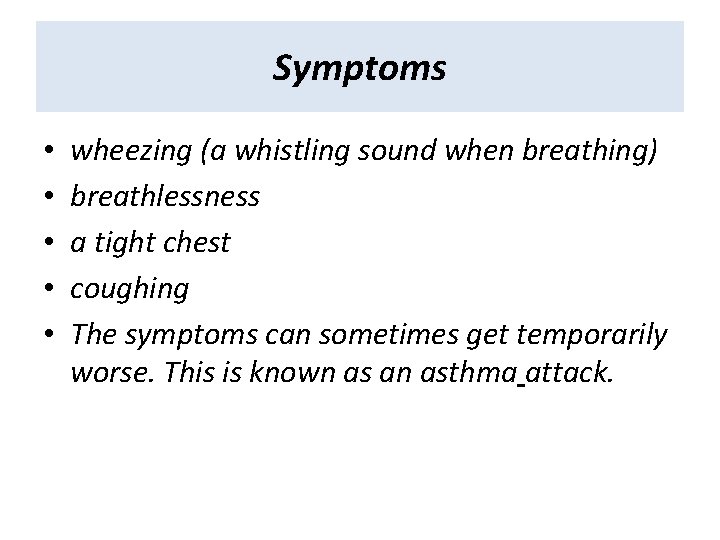
Symptoms • • • wheezing (a whistling sound when breathing) breathlessness a tight chest coughing The symptoms can sometimes get temporarily worse. This is known as an asthma attack.
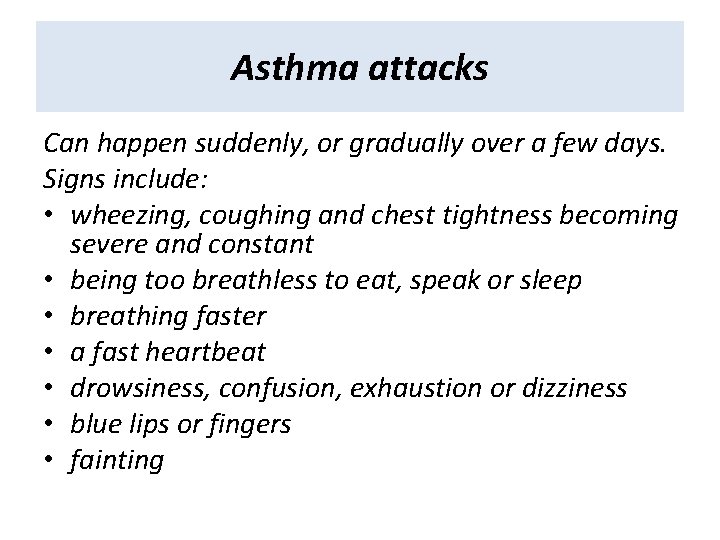
Asthma attacks Can happen suddenly, or gradually over a few days. Signs include: • wheezing, coughing and chest tightness becoming severe and constant • being too breathless to eat, speak or sleep • breathing faster • a fast heartbeat • drowsiness, confusion, exhaustion or dizziness • blue lips or fingers • fainting
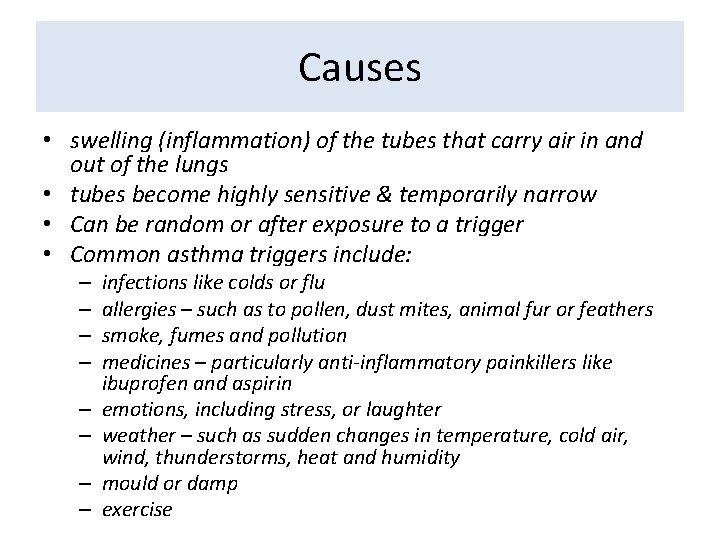
Causes • swelling (inflammation) of the tubes that carry air in and out of the lungs • tubes become highly sensitive & temporarily narrow • Can be random or after exposure to a trigger • Common asthma triggers include: – – – – infections like colds or flu allergies – such as to pollen, dust mites, animal fur or feathers smoke, fumes and pollution medicines – particularly anti-inflammatory painkillers like ibuprofen and aspirin emotions, including stress, or laughter weather – such as sudden changes in temperature, cold air, wind, thunderstorms, heat and humidity mould or damp exercise
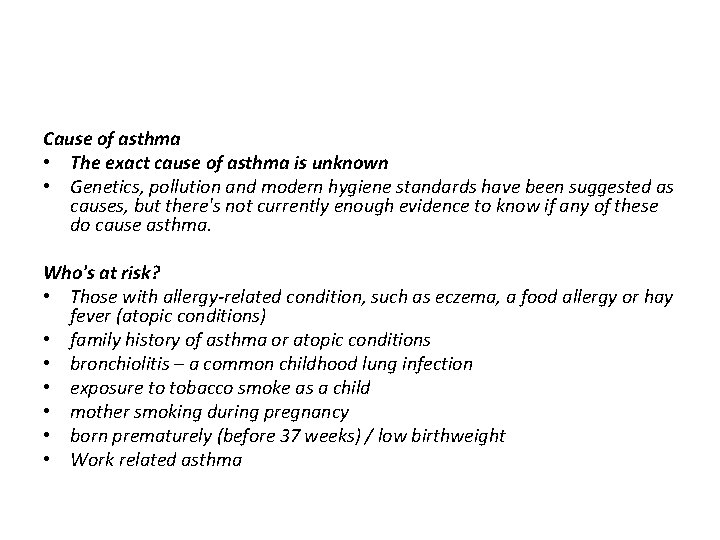
Cause of asthma • The exact cause of asthma is unknown • Genetics, pollution and modern hygiene standards have been suggested as causes, but there's not currently enough evidence to know if any of these do cause asthma. Who's at risk? • Those with allergy-related condition, such as eczema, a food allergy or hay fever (atopic conditions) • family history of asthma or atopic conditions • bronchiolitis – a common childhood lung infection • exposure to tobacco smoke as a child • mother smoking during pregnancy • born prematurely (before 37 weeks) / low birthweight • Work related asthma
Tests for asthma • Fe. NO test – breathe into a machine that measures the level of nitric oxide in your breath, which is a sign of inflammation in your lungs • Spirometry – blow into a machine that measures how fast you can breathe out and how much air you can hold in your lungs • peak flow test – blow into a handheld device that measures how fast you can breathe out
Complications • feeling tired all the time • stress, anxiety or depression • lung infections (pneumonia) • delays in growth or puberty in children • risk of severe asthma attacks, which can be life -threatening
Treatments • There's currently no cure for asthma, • Inhalers: – reliever inhalers (blue) • used when needed to quickly relieve asthma symptoms for a short time • can sometimes cause shaking or a fast heartbeat for a few minutes after they're used. – preventer inhalers • used every day to prevent asthma symptoms occurring • contain steroid medicine. • Can cause fungal infection (oral thrush) / hoarse voice / sore throat – Combination inhalers
Tablets • Leukotriene receptor antagonists (LTRAs) – • Theophylline – • Steroid tablets may be recommended if other treatments aren't helping. They can be taken either: Side effects: • increased appetite, leading to weight gain • easy bruising • mood changes • fragile bones (osteoporosis) • high blood pressure Injections For some people with severe asthma, injections given every few weeks can help control the symptoms. – – – • • Taken every day to stop your symptoms occurring if needed. Possible side effects include headaches and feeling sick. Steroid tablets – – • • LTRAs are the main tablets used for asthma. They also come in syrup and powder form – taken every day. Possible side effect include tummy aches and headaches. omalizumab (Xolair) mepolizumab (Nucala) reslizumab (Cinqaero) Surgery Bronchial thermoplasty – Thin, flexible tube into the throat and lungs and heat used on muscles around the airways to stop them narrowing
Complementary therapies • breathing exercises – Papworth method and the Buteyko method • TCM • acupuncture • ionisers – devices that use an electric current to charge molecules of air • manual therapies – such as chiropractic • homeopathy • dietary supplements There's little evidence to suggest many of these treatments help.
Svasa Roga (asthma) The Ayurvedic perspective
Svasa Roga (asthma) The Ayurvedic perspective 5 types of ‘asthma’ in Ayurveda: • Maha svasa • Urdhva svasa • Chinna svasa • Tamaka svasa • Ksudra svasa
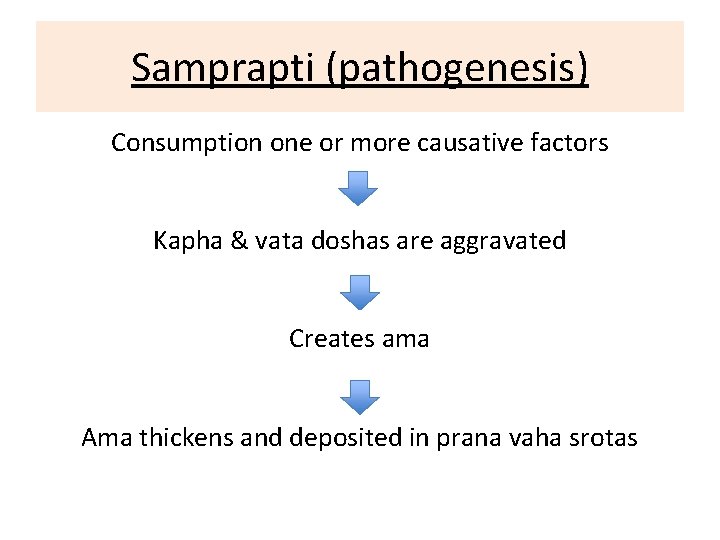
Samprapti (pathogenesis) Consumption one or more causative factors Kapha & vata doshas are aggravated Creates ama Ama thickens and deposited in prana vaha srotas
Maha svasa (Great or serious asthma) Signs and symptoms: • pain & discomfort when breathing • cannot achieve satisfaction with deep breathing • feels like they are lacking oxygen • can be loss of consciousness • eyes move from side to side • Unable to close mouth • obstructed passages of urine and stool • unable to speak • entire respiration can be completely arrested within a short period of time
Urdhva svasa (Upwards asthma) Signs and symptoms: • can exhale, but cannot inhale properly • lack of oxygen to the heart and brain • eyes directed upwards • eyes roll here and there • patient does not want to live or do anything • feel like the life force has been taken away, fearful causing them to grasp for air • dizziness and fainting can also occur
Chinna svasa (Broken asthma) Signs and symptoms: • broken respiration which suddenly stops • excruciating pain in the chest • distension of the abdomen (tympanitis) from accumulation of gas • Emaciation • vascularization (bleeding in the eyes)
Tamaka svasa (Allergic asthma) Signs and symptoms: • udana vata goes up - head and neck stiff • rhinitis, beginning like an attack of cold • “ghar” sound • excruciating pain in the head and chest • loss of conscious • dry cough • when phlegm is thrown out the patient feels relief • Sore throat • Unable to sleep, especially on their back • desire for hot things (fomentation drinks • If pitta is involved with kapha and vata present there is burning sensation, fainting and food is not properly digested
Ksudra svasa (Minor type of asthma): Due to excessive consumption of unctuous food and suppression of natural urges, this minor type of asthma may result. It is easily cured.
Chikitsa • • Hic-cups, bronchitis and asthma have almost identical treatment If bronchitis or allergic rhinitis is not treated, the condition may lead to asthma. Premonitory signs are always: pain in the cardiac region, constipation, everything connected with the stomach and vata - Prana vayu and Udana vayu get obstructed by kapha. Balancing kapha and vata is the main method treatment – – • • • To alleviate kapha and vata the “three pungent drugs” are useful In chronic stages we give piper longum (long pepper ) Simultaneously to promote strength, honey is useful since it acts against kapha Hinguwashataka reduces vata Correct the agni and reduce kapha. Agni deepana and samana vata must be balanced. At the same time attention should be given to reducing the excess kapha. For this, ama pachana can be used. Vomiting is useful to break the pathogenesis. If the stomach is stimulated (vagus nerve and parasympathetic) there is a sympathetic reflex in the lungs and mucous comes out. Obstructions in channels of circulation have to be cleared. Next remove constipation by – – – purgative or a laxative or enema, even if the patient does not feel constipated light food and avoid indigestion regulate bowel movements to be a little more frequent than normal
Special medicines • • • Powder to be taken at night: three parts haritaki, to one part rock salt to clear the bowels If there is more phlegm: mix haritaki and old jaggery (one year old or more) in equal quantity, take at bedtime and in the morning If kapha is aggravated: prescribe ginger powder and jaggery in equal quantity Jaggery by itself is good for asthma For bronchial asthma caused by allergy: fry 4 -5 teaspoons of turmeric with one teaspoon of butter, add a little jaggery or sugar powder, give 3 -5 times for acute attack Chayawanprash is good for asthma Ginger juice will melt phlegm Vasarista + dhatura: two teaspoons of this relieves, but has a very drying effect on the bodyasava with dhatura if there is dry cough, but only vasarista Vasa leaves + dhatura (leaves or seeds) made into an asthma cigarette, or burnt in a vessel and thus inhaled gives temporary relief Candramrta (moon nectar) will make the phlegm come out
Diet for asthma • Sweet or sour will aggravate kapha, therefore it is of no use • Pungent bitter and astringent properties should be given to the patient • The channels of circulation must not be obstructed, therefore avoid yoghurt, sour fruits and their juices and also bananas. • Sweet thing that do not aggravate kapha can be given in small quantities : Sugar, rice and chick peas. • Wheat is best for asthma patients. • Cows milk is good but goats milk is better in this case. • Avoid cold foods and favour plenty of freshly prepared food. • Buttermilk can be given as it has the reverse effect of yoghurt.
Kasa (cough) The Allopathic perspective
Kasa (cough) The Allopathic perspective How you can treat a cough yourself Most coughs go away on their own within 3 weeks. You should: • rest • drink plenty of fluids • drink hot lemon with honey (not suitable for babies & has a similar effect as cough medicines)
Pharmacist advice • cough syrups and lozenges GP advice if: • cough for more than 3 weeks (persistent cough) • very bad or quickly gets worse, eg. hacking cough or can't stop coughing • chest pain • Unexplained weight loss • swollen glands • hard to breathe • weakened immune system, eg. after chemotherapy or diabetes • coughing up blood
Causes • Mostly by cold or flu • smoking • heartburn (acid reflux) • allergies – eg. hay fever • infections like bronchitis • mucus dripping down the throat from the back of the nose
Kasa (cough) The Ayurvedic perspective
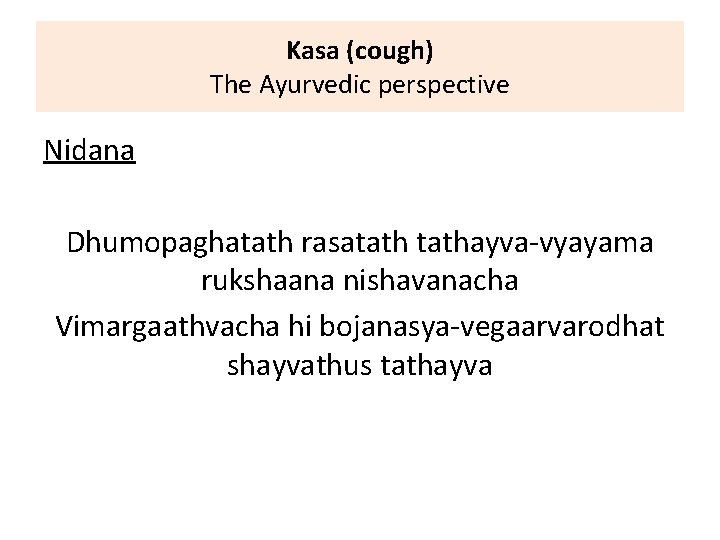
Kasa (cough) The Ayurvedic perspective Nidana Dhumopaghatath rasatathayva-vyayama rukshaana nishavanacha Vimargaathvacha hi bojanasya-vegaarvarodhat shayvathus tathayva
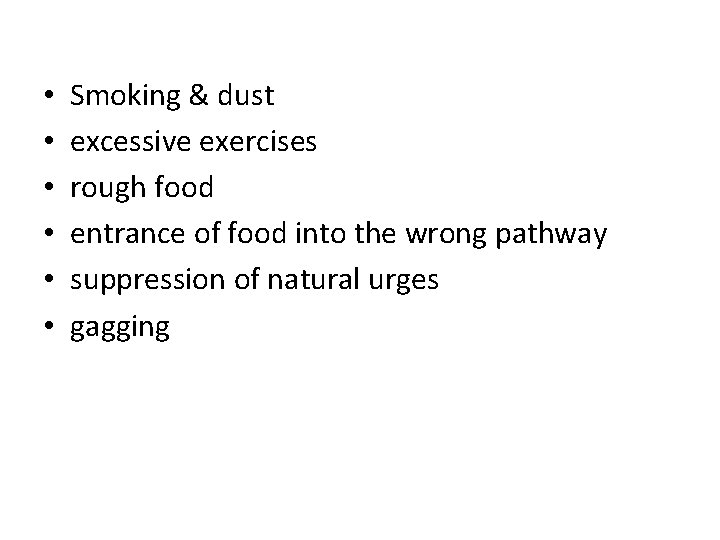
• • • Smoking & dust excessive exercises rough food entrance of food into the wrong pathway suppression of natural urges gagging
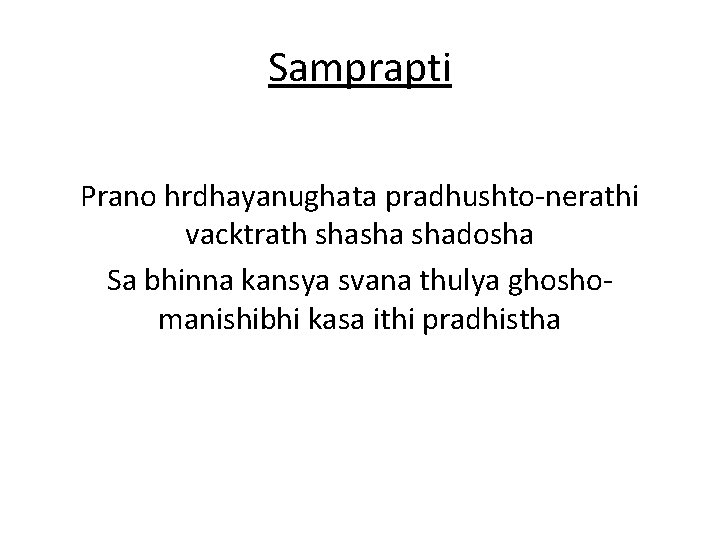
Samprapti Prano hrdhayanughata pradhushto-nerathi vacktrath shasha shadosha Sa bhinna kansya svana thulya ghoshomanishibhi kasa ithi pradhistha
• Because of the above causes • vitiates the prana vayu and udana vayu • produces sound like a cracked pot (sound from the mouth with explosive force
Purvarupa Poorvarupan bhavath theshan-shukapoorna ghalasyatha Khante khanducha bhojhana-mavarodasthcha jayathe • Throat feels irritated like hair inside • itching sensation of the throat • throat feels obstructed by the food
Kasa has five types: 1. Vata 2. Pitta 3. Kapha. 4. Ksataja (caused by injury) 5. Ksayja (produced by loss, reduction) Types 4 and 5 are produced by aggravation of all the 3 doshas.
Vata type symptoms: • Cardiac pain • pain in chest • tired look in face • loss of strength • patient cannot speak • frequent urge to cough • dry cough
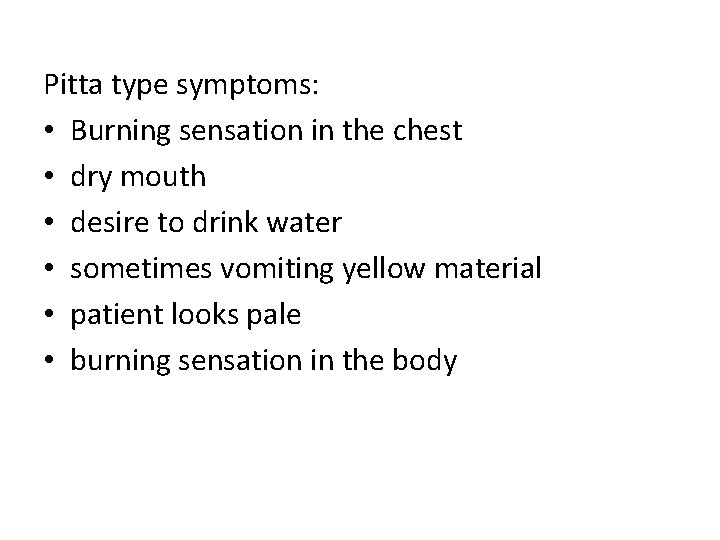
Pitta type symptoms: • Burning sensation in the chest • dry mouth • desire to drink water • sometimes vomiting yellow material • patient looks pale • burning sensation in the body
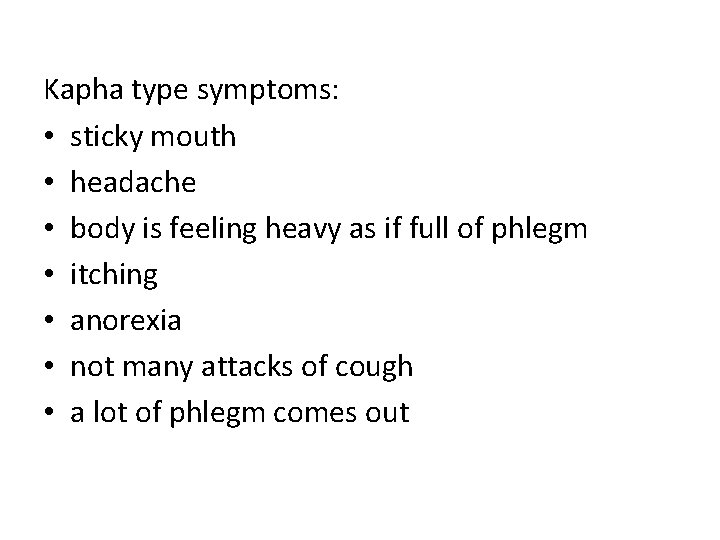
Kapha type symptoms: • sticky mouth • headache • body is feeling heavy as if full of phlegm • itching • anorexia • not many attacks of cough • a lot of phlegm comes out
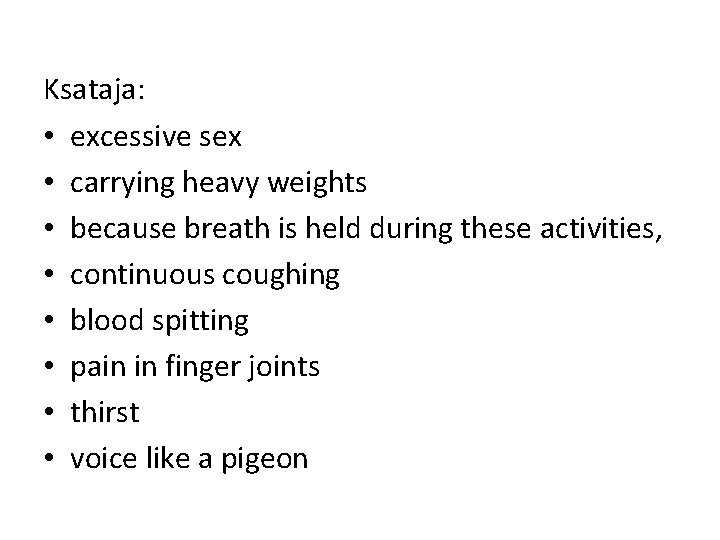
Ksataja: • excessive sex • carrying heavy weights • because breath is held during these activities, • continuous coughing • blood spitting • pain in finger joints • thirst • voice like a pigeon
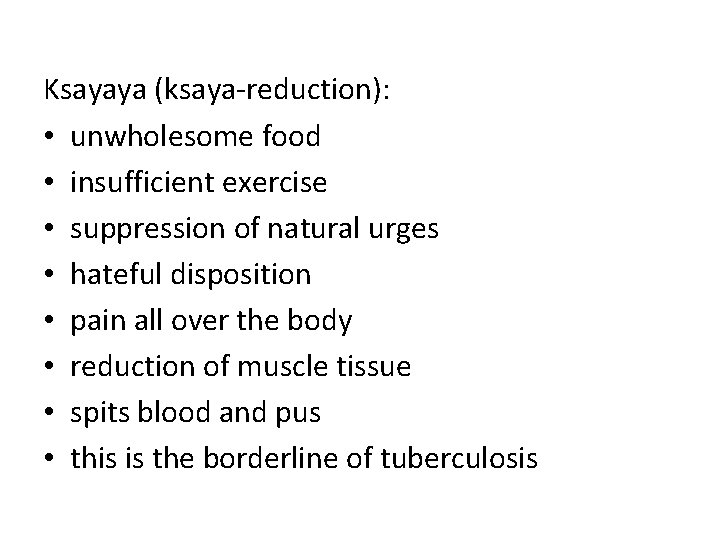
Ksayaya (ksaya-reduction): • unwholesome food • insufficient exercise • suppression of natural urges • hateful disposition • pain all over the body • reduction of muscle tissue • spits blood and pus • this is the borderline of tuberculosis
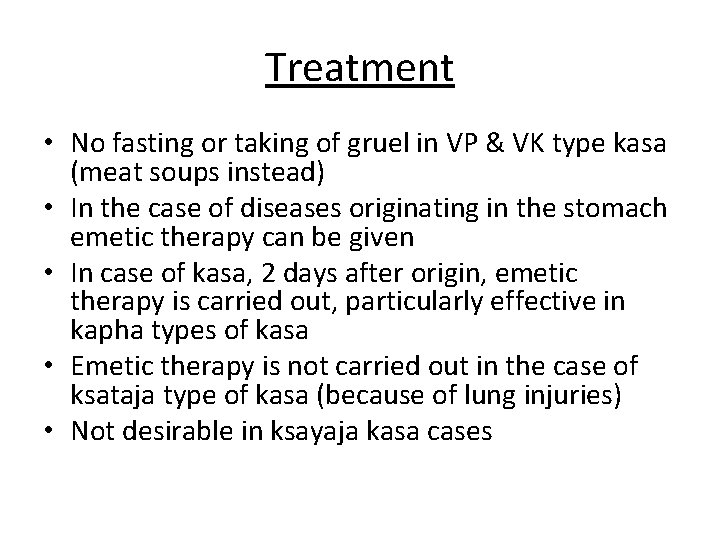
Treatment • No fasting or taking of gruel in VP & VK type kasa (meat soups instead) • In the case of diseases originating in the stomach emetic therapy can be given • In case of kasa, 2 days after origin, emetic therapy is carried out, particularly effective in kapha types of kasa • Emetic therapy is not carried out in the case of ksataja type of kasa (because of lung injuries) • Not desirable in ksayaja kasa cases
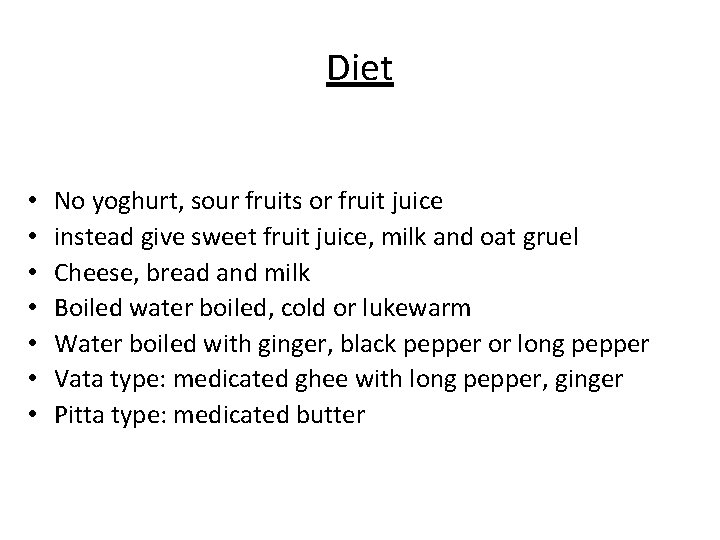
Diet • • No yoghurt, sour fruits or fruit juice instead give sweet fruit juice, milk and oat gruel Cheese, bread and milk Boiled water boiled, cold or lukewarm Water boiled with ginger, black pepper or long pepper Vata type: medicated ghee with long pepper, ginger Pitta type: medicated butter
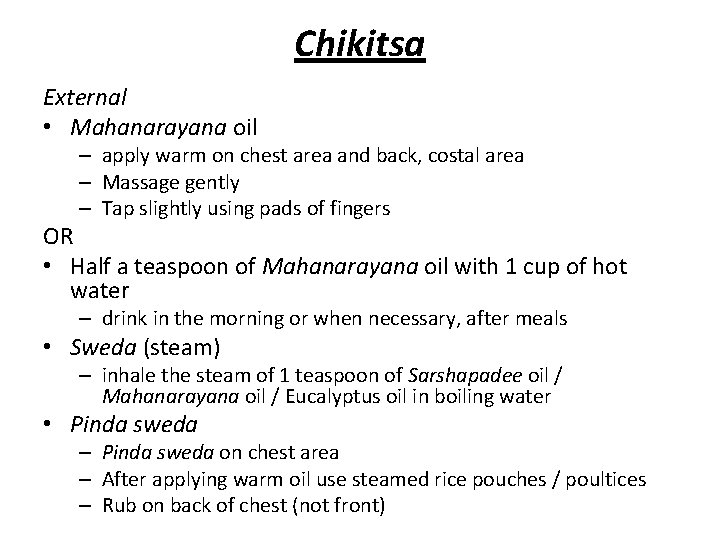
Chikitsa External • Mahanarayana oil – apply warm on chest area and back, costal area – Massage gently – Tap slightly using pads of fingers OR • Half a teaspoon of Mahanarayana oil with 1 cup of hot water – drink in the morning or when necessary, after meals • Sweda (steam) – inhale the steam of 1 teaspoon of Sarshapadee oil / Mahanarayana oil / Eucalyptus oil in boiling water • Pinda sweda – Pinda sweda on chest area – After applying warm oil use steamed rice pouches / poultices – Rub on back of chest (not front)
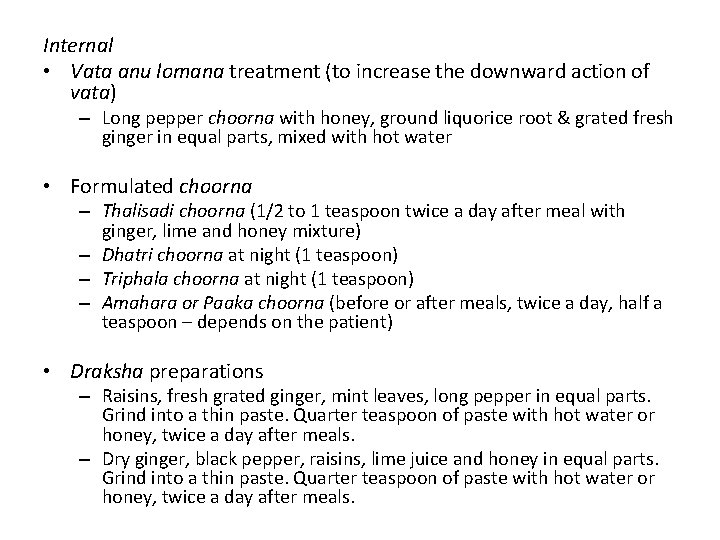
Internal • Vata anu lomana treatment (to increase the downward action of vata) – Long pepper choorna with honey, ground liquorice root & grated fresh ginger in equal parts, mixed with hot water • Formulated choorna – Thalisadi choorna (1/2 to 1 teaspoon twice a day after meal with ginger, lime and honey mixture) – Dhatri choorna at night (1 teaspoon) – Triphala choorna at night (1 teaspoon) – Amahara or Paaka choorna (before or after meals, twice a day, half a teaspoon – depends on the patient) • Draksha preparations – Raisins, fresh grated ginger, mint leaves, long pepper in equal parts. Grind into a thin paste. Quarter teaspoon of paste with hot water or honey, twice a day after meals. – Dry ginger, black pepper, raisins, lime juice and honey in equal parts. Grind into a thin paste. Quarter teaspoon of paste with hot water or honey, twice a day after meals.
Other treatments • Dry grapes (raisins) and alcoholic drinks made from them - draksha asava. To this are added pepper, black pepper etc. • In kapha treatments: lakshmi vilasa and naradiya lakshmi vilasa, or maha laksmi vilasa which also contain gold in bhasma form. • In the case of vata pitta types: ordinary laksmi vilasa, acacia catechu together with a little camphor, very effective as lozenges. For sweeter taste a little liquorice may be added. • Sitopaladi churna: – powder 16 parts, bamboo salt 8 parts, long pepper 4 parts, cinnamon 2 parts, cardamom seed 1 part. – Powder the ingredients then mix: for VP type with honey and ghee; for K type with honey alone – In types 4 and 5 (VP and VK) with honey and ghee ( do not take this powder dry) – Take for six or seven days – Turmeric powder is also good for kasa