Diagnosis of sickle cell disorders Mohammad Faranoush MD




- Slides: 52
Diagnosis of sickle cell disorders Mohammad Faranoush , MD Professor of pediatric hematologist & oncologist Iran University of medical sciences Rasool Akram Hospital
Introduction • Sickle cell disease (SCD) : • Hemoglobin S (Hb. S) • Homozygosity for the sickle mutation in the beta globin chain of hemoglobin (Hb. SS) • Compound heterozygosity of a sickle beta globin mutation with another beta globin mutation (eg, sickle-beta thalassemia) • The hallmarks of SCD are vaso-occlusive phenomena and hemolytic anemia. • Sickle cell trait is a benign carrier condition characterized by heterozygosity for the sickle hemoglobin mutation. 11/2/2020 Faranoush , SCD, Qeshm 2
Background • Hemoglobin normally is soluble in the erythrocyte and does not polymerize. • Point mutation in the beta globin gene that causes the substitution of a valine for glutamic acid as the sixth amino acid of the beta globin chain. • The resulting hemoglobin tetramer (alpha 2/beta S 2) becomes poorly soluble when deoxygenated 11/2/2020 Faranoush , SCD, Qeshm 3
Pathophysiology • Polymerization alone does not account for the pathophysiology of SCD. • Subsequent changes in red cell membrane structure and function, disordered cell volume control, and increased adherence to vascular endothelium also play an important role • Hemolysis generates reactive oxygen species and free plasma hemoglobin (Hb). • This free plasma Hb is a powerful scavenger of nitric oxide, whose deficiency plays an important role in the vascular pathology of SCD 11/2/2020 Faranoush , SCD, Qeshm 4
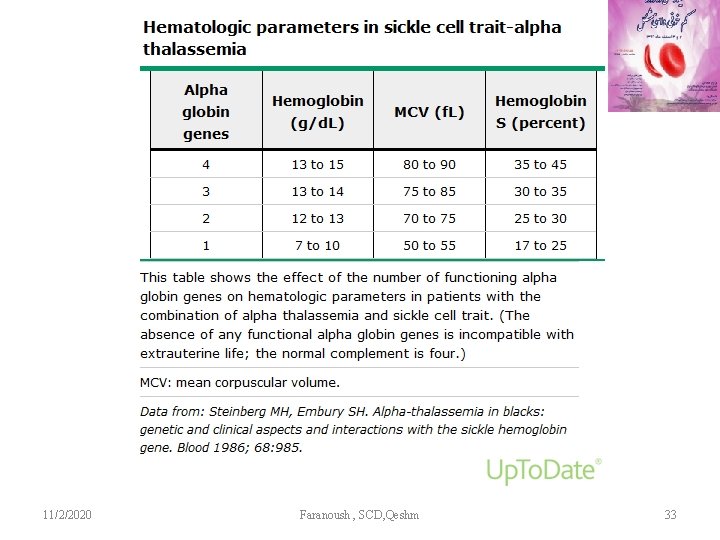
Sickle cell disorders • If the other beta globin gene is normal, the individual has sickle cell trait, a benign carrier condition that is not a disease. • The combination of one sickle mutation and one alpha globin gene mutation results in two benign carrier conditions, sickle cell trait and alpha thalassemia trait (also called alpha thalassemia minima), and no clinical disease 11/2/2020 Faranoush , SCD, Qeshm 5
Sickle cell disorders • Sickle cell disease (SCD) is an umbrella term that includes all patients who have the sickle mutation plus a second beta globin gene mutation, the combination of which causes clinical sickling. • The other beta globin mutation could be the sickle mutation or a different mutation in the beta globin gene (eg, one associated with beta thalassemia or hemoglobin C disease, or others). • Patients with a sickle cell disease exhibit a clinical phenotype, anemia, and laboratory evidence of sickling. 11/2/2020 Faranoush , SCD, Qeshm 6
Overview of Diagnostic Testing • The goals and methods of diagnosis of sickle cell disease (SCD) vary with the age of the patient. • DNA-based testing is used for prenatal diagnosis • The diagnostic methods used after birth are those that separate hemoglobin species according to amino acid composition (hemoglobin electrophoresis or thin layer isoelectric focusing), solubility testing, and examination of the peripheral blood smear 11/2/2020 Faranoush , SCD, Qeshm 7
Prenatal Testing • The sickle hemoglobin (Hb) diseases (ie, sickle cell anemia, Hb. SC disease, sickle cell-beta thalassemia) are chronic, debilitating, and sometimes fatal. • The severe clinical nature of these diseases, particularly sickle cell anemia and sickle cell-beta 0 thalassemia, and the absence of curative therapy are the primary stimulants for the development of fetal sampling and DNA-based diagnostic methodology. • Couples at risk should be offered hemoglobinopathy testing early in pregnancy and the opportunity for prenatal diagnosis where appropriate. 11/2/2020 Faranoush , SCD, Qeshm 8
Prenatal Testing • Currently, fetal DNA samples are obtained by chorionic villus sampling at 8 to 10 weeks gestation • Preimplantation diagnosis and testing fetal cells isolated from the maternal circulation are not yet in routine use. • Costly with limited availability • The many social and ethical issues that must be faced by the patient and physician in making decisions about prenatal testing for the hemoglobinopathies and the sampling methods that may be used 11/2/2020 Faranoush , SCD, Qeshm 9
New Methods • • • PCR restriction analysis Allele-specific hybridization Reverse dot blotting Allele-specific fluorescence PCR • PCR-based diagnosis for Hb. SC disease can be made using specific molecular methods for detecting the Hb. C gene • Diagnosis of sickle cell-beta thalassemia can be made using reverse dot blot methodology 11/2/2020 Faranoush , SCD, Qeshm 10
Newborn Screening • Infants with sickle cell disease (SCD) generally are healthy at birth and develop symptoms only when fetal hemoglobin levels decline later in infancy or early childhood. 11/2/2020 Faranoush , SCD, Qeshm 11
Goals of newborn screening (NBS) • Early recognition of affected infants • Early medical intervention to reduce morbidity and mortality, particularly from bacterial infections • Institution of regular and ongoing comprehensive care through a multidisciplinary sickle cell clinic, in collaboration with the primary care physician, whenever feasible • Access for families of children with SCD to accurate information about the diagnosis, clinical manifestations, treatment options, and age-appropriate anticipatory guidance toward the management of these emerging issues 11/2/2020 Faranoush , SCD, Qeshm 12
Example • The effectiveness of these programs, the use of prophylactic penicillin and the provision of comprehensive medical care have reduced the mortality of SCD during the first five years of life from approximately 25 percent to less than 3 percent 11/2/2020 Faranoush , SCD, Qeshm 13
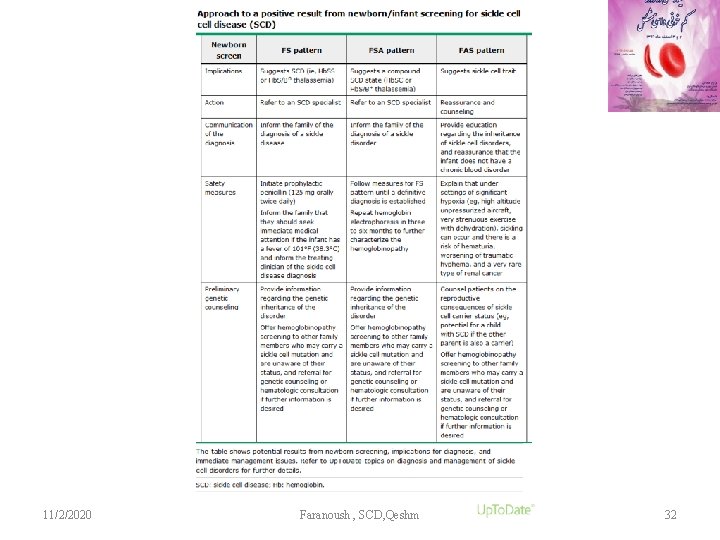
Newborn screening (NBS) • Selective screening of infants of high-risk parents (20% missing) • Universal testing of newborns • Universal testing seems preferable due to its economy and superiority of detection • universal screening identifies more infants with disease and prevents more deaths • heel stick" filter paper screen is performed within 72 hours of life, with a second screen required at one to two weeks. • Testing is by isoelectric focusing, and abnormal specimens are confirmed by repeat testing or by DNA analysis 11/2/2020 Faranoush , SCD, Qeshm 14
Diagnostic in NBS • Solubility testing may not be valid, because of the large amount of Hb. F present in fetal blood. • Hb electrophoresis testing after transfusion of red cells can result in an incorrect diagnosis. In such cases, SCD diagnosis should utilize DNA testing or be postponed for at least four months after transfusion. 11/2/2020 Faranoush , SCD, Qeshm 15
Cont, • In very premature babies, Hb. A may not be detected, resulting in misdiagnosis. • Very premature babies with sickle cell trait may be found to have Hb. S levels greater than Hb. A, resulting in the incorrect diagnosis of hemoglobin S/beta+ thalassemia 11/2/2020 Faranoush , SCD, Qeshm 16
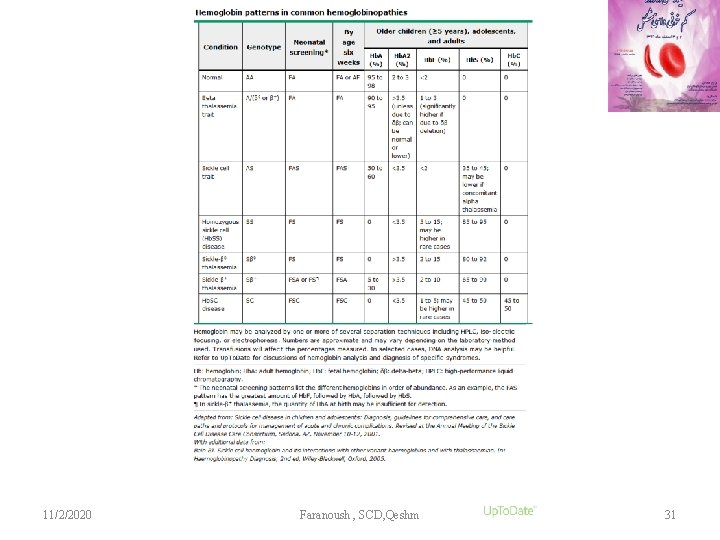
FS pattern • Hb. SS • sickle cell-beta 0 thalassemia • sickle cell-hereditary persistence of fetal hemoglobin • sickle cell-hemoglobin D disease and sickle cell-hemoglobin G disease 11/2/2020 Faranoush , SCD, Qeshm 17
FAS and FSA patterns • FAS /sickle cell trait will have Hb. F, Hb. A, and Hb. S – Hb. A is greater than that of Hb. S • If the quantity of Hb. S exceeds that of Hb. A, the FSA pattern, the presumptive diagnosis is sickle cell-beta+ thalassemia. • It may not be possible to distinguish FAS and FSA patterns in newborns; thus, DNA-based testing or repeat hemoglobin testing at age three to six months is recommended. 11/2/2020 Faranoush , SCD, Qeshm 18
Future NBS • PCR-based diagnosis from blood spotted onto a filter paper may be used to detect sickle cell genes directly 11/2/2020 Faranoush , SCD, Qeshm 19
The following is appropriate while awaiting specialist referral: • Inform the family of the diagnosis of an SCD. • Initiate prophylactic penicillin (125 mg orally twice daily). • Inform the family that they should seek immediate medical attention if the infant has a fever of 101°F (38. 3°C) and inform the treating clinician of the SCD diagnosis. • Provide information regarding the genetic inheritance of the disorder. 11/2/2020 Faranoush , SCD, Qeshm 20
Older Children & Adults • Clinical signs & symptoms • Laboratory methods 11/2/2020 Faranoush , SCD, Qeshm 21
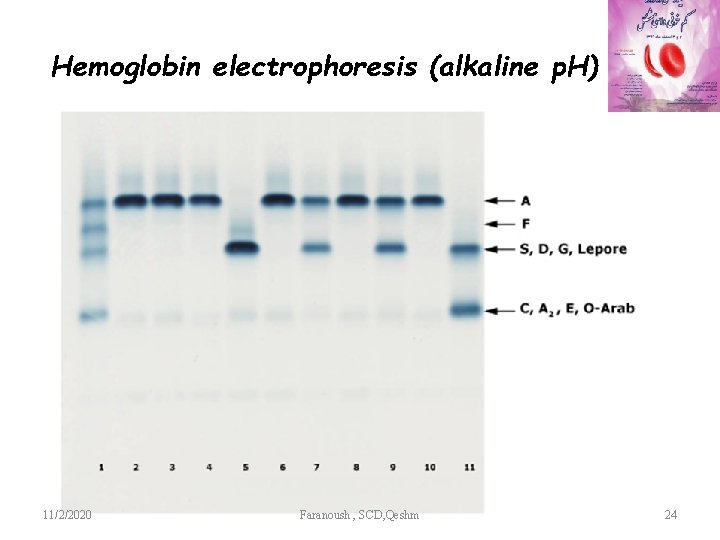
Methods for hemoglobin analysis • High performance liquid chromatography (HPLC) • It is highly sensitive and specific and provides both quantitative and qualitative interpretation • Major disadvantages are the initial cost of the apparatus and reagents. • Thin-layer isoelectric focusing • Highly accurate and cost effective tool for the diagnosis of sickle or other hemoglobin variants • Cellulose acetate electrophoresis at p. H 8. 4 • Standard method of separating hemoglobin S (Hb. S) from other Hb variants (SGD) 11/2/2020 Faranoush , SCD, Qeshm 22
Sickle cell prep • The sickle cell prep is a method for visualizing sickled cells that involves treating a blood sample with a reducing agent such as sodium metabisulfite or dithionite; these agents reduce the oxygen tension in the sample and promote sickling, which is then examined visually. This method is rarely used clinically and is generally of historic interest. • There are two exceptions: • The sickle cell solubility test is useful to detect sickling variants that are caused by a second mutation in addition to the sickle hemoglobin mutation (ie, compound heterozygosity) but show a different pattern from that produced by Hb S on electrophoresis and HPLC. Examples include Hb SAntilles and Hb S-Oman. • Several point-of-care assays are under development that take advantage of the degree of sickle hemoglobin polymerization. These might be especially relevant for use in low resource settings. 11/2/2020 Faranoush , SCD, Qeshm 23
Hemoglobin electrophoresis (alkaline p. H) 11/2/2020 Faranoush , SCD, Qeshm 24
Cont, • Citrate agar electrophoresis at p. H 6. 2 • Separates Hb. S from Hb. D and G, which co-migrate with Hb. A in this system • A solubility test such as the Sickledex also distinguishes Hb. D and G from Hb. S • only Hb. S precipitates using this test 11/2/2020 Faranoush , SCD, Qeshm 25
11/2/2020 Faranoush , SCD, Qeshm 26
11/2/2020 Faranoush , SCD, Qeshm 27
11/2/2020 Faranoush , SCD, Qeshm 28
11/2/2020 Faranoush , SCD, Qeshm 29
11/2/2020 Faranoush , SCD, Qeshm 30
11/2/2020 Faranoush , SCD, Qeshm 31
11/2/2020 Faranoush , SCD, Qeshm 32
11/2/2020 Faranoush , SCD, Qeshm 33
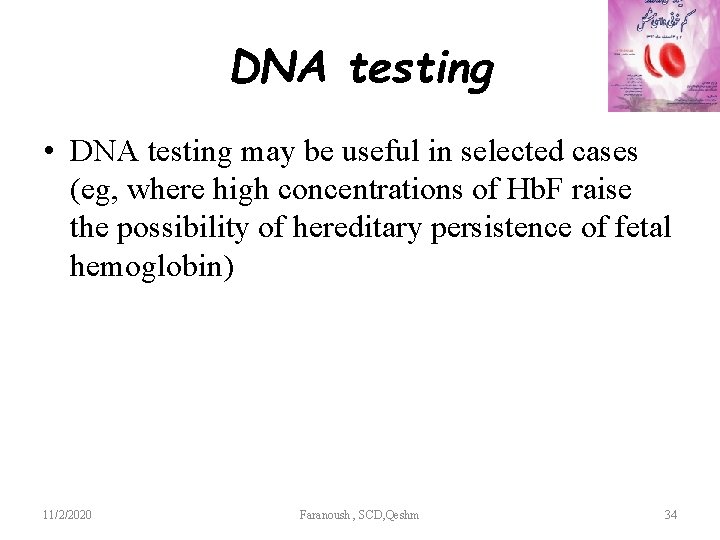
DNA testing • DNA testing may be useful in selected cases (eg, where high concentrations of Hb. F raise the possibility of hereditary persistence of fetal hemoglobin) 11/2/2020 Faranoush , SCD, Qeshm 34
Point of care (POC) diagnostics • Point of care (POC) diagnostics are of potential use in low-resource countries with an at-risk population • Unlike the standard laboratory-based methods listed above, POC testing does not require expensive laboratory equipment and infrastructure. 11/2/2020 Faranoush , SCD, Qeshm 35
POC • Several promising techniques for simple, rapid, inexpensive diagnosis of SCD are being developed: • Paper-based tests that quantify sickle hemoglobin • Density-based rapid test using aqueous multiphase systems • Lateral flow immunoassays • These techniques appear to have excellent sensitivity and specificity to diagnose sickle cell anemia using dry blood and/or liquid samples. 11/2/2020 Faranoush , SCD, Qeshm 36
Hemoglobin A 2 measurement • Valuable for the diagnosis of concomitant beta thalassemia • δβ thalassemia heterozygotes have a normal or decreased Hb. A 2 level with a high Hb. F level • Hb. A 2 levels are influenced by closely migrating hemoglobin variants such as Hb. E 11/2/2020 Faranoush , SCD, Qeshm 37
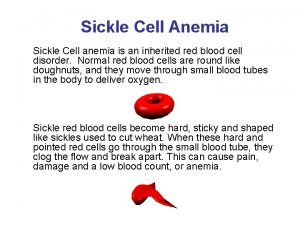
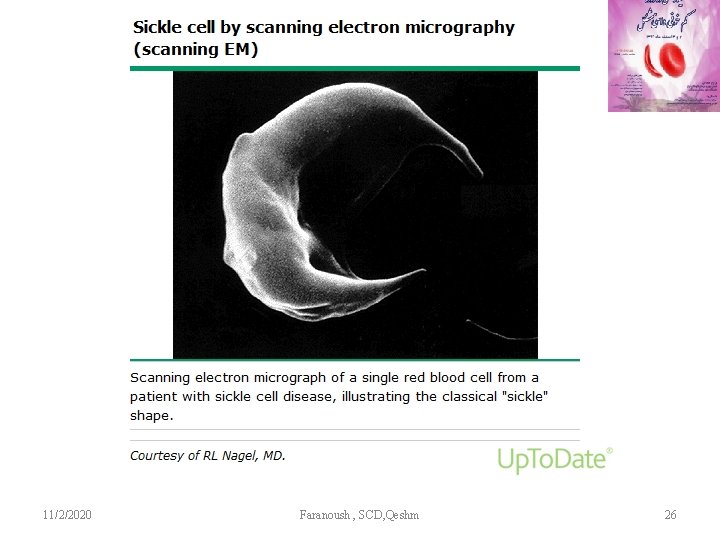
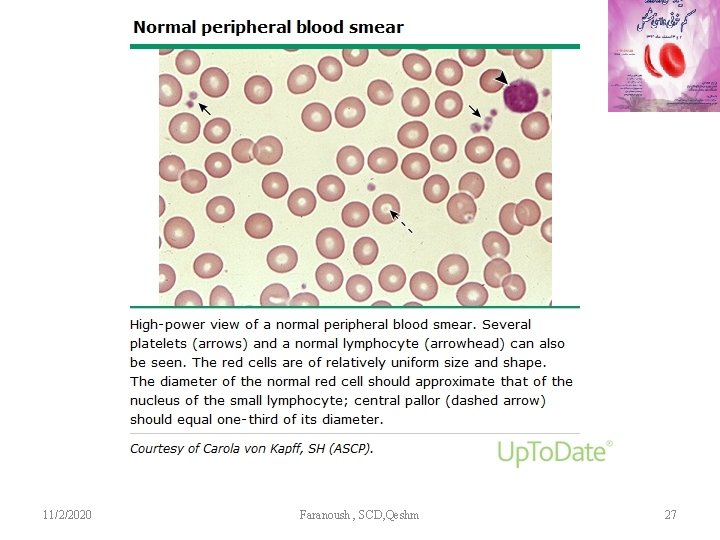
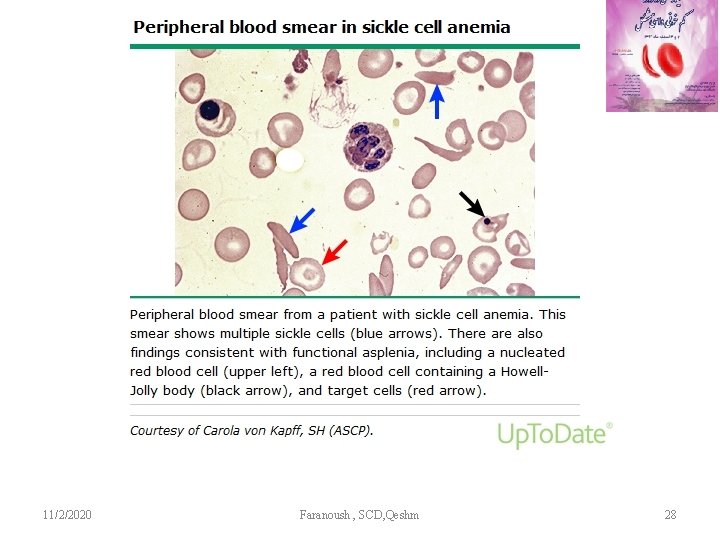
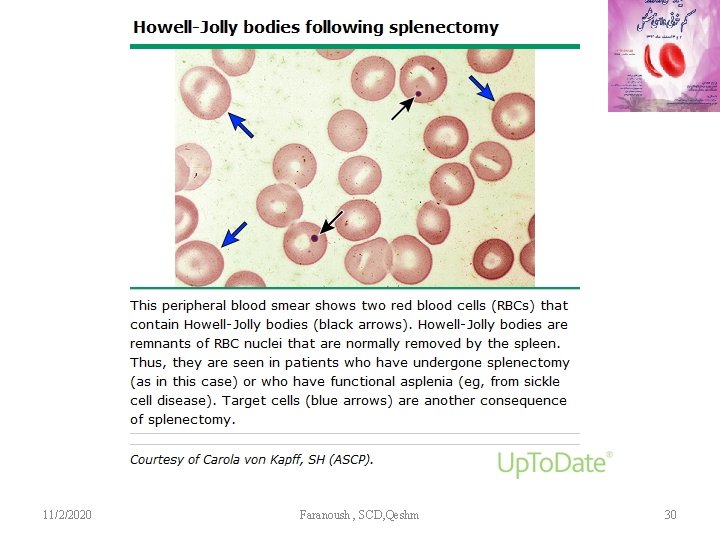
Findings in sickle cell anemia • Chronic hemolysis in those with sickle cell anemia (ie, Hb. SS) is usually associated with a mild to moderate anemia (hematocrit 20 to 30 percent), reticulocytosis of 3 to 15 percent (accounting for high-normal mean corpuscular volume [MCV]), unconjugated hyperbilirubinemia, and elevated serum lactate dehydrogenase (LDH) and low serum haptoglobin. • The peripheral blood smear reveals sickled red cells , polychromasia indicative of reticulocytosis, and Howell-Jolly bodies reflecting hyposplenia • The red cells are normochromic unless there is coexistent thalassemia or iron deficiency. If the age-adjusted MCV is not elevated, the possibility of sickle cell-beta thalassemia, coincident alpha thalassemia, or iron deficiency should be considered 11/2/2020 Faranoush , SCD, Qeshm 38
Cont, • The Hb. F level is usually slightly to moderately elevated and Hb. A is absent • The amount of Hb. F is a function of the number of reticulocytes that contain Hb. F, the extent of selective survival of Hb. F-containing reticulocytes to become mature Hb. F-containing erythrocytes, and the amount of Hb. F per red cell. • Each variable is separately regulated and the expression of each shows interpatient variability • In some patients with sickle cell anemia alone, values are as high (1 to 4 percent) as the modest elevations seen in heterocellular hereditary persistence of fetal hemoglobin 11/2/2020 Faranoush , SCD, Qeshm 39
CBC • In patients with sickle cell anemia, mean white blood cell (WBC) counts were higher than normal, particularly in those under the age of 10, and mean platelet counts were elevated, particularly in those under the age of 18. • In contrast, mean WBC and platelet counts were not elevated in Hb. SC disease or sickle cell-beta+ thalassemia. 11/2/2020 Faranoush , SCD, Qeshm 40
Bilirubin • Mean serum bilirubin concentrations were higher in those with sickle cell anemia than in those with Hb. SC disease or sickle cell-beta+ thalassemia due to the greater hemolytic rate. • The serum bilirubin rose after the first decade, possibly due to chronic hepatobiliary dysfunction. • Serum aminotransferase concentrations were often elevated, particularly in adults with sickle cell anemia, but mean levels were normal. • Serum alkaline phosphatase was elevated in all genotypes until puberty, suggesting an origin from bone rather than the liver. 11/2/2020 Faranoush , SCD, Qeshm 41
Creatinine • Serum creatinine concentrations were low in all genotypes until 18 years of age, when males experienced a rise apparently related to increasing muscle mass. • The low serum creatinine was in part due to an initial elevation in glomerular filtration rate. • Serum creatinine increased with age in all genotypes, presumably due to declining renal function 11/2/2020 Faranoush , SCD, Qeshm 42
Diagnostic patterns • Other sickle cell disorders : • Several of the sickle cell disorders may have similar results with electrophoresis or isoelectric focusing. • Additional information from examination of the peripheral smear often helps to separate the sickle cell diseases 11/2/2020 Faranoush , SCD, Qeshm 43
SCD variants • Sickle cell-hemoglobin D-Punjab (D-Los Angeles) and sickle cellhemoglobin O-Arab are moderate to severe diseases characterized by anemia, reticulocytosis, and often, macrocytosis. • Sickle cell-hemoglobin C-Harlem is slightly milder than sickle cell anemia with a similar blood film. • Sickle cell-hemoglobin Lepore, also a moderately severe disease, is more characterized by microcytosis and a blood smear comparable to sickle cell-beta thalassemia. • Sickle cell-hereditary persistence of fetal hemoglobin is usually asymptomatic or extremely mild. • Mild anemia and reticulocytosis may be noted. The electrophoresis may be misread as sickle cell anemia with an elevated Hb. F. • Definitive diagnosis requires family studies or DNA analysis • Sickle cell-hemoglobin E is a clinically mild disease. • The blood film shows targeting and variable microcytosis. 11/2/2020 Faranoush , SCD, Qeshm 44
Need • SOCIETY GUIDELINE • INFORMATION FOR PATIENTS • Patient education 11/2/2020 Faranoush , SCD, Qeshm 45
SUMMARY AND RECOMMENDATIONS • The diagnosis of sickle cell disorders can take place in several settings: prenatal testing, newborn screening, diagnosis of symptomatic individuals, and counseling of those with sickle cell trait. • Diagnosis of one of the sickle cell disorders is generally made via high performance liquid chromatography (HPLC), isoelectric focusing (IEF), or gel electrophoresis techniques. • In prenatal diagnosis and in areas with high frequency of non-sickle-cell disorders, polymerase chain reaction (PCR) techniques, or direct DNA testing may be used. 11/2/2020 Faranoush , SCD, Qeshm 46
SUMMARY AND RECOMMENDATIONS • Only general patterns of hemoglobin production are available during the newborn period because beta globin production (which includes production of hemoglobins A and S [Hb. A and Hb. S]) is not fully developed • If questions arise as to interpretation, the tests should be repeated at age three to six months, when beta globin production is complete. DNA testing can be performed if clinically indicated 11/2/2020 Faranoush , SCD, Qeshm 47
SUMMARY AND RECOMMENDATIONS • Hemoglobin electrophoresis testing after transfusion of red cells can result in an incorrect diagnosis. • In such cases, sickle cell diagnosis should utilize DNA testing or be postponed for at least four months after transfusion. • In very premature babies, Hb. A may not be detected, resulting in misdiagnosis. • In addition, very premature babies with sickle cell trait may be found to have Hb. S levels greater than Hb. A, resulting in the incorrect diagnosis of hemoglobin S/beta+ thalassemia 11/2/2020 Faranoush , SCD, Qeshm 48
SUMMARY AND RECOMMENDATIONS • For children and adults, the combination of HPLC and IEF allows for a definitive diagnosis of one of the sickle cell disorders 11/2/2020 Faranoush , SCD, Qeshm 49
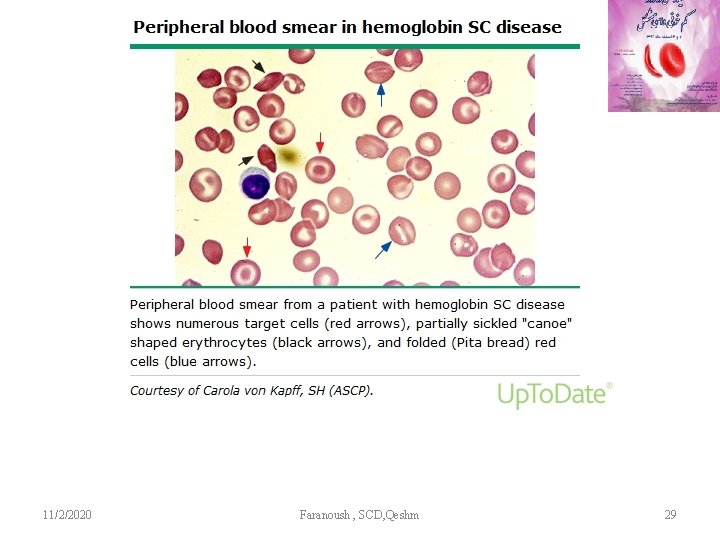
SUMMARY AND RECOMMENDATIONS • Sickle cell trait – In sickle cell trait, the usual pattern is to find >50 percent Hb. A, 35 to 45 percent Hb. S, and <2 percent Hb. F. The presence of <35 percent Hb. S suggests the presence of alpha thalassemia. • Sickle cell anemia – In sickle cell anemia (ie, Hb. SS), there is 0 percent Hb. A, <2 percent Hb. F, normal amounts of Hb. A 2, and the remainder Hb. S. • Hemoglobin SC disease – In hemoglobin SC disease, Hb. S and Hb. C are both present. • Sickle cell-beta+ thalassemia – In sickle cell-beta+ thalassemia, there is 5 to 30 percent Hb. A, increased Hb. A 2, with the remainder Hb. S. Target cells and hypochromic red cells are also present • Sickle cell-beta 0 thalassemia – In sickle cell-beta 0 thalassemia, there is 0 percent Hb. A, along with variable amounts of Hb. F, increased amounts of Hb. A 2, with the remainder Hb. S. Target cells and hypochromic microcytic red cells are also present. 11/2/2020 Faranoush , SCD, Qeshm 50
SUMMARY AND RECOMMENDATIONS • Informing the parents of the results of newborn screening has value for the child and potentially other family members 11/2/2020 Faranoush , SCD, Qeshm 51
THANK YOU Live as if you were to die tomorrow Learn as if you were to live forever 11/2/2020 Faranoush , SCD, Qeshm 52