
SICKLE CELL DISEASE THE SEARCH FOR CURE September
SICKLE CELL DISEASE: THE SEARCH FOR CURE September 5, 2019
DISCLOSURES • California Institute for Regenerative Medicine (CIRM)-investigator • CSL-Behring Inc. -Investigator
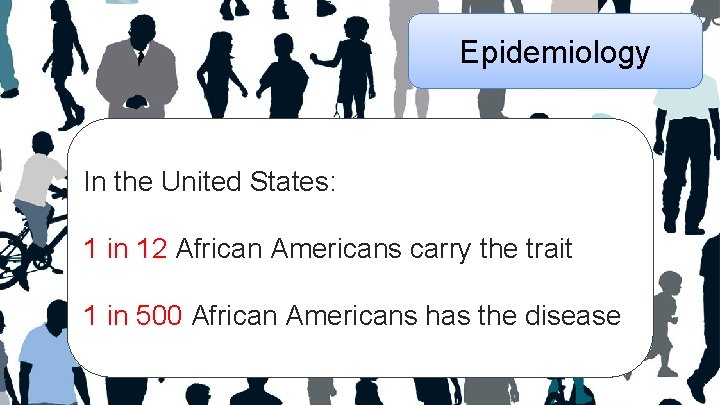
Epidemiology In the United States: 1 in 12 African Americans carry the trait 1 in 500 African Americans has the disease
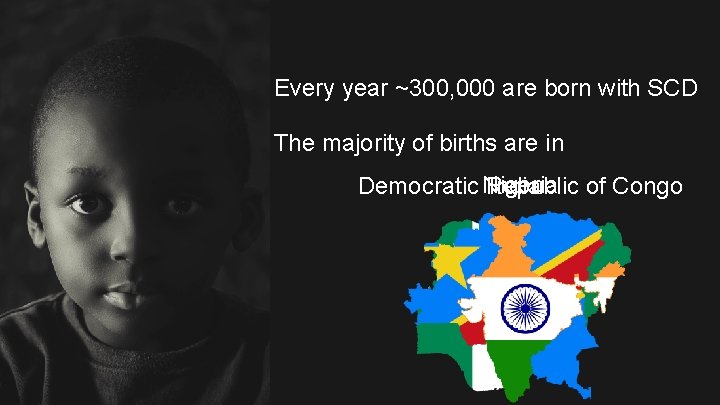
Every year ~300, 000 are born with SCD The majority of births are in Nigeria Democratic Republic of Congo India
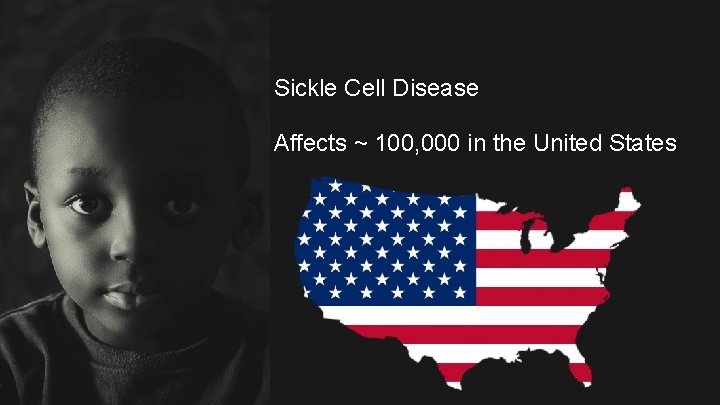
Sickle Cell Disease Affects ~ 100, 000 in the United States
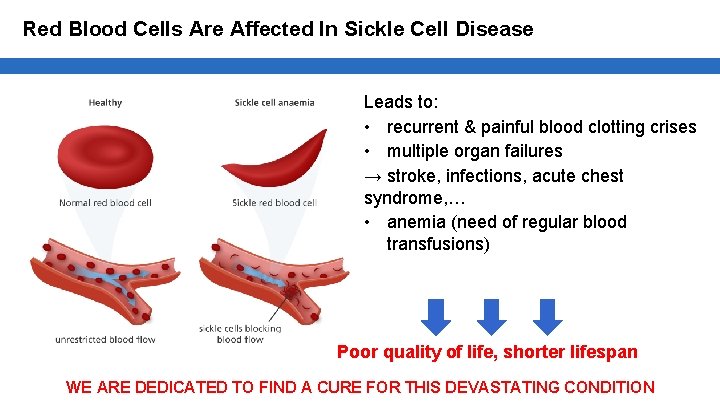
Red Blood Cells Are Affected In Sickle Cell Disease Leads to: • recurrent & painful blood clotting crises • multiple organ failures → stroke, infections, acute chest syndrome, … • anemia (need of regular blood transfusions) Poor quality of life, shorter lifespan WE ARE DEDICATED TO FIND A CURE FOR THIS DEVASTATING CONDITION
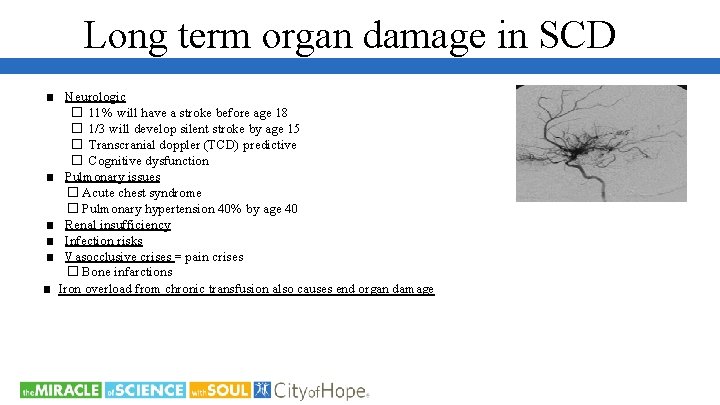
Long term organ damage in SCD ■ Neurologic � 11% will have a stroke before age 18 � 1/3 will develop silent stroke by age 15 � Transcranial doppler (TCD) predictive � Cognitive dysfunction ■ Pulmonary issues � Acute chest syndrome � Pulmonary hypertension 40% by age 40 ■ Renal insufficiency ■ Infection risks ■ Vasocclusive crises = pain crises � Bone infarctions ■ Iron overload from chronic transfusion also causes end organ damage
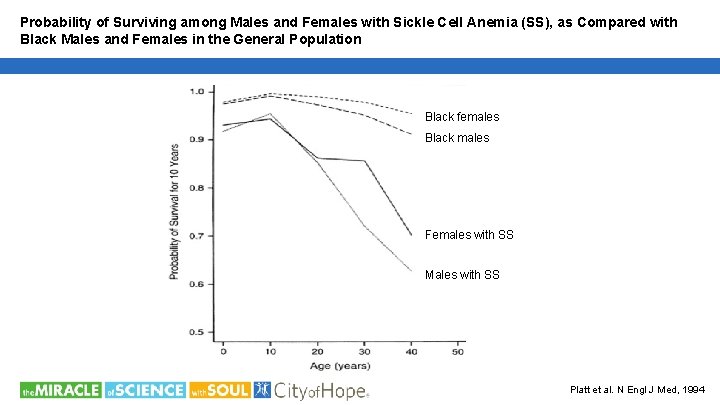
Probability of Surviving among Males and Females with Sickle Cell Anemia (SS), as Compared with Black Males and Females in the General Population Black females Black males Females with SS Males with SS Platt et al. N Engl J Med, 1994
Life Expectancy and Sickle Cell Disease • 1973: Life expectancy = 14 years • Now: Average life expectancy is 40 -60 years • BUT, quality of life of patients living with SCD remains poor Source: National Heart, Lung, and Blood Institute
How Can We Cure Sickle Cell Disease?
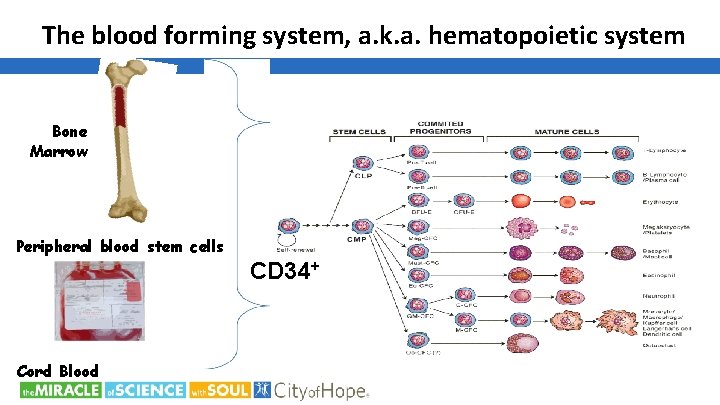
The blood forming system, a. k. a. hematopoietic system Bone Marrow Peripheral blood stem cells CD 34+ Cord Blood
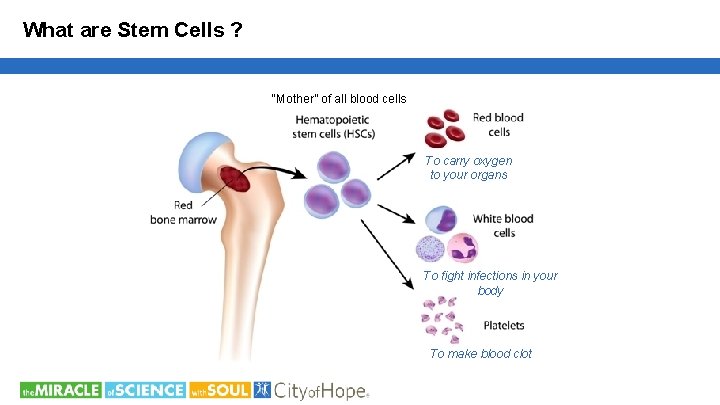
What are Stem Cells ? “Mother” of all blood cells To carry oxygen to your organs To fight infections in your body To make blood clot
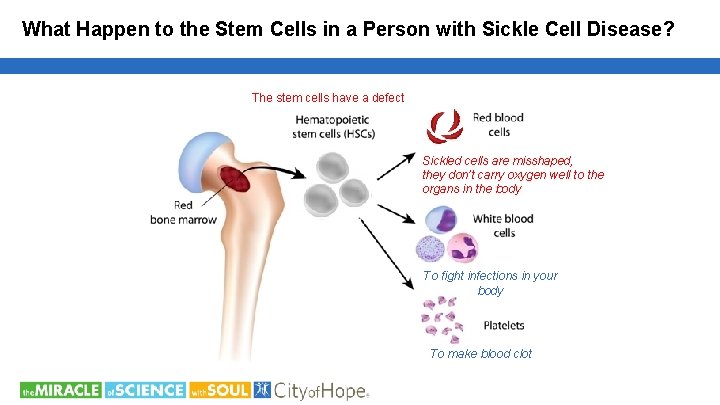
What Happen to the Stem Cells in a Person with Sickle Cell Disease? The stem cells have a defect Sickled cells are misshaped, they don’t carry oxygen well to the organs in the body To fight infections in your body To make blood clot
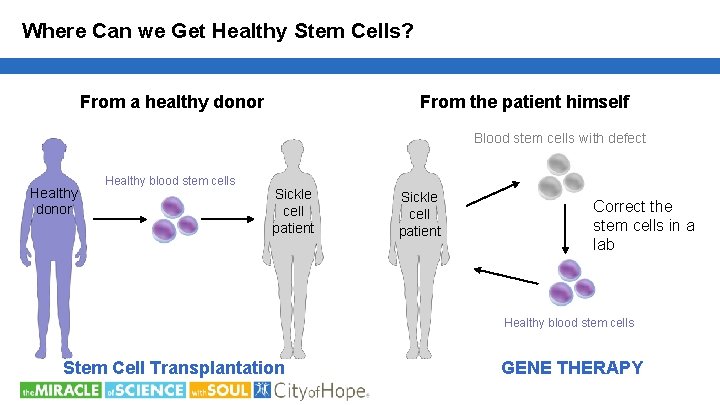
Where Can we Get Healthy Stem Cells? From a healthy donor From the patient himself Blood stem cells with defect Healthy donor Healthy blood stem cells Sickle cell patient Correct the stem cells in a lab Healthy blood stem cells Stem Cell Transplantation GENE THERAPY
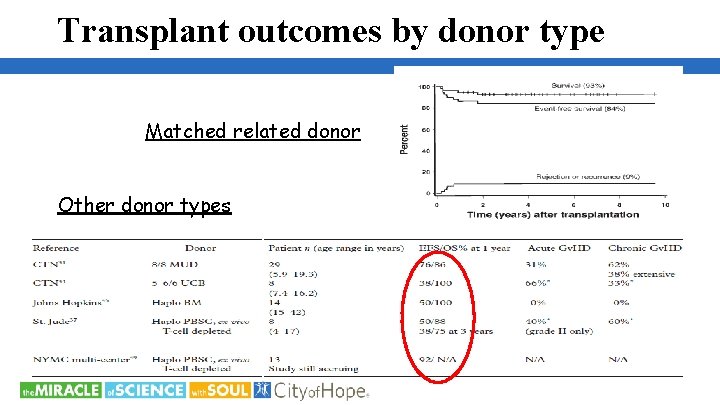
Transplant outcomes by donor type Matched related donor Other donor types
CHALLENGES IN APPLICATION OF STEM CELL TRANSPLANTATION
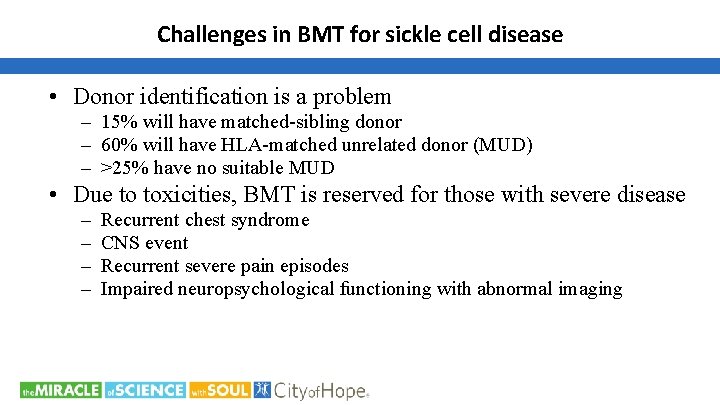
Challenges in BMT for sickle cell disease • Donor identification is a problem – 15% will have matched-sibling donor – 60% will have HLA-matched unrelated donor (MUD) – >25% have no suitable MUD • Due to toxicities, BMT is reserved for those with severe disease – – Recurrent chest syndrome CNS event Recurrent severe pain episodes Impaired neuropsychological functioning with abnormal imaging
CITY OF HOPE’S EXPERIENCE WITH TRANSPLANT IN SICKLE CELL PATIENTS
Current questions • Can transplants be curative in older patient? • How can we minimize the risks associated with the treatment? • How can we overcome the barriers of finding suitable donors? • Are there potential alternatives to transplantation?
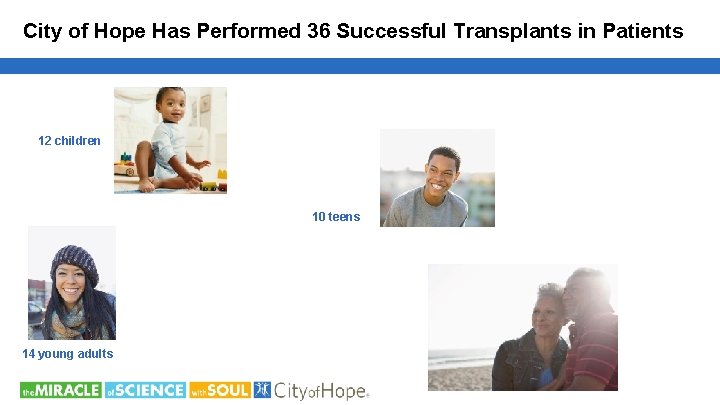
City of Hope Has Performed 36 Successful Transplants in Patients 12 children 10 teens 14 young adults
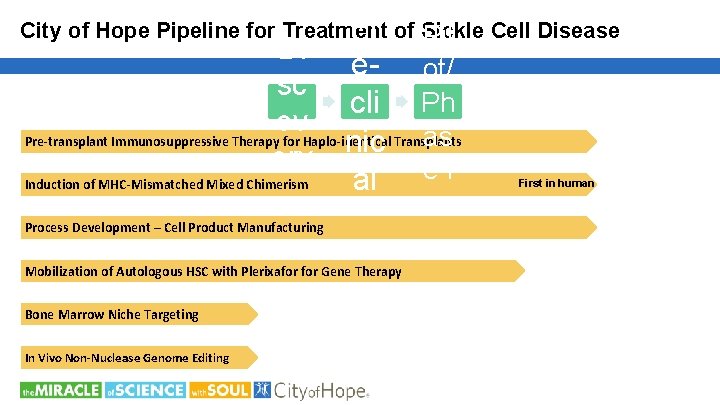
Pr of Sickle City of Hope Pipeline for Treatment Pil Cell Disease Di e- ot/ sc cli Ph ov as Pre-transplant Immunosuppressive Therapy for Haplo-identical Transplants nic ery e I Induction of MHC-Mismatched Mixed Chimerism al Process Development – Cell Product Manufacturing Mobilization of Autologous HSC with Plerixafor Gene Therapy Bone Marrow Niche Targeting In Vivo Non-Nuclease Genome Editing First in human
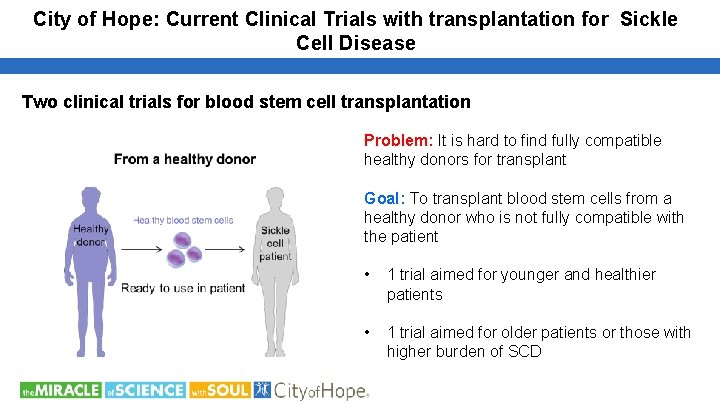
City of Hope: Current Clinical Trials with transplantation for Sickle Cell Disease Two clinical trials for blood stem cell transplantation Problem: It is hard to find fully compatible healthy donors for transplant Goal: To transplant blood stem cells from a healthy donor who is not fully compatible with the patient • 1 trial aimed for younger and healthier patients • 1 trial aimed for older patients or those with higher burden of SCD
COH IRB#17136 A PILT STUDY OF PRE-TRANSPLANT IMMUNOSUPPRESSIVE THERAPY FOR HAPLOIDENTICAL TRANSPLANTS IN PATIENTS WITH SICKLE CELL DISEASE
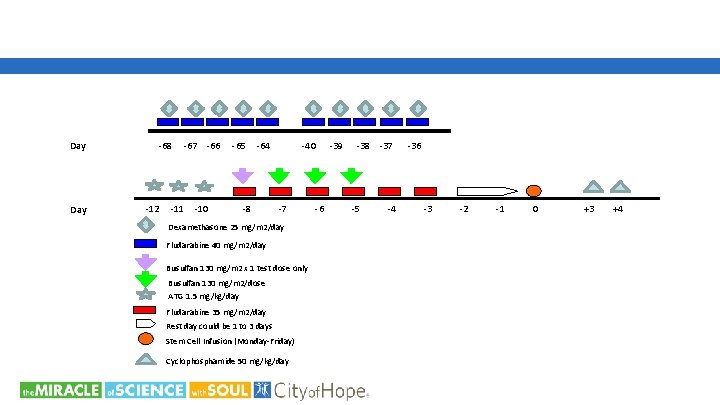
Day -68 -12 Day -11 -67 -66 -10 -65 -64 -8 -40 -7 -6 -39 -38 -37 -5 -36 -4 -3 -2 -1 0 Dexamethasone 25 mg/m 2/day Fludarabine 40 mg/m 2/day Busulfan 130 mg/m 2 x 1 test dose only Busulfan 130 mg/m 2/dose ATG 1. 5 mg/kg/day Fludarabine 35 mg/m 2/day Rest day could be 1 to 3 days Stem Cell Infusion (Monday-Friday) Cyclophosphamide 50 mg/kg/day +3 +4
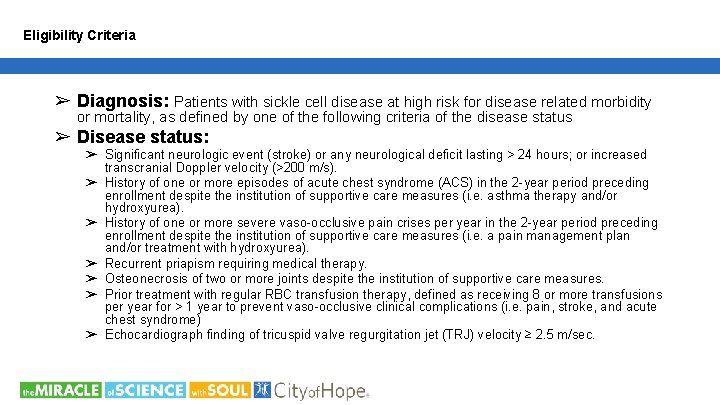
Eligibility Criteria ➢ Diagnosis: Patients with sickle cell disease at high risk for disease related morbidity or mortality, as defined by one of the following criteria of the disease status ➢ Disease status: ➢ Significant neurologic event (stroke) or any neurological deficit lasting > 24 hours; or increased transcranial Doppler velocity (>200 m/s). ➢ History of one or more episodes of acute chest syndrome (ACS) in the 2 -year period preceding enrollment despite the institution of supportive care measures (i. e. asthma therapy and/or hydroxyurea). ➢ History of one or more severe vaso-occlusive pain crises per year in the 2 -year period preceding enrollment despite the institution of supportive care measures (i. e. a pain management plan and/or treatment with hydroxyurea). ➢ Recurrent priapism requiring medical therapy. ➢ Osteonecrosis of two or more joints despite the institution of supportive care measures. ➢ Prior treatment with regular RBC transfusion therapy, defined as receiving 8 or more transfusions per year for > 1 year to prevent vaso-occlusive clinical complications (i. e. pain, stroke, and acute chest syndrome) ➢ Echocardiograph finding of tricuspid valve regurgitation jet (TRJ) velocity ≥ 2. 5 m/sec.
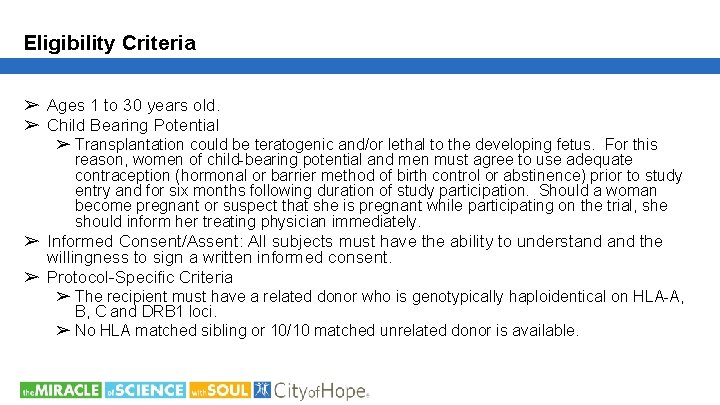
Eligibility Criteria ➢ Ages 1 to 30 years old. ➢ Child Bearing Potential ➢ Transplantation could be teratogenic and/or lethal to the developing fetus. For this reason, women of child-bearing potential and men must agree to use adequate contraception (hormonal or barrier method of birth control or abstinence) prior to study entry and for six months following duration of study participation. Should a woman become pregnant or suspect that she is pregnant while participating on the trial, she should inform her treating physician immediately. ➢ Informed Consent/Assent: All subjects must have the ability to understand the willingness to sign a written informed consent. ➢ Protocol-Specific Criteria ➢ The recipient must have a related donor who is genotypically haploidentical on HLA-A, B, C and DRB 1 loci. ➢ No HLA matched sibling or 10/10 matched unrelated donor is available.
Patients • Total 12 patients received transplant • 5 patients underwent haplo transplant prior to the study opening – Transplant dates: 8/24/2016 – 11/8/2017 (2 -3 y post-tx) – All 5 doing well • 7 patients enrolled on study: 4/11/2018 – 5/29/2019 – 1 pt died (25 y old) due to fungal infection 7 m post transplant – 1 secondary graft failure due to BK virus – engrafted after 2 nd transplant – 1 pts has mild myelosuppression due to BK 1 year post-transplant – no SCD symptoms
Correlation between the status of the bone marrow niche and HSC engraftment • In this protocol, we propose correlative studies to determine: • At which extent the damage of the bone marrow niche due to inflammation correlates with changes in HSC and progenitor function during stable disease (before transplant). • At which extent the recovery of the BM niche following transplant correlates with engraftment of donor cells.
COH IRB#16453 SUPPORTED BY CIRM CLIN 2 -10847 A Pilot Study to Evaluate the Safety and Feasibility of Induction of Mixed Chimerism in Sickle Cell Disease Patients with COH-MC-17: a Non-Myeloablative, Conditioning Regimen and CD 4+ T-cell-depleted Haploidentical Hematopoietic Transplant Click to edit Master Presentation Date
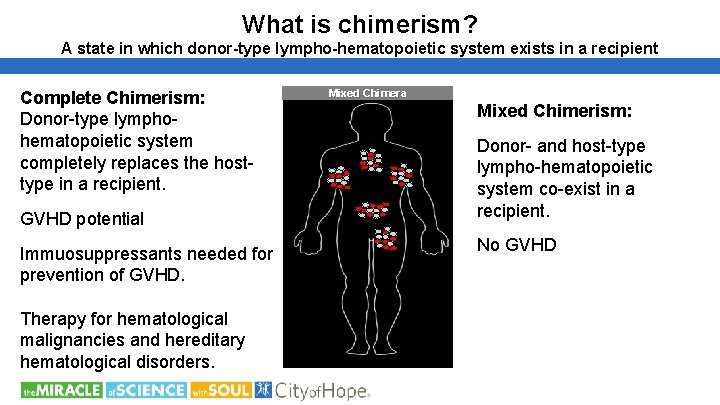
What is chimerism? A state in which donor-type lympho-hematopoietic system exists in a recipient Complete Chimerism: Donor-type lymphohematopoietic system completely replaces the hosttype in a recipient. GVHD potential Immuosuppressants needed for prevention of GVHD. Therapy for hematological malignancies and hereditary hematological disorders. Mixed Chimera Mixed Chimerism: Donor- and host-type lympho-hematopoietic system co-exist in a recipient. No GVHD
Mixed chimerism: A curative therapy for severe sickle cell disease (SCD) • Classical HCT with myeloablative therapy/ reduced intensity conditioning – Complete chimerism, risk of Gv. HD • Some cases of mixed chimerism – With donor chimerism as low as 11% – Sufficient to eliminate signs and symptoms of SCD – Limited Gv. HD – Improves quality of life
Clinical Protocol A PHASE I PILOT STUDY EVALUATING SAFETY AND FEASIBILITY OF GENE THERAPY WITH AUTOLOGOUS CD 34+ HEMATOPOIETIC STEM/PROGENITOR CELLS [HSPCs] TRANSDUCED WITH LENTIVIRAL VECTOR ENCODING THE HUMAN g -GLOBIN GENE AND SH 734 IN ADULT SUBJECTS WITH SEVERE SICKLE CELL DISEASE Click to edit Master Presentation Date
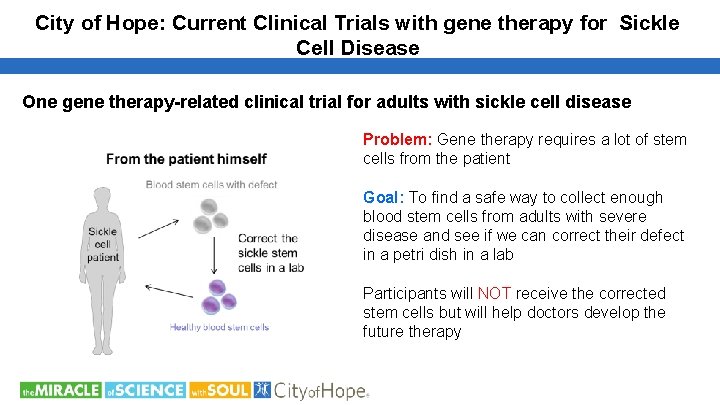
City of Hope: Current Clinical Trials with gene therapy for Sickle Cell Disease One gene therapy-related clinical trial for adults with sickle cell disease Problem: Gene therapy requires a lot of stem cells from the patient Goal: To find a safe way to collect enough blood stem cells from adults with severe disease and see if we can correct their defect in a petri dish in a lab Participants will NOT receive the corrected stem cells but will help doctors develop the future therapy
Hypotheses • It is feasible to mobilize autologous hematopoietic stem cells with plerixafor, and collect a sufficient number of CD 34+ HSPC for transduction and transplant (ongoing PISMO trial) • A reduced intensity conditioning regimen with melphalan will enable a successful transplant and engraftment of autologous HSPC transduced with LVg. Gsh 7 • The lentiviral vector encoding the human γ-globin gene will result in high-level production of exogenous g-globin in adult erythroid progenitor cells leading to efficient formation of fetal hemoglobin
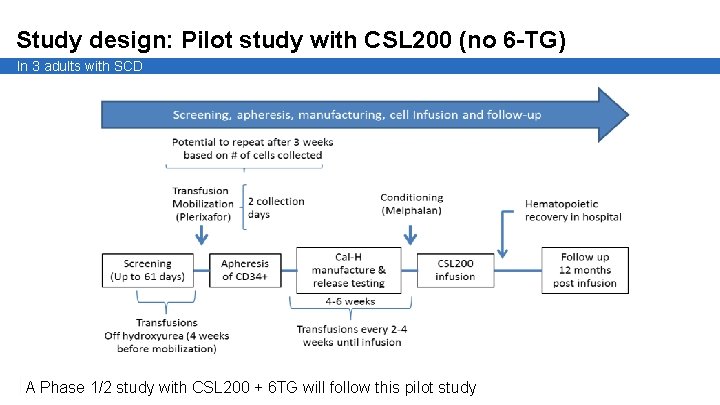
Study design: Pilot study with CSL 200 (no 6 -TG) In 3 adults with SCD A Phase 1/2 study with CSL 200 + 6 TG will follow this pilot study
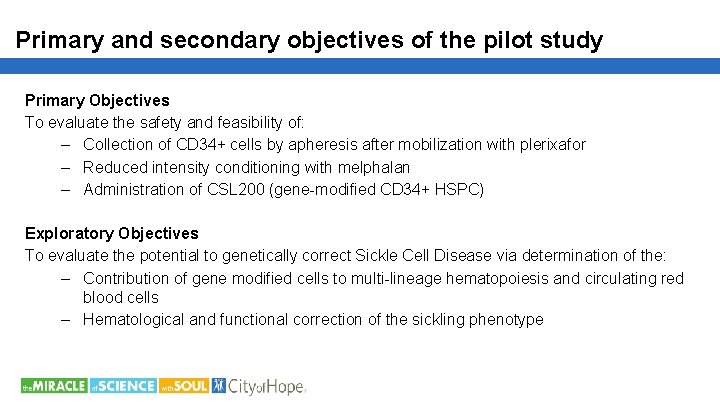
Primary and secondary objectives of the pilot study Primary Objectives To evaluate the safety and feasibility of: – Collection of CD 34+ cells by apheresis after mobilization with plerixafor – Reduced intensity conditioning with melphalan – Administration of CSL 200 (gene-modified CD 34+ HSPC) Exploratory Objectives To evaluate the potential to genetically correct Sickle Cell Disease via determination of the: – Contribution of gene modified cells to multi-lineage hematopoiesis and circulating red blood cells – Hematological and functional correction of the sickling phenotype
Do you Want to Learn More? • Joseph Rosenthal, MD: jrosenth@coh. org • Anna Pawlowska, MD: apawlows@coh. org • Teresa Kim, RN: teresakim@coh. org • Lisa Pullens, RN: lpullens@coh. org
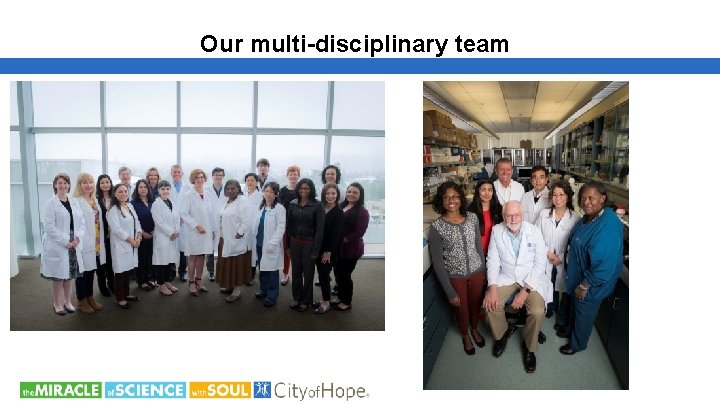
Our multi-disciplinary team • Insert picture of team
Questions? THANK YOU!!!
- Slides: 41