Darren Kruse LSJC 2007 Social Justice Issues arising
- Slides: 82
Darren Kruse LSJC 2007 Social Justice Issues arising from the The National Water Trading Market, and the Commonwealth’s Water Bill September 2007
Roadmap 1. Environmental Issues 2. One Mitigation Strategy • The Water Market and Water Trading 3. Commonwealth Water Bill 2007
Environmental Equation Over allocation + Drought + Climate Change + Governance = Minimal allocations for Irrigators Increased Salinity – undrinkable in Adelaide ? Coorong / Lower Lakes Wetlands Cut off Domestic Water restrictions
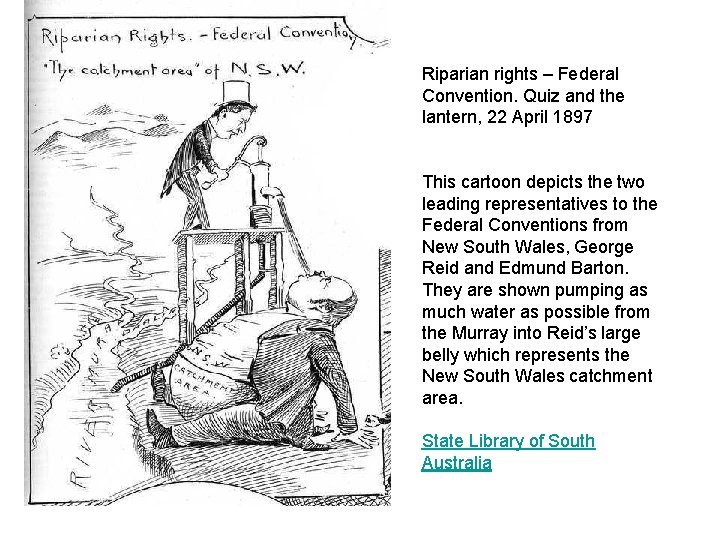
Riparian rights – Federal Convention. Quiz and the lantern, 22 April 1897 This cartoon depicts the two leading representatives to the Federal Conventions from New South Wales, George Reid and Edmund Barton. They are shown pumping as much water as possible from the Murray into Reid’s large belly which represents the New South Wales catchment area. State Library of South Australia
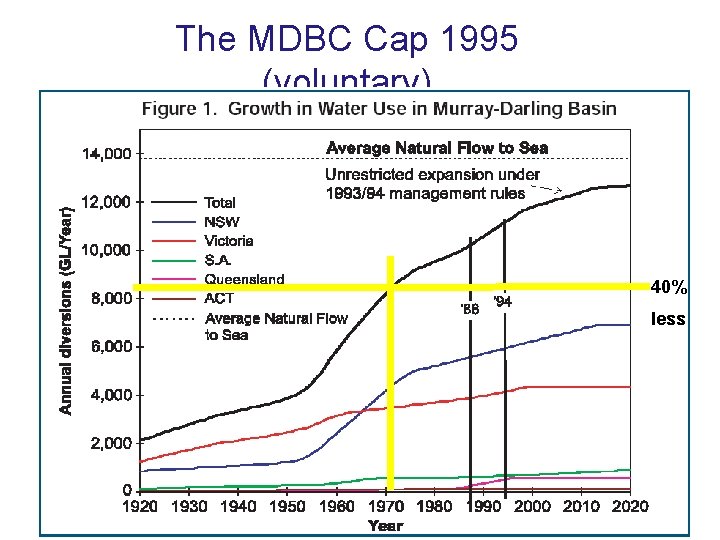
The MDBC Cap 1995 (voluntary) 40% less
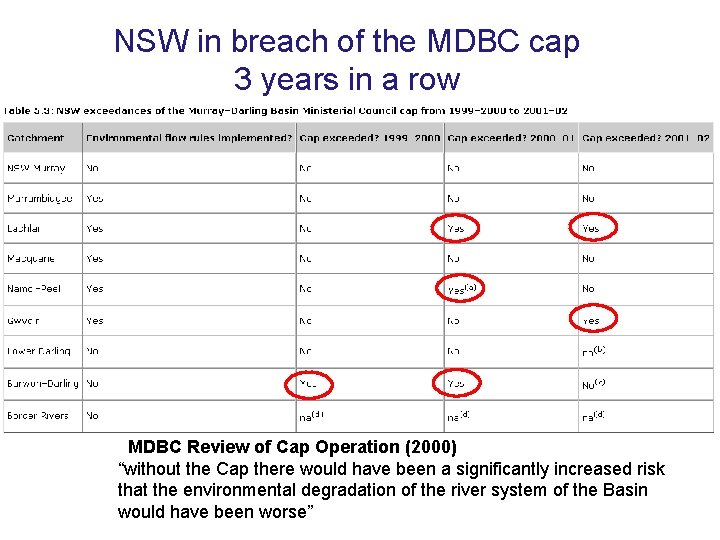
NSW in breach of the MDBC cap 3 years in a row MDBC Review of Cap Operation (2000) “without the Cap there would have been a significantly increased risk that the environmental degradation of the river system of the Basin would have been worse”
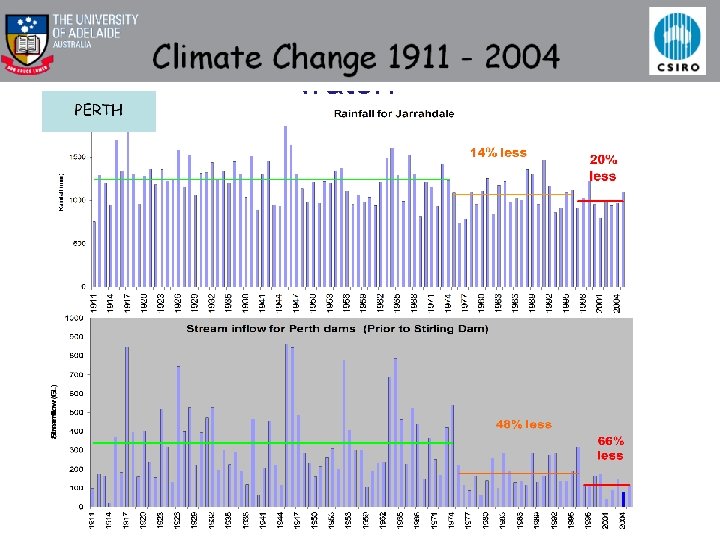
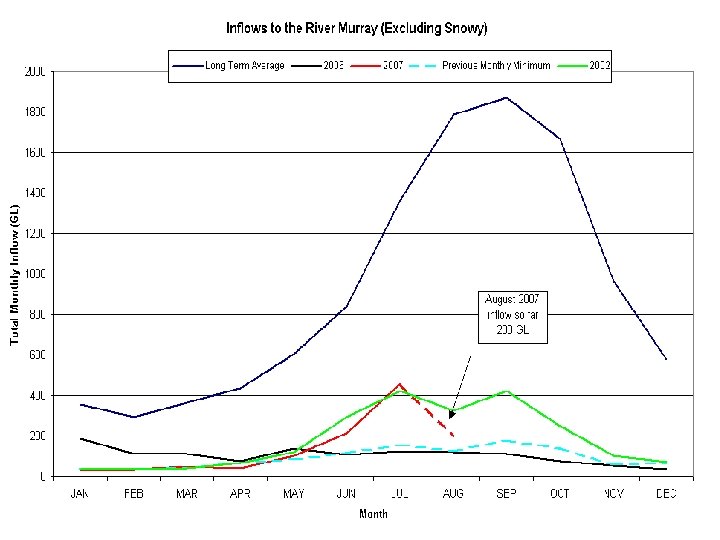
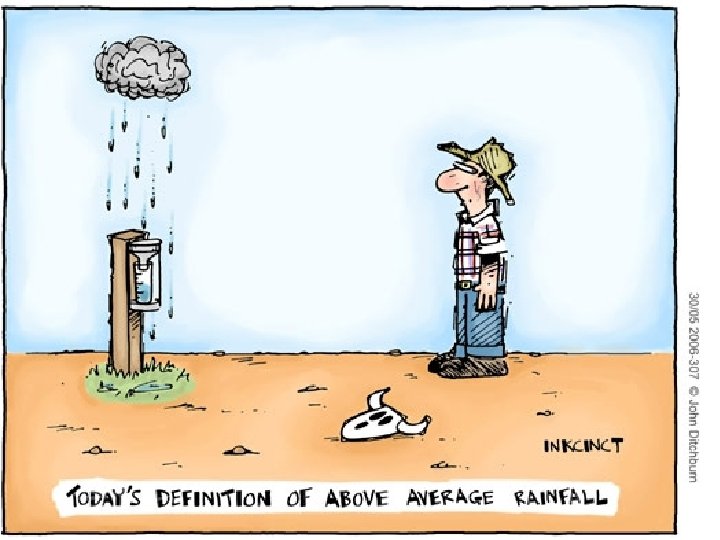
Less rain means much less water!
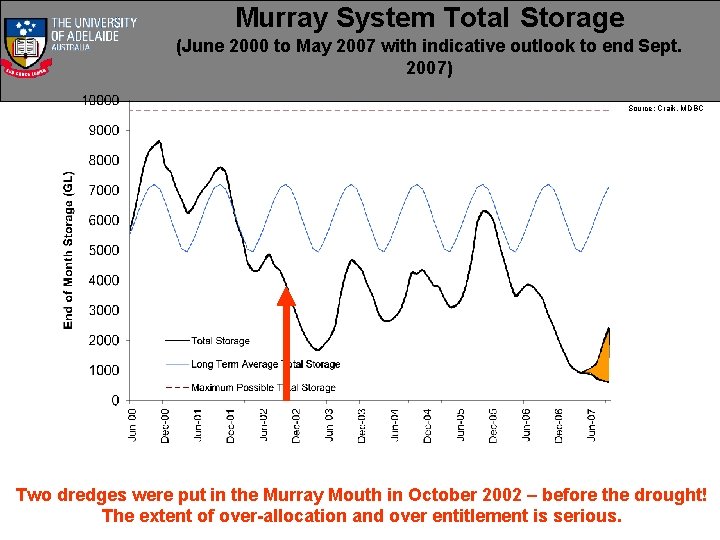
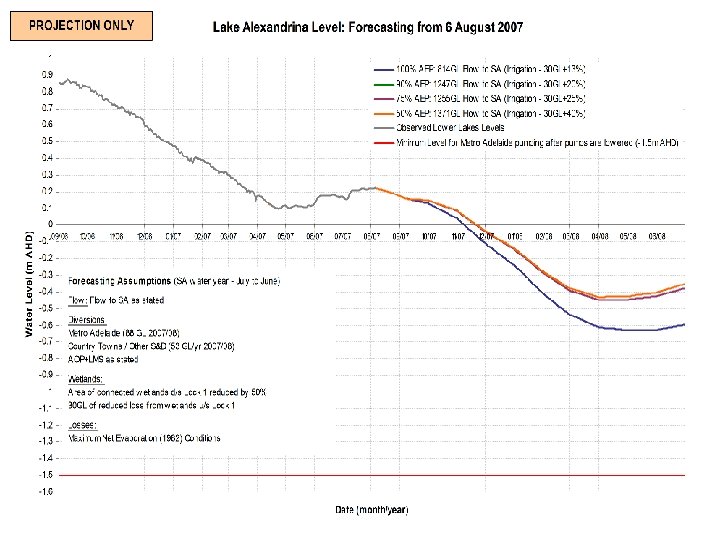
Murray System Total Storage (June 2000 to May 2007 with indicative outlook to end Sept. 2007) Source: Craik, MDBC Two dredges were put in the Murray Mouth in October 2002 – before the drought! The extent of over-allocation and over entitlement is serious.
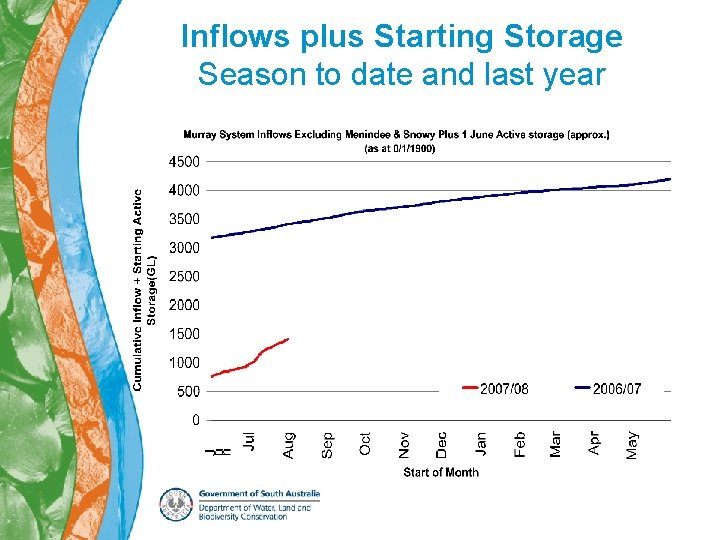
Inflows plus Starting Storage Season to date and last year
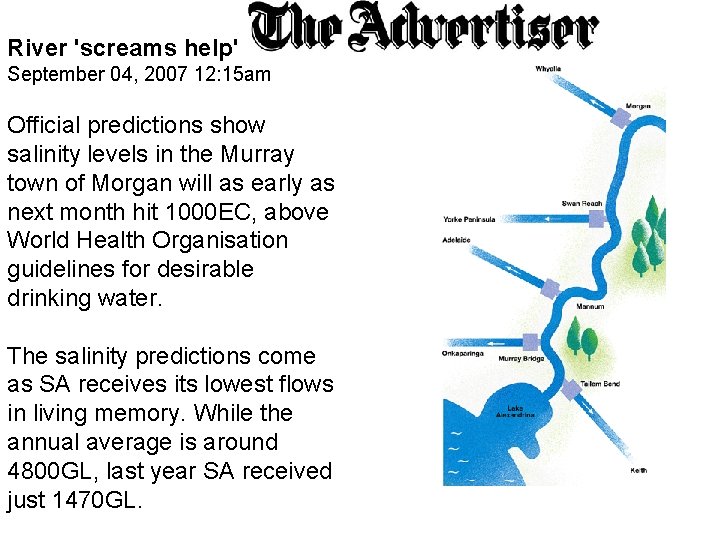
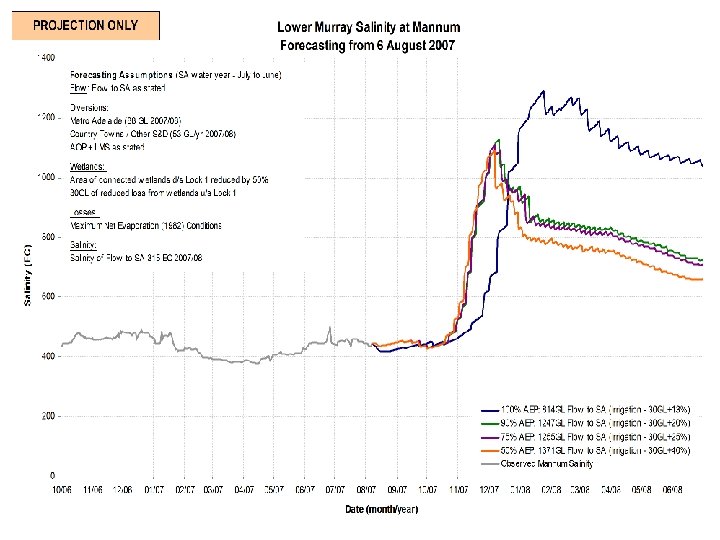
River 'screams help' September 04, 2007 12: 15 am Official predictions show salinity levels in the Murray town of Morgan will as early as next month hit 1000 EC, above World Health Organisation guidelines for desirable drinking water. The salinity predictions come as SA receives its lowest flows in living memory. While the annual average is around 4800 GL, last year SA received just 1470 GL.
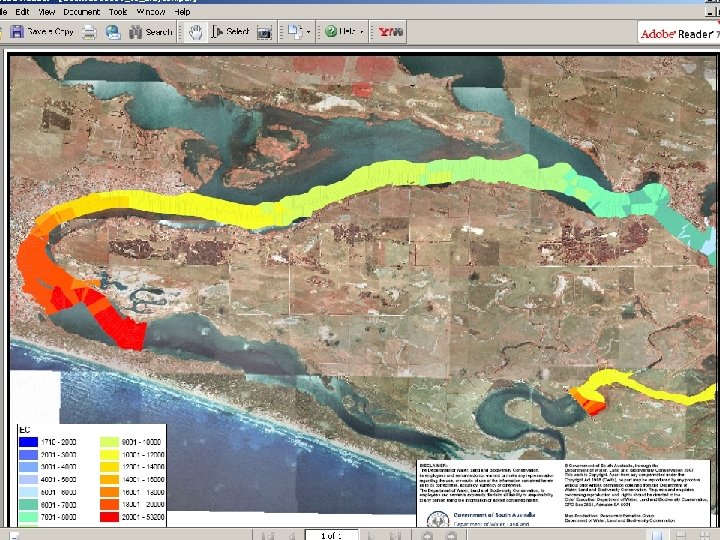
Salinity Monitoring
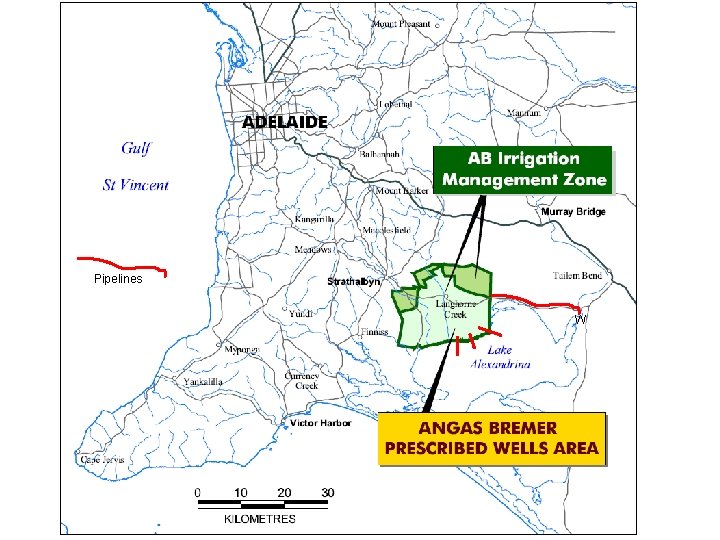
Pipelines W
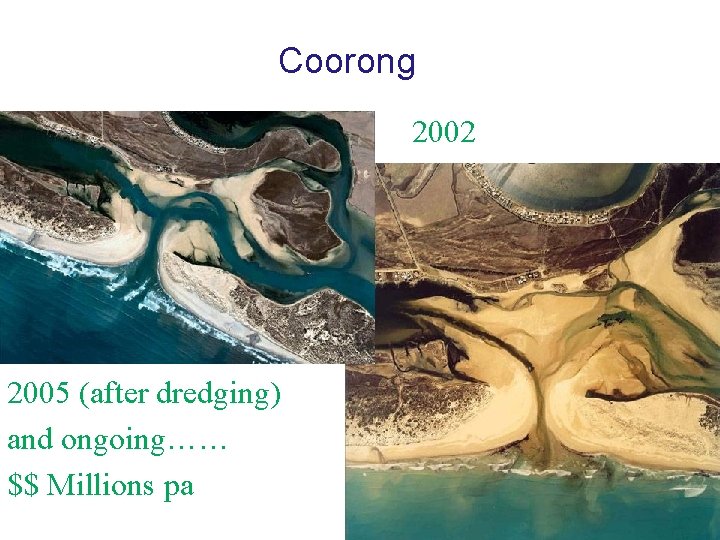
Coorong 2002 2005 (after dredging) and ongoing…… $$ Millions pa
RAMSAR Wetland Closures • There has been temporary disconnection of 27 regulated wetlands and up to 9 unregulated wetlands (stage 1) • Dual benefits are (a) water savings from reducing evaporation and (b) minimising the drainage of saline and nutrient rich water back into the river • Sites identified for closure include Lake Bonney, Gurra, Jaeschke Lagoon*, Ross Lagoon*, and Murbko South Lagoon • Issues associated with closure include exposure of acid sulfate soils, salinisation and need for a refill strategy • Many wetlands below Lock 1 have naturally disconnected due to low water levels
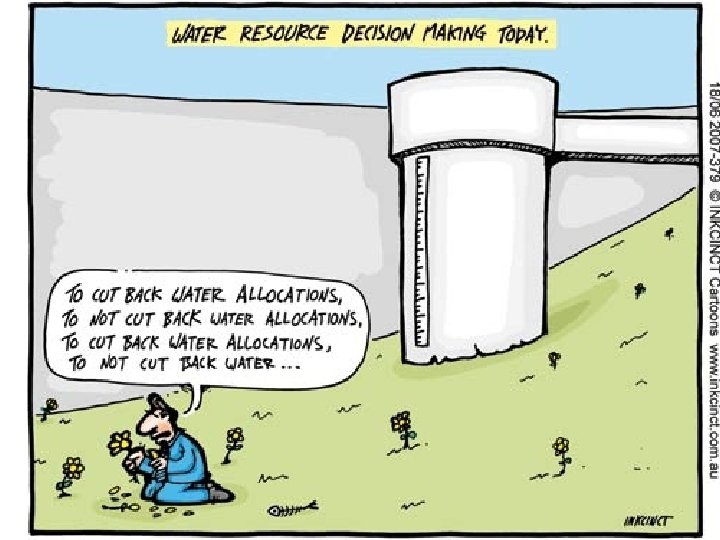
it’s bad. really, really bad Minister Maywald 31 August 2007 "We have an outlook that looks absolutely diabolical and you're suggesting we should have an argument about buckets and drippers. I think we need to lift the level of the debate and we also need to lift the level of understanding in our community that this is serious. "
Mitigation Strategies
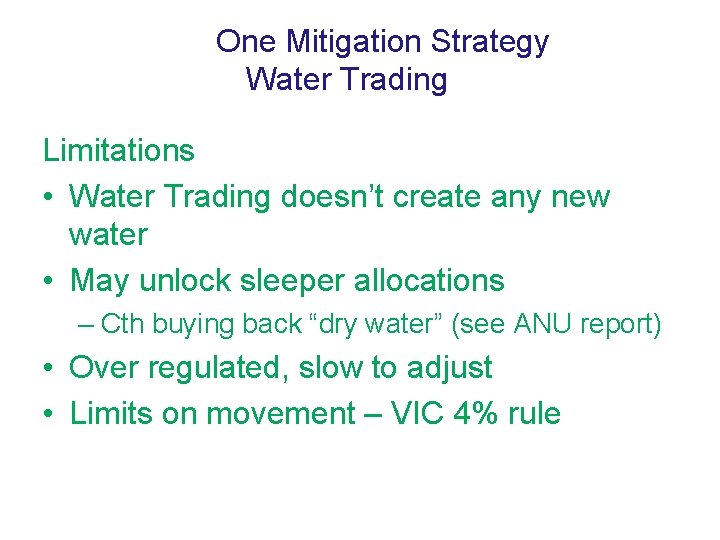
One Mitigation Strategy Water Trading Limitations • Water Trading doesn’t create any new water • May unlock sleeper allocations – Cth buying back “dry water” (see ANU report) • Over regulated, slow to adjust • Limits on movement – VIC 4% rule
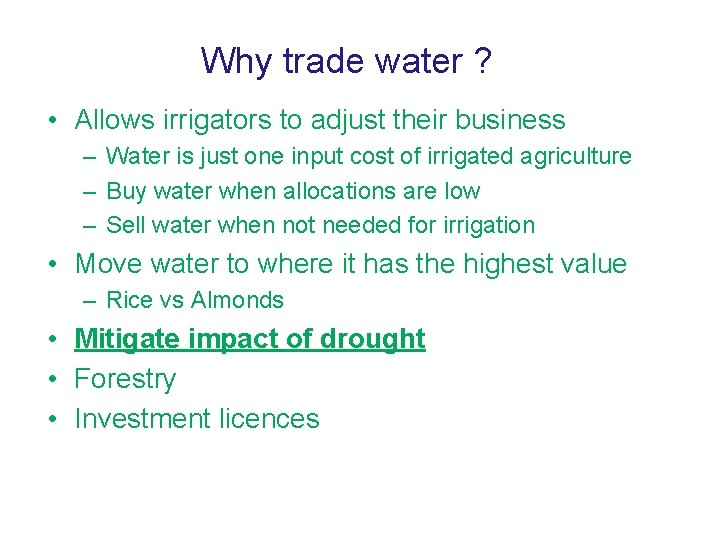
Why trade water ? • Allows irrigators to adjust their business – Water is just one input cost of irrigated agriculture – Buy water when allocations are low – Sell water when not needed for irrigation • Move water to where it has the highest value – Rice vs Almonds • Mitigate impact of drought • Forestry • Investment licences
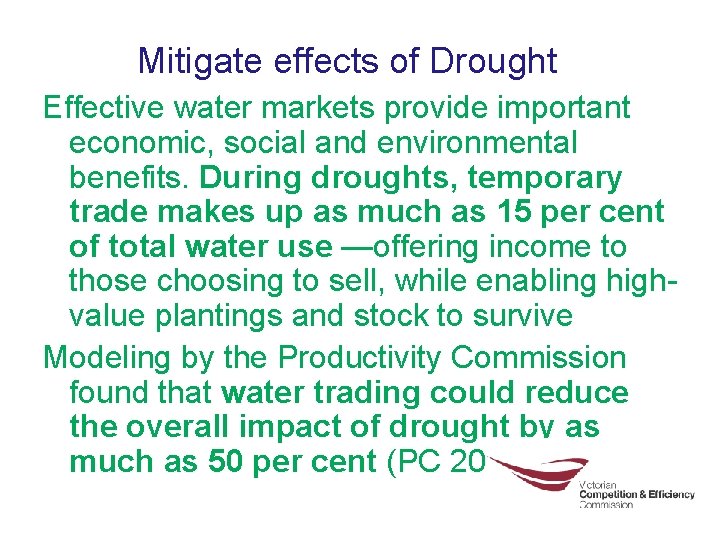
Mitigate effects of Drought Effective water markets provide important economic, social and environmental benefits. During droughts, temporary trade makes up as much as 15 per cent of total water use —offering income to those choosing to sell, while enabling highvalue plantings and stock to survive Modeling by the Productivity Commission found that water trading could reduce the overall impact of drought by as much as 50 per cent (PC 2004).
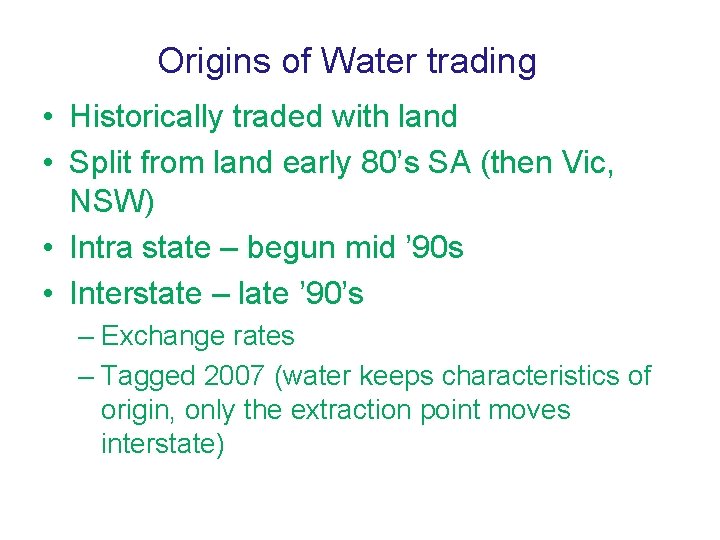
Origins of Water trading • Historically traded with land • Split from land early 80’s SA (then Vic, NSW) • Intra state – begun mid ’ 90 s • Interstate – late ’ 90’s – Exchange rates – Tagged 2007 (water keeps characteristics of origin, only the extraction point moves interstate)
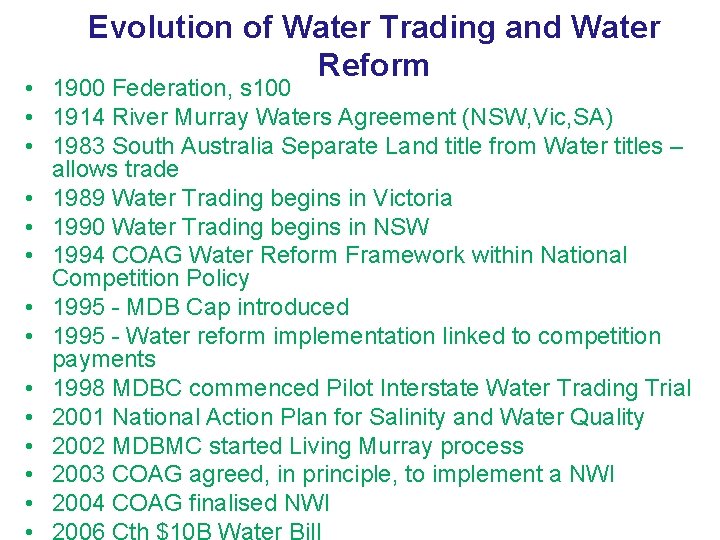
Evolution of Water Trading and Water Reform • 1900 Federation, s 100 • 1914 River Murray Waters Agreement (NSW, Vic, SA) • 1983 South Australia Separate Land title from Water titles – allows trade • 1989 Water Trading begins in Victoria • 1990 Water Trading begins in NSW • 1994 COAG Water Reform Framework within National Competition Policy • 1995 - MDB Cap introduced • 1995 - Water reform implementation linked to competition payments • 1998 MDBC commenced Pilot Interstate Water Trading Trial • 2001 National Action Plan for Salinity and Water Quality • 2002 MDBMC started Living Murray process • 2003 COAG agreed, in principle, to implement a NWI • 2004 COAG finalised NWI • 2006 Cth $10 B Water Bill
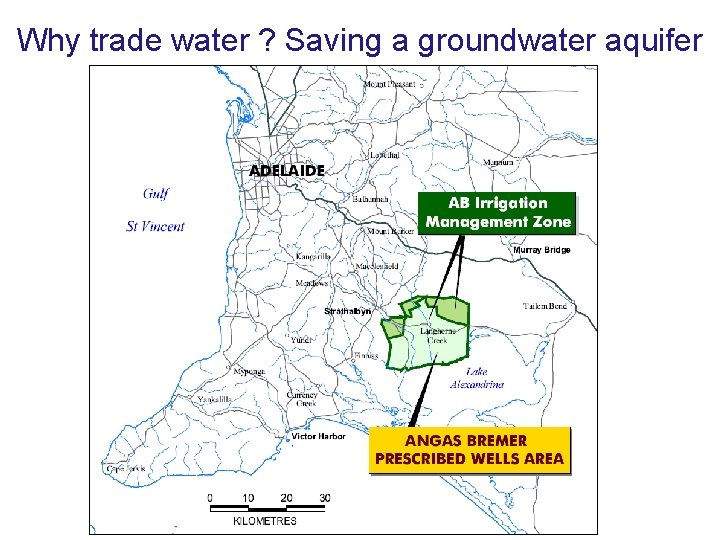
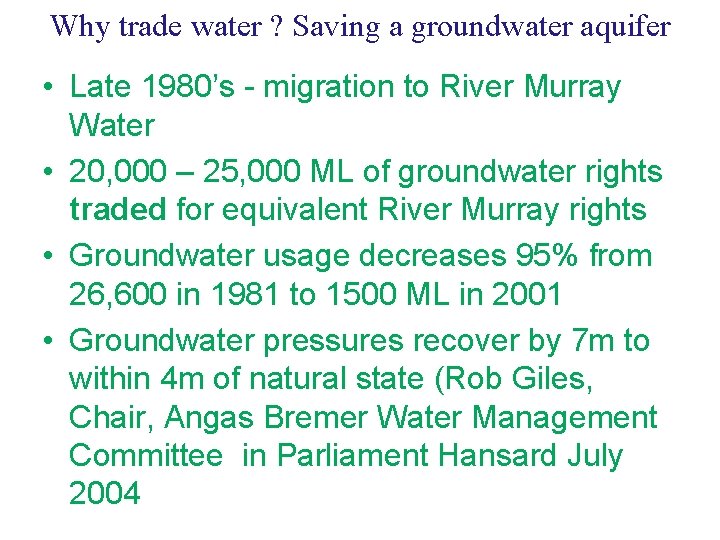
Why trade water ? Saving a groundwater aquifer
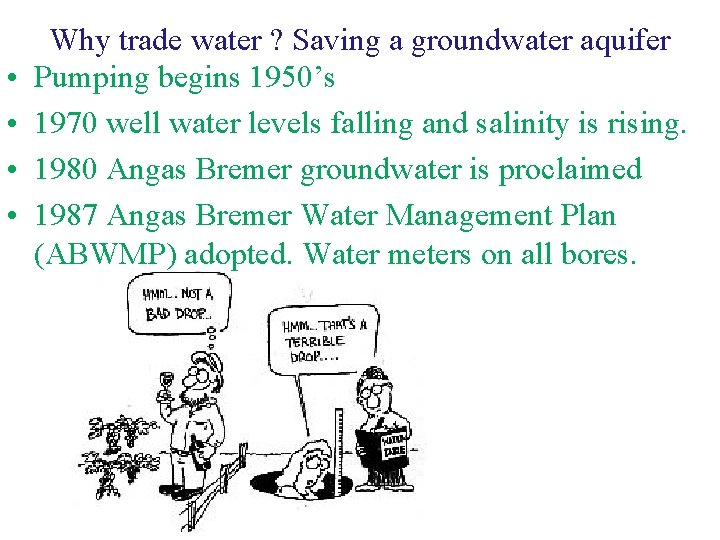
• • Why trade water ? Saving a groundwater aquifer Pumping begins 1950’s 1970 well water levels falling and salinity is rising. 1980 Angas Bremer groundwater is proclaimed 1987 Angas Bremer Water Management Plan (ABWMP) adopted. Water meters on all bores.
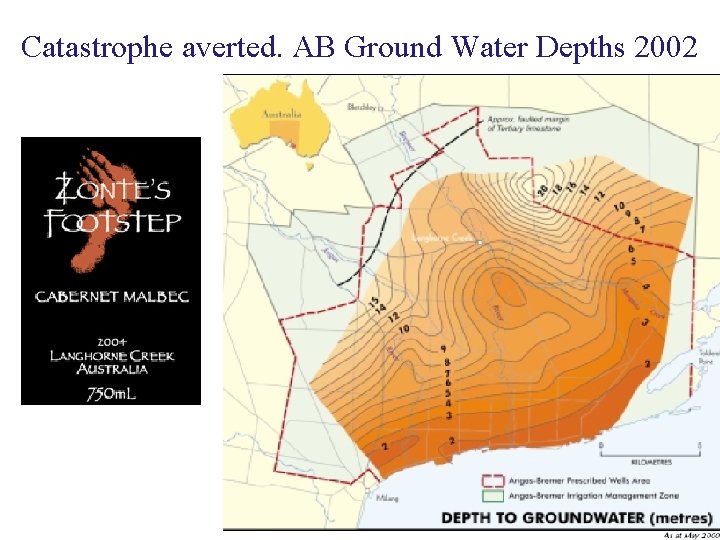
Why trade water ? Saving a groundwater aquifer • Late 1980’s - migration to River Murray Water • 20, 000 – 25, 000 ML of groundwater rights traded for equivalent River Murray rights • Groundwater usage decreases 95% from 26, 600 in 1981 to 1500 ML in 2001 • Groundwater pressures recover by 7 m to within 4 m of natural state (Rob Giles, Chair, Angas Bremer Water Management Committee in Parliament Hansard July 2004
Catastrophe averted. AB Ground Water Depths 2002
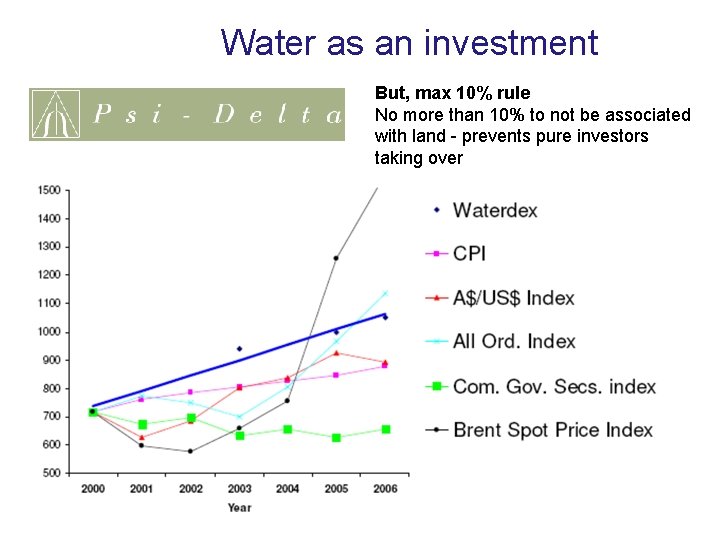
Water as an investment But, max 10% rule No more than 10% to not be associated with land - prevents pure investors taking over
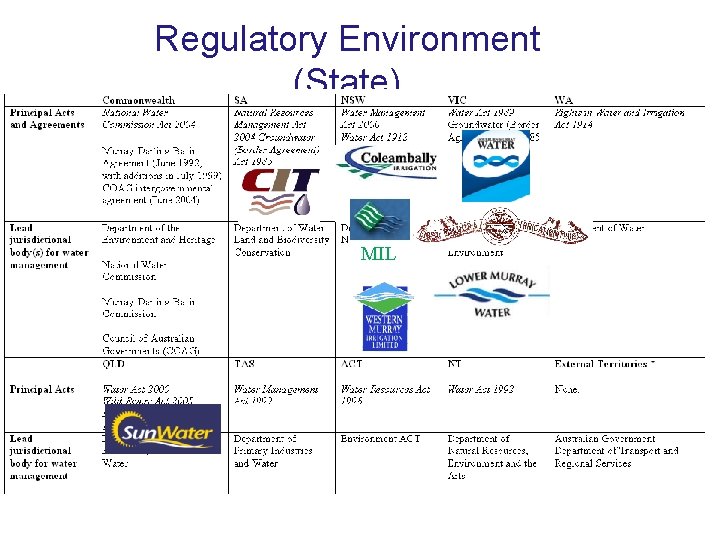
Not one National Market • Instead, a host of localised markets that operate independently of each other – trading within these markets is regulated on a State level and often also a Water authority level • Eg ; NSW Gov DIPNR and MIL • Eg ; Vic Gov DSE and FMIT • Eg ; SA Gov DWBL and CIT • Each market has different rules, and even within markets the rules can vary depending on the state and the authority. • Trading rules can vary at any time without any interstate consultation
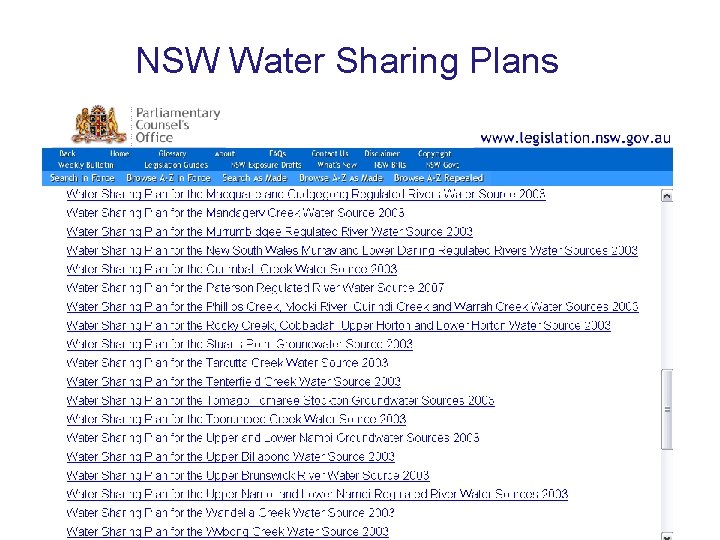
NSW Water Sharing Plans
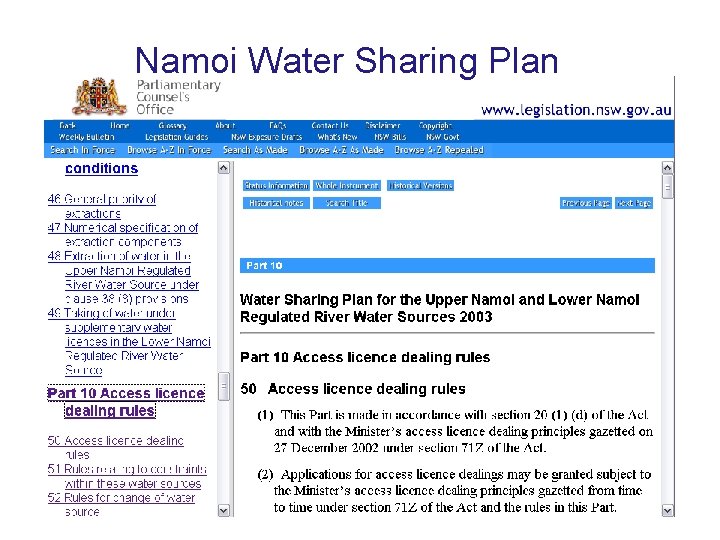
Namoi Water Sharing Plan
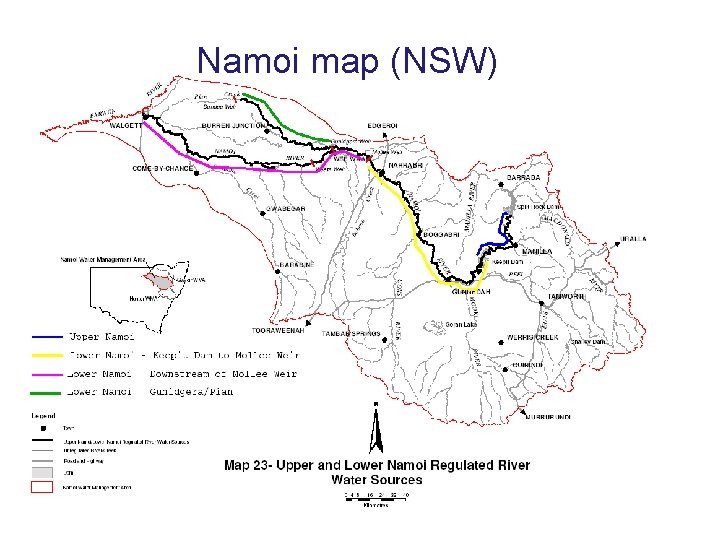
Namoi map (NSW)
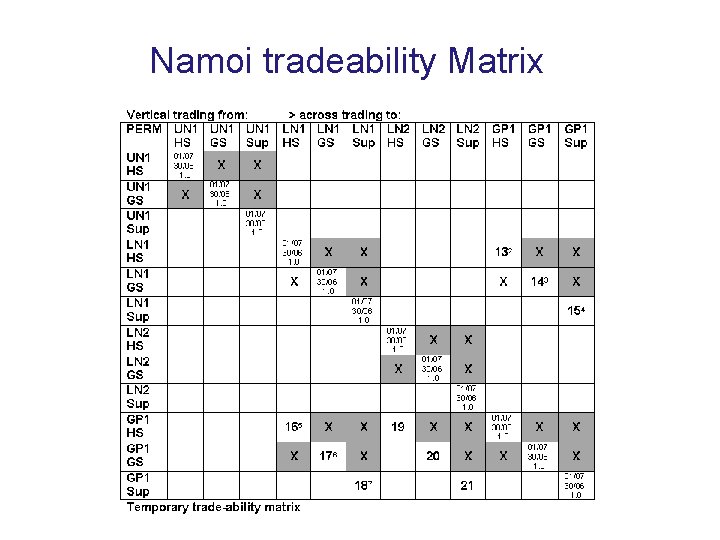
Namoi tradeability Matrix
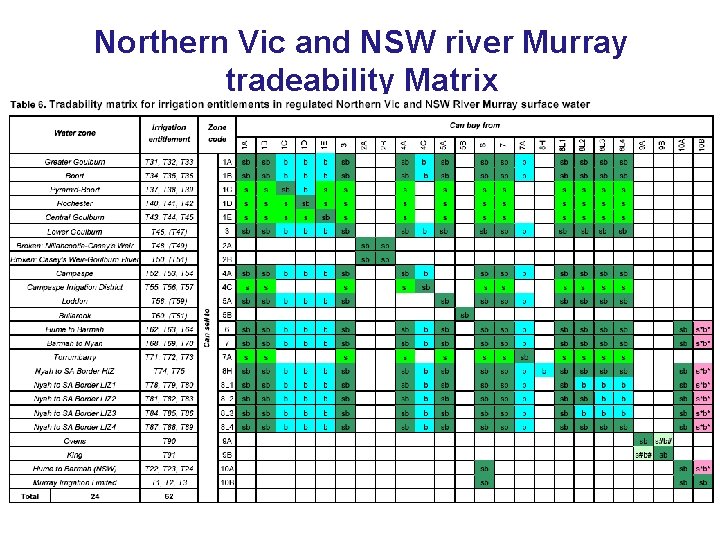
Northern Vic and NSW river Murray tradeability Matrix
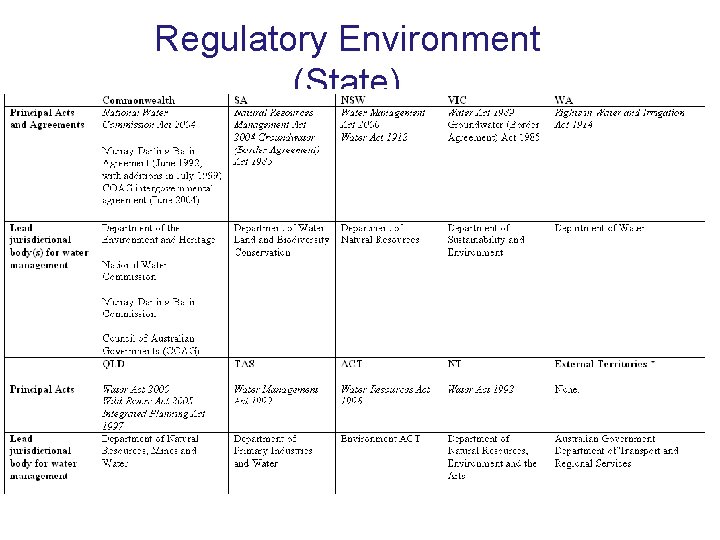
Regulatory Environment (State)
Regulatory Environment (State) MIL
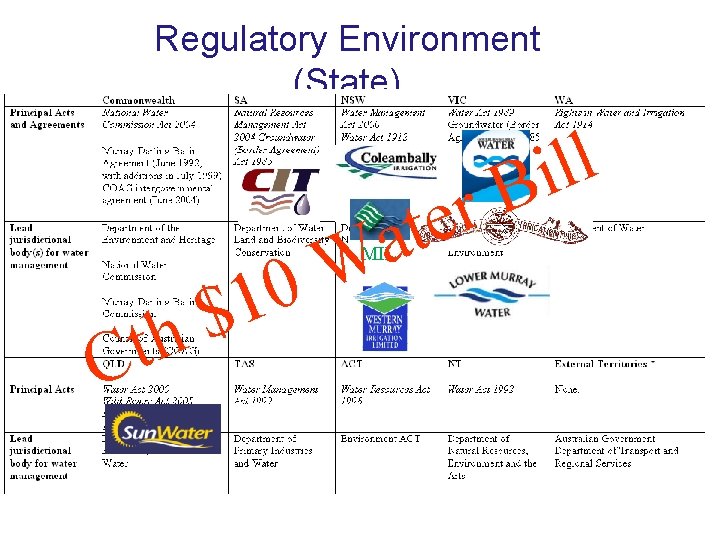
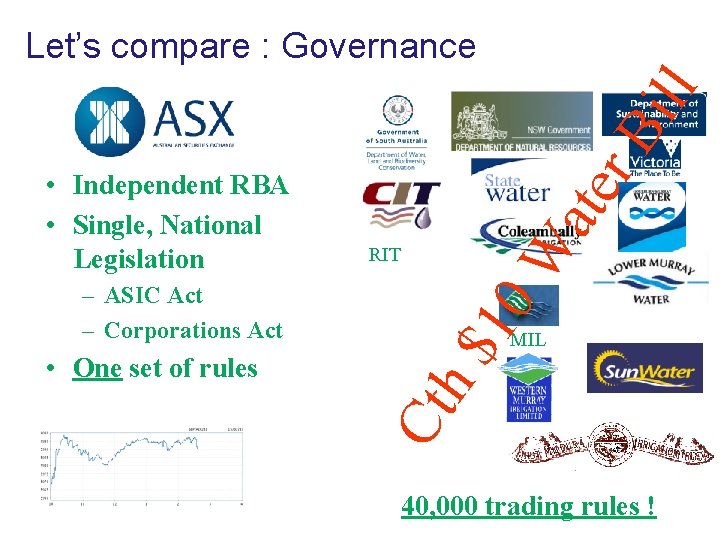
Regulatory Environment (State) W 0 1 $ th r e t a MIL C l l i B
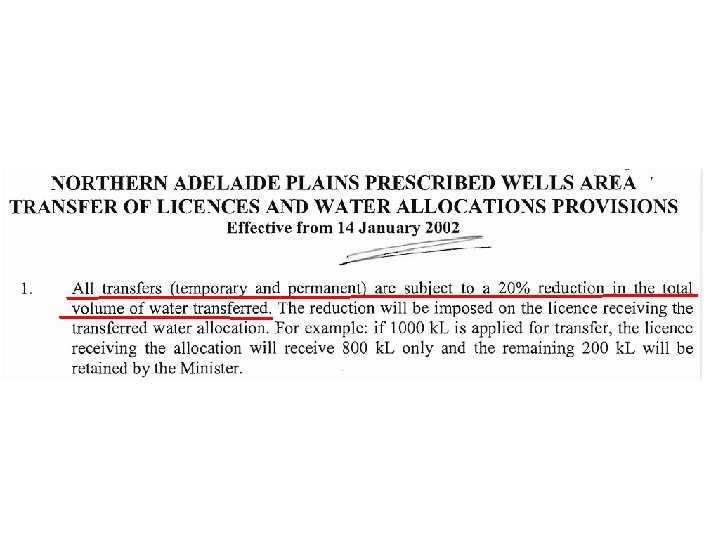
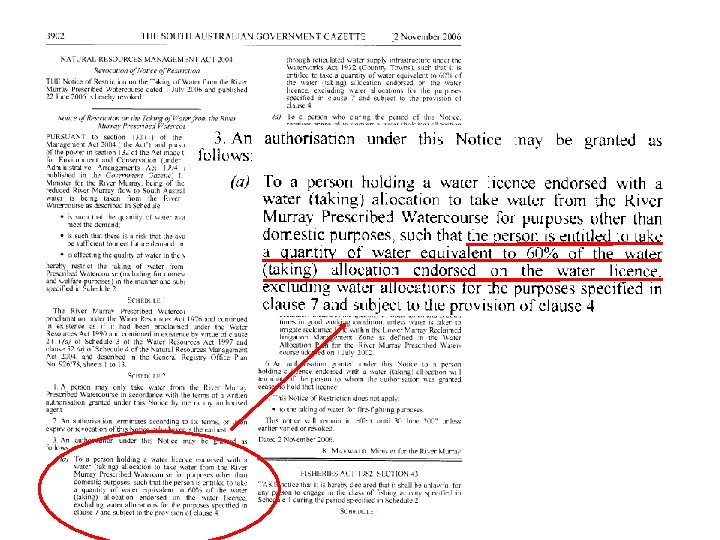
Social Justice Issue • The rules can change with a stroke of the pen • No compensation by State governments
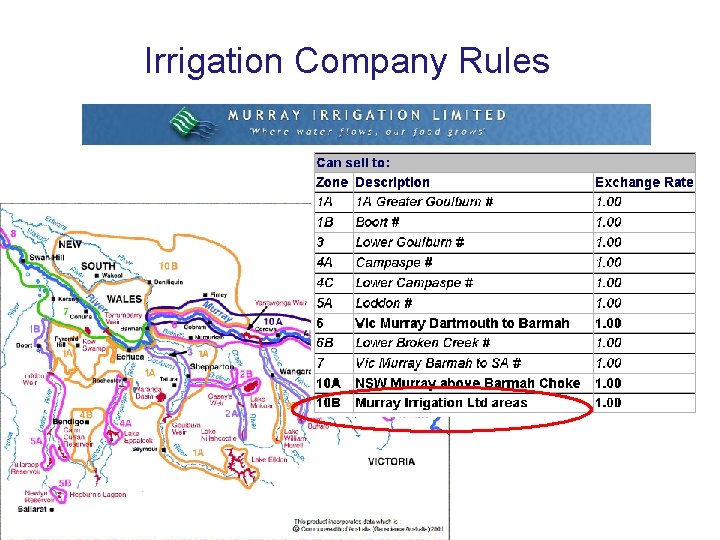
Irrigation Company Rules
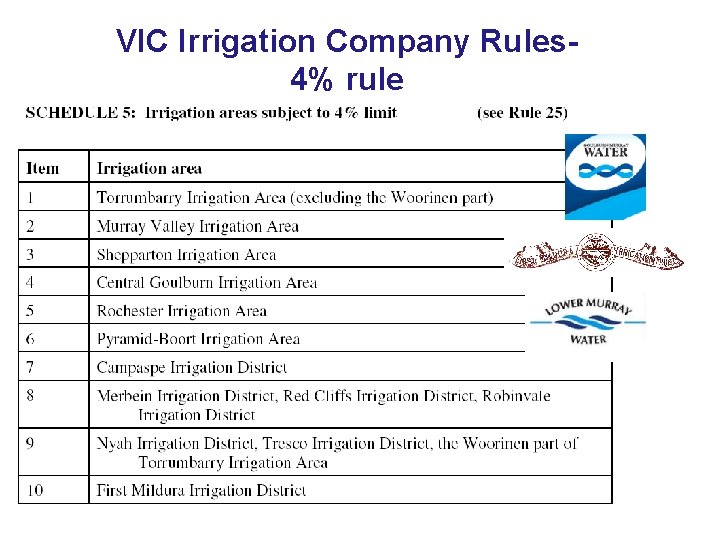
VIC Irrigation Company Rules 4% rule
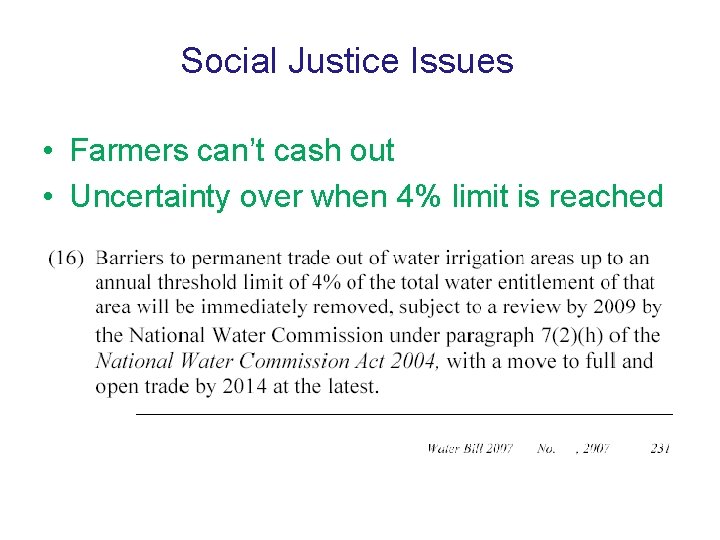
Social Justice Issues • Farmers can’t cash out • Uncertainty over when 4% limit is reached
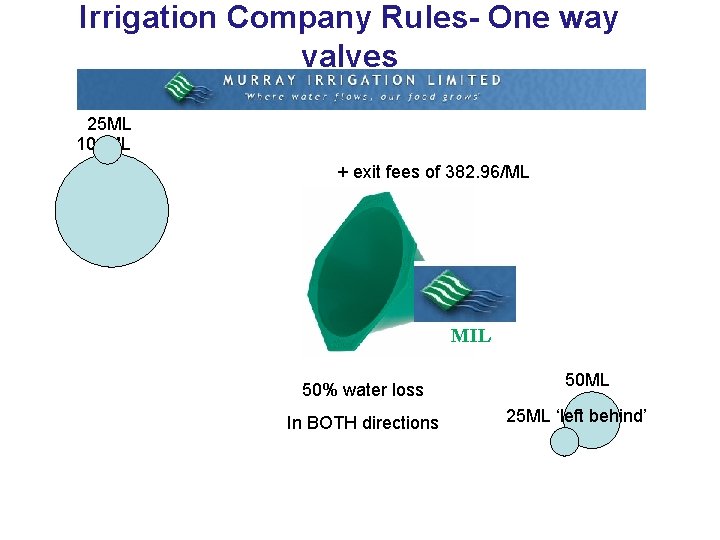
Irrigation Company Rules- One way valves 25 ML 100 ML + exit fees of 382. 96/ML MIL 50% water loss In BOTH directions 50 ML 25 ML ‘left behind’
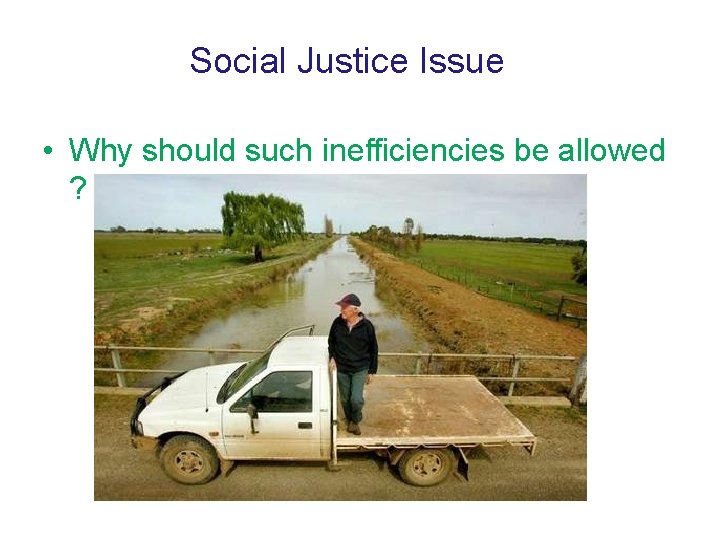
Social Justice Issue • Why should such inefficiencies be allowed ?
It’s complex…
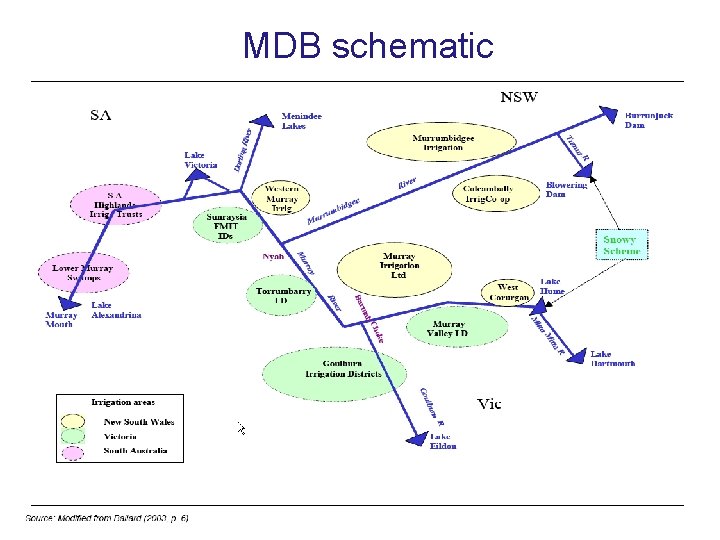
MDB schematic
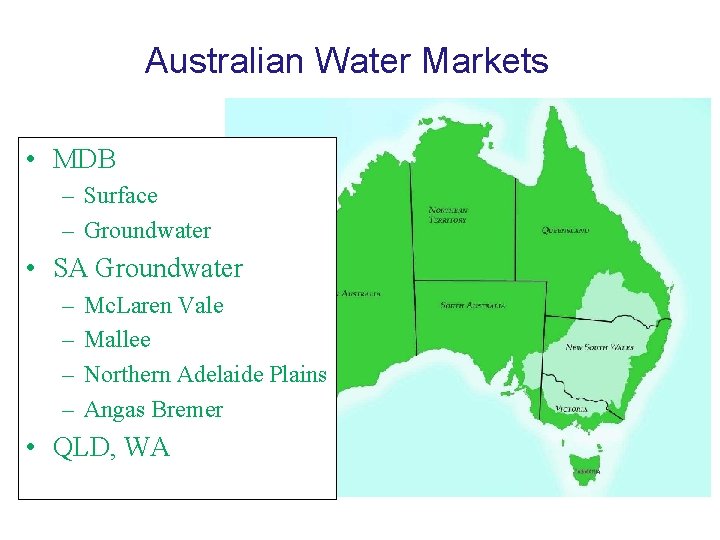
Australian Water Markets • MDB – Surface – Groundwater • SA Groundwater – – Mc. Laren Vale Mallee Northern Adelaide Plains Angas Bremer • QLD, WA
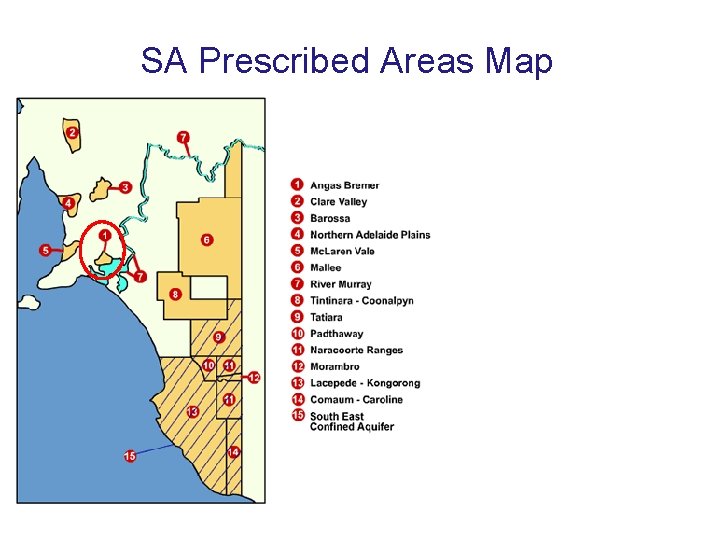
SA Prescribed Areas Map
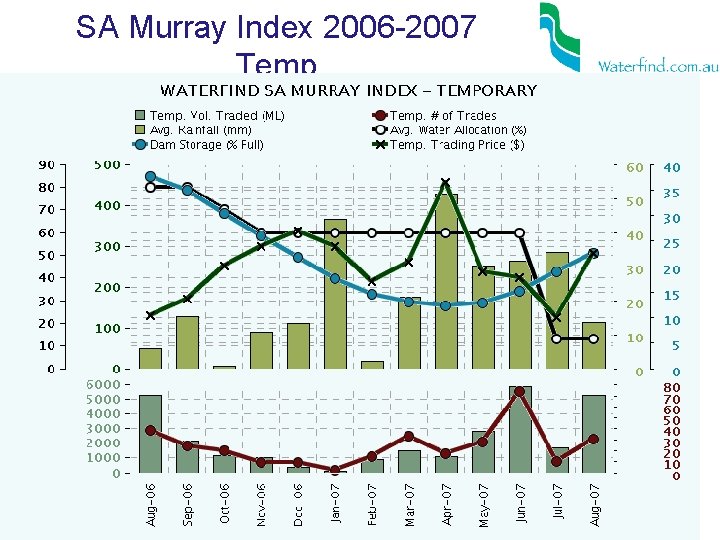
SA Murray Index 2006 -2007 Temp
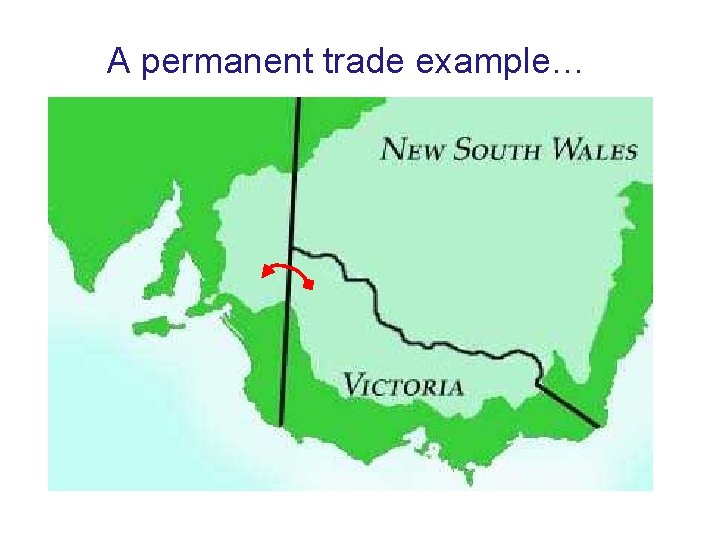
A permanent trade example…
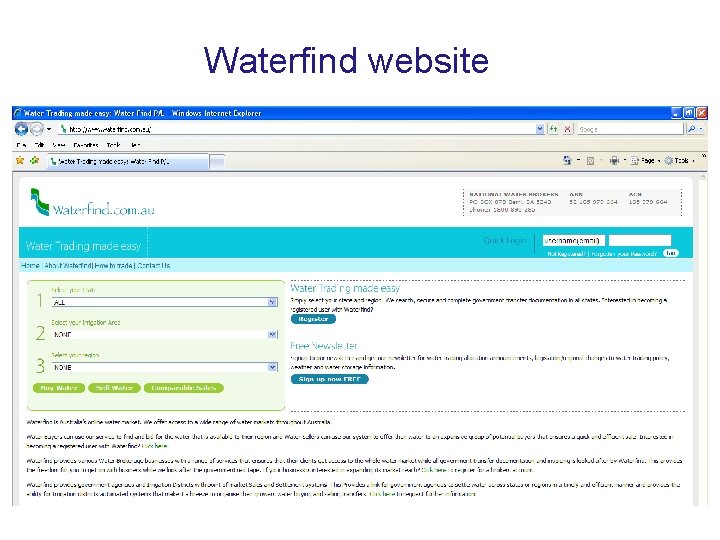
Waterfind website
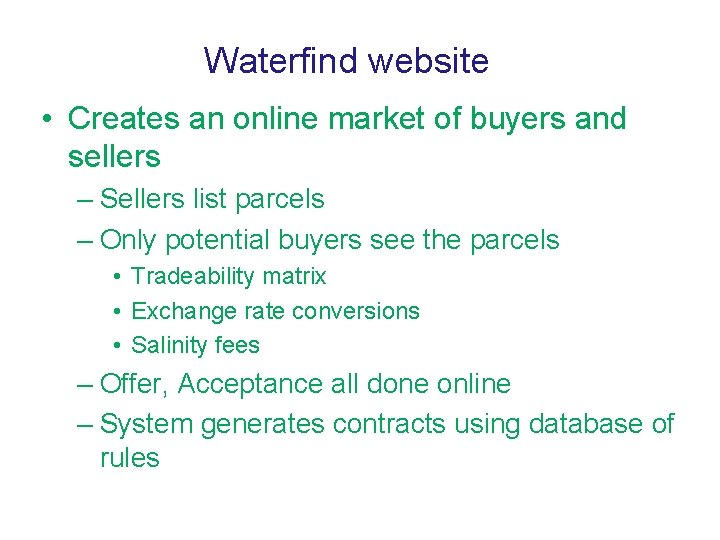
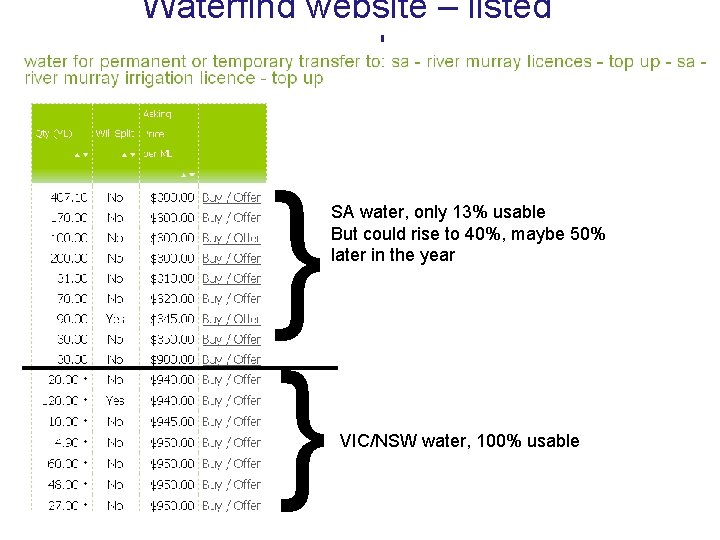
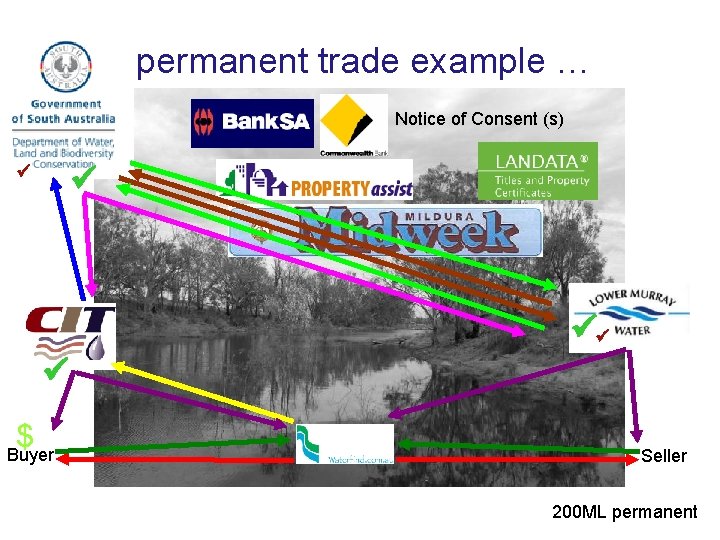
Waterfind website • Creates an online market of buyers and sellers – Sellers list parcels – Only potential buyers see the parcels • Tradeability matrix • Exchange rate conversions • Salinity fees – Offer, Acceptance all done online – System generates contracts using database of rules
Waterfind website – listed parcels } } SA water, only 13% usable But could rise to 40%, maybe 50% later in the year VIC/NSW water, 100% usable
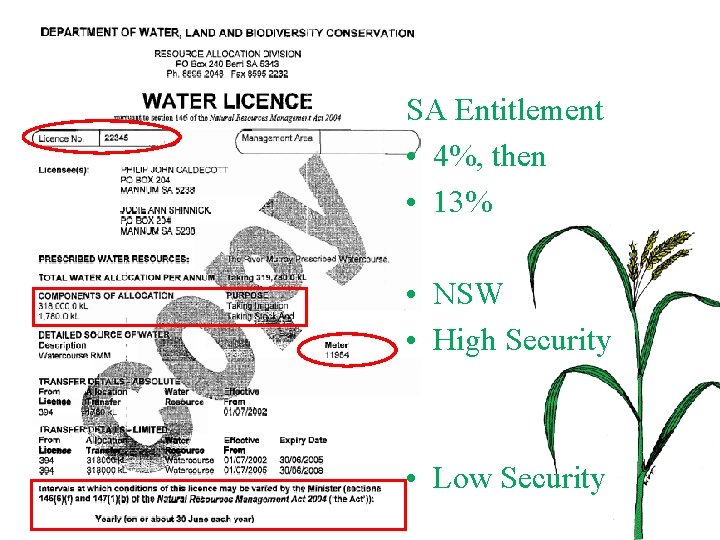
SA Entitlement • 4%, then • 13% • NSW • High Security • Low Security
Social justice Issue • Permamant Allocation “right” can be varied yearly • Entitlements are varied within each year • Uncertainty for irrigators
A permanent trade example… Seller Buyer
A permanent trade example … Notice of Consent (s) ü ü üü ü $ Buyer Seller 200 ML permanent
Administrative efficiency and trading A tagged interstate water trade from NSW to Vic requires • Extraction of entitlement from Murray Irrigation Ltd – 17% left behind, $400 admin. fee + $382. 96/ML “exit” fee • Organise to get water out of NSW – 17 Administrative Steps with NSW govt – 8 forms with 8 cheques for 4*$105. 69 + 3*$86 +$90 = $665. 07 – Irrigators can lodge by post but brokers must lodge personally – A 28 day NT statutory process to get a “zero” use approval – 3 -4 months processing of forms one by one • Compare this with share market’s “one” electronic click
It’s complex…
Social Justice Issues. . • • • Money held up by the broker Unable to use water Uncertainty – trade may be declined Rising markets -> ratbag vendors Unregulated brokers Hardship on those who least need any additional hardship
All markets need. . • • Transparency Common accounting standards Liquidity Certainty and clarity of trading rules and regulations • Efficient Administration and Settlement Procedures
• One set of rules $1 – ASIC Act – Corporations Act RIT MIL Ct h • Independent RBA • Single, National Legislation 0 W ate r. B ill Let’s compare : Governance 40, 000 trading rules !
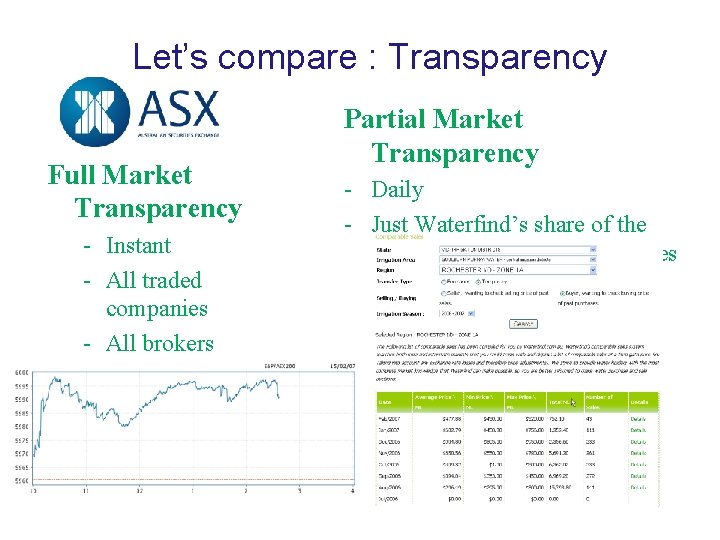
Let’s compare : Transparency Full Market Transparency - Instant - All traded companies - All brokers Partial Market Transparency - Daily - Just Waterfind’s share of the markets that Waterfind operates in
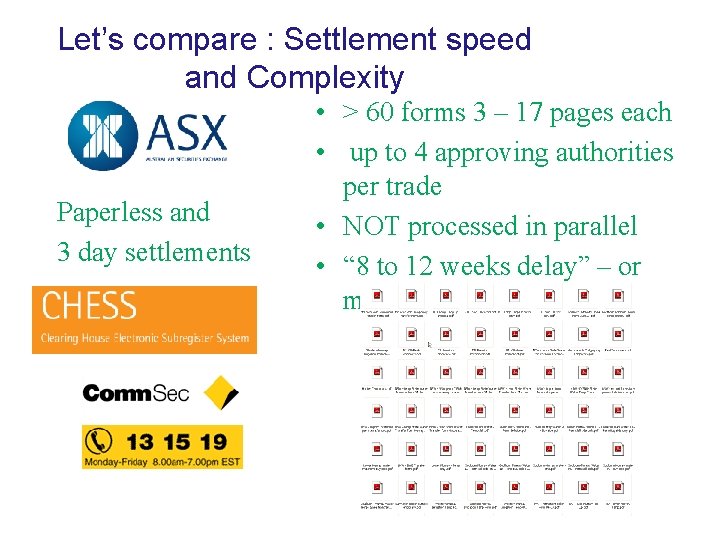
Let’s compare : Settlement speed and Complexity Paperless and 3 day settlements • > 60 forms 3 – 17 pages each • up to 4 approving authorities per trade • NOT processed in parallel • “ 8 to 12 weeks delay” – or more
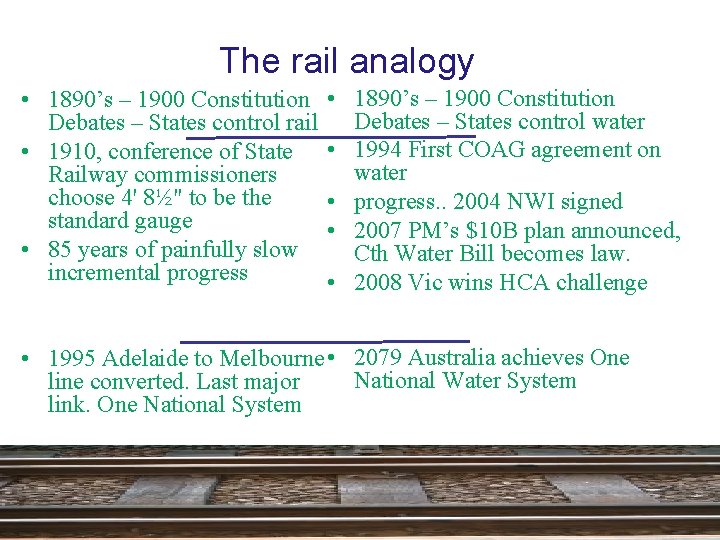
The rail analogy • 1890’s – 1900 Constitution Debates – States control rail • 1910, conference of State Railway commissioners choose 4' 8½" to be the standard gauge • 85 years of painfully slow incremental progress • 1890’s – 1900 Constitution Debates – States control water • 1994 First COAG agreement on water • progress. . 2004 NWI signed • 2007 PM’s $10 B plan announced, Cth Water Bill becomes law. • 2008 Vic wins HCA challenge • 1995 Adelaide to Melbourne • 2079 Australia achieves One National Water System line converted. Last major link. One National System
Issues with the PM’s 10 point, $10 B plan • Holistic, basin wide approach is good in principle, but keeping all other layers leads to an administrative nightmare. • Many details in the Bill are left to a further Basin Plan which has yet to be created: – – – Water Trading Water Titling Water Accounting Operational Control Legislative Control • Greater role for the ACCC • Current water reforms - continue or terminate ? • Nation needs a clear understanding of the detail - quickly
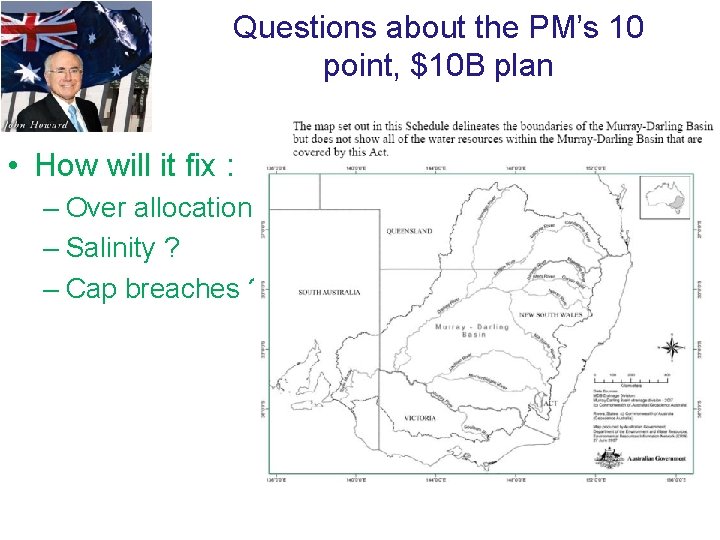
Questions about the PM’s 10 point, $10 B plan • How will it fix : – Over allocation ? – Salinity ? – Cap breaches ?
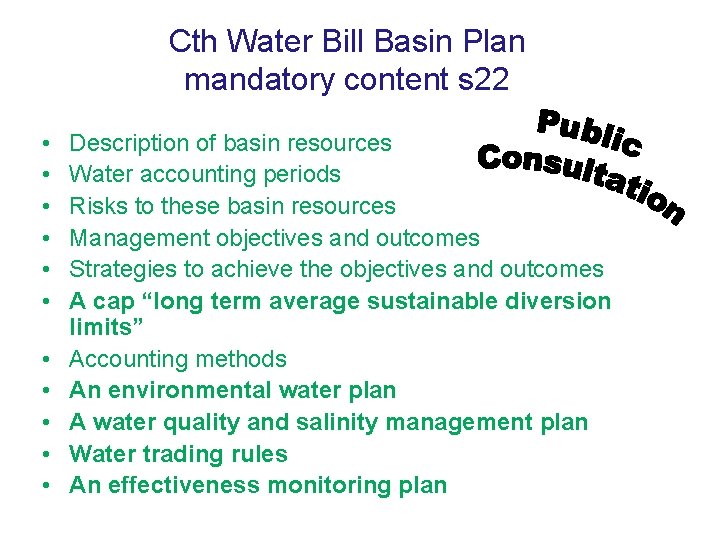
Cth Water Bill Basin Plan mandatory content s 22 • • • Description of basin resources Water accounting periods Risks to these basin resources Management objectives and outcomes Strategies to achieve the objectives and outcomes A cap “long term average sustainable diversion limits” Accounting methods An environmental water plan A water quality and salinity management plan Water trading rules An effectiveness monitoring plan
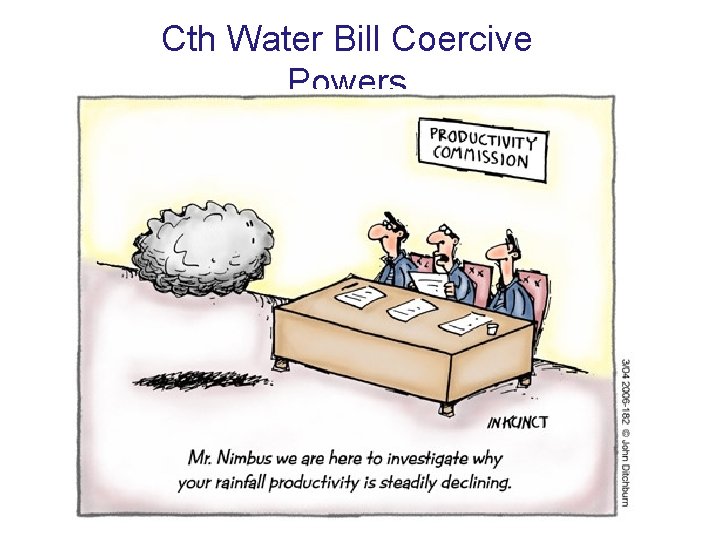
Cth Water Bill Coercive Powers
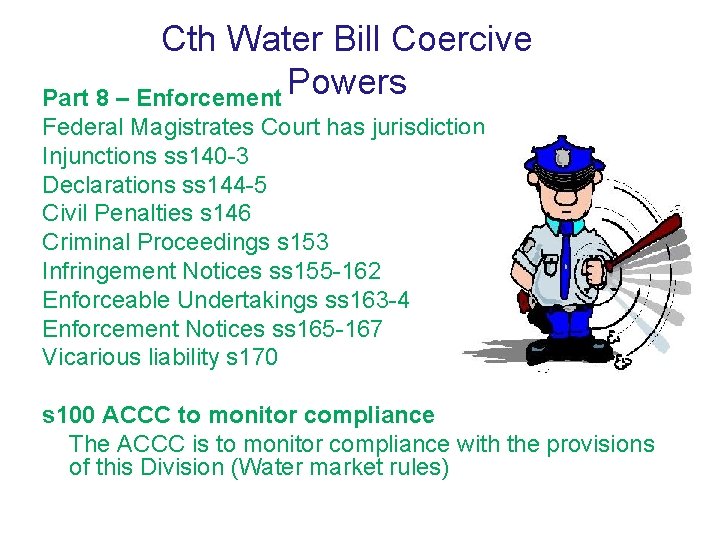
Cth Water Bill Coercive Powers Part 8 – Enforcement Federal Magistrates Court has jurisdiction Injunctions ss 140 -3 Declarations ss 144 -5 Civil Penalties s 146 Criminal Proceedings s 153 Infringement Notices ss 155 -162 Enforceable Undertakings ss 163 -4 Enforcement Notices ss 165 -167 Vicarious liability s 170 s 100 ACCC to monitor compliance The ACCC is to monitor compliance with the provisions of this Division (Water market rules)
Cth Water Bill Issues • Basin Plan could take 2 years to develop • Transitional Water Plans – in force until expiry, some until 2014 • Governance is weaker than the RBA • Additional layer – doesn’t remove any administrative complexity • No compulsory buybacks s 255 • Uncertainty over VIC High Court challenge • Many proposed amendments by Democrats/Greens – none adopted.
The Water Future • More complexity not less • A High Court Challenge – the extent of external affairs power – S 100 • Level 5 restrictions for Adelaide ?
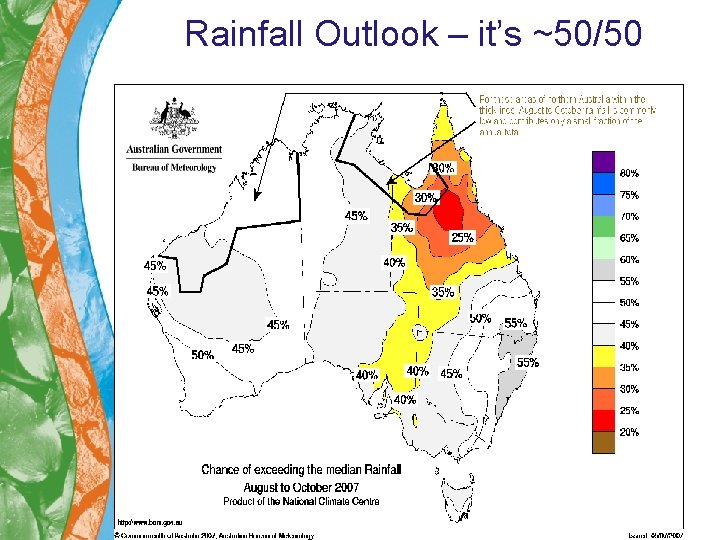
Rainfall Outlook – it’s ~50/50
Thank you Questions ?