Class 8 Complexity University of Virginia cs 3102




- Slides: 38
Class 8: Complexity University of Virginia cs 3102: Theory of Computation https: //uvatoc. github. io David Evans, Nathan Brunelle
Last Class • Syntactic Sugar: Problem Set 3 is due Monday (2: 59 pm) – Adding things to make code readable – Doesn't change the computing model • Next: – Complexity – Code running code 2
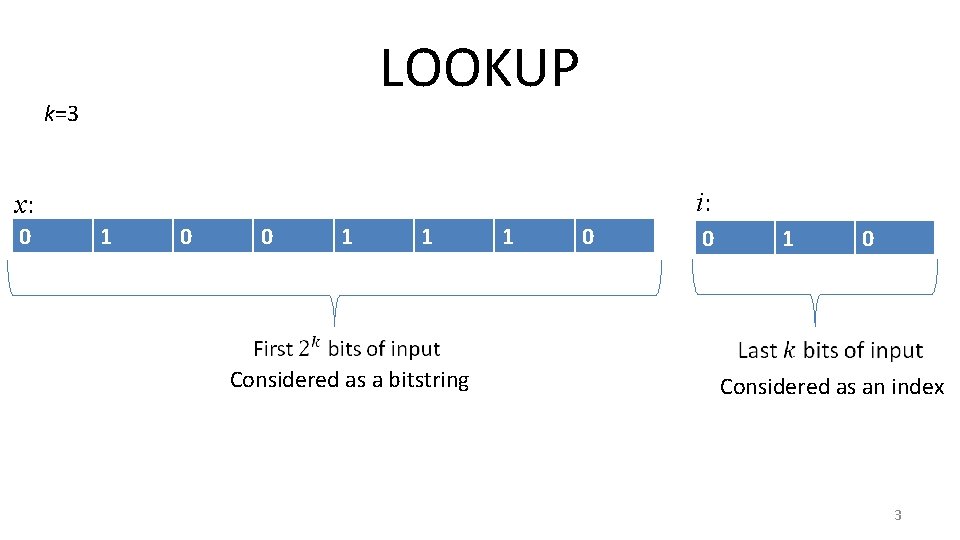
LOOKUP k=3 i: x: 0 1 0 0 1 1 Considered as a bitstring 1 0 0 1 0 Considered as an index 3
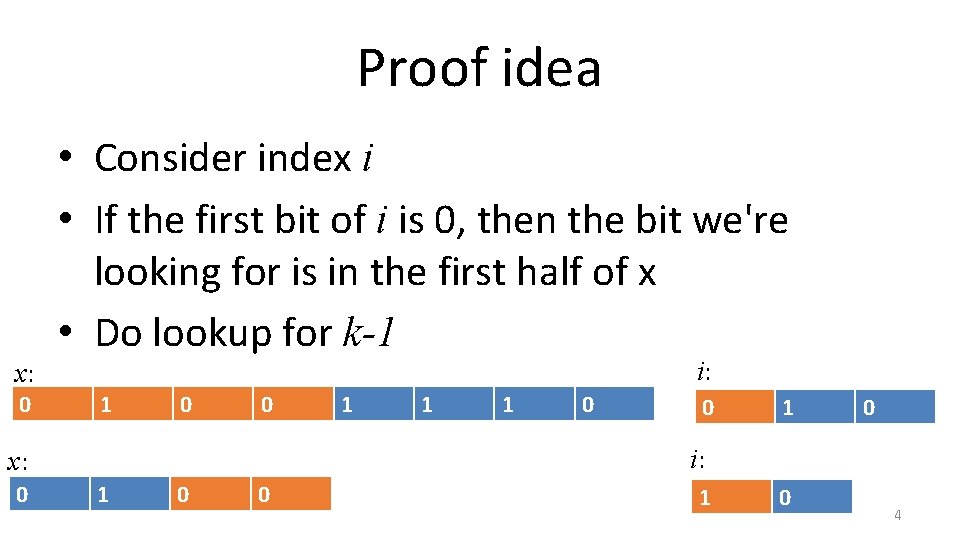
Proof idea x: 0 • Consider index i • If the first bit of i is 0, then the bit we're looking for is in the first half of x • Do lookup for k-1 i: 1 0 0 1 0 i: x: 0 1 1 0 0 1 0 4
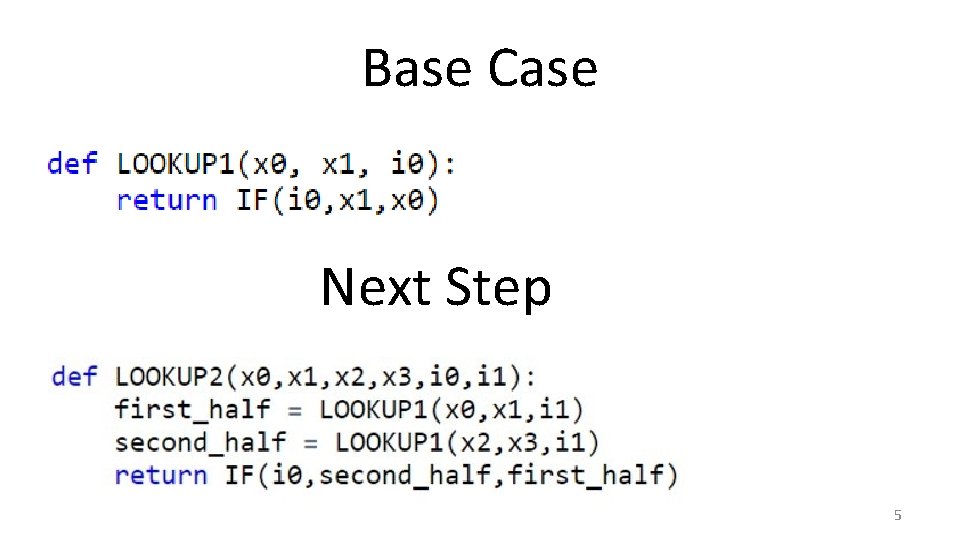
Base Case Next Step 5
Computing Every Finite Function • Next we'll show that NAND is universal • Any finite function can be computed by some NAND straightline program (equivalently, a NAND circuit) 6
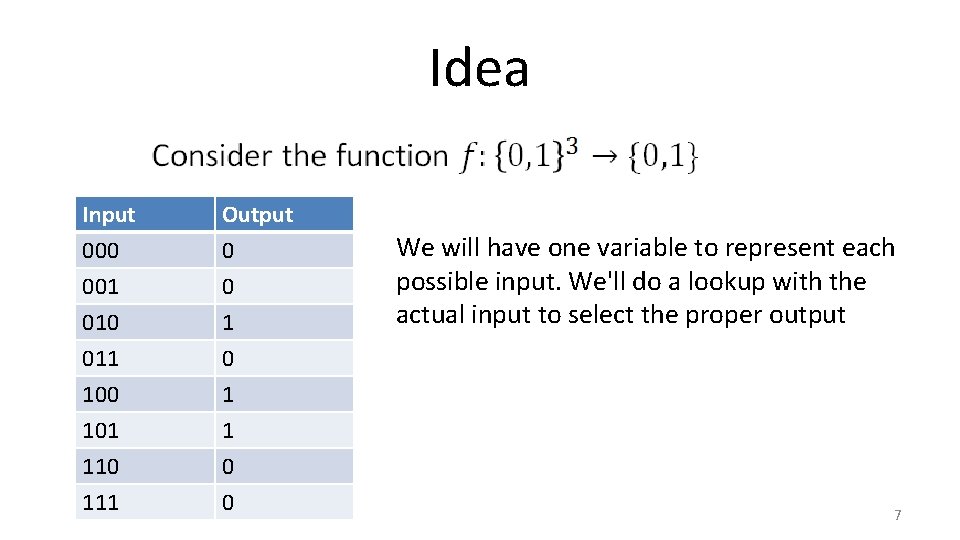
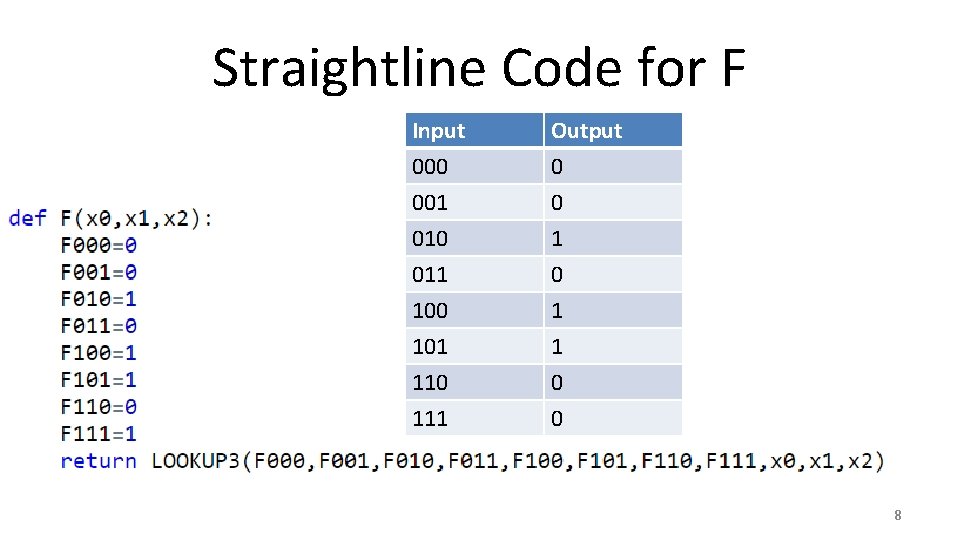
Idea Input 000 001 010 Output 0 0 1 011 100 101 110 111 0 1 1 0 0 We will have one variable to represent each possible input. We'll do a lookup with the actual input to select the proper output 7
Straightline Code for F Input 000 001 010 Output 0 0 1 011 100 101 110 111 0 1 1 0 0 8
Getting 0 and 1 9
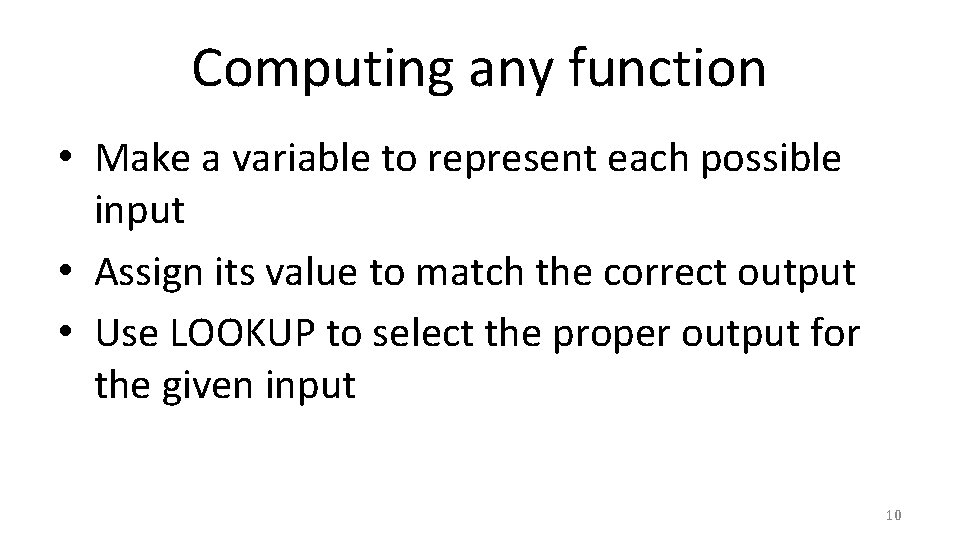
Computing any function • Make a variable to represent each possible input • Assign its value to match the correct output • Use LOOKUP to select the proper output for the given input 10
11
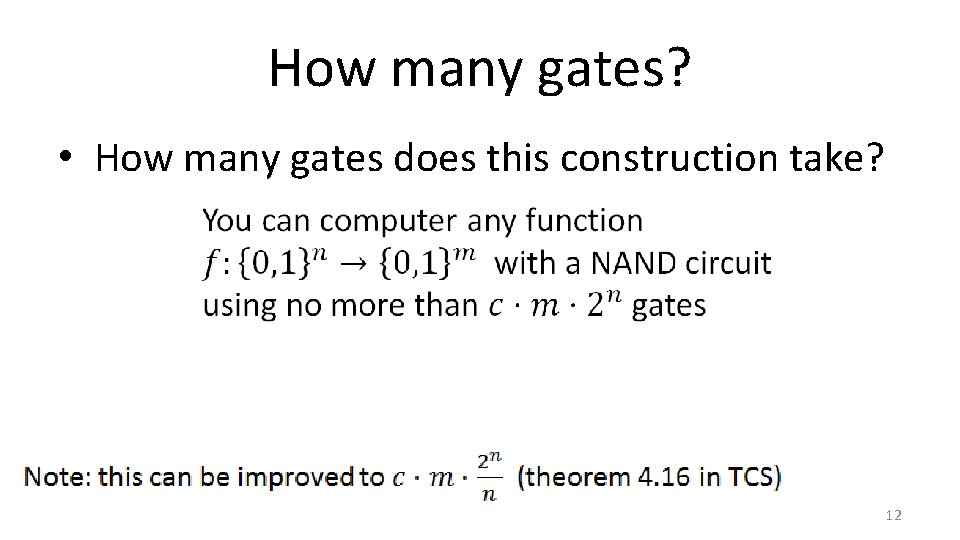
How many gates? • How many gates does this construction take? 12
Where do we go from here? How do I use this knowledge to build a computer? 13
But First • We need to talk about "complexity" • The "complexity" of a function: – Measure of the resources required to compute that function • Complexity Class: – A set of functions defined by a complexity measure 14
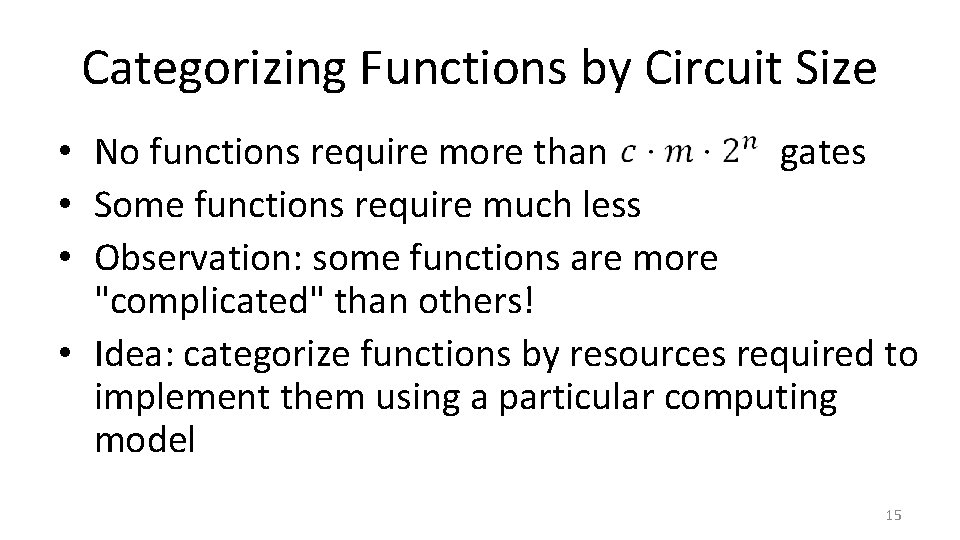
Categorizing Functions by Circuit Size • No functions require more than gates • Some functions require much less • Observation: some functions are more "complicated" than others! • Idea: categorize functions by resources required to implement them using a particular computing model 15
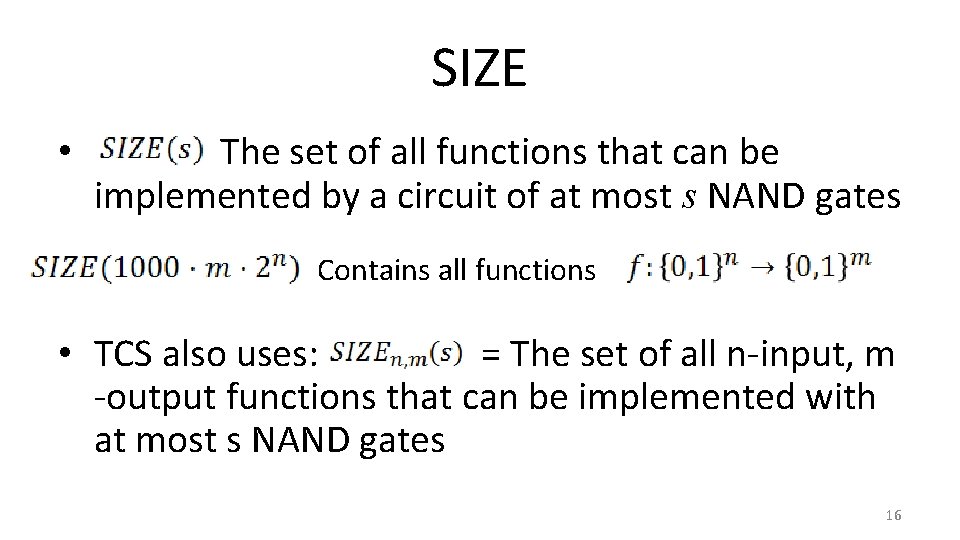
SIZE • The set of all functions that can be implemented by a circuit of at most s NAND gates Contains all functions • TCS also uses: = The set of all n-input, m -output functions that can be implemented with at most s NAND gates 16
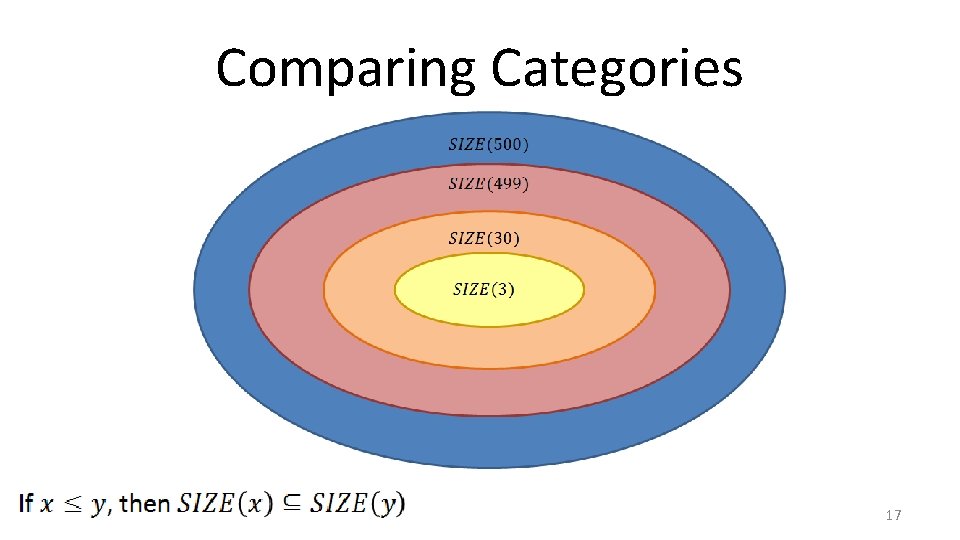
Comparing Categories 17
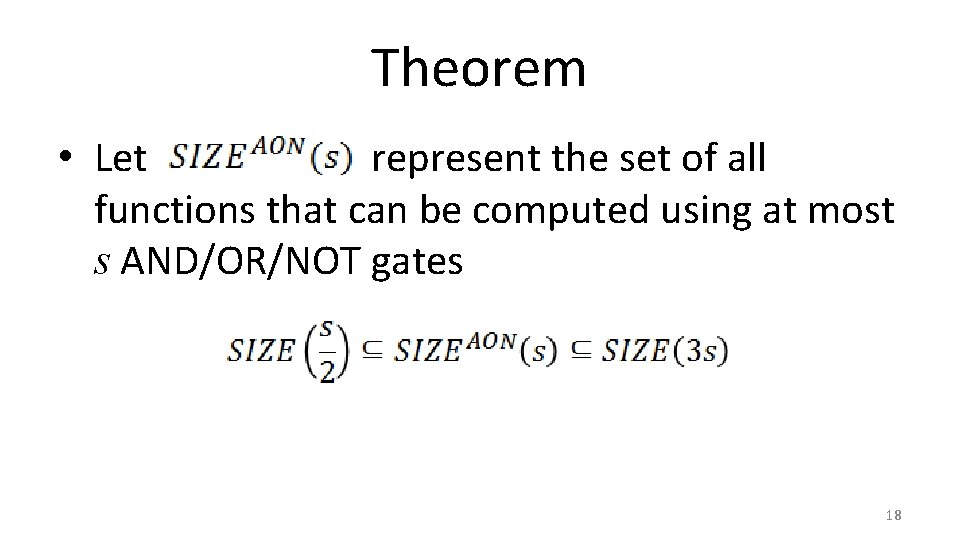
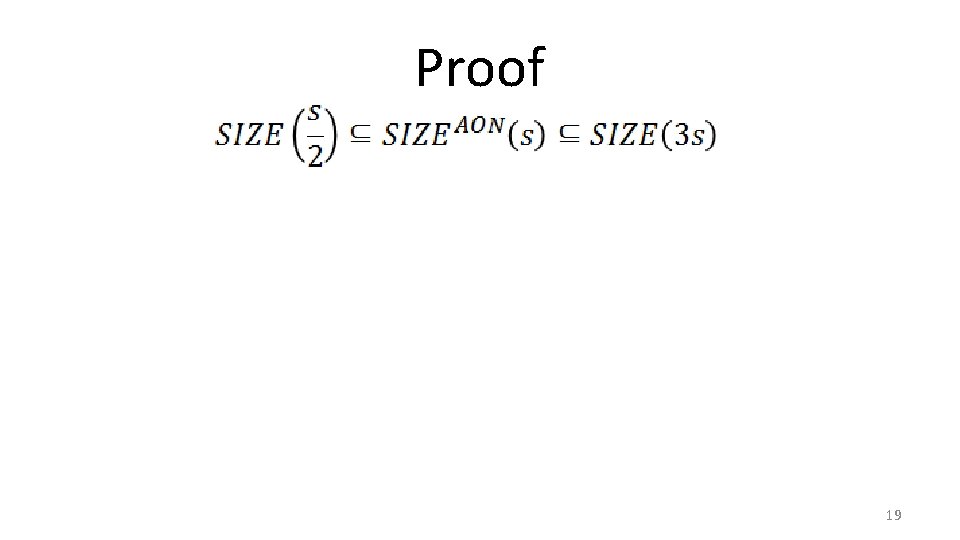
Theorem • Let represent the set of all functions that can be computed using at most s AND/OR/NOT gates 18
Proof 19
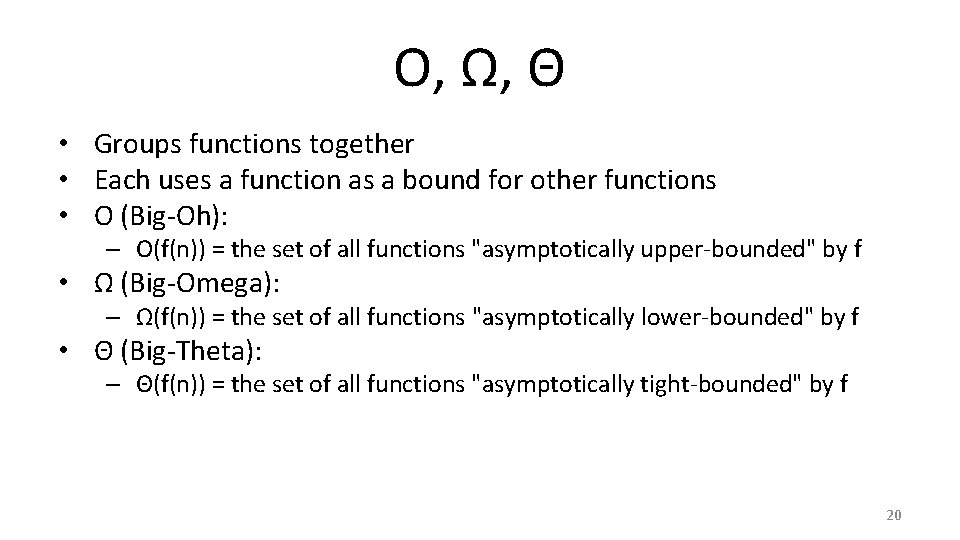
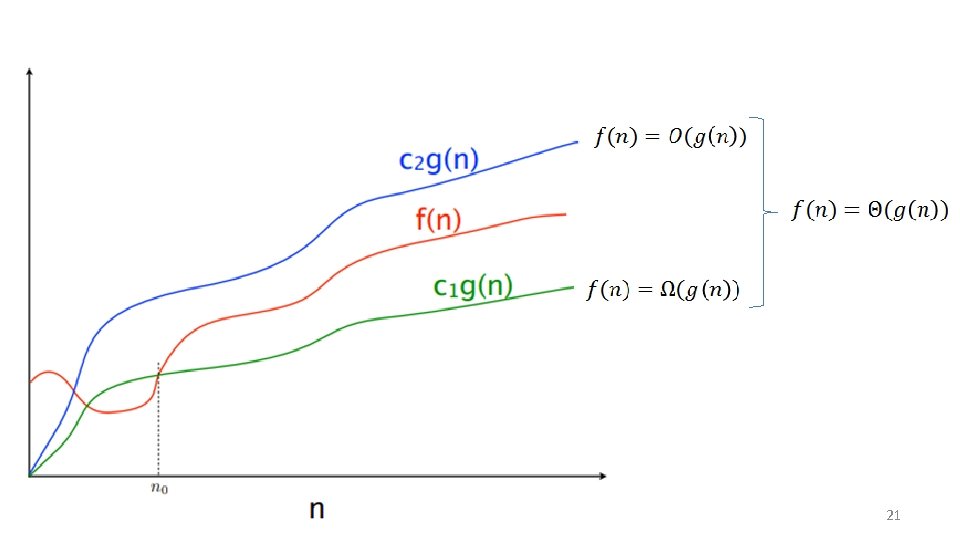
O, Ω, Θ • Groups functions together • Each uses a function as a bound for other functions • O (Big-Oh): – O(f(n)) = the set of all functions "asymptotically upper-bounded" by f • Ω (Big-Omega): – Ω(f(n)) = the set of all functions "asymptotically lower-bounded" by f • Θ (Big-Theta): – Θ(f(n)) = the set of all functions "asymptotically tight-bounded" by f 20
21
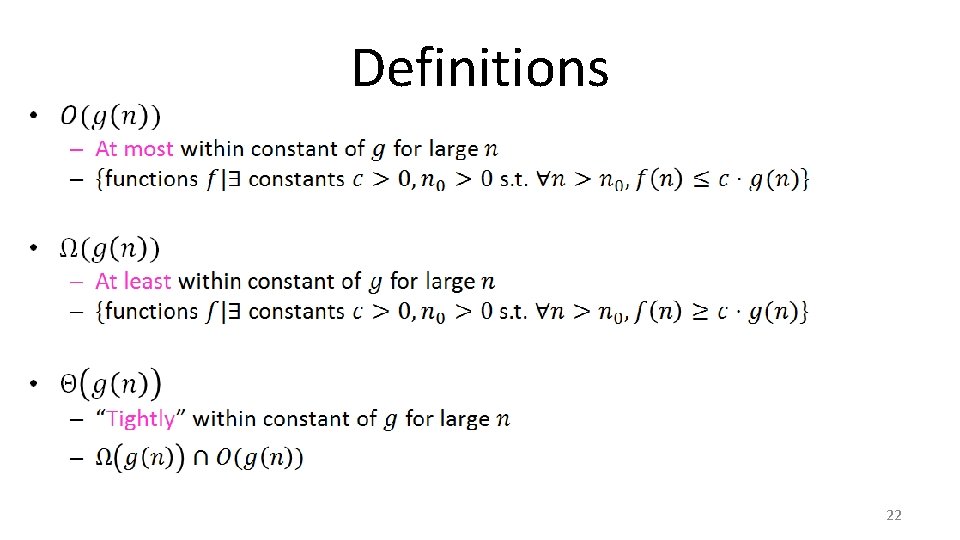
Definitions 22
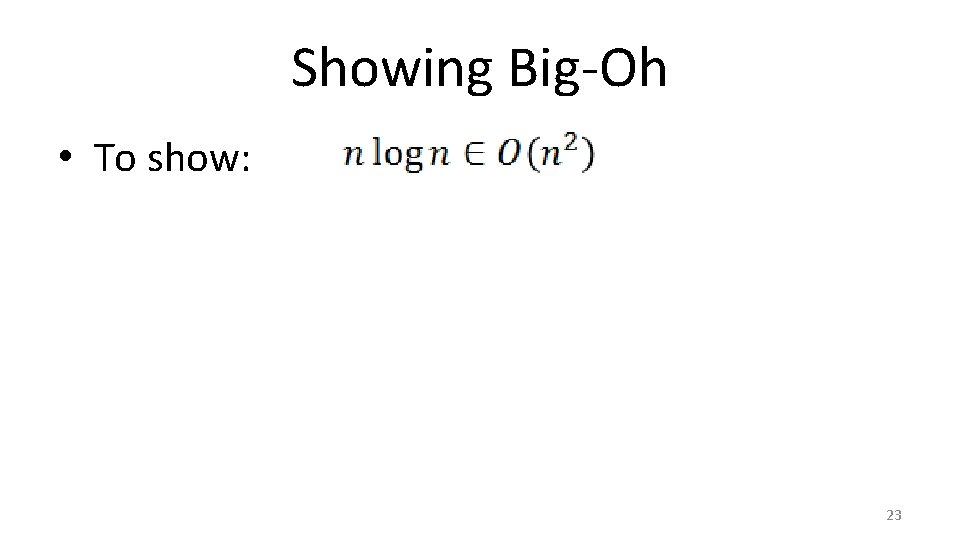
Showing Big-Oh • To show: 23
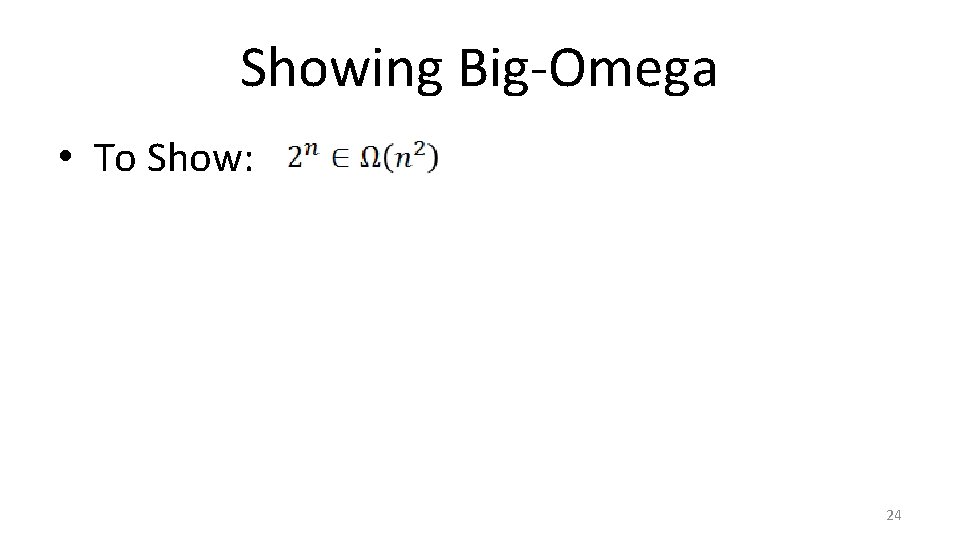
Showing Big-Omega • To Show: 24
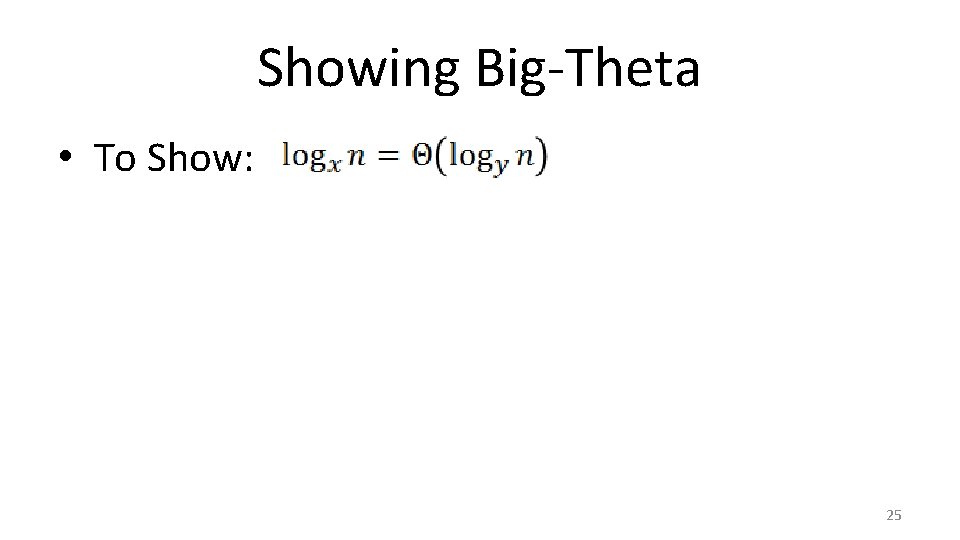
Showing Big-Theta • To Show: 25
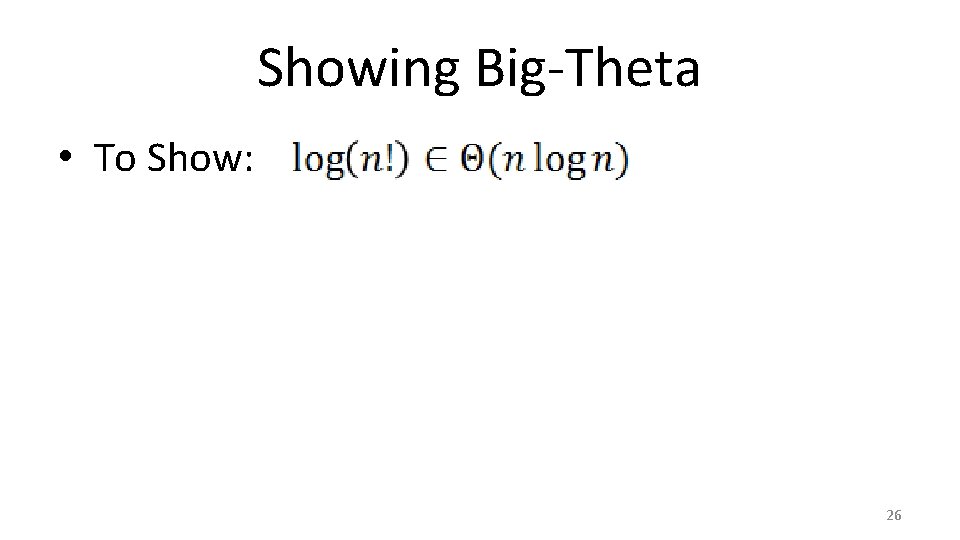
Showing Big-Theta • To Show: 26
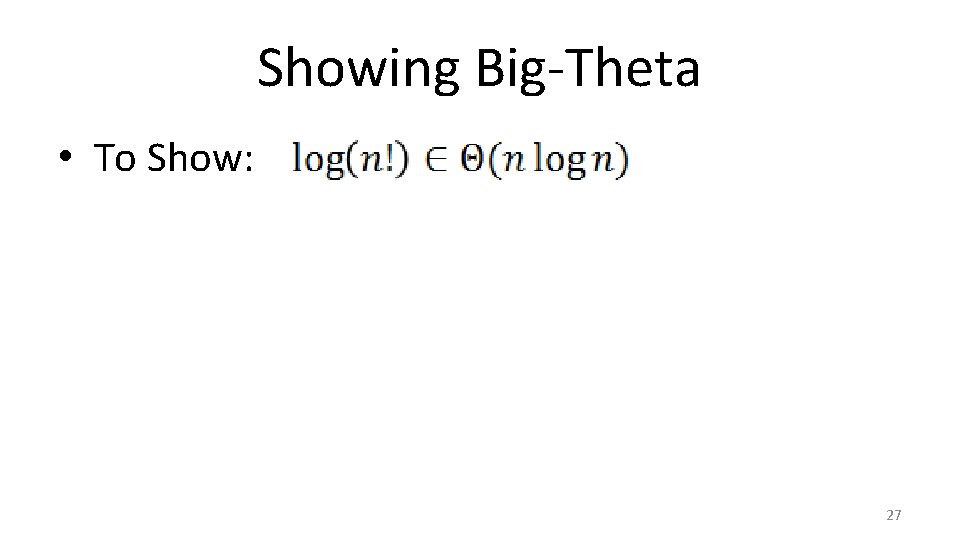
Showing Big-Theta • To Show: 27
Saying it 28
Any to Every • Previous theorem: – We can compute ANY k bit function using circuits/straightline programs • What we want: – A machine that can compute EVERY k bit function • How do we do this? : – Define a function that "simulates" programs 29
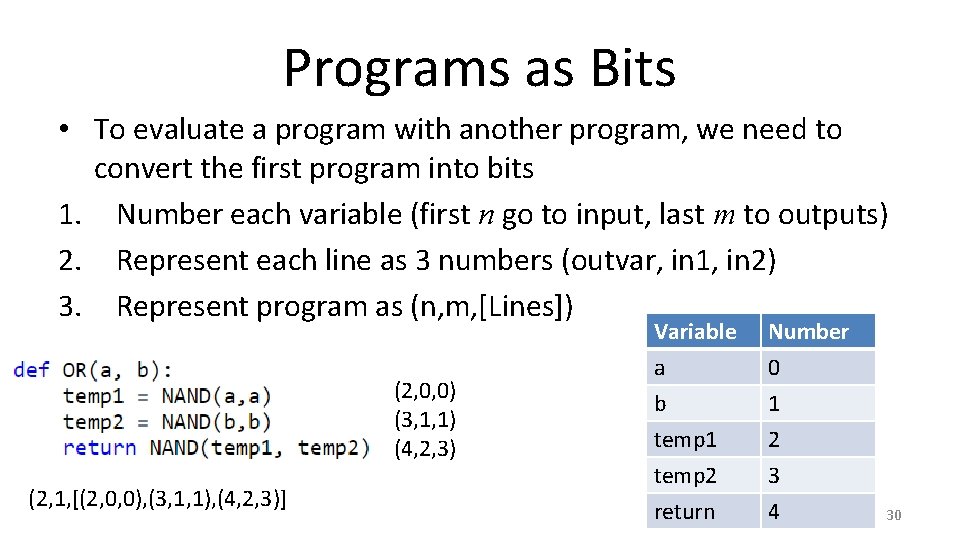
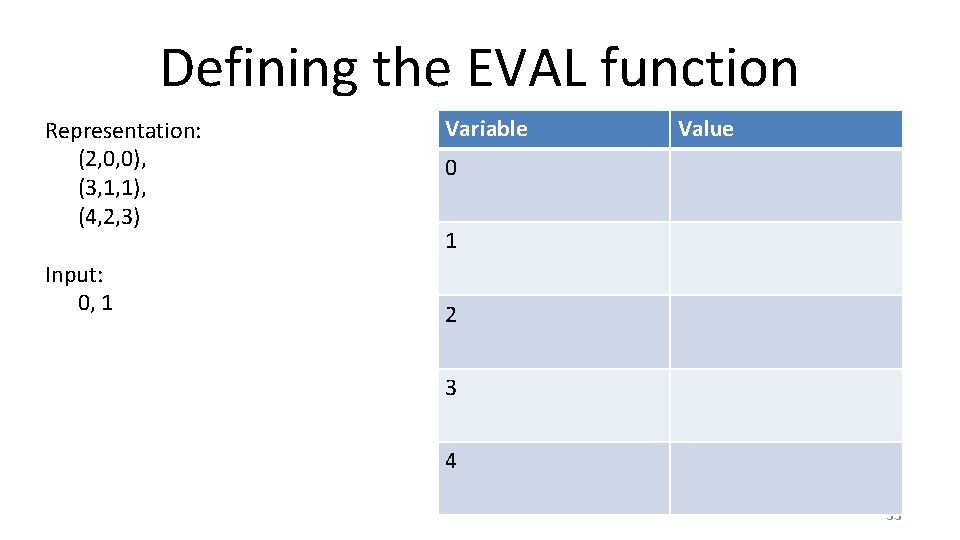
Programs as Bits • To evaluate a program with another program, we need to convert the first program into bits 1. Number each variable (first n go to input, last m to outputs) 2. Represent each line as 3 numbers (outvar, in 1, in 2) 3. Represent program as (n, m, [Lines]) (2, 0, 0) (3, 1, 1) (4, 2, 3) (2, 1, [(2, 0, 0), (3, 1, 1), (4, 2, 3)] Variable a b temp 1 Number 0 1 2 temp 2 return 3 4 30
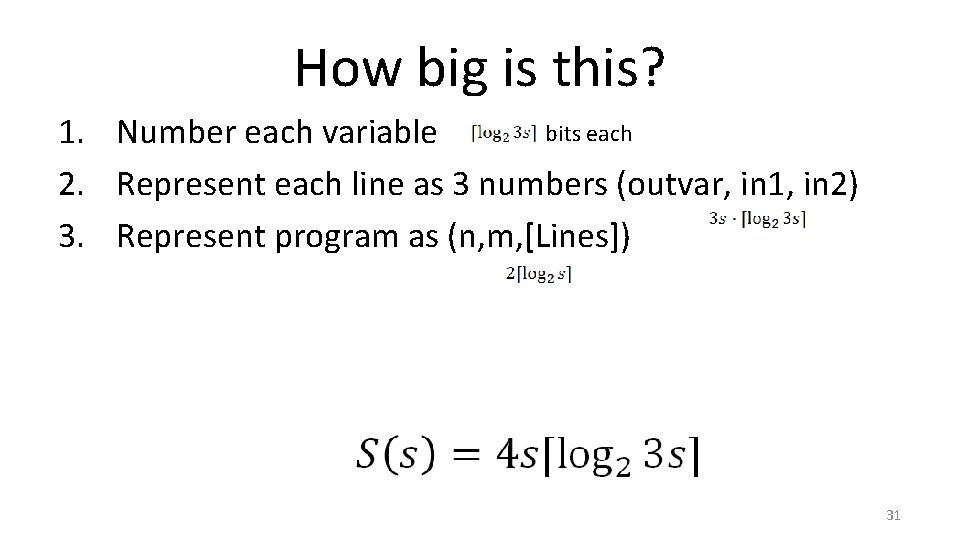
How big is this? bits each 1. Number each variable 2. Represent each line as 3 numbers (outvar, in 1, in 2) 3. Represent program as (n, m, [Lines]) 31
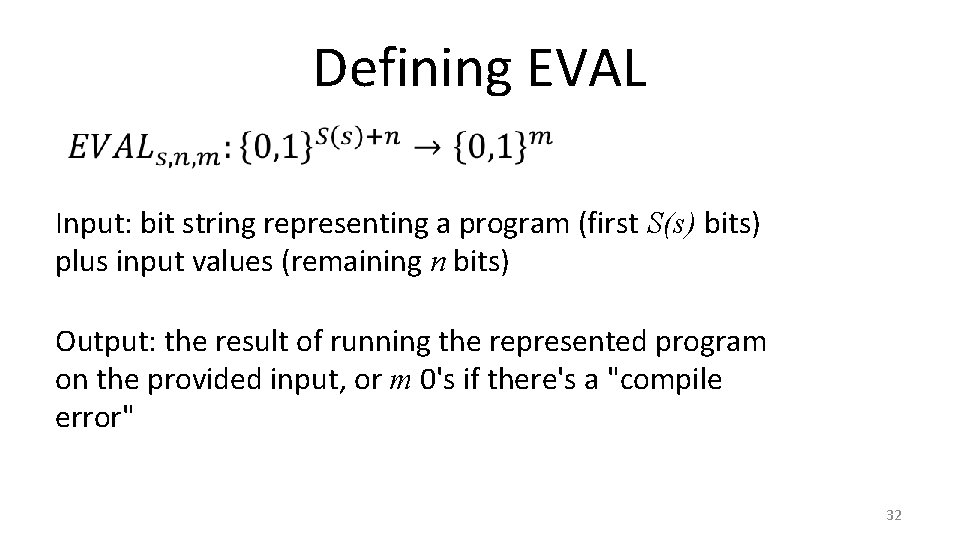
Defining EVAL Input: bit string representing a program (first S(s) bits) plus input values (remaining n bits) Output: the result of running the represented program on the provided input, or m 0's if there's a "compile error" 32
Defining the EVAL function Representation: (2, 0, 0), (3, 1, 1), (4, 2, 3) Input: 0, 1 Variable Value 0 1 2 3 4 33
Implementing EVAL 34
GET 35
UPDATE 36
How efficient was this? 37
38