CHAPTER 4 SINUSOIDAL STEADY STATE ANALYSIS DMT 122
- Slides: 21
CHAPTER 4 SINUSOIDAL STEADY STATE ANALYSIS DMT 122 CIRCUIT THEORY 2 SEMESTER 2 2018/2019 1
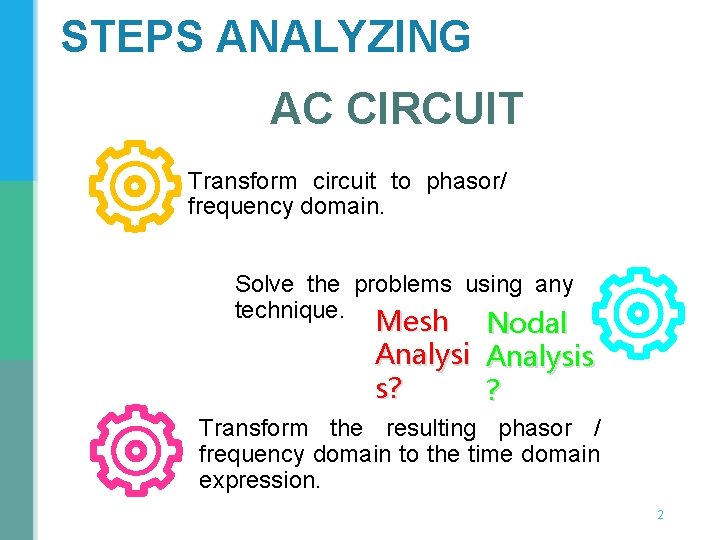
STEPS ANALYZING AC CIRCUIT Transform circuit to phasor/ frequency domain. Solve the problems using any technique. Mesh Analysi s? Nodal Analysis ? Transform the resulting phasor / frequency domain to the time domain expression. 2
M. e. s. h. A. n. a. l. y. s. i. s BASIC OF MESH ANALYSIS? § Kirchhoff’s Voltage Law (KVL) § This technique is applicable to § Basic circuit § Circuit with dependent source § Circuit with current source § Case 1: Current source at the outer most boundary (known as mesh current) § Case 2: Current source in between two loops (known as supermesh) 3
Determine Mesh Current § Assign mesh currents I 1, I 2…, In to the n meshes § Apply KVL to each of n meshes. Use Ohm’s Law to express voltages in terms of mesh currents. § Solve the resulting n simultaneous equation to get the mesh current 4
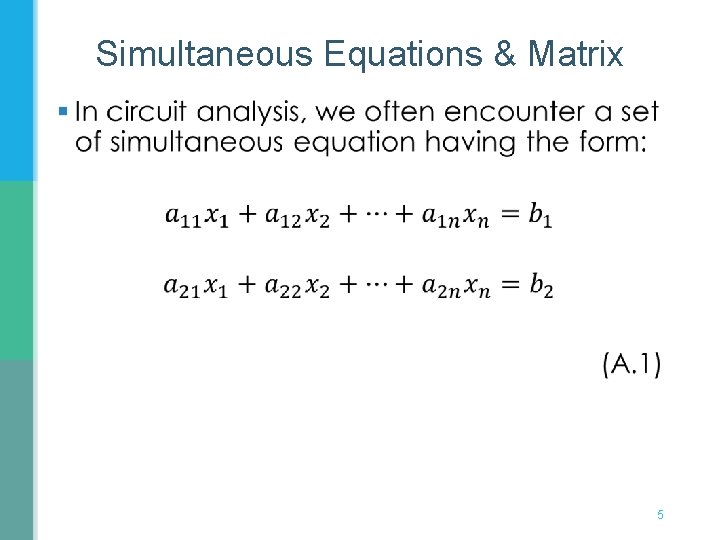
Simultaneous Equations & Matrix § 5
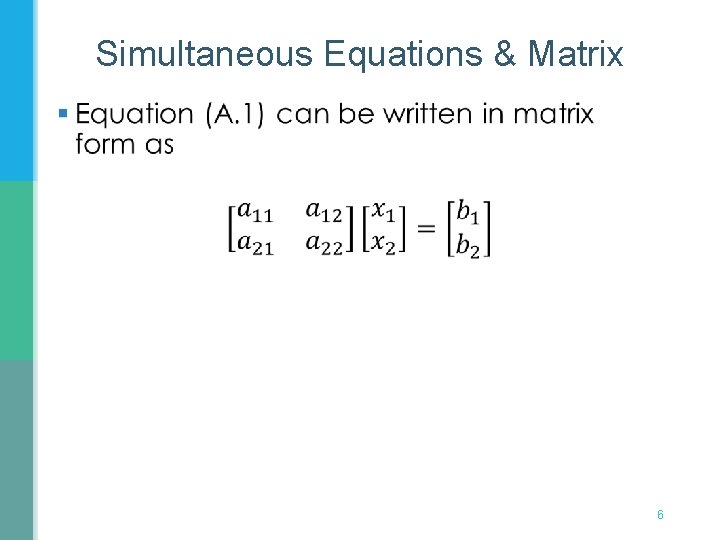
Simultaneous Equations & Matrix § 6
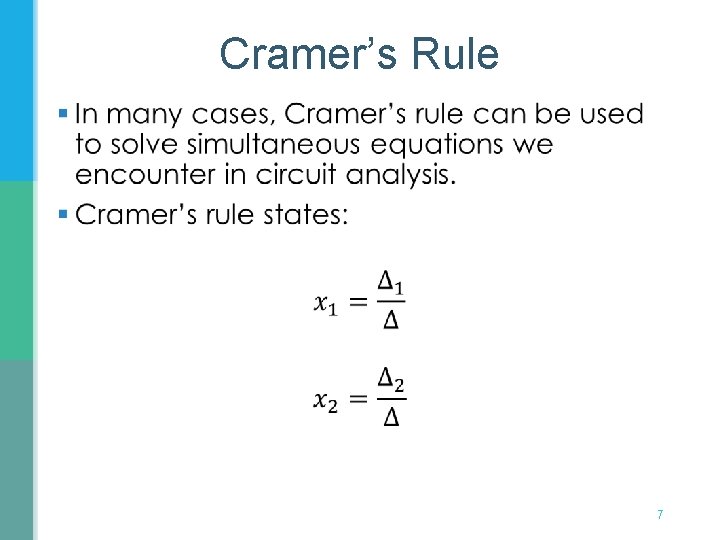
Cramer’s Rule § 7
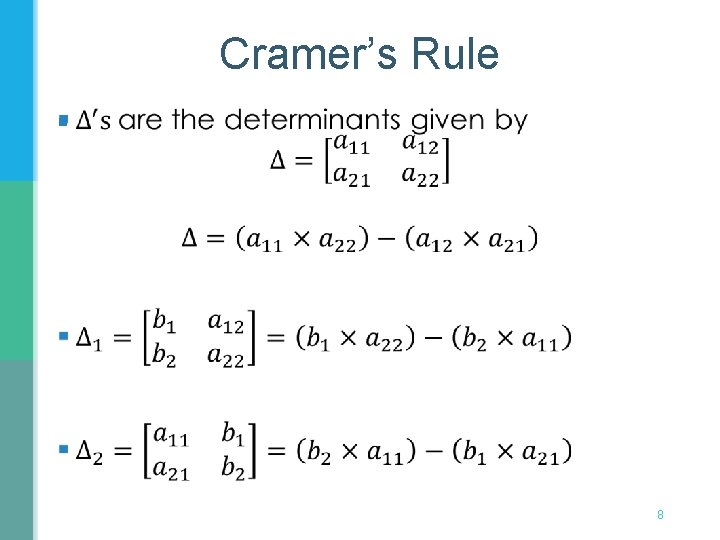
Cramer’s Rule § 8
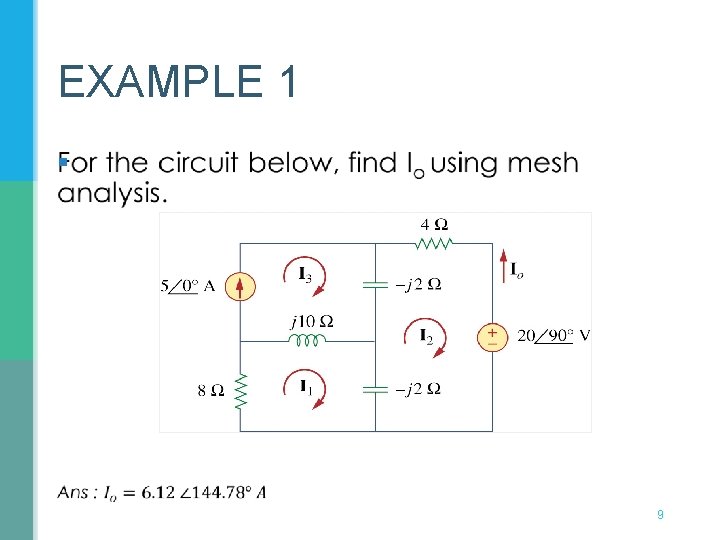
EXAMPLE 1 § 9
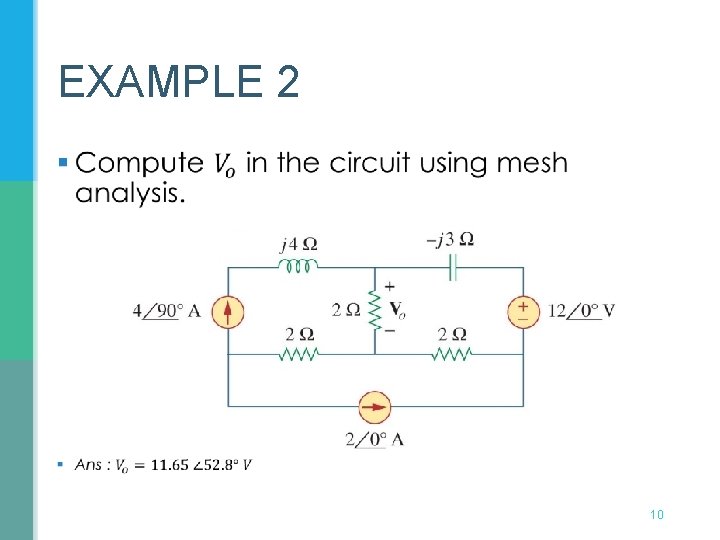
EXAMPLE 2 § 10
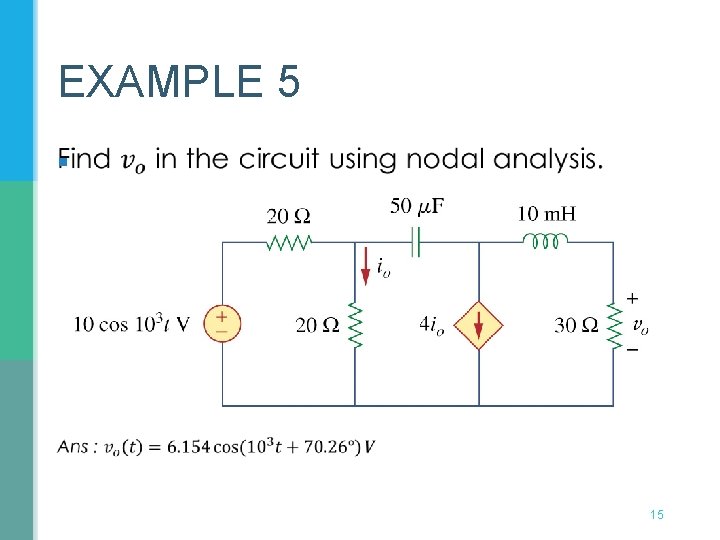
N. o. d. a. l A. n. a. l. y. s. i. s BASIC OF NODAL ANALYSIS? § Kirchhoff’s Current Law (KCL). § This technique is applicable to § Basic Circuit § Circuit with dependent source § Circuit with voltage source § Case 1: Voltage source in between reference node and essential node § Case 2: voltage source in between two nodes (supernode) 11
Determine Node Voltages § Select a node as the reference node. § Assign voltages V 1, V 2…, Vn-1 to the remaining n-1 nodes. § Apply KCL to each of the n-1 non reference node. Use Ohm’s Law to express the branch currents in term of node voltages. § Solve the resulting simultaneous equation to obtain the unknown node voltage. 12
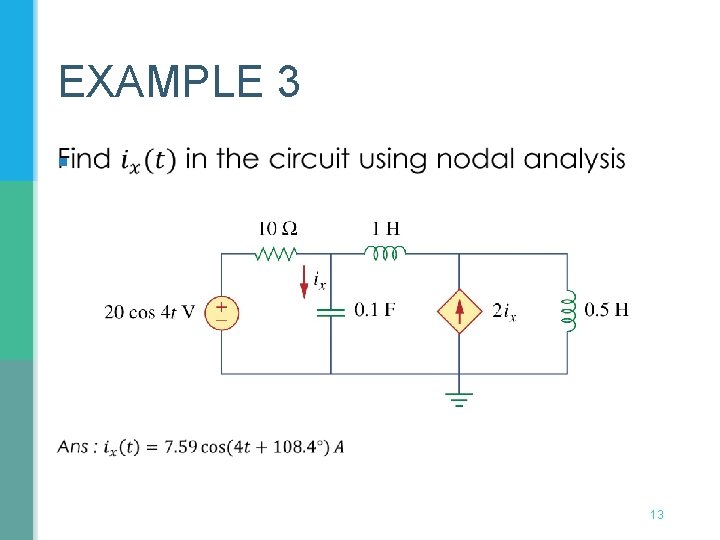
EXAMPLE 3 § 13
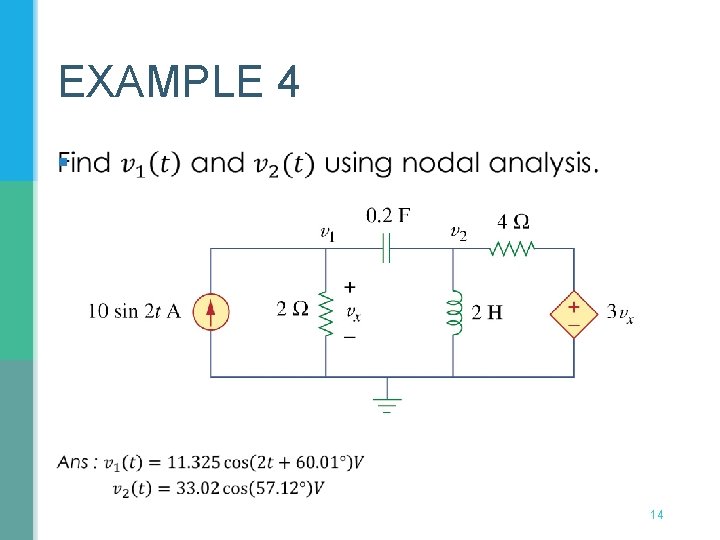
EXAMPLE 4 § 14
EXAMPLE 5 § 15
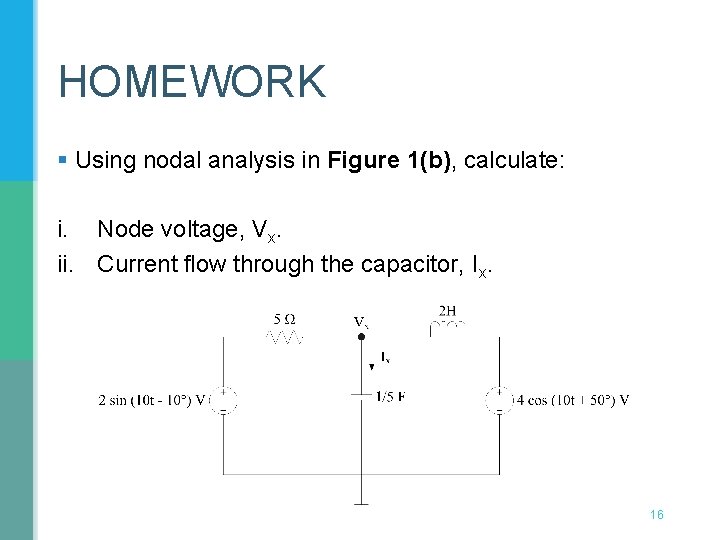
HOMEWORK § Using nodal analysis in Figure 1(b), calculate: i. Node voltage, Vx. ii. Current flow through the capacitor, Ix. 16
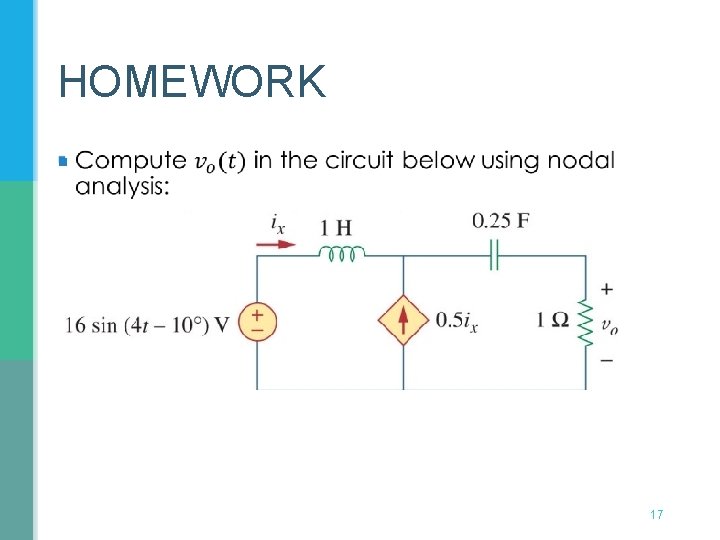
HOMEWORK § 17
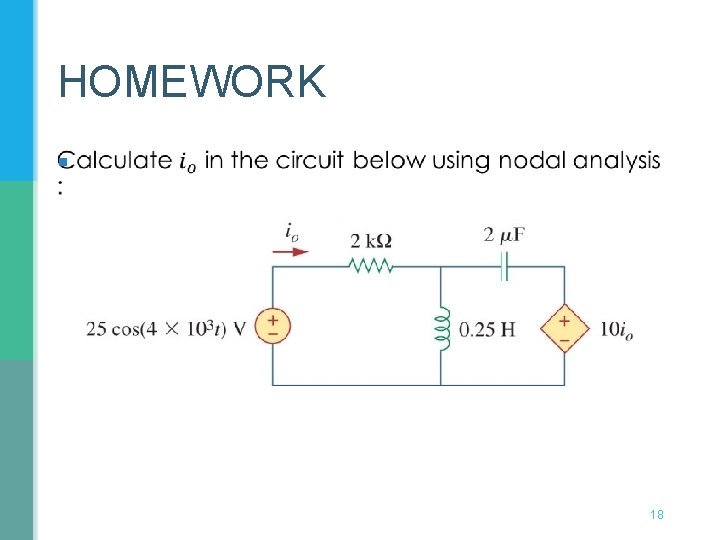
HOMEWORK § 18
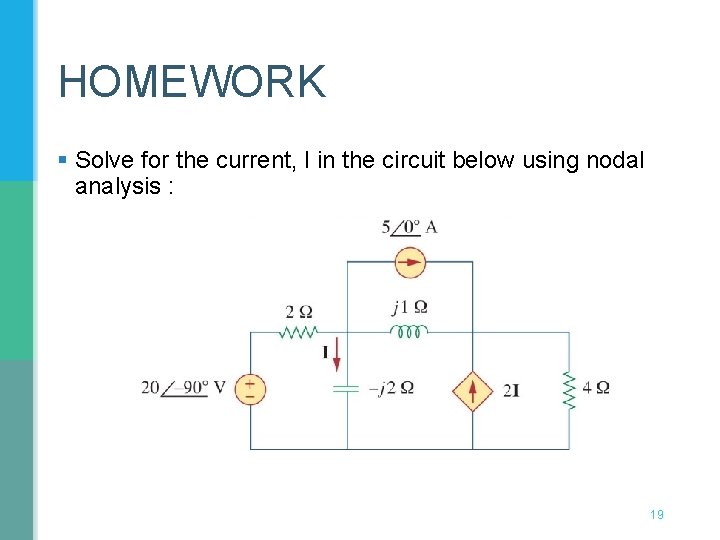
HOMEWORK § Solve for the current, I in the circuit below using nodal analysis : 19
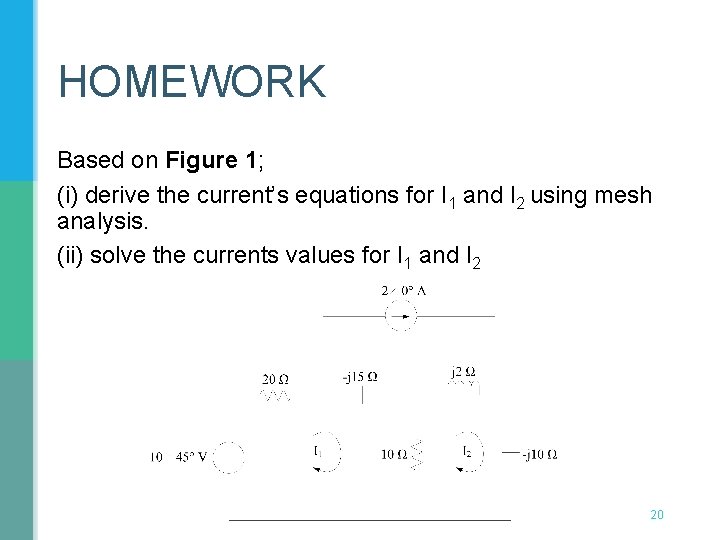
HOMEWORK Based on Figure 1; (i) derive the current’s equations for I 1 and I 2 using mesh analysis. (ii) solve the currents values for I 1 and I 2 20
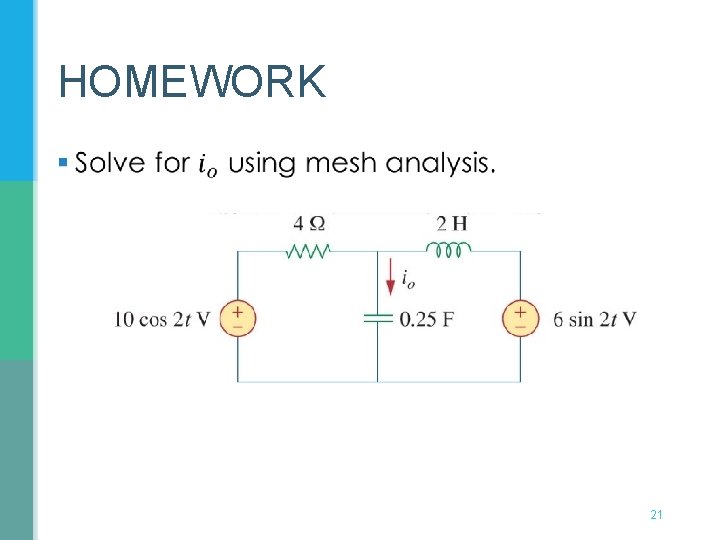
HOMEWORK § 21