CHAPTER 3 Temperature Energy and Heat 3 2


- Slides: 31
CHAPTER 3 Temperature Energy and Heat 3. 2 Heat and Thermal Energy
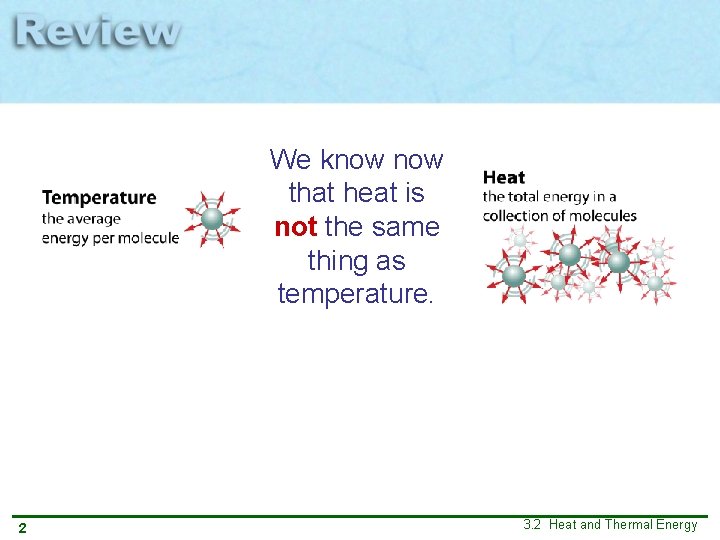
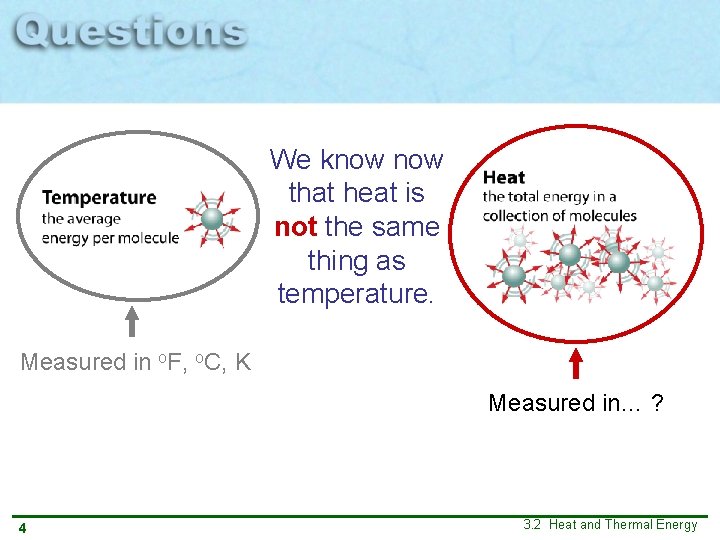
We know that heat is not the same thing as temperature. 2 3. 2 Heat and Thermal Energy
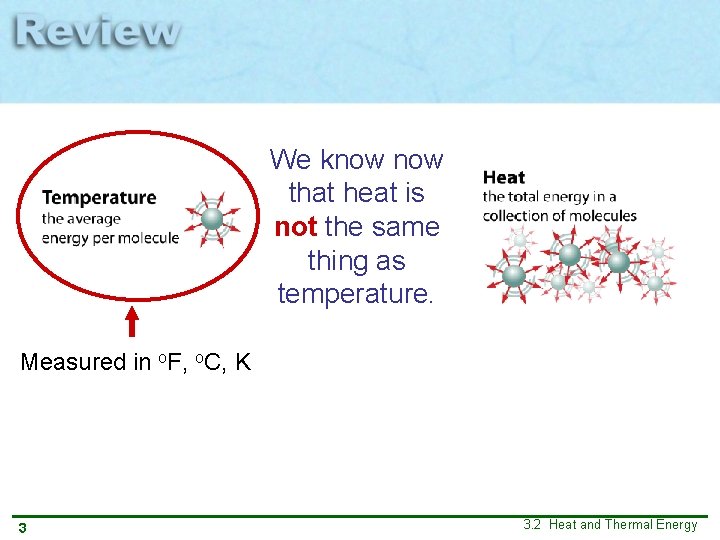
We know that heat is not the same thing as temperature. Measured in o. F, o. C, K 3 3. 2 Heat and Thermal Energy
We know that heat is not the same thing as temperature. Measured in o. F, o. C, K Measured in… ? 4 3. 2 Heat and Thermal Energy
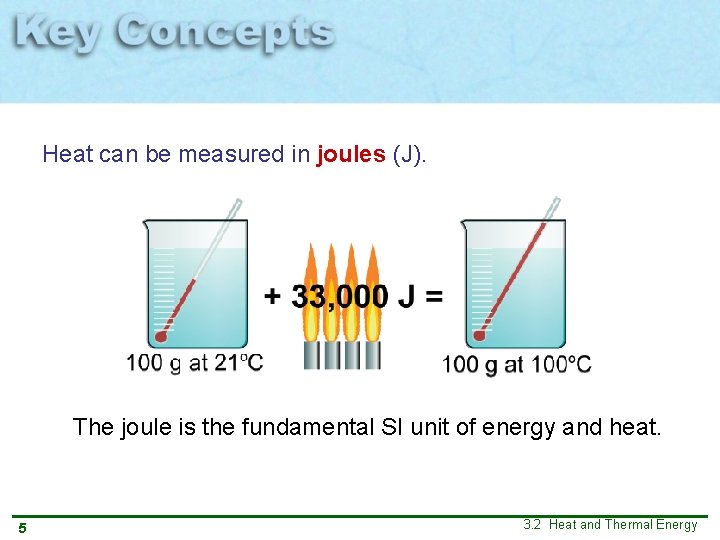
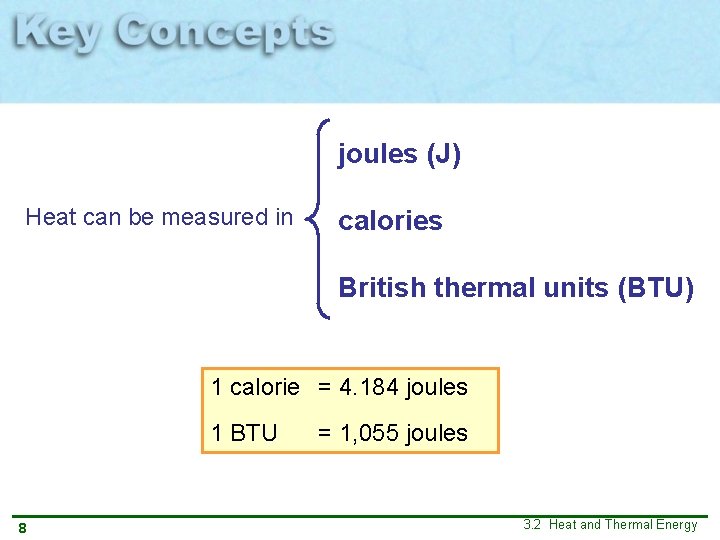
Heat can be measured in joules (J). The joule is the fundamental SI unit of energy and heat. 5 3. 2 Heat and Thermal Energy
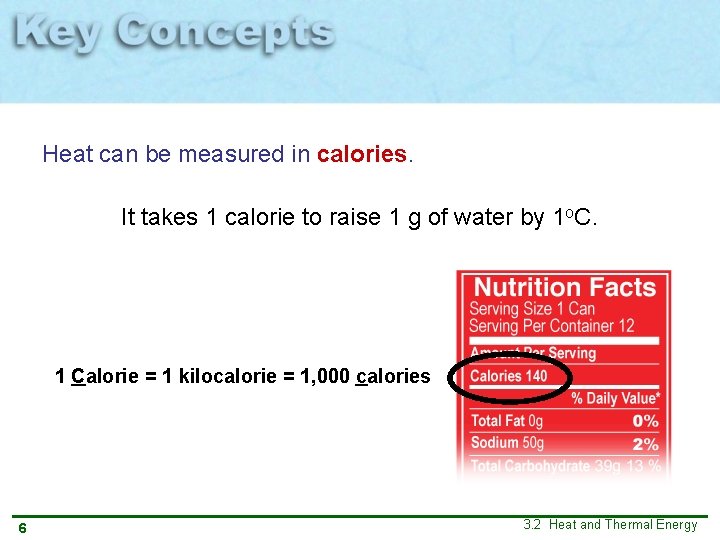
Heat can be measured in calories. It takes 1 calorie to raise 1 g of water by 1 o. C. 1 Calorie = 1 kilocalorie = 1, 000 calories 6 3. 2 Heat and Thermal Energy
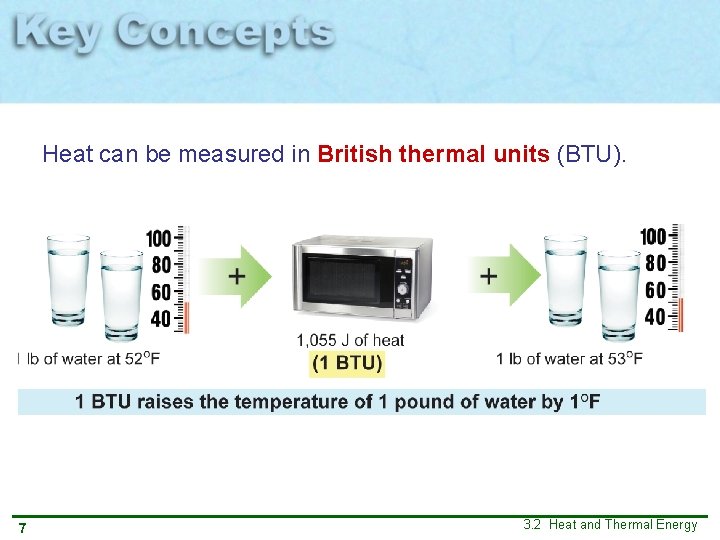
Heat can be measured in British thermal units (BTU). 7 3. 2 Heat and Thermal Energy
joules (J) Heat can be measured in calories British thermal units (BTU) 1 calorie = 4. 184 joules 1 BTU 8 = 1, 055 joules 3. 2 Heat and Thermal Energy
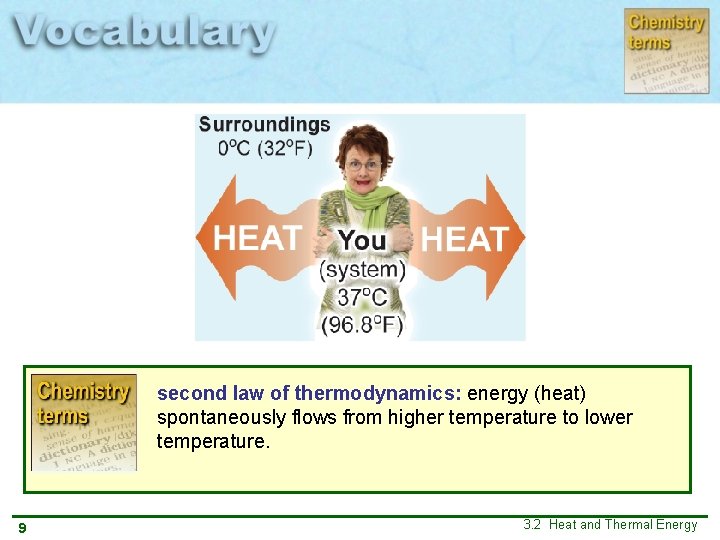
second law of thermodynamics: energy (heat) spontaneously flows from higher temperature to lower temperature. 9 3. 2 Heat and Thermal Energy
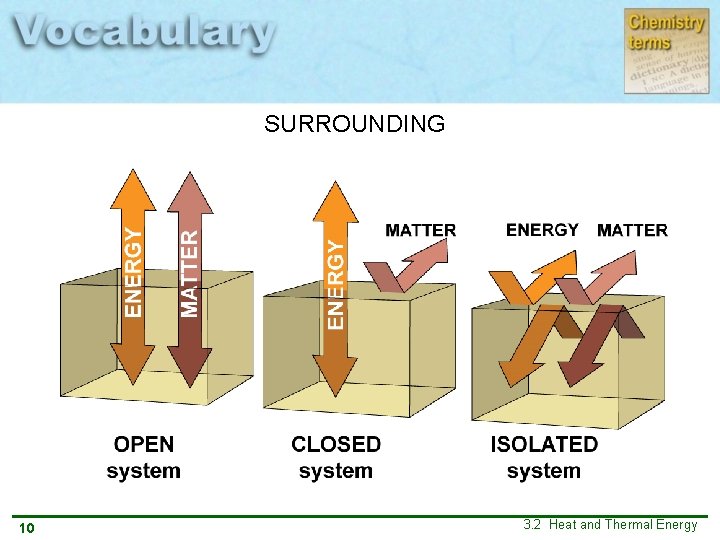
SURROUNDING 10 3. 2 Heat and Thermal Energy
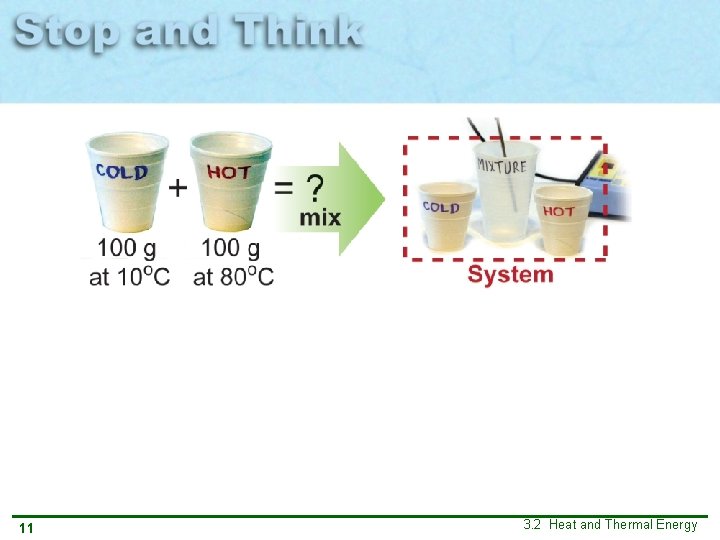
11 3. 2 Heat and Thermal Energy
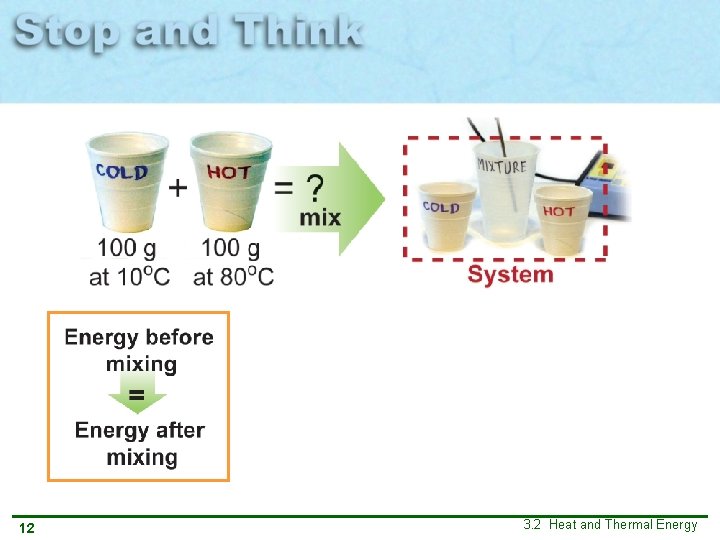
12 3. 2 Heat and Thermal Energy
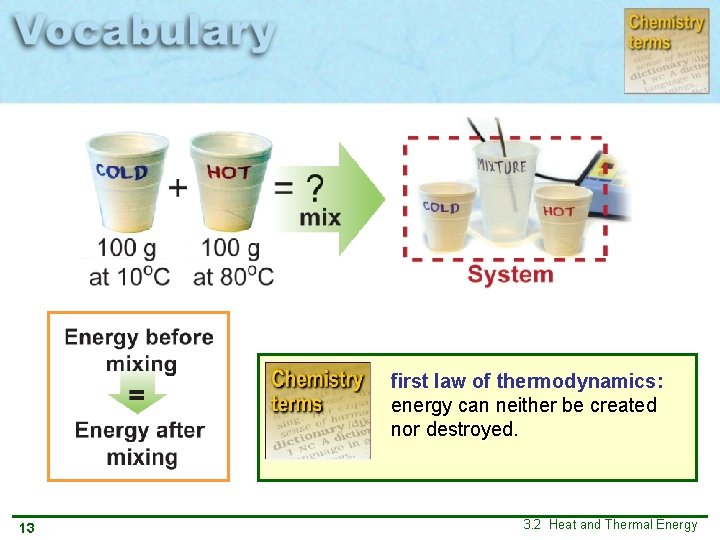
first law of thermodynamics: energy can neither be created nor destroyed. 13 3. 2 Heat and Thermal Energy
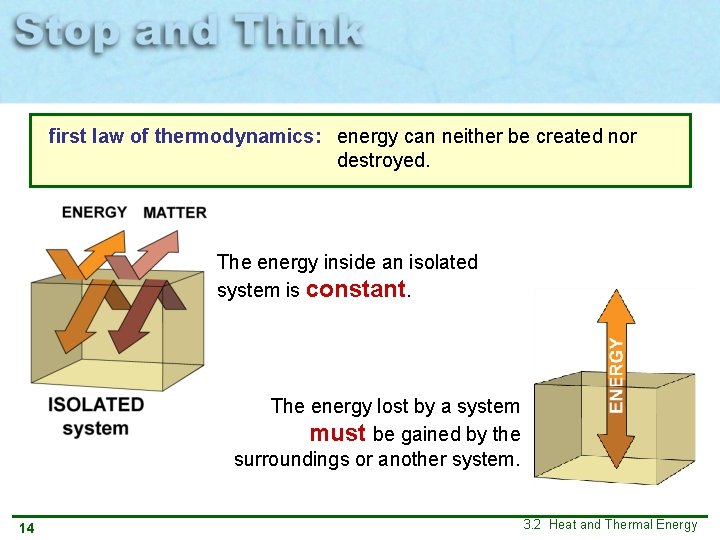
first law of thermodynamics: energy can neither be created nor destroyed. The energy inside an isolated system is constant. The energy lost by a system must be gained by the surroundings or another system. 14 3. 2 Heat and Thermal Energy
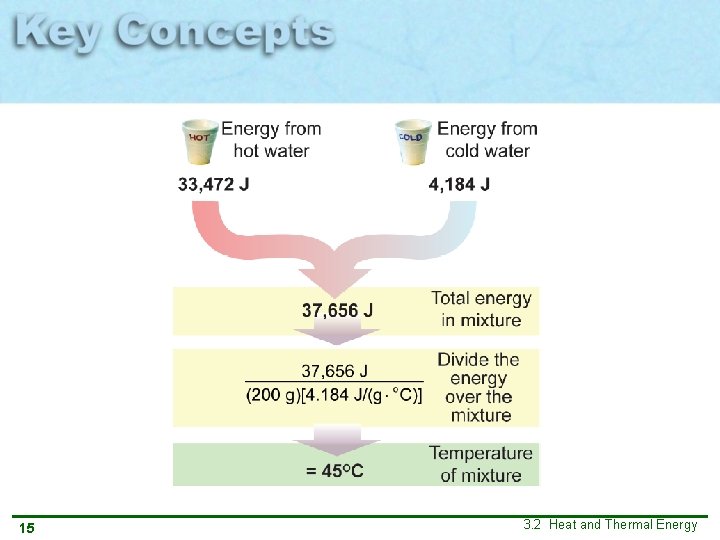
15 3. 2 Heat and Thermal Energy
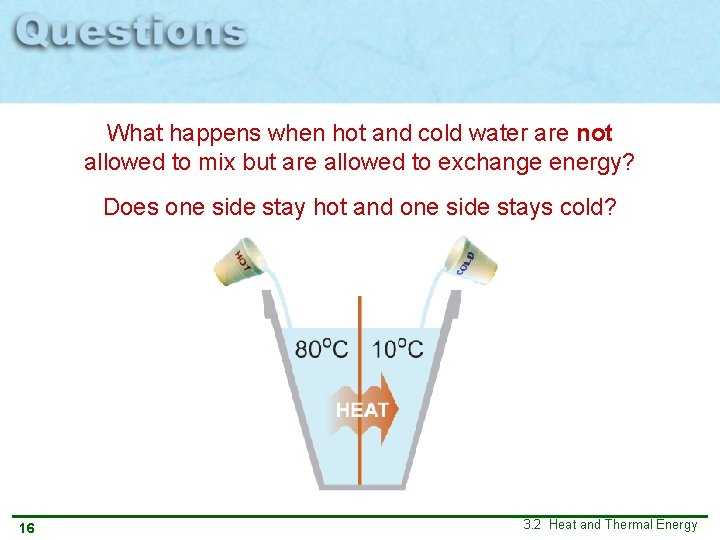
What happens when hot and cold water are not allowed to mix but are allowed to exchange energy? Does one side stay hot and one side stays cold? 16 3. 2 Heat and Thermal Energy
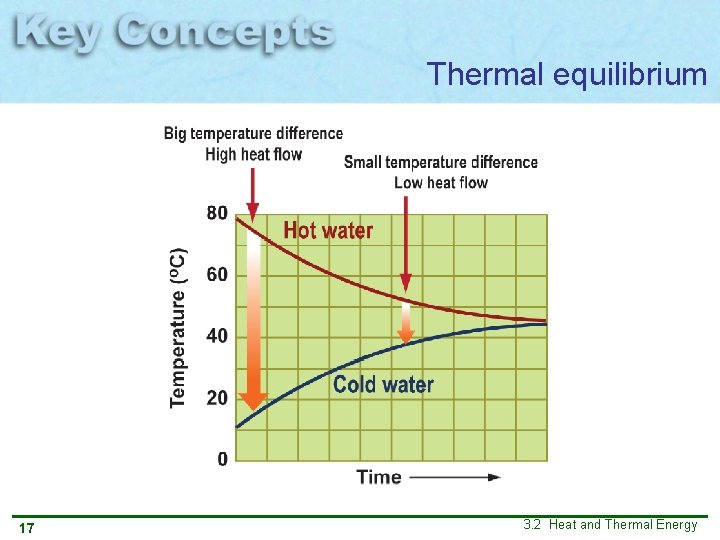
Thermal equilibrium 17 3. 2 Heat and Thermal Energy
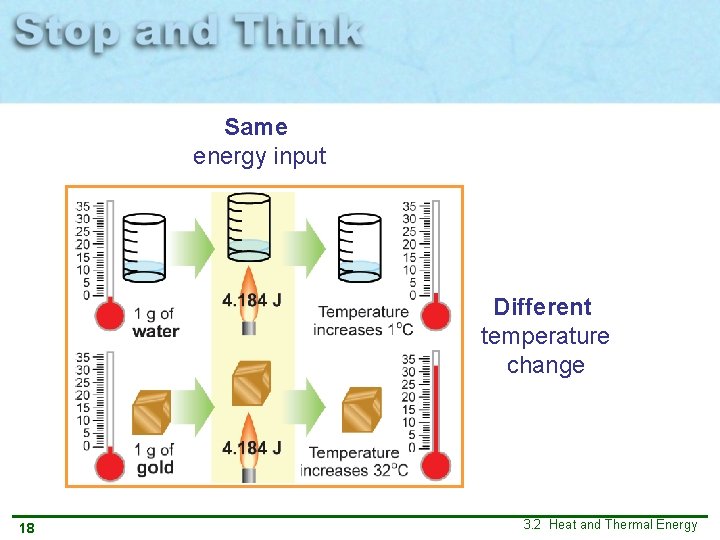
Same energy input Different temperature change 18 3. 2 Heat and Thermal Energy
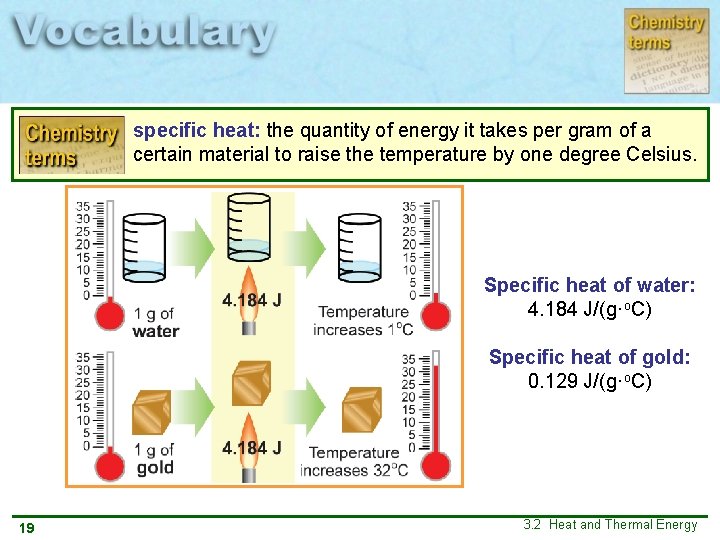
specific heat: the quantity of energy it takes per gram of a certain material to raise the temperature by one degree Celsius. Specific heat of water: 4. 184 J/(g·o. C) Specific heat of gold: 0. 129 J/(g·o. C) 19 3. 2 Heat and Thermal Energy
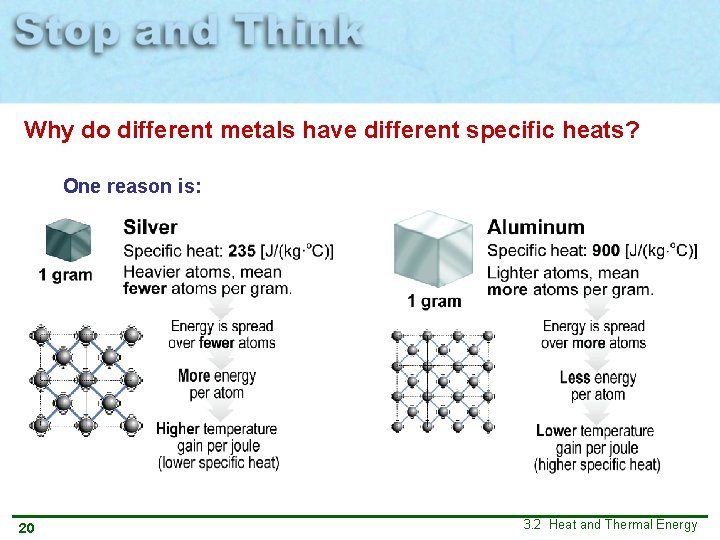
Why do different metals have different specific heats? One reason is: 20 3. 2 Heat and Thermal Energy
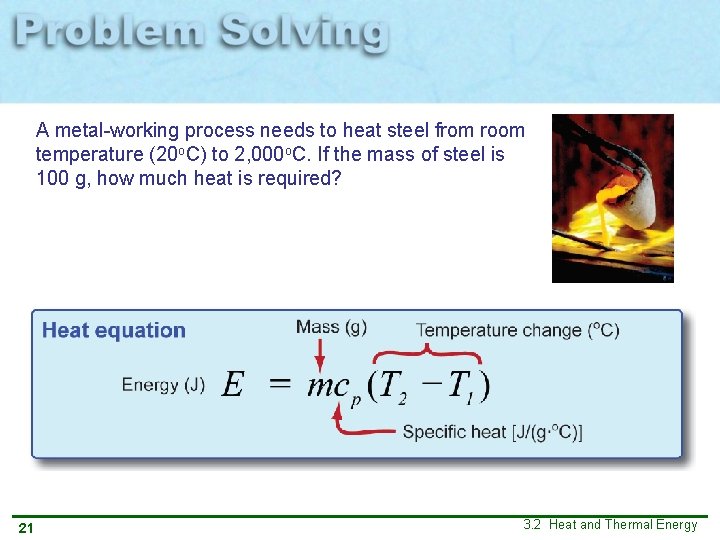
A metal-working process needs to heat steel from room temperature (20 o. C) to 2, 000 o. C. If the mass of steel is 100 g, how much heat is required? 21 3. 2 Heat and Thermal Energy
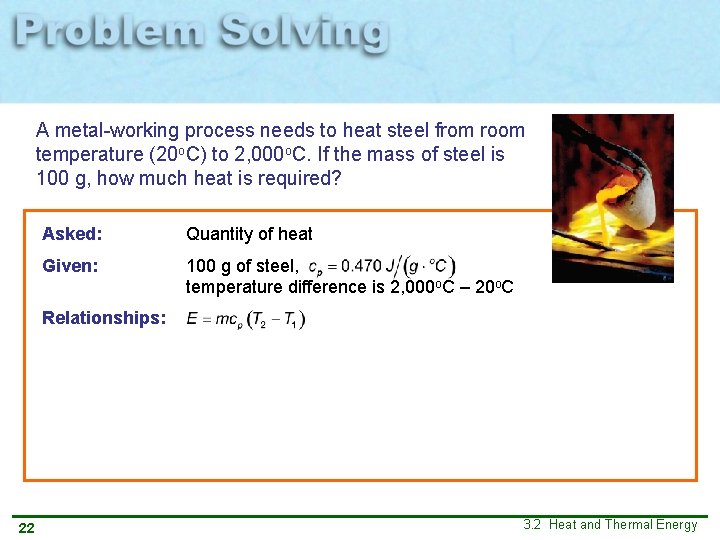
A metal-working process needs to heat steel from room temperature (20 o. C) to 2, 000 o. C. If the mass of steel is 100 g, how much heat is required? Asked: Quantity of heat Given: 100 g of steel, temperature difference is 2, 000 o. C – 20 o. C Relationships: 22 3. 2 Heat and Thermal Energy
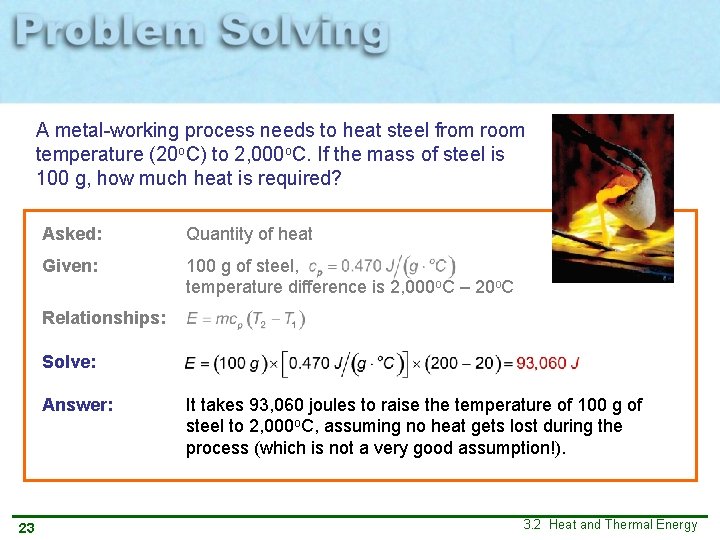
A metal-working process needs to heat steel from room temperature (20 o. C) to 2, 000 o. C. If the mass of steel is 100 g, how much heat is required? Asked: Quantity of heat Given: 100 g of steel, temperature difference is 2, 000 o. C – 20 o. C Relationships: Solve: Answer: 23 It takes 93, 060 joules to raise the temperature of 100 g of steel to 2, 000 o. C, assuming no heat gets lost during the process (which is not a very good assumption!). 3. 2 Heat and Thermal Energy
A mass of 300 grams of water at 80 o. C cools down to 20 o. C. Assume all the heat from the water is absorbed by 100 m 3 of air (a small room) with a mass of 100, 000 g. What is the temperature change in the air? 24 3. 2 Heat and Thermal Energy
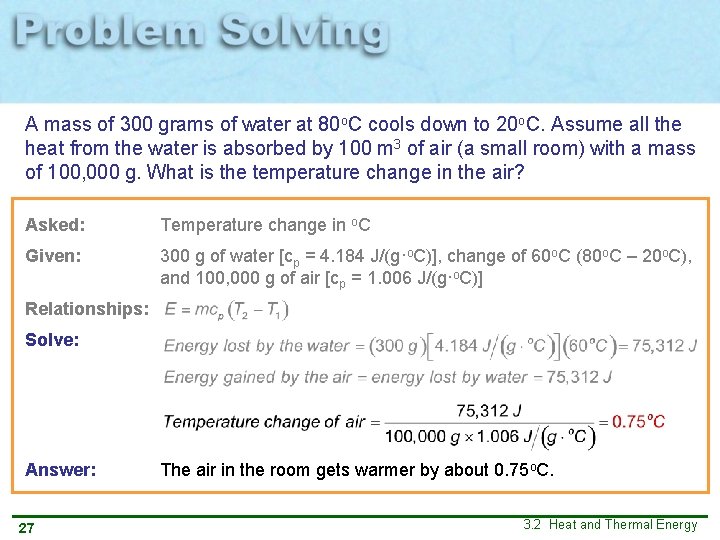
A mass of 300 grams of water at 80 o. C cools down to 20 o. C. Assume all the heat from the water is absorbed by 100 m 3 of air (a small room) with a mass of 100, 000 g. What is the temperature change in the air? Asked: Temperature change in o. C Given: 300 g of water [cp = 4. 184 J/(g·o. C)], change of 60 o. C (80 o. C – 20 o. C), and 100, 000 g of air [cp = 1. 006 J/(g·o. C)] Relationships: 25 3. 2 Heat and Thermal Energy
A mass of 300 grams of water at 80 o. C cools down to 20 o. C. Assume all the heat from the water is absorbed by 100 m 3 of air (a small room) with a mass of 100, 000 g. What is the temperature change in the air? Asked: Temperature change in o. C Given: 300 g of water [cp = 4. 184 J/(g·o. C)], change of 60 o. C (80 o. C – 20 o. C), and 100, 000 g of air [cp = 1. 006 J/(g·o. C)] Relationships: Solve: 26 3. 2 Heat and Thermal Energy
A mass of 300 grams of water at 80 o. C cools down to 20 o. C. Assume all the heat from the water is absorbed by 100 m 3 of air (a small room) with a mass of 100, 000 g. What is the temperature change in the air? Asked: Temperature change in o. C Given: 300 g of water [cp = 4. 184 J/(g·o. C)], change of 60 o. C (80 o. C – 20 o. C), and 100, 000 g of air [cp = 1. 006 J/(g·o. C)] Relationships: Solve: Answer: 27 The air in the room gets warmer by about 0. 75 o. C. 3. 2 Heat and Thermal Energy
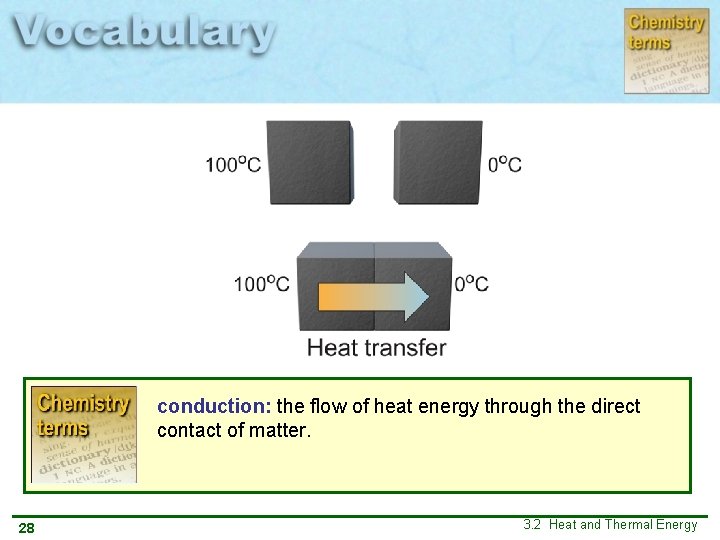
conduction: the flow of heat energy through the direct contact of matter. 28 3. 2 Heat and Thermal Energy
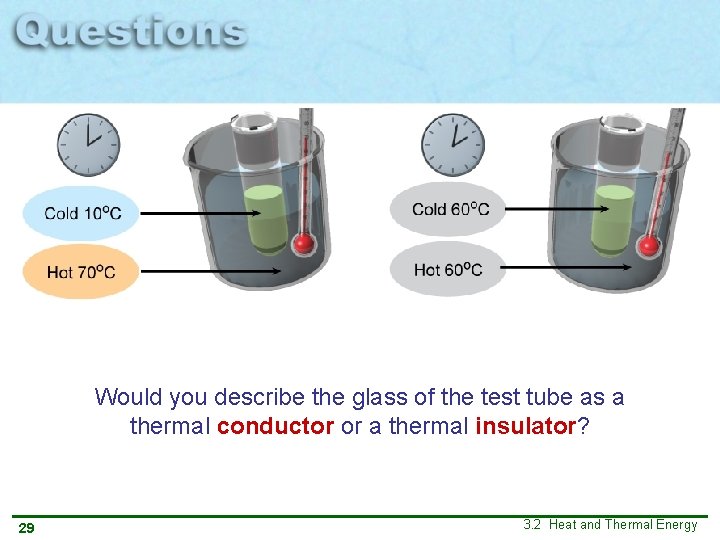
Would you describe the glass of the test tube as a thermal conductor or a thermal insulator? 29 3. 2 Heat and Thermal Energy
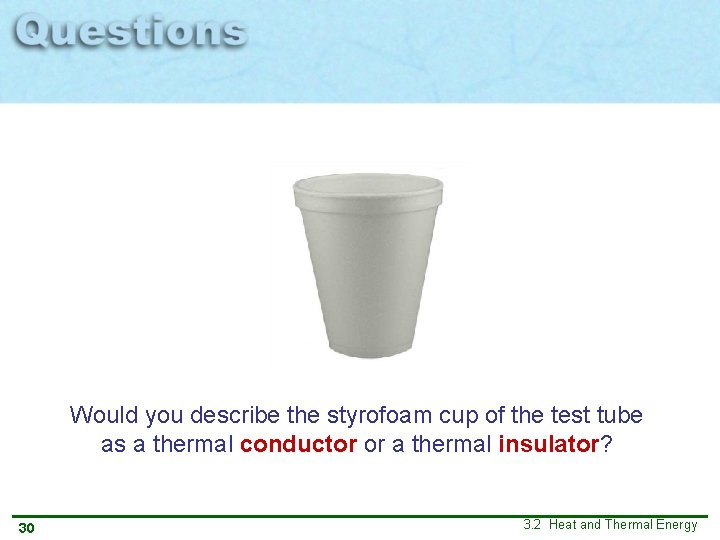
Would you describe the styrofoam cup of the test tube as a thermal conductor or a thermal insulator? 30 3. 2 Heat and Thermal Energy
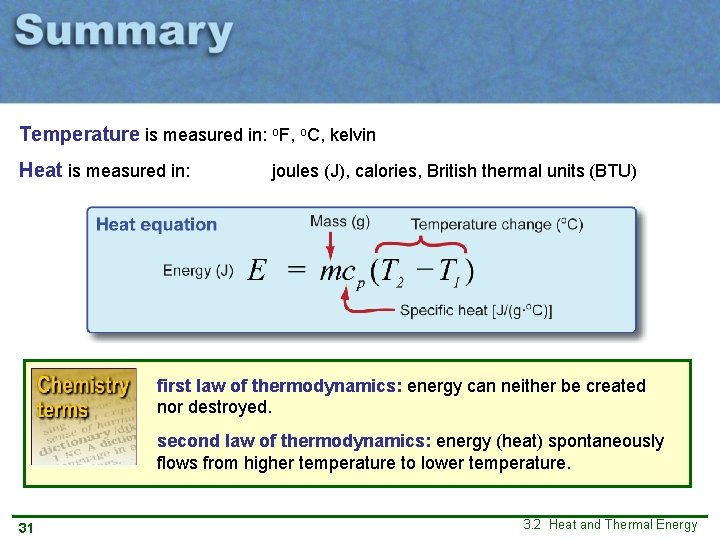
Temperature is measured in: o. F, o. C, kelvin Heat is measured in: joules (J), calories, British thermal units (BTU) first law of thermodynamics: energy can neither be created nor destroyed. second law of thermodynamics: energy (heat) spontaneously flows from higher temperature to lower temperature. 31 3. 2 Heat and Thermal Energy