CH 4 SEC 3 STANDARDS ADDRESSED 12 1








- Slides: 41
CH 4 -SEC 3 STANDARD(S) ADDRESSED: 12. 1 Students explain the fundamental principles and moral values of American democracy as expressed in the Constitution. LEARNING OBJECTIVES/ GOALS/ SWBAT 1. Explain why States make interstate compacts. 2. Understand the purpose of the Full Faith and Credit Clause. 3. Describe the Extradition Clause and explain its purpose. 4. Explain the purpose of the Privileges and Immunities Clause.
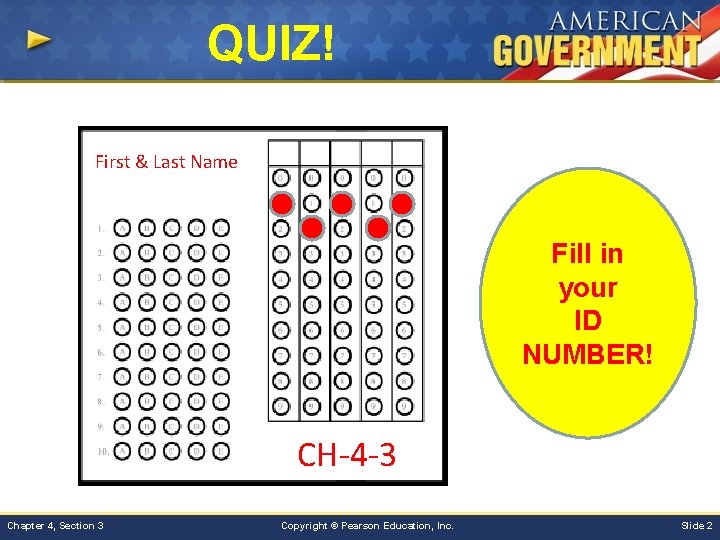
QUIZ! First & Last Name Fill in your ID NUMBER! CH-4 -3 Chapter 4, Section 3 Copyright © Pearson Education, Inc. Slide 2
Key Terms • interstate compact: an agreement made between two States or between a State and a foreign government • extradition: the legal process of returning a fugitive to a State Chapter 4, Section 3 Copyright © Pearson Education, Inc. Slide 4
Key Terms, cont. • Full Faith and Credit Clause: the clause of the Constitution that says that each State will respect the laws, records, and court decisions of other States • Privileges and Immunities Clause: a phrase in the Constitution that says that no State can make unreasonable distinctions between its own residents and those of another State Chapter 4, Section 3 Copyright © Pearson Education, Inc. Slide 5
Introduction • How do the States work together to preserve the Union? – State governments make interstate compacts. – States offer full faith and credit to the laws, official records, and court rulings of other States. – States extradite fugitives to other States. – States respect the privileges and immunities of residents of other States. Chapter 4, Section 3 Copyright © Pearson Education, Inc. Slide 6
Chapter 4, Section 3 Copyright © Pearson Education, Inc. Slide 7
Interstate Compacts “No State may enter into any treaty, alliance, or confederation. ” However, the States may, with the consent of Congress, enter into interstate compacts—agreements among themselves and with foreign states. More than 200 compacts are now in force, and range in a variety of uses from sharing law-enforcement data to resource development and conservation. Chapter 4, Section 3 Copyright © Pearson Education, Inc. Slide 8
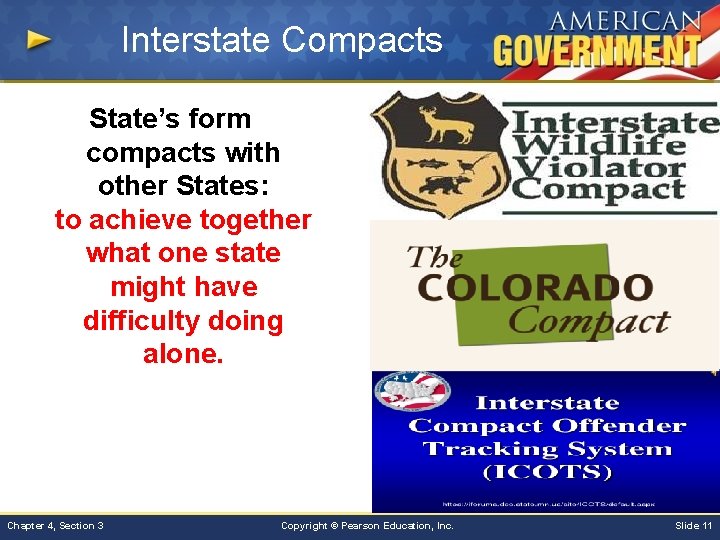
Interstate Compacts • States can enter agreements with other States and with foreign governments with the consent of Congress. – The number of these agreements has increased over time. – There are interstate agreements to share law enforcement data, counter global climate change, encourage cooperation between public universities, and coordinate the conservation of water and wildlife. Chapter 4, Section 3 Copyright © Pearson Education, Inc. Slide 9
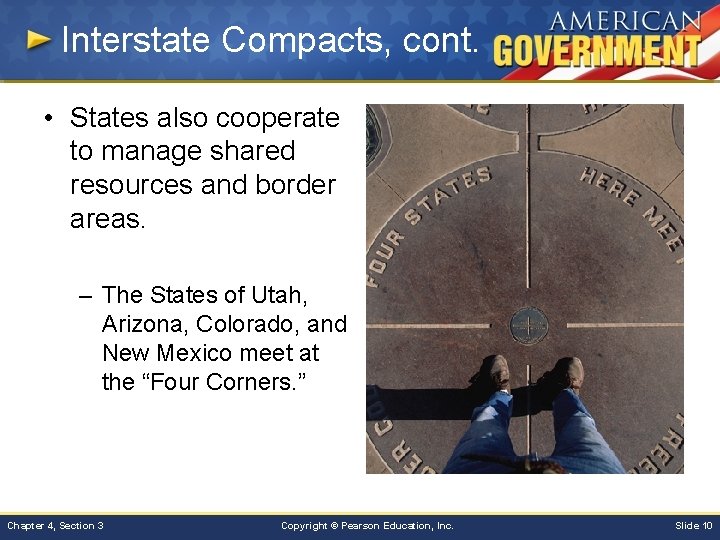
Interstate Compacts, cont. • States also cooperate to manage shared resources and border areas. – The States of Utah, Arizona, Colorado, and New Mexico meet at the “Four Corners. ” Chapter 4, Section 3 Copyright © Pearson Education, Inc. Slide 10
Interstate Compacts State’s form compacts with other States: to achieve together what one state might have difficulty doing alone. Chapter 4, Section 3 Copyright © Pearson Education, Inc. Slide 11
Chapter 4, Section 3 Copyright © Pearson Education, Inc. Slide
Foreign Nations • Ratified Tribal-State Gaming Compacts (New and Amended) • The State of California has signed and ratified Tribal-State Gaming Compacts with 71 Tribes and there are Secretarial Procedures in effect with one Tribe. There are currently 59 casinos operated by 58 Tribes Chapter 4, Section 3 Copyright © Pearson Education, Inc. Slide
Guided Reading: Interstate Relations 1. Interstate Compacts Why might States feel the need to form compacts with other States? to achieve together what one State might have difficulty doing alone Chapter 4, Section 3 Copyright © Pearson Education, Inc. Slide 14
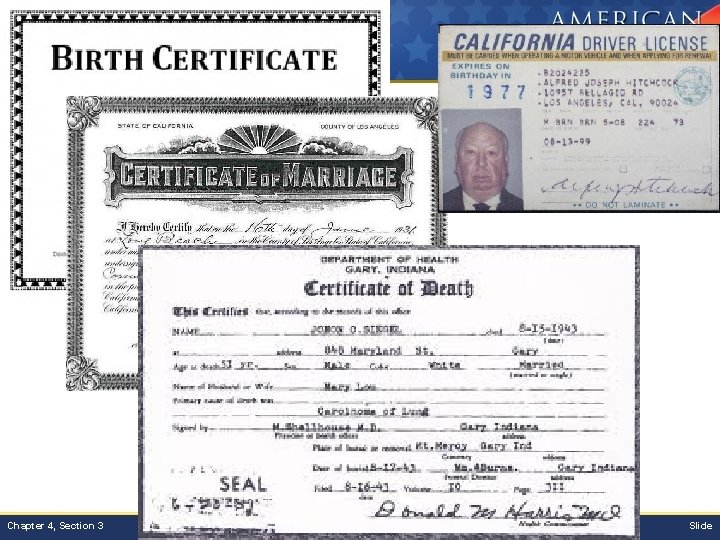
Full Faith and Credit • The Full Faith and Credit Clause of the Constitution requires each State to honor and enforce the laws, official documents, and court rulings of other States. – Documents issued in one State—such as birth certificates—must be accepted in all States. Chapter 4, Section 3 Copyright © Pearson Education, Inc. Slide 15
FF&CC • The Full Faith and Credit Clause of the Constitution ensures that States – recognize the laws (public acts) – documents (records) – court (judicial) proceedings of the other States. Chapter 4, Section 3 Copyright © Pearson Education, Inc. Slide
Chapter 4, Section 3 Copyright © Pearson Education, Inc. Slide
Chapter 4, Section 3 Copyright © Pearson Education, Inc. Slide
Chapter 4, Section 3 Copyright © Pearson Education, Inc. Slide
Guided Reading: Interstate Relations 2. Full Faith and Credit What are three areas in which States give full faith and credit to citizens of other States? public acts, - laws records, and -certificates judicial proceedings – court orders Chapter 4, Section 3 Copyright © Pearson Education, Inc. Slide 20
Exceptions • There are two key exceptions to the Full Faith and Credit Clause: – It applies only to the civil laws of each State, not the criminal laws. – If a person who does not live in a State is granted a divorce by that State, the State in which that person actually resides can refuse to recognize the divorce. Chapter 4, Section 3 Copyright © Pearson Education, Inc. Slide 21
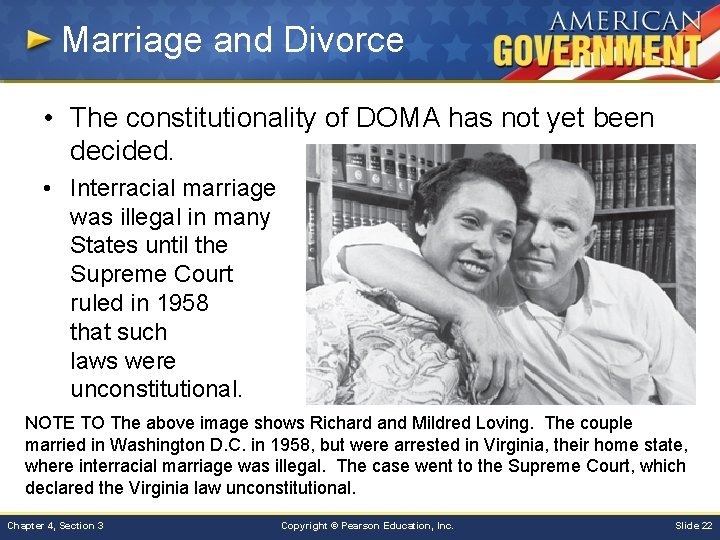
Marriage and Divorce • The constitutionality of DOMA has not yet been decided. • Interracial marriage was illegal in many States until the Supreme Court ruled in 1958 that such laws were unconstitutional. NOTE TO The above image shows Richard and Mildred Loving. The couple married in Washington D. C. in 1958, but were arrested in Virginia, their home state, where interracial marriage was illegal. The case went to the Supreme Court, which declared the Virginia law unconstitutional. Chapter 4, Section 3 Copyright © Pearson Education, Inc. Slide 22
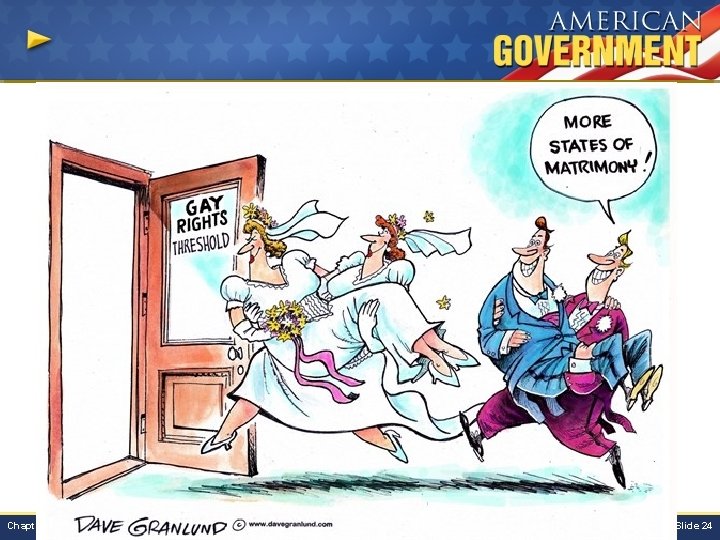
Marriage and Divorce • Only the State in which a couple has established residency can grant them a divorce. • Same-sex marriages were outlawed by the federal government and 41 States. • Until June 2015 – However, several States allow legal same-sex marriages or civil unions. – The Defense of Marriage Act (DOMA) says that no State can be forced to recognize a same-sex marriage performed in another State. Chapter 4, Section 3 Copyright © Pearson Education, Inc. Slide 23
Chapter 4, Section 3 Copyright © Pearson Education, Inc. Slide 24
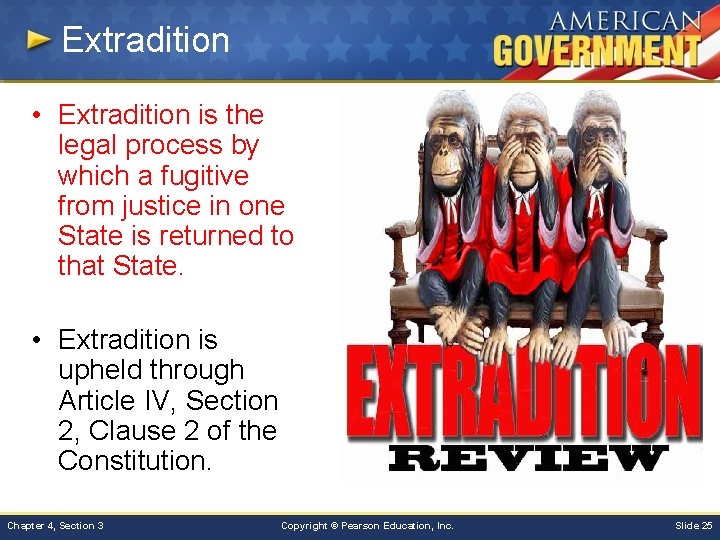
Extradition • Extradition is the legal process by which a fugitive from justice in one State is returned to that State. • Extradition is upheld through Article IV, Section 2, Clause 2 of the Constitution. Chapter 4, Section 3 Copyright © Pearson Education, Inc. Slide 25
Extradition • The Constitution states that people charged with a crime in one State who flee to another State must be extradited—returned to the State where they were originally charged. – Typically a State governor asks another State governor to return any captured fugitives. Such requests are usually upheld. – If extradition is challenged, the federal government can order a governor to extradite a fugitive. Chapter 4, Section 3 Copyright © Pearson Education, Inc. Slide 26
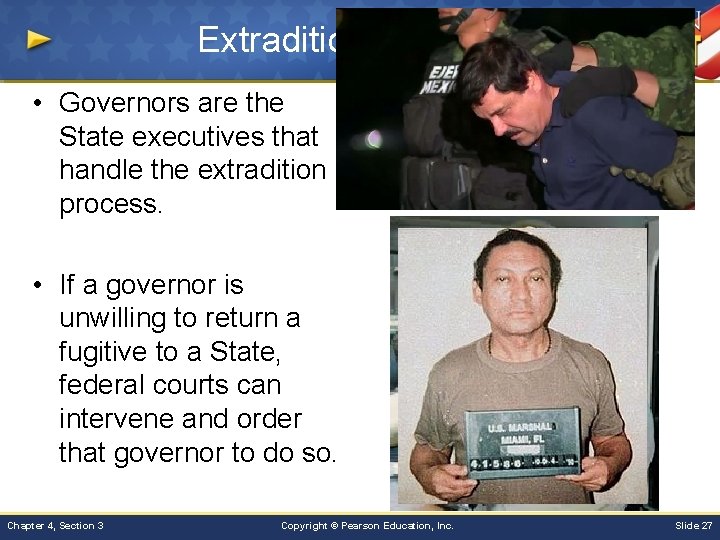
Extradition • Governors are the State executives that handle the extradition process. • If a governor is unwilling to return a fugitive to a State, federal courts can intervene and order that governor to do so. Chapter 4, Section 3 Copyright © Pearson Education, Inc. Slide 27
Guided Reading: Interstate Relations 3. Extradition What is extradition? the legal process by which a fugitive from justice in one State is returned to that State from another Chapter 4, Section 3 Copyright © Pearson Education, Inc. Slide 28
Privileges and Immunities • No State can make unreasonable distinctions between its residents and residents of another State. – Each State must recognize the right of any American to travel in or become a resident of that State. – Citizens can also marry, buy, own, rent, or sell property, and use the courts in any State, no matter where they live. Chapter 4, Section 3 Copyright © Pearson Education, Inc. Slide 29
Privileges and Immunities, cont. • States can make reasonable distinctions between their residents and those of other States. – People can be required to live in a State for certain period of time before they can vote, hold public office, or be licensed in certain professions. – States can also charge higher fees to out-of-State hunters, fishers, or students attending a State’s public universities. Chapter 4, Section 3 Copyright © Pearson Education, Inc. Slide 30
Privileges and Immunities • The Privileges and Immunities Clause provides that no State can draw unreasonable distinctions between its own residents and those persons who happen to live in other States. – States cannot, for example, pay lower welfare benefits to newly arrived residents than it does to its long-term residents, Saens v. Roe, 1999. Chapter 4, Section 3 Copyright © Pearson Education, Inc. Slide 31
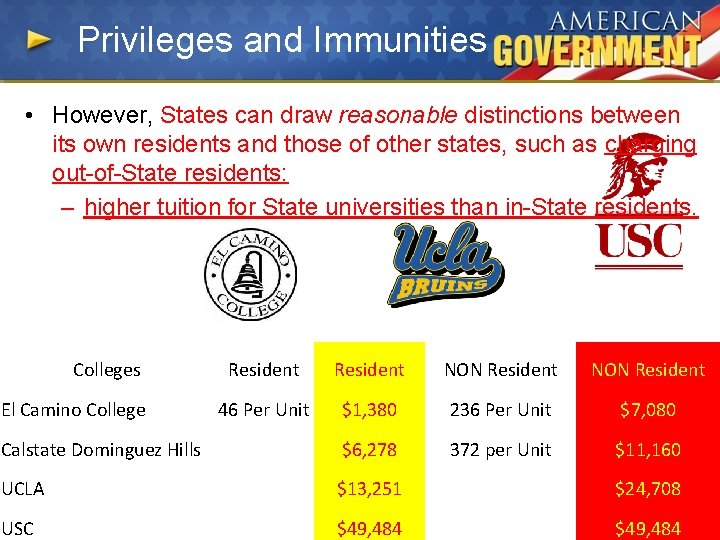
Privileges and Immunities • However, States can draw reasonable distinctions between its own residents and those of other states, such as charging out-of-State residents: – higher tuition for State universities than in-State residents. Colleges Resident NON Resident 46 Per Unit $1, 380 236 Per Unit $7, 080 Calstate Dominguez Hills $6, 278 372 per Unit $11, 160 UCLA $13, 251 $24, 708 $49, 484 Slide 32 El Camino College Chapter 4, Section 3 USC Copyright © Pearson Education, Inc.
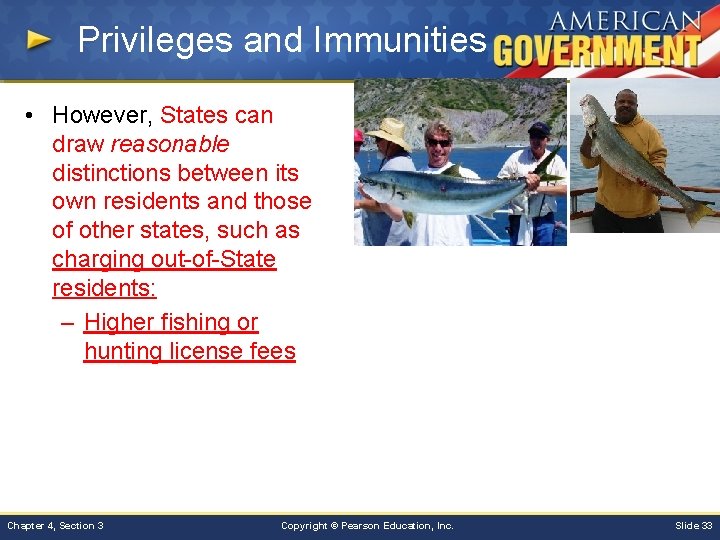
Privileges and Immunities • However, States can draw reasonable distinctions between its own residents and those of other states, such as charging out-of-State residents: – Higher fishing or hunting license fees Chapter 4, Section 3 Copyright © Pearson Education, Inc. Slide 33
Chapter 4, Section 3 Copyright © Pearson Education, Inc. Slide 34
Guided Reading: Interstate Relations 4. Privileges and Immunities What is an example of a reasonable discrimination a State may exercise against a citizen of another State? A State may charge a non-resident higher fees for fishing or hunting licenses or to attend a State university. Chapter 4, Section 3 Copyright © Pearson Education, Inc. Slide 35
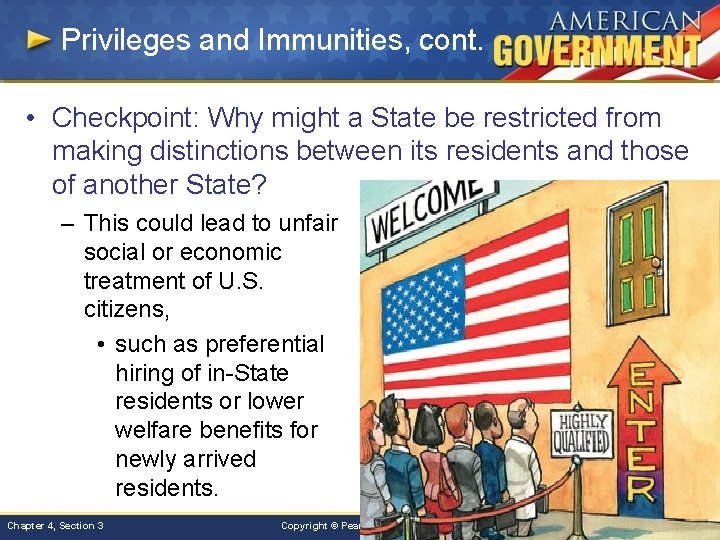
Privileges and Immunities, cont. • Checkpoint: Why might a State be restricted from making distinctions between its residents and those of another State? – This could lead to unfair social or economic treatment of U. S. citizens, • such as preferential hiring of in-State residents or lower welfare benefits for newly arrived residents. Chapter 4, Section 3 Copyright © Pearson Education, Inc. Slide 36
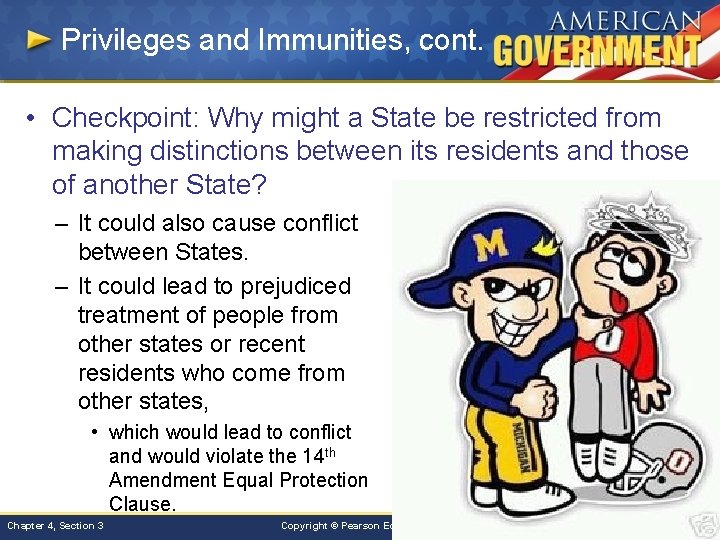
Privileges and Immunities, cont. • Checkpoint: Why might a State be restricted from making distinctions between its residents and those of another State? – It could also cause conflict between States. – It could lead to prejudiced treatment of people from other states or recent residents who come from other states, • which would lead to conflict and would violate the 14 th Amendment Equal Protection Clause. Chapter 4, Section 3 Copyright © Pearson Education, Inc. Slide 37
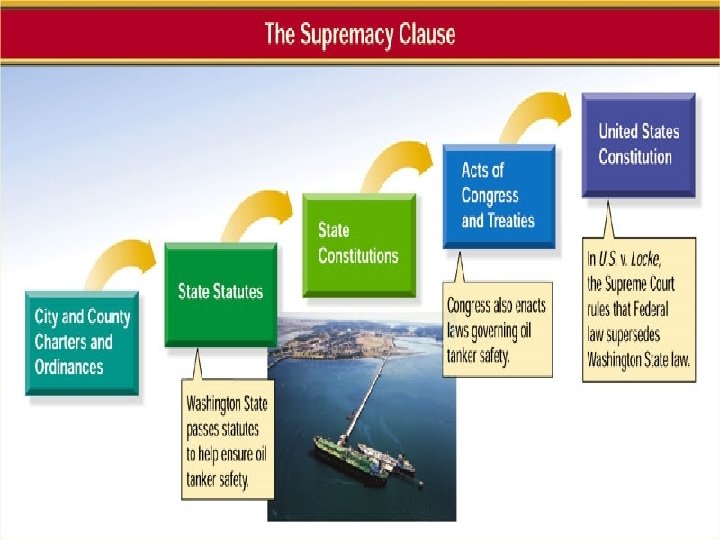
The Supreme Law of the Land Chapter 4, Section 3 Copyright © Pearson Education, Inc. Slide
QUIZ! First & Last Name Fill in your ID NUMBER! CH-4 -3 Chapter 4, Section 3 Copyright © Pearson Education, Inc. Slide 39
Chapter 4, Section 3 Copyright © Pearson Education, Inc. Slide 40
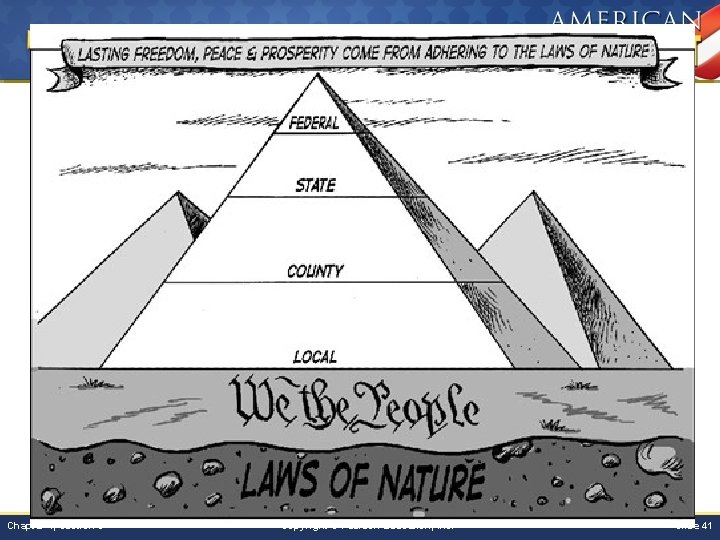
Chapter 4, Section 3 Copyright © Pearson Education, Inc. Slide 41