Cell Division Ajith Sominanda Department of Anatomy Faculty
- Slides: 39
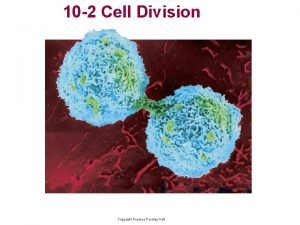
Cell Division Ajith Sominanda Department of Anatomy Faculty of Medicine University of Peradeniya
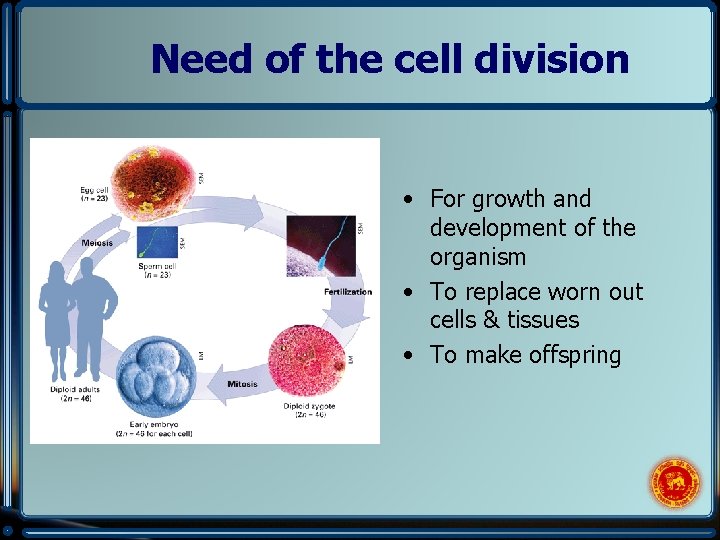
Need of the cell division • For growth and development of the organism • To replace worn out cells & tissues • To make offspring
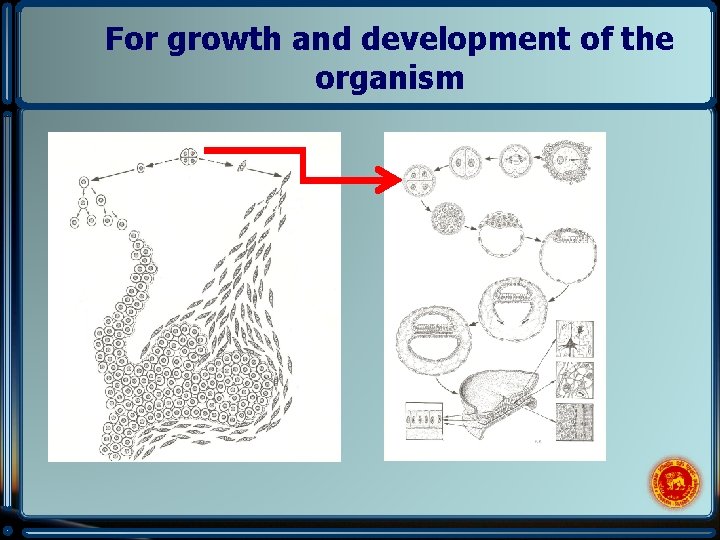
For growth and development of the organism
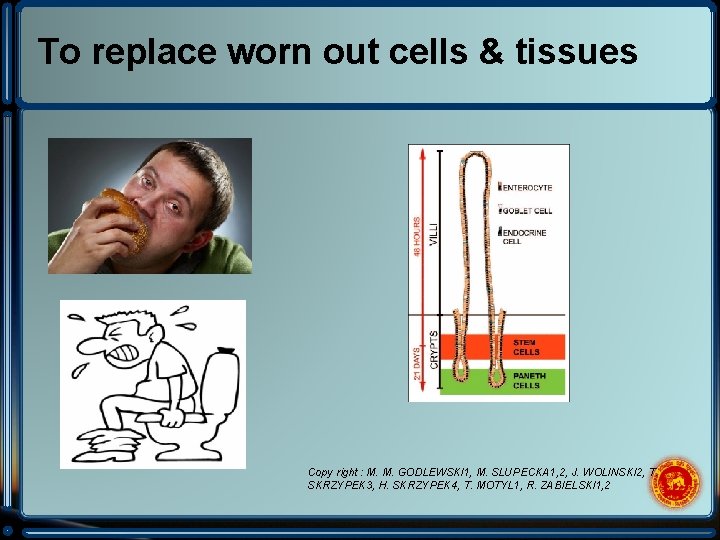
To replace worn out cells & tissues Copy right : M. M. GODLEWSKI 1, M. SLUPECKA 1, 2, J. WOLINSKI 2, T. SKRZYPEK 3, H. SKRZYPEK 4, T. MOTYL 1, R. ZABIELSKI 1, 2
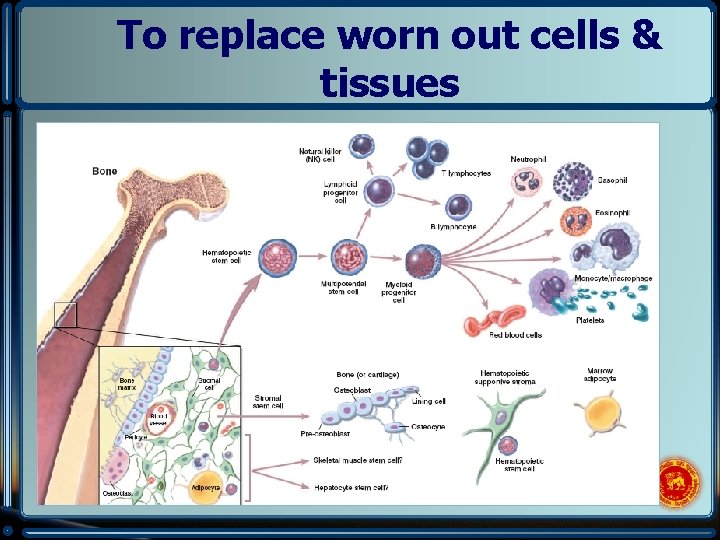
To replace worn out cells & tissues
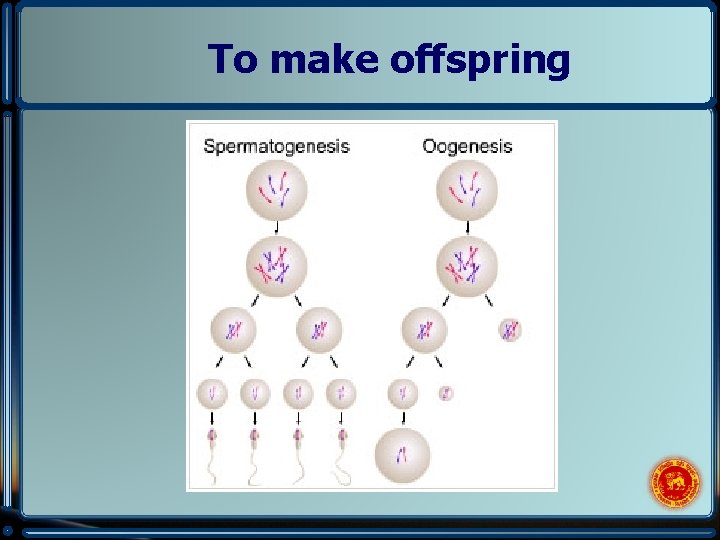
To make offspring
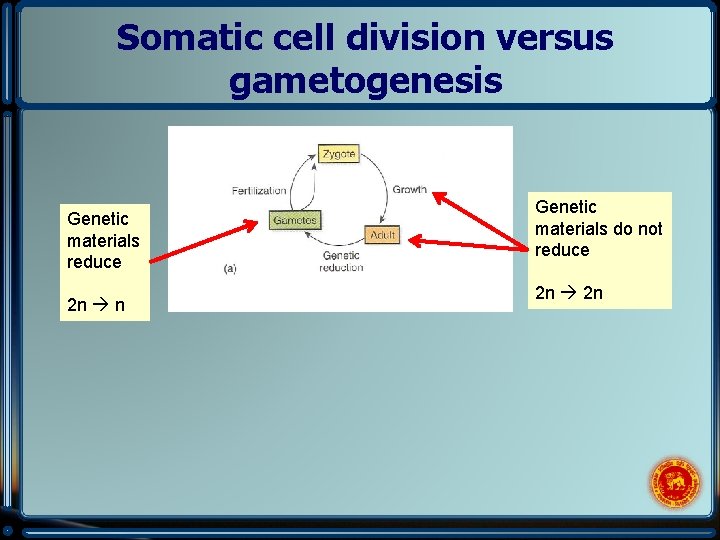
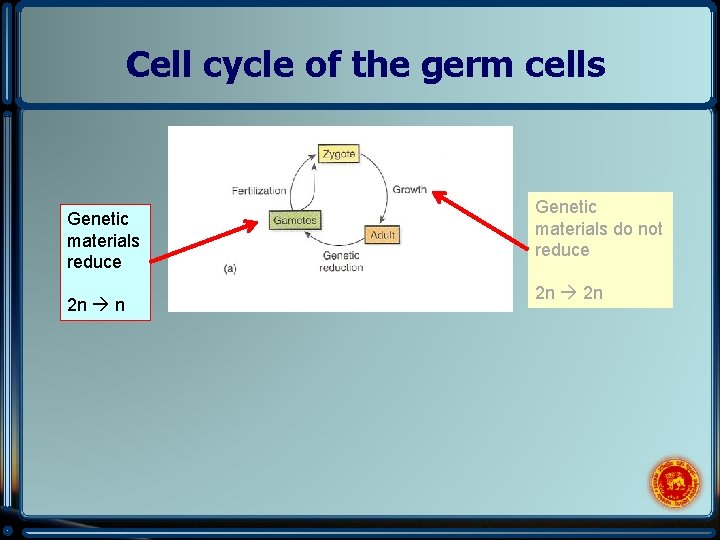
Somatic cell division versus gametogenesis Genetic materials reduce 2 n n Genetic materials do not reduce 2 n
Cell division includes nuclear and cytoplamic division • Nuclear division Karyokinesis • Cytoplasmic division Cytokinesis
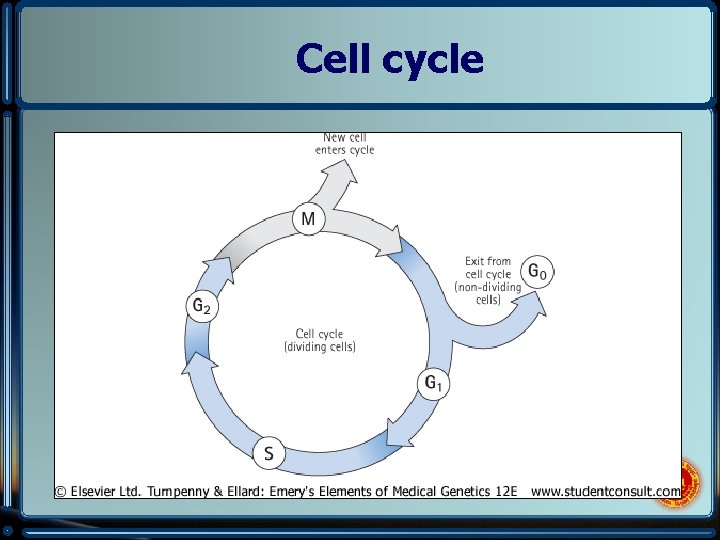
Life cycle of the dividing cell: Cell cycle • Eukaryotic cells passes a sequence of events from a new cell until it reproduce daughter cells; the cell cycle. • How often a cell divides depends on the type of cell – Cells in root of hair, Gut cells, bone marrow cells divide rapidly – Mature muscle cells or neurons do not divide
Cell cycle
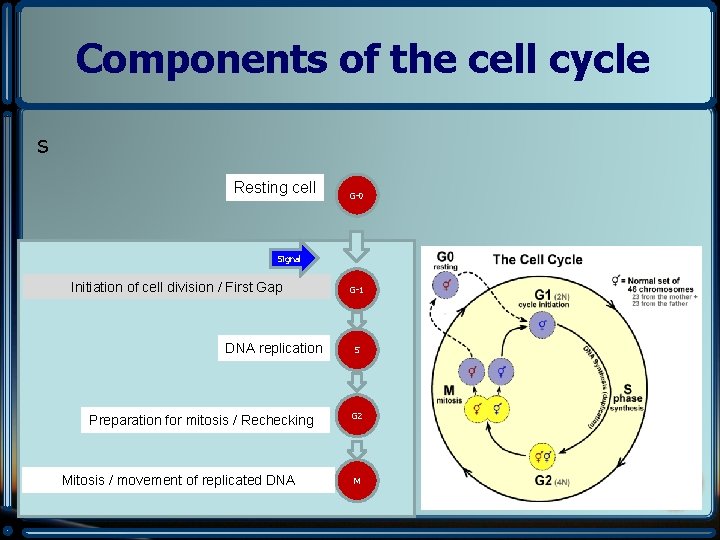
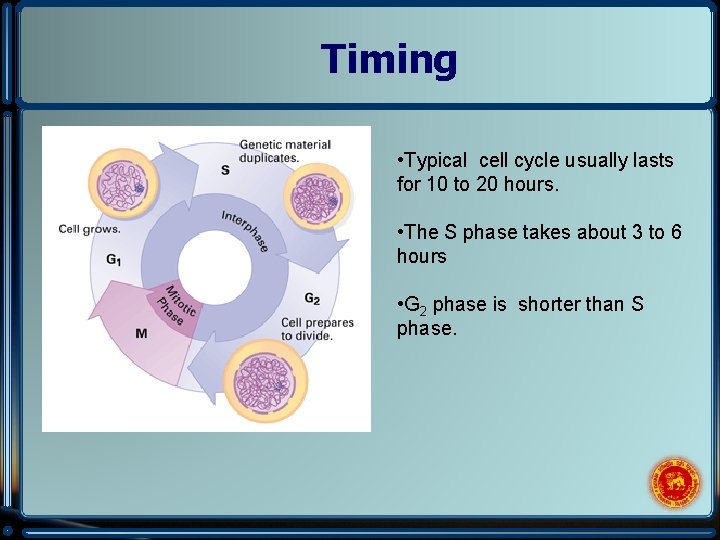
Components of the cell cycle s Resting cell G-0 Signal Initiation of cell division / First Gap DNA replication Preparation for mitosis / Rechecking Mitosis / movement of replicated DNA G-1 S G 2 M
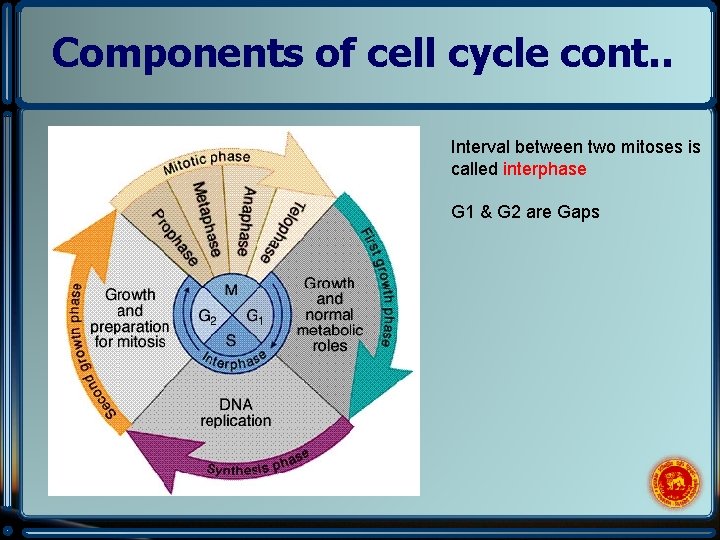
Components of cell cycle cont. . Interval between two mitoses is called interphase G 1 & G 2 are Gaps
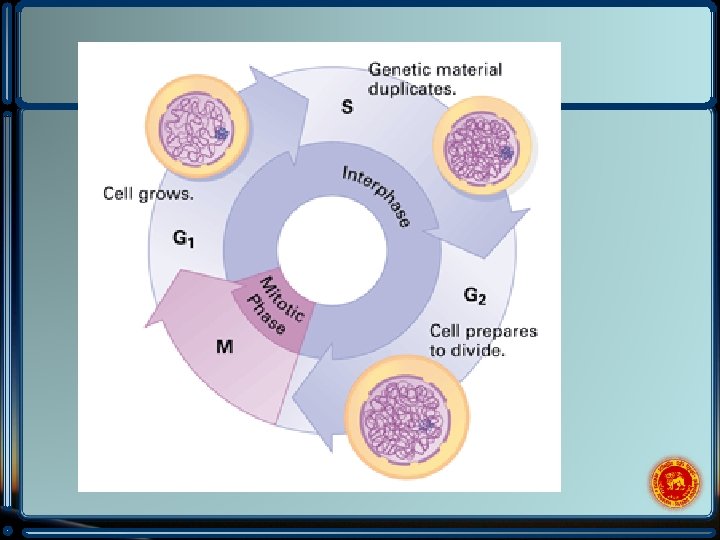
Interphase • The cell may spend as much as 90 percent of the cell cycle in interphase • The ell perform its normal cellular functions during this phase • Between Gaps (G 1 & G 2) DNA replicates
Timing • Typical cell cycle usually lasts for 10 to 20 hours. • The S phase takes about 3 to 6 hours • G 2 phase is shorter than S phase.
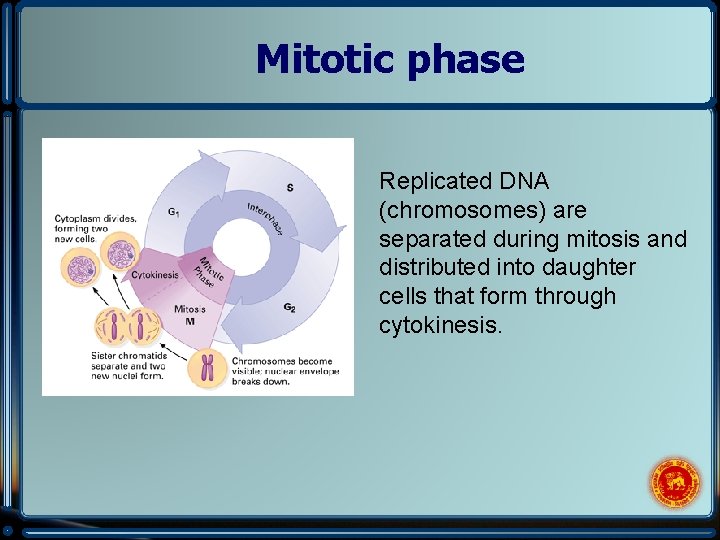
Mitotic phase Replicated DNA (chromosomes) are separated during mitosis and distributed into daughter cells that form through cytokinesis.
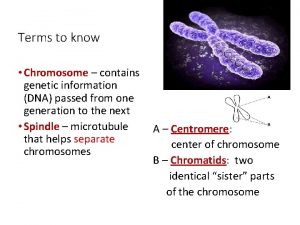
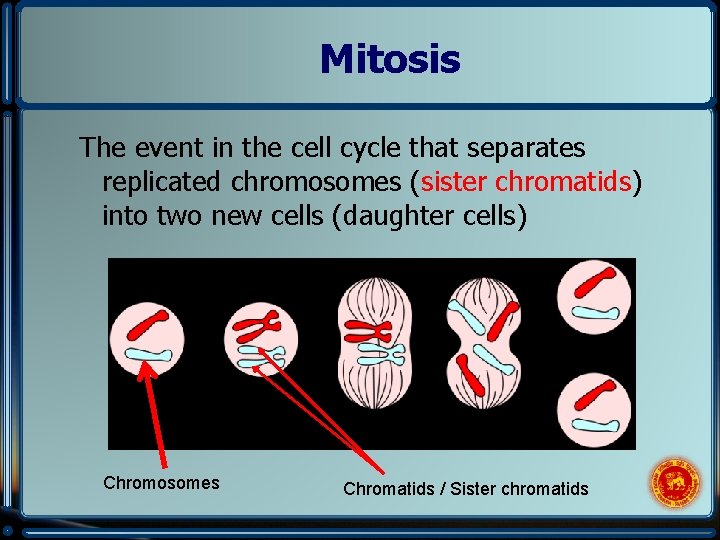
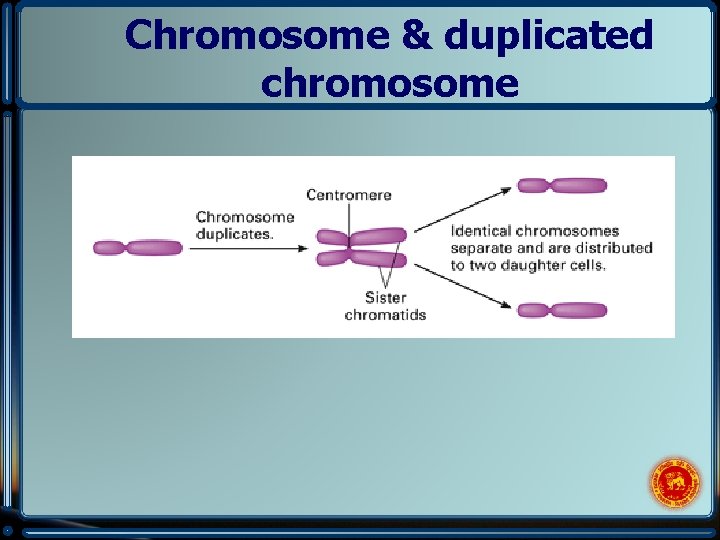
Mitosis The event in the cell cycle that separates replicated chromosomes (sister chromatids) into two new cells (daughter cells) Chromosomes Chromatids / Sister chromatids
Chromosome & duplicated chromosome
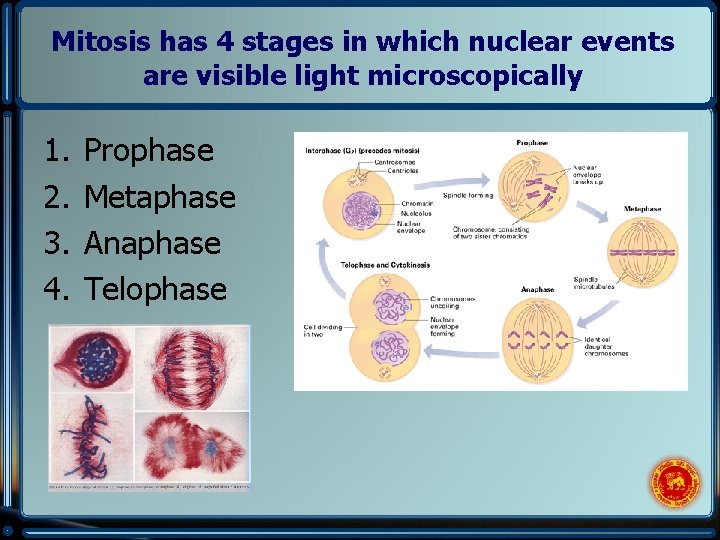
Mitosis has 4 stages in which nuclear events are visible light microscopically 1. 2. 3. 4. Prophase Metaphase Anaphase Telophase
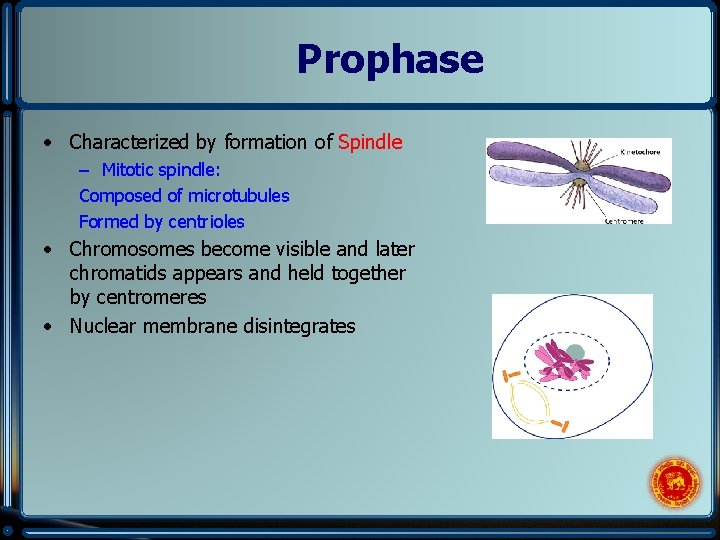
Prophase • Characterized by formation of Spindle – Mitotic spindle: Composed of microtubules Formed by centrioles • Chromosomes become visible and later chromatids appears and held together by centromeres • Nuclear membrane disintegrates
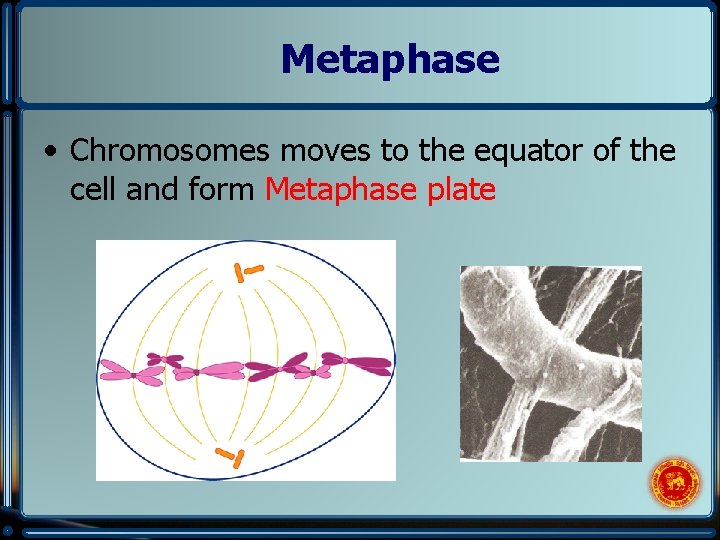
Metaphase • Chromosomes moves to the equator of the cell and form Metaphase plate
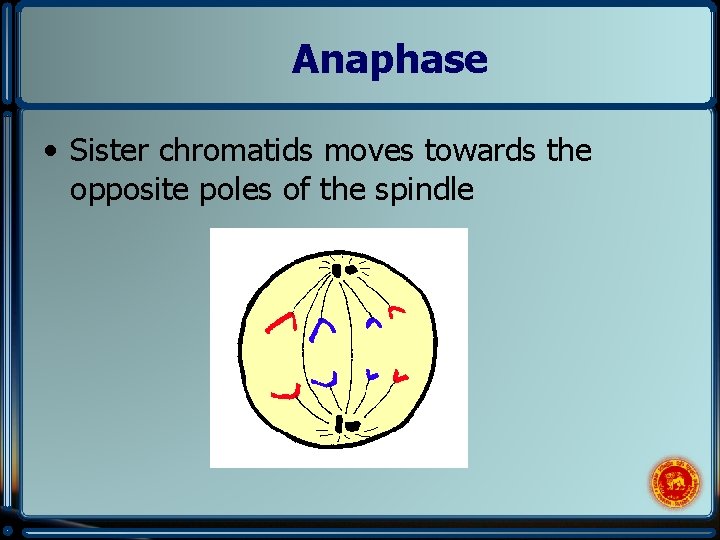
Anaphase • Sister chromatids moves towards the opposite poles of the spindle
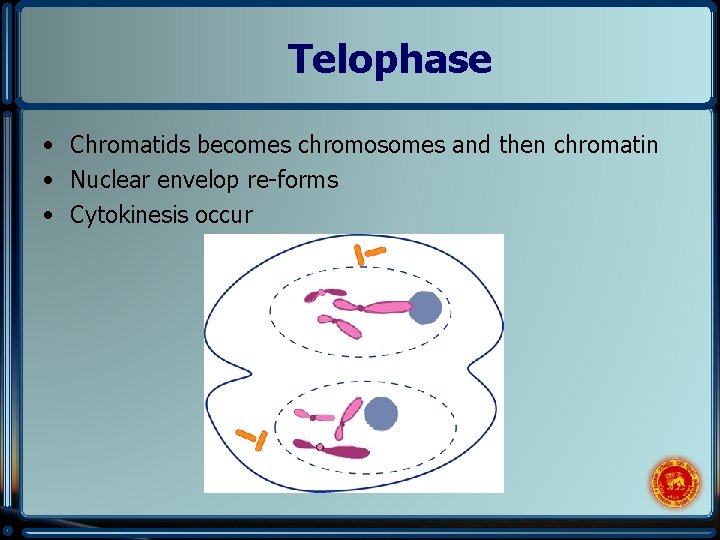
Telophase • Chromatids becomes chromosomes and then chromatin • Nuclear envelop re-forms • Cytokinesis occur
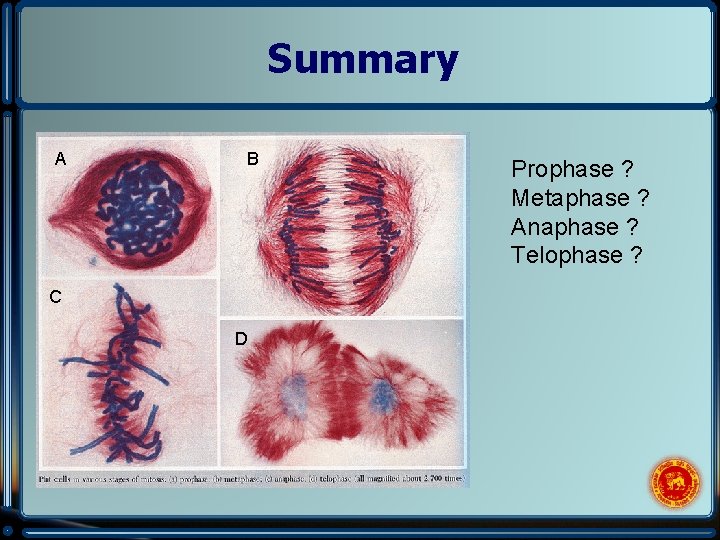
Summary A B C D Prophase ? Metaphase ? Anaphase ? Telophase ?
Gametogenesis
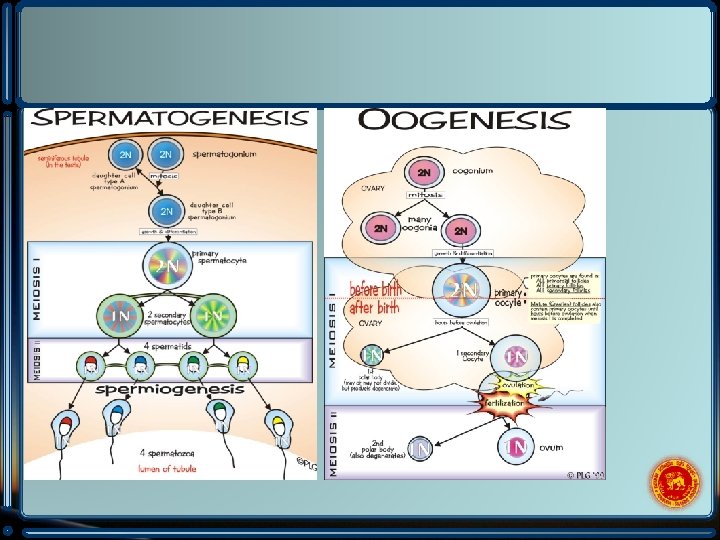
Cell cycle of the germ cells Genetic materials reduce 2 n n Genetic materials do not reduce 2 n
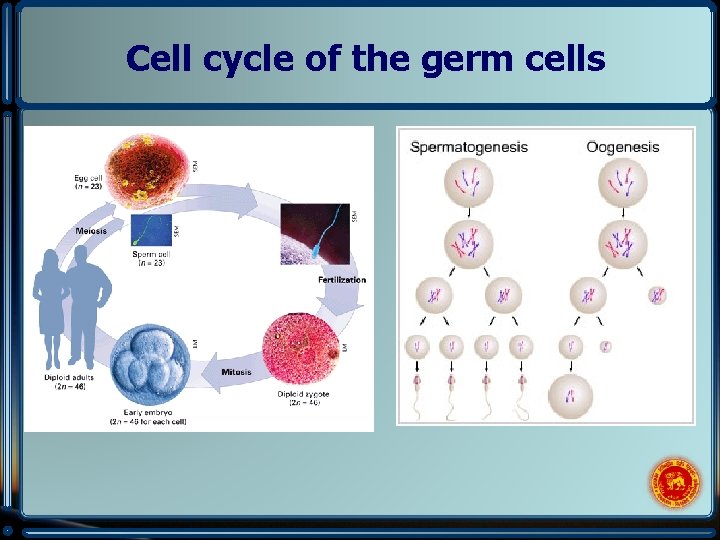
Cell cycle of the germ cells
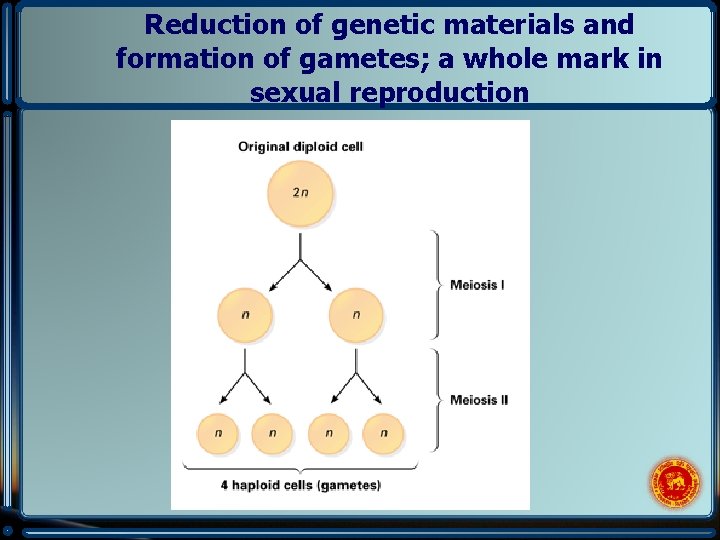
Reduction of genetic materials and formation of gametes; a whole mark in sexual reproduction
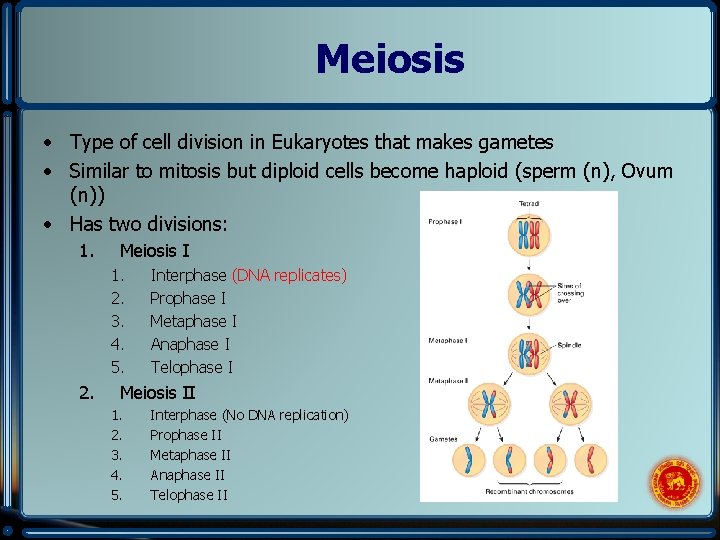
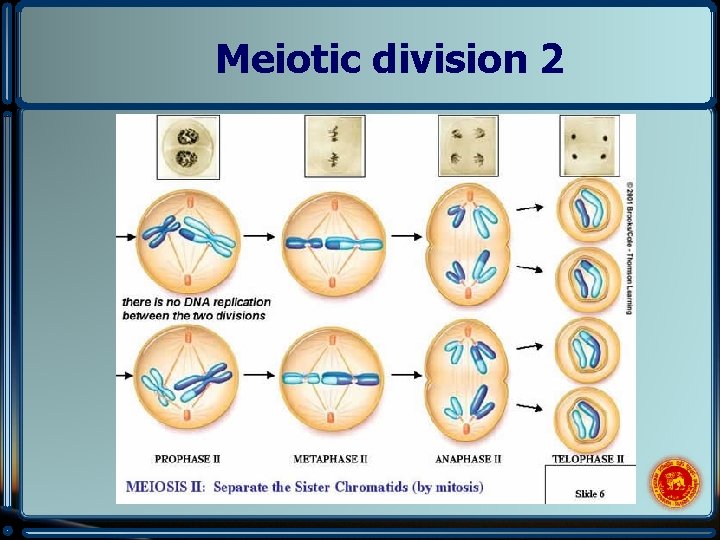
Meiosis • Type of cell division in Eukaryotes that makes gametes • Similar to mitosis but diploid cells become haploid (sperm (n), Ovum (n)) • Has two divisions: 1. Meiosis I 1. 2. 3. 4. 5. 2. Interphase (DNA replicates) Prophase I Metaphase I Anaphase I Telophase I Meiosis II 1. 2. 3. 4. 5. Interphase (No DNA replication) Prophase II Metaphase II Anaphase II Telophase II
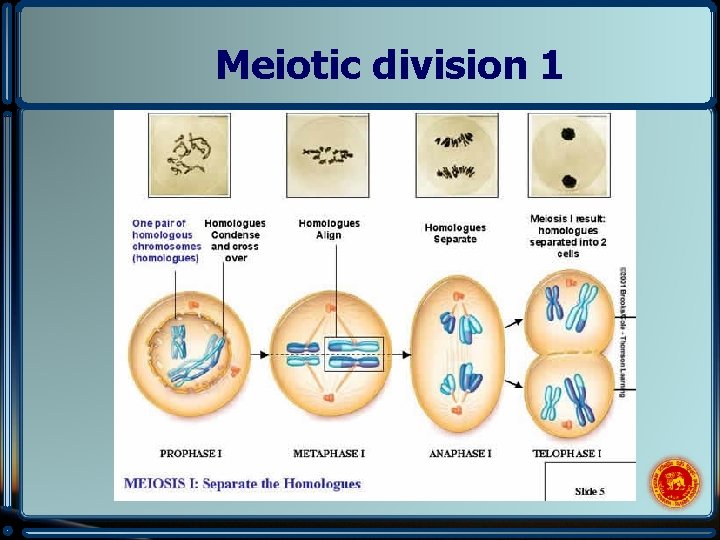
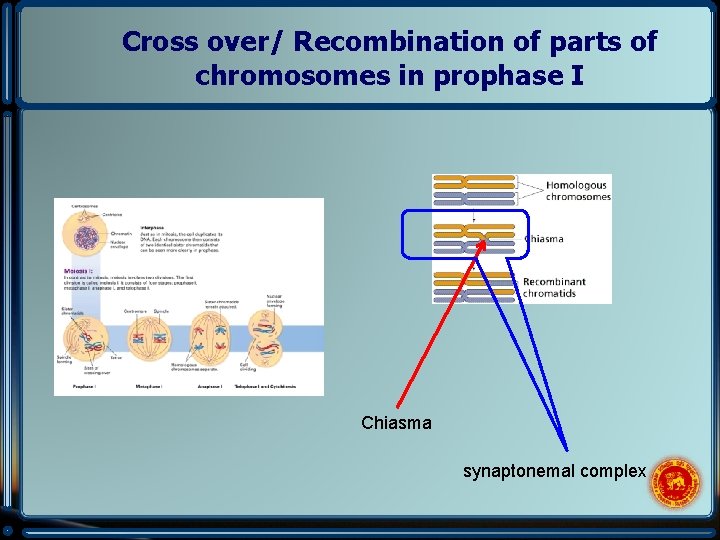
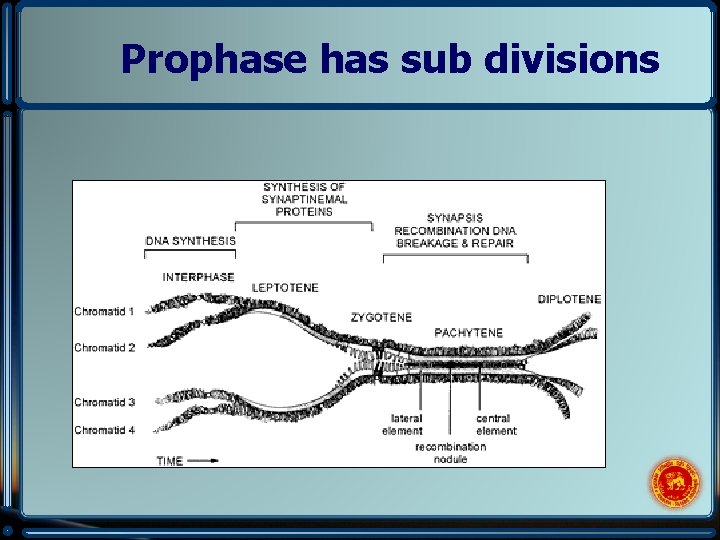
Meiotic division 1 • During interphase DNA replicates (4 n) • Homologous chromosomes stay together in prophase I (cross over / recombination occurs) • Homologous chromosome pairs align in equatorial plane during metaphase I • Each homologous chromosome moves to opposite pole randomly during anaphase • Cytokinesis completes giving rise to haploid cells
Meiotic division 1
Meiotic division 2
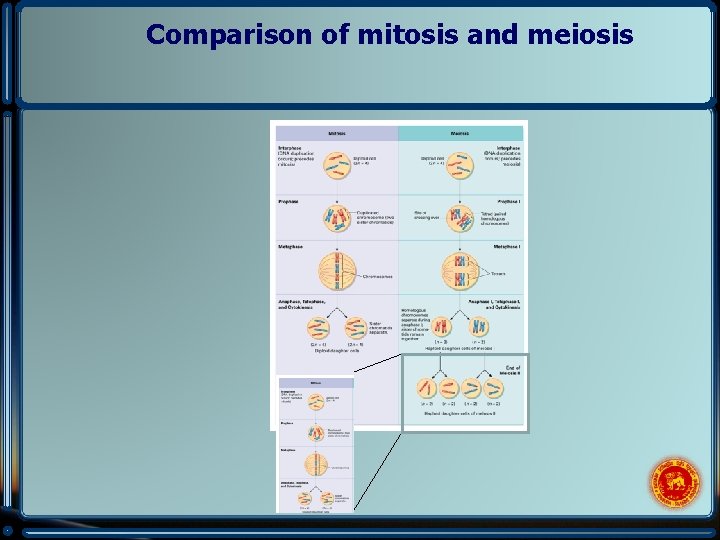
Comparison of mitosis and meiosis
Cross over/ Recombination of parts of chromosomes in prophase I Chiasma synaptonemal complex
Prophase has sub divisions
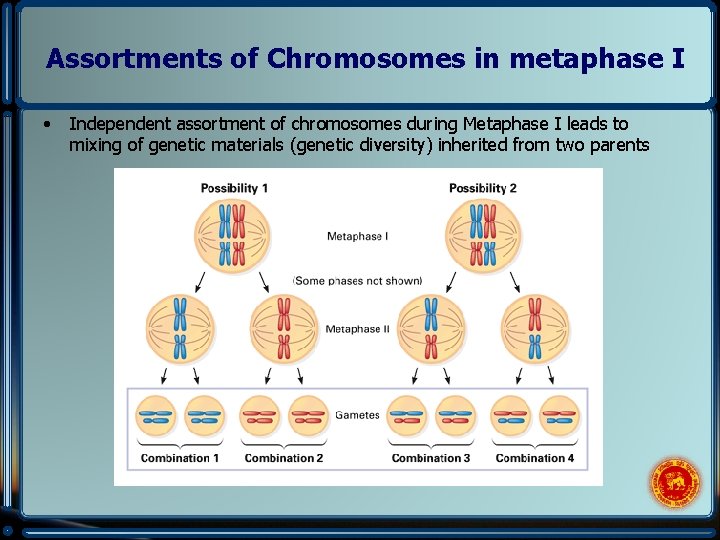
Assortments of Chromosomes in metaphase I • Independent assortment of chromosomes during Metaphase I leads to mixing of genetic materials (genetic diversity) inherited from two parents
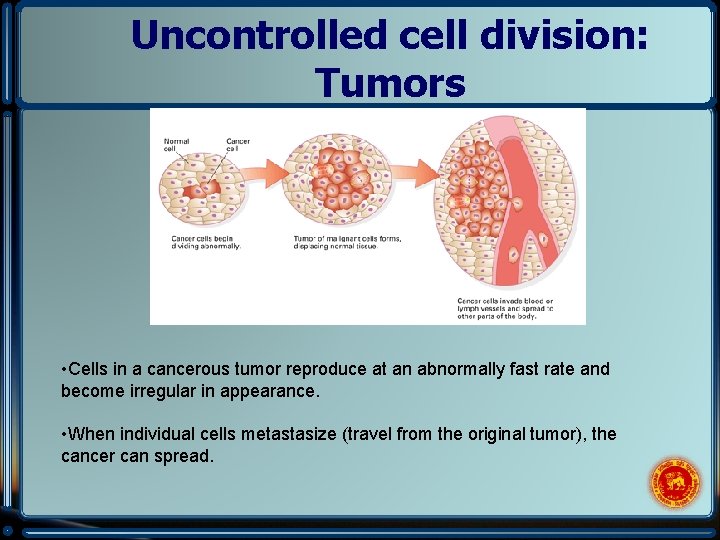
Uncontrolled cell division: Tumors • Cells in a cancerous tumor reproduce at an abnormally fast rate and become irregular in appearance. • When individual cells metastasize (travel from the original tumor), the cancer can spread.
Thank you