
Stigma and discrimination Dr Ajith Karawita MBBS Pg
Stigma and discrimination පහතක ට ස ලකම හ ගම හ ව නසකම කරම Dr. Ajith Karawita, MBBS, Pg. Dip Ven, MD National STD/AIDS Control Programme
Introduction • Stigma has often been associated with disfiguring or incurable diseases, in particular diseases that society perceives to be caused by the violation of social norms, including those that sanction sexual behaviour. • HIV/AIDS is a good example of this type of disease (Crandall and Moriarty 1995)
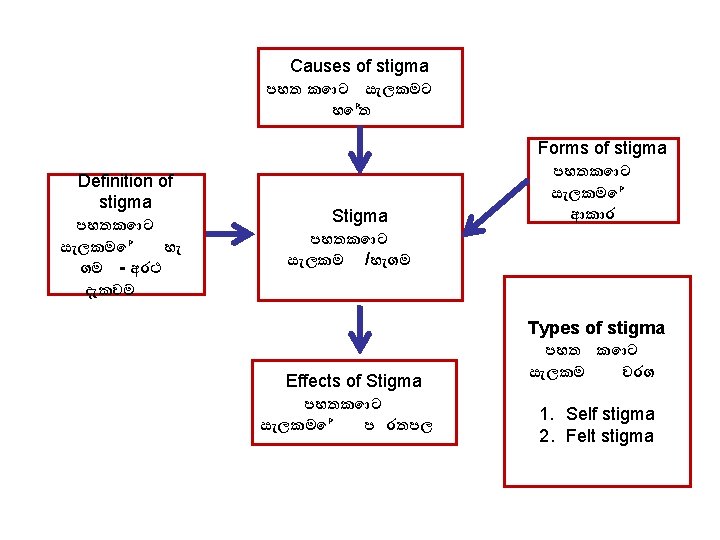
Definition of stigma • Societal labeling of and individual or group as different or deviant because of a “discrediting attribute” අපකරතමත ගණ ග /ලකෂණ (Goffman 1963) • This came from a study on stigma in relation to mental illness, physical deformities and “socially deviant” behaviours
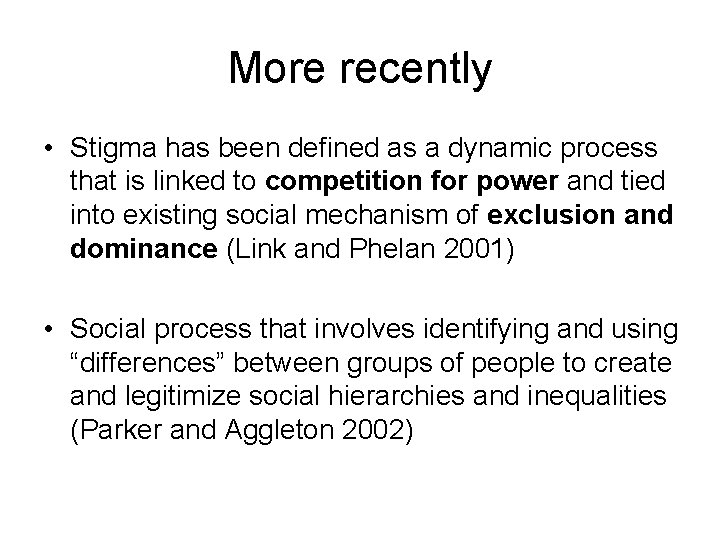
More recently • Stigma has been defined as a dynamic process that is linked to competition for power and tied into existing social mechanism of exclusion and dominance (Link and Phelan 2001) • Social process that involves identifying and using “differences” between groups of people to create and legitimize social hierarchies and inequalities (Parker and Aggleton 2002)
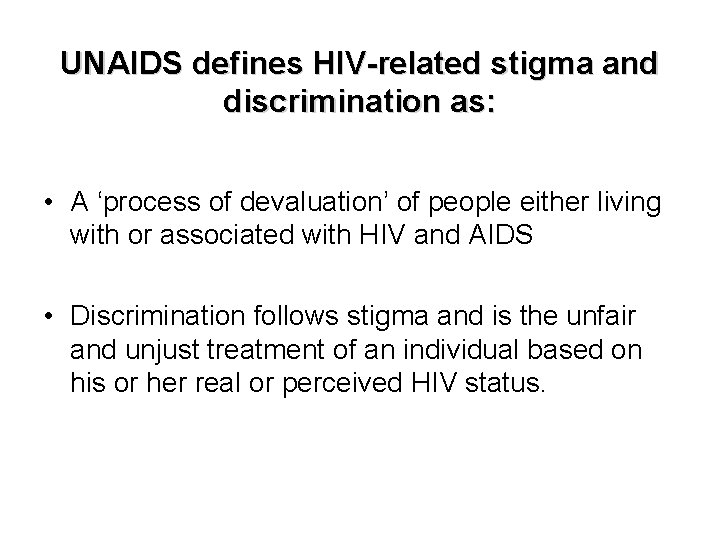
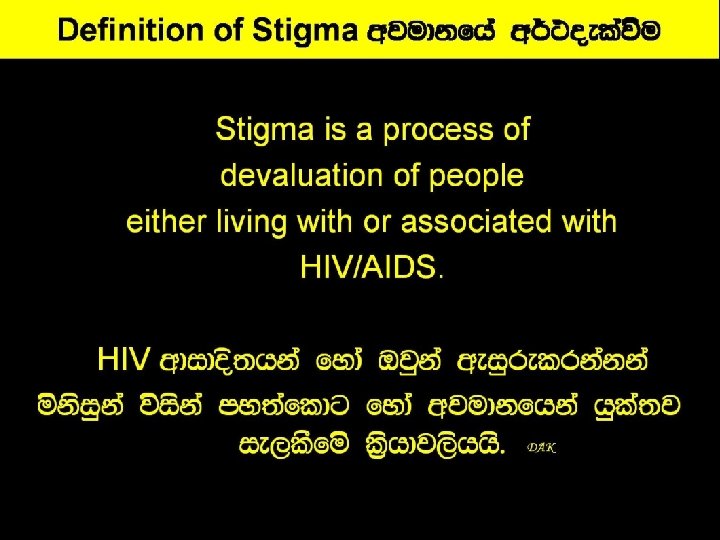
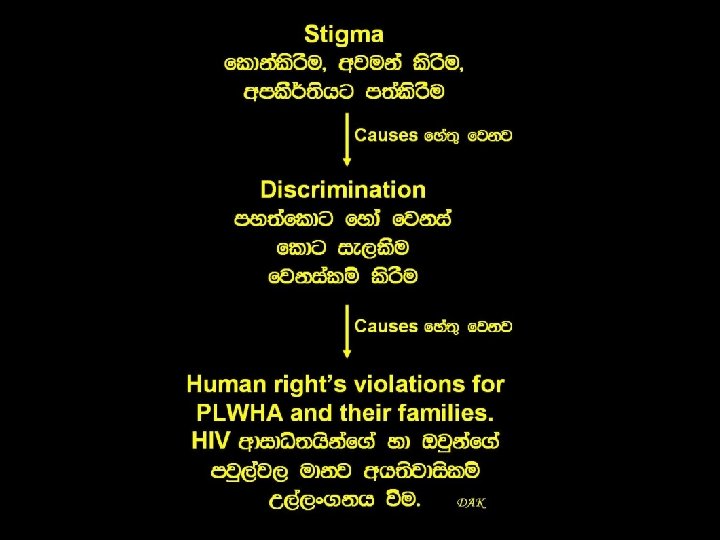
UNAIDS defines HIV-related stigma and discrimination as: • A ‘process of devaluation’ of people either living with or associated with HIV and AIDS • Discrimination follows stigma and is the unfair and unjust treatment of an individual based on his or her real or perceived HIV status.
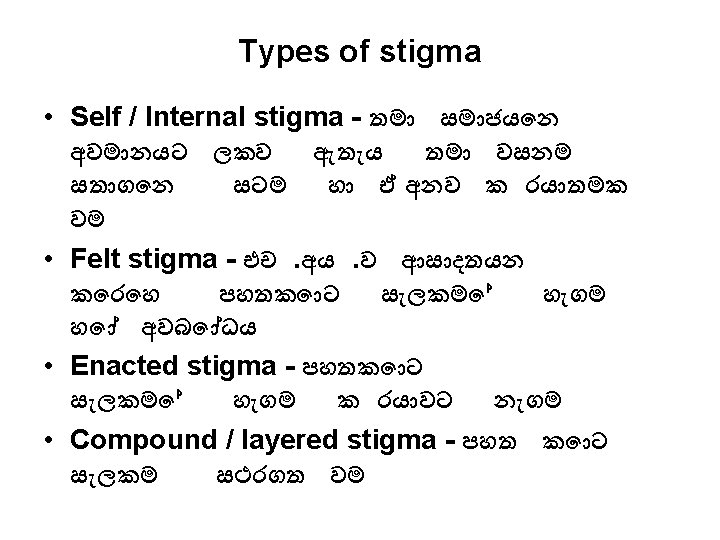
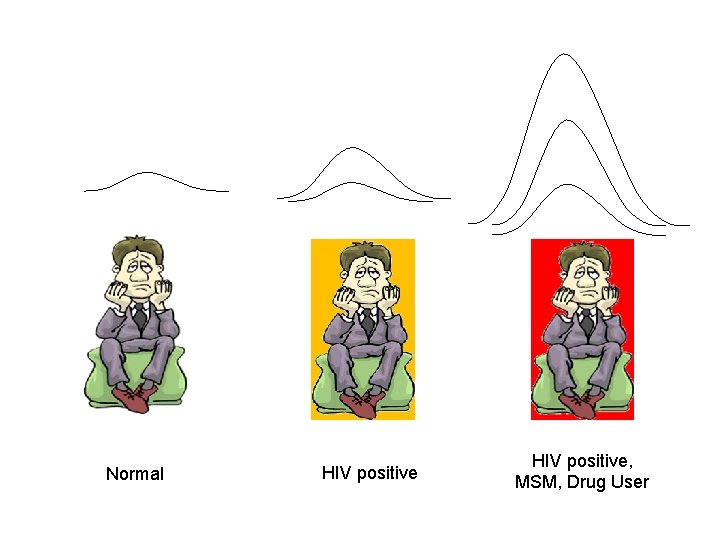
Normal HIV positive, MSM, Drug User
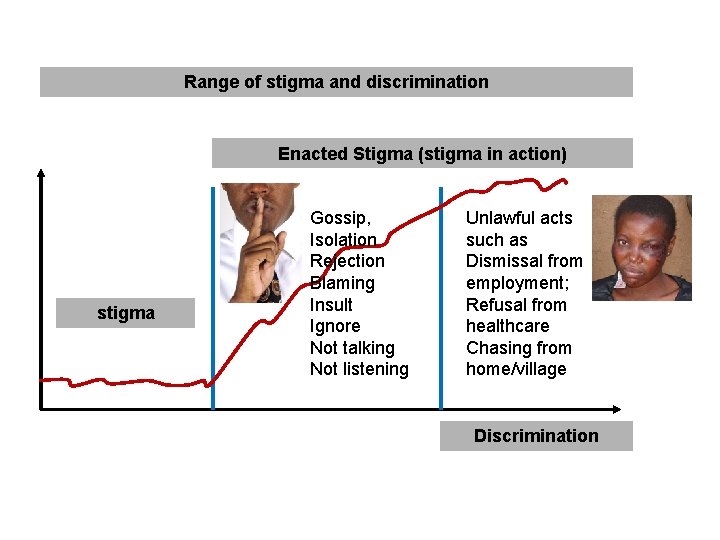
Range of stigma and discrimination Enacted Stigma (stigma in action) stigma Gossip, Isolation Rejection Blaming Insult Ignore Not talking Not listening Unlawful acts such as Dismissal from employment; Refusal from healthcare Chasing from home/village Discrimination
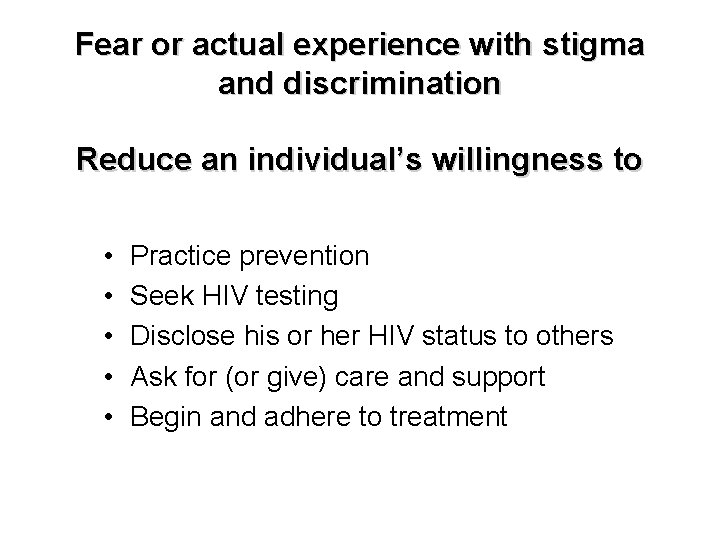
Fear or actual experience with stigma and discrimination Reduce an individual’s willingness to • • • Practice prevention Seek HIV testing Disclose his or her HIV status to others Ask for (or give) care and support Begin and adhere to treatment
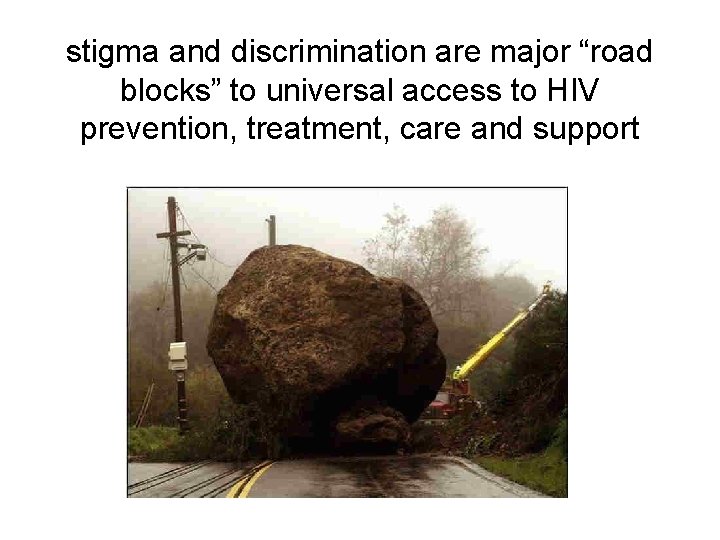
stigma and discrimination are major “road blocks” to universal access to HIV prevention, treatment, care and support
Vision to get to Zero New Infections Zero Discrimination Zero AIDS-related Deaths

How to measure stigma
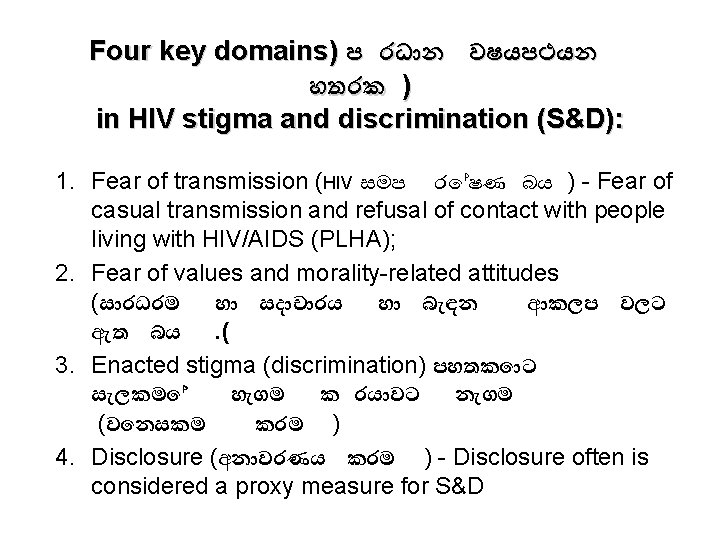
Four key domains) ප රධ න වෂයපථයන හතරක ) in HIV stigma and discrimination (S&D): 1. Fear of transmission (HIV සමප ර ෂණ බය ) - Fear of casual transmission and refusal of contact with people living with HIV/AIDS (PLHA); 2. Fear of values and morality-related attitudes (ස රධරම හ සද ච රය හ බ ඳන ආකලප වලට ඇත බය. ( 3. Enacted stigma (discrimination) පහතක ට ස ලකම හ ගම ක රය වට න ගම (ව නසකම කරම ) 4. Disclosure (අන වරණය කරම ) - Disclosure often is considered a proxy measure for S&D
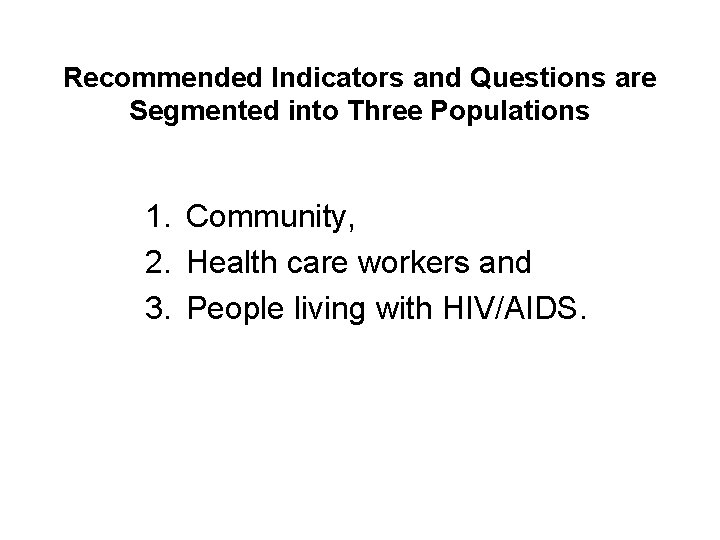
Recommended Indicators and Questions are Segmented into Three Populations 1. Community, 2. Health care workers and 3. People living with HIV/AIDS.
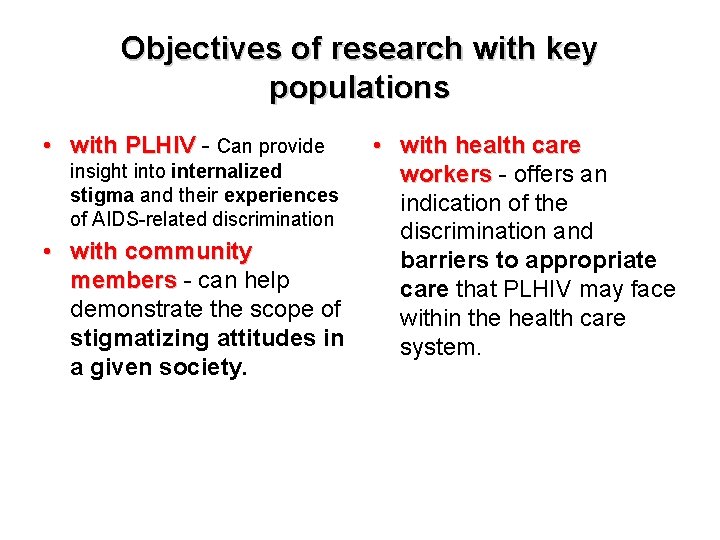
Objectives of research with key populations • with PLHIV - Can provide insight into internalized stigma and their experiences of AIDS-related discrimination • with community members - can help demonstrate the scope of stigmatizing attitudes in a given society. • with health care workers - offers an indication of the discrimination and barriers to appropriate care that PLHIV may face within the health care system.
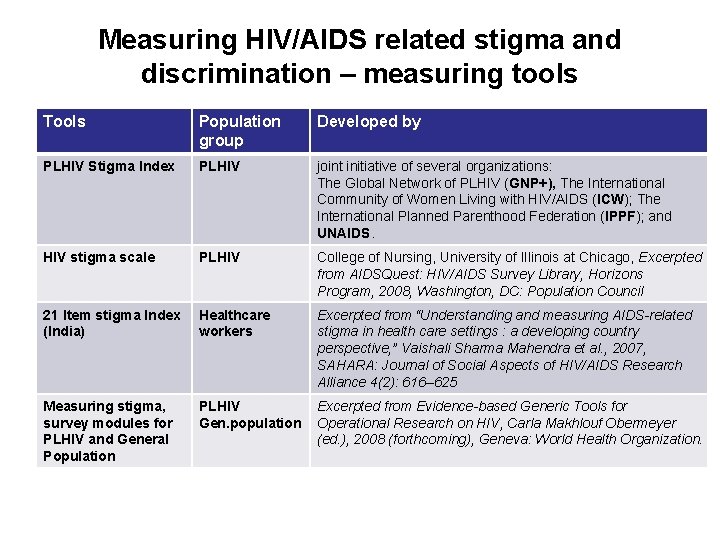
Measuring HIV/AIDS related stigma and discrimination – measuring tools Tools Population group Developed by PLHIV Stigma Index PLHIV joint initiative of several organizations: The Global Network of PLHIV (GNP+), The International Community of Women Living with HIV/AIDS (ICW); The International Planned Parenthood Federation (IPPF); and UNAIDS. HIV stigma scale PLHIV College of Nursing, University of Illinois at Chicago, Excerpted from AIDSQuest: HIV/AIDS Survey Library, Horizons Program, 2008, Washington, DC: Population Council 21 Item stigma Index (India) Healthcare workers Excerpted from “Understanding and measuring AIDS-related stigma in health care settings : a developing country perspective, ” Vaishali Sharma Mahendra et al. , 2007, SAHARA: Journal of Social Aspects of HIV/AIDS Research Alliance 4(2): 616– 625 Measuring stigma, survey modules for PLHIV and General Population PLHIV Gen. population Excerpted from Evidence-based Generic Tools for Operational Research on HIV, Carla Makhlouf Obermeyer (ed. ), 2008 (forthcoming), Geneva: World Health Organization.
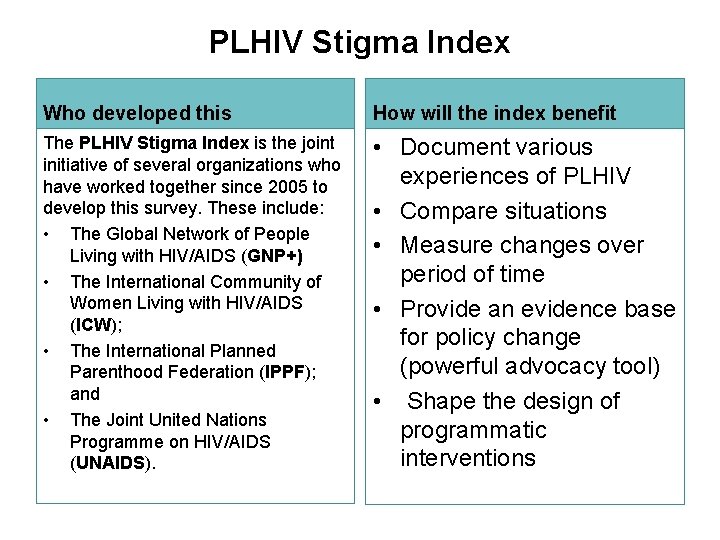
PLHIV Stigma Index Who developed this How will the index benefit The PLHIV Stigma Index is the joint initiative of several organizations who have worked together since 2005 to develop this survey. These include: • The Global Network of People Living with HIV/AIDS (GNP+) • The International Community of Women Living with HIV/AIDS (ICW); • The International Planned Parenthood Federation (IPPF); and • The Joint United Nations Programme on HIV/AIDS (UNAIDS). • Document various experiences of PLHIV • Compare situations • Measure changes over period of time • Provide an evidence base for policy change (powerful advocacy tool) • Shape the design of programmatic interventions
- Slides: 24