
Cell Growth Reproduction Section 8 2 Chapter 8
- Slides: 76
Cell Growth & Reproduction Section 8. 2 Chapter 8 Pages 203 - 210
Cell Reproduction All cells come from preexisting cells. Cell division is the way that new cells are produced from one cell.
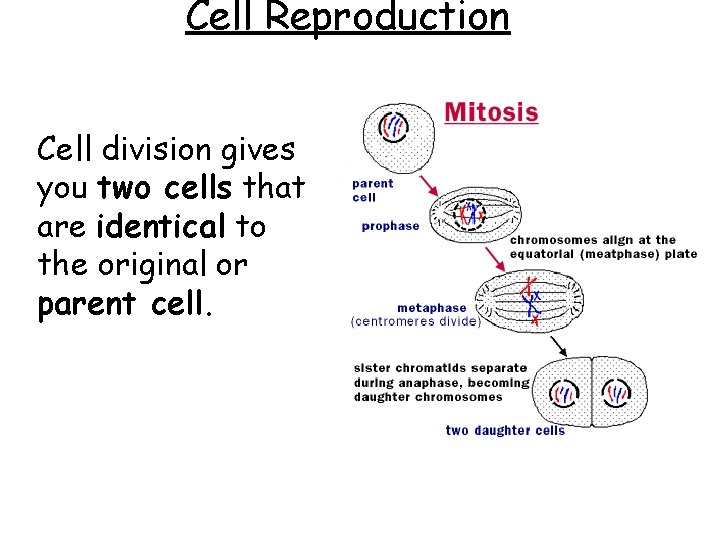
Cell Reproduction Cell division gives you two cells that are identical to the original or parent cell.
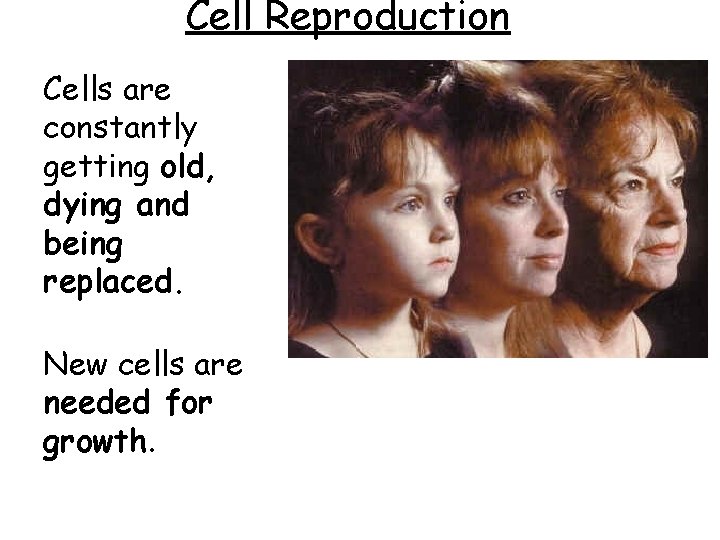
Cell Reproduction Cells are constantly getting old, dying and being replaced. New cells are needed for growth.
The Discovery of Chromosomes Early biologists observed that stringy structures appeared in the nucleus just before cell division. They also noticed that these structures seemed to vanish soon after cell division. These stringy structures are chromosomes.
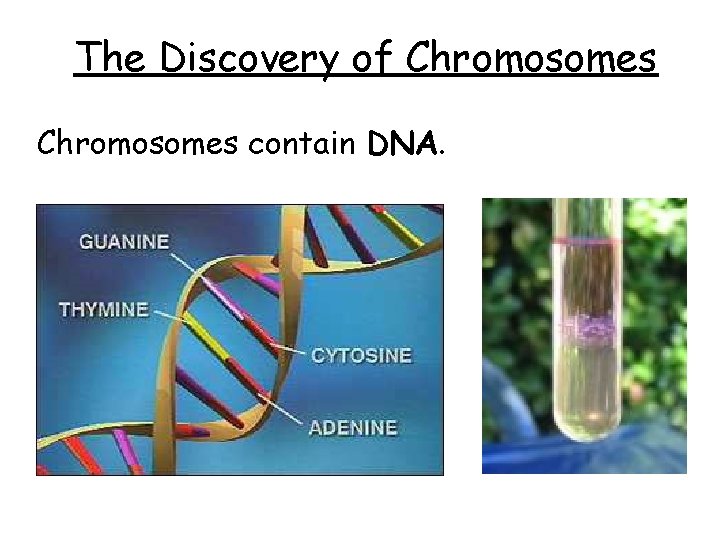
The Discovery of Chromosomes contain DNA.
The Discovery of Chromosomes carry the genetic information that is copied from one generation to the next. It is important that this information is accurately passed along during cell division.
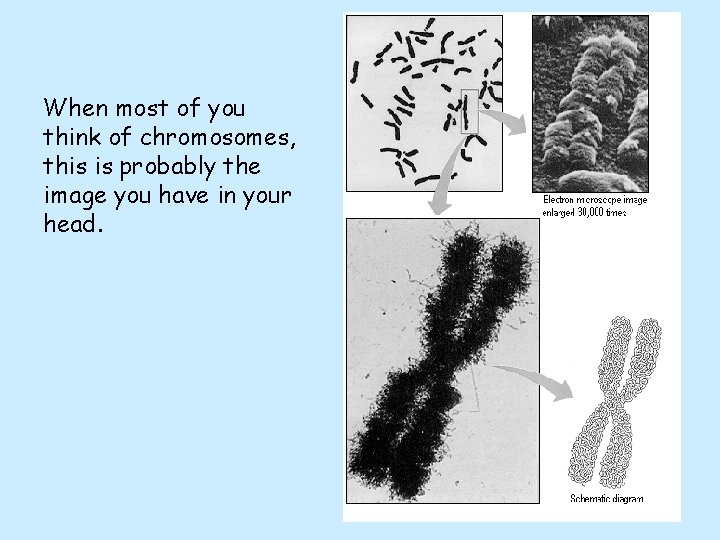
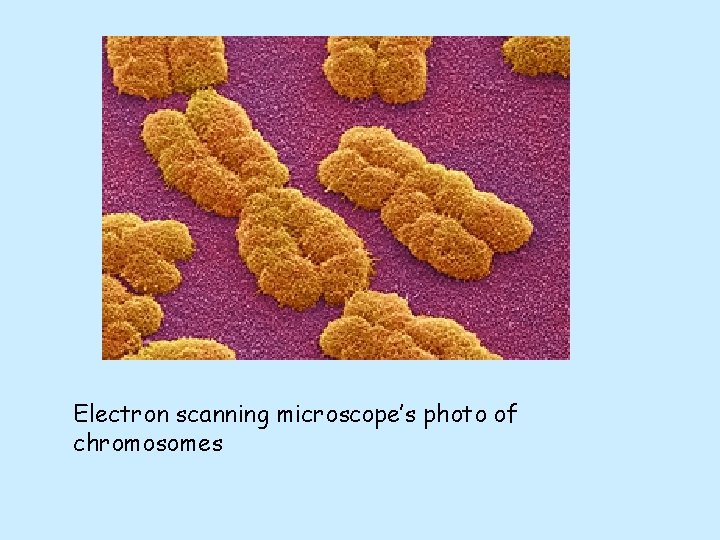
When most of you think of chromosomes, this is probably the image you have in your head.
Electron scanning microscope’s photo of chromosomes
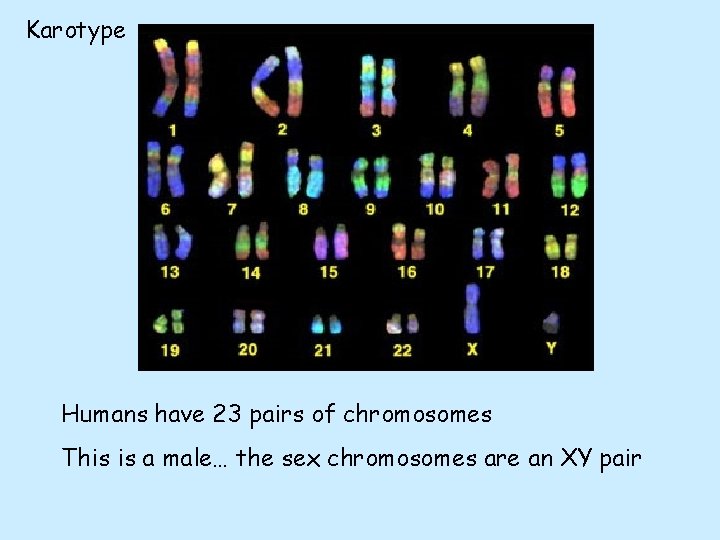
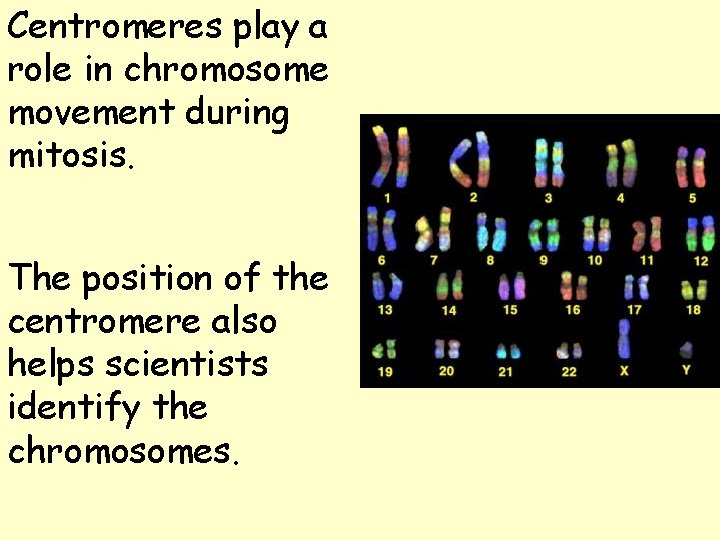
Karotype Humans have 23 pairs of chromosomes This is a male… the sex chromosomes are an XY pair
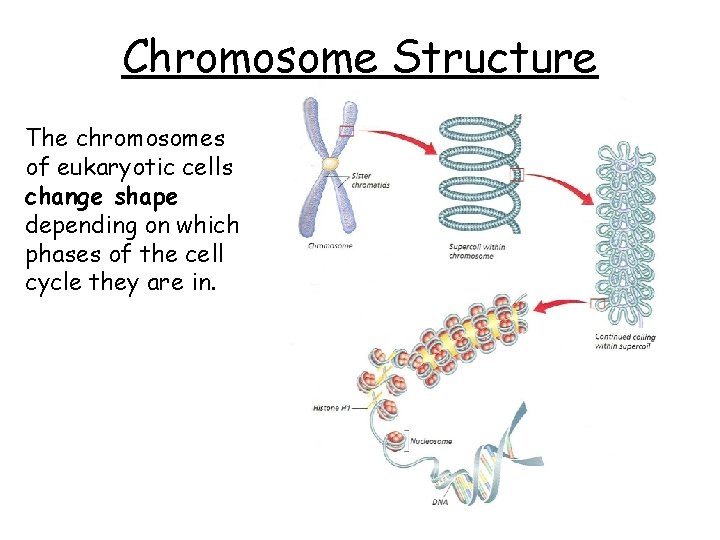
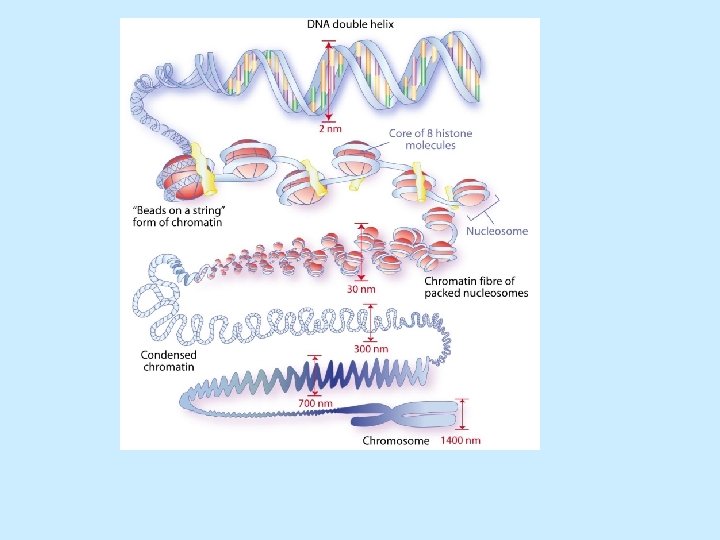
The structure of eukaryotic chromosomes For most of a cells lifetime, chromosomes exist as chromatin. Chromatin are long strands of DNA wrapped around proteins.
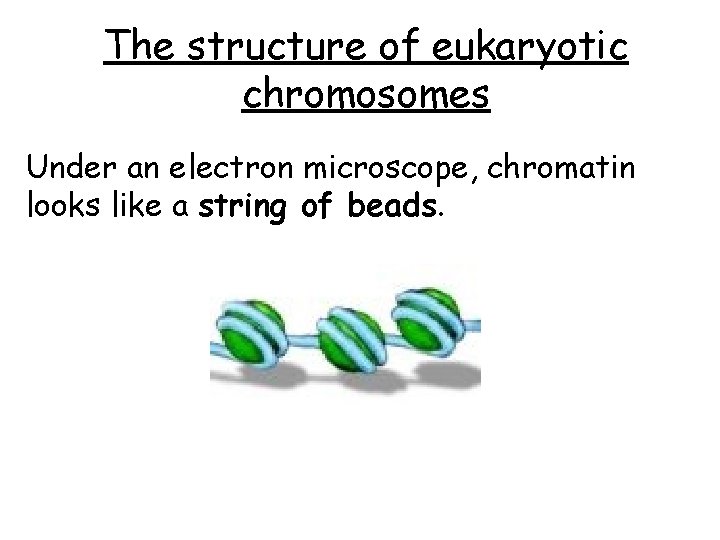
The structure of eukaryotic chromosomes Under an electron microscope, chromatin looks like a string of beads.
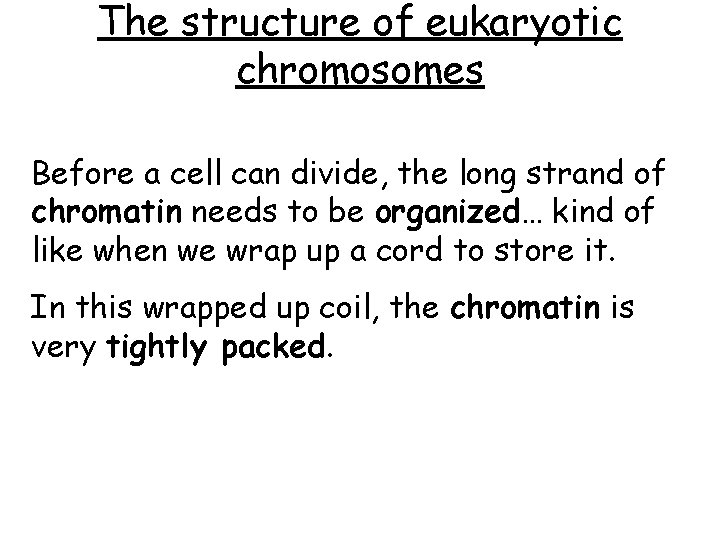
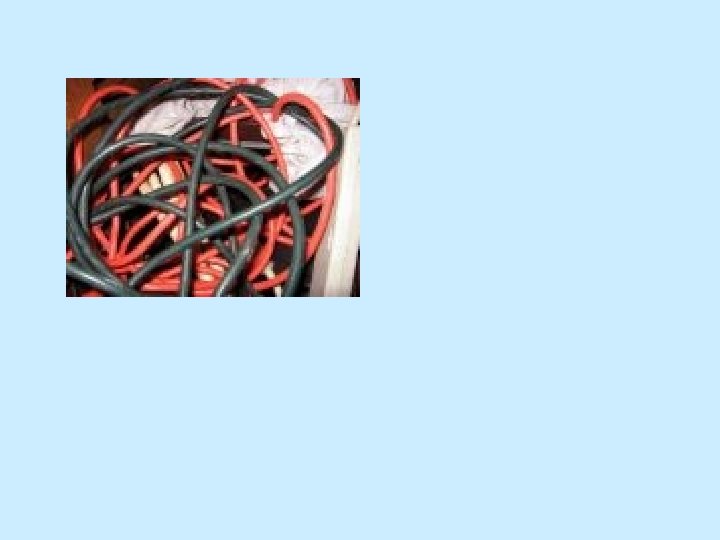
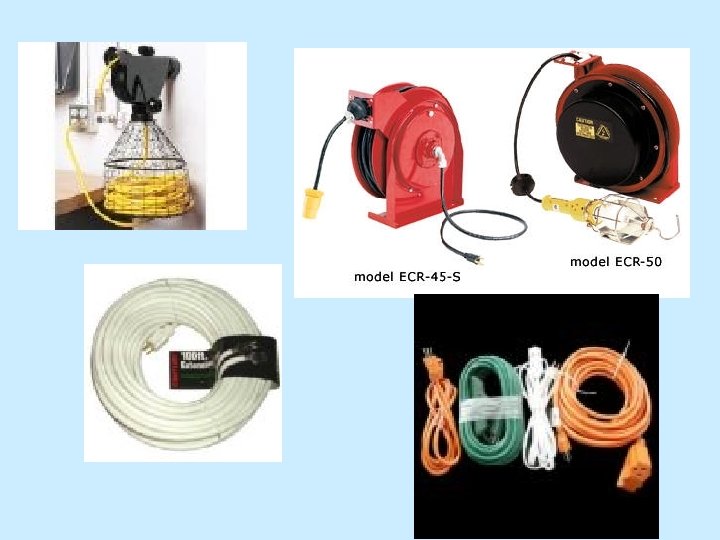
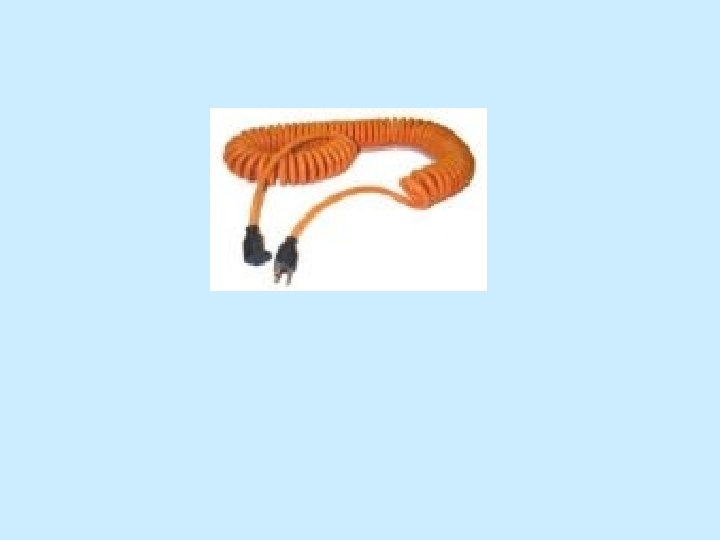
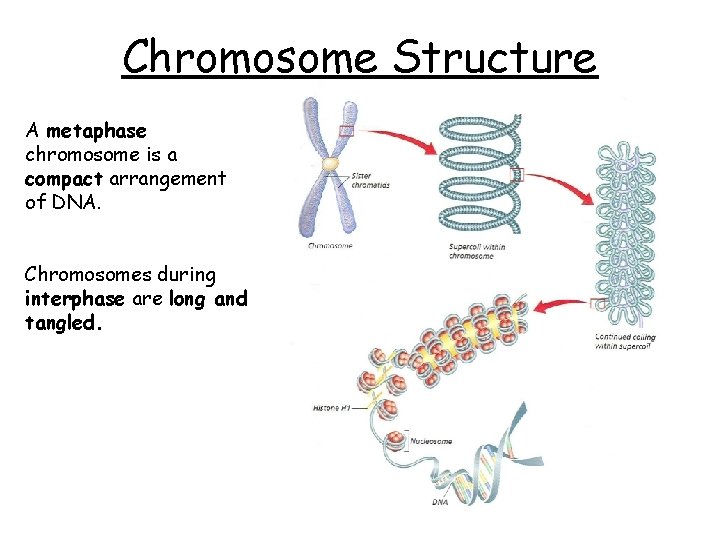
The structure of eukaryotic chromosomes Before a cell can divide, the long strand of chromatin needs to be organized… kind of like when we wrap up a cord to store it. In this wrapped up coil, the chromatin is very tightly packed.
Chromosome Structure The chromosomes of eukaryotic cells change shape depending on which phases of the cell cycle they are in.
Chromosome Structure A metaphase chromosome is a compact arrangement of DNA. Chromosomes during interphase are long and tangled.
The Cell Cycle What kind of cycles can you think of? Seasons, tides, day and night…
Cells have cycles too. The cell cycle is the sequence of growth & division.
There are two periods in the cell cycle. One period is for growth, the other is for division.
Interphase is the growth period. Most of the cells life is spent in interphase.
Interphase During interphase a cell: • grows in size • carries on metabolic functions • duplicates chromosomes for division
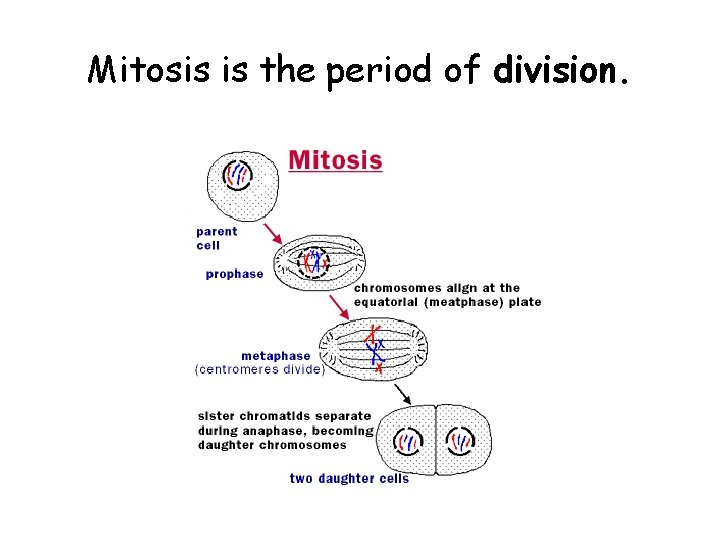
Mitosis is the period of division.
Mitosis During mitosis, two daughter cells are formed from one parent cell. Each daughter cell has a complete set of chromosomes. After mitosis, the cytoplasm divides to separate the two daughter cells.
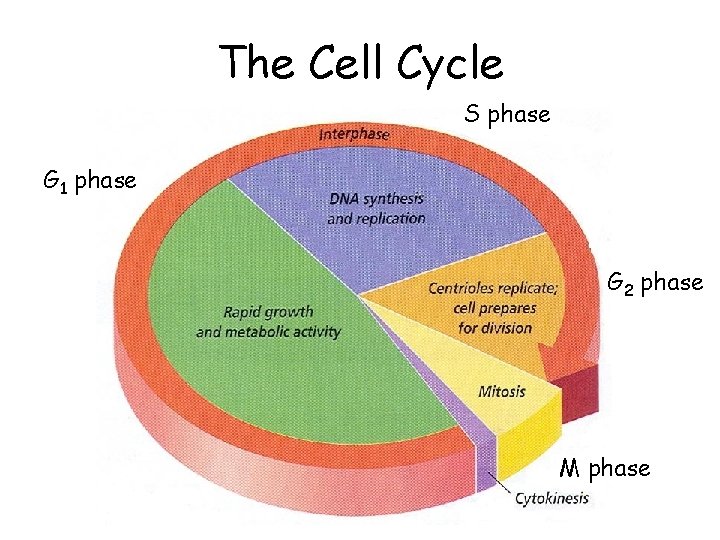
The Cell Cycle S phase G 1 phase G 2 phase M phase
Interphase is the busiest time of the cell cycle.
Interphase is divided into three parts: G 1 The cell grows and protein production is high. S The cell copies its chromosomes. This is the only time during the cell cycle that DNA synthesis occurs. G 2 The cell then enters another growth period where mitochondria and other organelles are manufactured and other parts needed for cell division are produced.
Interphase now ends and mitosis begins!
The Phases of Mitosis Cells undergo mitosis when they reach maximum cell size. Remember, a cell can only grow so large until the surface area of the cell membrane becomes too small in proportion to its volume. The cell membrane transports nutrients and waste into and out of the cell.
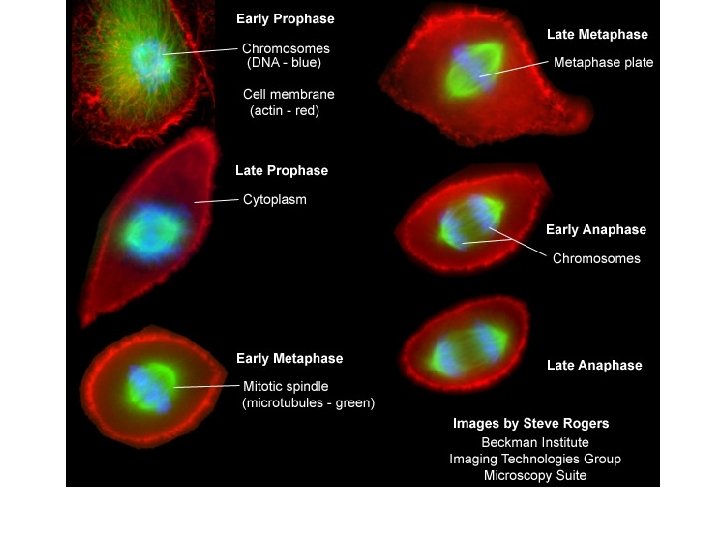
Although cell division is a continuous process, it can be broken up into four phases. The 4 phases of mitosis are: prophase metaphase anaphase telophase
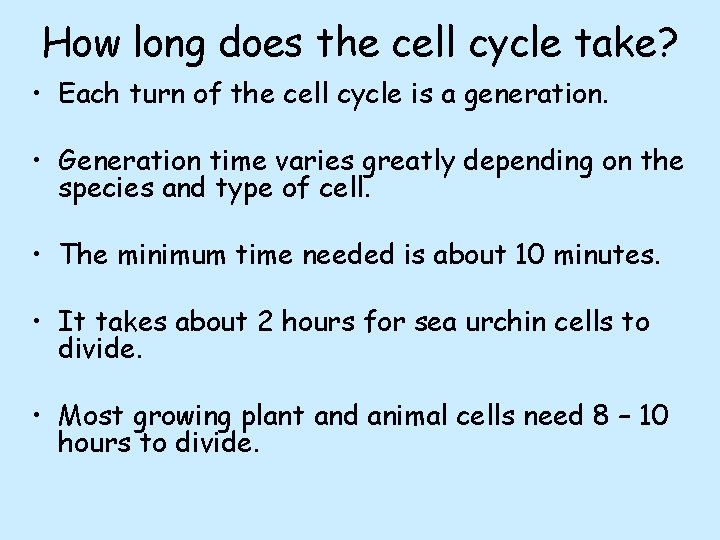
How long does the cell cycle take? • Each turn of the cell cycle is a generation. • Generation time varies greatly depending on the species and type of cell. • The minimum time needed is about 10 minutes. • It takes about 2 hours for sea urchin cells to divide. • Most growing plant and animal cells need 8 – 10 hours to divide.
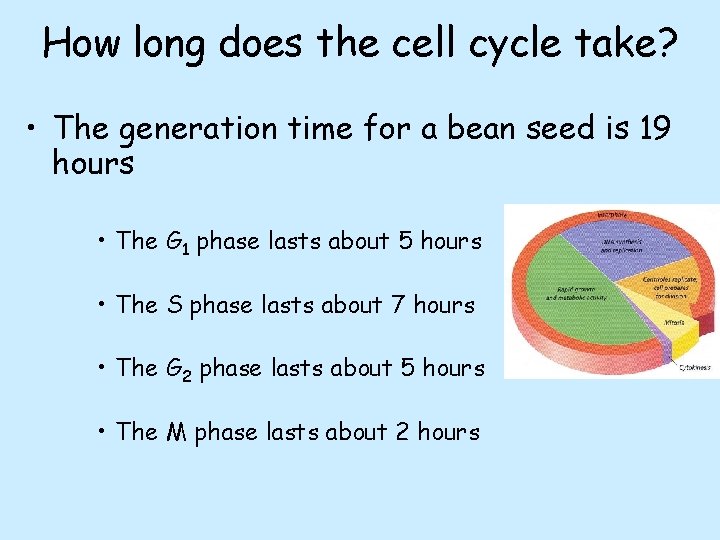
How long does the cell cycle take? • The generation time for a bean seed is 19 hours • The G 1 phase lasts about 5 hours • The S phase lasts about 7 hours • The G 2 phase lasts about 5 hours • The M phase lasts about 2 hours
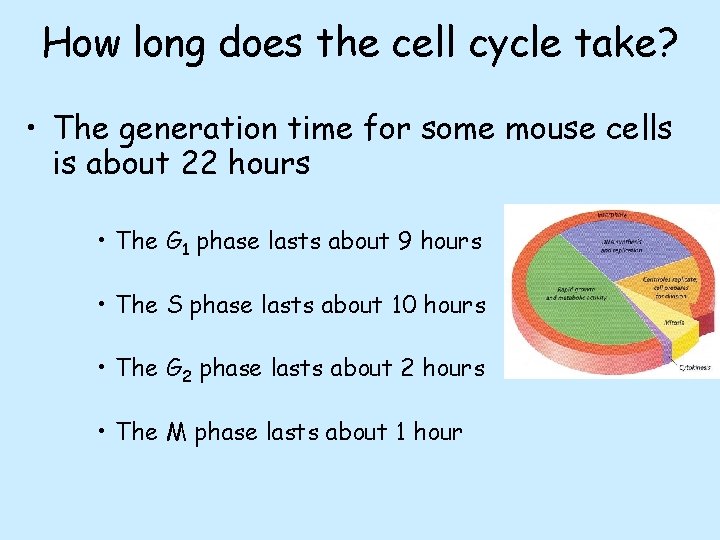
How long does the cell cycle take? • The generation time for some mouse cells is about 22 hours • The G 1 phase lasts about 9 hours • The S phase lasts about 10 hours • The G 2 phase lasts about 2 hours • The M phase lasts about 1 hour
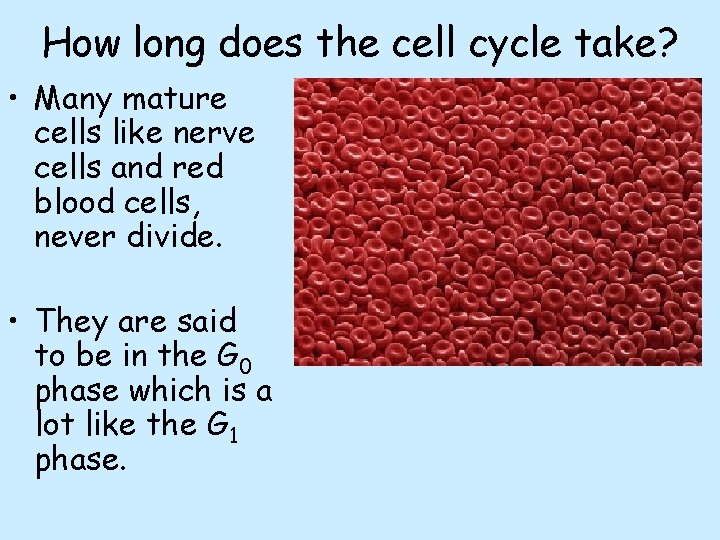
How long does the cell cycle take? • Many mature cells like nerve cells and red blood cells, never divide. • They are said to be in the G 0 phase which is a lot like the G 1 phase.
Mitosis Notes Cell Division occurs in a series of stages, or phases.
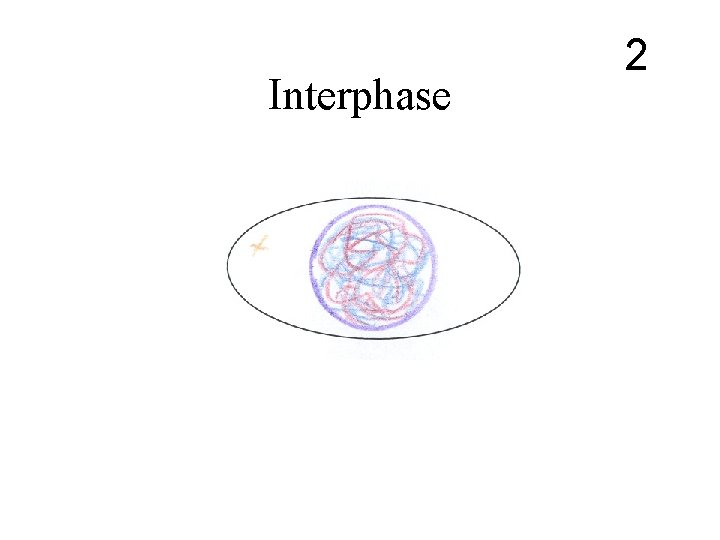
st 1 phase: Interphase • (Not mitosis… but part of the cell cycle!) • Chromosomes are copied (# doubles) • Chromosomes appears as threadlike coils (chromatin) at the start, but each chromosome and its copy (sister chromosome) change to sister chromatids at the end of this phase
Interphase 2
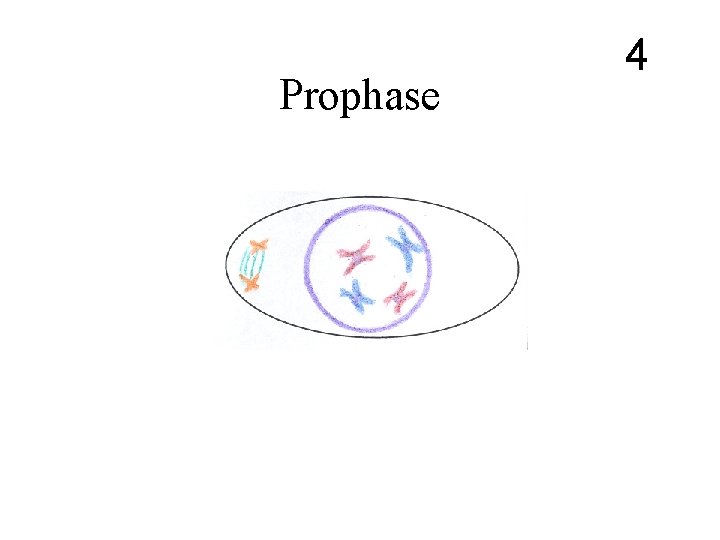
2 nd phase: Prophase • Mitosis begins (cell begins to divide) • Centrioles (or poles appear and begin to move to opposite ends of cell • Spindle fibers form between the poles
Prophase 4
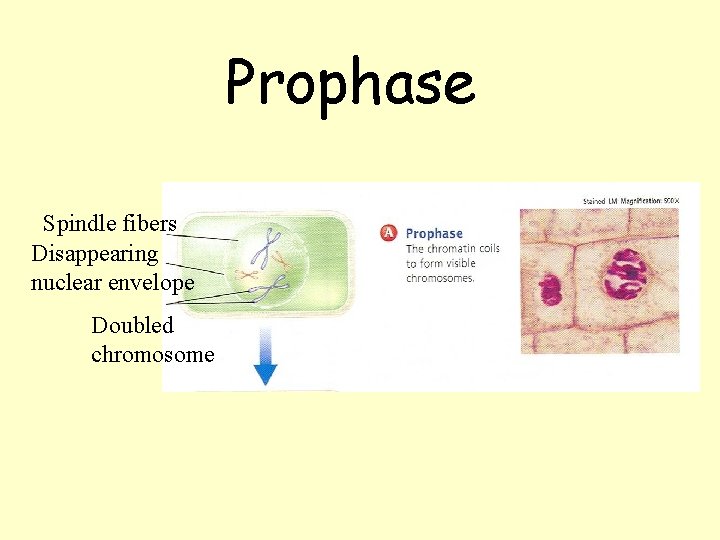
Prophase Spindle fibers Disappearing nuclear envelope Doubled chromosome
Prophase: the first phase of mitosis • longest phase of mitosis. • The long stringy chromatin coils up into visible chromosomes. • Each chromosome is made of two halves.
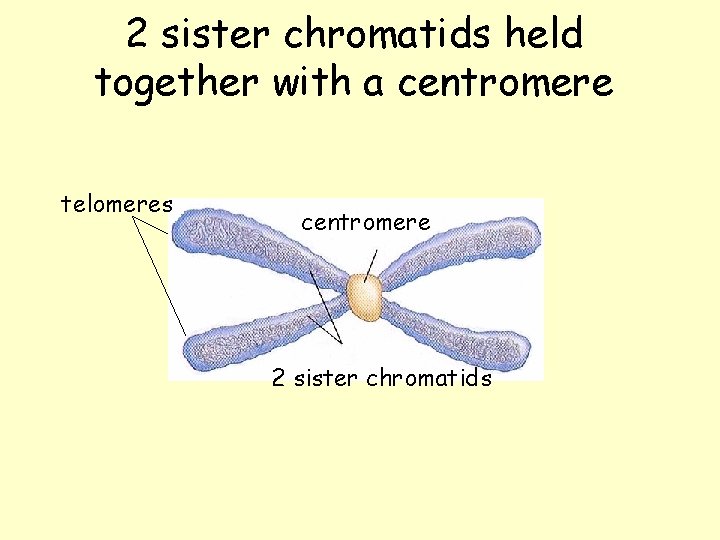
Prophase: the first phase of mitosis The two halves of the doubled structure are called sister chromatids. Sister chromosomes are an exact copy of each other. Sister chromosomes are made when DNA is copied during interphase. Sister chromatids are held together with a structure called a centromere.
2 sister chromatids held together with a centromere telomeres centromere 2 sister chromatids
Centromeres play a role in chromosome movement during mitosis. The position of the centromere also helps scientists identify the chromosomes.
As prophase continues, the nucleus disappears as the nuclear envelop and the nucleolus disintegrate. In animal cells, pairs of structures called centrioles migrate to opposite ends of the cell.
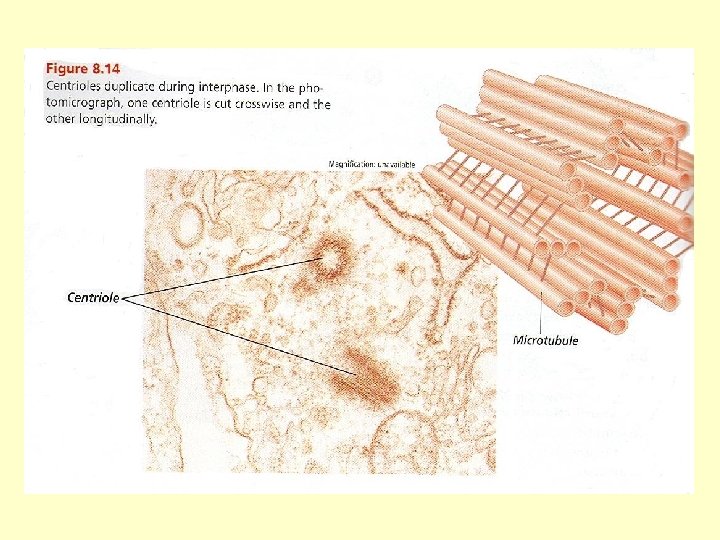
Centrioles are small, dark, cylindrical structures that are made of small tubes. Centrioles play a role in chromatid separation.
As the pairs of centrioles move to the opposite ends, another structure called spindles, form between them. The spindle fibers make a cage like structure made of microtubules.
Plant cells form spindles without centrioles. The spindle fibers separate sister chromatids during mitosis.
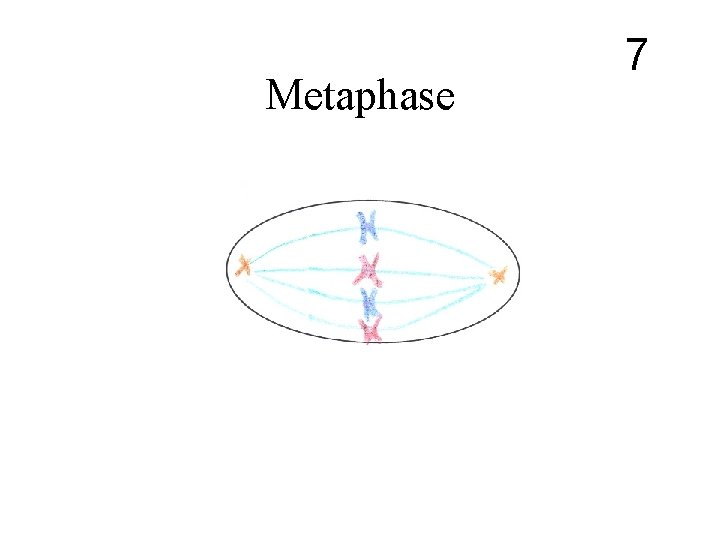
rd 3 phase : Metaphase • Chromatids (or pairs of chromosomes) attach to the spindle fibers
Metaphase 7
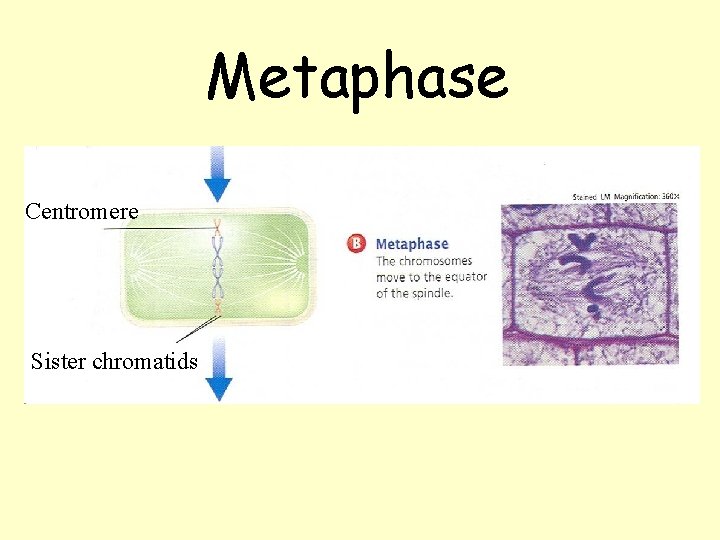
Metaphase Centromere Sister chromatids
Metaphase: The second stage of mitosis Metaphase is a short stage. The sister chromosomes become attached to spindle fibers by their centromeres. The spindle fibers pull on the chromatids until they line up in the center of the cell.
Metaphase: The second stage of mitosis Each sister chromatid is attached to its own spindle fiber. This helps to ensure that each new cell receives an identical and complete set of chromosomes.
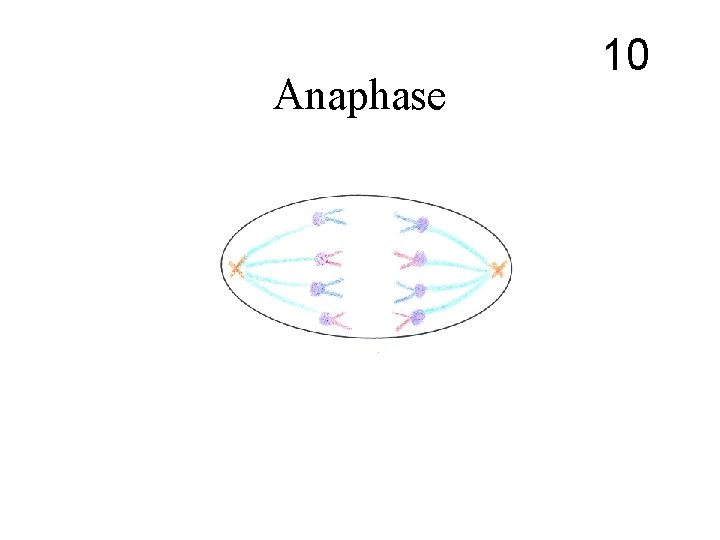
4 th phase : Anaphase • Chromatids (or pairs of chromosomes) separate and begin to move to opposite ends of the cell
Anaphase 10
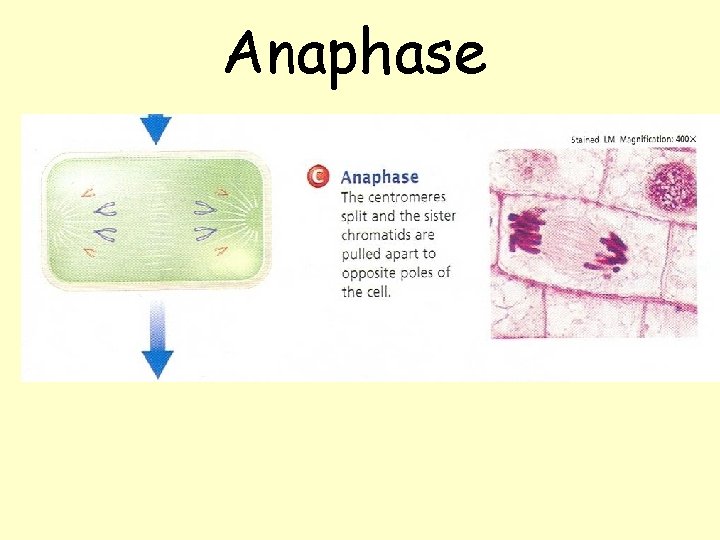
Anaphase
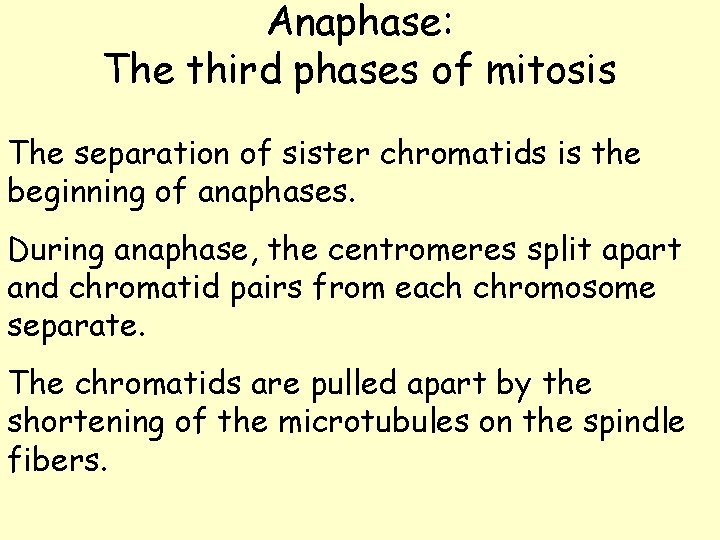
Anaphase: The third phases of mitosis The separation of sister chromatids is the beginning of anaphases. During anaphase, the centromeres split apart and chromatid pairs from each chromosome separate. The chromatids are pulled apart by the shortening of the microtubules on the spindle fibers.
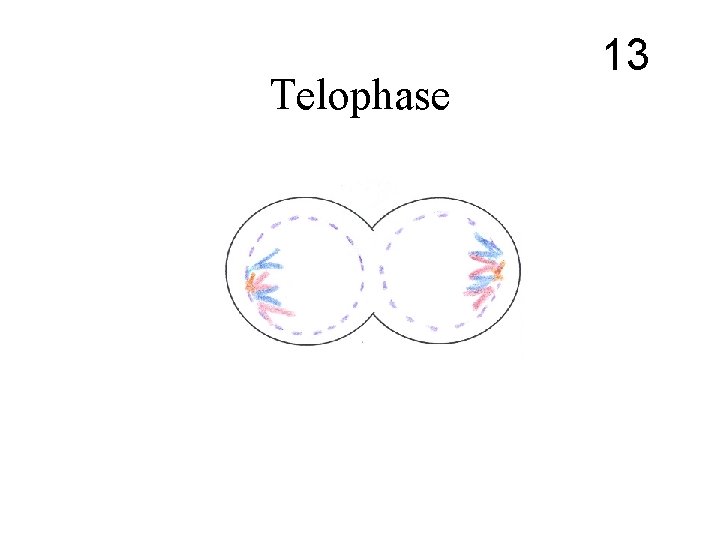
5 th phase : Telophase • Two new nuclei form • Chromosomes appear as chromatin (threads rather than rods) • Mitosis ends
Telophase 13
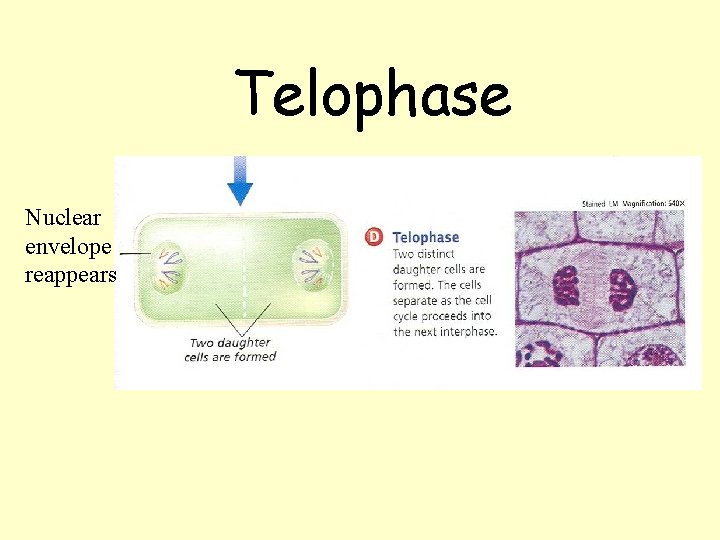
Telophase Nuclear envelope reappears
Telophase: The fourth phase of mitosis Telophase begins as the chromatids reach the opposite sides of the cell. During telophase, many of the changes that occurred during prophase are reversed.
Telophase: The fourth phase of mitosis The chromosomes which were tightly coiled since the end of prophase are now unwinding. The spindles breakdown, the nucleolus reappears, and a new nuclear envelope forms around each set of chromosomes. Finally a new double membrane begins to form between the two nuclei.
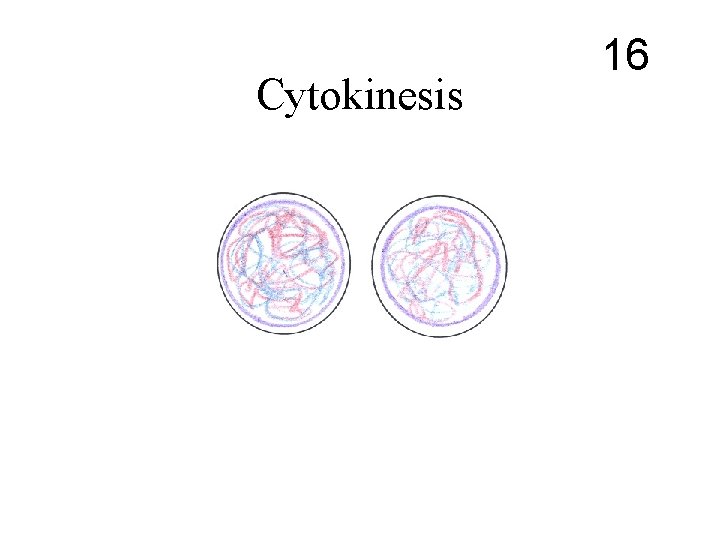
6 th phase : Cytokinesis • Cell membrane moves inward to create two daughter cells – each with its own nucleus with identical chromosomes
Cytokinesis 16
Cytokinesis – After Mitosis After telophase, the cell’s cytoplasm divides in a process known as cytokinesis. Cytokinesis is different in plant and animal cells.
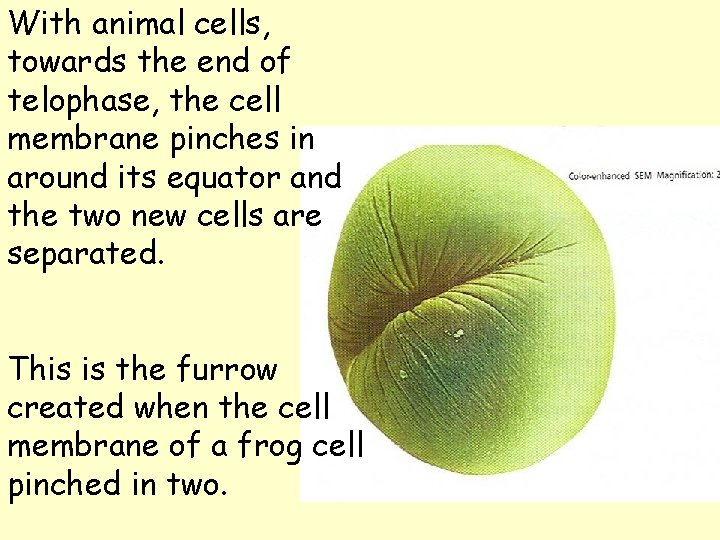
With animal cells, towards the end of telophase, the cell membrane pinches in around its equator and the two new cells are separated. This is the furrow created when the cell membrane of a frog cell pinched in two.
Plants have a rigid cell wall so the plasma membrane does not pinch in. Instead a structure known as a cell plate is laid down across the cell’s equator. Then cell membrane forms around each cell and a new cell wall forms on each side of the cell plate until separation is complete.
Results of Mitosis results in two new cells with chromosome sets that are identical to the parent cell. The new cells will carry out the same cellular processes and functions as the parent cell. The new cells will grow and divide just like the parent did.
Results of Mitosis When mitosis is complete, unicellular organisms are still unicellular – the organism simply multiplied! In multicellular organisms, cell growth and reproduction result in groups of cells that work together as tissue.
Tissues work together to form organs. Multiple organs work together to form organ systems. Organ systems work together for the survival of the organism.
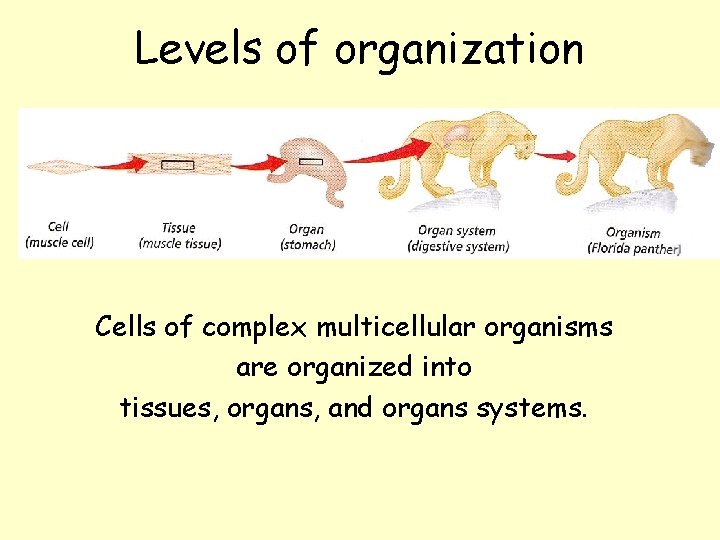
Levels of organization Cells of complex multicellular organisms are organized into tissues, organs, and organs systems.
The different systems have developed through cell specialization. No matter how complex, the cell is still the most basic unit of life.