An Introduction to Parallel Programming Peter Pacheco Chapter

- Slides: 45
An Introduction to Parallel Programming Peter Pacheco Chapter 4 Shared Memory Programming with Pthreads 1
Roadmap n n n n n Problems programming shared memory systems. Controlling access to a critical section. Thread synchronization. Programming with POSIX threads. Mutexes. Producer-consumer synchronization and semaphores. Barriers and condition variables. Read-write locks. Thread safety. 2
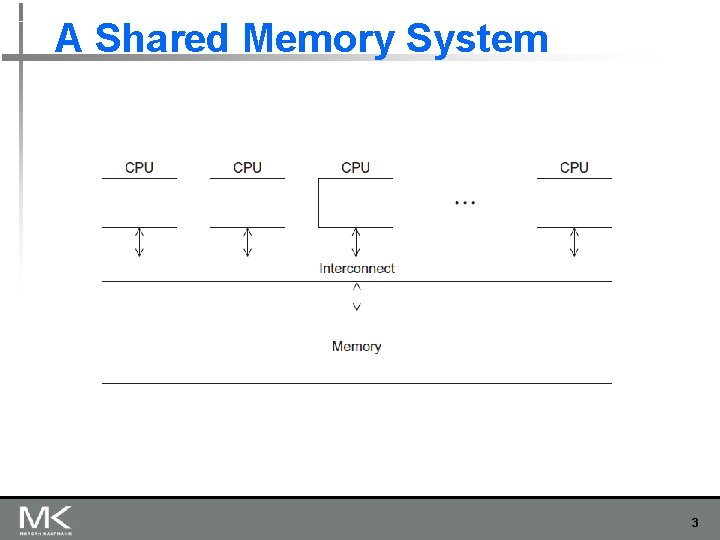
A Shared Memory System 3
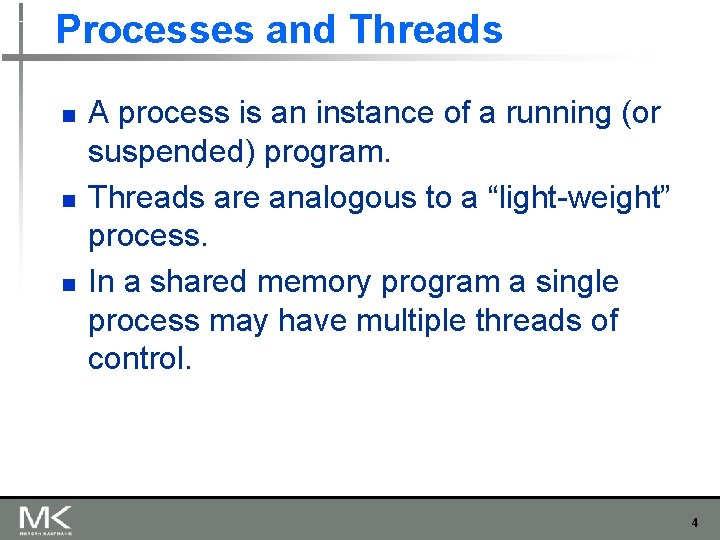
Processes and Threads n n n A process is an instance of a running (or suspended) program. Threads are analogous to a “light-weight” process. In a shared memory program a single process may have multiple threads of control. 4
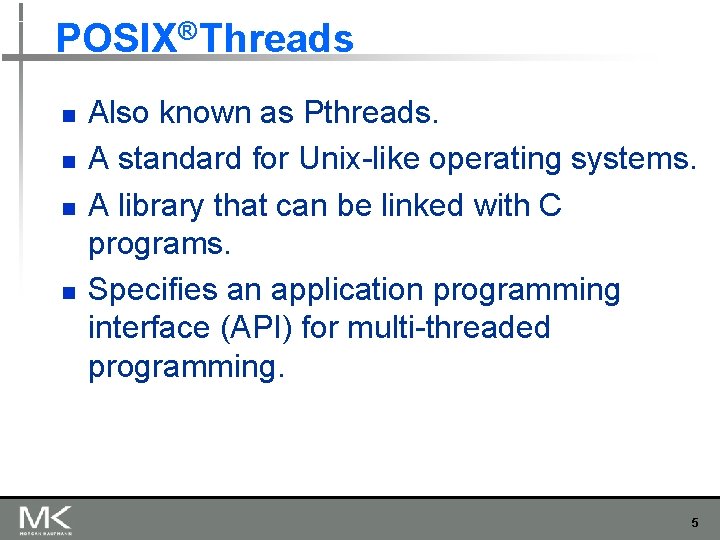
POSIX® Threads n n Also known as Pthreads. A standard for Unix-like operating systems. A library that can be linked with C programs. Specifies an application programming interface (API) for multi-threaded programming. 5
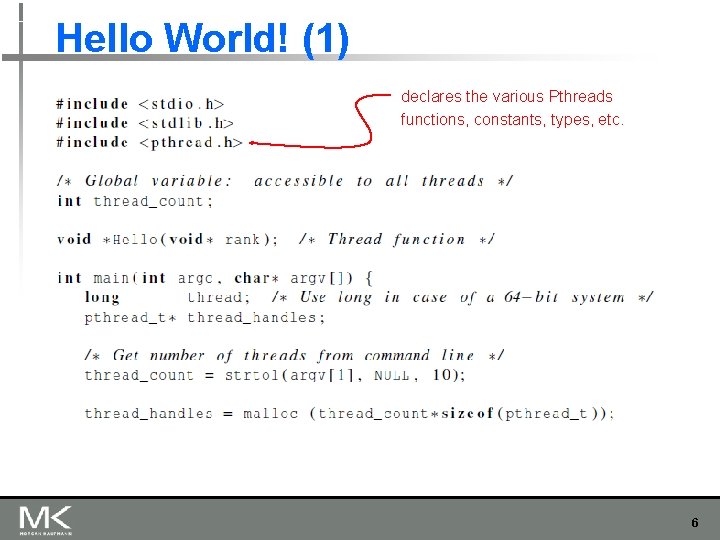
Hello World! (1) declares the various Pthreads functions, constants, types, etc. 6
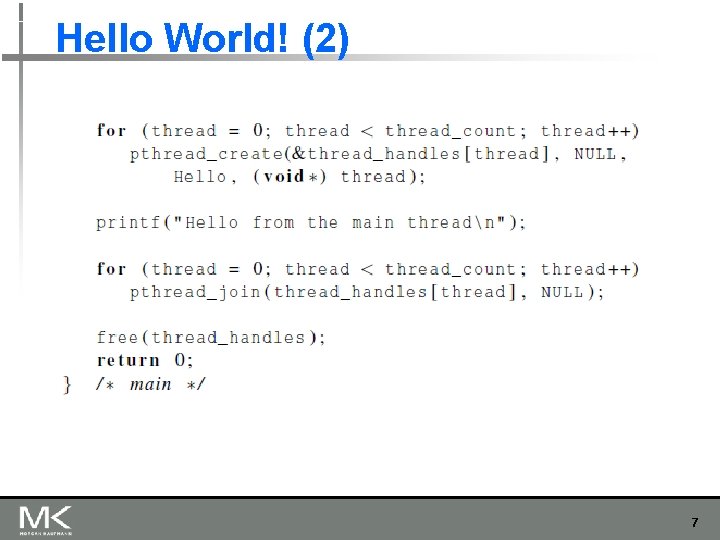
Hello World! (2) 7
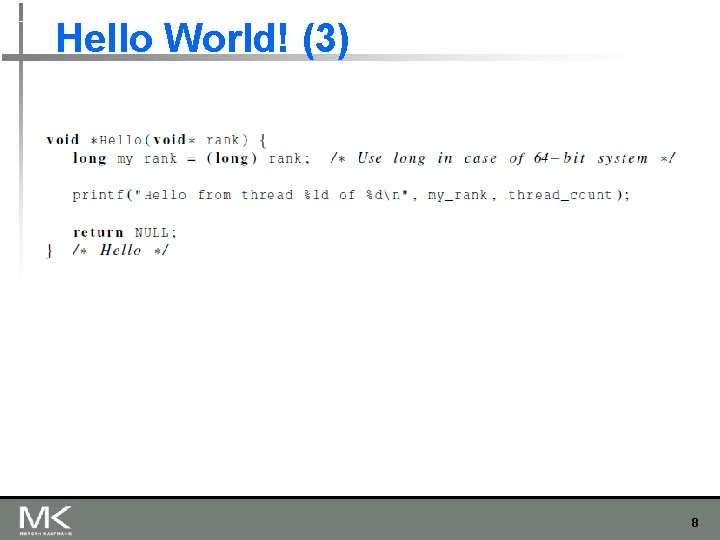
Hello World! (3) 8
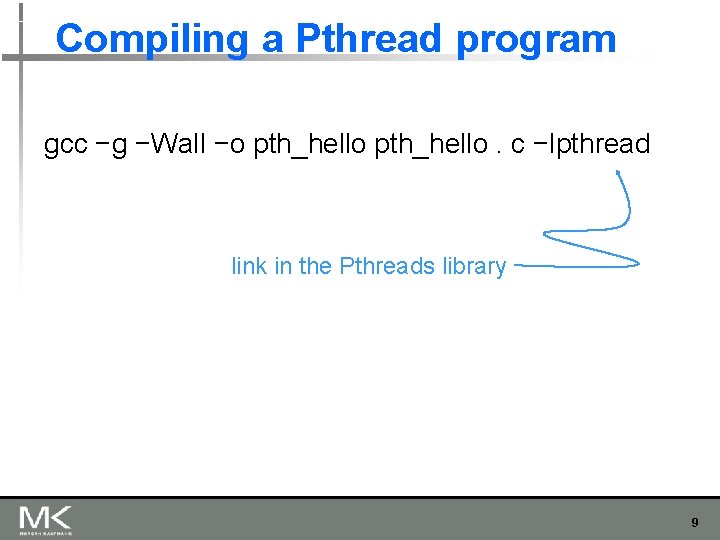
Compiling a Pthread program gcc −g −Wall −o pth_hello. c −lpthread link in the Pthreads library 9
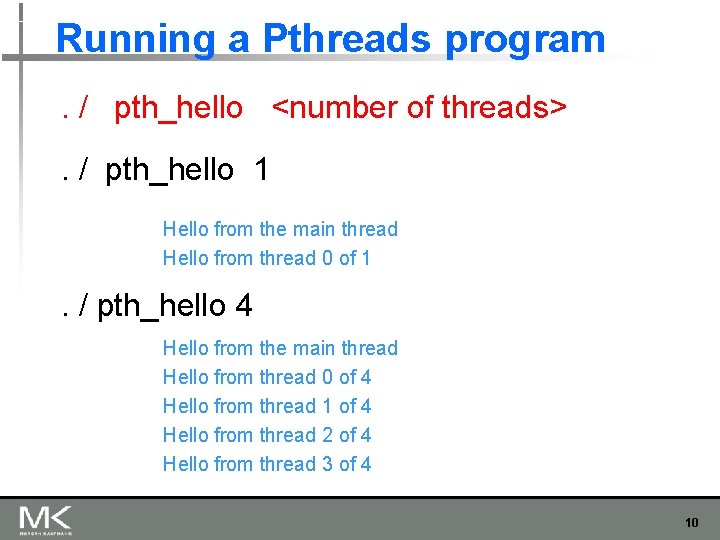
Running a Pthreads program. / pth_hello <number of threads>. / pth_hello 1 Hello from the main thread Hello from thread 0 of 1 . / pth_hello 4 Hello from the main thread Hello from thread 0 of 4 Hello from thread 1 of 4 Hello from thread 2 of 4 Hello from thread 3 of 4 10
Global variables n n Can introduce subtle and confusing bugs! Limit use of global variables to situations in which they’re really needed. n Shared variables. 11
Starting the Threads n n Processes in MPI are usually started by a script. In Pthreads the threads are started by the program executable. 12
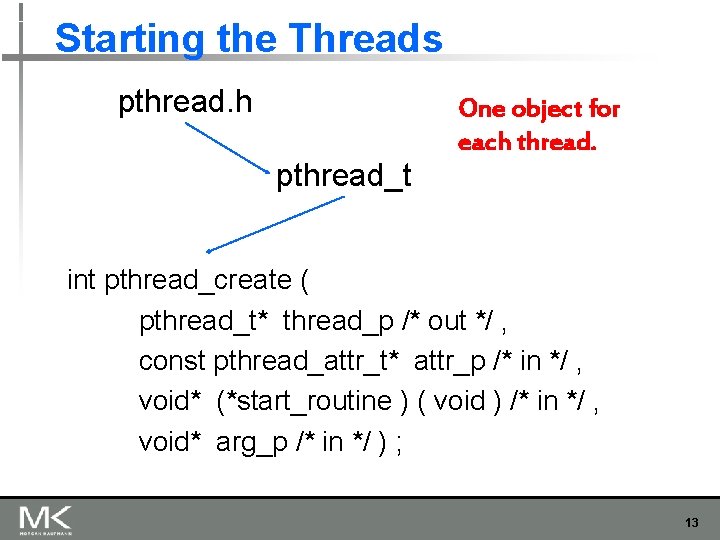
Starting the Threads pthread. h pthread_t One object for each thread. int pthread_create ( pthread_t* thread_p /* out */ , const pthread_attr_t* attr_p /* in */ , void* (*start_routine ) ( void ) /* in */ , void* arg_p /* in */ ) ; 13
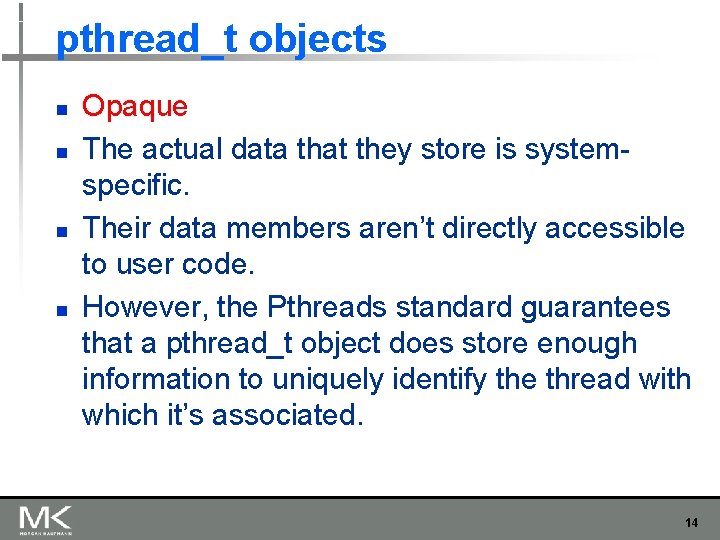
pthread_t objects n n Opaque The actual data that they store is systemspecific. Their data members aren’t directly accessible to user code. However, the Pthreads standard guarantees that a pthread_t object does store enough information to uniquely identify the thread with which it’s associated. 14
A closer look (1) int pthread_create ( pthread_t* thread_p /* out */ , const pthread_attr_t* attr_p /* in */ , void* (*start_routine ) ( void ) /* in */ , void* arg_p /* in */ ) ; We won’t be using, so we just pass NULL. Allocate before calling. 15
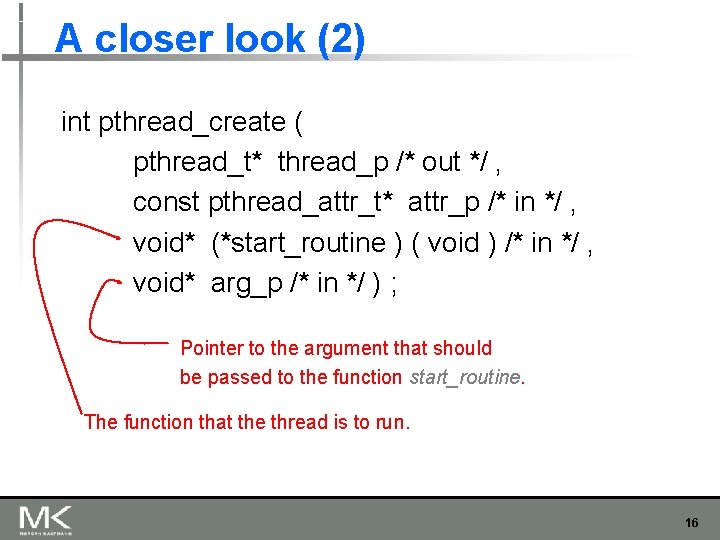
A closer look (2) int pthread_create ( pthread_t* thread_p /* out */ , const pthread_attr_t* attr_p /* in */ , void* (*start_routine ) ( void ) /* in */ , void* arg_p /* in */ ) ; Pointer to the argument that should be passed to the function start_routine. The function that the thread is to run. 16
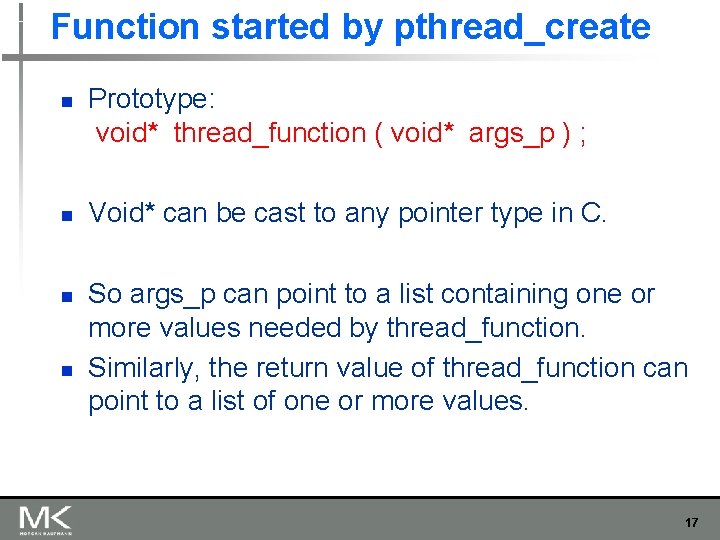
Function started by pthread_create n n Prototype: void* thread_function ( void* args_p ) ; Void* can be cast to any pointer type in C. So args_p can point to a list containing one or more values needed by thread_function. Similarly, the return value of thread_function can point to a list of one or more values. 17
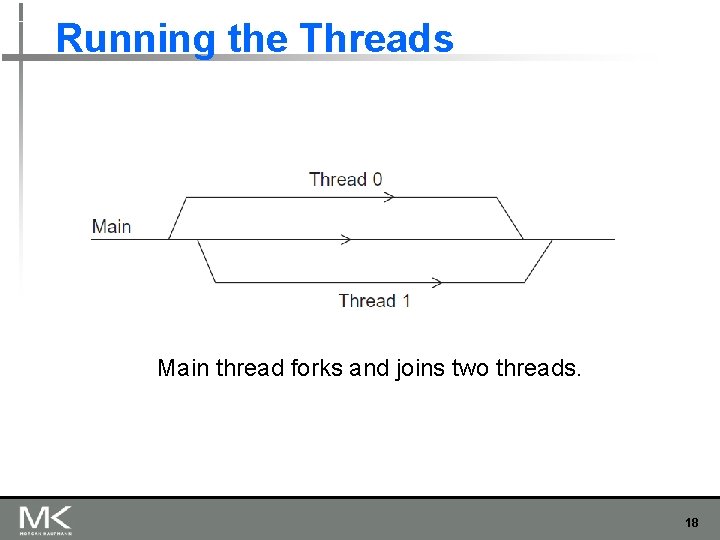
Running the Threads Main thread forks and joins two threads. 18
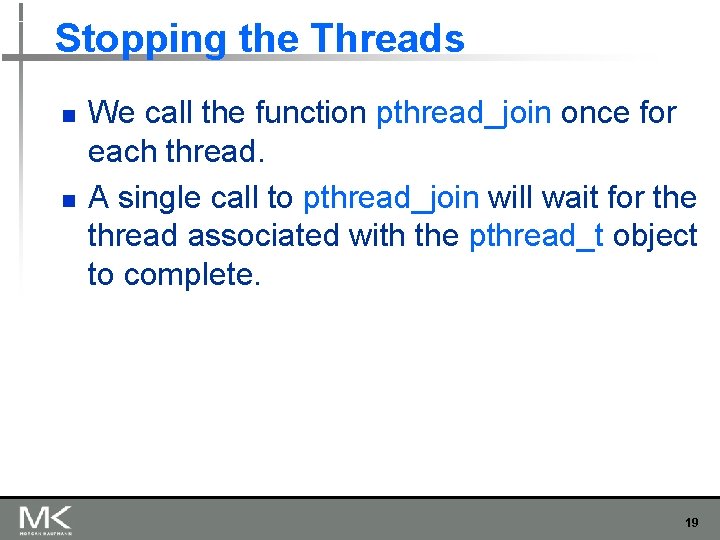
Stopping the Threads n n We call the function pthread_join once for each thread. A single call to pthread_join will wait for the thread associated with the pthread_t object to complete. 19
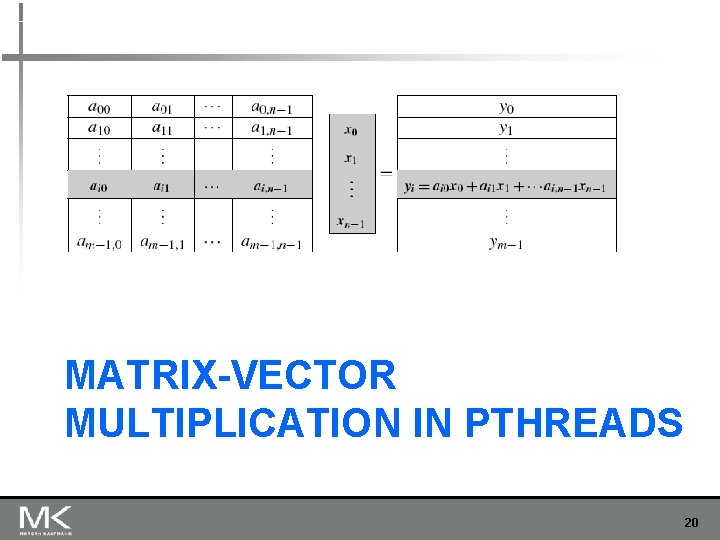
MATRIX-VECTOR MULTIPLICATION IN PTHREADS 20
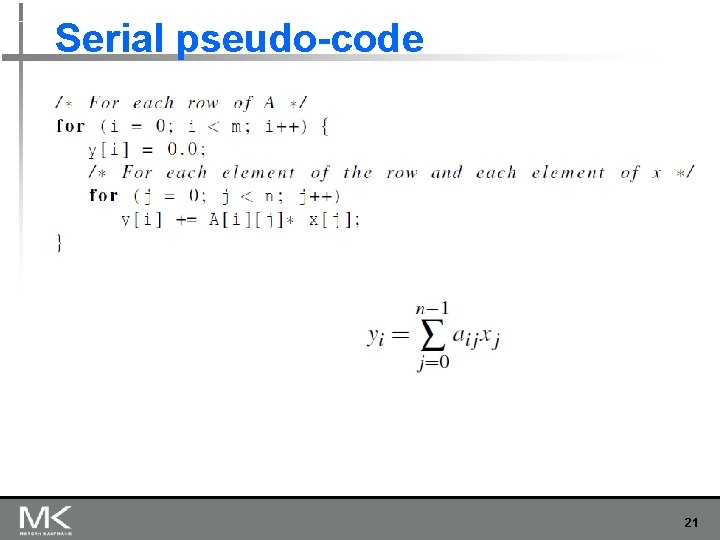
Serial pseudo-code 21
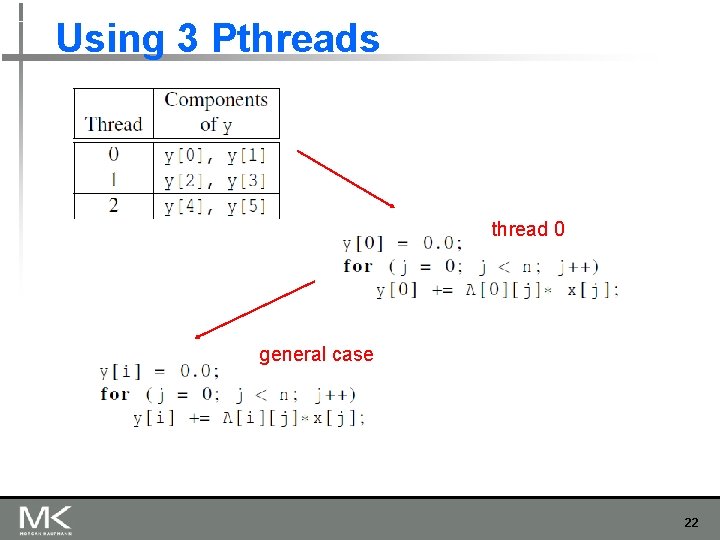
Using 3 Pthreads thread 0 general case 22
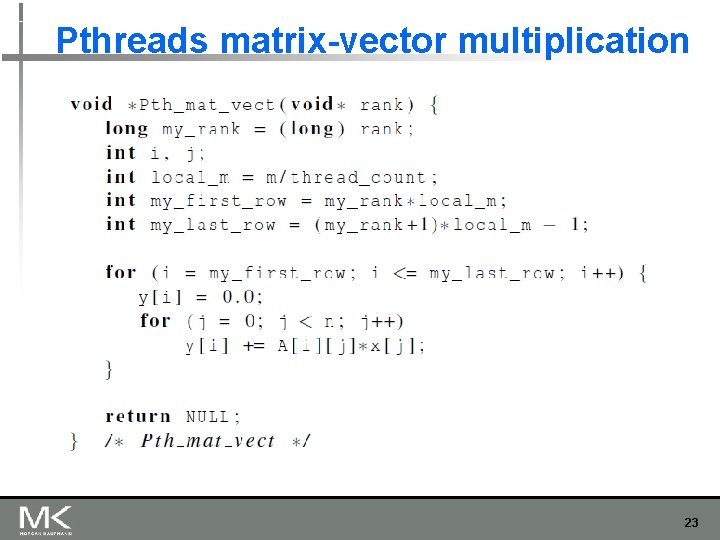
Pthreads matrix-vector multiplication 23
CRITICAL SECTIONS 24
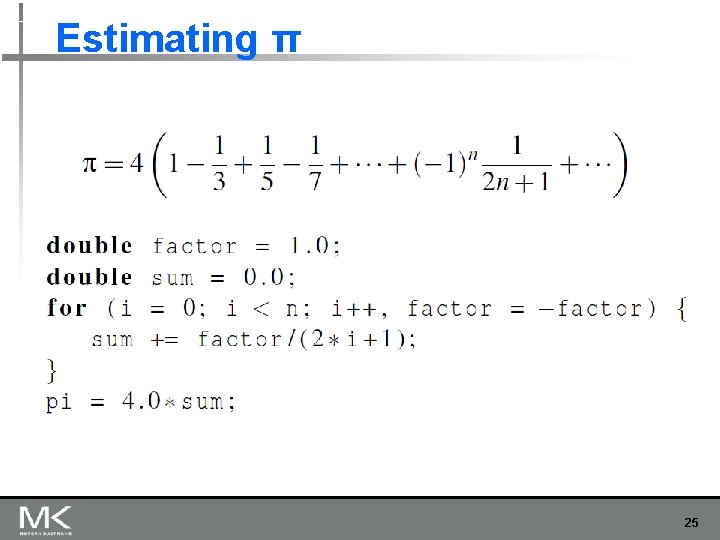
Estimating π 25
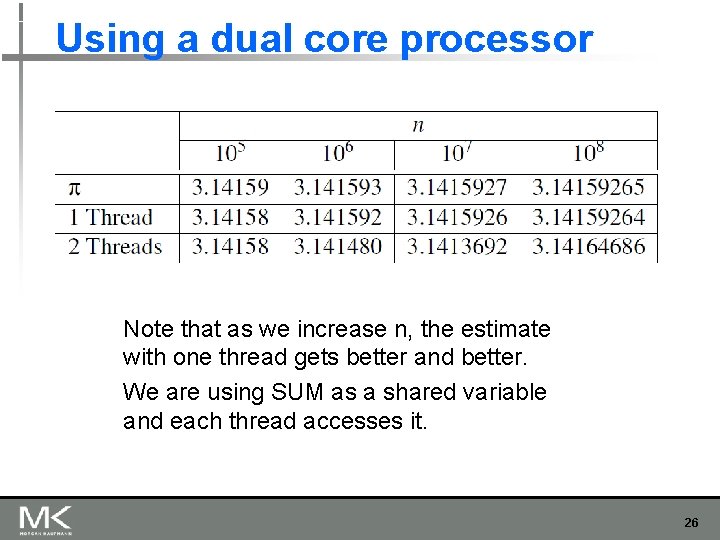
Using a dual core processor Note that as we increase n, the estimate with one thread gets better and better. We are using SUM as a shared variable and each thread accesses it. 26
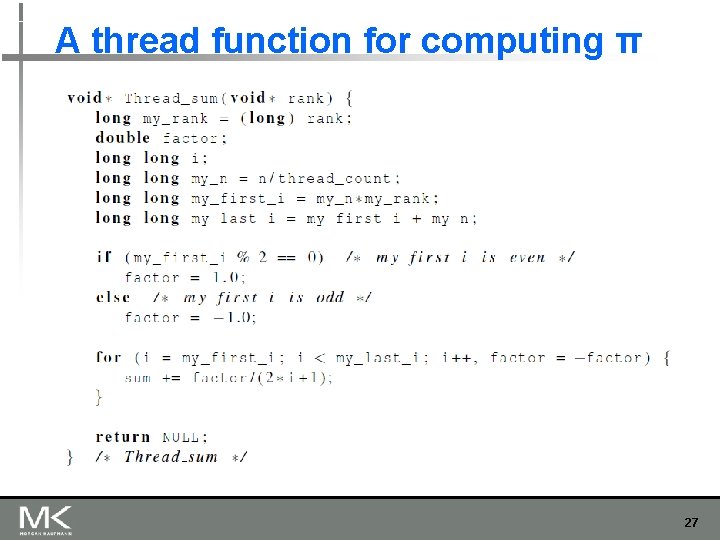
A thread function for computing π 27
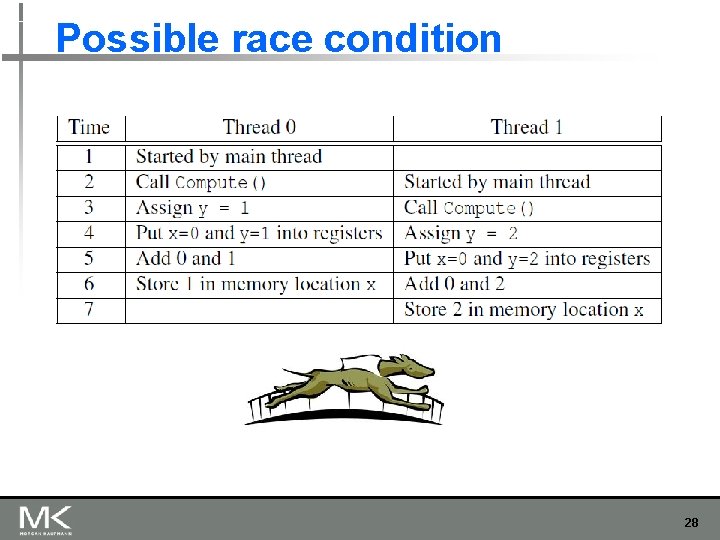
Possible race condition 28
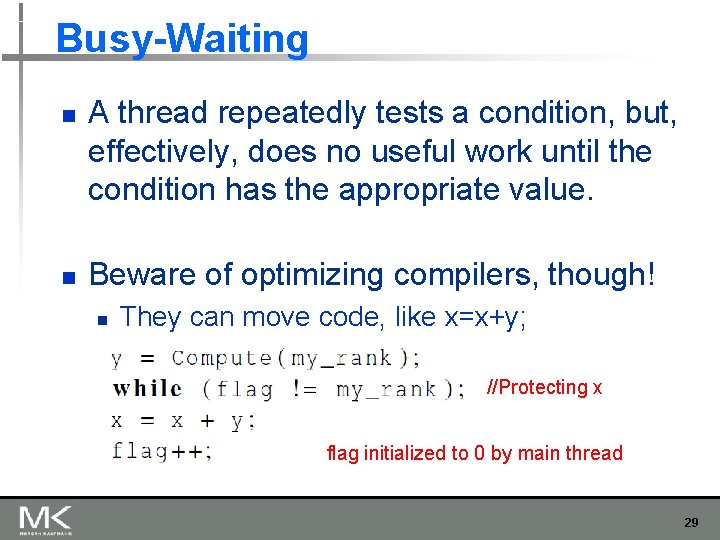
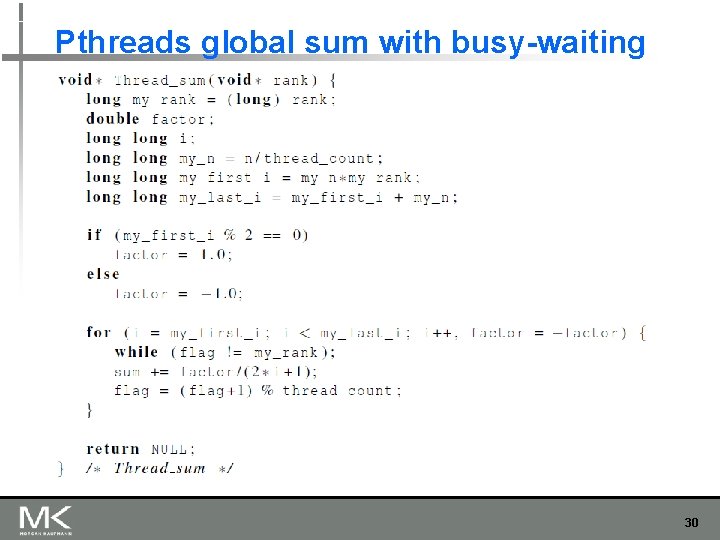
Busy-Waiting n n A thread repeatedly tests a condition, but, effectively, does no useful work until the condition has the appropriate value. Beware of optimizing compilers, though! n They can move code, like x=x+y; //Protecting x flag initialized to 0 by main thread 29
Pthreads global sum with busy-waiting 30
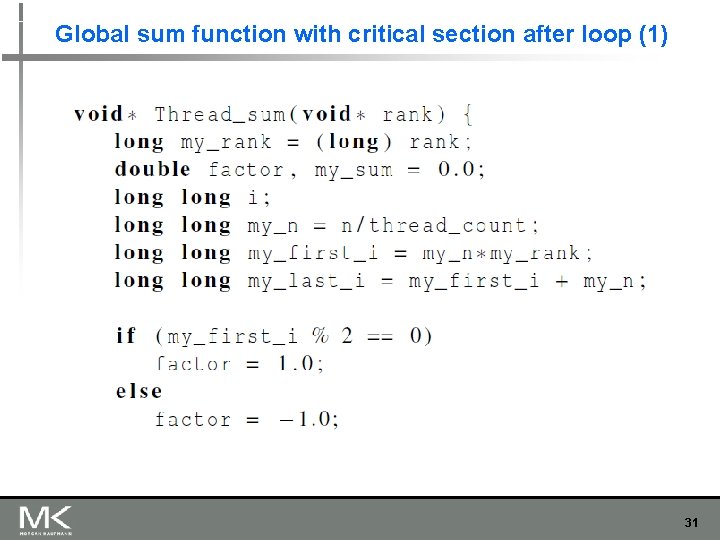
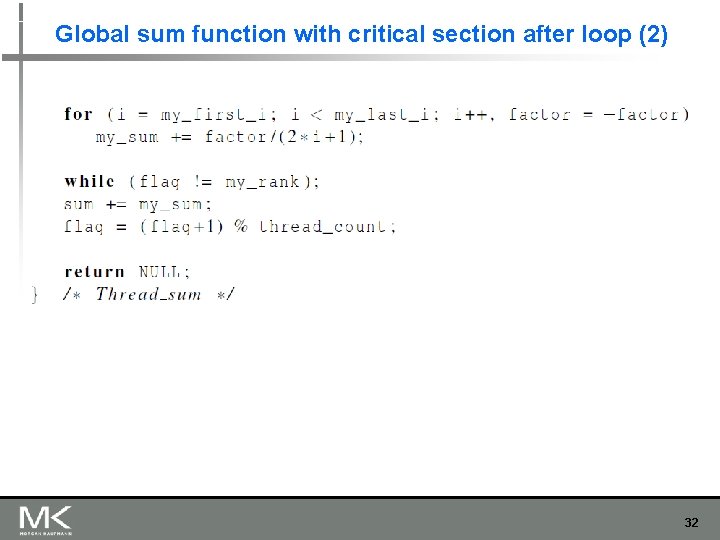
Global sum function with critical section after loop (1) 31
Global sum function with critical section after loop (2) 32
Mutexes n n A thread that is busy-waiting may continually use the CPU accomplishing nothing. Mutex (mutual exclusion) is a special type of variable that can be used to restrict access to a critical section to a single thread at a time. 33
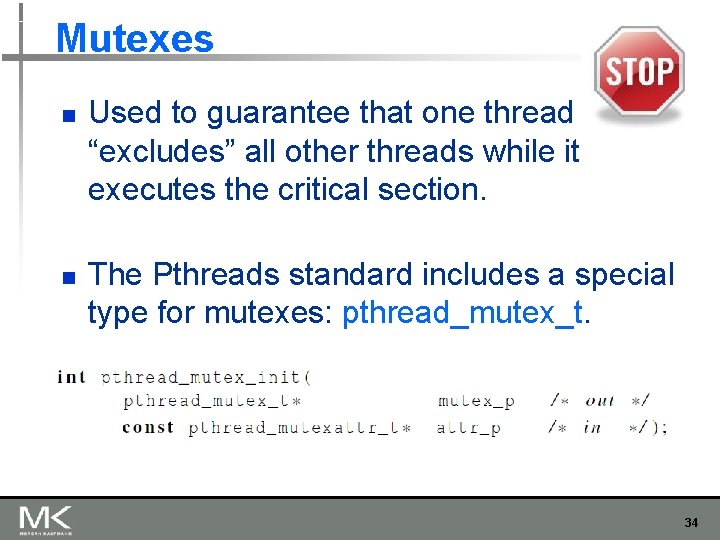
Mutexes n n Used to guarantee that one thread “excludes” all other threads while it executes the critical section. The Pthreads standard includes a special type for mutexes: pthread_mutex_t. 34
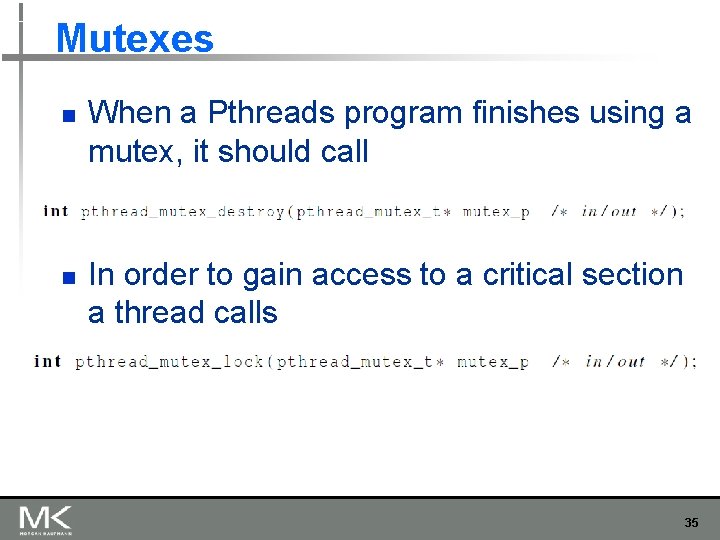
Mutexes n n When a Pthreads program finishes using a mutex, it should call In order to gain access to a critical section a thread calls 35
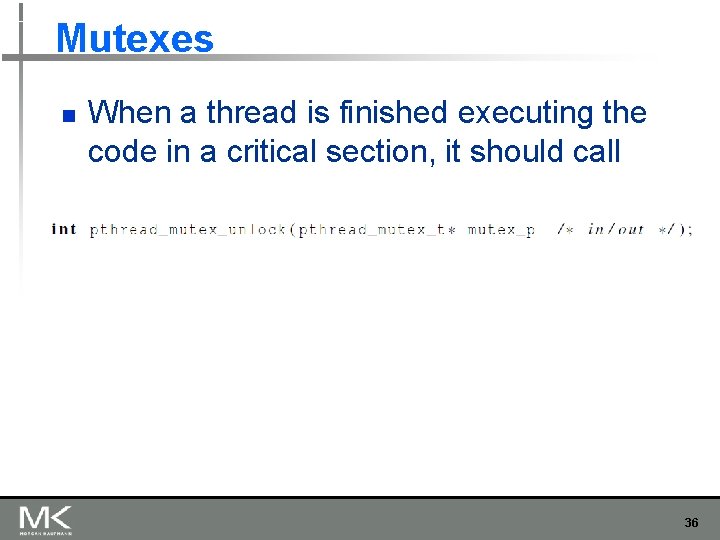
Mutexes n When a thread is finished executing the code in a critical section, it should call 36
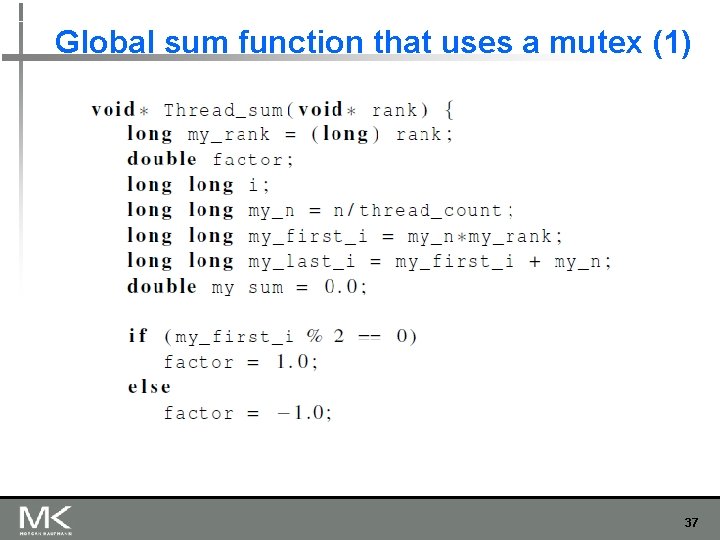
Global sum function that uses a mutex (1) 37
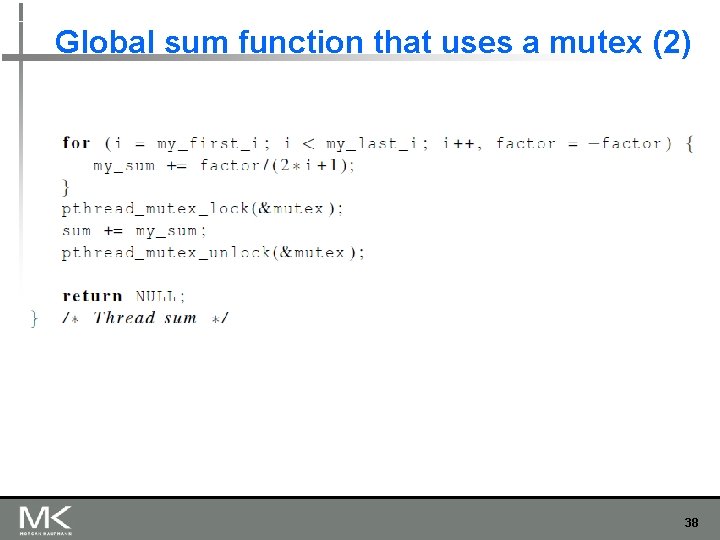
Global sum function that uses a mutex (2) 38
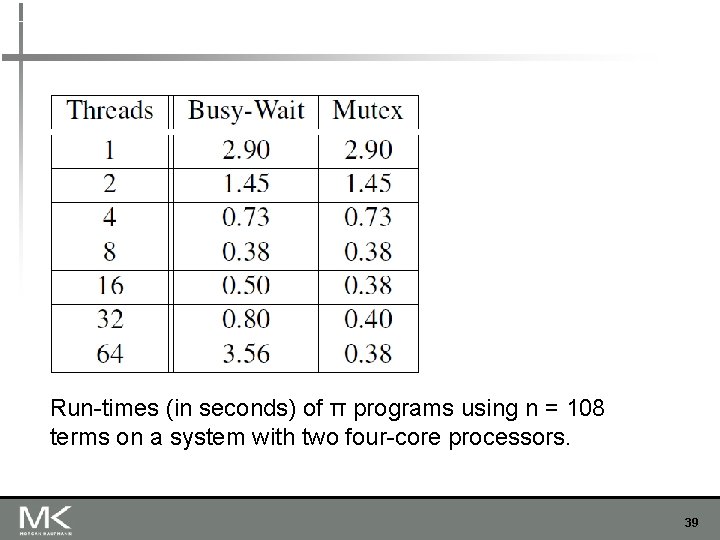
Run-times (in seconds) of π programs using n = 108 terms on a system with two four-core processors. 39
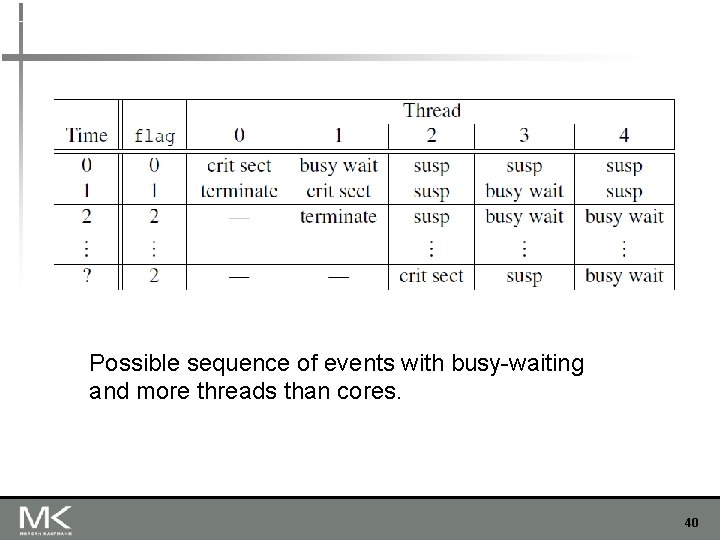
Possible sequence of events with busy-waiting and more threads than cores. 40
PRODUCER-CONSUMER SYNCHRONIZATION AND SEMAPHORES 41
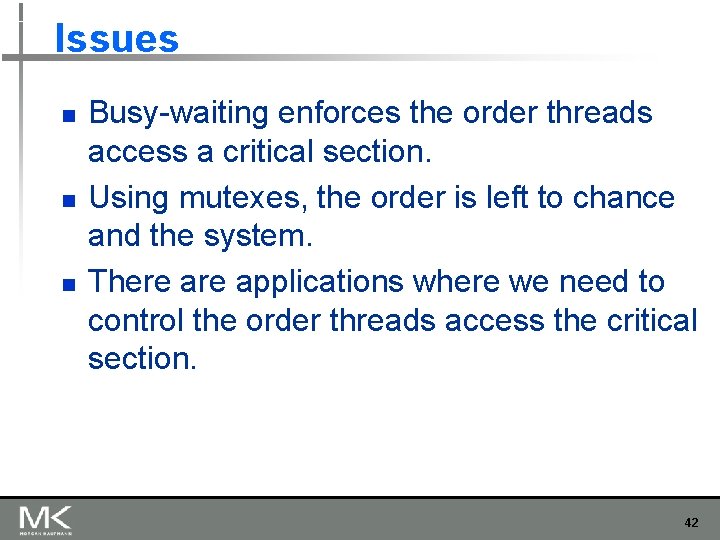
Issues n n n Busy-waiting enforces the order threads access a critical section. Using mutexes, the order is left to chance and the system. There applications where we need to control the order threads access the critical section. 42
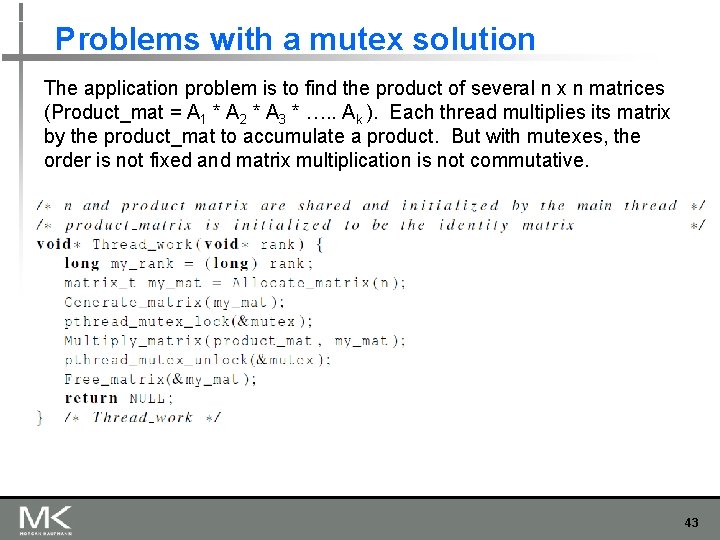
Problems with a mutex solution The application problem is to find the product of several n x n matrices (Product_mat = A 1 * A 2 * A 3 * …. . Ak ). Each thread multiplies its matrix by the product_mat to accumulate a product. But with mutexes, the order is not fixed and matrix multiplication is not commutative. 43
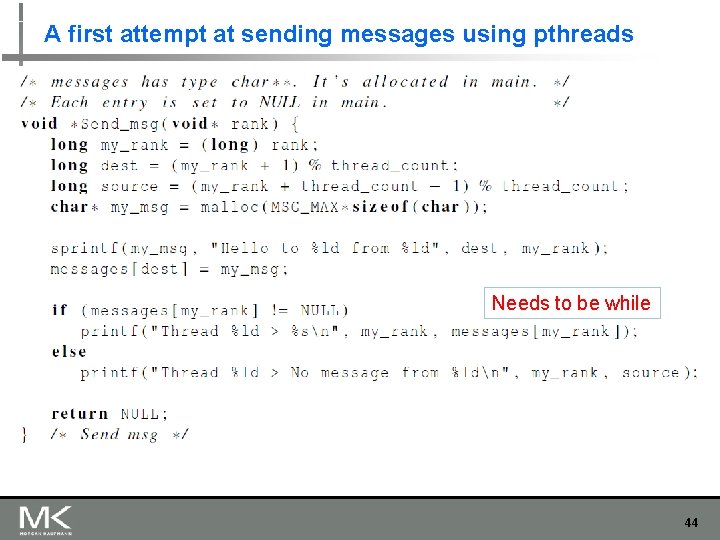
A first attempt at sending messages using pthreads Needs to be while 44
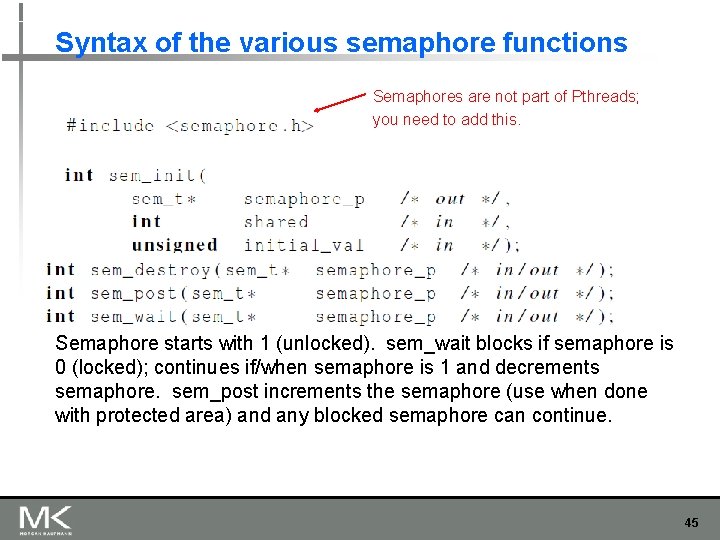
Syntax of the various semaphore functions Semaphores are not part of Pthreads; you need to add this. Semaphore starts with 1 (unlocked). sem_wait blocks if semaphore is 0 (locked); continues if/when semaphore is 1 and decrements semaphore. sem_post increments the semaphore (use when done with protected area) and any blocked semaphore can continue. 45