
A GENERAL AND SYSTEMATIC THEORY OF DISCONTINUOUS GALERKIN


- Slides: 36
A GENERAL AND SYSTEMATIC THEORY OF DISCONTINUOUS GALERKIN METHODS Ismael Herrera UNAM MEXICO 1
A SYSTEMATIC FORMULATION OF DISCONTINUOUS GALERKIN METHODS MUST BE BASED ON THEORY OF PARTIAL DIFFERENTIAL EQUATIONS IN DISCONTINUOUS FNCTIONS 2
I. - ALGEBRAIC THEORY OF BOUNDARY VALUE PROBLEMS 3
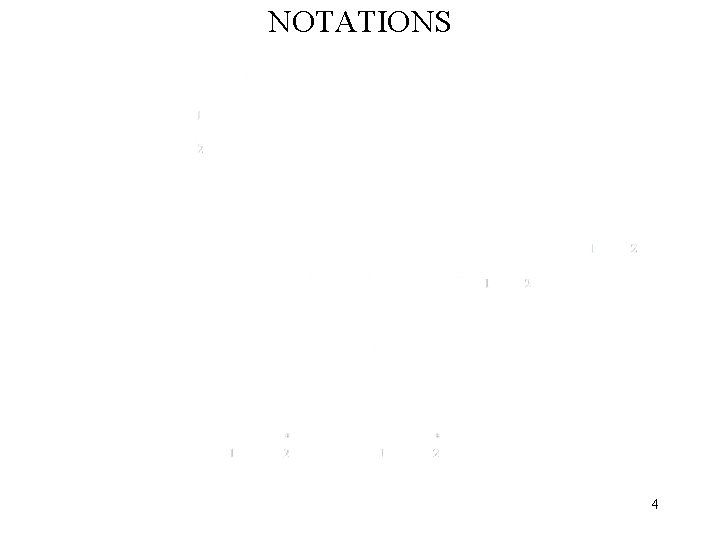
NOTATIONS 4
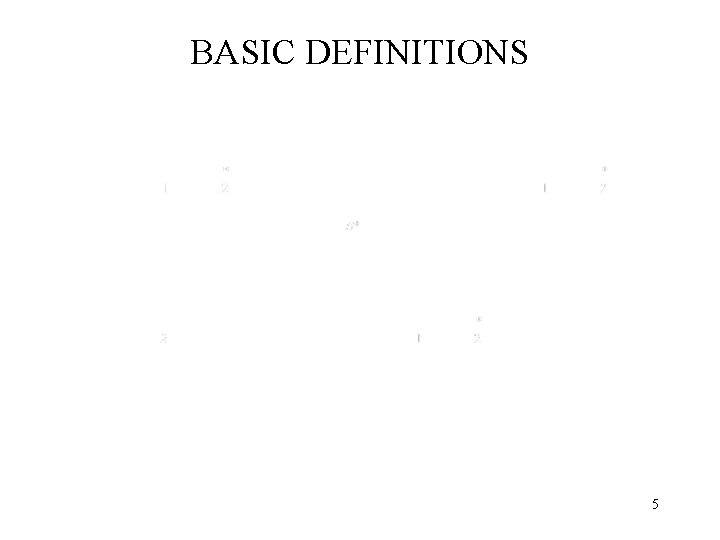
BASIC DEFINITIONS 5
6
NORMAL DIRICHLET BOUNDARY OPERATOR 7
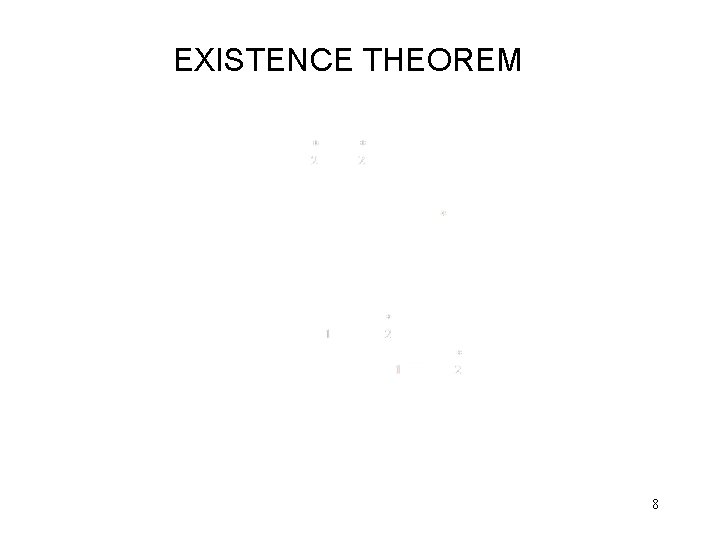
EXISTENCE THEOREM 8
II. - BOUNDARY VALUE PROBLEMS FORMULATED IN DISCONTINUOUS FUNCTION SPACES 9
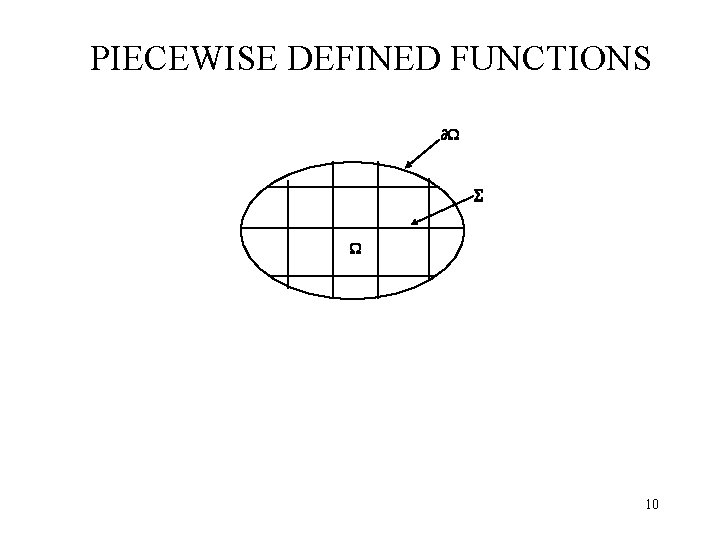
PIECEWISE DEFINED FUNCTIONS Σ 10
PIECEWISE DEFINED OPERATORS 11
SMOOTH FUNCTIONS 12
13
EXISTENCE THEOREM for the BVPJ 14
III. - ELLIPTIC EQUATIONS OF ORDER 2 m 15
SOBOLEV SPACE OF PIECEWISE DEFINED FUNCTIONS 16
RELATION BETWEEN SOBOLEV SPACES 17
THE BVPJ OF ORDER 2 m 18
EXISTENCE OF SOLUTION FOR THE ELLIPTIC BVPJ 19
IV. - GREEN´S FORMULAS IN DISCONTINUOUS FIELDS “GREEN-HERRERA FORMULAS (1985)” 20
FORMAL ADJOINTS 21
GREEN’S FORMULA FOR THE BVP 22
GREEN’S FORMULA FOR THE BVPJ 23
A GENERAL GREEN-HERRERA FORMULA FOR OPERATORS WITH CONTINUOUS COEFFICIENTS 24
WEAK FORMULATIONS OF THE BVPJ 25
V. - APPLICATION TO DEVELOP FINITE ELEMENT METHODS WITH OPTIMAL FUNCTIONS (FEM-OF) 26
GENERAL STRATEGY • A target of information is defined. This is denoted by “S*u” • Procedures for gathering such information are constructed from which the numerical methods stem. 27
EXAMPLE SECOND ORDER ELLIPTIC • A possible choice is to take the ‘sought information’ as the ‘average’ of the function across the ‘internal boundary’. • There are many other choices. 28
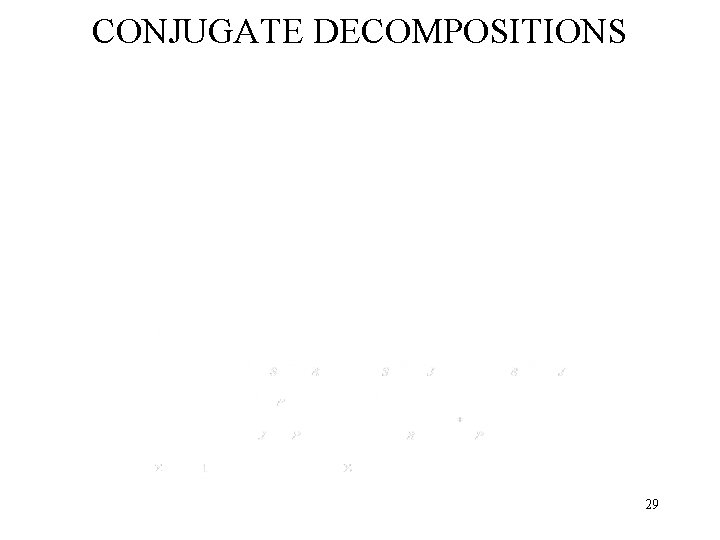
CONJUGATE DECOMPOSITIONS 29
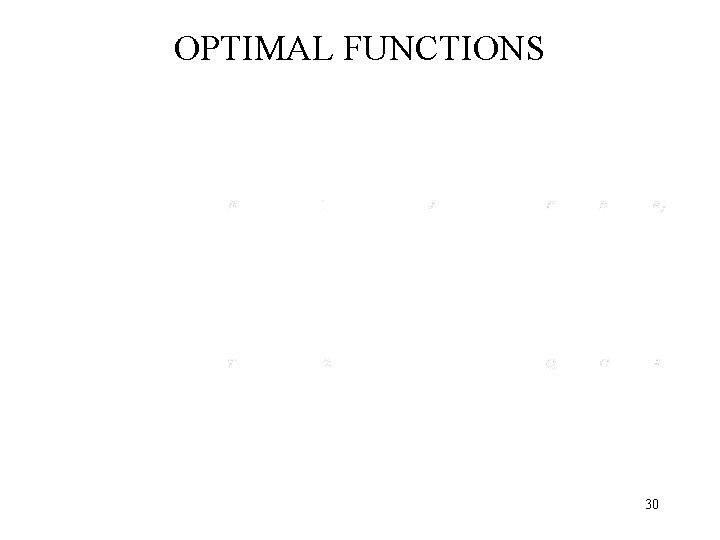
OPTIMAL FUNCTIONS 30
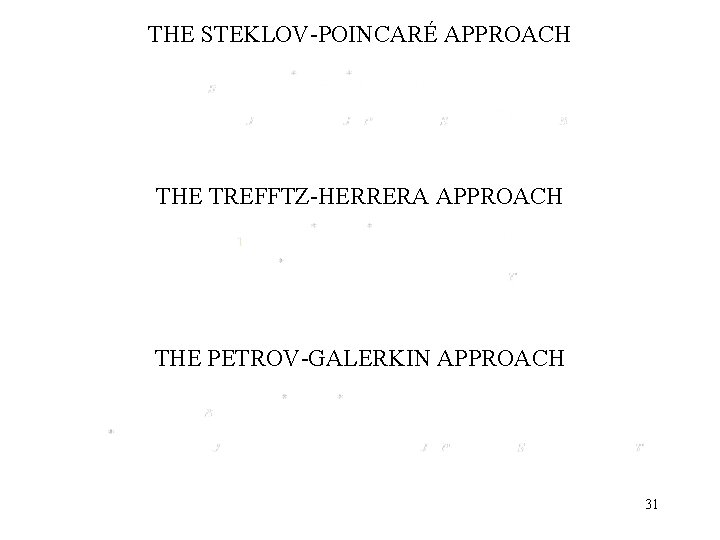
THE STEKLOV-POINCARÉ APPROACH THE TREFFTZ-HERRERA APPROACH THE PETROV-GALERKIN APPROACH 31
ESSENTIAL FEATURE OF FEM-OF METHODS 32
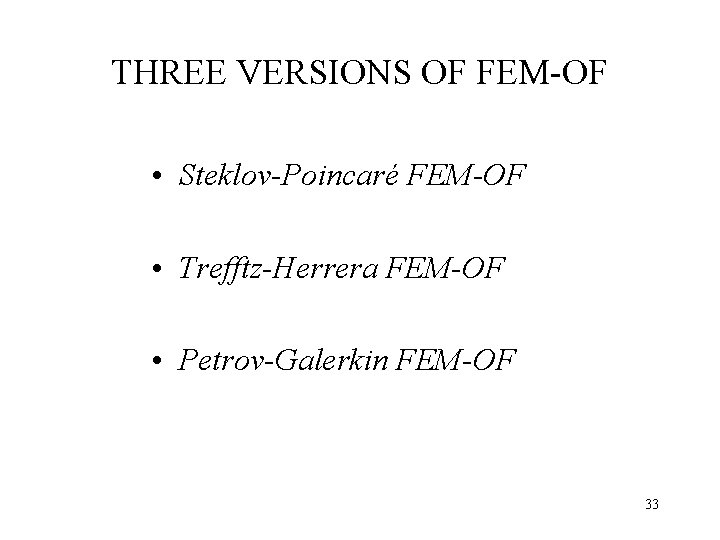
THREE VERSIONS OF FEM-OF • Steklov-Poincaré FEM-OF • Trefftz-Herrera FEM-OF • Petrov-Galerkin FEM-OF 33
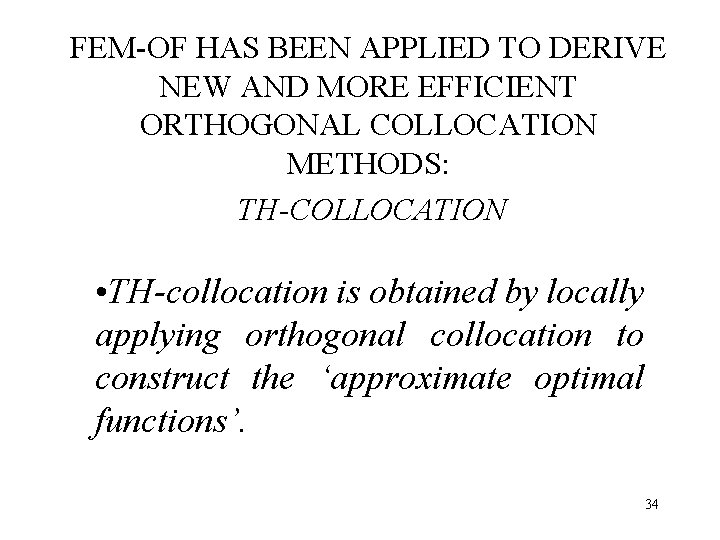
FEM-OF HAS BEEN APPLIED TO DERIVE NEW AND MORE EFFICIENT ORTHOGONAL COLLOCATION METHODS: TH-COLLOCATION • TH-collocation is obtained by locally applying orthogonal collocation to construct the ‘approximate optimal functions’. 34
CONCLUSION The theory of discontinuous Galerkin methods, here presented, supplies a systematic and general framework for them that includes a Green formula for differential operators in discontinuous functions and two ‘weak formulations’. For any given problem, they permit exploring systematically the different variational formulations that can be applied. Also, designing the numerical scheme according to the objectives that have been set. 35
MAIN APPLICATIONS OF THIS THEORY OF d. G METHODS, thus far. • Trefftz Methods. Contribution to their foundations and improvement. • Introduction of FEM-OF methods. • Development of new, more efficient and general collocation methods. • Unifying formulations of DDM and preconditioners. 36