A FRAMEWORK for MARKETING MANAGEMENT Chapter 3 Understanding
- Slides: 37
A FRAMEWORK for MARKETING MANAGEMENT Chapter 3 Understanding Markets, Market Demand, and the Marketing Environment Kotler Keller Cunningham
Chapter Questions • What are the components of a modern marketing information system? • How can marketers improve marketing decisions through intelligence systems and marketing research? © Copyright 2008 Pearson Education Canada 3 -2
Chapter Questions • How can demand be more accurately measured and forecast? • What are some key macro environmental developments that marketers must understand? © Copyright 2008 Pearson Education Canada 3 -3
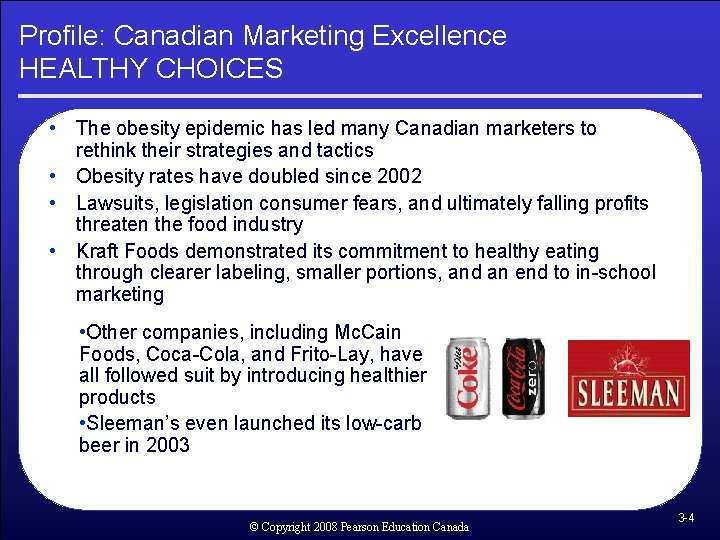
Profile: Canadian Marketing Excellence HEALTHY CHOICES • The obesity epidemic has led many Canadian marketers to rethink their strategies and tactics • Obesity rates have doubled since 2002 • Lawsuits, legislation consumer fears, and ultimately falling profits threaten the food industry • Kraft Foods demonstrated its commitment to healthy eating through clearer labeling, smaller portions, and an end to in-school marketing • Other companies, including Mc. Cain Foods, Coca-Cola, and Frito-Lay, have all followed suit by introducing healthier products • Sleeman’s even launched its low-carb beer in 2003 © Copyright 2008 Pearson Education Canada 3 -4
Marketing Information System A marketing information system (MIS) consists of people, equipment, and processes to gather, sort, analyze, evaluate, and distribute needed, timely, and accurate information to marketing decision makers. © Copyright 2008 Pearson Education Canada 3 -5
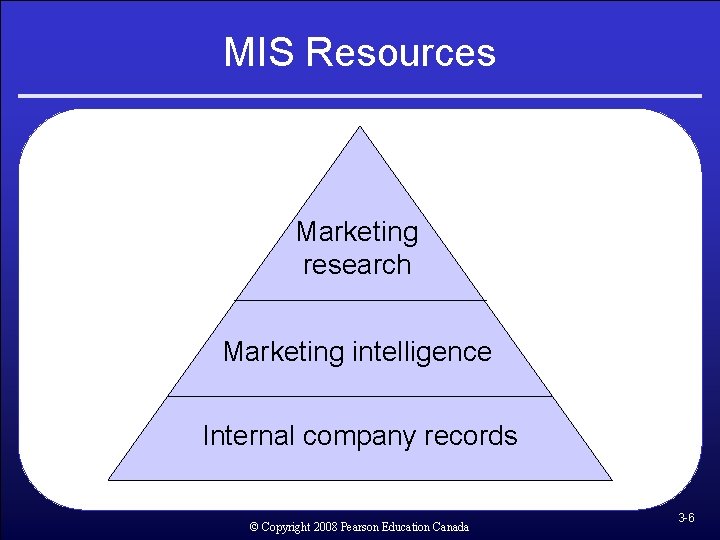
MIS Resources Marketing research Marketing intelligence Internal company records © Copyright 2008 Pearson Education Canada 3 -6
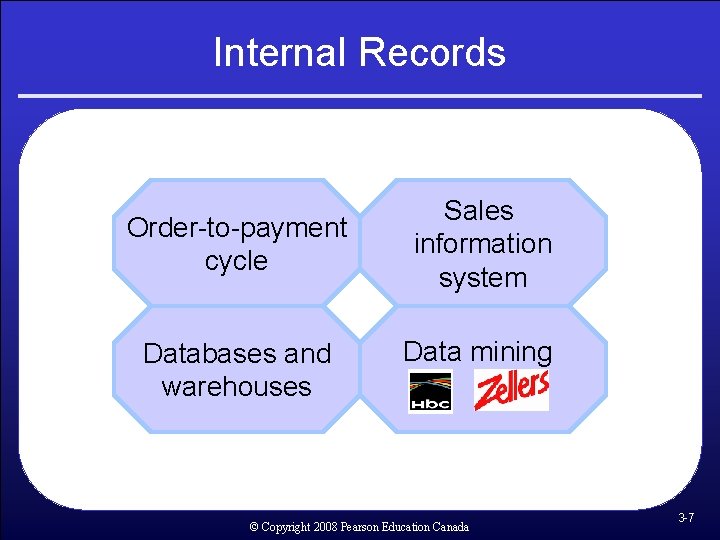
Internal Records Order-to-payment cycle Databases and warehouses Sales information system Data mining © Copyright 2008 Pearson Education Canada 3 -7
Internal Records CANADIAN TIRE • In 2002, Canadian Tire entered into an agreement with NAPA Canada (a distributor of automotive parts), whereby NAPA would supply Canadian Tire with emergency parts using its parts-ordering automated inventory technology • Assisted Canadian Tire by allowing it to grow its automotive organization without adding infrastructure and inventory costs • The parts supplied now make up around 15% of Canadian Tire’s automotive hard part sales (2005) © Copyright 2008 Pearson Education Canada 3 -8
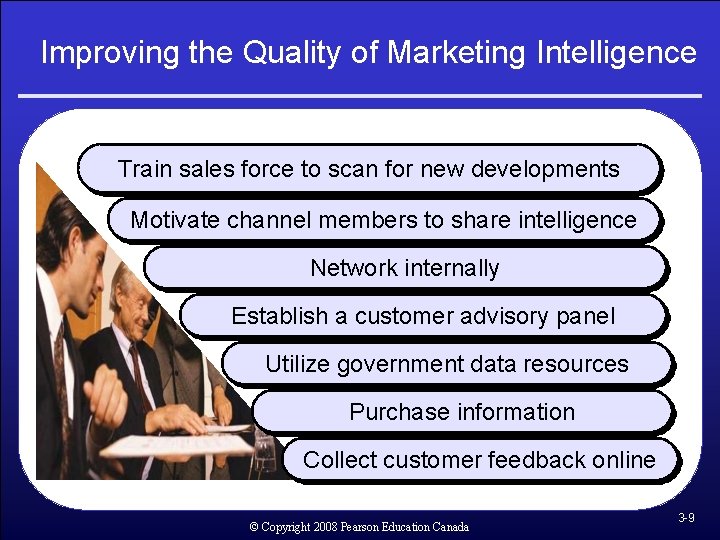
Improving the Quality of Marketing Intelligence Train sales force to scan for new developments Motivate channel members to share intelligence Network internally Establish a customer advisory panel Utilize government data resources Purchase information Collect customer feedback online © Copyright 2008 Pearson Education Canada 3 -9
Marketing Research Defined Systematic design, collection, analysis, and reporting of data and findings relevant to a specific marketing situation facing a company © Copyright 2008 Pearson Education Canada 3 -10
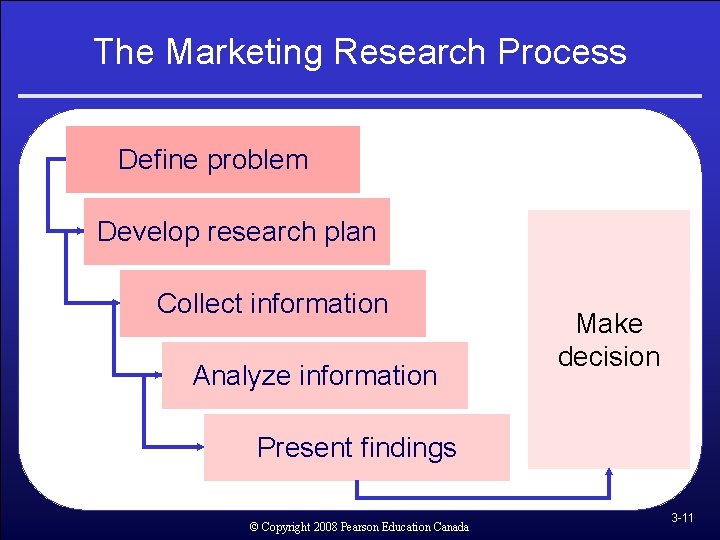
The Marketing Research Process Define problem Develop research plan Collect information Analyze information Make decision Present findings © Copyright 2008 Pearson Education Canada 3 -11
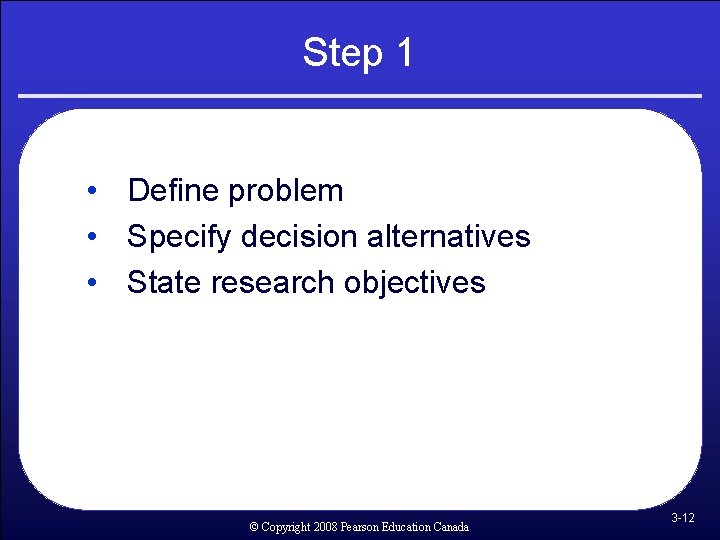
Step 1 • Define problem • Specify decision alternatives • State research objectives © Copyright 2008 Pearson Education Canada 3 -12
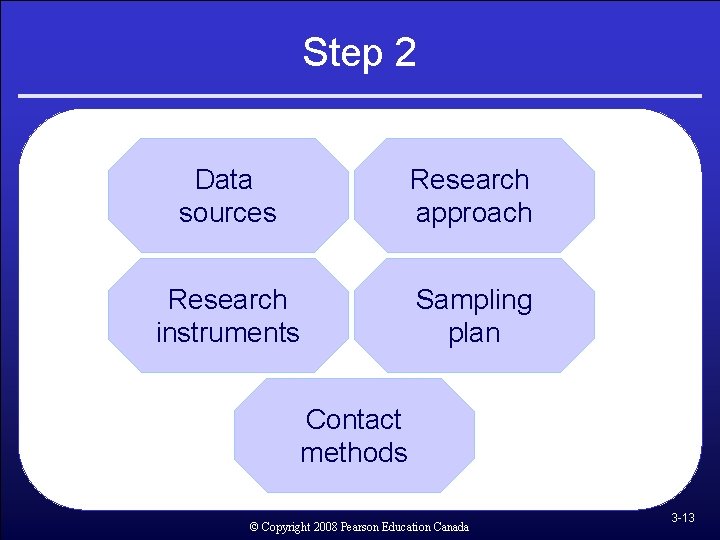
Step 2 Data sources Research approach Research instruments Sampling plan Contact methods © Copyright 2008 Pearson Education Canada 3 -13
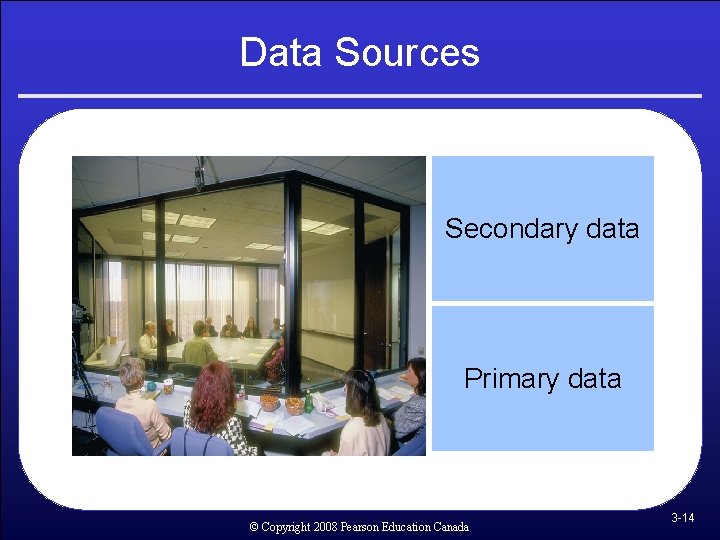
Data Sources Secondary data Primary data © Copyright 2008 Pearson Education Canada 3 -14
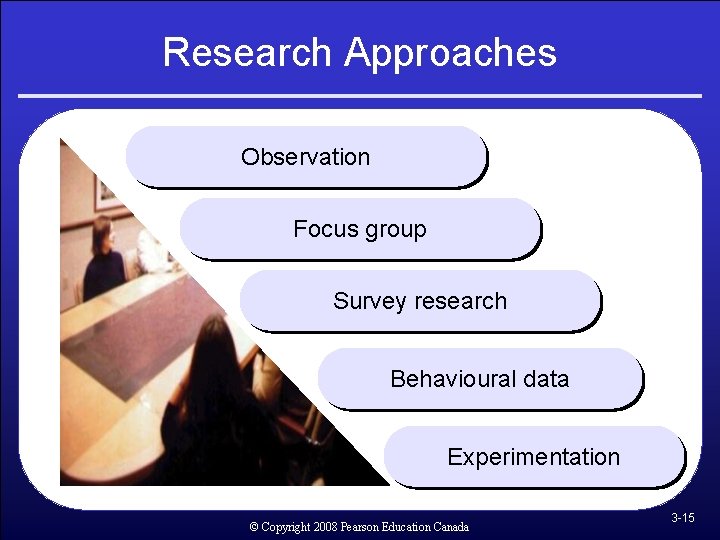
Research Approaches Observation Focus group Survey research Behavioural data Experimentation © Copyright 2008 Pearson Education Canada 3 -15
Research Instruments Ø Questionnaires Ø Qualitative research techniques Ø Mechanical devices © Copyright 2008 Pearson Education Canada 3 -16
Sampling Plan • Sampling unit: Who is to be surveyed? • Sample size: How many people should be surveyed? • Sampling procedure: How should the respondents be chosen? © Copyright 2008 Pearson Education Canada 3 -17
Contact Methods Mail questionnaire Telephone interview Personal interview Online interview © Copyright 2008 Pearson Education Canada 3 -18
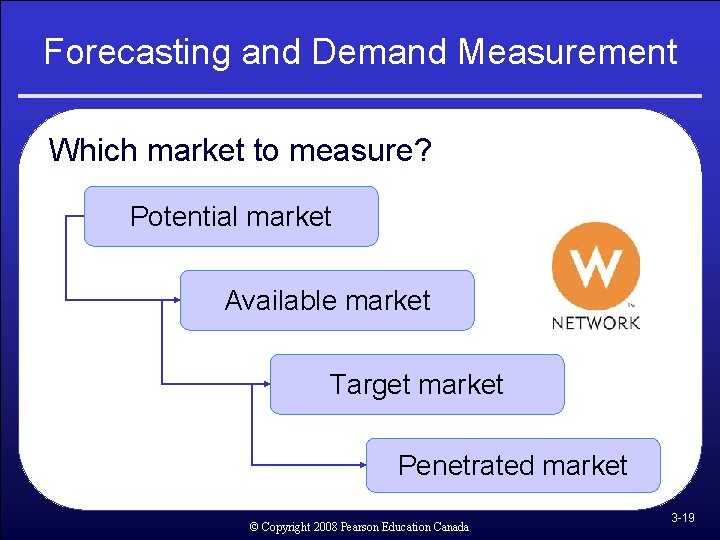
Forecasting and Demand Measurement Which market to measure? Potential market Available market Target market Penetrated market © Copyright 2008 Pearson Education Canada 3 -19
Company Demand Sales Forecast • Company demand is the company’s estimated share of market demand at alternative levels of company marketing effort in a given time • Company sales forecast is the expected level of company sales based on a chosen marketing plan and an assumed marketing environment © Copyright 2008 Pearson Education Canada 3 -20
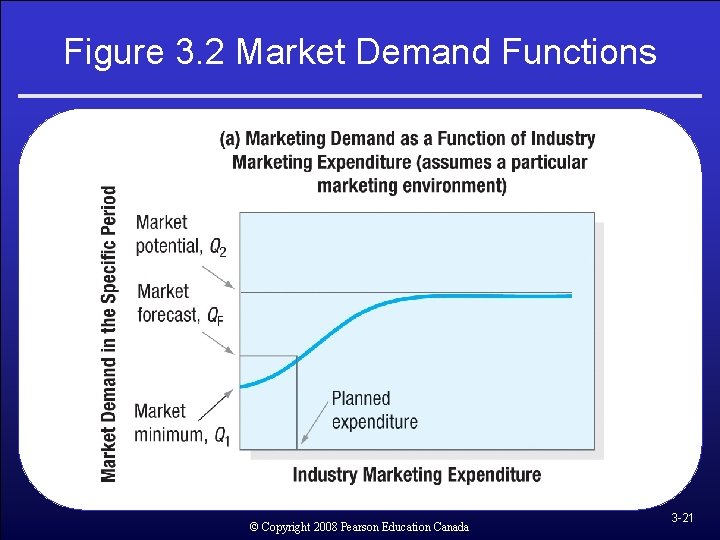
Figure 3. 2 Market Demand Functions © Copyright 2008 Pearson Education Canada 3 -21
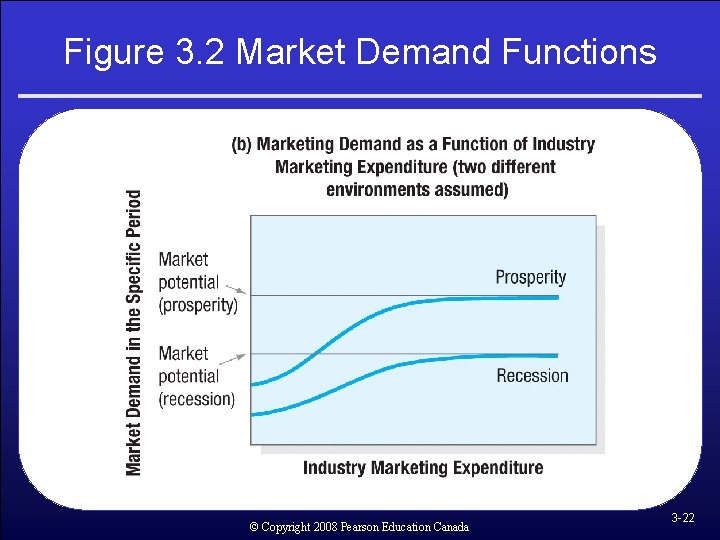
Figure 3. 2 Market Demand Functions © Copyright 2008 Pearson Education Canada 3 -22
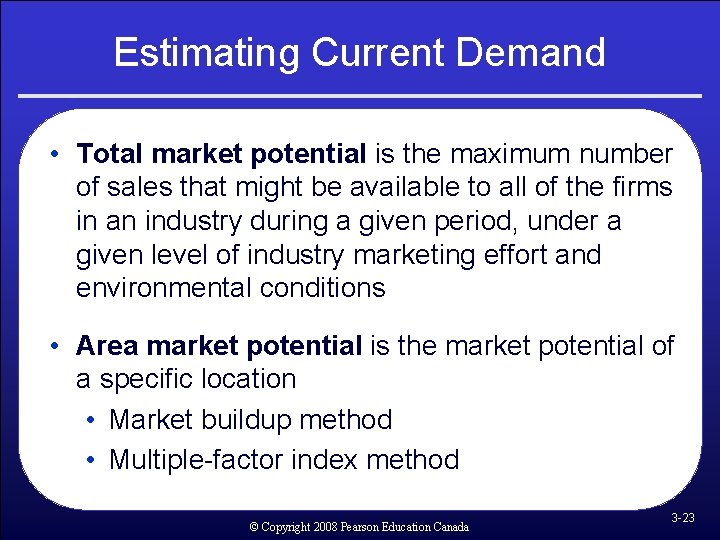
Estimating Current Demand • Total market potential is the maximum number of sales that might be available to all of the firms in an industry during a given period, under a given level of industry marketing effort and environmental conditions • Area market potential is the market potential of a specific location • Market buildup method • Multiple-factor index method © Copyright 2008 Pearson Education Canada 3 -23
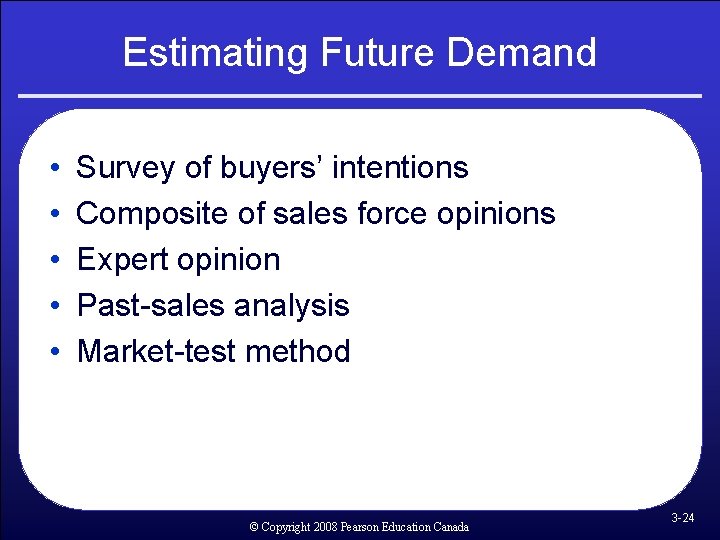
Estimating Future Demand • • • Survey of buyers’ intentions Composite of sales force opinions Expert opinion Past-sales analysis Market-test method © Copyright 2008 Pearson Education Canada 3 -24
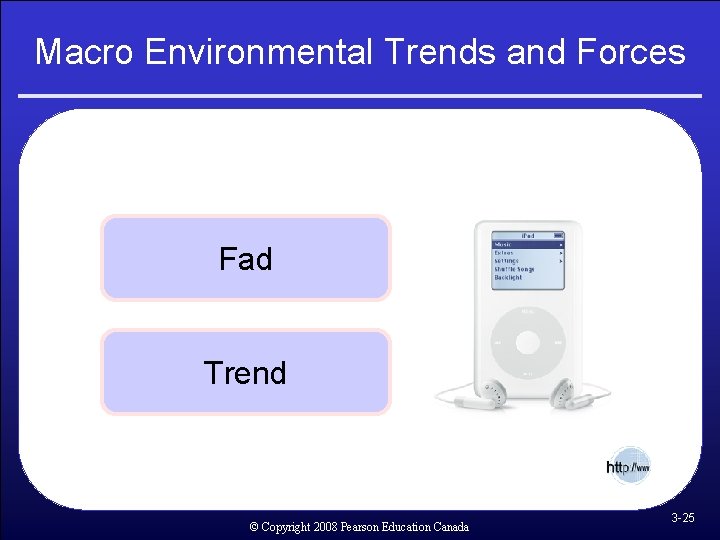
Macro Environmental Trends and Forces Fad Trend © Copyright 2008 Pearson Education Canada 3 -25
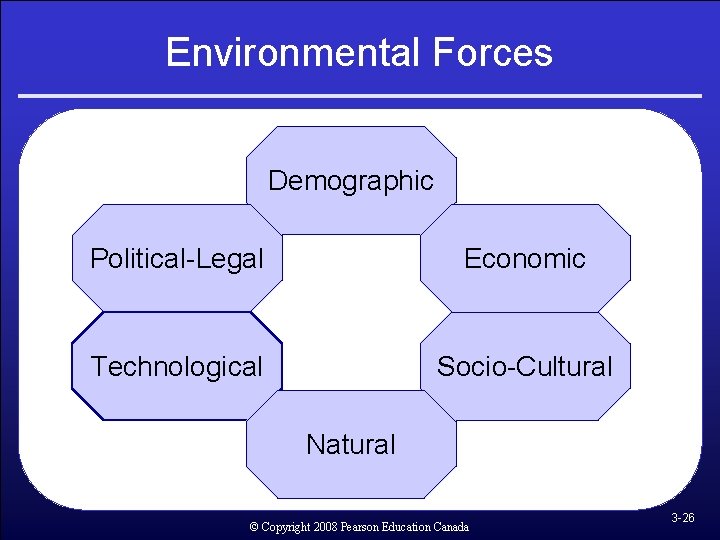
Environmental Forces Demographic Political-Legal Economic Technological Socio-Cultural Natural © Copyright 2008 Pearson Education Canada 3 -26
Population and Demographics • Worldwide population growth • Population age mix • Ethnic markets • Educational groups • Household patterns • Geographic shifts in population © Copyright 2008 Pearson Education Canada 3 -27
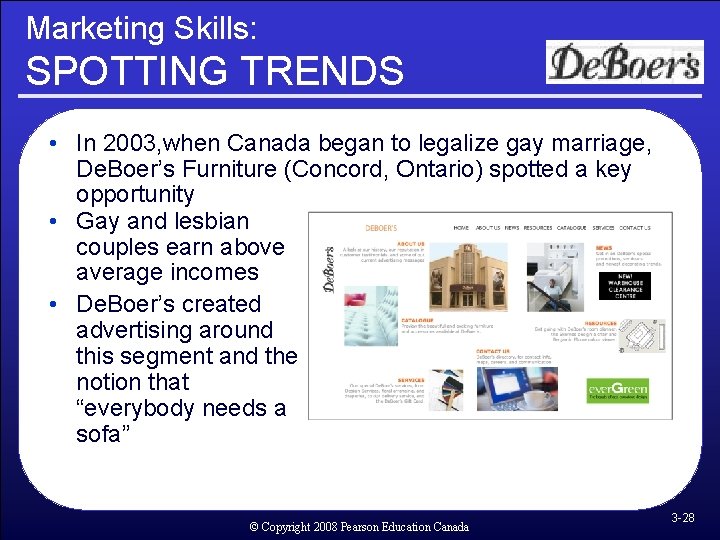
Marketing Skills: SPOTTING TRENDS • In 2003, when Canada began to legalize gay marriage, De. Boer’s Furniture (Concord, Ontario) spotted a key opportunity • Gay and lesbian couples earn above average incomes • De. Boer’s created advertising around this segment and the notion that “everybody needs a sofa” © Copyright 2008 Pearson Education Canada 3 -28
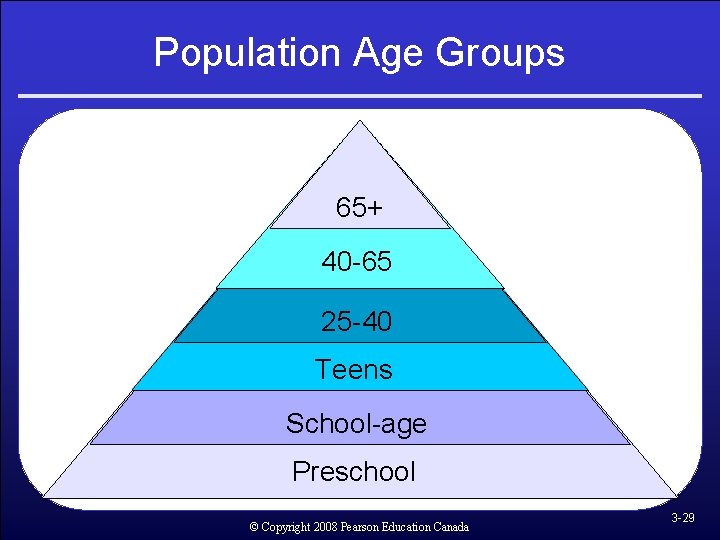
Population Age Groups 65+ 40 -65 25 -40 Teens School-age Preschool © Copyright 2008 Pearson Education Canada 3 -29
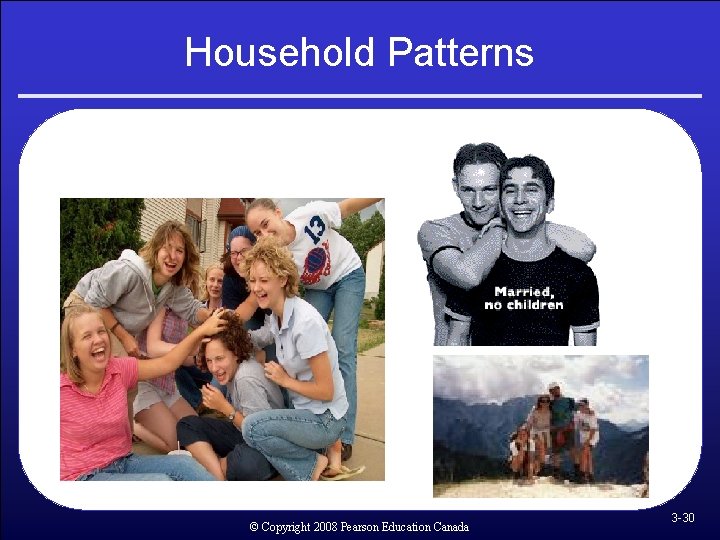
Household Patterns © Copyright 2008 Pearson Education Canada 3 -30
Economic Environment Income distribution Savings, debt, and credit availability Outsourcing and free trade © Copyright 2008 Pearson Education Canada 3 -31
Types of Industrial Structures Industrial economies Industrializing economies Raw-materialexporting economies Subsistence economies © Copyright 2008 Pearson Education Canada 3 -32
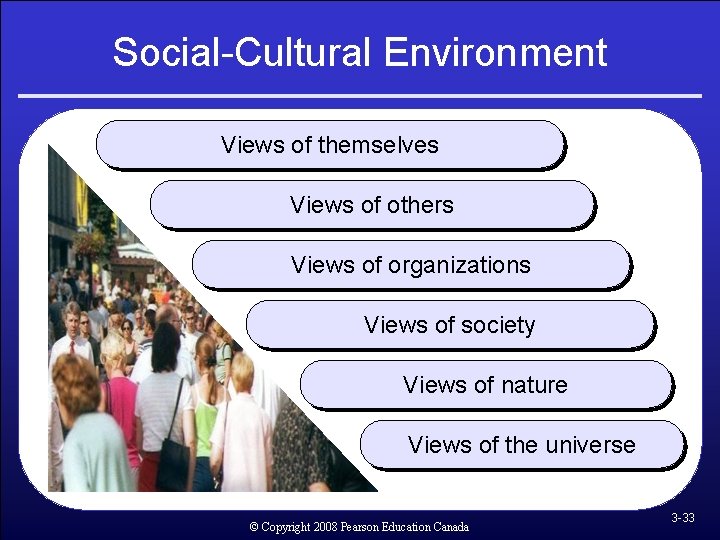
Social-Cultural Environment Views of themselves Views of others Views of organizations Views of society Views of nature Views of the universe © Copyright 2008 Pearson Education Canada 3 -33
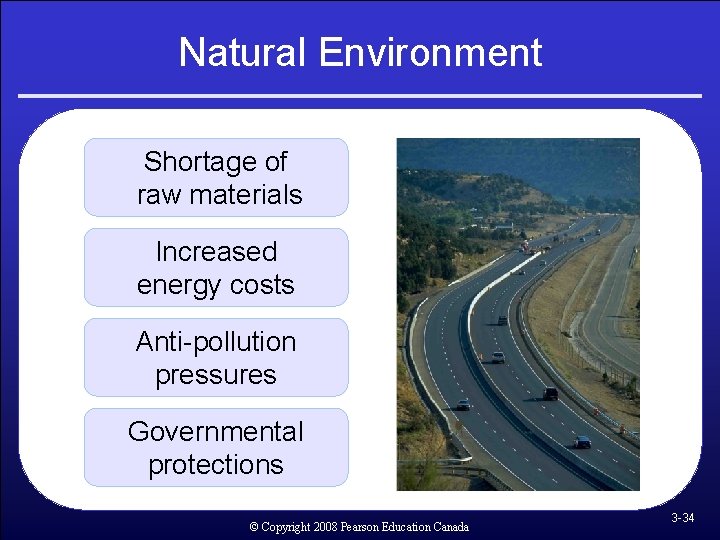
Natural Environment Shortage of raw materials Increased energy costs Anti-pollution pressures Governmental protections © Copyright 2008 Pearson Education Canada 3 -34
Technological Environment Pace of change Opportunities for innovation Varying R&D budgets Increased regulation of change © Copyright 2008 Pearson Education Canada 3 -35
Political-Legal Environment Increase in business legislation Growth of special interest groups © Copyright 2008 Pearson Education Canada 3 -36
For Discussion When was the last time you participated in a survey? How helpful do you think was the information you provided? Could the research have been done differently? © Copyright 2008 Pearson Education Canada 3 -37