WORK POWER AND MACHINES 9 1 WORK A

- Slides: 47
WORK, POWER, AND MACHINES 9. 1
WORK A quantity that measures the effects of a force acting over a distance Work = force x distance W = Fd
WORK Work is measured in: N m Joules (J)
WORK EXAMPLE A crane uses an average force of 5200 N to lift a girder 25 m. How much work does the crane do?
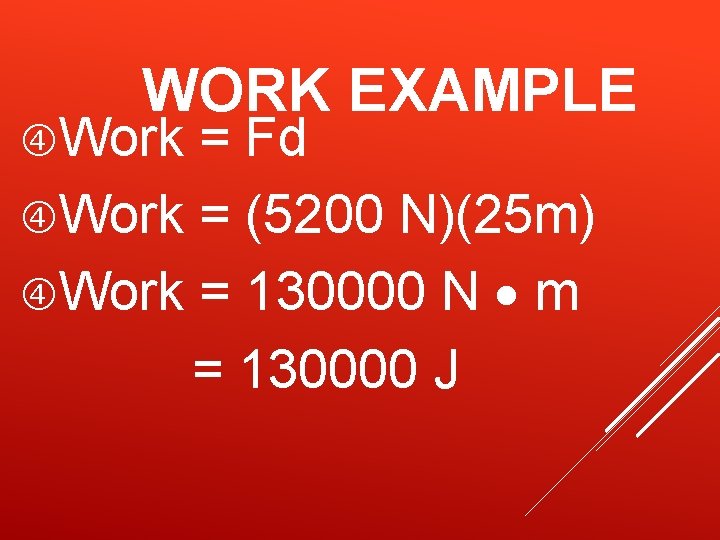
WORK EXAMPLE Work = Fd Work = (5200 N)(25 m) Work = 130000 N m = 130000 J
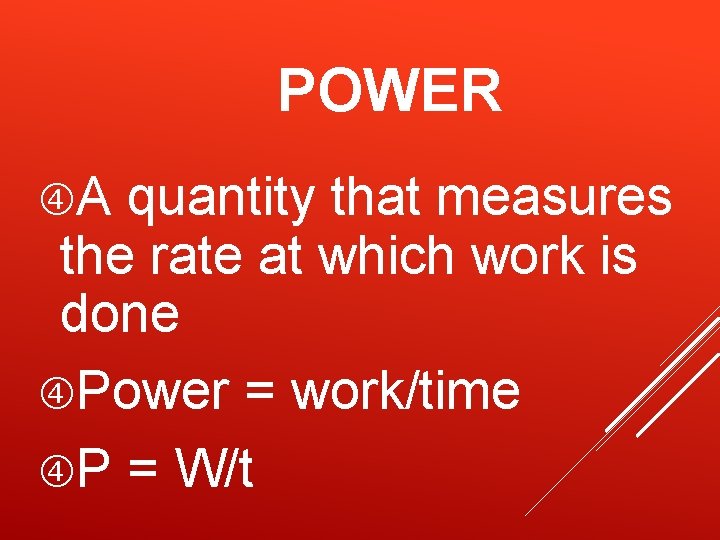
POWER A quantity that measures the rate at which work is done Power = work/time P = W/t
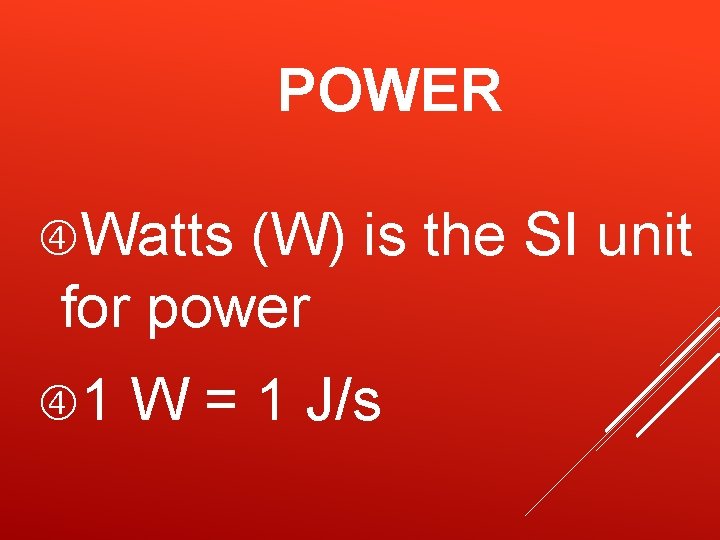
POWER Watts (W) is the SI unit for power 1 W = 1 J/s
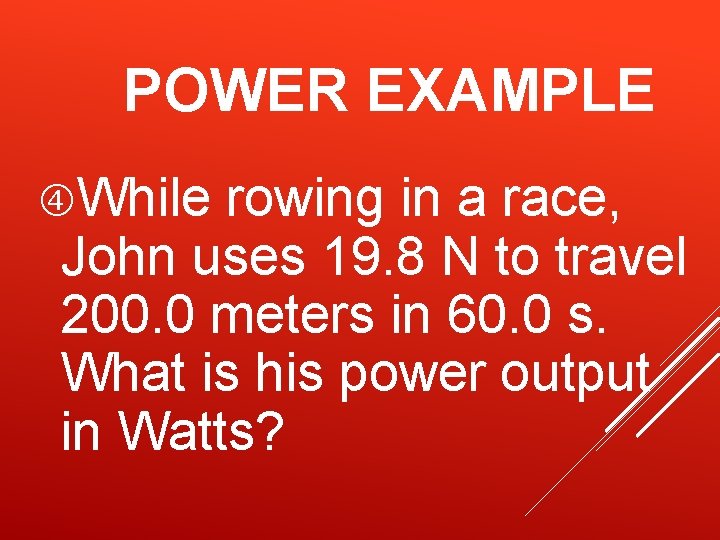
POWER EXAMPLE While rowing in a race, John uses 19. 8 N to travel 200. 0 meters in 60. 0 s. What is his power output in Watts?
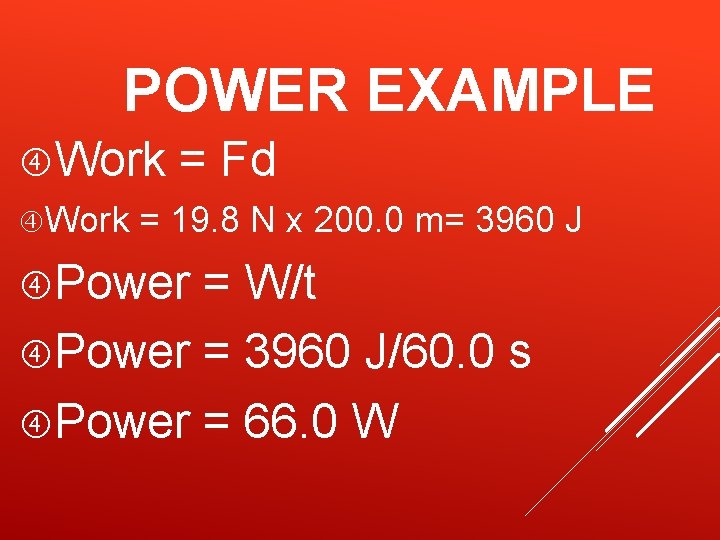
POWER EXAMPLE Work = Fd = 19. 8 N x 200. 0 m= 3960 J Power = W/t Power = 3960 J/60. 0 s Power = 66. 0 W
MACHINES Help us do work by redistributing the force that we put into them They do not change the amount of work
MACHINES Change the direction of an input force (ex car jack)
MACHINES Increase an output force by changing the distance over which the force is applied (ex ramp) Multiplying forces
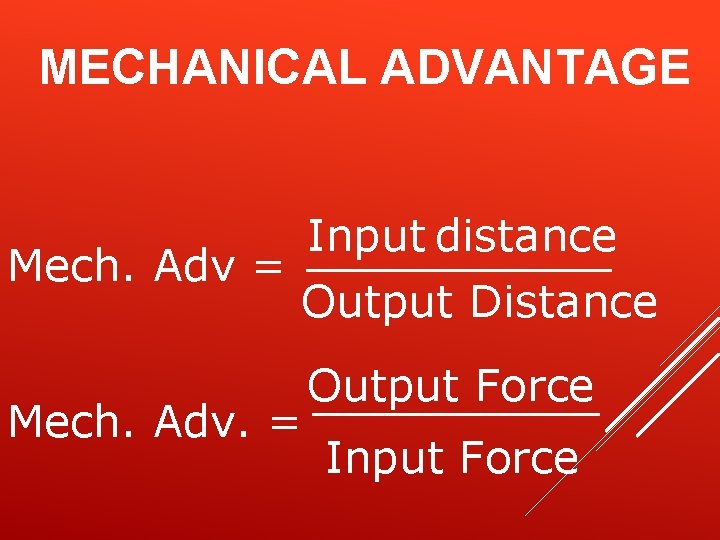
MECHANICAL ADVANTAGE A quantity that measures how much a machine multiples force or distance.
MECHANICAL ADVANTAGE Input distance Mech. Adv = Output Distance Mech. Adv. = Output Force Input Force
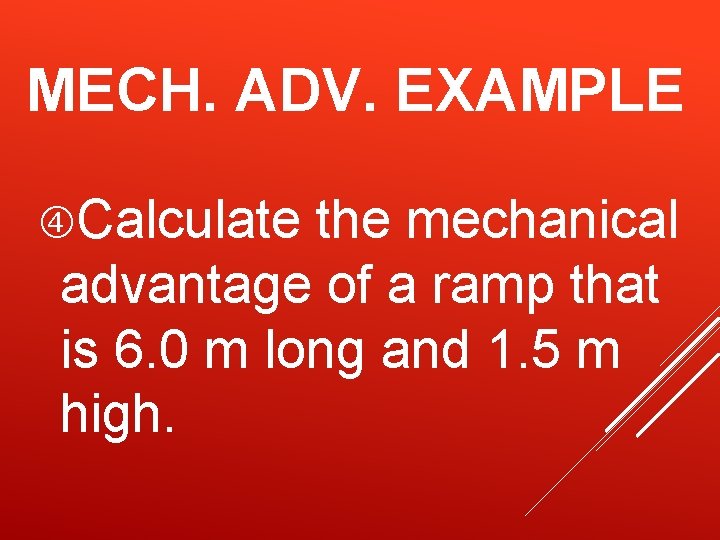
MECH. ADV. EXAMPLE Calculate the mechanical advantage of a ramp that is 6. 0 m long and 1. 5 m high.
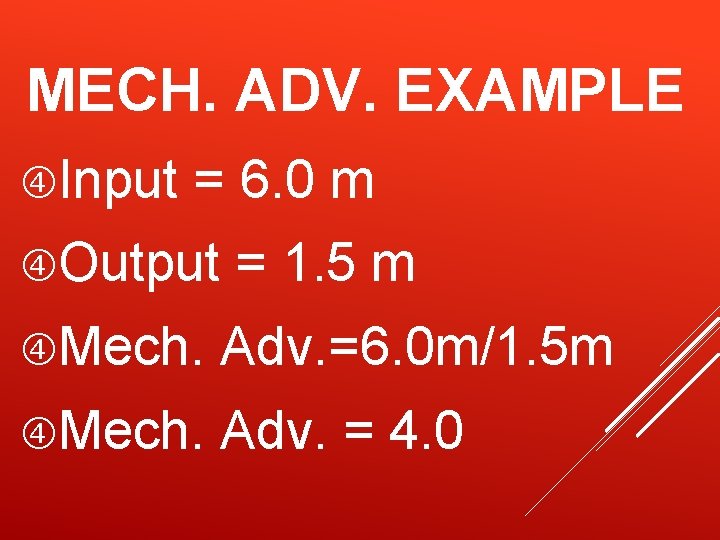
MECH. ADV. EXAMPLE Input = 6. 0 m Output = 1. 5 m Mech. Adv. =6. 0 m/1. 5 m Mech. Adv. = 4. 0
ENERGY 9. 3 -9. 4
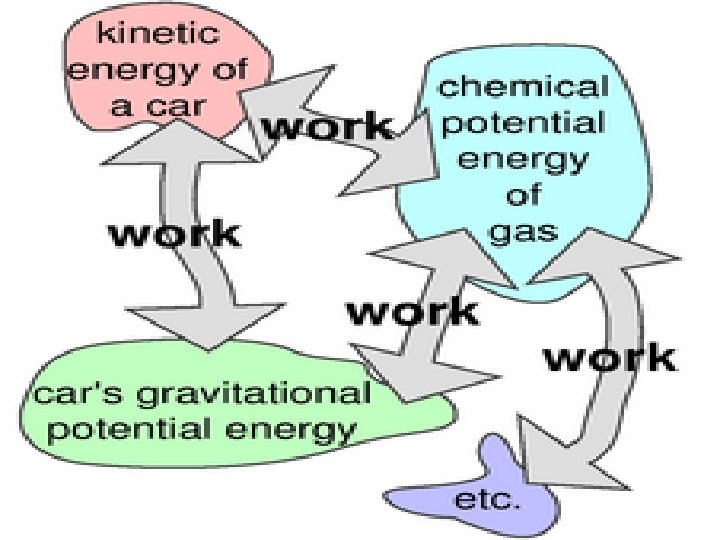
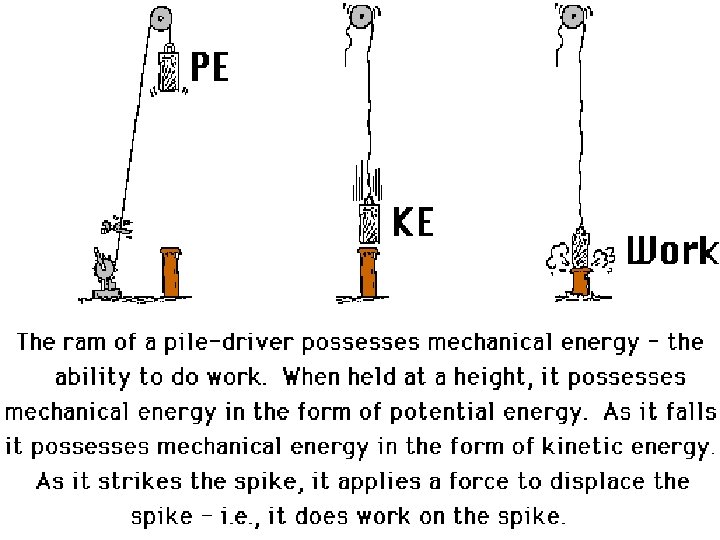
ENERGY AND WORK Energy is the ability to do work whenever work is done, energy is transformed or transferred to another system.
ENERGY Energy is measured in: Joules (J) Energy can only be observed when work is being done on an object
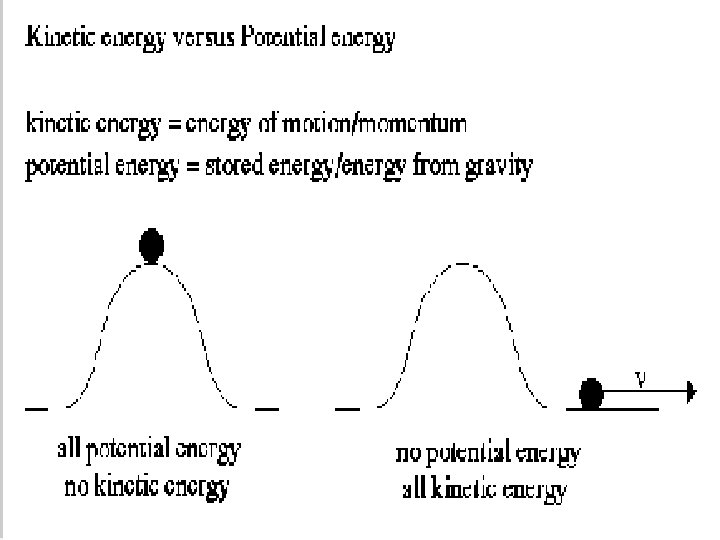
POTENTIAL ENERGY PE the stored energy resulting from the relative positions of objects in a system
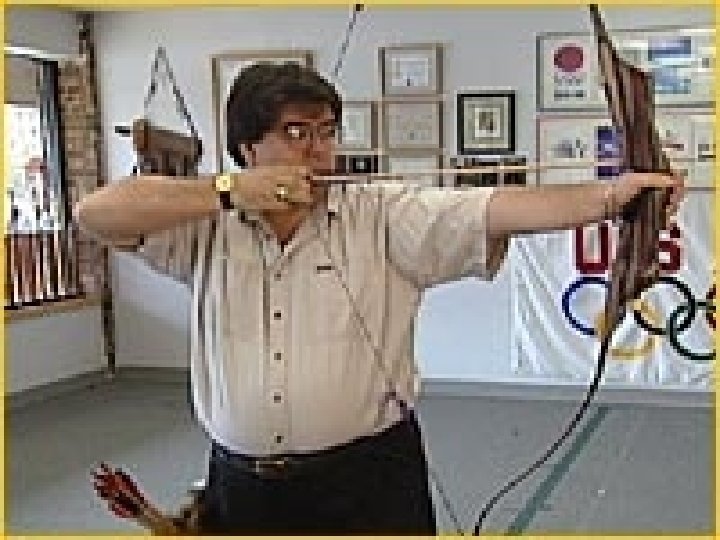
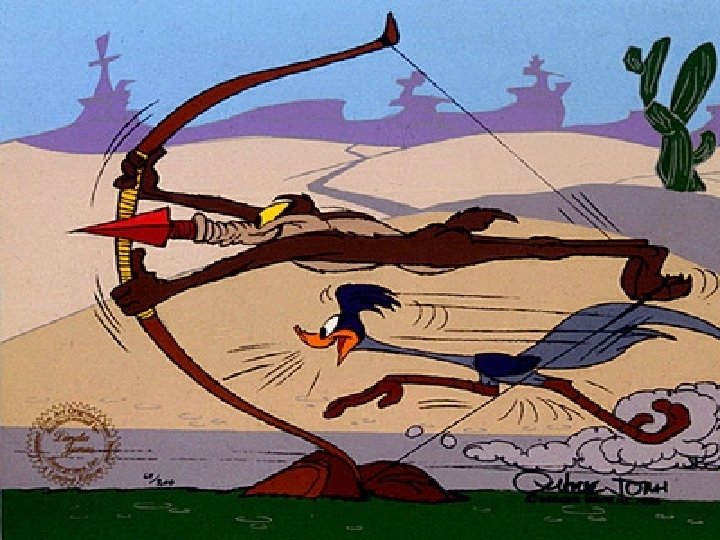
POTENTIAL ENERGY PE PE of any stretched elastic material is called Elastic PE ex. a rubber band, bungee cord, clock spring
GRAVITATIONAL PE energy that could potentially do work on an object due to the forces of gravity.
GRAVITATIONAL PE depends both on the mass of the object and the distance between them (height)
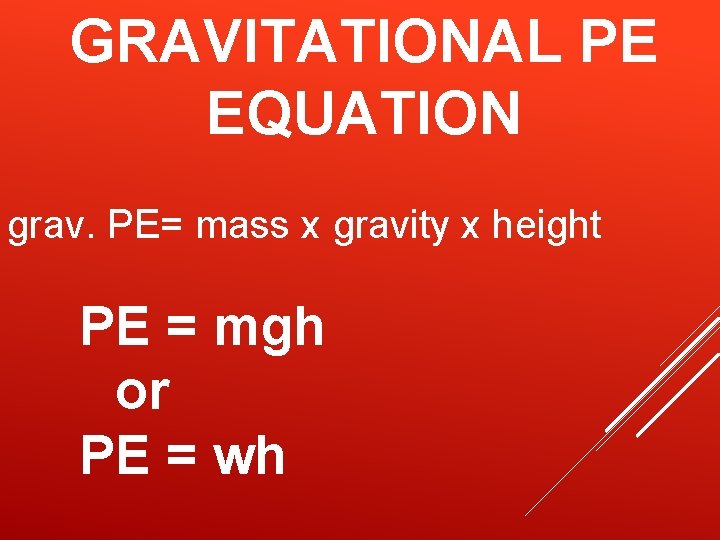
GRAVITATIONAL PE EQUATION grav. PE= mass x gravity x height PE = mgh or PE = wh
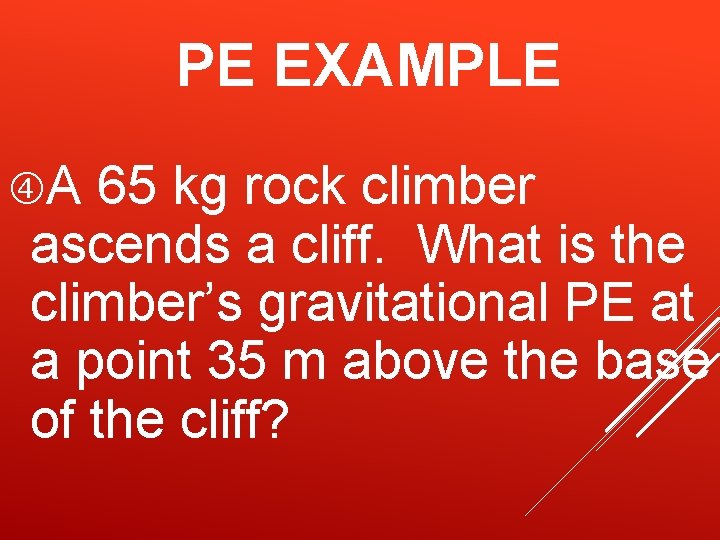
PE EXAMPLE A 65 kg rock climber ascends a cliff. What is the climber’s gravitational PE at a point 35 m above the base of the cliff?
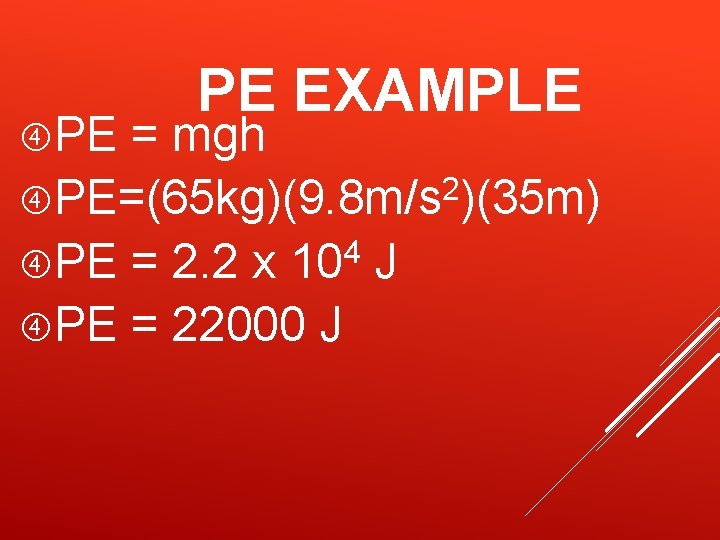
PE PE EXAMPLE = mgh 2 PE=(65 kg)(9. 8 m/s )(35 m) 4 PE = 2. 2 x 10 J PE = 22000 J
KINETIC ENERGY the energy of a moving object due to its motion. depends on an objects mass and speed.
KINETIC ENERGY What influences energy more: speed or mass? ex. Car crashes Speed does
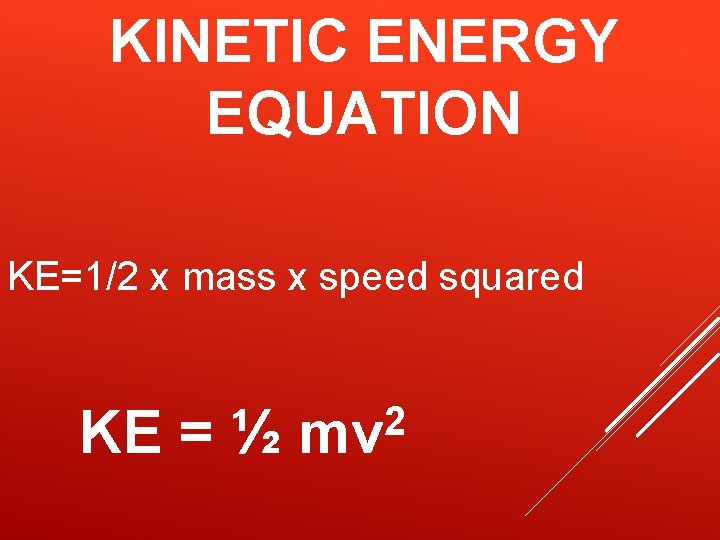
KINETIC ENERGY EQUATION KE=1/2 x mass x speed squared KE = ½ 2 mv
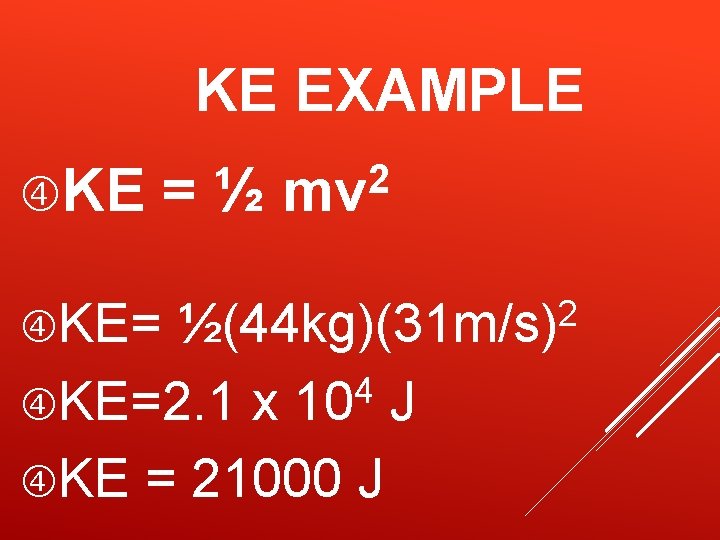
KE EXAMPLE What is the kinetic energy of a 44 kg cheetah running at 31 m/s?
KE EXAMPLE KE KE= =½ 2 mv 2 ½(44 kg)(31 m/s) KE=2. 1 4 10 x J KE = 21000 J
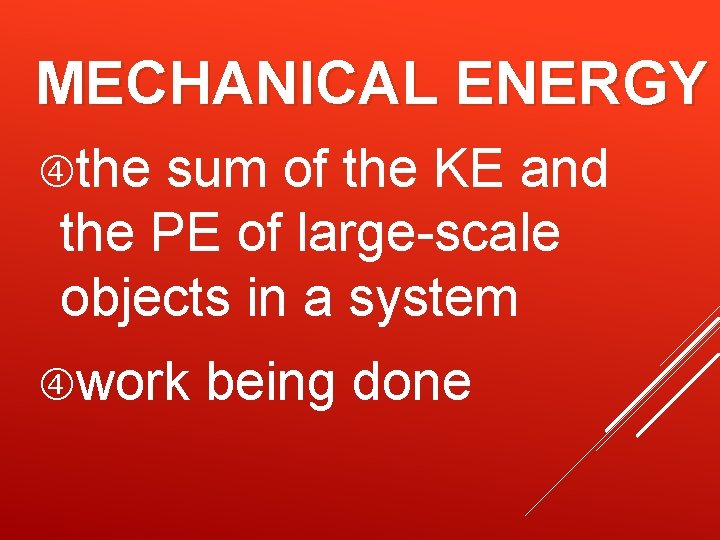
MECHANICAL ENERGY the sum of the KE and the PE of large-scale objects in a system work being done
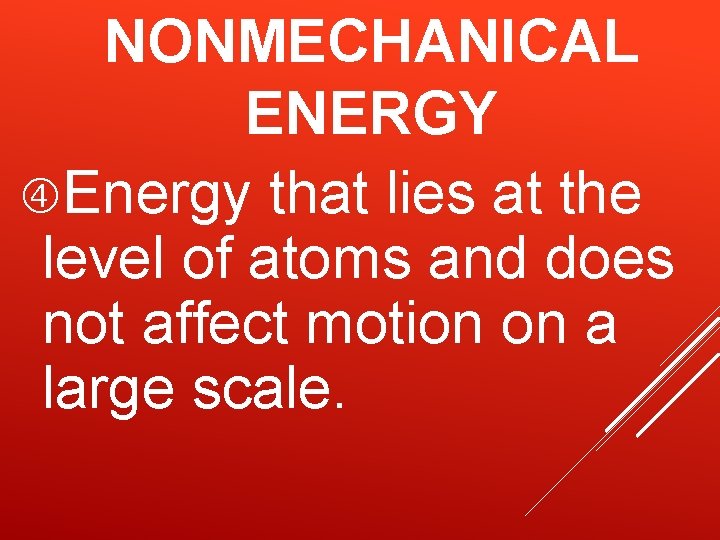
NONMECHANICAL ENERGY Energy that lies at the level of atoms and does not affect motion on a large scale.
ATOMS Atoms have KE, because they are constantly in motion. KE particles heat up KE particles cool down
CHEMICAL REACTIONS during reactions stored energy (called chemical energy)is released So PE is converted to KE
OTHER FORMS nuclear fusion nuclear fission Electricity Light
ENERGY TRANSFORMATION S 9. 4
CONSERVATION OF ENERGY Energy is neither created nor destroyed Energy is transferred
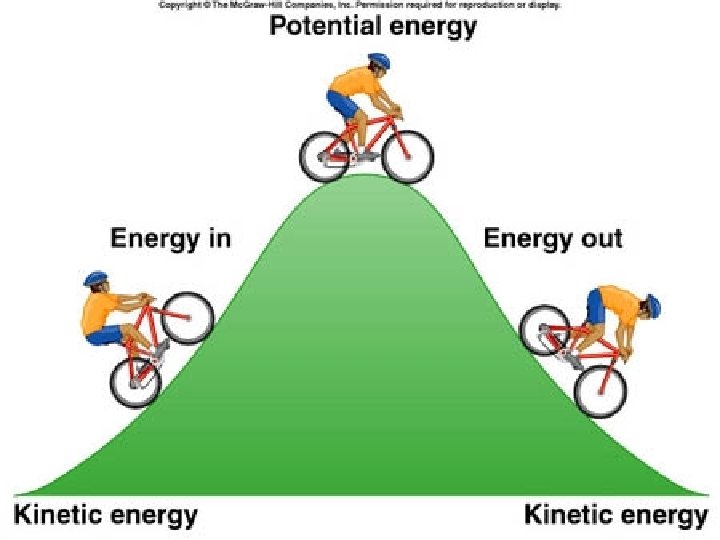
ENERGY TRANSFORMATION PE becomes KE car going down a hill on a roller coaster
ENERGY TRANSFORMATION KE can become PE car going up a hill KE starts converting to PE
PHYSICS OF ROLLER COASTERS http: //www. funderstanding. com/k 12/coaster/