Unit 10 Ecology Energy Matter Populations Unit 10


- Slides: 46
Unit 10: Ecology: Energy, Matter, & Populations
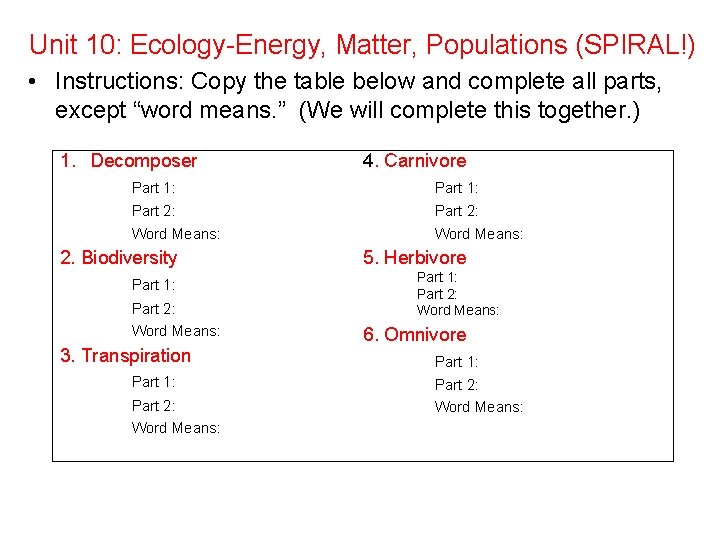
Unit 10: Ecology-Energy, Matter, Populations (SPIRAL!) • Instructions: Copy the table below and complete all parts, except “word means. ” (We will complete this together. ) 1. Decomposer 4. Carnivore Part 1: Part 2: Word Means: 2. Biodiversity Part 1: Part 2: Word Means: 3. Transpiration 5. Herbivore Part 1: Part 2: Word Means: 6. Omnivore Part 1: Part 2: Word Means:
Essential Questions for Unit 10: Ecology: Energy, Matter & Populations • EQ #1: Looking at a food web, how can PRODUCERS, CONSUMERS, & DECOMPOSERS be identified and distinguished from one another? • EQ#2: How can the PATHWAY OF ENERGY TRANSFER through trophic levels be described? (Include reduction of available energy. ) • EQ# 3: How do WATER and CARBON cycle through the Earth and the atmosphere? • EQ #4: How is POPULATION SIZE determined by births, deaths, immigration, emigration & limiting factors that determine carrying capacity?
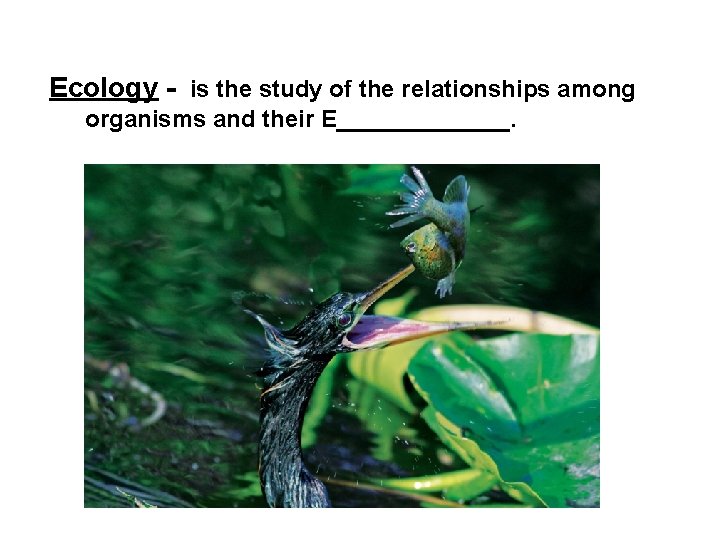
Ecology - is the study of the relationships among organisms and their E_______.
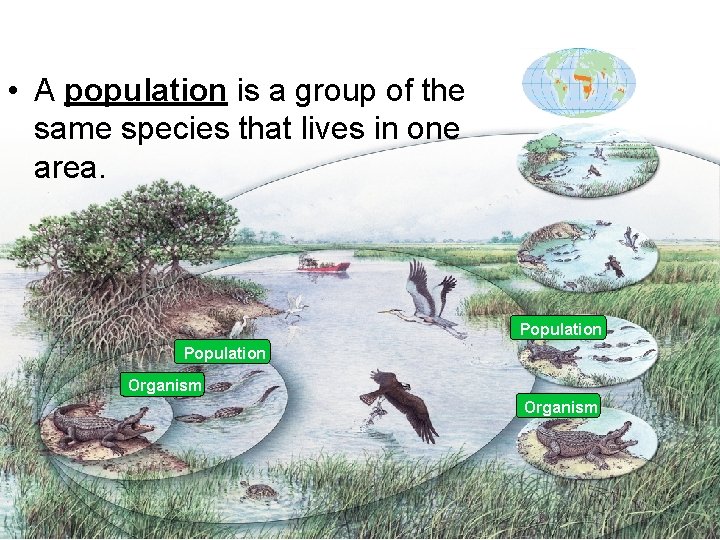
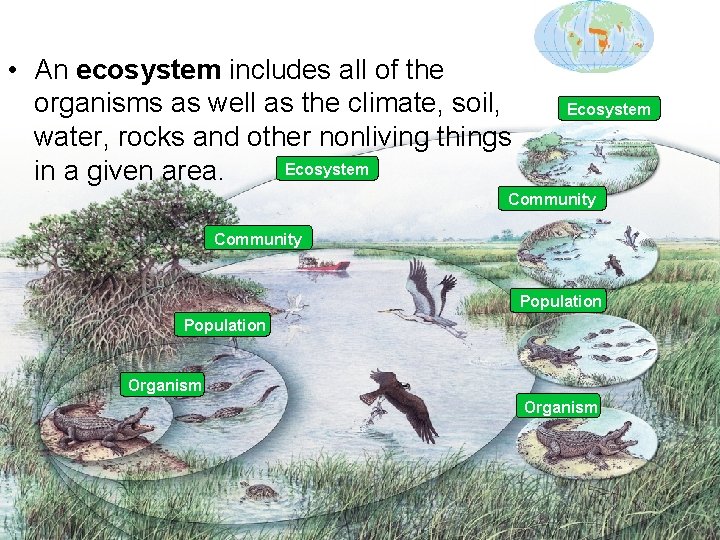
• A population is a group of the same species that lives in one area. Population Organism
• An ecosystem includes all of the organisms as well as the climate, soil, water, rocks and other nonliving things Ecosystem in a given area. Ecosystem Community Population Organism
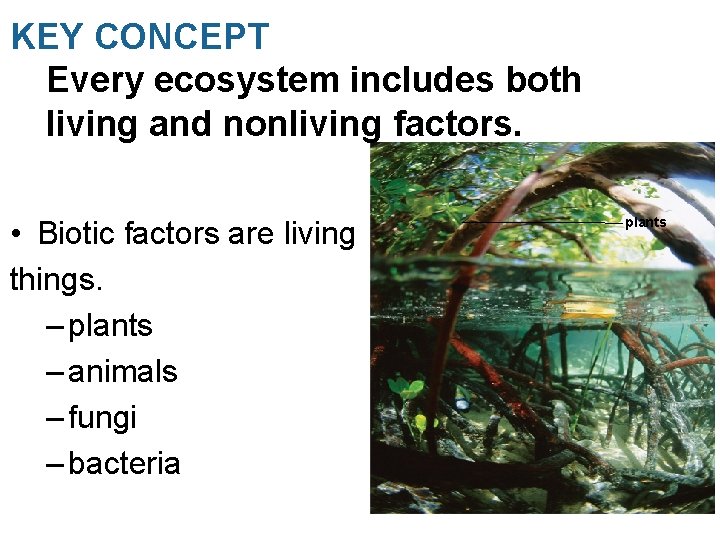
KEY CONCEPT Every ecosystem includes both living and nonliving factors. • Biotic factors are living things. – plants – animals – fungi – bacteria plants
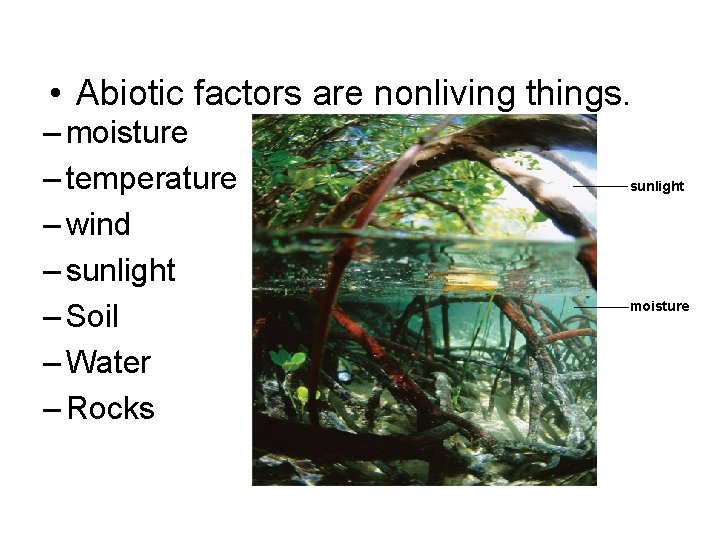
• Abiotic factors are nonliving things. – moisture – temperature – wind – sunlight – Soil – Water – Rocks sunlight moisture
Changing one factor in an ecosystem can affect many other factors. • Biodiversity is the assortment, or V_____, of living things in an ecosystem. • Rain forests have more biodiversity than other locations in the world.
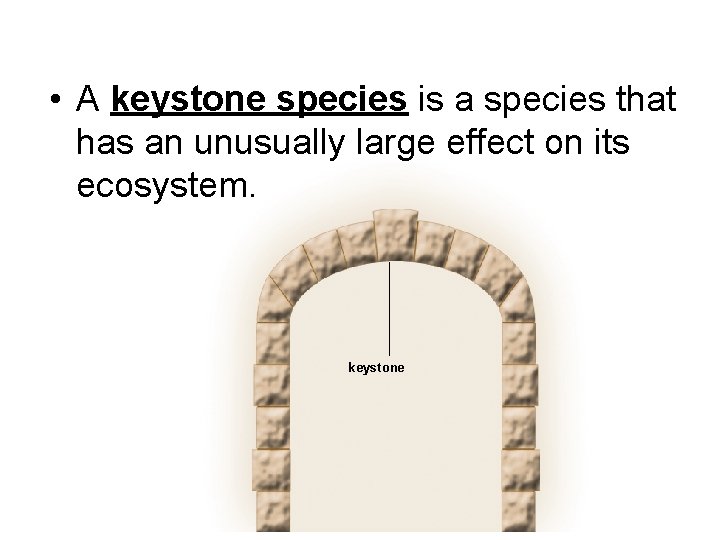
• A keystone species is a species that has an unusually large effect on its ecosystem. keystone
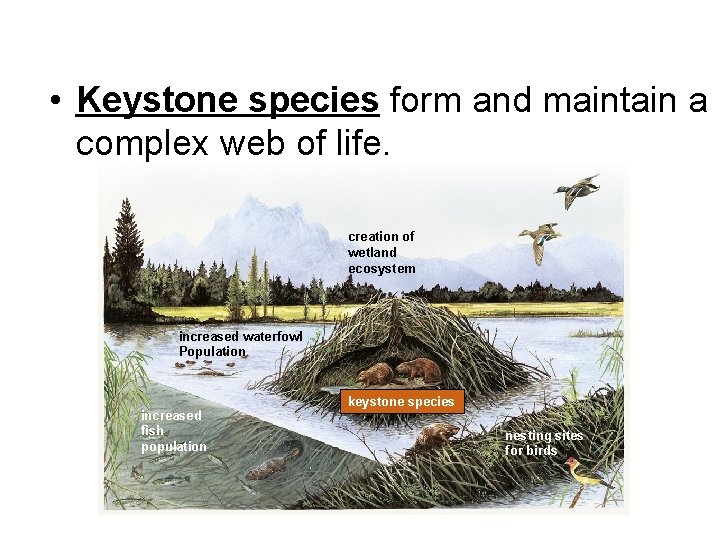
• Keystone species form and maintain a complex web of life. creation of wetland ecosystem increased waterfowl Population increased fish population keystone species nesting sites for birds
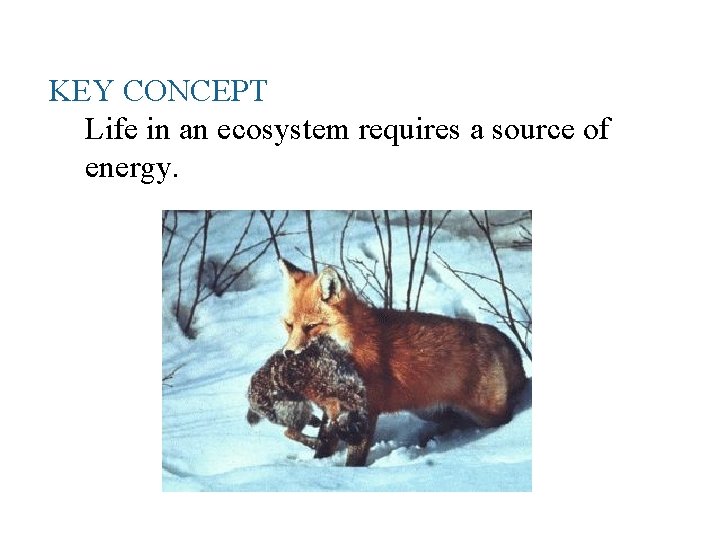
KEY CONCEPT Life in an ecosystem requires a source of energy.
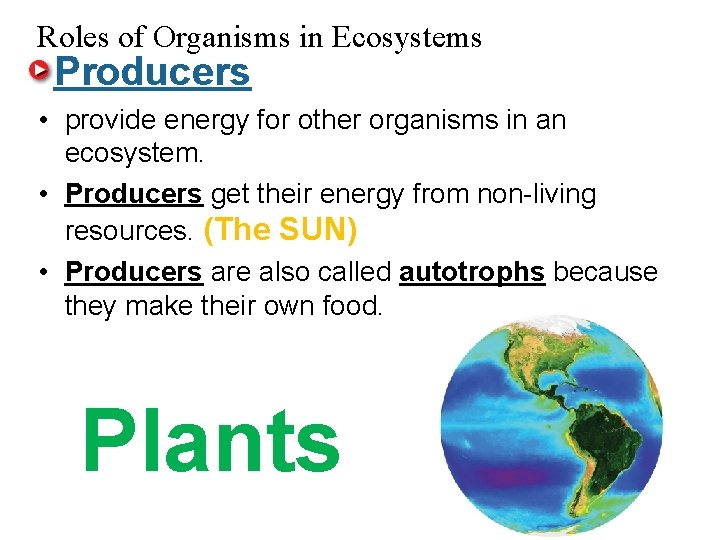
Roles of Organisms in Ecosystems Producers • provide energy for other organisms in an ecosystem. • Producers get their energy from non-living resources. (The SUN) • Producers are also called autotrophs because they make their own food. Plants
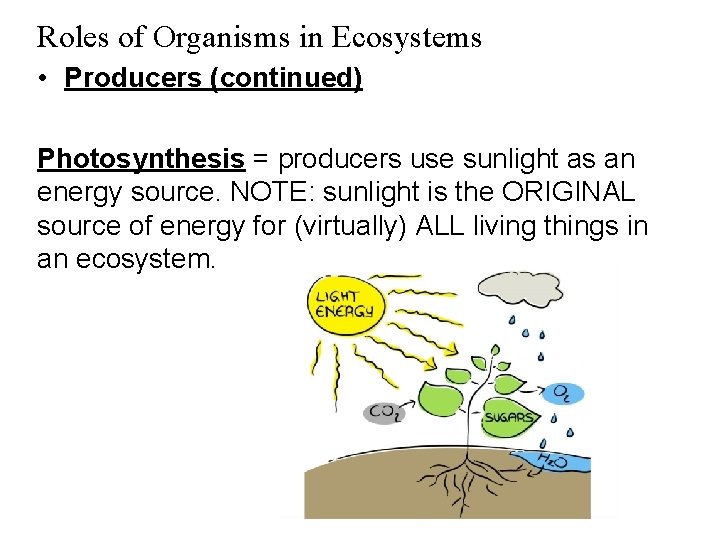
Roles of Organisms in Ecosystems • Producers (continued) Photosynthesis = producers use sunlight as an energy source. NOTE: sunlight is the ORIGINAL source of energy for (virtually) ALL living things in an ecosystem.
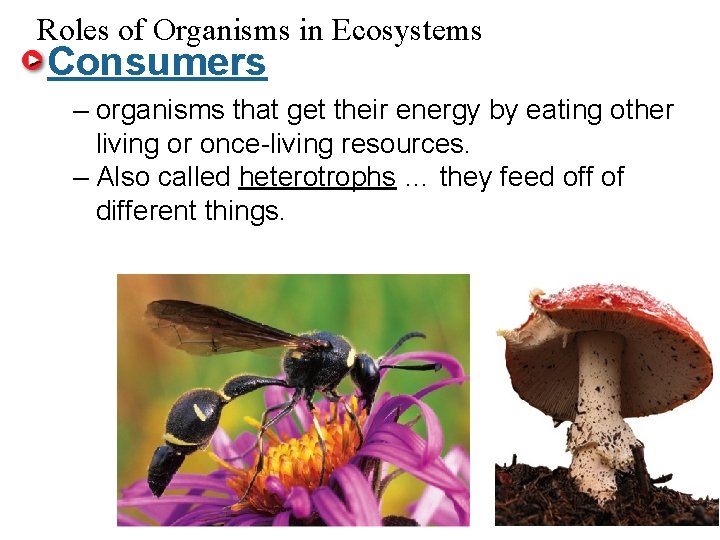
Roles of Organisms in Ecosystems Consumers – organisms that get their energy by eating other living or once-living resources. – Also called heterotrophs … they feed off of different things.
Roles of Organisms in Ecosystems Types of Consumers • There are several types of Consumers, based on what they eat. 1. Herbivores: Eat P______ only 2. Carnivores: Eat meat only 3. Omnivores: Eat both plants & animals 4. Detritivores: Consume dead organic matter, like dead leaves
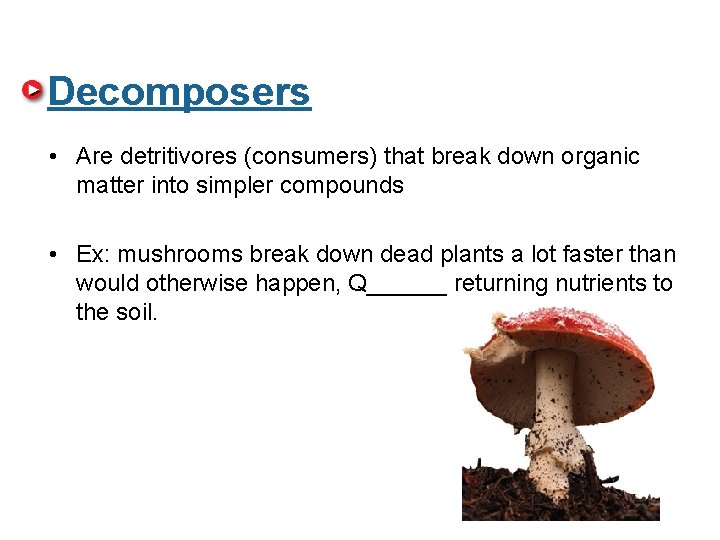
Decomposers • Are detritivores (consumers) that break down organic matter into simpler compounds • Ex: mushrooms break down dead plants a lot faster than would otherwise happen, Q______ returning nutrients to the soil.
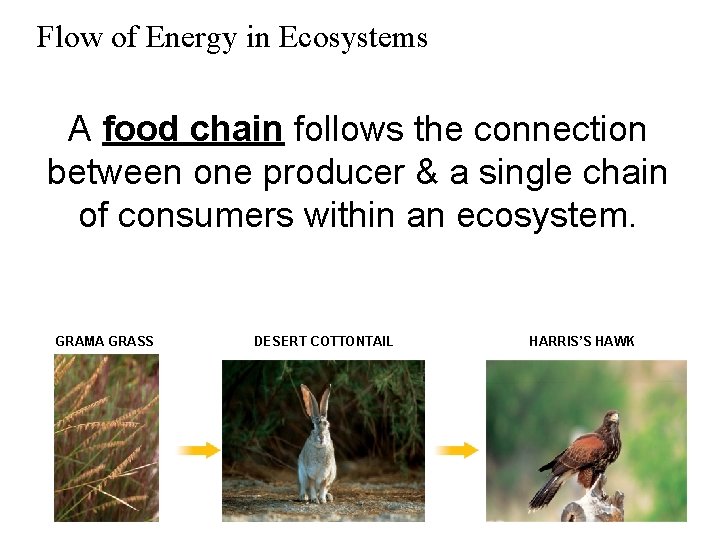
Flow of Energy in Ecosystems A food chain follows the connection between one producer & a single chain of consumers within an ecosystem. GRAMA GRASS DESERT COTTONTAIL HARRIS’S HAWK
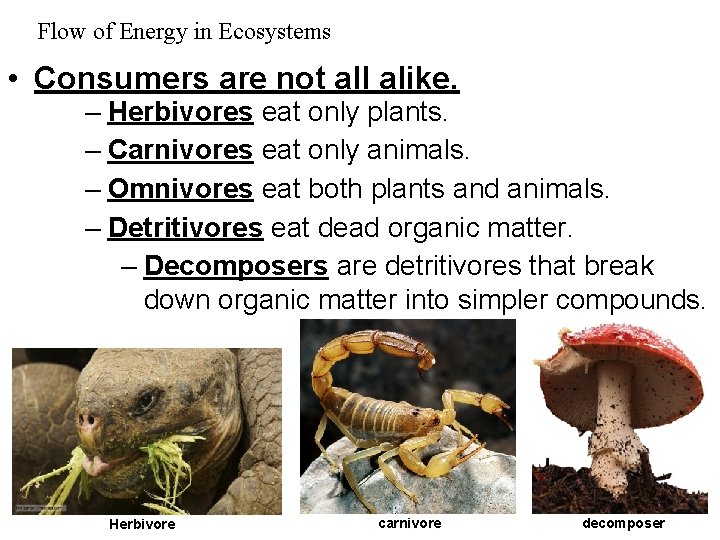
Flow of Energy in Ecosystems • Consumers are not all alike. – Herbivores eat only plants. – Carnivores eat only animals. – Omnivores eat both plants and animals. – Detritivores eat dead organic matter. – Decomposers are detritivores that break down organic matter into simpler compounds. Herbivore carnivore decomposer
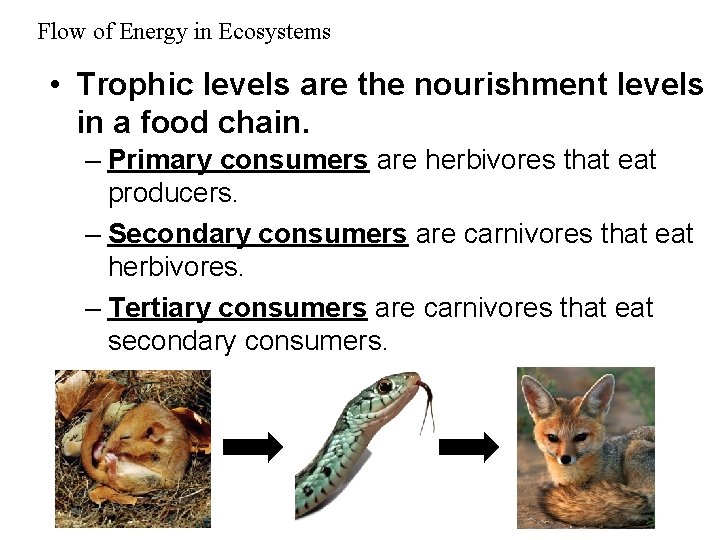
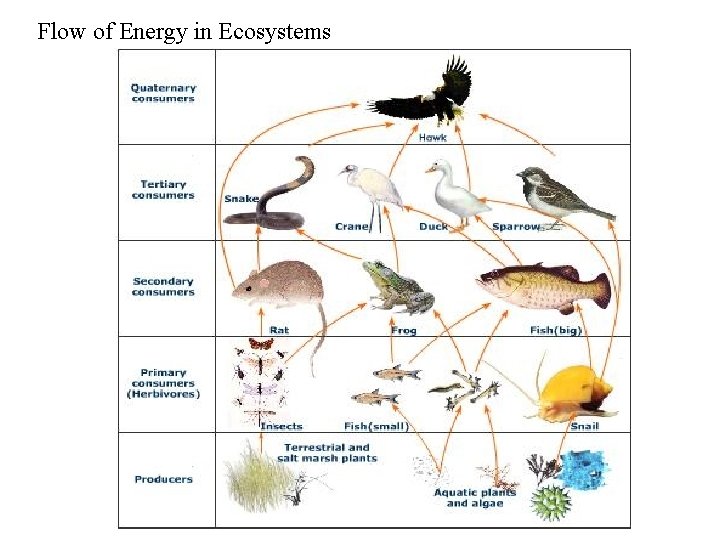
Flow of Energy in Ecosystems • Trophic levels are the nourishment levels in a food chain. – Primary consumers are herbivores that eat producers. – Secondary consumers are carnivores that eat herbivores. – Tertiary consumers are carnivores that eat secondary consumers.
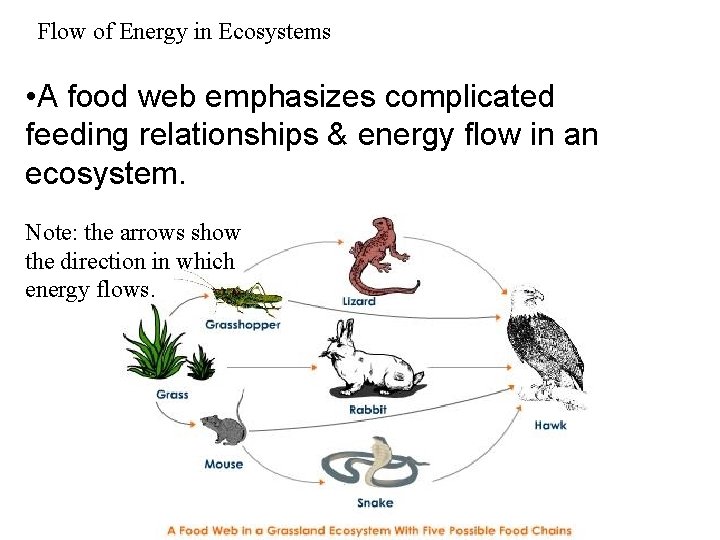
Flow of Energy in Ecosystems • A food web emphasizes complicated feeding relationships & energy flow in an ecosystem. Note: the arrows show the direction in which energy flows.
Flow of Energy in Ecosystems
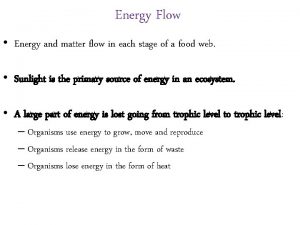
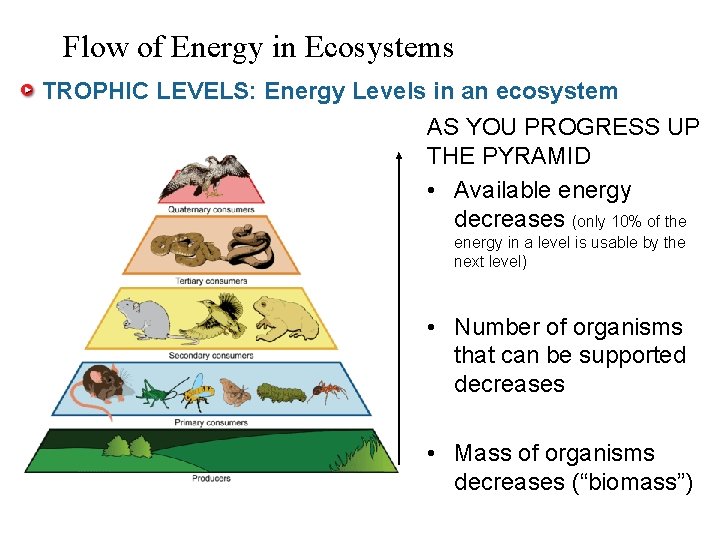
Flow of Energy in Ecosystems TROPHIC LEVELS: Energy Levels in an ecosystem AS YOU PROGRESS UP THE PYRAMID • Available energy decreases (only 10% of the energy in a level is usable by the next level) • Number of organisms that can be supported decreases • Mass of organisms decreases (“biomass”)
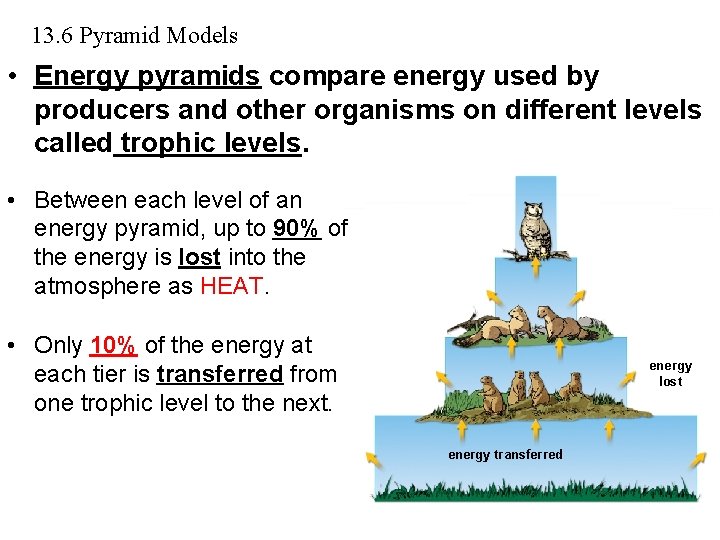
13. 6 Pyramid Models • Energy pyramids compare energy used by producers and other organisms on different levels called trophic levels. • Between each level of an energy pyramid, up to 90% of the energy is lost into the atmosphere as HEAT. • Only 10% of the energy at each tier is transferred from one trophic level to the next. energy lost energy transferred
Flow of Nutrients in an Ecosystem 1. Energy Flows through an Ecosystem and Nutrients Cycle in an Ecosystem. 2. the Primary Nutrient Cycles: A. The Water Cycle B. The Carbon Cycle
Flow of Nutrients in an Ecosystem THE WATER CYCLE • Water is crucial to Life. • Cells contain 70 to 90 percent water. • most of Life’s reactions occur in water.
Flow of Nutrients in an Ecosystem • Water is found in 3 Reservoirs • Bodies of Water (Lakes, Rivers, Streams, & Oceans) • Atmosphere (in the form of Water Vapor. ) • Underground (“Ground Water”) • The Movement of Water between these different reservoirs is known as the Water Cycle.
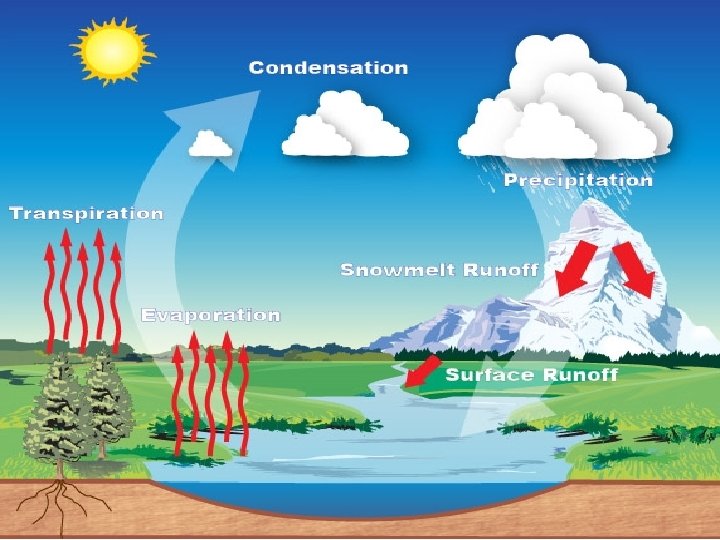
Flow of Nutrients in an Ecosystem • The Water Cycle Usually Consists of the following steps: 1. EVAPORATION 2. TRANSPIRATION 3. CONDENSATION 4. PRECIPITATION 5. RUN OFF (or RETURN)
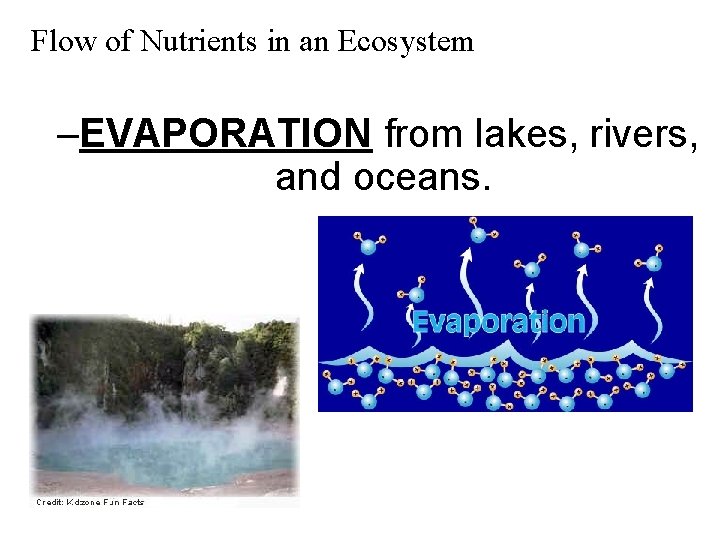
Flow of Nutrients in an Ecosystem –EVAPORATION from lakes, rivers, and oceans.
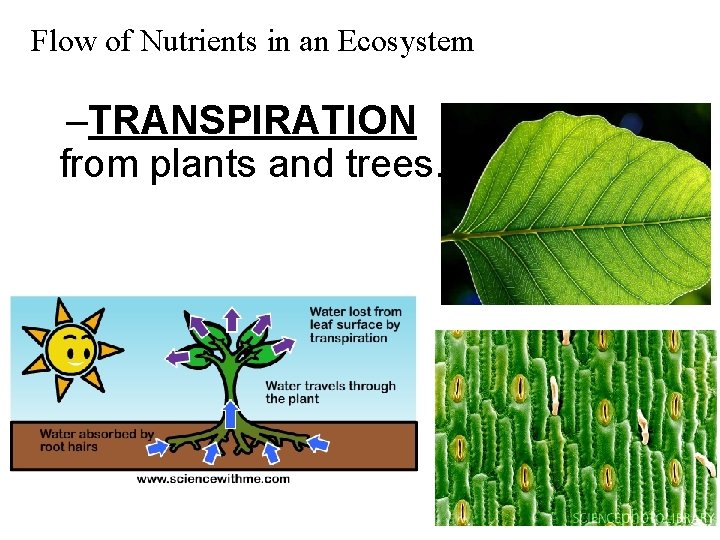
Flow of Nutrients in an Ecosystem –TRANSPIRATION from plants and trees.
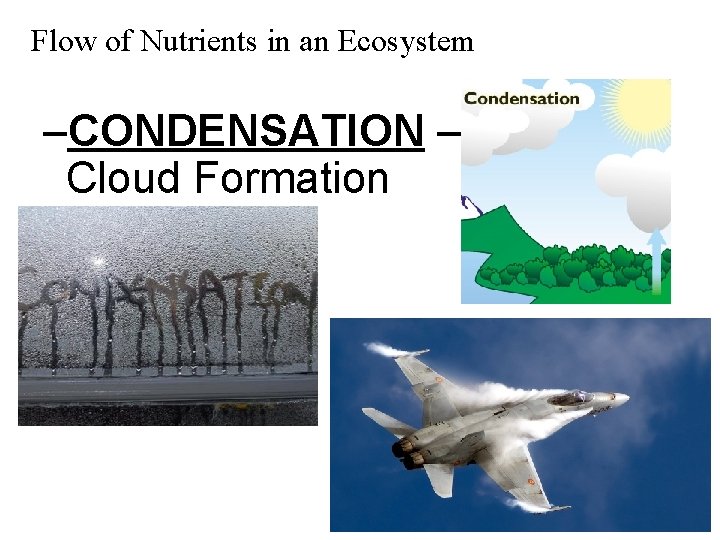
Flow of Nutrients in an Ecosystem –CONDENSATION – Cloud Formation
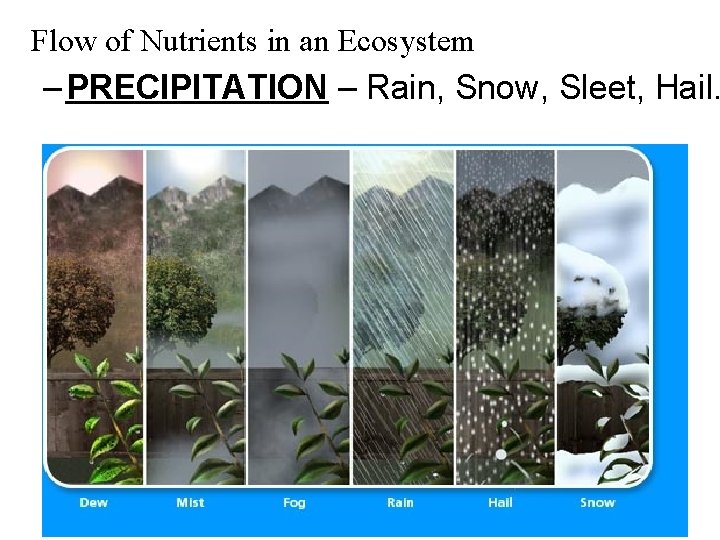
Flow of Nutrients in an Ecosystem – PRECIPITATION – Rain, Snow, Sleet, Hail.
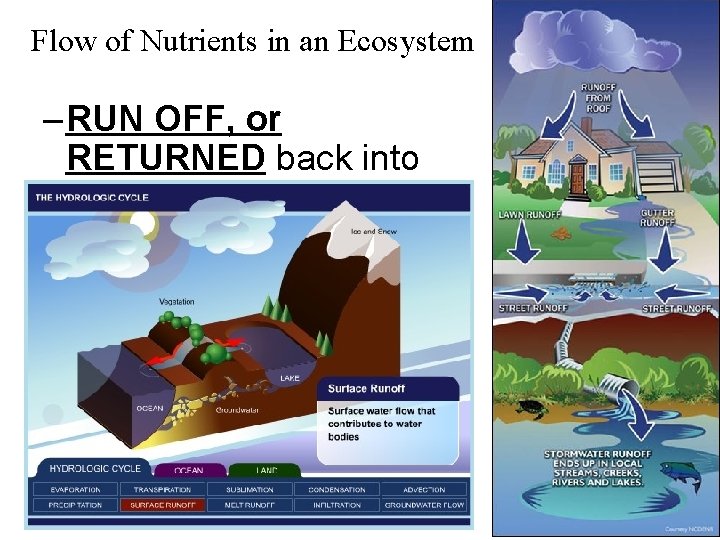
Flow of Nutrients in an Ecosystem – RUN OFF, or RETURNED back into the Cycle.
STOP HERE & LEAVE ROOM FOR ½ PAGE- 1 PAGE ON CARBON CYCLE
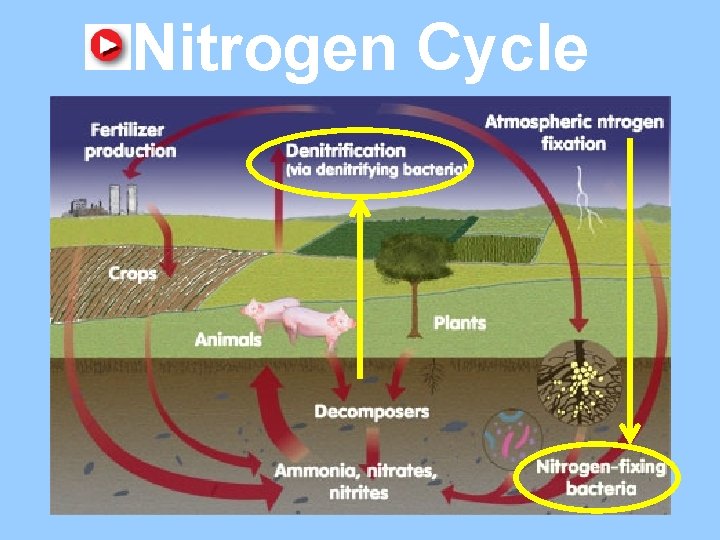
Flow of Nutrients in an Ecosystem THE NITROGEN CYCLE • ALL Organisms need Nitrogen, to make Proteins and Nucleic Acids. (DNA & RNA) • Most Nitrogen is found in the Atmosphere and most living things can’t use it. • ALL Organisms rely on Bacteria to change Nitrogen Gas into a Usable
Flow of Nutrients in an Ecosystem • Conversion of Nitrogen Gas to Ammonia by bacteria is called Nitrogen Fixation. • Bacteria live in the soil and in the roots of some kinds of plants, such as beans, peas, clover, and alfalfa. – They have Enzymes that can break the atmospheric N 2 bonds and form Ammonia (NH 3).
Nitrogen Cycle
Flow of Nutrients in an Ecosystem • Ammonia can be absorbed by plants from the soil, and used to make proteins • Then consumers obtain nitrogen from eating plants and animals.
Flow of Nutrients in an Ecosystem • Decomposers return Nitrogen back to the soil… –from the remains of dead plants and animals. –from animal waste (dung & urine) –This process is known as AMMONIFICATION.
Flow of Nutrients in an Ecosystem • DENITRIFICATION is when Bacteria break down Nitrates and release Nitrogen Gas back into the Atmosphere.
Flow of Nutrients in an Ecosystem • In Conclusion: Plants DEPEND on nitrogen fixing bacteria, and all other organisms including YOU, DEPEND ON THEM!
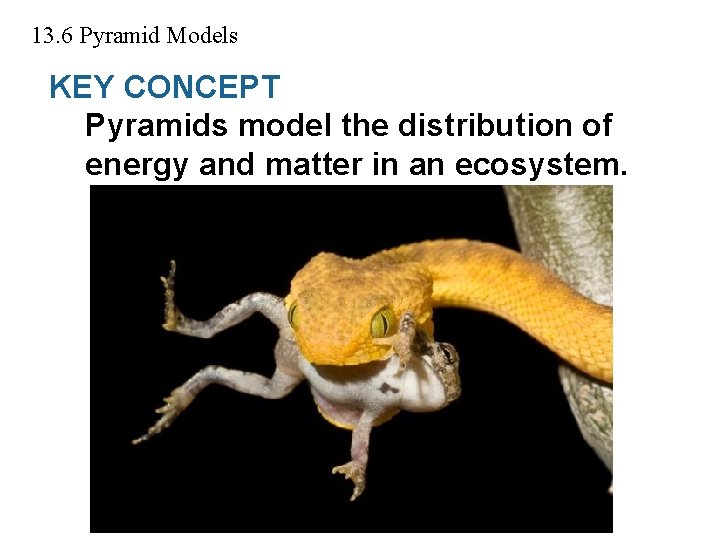
13. 6 Pyramid Models KEY CONCEPT Pyramids model the distribution of energy and matter in an ecosystem.
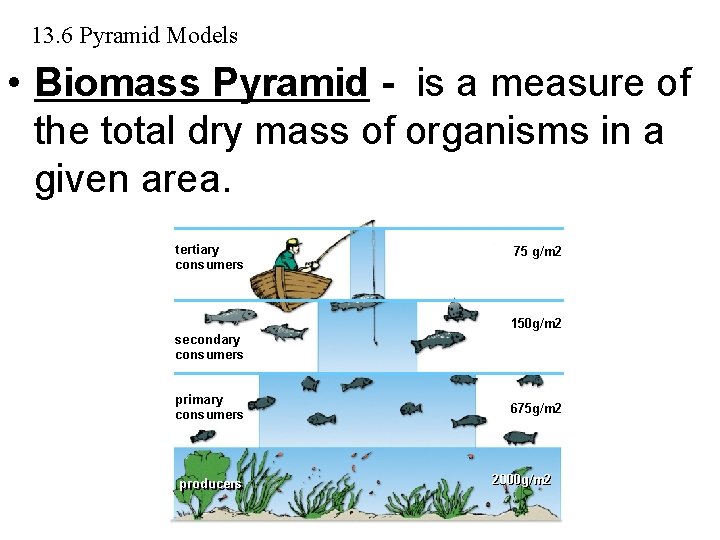
13. 6 Pyramid Models • Biomass Pyramid - is a measure of the total dry mass of organisms in a given area. tertiary consumers 75 g/m 2 150 g/m 2 secondary consumers primary consumers producers 675 g/m 2 2000 g/m 2
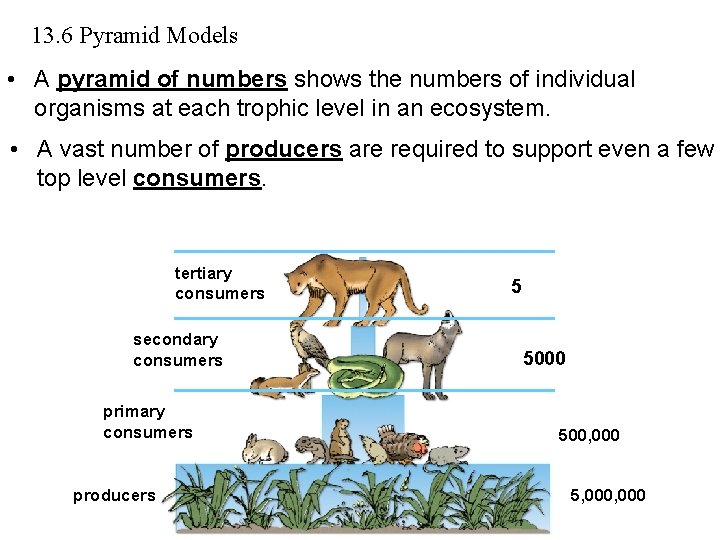
13. 6 Pyramid Models • A pyramid of numbers shows the numbers of individual organisms at each trophic level in an ecosystem. • A vast number of producers are required to support even a few top level consumers. tertiary consumers secondary consumers primary consumers producers 5 5000 500, 000 5, 000
• Environment