Typhoid fever Infectious Disease Deepika Gupta 1 Jayanti
- Slides: 40
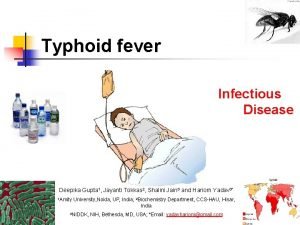
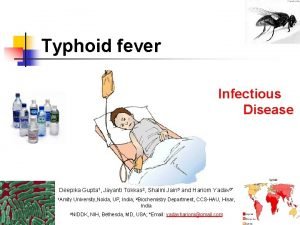
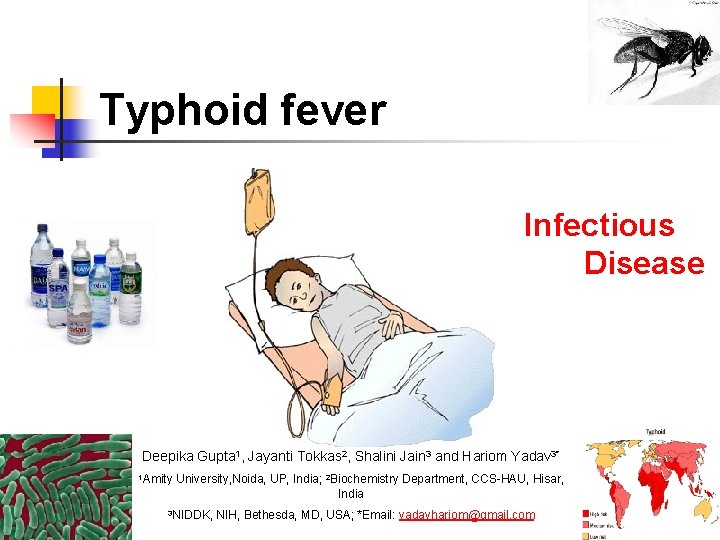
Typhoid fever Infectious Disease Deepika Gupta 1, Jayanti Tokkas 2, Shalini Jain 3 and Hariom Yadav 3* 1 Amity University, Noida, UP, India; 2 Biochemistry Department, CCS-HAU, Hisar, India 3 NIDDK, NIH, Bethesda, MD, USA; *Email: yadavhariom@gmail. com
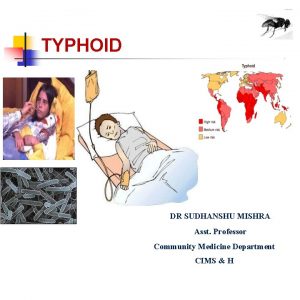
Definition n An infectious feverish disease caused by the bacterium Salmonella typhi(Salmonella enterica Serovar Typhi ) and less commonly by Salmonella paratyphi. Acute generalized infection of the reticulo endothelial system, intestinal lymphoid tissue, and the gall bladder. n n The infection always comes from another human, either an ill person or a healthy carrier of the bacterium. The bacterium is passed on with water and foods and can withstand both drying and refrigeration.
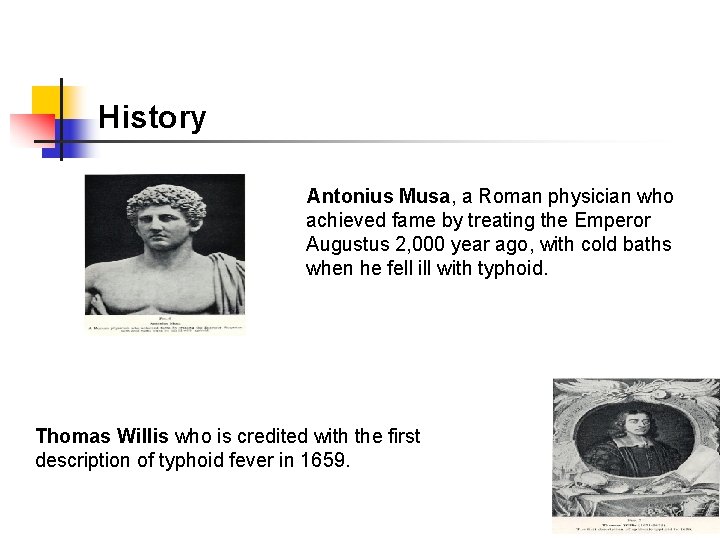
History Antonius Musa, a Roman physician who achieved fame by treating the Emperor Augustus 2, 000 year ago, with cold baths when he fell ill with typhoid. Thomas Willis who is credited with the first description of typhoid fever in 1659.
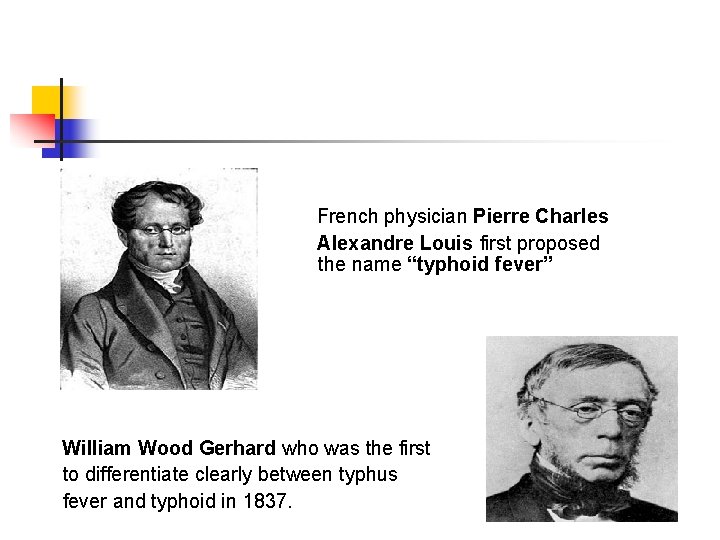
French physician Pierre Charles Alexandre Louis first proposed the name “typhoid fever” William Wood Gerhard who was the first to differentiate clearly between typhus fever and typhoid in 1837.
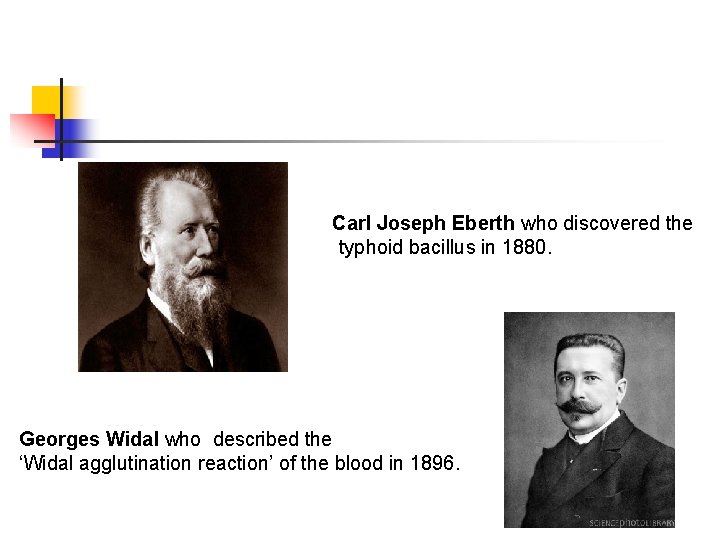
Carl Joseph Eberth who discovered the typhoid bacillus in 1880. Georges Widal who described the ‘Widal agglutination reaction’ of the blood in 1896.
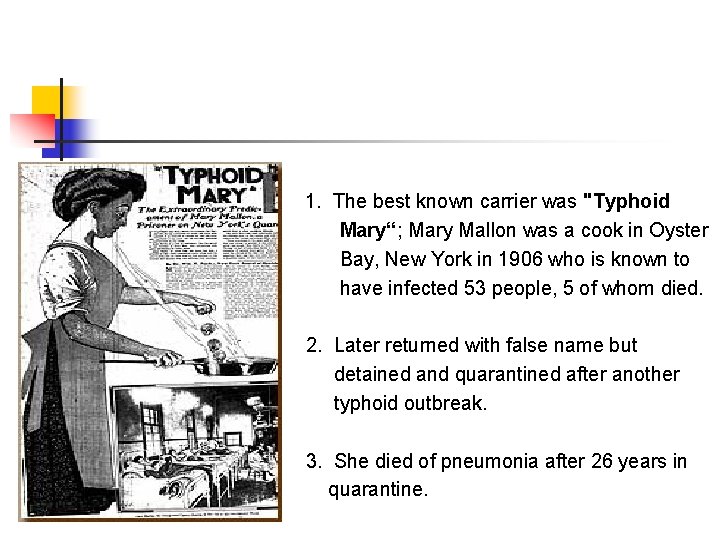
1. The best known carrier was "Typhoid Mary“; Mary Mallon was a cook in Oyster Bay, New York in 1906 who is known to have infected 53 people, 5 of whom died. 2. Later returned with false name but detained and quarantined after another typhoid outbreak. 3. She died of pneumonia after 26 years in quarantine.
Causes 1. Caused by the bacterium Salmonella Typhi. 2. Ingestion of contaminated food or water. 3. Contact with an acute case of typhoid fever. 4. Water is contaminated where inadequate sewerage systems and poor sanitation. 5. Contact with a chronic asymptomatic carrier. 6. Eating food or drinking beverages that handled by a person carrying the bacteria. 7. Salmonella enteriditis and Salmonella typhimurium are other salmonella bacteria, cause food poisoning and diarrhoea.
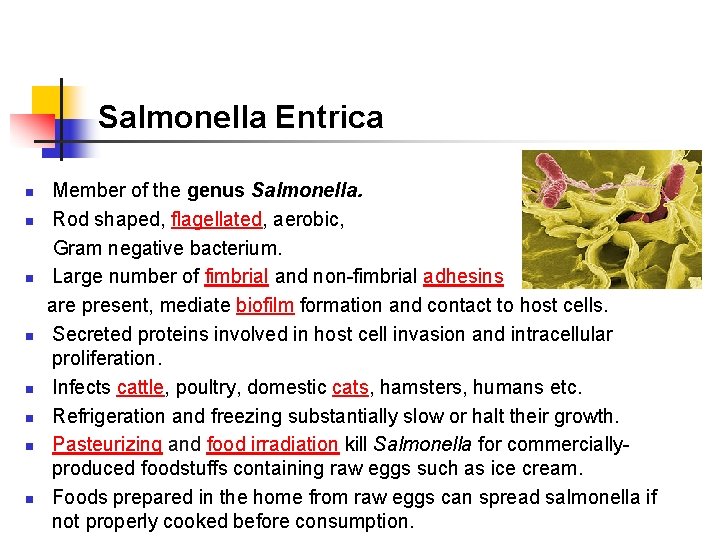
Salmonella Entrica Member of the genus Salmonella. n Rod shaped, flagellated, aerobic, Gram negative bacterium. n Large number of fimbrial and non-fimbrial adhesins are present, mediate biofilm formation and contact to host cells. n Secreted proteins involved in host cell invasion and intracellular proliferation. n Infects cattle, poultry, domestic cats, hamsters, humans etc. n Refrigeration and freezing substantially slow or halt their growth. n Pasteurizing and food irradiation kill Salmonella for commerciallyproduced foodstuffs containing raw eggs such as ice cream. n Foods prepared in the home from raw eggs can spread salmonella if not properly cooked before consumption. n
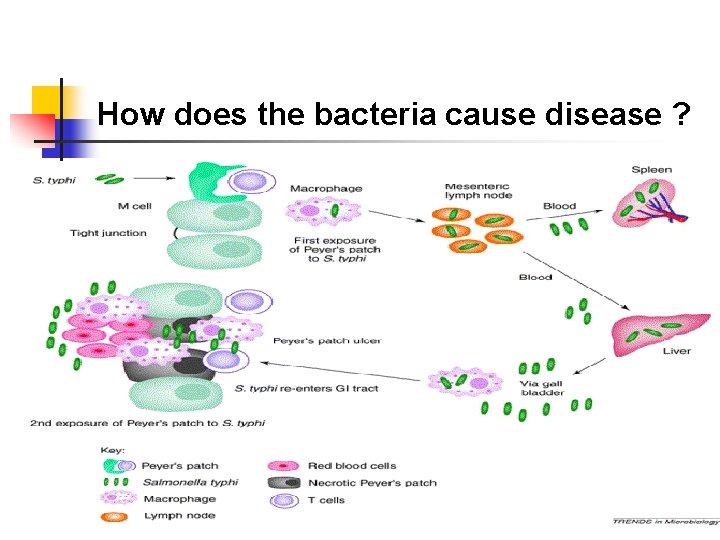
How does the bacteria cause disease ?
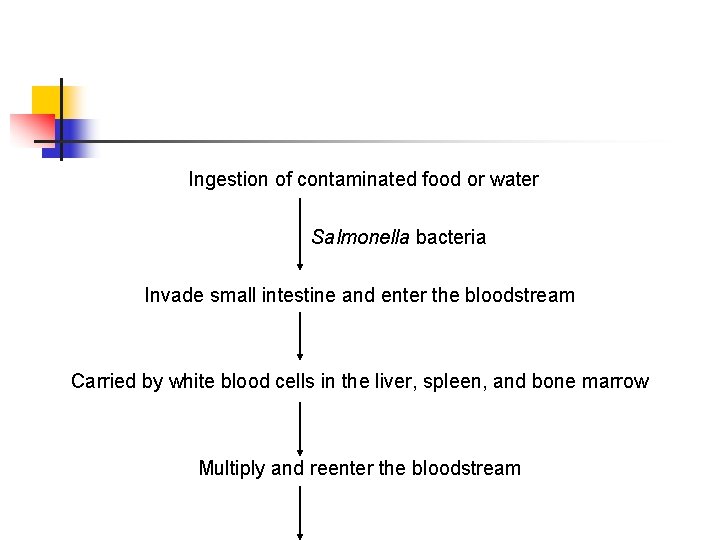
Ingestion of contaminated food or water Salmonella bacteria Invade small intestine and enter the bloodstream Carried by white blood cells in the liver, spleen, and bone marrow Multiply and reenter the bloodstream
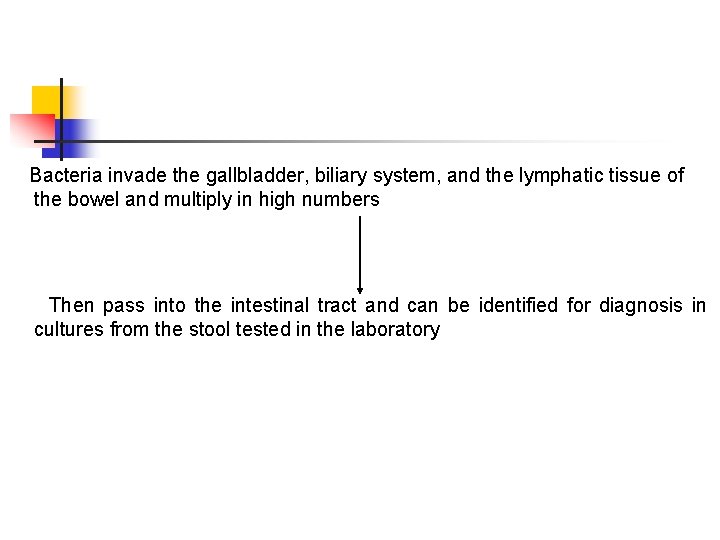
Bacteria invade the gallbladder, biliary system, and the lymphatic tissue of the bowel and multiply in high numbers Then pass into the intestinal tract and can be identified for diagnosis in cultures from the stool tested in the laboratory
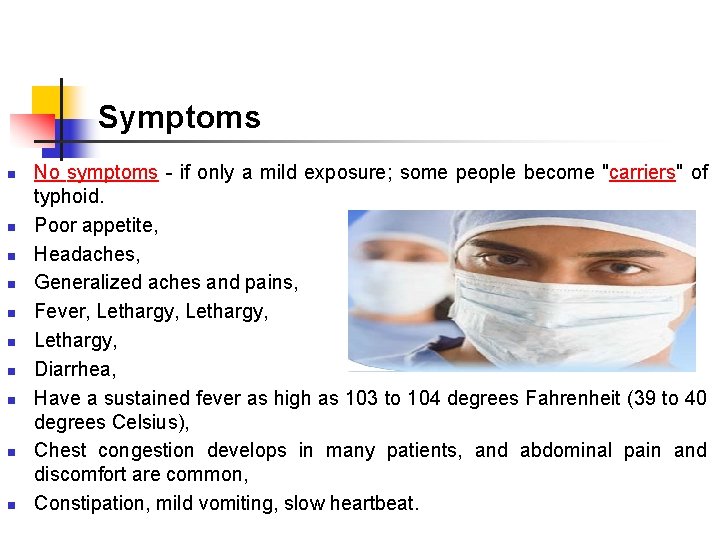
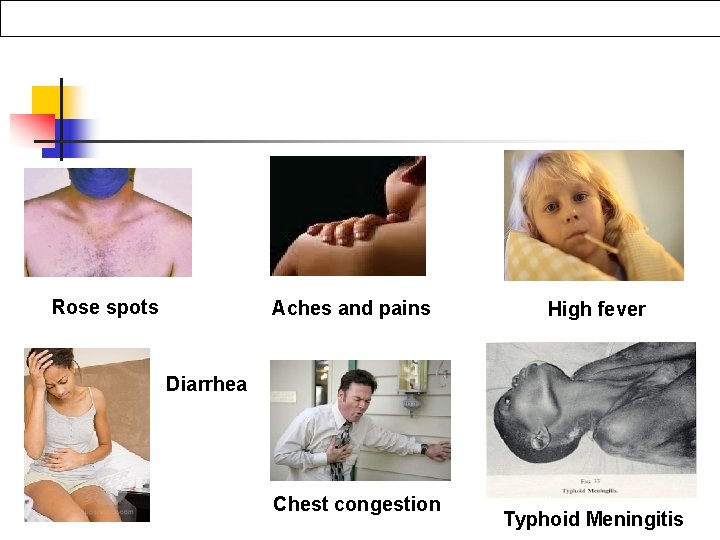
Symptoms n n n n n No symptoms - if only a mild exposure; some people become "carriers" of typhoid. Poor appetite, Headaches, Generalized aches and pains, Fever, Lethargy, Diarrhea, Have a sustained fever as high as 103 to 104 degrees Fahrenheit (39 to 40 degrees Celsius), Chest congestion develops in many patients, and abdominal pain and discomfort are common, Constipation, mild vomiting, slow heartbeat.
Aches and pains Rose spots High fever Diarrhea Chest congestion Typhoid Meningitis
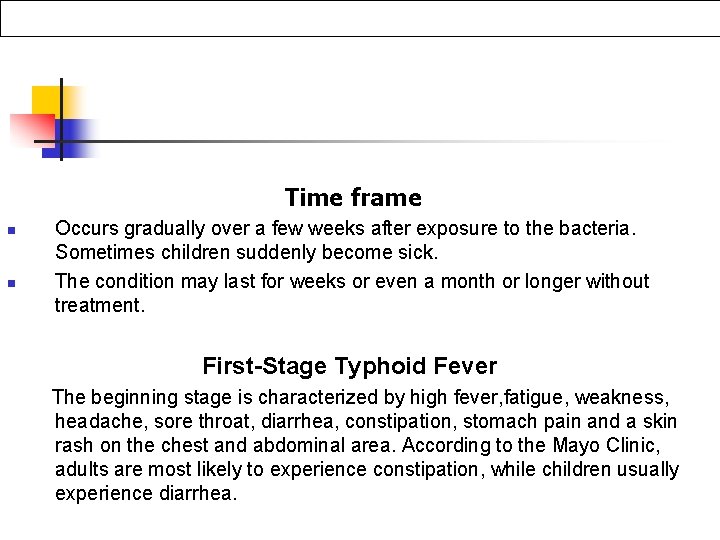
Time frame Occurs gradually over a few weeks after exposure to the bacteria. Sometimes children suddenly become sick. n The condition may last for weeks or even a month or longer without treatment. n First-Stage Typhoid Fever The beginning stage is characterized by high fever, fatigue, weakness, headache, sore throat, diarrhea, constipation, stomach pain and a skin rash on the chest and abdominal area. According to the Mayo Clinic, adults are most likely to experience constipation, while children usually experience diarrhea.
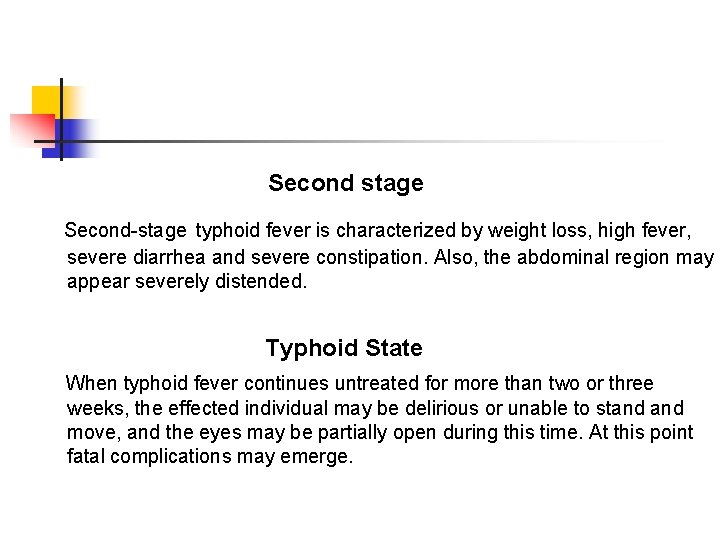
Second stage Second-stage typhoid fever is characterized by weight loss, high fever, severe diarrhea and severe constipation. Also, the abdominal region may appear severely distended. Typhoid State When typhoid fever continues untreated for more than two or three weeks, the effected individual may be delirious or unable to stand move, and the eyes may be partially open during this time. At this point fatal complications may emerge.
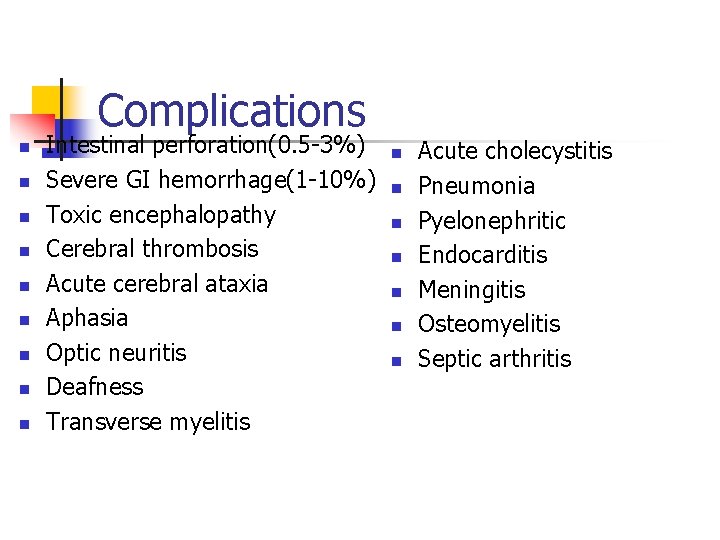
Complications n n n n n Intestinal perforation(0. 5 -3%) Severe GI hemorrhage(1 -10%) Toxic encephalopathy Cerebral thrombosis Acute cerebral ataxia Aphasia Optic neuritis Deafness Transverse myelitis n n n n Acute cholecystitis Pneumonia Pyelonephritic Endocarditis Meningitis Osteomyelitis Septic arthritis
Diagnosis Diagnosis of typhoid fever is made by n Blood, bone marrow, or stool cultures test n Widal test n Slide agglutination n Antimicrobial susceptibility testing
Diagnosis & Differential diagnosis n Diagnosis Cultures: Blood’ Urine’ Stool’ Bone marrow’ Lymph nodes’ Deudenal fluied’ Reticuloendothelial tissue’ n Differential diagnosis Bronchitis Bronchopneumonia Gastroenteritis Influenza
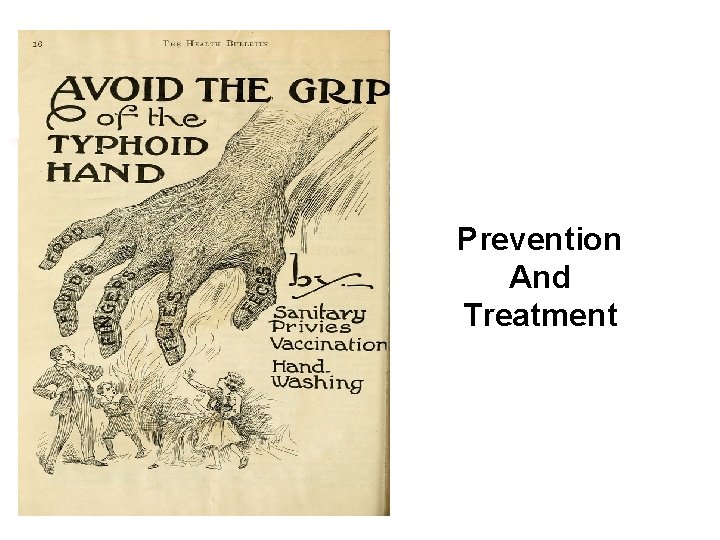
Prevention And Treatment
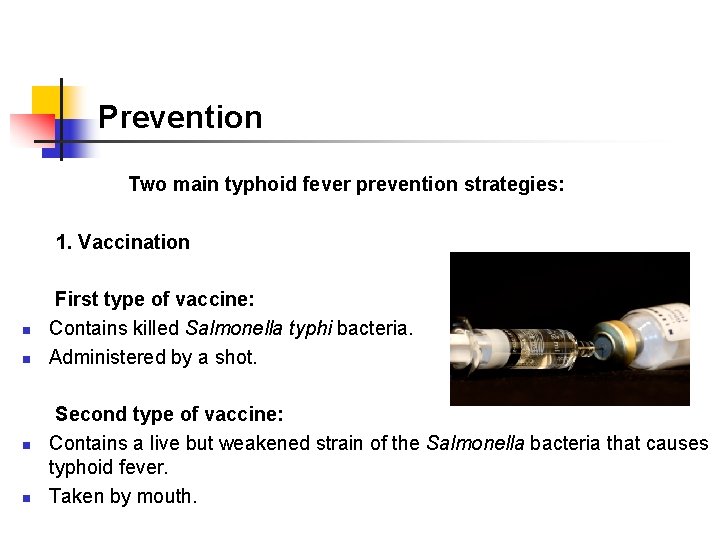
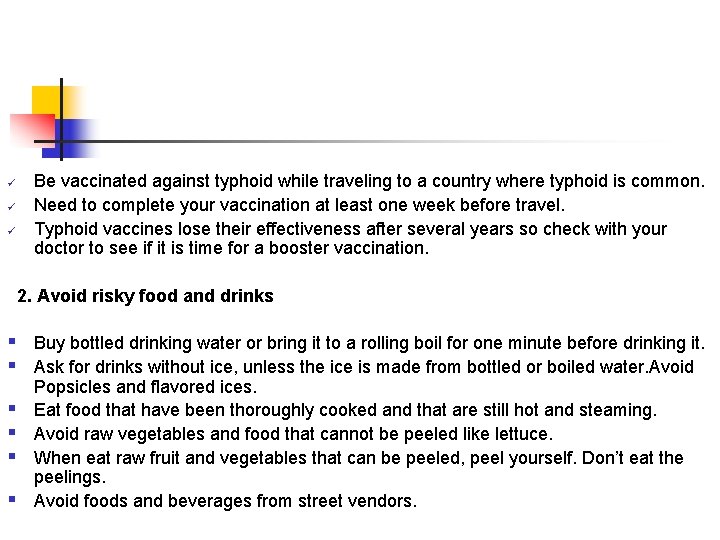
Prevention Two main typhoid fever prevention strategies: 1. Vaccination First type of vaccine: n Contains killed Salmonella typhi bacteria. n Administered by a shot. Second type of vaccine: n Contains a live but weakened strain of the Salmonella bacteria that causes typhoid fever. n Taken by mouth.
ü ü ü Be vaccinated against typhoid while traveling to a country where typhoid is common. Need to complete your vaccination at least one week before travel. Typhoid vaccines lose their effectiveness after several years so check with your doctor to see if it is time for a booster vaccination. 2. Avoid risky food and drinks § Buy bottled drinking water or bring it to a rolling boil for one minute before drinking it. § Ask for drinks without ice, unless the ice is made from bottled or boiled water. Avoid § § Popsicles and flavored ices. Eat food that have been thoroughly cooked and that are still hot and steaming. Avoid raw vegetables and food that cannot be peeled like lettuce. When eat raw fruit and vegetables that can be peeled, peel yourself. Don’t eat the peelings. Avoid foods and beverages from street vendors.
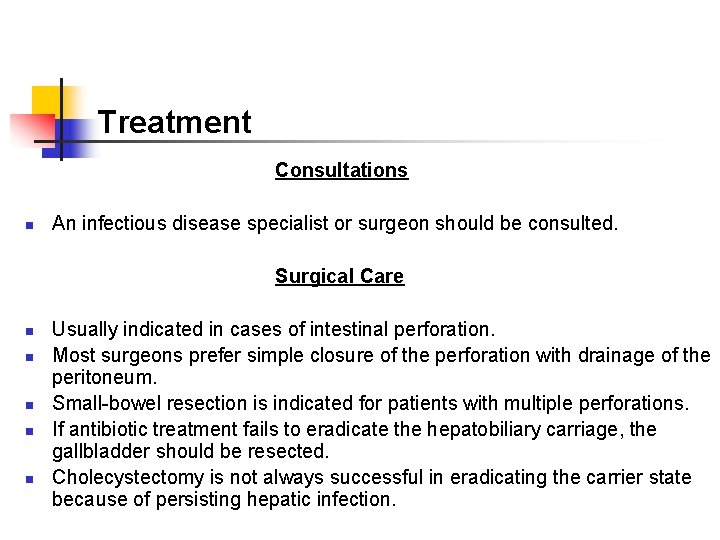
Treatment Consultations An infectious disease specialist or surgeon should be consulted. Surgical Care n n n Usually indicated in cases of intestinal perforation. Most surgeons prefer simple closure of the perforation with drainage of the peritoneum. Small-bowel resection is indicated for patients with multiple perforations. If antibiotic treatment fails to eradicate the hepatobiliary carriage, the gallbladder should be resected. Cholecystectomy is not always successful in eradicating the carrier state because of persisting hepatic infection.
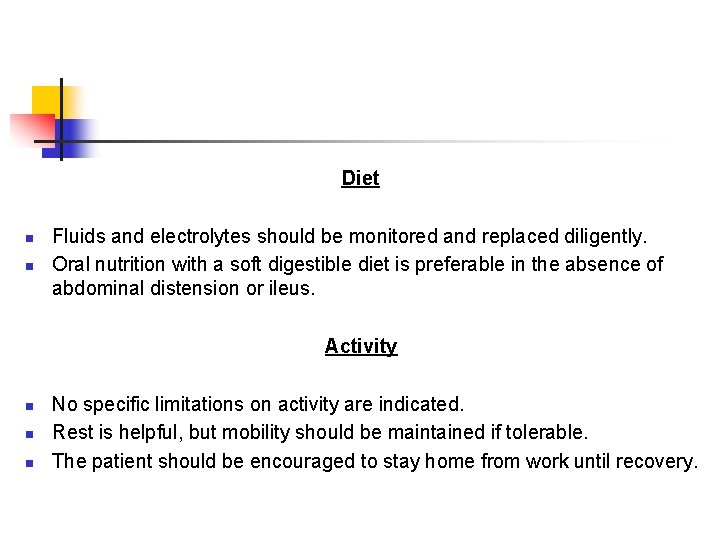
Diet Fluids and electrolytes should be monitored and replaced diligently. n Oral nutrition with a soft digestible diet is preferable in the absence of abdominal distension or ileus. Activity n n No specific limitations on activity are indicated. Rest is helpful, but mobility should be maintained if tolerable. The patient should be encouraged to stay home from work until recovery.
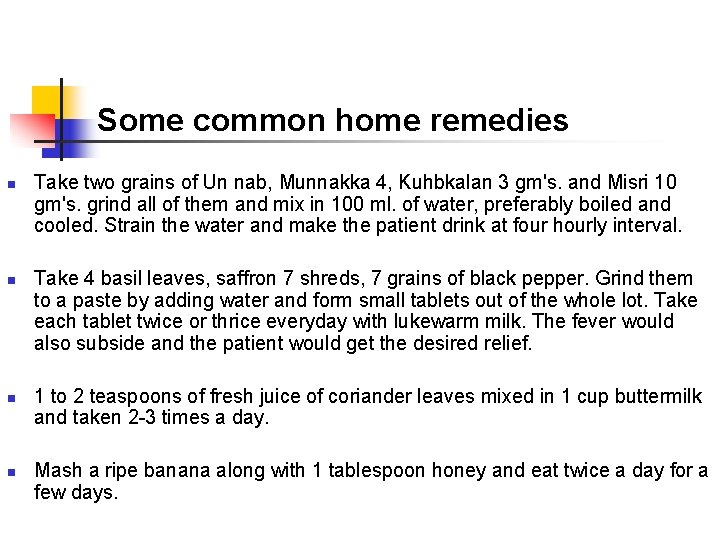
Some common home remedies n n Take two grains of Un nab, Munnakka 4, Kuhbkalan 3 gm's. and Misri 10 gm's. grind all of them and mix in 100 ml. of water, preferably boiled and cooled. Strain the water and make the patient drink at four hourly interval. Take 4 basil leaves, saffron 7 shreds, 7 grains of black pepper. Grind them to a paste by adding water and form small tablets out of the whole lot. Take each tablet twice or thrice everyday with lukewarm milk. The fever would also subside and the patient would get the desired relief. 1 to 2 teaspoons of fresh juice of coriander leaves mixed in 1 cup buttermilk and taken 2 -3 times a day. Mash a ripe banana along with 1 tablespoon honey and eat twice a day for a few days.
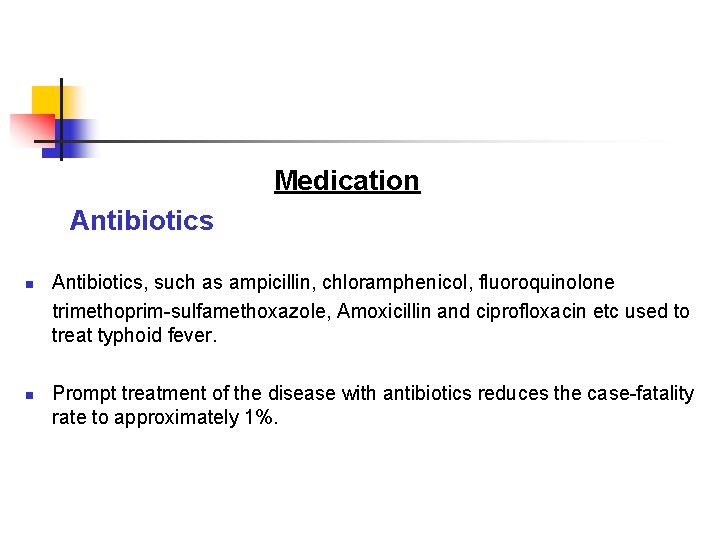
Medication Antibiotics, such as ampicillin, chloramphenicol, fluoroquinolone trimethoprim-sulfamethoxazole, Amoxicillin and ciprofloxacin etc used to treat typhoid fever. n n Prompt treatment of the disease with antibiotics reduces the case-fatality rate to approximately 1%.
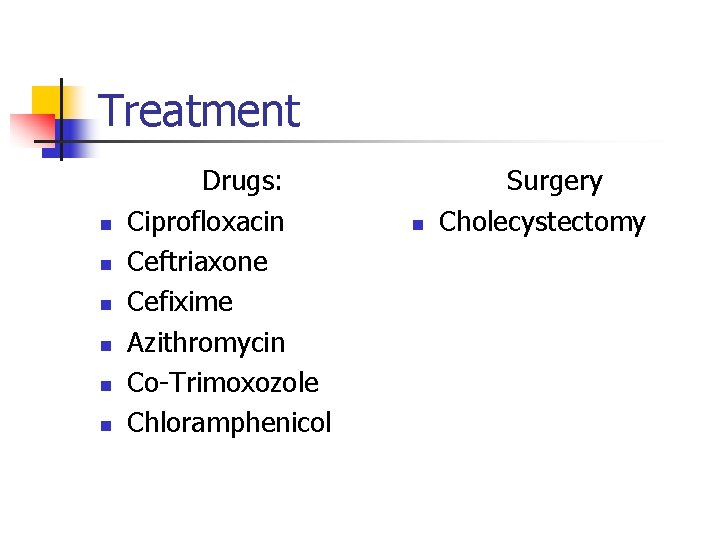
Treatment n n n Drugs: Ciprofloxacin Ceftriaxone Cefixime Azithromycin Co-Trimoxozole Chloramphenicol n Surgery Cholecystectomy
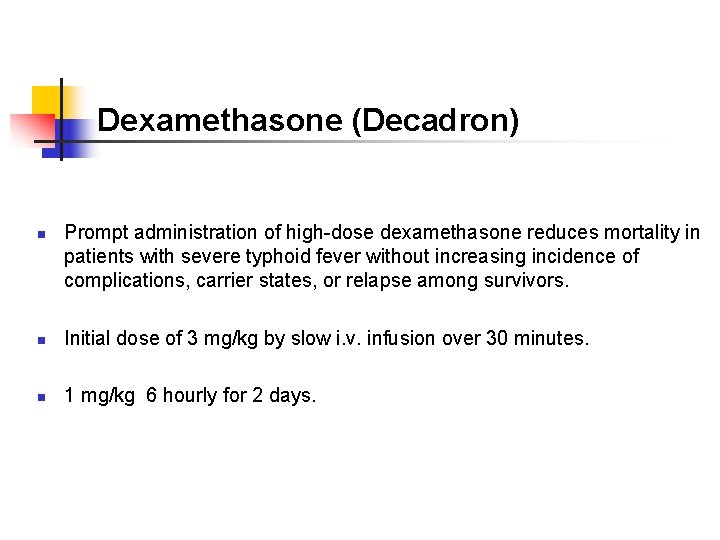
Dexamethasone (Decadron) n Prompt administration of high-dose dexamethasone reduces mortality in patients with severe typhoid fever without increasing incidence of complications, carrier states, or relapse among survivors. n Initial dose of 3 mg/kg by slow i. v. infusion over 30 minutes. n 1 mg/kg 6 hourly for 2 days.
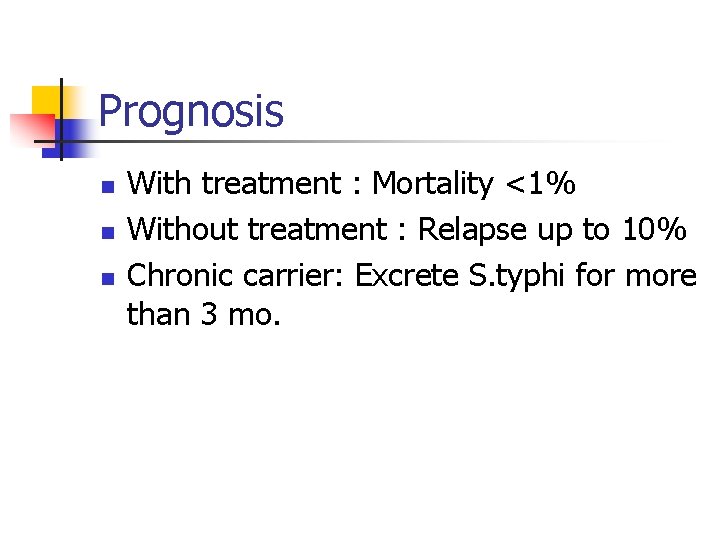
Prognosis n n n With treatment : Mortality <1% Without treatment : Relapse up to 10% Chronic carrier: Excrete S. typhi for more than 3 mo.
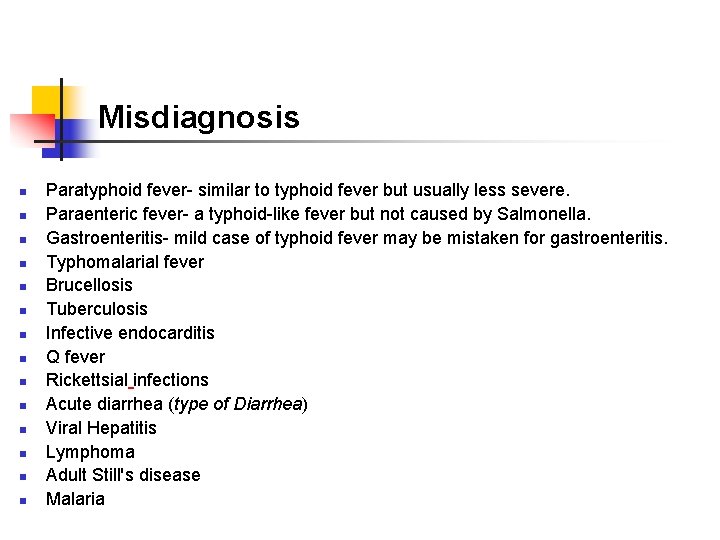
Misdiagnosis n n n n Paratyphoid fever- similar to typhoid fever but usually less severe. Paraenteric fever- a typhoid-like fever but not caused by Salmonella. Gastroenteritis- mild case of typhoid fever may be mistaken for gastroenteritis. Typhomalarial fever Brucellosis Tuberculosis Infective endocarditis Q fever Rickettsial infections Acute diarrhea (type of Diarrhea) Viral Hepatitis Lymphoma Adult Still's disease Malaria
Brucellosis
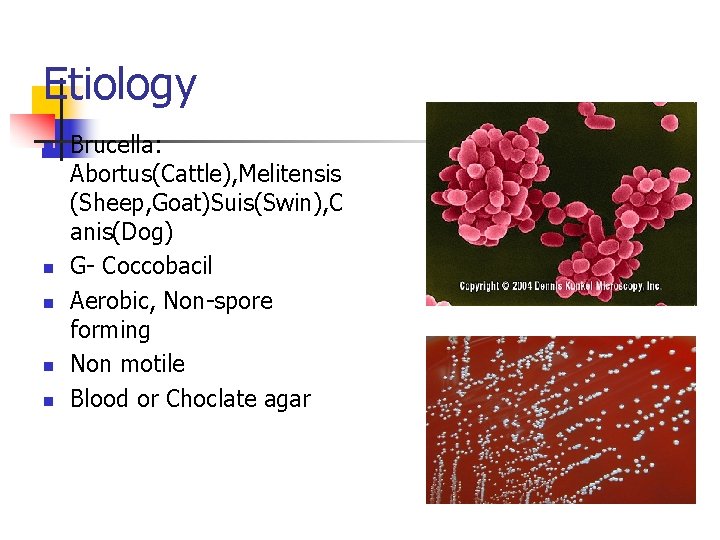
Etiology n n n Brucella: Abortus(Cattle), Melitensis (Sheep, Goat)Suis(Swin), C anis(Dog) G- Coccobacil Aerobic, Non-spore forming Non motile Blood or Choclate agar
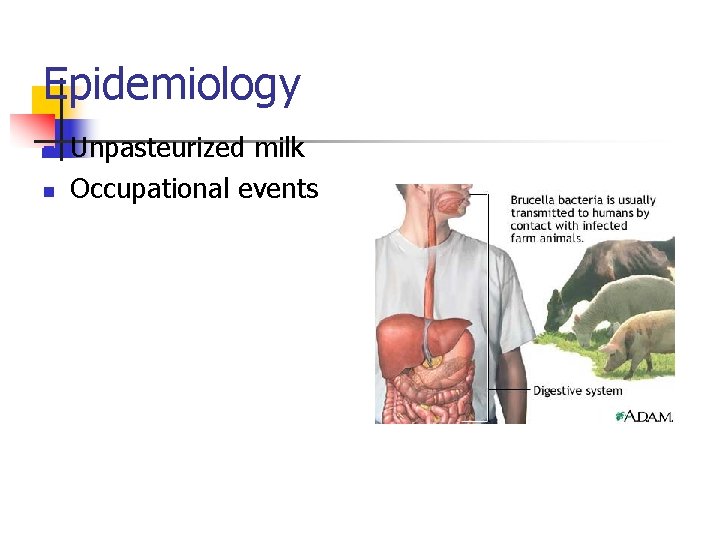
Epidemiology n n Unpasteurized milk Occupational events
Pathogenesis n n n Inoculation in skin , Eye (Through abrasion or conjunctiva) Inhalation (Infected aerosol) Ingestion (Meat, Dairy products) Risk of infection depends 1. Nutritional status 2. Immune status 3. Rout of inoculum 4. Species of brucella
Pathogenesis n n Survive& Replicate within phagocytes&Monocytes Infected macrophages localized within reticuloendothelial system(Granuloma formation in spleen, liver, bone marrow)
Clinical manifestation Triad: Fever, Arthralgia/Arthritis, Hepatosplenomegaly n n n n + History of animal or food exposure Acute or insidious symptoms(2 -4 wk after inoculation) Refusal to eat Refusal to bear weight Lassitude FTT Headache Inattention/Depression n n Abdominal pain Headache Diarrhea Rash Night sweets Weakness Fatigue Cough Vomiting Pharyngitis
n n n Fever Hepatosplenomegally Arthralgia/Arthritis Sacroiliac, Hip, Ankle,
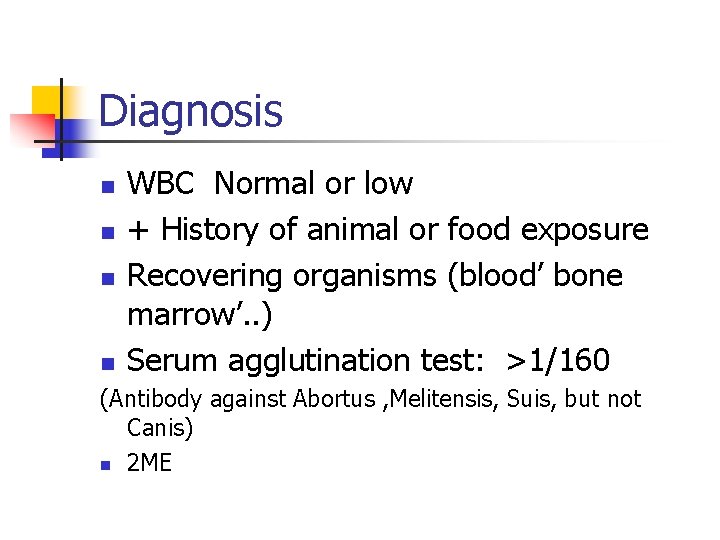
Diagnosis n n WBC Normal or low + History of animal or food exposure Recovering organisms (blood’ bone marrow’. . ) Serum agglutination test: >1/160 (Antibody against Abortus , Melitensis, Suis, but not Canis) n 2 ME
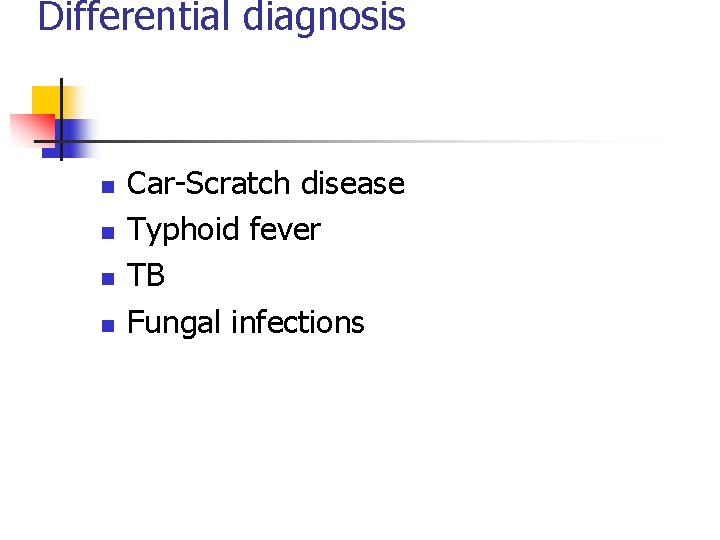
Differential diagnosis n n Car-Scratch disease Typhoid fever TB Fungal infections
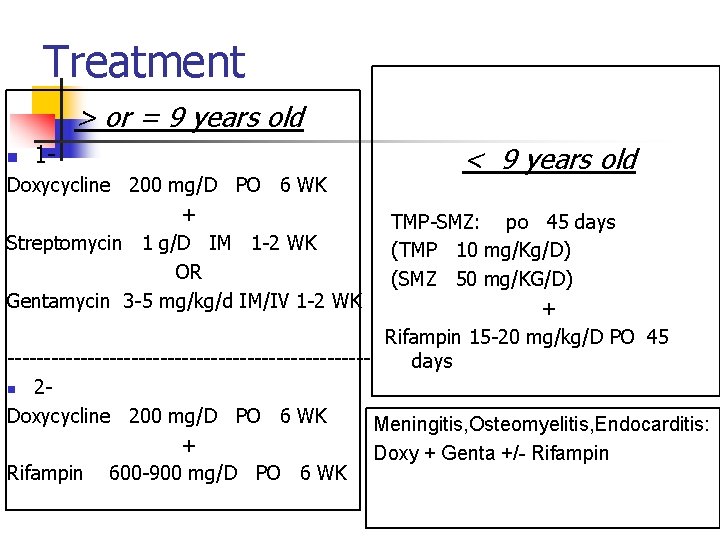
Treatment > or = 9 years old n 1 - Doxycycline 200 mg/D PO 6 WK + Streptomycin 1 g/D IM 1 -2 WK OR Gentamycin 3 -5 mg/kg/d IM/IV 1 -2 WK < 9 years old TMP-SMZ: po 45 days (TMP 10 mg/Kg/D) (SMZ 50 mg/KG/D) + Rifampin 15 -20 mg/kg/D PO 45 -------------------------days n 2 Doxycycline 200 mg/D PO 6 WK Meningitis, Osteomyelitis, Endocarditis: + Doxy + Genta +/- Rifampin 600 -900 mg/D PO 6 WK
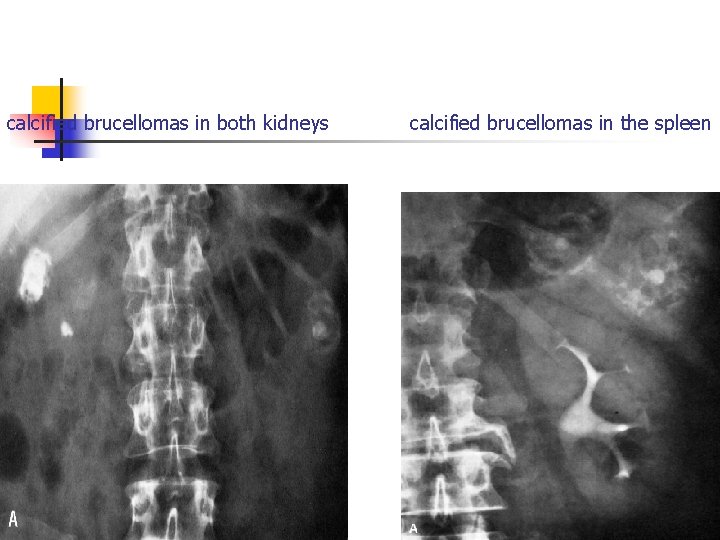
calcified brucellomas in both kidneys calcified brucellomas in the spleen