
Typhoid Fever in Children a hospital based followup
Typhoid Fever in Children: a hospital based follow-up Dr. Pushpa R Sharma Professor of Child Health Department of Child Health
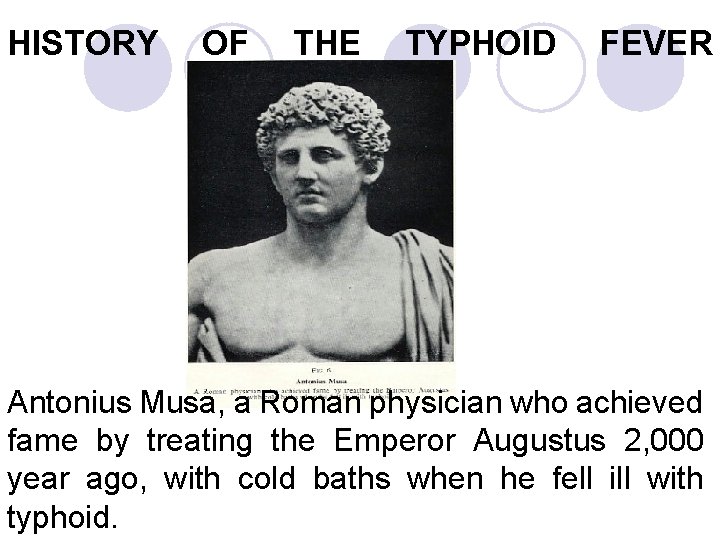
HISTORY OF THE TYPHOID FEVER Antonius Musa, a Roman physician who achieved fame by treating the Emperor Augustus 2, 000 year ago, with cold baths when he fell ill with typhoid.
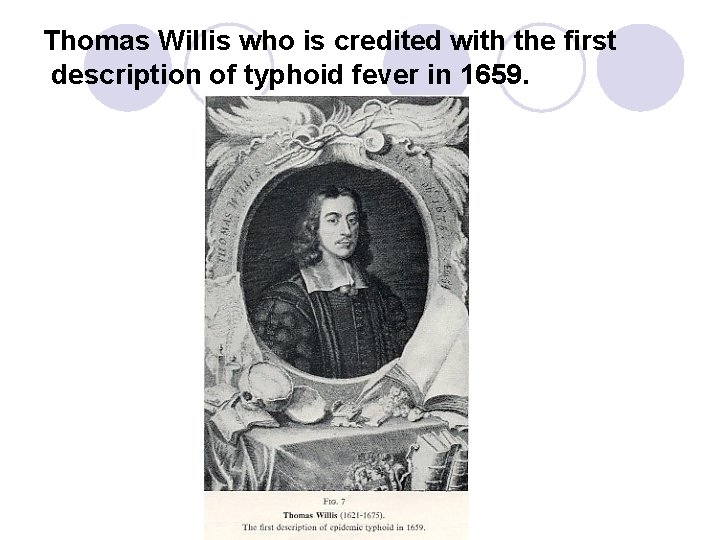
Thomas Willis who is credited with the first description of typhoid fever in 1659.
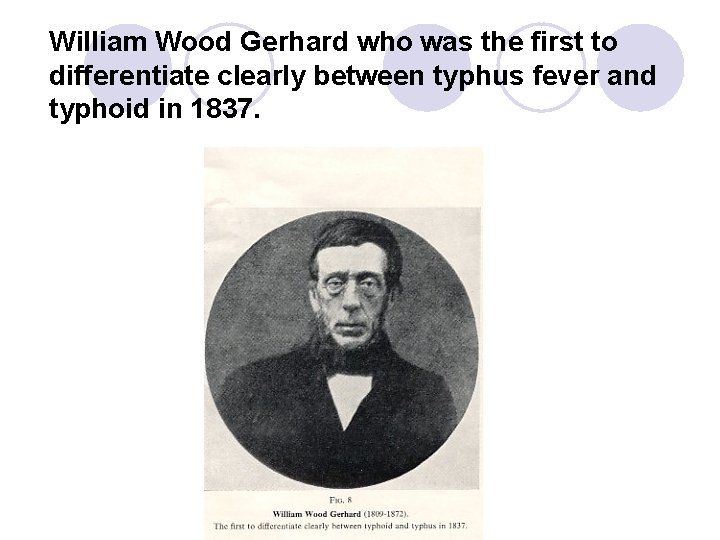
William Wood Gerhard who was the first to differentiate clearly between typhus fever and typhoid in 1837.
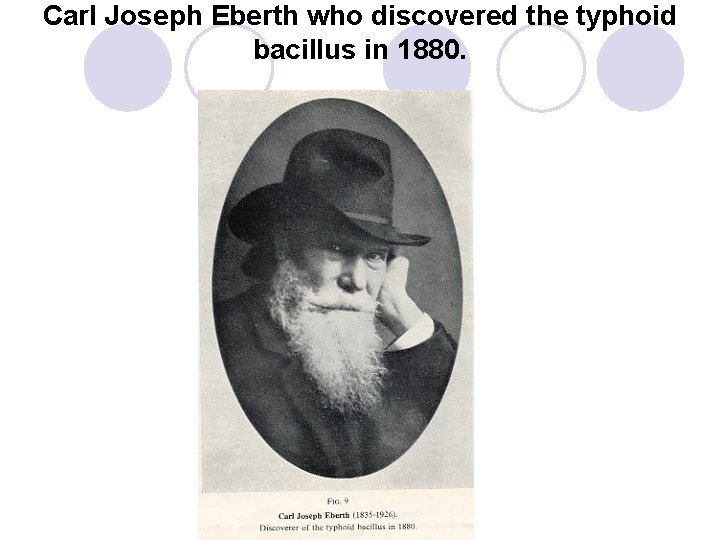
Carl Joseph Eberth who discovered the typhoid bacillus in 1880.
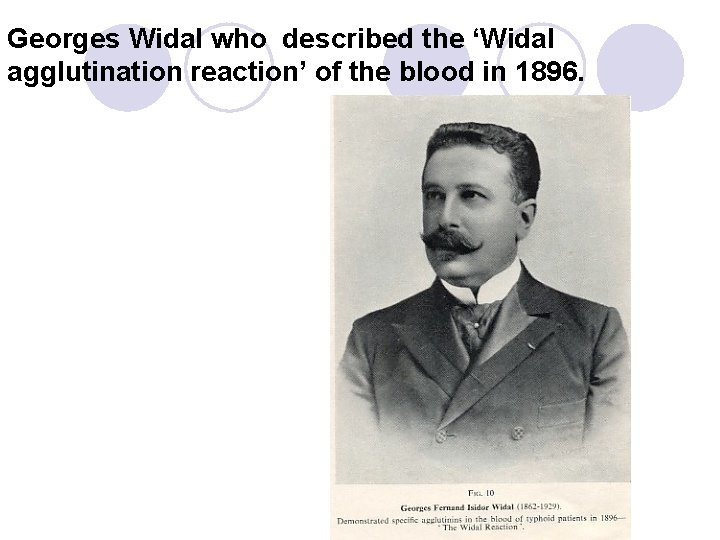
Georges Widal who described the ‘Widal agglutination reaction’ of the blood in 1896.
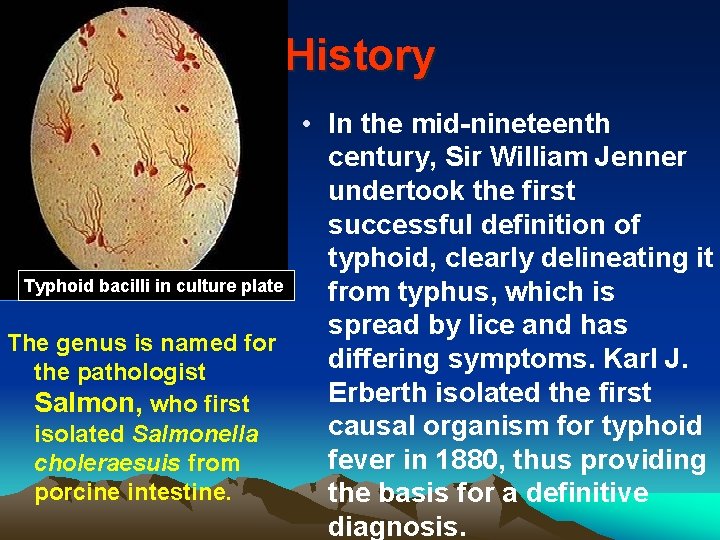
History • In the mid-nineteenth century, Sir William Jenner undertook the first successful definition of typhoid, clearly delineating it Typhoid bacilli in culture plate from typhus, which is spread by lice and has The genus is named for differing symptoms. Karl J. the pathologist Erberth isolated the first Salmon, who first causal organism for typhoid isolated Salmonella fever in 1880, thus providing choleraesuis from porcine intestine. the basis for a definitive diagnosis.
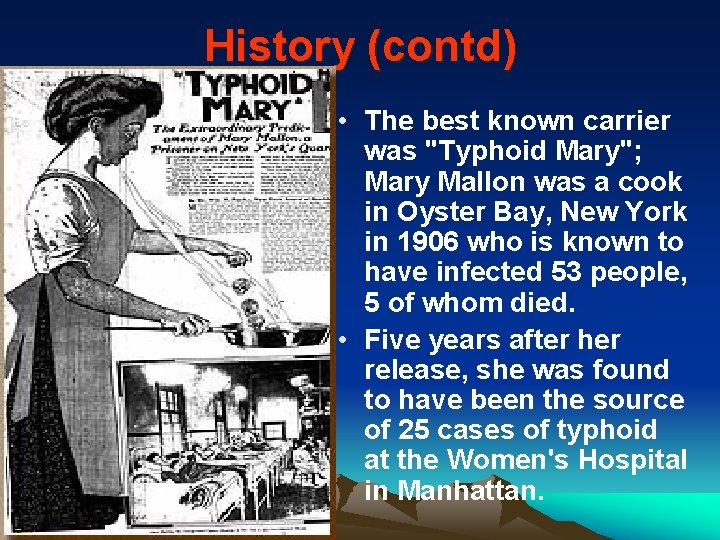
History (contd) • The best known carrier was "Typhoid Mary"; Mary Mallon was a cook in Oyster Bay, New York in 1906 who is known to have infected 53 people, 5 of whom died. • Five years after her release, she was found to have been the source of 25 cases of typhoid at the Women's Hospital in Manhattan.
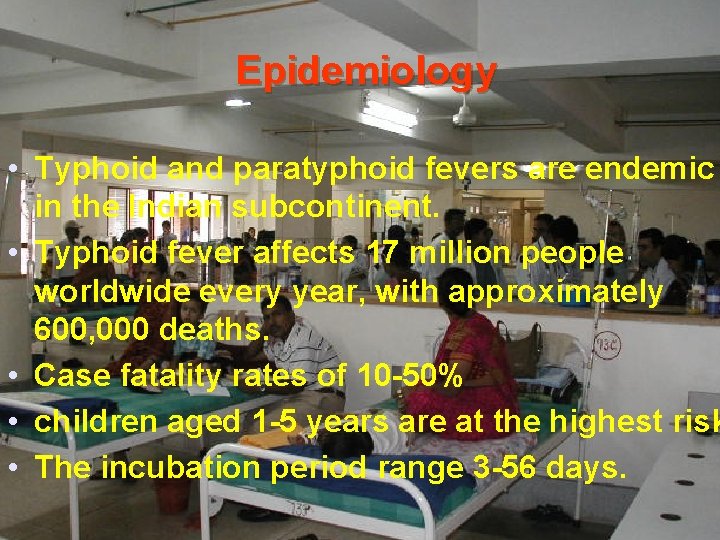
Epidemiology • Typhoid and paratyphoid fevers are endemic in the Indian subcontinent. • Typhoid fever affects 17 million people worldwide every year, with approximately 600, 000 deaths. • Case fatality rates of 10 -50% • children aged 1 -5 years are at the highest risk • The incubation period range 3 -56 days.
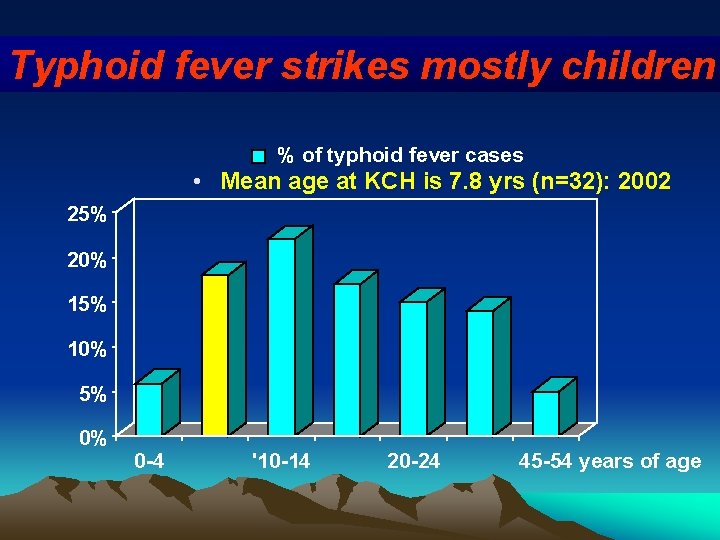
Typhoid fever strikes mostly children % of typhoid fever cases • Mean age at KCH is 7. 8 yrs (n=32): 2002 25% 20% 15% 10% 5% 0% 0 -4 '10 -14 20 -24 45 -54 years of age
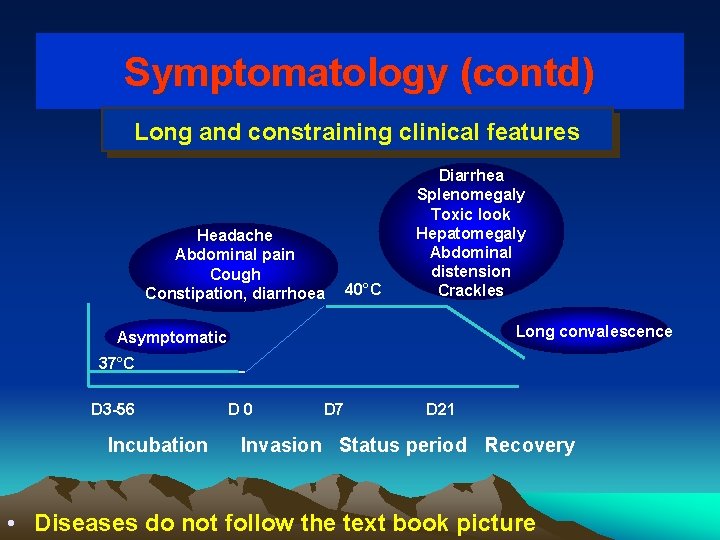
Symptomatology (contd) Long and constraining clinical features Headache Abdominal pain Cough Constipation, diarrhoea 40°C Diarrhea Splenomegaly Toxic look Hepatomegaly Abdominal distension Crackles Long convalescence Asymptomatic 37°C D 3 -56 Incubation D 0 D 7 D 21 Invasion Status period Recovery • Diseases do not follow the text book picture
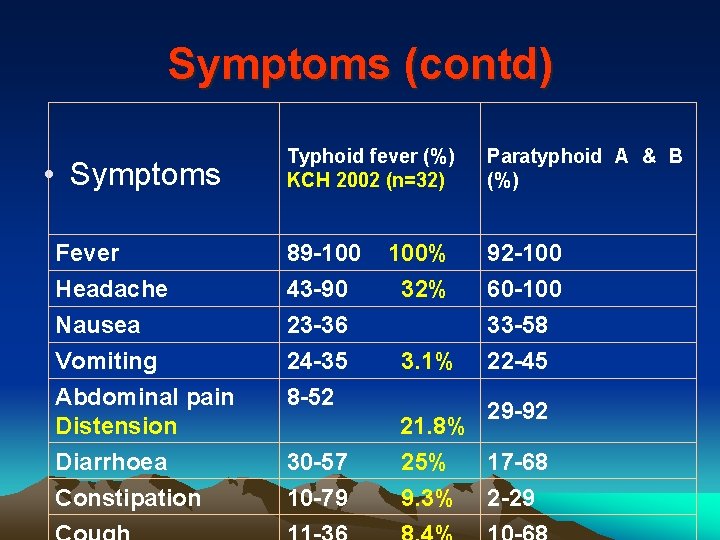
Symptoms (contd) • Symptoms Fever Headache Nausea Vomiting Abdominal pain Distension Diarrhoea Constipation Typhoid fever (%) KCH 2002 (n=32) Paratyphoid A & B (%) 89 -100 100% 43 -90 32% 23 -36 24 -35 3. 1% 8 -52 21. 8% 30 -57 25% 10 -79 9. 3% 92 -100 60 -100 33 -58 22 -45 29 -92 17 -68 2 -29
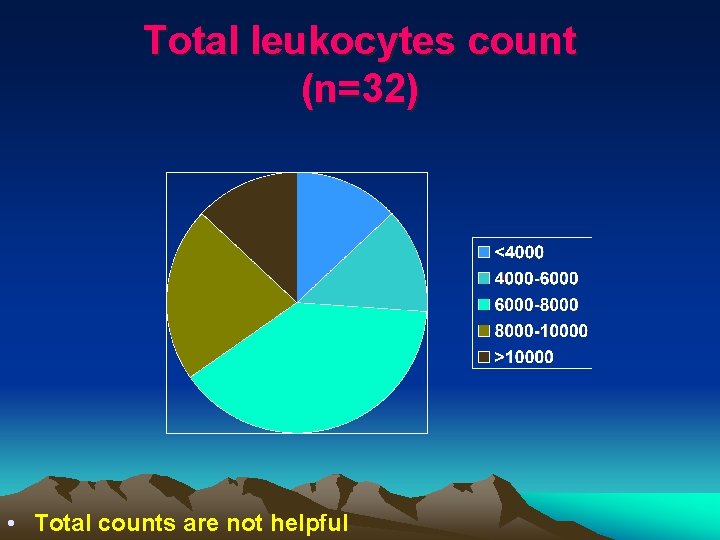
Total leukocytes count (n=32) • Total counts are not helpful
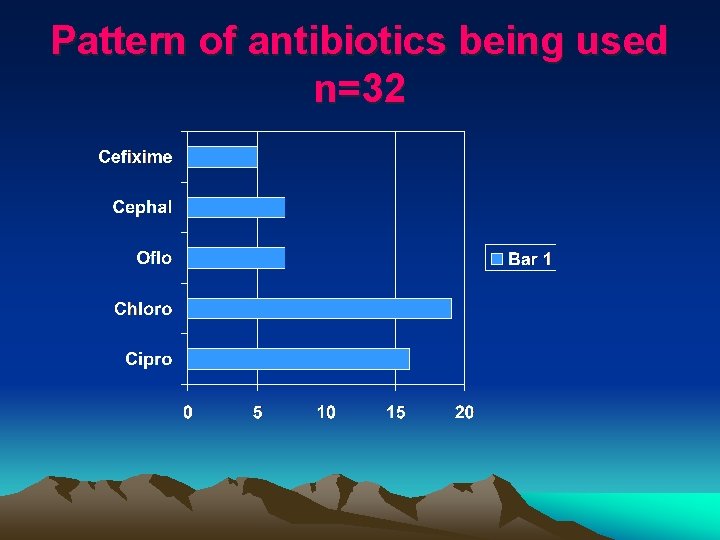
Pattern of antibiotics being used n=32
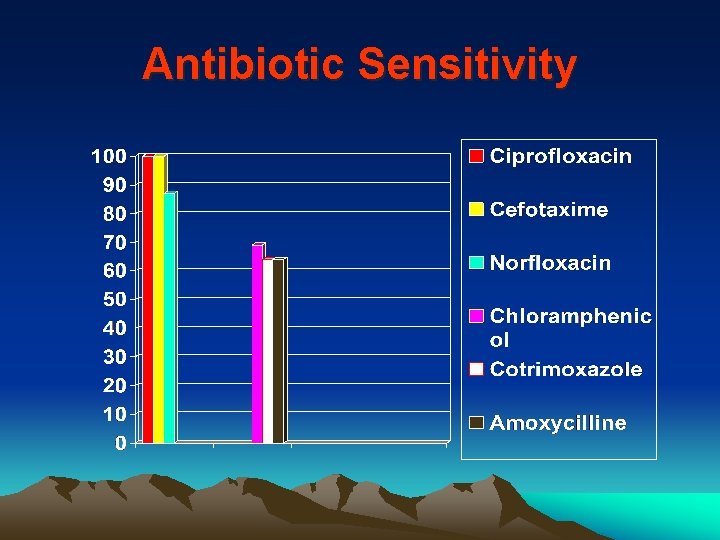
Antibiotic Sensitivity
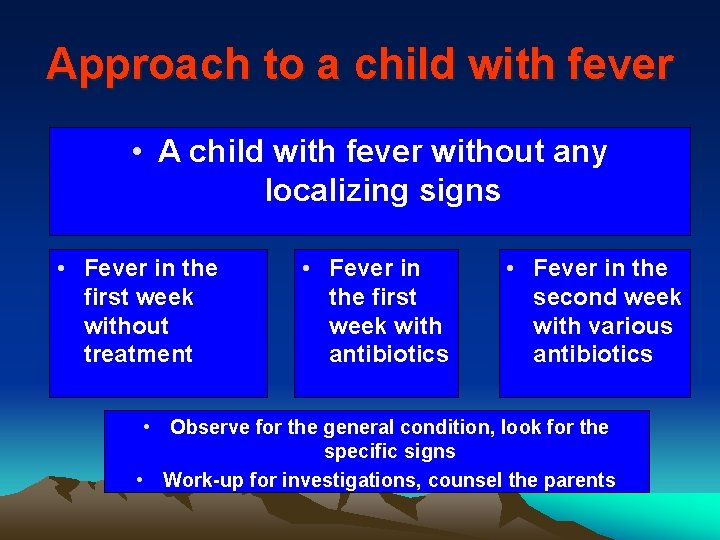
Approach to a child with fever • A child with fever without any localizing signs • Fever in the first week without treatment • Fever in the first week with antibiotics • Fever in the second week with various antibiotics • Observe for the general condition, look for the specific signs • Work-up for investigations, counsel the parents
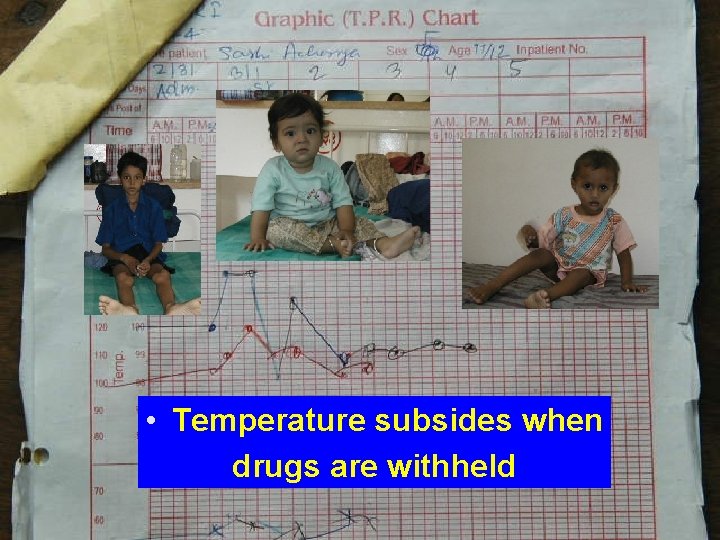
Treatment (contd) • Temperature subsides when drugs are withheld
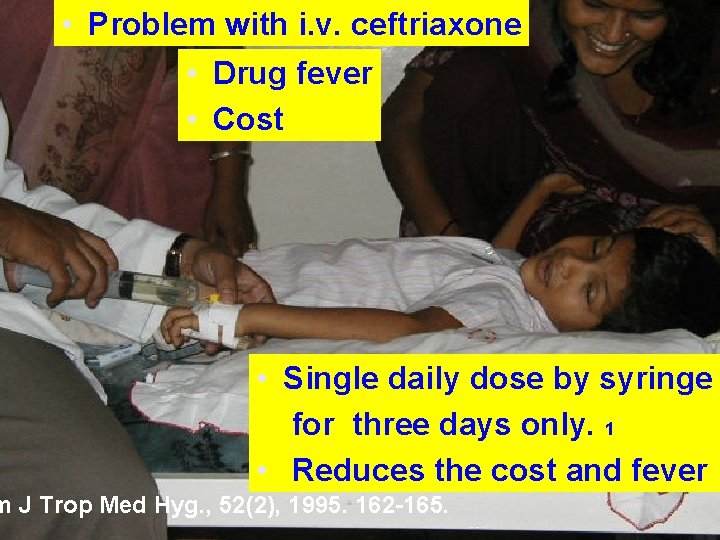
• Problem with i. v. ceftriaxone • Drug fever • Cost • Single daily dose by syringe for three days only. 1 • Reduces the cost and fever m J Trop Med Hyg. , 52(2), 1995. 162 -165.
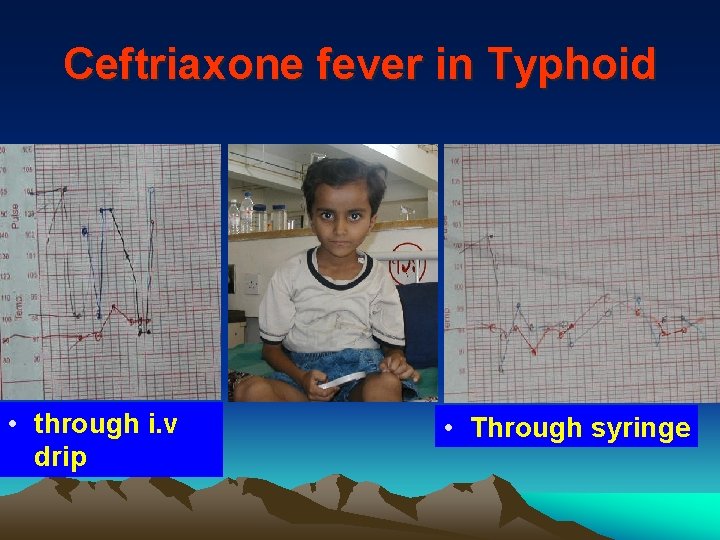
Ceftriaxone fever in Typhoid • through i. v drip • Through syringe

• Thank you
- Slides: 20