Training Generalized Spatial Transformation Skills Giorgio Ganis Harvard

- Slides: 36
Training Generalized Spatial Transformation Skills Giorgio Ganis Harvard University Stephen M. Kosslyn Harvard University Nora S. Newcombe Temple University William L. Thompson Harvard University 6/15/2008 Rebecca Wright Oxford University
Ø Background Ø Methods Ø Results ØSummary & Conclusions 6/15/2008
Ø Background Ø Methods Ø Results ØSummary & Conclusions 6/15/2008
Why study spatial skills? Ø Key in domains such as mathematics, natural sciences and engineering Ø Play a role in reasoning and communication 6/15/2008
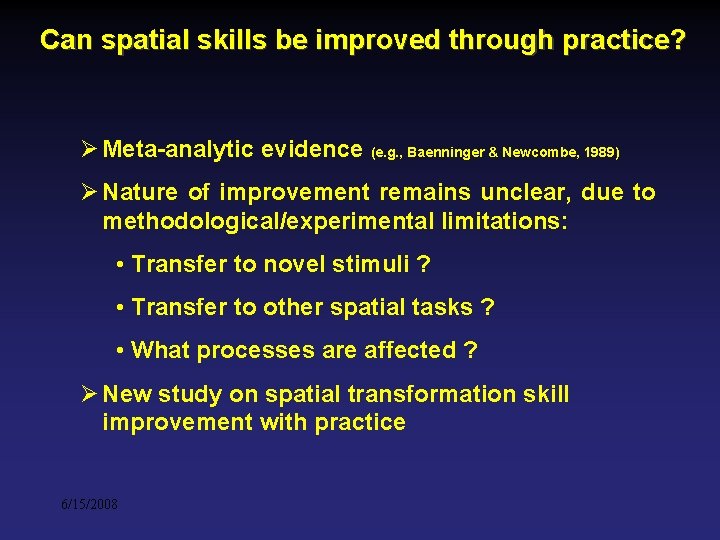
Can spatial skills be improved through practice? Ø Meta-analytic evidence (e. g. , Baenninger & Newcombe, 1989) Ø Nature of improvement remains unclear, due to methodological/experimental limitations: • Transfer to novel stimuli ? • Transfer to other spatial tasks ? • What processes are affected ? Ø New study on spatial transformation skill improvement with practice 6/15/2008
QUESTION Can practice on a spatial transformation task transfer to other spatial transformation tasks? 6/15/2008
Paradigms to study spatial skill training Ø Task component analysis Ø Mental Rotation • Initial encoding • Rotate one object • Compare objects to make decision • Response 6/15/2008
Paradigms to study spatial skill training Ø Gains should be tested with new stimuli • Rule out instance-based improvement (memory for specific items) • Need large sets of stimuli 6/15/2008
Paradigms to study spatial skill training Ø Symmetric assessment of transfer between spatial tasks • Group 1: Trained on Task A and tested on Task B • Group 2: Trained on Task B and tested on Task A 6/15/2008
Paradigms to study spatial skill training Ø Inclusion of a non-spatial control task • Rule out generic transfer effects 6/15/2008
Paradigms to study spatial skill training Ø Intensive training to produce large gains 6/15/2008
Ø Background Ø Methods Ø Results Ø Summary & Conclusions 6/15/2008
Participants 31 participants (17 females, 14 males) 6/15/2008
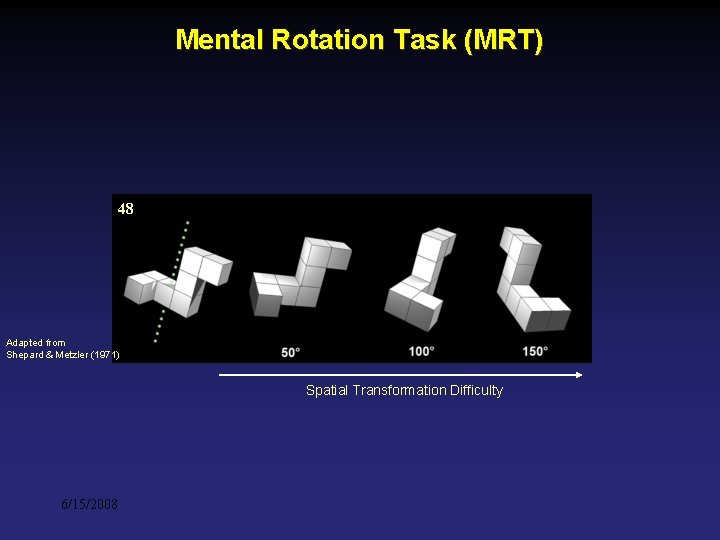
Mental Rotation Task (MRT) 48 Adapted from Shepard & Metzler (1971) Spatial Transformation Difficulty 6/15/2008
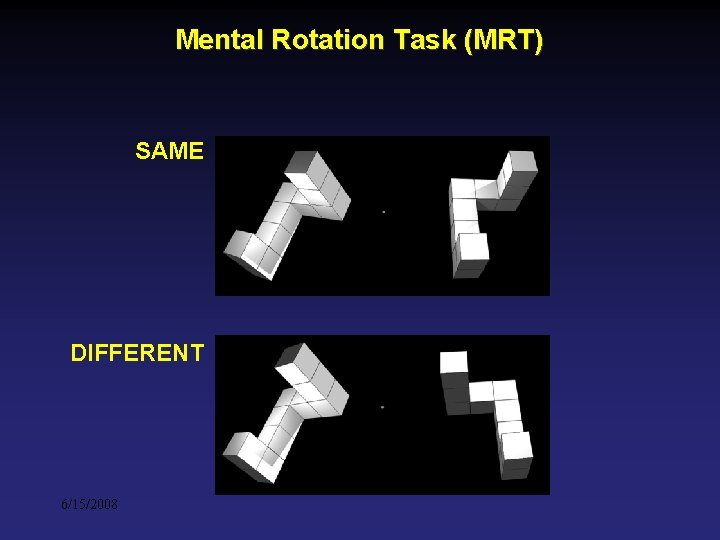
Mental Rotation Task (MRT) SAME DIFFERENT 6/15/2008
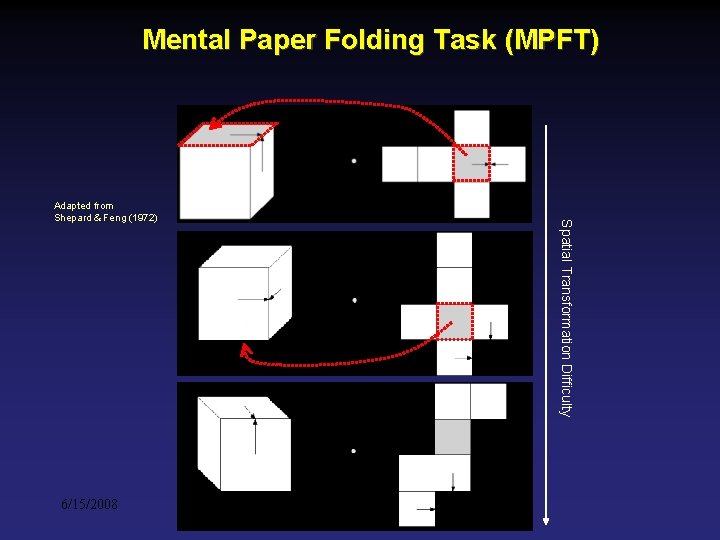
Mental Paper Folding Task (MPFT) 6/15/2008 Spatial Transformation Difficulty Adapted from Shepard & Feng (1972)
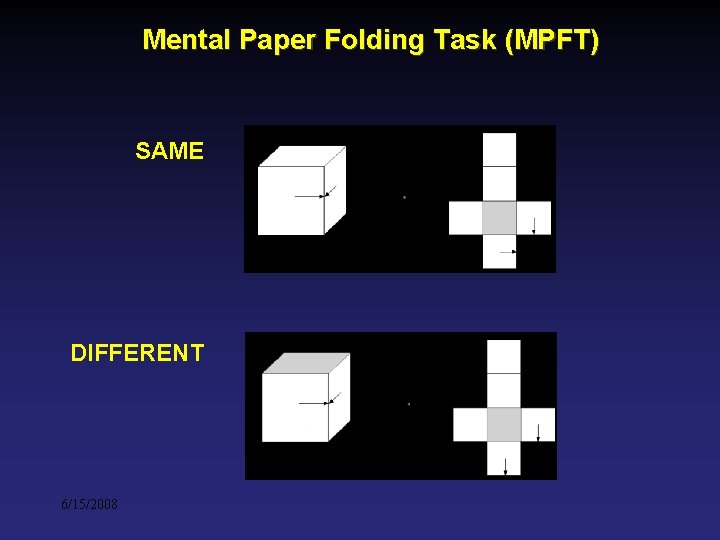
Mental Paper Folding Task (MPFT) SAME DIFFERENT 6/15/2008
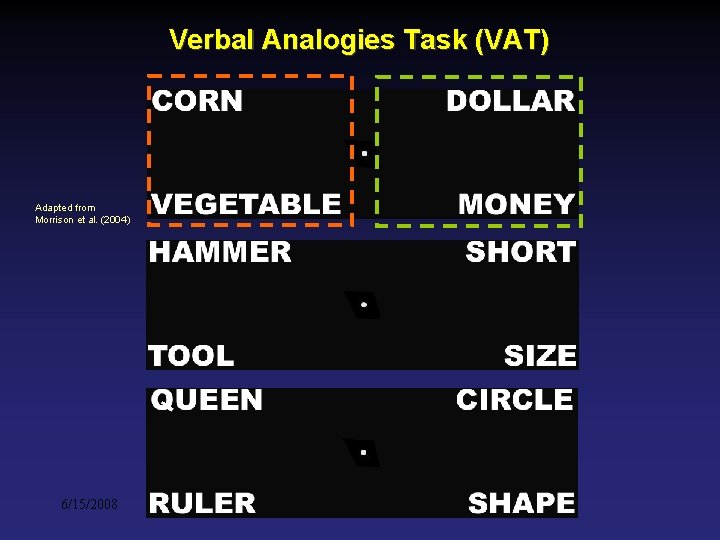
Verbal Analogies Task (VAT) Adapted from Morrison et al. (2004) 6/15/2008
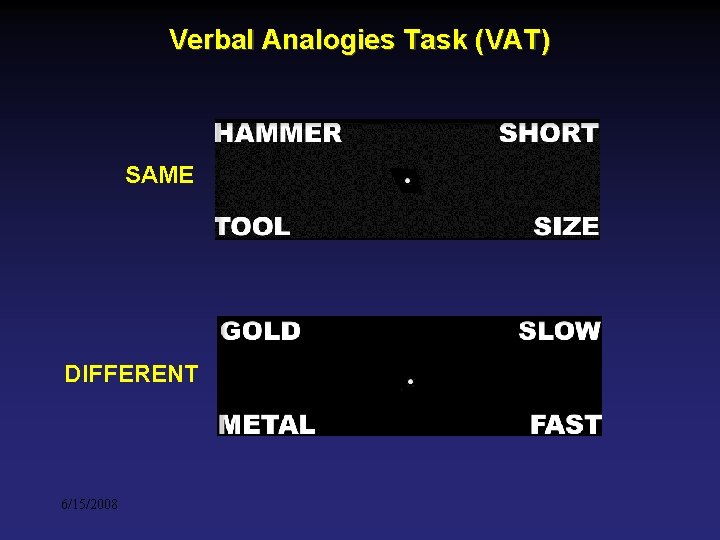
Verbal Analogies Task (VAT) SAME DIFFERENT 6/15/2008
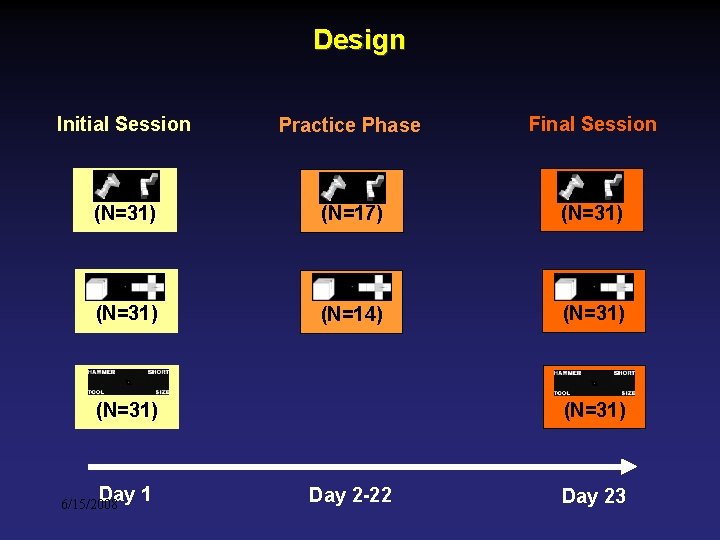
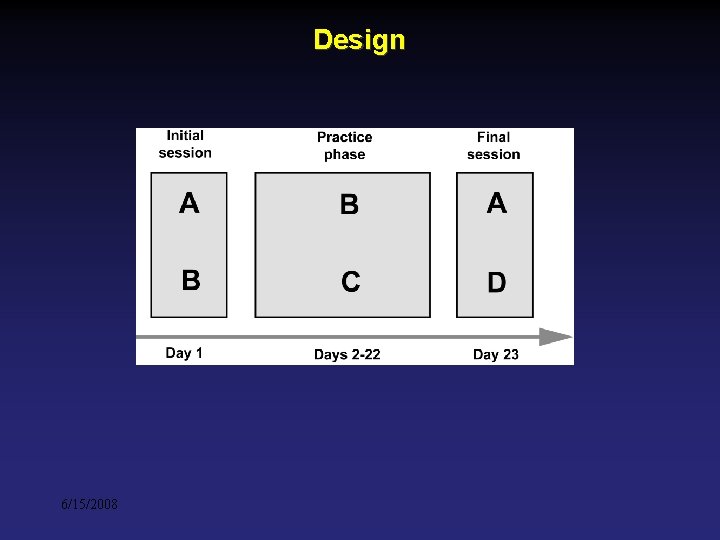
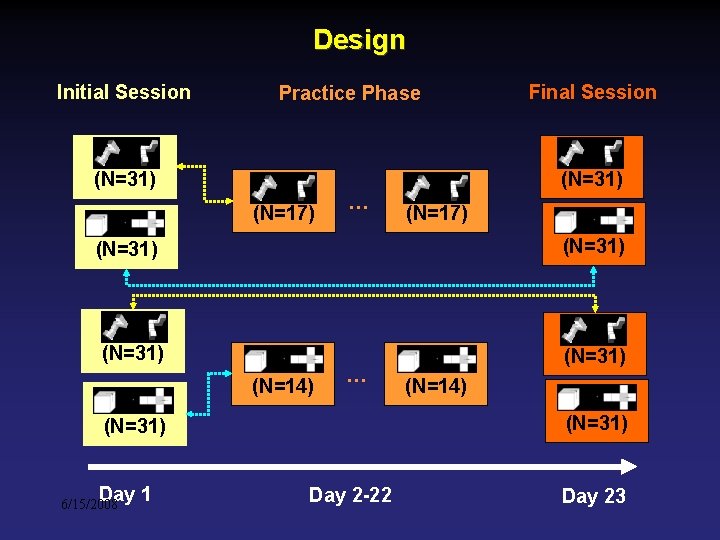
Design Initial Session Practice Phase Final Session MRT (N=31) MRT (N=17) MRT (N=31) MPFT (N=14) MPFT (N=31) VAT (N=31) Day 1 6/15/2008 VAT (N=31) Day 2 -22 Day 23
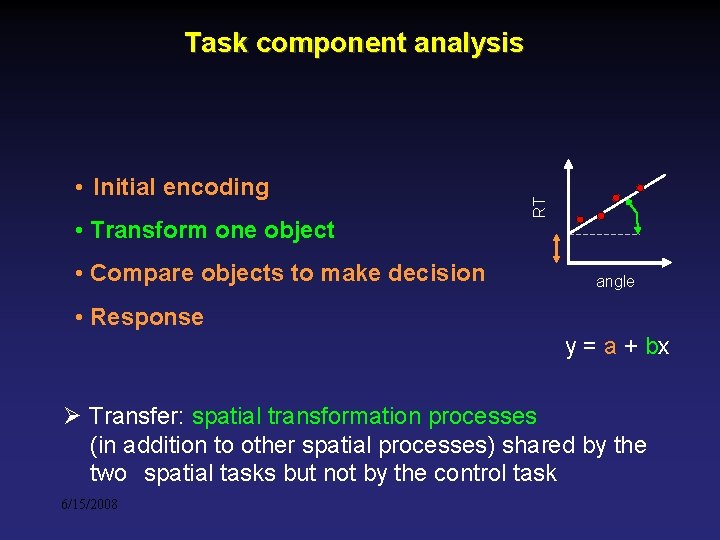
• Initial encoding • Transform one object • Compare objects to make decision RT Task component analysis angle • Response y = a + bx Ø Transfer: spatial transformation processes (in addition to other spatial processes) shared by the two spatial tasks but not by the control task 6/15/2008
Ø Background Ø Methods Ø Results ØSummary & Conclusions 6/15/2008
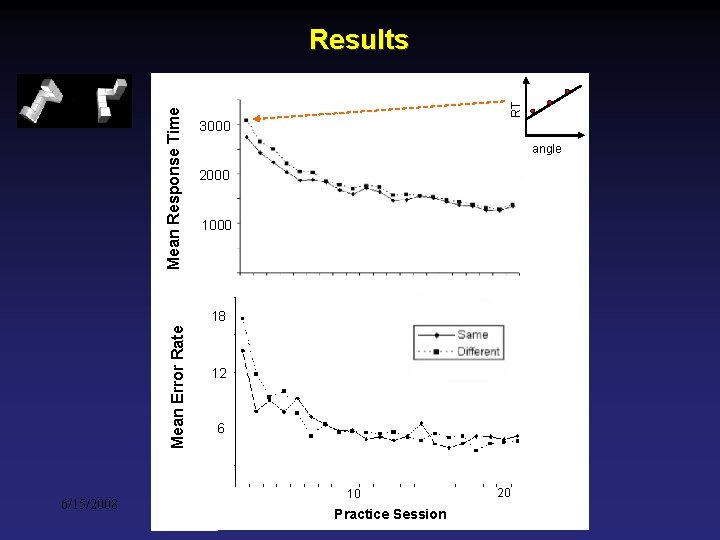
RT Mean Response Time Results 3000 angle 2000 1000 Mean Error Rate 18 6/15/2008 12 6 10 Practice Session 20
Results 6/15/2008
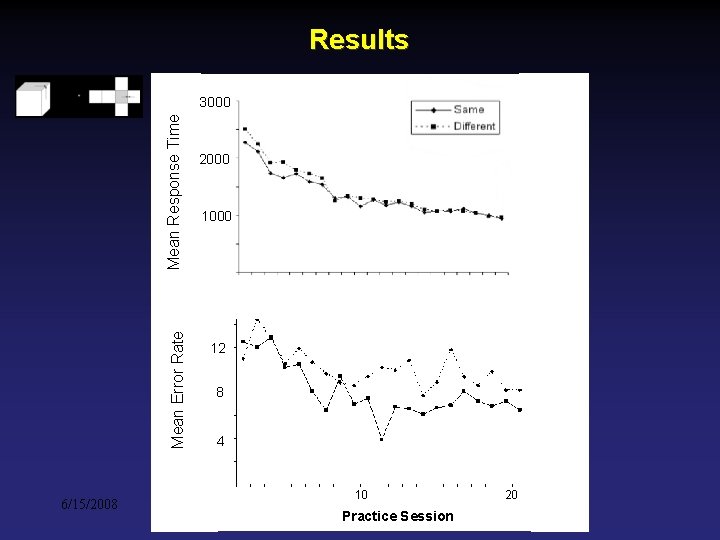
Results Mean Error Rate Mean Response Time 3000 6/15/2008 2000 12 8 4 10 Practice Session 20
Results 6/15/2008
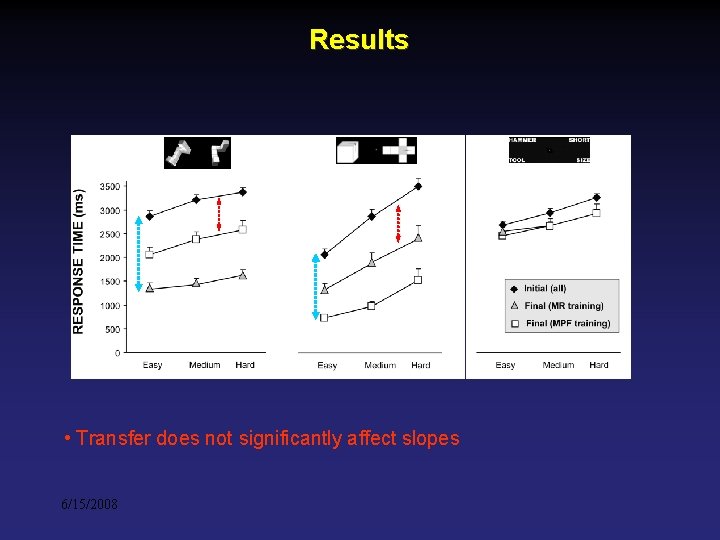
Results General Factors? • Transfer does not significantly affect slopes 6/15/2008
Results 6/15/2008
Results 6/15/2008
Ø Background Ø Methods Ø Results Ø Summary & Conclusions 6/15/2008
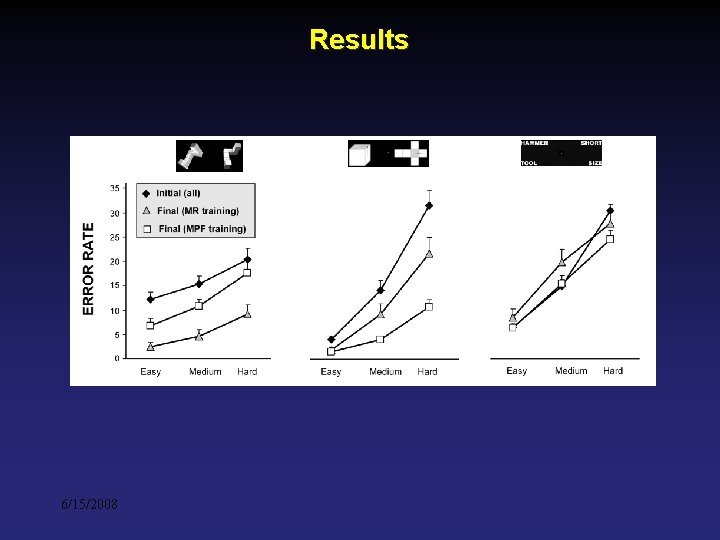
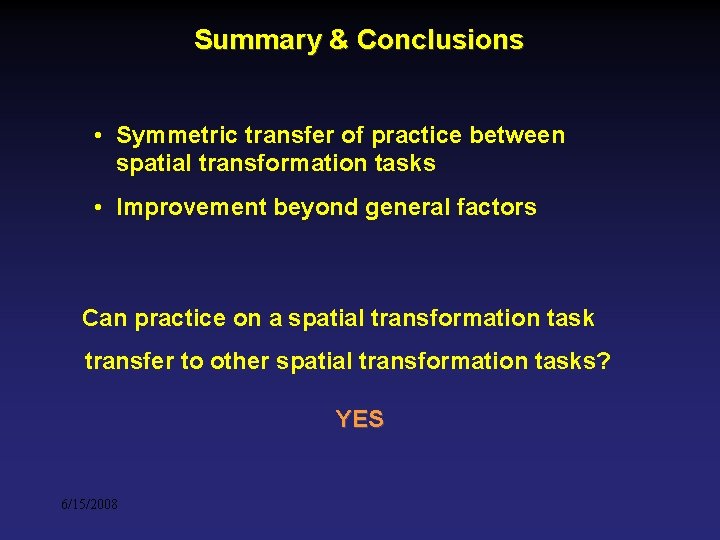
Summary & Conclusions • Symmetric transfer of practice between spatial transformation tasks • Improvement beyond general factors Can practice on a spatial transformation task transfer to other spatial transformation tasks? YES 6/15/2008
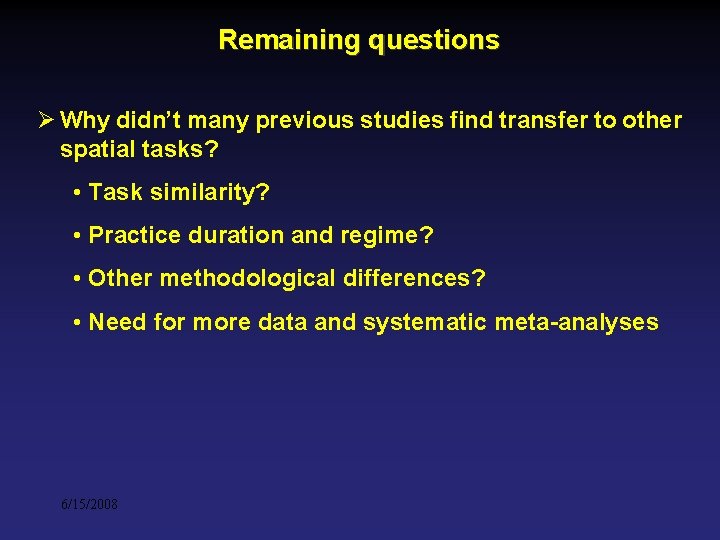
Remaining questions Ø Why didn’t many previous studies find transfer to other spatial tasks? • Task similarity? • Practice duration and regime? • Other methodological differences? • Need for more data and systematic meta-analyses 6/15/2008
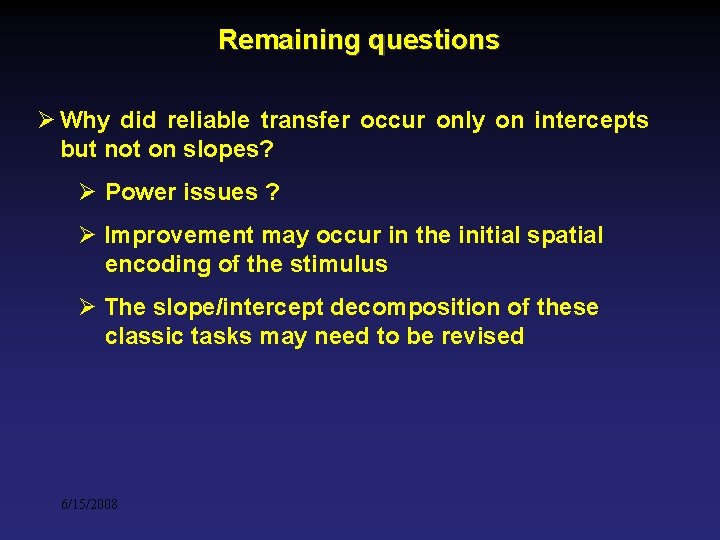
Remaining questions Ø Why did reliable transfer occur only on intercepts but not on slopes? Ø Power issues ? Ø Improvement may occur in the initial spatial encoding of the stimulus Ø The slope/intercept decomposition of these classic tasks may need to be revised 6/15/2008
Thank you! 6/15/2008
Design 6/15/2008
Design Initial Session MRT (N=31) MPFT (N=31) Day 1 6/15/2008 Practice Phase MRT (N=17) MPFT (N=14) … … Day 2 -22 MRT (N=17) MPFT (N=14) Final Session MRT (N=31) MPFT (N=31) Day 23