The Midwifery Unit Network MUNet a community of

- Slides: 25
The Midwifery Unit Network (MUNet): a community of practice Lucia Rocca-Ihenacho, Ph. D, RM Lecturer and NIHR Research Fellow, City University of London, UK
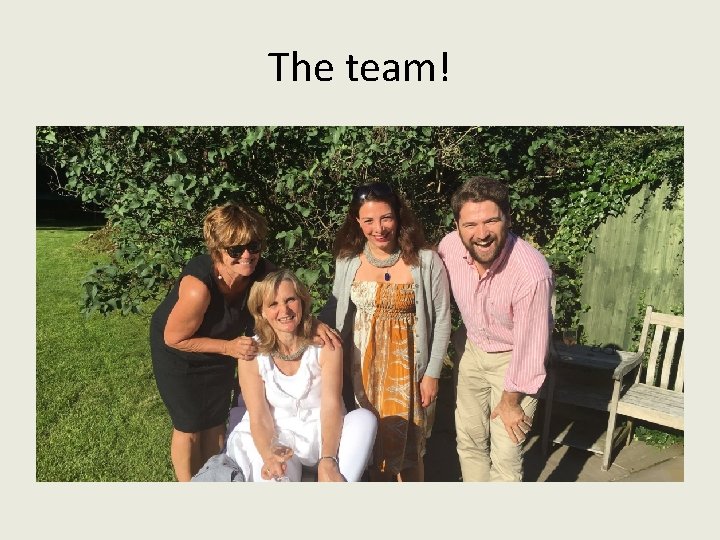
The team!
Aim of the MUNet A community of people across Europe with an interest in supporting and promoting the development and growth of midwifery units (MUs), managed and staffed by midwives.
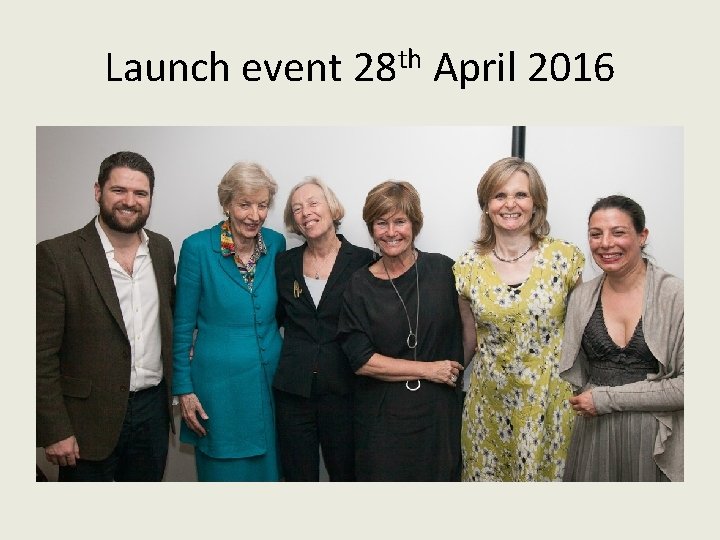
Launch event 28 th April 2016
Work streams of the MUNet EU group: ‘Stronger together’ 1. NETWORKING 2. LEADERSHIP 3. TRAINING 4. CONSULTANCY 5. RESEARCH
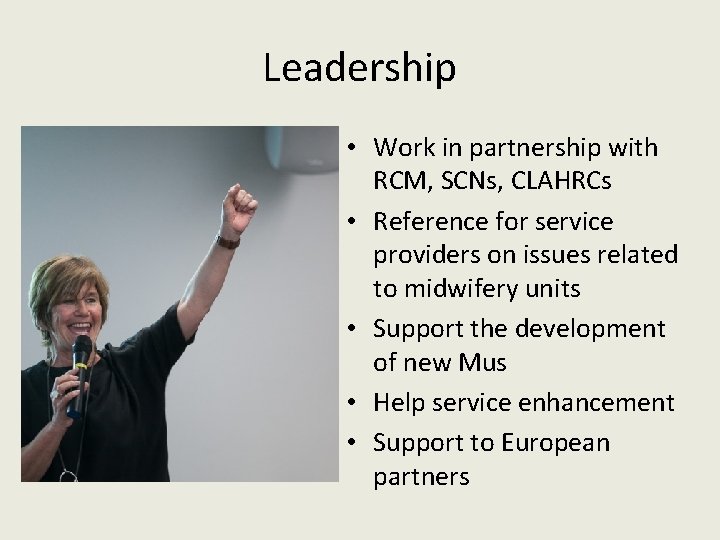
Leadership • Work in partnership with RCM, SCNs, CLAHRCs • Reference for service providers on issues related to midwifery units • Support the development of new Mus • Help service enhancement • Support to European partners
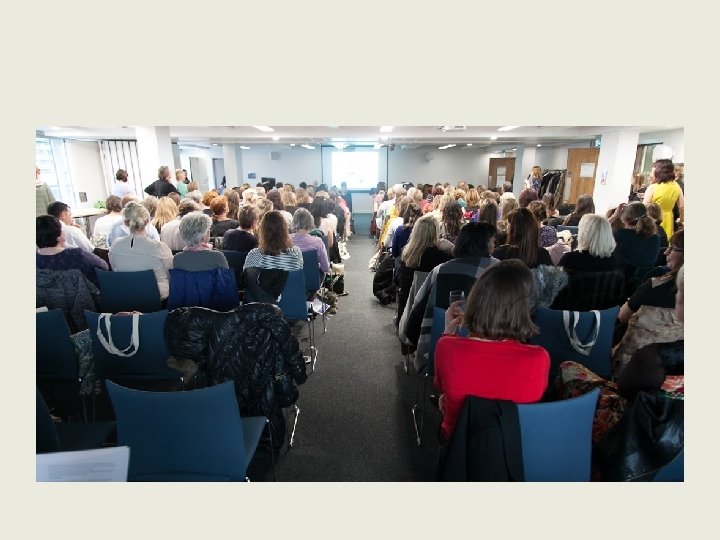
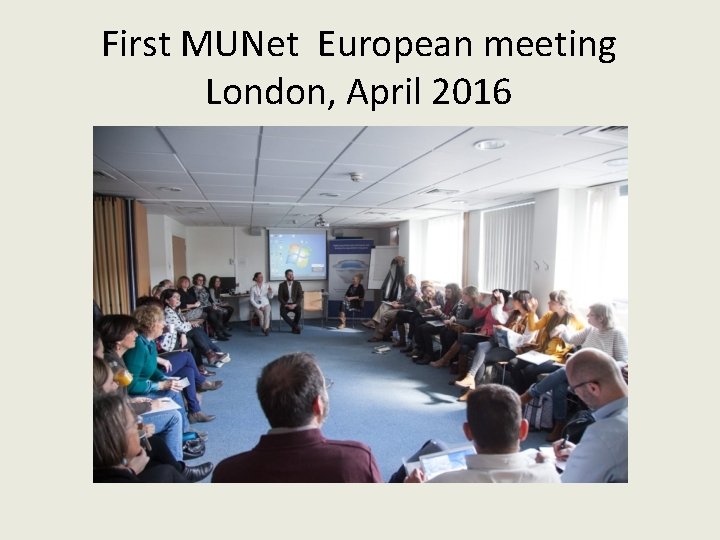
First MUNet European meeting London, April 2016
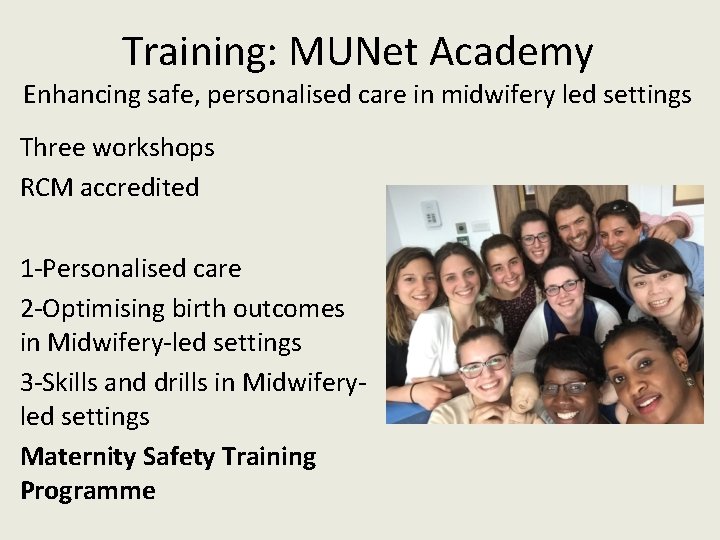
Training: MUNet Academy Enhancing safe, personalised care in midwifery led settings Three workshops RCM accredited 1 -Personalised care 2 -Optimising birth outcomes in Midwifery-led settings 3 -Skills and drills in Midwiferyled settings Maternity Safety Training Programme
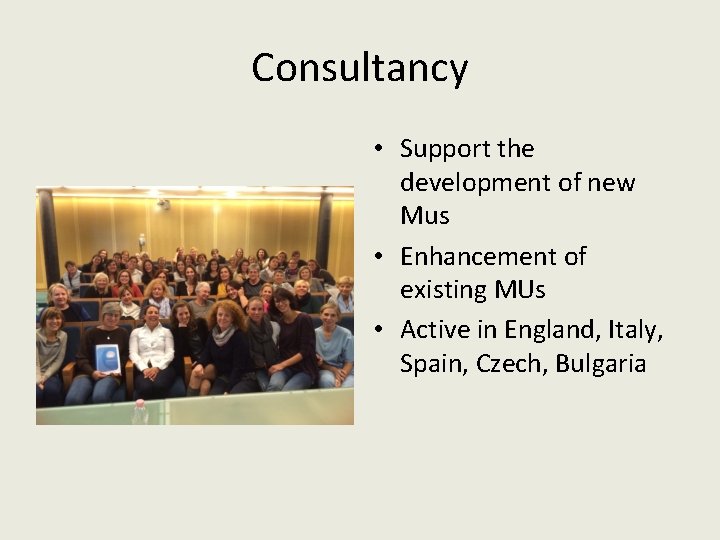
Consultancy • Support the development of new Mus • Enhancement of existing MUs • Active in England, Italy, Spain, Czech, Bulgaria
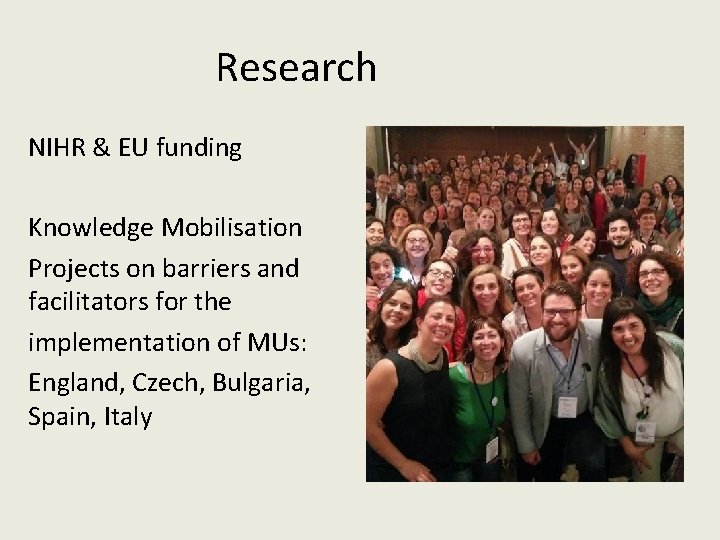
Research NIHR & EU funding Knowledge Mobilisation Projects on barriers and facilitators for the implementation of MUs: England, Czech, Bulgaria, Spain, Italy
NIHR Knowledge Mobilisation Fellowship How can NICE recommendations on place of birth for women with uncomplicated pregnancies be implemented in practice? Dr Lucia Rocca-Ihenacho, Ph. D, RM
Aims of the project • Develop , implement and evaluate a theoretically informed framework for implementing evidence based guidelines using birthplace as a case study. • Focus on implementation processes, including facilitators & barriers. • Increase midwifery-led settings birth towards a goal of 35% in 3 years
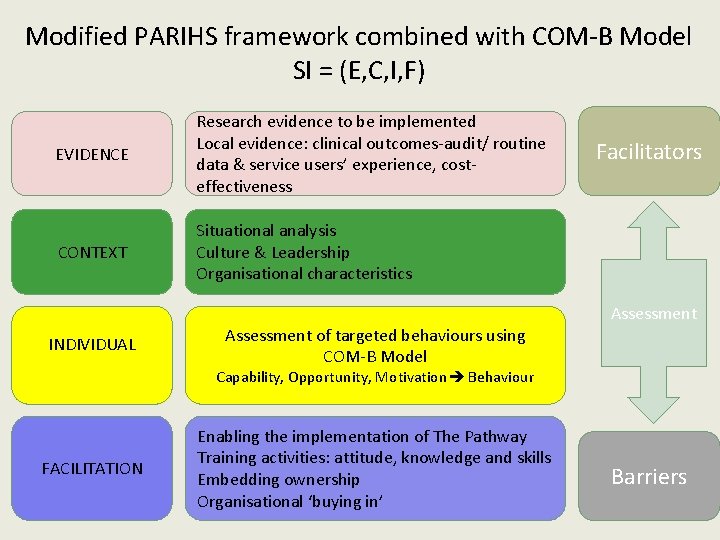
Modified PARIHS framework combined with COM-B Model SI = (E, C, I, F) EVIDENCE Research evidence to be implemented Local evidence: clinical outcomes-audit/ routine data & service users’ experience, costeffectiveness CONTEXT Situational analysis Culture & Leadership Organisational characteristics Facilitators Assessment INDIVIDUAL FACILITATION Assessment of targeted behaviours using COM-B Model Capability, Opportunity, Motivation Behaviour Enabling the implementation of The Pathway Training activities: attitude, knowledge and skills Embedding ownership Organisational ‘buying in’ Barriers
Change is not a linear process!
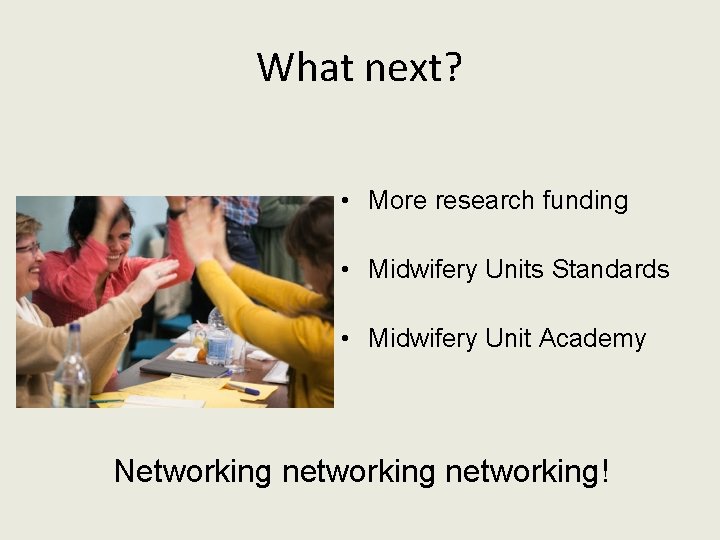
What next? • More research funding • Midwifery Units Standards • Midwifery Unit Academy Networking networking!
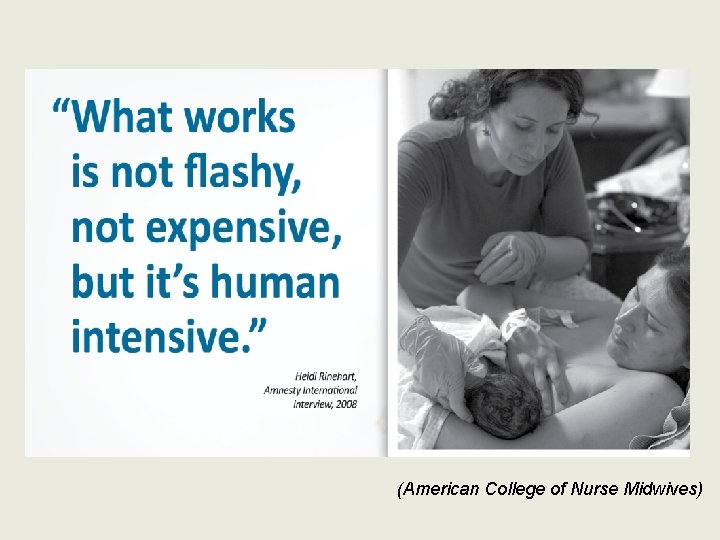
(American College of Nurse Midwives)
Grazie