The Foundations of Early Modern Europe 1 000


- Slides: 48
The Foundations of Early Modern Europe (1, 000 years of European History in one hour)
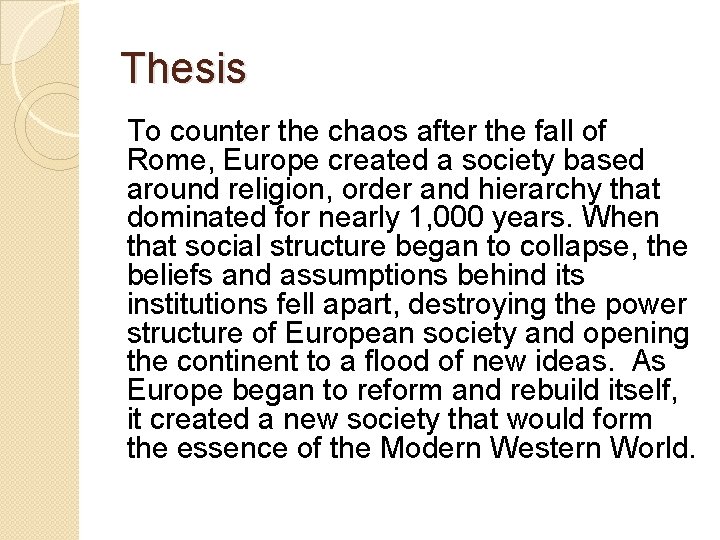
Thesis To counter the chaos after the fall of Rome, Europe created a society based around religion, order and hierarchy that dominated for nearly 1, 000 years. When that social structure began to collapse, the beliefs and assumptions behind its institutions fell apart, destroying the power structure of European society and opening the continent to a flood of new ideas. As Europe began to reform and rebuild itself, it created a new society that would form the essence of the Modern Western World.
Part I: To counter the chaos that resulted from the fall of the Roman Empire, Europe created a society based around religion, order and hierarchy that dominated for nearly 1, 000 years.
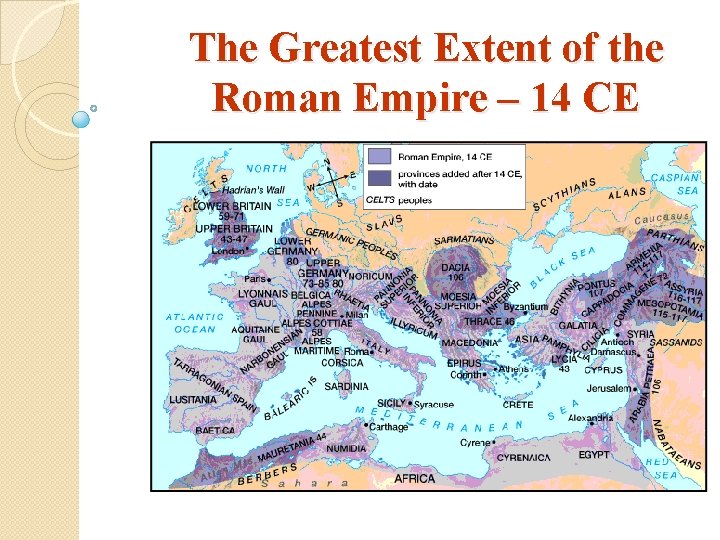
The Greatest Extent of the Roman Empire – 14 CE
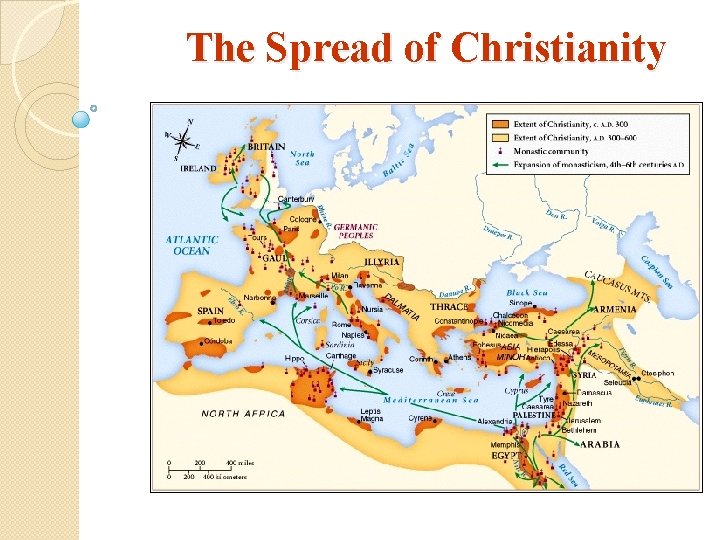
The Spread of Christianity
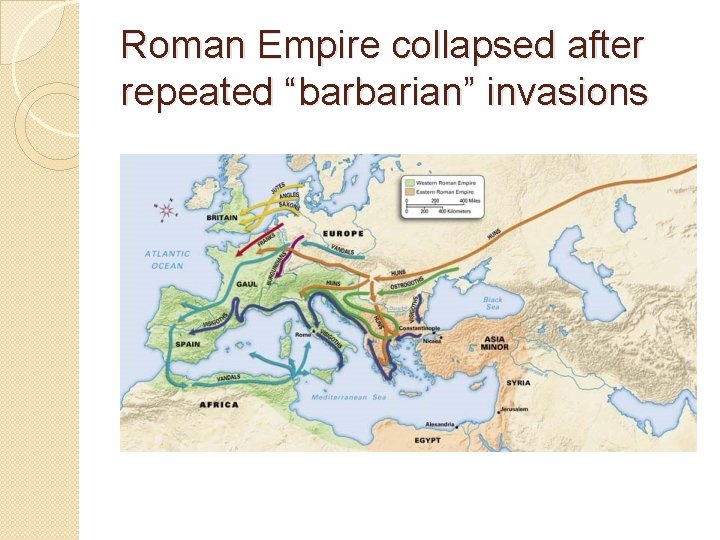
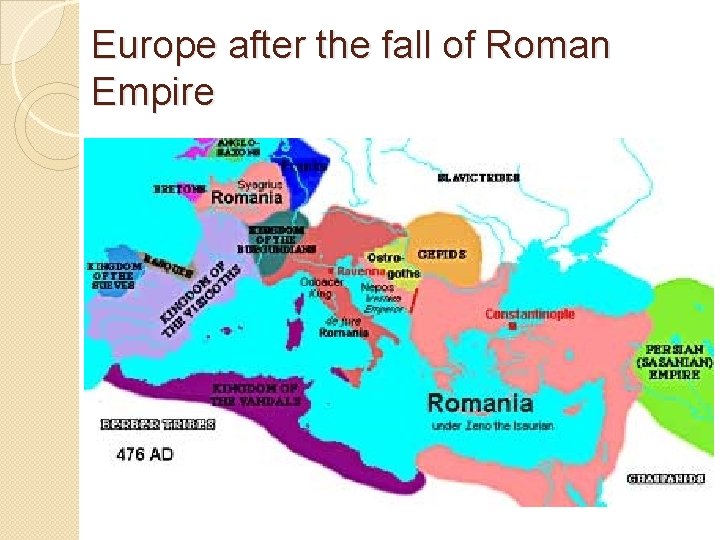
The Effects of Rome’s Fall in 476 AD �one of the oddest phenomena in history: Progress went backwards in Western Europe � Level of technology and knowledge decreases �Trade disruption �Decline of cities: population shifts out to regressive, agrarian society �Decline of arts and learning �Loss of a common language (Latin) �All this leads to a major, disunifying void
Roman Empire collapsed after repeated “barbarian” invasions
Europe after the fall of Roman Empire
Rise of Christianity �Christianity fills the void left by the fall of the Roman Empire—It becomes the unifying force in Europe. �Split between Christians in Eastern Europe (Orthodox —centered in Constantinople) and Western Europe (Catholic—centered in Rome) �Christianity was popular among the poor because it promised eternal salvation (if you were “good”) in return for enduring their short, nasty lives on Earth (…and life for the poor of Europe did suck) �As Christianity spreads, the Church becomes more powerful and develops a hierarchy (Pope, cardinals, bishops, etc…) and becomes very interested in protecting its power and wealth.
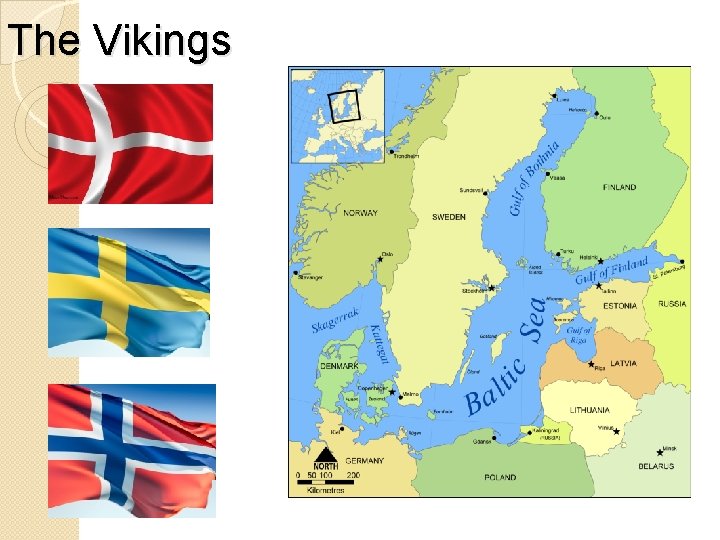
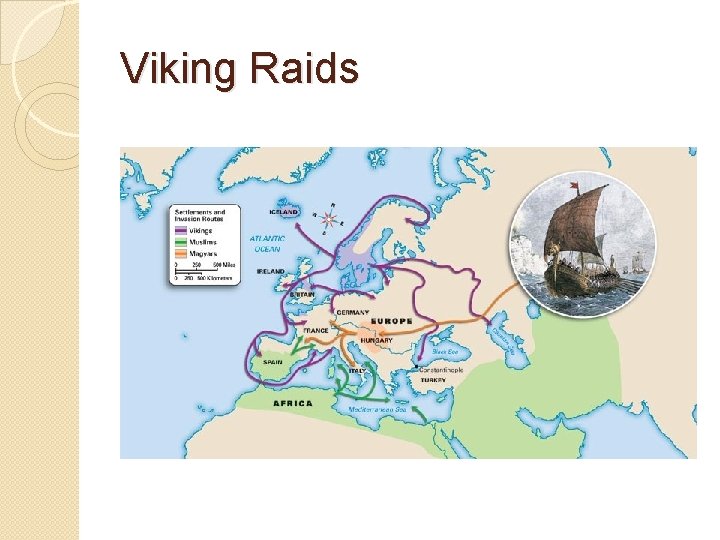
Vikings ravage Europe �Seafaring warriors from Scandinavia ◦ Around 800 -1000 Europe generally warms up ◦ Leads to more food in Northern areas = more people ◦ Scandinavia gets too crowded and warrior culture leads to looking for new places to conquer �Viking attacks occur all over Europe—smash-and- grab jobs ◦ Incredibly quick and brutal ◦ Not just on coast (Viking long boats could sail in 3 feet of water) �Eventually the King of France gives the Vikings some land to stop attacking him and they settle down in an area of France called Normandy ◦ Beginning of Feudal system
The Vikings
Viking Raids
Feudalism: The system that would last 1000 years (more or less) �Built on rights and obligations spreads throughout Western Europe � Status determined a person’s prestige and power � Class (status) was inherited – very little chance of moving up – and much easier to go down than up �Key economic and social unit: lord & serfs ◦ The lord provided serfs with housing, farmland protection from bandits and other knights Serfs gave up freedom for protection ◦ All peasants (free or not) owed the lord and church certain duties , i. e. demesne and tithe
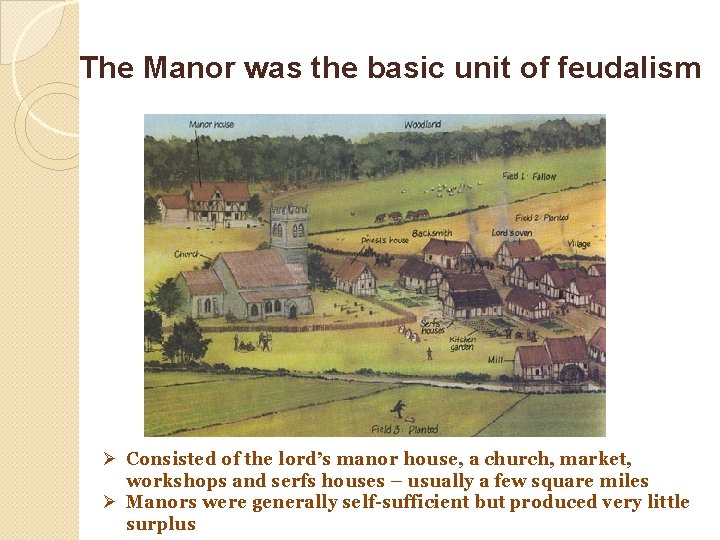
The Manor was the basic unit of feudalism Ø Consisted of the lord’s manor house, a church, market, workshops and serfs houses – usually a few square miles Ø Manors were generally self-sufficient but produced very little surplus
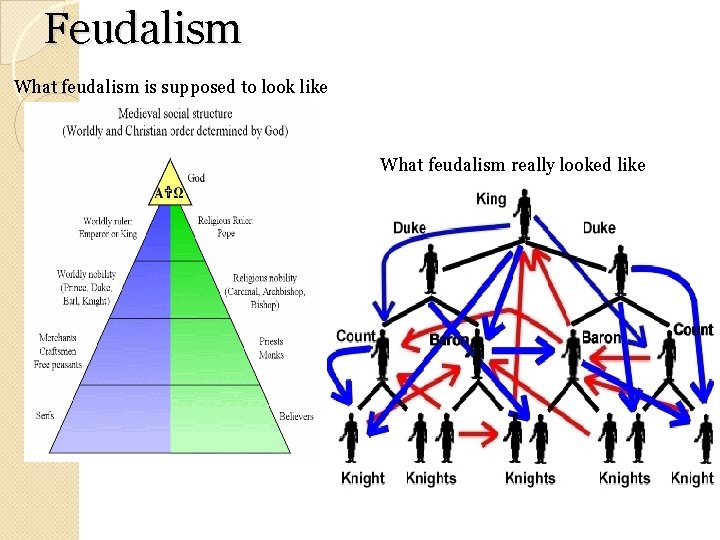
Feudalism What feudalism is supposed to look like What feudalism really looked like
Medieval Life �Short and generally nasty--¼ of babies didn’t reach age of 1, (if you were lucky to live to 21, you might live to age 60) �Justice was harsh and painful (execution and torture, guilty until proven innocent) �Vast majority of people lived off the land; almost never traveled more than 25 miles from home; generally illiterate; war was common
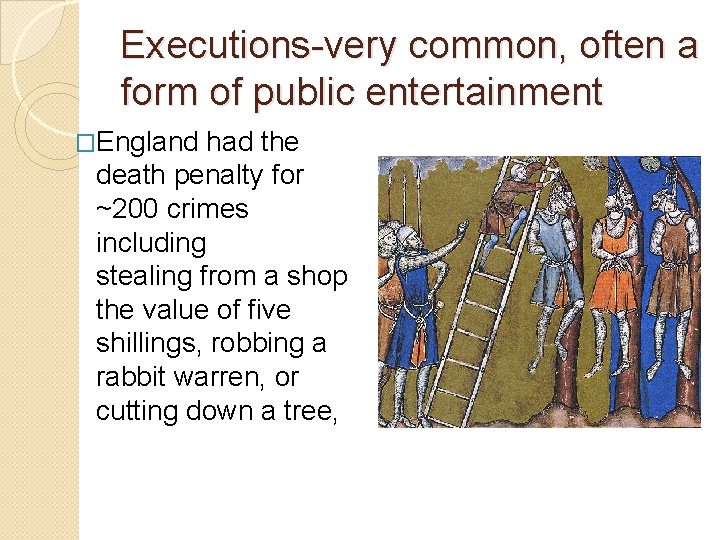
Executions-very common, often a form of public entertainment �England had the death penalty for ~200 crimes including stealing from a shop the value of five shillings, robbing a rabbit warren, or cutting down a tree,
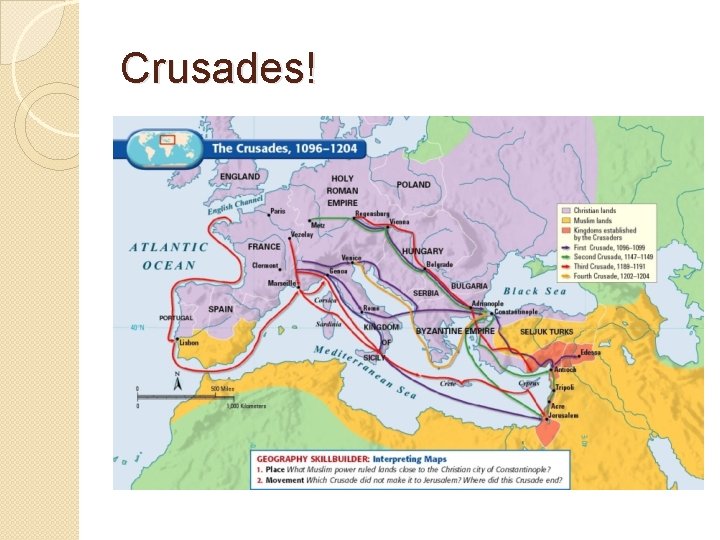
Crusades!
What is propaganda? �the spreading of ideas, information, or rumor for the purpose of helping or injuring an institution, a cause, or a person � 3: ideas, facts, or allegations spread deliberately to further one's cause or to damage an opposing cause; a
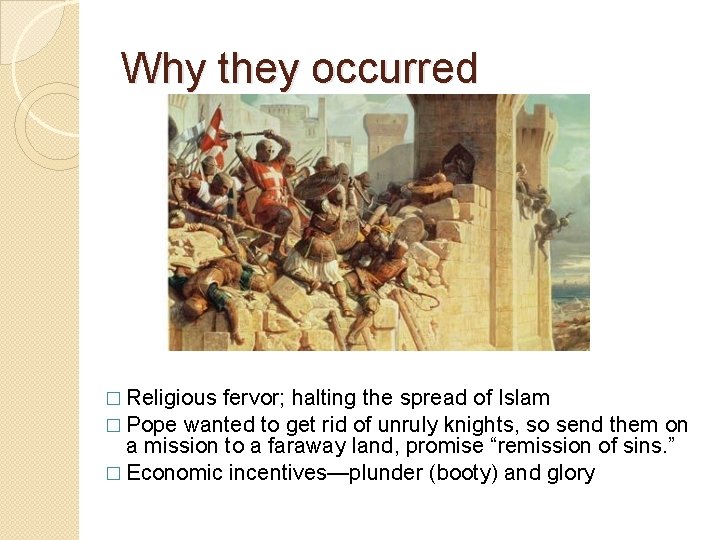
Why they occurred � Religious fervor; halting the spread of Islam � Pope wanted to get rid of unruly knights, so send them on a mission to a faraway land, promise “remission of sins. ” � Economic incentives—plunder (booty) and glory
Part II: When that social structure began to collapse, the beliefs and assumptions behind its institutions fell apart, destroying the power structure of European society and opening the continent to a flood of new ideas
�Feudalism begins to fall apart (parts of it will exist for a long time, though) �Here are some major causes of its collapse…
Remember the Church was allconsuming ◦ Church intertwined with state/politics ◦ Cathedrals everywhere ◦ Church controls most education and knowledge ◦ The Church functioned like a massive multi-national corporation with its own state and army and the pope as its chief executive officer
The Catholic Church is very, very corrupt ◦ Church officials from the pope on down break their vows – celibacy, poverty, and abuse power ◦ celibacy= ◦ poverty=
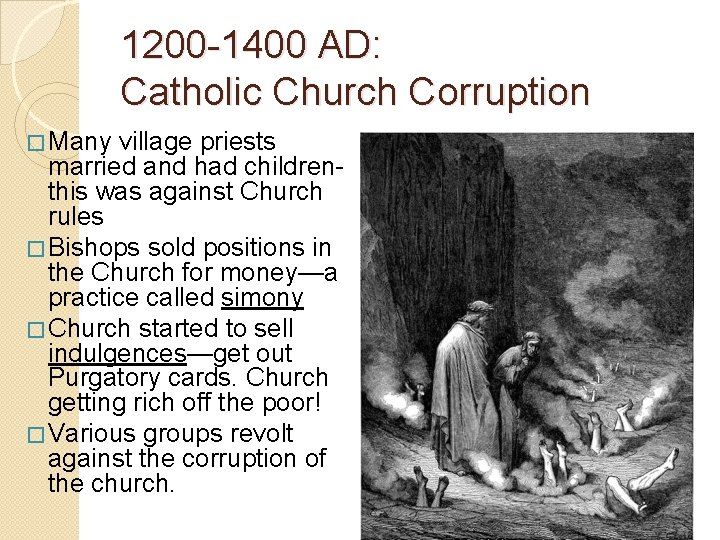
1200 -1400 AD: Catholic Church Corruption � Many village priests married and had childrenthis was against Church rules � Bishops sold positions in the Church for money—a practice called simony � Church started to sell indulgences—get out Purgatory cards. Church getting rich off the poor! � Various groups revolt against the corruption of the church.
Poem Criticizing the Avignon Papacy by Raimon de Cornet (14 th century troubadour) I see the pope his sacred trust betray, For while the rich his grace can gain alway, His favors from the poor are aye withholden. He strives to gather wealth as best he may, Forcing Christ's people blindly to obey, So that he may repose in garmets golden. The vilest traffickers in souls are all His chapmen, and for gold a prebend's stall He'll sell them, or an abbacy or miter. And to us he sends clowns and tramps who crawl Vending his pardon briefs from cot to hall-Letters and pardons worthy of the writer,
�Alway = always �Garmets = garments
Retribution—the end of the world=Black Plague (Black �. Death) 1347 -1354 � Becomes a pandemic (universal disease) � Spread over Europe over 4 years around 1347, starting in Italy and moving north and west. � Kills 1/3 of Europe’s population – the equivalent of more than 100 million people in the US today – and comes back periodically � Impact of the plague: ◦ City and town populations fall ◦ Trade decreases so prices go up ◦ Serfs leave manor looking for more money, which the nobles resist, causing bloody revolts. ◦ Jews are scapegoated and often killed, move to Eastern Europe (Poland) ◦ Church loses prestige when it can’t do anything to stop the spread
Key Questions: the Black Plague �Where did it start and how was it transmitted? �What did people believe caused it? Why? � What were its social effects? �What were its economic effects? �Write these questions in your notes and try to answer them!!
Black Plague Videos �http: //www. history. com/topics/black- death/videos/the-black-deathbegins? m=528 e 394 da 93 ae&s=undefi ned&f=1&free=false �http: //www. history. com/topics/blackdeath/videos/black-plagueextinction? m=528 e 394 da 93 ae&s=und efined&f=1&free=false
Parliament, Magna Carta, & Common Law �Normans (from France) conquer England in 1066, and bring feudalism to England �In order to strengthen their power, later kings set up a common system of courts, laws, etc. ◦ Becomes the basis for common law & judicial precedent �As later kings try and revoke these laws, two checks are put in place to stop this: ◦ Magna Carta – signed in 1215 by King John, basis for Anglo-American civil liberties ◦ Parliament – legislative branch of English government made up of two houses �Originally used as a way for the king to levy taxes
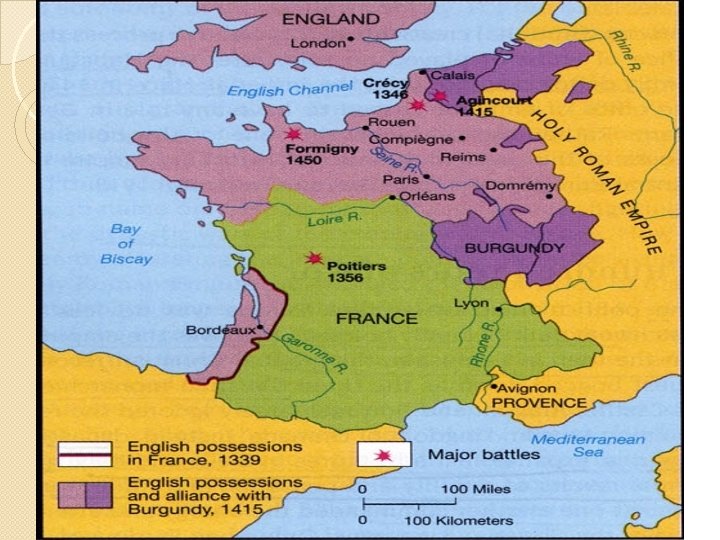
Hundred Years War 1337 -1453 France vs England �Begins as a dispute over succession rights to the French throne �Two main phases: England wins, then England loses �Ends with French kicking English out of continent �Importance: ◦ Key changes in warfare, like the longbow, means the eventual end of knights ◦ Strengthens French monarchy and weakens English nobles—king becomes more important ◦ Nationalism in England France begins— associated with the monarch (king)
Black Plague– exit slip What aspect of European Society was damaged by : 1. Hundred Years War 2. Corruption of the Church 3 Black Plague
Part III: As Europe began to reform and rebuild itself it created a new society that would form the essence of the Modern Western World.
Essential Questions �How did the Renaissance differ from the Middle Ages? �How does it form the basis of much of modern Western thought? �Did the Renaissance really exist?
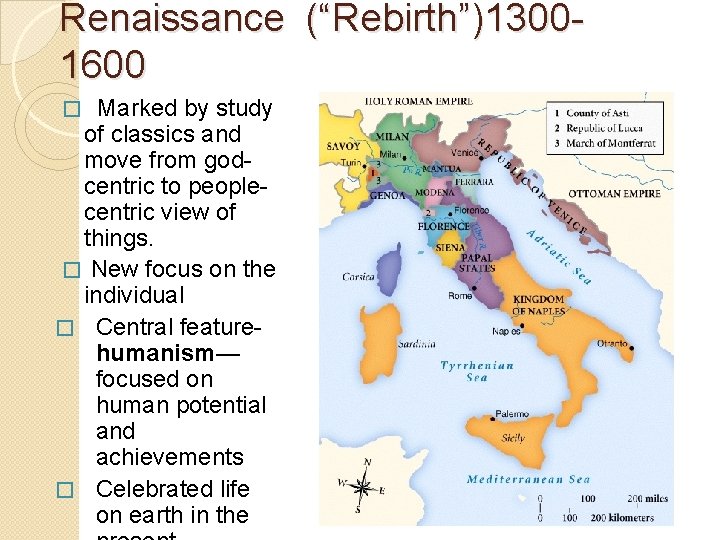
Renaissance (“Rebirth”)13001600 � Marked by study of classics and move from godcentric to peoplecentric view of things. � New focus on the individual � Central feature- humanism— focused on human potential and achievements � Celebrated life on earth in the
Renaissance 1300 -1600 �What was reborn was a Classical (Greek & Roman) ideas—art, architecture, philosophy, literature, finance, views of the world, etc. �Began in Italy in 14 th century then spread to Northern Europe, through Holland Flanders and onto England Denmark and Sweden. �Mainly affected wealthy/educated people. Most people NOT AFFECT immediately.
Contributions from Jewish and Islamic Scholars �Arab and Jewish scholars from Spain and the Byzantine Empire translated Greek philosophers’ works into Arabic and then into Latin �Arab works in physics, mathematics, medicine, and optics were translated into Latin and became available to Europeans. �Crusaders returned to Europe with superior Islamic technology in ships, navigation and weapons. (astrolabe, for example).
Universities �The word university comes from universitas, a Latin word meaning guild or corporation. Referred to a guild of students or faculty �First university in Europe was founded in Bologna, Italy in 1088 �Universities founded in Paris (1200), Oxford (1208), Cambridge (1209), Salamanca (Spain), Coimbra (Portugal) �By the end of the high Middle Ages, 80 universities in Europe
Why Italy? Location �Church structure particularly weakened by plague = more secular approach, more concern for the arts �Commercial Revolution. Wealthy due to trade from the Crusades = more exchange of people and ideas particularly from Islamic and Byzantine lands. �Banking starts. �New source of power—the towns and merchants. �Loose confederation of city-states = much easier to change one or two parts, like Venice or
Renaissance Humanism finds many avenues of expression and sculpture-more realistic, less focused on religious subjects, perspective, individuality of subjects, celebrated the human body � Literature-writing in the vernacular, the native language, not Latin; portrayed individuality in their characters � Science – started to explore anatomy and engineering (Leonardo da Vinci) � Politics—concerned with how politics really works here on earth not with abstract Christian ideology (Niccolò Machiavelli) � Everyday life—was to be enjoyed for its own sake, here and now on earth, people should not deny themselves. The individual and his aspirations (goals or ambitions) are important. � Painting
Parliament, Magna Carta, & Common Law �Normans (from France) conquer England in 1066, and bring feudalism to England �In order to strengthen their power, later kings set up a common system of courts, laws, etc. ◦ Becomes the basis for common law & judicial precedent �As later kings try and revoke these laws, two checks are put in place to stop this: ◦ Magna Carta – signed in 1215 by King John, basis for Anglo-American civil liberties ◦ Parliament – legislative branch of English government made up of two houses �Originally used as a way for the king to levy taxes
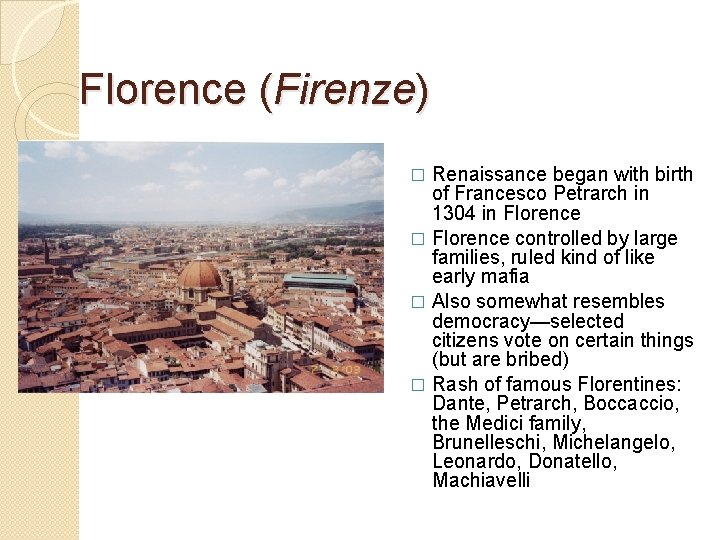
Florence (Firenze) Renaissance began with birth of Francesco Petrarch in 1304 in Florence � Florence controlled by large families, ruled kind of like early mafia � Also somewhat resembles democracy—selected citizens vote on certain things (but are bribed) � Rash of famous Florentines: Dante, Petrarch, Boccaccio, the Medici family, Brunelleschi, Michelangelo, Leonardo, Donatello, Machiavelli �
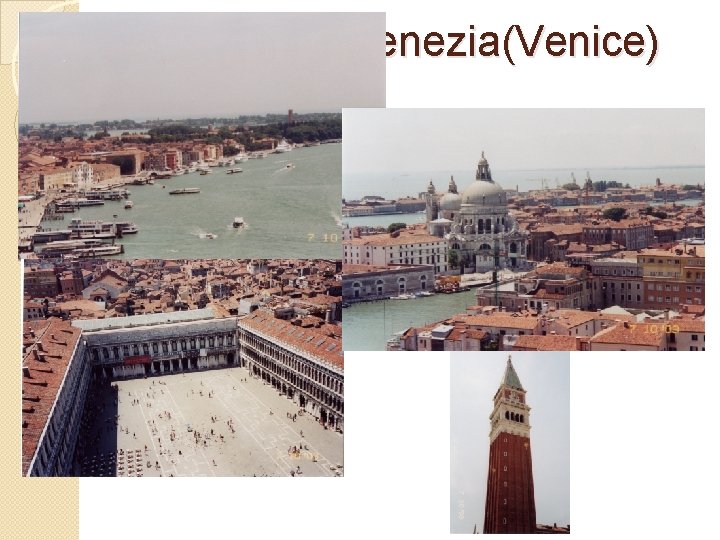
Venezia(Venice)
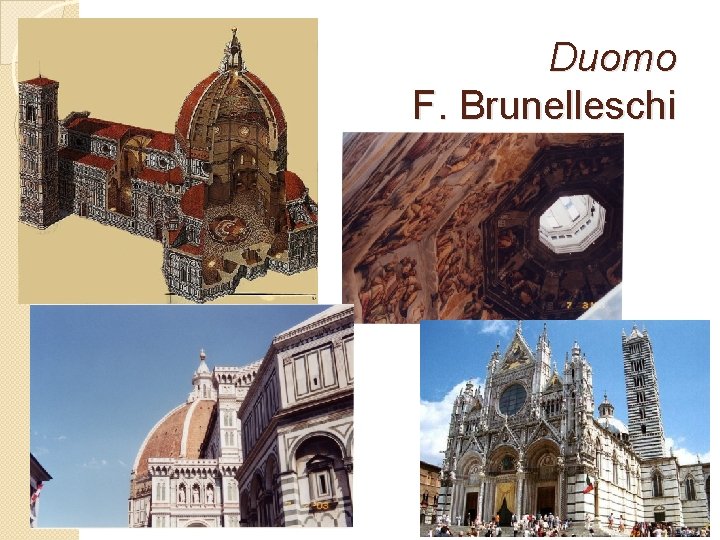
Duomo F. Brunelleschi