The Ecdysozoa The Ecdysozoa include the following phyla





- Slides: 52
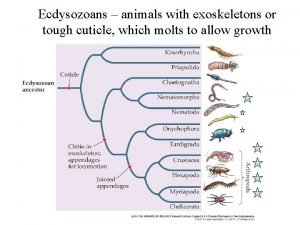
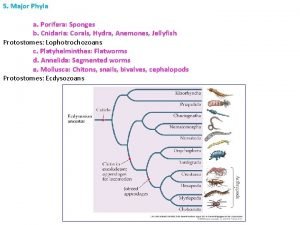
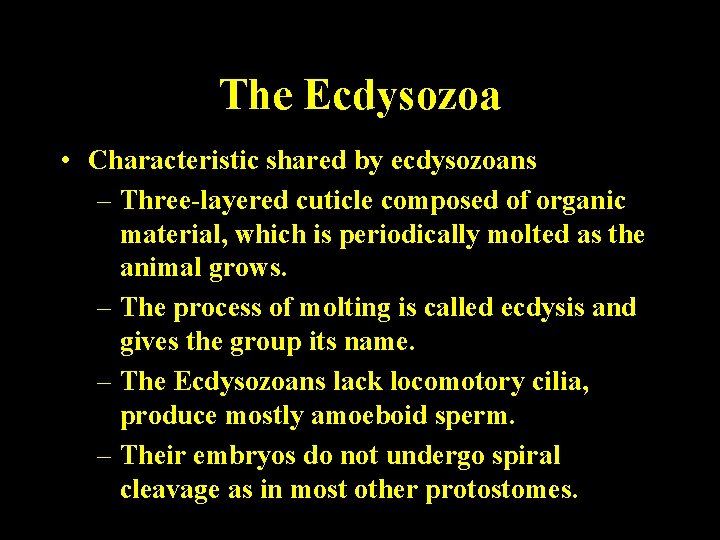
The Ecdysozoa • The Ecdysozoa include the following phyla: Arthropoda, Onychophora, Tardigrada, Kinorhyncha, Priapulida, Loricifera, Nematoda and Nematomorpha.
The Ecdysozoa • Characteristic shared by ecdysozoans – Three-layered cuticle composed of organic material, which is periodically molted as the animal grows. – The process of molting is called ecdysis and gives the group its name. – The Ecdysozoans lack locomotory cilia, produce mostly amoeboid sperm. – Their embryos do not undergo spiral cleavage as in most other protostomes.
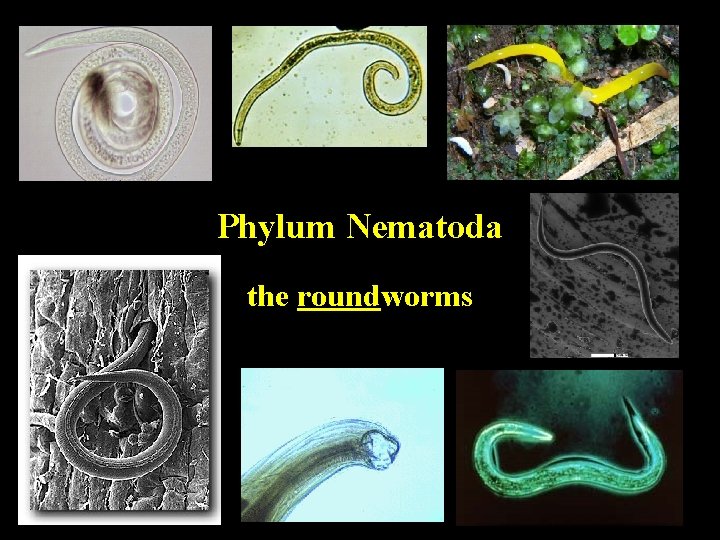
Phylum Nematoda the roundworms
Phylum Nematoda Nematodes are among the most abundant animals on earth - over 25, 000 species have been described. Majority of nematodes are free-living in every conceivable habitat. • free-living species are commonly microscopic in size. • A few species cause disease of great importance to humans and domestic and wild plants and animals.
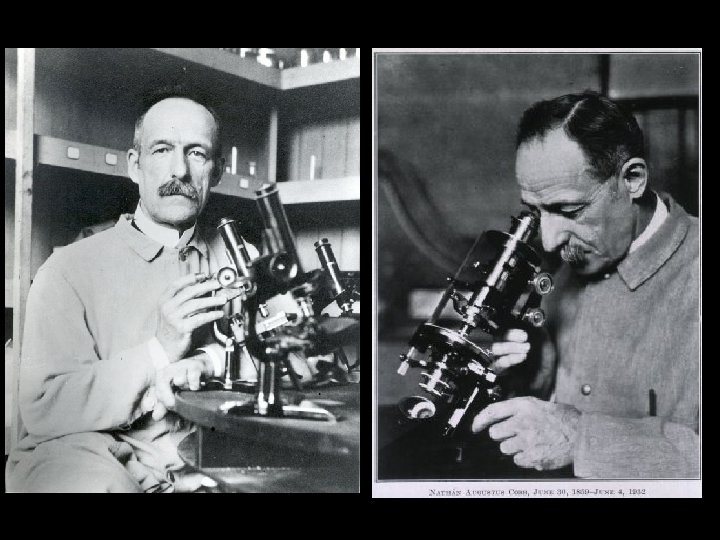
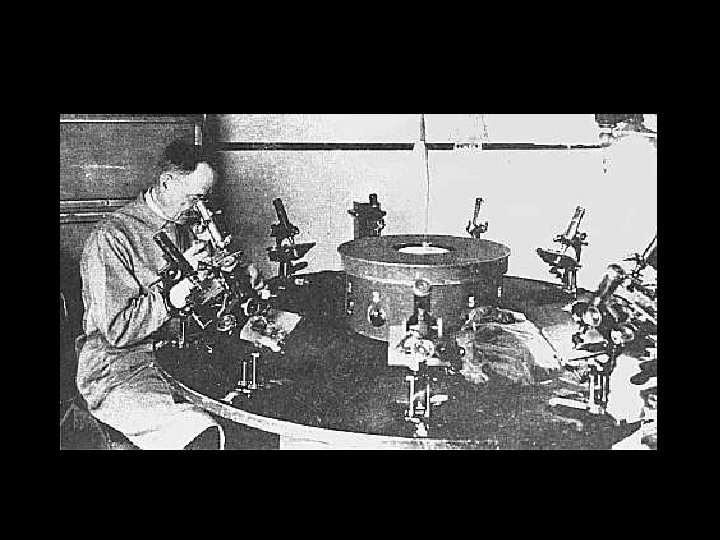
Phylum Nematoda • If all the matter in the universe except the nematodes were swept away, …we should find our world’s mountains, hills, vales, rivers, lakes and oceans represented by a thin film of nematodes. – N. A. Cobb (1914, Yearbook of the United States Department of Agriculture)
Phylum Nematoda • Parasitic and free-living • Numerous and diverse – 6. 7 ml of coastal mud • 1, 074 individuals • 236 species – Rotting apple: • 90 thousand individuals – Farmland: • 9 billion per acre
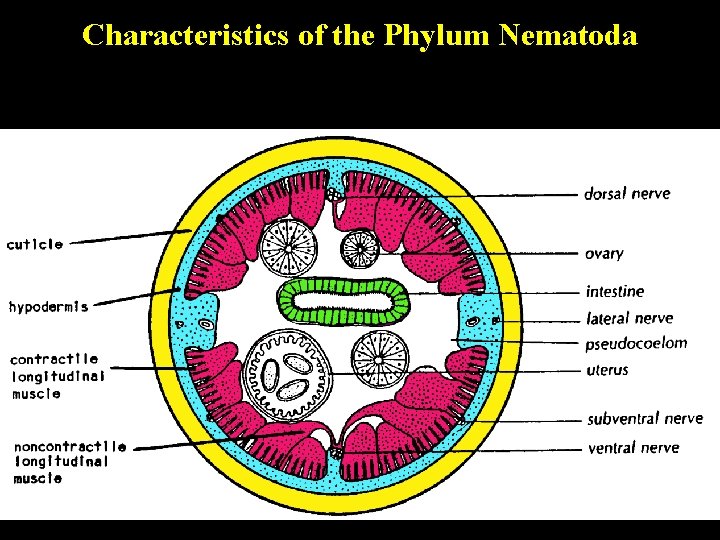
Phylum Nematoda • • Roundworms Dioecious (mostly) Tapered at both ends Pseudocoelomate – Pseudocoel • Complete digestive system – Mouth and anus
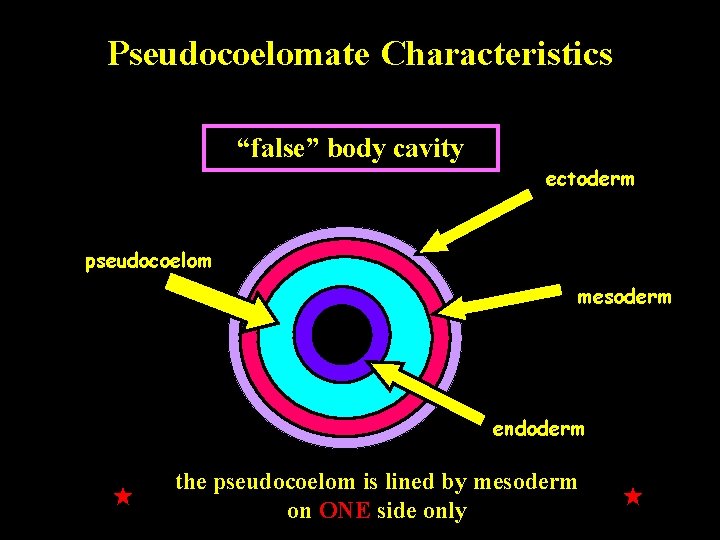
Pseudocoelomate Characteristics “false” body cavity ectoderm pseudocoelom mesoderm Gut endoderm the pseudocoelom is lined by mesoderm on ONE side only
Characteristics of the Phylum Nematoda
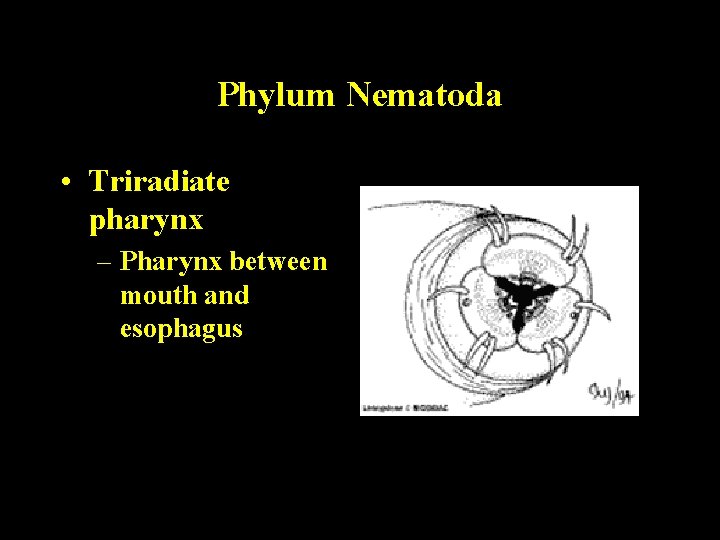
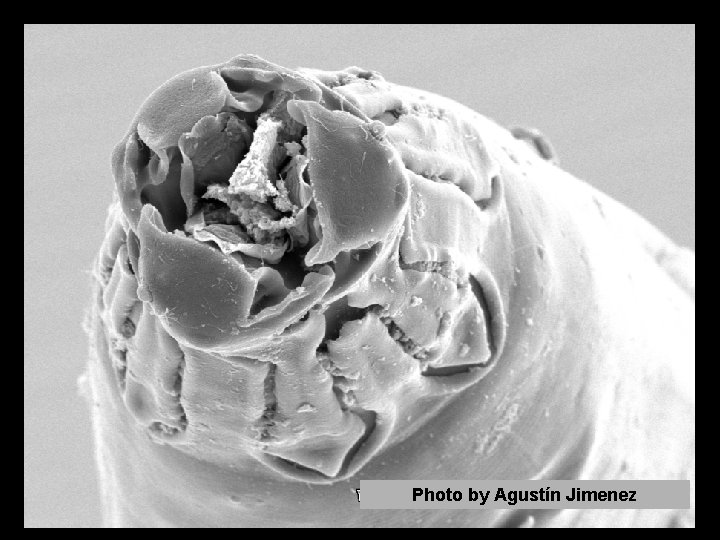
Phylum Nematoda • Triradiate pharynx – Pharynx between mouth and esophagus
Photo by Agustín Jimenez
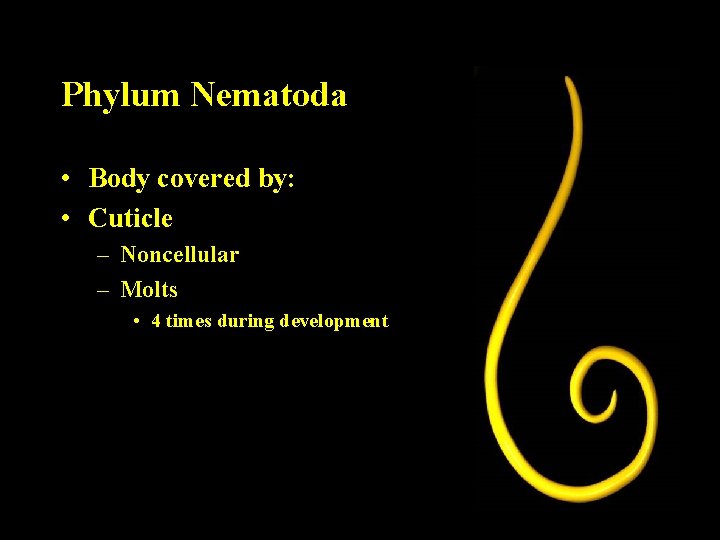
Phylum Nematoda • Body covered by: • Cuticle – Noncellular – Molts • 4 times during development
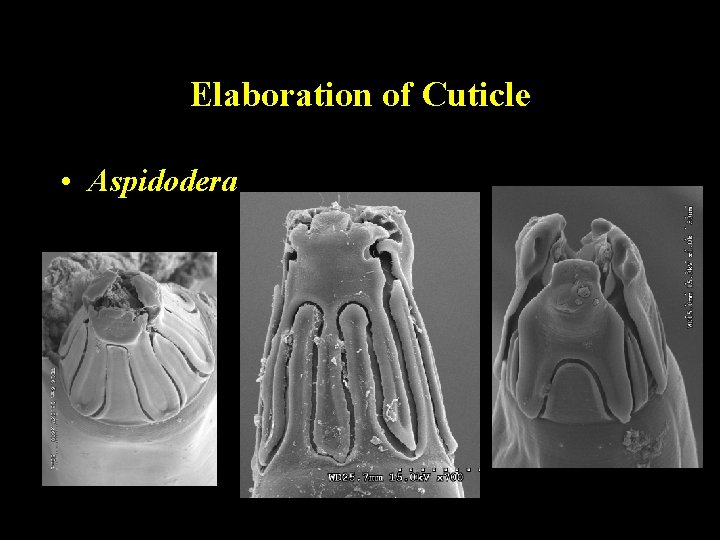
Elaboration of Cuticle • Aspidodera
Phylum Nematoda • Movement – Longitudinal muscles – Hydrostatic skeleton • Fluid filled pseudocoel – Cuticle • Contraction of muscles • Antagonized by pressure of pseudocoel and hydrostatic skeleton
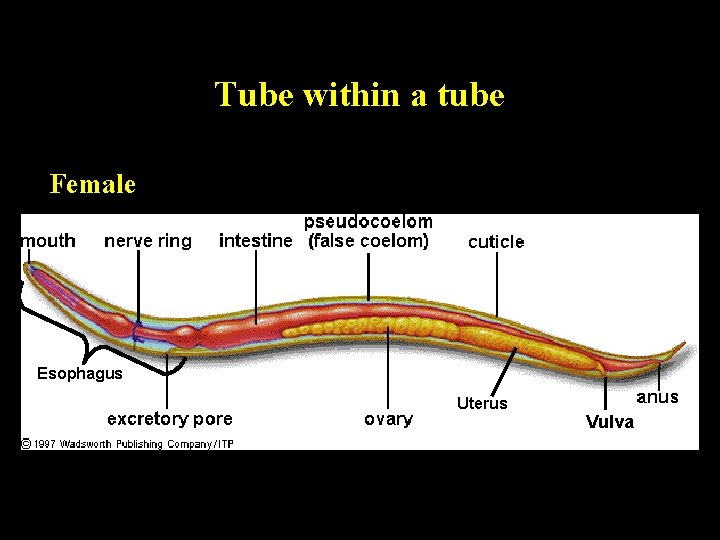
Tube within a tube Female Esophagus Uterus Vulva
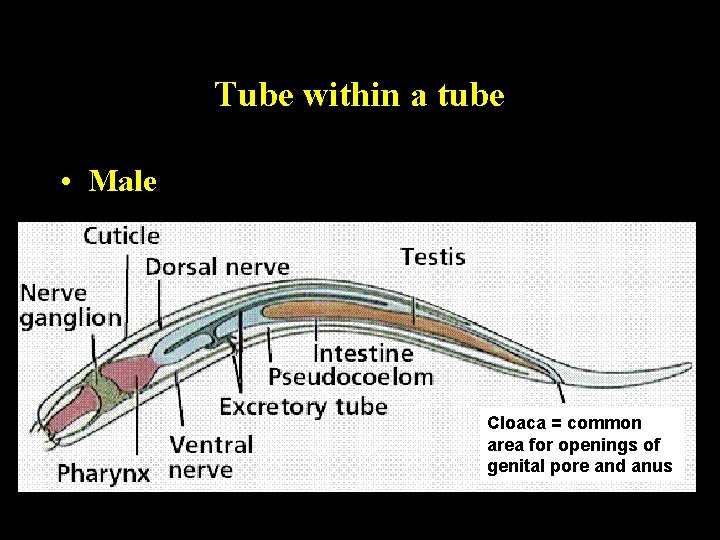
Tube within a tube • Male Cloaca = common area for openings of genital pore and anus
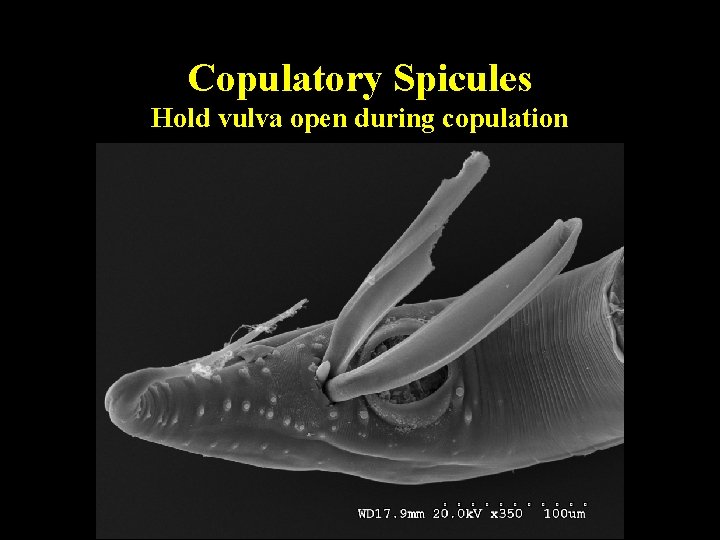
Copulatory Spicules Hold vulva open during copulation
Reproduction • Dioecious • Some Monoecious (rare) • Parthenogenesis – Females reproduce without males – Unfertilized eggs develop into new individuals – Sometimes systems are mixed (heterogamy) • Mate Finding – Pheromones – Thigmotaxis (papillae near reproductive structures)
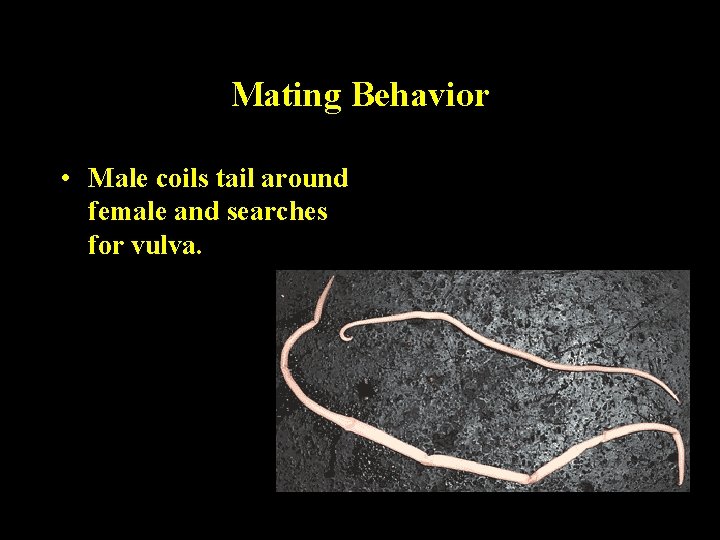
Mating Behavior • Male coils tail around female and searches for vulva.
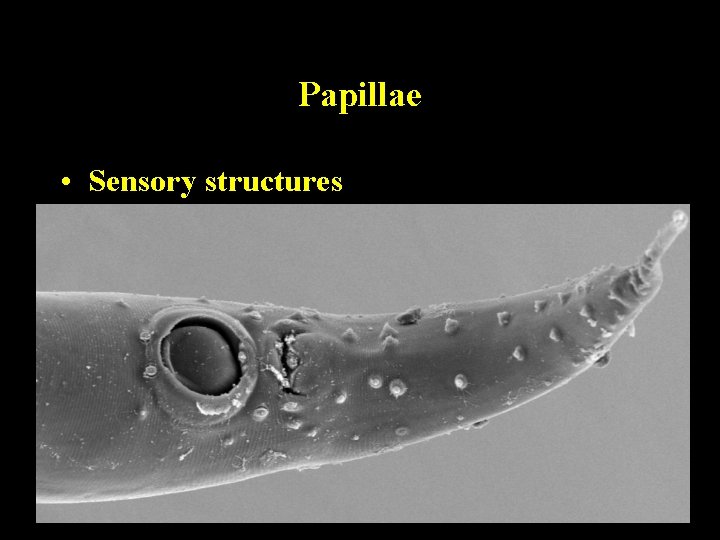
Papillae • Sensory structures
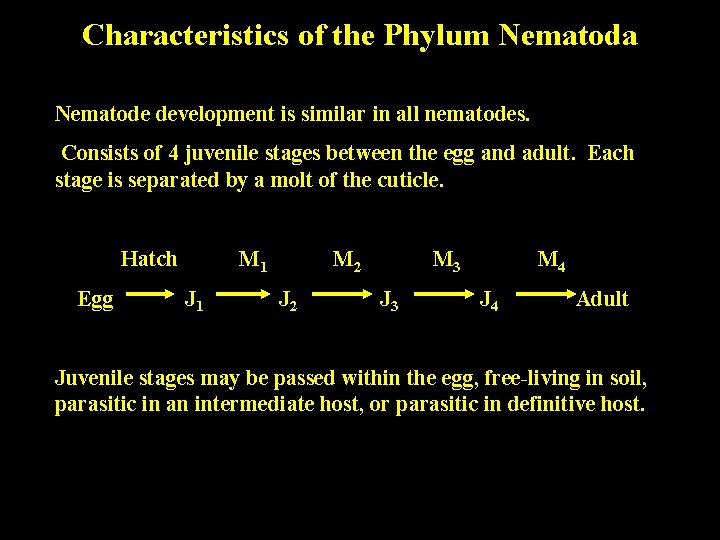
Characteristics of the Phylum Nematoda Nematode development is similar in all nematodes. Consists of 4 juvenile stages between the egg and adult. Each stage is separated by a molt of the cuticle. Hatch Egg M 1 J 1 M 2 J 2 M 3 J 3 M 4 J 4 Adult Juvenile stages may be passed within the egg, free-living in soil, parasitic in an intermediate host, or parasitic in definitive host.
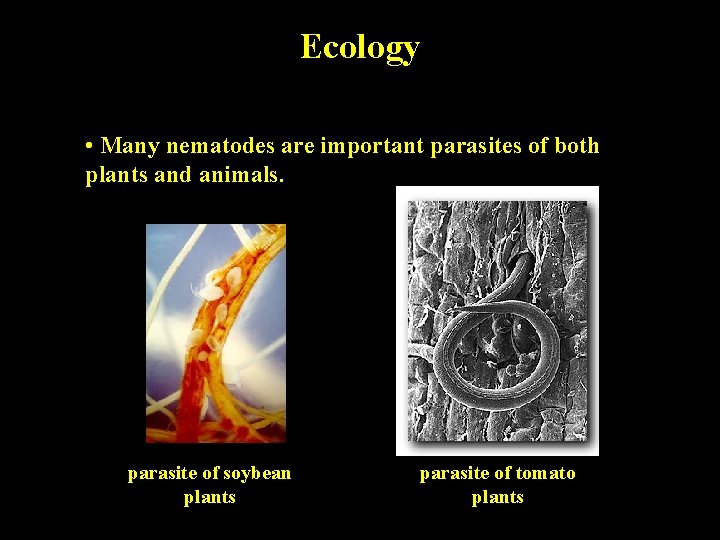
Ecology • Many nematodes are important parasites of both plants and animals. parasite of soybean plants parasite of tomato plants
Parasitic Nematodes
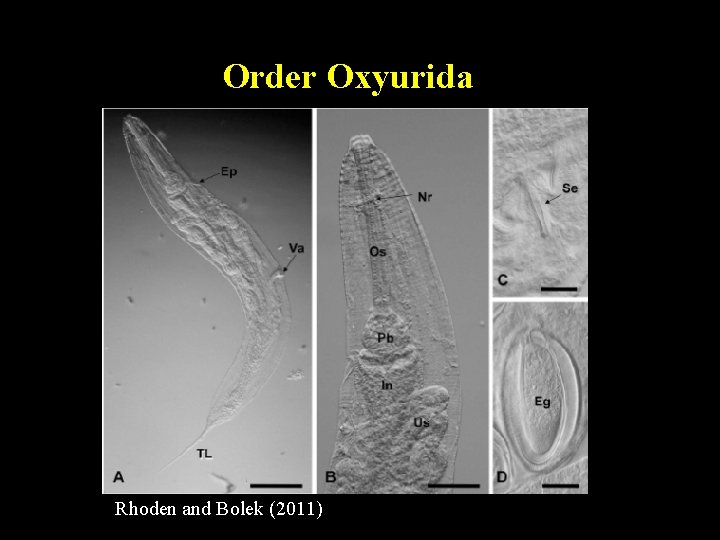
Order Oxyurida Rhoden and Bolek (2011)
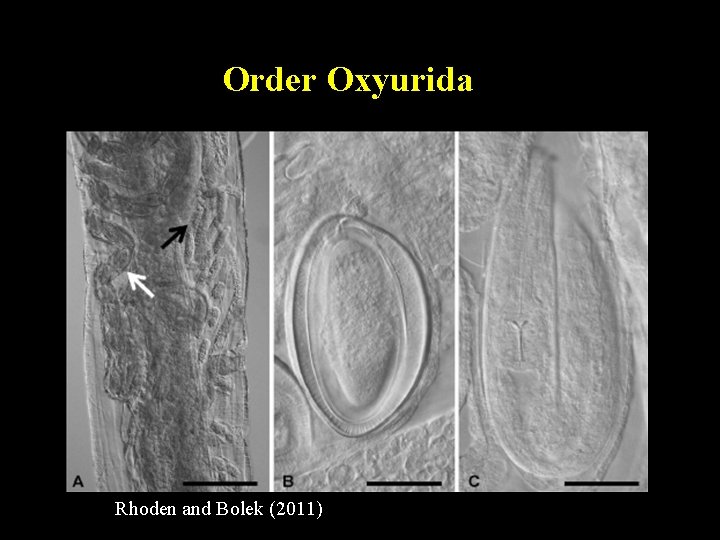
Order Oxyurida Rhoden and Bolek (2011)
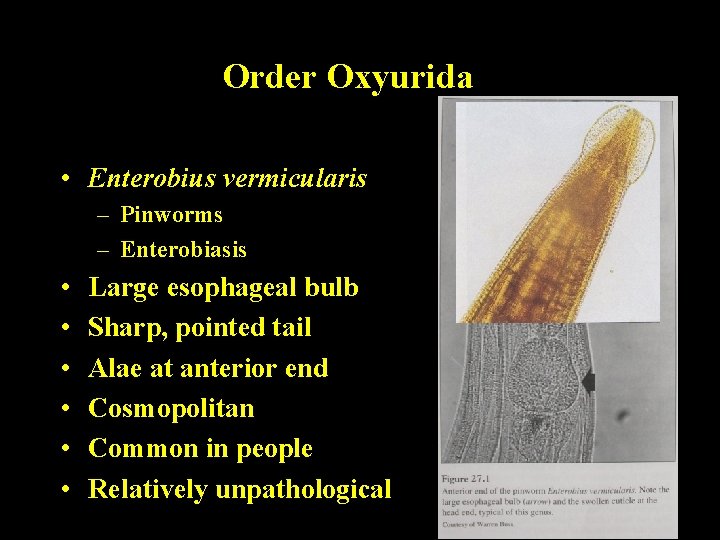
Order Oxyurida • Enterobius vermicularis – Pinworms – Enterobiasis • • • Large esophageal bulb Sharp, pointed tail Alae at anterior end Cosmopolitan Common in people Relatively unpathological
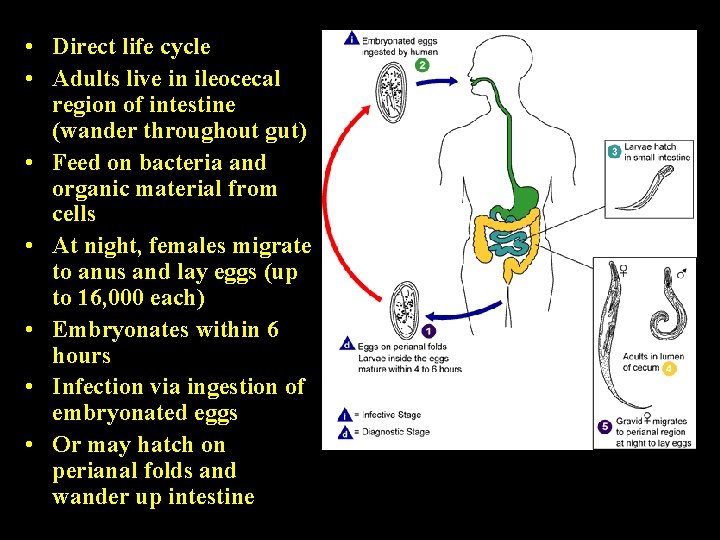
• Direct life cycle • Adults live in ileocecal region of intestine (wander throughout gut) • Feed on bacteria and organic material from cells • At night, females migrate to anus and lay eggs (up to 16, 000 each) • Embryonates within 6 hours • Infection via ingestion of embryonated eggs • Or may hatch on perianal folds and wander up intestine
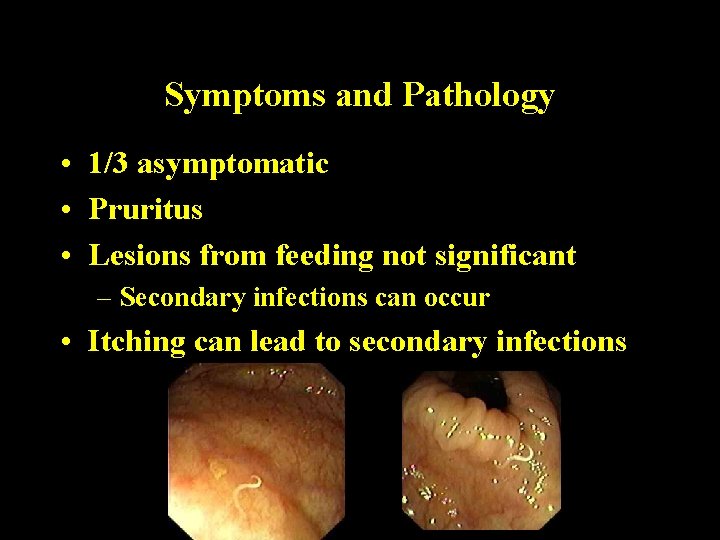
Symptoms and Pathology • 1/3 asymptomatic • Pruritus • Lesions from feeding not significant – Secondary infections can occur • Itching can lead to secondary infections
Pinworm Neurosis • Nervousness – Fidgeting, restlessness, irritable, nail biting, nose picking – Due to toxemia and damage of epithelium • Children • Parents – Obsessive cleaning
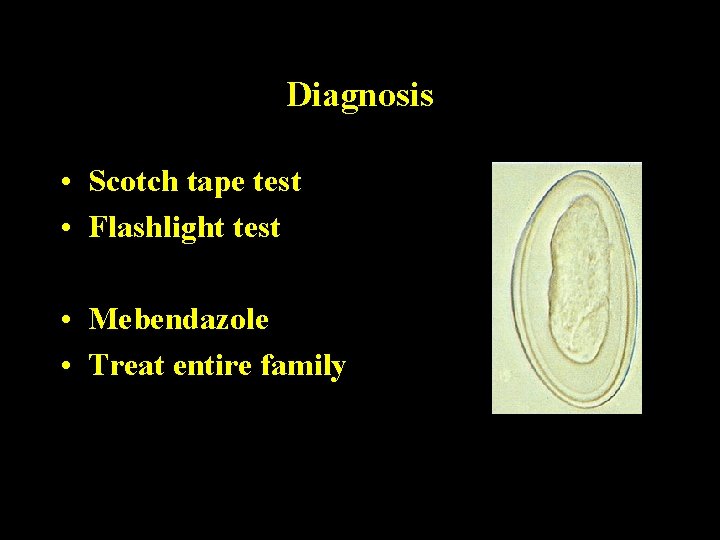
Diagnosis • Scotch tape test • Flashlight test • Mebendazole • Treat entire family
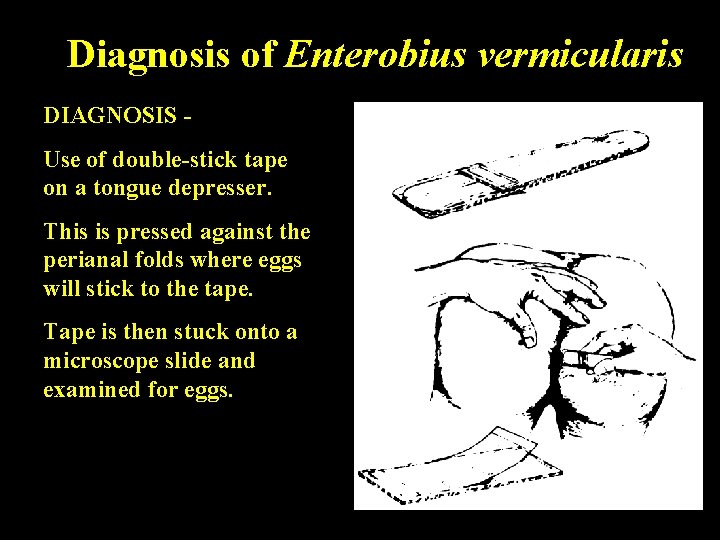
Diagnosis of Enterobius vermicularis DIAGNOSIS Use of double-stick tape on a tongue depresser. This is pressed against the perianal folds where eggs will stick to the tape. Tape is then stuck onto a microscope slide and examined for eggs.
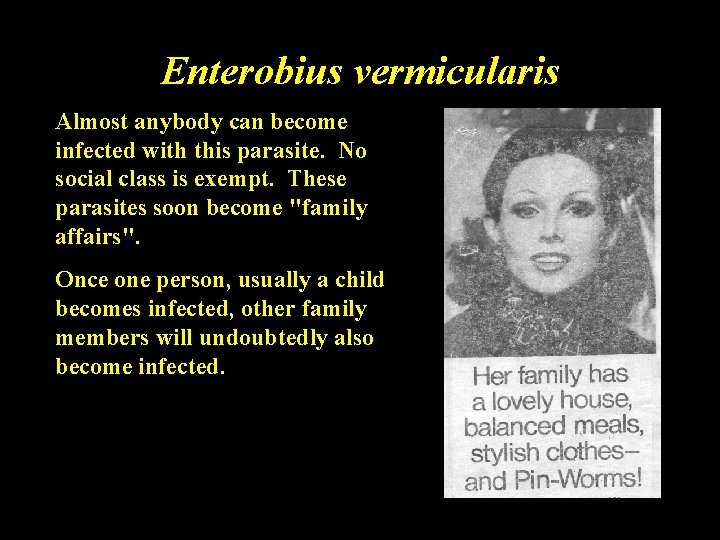
Enterobius vermicularis Almost anybody can become infected with this parasite. No social class is exempt. These parasites soon become "family affairs". Once one person, usually a child becomes infected, other family members will undoubtedly also become infected.
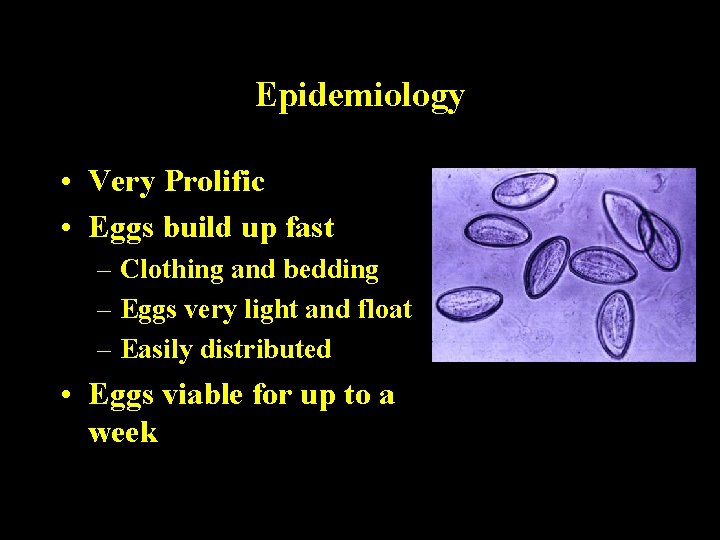
Epidemiology • Very Prolific • Eggs build up fast – Clothing and bedding – Eggs very light and float – Easily distributed • Eggs viable for up to a week
Prevention and Control • Not very serious • Good hygiene
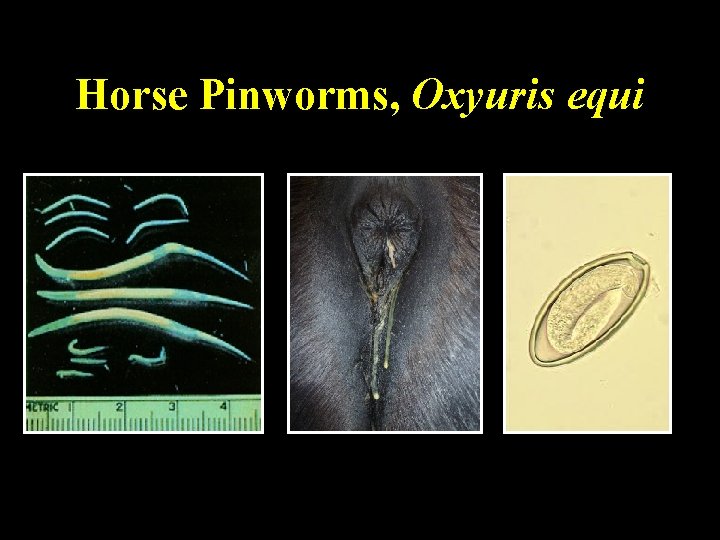
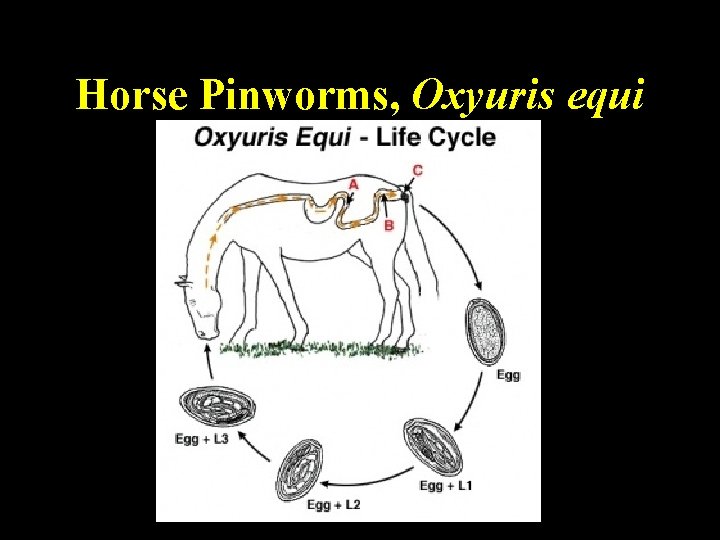
Horse Pinworms, Oxyuris equi
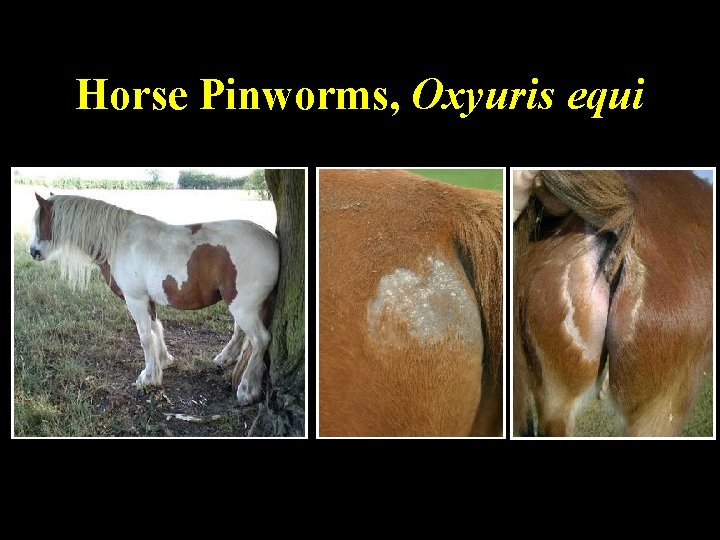
Horse Pinworms, Oxyuris equi
Horse Pinworms, Oxyuris equi
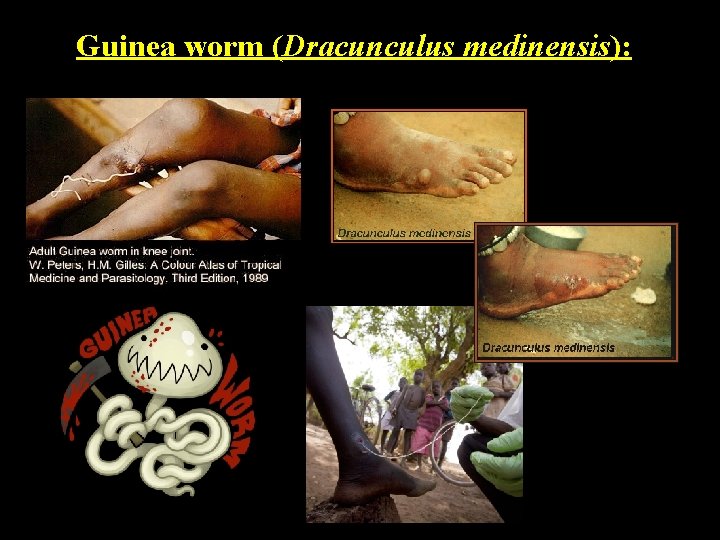
Guinea worm (Dracunculus medinensis):
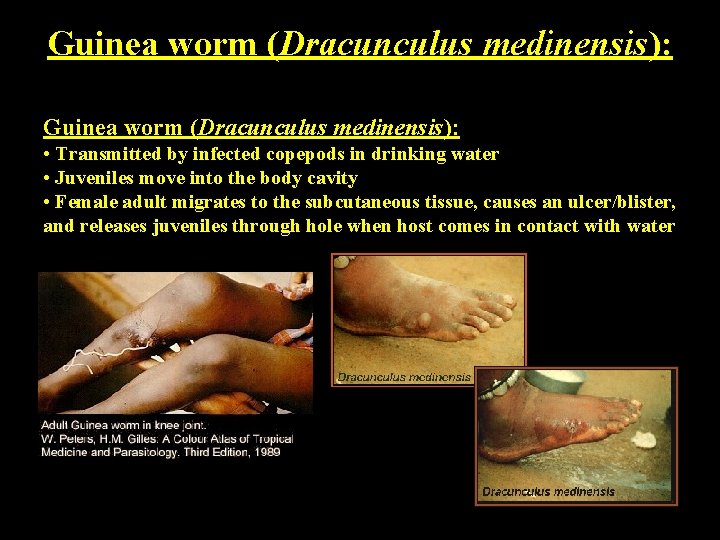
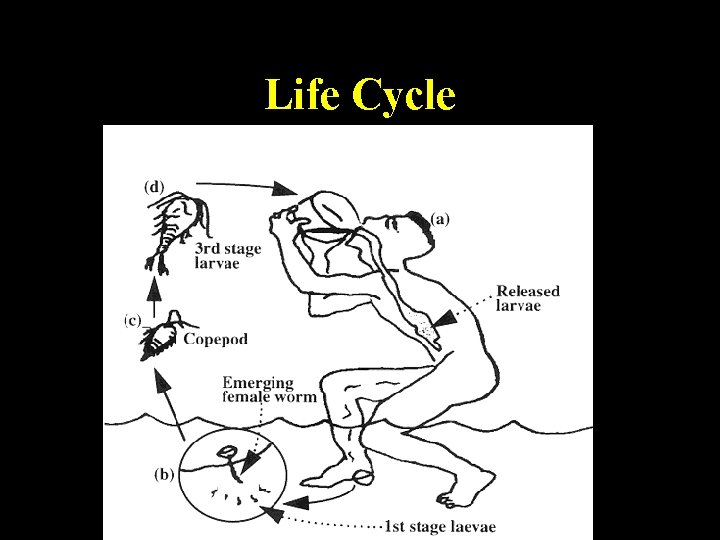
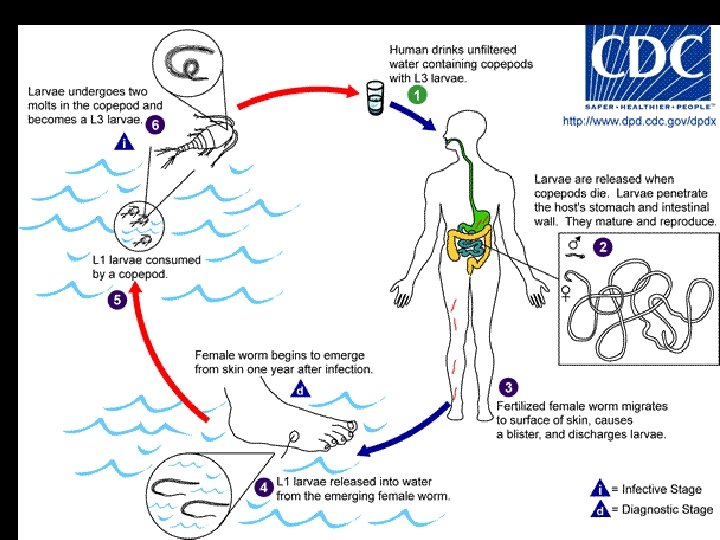
Guinea worm (Dracunculus medinensis): • Transmitted by infected copepods in drinking water • Juveniles move into the body cavity • Female adult migrates to the subcutaneous tissue, causes an ulcer/blister, and releases juveniles through hole when host comes in contact with water
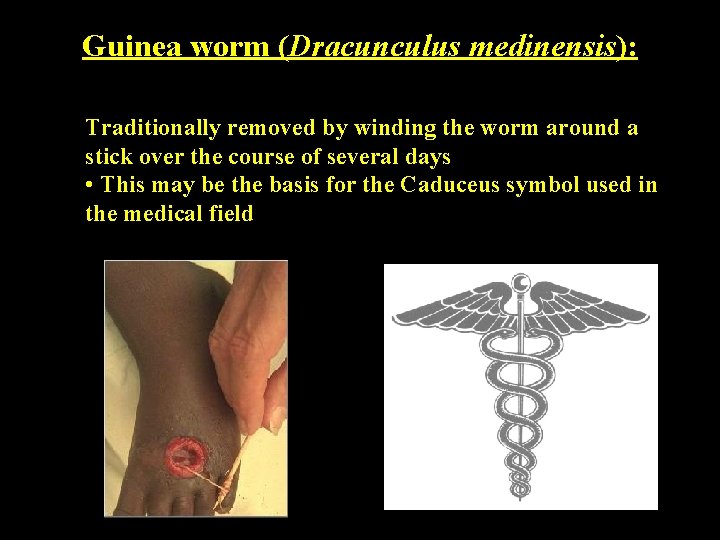
Guinea worm (Dracunculus medinensis): Traditionally removed by winding the worm around a stick over the course of several days • This may be the basis for the Caduceus symbol used in the medical field
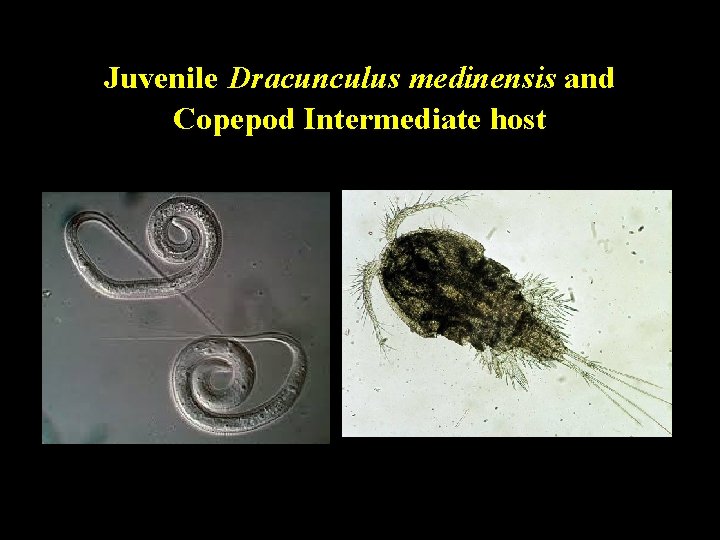
Juvenile Dracunculus medinensis and Copepod Intermediate host
Life Cycle
Drinking Water Guinea worm sufferers often try to ease the burning pain caused by the blister by stepping into water—the very same source of drinking water for their community.
Guinea worm (Dracunculus medinensis): • Female worms cause allergic reactions during blister formation, causing an intense burning pain producing allergic reactions (rashes, nausea, diarrhea, dizziness, and localized edema). • When the blister bursts, allergic reactions subside, but skin ulcers form, through which the worm can protrude. • Only when the worm is removed is healing complete. Death of adult worms in joints can lead to arthritis and paralysis in the spinal cord.
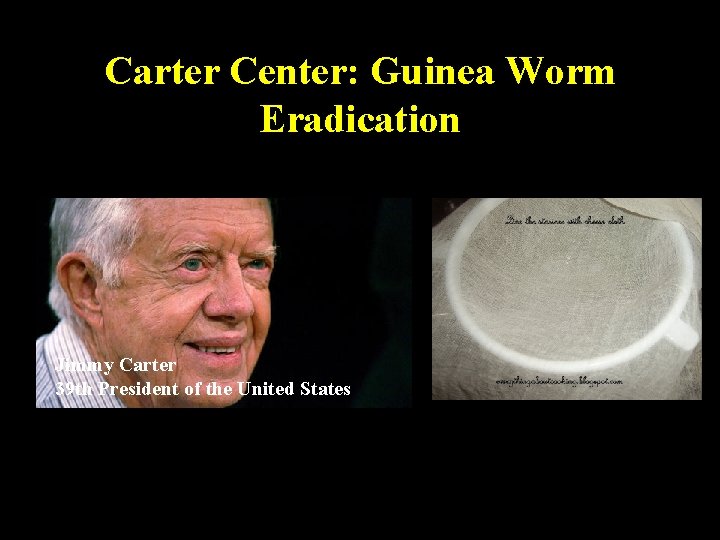
Carter Center: Guinea Worm Eradication Jimmy Carter 39 th President of the United States
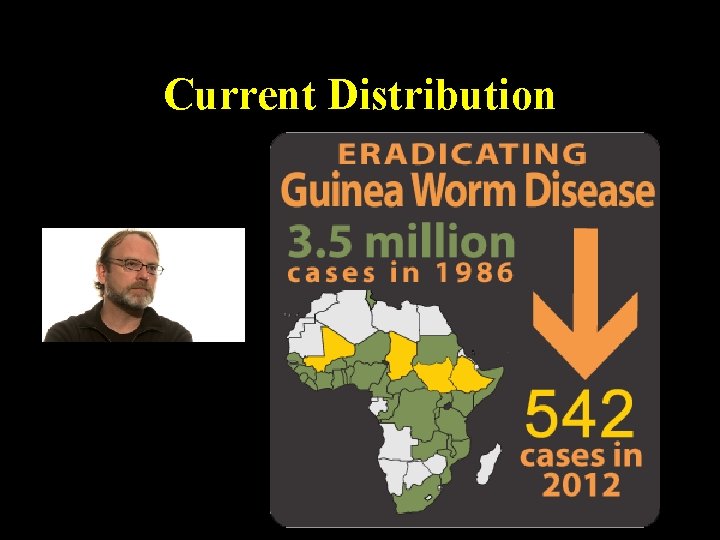
Distribution
Controlled Immersion
Current Distribution