seventh edition International Trauma Life Support for Emergency


- Slides: 38
seventh edition International Trauma Life Support for Emergency Care Providers Trauma Assessment and Management CHAPTER 2
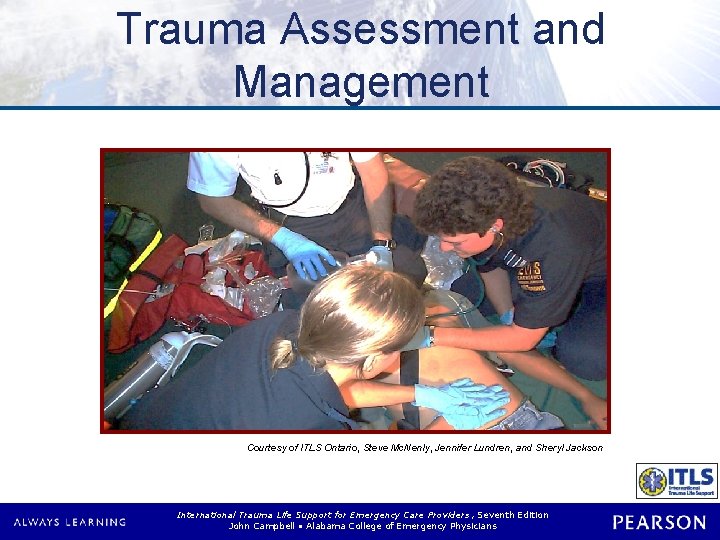
Trauma Assessment and Management Courtesy of ITLS Ontario, Steve Mc. Nenly, Jennifer Lundren, and Sheryl Jackson International Trauma Life Support for Emergency Care Providers, Seventh Edition John Campbell • Alabama College of Emergency Physicians
Overview • ITLS Patient Assessment – Primary Survey – Ongoing Exam – Secondary Survey • Initial Assessment related to – Rapid Trauma Survey vs. Focused Exam – Interruptions • Critical conditions and the “Fix It” process International Trauma Life Support for Emergency Care Providers, Seventh Edition John Campbell • Alabama College of Emergency Physicians
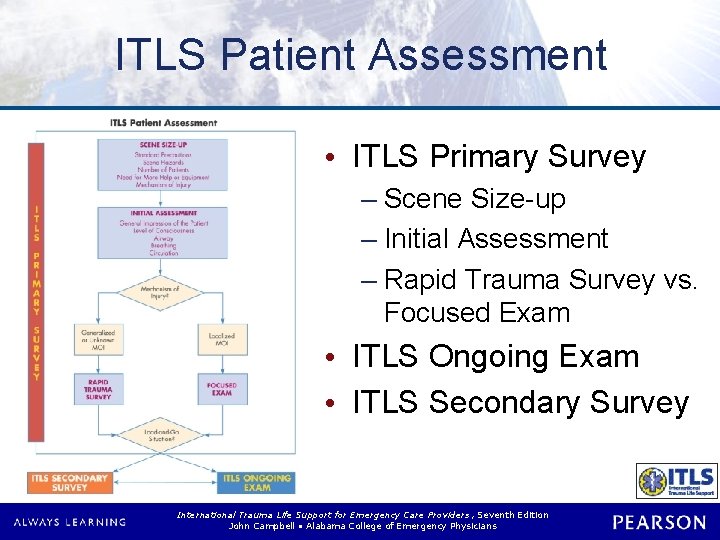
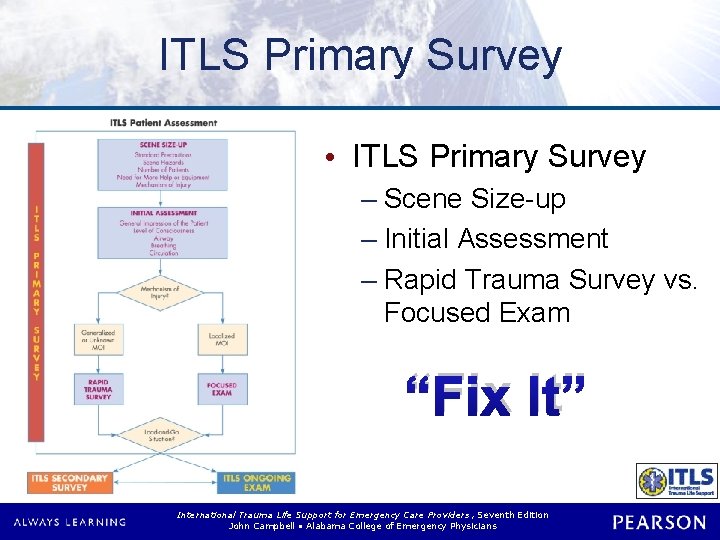
ITLS Patient Assessment • ITLS Primary Survey – Scene Size-up – Initial Assessment – Rapid Trauma Survey vs. Focused Exam • ITLS Ongoing Exam • ITLS Secondary Survey International Trauma Life Support for Emergency Care Providers, Seventh Edition John Campbell • Alabama College of Emergency Physicians
ITLS Primary Survey • ITLS Primary Survey – Scene Size-up – Initial Assessment – Rapid Trauma Survey vs. Focused Exam “Fix It” International Trauma Life Support for Emergency Care Providers, Seventh Edition John Campbell • Alabama College of Emergency Physicians
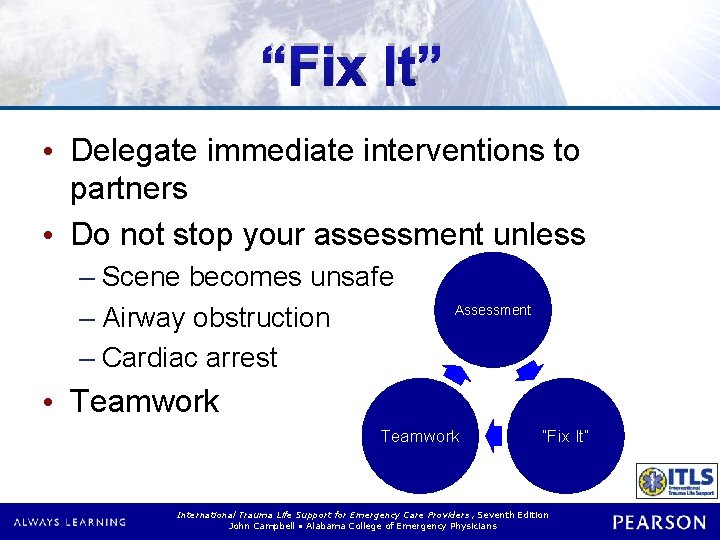
“Fix It” • Delegate immediate interventions to partners • Do not stop your assessment unless – Scene becomes unsafe – Airway obstruction – Cardiac arrest Assessment • Teamwork “Fix It” International Trauma Life Support for Emergency Care Providers, Seventh Edition John Campbell • Alabama College of Emergency Physicians
Scene Size-up International Trauma Life Support for Emergency Care Providers, Seventh Edition John Campbell • Alabama College of Emergency Physicians
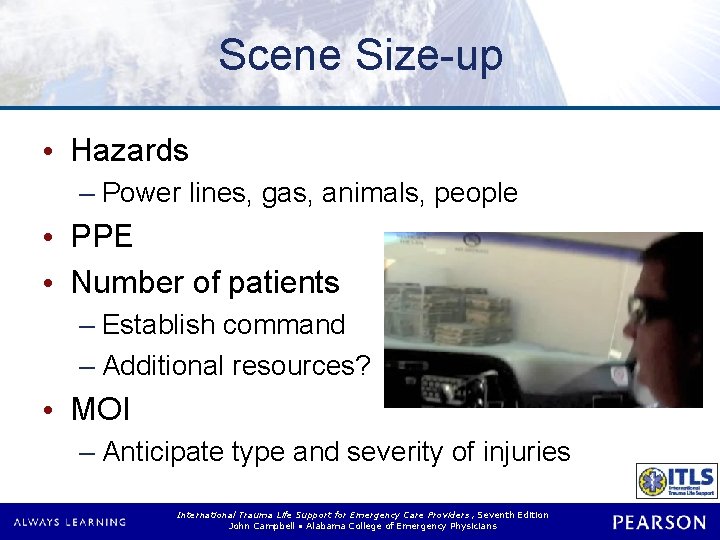
Scene Size-up • Hazards – Power lines, gas, animals, people • PPE • Number of patients – Establish command – Additional resources? • MOI – Anticipate type and severity of injuries International Trauma Life Support for Emergency Care Providers, Seventh Edition John Campbell • Alabama College of Emergency Physicians
Initial Assessment International Trauma Life Support for Emergency Care Providers, Seventh Edition John Campbell • Alabama College of Emergency Physicians
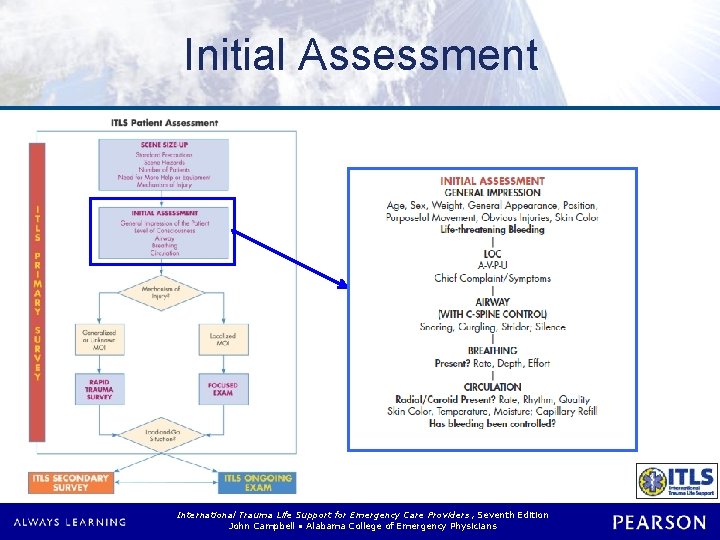
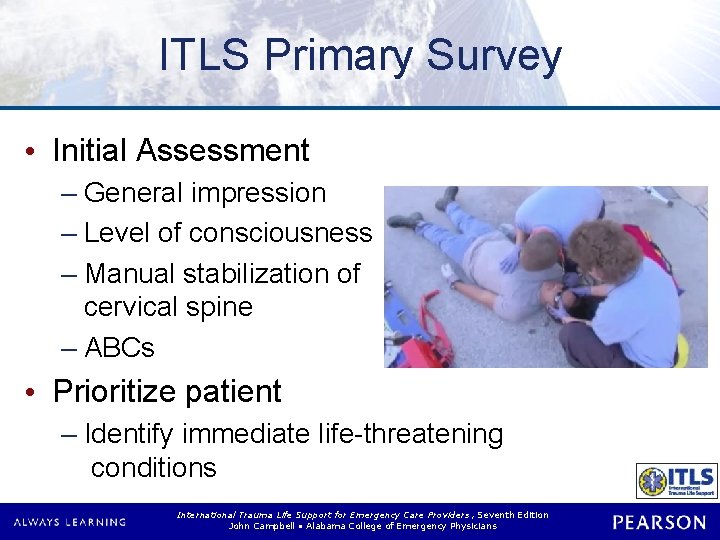
ITLS Primary Survey • Initial Assessment – General impression – Level of consciousness – Manual stabilization of cervical spine – ABCs • Prioritize patient – Identify immediate life-threatening conditions International Trauma Life Support for Emergency Care Providers, Seventh Edition John Campbell • Alabama College of Emergency Physicians
ITLS Primary Survey • Less than 2 minutes – Initial Assessment and Rapid Trauma Survey • Delegate any intervention “Fix It” • Interrupt survey only for: – Unsafe scene – Airway obstruction – Cardiac arrest International Trauma Life Support for Emergency Care Providers, Seventh Edition John Campbell • Alabama College of Emergency Physicians
ITLS Primary Survey • General impression – Obvious major injuries or bleeding – immediately control life-threatening bleeding – Approximate age, sex, weight – General appearance – Position of patient body and surroundings – Patient activity • Triage multiple patients International Trauma Life Support for Emergency Care Providers, Seventh Edition John Campbell • Alabama College of Emergency Physicians
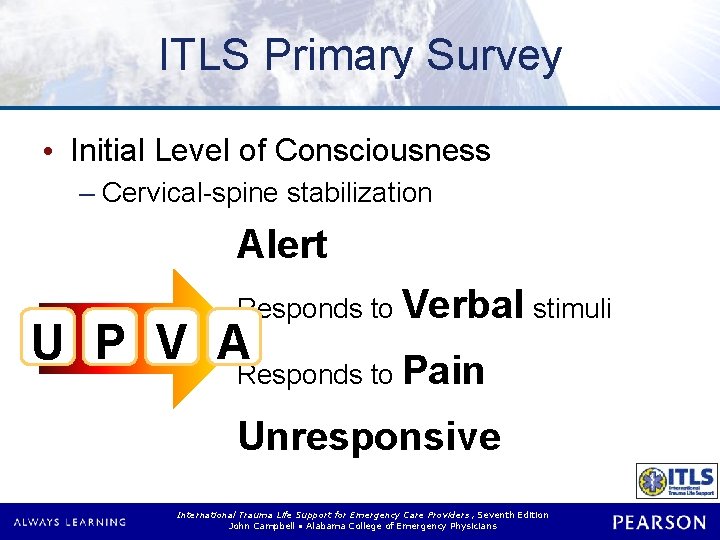
ITLS Primary Survey • Initial Level of Consciousness – Cervical-spine stabilization Alert Responds to Verbal stimuli U P V A Responds to Pain Unresponsive International Trauma Life Support for Emergency Care Providers, Seventh Edition John Campbell • Alabama College of Emergency Physicians
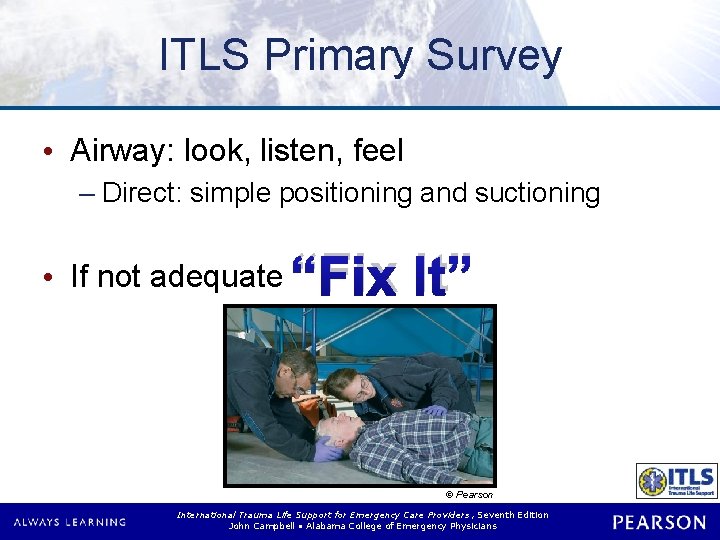
ITLS Primary Survey • Airway: look, listen, feel – Direct: simple positioning and suctioning • If not adequate “Fix It” © Pearson International Trauma Life Support for Emergency Care Providers, Seventh Edition John Campbell • Alabama College of Emergency Physicians
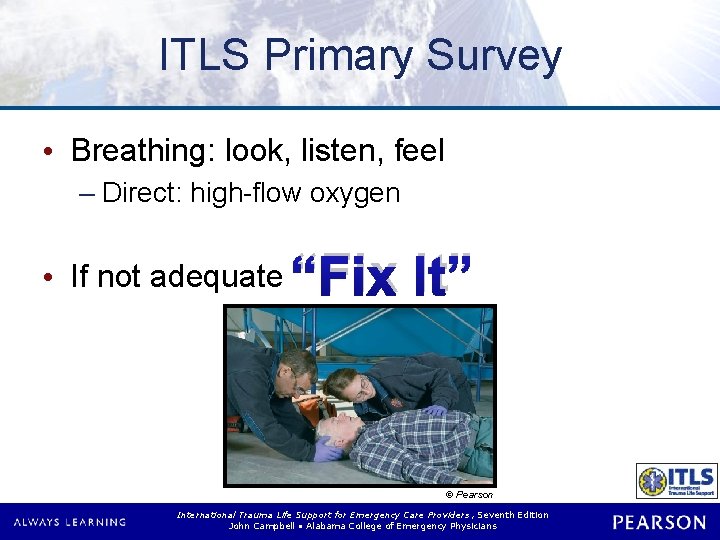
ITLS Primary Survey • Breathing: look, listen, feel – Direct: high-flow oxygen • If not adequate “Fix It” © Pearson International Trauma Life Support for Emergency Care Providers, Seventh Edition John Campbell • Alabama College of Emergency Physicians
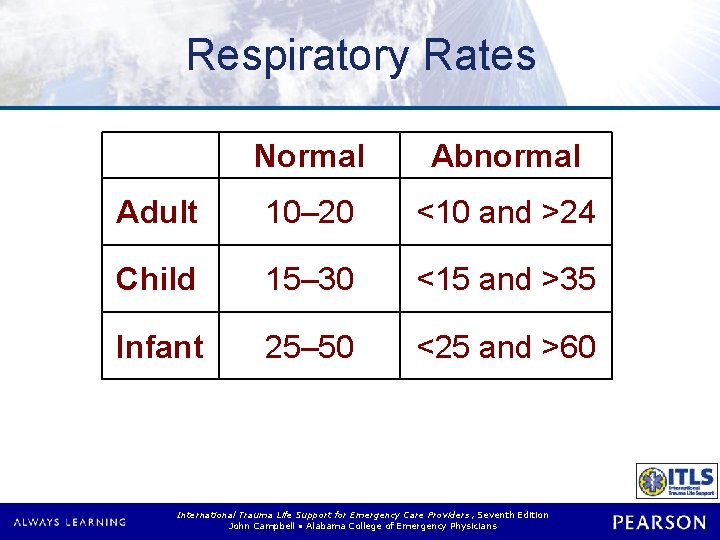
Respiratory Rates Normal Abnormal Adult 10– 20 <10 and >24 Child 15– 30 <15 and >35 Infant 25– 50 <25 and >60 International Trauma Life Support for Emergency Care Providers, Seventh Edition John Campbell • Alabama College of Emergency Physicians
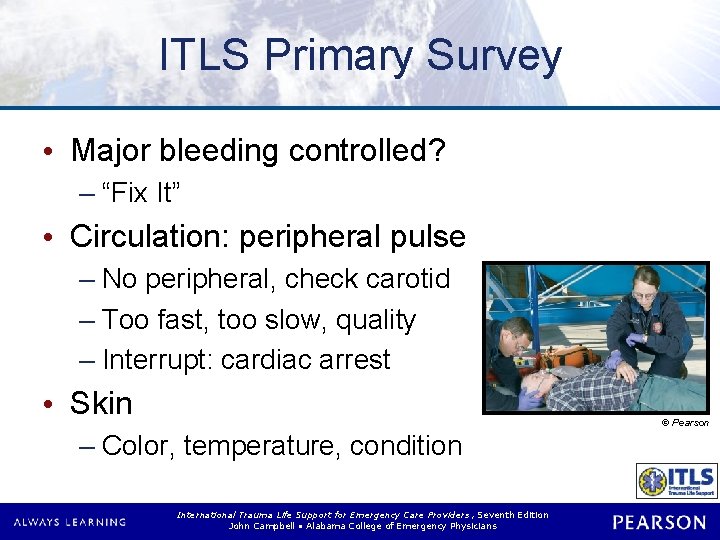
ITLS Primary Survey • Major bleeding controlled? – “Fix It” • Circulation: peripheral pulse – No peripheral, check carotid – Too fast, too slow, quality – Interrupt: cardiac arrest • Skin © Pearson – Color, temperature, condition International Trauma Life Support for Emergency Care Providers, Seventh Edition John Campbell • Alabama College of Emergency Physicians
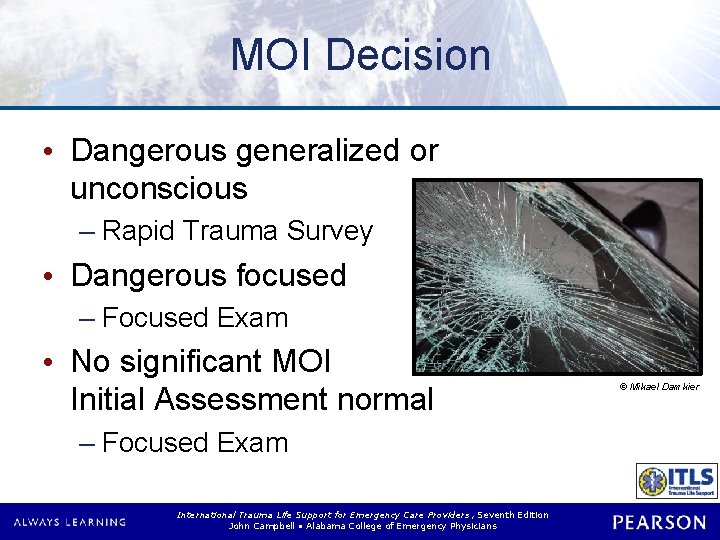
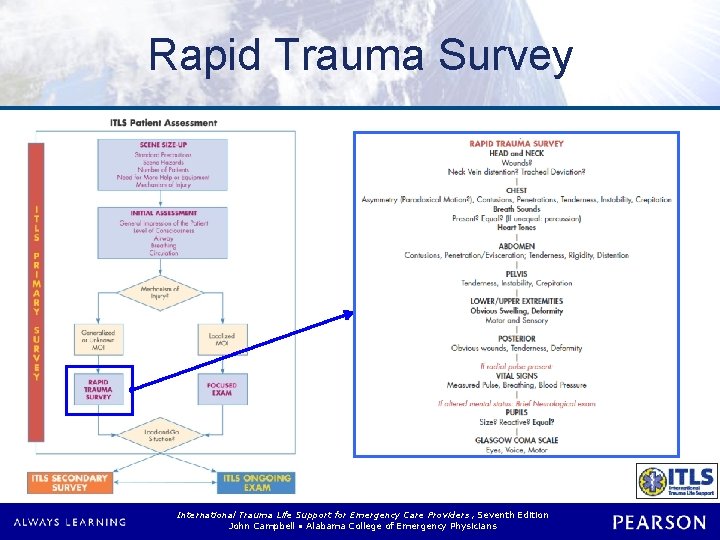
MOI Decision • Dangerous generalized or unconscious – Rapid Trauma Survey • Dangerous focused – Focused Exam • No significant MOI Initial Assessment normal – Focused Exam International Trauma Life Support for Emergency Care Providers, Seventh Edition John Campbell • Alabama College of Emergency Physicians © Mikael Damkier
Rapid Trauma Survey International Trauma Life Support for Emergency Care Providers, Seventh Edition John Campbell • Alabama College of Emergency Physicians
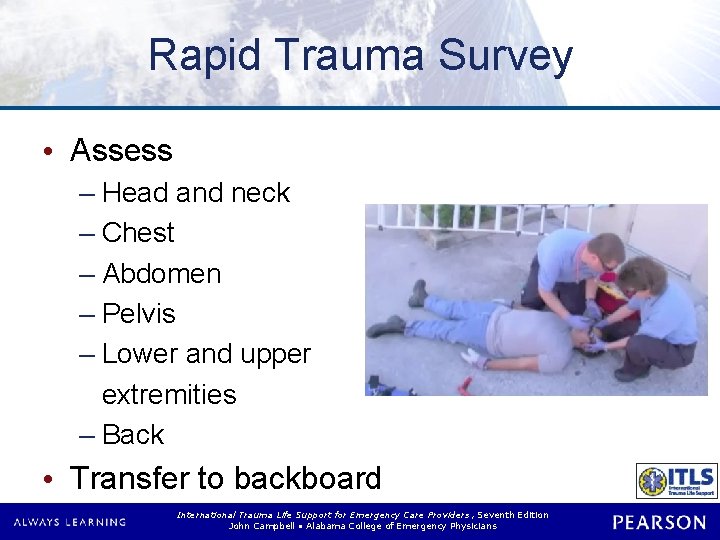
Rapid Trauma Survey • Assess – Head and neck – Chest – Abdomen – Pelvis – Lower and upper extremities – Back • Transfer to backboard International Trauma Life Support for Emergency Care Providers, Seventh Edition John Campbell • Alabama College of Emergency Physicians
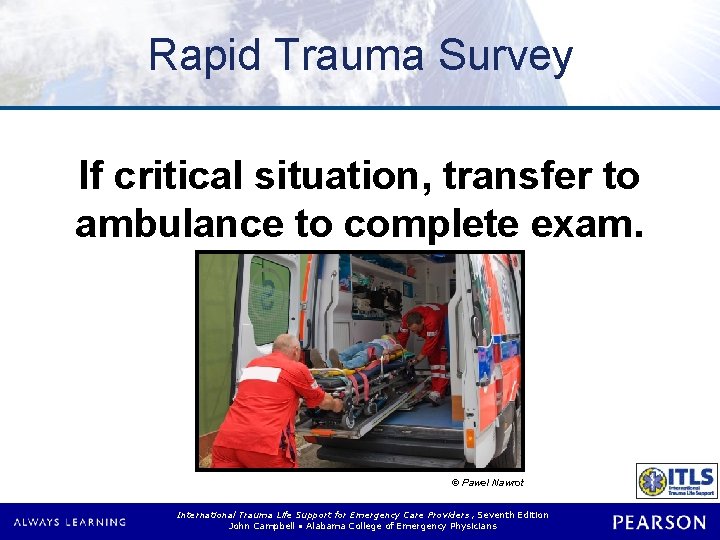
Rapid Trauma Survey If critical situation, transfer to ambulance to complete exam. © Pawel Nawrot International Trauma Life Support for Emergency Care Providers, Seventh Edition John Campbell • Alabama College of Emergency Physicians
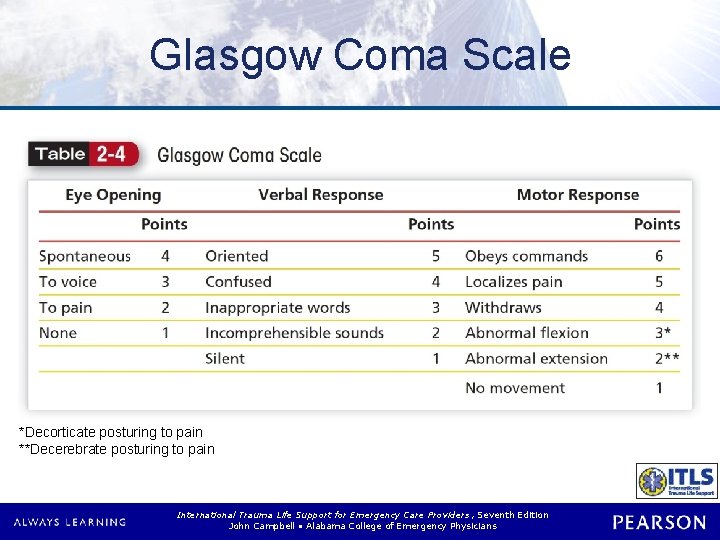
Rapid Trauma Survey • Obtain baseline vital signs • If altered mental status – Brief neurological exam – Pupils, GCS, and signs of cerebral herniation – Look for medic alert tags – Consider other causes International Trauma Life Support for Emergency Care Providers, Seventh Edition John Campbell • Alabama College of Emergency Physicians
Glasgow Coma Scale *Decorticate posturing to pain **Decerebrate posturing to pain International Trauma Life Support for Emergency Care Providers, Seventh Edition John Campbell • Alabama College of Emergency Physicians
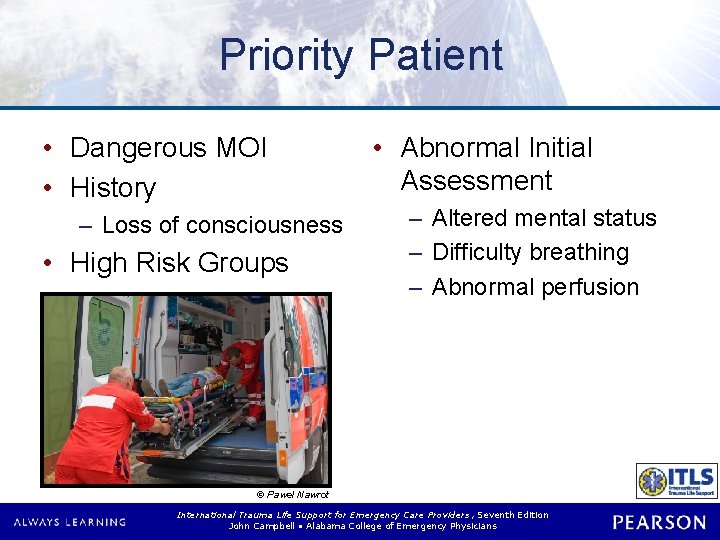
Priority Patient • Dangerous MOI • History – Loss of consciousness • High Risk Groups • Abnormal Initial Assessment – Altered mental status – Difficulty breathing – Abnormal perfusion © Pawel Nawrot International Trauma Life Support for Emergency Care Providers, Seventh Edition John Campbell • Alabama College of Emergency Physicians
Brief Targeted History • • • S A M P L E Symptoms Allergies Medications Past medical history Last oral intake Events preceding incident International Trauma Life Support for Emergency Care Providers, Seventh Edition John Campbell • Alabama College of Emergency Physicians
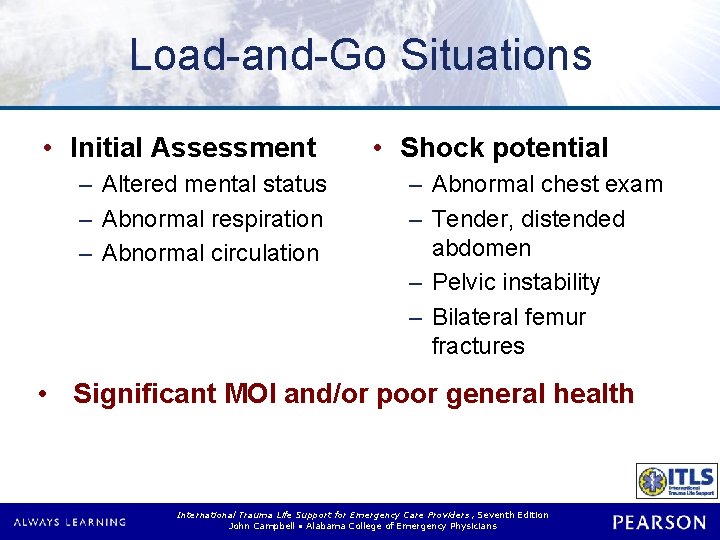
Load-and-Go Situations • Initial Assessment – Altered mental status – Abnormal respiration – Abnormal circulation • Shock potential – Abnormal chest exam – Tender, distended abdomen – Pelvic instability – Bilateral femur fractures • Significant MOI and/or poor general health International Trauma Life Support for Emergency Care Providers, Seventh Edition John Campbell • Alabama College of Emergency Physicians
When in doubt—transport early! International Trauma Life Support for Emergency Care Providers, Seventh Edition John Campbell • Alabama College of Emergency Physicians
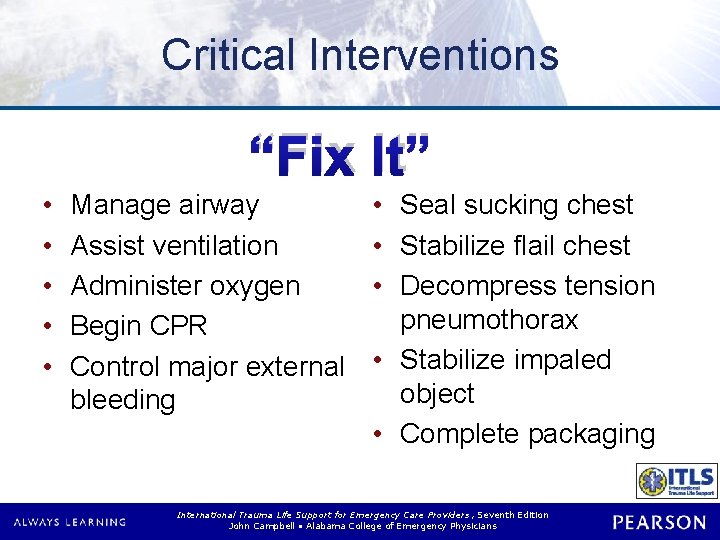
Critical Interventions “Fix It” • • • Manage airway Assist ventilation Administer oxygen Begin CPR Control major external bleeding • Seal sucking chest • Stabilize flail chest • Decompress tension pneumothorax • Stabilize impaled object • Complete packaging International Trauma Life Support for Emergency Care Providers, Seventh Edition John Campbell • Alabama College of Emergency Physicians
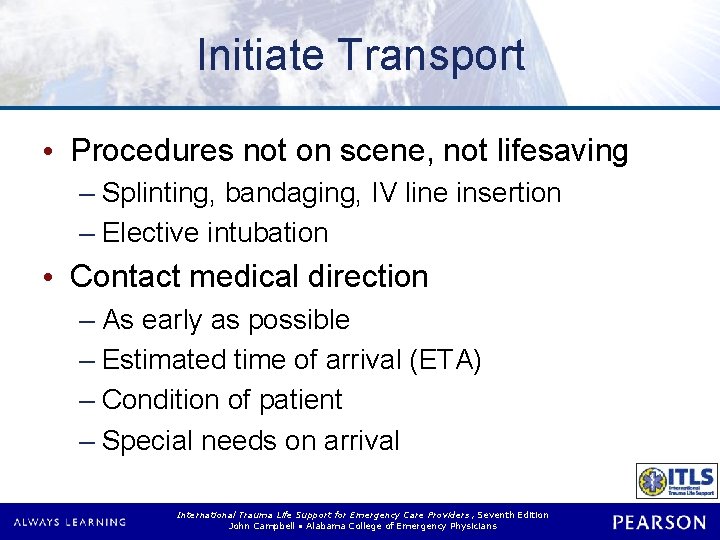
Initiate Transport • Procedures not on scene, not lifesaving – Splinting, bandaging, IV line insertion – Elective intubation • Contact medical direction – As early as possible – Estimated time of arrival (ETA) – Condition of patient – Special needs on arrival International Trauma Life Support for Emergency Care Providers, Seventh Edition John Campbell • Alabama College of Emergency Physicians
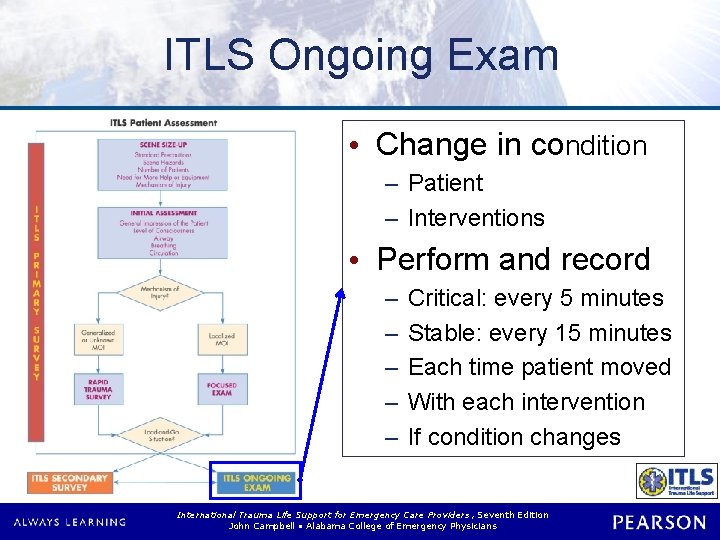
ITLS Ongoing Exam • Change in condition – Patient – Interventions • Perform and record – – – Critical: every 5 minutes Stable: every 15 minutes Each time patient moved With each intervention If condition changes International Trauma Life Support for Emergency Care Providers, Seventh Edition John Campbell • Alabama College of Emergency Physicians
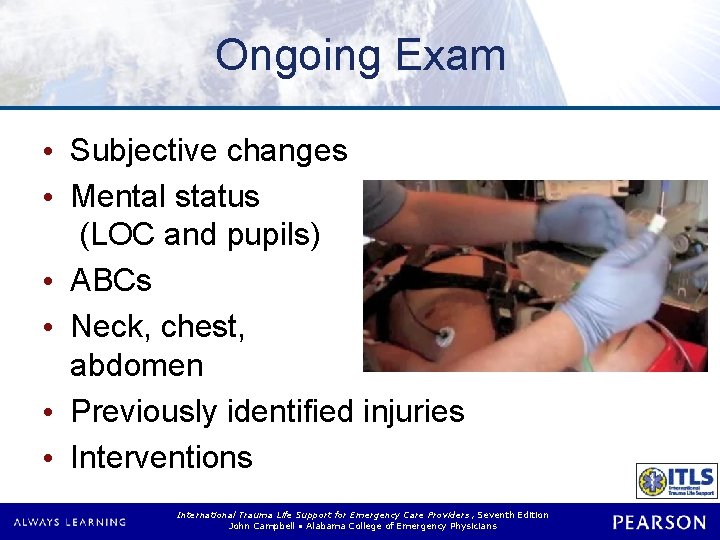
Ongoing Exam • Subjective changes • Mental status (LOC and pupils) • ABCs • Neck, chest, abdomen • Previously identified injuries • Interventions International Trauma Life Support for Emergency Care Providers, Seventh Edition John Campbell • Alabama College of Emergency Physicians
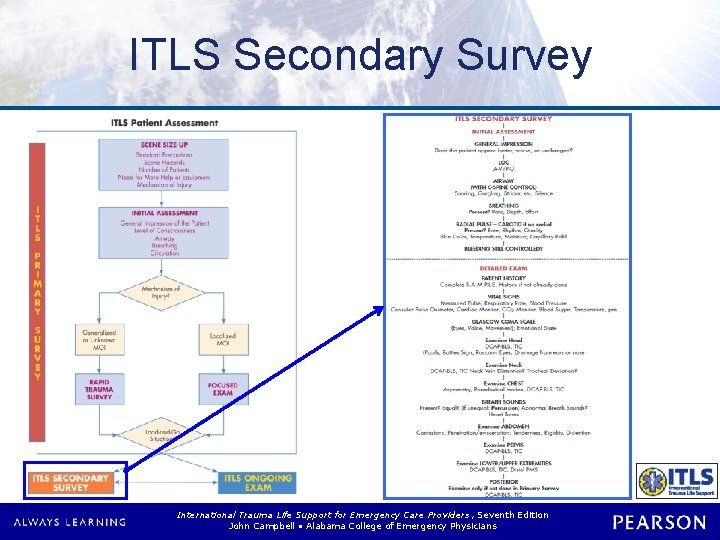
ITLS Secondary Survey International Trauma Life Support for Emergency Care Providers, Seventh Edition John Campbell • Alabama College of Emergency Physicians
ITLS Secondary Survey • More comprehensive exam – Evaluation for all injuries, not just life-threatening – Establishes baseline for treatment decisions • Performed – Critical patients—done during transport – Short transport—may not have time – Noncritical patients—done on scene International Trauma Life Support for Emergency Care Providers, Seventh Edition John Campbell • Alabama College of Emergency Physicians
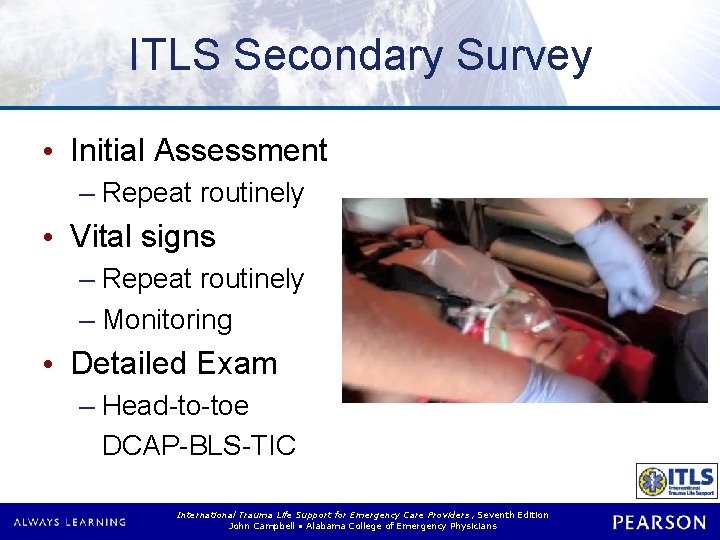
ITLS Secondary Survey • Initial Assessment – Repeat routinely • Vital signs – Repeat routinely – Monitoring • Detailed Exam – Head-to-toe DCAP-BLS-TIC International Trauma Life Support for Emergency Care Providers, Seventh Edition John Campbell • Alabama College of Emergency Physicians
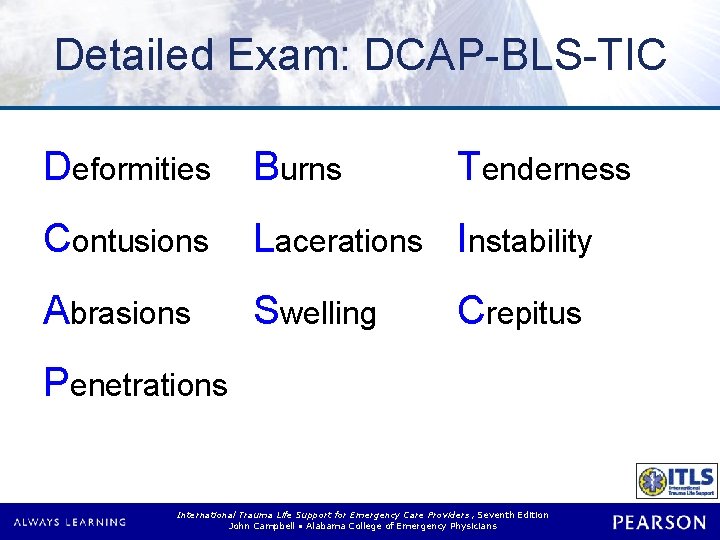
Detailed Exam: DCAP-BLS-TIC Deformities Burns Tenderness Contusions Lacerations Instability Abrasions Swelling Crepitus Penetrations International Trauma Life Support for Emergency Care Providers, Seventh Edition John Campbell • Alabama College of Emergency Physicians
Adjuncts for Patient Assessment • Pulse oximetry • Wave form capnography International Trauma Life Support for Emergency Care Providers, Seventh Edition John Campbell • Alabama College of Emergency Physicians
Adjuncts for Patient Assessment • Serum lactate – Marker for tissue hypoxia – Finger-stick serum levels – Further studies needed • Portable ultrasound – F. A. S. T. International Trauma Life Support for Emergency Care Providers, Seventh Edition John Campbell • Alabama College of Emergency Physicians
Summary • ITLS Patient Assessment – Key to trauma care – Not difficult, but time-critical – Rapid, orderly, thorough • Remain calm – Maximize speed through organization and teamwork International Trauma Life Support for Emergency Care Providers, Seventh Edition John Campbell • Alabama College of Emergency Physicians