Service Environment What Coating Should I Use Presented


- Slides: 35
Service Environment- What Coating Should I Use? Presented by: Tom Higginbothan
Introduction • This webinar will discuss how the service environment, structure design, and size and location of the project can impact the type of coating system selected and specified
Coating System Selection Considerations • • Prevailing service environment Intended service life of structure Type of substrate Level of surface preparation possible Desired service life of coating Access to the work Worker skills and equipment availability Economics
Questions to Ask • Is the coating being applied to an interior or exterior space? • Is the coating being applied in a climatecontrolled shop environment or in the field? • What is the atmospheric service environment? • What is the surface temperature during application? • What is the surface temperature once in service?
Questions to Ask • Will the coating be exposed to abrasion and impact? • Will the coating be immersed in chemicals? – Type – Concentration – p. H – Temperature • Will there be a cleaning or cyclic exposure?
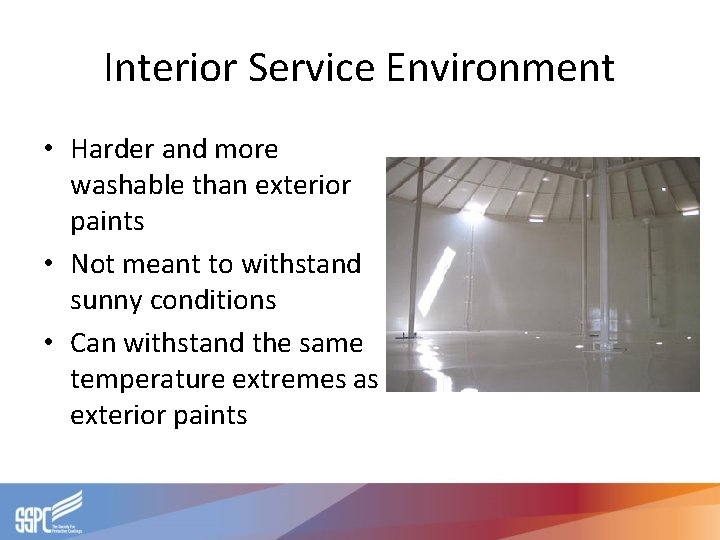
Interior Service Environment • Harder and more washable than exterior paints • Not meant to withstand sunny conditions • Can withstand the same temperature extremes as exterior paints
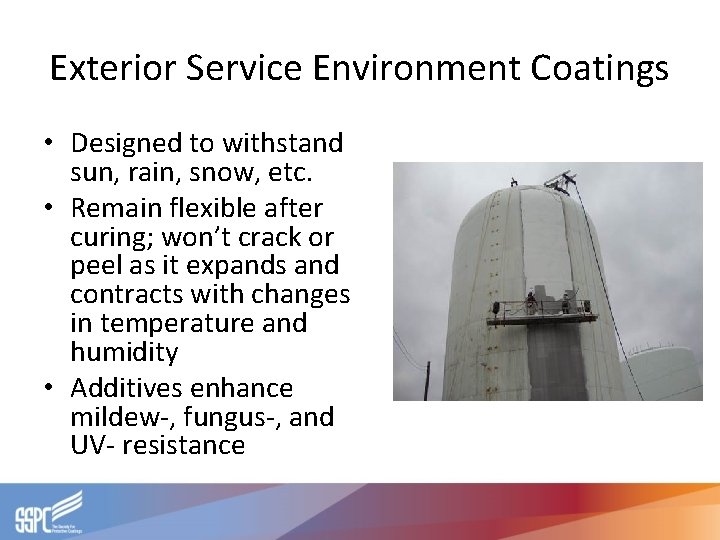
Exterior Service Environment Coatings • Designed to withstand sun, rain, snow, etc. • Remain flexible after curing; won’t crack or peel as it expands and contracts with changes in temperature and humidity • Additives enhance mildew-, fungus-, and UV- resistance
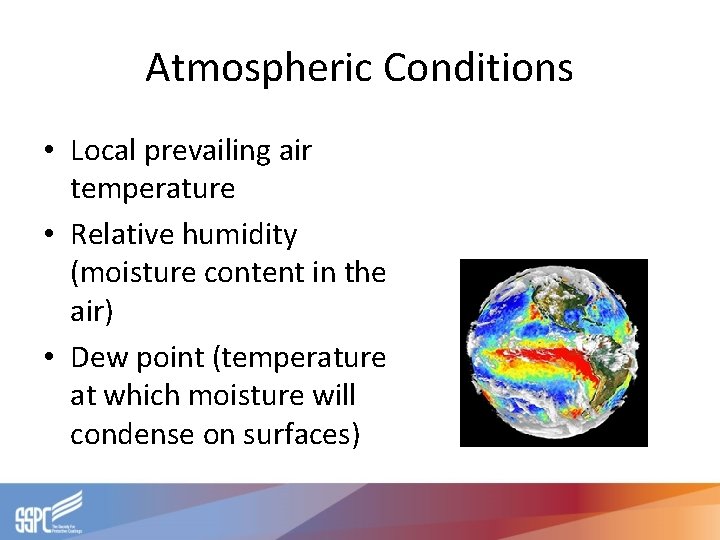
Atmospheric Conditions • Local prevailing air temperature • Relative humidity (moisture content in the air) • Dew point (temperature at which moisture will condense on surfaces)
Temperature • Apply coating system only when the air and substrate temperature are within the range indicated by the manufacturer’s written instructions on the product data sheet (PDS) for both application and curing
Coatings and Moisture • Not applied in rain, fog, mist, or high winds • Typically no applied when surface temperature is less than 5°F (3°C) above the dew point
Coatings and Moisture • Not applied to wet or damp surface unless formulated by the manufacturer for this type of application • Not applied on frosted or ice-coated surfaces
Coatings and Humidity • Coatings must be applied when manufacturer’s acceptable range for humidity can be met for complete curing • High humidity can cause moisture condensation and blushing and other chemical reactions when curing is inhibited – Typically below 85% • Low humidity can inhibit the cure of moisture coatings
Service Locations • What are some different service locations? • How might location affect the type of coating you would select? • What factors should be considered?
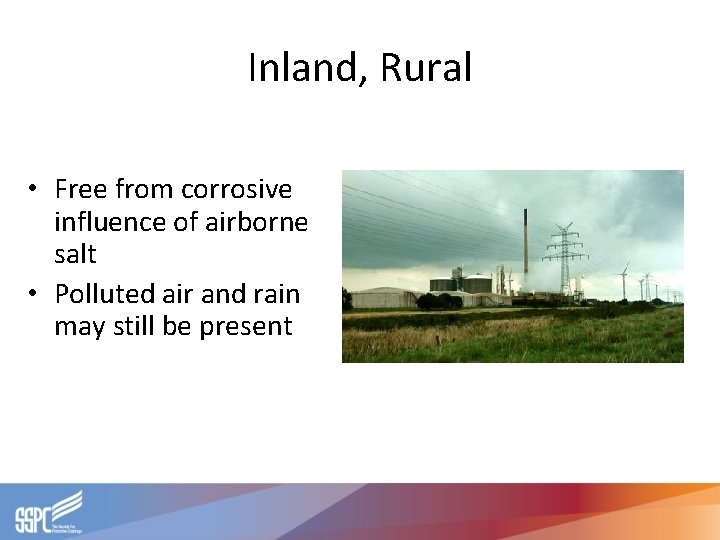
Inland, Rural • Free from corrosive influence of airborne salt • Polluted air and rain may still be present
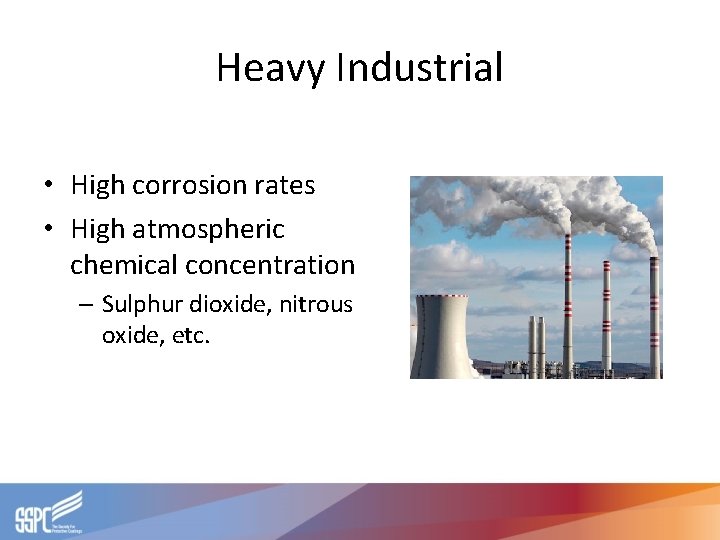
Heavy Industrial • High corrosion rates • High atmospheric chemical concentration – Sulphur dioxide, nitrous oxide, etc.
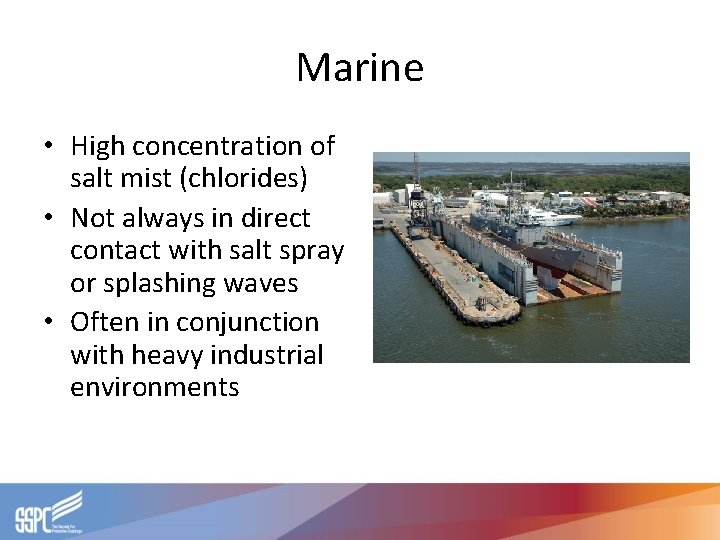
Marine • High concentration of salt mist (chlorides) • Not always in direct contact with salt spray or splashing waves • Often in conjunction with heavy industrial environments
Water Immersion • Moisture-resistant coatings for a mild-tosevere corrosion environment
Alternating Immersion • Any area in which immersion in water is combined with period of exposure to the atmosphere just above it • Steel in a tidal range • Boottopping area of a ships’s hull • High waterline in a tank
Condensing Humidity Service • Example: – Headspace in a tank – Indoor pool with condensation on the ceiling – Cold pipes • Note: Very aggressive due to purity of water
Chemical Environments • Strong concentrations of highly corrosive gases, fumes, and chemicals that come in direct contact with the coated surface • Mild to severe; direct immersion or splash
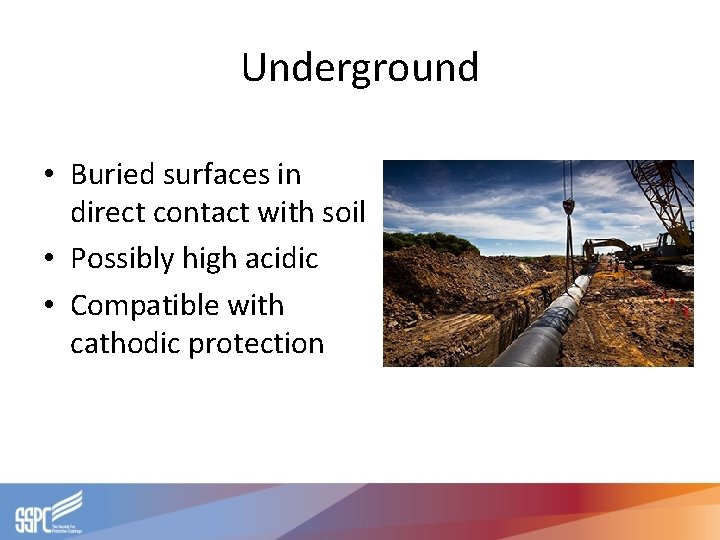
Underground • Buried surfaces in direct contact with soil • Possibly high acidic • Compatible with cathodic protection
Abrasion and Impact • Coatings exposed to particle objects that rub, scrape, impact, or erode the surface by friction – Pipeline – Dam gate
Final Service Temperature • Certain coatings are prone to limited chemical resistance and early failure when exposed to high in-service temperatures
Selecting Coatings and Coating System • Long-term testing of potential systems is desirable but often impractical • Substrate type and the service environments determines most appropriate selection • User experience, accelerated laboratory testing, and data on performance in service is often compiled into qualified product lists (QPLs)
Selecting Generic Coating Types and Systems • Establish service environment and intended use • Review generic categories and properties • Use products by the same manufacturer when feasible • Keep in mind the generic types with the same curing mechanism work well together
Selecting Coating System • Example: Components for a Bridge – One coat inorganic zinc-rich (galvanic protection/permanent primer) – One or more coats of epoxy (barrier protection for steel) – One coat of aliphatic polyurethane (resistance to UV light)
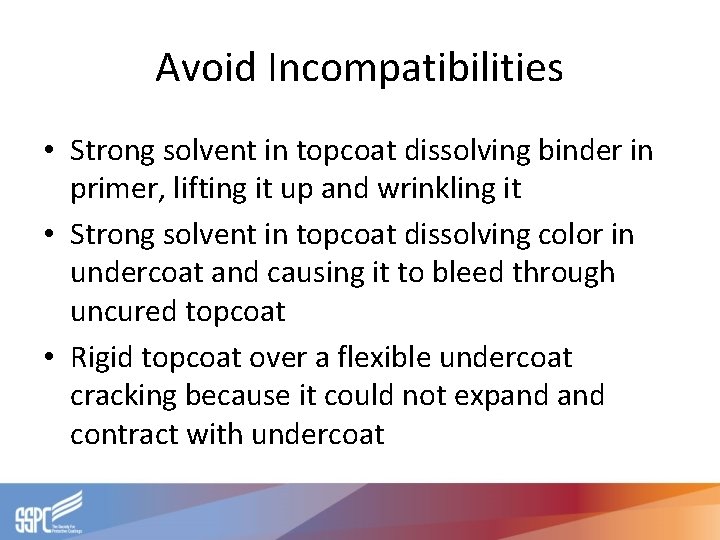
Avoid Incompatibilities • Strong solvent in topcoat dissolving binder in primer, lifting it up and wrinkling it • Strong solvent in topcoat dissolving color in undercoat and causing it to bleed through uncured topcoat • Rigid topcoat over a flexible undercoat cracking because it could not expand contract with undercoat
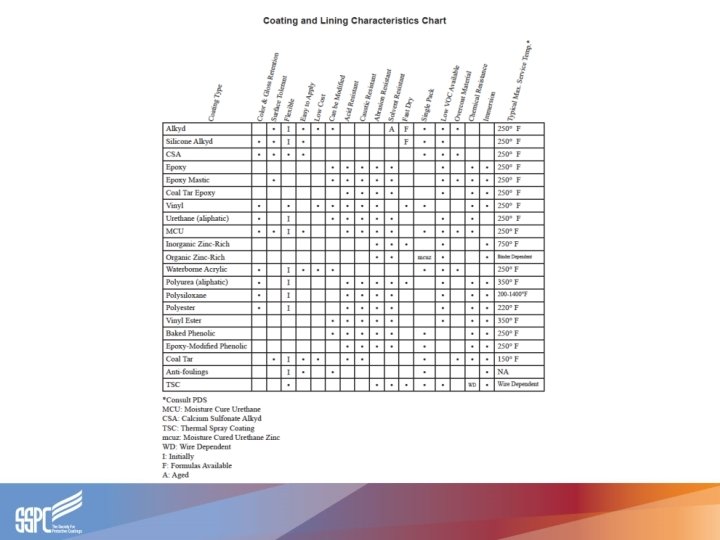
Reviewing Characteristics by Coating/Lining Type • Chart provides 21 common coating/lining types with 17 characteristics • Examine choices on the chart after establishing service environment and intended use
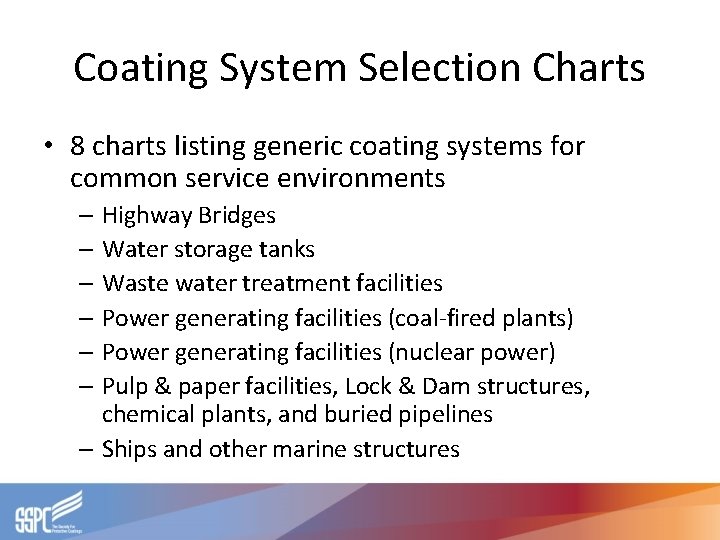
Coating System Selection Charts • 8 charts listing generic coating systems for common service environments – Highway Bridges – Water storage tanks – Waste water treatment facilities – Power generating facilities (coal-fired plants) – Power generating facilities (nuclear power) – Pulp & paper facilities, Lock & Dam structures, chemical plants, and buried pipelines – Ships and other marine structures
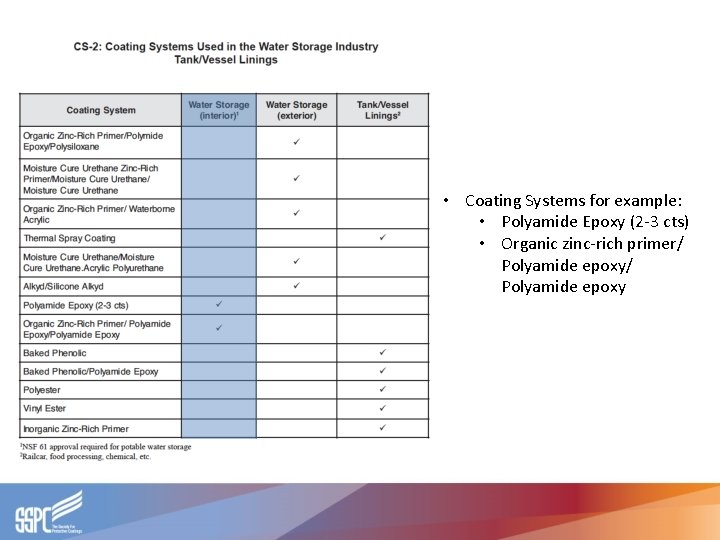
Coating System Selection Charts • Charts found in Selecting Coatings for Industrial and Marine Structures • Example: – Replace the interior coating system on existing ground potable water storage tank in Southern Nevada – Use chart CS-2: Coating Systems for Water Storage and Tank Lining
• Coating Systems for example: • Polyamide Epoxy (2 -3 cts) • Organic zinc-rich primer/ Polyamide epoxy
Coating System Selection • Concrete – SSPC-TU 2: Design, Installation, and Maintenance of Coating Systems for Concrete Used in Secondary Containment – SSPC-Paint 44: Liquid-Applied Organic Polymeric Coatings and Linings for Concrete Structures in Municipal Wasterwater Facilities, Performance Based • Galvanizing – SSPC-Guide: 19 Selection of Protective Coatings for Use Over Galvanized Substrates
Questions?