Sensation and Perception A P Psychology Assignment 13





















- Slides: 112
Sensation and Perception
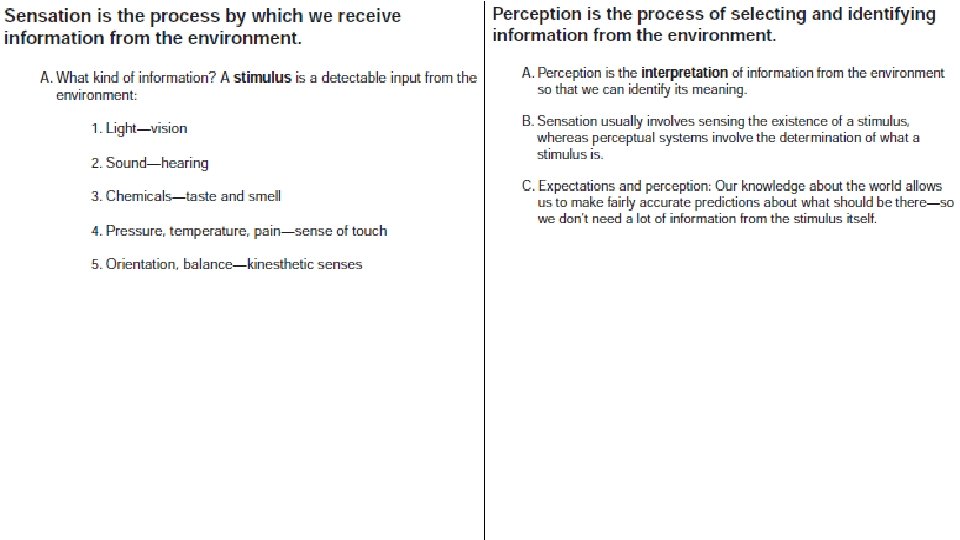
A. P. Psychology Assignment 13: Sensation/Perception, Transduction, Thresholds pages 64 -71, 84 1. In your on words and on another piece of paper or on note cards identify the following terms and names: sensation perception bottom-up processing top-down processing selective attention inattentional blindness change blindness transduction psychophysics absolute threshold signal detection theory subliminal priming difference threshold Weber’s law sensory adaptation perceptual set extrasensory perception (ESP) parapsychology Gustav Fechner Robert Fantz Ernst Weber 2. Why do we study sensation and perception in psychology? 3. What is the difference between sensation and perception? 4. Give real life exampled of both top-down processing and bottom-up processing. 5. How does selective attention work and how does the cock-tail party effect function as an example of selective attention? 6. What do the following phenomena tell us about how humans attend to experiences in their environment. a. Inattentional blindness 7. Many people claim to be “multitaskers, ” capable of processing multiple tasks at one time. Use your knowledge of this section on attention to respond to that claim. 8. Why would it be impossible to experience our environment without transduction? 9. Give an example of sensory adaptation other than those give in the compendium or textbook. b. Change blindness c. Choice blindness d. selective attention (page 84)
10. Regarding signal detection theory, give an example from your own life of a stimulus or signal you are more likely to detect (hear, see, smell, and so on) than a friend or parent might be and why you would be more likely to detect it. 11. How might advertisement and political campaign ads on T. V. use subliminal messages and priming to influence your future decisions? 12. What does Weber’s law tell us about human perception? 13. Explain perceptual set and explain why people are more likely to see a ghost during Halloween or in a place that others say is haunted? 14. How should an owner of a restaurant be aware of the context effect when hiring his/her wait staff, designing the menu, and determining the décor?
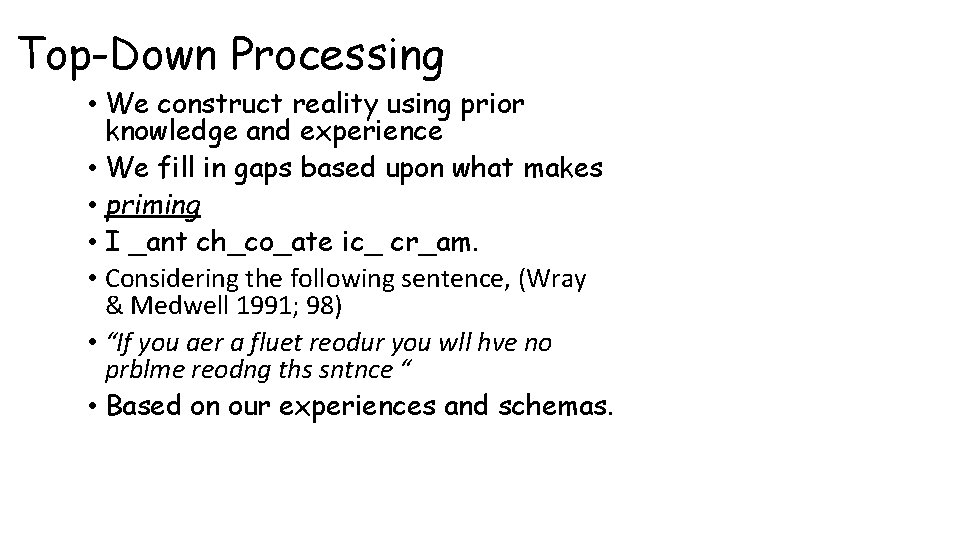
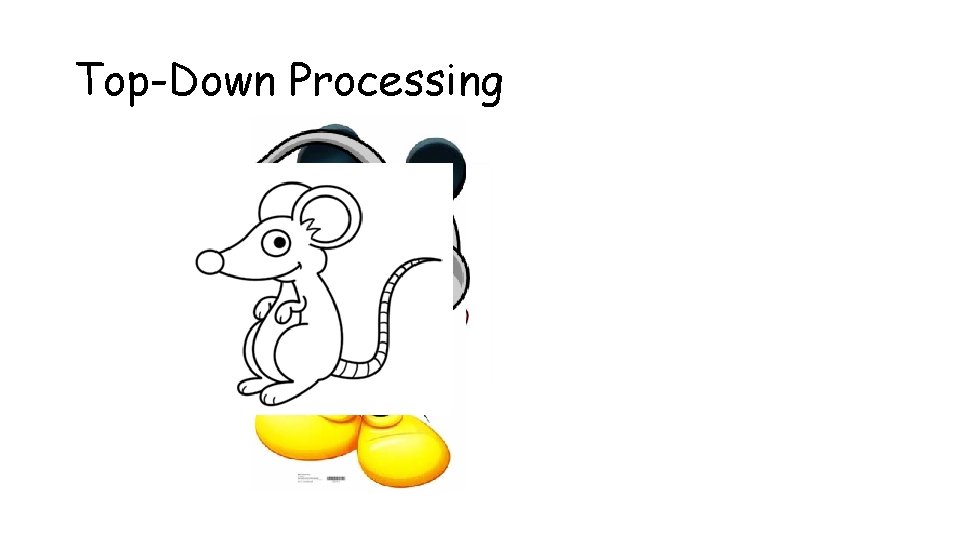
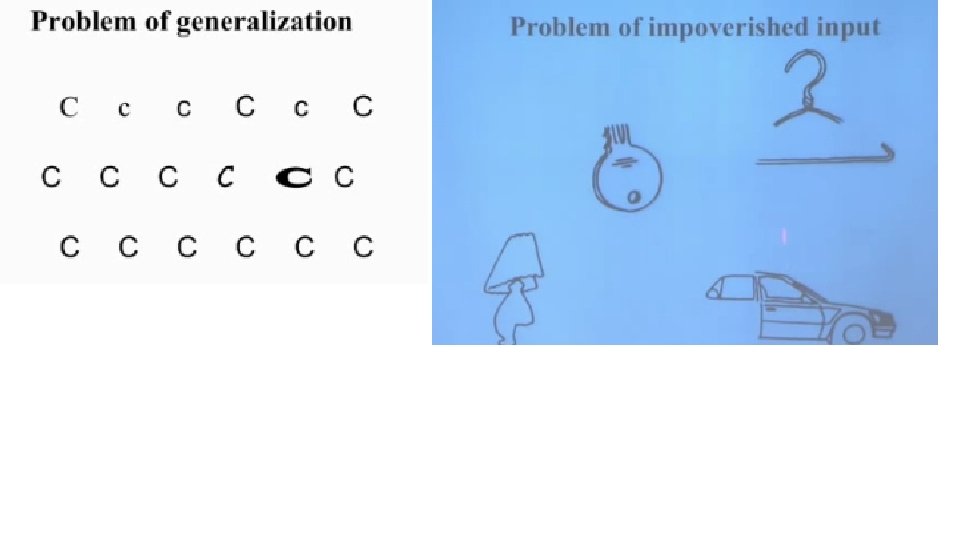
Top-Down Processing • We construct reality using prior knowledge and experience • We fill in gaps based upon what makes • priming • I _ant ch_co_ate ic_ cr_am. • Considering the following sentence, (Wray & Medwell 1991; 98) • “If you aer a fluet reodur you wll hve no prblme reodng ths sntnce “ • Based on our experiences and schemas.
Group A
Top-Down Processing
Group B
Top-Down Processing
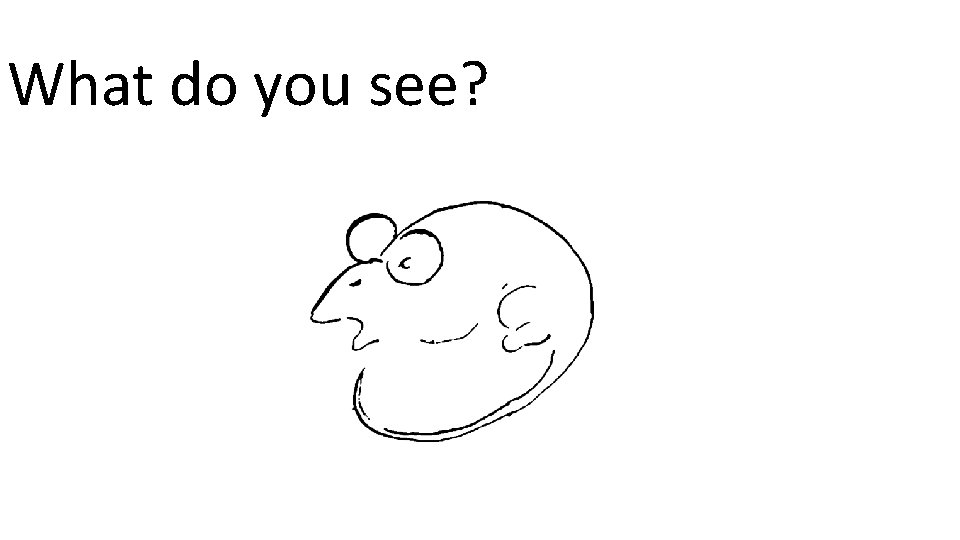
What do you see?
Olny srmat poelpe can raed tihs. I cdnuolt blveiee taht I cluod aulaclty uesdnatnrd waht I was rdanieg. The phaonmneal pweor of the hmuan mnid, aoccdrnig to rscheearch at Cmabrigde Uinervtisy. It deosn't mttaer in waht oredr the ltteers in a wrod are, the olny iprmoatnt tihng is taht the frist and lsat ltteer be in the rghit pclae. The rset can be a taotl mses and you can sitll raed it wouthit a porbelm. Tihs is bcuseae the huamn mnid deos not raed ervey lteter by istlef, but the wrod as a wlohe. Amzanig huh? yaeh and I awlyas tghuhot slpeling was ipmorantt! if you can raed tihs psas it on!!
What do you hear? https: //www. youtube. com/watch? v=Fi. Jr. LSmq. Yy. Y
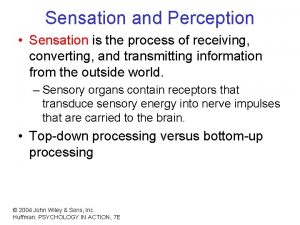
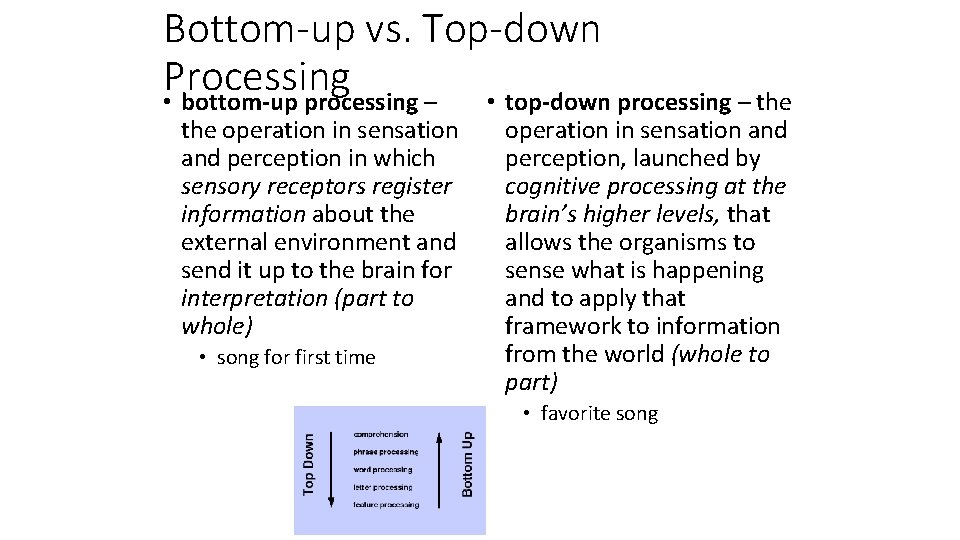
Bottom-up vs. Top-down Processing • bottom-up processing – • top-down processing – the operation in sensation and perception in which sensory receptors register information about the external environment and send it up to the brain for interpretation (part to whole) • song for first time operation in sensation and perception, launched by cognitive processing at the brain’s higher levels, that allows the organisms to sense what is happening and to apply that framework to information from the world (whole to part) • favorite song
Selective attention is the process of focusing on a particular object in the environment for a certain period of time. Attention is a limited resource, so selective attention allows us to tune out unimportant details and focus on what really matters. How can you concentrate on one voice during a party, a restraint, or class presentations? Cocktail party effect researchers have demonstrated the 'cocktail party effect' (Cherry, 1953) under experimental conditions and have discovered occasions when information heard in the unattended ear 'broke through' to interfere with information participants are paying attention to in the other ear. This implies some analysis of meaning of stimuli must have occurred prior to the selection of channels.
Inattentional Blindness Change blindness https: //www. youtube. com/watch? v=Vkrr. Voz. ZR 2 c Explanation https: //www. youtube. com/watch? v=b 7 Luv. AM 6 XLg Magic trick https: //www. youtube. com/watch? v=v. JG 698 U 2 Mvo Count the passes https: //www. youtube. com/watch? v=ii. Ezf 3 J 4 i. Fk https: //www. youtube. com/watch? v=f. XWu. B 7 fm. Gv 0 Attention is a limited resource There is too much information for our brains to process We must decide where we spend our attention
Think about this. . . Why did it become more difficult to “trick” you as we progressed through the videos?
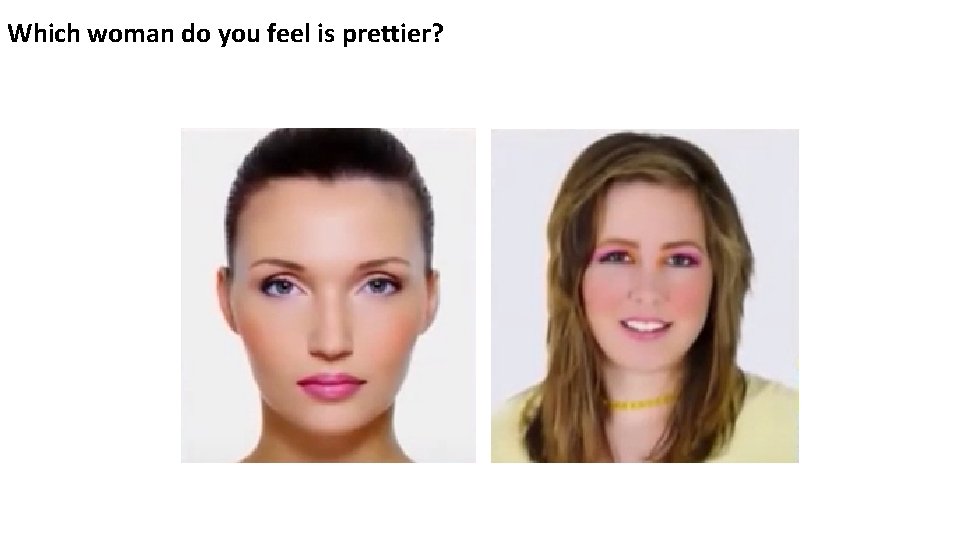
Which woman do you feel is prettier?
Why did you say this woman was prettier?
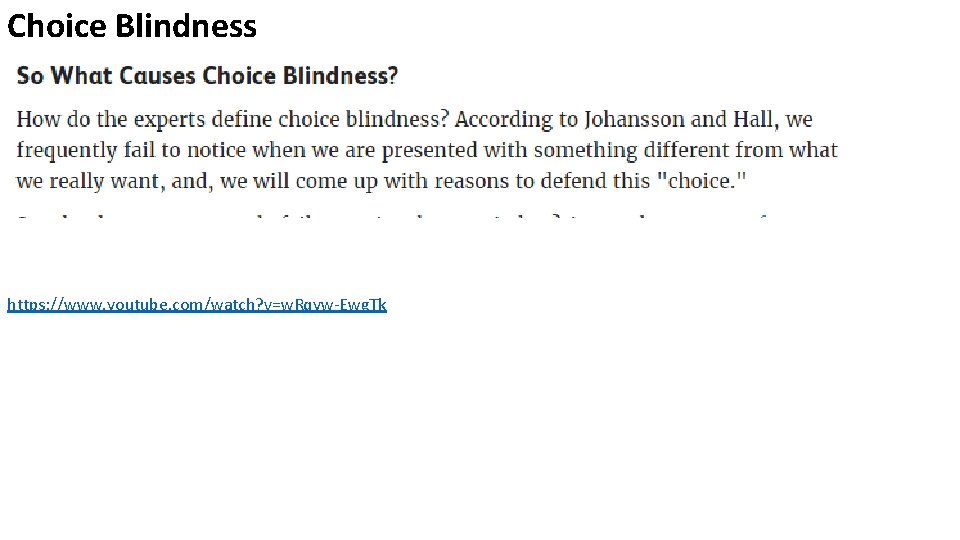
Choice Blindness https: //www. youtube. com/watch? v=w. Rqyw-Ewg. Tk
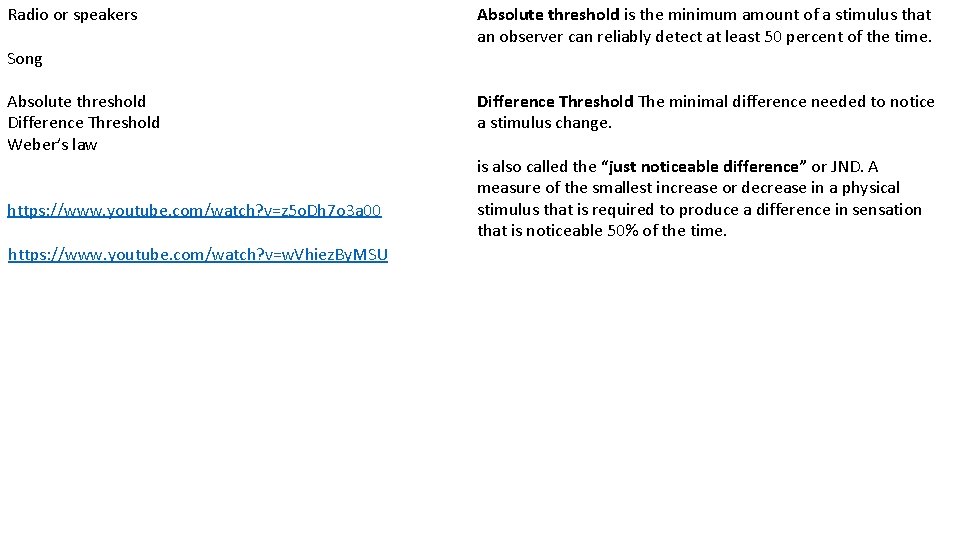
Radio or speakers Song Absolute threshold Difference Threshold Weber’s law https: //www. youtube. com/watch? v=z 5 o. Dh 7 o 3 a 00 https: //www. youtube. com/watch? v=w. Vhiez. By. MSU Absolute threshold is the minimum amount of a stimulus that an observer can reliably detect at least 50 percent of the time. Difference Threshold The minimal difference needed to notice a stimulus change. is also called the “just noticeable difference” or JND. A measure of the smallest increase or decrease in a physical stimulus that is required to produce a difference in sensation that is noticeable 50% of the time.
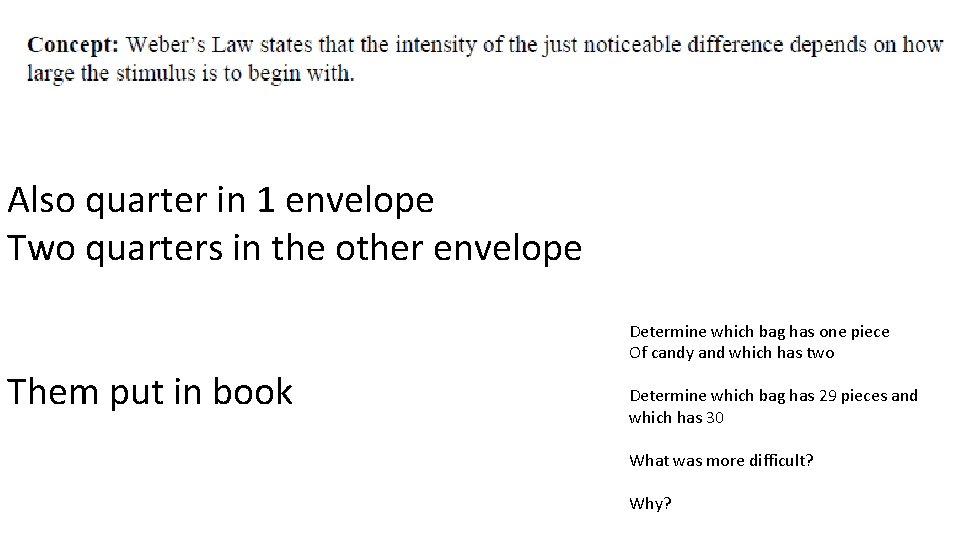
Also quarter in 1 envelope Two quarters in the other envelope Determine which bag has one piece Of candy and which has two Them put in book Determine which bag has 29 pieces and which has 30 What was more difficult? Why?
Each paper bag has at least 1 unit of of the same candy Your job is Place in order by weight Place the 10 bags of candy in order weight People are price sensitive People are also sensitive to size Less sensitive to taste Less sensitive to weight/volume And then determine the price of each bag How could companies use just noticeable difference to make larger profits? Who noticed I typed “of” twice on the top of this page? If Mc. Donalds wanted to keep the price of their hamburgers the same what could they do to change their product in order to make a profit? How would an understanding of JND be helpful?
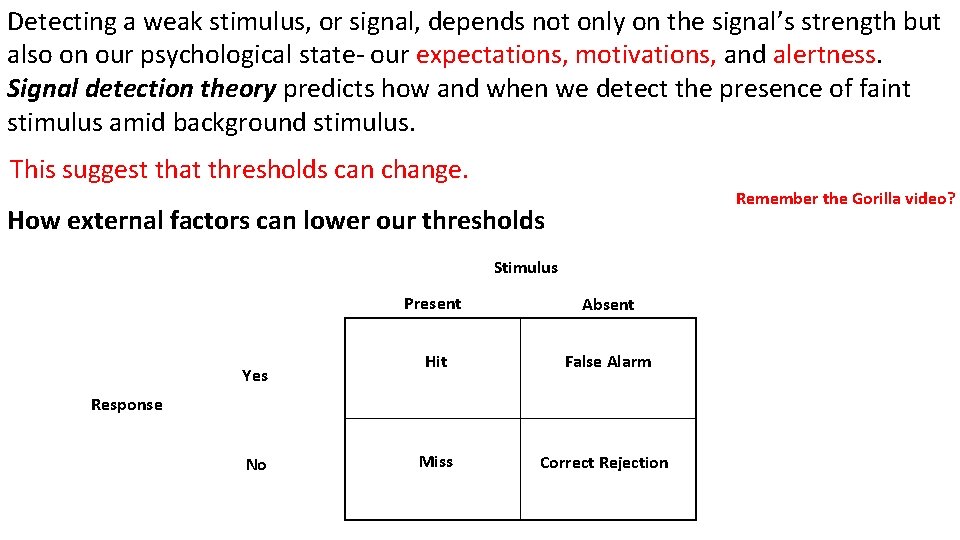
Detecting a weak stimulus, or signal, depends not only on the signal’s strength but also on our psychological state- our expectations, motivations, and alertness. Signal detection theory predicts how and when we detect the presence of faint stimulus amid background stimulus. This suggest that thresholds can change. Remember the Gorilla video? How external factors can lower our thresholds Stimulus Yes Present Absent Hit False Alarm Miss Correct Rejection Response No
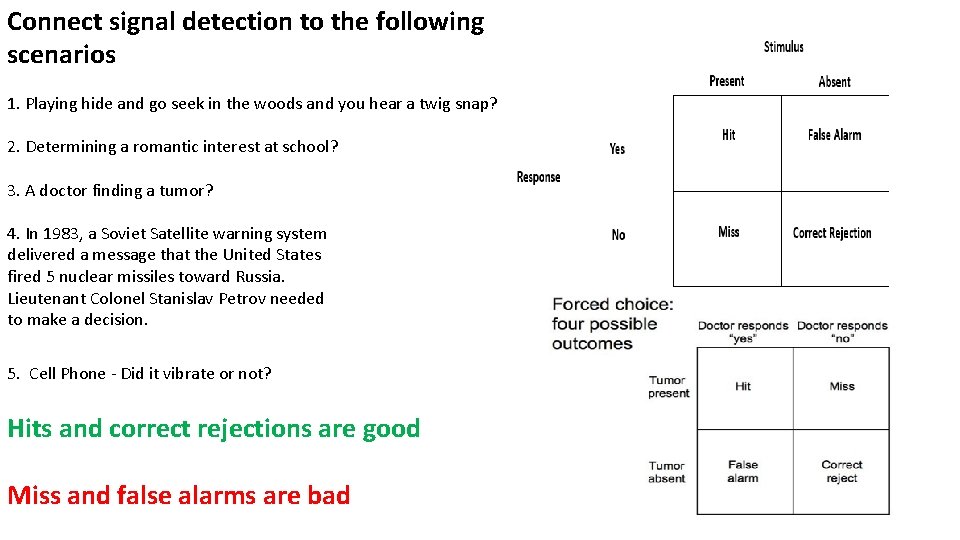
Connect signal detection to the following scenarios 1. Playing hide and go seek in the woods and you hear a twig snap? 2. Determining a romantic interest at school? 3. A doctor finding a tumor? 4. In 1983, a Soviet Satellite warning system delivered a message that the United States fired 5 nuclear missiles toward Russia. Lieutenant Colonel Stanislav Petrov needed to make a decision. 5. Cell Phone - Did it vibrate or not? Hits and correct rejections are good Miss and false alarms are bad
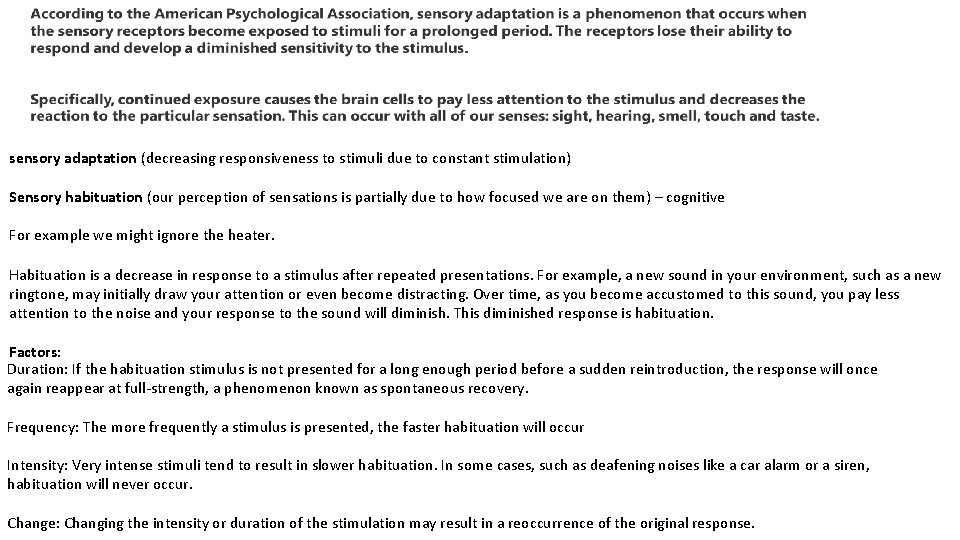
sensory adaptation (decreasing responsiveness to stimuli due to constant stimulation) Sensory habituation (our perception of sensations is partially due to how focused we are on them) – cognitive For example we might ignore the heater. Habituation is a decrease in response to a stimulus after repeated presentations. For example, a new sound in your environment, such as a new ringtone, may initially draw your attention or even become distracting. Over time, as you become accustomed to this sound, you pay less attention to the noise and your response to the sound will diminish. This diminished response is habituation. Factors: Duration: If the habituation stimulus is not presented for a long enough period before a sudden reintroduction, the response will once again reappear at full-strength, a phenomenon known as spontaneous recovery. Frequency: The more frequently a stimulus is presented, the faster habituation will occur Intensity: Very intense stimuli tend to result in slower habituation. In some cases, such as deafening noises like a car alarm or a siren, habituation will never occur. Change: Changing the intensity or duration of the stimulation may result in a reoccurrence of the original response.
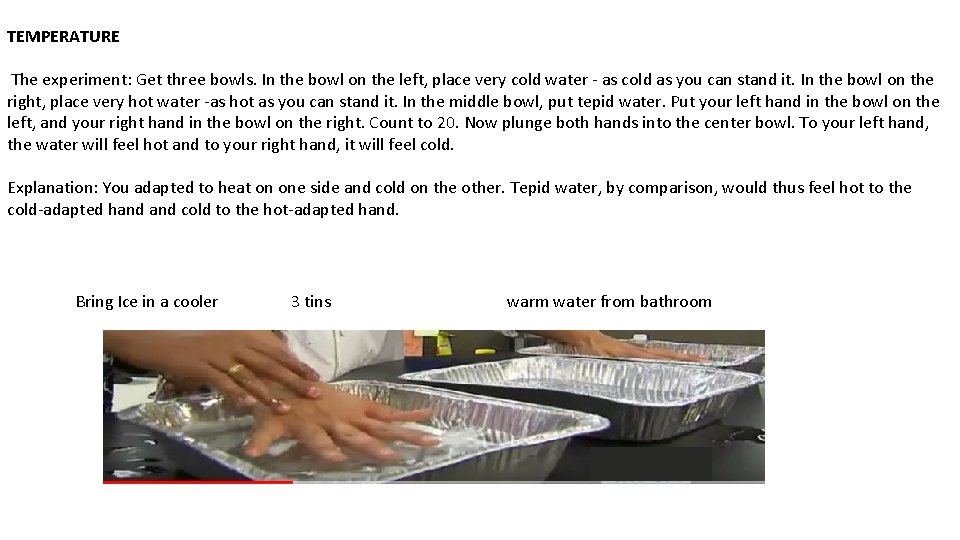
TEMPERATURE The experiment: Get three bowls. In the bowl on the left, place very cold water - as cold as you can stand it. In the bowl on the right, place very hot water -as hot as you can stand it. In the middle bowl, put tepid water. Put your left hand in the bowl on the left, and your right hand in the bowl on the right. Count to 20. Now plunge both hands into the center bowl. To your left hand, the water will feel hot and to your right hand, it will feel cold. Explanation: You adapted to heat on one side and cold on the other. Tepid water, by comparison, would thus feel hot to the cold-adapted hand cold to the hot-adapted hand. Bring Ice in a cooler 3 tins warm water from bathroom
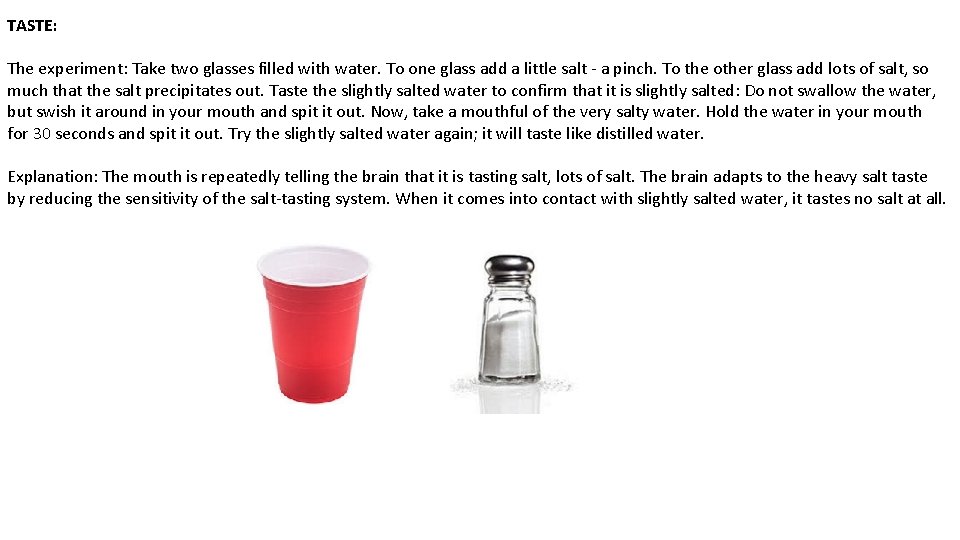
TASTE: The experiment: Take two glasses filled with water. To one glass add a little salt - a pinch. To the other glass add lots of salt, so much that the salt precipitates out. Taste the slightly salted water to confirm that it is slightly salted: Do not swallow the water, but swish it around in your mouth and spit it out. Now, take a mouthful of the very salty water. Hold the water in your mouth for 30 seconds and spit it out. Try the slightly salted water again; it will taste like distilled water. Explanation: The mouth is repeatedly telling the brain that it is tasting salt, lots of salt. The brain adapts to the heavy salt taste by reducing the sensitivity of the salt-tasting system. When it comes into contact with slightly salted water, it tastes no salt at all.
Oregon Research Institute Behavioral Decision Theory After reading the short story apply the following concepts: Remember S. O. D. A. S. Signal detection theory Absolute Threshold Sensory habituation Top down Processing
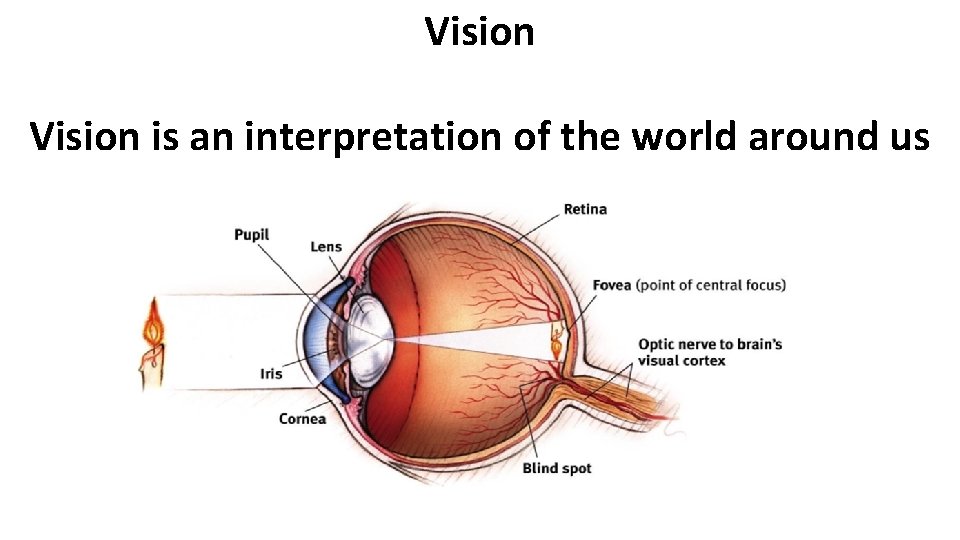
Vision is an interpretation of the world around us
Vision is an interpretation of the world around us Visual illusions demonstrate the gap between what is out there and how our minds and brains interpret what is out there Illusions are rare because out minds and brains have evolved to have interpretations that almost always work brilliantly in our environment without us having to think about it
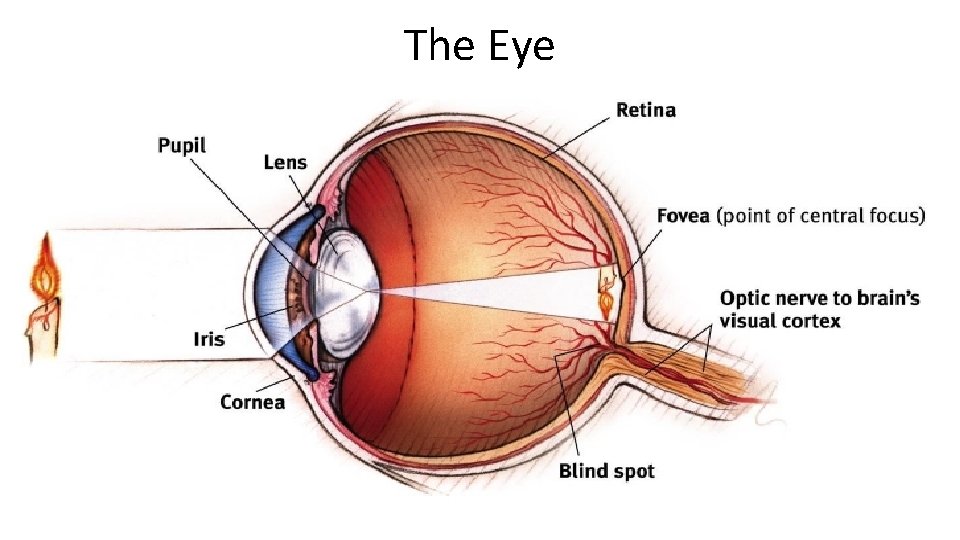
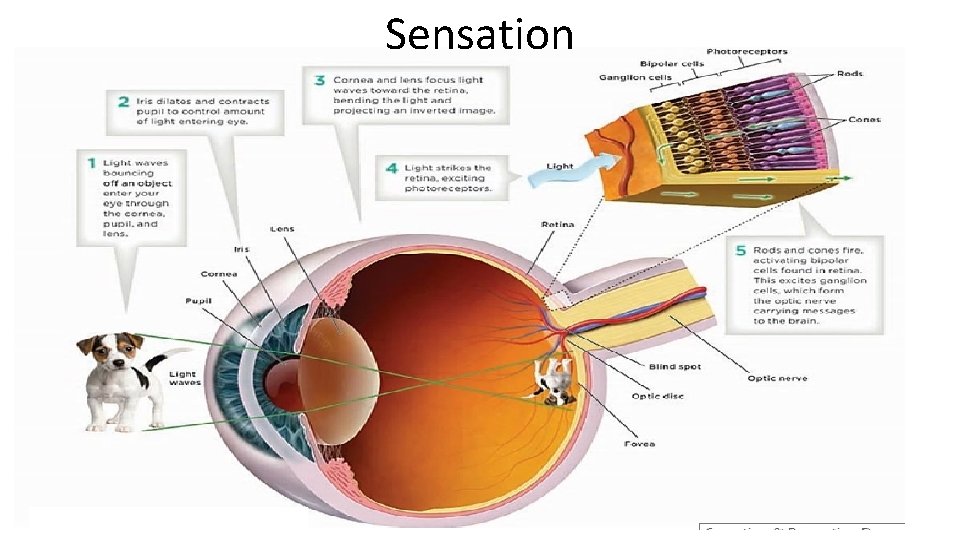
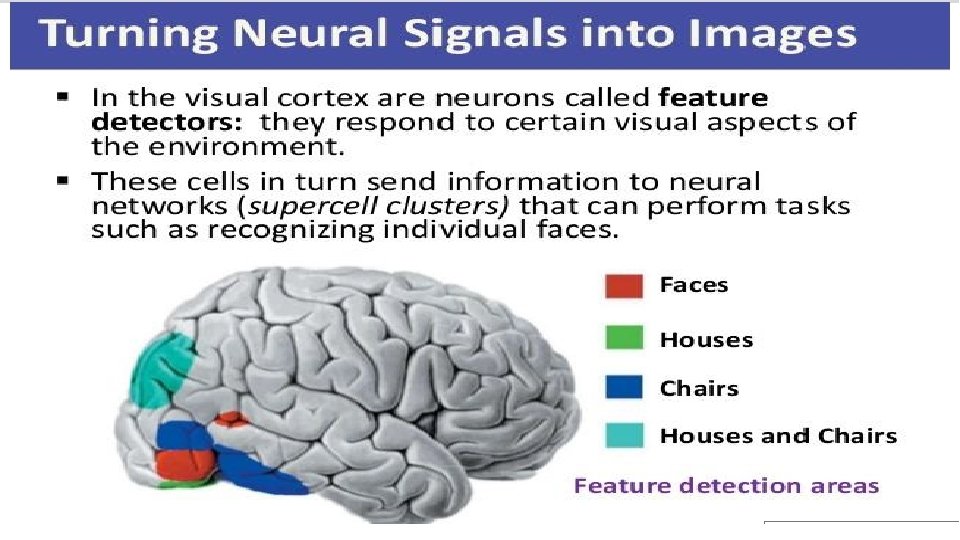
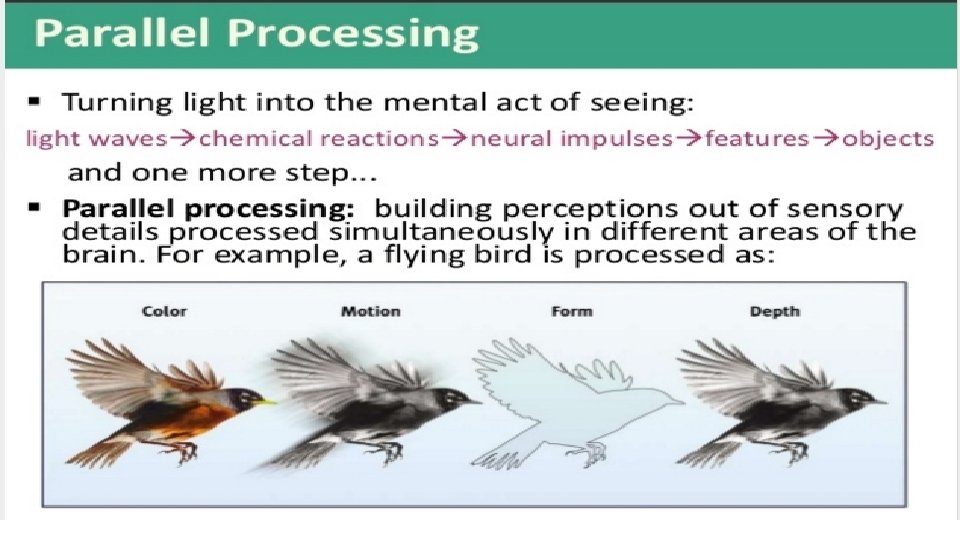
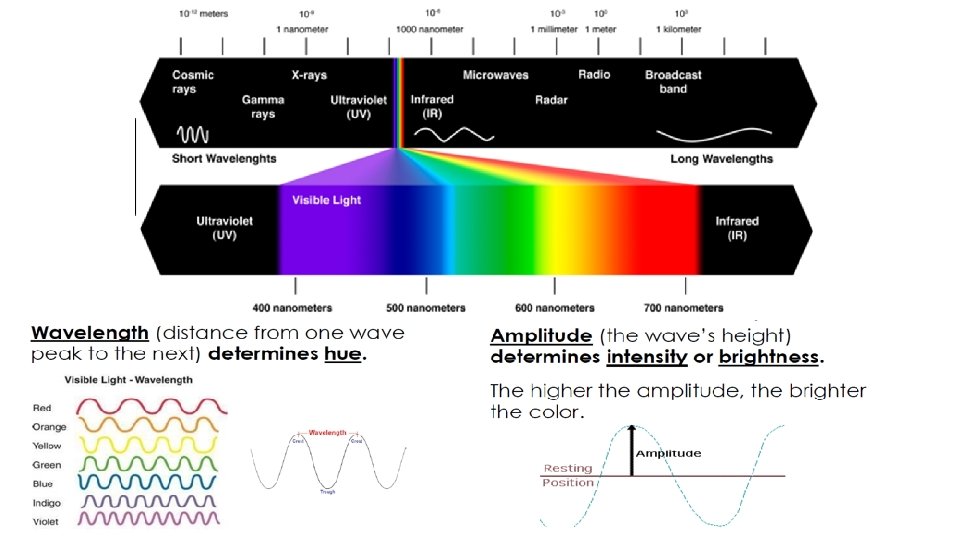
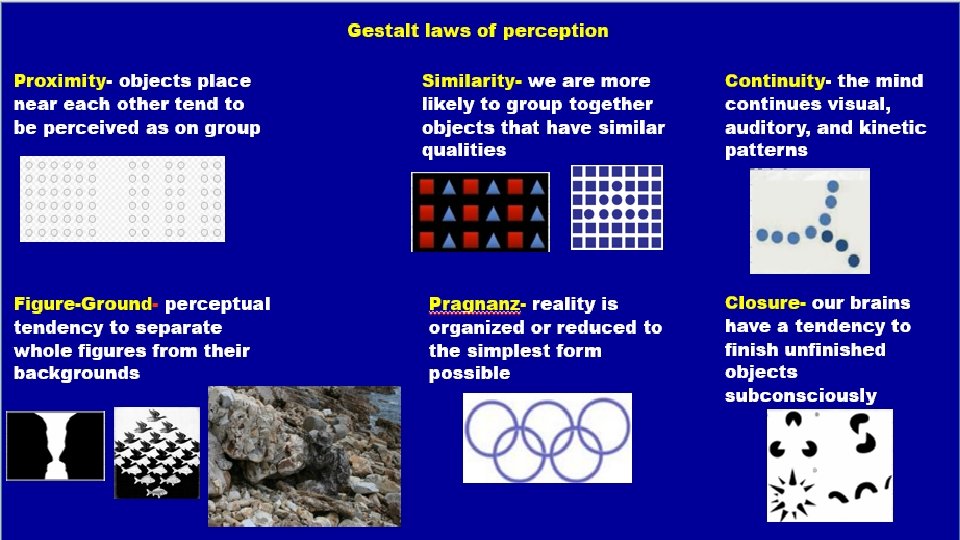
A. P. Psychology Assignment 14: Vision, Theories of Color, Gestalt, Patterns, and Depth Perception pages 72 -78 1. In your on words and on another piece of paper or on note cards identify the following terms and names: wavelength hue intensity pupil iris lens retina accommodation rods cones optic nerve blind spot fovea feature detectors parallel processing opponent-process theory gestalt figure-ground grouping depth perception Young-Helmholtz trichromatic (three-color) theory visual cliff binocular cues retinal disparity monocular cues phi phenomenon perceptual constancy color constancy perceptual adaptation Eleanor Gibson David Hubel Torsten Wiesel 2. How does light intensity and light wavelength determine our awareness of hue and brightness? 3. Trace the path of light from when it enters into the cornea, is transduced into neural energy, and ends in the visual cortex of the occipital lobe. a. Cornea d. _______ &________(sense receptors on the retina) b. ______ (which is controlled by the iris) f. __________ ( whose axons for the optical nerve) H. __________ (message center of the brain) c. ______ e. _________(activated by chemical reactions) g. ________ (the exit point at the back of the retina) i. Visual cortex of the occipital lobe 4. How do rods and cones differ? 5. Where are feature detectors located and do they work together to portray a “whole” image? 6. If we saw a person walking toward us on the street, how would parallel processing help us analyze the scene?
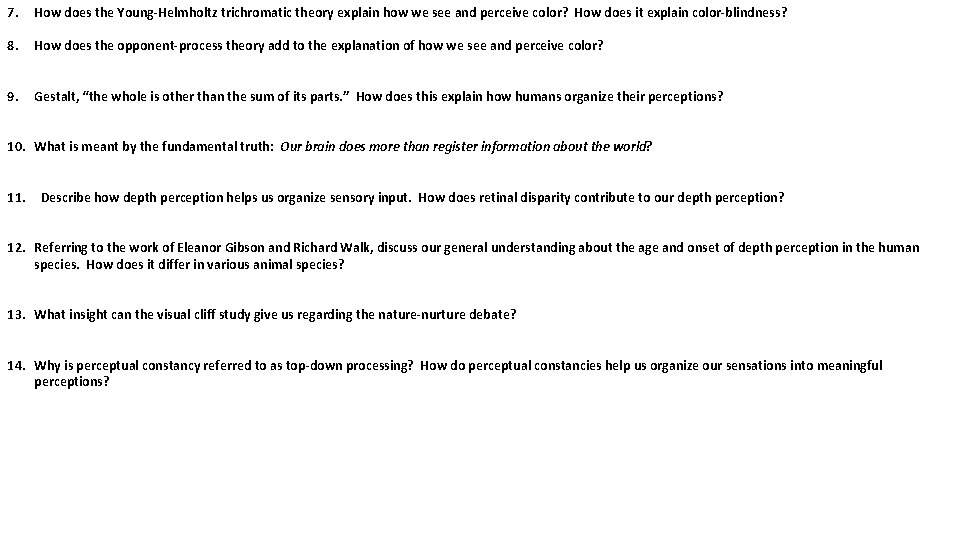
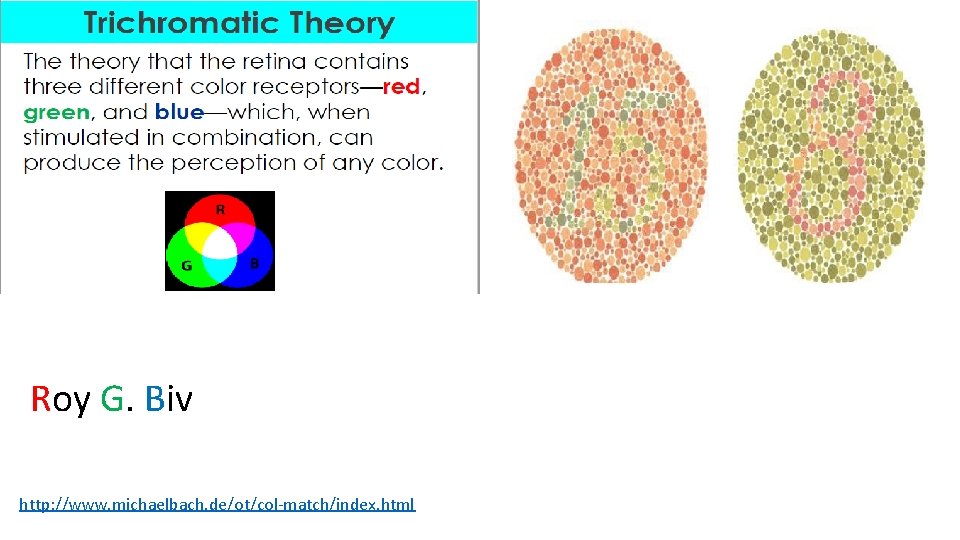
7. How does the Young-Helmholtz trichromatic theory explain how we see and perceive color? How does it explain color-blindness? 8. How does the opponent-process theory add to the explanation of how we see and perceive color? 9. Gestalt, “the whole is other than the sum of its parts. ” How does this explain how humans organize their perceptions? 10. What is meant by the fundamental truth: Our brain does more than register information about the world? 11. Describe how depth perception helps us organize sensory input. How does retinal disparity contribute to our depth perception? 12. Referring to the work of Eleanor Gibson and Richard Walk, discuss our general understanding about the age and onset of depth perception in the human species. How does it differ in various animal species? 13. What insight can the visual cliff study give us regarding the nature-nurture debate? 14. Why is perceptual constancy referred to as top-down processing? How do perceptual constancies help us organize our sensations into meaningful perceptions?
Stimulus Parts of the Eye Receptors and Transduction The Visual Cortex Perception Visual Cues Illusions
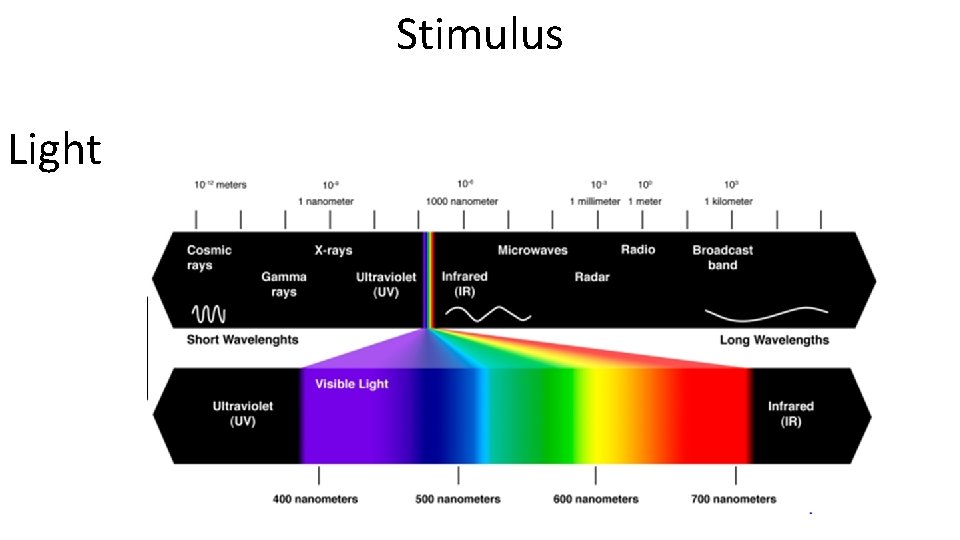
Stimulus Light
The Eye
Sensation
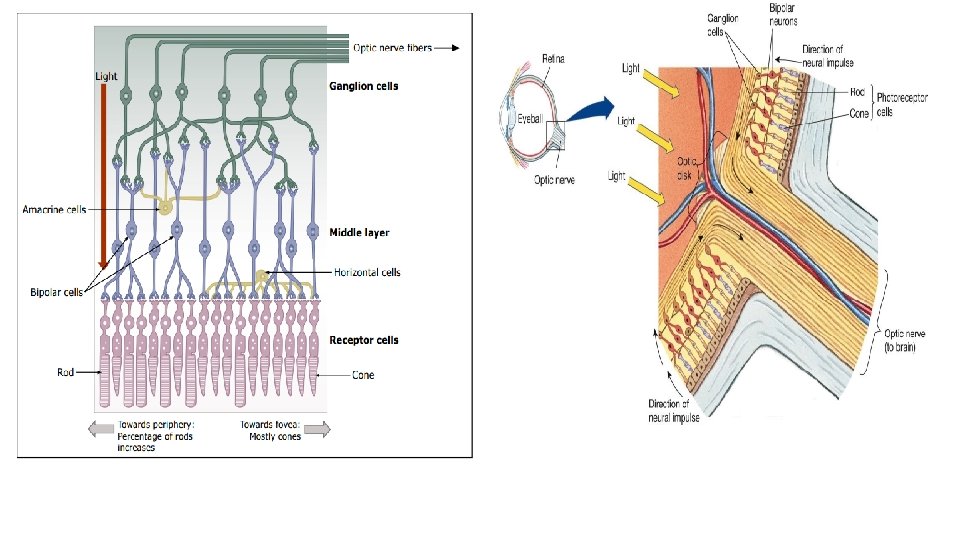
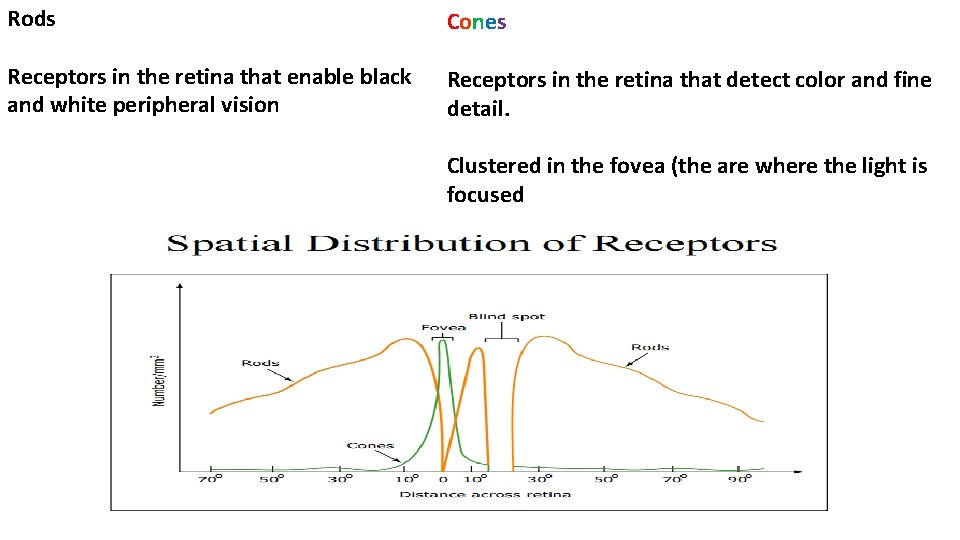
Rods Cones Receptors in the retina that enable black and white peripheral vision Receptors in the retina that detect color and fine detail. Clustered in the fovea (the are where the light is focused
DEMO: Peripheral Vision & Markers You Need: A few different colored markers, a Chair and a partner. Have your partner sit in a chair and get a few different colored markers. The partner must fix their eyes on a point straight ahead. From the back of the chair, slowly hold up a marker (3 to 4 feet from their ear) in their peripheral vision and bring it around slowly from their back. Ask them to identify immediately when they see the paper in their peripheral vision then stop moving your arm and ask them what color marker you are holding. Next using a marker draw a shape on a piece of paper- have your partner attempt to identify the shape and the color Why? Your retina—the light-sensitive lining at the back of your eye—is packed with light-receiving cells called rods and cones. Only the cones are sensitive to color. These cells are clustered mainly in the central region of the retina. When you see something out of the corner of your eye, its image focuses on the periphery of your retina, where there are few cones. Thus, it isn’t surprising that you can’t distinguish the color of something you see out of the corner of your eye. The rods are more evenly spread across the retina, but they also become less densely packed toward the outer regions of the retina. Because there are fewer rods, you have a limited ability to resolve the shapes of objects at the periphery of your vision.
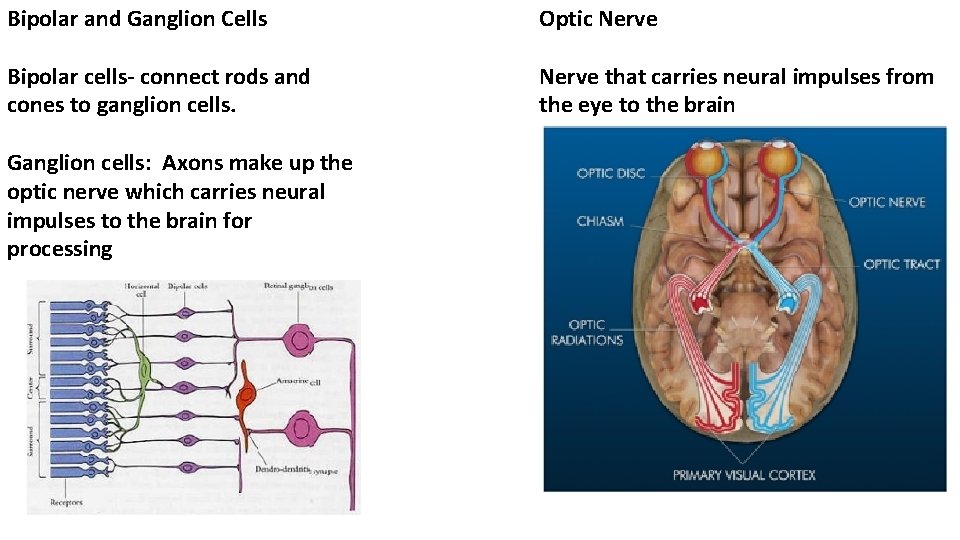
Bipolar and Ganglion Cells Optic Nerve Bipolar cells- connect rods and cones to ganglion cells. Nerve that carries neural impulses from the eye to the brain Ganglion cells: Axons make up the optic nerve which carries neural impulses to the brain for processing
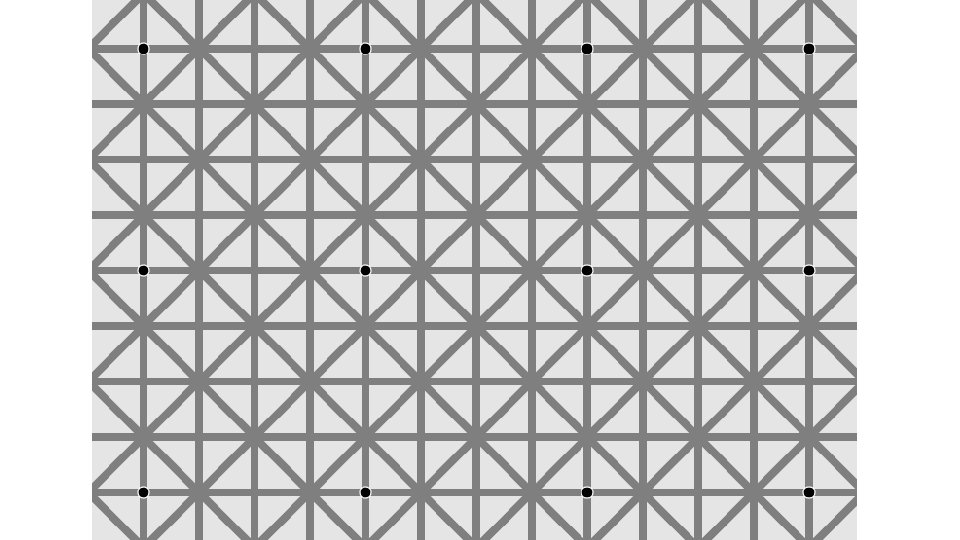
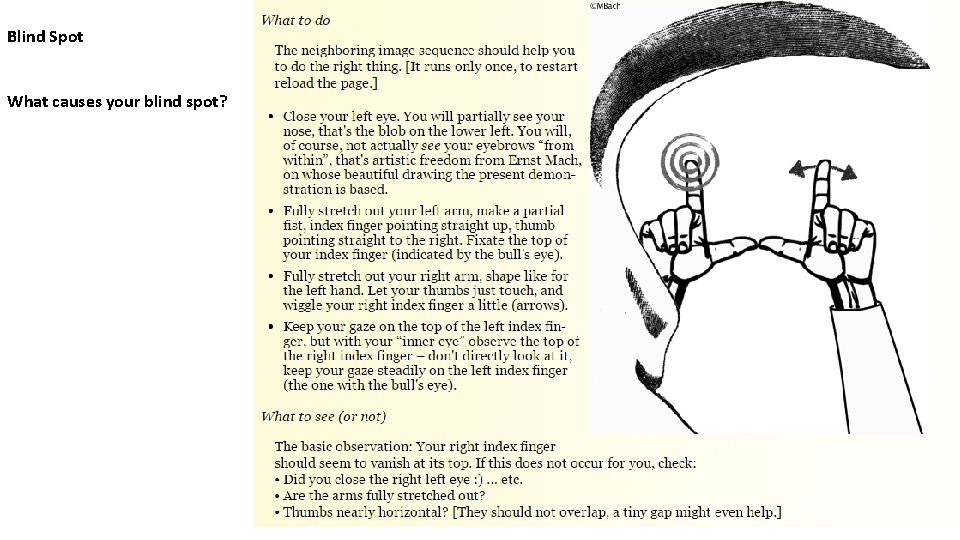
Blind Spot What causes your blind spot?
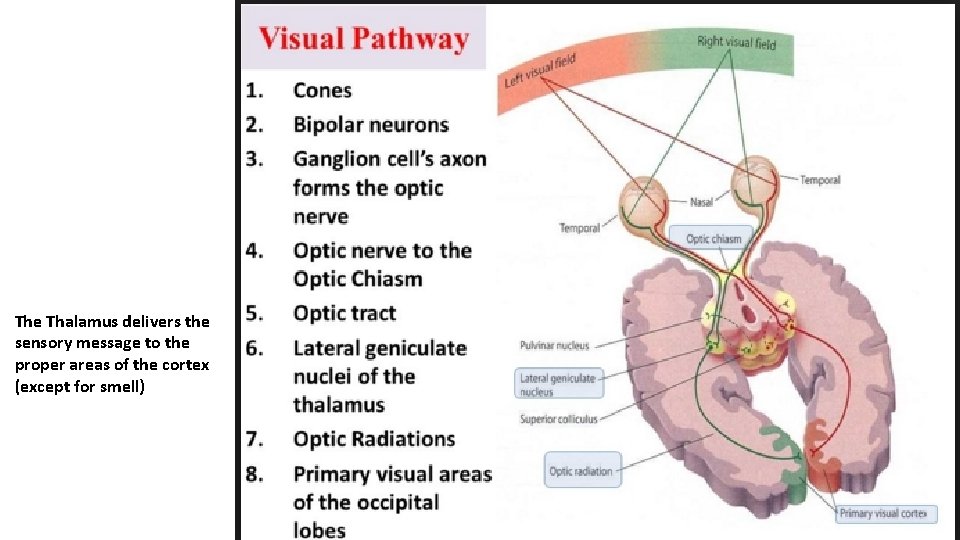
The Thalamus delivers the sensory message to the proper areas of the cortex (except for smell)
Perception and Visual Cues
Roy G. Biv http: //www. michaelbach. de/ot/col-match/index. html
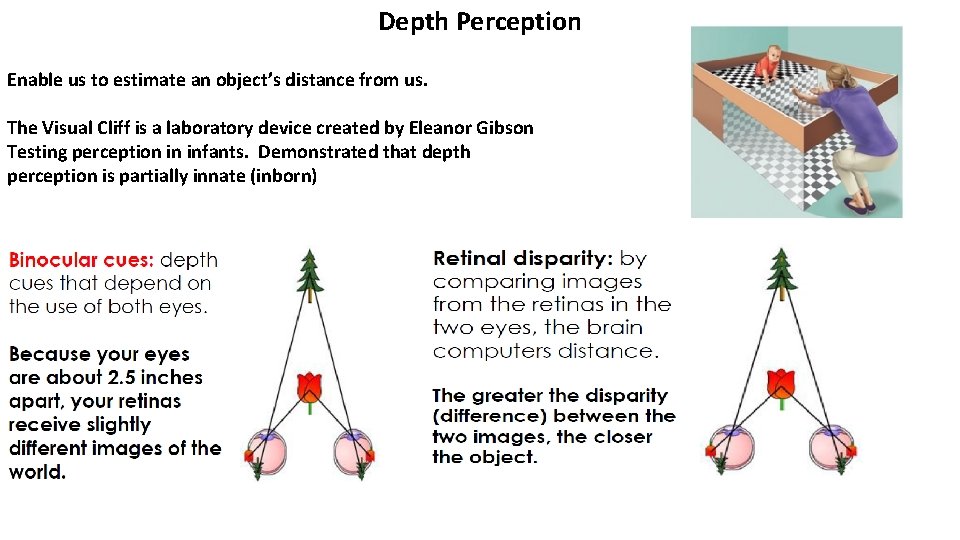
Depth Perception Enable us to estimate an object’s distance from us. The Visual Cliff is a laboratory device created by Eleanor Gibson Testing perception in infants. Demonstrated that depth perception is partially innate (inborn)
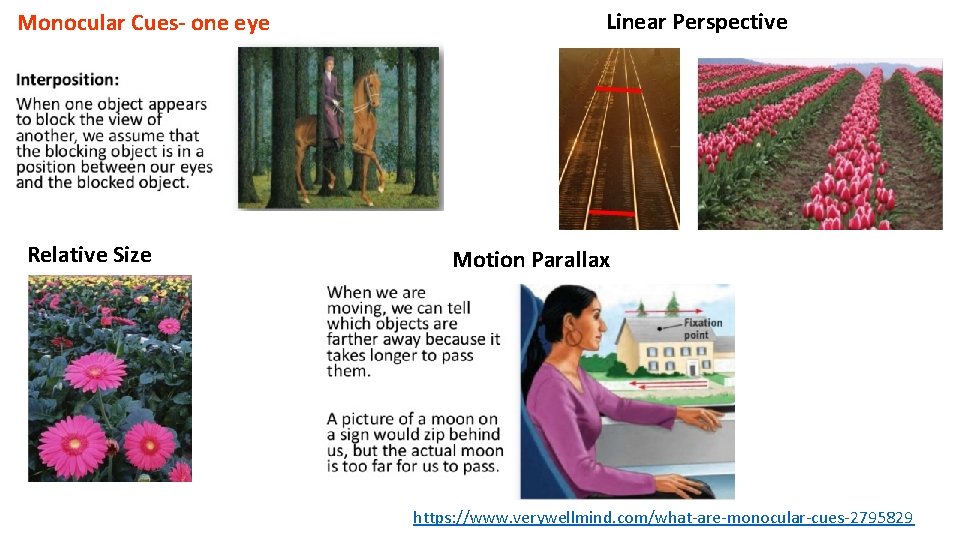
Monocular Cues- one eye Relative Size Linear Perspective Motion Parallax https: //www. verywellmind. com/what-are-monocular-cues-2795829
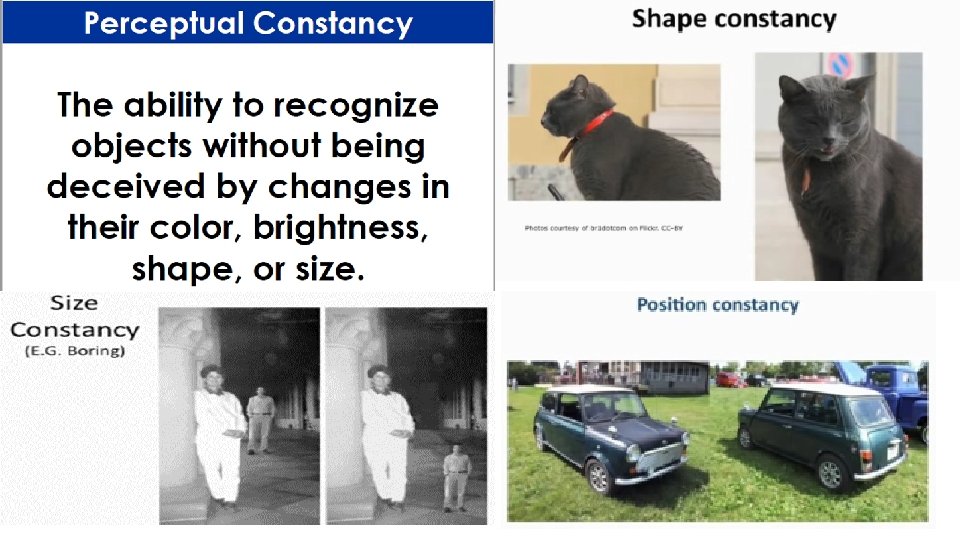
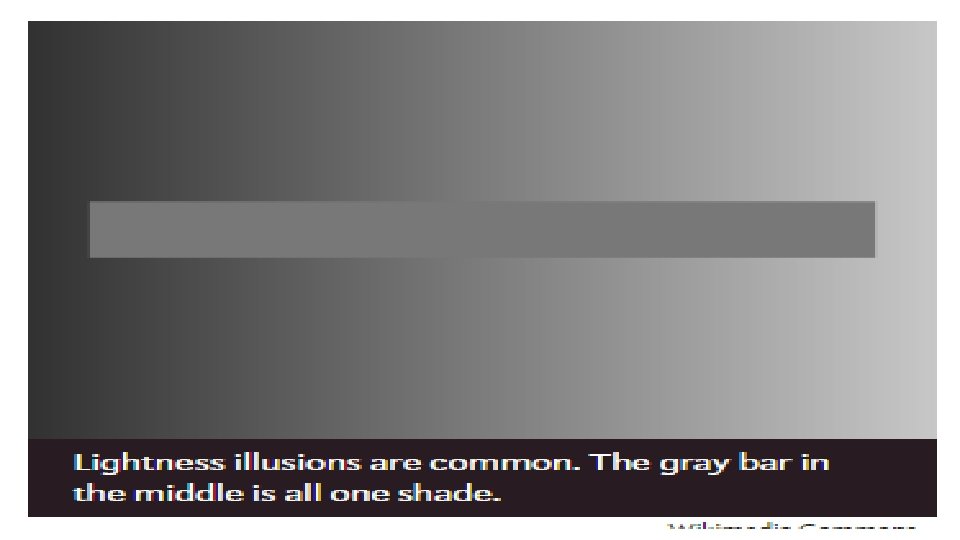
Brightness constancy, our ability to see objects as continuing to have the same brightness even though light may change their immediate sensory properties. Psychologists have determined that an object will exhibit brightness constancy as long as both the object and its surroundings are in light of the same intensity. If the background brightness differs from the object, brightness constancy is not maintained. For example, if the background is lighter than the object, the object appears darker. White board
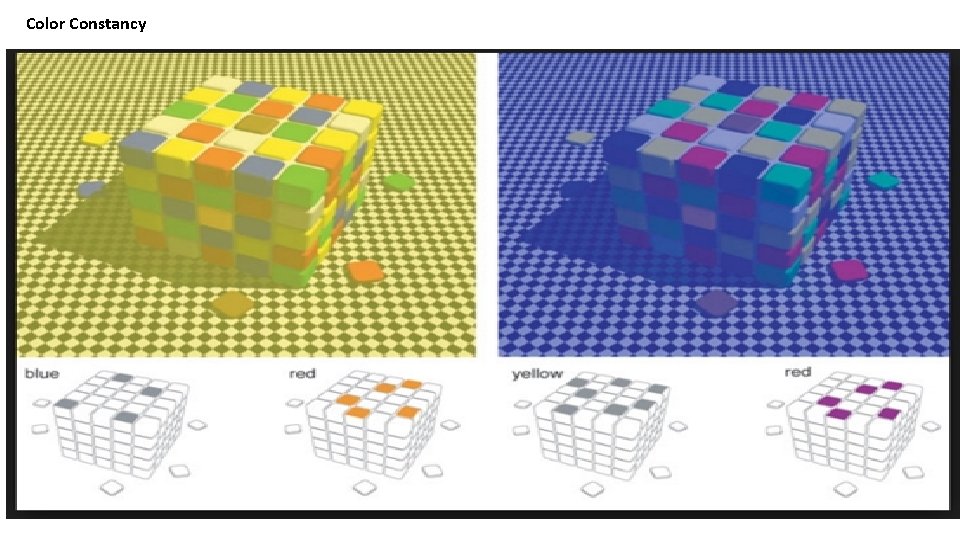
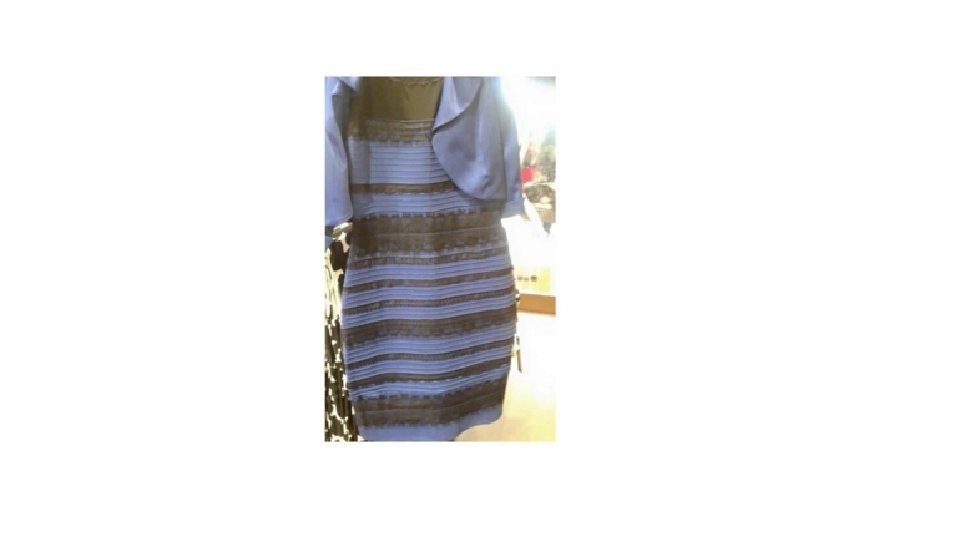
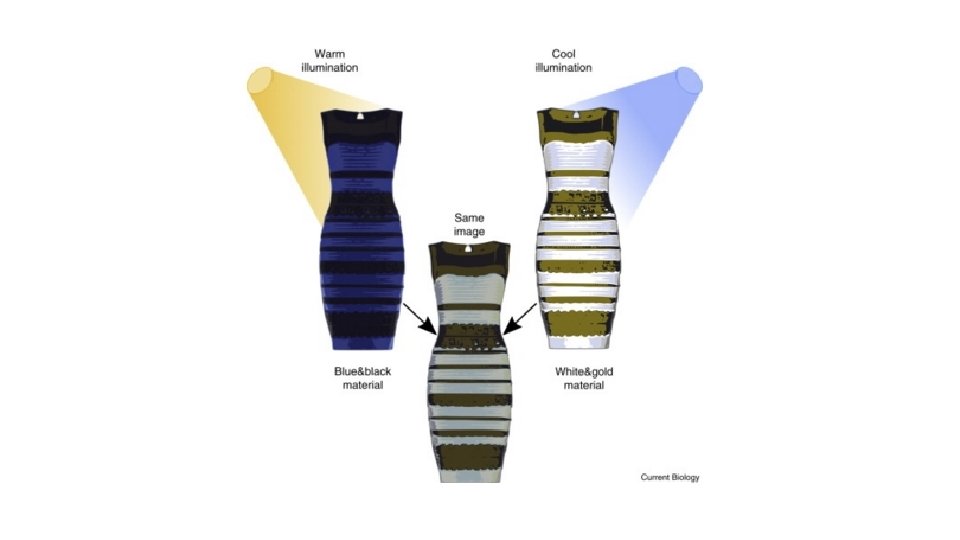
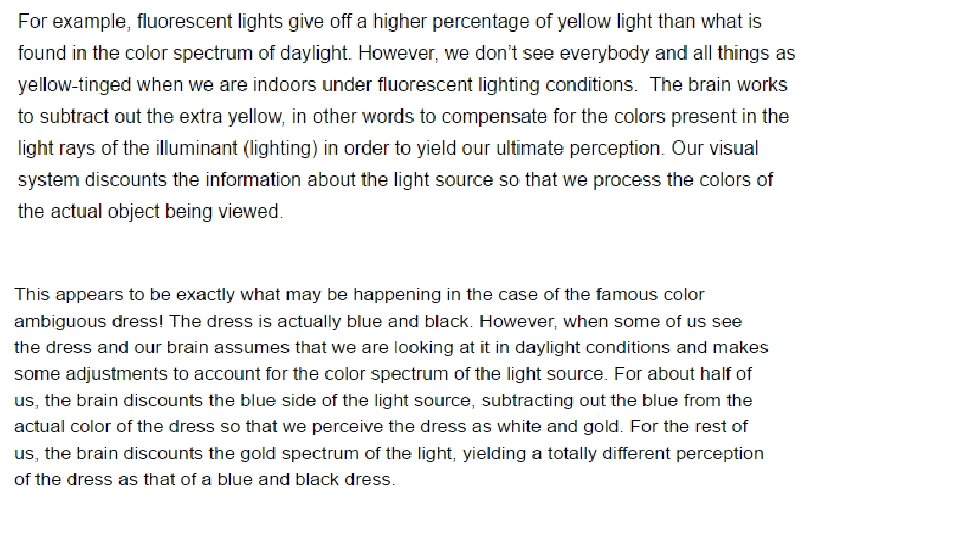
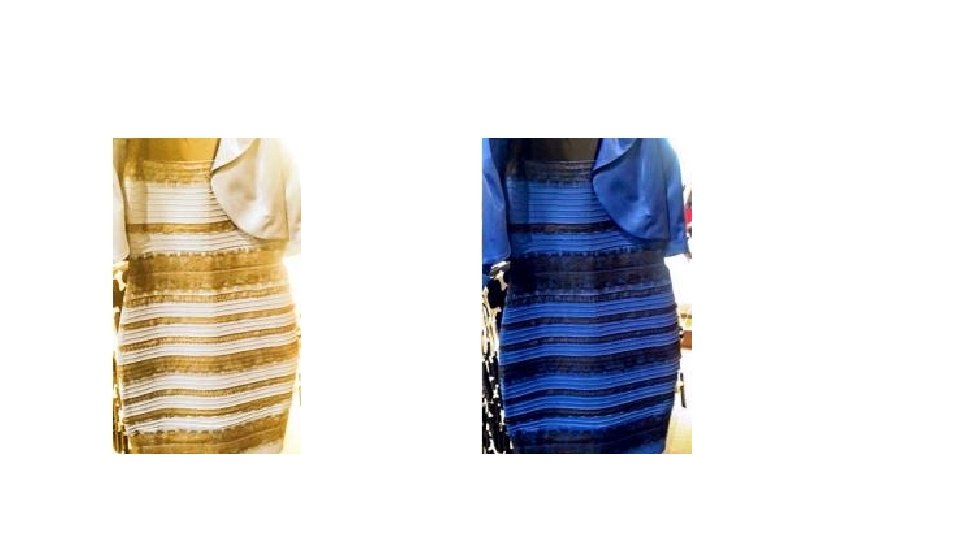
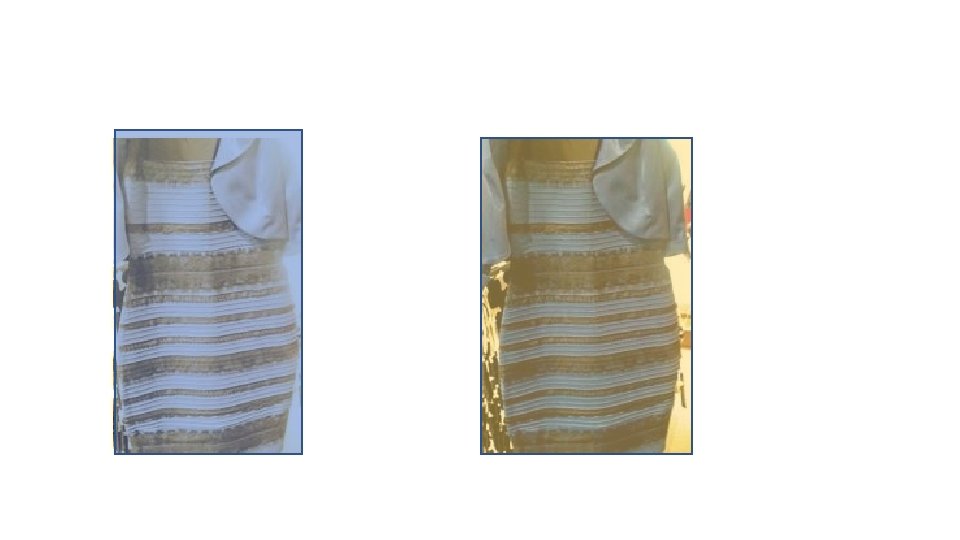
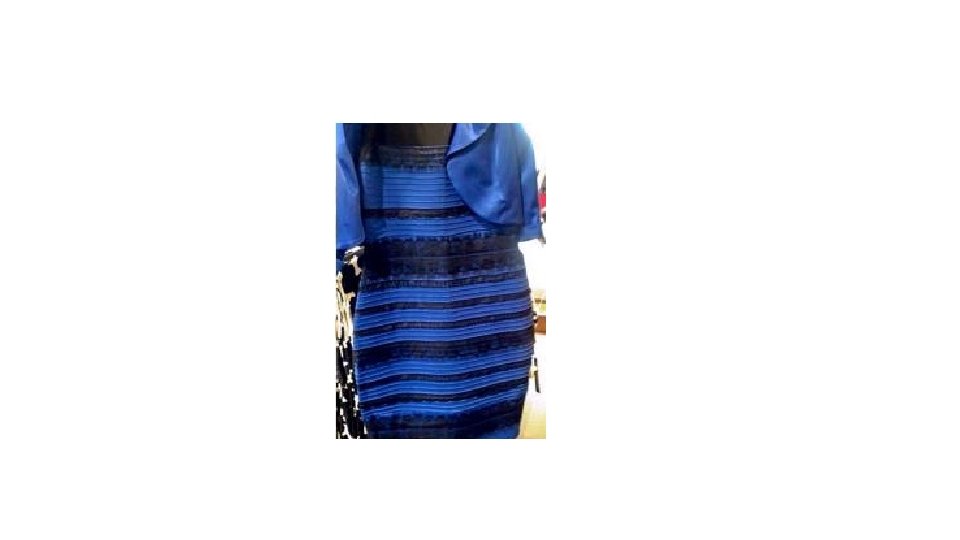
Color Constancy
Illusions
Vision Circus
Station 1 A Hallway
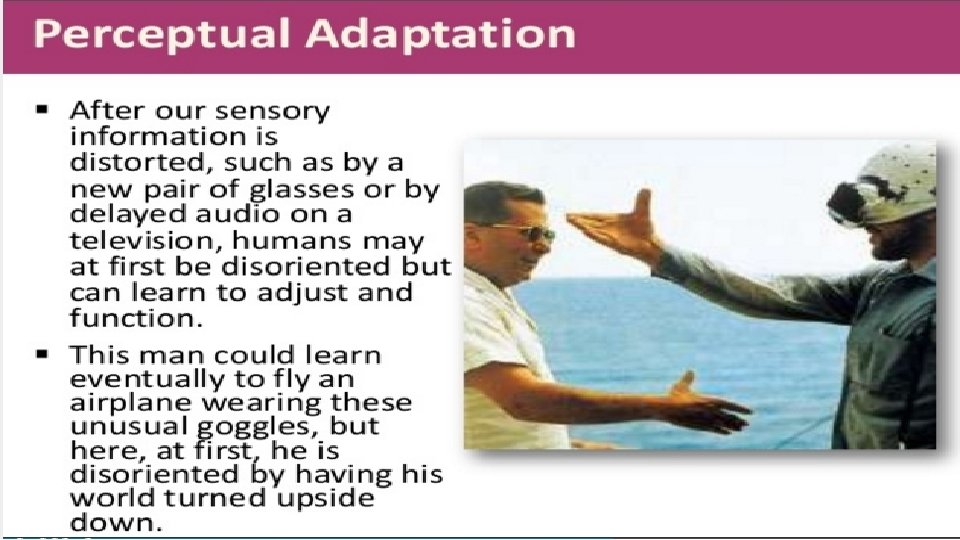
Groups of 4 Goggles Don’t move around unassisted Inversion Goggle Shake hands with your group members (record how long it takes to get it right Walk to water fountain and back (with help of non-goggle wearer) have bean bag toss goggle wearer write your name on the board Non-goggle wearer – draw a tree goggle wearer trace the tree Make connections to Perceptual Adaptation
Station 2 Classroom – Hallway- windows
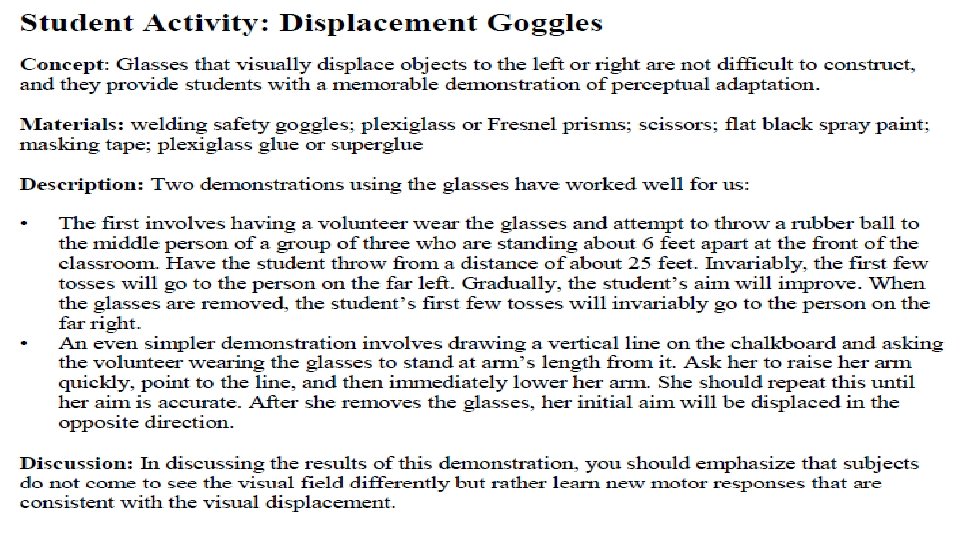
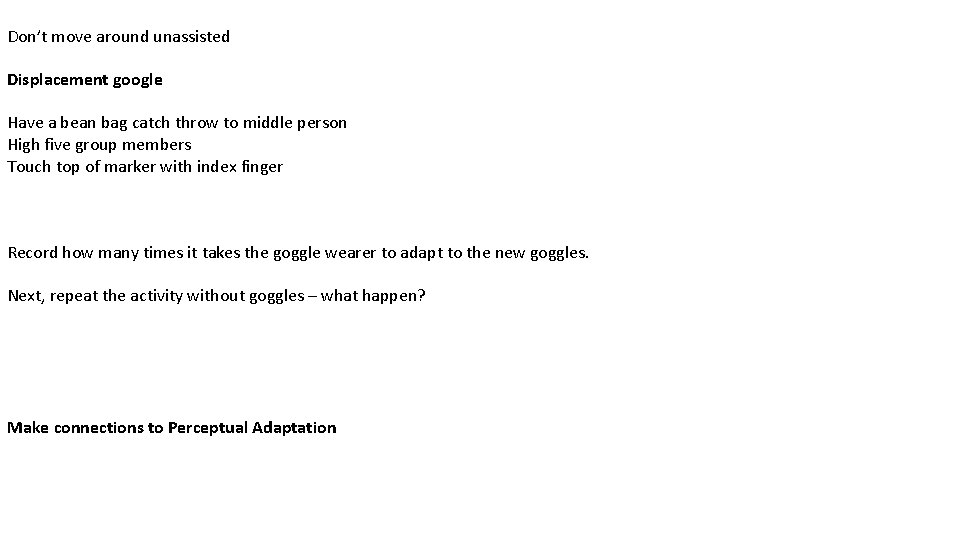
Don’t move around unassisted Displacement google Have a bean bag catch throw to middle person High five group members Touch top of marker with index finger Record how many times it takes the goggle wearer to adapt to the new goggles. Next, repeat the activity without goggles – what happen? Make connections to Perceptual Adaptation
Station 3 Classroom – back dry erase board/cabinets
Station 4 Back of classroom
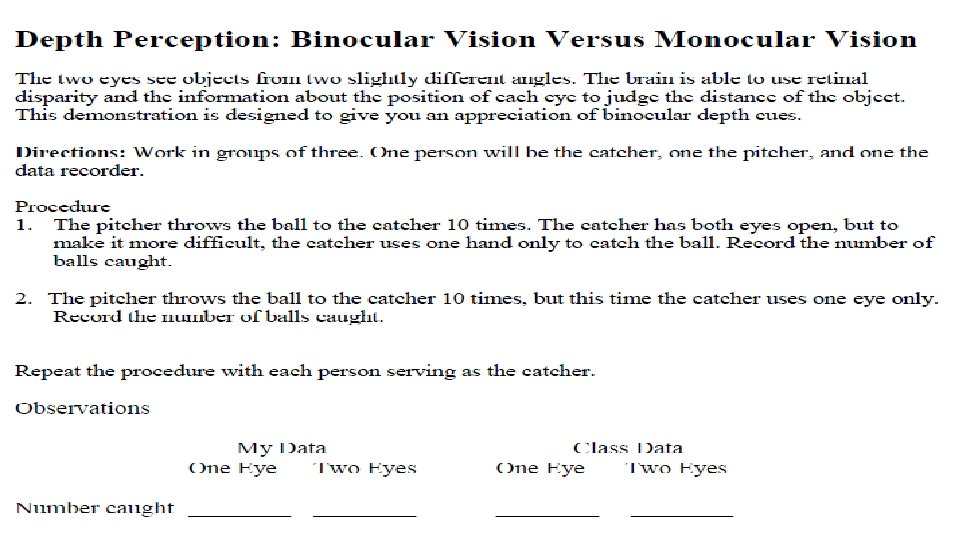
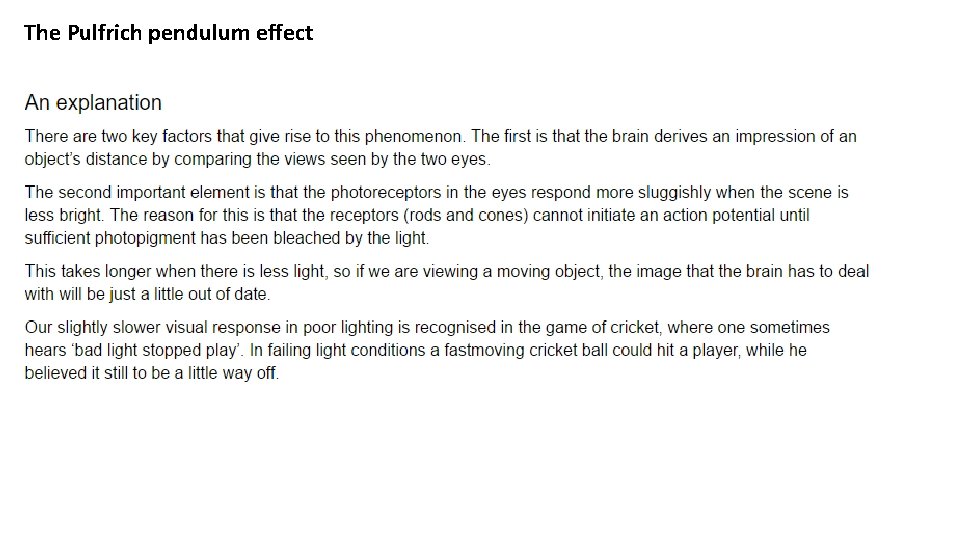
The Pulfrich pendulum effect
Station 5 4 desk corner of the classroom
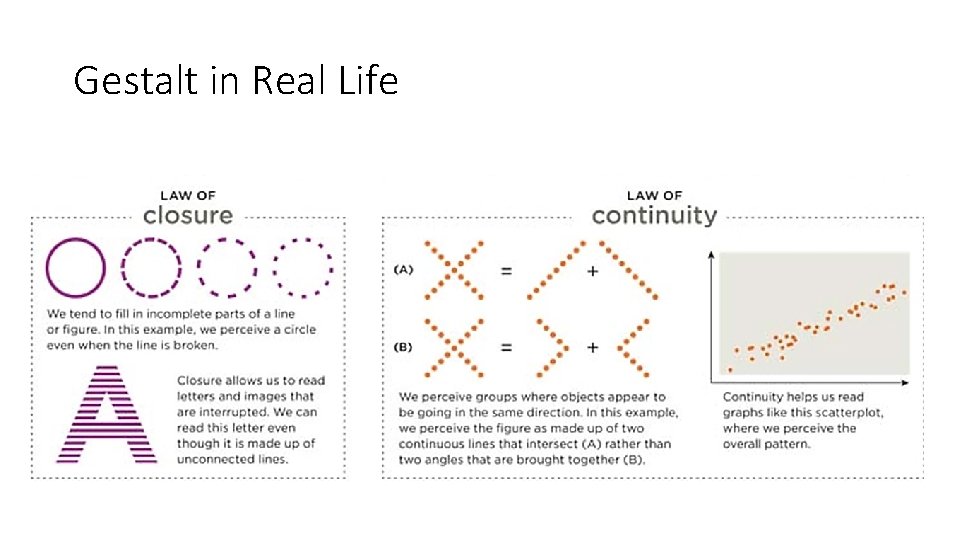
Gestalt in Real Life
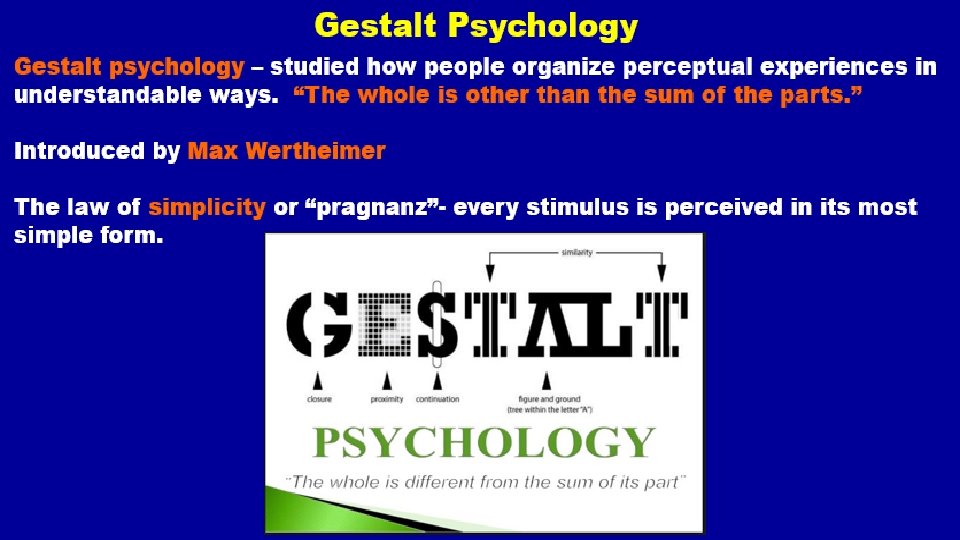
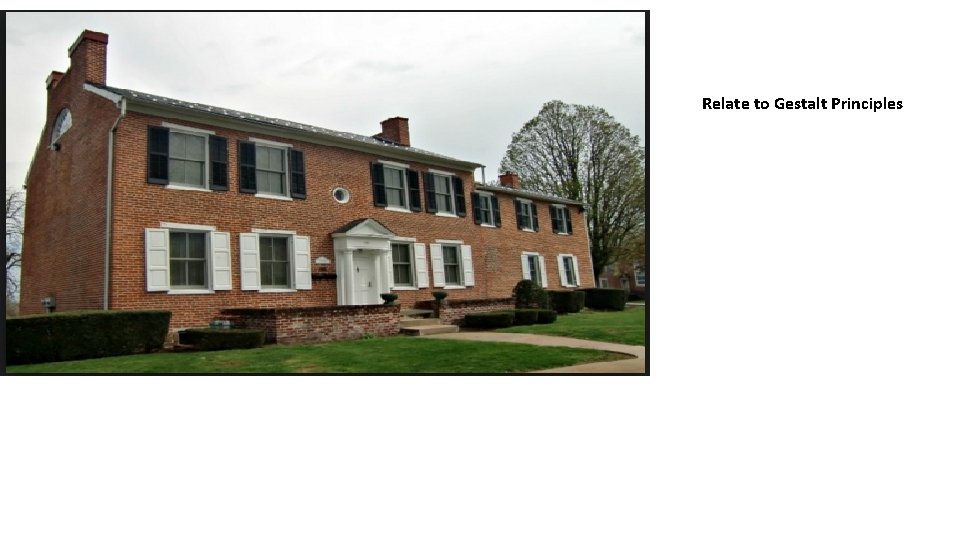
Relate to Gestalt Principles
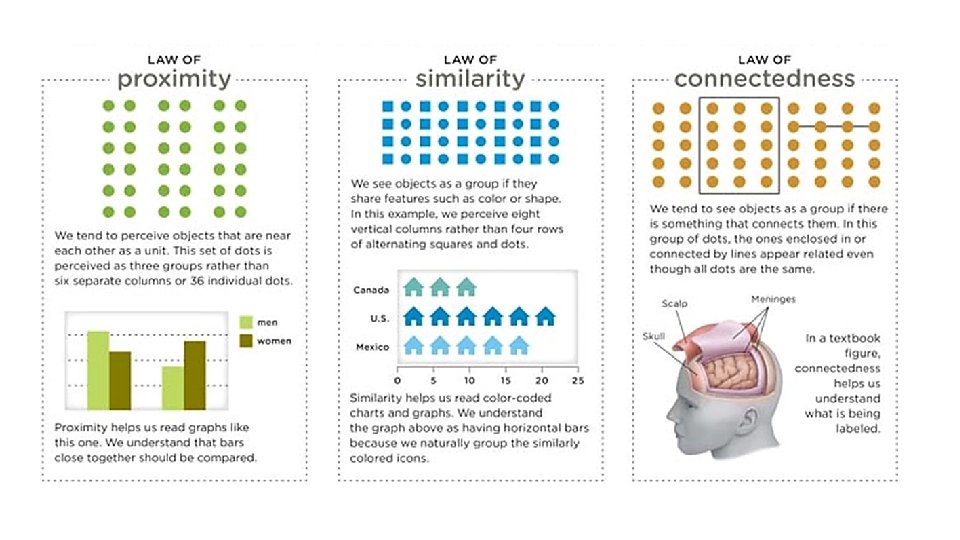
Relate to Gestalt Principles
Gestalt violations
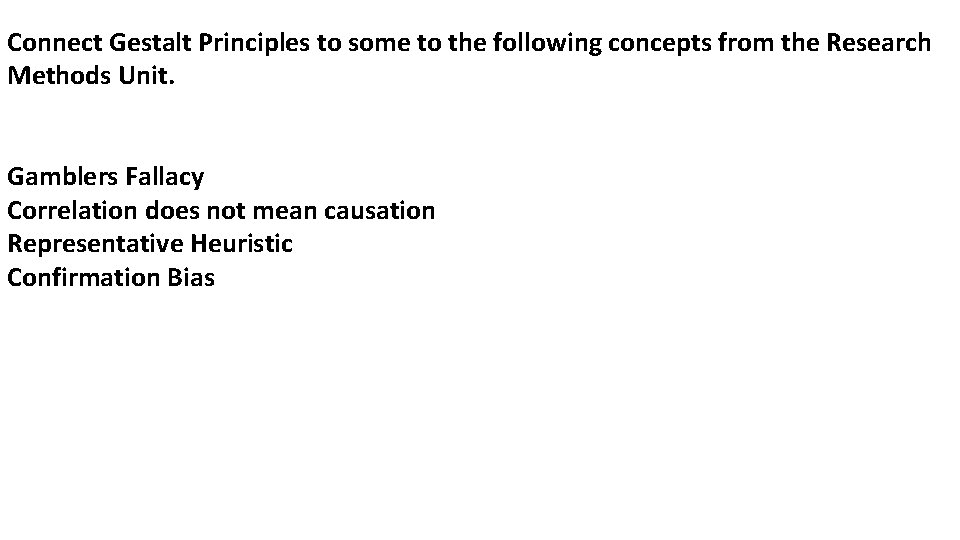
Connect Gestalt Principles to some to the following concepts from the Research Methods Unit. Gamblers Fallacy Correlation does not mean causation Representative Heuristic Confirmation Bias
The Other Senses
AP Objectives I can describe sensory processes I can explain common sensory disorders
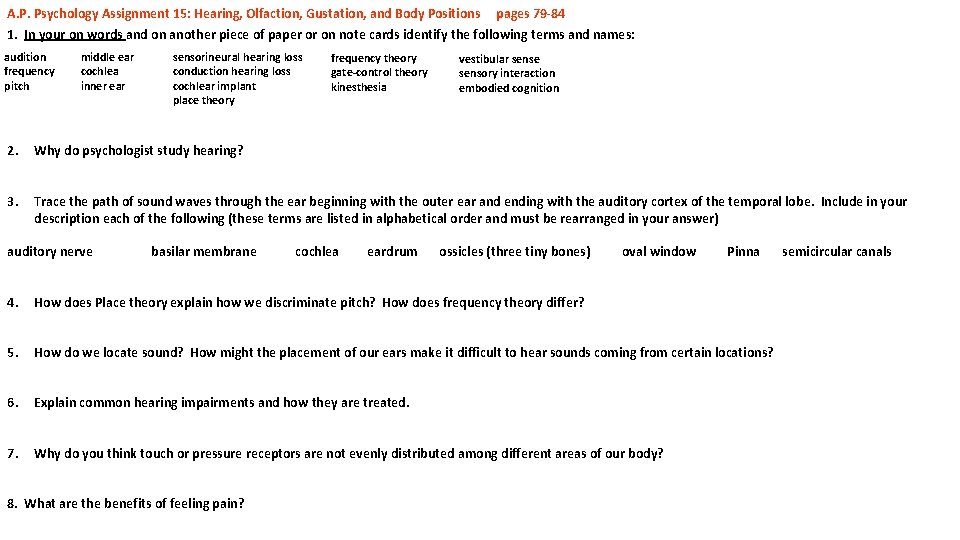
A. P. Psychology Assignment 15: Hearing, Olfaction, Gustation, and Body Positions pages 79 -84 1. In your on words and on another piece of paper or on note cards identify the following terms and names: audition frequency pitch middle ear cochlea inner ear sensorineural hearing loss conduction hearing loss cochlear implant place theory frequency theory gate-control theory kinesthesia vestibular sense sensory interaction embodied cognition 2. Why do psychologist study hearing? 3. Trace the path of sound waves through the ear beginning with the outer ear and ending with the auditory cortex of the temporal lobe. Include in your description each of the following (these terms are listed in alphabetical order and must be rearranged in your answer) auditory nerve basilar membrane cochlea eardrum ossicles (three tiny bones) oval window Pinna 4. How does Place theory explain how we discriminate pitch? How does frequency theory differ? 5. How do we locate sound? How might the placement of our ears make it difficult to hear sounds coming from certain locations? 6. Explain common hearing impairments and how they are treated. 7. Why do you think touch or pressure receptors are not evenly distributed among different areas of our body? 8. What are the benefits of feeling pain? semicircular canals
9. In your own words explain the gate control theory. 10. Why do evolutionary psychologist see taste as adaptive? 11. What is the evolutionary explanation for olfactory signals not processing first through the thalamus, as with other senses? 12. In what ways are smells connected with memories and emotion? Why do smells elicit strong memories? 13. What is the difference between your vestibular sense and kinesthetic sense?
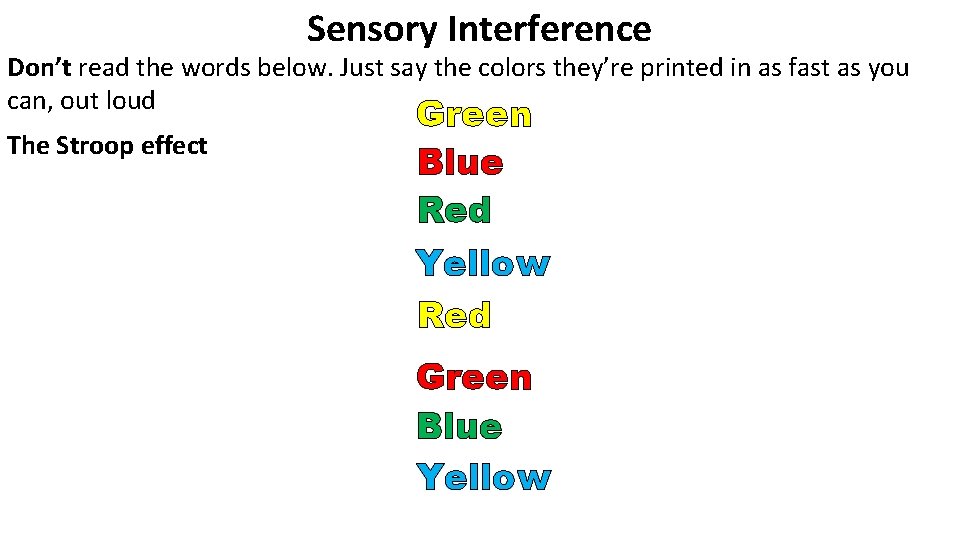
Sensory Interference Don’t read the words below. Just say the colors they’re printed in as fast as you can, out loud The Stroop effect Green Blue Red Yellow Red Green Blue Yellow
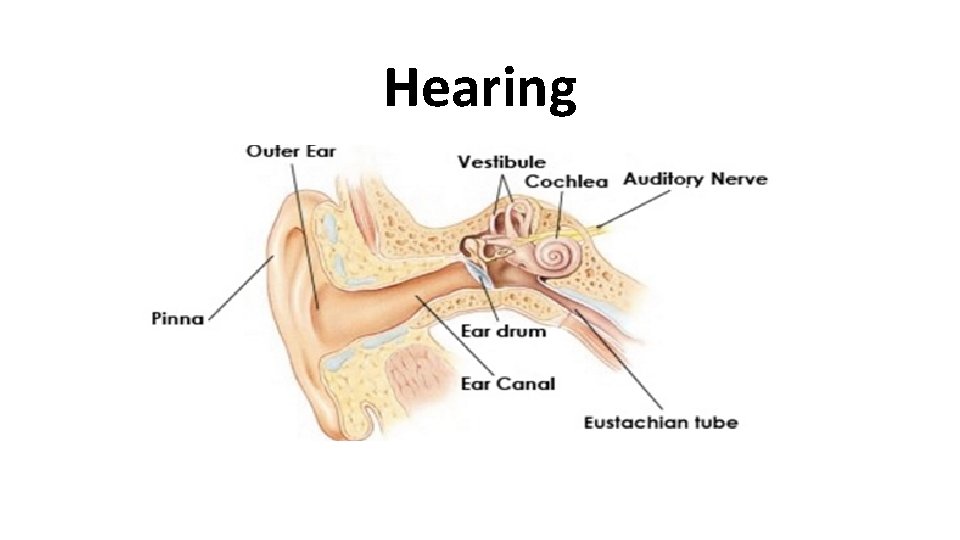
Hearing
Stimulus Parts of the Ear Receptors and Transduction The Auditory Cortex Prception Visual Cues Illusions
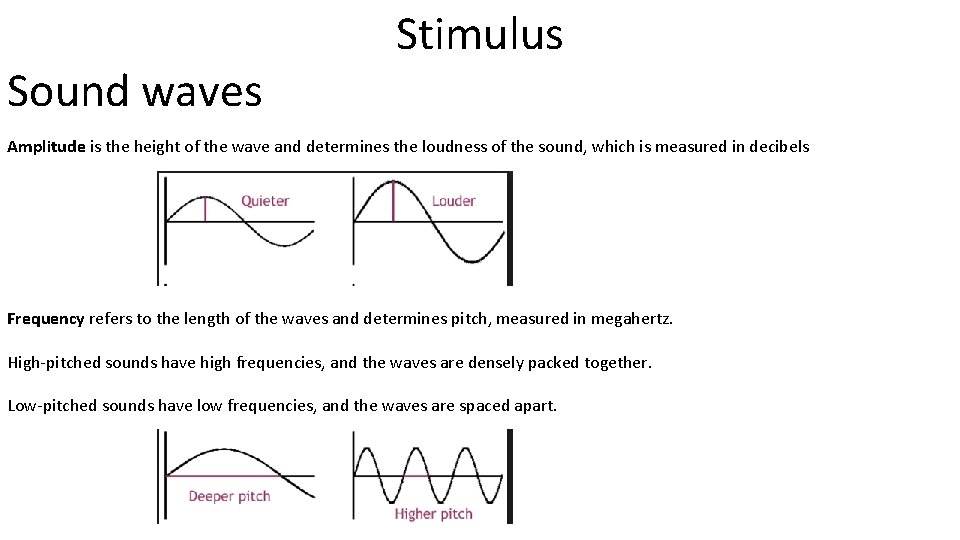
Sound waves Stimulus Amplitude is the height of the wave and determines the loudness of the sound, which is measured in decibels Frequency refers to the length of the waves and determines pitch, measured in megahertz. High-pitched sounds have high frequencies, and the waves are densely packed together. Low-pitched sounds have low frequencies, and the waves are spaced apart.
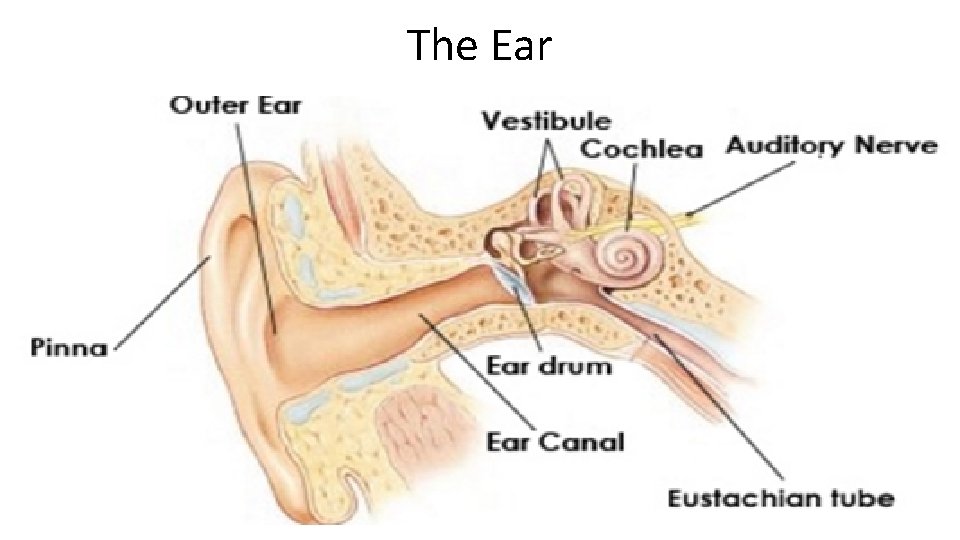
The Ear
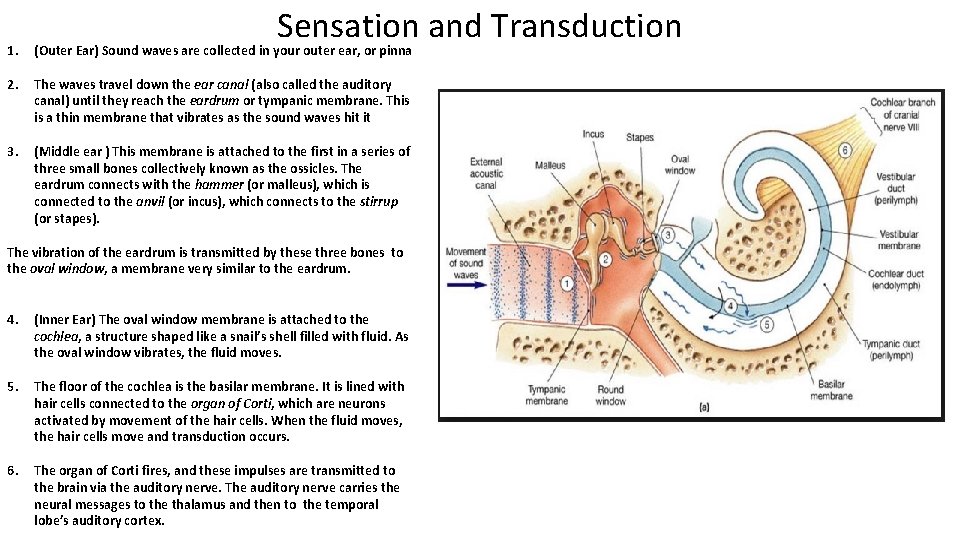
Sensation and Transduction 1. (Outer Ear) Sound waves are collected in your outer ear, or pinna 2. The waves travel down the ear canal (also called the auditory canal) until they reach the eardrum or tympanic membrane. This is a thin membrane that vibrates as the sound waves hit it 3. (Middle ear ) This membrane is attached to the first in a series of three small bones collectively known as the ossicles. The eardrum connects with the hammer (or malleus), which is connected to the anvil (or incus), which connects to the stirrup (or stapes). The vibration of the eardrum is transmitted by these three bones to the oval window, a membrane very similar to the eardrum. 4. (Inner Ear) The oval window membrane is attached to the cochlea, a structure shaped like a snail’s shell filled with fluid. As the oval window vibrates, the fluid moves. 5. The floor of the cochlea is the basilar membrane. It is lined with hair cells connected to the organ of Corti, which are neurons activated by movement of the hair cells. When the fluid moves, the hair cells move and transduction occurs. 6. The organ of Corti fires, and these impulses are transmitted to the brain via the auditory nerve. The auditory nerve carries the neural messages to the thalamus and then to the temporal lobe’s auditory cortex.
Pitch Theories There are two different theories describe the two processes involved in hearing pitch: place theory and frequency theory. Place theory states that pitch we hear links to the place where the cochlea’s membrane is stimulated. Put differently, the hair cells in the cochlea respond to different frequencies of sound based on where they are located in the cochlea. Some bend in response to high pitches and some to low. We sense pitch because the hair cells move in different places in the cochlea. Frequency theory is theory that the rate of nerve impulses traveling up the auditory nerve matches the frequency of the tone, thus enabling us to sense its pitch. https: //www. youtube. com/watch? v=Vxcbpp. CX 6 Rk
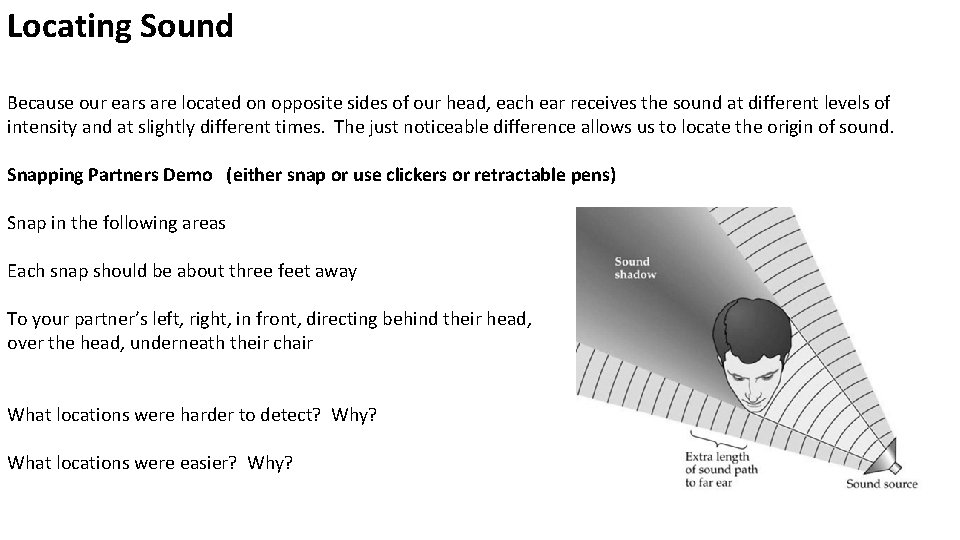
Locating Sound Because our ears are located on opposite sides of our head, each ear receives the sound at different levels of intensity and at slightly different times. The just noticeable difference allows us to locate the origin of sound. Snapping Partners Demo (either snap or use clickers or retractable pens) Snap in the following areas Each snap should be about three feet away To your partner’s left, right, in front, directing behind their head, over the head, underneath their chair What locations were harder to detect? Why? What locations were easier? Why?
Sensory interference Mc. Gurk Effect https: //www. youtube. com/watch? v=G-l. N 8 v. Wm 3 m 0 https: //www. youtube. com/watch? v=Kiu. O_Z 2_AD 4
Bananas
Vomit
An understanding of how hearing works explains hearing problems as well. Conduction hearing loss occurs when something goes wrong with the system of conducting the sound to the cochlea (in the ear canal, eardrum, hammer/anvil/stirrup, or oval window). My father-in-law has a medical condition that is causing her stirrup to deteriorate slowly. Eventually, he will need surgery to replace that bone in order to hear well. Nerve (or sensorineural) hearing loss occurs when the hair cells in the cochlea are damaged, usually by loud noise. If you have ever been to a concert, football game, or other event loud enough to leave your ears ringing, chances are you came close to or did cause permanent damage to your hearing. Prolonged exposure to noise that loud can permanently damage the hair cells in your cochlea, and these hair cells do not regenerate. Nerve deafness is much more difficult to treat since no method has been found that will encourage the hair cells to regenerate. Think music Conductor that can’t get the drums to play right
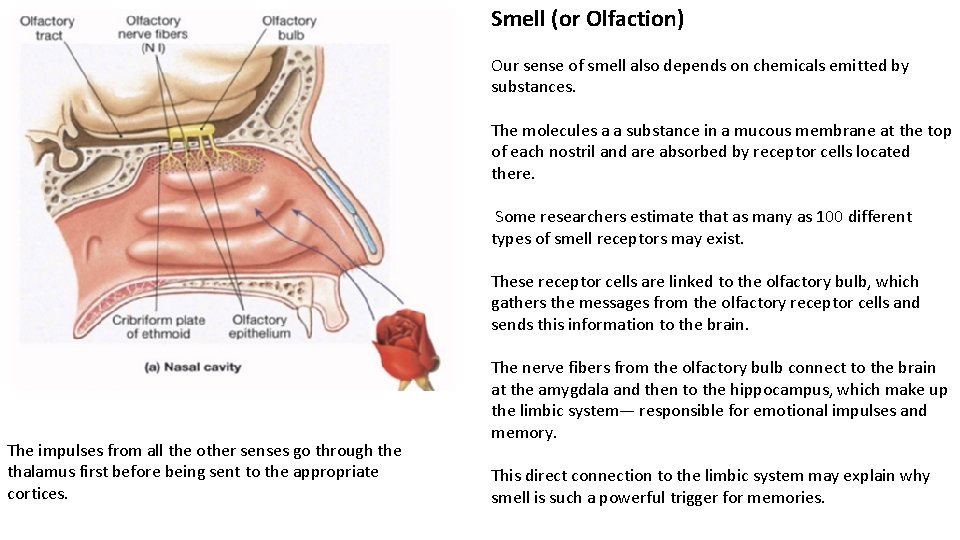
Smell (or Olfaction) Our sense of smell also depends on chemicals emitted by substances. The molecules a a substance in a mucous membrane at the top of each nostril and are absorbed by receptor cells located there. Some researchers estimate that as many as 100 different types of smell receptors may exist. These receptor cells are linked to the olfactory bulb, which gathers the messages from the olfactory receptor cells and sends this information to the brain. The impulses from all the other senses go through the thalamus first before being sent to the appropriate cortices. The nerve fibers from the olfactory bulb connect to the brain at the amygdala and then to the hippocampus, which make up the limbic system— responsible for emotional impulses and memory. This direct connection to the limbic system may explain why smell is such a powerful trigger for memories.
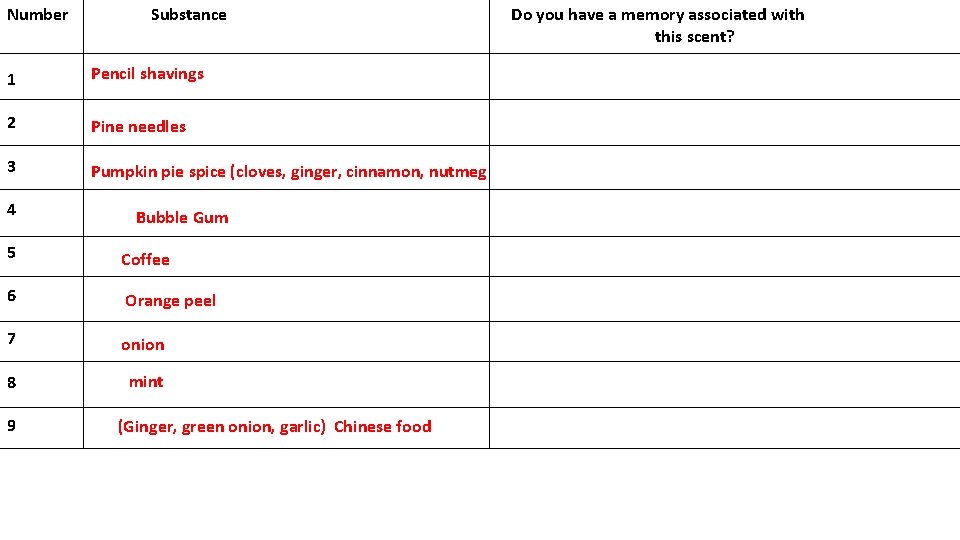
Number Substance 1 Pencil shavings 2 Pine needles 3 Pumpkin pie spice (cloves, ginger, cinnamon, nutmeg 4 Bubble Gum 5 Coffee 6 Orange peel 7 onion 8 mint 9 (Ginger, green onion, garlic) Chinese food Do you have a memory associated with this scent?
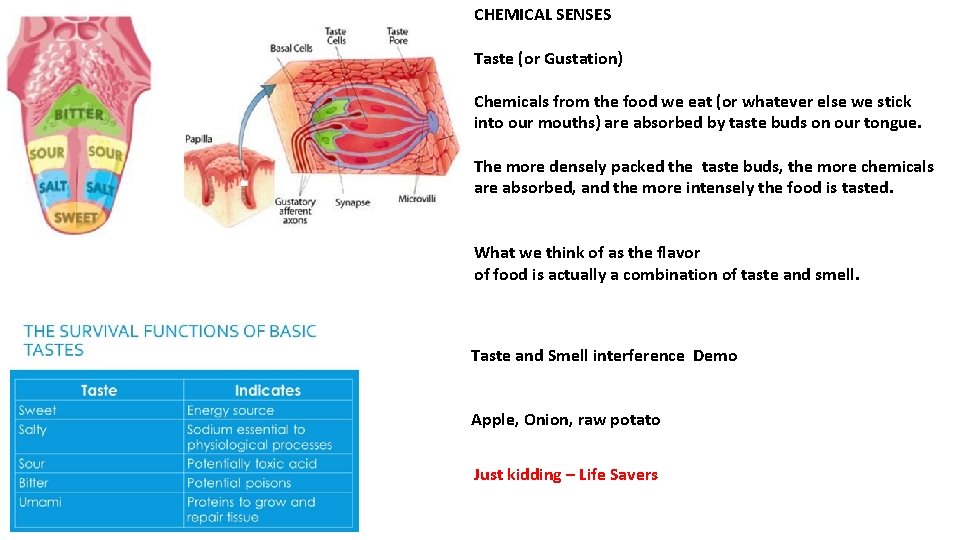
CHEMICAL SENSES Taste (or Gustation) Chemicals from the food we eat (or whatever else we stick into our mouths) are absorbed by taste buds on our tongue. The more densely packed the taste buds, the more chemicals are absorbed, and the more intensely the food is tasted. What we think of as the flavor of food is actually a combination of taste and smell. Taste and Smell interference Demo Apple, Onion, raw potato Just kidding – Life Savers
The gate-control theory of pain According to the gate-control theory, the brain regulates pain by sending signals down the spinal cord that either open or close sensory pathways or “gates. ” If the brain signals the gates to open, pain is experienced or intensified. If the brain signals the gates to close, pain is reduced. Endorphins, or pain-killing chemicals in the body, also swing the gate shut. Natural endorphins in the brain, which are chemically similar to opiates like morphine, control pain. Psychological factors such as anxiety and fear can intensify pain while positive emotions such as laughter can help minimize pain. The Brain can also create pain as in examples of phantom limbs
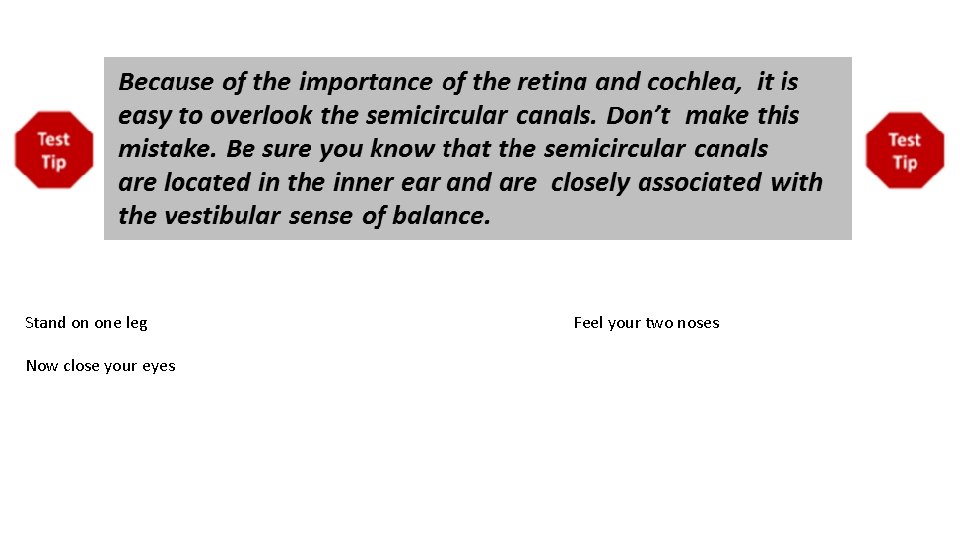
Stand on one leg Now close your eyes Feel your two noses
I can discuss basic principles of sensory transduction, including absolute threshold, difference threshold, signal detection, and sensory adaptation. each I can describe sensory processes (e. g. , hearing, vision, touch, taste, smell, vestibular, kinesthesis, pain), including the specific nature of energy transduction, relevant anatomical structures, and specialized pathways in the brain for of the senses. I can explain common sensory disorders (e. g. , visual and hearing impairments). I can describe general principles of organizing and integrating sensation to promote stable awareness of the external world (e. g. , Gestalt principles, depth perception). I can discuss how experience and culture can influence perceptual processes (e. g. , perceptual set, context effects). I can explain the role of top-down processing in producing vulnerability to illusion. I can discuss the role of attention in behavior. I can challenge common beliefs in parapsychological phenomena. I can identify the major historical figures in sensation and perception (e. g. , Gustav Fechner, David Hubel, Ernst Weber, Torsten Wiesel). Table of Contents 112