Franz Joseph Gall 1758 1728 Perception and memory



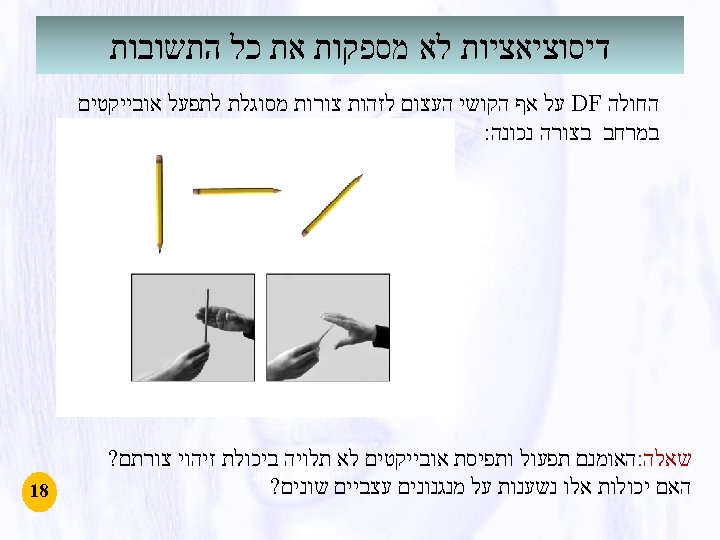
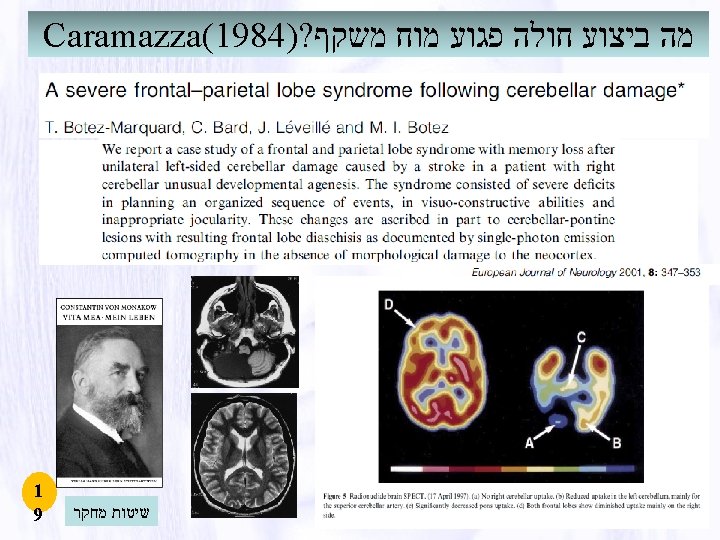

- Slides: 38
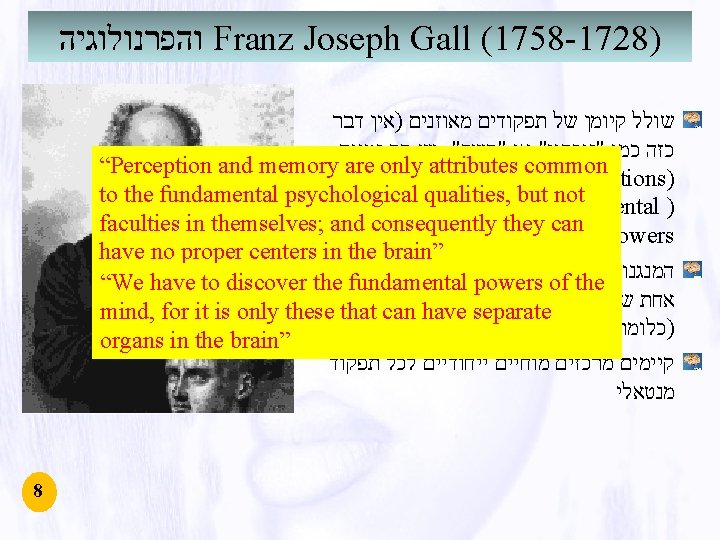
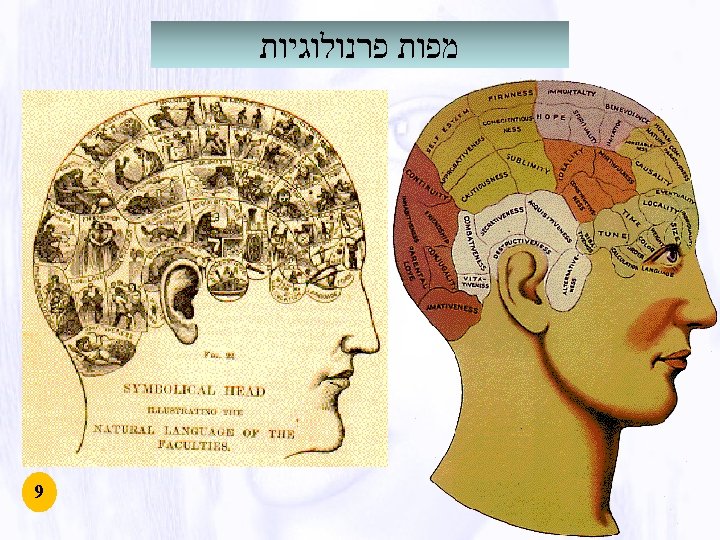
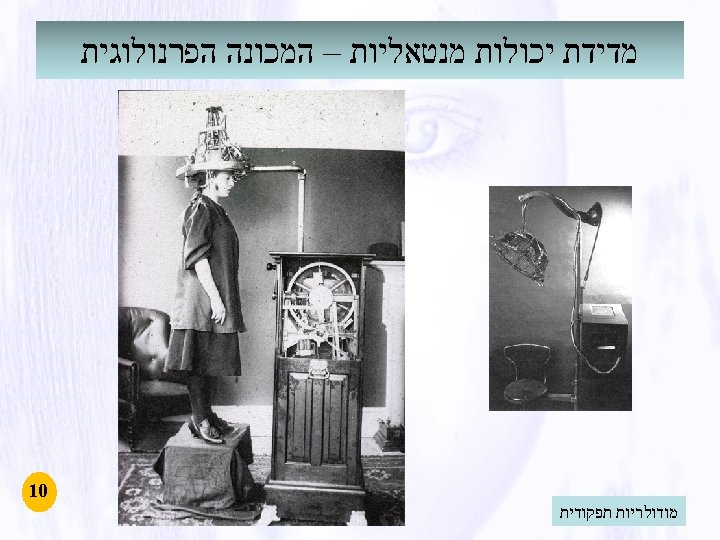
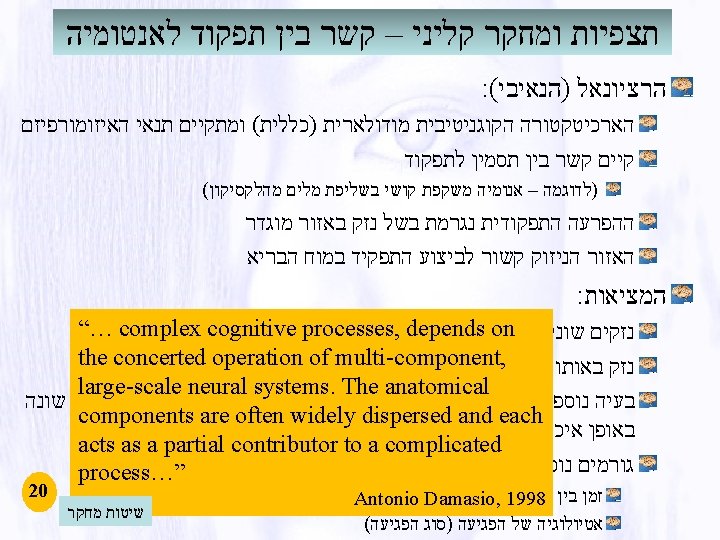
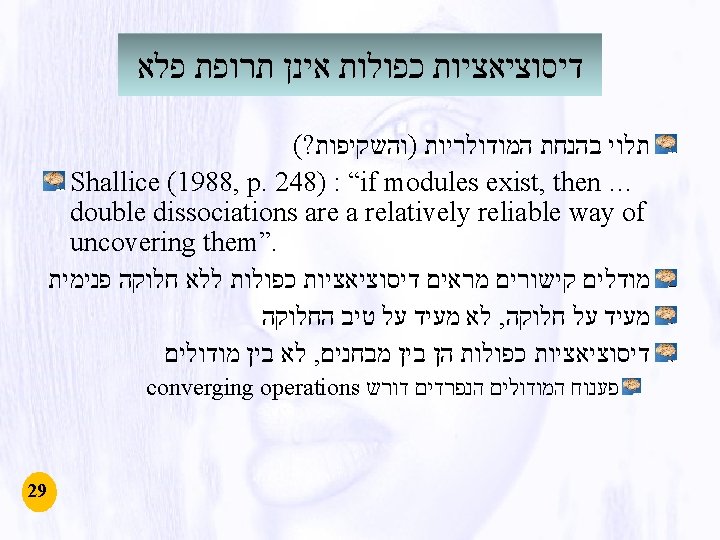
והפרנולוגיה Franz Joseph Gall (1758 -1728) שולל קיומן של תפקודים מאוזנים )אין דבר יש רק נטיות. " כזה כמו "זיכרון" או "קשב “Perception and memory are only attributes common יכולות , (propensities and dispositions) to the fundamental psychological qualities, but not aptitudes, qualities and fundamental ) faculties in themselves; and consequently they can. ( – לדוגמה מוזיקה powers have no proper centers in the brain” תומך ביכולת / המנגנון הפסיכולוגי המאפשר “We have to discover the fundamental powers of the. תומך ביכולת אחרת / אחת שונה מזה המאפשר mind, for it is only these that can have separate (. )כלומר לכל יכולת רכיבים שונים organs in the brain” קיימים מרכזים מוחיים ייחודיים לכל תפקוד מנטאלי 8
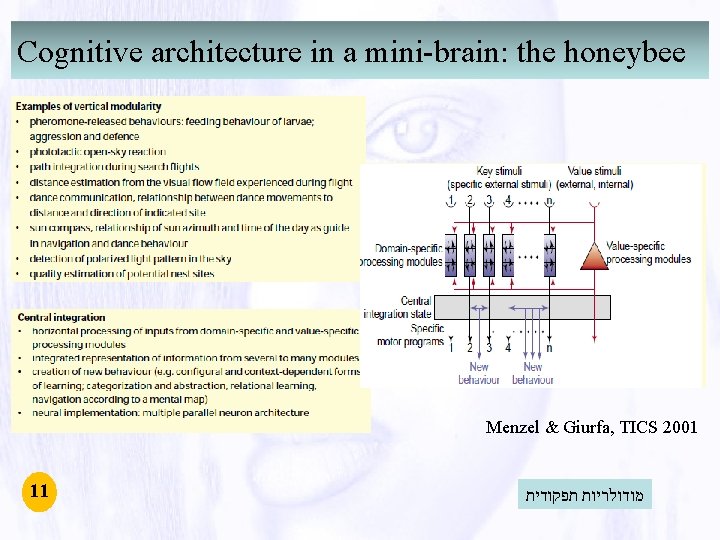
Cognitive architecture in a mini-brain: the honeybee Menzel & Giurfa, TICS 2001 11 מודולריות תפקודית
מיקום ותפקיד מנגנונים מודולרים בארכיטקטורה קוגניטיבית “Input systems function to get information into the central processors; specifically, they mediate between transducer outputs and central cognitive mechanisms by encoding the mental representations which provide domains for operations of the later” Fodor (1983) Modularity of mind, page 46. 12
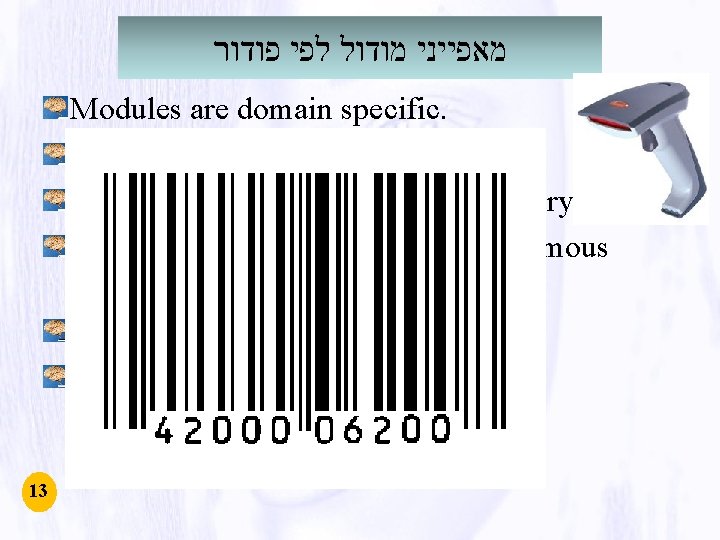
מאפייני מודול לפי פודור Modules are domain specific. Modules are innately specified. The operation of modules is mandatory. Modules are computationally autonomous (informational encapsulated). Modules have “shallow” outputs. Modules are hardwired 13
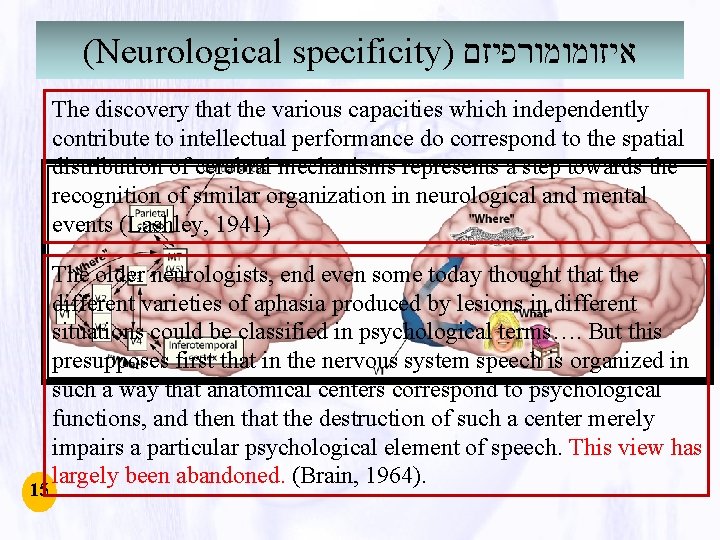
(Neurological specificity) איזומומורפיזם The discovery that the various capacities which independently contribute to intellectual performance do correspond to the spatial distribution of cerebral mechanisms represents a step towards the recognition of similar organization in neurological and mental events (Lashley, 1941) 15 The older neurologists, end even some today thought that the different varieties of aphasia produced by lesions in different situations could be classified in psychological terms…. But this presupposes first that in the nervous system speech is organized in such a way that anatomical centers correspond to psychological functions, and then that the destruction of such a center merely impairs a particular psychological element of speech. This view has largely been abandoned. (Brain, 1964).
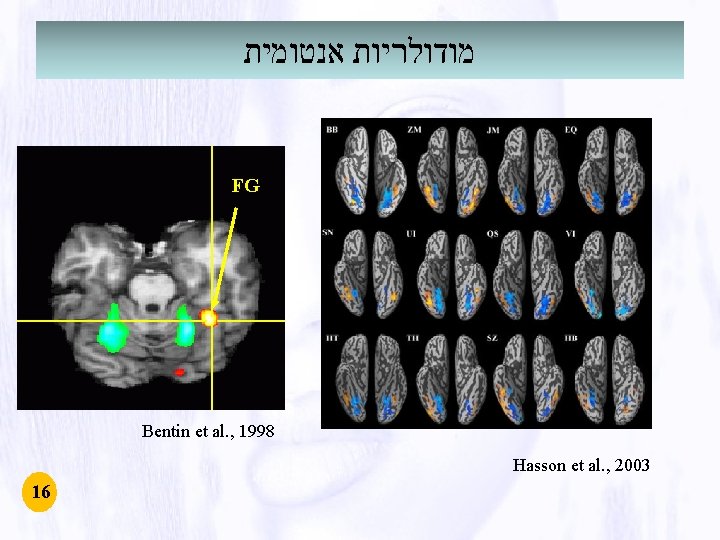
מודולריות אנטומית FG Bentin et al. , 1998 Hasson et al. , 2003 16
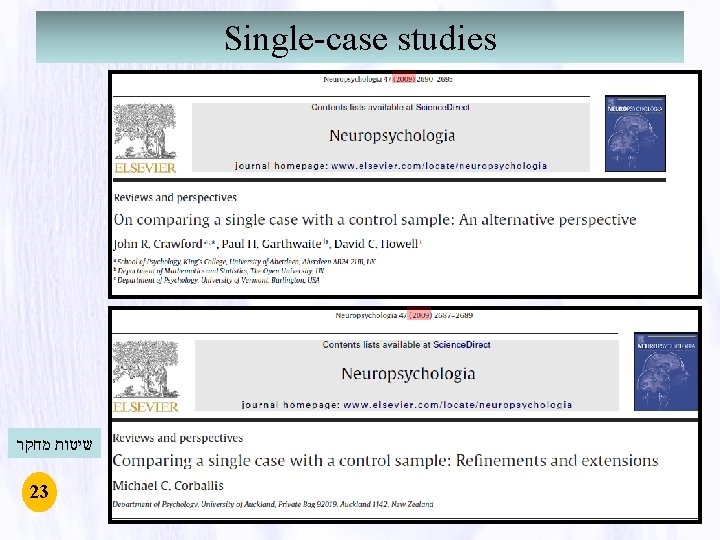
Single-case studies שיטות מחקר 23
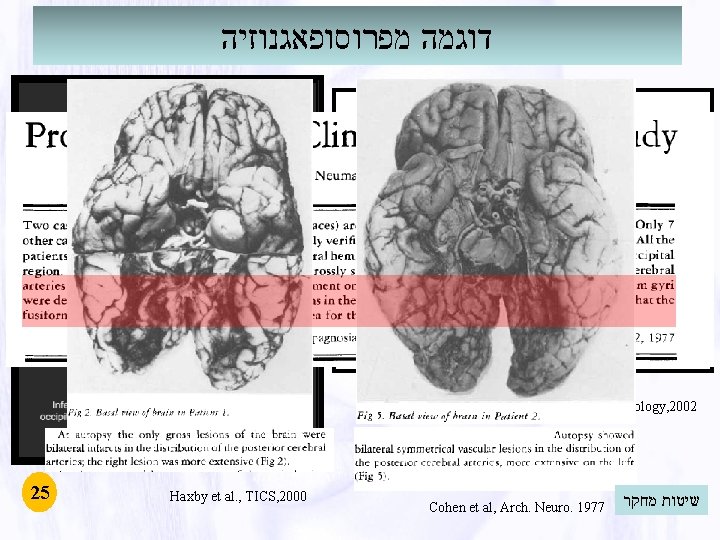
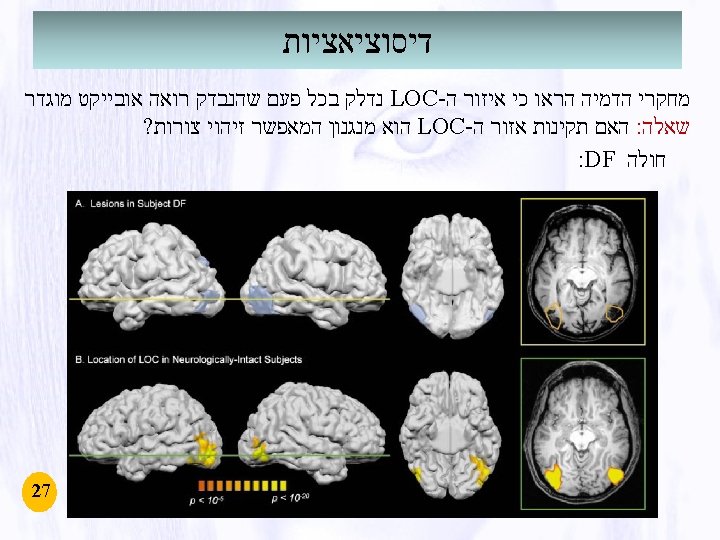
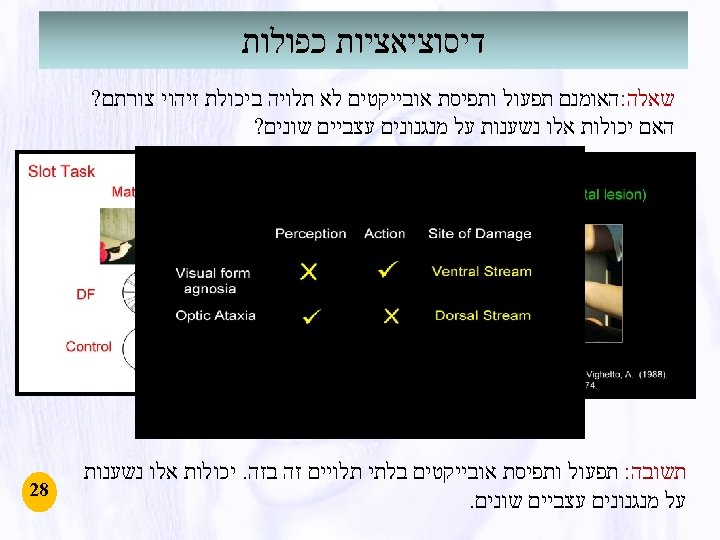
דוגמה מפרוסופאגנוזיה Barton et al. , Neurology, 2002 25 Haxby et al. , TICS, 2000 Cohen et al, Arch. Neuro. 1977 שיטות מחקר
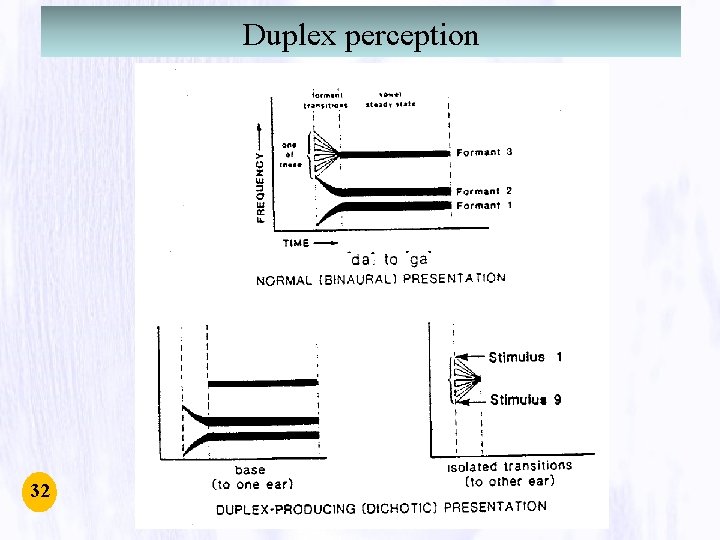
Duplex perception 32
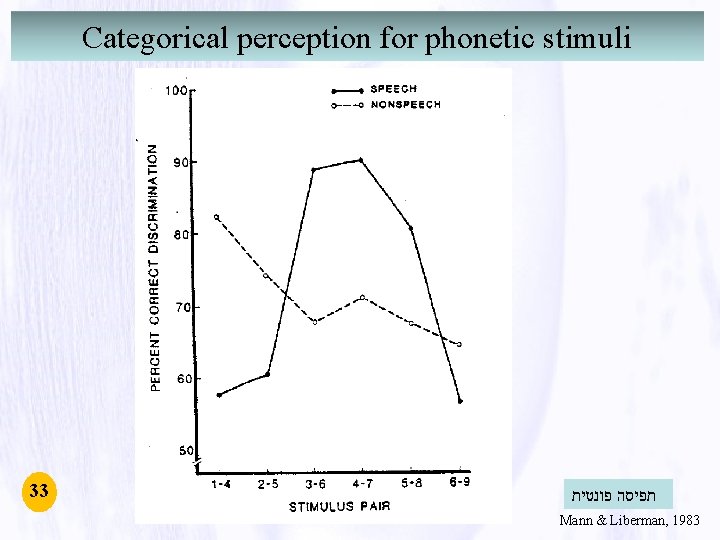
Categorical perception for phonetic stimuli 33 תפיסה פונטית Mann & Liberman, 1983
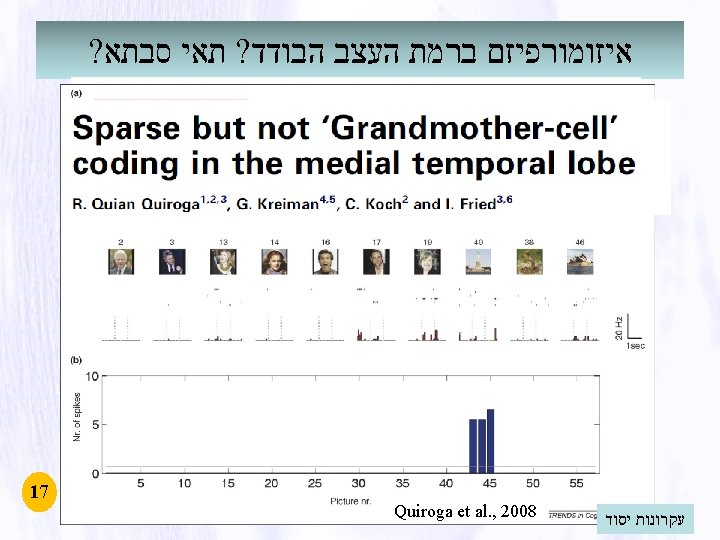
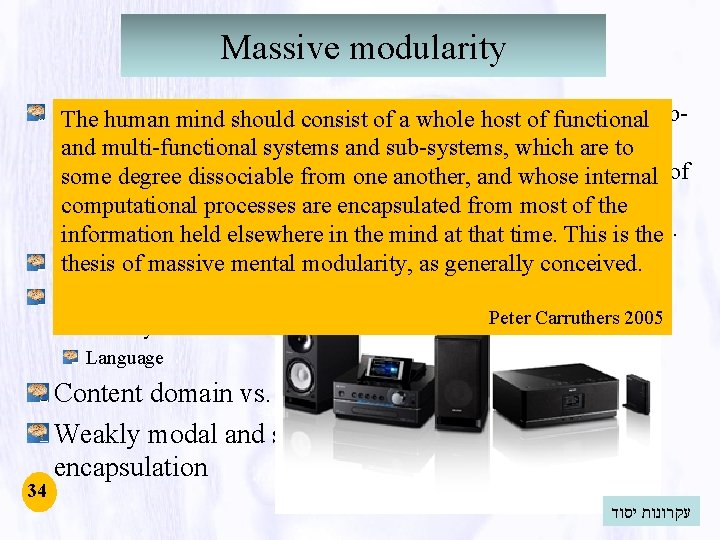
Massive modularity Complex functional systems are built up out host of assemblies of sub. The human mind should consist of a whole of functional components, each of which is constructed out ofwhich furtherare suband multi-functional systems and sub-systems, to components has a distinctive to playand in the functioning some degreeand dissociable from onerole another, whose internal of the whole, and many of which can be damaged lost of while computational processes are encapsulated fromormost the leaving the functionality of the remainder least partially information held elsewhere in the mind atatthat time. This isintact. thesis of massive generally conceived. Roughly, a modulemental is just modularity, a dissociableascomponent Neuropsychological examples: Memory Language 34 Peter Carruthers 2005 Content domain vs. task domain Weakly modal and strongly modal meanings of encapsulation עקרונות יסוד
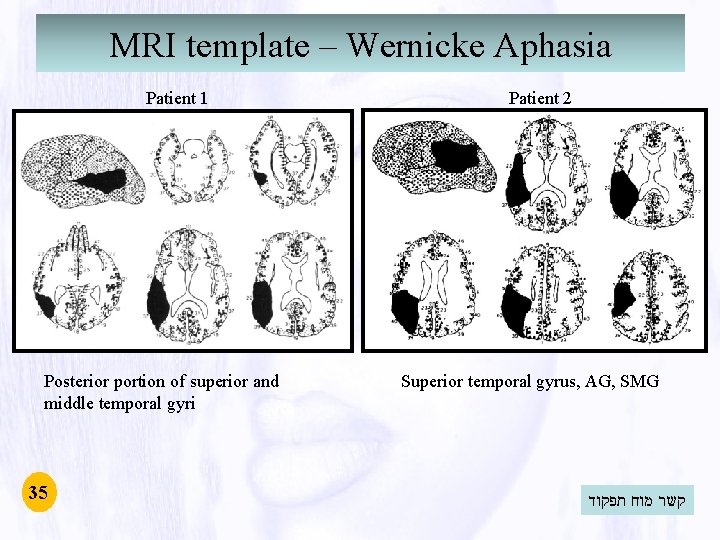
MRI template – Wernicke Aphasia Patient 1 Posterior portion of superior and middle temporal gyri 35 Patient 2 Superior temporal gyrus, AG, SMG קשר מוח תפקוד
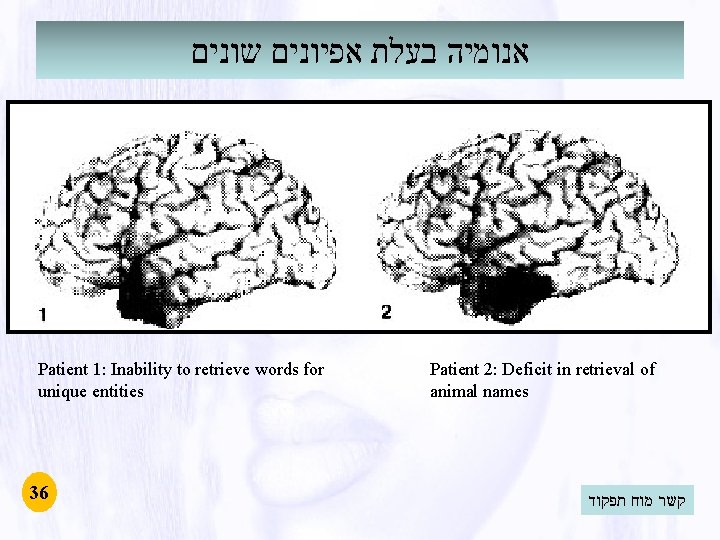
אנומיה בעלת אפיונים שונים Patient 1: Inability to retrieve words for unique entities 36 Patient 2: Deficit in retrieval of animal names קשר מוח תפקוד
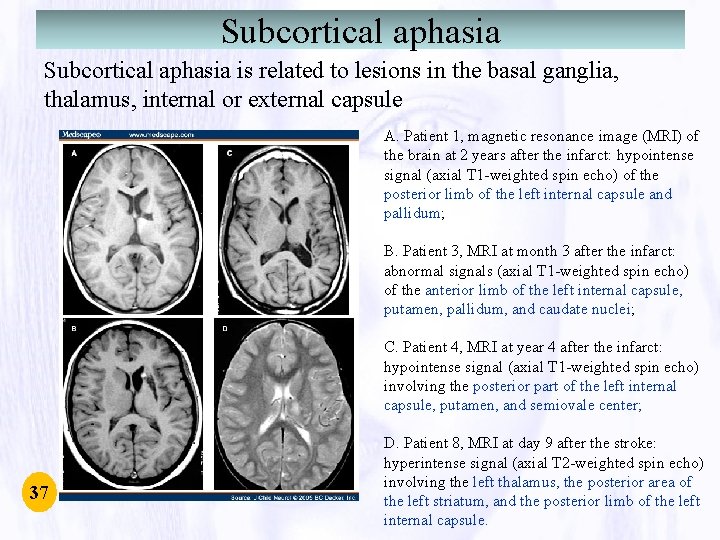
Subcortical aphasia is related to lesions in the basal ganglia, thalamus, internal or external capsule A. Patient 1, magnetic resonance image (MRI) of the brain at 2 years after the infarct: hypointense signal (axial T 1 -weighted spin echo) of the posterior limb of the left internal capsule and pallidum; B. Patient 3, MRI at month 3 after the infarct: abnormal signals (axial T 1 -weighted spin echo) of the anterior limb of the left internal capsule, putamen, pallidum, and caudate nuclei; C. Patient 4, MRI at year 4 after the infarct: hypointense signal (axial T 1 -weighted spin echo) involving the posterior part of the left internal capsule, putamen, and semiovale center; 37 D. Patient 8, MRI at day 9 after the stroke: hyperintense signal (axial T 2 -weighted spin echo) involving the left thalamus, the posterior area of the left striatum, and the posterior limb of the left internal capsule.
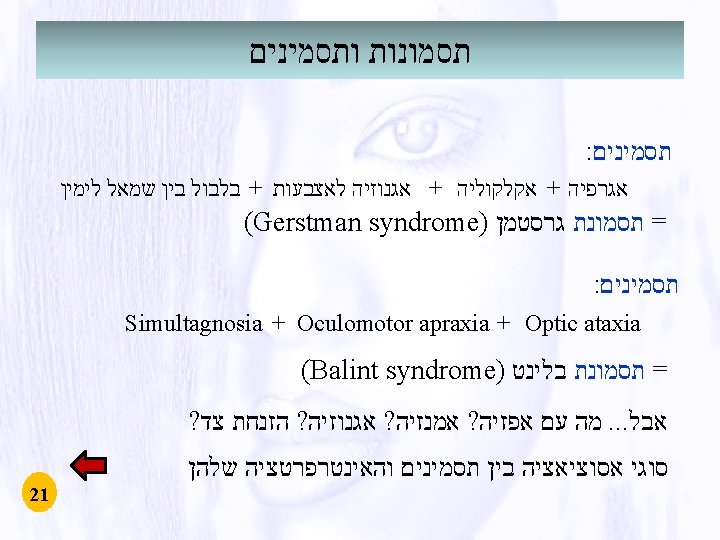
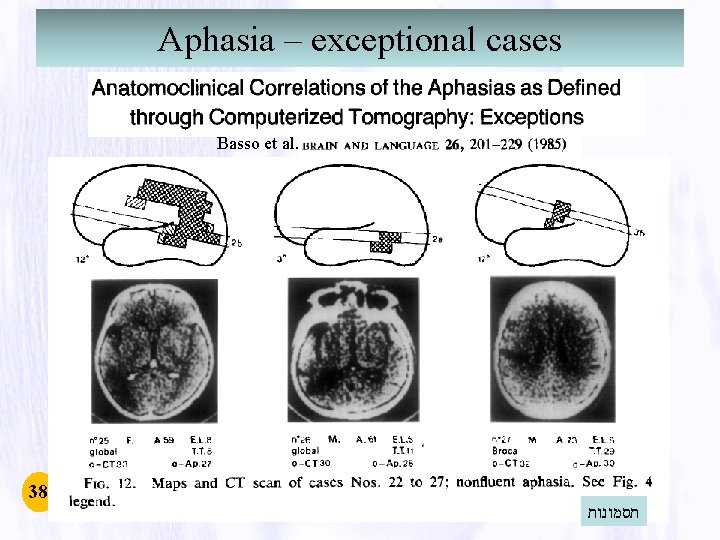
Aphasia – exceptional cases Basso et al. 38 תסמונות