SAFETY HEALTH PROGRAM AT WORK PLACE Scope of









- Slides: 63
SAFETY & HEALTH PROGRAM AT WORK PLACE Scope of Lectures 1. What is Safety and Health Program 2. Safety & Health Milestones in Malaysia 3. Statistics
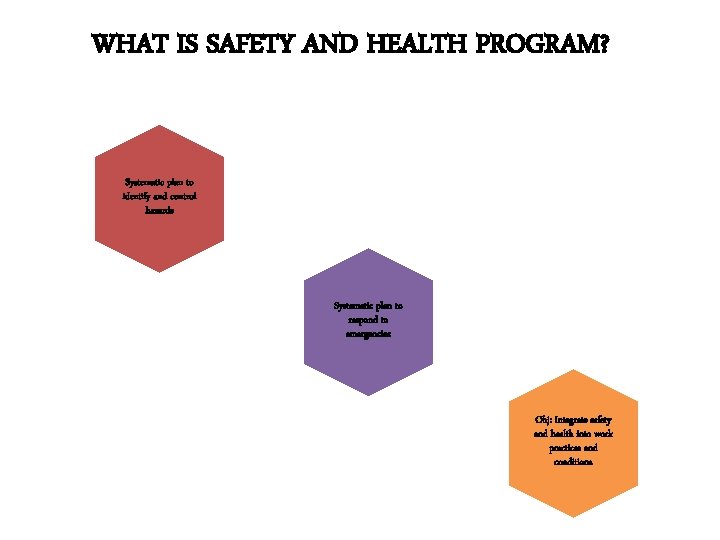
WHAT IS SAFETY AND HEALTH PROGRAM? Systematic plan to identify and control hazards Systematic plan to respond to emergencies Obj: Integrate safety and health into work practices and conditions
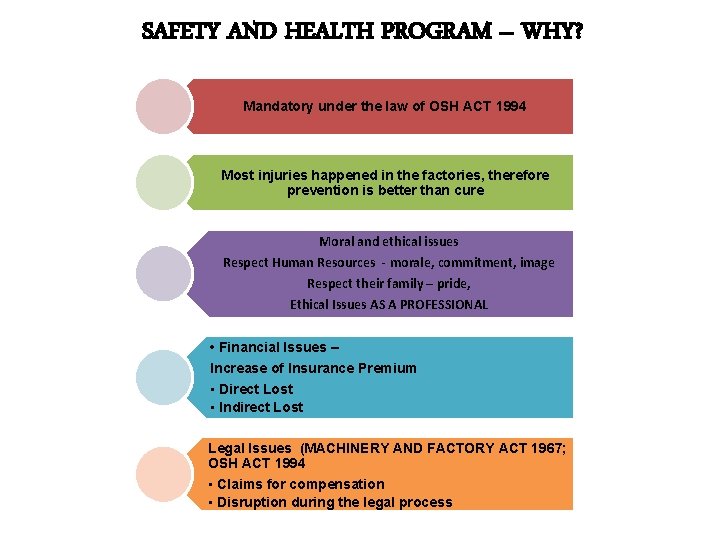
SAFETY AND HEALTH PROGRAM – WHY? Mandatory under the law of OSH ACT 1994 Most injuries happened in the factories, therefore prevention is better than cure Moral and ethical issues Respect Human Resources - morale, commitment, image Respect their family – pride, Ethical Issues AS A PROFESSIONAL • Financial Issues – Increase of Insurance Premium • Direct Lost • Indirect Lost Legal Issues (MACHINERY AND FACTORY ACT 1967; OSH ACT 1994 • Claims for compensation • Disruption during the legal process
THE ACTS - two most important FACTORIES ACT 1967 OSHA ACT 1994
LEGAL REQUIREMENTS UNDER OSHA 1994 WHAT ARE THE PROVISION UNDER THE OCCUPATIONAL SAFETY AND HEALTH ACT 0 F 1994
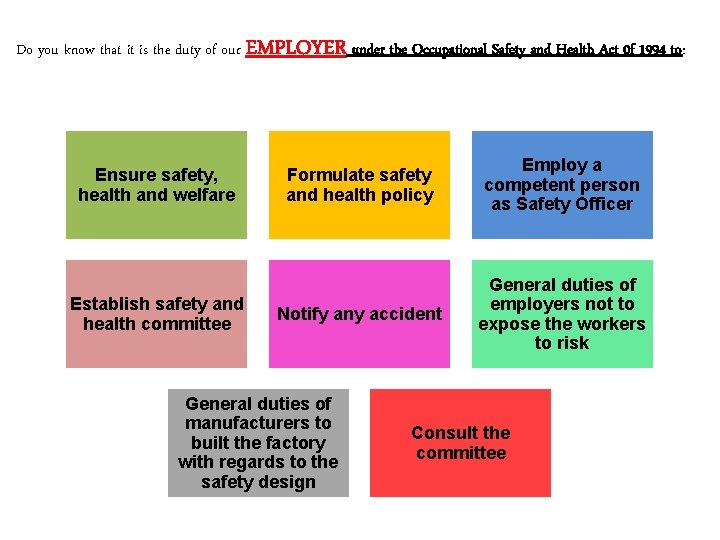
Do you know that it is the duty of our EMPLOYER under the Occupational Safety and Health Act 0 f 1994 to: Ensure safety, health and welfare Establish safety and health committee Formulate safety and health policy Employ a competent person as Safety Officer Notify any accident General duties of employers not to expose the workers to risk General duties of manufacturers to built the factory with regards to the safety design Consult the committee
LEGAL REQUIREMENTS UNDER OSHA 1994 Do you know that it is the duty of our EMPLOYER under the Occupational Safety and Health Act 0 f 1994 to: a) Ensure our safety, health and welfare at our workplace by: • the provision and maintenance of plant and systems of work that are safe and without risks to health; • making of arrangements for ensuring safety and absence of risks to health in connection with the use or operation, handling, storage and transport of plant and substances; • the provision of such information, instruction, training and supervision as is necessary to ensure the safety and health at work; • maintaining the workplace in a condition that is safe and without risks to health and the provision and maintenance of the means of access to and egress from it that are safe and without such risks; • the provision and maintenance of a working environment which is safe, without risks to health and adequate as regards to facilities for our welfare at work.
LEGAL REQUIREMENTS UNDER OSHA 1994 b) Formulate safety and health policy: • as often as may be appropriate revise a written statement of his general policy with respect to the safety and health at work; • arrangements for the time being in force for carrying out the policy; • to bring the statement and any revision of it to the notice of all of his employees.
LEGAL REQUIREMENTS UNDER OSHA 1994 c. Employ a competent person : This is to act as a Safety and Health Officer at the place of work exclusively for the purpose of ensuring the due observance at the place of work of the provisions of the OSHA and its regulations and the promotion of a safe conduct of work at the place of work.
LEGAL REQUIREMENTS UNDER OSHA 1994 d) Establish a Safety and Health Committee if : At the place of work if there are 40 or more persons employed at the place of work
LEGAL REQUIREMENTS UNDER OSHA 1994 e) Consult the Safety and Health Committee with a view to the making and maintenance of arrangements which will enable him and his employees to cooperate effectively in promoting and developing measures to ensure the safety and health at the place of work of the employees and in checking the effectiveness of such measures.
LEGAL REQUIREMENTS UNDER OSHA 1994 f) Notify the nearest Occupational Safety and Health Office of any accident, dangerous occurrence, occupational poisoning or occupational disease which has occurred or is likely to occur at the place of work.
LEGAL REQUIREMENTS UNDER OSHA 1994 g. General duties of employers and self-employed persons to persons other than their employees. It shall be the duty of every employer and every self-employed person to conduct his undertaking in such as manner as to ensure, so far as is practicable, that he and other persons, not being his employees, who may be affected are not thereby exposed to risks to their safety or health
LEGAL REQUIREMENTS UNDER OSHA 1994 H. General duties of manufacturers, etc as regards plant for use at work. (1) at work- It shall be the duty of a person who designs, manufactures, imports or supplies any plant for use (a) to ensure, so far as is practicable, that the plant is so designed and constructed as to be safe and without risks to health when properly used; ……. . (2) It shall be the duty of a person who undertakes the design or manufacturing of any plant for use at work to carry out or arrange for the carry out of any necessary research with the view to discovery and, so far as practicable, the elimination or minimization of any risk to safety or health to which the design or plant may give rise.
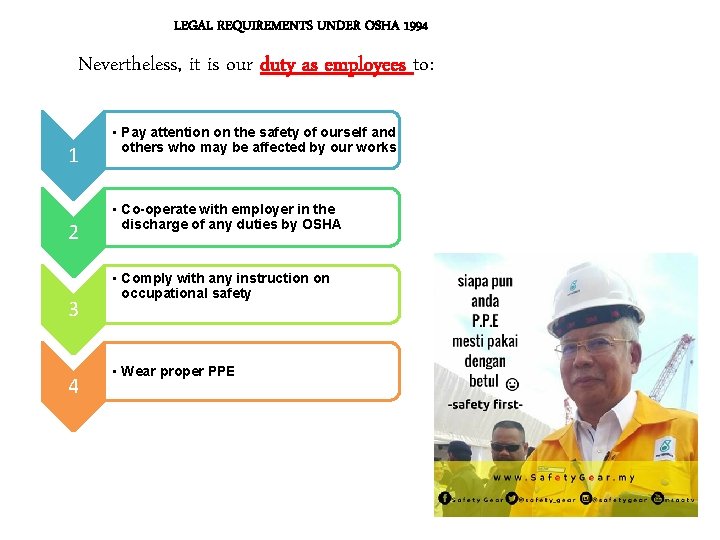
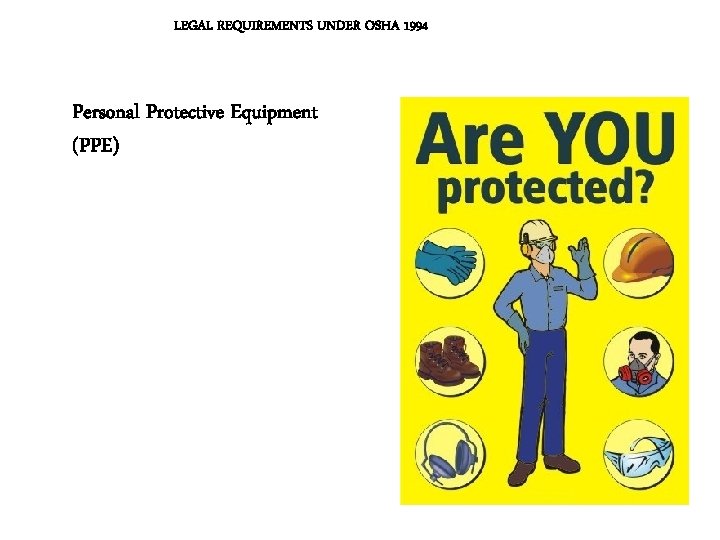
LEGAL REQUIREMENTS UNDER OSHA 1994 Nevertheless, it is our duty as employees to: 1 2 3 4 • Pay attention on the safety of ourself and others who may be affected by our works • Co-operate with employer in the discharge of any duties by OSHA • Comply with any instruction on occupational safety • Wear proper PPE
LEGAL REQUIREMENTS UNDER OSHA 1994 Personal Protective Equipment (PPE)
LEGAL REQUIREMENTS UNDER OSHA 1994 WHAT ARE THE PROVISION UNDER THE FACTORY AND MACHINERY ACT, 1967
FACTORY AND MACHINERY ACT, 1967 Part II. SAFETY, HEALTH AND WELFARE Provisions relating to safety 10. Without prejudice to any law with respect to local authorities, in respect of any factory, the following provisions relating to safety shall apply: (a) foundation and floor…. . (e) every openings, sump, pit or fixed vessel in a floor , or working level shall be securely fenced so as to prevent risk of persons falling; ….
FACTORY AND MACHINERY ACT, 1967 Part II. SAFETY, HEALTH AND WELFARE Persons exposed to explosive, inflammable, etc. , substances 11. In a factory in which persons are exposed to risk of bodily injury from explosive, inflammable, poisonous or corrosive substances or ionizing radiations, such measures as may be prescribed shall be taken as will eliminate the risk.
FACTORY AND MACHINERY ACT, 1967 Part II. SAFETY, HEALTH AND WELFARE Lifting of weights 12. No person shall be employed to lift, carry or move any load so heavy as to be likely to cause injury to him
FACTORY AND MACHINERY ACT, 1967 Part II. SAFETY, HEALTH AND WELFARE Construction of machinery 14. All machinery and every part thereof including all fittings and attachment shall be of sound construction and sound material free from defect and suitable for the purpose and shall be properly maintained.
FACTORY AND MACHINERY ACT, 1967 Part II. SAFETY, HEALTH AND WELFARE Projecting material 16. In respect to such machinery as may be prescribed, any part of any material carried by that machinery while it is working thereon which projects beyond any part of the machinery shall be effectively fenced unless it is in such a position as to be safe to any person employed or working on or renting the premises.
FACTORY AND MACHINERY ACT, 1967 Part II. SAFETY, HEALTH AND WELFARE Machinery manufactured or repaired must comply with regulations 18 (1) No person shall manufacture, repair or install machinery in such a manner that it does not comply with the provisions of this Act and any regulations made thereunder applicable to such machinery.
FACTORY AND MACHINERY ACT, 1967 Part II. SAFETY, HEALTH AND WELFARE Provisions relating to health 22 (1) Without prejudice to any law to public health, in respect of any factory the following provisions relating to health of persons shall apply: (a) every factory shall be kept in a clean state and free from offensive effluvia arising from any drain, sanitary convenience or other source … (b) the maximum number of persons employed at any one time in any work-room in any factory shall be such that the amount of cubic feet of space and superficial feet of floor area allowed in the work-room for each person are not less than the amount of cubic feet of space and superficial feet of floor area prescribed either generally or for the particular class of work carried on in the work-room
Milestones in the safety movement 1890 Boiler Enactment 1890. 1 st legislation in the country to address safety boilers by the Mines Department inspectors. issues. Mandatory inspections of 1913 - Machinery Ordinance 1913. Superseded all the Boiler Enactment. 1932 - Machinery Enactment 1932. Updated. Addition on provision on registration installation. Enforced by Dept. of Mines. and inspection of machinery
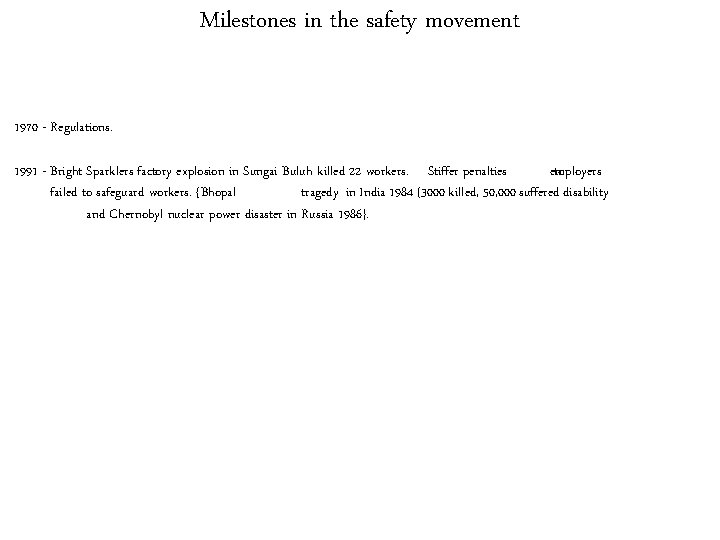
Milestones in the safety movement 1970 - Regulations. 1991 - Bright Sparklers factory explosion in Sungai Buluh killed 22 workers. Stiffer penalties employers to failed to safeguard workers. {Bhopal tragedy in India 1984 (3000 killed, 50, 000 suffered disability and Chernobyl nuclear power disaster in Russia 1986}.
STATISTICS FATALITY AND ACCIDENTS IN WORK PLACE
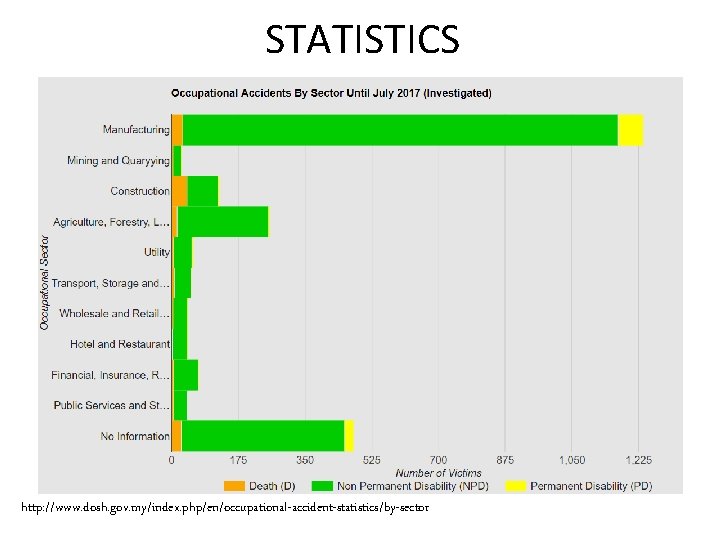
STATISTICS http: //www. dosh. gov. my/index. php/en/occupational-accident-statistics/by-sector
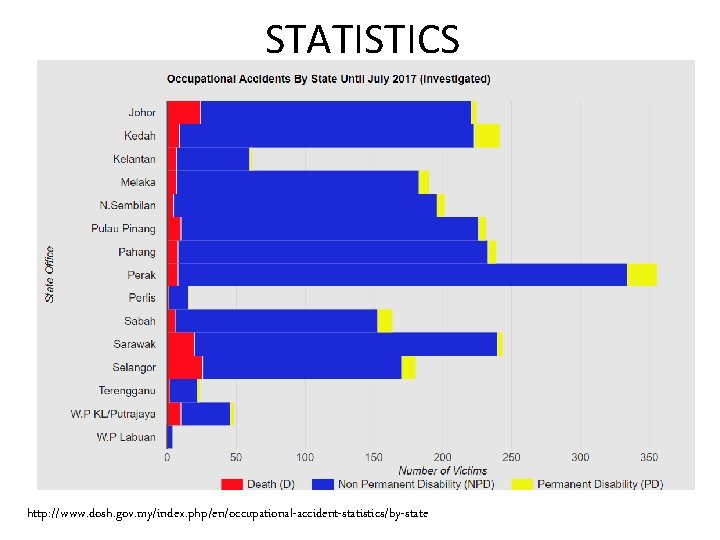
STATISTICS http: //www. dosh. gov. my/index. php/en/occupational-accident-statistics/by-state
Lies Ratio: 1 accident : 203 fatalities Frequency Rates of Occurrences of Occupational Accidents and Fatalities (source: Bahagian Dasar dan Penyelidikan, JKKP) Fatalities per 100, 000 workers Accidents per 1, 000 workers RATES OF OCCURRENCE OF OCCUPATIONAL ACCIDENTS and FATALITY in MALAYSIA
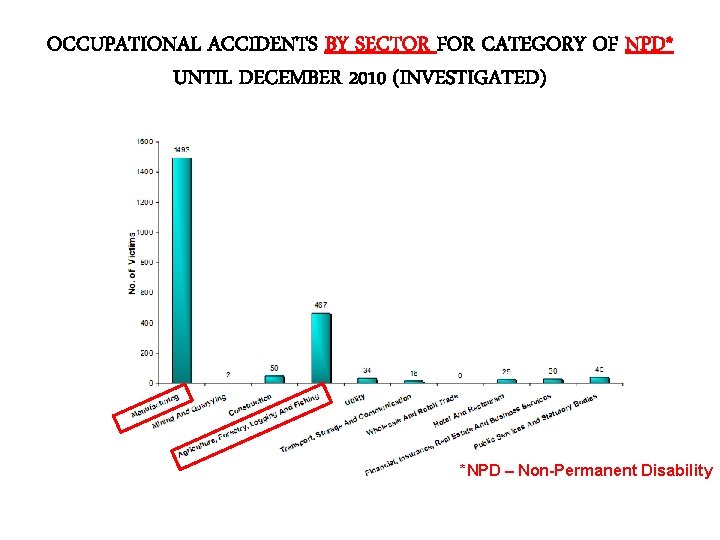
OCCUPATIONAL ACCIDENTS BY SECTOR FOR CATEGORY OF NPD* UNTIL DECEMBER 2010 (INVESTIGATED) *NPD – Non-Permanent Disability
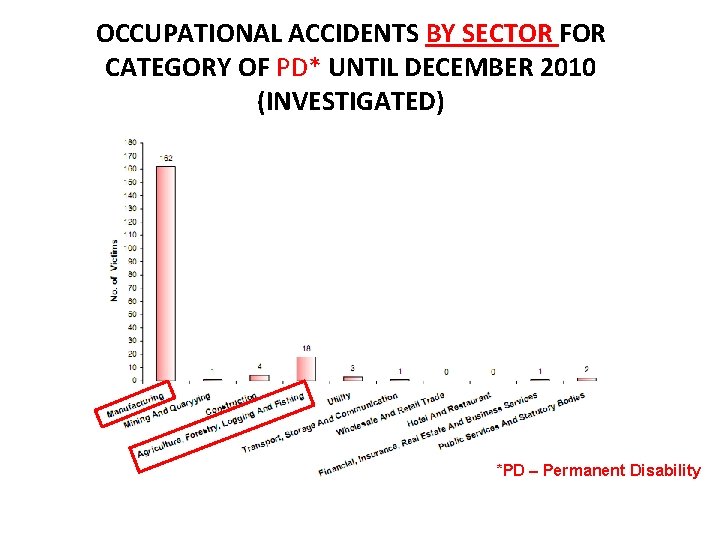
OCCUPATIONAL ACCIDENTS BY SECTOR FOR CATEGORY OF PD* UNTIL DECEMBER 2010 (INVESTIGATED) *PD – Permanent Disability
OCCUPATIONAL ACCIDENTS BY SECTOR FOR CATEGORY OF DEATH UNTIL DECEMBER 2010 (INVESTIGATED)
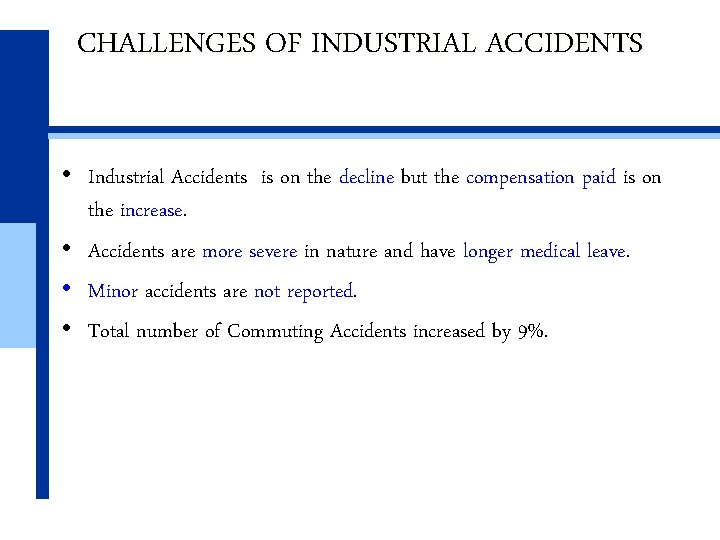
CHALLENGES OF INDUSTRIAL ACCIDENTS • Industrial Accidents is on the decline but the compensation paid is on the increase. • Accidents are more severe in nature and have longer medical leave. • Minor accidents are not reported. • Total number of Commuting Accidents increased by 9%.
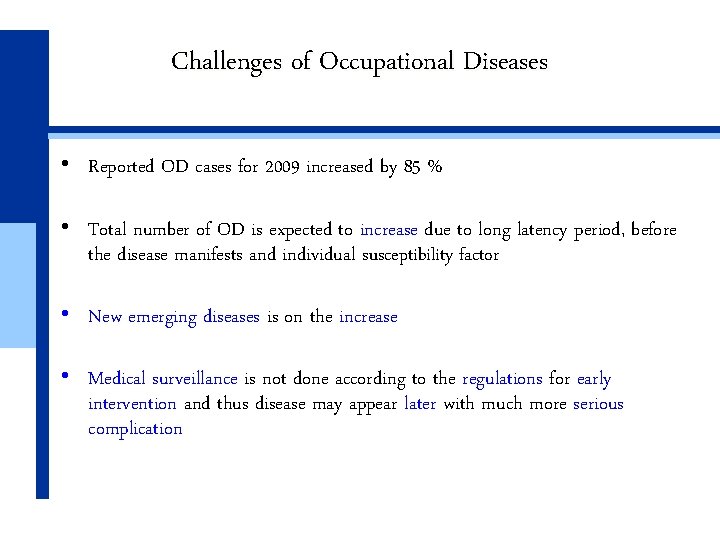
Challenges of Occupational Diseases • Reported OD cases for 2009 increased by 85 % • Total number of OD is expected to increase due to long latency period, before the disease manifests and individual susceptibility factor • New emerging diseases is on the increase • Medical surveillance is not done according to the regulations for early intervention and thus disease may appear later with much more serious complication
PROVISION OF SAFE AND HEALTHY WORK ENVIRONMENT THAT ACCIDENTS AND ILLNESS CAN BE PREVENTED IS A VERY IMPORTANT ASPECT IN ENGINEERING PROFESSION
Benefits of Good OSH • Reduce lost time • Reduce needs to provide cover for personnel absent from work because of injury • Reduce sick payments • Reduce need for time-consuming accident investigation and consequent saving in management time and production down-time • Reduced potential for prosecution and other enforcement action by authorities
Benefits of Good OSH …continue • Reduction in the number of claims for compensation by injured personnel • Reduce employer’s liability insurance premiums • Improved morals • Improved image of company, both in terms of employer and competent contractor
CASE STUDIES ON SUCCESSFULL IMLPEMENTATION OF HEALTH & SAFETY PROGRAM
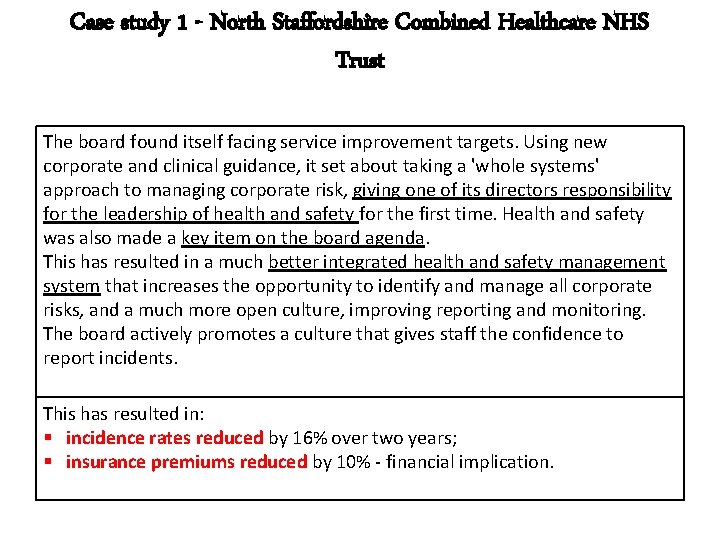
Case study 1 - North Staffordshire Combined Healthcare NHS Trust The board found itself facing service improvement targets. Using new corporate and clinical guidance, it set about taking a 'whole systems' approach to managing corporate risk, giving one of its directors responsibility for the leadership of health and safety for the first time. Health and safety was also made a key item on the board agenda. This has resulted in a much better integrated health and safety management system that increases the opportunity to identify and manage all corporate risks, and a much more open culture, improving reporting and monitoring. The board actively promotes a culture that gives staff the confidence to report incidents. This has resulted in: § incidence rates reduced by 16% over two years; § insurance premiums reduced by 10% - financial implication.
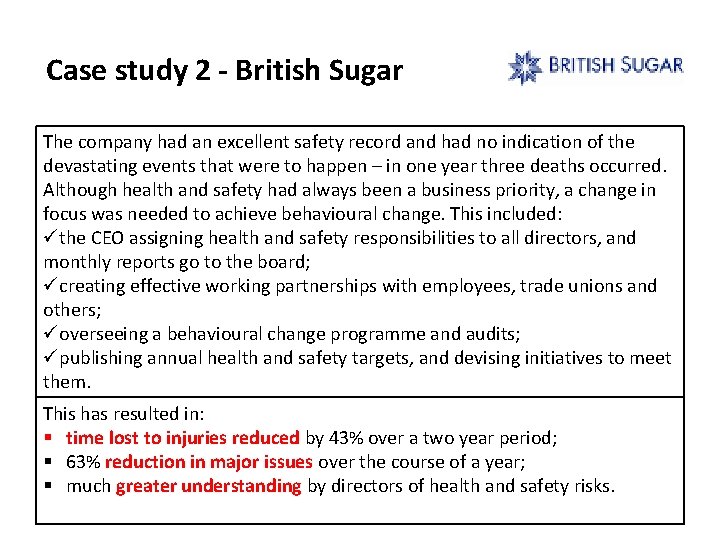
Case study 2 - British Sugar The company had an excellent safety record and had no indication of the devastating events that were to happen – in one year three deaths occurred. Although health and safety had always been a business priority, a change in focus was needed to achieve behavioural change. This included: üthe CEO assigning health and safety responsibilities to all directors, and monthly reports go to the board; ücreating effective working partnerships with employees, trade unions and others; üoverseeing a behavioural change programme and audits; üpublishing annual health and safety targets, and devising initiatives to meet them. This has resulted in: § time lost to injuries reduced by 43% over a two year period; § 63% reduction in major issues over the course of a year; § much greater understanding by directors of health and safety risks.
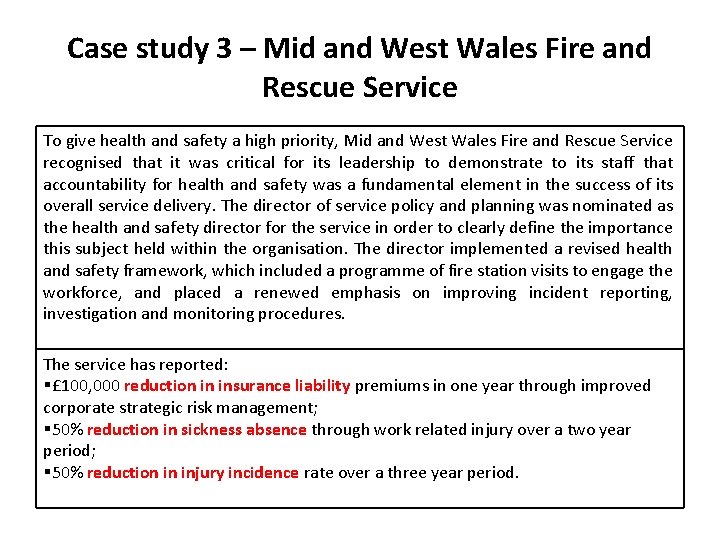
Case study 3 – Mid and West Wales Fire and Rescue Service To give health and safety a high priority, Mid and West Wales Fire and Rescue Service recognised that it was critical for its leadership to demonstrate to its staff that accountability for health and safety was a fundamental element in the success of its overall service delivery. The director of service policy and planning was nominated as the health and safety director for the service in order to clearly define the importance this subject held within the organisation. The director implemented a revised health and safety framework, which included a programme of fire station visits to engage the workforce, and placed a renewed emphasis on improving incident reporting, investigation and monitoring procedures. The service has reported: §£ 100, 000 reduction in insurance liability premiums in one year through improved corporate strategic risk management; § 50% reduction in sickness absence through work related injury over a two year period; § 50% reduction in injury incidence rate over a three year period.
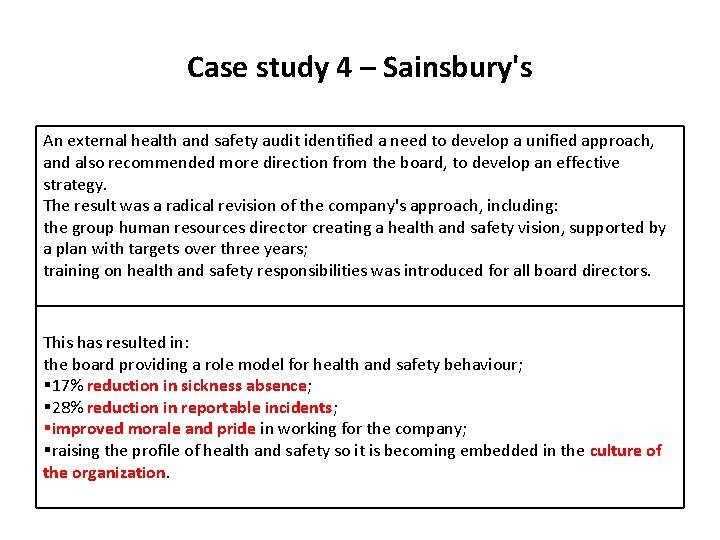
Case study 4 – Sainsbury's An external health and safety audit identified a need to develop a unified approach, and also recommended more direction from the board, to develop an effective strategy. The result was a radical revision of the company's approach, including: the group human resources director creating a health and safety vision, supported by a plan with targets over three years; training on health and safety responsibilities was introduced for all board directors. This has resulted in: the board providing a role model for health and safety behaviour; § 17% reduction in sickness absence; § 28% reduction in reportable incidents; §improved morale and pride in working for the company; §raising the profile of health and safety so it is becoming embedded in the culture of the organization.
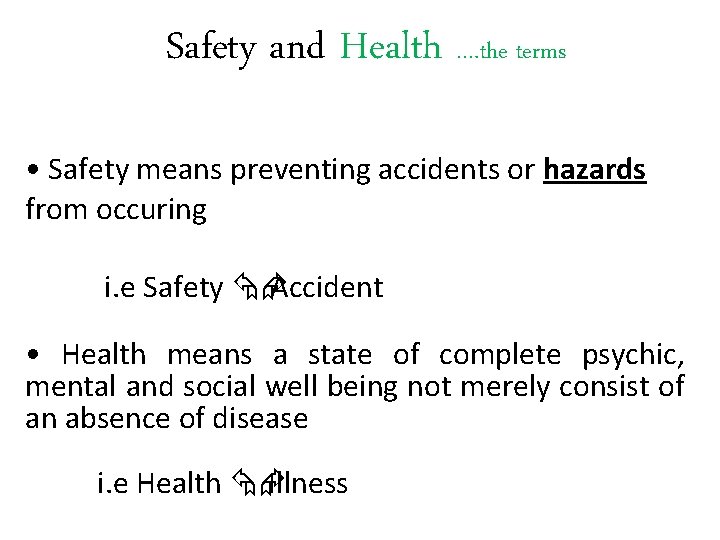
Safety and Health …. the terms • Safety means preventing accidents or hazards from occuring i. e Safety ÅÆ Accident • Health means a state of complete psychic, mental and social well being not merely consist of an absence of disease i. e Health ÅÆ Illness
Technically , the goal of safety and health program in work place is to establish safe work environment where an environment free from hazard to worker health and safety
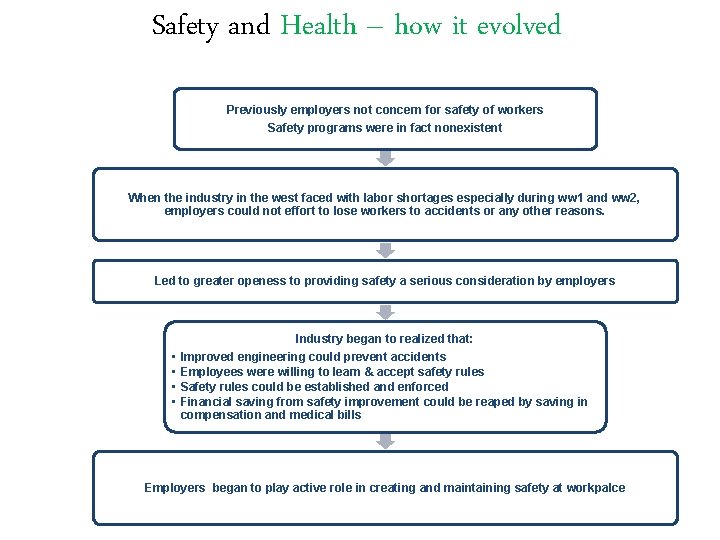
Safety and Health – how it evolved Previously employers not concern for safety of workers Safety programs were in fact nonexistent When the industry in the west faced with labor shortages especially during ww 1 and ww 2, employers could not effort to lose workers to accidents or any other reasons. Led to greater openess to providing safety a serious consideration by employers Industry began to realized that: • • Improved engineering could prevent accidents Employees were willing to learn & accept safety rules Safety rules could be established and enforced Financial saving from safety improvement could be reaped by saving in compensation and medical bills Employers began to play active role in creating and maintaining safety at workpalce
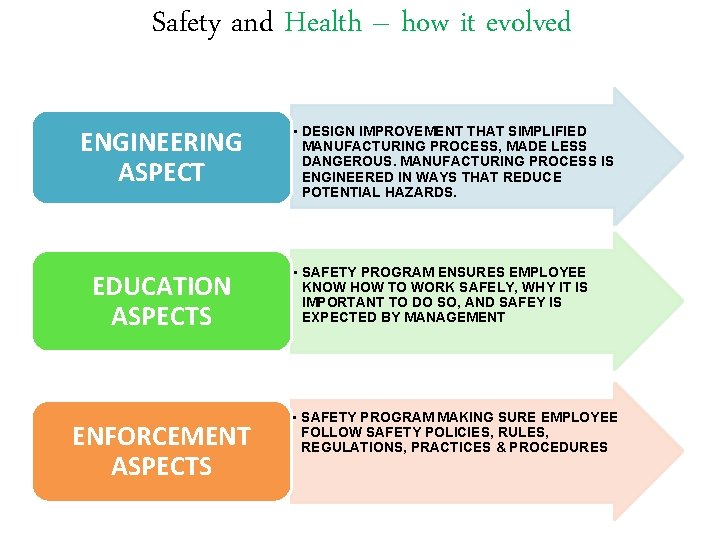
Safety and Health – how it evolved ENGINEERING ASPECT EDUCATION ASPECTS ENFORCEMENT ASPECTS • DESIGN IMPROVEMENT THAT SIMPLIFIED MANUFACTURING PROCESS, MADE LESS DANGEROUS. MANUFACTURING PROCESS IS ENGINEERED IN WAYS THAT REDUCE POTENTIAL HAZARDS. • SAFETY PROGRAM ENSURES EMPLOYEE KNOW HOW TO WORK SAFELY, WHY IT IS IMPORTANT TO DO SO, AND SAFEY IS EXPECTED BY MANAGEMENT • SAFETY PROGRAM MAKING SURE EMPLOYEE FOLLOW SAFETY POLICIES, RULES, REGULATIONS, PRACTICES & PROCEDURES
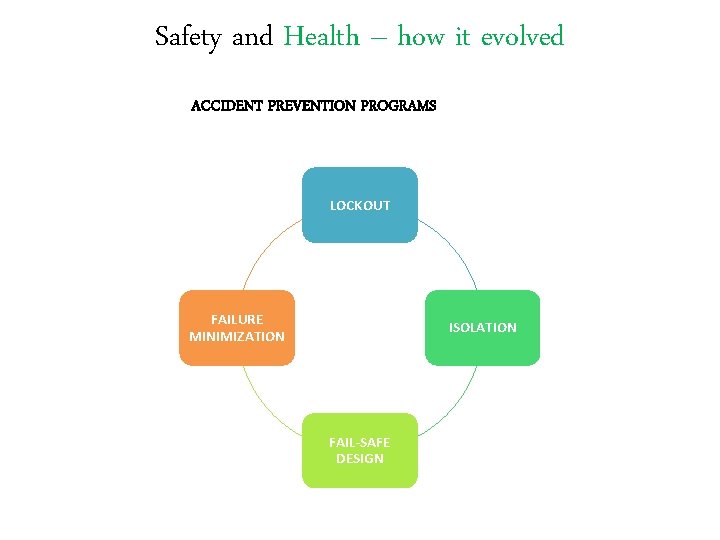
Safety and Health – how it evolved ACCIDENT PREVENTION PROGRAMS LOCKOUT FAILURE MINIMIZATION ISOLATION FAIL-SAFE DESIGN
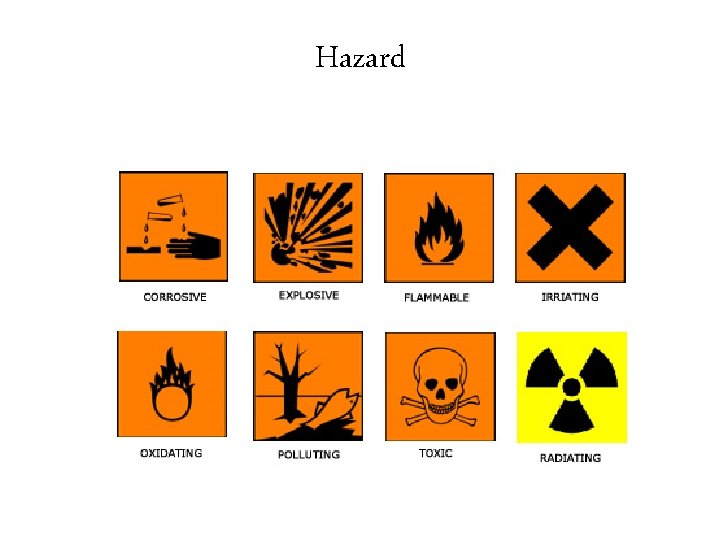
Hazard
Hazard HAZARD – condition with the potential of causing: • • • Injury Diseases Damage to equipment or structures Loss of material or lessening of the ability to perform a prescribed function Damage to the environment Or a combination of the above - It is something that can cause harm if not controlled - the outcome is the harm that results from an uncontrolled hazard
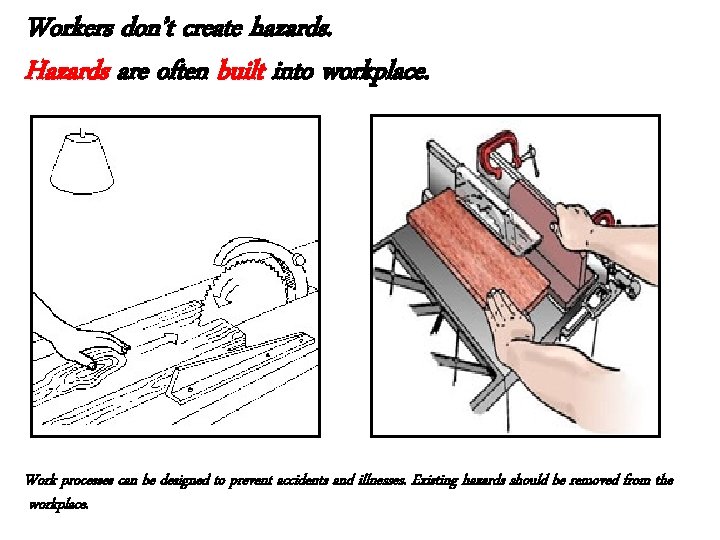
Workers don’t create hazards. Hazards are often built into workplace. Work processes can be designed to prevent accidents and illnesses. Existing hazards should be removed from the workplace.
When hazard is present, the possibility of these adverse effect (such as injury, diseases, damage to equipment etc) occuring exists…. RISK
so…. . Safety Frequently defined as “freedom from hazard” - NOTE: It is practically impossible to eliminate all hazards. - Safety is therefore a matter of relative protection from exposure to hazards (the antonym to danger)
What is Accident? • Unwanted and undesirable • Unexpected • Involves a deviation from what was intended, i. e. a planned safe operation • Involves injury to people and/or damage to plant and equipment or materials, including the finished product - or at least the potential for injury/damage (an event labeled a ‘near miss accident’) • Involves a chain of events, rather than one isolated event
Breakdown of Accident Costs for the Industry The costs can be categorized into • Direct cost • Indirect cost
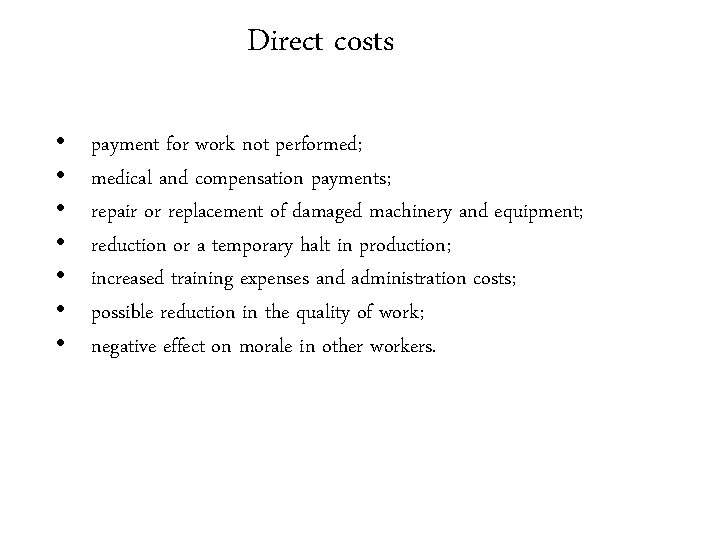
Direct costs • • payment for work not performed; medical and compensation payments; repair or replacement of damaged machinery and equipment; reduction or a temporary halt in production; increased training expenses and administration costs; possible reduction in the quality of work; negative effect on morale in other workers.
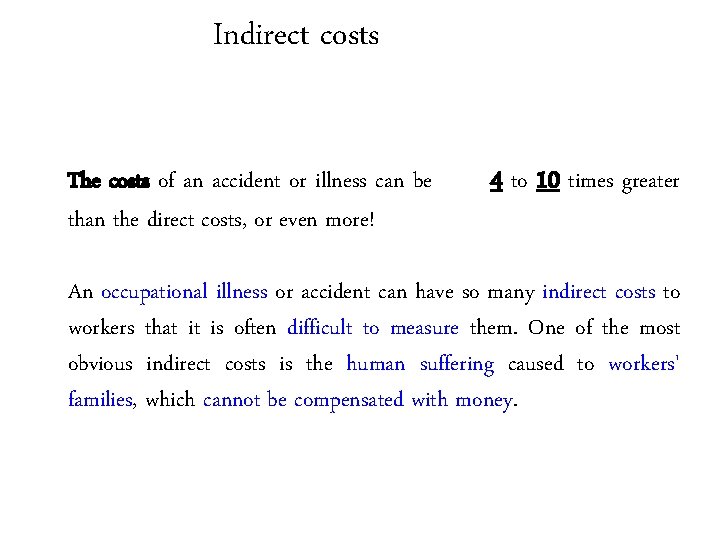
Indirect costs The costs of an accident or illness can be than the direct costs, or even more! 4 to 10 times greater An occupational illness or accident can have so many indirect costs to workers that it is often difficult to measure them. One of the most obvious indirect costs is the human suffering caused to workers' families, which cannot be compensated with money.
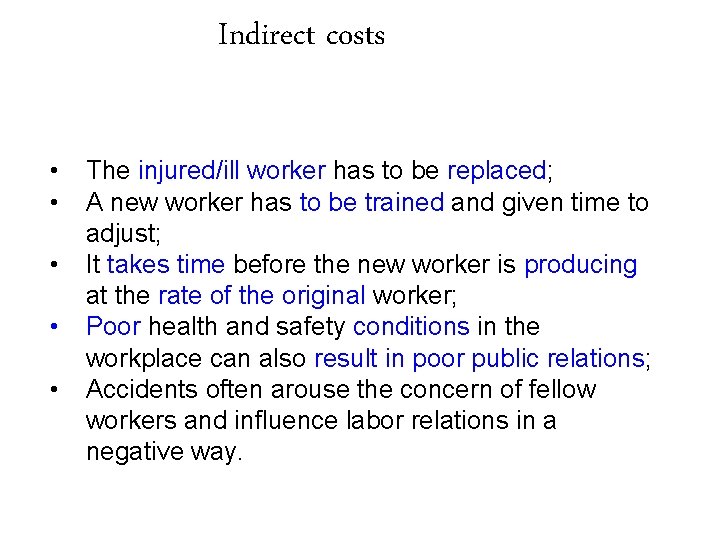
Indirect costs • • • The injured/ill worker has to be replaced; A new worker has to be trained and given time to adjust; It takes time before the new worker is producing at the rate of the original worker; Poor health and safety conditions in the workplace can also result in poor public relations; Accidents often arouse the concern of fellow workers and influence labor relations in a negative way.
Lessons Learnt from Bhopal tragedy? Supreme Court India ordered USD 470 compensation. The fund were paid to Indian Government to compensate the victims. Criminal negligence Corporate prejudice – chose a poverty-stricken country as a location that few would care if something went wrong Avoidance – putting a plant in remote area/poor country to avoid stricter safety and health standards of the country that of the parent company. In US, it led to the passage of - Emergency Planning and Community-to-know Act (EPCRA) in 1986 (Goetsch, 2011).
THANK YOU