Representation Development and Disintegration of Conceptual Knowledge A




- Slides: 44
Representation, Development and Disintegration of Conceptual Knowledge: A Parallel-Distributed Processing Approach James L. Mc. Clelland Department of Psychology and Center for Mind, Brain, and Computation Stanford University
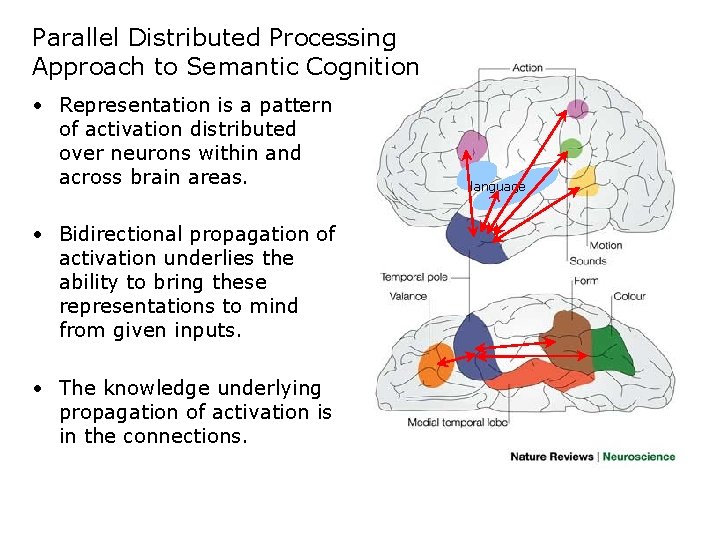
Parallel Distributed Processing Approach to Semantic Cognition • Representation is a pattern of activation distributed over neurons within and across brain areas. • Bidirectional propagation of activation underlies the ability to bring these representations to mind from given inputs. • The knowledge underlying propagation of activation is in the connections. language
A Principle of Learning and Representation • Learning and representation are sensitive to coherent covariation of properties across experiences.
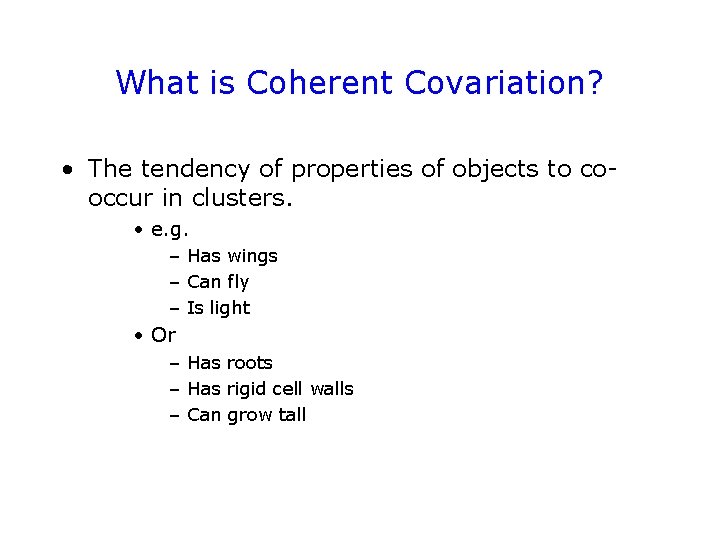
What is Coherent Covariation? • The tendency of properties of objects to cooccur in clusters. • e. g. – Has wings – Can fly – Is light • Or – Has roots – Has rigid cell walls – Can grow tall
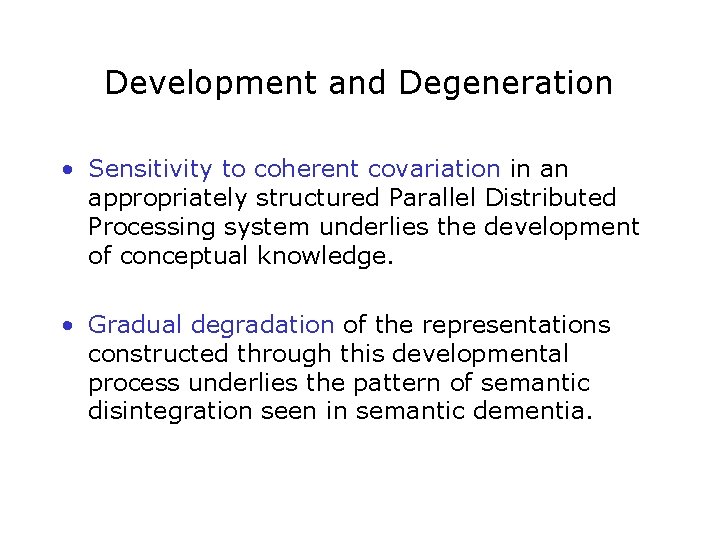
Development and Degeneration • Sensitivity to coherent covariation in an appropriately structured Parallel Distributed Processing system underlies the development of conceptual knowledge. • Gradual degradation of the representations constructed through this developmental process underlies the pattern of semantic disintegration seen in semantic dementia.
Some Phenomena in Development • Progressive differentiation of concepts • Overgeneralization • Illusory correlations
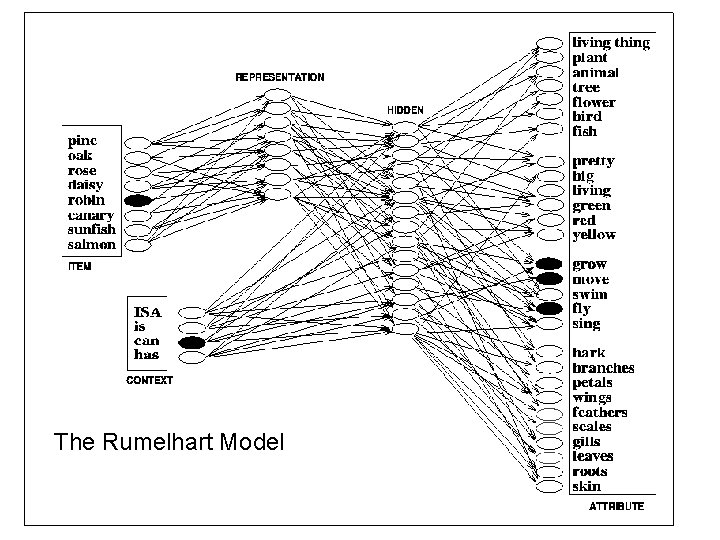
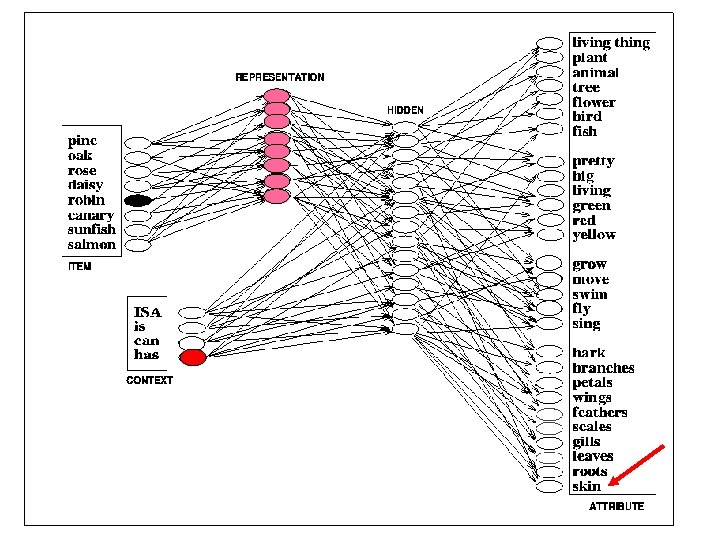
The Rumelhart Model
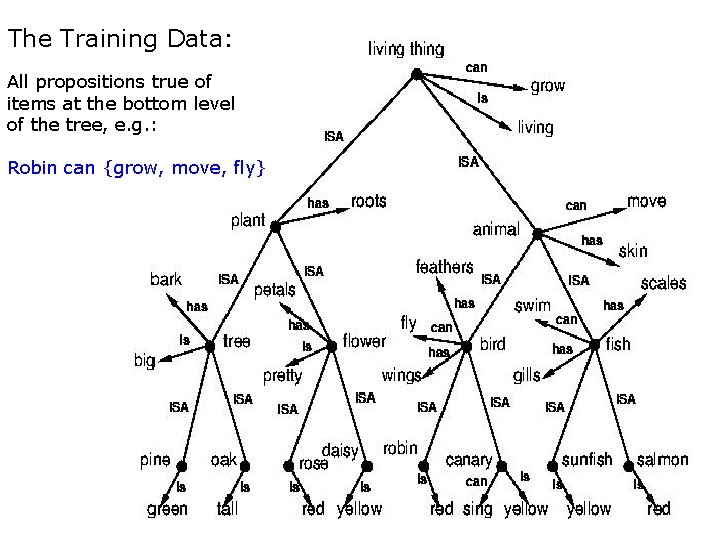
The Training Data: All propositions true of items at the bottom level of the tree, e. g. : Robin can {grow, move, fly}
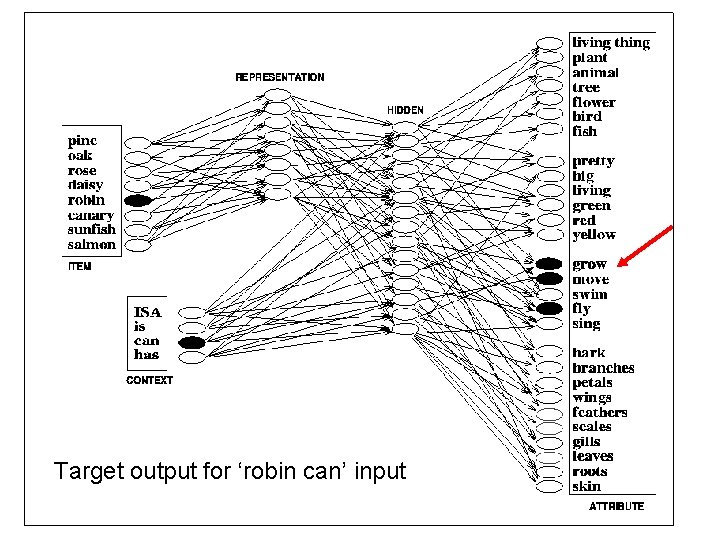
Target output for ‘robin can’ input
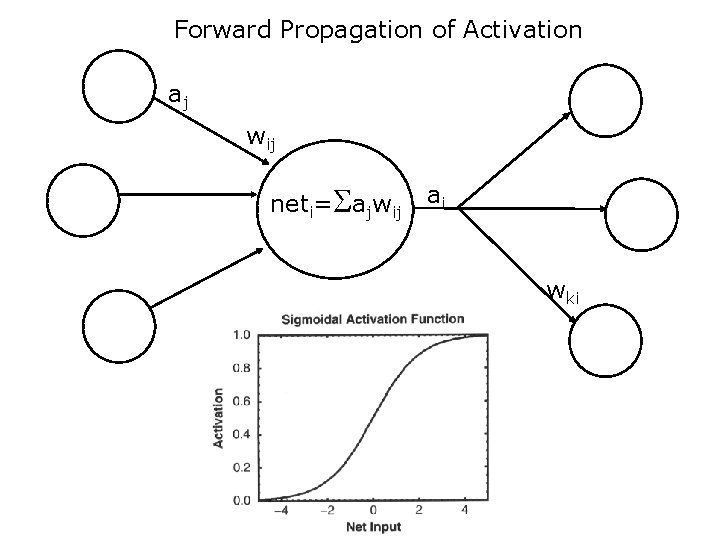
Forward Propagation of Activation aj wij neti=Sajwij ai wki
Back Propagation of Error (d) aj wij di ~ Sdkwki ai wki Error-correcting learning: At the output layer: At the prior layer: … dk ~ (tk-ak) Dwki = edkai Dwij = edjaj
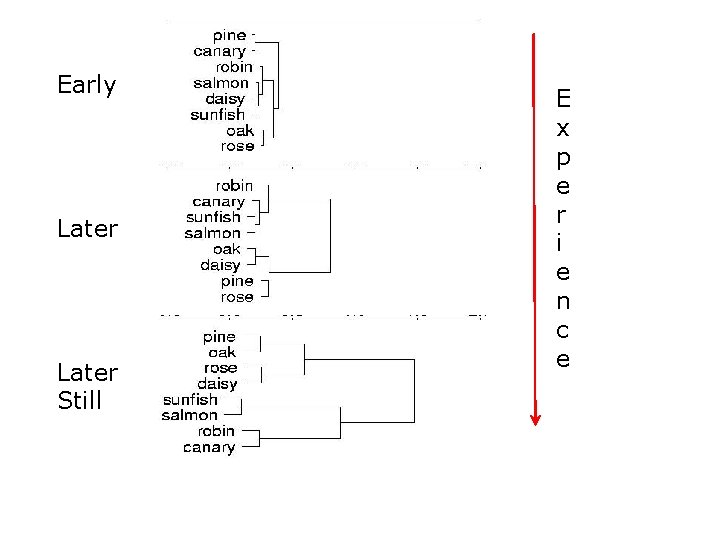
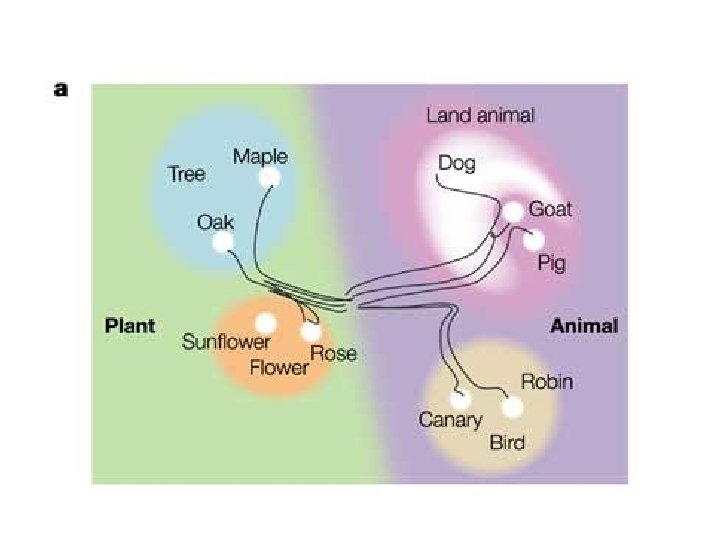
Early Later Still E x p e r i e n c e
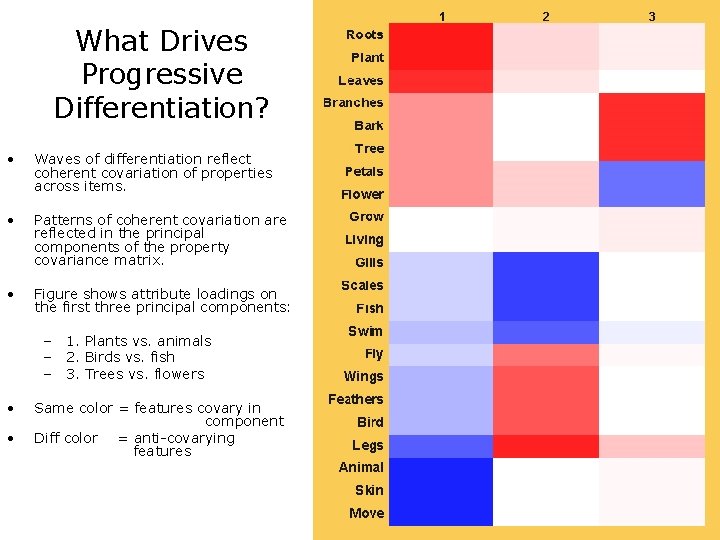
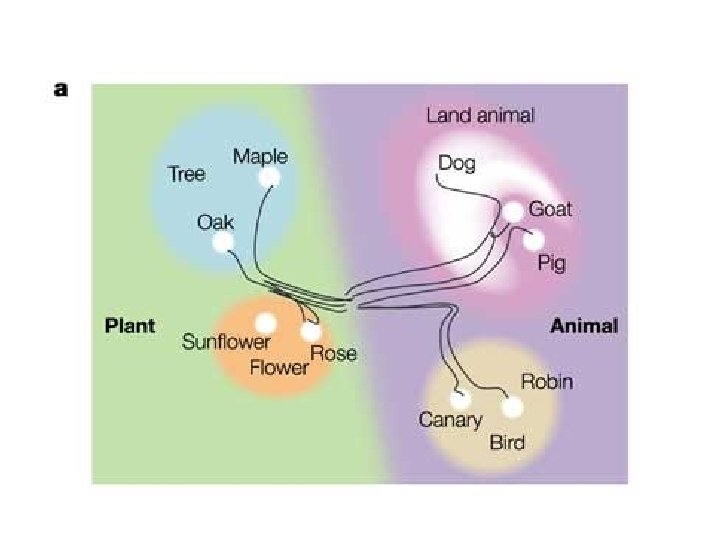
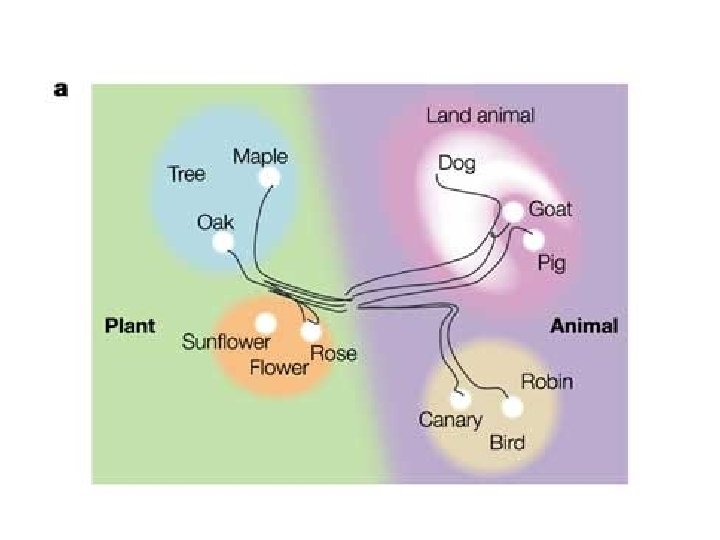
What Drives Progressive Differentiation? • Waves of differentiation reflect coherent covariation of properties across items. • Patterns of coherent covariation are reflected in the principal components of the property covariance matrix. • Figure shows attribute loadings on the first three principal components: – 1. Plants vs. animals – 2. Birds vs. fish – 3. Trees vs. flowers • • Same color = features covary in component Diff color = anti-covarying features
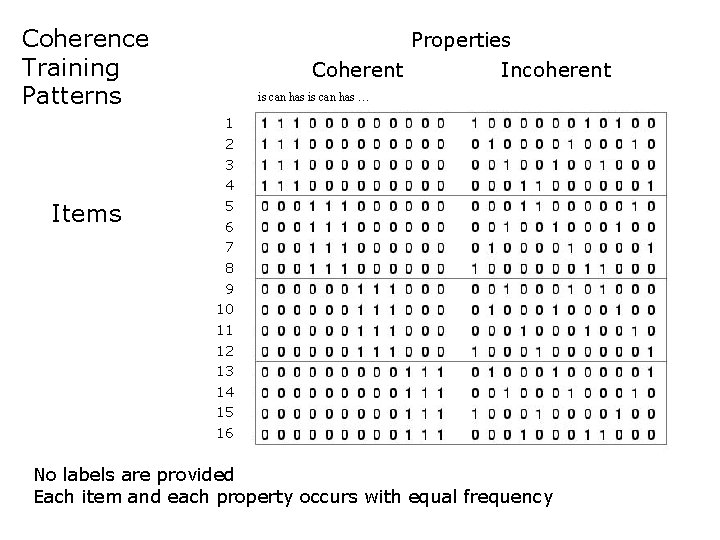
Coherence Training Patterns Items Properties Coherent Incoherent is can has … 1 2 3 4 5 6 7 8 9 10 11 12 13 14 15 16 No labels are provided Each item and each property occurs with equal frequency
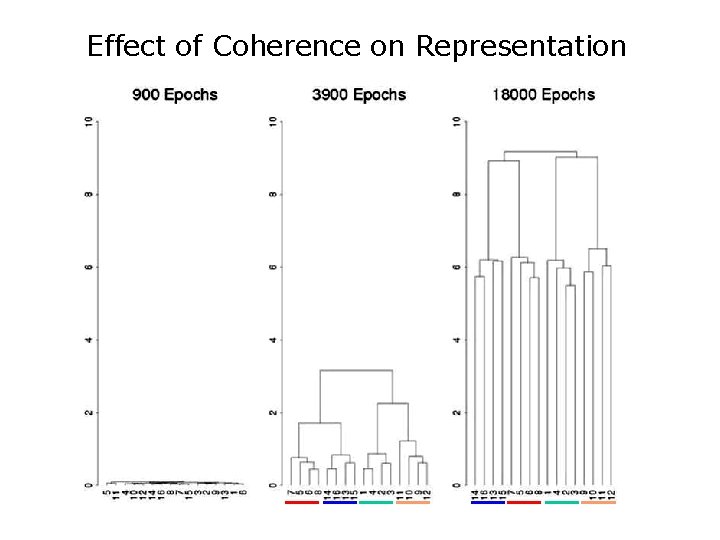
Effect of Coherence on Representation
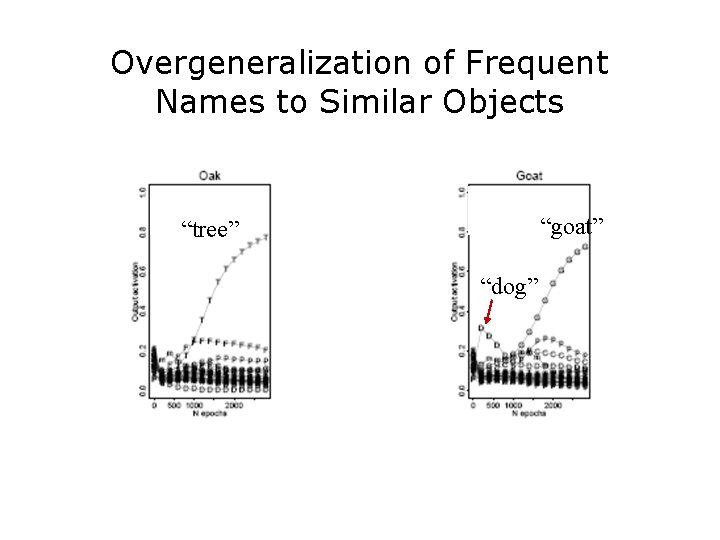
Overgeneralization of Frequent Names to Similar Objects “goat” “tree” “dog”
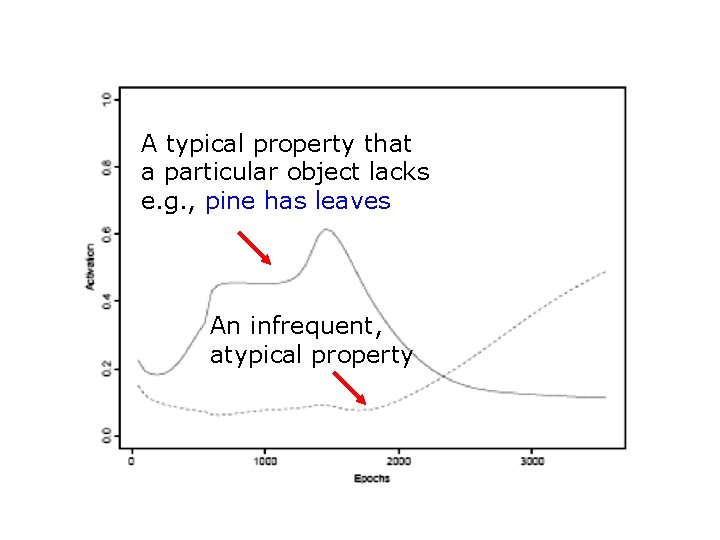
Illusory Correlations • Rochel Gelman found that children think that all animals have feet. – Even animals that look like small furry balls and don’t seem to have any feet at all. • A tendency to over-generalize properties typical of a superordinate category at an intermediate point in development is characteristic of the PDP network.
A typical property that a particular object lacks e. g. , pine has leaves An infrequent, atypical property
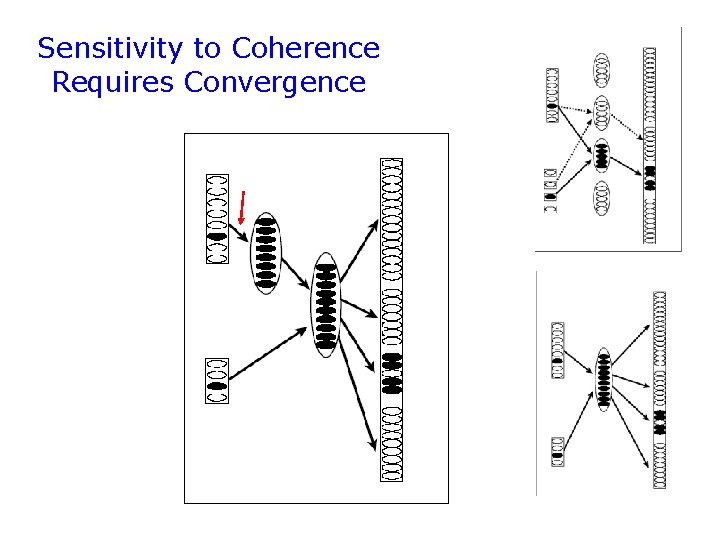
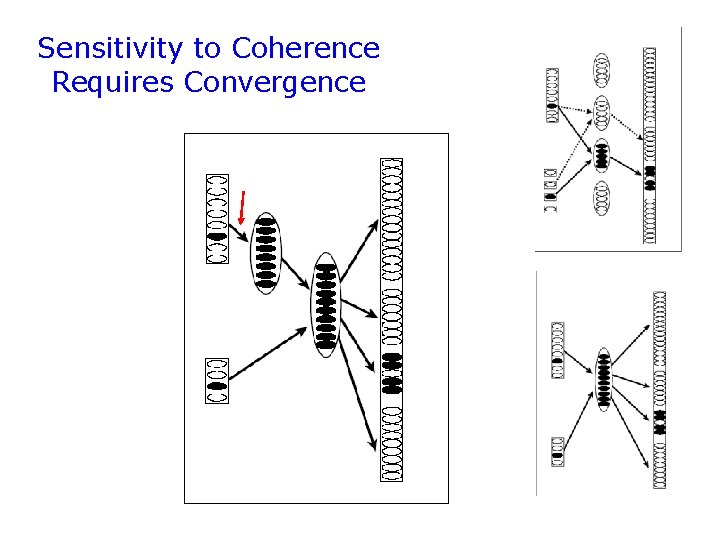
Sensitivity to Coherence Requires Convergence A A A
Another key property of the model • Sensitivity to coherent covariation can be domain- and property-type specific, and such sensitivity is acquired as differentiation occurs. • Obviates the need for initial domain-specific biases to account for domain-specific patterns of generalization and inference.
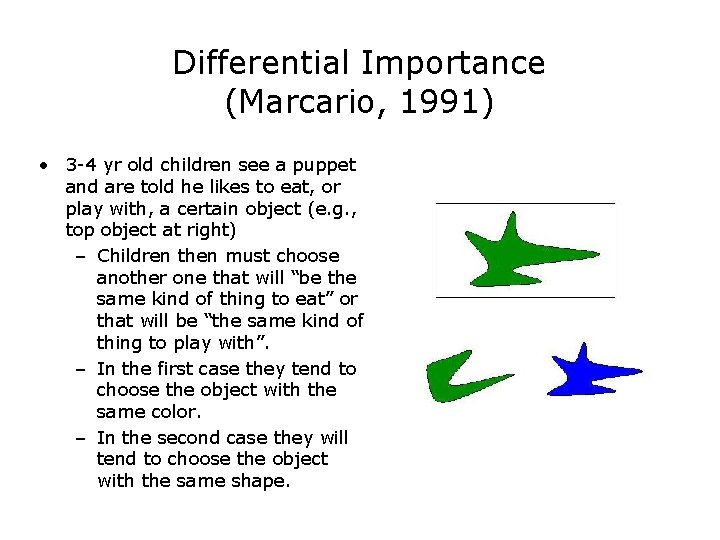
Differential Importance (Marcario, 1991) • 3 -4 yr old children see a puppet and are told he likes to eat, or play with, a certain object (e. g. , top object at right) – Children then must choose another one that will “be the same kind of thing to eat” or that will be “the same kind of thing to play with”. – In the first case they tend to choose the object with the same color. – In the second case they will tend to choose the object with the same shape.
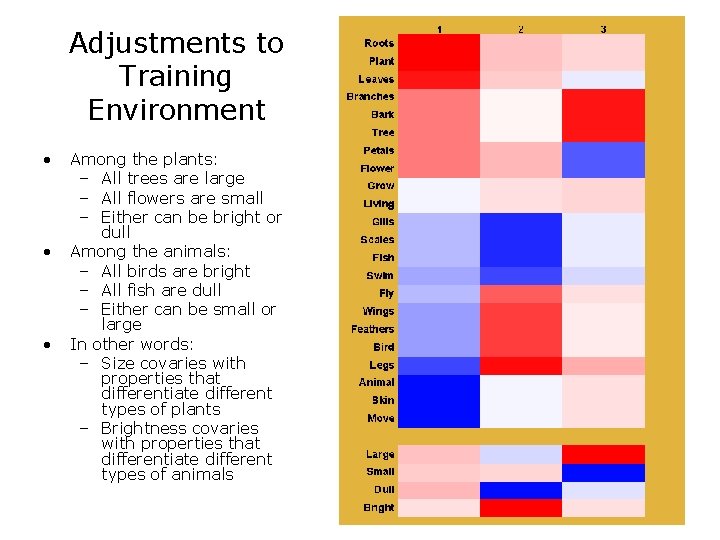
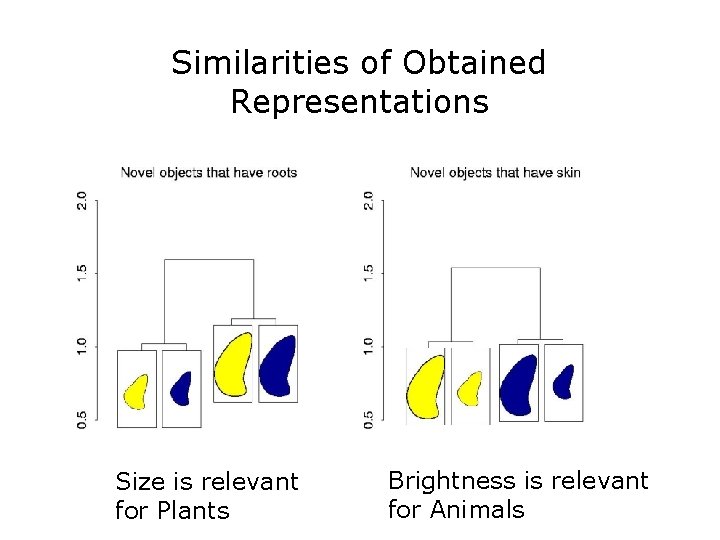
Adjustments to Training Environment • • • Among the plants: – All trees are large – All flowers are small – Either can be bright or dull Among the animals: – All birds are bright – All fish are dull – Either can be small or large In other words: – Size covaries with properties that differentiate different types of plants – Brightness covaries with properties that differentiate different types of animals
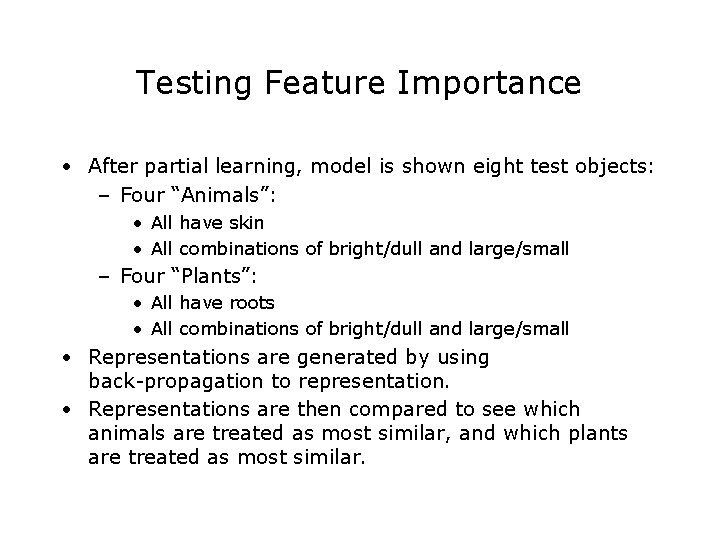
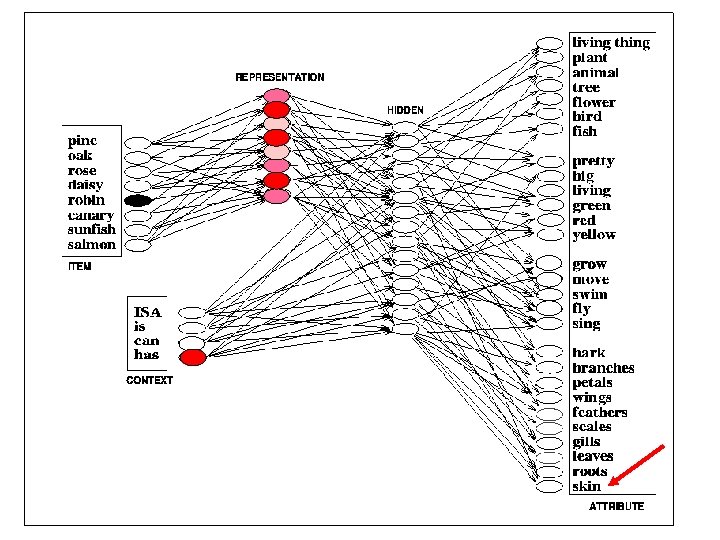
Testing Feature Importance • After partial learning, model is shown eight test objects: – Four “Animals”: • All have skin • All combinations of bright/dull and large/small – Four “Plants”: • All have roots • All combinations of bright/dull and large/small • Representations are generated by using back-propagation to representation. • Representations are then compared to see which animals are treated as most similar, and which plants are treated as most similar.
Similarities of Obtained Representations Size is relevant for Plants Brightness is relevant for Animals
Development and Degeneration • Sensitivity to coherent covariation in an appropriately structured Parallel Distributed Processing system underlies the development of conceptual knowledge. • Gradual degradation of the representations constructed through this developmental process underlies the pattern of semantic disintegration seen in semantic dementia.
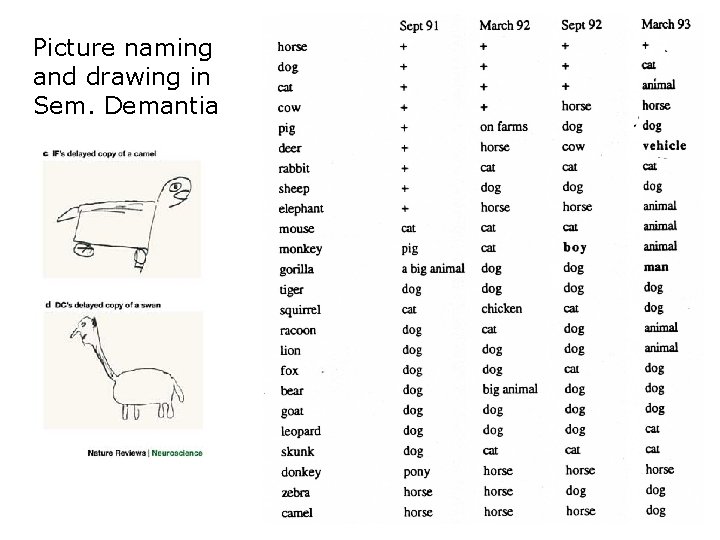
Disintegration of Conceptual Knowledge in Semantic Dementia • Progressive loss of specific knowledge of concepts, including their names, with preservation of general information • Overgeneralization of frequent names • Illusory correlations
Picture naming and drawing in Sem. Demantia
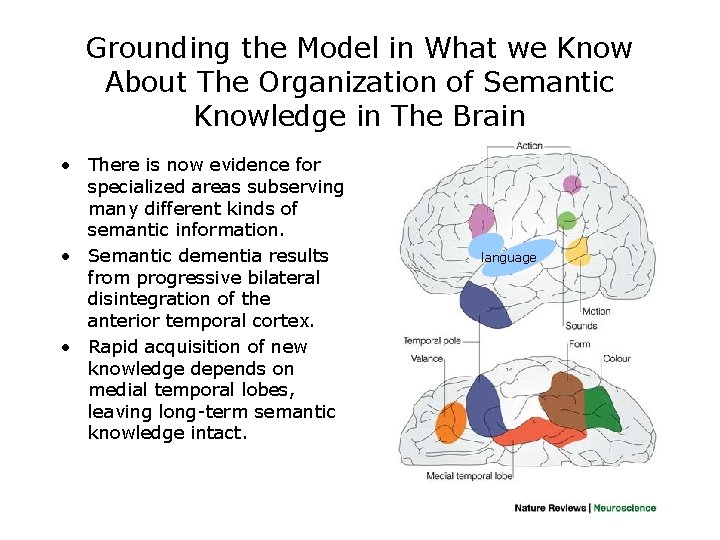
Grounding the Model in What we Know About The Organization of Semantic Knowledge in The Brain • There is now evidence for specialized areas subserving many different kinds of semantic information. • Semantic dementia results from progressive bilateral disintegration of the anterior temporal cortex. • Rapid acquisition of new knowledge depends on medial temporal lobes, leaving long-term semantic knowledge intact. language
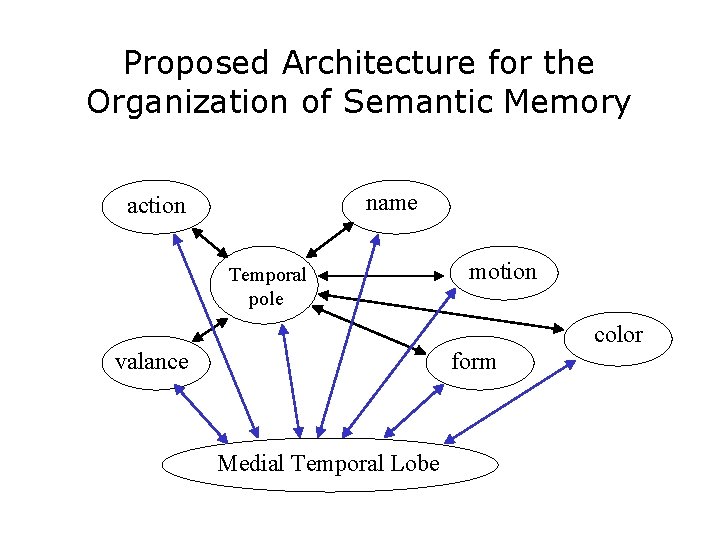
Proposed Architecture for the Organization of Semantic Memory name action Temporal pole motion color valance form Medial Temporal Lobe
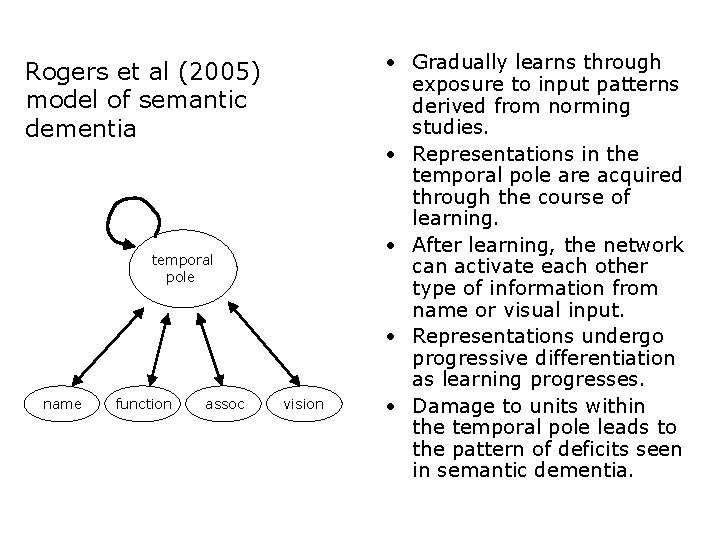
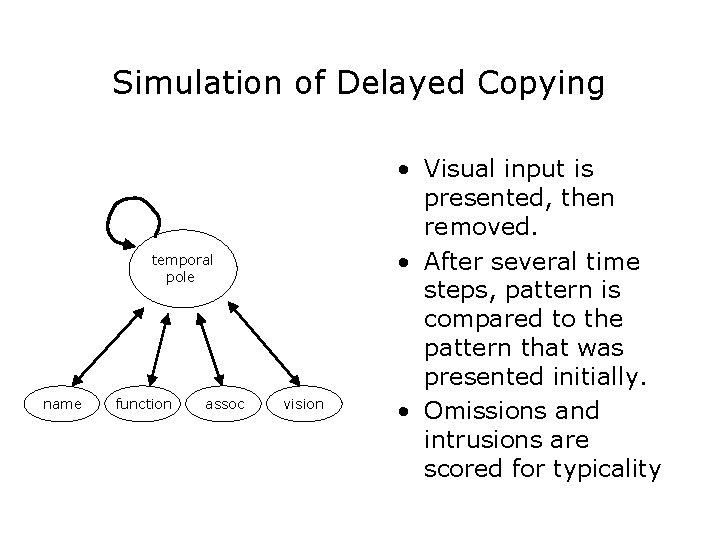
Rogers et al (2005) model of semantic dementia temporal pole name function assoc vision • Gradually learns through exposure to input patterns derived from norming studies. • Representations in the temporal pole are acquired through the course of learning. • After learning, the network can activate each other type of information from name or visual input. • Representations undergo progressive differentiation as learning progresses. • Damage to units within the temporal pole leads to the pattern of deficits seen in semantic dementia.
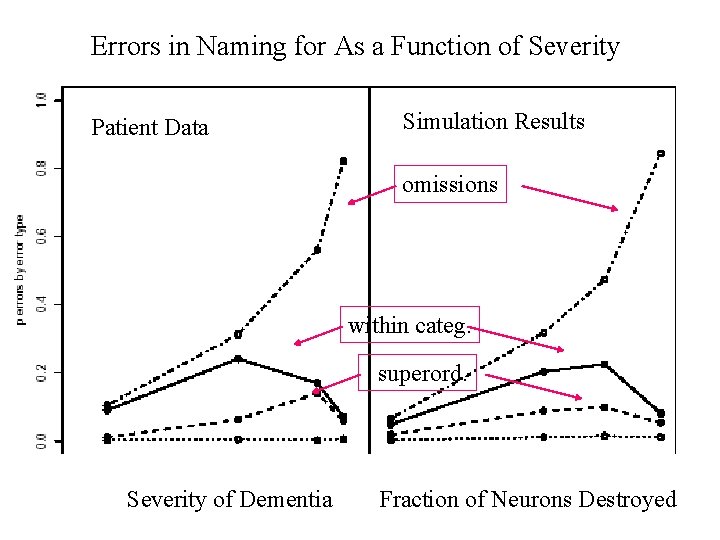
Errors in Naming for As a Function of Severity Patient Data Simulation Results omissions within categ. superord. Severity of Dementia Fraction of Neurons Destroyed
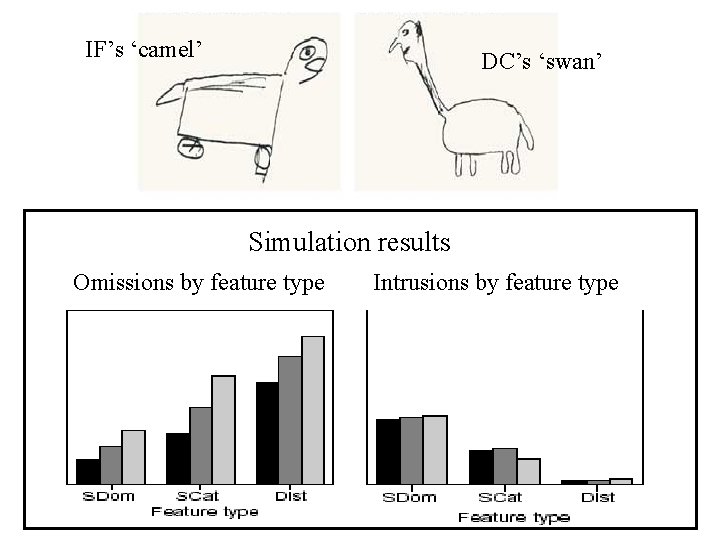
Simulation of Delayed Copying temporal pole name function assoc vision • Visual input is presented, then removed. • After several time steps, pattern is compared to the pattern that was presented initially. • Omissions and intrusions are scored for typicality
IF’s ‘camel’ DC’s ‘swan’ Simulation results Omissions by feature type Intrusions by feature type
Development and Degeneration • Sensitivity to coherent covariation in an appropriately structured Parallel Distributed Processing system underlies the development of conceptual knowledge. • Gradual degradation of the representations constructed through this developmental process underlies the pattern of semantic disintegration seen in semantic dementia.
Sensitivity to Coherence Requires Convergence A A A