Knowledge Representation INT 404 K 3305 Knowledge Representation

- Slides: 17
Knowledge Representation INT 404 K 3305
Knowledge Representation üEarlier it was believed that the best approach to solutions was through the development of General Purpose Problem Solver, that is, systems powerful to prove a theorem in geometry, perform a complex robotic task, or to develop a plan to complete a sequence of operations. üBut it was deduced that the systems became effective only when the solution methods incorporated domain specific rules and facts, i. e. after gaining specific knowledge. üIt eventually led to knowledge based systems. 18. 09. 2020 2
Knowledge Representation üImportance of Knowledge üKnowledge can be defined as the body of facts and principles accumulated by human-kind or the act, fact or state of knowing. üIn actuality it is more than this, it also includes having a familiarity with language, concepts, procedures, rules, ideas, abstractions , places, customs, facts associations along with ability to use these notions effectively in modeling different aspects of the world. üHow is knowledge stored in biological organisms and computers? ü Human brain weighs 3. 3 pounds - estimated number of neurons 1012 potential storage – 1014 üIn computers, knowledge is also stored as symbolic structures, in the form of collections of magnetic spots and voltage states. 18. 09. 2020 3
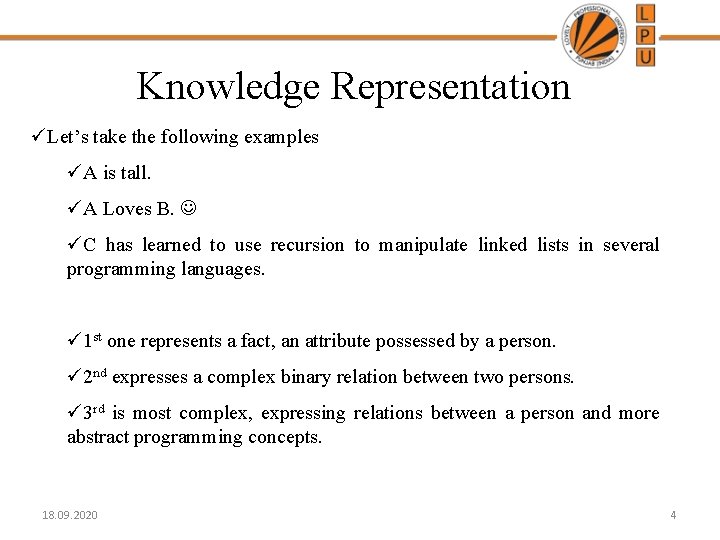
Knowledge Representation üLet’s take the following examples üA is tall. üA Loves B. üC has learned to use recursion to manipulate linked lists in several programming languages. ü 1 st one represents a fact, an attribute possessed by a person. ü 2 nd expresses a complex binary relation between two persons. ü 3 rd is most complex, expressing relations between a person and more abstract programming concepts. 18. 09. 2020 4
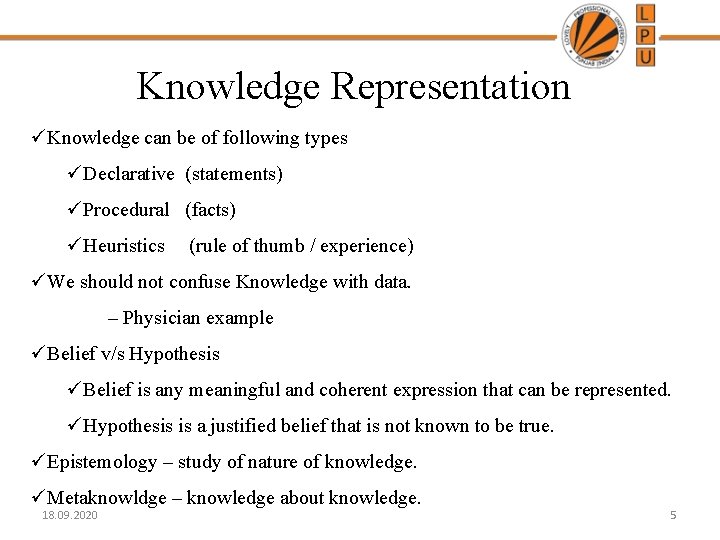
Knowledge Representation üKnowledge can be of following types üDeclarative (statements) üProcedural (facts) üHeuristics (rule of thumb / experience) üWe should not confuse Knowledge with data. – Physician example üBelief v/s Hypothesis üBelief is any meaningful and coherent expression that can be represented. üHypothesis is a justified belief that is not known to be true. üEpistemology – study of nature of knowledge. üMetaknowldge – knowledge about knowledge. 18. 09. 2020 5
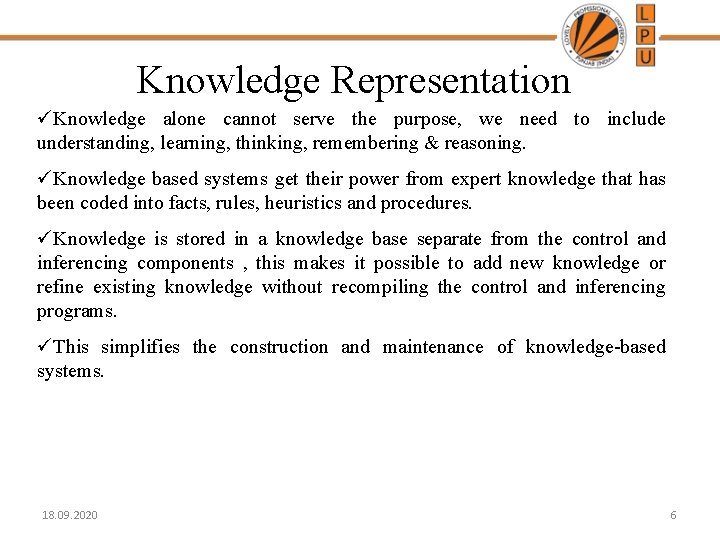
Knowledge Representation üKnowledge alone cannot serve the purpose, we need to include understanding, learning, thinking, remembering & reasoning. üKnowledge based systems get their power from expert knowledge that has been coded into facts, rules, heuristics and procedures. üKnowledge is stored in a knowledge base separate from the control and inferencing components , this makes it possible to add new knowledge or refine existing knowledge without recompiling the control and inferencing programs. üThis simplifies the construction and maintenance of knowledge-based systems. 18. 09. 2020 6
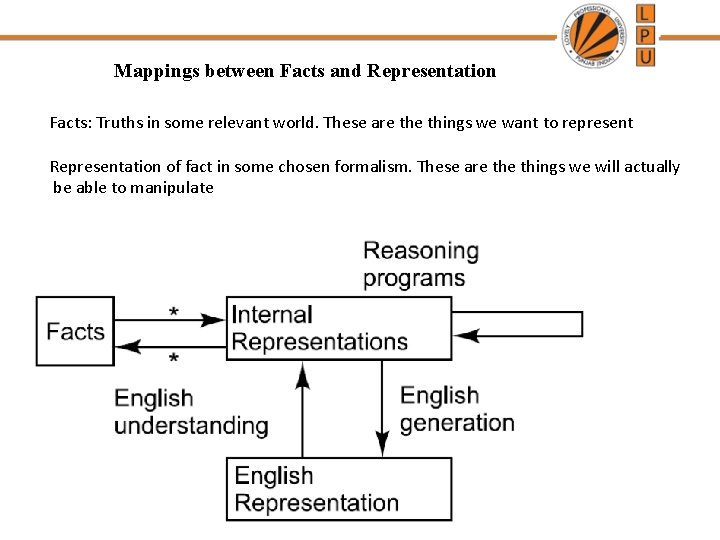
Mappings between Facts and Representation Facts: Truths in some relevant world. These are things we want to represent Representation of fact in some chosen formalism. These are things we will actually be able to manipulate
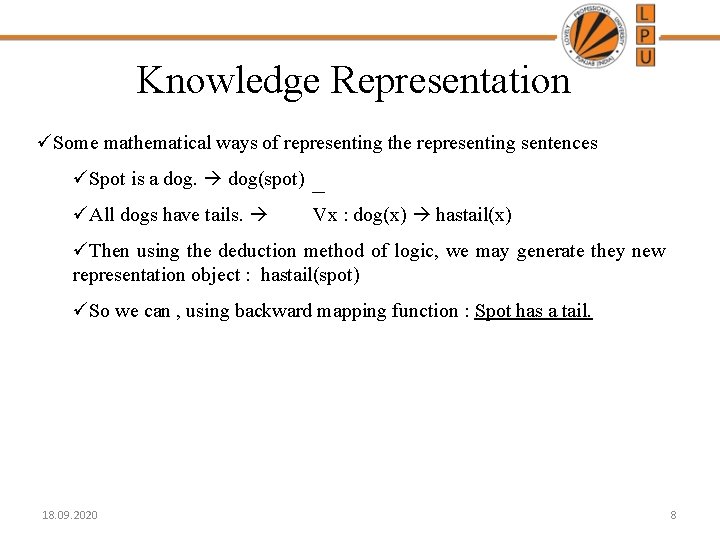
Knowledge Representation üSome mathematical ways of representing the representing sentences üSpot is a dog(spot) üAll dogs have tails. Vx : dog(x) hastail(x) üThen using the deduction method of logic, we may generate they new representation object : hastail(spot) üSo we can , using backward mapping function : Spot has a tail. 18. 09. 2020 8
Representation of Facts
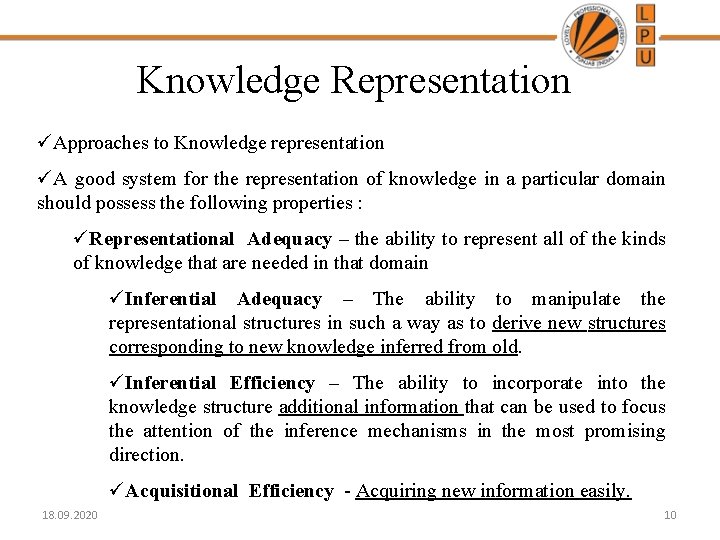
Knowledge Representation üApproaches to Knowledge representation üA good system for the representation of knowledge in a particular domain should possess the following properties : üRepresentational Adequacy – the ability to represent all of the kinds of knowledge that are needed in that domain üInferential Adequacy – The ability to manipulate the representational structures in such a way as to derive new structures corresponding to new knowledge inferred from old. üInferential Efficiency – The ability to incorporate into the knowledge structure additional information that can be used to focus the attention of the inference mechanisms in the most promising direction. üAcquisitional Efficiency - Acquiring new information easily. 18. 09. 2020 10
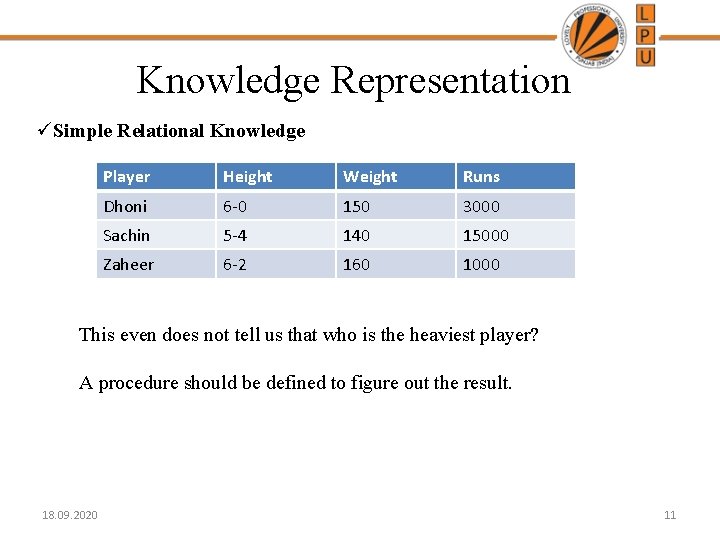
Knowledge Representation üSimple Relational Knowledge Player Height Weight Runs Dhoni 6 -0 150 3000 Sachin 5 -4 140 15000 Zaheer 6 -2 160 1000 This even does not tell us that who is the heaviest player? A procedure should be defined to figure out the result. 18. 09. 2020 11
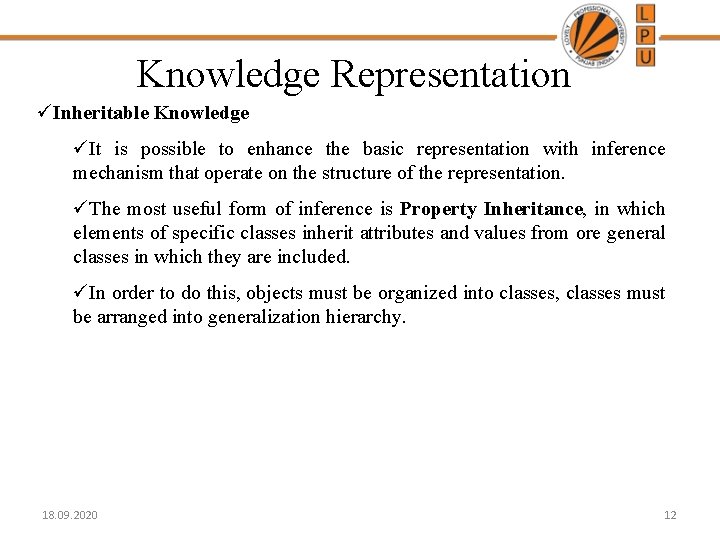
Knowledge Representation üInheritable Knowledge üIt is possible to enhance the basic representation with inference mechanism that operate on the structure of the representation. üThe most useful form of inference is Property Inheritance, in which elements of specific classes inherit attributes and values from ore general classes in which they are included. üIn order to do this, objects must be organized into classes, classes must be arranged into generalization hierarchy. 18. 09. 2020 12
Inheritable Knowledge
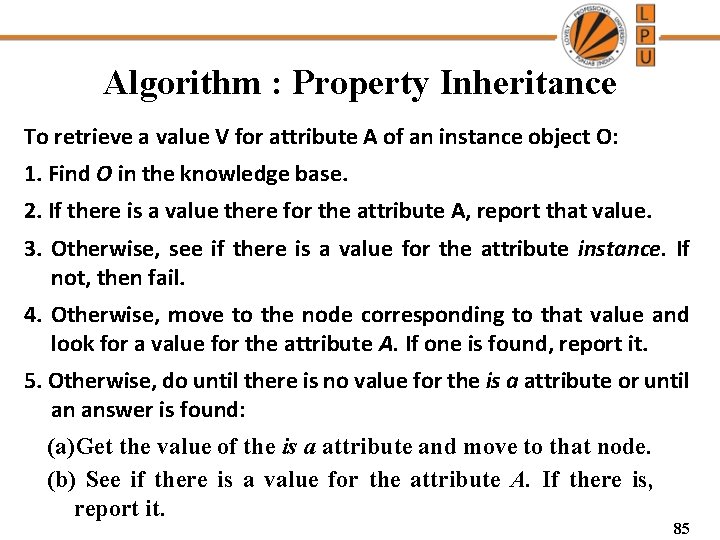
Algorithm : Property Inheritance To retrieve a value V for attribute A of an instance object O: 1. Find O in the knowledge base. 2. If there is a value there for the attribute A, report that value. 3. Otherwise, see if there is a value for the attribute instance. If not, then fail. 4. Otherwise, move to the node corresponding to that value and look for a value for the attribute A. If one is found, report it. 5. Otherwise, do until there is no value for the is a attribute or until an answer is found: (a)Get the value of the is a attribute and move to that node. (b) See if there is a value for the attribute A. If there is, report it. 85
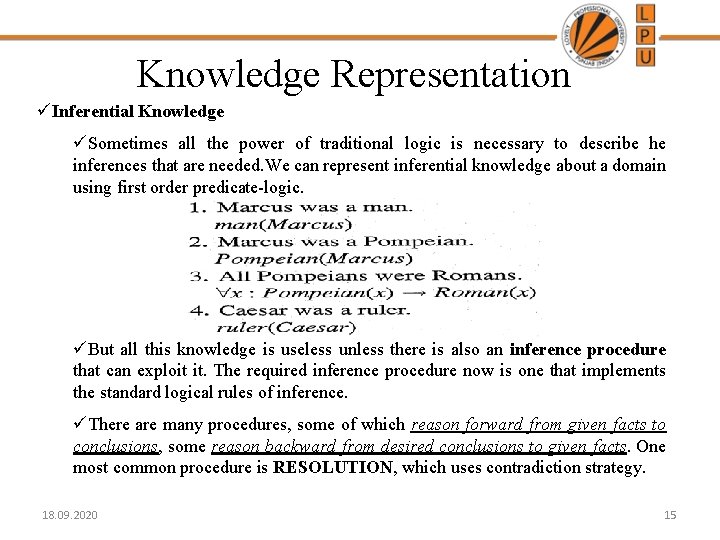
Knowledge Representation üInferential Knowledge üSometimes all the power of traditional logic is necessary to describe he inferences that are needed. We can represent inferential knowledge about a domain using first order predicate-logic. üBut all this knowledge is useless unless there is also an inference procedure that can exploit it. The required inference procedure now is one that implements the standard logical rules of inference. üThere are many procedures, some of which reason forward from given facts to conclusions, some reason backward from desired conclusions to given facts. One most common procedure is RESOLUTION, which uses contradiction strategy. 18. 09. 2020 15
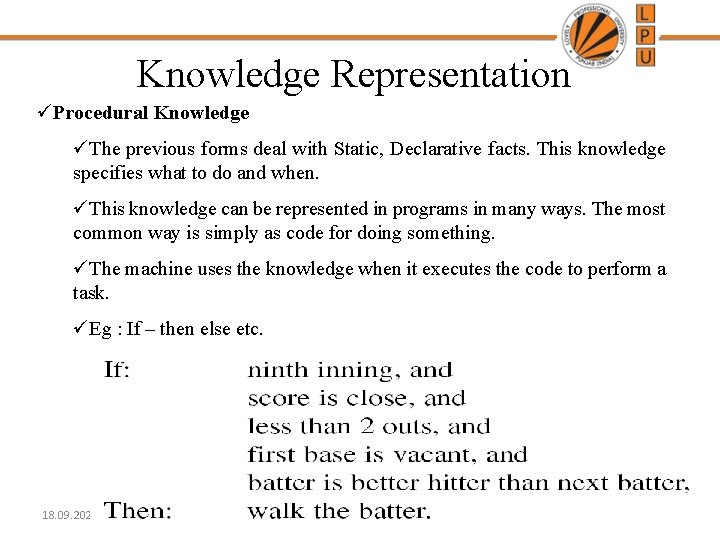
Knowledge Representation üProcedural Knowledge üThe previous forms deal with Static, Declarative facts. This knowledge specifies what to do and when. üThis knowledge can be represented in programs in many ways. The most common way is simply as code for doing something. üThe machine uses the knowledge when it executes the code to perform a task. üEg : If – then else etc. 18. 09. 2020 16
! ! ! u o Y Thank 18. 09. 2020 17