Reducing COPD Readmissions The Wake Health Model Sharon







- Slides: 29
Reducing COPD Readmissions: The Wake Health Model Sharon D. Cornelison RCP, RRT-NPS
COPD Pathway Team Inpatient Team • Hospitalist, Critical Care Physician, and/or APP • Respiratory Therapist COPD Navigators • Pulmonary Consult Service (MD and/or NP) • Transitional Care Pharmacy • Social Work/Case Management Outpatient Transitional Care Clinic Team • Pulmonary Physician/Nurse Practitioner • Pulmonary Transitional Care Specialist (RT) • Social Work/Case Management 2
COPD Pathway Team • Our team is RT centric • 5 Inpatient RT COPD Navigators & 1 Outpatient RT • Chart Biopsy • Bedside assessment/education including: - Hx - m. MRC - Spirometry - CAT - PIFR - Breathing techniques, tobacco cessation, inhaler techniques/priming, COPD, exacerbation mgmt • RT Navs follow patients daily until d/c (DME needs met, schedule TCM clinic appt, 24 hr f/u call, monitor ongoing meds/COPD ed, patient hotline # 3
Clinical Criteria for COPD Pathway Selection Inclusionary Criteria • Age ≥ 40 years old • Tobacco history: ≥ 20 pack years • Must have at least 2 of 3 sxs: - Increased cough above baseline - Worsening dyspnea above baseline - Changes in sputum (color, consistency, volume) • Pneumonia (many patients with “undiagnosed” COPD may present with initial AECOPD 2/2 PNA) • CHF (common comorbidity in COPD) 4
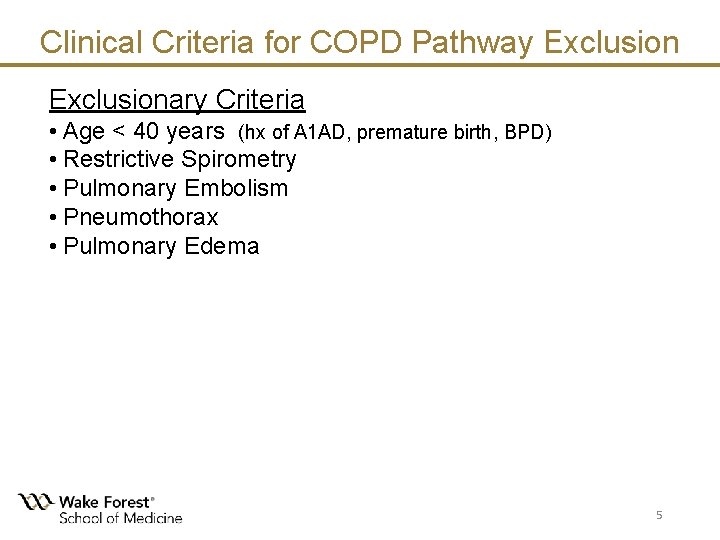
Clinical Criteria for COPD Pathway Exclusionary Criteria • Age < 40 years (hx of A 1 AD, premature birth, BPD) • Restrictive Spirometry • Pulmonary Embolism • Pneumothorax • Pulmonary Edema 5
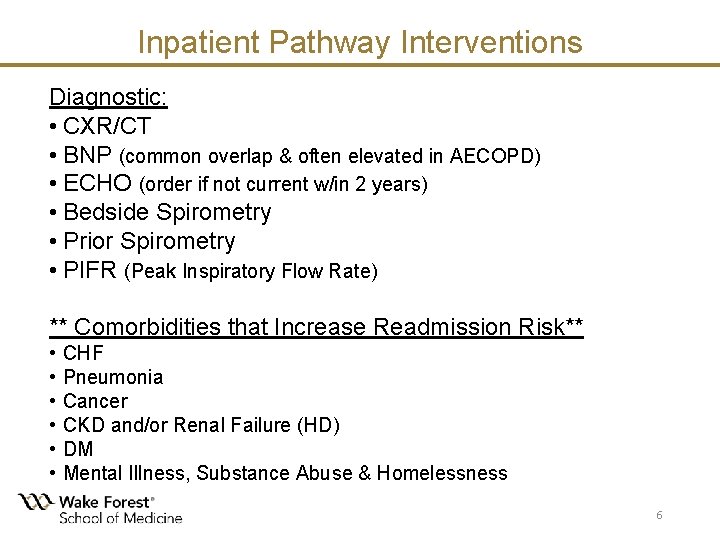
Inpatient Pathway Interventions Diagnostic: • CXR/CT • BNP (common overlap & often elevated in AECOPD) • ECHO (order if not current w/in 2 years) • Bedside Spirometry • Prior Spirometry • PIFR (Peak Inspiratory Flow Rate) ** Comorbidities that Increase Readmission Risk** • • • CHF Pneumonia Cancer CKD and/or Renal Failure (HD) DM Mental Illness, Substance Abuse & Homelessness 6
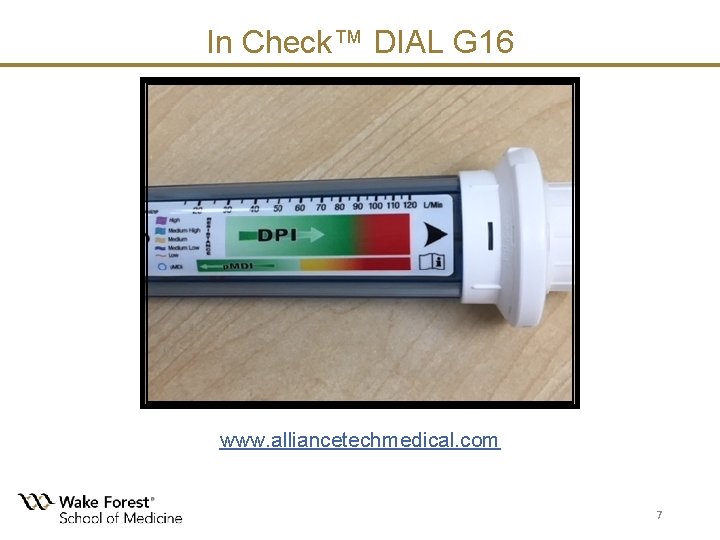
In Check™ DIAL G 16 www. alliancetechmedical. com 7
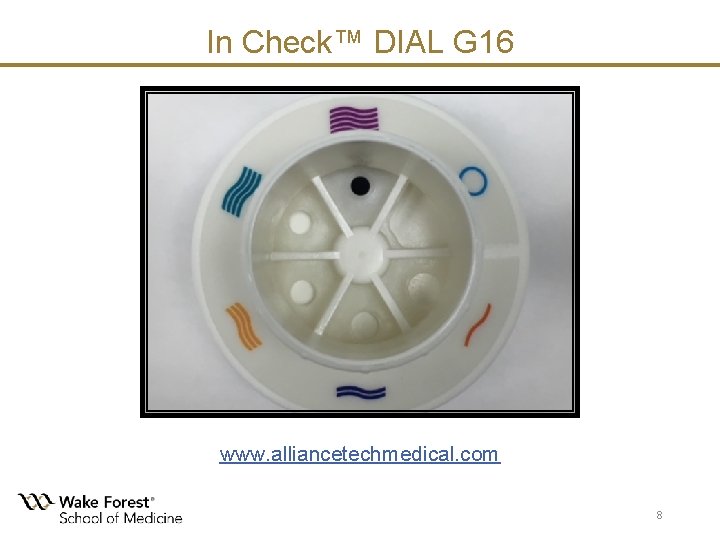
In Check™ DIAL G 16 www. alliancetechmedical. com 8
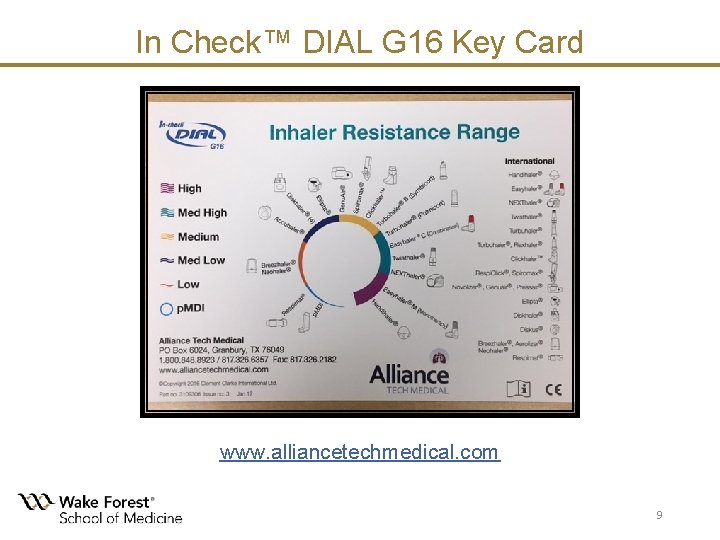
In Check™ DIAL G 16 Key Card www. alliancetechmedical. com 9
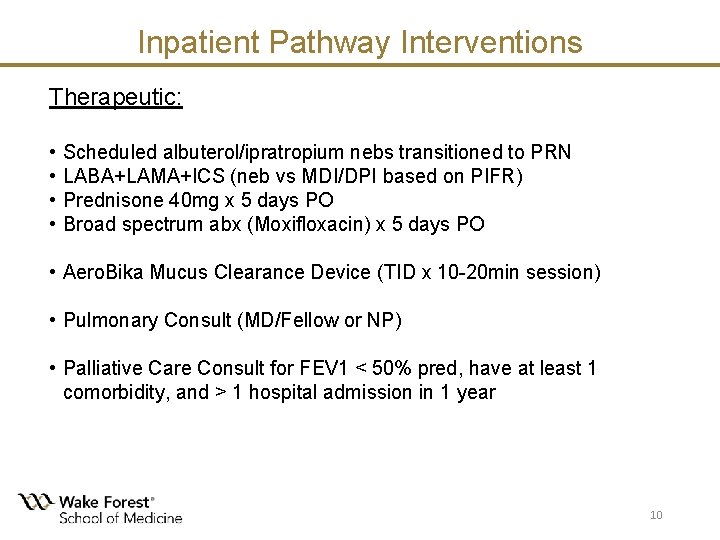
Inpatient Pathway Interventions Therapeutic: • • Scheduled albuterol/ipratropium nebs transitioned to PRN LABA+LAMA+ICS (neb vs MDI/DPI based on PIFR) Prednisone 40 mg x 5 days PO Broad spectrum abx (Moxifloxacin) x 5 days PO • Aero. Bika Mucus Clearance Device (TID x 10 -20 min session) • Pulmonary Consult (MD/Fellow or NP) • Palliative Care Consult for FEV 1 < 50% pred, have at least 1 comorbidity, and > 1 hospital admission in 1 year 10
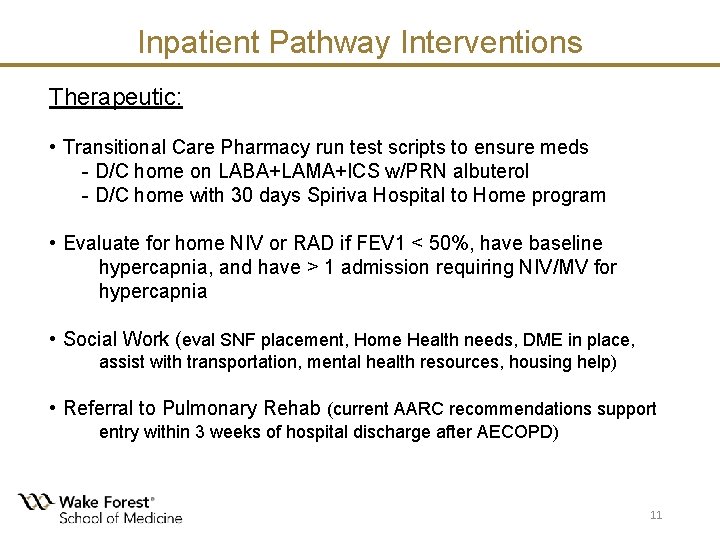
Inpatient Pathway Interventions Therapeutic: • Transitional Care Pharmacy run test scripts to ensure meds - D/C home on LABA+LAMA+ICS w/PRN albuterol - D/C home with 30 days Spiriva Hospital to Home program • Evaluate for home NIV or RAD if FEV 1 < 50%, have baseline hypercapnia, and have > 1 admission requiring NIV/MV for hypercapnia • Social Work (eval SNF placement, Home Health needs, DME in place, assist with transportation, mental health resources, housing help) • Referral to Pulmonary Rehab (current AARC recommendations support entry within 3 weeks of hospital discharge after AECOPD) 11
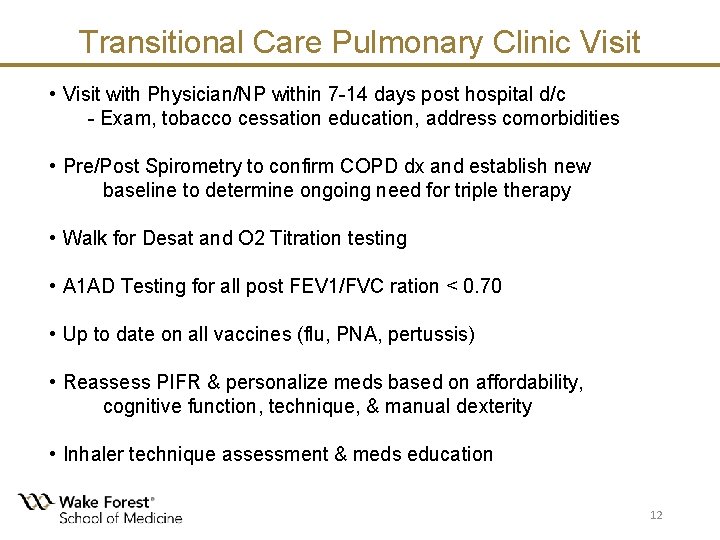
Transitional Care Pulmonary Clinic Visit • Visit with Physician/NP within 7 -14 days post hospital d/c - Exam, tobacco cessation education, address comorbidities • Pre/Post Spirometry to confirm COPD dx and establish new baseline to determine ongoing need for triple therapy • Walk for Desat and O 2 Titration testing • A 1 AD Testing for all post FEV 1/FVC ration < 0. 70 • Up to date on all vaccines (flu, PNA, pertussis) • Reassess PIFR & personalize meds based on affordability, cognitive function, technique, & manual dexterity • Inhaler technique assessment & meds education 12
Transitional Care Pulmonary Clinic Visit • Evaluation & referral for Pulmonary Rehab vs Home Health/PT • Palliative Care & Hospice referral, as indicated • Social Work (DME, meds access, substance abuse resources, transportation to appts) 13
Patient Education Tools • COPD Action Plan • Breathing Retraining • Medications • Exacerbation Mgmt • Energy Conservation • Oxygen script • What is COPD? • Tobacco Cessation • COPD Pathway Clinic 14
21
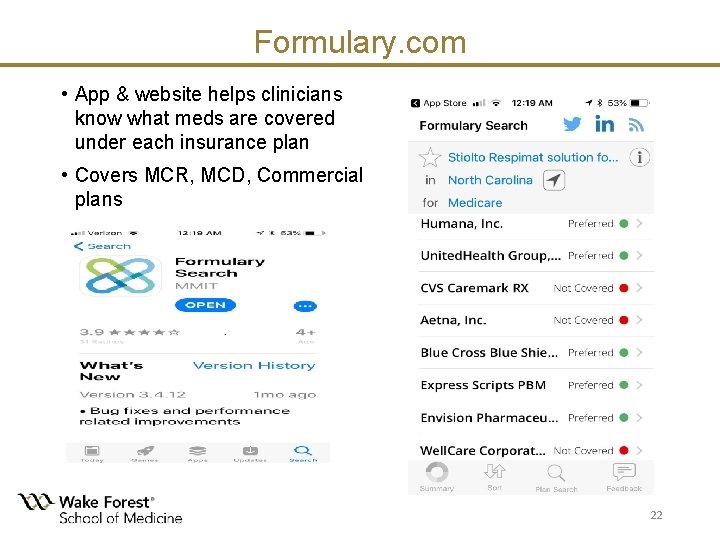
Formulary. com • App & website helps clinicians know what meds are covered under each insurance plan • Covers MCR, MCD, Commercial plans 22
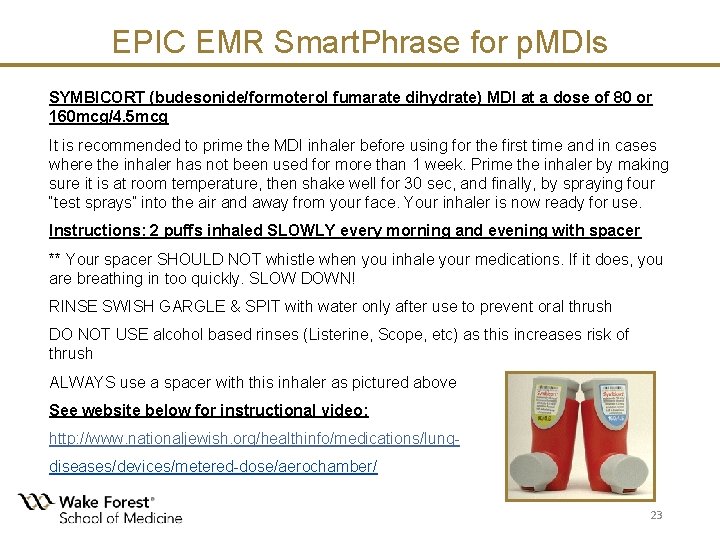
EPIC EMR Smart. Phrase for p. MDIs SYMBICORT (budesonide/formoterol fumarate dihydrate) MDI at a dose of 80 or 160 mcg/4. 5 mcg It is recommended to prime the MDI inhaler before using for the first time and in cases where the inhaler has not been used for more than 1 week. Prime the inhaler by making sure it is at room temperature, then shake well for 30 sec, and finally, by spraying four “test sprays” into the air and away from your face. Your inhaler is now ready for use. Instructions: 2 puffs inhaled SLOWLY every morning and evening with spacer ** Your spacer SHOULD NOT whistle when you inhale your medications. If it does, you are breathing in too quickly. SLOW DOWN! RINSE SWISH GARGLE & SPIT with water only after use to prevent oral thrush DO NOT USE alcohol based rinses (Listerine, Scope, etc) as this increases risk of thrush ALWAYS use a spacer with this inhaler as pictured above See website below for instructional video: http: //www. nationaljewish. org/healthinfo/medications/lungdiseases/devices/metered-dose/aerochamber/ 23
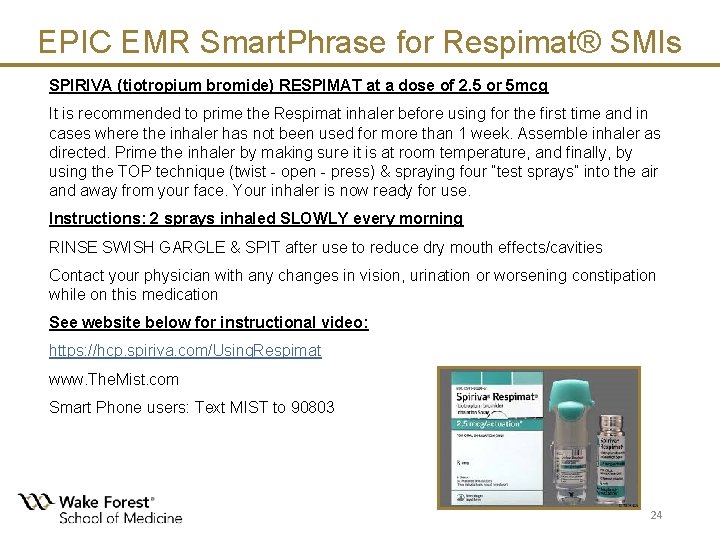
EPIC EMR Smart. Phrase for Respimat® SMIs SPIRIVA (tiotropium bromide) RESPIMAT at a dose of 2. 5 or 5 mcg It is recommended to prime the Respimat inhaler before using for the first time and in cases where the inhaler has not been used for more than 1 week. Assemble inhaler as directed. Prime the inhaler by making sure it is at room temperature, and finally, by using the TOP technique (twist - open - press) & spraying four “test sprays” into the air and away from your face. Your inhaler is now ready for use. Instructions: 2 sprays inhaled SLOWLY every morning RINSE SWISH GARGLE & SPIT after use to reduce dry mouth effects/cavities Contact your physician with any changes in vision, urination or worsening constipation while on this medication See website below for instructional video: https: //hcp. spiriva. com/Using. Respimat www. The. Mist. com Smart Phone users: Text MIST to 90803 24
The Wake Forest Baptist Health Model 1. Spirometric testing at bedside/in clinic to confirm obstructive pattern and a COPD diagnosis 2. Appropriate inhaled device selection during admission and/or clinic 3. TCM pharmacist-supervised medication reconciliation protocol before hospital d/c 4. Receipt and filling of all respiratory medications prior to hospital discharge when possible (send home remainder of in house inhalers) 5. Provide BI Spiriva Hospital to Home x 1 month 25
The Wake Forest Baptist Health Model 6. Refer patients to our Medication Access Center (MAC) if uninsured or can’t afford copay 7. Early outpatient follow-up within 7 -14 days after discharge in our pulmonary clinic to assess for meds efficacy, recheck PIFR & adjust device, if needed 8. Adding adjunct medications to help reduce exacerbations and readmissions (e. g. roflumilast, chronic macrolides) 9. Frequent inhaler device review & training 10. Pulmonary rehabilitation referral for disease/self management skills & ongoing inhaler training 26
References 1. Global Initiative for Chronic Obstructive Lung Disease. Pocket Guide to COPD Diagnosis, Management, and Prevention: A Guide for Healthcare Professionals. pp. 48 -57. 2. Atkins PJ. Dry Powder Inhalers: An Overview. Respiratory Care. 2005; 50 (10): 1304 -1312. 3. Clark AR, Hollingsworth AM. The relationship between dry powder inhaler resistance and peak inspiratory conditions in healthy volunteers – implications for in vitro testing. J of Aerosol Med. 1993; 6 (2): 99 -110. 4. Loh CH. Peters SP, Lovings TM, et al. Suboptimal inspiratory flow rates are associated with chronic obstructive pulmonary disease and all-cause readmissions. Ann Am Thorac Soc. 2017: 14 (8): 1305 -1311 5. www. alliancetechmedical. com 6. Restrepo RD, Alvarez MT, Wittnebel LD, et al. Medication adherence issues in patients treated for COPD. Int J Chron Obstruct Pulmon Dis. 2008; 3(3): 371 -384. 7. Tashkin DP. A review of nebulized drug delivery in COPD. Int J Chron Obstruct Pulmon Dis. 2016; 11: 2585 -2596. 8. Dolovich MB, Ahrens RC, Hess DR, et al. Device selection and outcomes of aerosol therapy: Evidence-based guidelines: American College of Chest Physicians/American College of Asthma, Allergy, and Immunology. Chest. 2005; 127(1): 335 -371. 27
References 9. Lavorini F, Magnan A, Dubus JC, et al. Effect of incorrect use of dry powder inhalers on management of patients with asthma and COPD. Respir Med. 2008; 102(4): 593 -604. 10. Al-Showair RA, Tarsin WY, Assi KH, Pearson SB, Chrystyn H. Can all patients with COPD use the correct inhalation flow with all inhalers and does training help? Respir Med. 2007; 101(11): 2395 -2401. 11. Virchow JC, Crompton GK, Dal Negro R, et al. Importance of inhaler devices in the management of airway disease. Respir Med. 2008; 102(1): 10 -19. 12. Tashkin DP. A review of nebulized drug delivery in COPD. Int J Chron Obstruct Pulmon Dis. 2016; 11: 2585 -2596. 28
Thank You! Sharon D. Cornelison RCP, RRT-NPS scorneli@wakehealth. edu (office) 336 -713 -8858 (cell) 336 -688 -2389 (fax) 336 -713 -8856 Wake Forest Baptist Health Winston-Salem, NC USA “A Mission to Care. A Mission to Cure. ” 29