
COPD Chronic Obstructive Pulmonary Disease b Chronic Bronchitis
COPD
Chronic Obstructive Pulmonary Disease b Chronic Bronchitis b Emphysema
Definition b A disease state characterized by airflow limitation that is not fully reversible b Conditions include: • Emphysema: anatomically defined condition characterized by destruction and enlargement of the lung alveoli • Chronic bronchitis: clinically defined conditio with chronic cough and phlegm • Small-airways disease: condition in which small bronchioles are narrowed
Epidemiology • Fourth leading cause of death in the U. S. • Affects > 16 million persons in the U. S. • Global Initiative for Chronic Obstructive Lung Disease (GOLD) estimates suggest that chronic obstructive lung disease (COLD) will increase from the sixth to the third most common cause of death worldwide by 2020.
Epidemiology b >70% of COLD-related health care expenditures go to emergency department visits and hospital care (>$10 billion annually in the U. S. ).
Epidemiology Sex b Higher prevalence in men, probably secondary to smoking b Prevalence of COLD among women is increasing as the gender gap in smoking rates has diminished.
Epidemiology Age b Higher prevalence with increasing age • Dose–response relationship between cigarette smoking intensity and decreased pulmonary function
Risk Factors 1. 2. 3. Cigarette smoking is a major risk factor. Cigar and pipe smoking Passive (secondhand) smoking �� Associated with reductions in pulmonary function �� Its status as a risk factor for COLD remains uncertain
b Occupational exposures to dust and fumes (e. g. , cadmium) • Likely risk factors • The magnitude of these effects appears substantially less important than the effect of cigarette smoking. b Ambient air pollution • The relationship of air pollution to COLD remains unproven.
Genetic factors • • • α 1 antitrypsin (α 1 AT) deficiency Common M allele: normal levels S allele: slightly reduced levels Z allele: markedly reduced levels Null allele: absence of α 1 AT (rare) Lowest levels of α 1 AT are associated with incidence of COLD; α 1 AT deficiency interacts with cigarette smoking to increase risk.
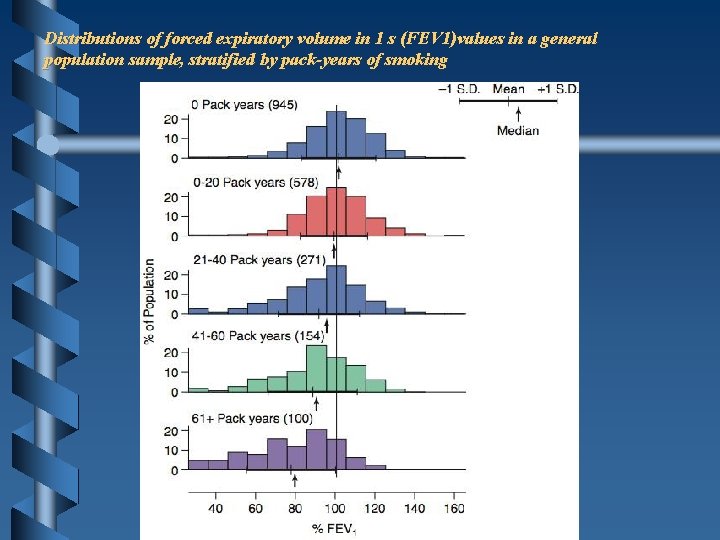
Distributions of forced expiratory volume in 1 s (FEV 1)values in a general population sample, stratified by pack-years of smoking
Etiology COLD • Causal relationship between cigarette smoking and development of COLD has been proven: however, the response varies considerably among individuals.
COLD exacerbation • Bacterial infections �� Streptococcus pneumoniae �� Haemophilus influenzae �� Moraxella catarrhalis �� Mycoplasma pneumoniae or Chlamydia pneumoniae (5– 10% of exacerbations) • Viral infections (one-third) • No specific precipitant identified (20– 35%)
Symptoms & Signs • 3 most common: • Cough • Sputum production • Exertional dyspnea, frequently of long duration
signs and symptoms b Dyspnea at rest b Prolonged expiratory phase and/or expiratory wheezing on lung examination b Decreased breath sounds b Barrel chest b Large lung volumes and poor diaphragmatic excursion, as assessed by percussion b Use of accessory muscles of respiration b Pursed lip breathing (predominantly emphysema) b Characteristic "tripod" sitting position to facilitate the actions of the sternocleidomastoid, scalene, and intercostal muscles b Cyanosis, visible in lips and nail beds
Systemic wasting �� Significant weight loss �� Bitemporal wasting �� Diffuse loss of subcutaneous adipose tissue Paradoxical respiration �� Inward movement of the rib cage with inspiration (Hoover's sign) in some patients "Pink puffers" are patients with predominant emphysema—no cyanosis or edema, with decreased breath sounds. "Blue bloaters" are patients with predominant bronchitis—cyanosis and edema. �� Most patients have elements of each.
Advanced disease: signs of cor pulmonale �� Elevated jugular venous distention �� Right ventricular heave �� Third heart sound �� Hepatic congestion �� Ascites �� Peripheral edema
Differential Diagnosis 1. 2. 3. 4. 5. 6. 7. 8. 9. Congestive heart failure Asthma Bronchiectasis Obliterative bronchiolitis Pneumonia Tuberculosis Atelectasis Pneumothorax Pulmonary embolism
Considerations 1. COLD is present only if chronic airflow obstruction occurs. �� Chronic bronchitis without chronic airflow obstruction is not COLD. 2. Asthma �� Reduced forced expiratory volume in 1 second (FEV 1) in COLD seldom shows large responses (>30%) to inhaled bronchodilators, although improvements up to 15% are common. �� Asthma patients can also develop chronic (not fully reversible) airflow obstruction.
3. 4. Considerations Problems other than COLD should be suspected when hypoxemia is difficult to correct with modest levels of supplemental oxygen. Lung cancer �� Clubbing of the digits is not a sign of COLD. In patients with COLD, development of lung cancer is the most likely explanation for newly developed clubbing.

Chronic Bronchitis b Chronic lower airway inflammation • Increased bronchial mucus production • Productive cough b Urban male smokers > 30 years old
Chronic Bronchitis b Mucus, swelling interfere with ventilation b Increased CO 2, decreased 02 b Cyanosis occurs early in disease b Lung disease overworks right ventricle b Right heart failure occurs b RHF produces peripheral edema Blue Bloater
Emphysema b Loss of elasticity in small airways b Destruction of alveolar walls b Urban male smokers > 40 -50 years old
Emphysema b Lungs lose elastic recoil b Retain CO 2, maintain near normal O 2 b Cyanosis occurs late in disease b Barrel chest (increased AP diameter) b Thin, wasted b Prolonged exhalation through pursed lips Pink Puffer
COPD Management b Oxygen • Monitor carefully • Some COPD patients may experience respiratory depression on high concentration oxygen b Assist ventilations as needed
Diagnostic Approach Initial assessment 1. History and physical examination (Signs & Symptoms) 2. Pulmonary function testing to assess airflow obstruction 3. Radiographic studies
Assessment of exacerbation 1. History �� Fever �� Change in quantity and character of sputum �� ill contacts �� Associated symptoms �� Frequency and severity of prior exacerbations
Assessment of exacerbation 2. Physical examination �� Tachycardia �� Tachypnea �� Chest examination �� Focal findings �� Air movement �� Symmetry �� Presence or absence of wheezing �� Paradoxical movement of abdominal wall �� Use of accessory muscles �� Perioral or peripheral cyanosis �� Ability to speak in complete sentences
3. Radiographic studies �� Chest radiography focal findings (pneumonia, atelectasis) 4. Arterial blood gases �� Hypoxemia �� Hypercapnia 5. Hospitalization recommended for: �� Respiratory acidosis and hypercarbia �� Significant hypoxemia �� Severe underlying disease �� Living situation not conducive to careful observation and delivery of prescribed treatment
ABG and oximetry b Although not sensitive, they may demonstrate resting or exertional hypoxemia. b Blood gases provide additional information about alveolar ventilation and acid–base status by measuring arterial PCO 2 and p. H. • Change in p. H with PCO 2 is 0. 08 units/10 mm. Hg acutely and 0. 03 units/10 mm. Hg in the chronic state. ��
Laboratory Tests 1. 2. Elevated hematocrit suggests chronic hypoxemia. Serum level of α 1 AT should be measured in some patients. o Presenting at ≤ 50 years of age o Strong family history o Predominant basilar disease o Minimal smoking history o Definitive diagnosis of α 1 AT deficiency requires PI type determination. �� Typically performed by isoelectric focusing of serum, which reflects the genotype at the PI locus for the common alleles and many of the rare PI alleles �� Molecular genotyping can be performed for the common PI alleles (M, S, and Z). 3. Sputum gram stain and culture (for COLD exacerbation)
Imaging • Chest radiography • Emphysema: obvious bullae, paucity of parenchymal markings, or hyperlucency • Hyperinflation: increased lung volumes, flattening of diaphragm – Does not indicate chronicity of changes • Chest CT • Definitive test for establishing the diagnosis of emphysema, but not necessary to make the diagnosis
Pulmonary function tests/spirometry Diagnostic Procedures • Chronically reduced ratio of FEV 1 to forced vital capacity (FVC) – In contrast to asthma, the reduced FEV 1 in COLD seldom shows large responses (>30%) to inhaled bronchodilators, although improvements up to 15% are common. • • • Reduction in forced expiratory flow rates Increases in residual volume Increases in ratio of residual volume to total lung capacity • Increased total lung capacity (late in the disease) • Diffusion capacity may be decreased in patients with emphysema. Electrocardiography
Classification b GOLD stage b Classification based on pathologic type
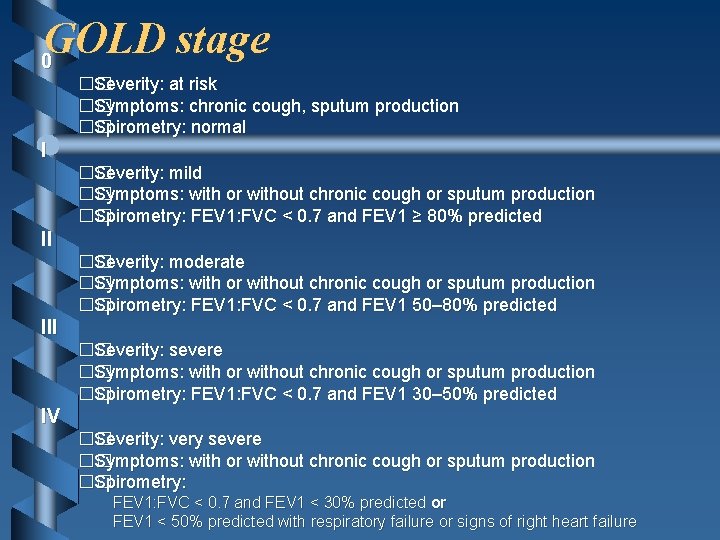
GOLD stage 0 �� Severity: at risk �� Symptoms: chronic cough, sputum production �� Spirometry: normal I �� Severity: mild �� Symptoms: with or without chronic cough or sputum production �� Spirometry: FEV 1: FVC < 0. 7 and FEV 1 ≥ 80% predicted II �� Severity: moderate �� Symptoms: with or without chronic cough or sputum production �� Spirometry: FEV 1: FVC < 0. 7 and FEV 1 50– 80% predicted III �� Severity: severe �� Symptoms: with or without chronic cough or sputum production �� Spirometry: FEV 1: FVC < 0. 7 and FEV 1 30– 50% predicted IV �� Severity: very severe �� Symptoms: with or without chronic cough or sputum production �� Spirometry: FEV 1: FVC < 0. 7 and FEV 1 < 30% predicted or FEV 1 < 50% predicted with respiratory failure or signs of right heart failure
Treatment Approach General • Only 2 interventions have been demonstrated to influence the natural history. �� Smoking cessation �� Oxygen therapy in chronically hypoxemic patients • All other current therapies are directed at improving symptoms and decreasing frequency and severity of exacerbations. • Therapeutic response should determine continuation of treatment.
Specific Treatments Stable-phase COLD, pharmacotherapy Bronchodilators • • • Used to treat symptoms The inhaled route is preferred. Side effects are less than with parenteral delivery. • Theophyllline: various dosages and preparations; typical dose 300– 600 mg/d, adjusted based on levels
Specific Treatments Stable-phase COLD, pharmacotherapy Anticholinergic agents • Trial of inhaled anticholinergics is recommended in symptomatic patients. • Side effects are minor. • Improve symptoms and produce acute improvement in FEV • Do not influence rate of decline in lung function • Ipratropium bromide (short-acting anticholinergic) (Atrovent) �� Inhaled: 30 -min onset of action; 4 -h duration �� Atrovent: metered-dose inhaler; 18 μg per inhalation;
Specific Treatments Stable-phase COLD, pharmacotherapy b Tiotropium (long-acting anticholinergic) (Spiriva) �� Spiriva: powder via handihaler; 18 μg per inhalation; 1 inhalation qd b Symptomatic benefit b Long-acting inhaled β-agonists, such as salmeterol, have benefits similar to ipratropium bromide. �� More convenient than short-acting agents
Specific Treatments Stable-phase COLD, pharmacotherapy b Addition of a β-agonist to inhaled anticholinergic therapy provides incremental benefit. • Side effects �� Tremor �� Tachycardia b Salmetrol (Serevent): �� Powder via diskus; 50 -μg inhalation every 12 h b Formoterol (Foradil):
Specific Treatments Stable-phase COLD, pharmacotherapy Albuterol (short-acting β-agonist) (Proventil HFA, Ventolin HFA, Ventolin, Proventil) �� Metered-dose inhaler (or in nebulizer solution); 180 -μg inhalation every 4– 6 h as needed Combined β-agonist/anticholinergic: albuterol/ipratropium (Combivent) �� Metered-dose inhaler (also available in nebulizer solution); 120 mcg/21 μg per
Specific Treatments Stable-phase COLD, pharmacotherapy Inhaled glucocorticoids • Reduce frequency of exacerbations by 25– 30% • No evidence of a beneficial effect for the regular use of inhaled glucocorticoids on the rate of decline of lung function, as assessed by FEV 1 • Consider a trial in patients with frequent exacerbations (≥ 2 per year) and those who demonstrate a significant amount of acute reversibility in response to inhaled
Specific Treatments Stable-phase COLD, pharmacotherapy • Beclomethasone (QVAR): �� Metered-dose inhaler; 40– 80 μg/spray; 40– 160 μg bid • Budesonide (Pulmicort): �� Powder via Turbuhaler; 200 μg/spray; 200 μg inhaled bid • Fluticasone (Flovent): �� Metered-dose inhaler; 44, 110 or 220 μg/spray; 88– 440 μg inhaled bid
Oxygen 1. Supplemental O 2 is the only therapy demonstrated to decrease mortality 2. In resting hypoxemia (resting O 2 saturation < 88% or < 90% with signs of pulmonary hypertension or right heart failure), the use of O 2 has been demonstrated to significantly affect mortality. Supplemental O 2 is commonly prescribed for patients with exertional hypoxemia or nocturnal hypoxemia. 3. �� The rationale for supplemental O 2 in these settings is physiologically sound, but benefits are not well substantiated.
• Beclomethasone (QVAR): �� Metered-dose inhaler; 40– 80 μg/spray; 40– 160 μg bid • Budesonide (Pulmicort): �� Powder via Turbuhaler; 200 μg/spray; 200 μg inhaled bid • Fluticasone (Flovent): �� Metered-dose inhaler; 44, 110 or 220 μg/spray; 88– 440 μg inhaled bid • Triamcinolone (Azmacort) �� Metered-dose inhaler via built-in spacer; 100 μg/spray; 100– 400 μg inhaled bid
Parenteral corticosteroids b Long-term use of oral glucocorticoids is not recommended. b Side effects �� Osteoporosis, fracture �� Weight gain �� Cataracts �� Glucose intolerance �� Increased risk of infection b Patients tapered off long-term low-dose prednisone (~10 mg/d) did not experience any adverse effect on the frequency of exacerbations, quality of life, or lung function. b On average, patients lost ~4. 5 kg (~10 lb) when steroids were withdrawn.
Theophylline b Produces modest improvements in expiratory flow rates and vital capacity and a slight improvement in arterial oxygen and carbon dioxide levels in moderate to severe COPD b Side effects �� Nausea (common) �� Tachycardia �� Tremor
Specific Treatments Stable-phase COLD, pharmacotherapy Other agents 1. N-acetyl cysteine �� Used for its mucolytic and antioxidant (current clinical trials) properties 2. Intravenous α 1 AT augmentation therapy for patients with severe α 1 AT deficiency 3. Antibiotics �� Long-term suppressive or "rotating" antibiotics are not beneficial
Specific Treatments Stable-phase COLD, nonpharmacologic therapies Smoking cessation b All patients with COLD should be strongly urged to quit and educated about the benefit of cessation and risks of continuation. b Combining pharmacotherapy with traditional supportive approaches considerably enhances the chances of successful smoking cessation. �� Bupropion �� Nicotine replacement (gum, transdermal, inhaler, nasal spray) �� The U. S. Surgeon General recommendation is for all smokers considering quitting to be offered pharmacotherapy in the absence of any contraindication.
Specific Treatments Stable-phase COLD, nonpharmacologic therapies General medical care 1. Annual influenza vaccine 2. Polyvalent pneumococcal vaccine is recommended, although proof of efficacy in COLD patients is not definitive.
Specific Treatments Stable-phase COLD, nonpharmacologic therapies Pulmonary rehabilitation • Improves health-related quality of life, dyspnea, and exercise capacity • Rates of hospitalization are reduced over 6 to 12 months.
Specific Treatments Stable-phase COLD, nonpharmacologic therapies Lung volume reduction surgery Produces symptomatic and functional benefit in selected patients �� Emphysema �� Predominant upper lobe involvement Contraindications �� Significant pleural disease (pulmonary artery systolic pressure >45 mm Hg) �� Extreme deconditioning �� Congestive heart failure �� Other severe comorbid conditions �� FEV 1 < 20% of predicted and diffusely distributed emphysema on CT or diffusing capacity for CO <20%
Specific Treatments Stable-phase COLD, nonpharmacologic therapies Lung transplantation b COLD is the leading indication. b Candidates �� ≤ 65 years �� Severe disability despite maximal medical therapy �� No comorbid conditions, such as liver, renal, or cardiac disease �� Anatomic distribution of emphysema and presence of pulmonary hypertension are not
exacerbation of COPD The goals of emergency therapy b correct tissue oxygenation b alleviate reversible bronchospasm b treat the underlying etiology of the exacerbation
Administer controlled oxygen therapy b correct or prevent life-threatening hypoxemia, Pa. O 2 greater than 60 mm Hg or an Sa. O 2 greater than 90 percent b Improvement after administration of supplemental oxygen may take 20 to 30 min to achieve a steady state
b B 2 -Agonists and anticholinergic agents are first-line therapies in the management of acute, severe COPD
CORTICOSTEROIDS b short course (7 to 14 days) of systemic steroids appears more effective than placebo in improving FEV 1 in acute severe exacerbations of COPD, • role in mild-to-moderate exacerbations • Hyperglycemia is the most common adverse effect
ANTIBIOTICS b All current guidelines recommend antibiotics if there is evidence of infection, • change in volume of sputum and increased purulence of sputum b benefits are more apparent in more severe exacerbations b Antibiotic choices should be directed at the most common pathogens known to be associated with COPD exacerbation • Streptococcus pneumoniae, Haemophilus influenzae, and Moraxella catarrhalis b duration of treatment; (3 to 14 days )
METHYLXANTHINES theophylline and aminophylline b severe exacerbation when otherapy has failed or in patients already using methylxanthines who have subtherapeutic drug levels b The bronchodilation effect of aminophylline is limited, b therapeutic range is narrow
b b IV loading dose 5 to 6 mg/kg usually required to obtain an initial serum concentration of 8 to 12 macg/m. L In patients who regularly use theophylline, a mini-loading dose should be administered: (target concentration–currently assayed concentration) x volume of distribution (i. e. , 0. 5 times ideal body weight in liters) • target concentration should be between 10 and 15 macg/m. L. b b b IV maintenance infusion rate is 0. 2 to 0. 8 mg/kg ideal body weight per h. lower maintenance rates (congestive heart failure or hepatic insufficiency ) raise maintenance rates in patients with higher clearance rates, such as smokers
Summary for ED Management b Assess severity of symptom b Administer controlled oxygen therapy b Perform arterial blood gas • measurement after 20– 30 min if Sa. O 2 remains <90% or if concerned about symptomatic hypercapnia
b Administer bronchodilators b B 2 -agonists and/or anticholinergic agents by nebulization or MDI with spacer b Consider adding intravenous methylxanthine, if needed b Add corticosteroids ( Oral or intravenous) b Consider antibiotics • If increased sputum volume, change in sputum color, fever, or suspicion of infectious etiology of exacerbation
b Laboratory evaluation b Chest x-ray b CBC with differential b Electrolytes b Arterial blood gases b ECG as needed
At all times … b Monitor fluid balance b Consider subcutaneous heparin (venous thrombosis prophylaxis) b Identify and treat associated conditions (e. g. , heart failure, arrhythmias) b Closely monitor condition of the patient
Indications for Invasive Mechanical Ventilation b Severe dyspnea with use of accessory muscles and paradoxical abdominal motion b Respiratory frequency >35 breaths per min b Life-threatening hypoxemia: Pa. O 2 <50 mm Hg (<5. 3 k. Pa) or Pa. O 2/FIO 2 <200 mm Hg b Severe acidosis (p. H <7. 25) and hypercapnia (Pa. CO 2 >60 mm Hg or >8. 0 k. Pa) b Respiratory arrest b Somnolence, impaired mental status b Cardiovascular complications (hypotension, shock, heart failure) b NIPPV failure
Indications for ICU b Severe dyspnea that responds inadequately to initial emergency therapy b Confusion, lethargy, coma b Persistent or worsening hypoxemia: Pa. O 2 <50 mm Hg (<6. 7 k. Pa) b Severe or worsening hypercapnia: Pa. CO 2 >70 mm Hg (>9. 3 k. Pa) b Severe or worsening respiratory acidosis (p. H <7. 30) despite supplemental oxygen and NIPPV
Indications for Hospital Admission b b b b b Marked increase in intensity of symptoms, such as sudden development of resting dyspnea Severe background of COPD Onset of new physical signs (e. g. , cyanosis, peripheral edema) Failure of exacerbation to respond to initial medical management Significant comorbidities Newly occurring arrhythmias Diagnostic uncertainty Older age Insufficient home support
discharge to home (1) (2) (3) (4) adequate supply of home oxygen, if needed adequate and appropriate bronchodilator treatment short course of oral corticosteroids a follow-up with their physician
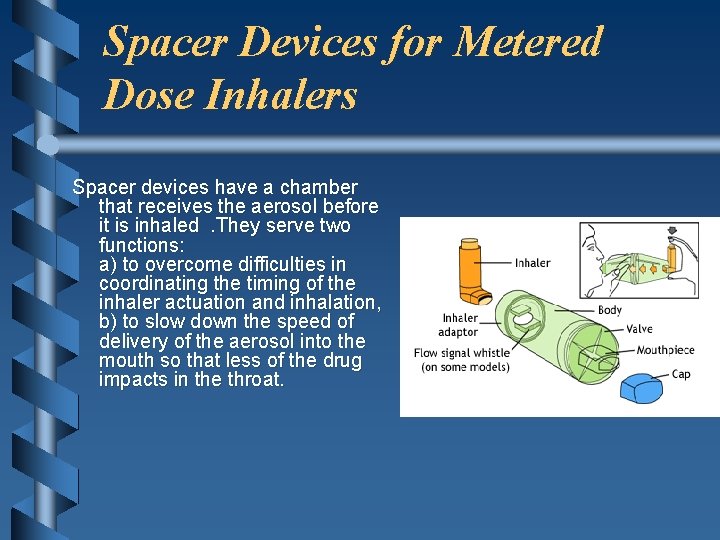
Spacer Devices for Metered Dose Inhalers Spacer devices have a chamber that receives the aerosol before it is inhaled . They serve two functions: a) to overcome difficulties in coordinating the timing of the inhaler actuation and inhalation, b) to slow down the speed of delivery of the aerosol into the mouth so that less of the drug impacts in the throat.
Prevention • Smoking prevention or cessation • Prevention of exacerbations • Long-term suppressive antibiotics are not beneficial. • Inhalation glucocorticoids should be considered in patients with frequent exacerbations or in patients with an asthmatic component. • Vaccination against influenza and pneumococcal infection
- Slides: 70