
GLOBAL INITIATIVE FOR CHRONIC OBSTRUCTIVE LUNG DISEASE GOLD
GLOBAL INITIATIVE FOR CHRONIC OBSTRUCTIVE LUNG DISEASE (GOLD) TEACHING SLIDE SET 2019 This slide set is restricted for academic and educational purposes only. Use of the slide set, or of individual slides, for commercial or promotional purposes requires approval from GOLD. © 2019 Global Initiative for Chronic Obstructive Lung Disease
© 2019 Global Initiative for Chronic Obstructive Lung Disease

GOLD Board of Directors 2018 Alvar Agusti, MD, Chair Respiratory Institute, Hospital Clinic, IDIBAPS Univ. Barcelona and Ciberes Barcelona, Spain Bartolome R. Celli, MD Brigham and Women’s Hospital Boston, Massachusetts, USA Rongchang Chen, MD Guangzhou Institute of Respiratory Disease Guangzhou, PRC Gerard Criner, MD Temple University School of Medicine Philadelphia, Pennsylvania, USA Peter Frith, MD Flinders University Adelaide, Australia David Halpin, MD Royal Devon and Exeter Hospital Devon, UK M. Victorina López Varela, MD Universidad de la República Montevideo, Uruguay Masaharu Nishimura, MD (retired May, 2018) Hokkaido University School of Medicine Sapporo, Japan Sundeep Salvi, MD Chest Research Foundation Pune, India Claus Vogelmeier, MD University of Marburg, Germany © 2019 Global Initiative for Chronic Obstructive Lung Disease

GOLD Science Committee 2018 Claus Vogelmeier, MD, Chair University of Marburg, Germany Alvar Agusti, MD Respiratory Institute, Hospital Clinic, IDIBAPS Univ. Barcelona and Ciberes Barcelona, Spain Antonio Anzueto, MD University of Texas Health Science Center San Antonio, Texas, USA Peter Barnes, MD National Heart and Lung Institute London, United Kingdom Jean Bourbeau, MD Mc. Gill University Health Centre Montreal, Canada Gerard Criner, MD Temple University School of Medicine Philadelphia, Pennsylvania, USA Maria Montes de Oca, MD Hospital Universitario de Caracas, Venezuela Peter Frith, MD Repatriation General Hospital Adelaide, Australia David Halpin, MD Royal Devon and Exeter Hospital Devon, United Kingdom Mei. Lan Han, MD MS University of Michigan Ann Arbor, MI, USA Fernando J. Martinez, MD MS New York-Presbyterian Hospital/ Weill Cornell Medical Center New York, NY, USA Alberto Papi, MD University of Ferrara, Italy Ian Pavord, MA DM University of Oxford, UK Nicolas Roche, MD University Paris Descartes Hôpital Cochin APHP Paris, France Donald Sin, MD St. Paul’s Hospital, University of British Columbia Vancouver, Canada Dave Singh, MD University of Manchester, UK Robert Stockley, MD University Hospital Birmingham, UK M. Victorina López Varela, MD Universidad de la República Hospital Maciel Montevideo, Uruguay Jørgen Vestbo, MD University of Manchester, England, UK Jadwiga A. Wedzicha, MD Imperial College London, UK GOLD PROGRAM DIRECTOR Rebecca Decker, MSJ Fontana, Wisconsin, USA © 2019 Global Initiative for Chronic Obstructive Lung Disease

GOLD Assembly ARGENTINA Dr. Eduardo A. Schiavi Buenos Aires, Argentina AUSTRALIA Peter Frith, MD Adelaide, South Australia, Australia AUSTRIA Dr. Otto Chris Burghuber BANGLADESH Prof. Md. Mostafizur Rahman Dhaka, Bangladesh Dr. Kazi S. Bennoor Dhaka, Bangladesh BRAZIL Aquiles Camelier, MD Sao Paulo, Brazil Fernando Lundgren, MD CANADA Dr. Dennis E. O’Donnell Kingston, Ontario, Canada CHILE Dr. Manuel Barros Dr. CHINA Jiangtao Lin, MD Beijing, China Fu-Qiang Wen, MD, Ph. D Chengdu, Sichuan, China Nan-Shan Zhong, MD Guangzhou, China COLOMBIA Alejandro Casas, MD Vice-Director, COPD Department Latin American Thoracic Society CROATIA Neven Miculinic, MD Zagreb, Croatia CZECH REPUBLIC Stanislav Kos, MD, Ph. D, FCCP Mirosov, Czech Republic Jaromir Musil, MD President, Czech Association Against COPD DOMINICAN REPUBLIC Dr. Eduardo Gautreau de Windt Provincia Santo Domingo, Dominican Republic EGYPT Hisham Tarraf, MD Cairo, Egypt EL SALVADOR Dr. Victor Castro Gòmez San Salvador, El Salvador FRANCE Gaetan Deslée, MD Hôpital Maison Blanche Reims, France GEORGIA Maia Gotua, MD, Ph. D Tbilisi, Georgia HONG KONG CHINA David S. C. Hui, MD Shatin, N. T. Hong Kong INDONESIA Professor Faisal Yunus IRAN Masjedi Mohammad Reza Tehran, Iran Mohammad Ashkan Moslehi, MD Shiraz, Iran IRELAND Timothy J. Mc. Donnell, MD Dublin, Ireland ISRAEL Zvi G. Fridlender, MD, MSc Jerusalem, Israel ITALY Professor Lorenzo Corbetta Florence, Italy JAPAN Takahide Nagase, MD Tokyo, Japan Michiaki Mishima, MD Kyoto, Japan JORDAN Bashar Nsour, MD Amman, Jordan Jawad Hamad, MD Amman, Jordan Hatham El-Khushman Amman, Jordan KAZAKHSTAN Damilya Nugmanova, MD, Ph. D, DSci Almaty, Kazakhstan KOREA Yeon-Mok Oh, MD Seoul, South Korea KUWAIT Professor Mousa Khadadah Kuwait University KYRGYZSTAN Talant Sooronbaev, MD Bishkek, Kyrgyzstan MALTA Prof Joseph M Cacciottolo Pieta, Malta LEBANON Mirna Waked, MD Beirut, Lebanon MOLDOVA Alexandru Corlateanu, MD, Ph. D ERS National Delegate Republic of Moldova MONGOLIA Dr. Oyunchimeg Chair of International Cooperation NORWAY Rune Nielsen, MD Bergen, Norway PAKISTAN Professor Javaid Khan Karachi, Pakistan Dr. Mohammad Osman Yusuf Islamabad, Pakistan PHILIPPINES Teresita S. de. Guia, MD Quezon City, Philippines POLAND Ewa Nizankowska-Mogilnicka, MD, Ph. D, Krakow, Poland Pawel Sliwinski Krakow, Poland Paul Kuca, MD Warsaw, Poland ROMANIA Florin Mihaltan, MD © 2019 Global Initiative for Chronic Obstructive Lung Disease Bucharest, Romania Ruxandra Ulmeanu, MD Bucharest, Romania RUSSIA Alexander Chuchalin, MD Moscow, Russia SINGAPORE Kian-Chung Ong, MD Wan-Cheng Tan, MD, Chair, Asian Pacific COPD Roundtable SLOVAK REPUBLIC Ruzena Tkacova, MD Ph. D Kosice, Slovakia SPAIN Dr. Patricia Sobradillo SYRIA Yousser Mohammad, MD Lattakia, Syria TURKEY Prof. Dr. Hakan Gunen Malatya, Turkey Nurdan Kokturk Ankara, Turkey URUGUAY Mará Victorina López, MD Montevideo, Uruguay VENEZUELA Maria Montes de Oca, MD Caracas, Venezuela VIETNAM Ngo Quy Chau, MD, Ph. D Hanoi, Vietnam Le Thi Tuyet Lan, MD, Ph. D Ho Chi Minh City, Vietnam
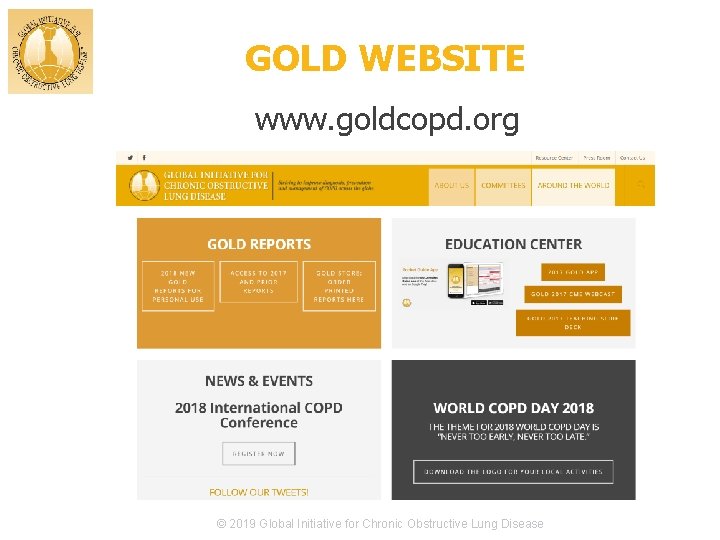
GOLD WEBSITE www. goldcopd. org © 2019 Global Initiative for Chronic Obstructive Lung Disease
Chronic Obstructive Pulmonary Disease (COPD) ► COPD is currently the fourth leading cause of death in the world. 1 ► COPD is projected to be the 3 rd leading cause of death by 2020. 2 ► More than 3 million people died of COPD in 2012 accounting for 6% of all deaths globally. ► Globally, the COPD burden is projected to increase in coming decades because of continued exposure to COPD risk factors and aging of the population. 1. Lozano R, Naghavi M, Foreman K, et al. Global and regional mortality from 235 causes of death for 20 age groups in 1990 and 2010: a systematic analysis for the Global Burden of Disease Study 2010. Lancet 2012; 380(9859): 2095 -128. 2. Mathers CD, Loncar D. Projections of global mortality and burden of disease from 2002 to 2030. PLo. S Med 2006; 3(11): e 442. © 2019 Global Initiative for Chronic Obstructive Lung Disease
GOLD Objectives ► To provide a non-biased review of the current evidence for the assessment, diagnosis and treatment of patients with COPD. ► To highlight short-term and long-term treatment objectives organized into two groups: Ø Relieving and reducing the impact of symptoms. Ø Reducing the risk of adverse health events that may affect the patient in the future. ► To guide symptoms assessment and health status measurement. © 2017 Global Initiative for Chronic Obstructive Lung Disease © 2019 Global Initiative for Chronic Obstructive Lung Disease
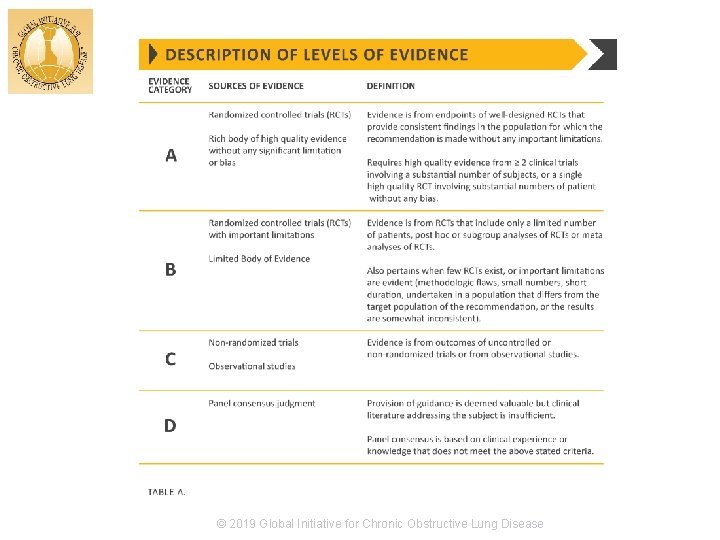
GOLD Levels of Evidence ► Levels of evidence have been assigned to evidence-based recommendations where appropriate. ► Evidence levels are indicated in boldface type enclosed in parentheses after the relevant statement e. g. , (Evidence A). ► The methodological issues concerning the use of evidence from meta-analyses were carefully considered. ► The evidence level scheme with categories A to D used throughout this document has been modified from that used in prior GOLD Reports and the evidence category definitions have been refined and updated. © 2019 Global Initiative for Chronic Obstructive Lung Disease
© 2017 Global Initiative for Chronic Obstructive Lung Disease © 2019 Global Initiative for Chronic Obstructive Lung Disease
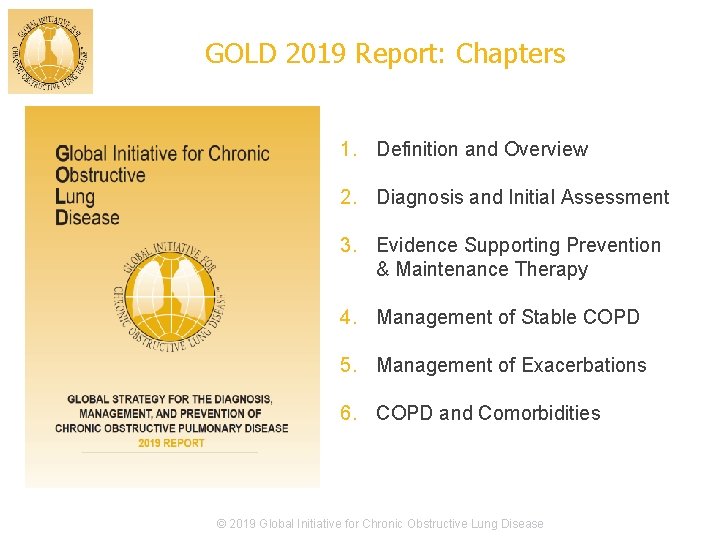
GOLD 2019 Report: Chapters 1. Definition and Overview 2. Diagnosis and Initial Assessment 3. Evidence Supporting Prevention & Maintenance Therapy 4. Management of Stable COPD 5. Management of Exacerbations 6. COPD and Comorbidities © 2019 Global Initiative for Chronic Obstructive Lung Disease
GOLD 2019 Report: Chapters 1. Definition and Overview 2. Diagnosis and Initial Assessment 3. Evidence Supporting Prevention & Maintenance Therapy 4. Management of Stable COPD 5. Management of Exacerbations 6. COPD and Comorbidities © 2019 Global Initiative for Chronic Obstructive Lung Disease
COPD Definition ► Chronic Obstructive Pulmonary Disease (COPD) is a common, preventable and treatable disease that is characterized by persistent respiratory symptoms and airflow limitation that is due to airway and/or alveolar abnormalities usually caused by significant exposure to noxious particles or gases. © 2019 Global Initiative for Chronic Obstructive Lung Disease
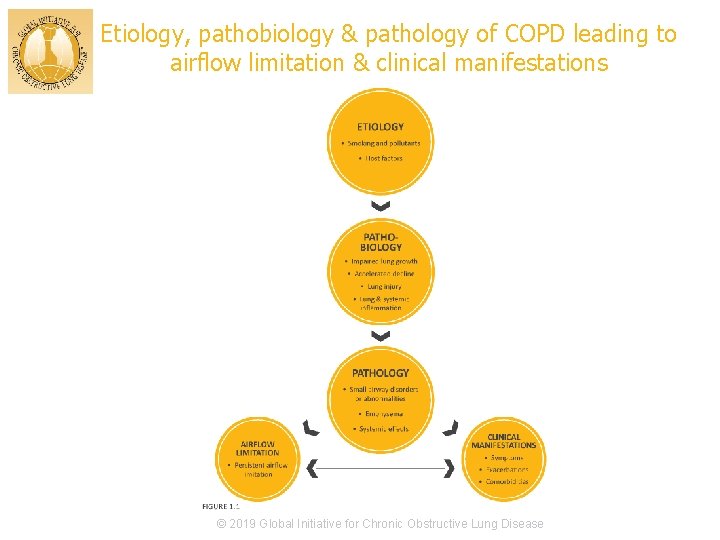
Etiology, pathobiology & pathology of COPD leading to airflow limitation & clinical manifestations © 2019 Global Initiative for Chronic Obstructive Lung Disease
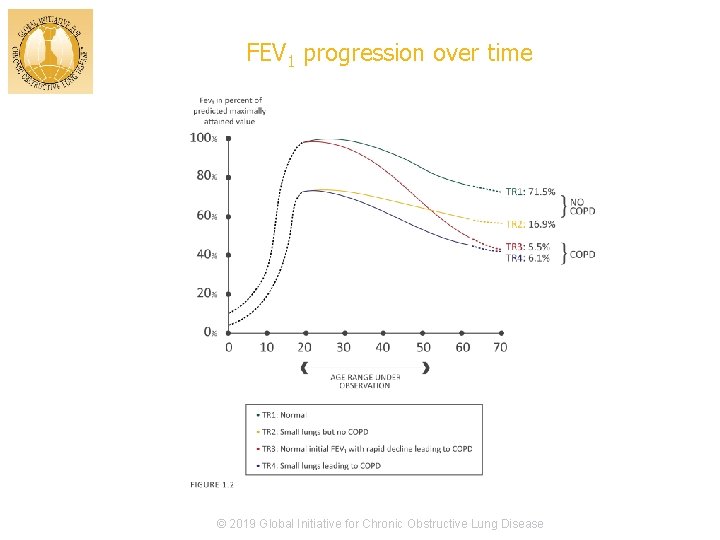
FEV 1 progression over time © 2019 Global Initiative for Chronic Obstructive Lung Disease
Definition and Overview OVERALL KEY POINTS (1 of 2): ► Chronic Obstructive Pulmonary Disease (COPD) is a common, preventable and treatable disease that is characterized by persistent respiratory symptoms and airflow limitation that is due to airway and/or alveolar abnormalities usually caused by significant exposure to noxious particles or gases. ► The most common respiratory symptoms include dyspnea, cough and/or sputum production. These symptoms may be under-reported by patients. ► The main risk factor for COPD is tobacco smoking but other environmental exposures such as biomass fuel exposure and air pollution may contribute. © 2019 Global Initiative for Chronic Obstructive Lung Disease
Definition and Overview OVERALL KEY POINTS (2 of 2): ► Besides exposures, host factors predispose individuals to develop COPD. These include genetic abnormalities, abnormal lung development and accelerated aging. ► COPD may be punctuated by periods of acute worsening of respiratory symptoms, called exacerbations. ► In most patients, COPD is associated with significant concomitant chronic diseases, which increase its morbidity and mortality. © 2019 Global Initiative for Chronic Obstructive Lung Disease
Prevalence of COPD ► Systematic review and meta-analysis (Halbert et al, 2006) ► Included studies carried out in 28 countries between 1990 and 2004 ► Prevalence of COPD was higher in smokers and exsmokers compared to non-smokers ► Higher in ≥ 40 year group compared to those < 40 ► Higher in men than women © 2017 Global Initiative for Chronic Obstructive Lung Disease
Prevalence of COPD ► Estimated 384 million COPD cases in 2010. ► Estimated global prevalence of 11. 7% (95% CI 8. 4%– 15. 0%). ► Three million deaths annually. ► With increasing prevalence of smoking in developing countries, and aging populations in high-income countries, the prevalence of COPD is expected to rise over the next 30 years. ► By 2030 predicted 4. 5 million COPD related deaths annually. © 2019 Global Initiative for Chronic Obstructive Lung Disease
Economic and Social Burden Economic burden of COPD ► COPD is associated with significant economic burden. ► COPD exacerbations account for the greatest proportion of the total COPD burden. ► European Union: Ø Direct costs of respiratory disease ~6% of the total healthcare budget Ø COPD accounting for 56% (38. 6 billion Euros) of the cost of respiratory disease. ► USA: Ø Direct costs of COPD are $32 billion Ø Indirect costs $20. 4 billion. © 2019 Global Initiative for Chronic Obstructive Lung Disease
Economic and Social Burden ► Global Burden of Disease (GBD) study ► Disability-Adjusted Life Year (DALY) = sum of years lost because of premature mortality and years of life lived with disability, adjusted for the severity of disability. ► COPD is an increasing contributor to disability and mortality around the world. ► In 2013 COPD was 5 th leading cause of DALYs lost. ► In the United States, COPD is the second leading cause of reduced DALYs, trailing only ischemic heart disease © 2019 Global Initiative for Chronic Obstructive Lung Disease
Factors that influence disease progression ► Genetic factors ► Age and gender ► Lung growth and development ► Exposure to particles ► Socioeconomic status ► Asthma & airway hyper-reactivity ► Chronic bronchitis ► Infections © 2019 Global Initiative for Chronic Obstructive Lung Disease
Pathology, pathogenesis & pathophysiology ► Pathology Ø Chronic inflammation Ø Structural changes ► Pathogenesis Ø Oxidative stress Ø Protease-antiprotease imbalance Ø Inflammatory cells Ø Inflammatory mediators Ø Peribronchiolar and interstitial fibrosis ► Pathophysiology Ø Airflow limitation and gas trapping Ø Gas exchange abnormalities Ø Mucus hypersecretion Ø Pulmonary hypertension © 2019 Global Initiative for Chronic Obstructive Lung Disease
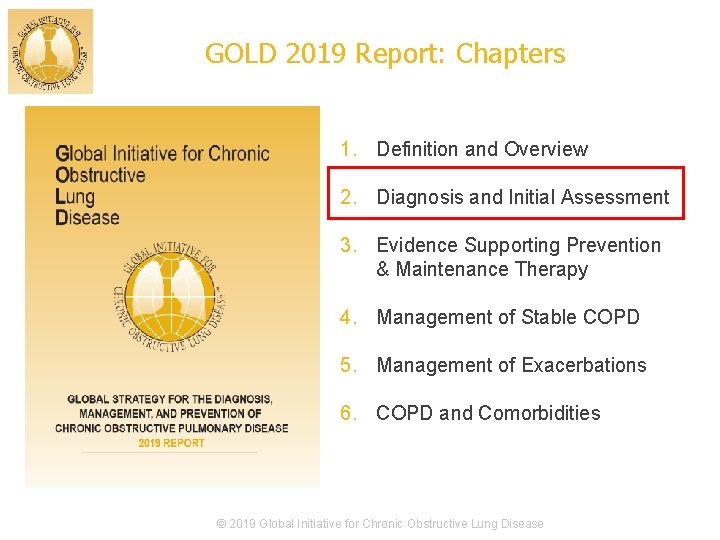
GOLD 2019 Report: Chapters 1. Definition and Overview 2. Diagnosis and Initial Assessment 3. Evidence Supporting Prevention & Maintenance Therapy 4. Management of Stable COPD 5. Management of Exacerbations 6. COPD and Comorbidities © 2019 Global Initiative for Chronic Obstructive Lung Disease
Diagnosis and Initial Assessment OVERALL KEY POINTS (1 of 2): ► COPD should be considered in any patient who has dyspnea, chronic cough or sputum production, and/or a history of exposure to risk factors for the disease. ► Spirometry is required to make the diagnosis; the presence of a post-bronchodilator FEV 1/FVC < 0. 70 confirms the presence of persistent airflow limitation. ► The goals of COPD assessment are to determine the level of airflow limitation, the impact of disease on the patient’s health status, and the risk of future events (such as exacerbations, hospital admissions, or death), in order to guide therapy. © 2019 Global Initiative for Chronic Obstructive Lung Disease
Diagnosis and Initial Assessment OVERALL KEY POINTS (2 of 2): ► Concomitant chronic diseases occur frequently in COPD patients, including cardiovascular disease, skeletal muscle dysfunction, metabolic syndrome, osteoporosis, depression, anxiety, and lung cancer. These comorbidities should be actively sought and treated appropriately when present as they can influence mortality and hospitalizations independently. © 2019 Global Initiative for Chronic Obstructive Lung Disease
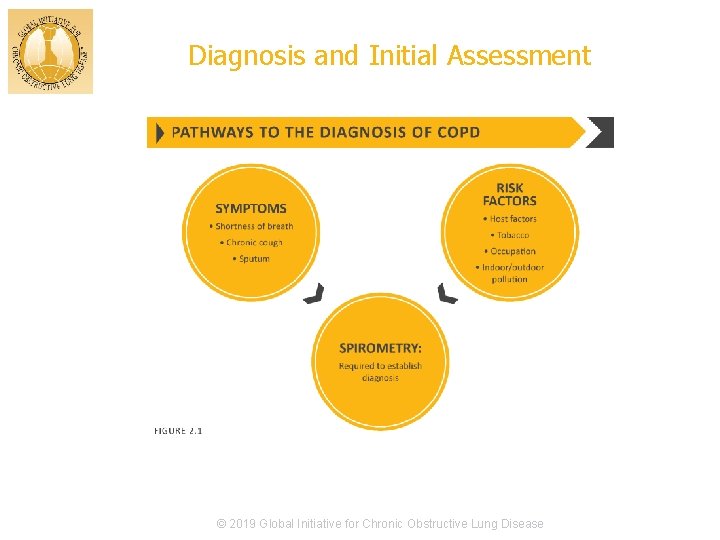
Diagnosis and Initial Assessment © 2019 Global Initiative for Chronic Obstructive Lung Disease
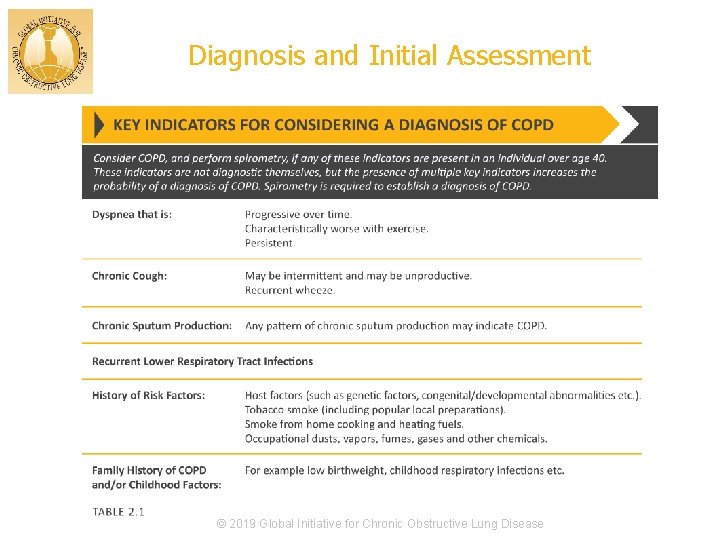
Diagnosis and Initial Assessment © 2019 Global Initiative for Chronic Obstructive Lung Disease
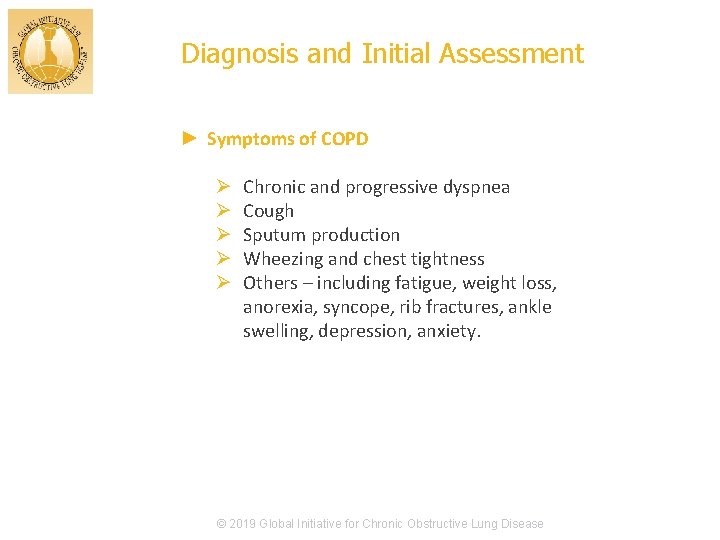
Diagnosis and Initial Assessment ► Symptoms of COPD Ø Ø Ø Chronic and progressive dyspnea Cough Sputum production Wheezing and chest tightness Others – including fatigue, weight loss, anorexia, syncope, rib fractures, ankle swelling, depression, anxiety. © 2017 Global Initiative for Chronic Obstructive Lung Disease © 2019 Global Initiative for Chronic Obstructive Lung Disease
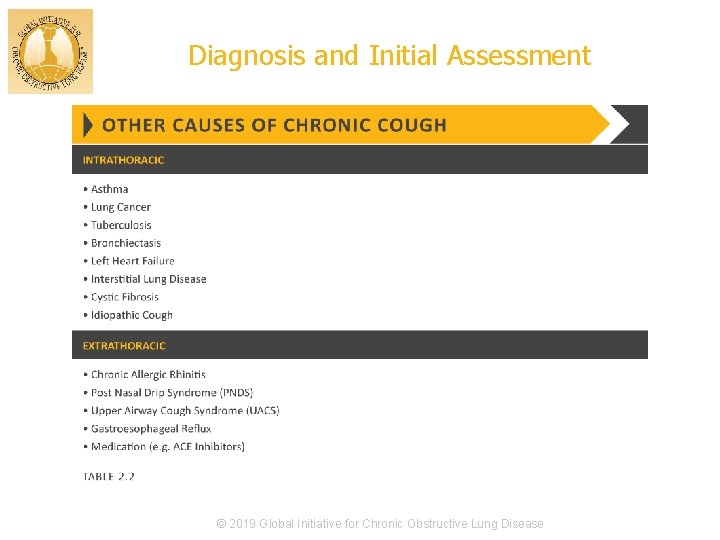
Diagnosis and Initial Assessment © 2019 Global Initiative for Chronic Obstructive Lung Disease
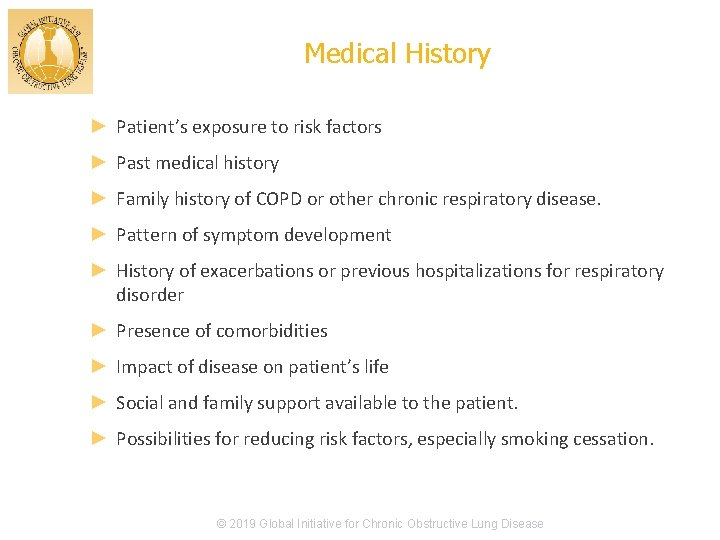
Medical History ► Patient’s exposure to risk factors ► Past medical history ► Family history of COPD or other chronic respiratory disease. ► Pattern of symptom development ► History of exacerbations or previous hospitalizations for respiratory disorder ► Presence of comorbidities ► Impact of disease on patient’s life ► Social and family support available to the patient. ► Possibilities for reducing risk factors, especially smoking cessation. © 2019 Global Initiative for Chronic Obstructive Lung Disease
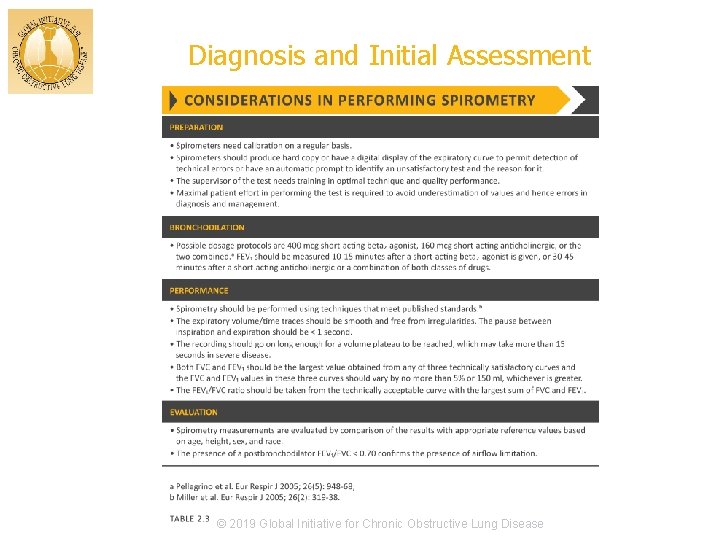
Diagnosis and Initial Assessment © 2019 Global Initiative for Chronic Obstructive Lung Disease
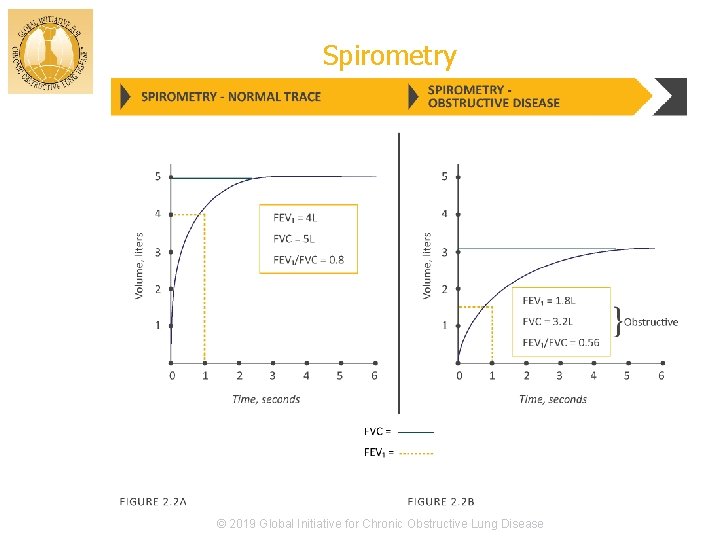
Spirometry © 2019 Global Initiative for Chronic Obstructive Lung Disease
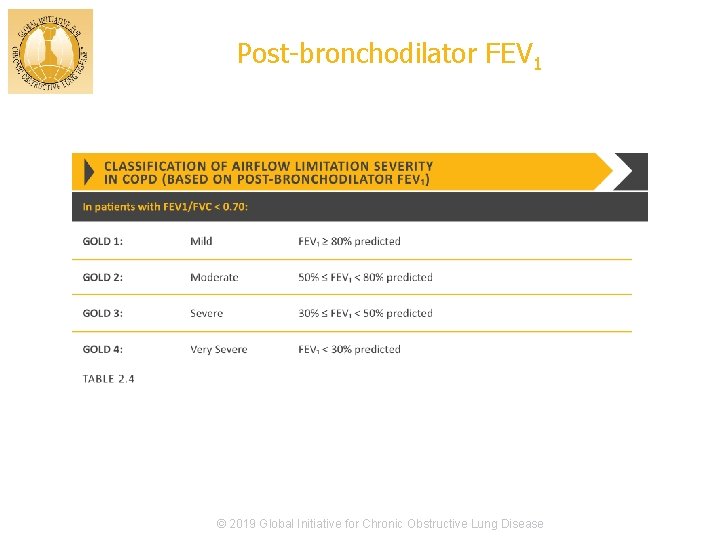
Post-bronchodilator FEV 1 © 2019 Global Initiative for Chronic Obstructive Lung Disease
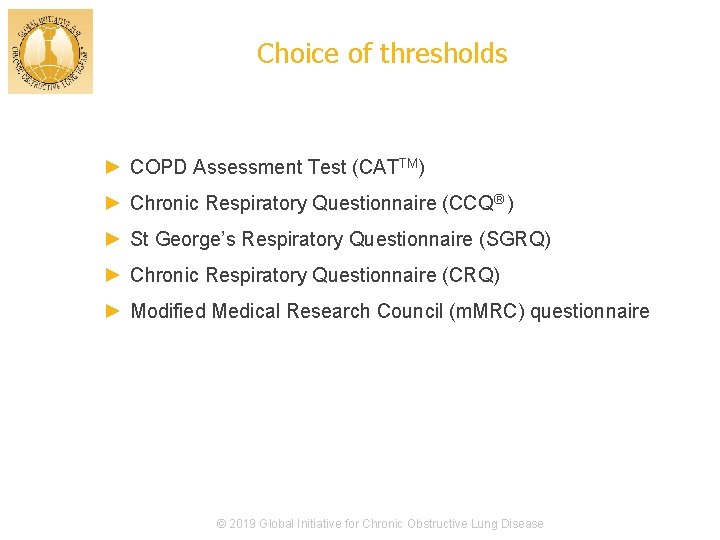
Choice of thresholds ► COPD Assessment Test (CATTM) ► Chronic Respiratory Questionnaire (CCQ® ) ► St George’s Respiratory Questionnaire (SGRQ) ► Chronic Respiratory Questionnaire (CRQ) ► Modified Medical Research Council (m. MRC) questionnaire © 2019 Global Initiative for Chronic Obstructive Lung Disease
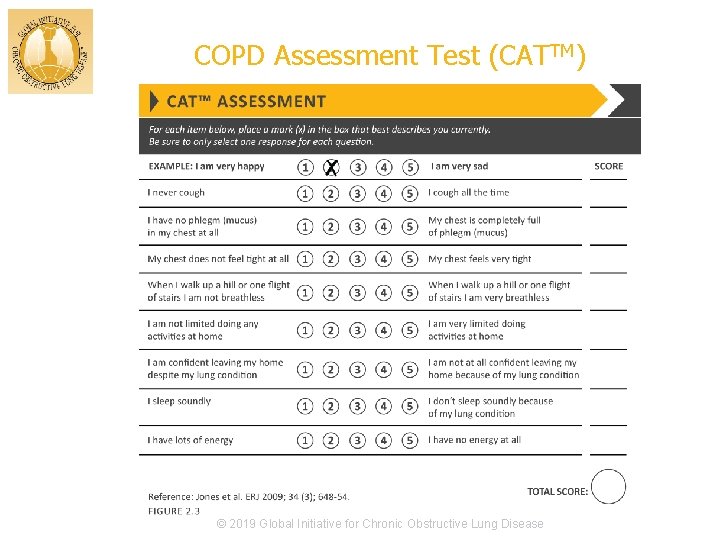
COPD Assessment Test (CATTM) © 2019 Global Initiative for Chronic Obstructive Lung Disease
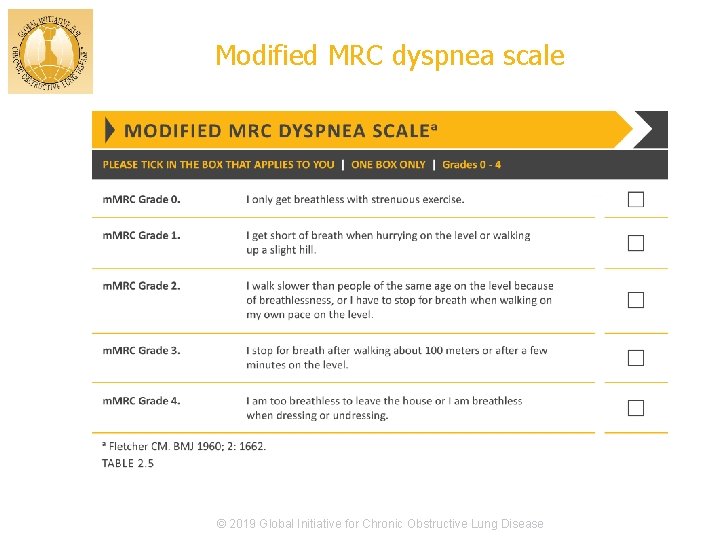
Modified MRC dyspnea scale © 2019 Global Initiative for Chronic Obstructive Lung Disease
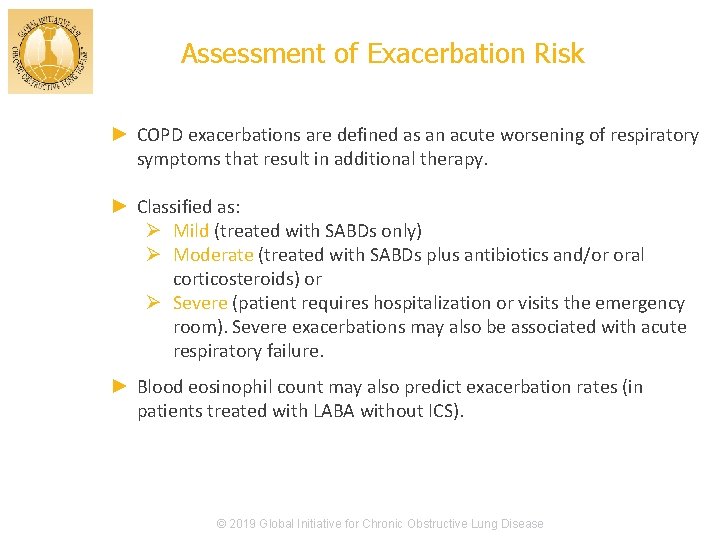
Assessment of Exacerbation Risk ► COPD exacerbations are defined as an acute worsening of respiratory symptoms that result in additional therapy. ► Classified as: Ø Mild (treated with SABDs only) Ø Moderate (treated with SABDs plus antibiotics and/or oral corticosteroids) or Ø Severe (patient requires hospitalization or visits the emergency room). Severe exacerbations may also be associated with acute respiratory failure. ► Blood eosinophil count may also predict exacerbation rates (in patients treated with LABA without ICS). © 2019 Global Initiative for Chronic Obstructive Lung Disease
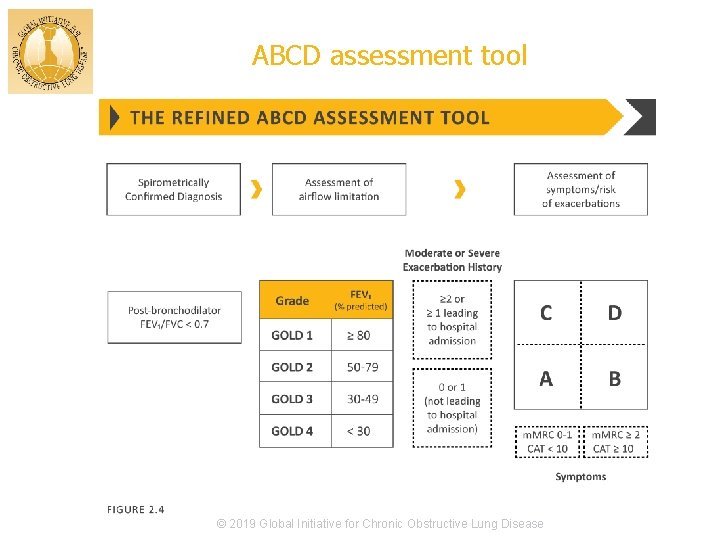
ABCD assessment tool © 2019 Global Initiative for Chronic Obstructive Lung Disease
ABCD Assessment Tool Example ► Consider two patients: Ø Both patients with FEV 1 < 30% of predicted Ø Both with CAT scores of 18 Ø But, one with 0 exacerbations in the past year and the other with 3 exacerbations in the past year. ► Both would have been labelled GOLD D in the prior classification scheme. ► With the new proposed scheme, the subject with 3 exacerbations in the past year would be labelled GOLD grade 4, group D. ► The other patient, who has had no exacerbations, would be classified as GOLD grade 4, group B. © 2019 Global Initiative for Chronic Obstructive Lung Disease
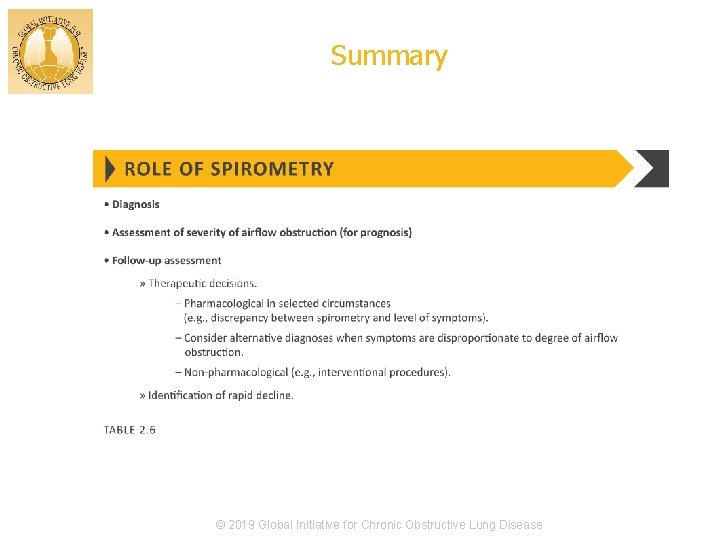
Summary © 2019 Global Initiative for Chronic Obstructive Lung Disease
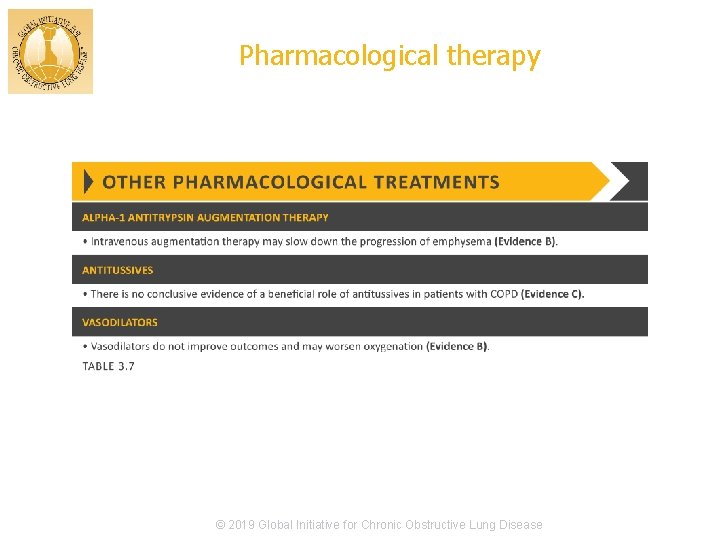
Alpha-1 antitrypsin deficiency (AATD) AATD screening ► The World Health Organization recommends that all patients with a diagnosis of COPD should be screened once especially in areas with high AATD prevalence. ► AATD patients are typically < 45 years with panlobular basal emphysema ► Delay in diagnosis in older AATD patients presents as more typical distribution of emphysema (centrilobular apical). ► A low concentration (< 20% normal) is highly suggestive of homozygous deficiency. © 2019 Global Initiative for Chronic Obstructive Lung Disease

© 2019 Global Initiative for Chronic Obstructive Lung Disease
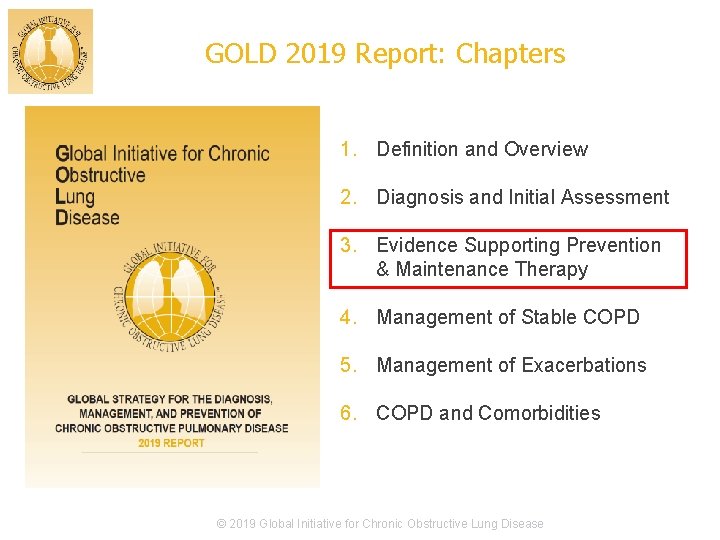
GOLD 2019 Report: Chapters 1. Definition and Overview 2. Diagnosis and Initial Assessment 3. Evidence Supporting Prevention & Maintenance Therapy 4. Management of Stable COPD 5. Management of Exacerbations 6. COPD and Comorbidities © 2019 Global Initiative for Chronic Obstructive Lung Disease
Prevention & Maintenance Therapy OVERALL KEY POINTS (1 of 3): ► Smoking cessation is key. Pharmacotherapy and nicotine replacement reliably increase long-term smoking abstinence rates. Legislative smoking bans and counselling, delivered by healthcare professionals improve quit rates. ► The effectiveness and safety of e-cigarettes as a smoking cessation aid is uncertain at present. ► Pharmacologic therapy can reduce COPD symptoms, reduce the frequency and severity of exacerbations, and improve health status and exercise tolerance. ► Each pharmacologic treatment regimen should be individualized and guided by the severity of symptoms, risk of exacerbations, side-effects, comorbidities, drug availability and cost, and the patient’s response, preference and ability to use various drug delivery devices. © 2017 Global Initiative for Chronic Obstructive Lung Disease © 2019 Global Initiative for Chronic Obstructive Lung Disease
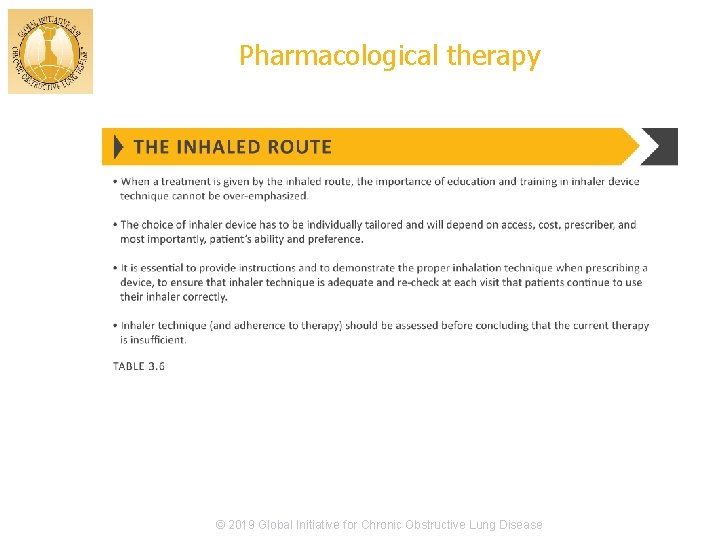
Prevention & Maintenance Therapy OVERALL KEY POINTS (2 of 3): ► Inhaler technique needs to be assessed regularly. ► Influenza vaccination decreases the incidence of lower respiratory tract infections. ► Pneumococcal vaccination decreases lower respiratory tract infections. ► Pulmonary rehabilitation improves symptoms, quality of life, and physical and emotional participation in everyday activities. ► In patients with severe resting chronic hypoxemia, long-term oxygen therapy improves survival. © 2017 Global Initiative for Chronic Obstructive Lung Disease © 2019 Global Initiative for Chronic Obstructive Lung Disease
Prevention & Maintenance Therapy OVERALL KEY POINTS (3 of 3): ► In patients with stable COPD and resting or exercise-induced moderate desaturation, long-term oxygen treatment should not be prescribed routinely. However, individual patient factors must be considered when evaluating the patient’s need for supplemental oxygen. ► In patients with severe chronic hypercapnia and a history of hospitalization for acute respiratory failure, long-term non-invasive ventilation may decrease mortality and prevent re-hospitalization. ► In select patients with advanced emphysema refractory to optimized medical care, surgical or bronchoscopic interventional treatments may be beneficial. ► Palliative approaches are effective in controlling symptoms in advanced COPD. © 2017 Global Initiative for Chronic Obstructive Lung Disease © 2019 Global Initiative for Chronic Obstructive Lung Disease
Smoking Cessation ► Smoking cessation has the greatest capacity to influence the natural history of COPD. ► If effective resources and time are dedicated to smoking cessation, long-term quit success rates of up to 25% can be achieved. © 2017 Global Initiative for Chronic Obstructive Lung Disease © 2019 Global Initiative for Chronic Obstructive Lung Disease
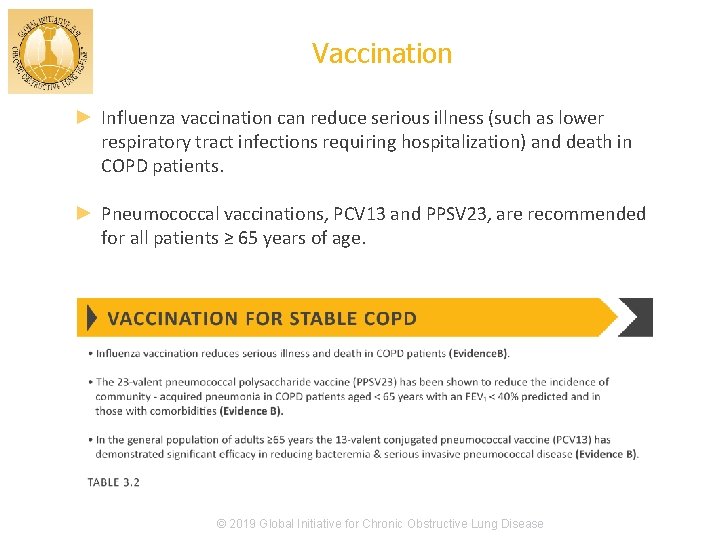
Vaccination ► Influenza vaccination can reduce serious illness (such as lower respiratory tract infections requiring hospitalization) and death in COPD patients. ► Pneumococcal vaccinations, PCV 13 and PPSV 23, are recommended for all patients ≥ 65 years of age. © 2017 Global Initiative for Chronic Obstructive Lung Disease © 2019 Global Initiative for Chronic Obstructive Lung Disease
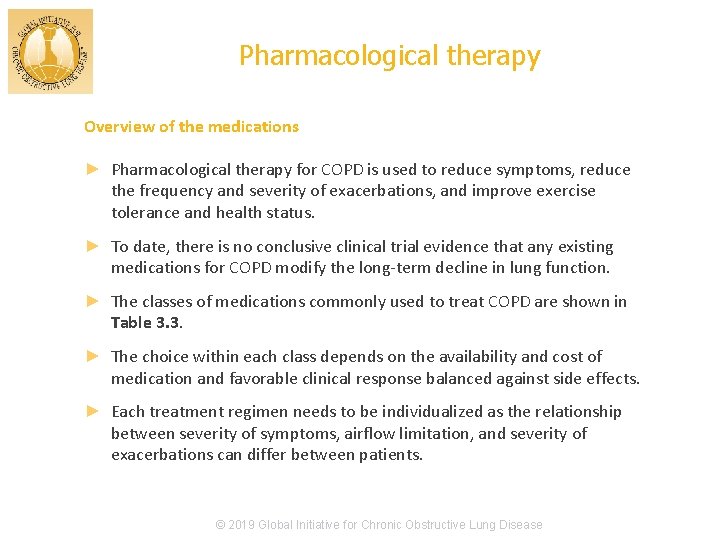
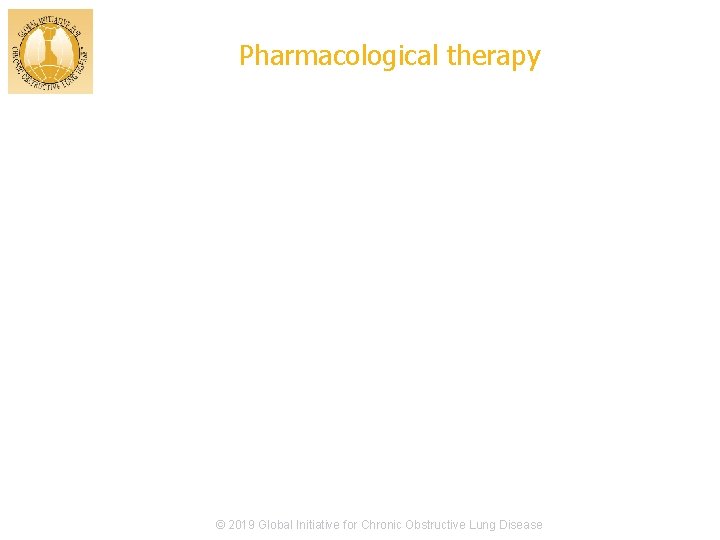
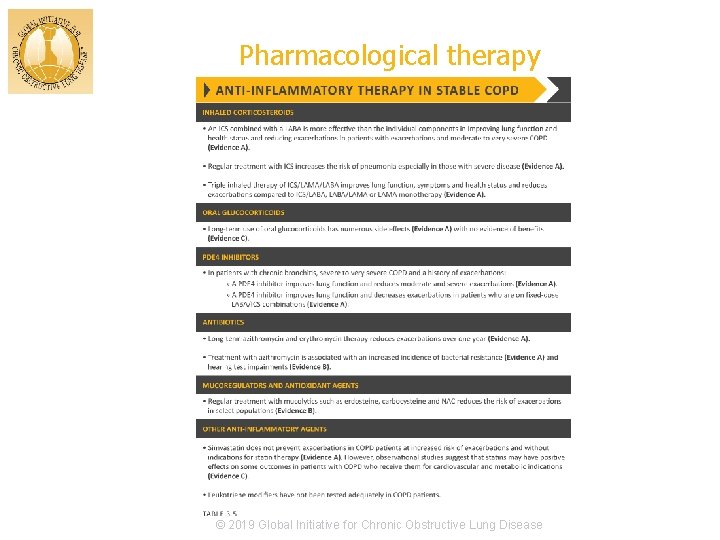
Pharmacological therapy Overview of the medications ► Pharmacological therapy for COPD is used to reduce symptoms, reduce the frequency and severity of exacerbations, and improve exercise tolerance and health status. ► To date, there is no conclusive clinical trial evidence that any existing medications for COPD modify the long-term decline in lung function. ► The classes of medications commonly used to treat COPD are shown in Table 3. 3. ► The choice within each class depends on the availability and cost of medication and favorable clinical response balanced against side effects. ► Each treatment regimen needs to be individualized as the relationship between severity of symptoms, airflow limitation, and severity of exacerbations can differ between patients. © 2019 Global Initiative for Chronic Obstructive Lung Disease
Pharmacological therapy © 2019 Global Initiative for Chronic Obstructive Lung Disease
Pharmacological therapy © 2019 Global Initiative for Chronic Obstructive Lung Disease
Pharmacological therapy © 2019 Global Initiative for Chronic Obstructive Lung Disease
Pharmacological therapy © 2019 Global Initiative for Chronic Obstructive Lung Disease
Pharmacological therapy © 2019 Global Initiative for Chronic Obstructive Lung Disease
Pharmacological therapy © 2019 Global Initiative for Chronic Obstructive Lung Disease
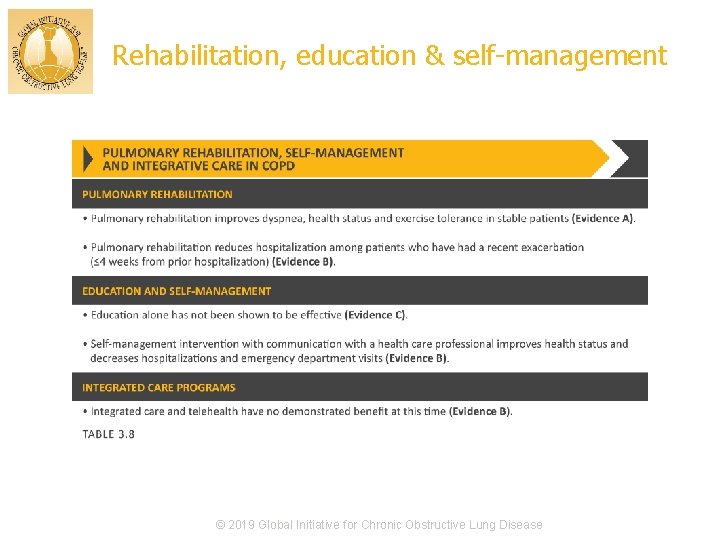
Rehabilitation, education & self-management © 2019 Global Initiative for Chronic Obstructive Lung Disease
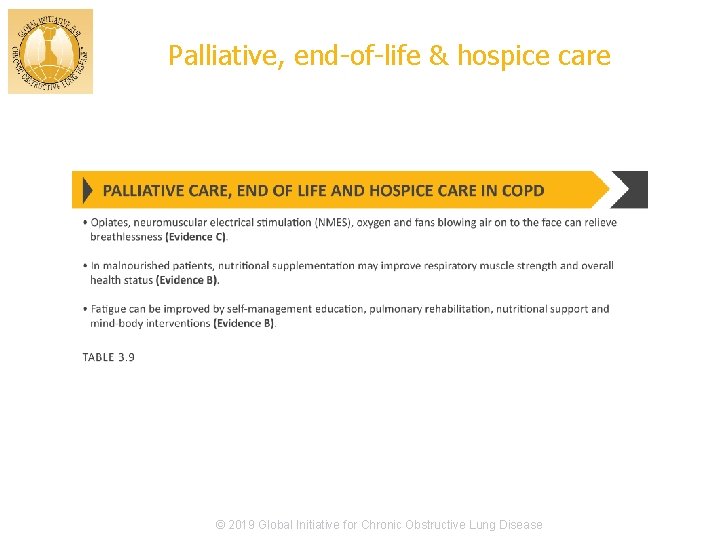
Palliative, end-of-life & hospice care © 2019 Global Initiative for Chronic Obstructive Lung Disease
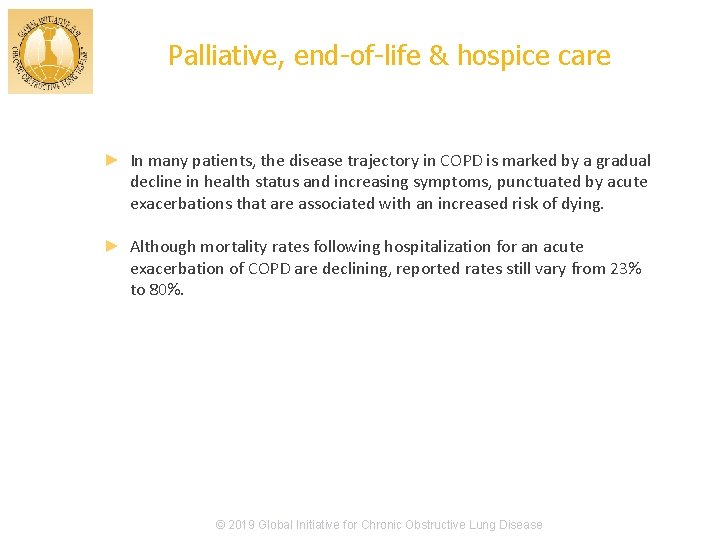
Palliative, end-of-life & hospice care ► In many patients, the disease trajectory in COPD is marked by a gradual decline in health status and increasing symptoms, punctuated by acute exacerbations that are associated with an increased risk of dying. ► Although mortality rates following hospitalization for an acute exacerbation of COPD are declining, reported rates still vary from 23% to 80%. © 2019 Global Initiative for Chronic Obstructive Lung Disease
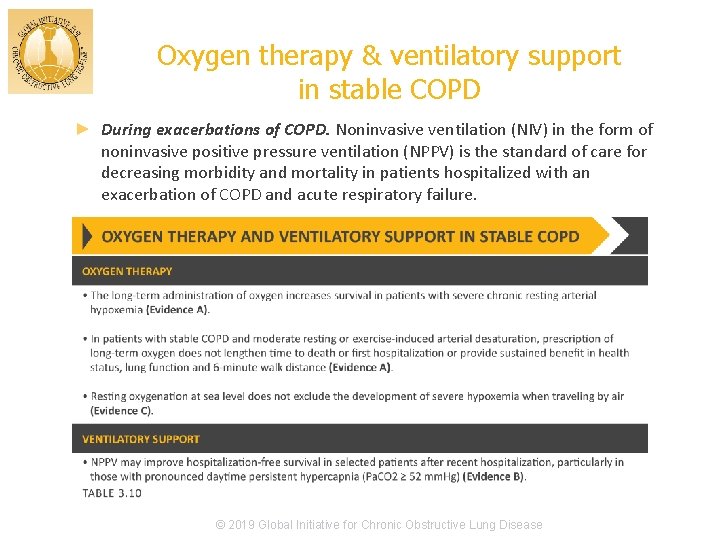
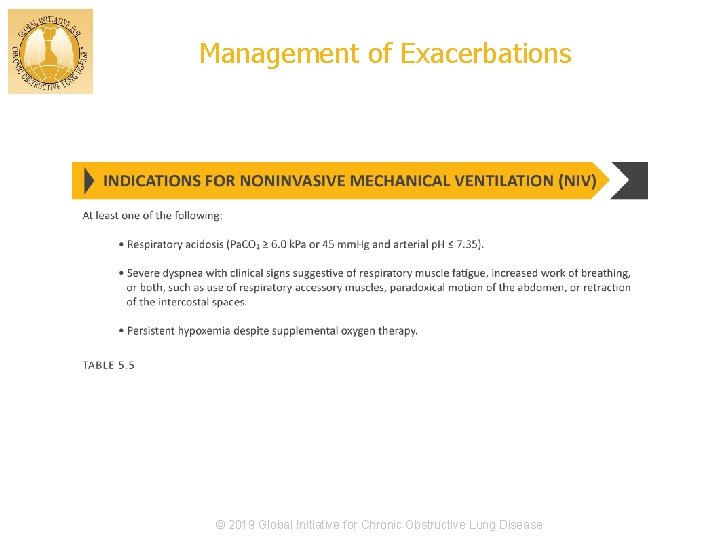
Oxygen therapy & ventilatory support in stable COPD ► During exacerbations of COPD. Noninvasive ventilation (NIV) in the form of noninvasive positive pressure ventilation (NPPV) is the standard of care for decreasing morbidity and mortality in patients hospitalized with an exacerbation of COPD and acute respiratory failure. © 2019 Global Initiative for Chronic Obstructive Lung Disease
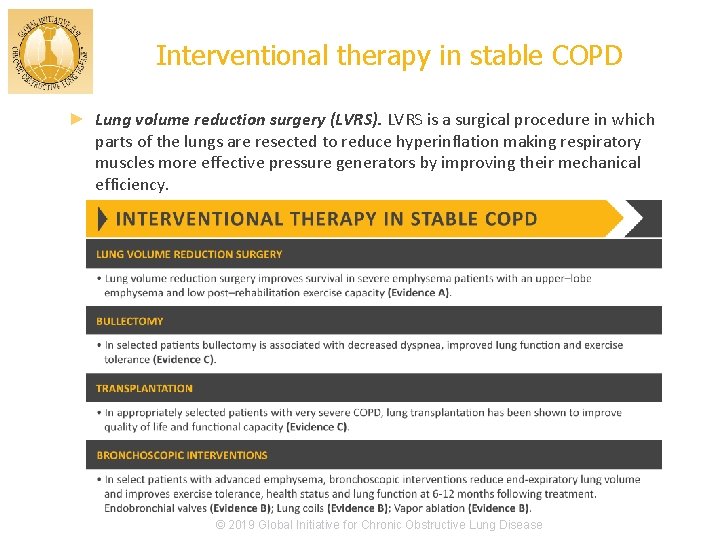
Interventional therapy in stable COPD ► Lung volume reduction surgery (LVRS). LVRS is a surgical procedure in which parts of the lungs are resected to reduce hyperinflation making respiratory muscles more effective pressure generators by improving their mechanical efficiency. © 2019 Global Initiative for Chronic Obstructive Lung Disease
GOLD 2019 Report: Chapters 1. Definition and Overview 2. Diagnosis and Initial Assessment 3. Evidence Supporting Prevention & Maintenance Therapy 4. Management of Stable COPD 5. Management of Exacerbations 6. COPD and Comorbidities © 2019 Global Initiative for Chronic Obstructive Lung Disease
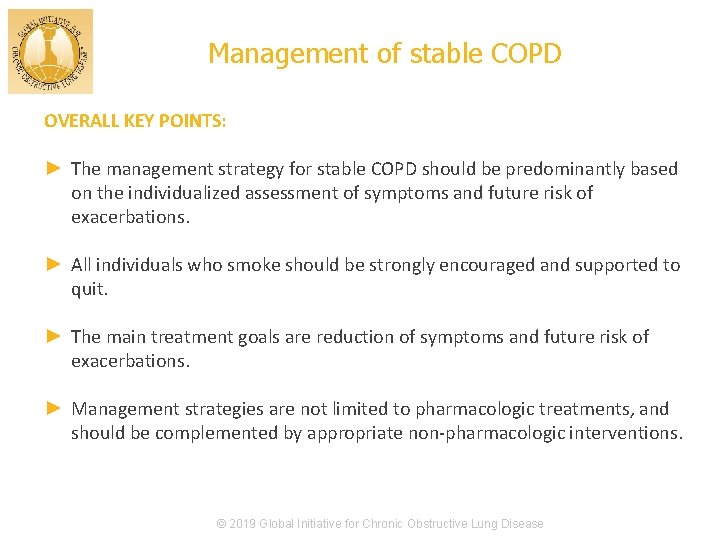
Management of stable COPD OVERALL KEY POINTS: ► The management strategy for stable COPD should be predominantly based on the individualized assessment of symptoms and future risk of exacerbations. ► All individuals who smoke should be strongly encouraged and supported to quit. ► The main treatment goals are reduction of symptoms and future risk of exacerbations. ► Management strategies are not limited to pharmacologic treatments, and should be complemented by appropriate non-pharmacologic interventions. © 2017 Global Initiative for Chronic Obstructive Lung Disease © 2019 Global Initiative for Chronic Obstructive Lung Disease
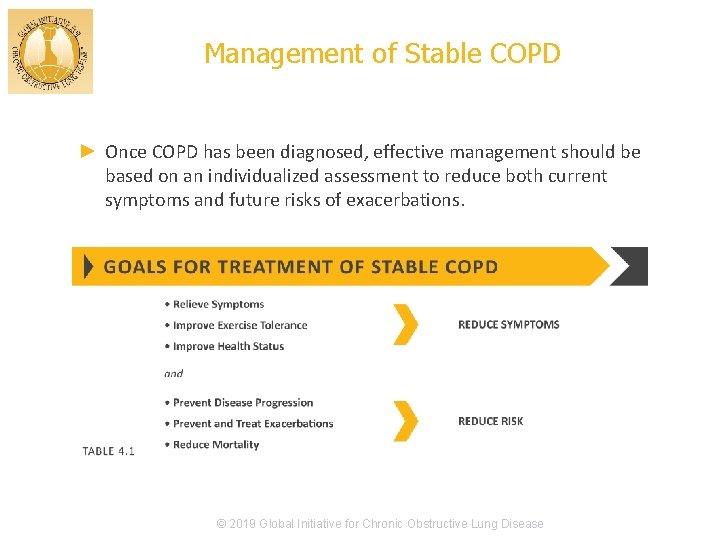
Management of Stable COPD ► Once COPD has been diagnosed, effective management should be based on an individualized assessment to reduce both current symptoms and future risks of exacerbations. © 2017 Global Initiative for Chronic Obstructive Lung Disease © 2019 Global Initiative for Chronic Obstructive Lung Disease
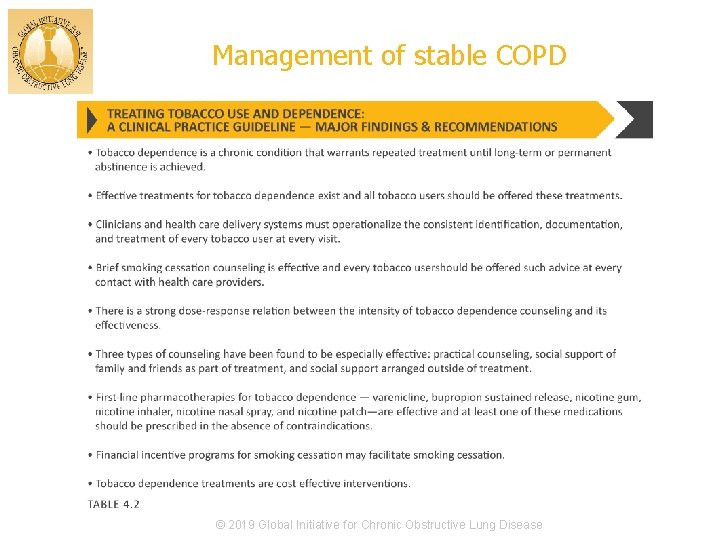
Management of stable COPD © 2019 Global Initiative for Chronic Obstructive Lung Disease
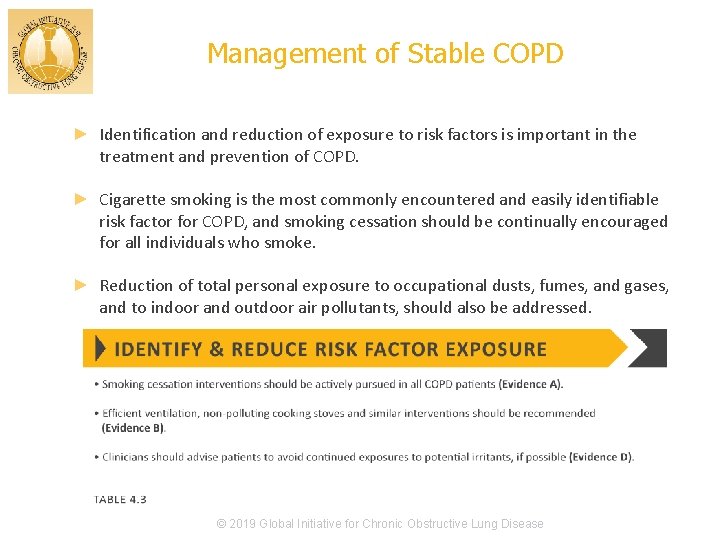
Management of Stable COPD ► Identification and reduction of exposure to risk factors is important in the treatment and prevention of COPD. ► Cigarette smoking is the most commonly encountered and easily identifiable risk factor for COPD, and smoking cessation should be continually encouraged for all individuals who smoke. ► Reduction of total personal exposure to occupational dusts, fumes, and gases, and to indoor and outdoor air pollutants, should also be addressed. © 2017 Global Initiative for Chronic Obstructive Lung Disease © 2019 Global Initiative for Chronic Obstructive Lung Disease
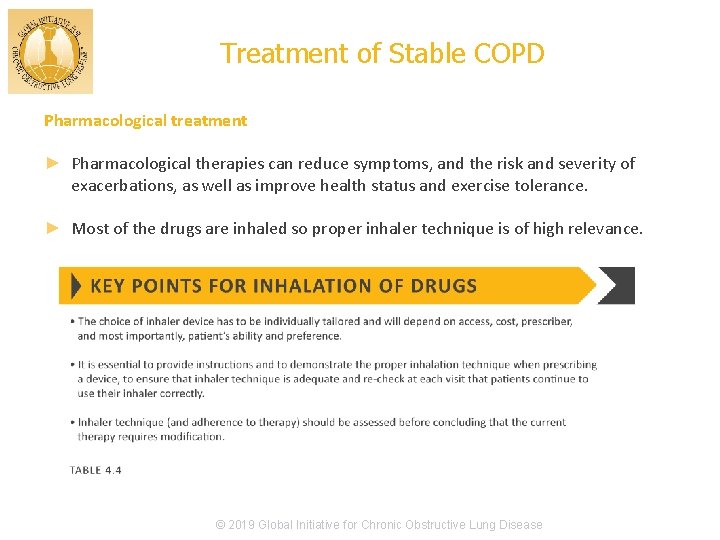
Treatment of Stable COPD Pharmacological treatment ► Pharmacological therapies can reduce symptoms, and the risk and severity of exacerbations, as well as improve health status and exercise tolerance. ► Most of the drugs are inhaled so proper inhaler technique is of high relevance. © 2017 Global Initiative for Chronic Obstructive Lung Disease © 2019 Global Initiative for Chronic Obstructive Lung Disease
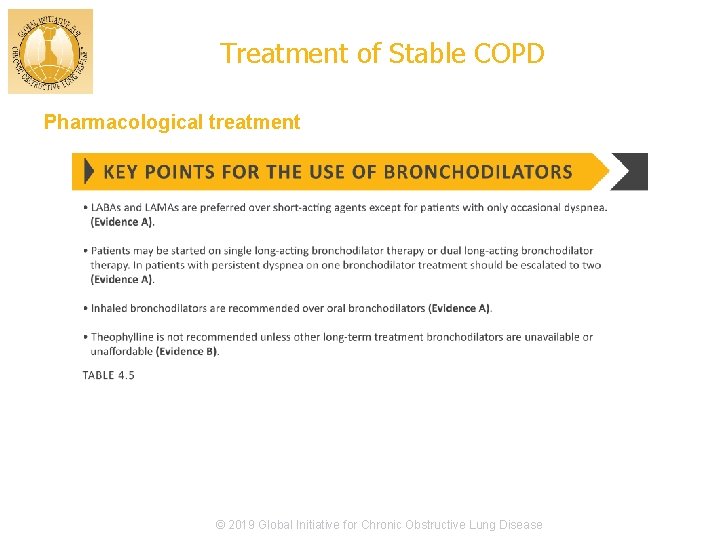
Treatment of Stable COPD Pharmacological treatment © 2017 Global Initiative for Chronic Obstructive Lung Disease © 2019 Global Initiative for Chronic Obstructive Lung Disease
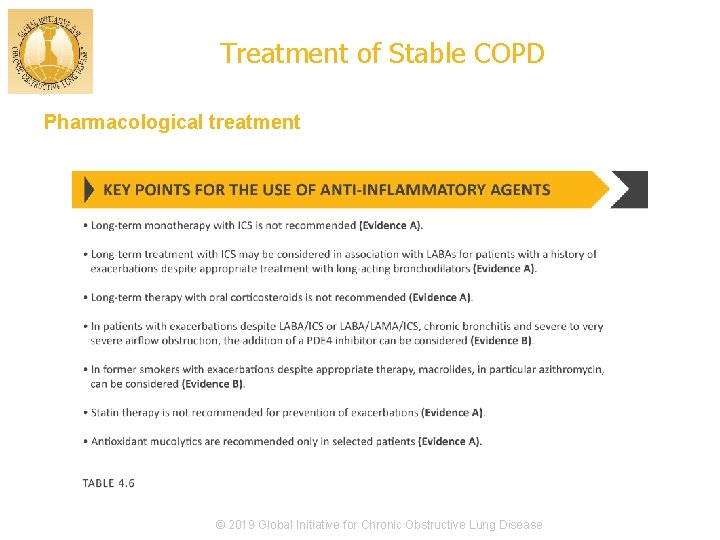
Treatment of Stable COPD Pharmacological treatment © 2017 Global Initiative for Chronic Obstructive Lung Disease © 2019 Global Initiative for Chronic Obstructive Lung Disease
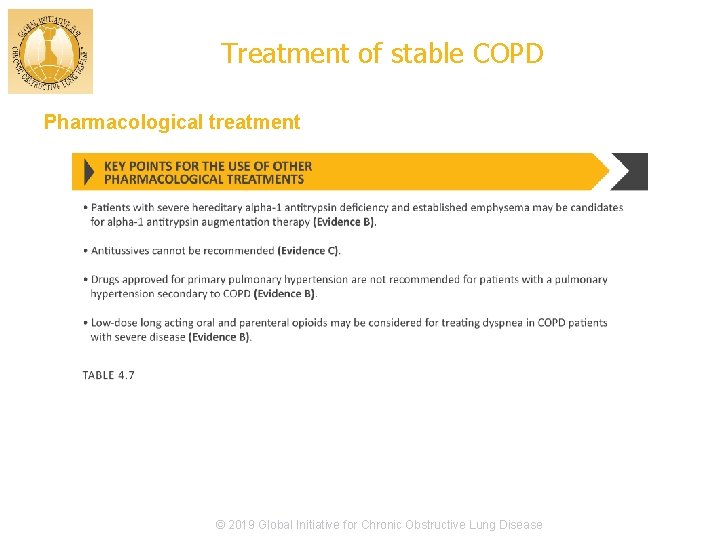
Treatment of stable COPD Pharmacological treatment © 2017 Global Initiative for Chronic Obstructive Lung Disease © 2019 Global Initiative for Chronic Obstructive Lung Disease
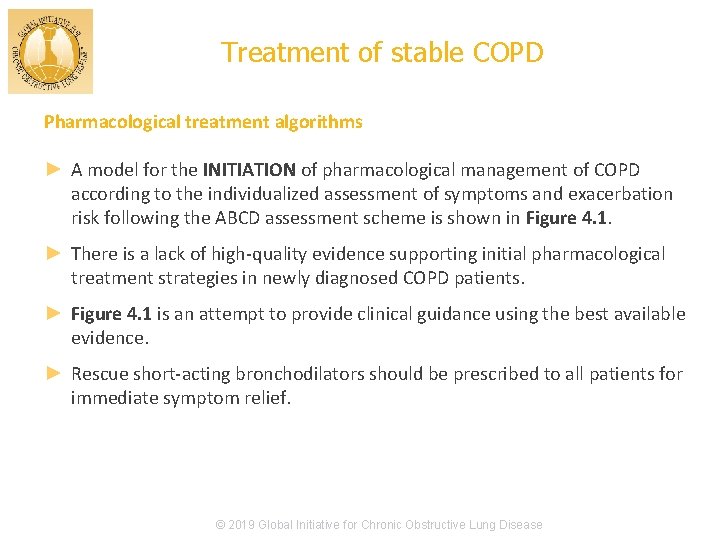
Treatment of stable COPD Pharmacological treatment algorithms ► A model for the INITIATION of pharmacological management of COPD according to the individualized assessment of symptoms and exacerbation risk following the ABCD assessment scheme is shown in Figure 4. 1. ► There is a lack of high-quality evidence supporting initial pharmacological treatment strategies in newly diagnosed COPD patients. ► Figure 4. 1 is an attempt to provide clinical guidance using the best available evidence. ► Rescue short-acting bronchodilators should be prescribed to all patients for immediate symptom relief. . © 2019 Global Initiative for Chronic Obstructive Lung Disease
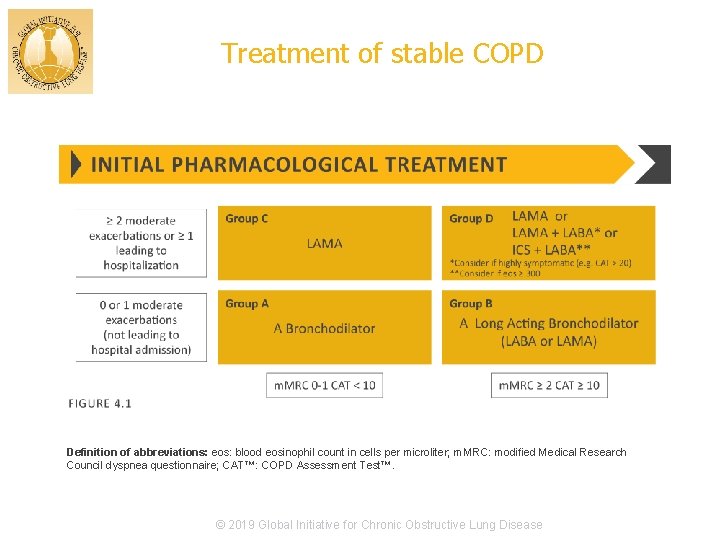
Treatment of stable COPD Definition of abbreviations: eos: blood eosinophil count in cells per microliter; m. MRC: modified Medical Research Council dyspnea questionnaire; CAT™: COPD Assessment Test™. © 2017 Global Initiative for Chronic Obstructive Lung Disease © 2019 Global Initiative for Chronic Obstructive Lung Disease

Treatment of stable COPD ► Following implementation of therapy, patients should be reassessed for attainment of treatment goals and identification of any barriers for successful treatment (Figure 4. 2). ► Following review of the patient response to treatment initiation, adjustments in pharmacological treatment may be needed. © 2017 Global Initiative for Chronic Obstructive Lung Disease © 2019 Global Initiative for Chronic Obstructive Lung Disease
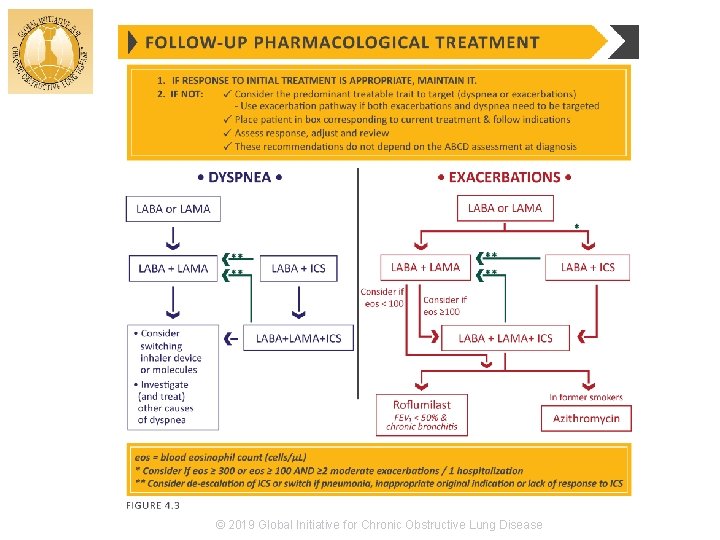
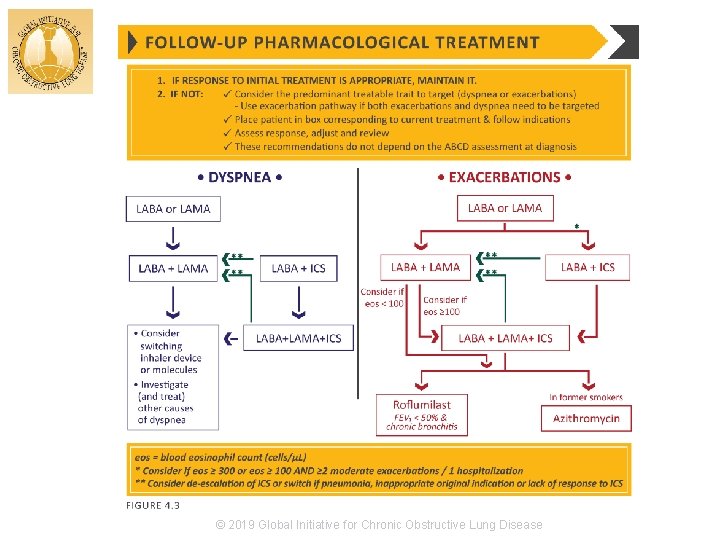
Treatment of stable COPD Follow-up pharmacological treatment ► A separate algorithm is provided for FOLLOW-UP treatment, where the management is still based on symptoms and exacerbations, but the recommendations do not depend on the patient’s GOLD group at diagnosis (Figure 4. 3). ► These follow-up recommendations are designed to facilitate management of patients taking maintenance treatment(s), whether early after initial treatment or after years of follow-up. ► These recommendations incorporate recent evidence from clinical trials and the use of peripheral blood eosinophil counts as a biomarker to guide the use of ICS therapy for exacerbation prevention. © 2019 Global Initiative for Chronic Obstructive Lung Disease
© 2017 Global Initiative for Chronic Obstructive Lung Disease © 2019 Global Initiative for Chronic Obstructive Lung Disease
Treatment of stable COPD ► Figure 4. 3 suggests escalation and de-escalation strategies based on available efficacy as well as safety data. ► The response to treatment escalation should always be reviewed, and de-escalation should be considered if there is a lack of clinical benefit and/or side effects occur. ► De-escalation may also be considered in COPD patients receiving treatment who return with resolution of some symptoms that subsequently may require less therapy. ► Patients, in whom treatment modification is considered, in particular de-escalation, should be undertaken under close medical supervision. ► We are fully aware that treatment escalation has not been systematically tested; trials of de-escalation are also limited and only include ICS. © 2017 Global Initiative for Chronic Obstructive Lung Disease © 2019 Global Initiative for Chronic Obstructive Lung Disease
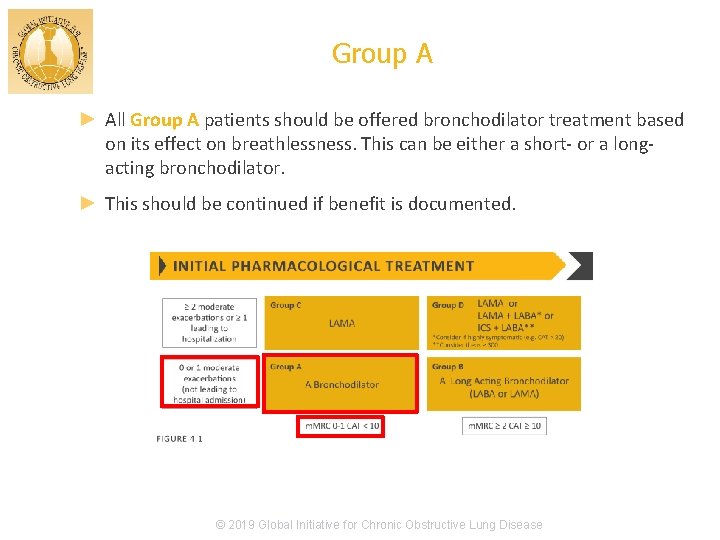
Group A ► All Group A patients should be offered bronchodilator treatment based on its effect on breathlessness. This can be either a short- or a longacting bronchodilator. ► This should be continued if benefit is documented. © 2017 Global Initiative for Chronic Obstructive Lung Disease © 2019 Global Initiative for Chronic Obstructive Lung Disease
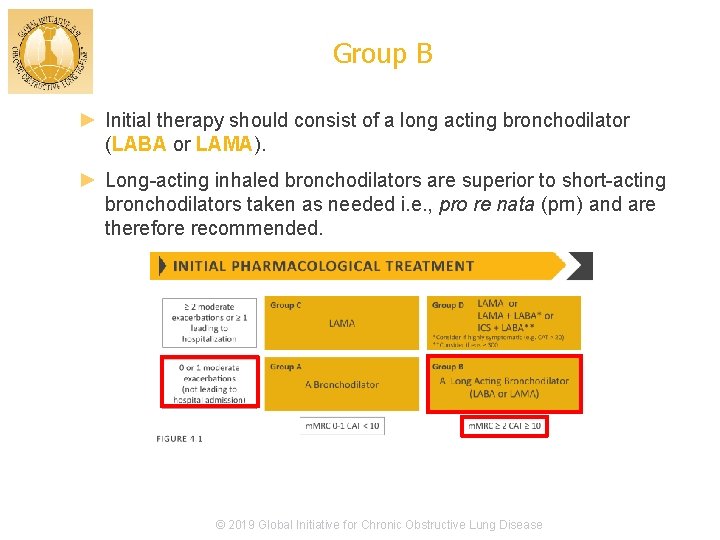
Group B ► Initial therapy should consist of a long acting bronchodilator (LABA or LAMA). ► Long-acting inhaled bronchodilators are superior to short-acting bronchodilators taken as needed i. e. , pro re nata (prn) and are therefore recommended. © 2017 Global Initiative for Chronic Obstructive Lung Disease © 2019 Global Initiative for Chronic Obstructive Lung Disease
Group B ► There is no evidence to recommend one class of long-acting bronchodilators over another for initial relief of symptoms in this group of patients. ► In the individual patient, the choice should depend on the patient’s perception of symptom relief. ► For patients with severe breathlessness initial therapy with two bronchodilators may be considered. ► Group B patients are likely to have comorbidities that may add to their symptomatology and impact their prognosis, and these possibilities should be investigated. © 2017 Global Initiative for Chronic Obstructive Lung Disease © 2019 Global Initiative for Chronic Obstructive Lung Disease
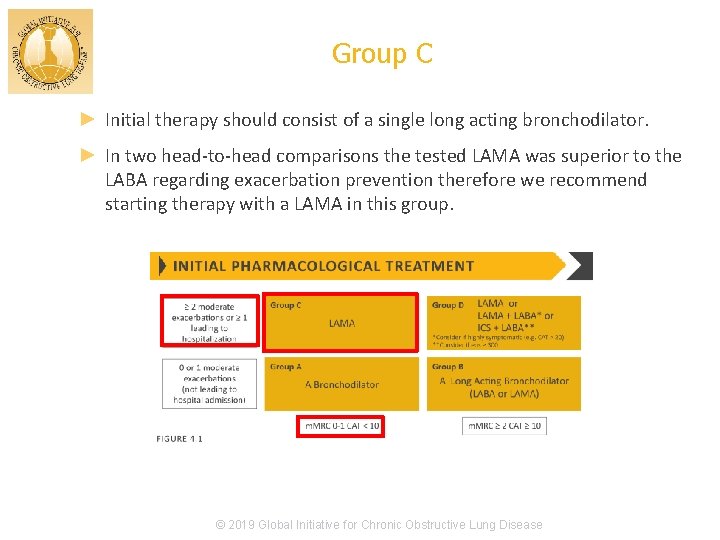
Group C ► Initial therapy should consist of a single long acting bronchodilator. ► In two head-to-head comparisons the tested LAMA was superior to the LABA regarding exacerbation prevention therefore we recommend starting therapy with a LAMA in this group. © 2017 Global Initiative for Chronic Obstructive Lung Disease © 2019 Global Initiative for Chronic Obstructive Lung Disease
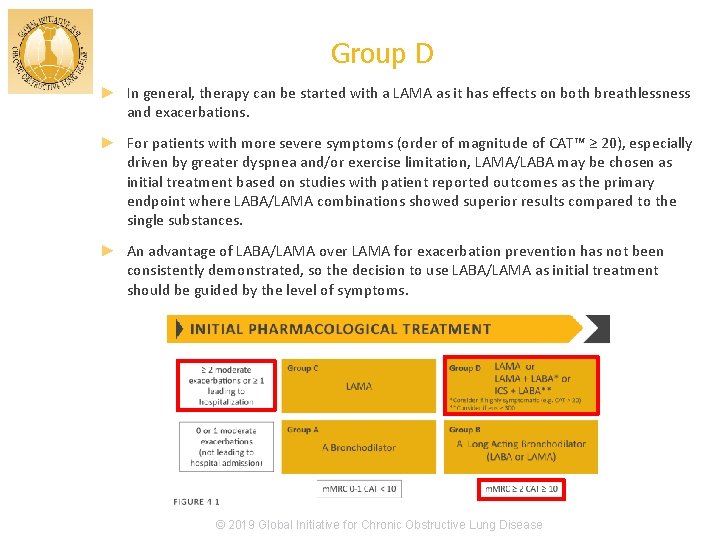
Group D ► In general, therapy can be started with a LAMA as it has effects on both breathlessness and exacerbations. ► For patients with more severe symptoms (order of magnitude of CAT™ ≥ 20), especially driven by greater dyspnea and/or exercise limitation, LAMA/LABA may be chosen as initial treatment based on studies with patient reported outcomes as the primary endpoint where LABA/LAMA combinations showed superior results compared to the single substances. ► An advantage of LABA/LAMA over LAMA for exacerbation prevention has not been consistently demonstrated, so the decision to use LABA/LAMA as initial treatment should be guided by the level of symptoms. © 2017 Global Initiative for Chronic Obstructive Lung Disease © 2019 Global Initiative for Chronic Obstructive Lung Disease
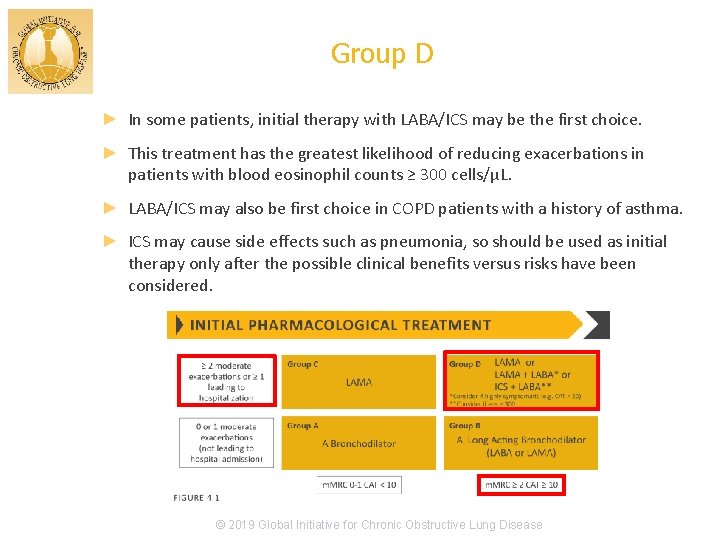
Group D ► In some patients, initial therapy with LABA/ICS may be the first choice. ► This treatment has the greatest likelihood of reducing exacerbations in patients with blood eosinophil counts ≥ 300 cells/µL. ► LABA/ICS may also be first choice in COPD patients with a history of asthma. ► ICS may cause side effects such as pneumonia, so should be used as initial therapy only after the possible clinical benefits versus risks have been considered. © 2017 Global Initiative for Chronic Obstructive Lung Disease © 2019 Global Initiative for Chronic Obstructive Lung Disease
© 2017 Global Initiative for Chronic Obstructive Lung Disease © 2019 Global Initiative for Chronic Obstructive Lung Disease
FOLLOW-UP pharmacological treatment ► The follow-up pharmacological treatment algorithm (Figure 4. 3) can be applied to any patient who is already taking maintenance treatment(s) irrespective of the GOLD group allocated at treatment initiation. ► The need to treat primarily dyspnea/exercise limitation or prevent exacerbations further should be evaluated. ► If a change in treatment is considered necessary then select the corresponding algorithm for dyspnea or exacerbations. ► Identify which box corresponds to the patient’s the current treatment. ► The exacerbation algorithm should also be used for patients who require a change in treatment for both dyspnea and exacerbations. © 2017 Global Initiative for Chronic Obstructive Lung Disease © 2019 Global Initiative for Chronic Obstructive Lung Disease
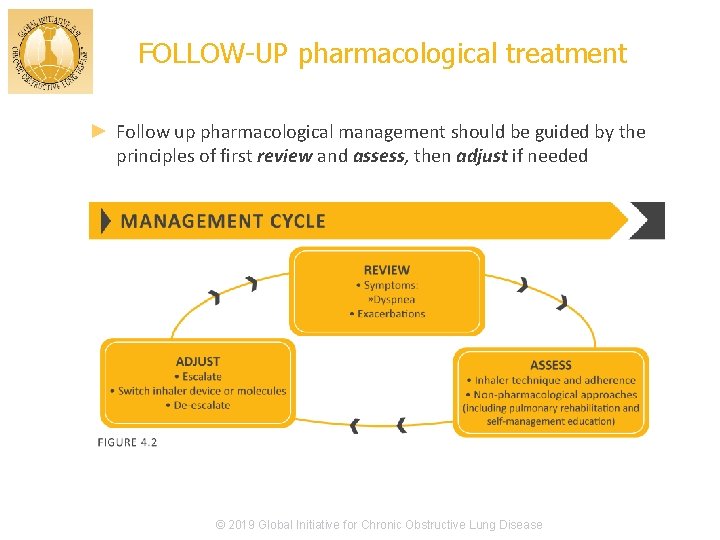
FOLLOW-UP pharmacological treatment ► Follow up pharmacological management should be guided by the principles of first review and assess, then adjust if needed © 2017 Global Initiative for Chronic Obstructive Lung Disease © 2019 Global Initiative for Chronic Obstructive Lung Disease
Review, Assess, Adjust ► Review symptoms (dyspnea) and exacerbation risk. ► Assess inhaler technique and adherence, and the role of nonpharmacological approaches (covered later in this chapter). ► Adjust pharmacological treatment, including escalation or de-escalation. Switching inhaler device or molecules within the same class (e. g. , using a different long acting bronchodilator) may be considered as appropriate. Any change in treatment requires a subsequent review of the clinical response, including side effects. © 2017 Global Initiative for Chronic Obstructive Lung Disease © 2019 Global Initiative for Chronic Obstructive Lung Disease
FOLLOW-UP pharmacological treatment Dyspnea ► For patients with persistent breathlessness or exercise limitation on long acting bronchodilator monotherapy, the use of two bronchodilators is recommended. Ø If the addition of a second long acting bronchodilator does not improve symptoms, we suggest the treatment could be stepped down again to monotherapy. Switching inhaler device or molecules can also be considered. © 2019 Global Initiative for Chronic Obstructive Lung Disease
FOLLOW-UP pharmacological treatment Dyspnea ► For patients with persistent breathlessness or exercise limitation on LABA/ICS treatment, LAMA can be added to escalate to triple therapy. Ø Alternatively, switching from LABA/ICS to LABA/LAMA should be considered if the original indication for ICS was inappropriate (e. g. , an ICS was used to treat symptoms in the absence of a history of exacerbations), or there has been a lack of response to ICS treatment, or if ICS side effects warrant discontinuation. ► At all stages, dyspnea due to other causes (not COPD) should be investigated and treated appropriately. Inhaler technique and adherence should be considered as causes of inadequate treatment response. © 2019 Global Initiative for Chronic Obstructive Lung Disease
FOLLOW-UP pharmacological treatment Exacerbations ► For patients with persistent exacerbations on long acting bronchodilator monotherapy, escalation to either LABA/LAMA or LABA/ICS is recommended. LABA/ICS may be preferred for patients with a history or findings suggestive of asthma. ► Blood eosinophil counts may identify patients with a greater likelihood of a beneficial response to ICS. ► For patients with one exacerbation per year, a peripheral blood level ≥ 300 eosinophils/µL identifies patients more likely to respond to LABA/ICS treatment. 13, 14 ► For patients with ≥ 2 moderate exacerbations per year or at least one severe exacerbation requiring hospitalization in the prior year, LABA/ICS treatment can be considered at blood eosinophil counts ≥ 100 cells/µL, as ICS effects are more pronounced in patients with greater exacerbation frequency and/or severity. © 2019 Global Initiative for Chronic Obstructive Lung Disease
FOLLOW-UP pharmacological treatment Exacerbations ► In patients who develop further exacerbations on LABA/LAMA therapy we suggest two alternative pathways. Blood eosinophil counts < 100 cells/µL can be used to predict a low likelihood of a beneficial ICS response: Ø Escalation to LABA/LAMA/ICS. A beneficial response after the addition of ICS may be observed at blood eosinophil counts ≥ 100 cells /µL, with a greater magnitude of response more likely with higher eosinophil counts. Ø Add roflumilast or azithromycin if blood eosinophils < 100 cells/µL. © 2019 Global Initiative for Chronic Obstructive Lung Disease
FOLLOW-UP pharmacological treatment Exacerbations ► In patients who develop further exacerbations on LABA/ICS therapy, we recommend escalation to triple therapy by adding a LAMA. ► Alternatively, treatment can be switched to LABA/LAMA if there has been a lack of response to ICS treatment, or if ICS side effects warrant discontinuation. © 2019 Global Initiative for Chronic Obstructive Lung Disease
FOLLOW-UP pharmacological treatment Exacerbations ► If patients treated with LABA/LAMA/ICS who still have exacerbations the following options may be considered: Ø Add roflumilast. This may be considered in patients with an FEV 1 < 50% predicted and chronic bronchitis, particularly if they have experienced at least one hospitalization for an exacerbation in the previous year. Ø Add a macrolide. The best available evidence exists for the use of azithromycin, especially in those who are not current smokers. Consideration to the development of resistant organisms should be factored into decision-making. Ø Stopping ICS. This can be considered if there adverse effects (such as pneumonia) or a reported lack of efficacy. However, a blood eosinophil count ≥ 300 cells /µL identifies patients with the greatest likelihood of experiencing more exacerbations after ICS withdrawal and who subsequently should be followed closely for relapse of exacerbations. © 2019 Global Initiative for Chronic Obstructive Lung Disease
Non-Pharmacological Treatment ► Education and self-management ► Physical activity ► Pulmonary rehabilitation programs ► Exercise training ► Self-management education ► End of life and palliative care ► Nutritional support ► Vaccination ► Oxygen therapy © 2017 Global Initiative for Chronic Obstructive Lung Disease © 2019 Global Initiative for Chronic Obstructive Lung Disease
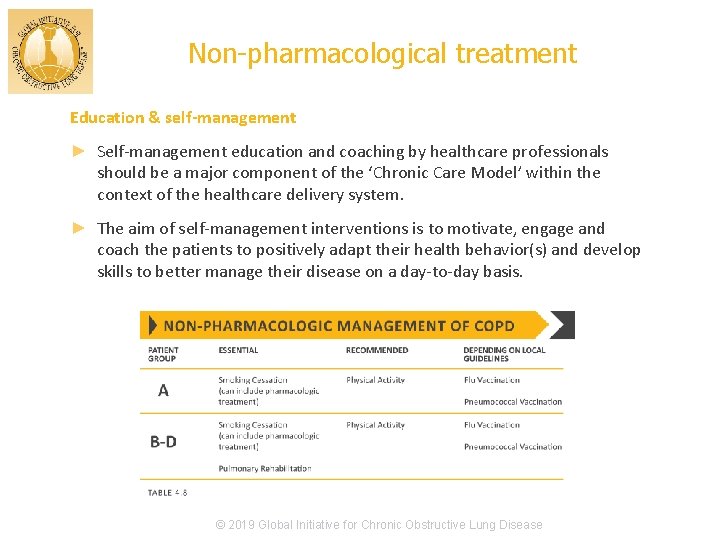
Non-pharmacological treatment Education & self-management ► Self-management education and coaching by healthcare professionals should be a major component of the ‘Chronic Care Model’ within the context of the healthcare delivery system. ► The aim of self-management interventions is to motivate, engage and coach the patients to positively adapt their health behavior(s) and develop skills to better manage their disease on a day-to-day basis. © 2017 Global Initiative for Chronic Obstructive Lung Disease © 2019 Global Initiative for Chronic Obstructive Lung Disease
Non-pharmacological treatment Education & self-management ► Based on GOLD groups, personalized design could include: Ø Groups A, B, C & D – addressing behavioral risk factors, including smoking cessation, maintaining or increasing physical activity, and ensuring adequate sleep and a healthy diet. Ø Groups B & D – learning to self-manage breathlessness, energy conservation techniques, and stress management strategies. Ø Groups C & D – avoiding aggravating factors, monitoring and managing worsening symptoms, having a written action plan and maintaining regular contact/communication with a healthcare professional. Ø Group D – discussing with their healthcare providers palliative strategies and advance care directives. © 2017 Global Initiative for Chronic Obstructive Lung Disease © 2019 Global Initiative for Chronic Obstructive Lung Disease
Non-pharmacological treatment Physical activity ► Pulmonary rehabilitation, including community and home-based, is an approach with clear evidence of benefits. However, the challenge is promoting physical activity and maintaining it. ► There is evidence that physical activity is decreased in COPD patients. This leads to a downward spiral of inactivity which predisposes patients to reduced quality of life, increased rates of hospitalization and mortality. ► Behavior-targeted interventions with the aim of improving physical activity should be encouraged. ► Most published studies to date provide little guidance for adaptation of interventions for clinical care. © 2017 Global Initiative for Chronic Obstructive Lung Disease © 2019 Global Initiative for Chronic Obstructive Lung Disease

Non-pharmacological treatment Pulmonary rehabilitation ► Patients with high symptom burden and risk of exacerbations (Groups B, C and D), should be encouraged to take part in a formal rehabilitation program that includes setting patient goals and is designed and delivered in a structured manner, taking into account the individual’s COPD characteristics and comorbidities. ► The components of pulmonary rehabilitation may vary but evidence-based best practice for program delivery includes: structured and supervised exercise training, smoking cessation, nutrition counseling, and selfmanagement education. © 2017 Global Initiative for Chronic Obstructive Lung Disease © 2019 Global Initiative for Chronic Obstructive Lung Disease
Non-pharmacological treatment Exercise training ► A meta-analysis of RCTs found that exercise training alone, or with the addition of activity counseling, significantly improved physical activity levels in COPD patients. ► A combination of constant load or interval training with strength training provides better outcomes than either method alone. ► Where possible, endurance exercise training to 60 -80% of the symptomlimited maximum work or heart rate is preferred, or to a Borg-rated dyspnea or fatigue score of 4 to 6 (moderate to severe). ► Exercise training can be enhanced by optimizing bronchodilators, since both LAMA and LABA have shown reduced resting and dynamic hyperinflation. © 2017 Global Initiative for Chronic Obstructive Lung Disease © 2019 Global Initiative for Chronic Obstructive Lung Disease
Non-pharmacological treatment Self-management education ► The basis of enabling patients to become active partners in their ongoing care is to build knowledge and skills. ► Topics considered appropriate for an education program include: Ø Smoking cessation Ø Basic information about COPD Ø General approach to therapy and specific aspects of medical treatment (respiratory medications and inhalation devices) Ø Strategies to help minimize dyspnea Ø Advice about when to seek help Ø Decision-making during exacerbations Ø Advance directives and end-of-life issues © 2017 Global Initiative for Chronic Obstructive Lung Disease © 2019 Global Initiative for Chronic Obstructive Lung Disease
Non-pharmacological treatment End-of-life and palliative care ► The goal of palliative care is to relieve the suffering of patients and their families by the comprehensive assessment and treatment of physical, psychosocial, and spiritual symptoms experienced by patients. ► Clinicians should develop and implement methods to help patients and their families to make informed choices that are consistent with patients’ values. ► Simple, structured approaches to facilitate these conversations may help to improve the occurrence and quality of communication from the patients’ perspective. © 2017 Global Initiative for Chronic Obstructive Lung Disease © 2019 Global Initiative for Chronic Obstructive Lung Disease
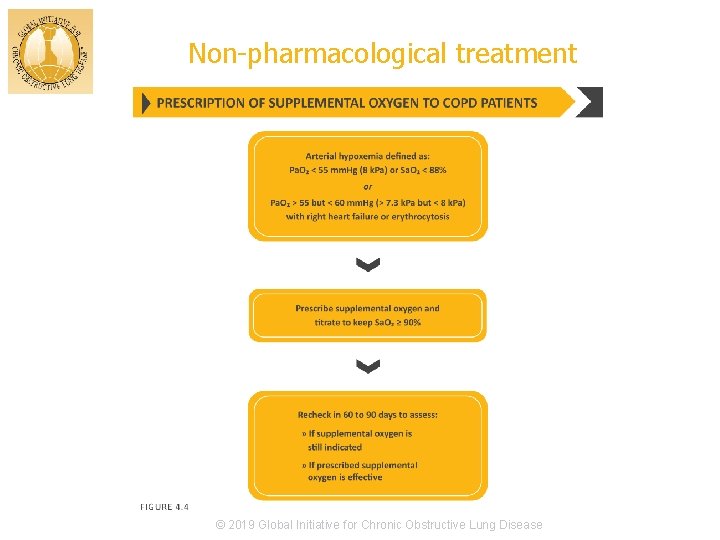
Non-pharmacological treatment Oxygen therapy ► Long-term oxygen therapy is indicated for stable patients who have: Ø Pa. O 2 at or below 7. 3 k. Pa (55 mm. Hg) or Sa. O 2 at or below 88%, with or without hypercapnia confirmed twice over a three-week period; or Ø Pa. O 2 between 7. 3 k. Pa (55 mm. Hg) and 8. 0 k. Pa (60 mm. Hg), or Sa. O 2 of 88%, if there is evidence of pulmonary hypertension, peripheral edema suggesting congestive cardiac failure, or polycythemia (hematocrit > 55%). ► Once placed on long-term oxygen therapy (LTOT) the patient should be reevaluated after 60 to 90 days with repeat arterial blood gas (ABG) or oxygen saturation while inspiring the same level of oxygen or room air to determine if oxygen is therapeutic and still indicated, respectively. © 2017 Global Initiative for Chronic Obstructive Lung Disease © 2019 Global Initiative for Chronic Obstructive Lung Disease
Non-pharmacological treatment © 2017 Global Initiative for Chronic Obstructive Lung Disease © 2019 Global Initiative for Chronic Obstructive Lung Disease
Non-pharmacological treatment Oxygen therapy ► Long-term oxygen therapy is indicated for stable patients who have: Ø Pa. O 2 at or below 7. 3 k. Pa (55 mm. Hg) or Sa. O 2 at or below 88%, with or without hypercapnia confirmed twice over a three-week period; or Ø Pa. O 2 between 7. 3 k. Pa (55 mm. Hg) and 8. 0 k. Pa (60 mm. Hg), or Sa. O 2 of 88%, if there is evidence of pulmonary hypertension, peripheral edema suggesting congestive cardiac failure, or polycythemia (hematocrit > 55%). ► Once placed on long-term oxygen therapy (LTOT) the patient should be reevaluated after 60 to 90 days with repeat arterial blood gas (ABG) or oxygen saturation while inspiring the same level of oxygen or room air to determine if oxygen is therapeutic and still indicated, respectively. © 2017 Global Initiative for Chronic Obstructive Lung Disease © 2019 Global Initiative for Chronic Obstructive Lung Disease
Non-pharmacological treatment Interventional bronchoscopy & surgery ► In selected patients with heterogeneous or homogenous emphysema and significant hyperinflation refractory to optimized medical care, surgical or bronchoscopic modes of lung volume reduction (e. g. , endobronchial oneway valves, lung coils or thermal ablation) may be considered. ► Some of these therapies (vapor ablation and lung coils) are not widely available for clinical care in many countries. ► In selected patients with a large bulla, surgical bullectomy may be considered. ► In selected patients with very severe COPD and without relevant contraindications, lung transplantation may be considered. © 2017 Global Initiative for Chronic Obstructive Lung Disease © 2019 Global Initiative for Chronic Obstructive Lung Disease

© 2017 Global Initiative for Chronic Obstructive Lung Disease © 2019 Global Initiative for Chronic Obstructive Lung Disease
Non-pharmacological treatment Summary © 2017 Global Initiative for Chronic Obstructive Lung Disease © 2019 Global Initiative for Chronic Obstructive Lung Disease
Summary © 2017 Global Initiative for Chronic Obstructive Lung Disease © 2019 Global Initiative for Chronic Obstructive Lung Disease
Monitoring and Follow-up Monitoring disease progression and development of complications and/or comorbidities ► Measurements. Decline in FEV 1 can be tracked by spirometry performed at least once a year. ► Symptoms. At each visit, information on symptoms since the last visit should be collected, including cough and sputum, breathlessness, fatigue, activity limitation, and sleep disturbances. ► Exacerbations. The frequency, severity, type and likely causes of all exacerbations should be monitored. ► Imaging. If there is a clear worsening of symptoms, imaging may be indicated. ► Smoking status. At each visit, the current smoking status and smoke exposure should be determined followed by appropriate action. © 2017 Global Initiative for Chronic Obstructive Lung Disease © 2019 Global Initiative for Chronic Obstructive Lung Disease
Monitoring and Follow-up Pharmacotherapy and other medical treatment In order to adjust therapy appropriately as the disease progresses, each followup visit should include a discussion of the current therapeutic regimen. Monitoring should focus on: ► Dosages of prescribed medications. ► Adherence to the regimen. ► Inhaler technique. ► Effectiveness of the current regime. ► Side effects. Treatment modifications should be recommended. © 2017 Global Initiative for Chronic Obstructive Lung Disease © 2019 Global Initiative for Chronic Obstructive Lung Disease
GOLD 2019 Report: Chapters 1. Definition and Overview 2. Diagnosis and Initial Assessment 3. Evidence Supporting Prevention & Maintenance Therapy 4. Management of Stable COPD 5. Management of Exacerbations 6. COPD and Comorbidities © 2019 Global Initiative for Chronic Obstructive Lung Disease
Management of Exacerbations OVERALL KEY POINTS (1 of 3): ► An exacerbation of COPD is defined as an acute worsening of respiratory symptoms that results in additional therapy. ► Exacerbations of COPD can be precipitated by several factors. The most common causes are respiratory tract infections. ► The goal for treatment of COPD exacerbations is to minimize the negative impact of the current exacerbation and to prevent subsequent events. ► Short-acting inhaled beta 2 -agonists, with or without short-acting anticholinergics, are recommended as the initial bronchodilators to treat an acute exacerbation. © 2017 Global Initiative for Chronic Obstructive Lung Disease © 2019 Global Initiative for Chronic Obstructive Lung Disease
Management of Exacerbations OVERALL KEY POINTS (2 of 3): ► Maintenance therapy with long-acting bronchodilators should be initiated as soon as possible before hospital discharge. ► Systemic corticosteroids can improve lung function (FEV 1), oxygenation and shorten recovery time and hospitalization duration. Duration of therapy should not be more than 5 -7 days. ► Antibiotics, when indicated, can shorten recovery time, reduce the risk of early relapse, treatment failure, and hospitalization duration. Duration of therapy should be 5 -7 days. ► Methylxanthines are not recommended due to increased side effect profiles. © 2019 Global Initiative for Chronic Obstructive Lung Disease
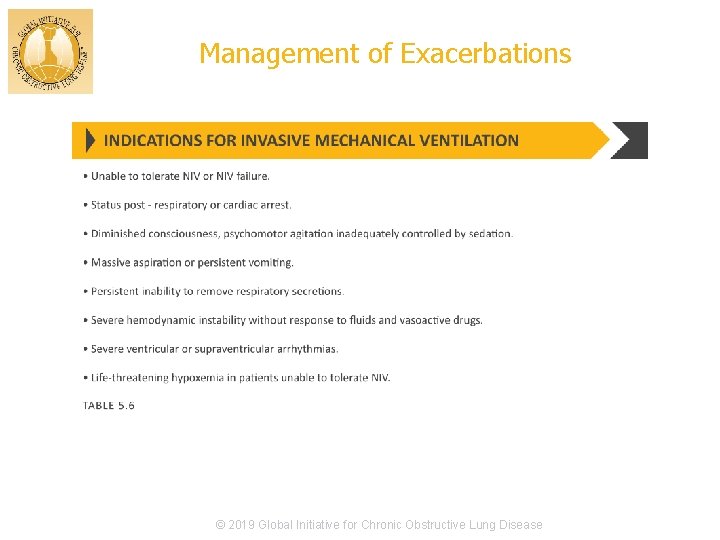
Management of Exacerbations OVERALL KEY POINTS (3 of 3): ► Non-invasive mechanical ventilation should be the first mode of ventilation used in COPD patients with acute respiratory failure who have no absolute contraindication because it improves gas exchange, reduces work of breathing and the need for intubation, decreases hospitalization duration and improves survival. ► Following an exacerbation, appropriate measures for exacerbation prevention should be initiated (see GOLD 2019 Chapter 3 and Chapter 4). © 2019 Global Initiative for Chronic Obstructive Lung Disease
Management of Exacerbations COPD exacerbations are defined as an acute worsening of respiratory symptoms that result in additional therapy. ► They are classified as: Ø Mild (treated with short acting bronchodilators only, SABDs) Ø Moderate (treated with SABDs plus antibiotics and/or oral corticosteroids) or Ø Severe (patient requires hospitalization or visits the emergency room). Severe exacerbations may also be associated with acute respiratory failure. © 2017 Global Initiative for Chronic Obstructive Lung Disease © 2019 Global Initiative for Chronic Obstructive Lung Disease
Management of Exacerbations Classification of hospitalized patients No respiratory failure: Respiratory rate: 20 -30 breaths per minute; no use of accessory respiratory muscles; no changes in mental status; hypoxemia improved with supplemental oxygen given via Venturi mask 2835% inspired oxygen (Fi. O 2); no increase in Pa. CO 2. © 2019 Global Initiative for Chronic Obstructive Lung Disease
Management of Exacerbations Classification of hospitalized patients Acute respiratory failure — non-life-threatening: Respiratory rate: > 30 breaths per minute; using accessory respiratory muscles; no change in mental status; hypoxemia improved with supplemental oxygen via Venturi mask 25 -30% Fi. O 2; hypercarbia i. e. , Pa. CO 2 increased compared with baseline or elevated 50 -60 mm. Hg. © 2019 Global Initiative for Chronic Obstructive Lung Disease
Management of Exacerbations Classification of hospitalized patients Acute respiratory failure — life-threatening: Respiratory rate: > 30 breaths per minute; using accessory respiratory muscles; acute changes in mental status; hypoxemia not improved with supplemental oxygen via Venturi mask or requiring Fi. O 2 > 40%; hypercarbia i. e. , Pa. CO 2 increased compared with baseline or elevated > 60 mm. Hg or the presence of acidosis (p. H ≤ 7. 25). © 2019 Global Initiative for Chronic Obstructive Lung Disease
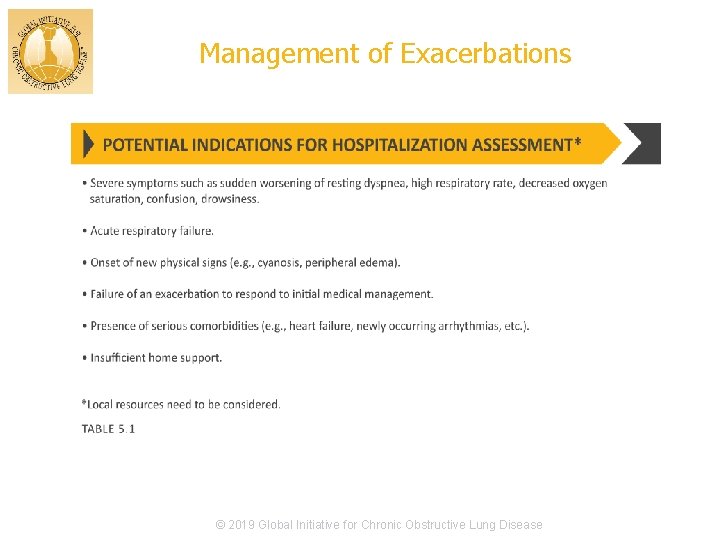
Management of Exacerbations © 2017 Global Initiative for Chronic Obstructive Lung Disease © 2019 Global Initiative for Chronic Obstructive Lung Disease
Management of Exacerbations © 2017 Global Initiative for Chronic Obstructive Lung Disease © 2019 Global Initiative for Chronic Obstructive Lung Disease
Management of Exacerbations Pharmacological treatment The three classes of medications most commonly used for COPD exacerbations are: ► Bronchodilators Ø Although there is no high-quality evidence from RCTs, it is recommended that short-acting inhaled beta 2 -agonists, with or without short-acting anticholinergics, are the initial bronchodilators for acute treatment of a COPD exacerbation. ► Corticosteroids Ø Data from studies indicate that systemic glucocorticoids in COPD exacerbations shorten recovery time and improve lung function (FEV 1). They also improve oxygenation, the risk of early relapse, treatment failure, and the length of hospitalization. ► Antibiotics © 2017 Global Initiative for Chronic Obstructive Lung Disease
Management of Exacerbations © 2017 Global Initiative for Chronic Obstructive Lung Disease © 2019 Global Initiative for Chronic Obstructive Lung Disease
Management of Exacerbations © 2017 Global Initiative for Chronic Obstructive Lung Disease © 2019 Global Initiative for Chronic Obstructive Lung Disease
Management of Exacerbations © 2017 Global Initiative for Chronic Obstructive Lung Disease © 2019 Global Initiative for Chronic Obstructive Lung Disease

TABLE 5. 7 (Part I) © 2017 Global Initiative for Chronic Obstructive Lung Disease © 2019 Global Initiative for Chronic Obstructive Lung Disease

TABLE 5. 7 (Part II) © 2017 Global Initiative for Chronic Obstructive Lung Disease © 2019 Global Initiative for Chronic Obstructive Lung Disease

TABLE 5. 7 (Part III) © 2017 Global Initiative for Chronic Obstructive Lung Disease © 2019 Global Initiative for Chronic Obstructive Lung Disease
Management of Exacerbations © 2017 Global Initiative for Chronic Obstructive Lung Disease © 2019 Global Initiative for Chronic Obstructive Lung Disease
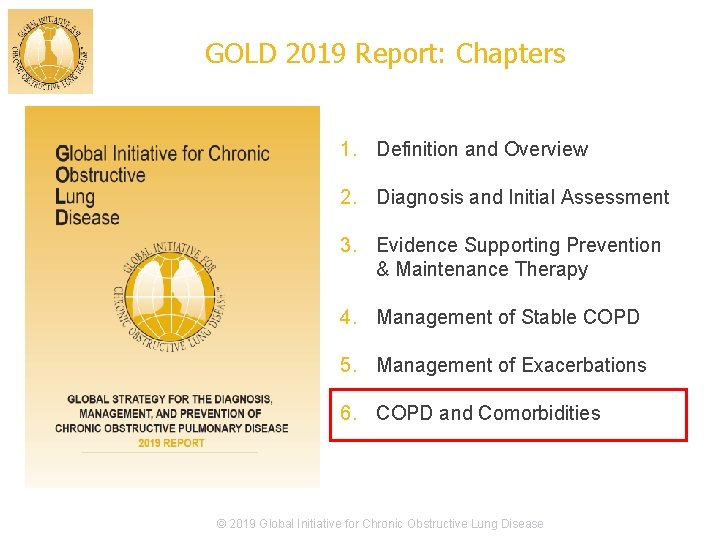
GOLD 2019 Report: Chapters 1. Definition and Overview 2. Diagnosis and Initial Assessment 3. Evidence Supporting Prevention & Maintenance Therapy 4. Management of Stable COPD 5. Management of Exacerbations 6. COPD and Comorbidities © 2019 Global Initiative for Chronic Obstructive Lung Disease
COPD and Comorbidities OVERALL KEY POINTS (1 of 2): ► COPD often coexists with other diseases (comorbidities) that may have a significant impact on disease course. ► In general, the presence of comorbidities should not alter COPD treatment and comorbidities should be treated per usual standards regardless of the presence of COPD. ► Lung cancer is frequently seen in patients with COPD and is a main cause of death. ► Cardiovascular diseases are common and important comorbidities in COPD. © 2019 Global Initiative for Chronic Obstructive Lung Disease
COPD and Comorbidities OVERALL KEY POINTS (2 of 2): ► Osteoporosis and depression/anxiety are frequent, important comorbidities in COPD, are often under-diagnosed, and are associated with poor health status and prognosis. ► Gastroesophageal reflux (GERD) is associated with an increased risk of exacerbations and poorer health status. ► When COPD is part of a multimorbidity care plan, attention should be directed to ensure simplicity of treatment and to minimize polypharmacy. © 2019 Global Initiative for Chronic Obstructive Lung Disease
COPD and Comorbidities Some common comorbidities occurring in patients with COPD with stable disease include: ► Cardiovascular disease (CVD) ► Heart failure ► Ischaemic heart disease (IHD) ► Arrhythmias ► Peripheral vascular disease ► Hypertension ► Osteoporosis ► Anxiety and depression ► COPD and lung cancer ► Metabolic syndrome and diabetes ► Gastroesophageal reflux (GERD) ► Bronchiectasis ► Obstructive sleep apnea © 2019 Global Initiative for Chronic Obstructive Lung Disease
COPD and Comorbidities COPD as part of multimorbidity ► An increasing number of people in any aging population will suffer from multimorbidity, defined as the presence of two or more chronic conditions, and COPD is present in the majority of multi-morbid patients. ► Multi-morbid patients have symptoms from multiple diseases and thus symptoms and signs are complex and most often attributable to several causes in the chronic state as well as during acute events. ► There is no evidence that COPD should be treated differently when part of multimorbidity; however, it should be kept in mind that most evidence comes from trials in patients with COPD as the only significant disease. ► Treatments should be kept simple in the light of the unbearable polypharmacy that these patients are often exposed to. © 2017 Global Initiative for Chronic Obstructive Lung Disease © 2019 Global Initiative for Chronic Obstructive Lung Disease
GOLD WEBSITE www. goldcopd. org © 2019 Global Initiative for Chronic Obstructive Lung Disease
WORLDCOPDDAY Keep updated here: © 2017 Global Initiative for Chronic Obstructive Lung Disease © 2019 Global Initiative for Chronic Obstructive Lung Disease
Journals that published the GOLD 2017 Executive Summary ØAmerican Journal of Respiratory and Critical Care Medicine ØEuropean Respiratory Journal ØRespirology ØArchivos de Bronconeumología © 2019 Global Initiative for Chronic Obstructive Lung Disease
- Slides: 135