Quantum Quench of a KondoExciton Hakan Tureci Martin


- Slides: 29
Quantum Quench of a Kondo-Exciton Hakan Tureci, Martin Claassen, Atac Imamoglu (ETH), Markus Hanl, Andreas Weichselbaum, Theresa Hecht, Jan von Delft (LMU) Bernd Braunecker (Basel), Sasha Govorov (Ohio), Leonid Glazman (Yale) What happens when an optical excitation is used to “switch on” Kondo correlations? SFB/TR-12
Outline • Experimental background • Proposed experiment • Transient dynamics of charge and spin • Absorption spectrum at T=0 • Finite magnetic field B • Finite temperature T • Absorption threshold ωth
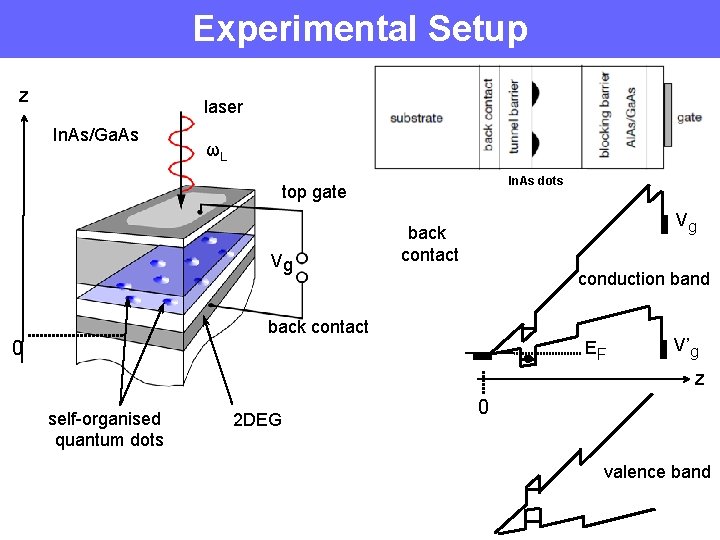
Experimental Setup z laser In. As/Ga. As ωL In. As dots top gate Vg Vg back contact conduction band back contact 0 EF V’g z self-organised quantum dots 2 DEG 0 valence band
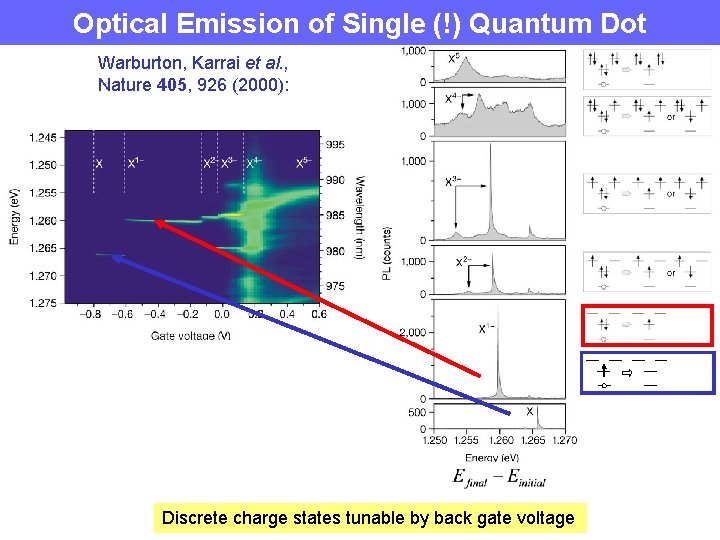
Optical Emission of Single (!) Quantum Dot Warburton, Karrai et al. , Nature 405, 926 (2000): Discrete charge states tunable by back gate voltage
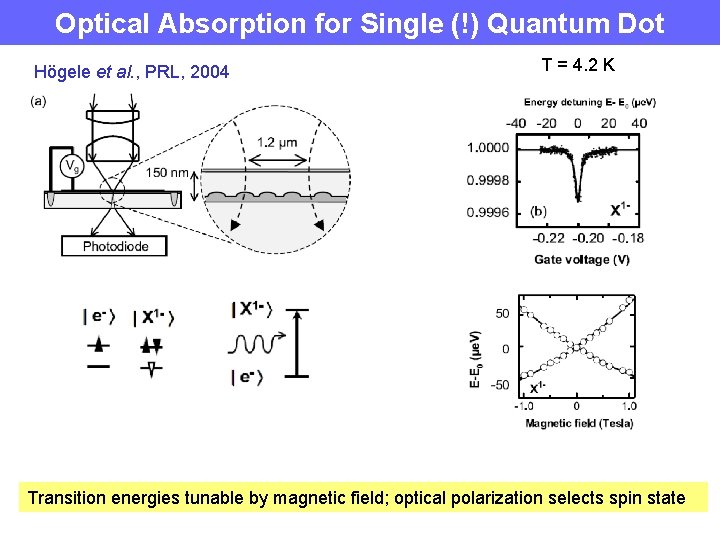
Optical Absorption for Single (!) Quantum Dot Högele et al. , PRL, 2004 T = 4. 2 K Transition energies tunable by magnetic field; optical polarization selects spin state
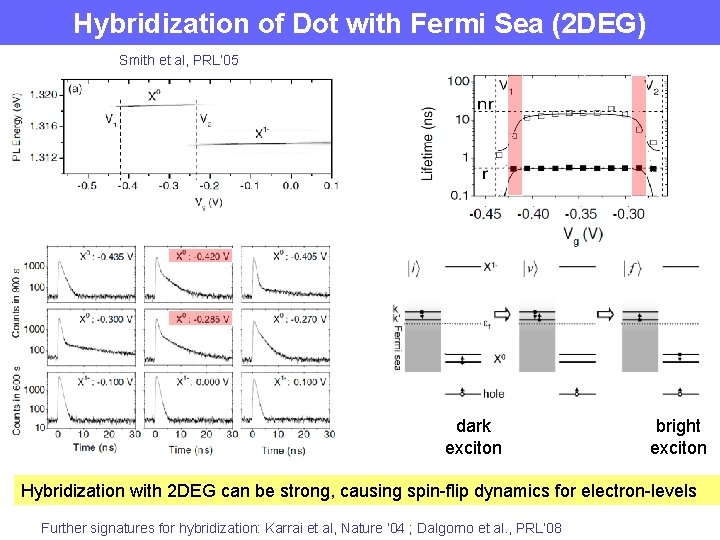
Hybridization of Dot with Fermi Sea (2 DEG) Smith et al, PRL’ 05 dark exciton bright exciton Hybridization with 2 DEG can be strong, causing spin-flip dynamics for electron-levels Further signatures for hybridization: Karrai et al, Nature ’ 04 ; Dalgorno et al. , PRL’ 08
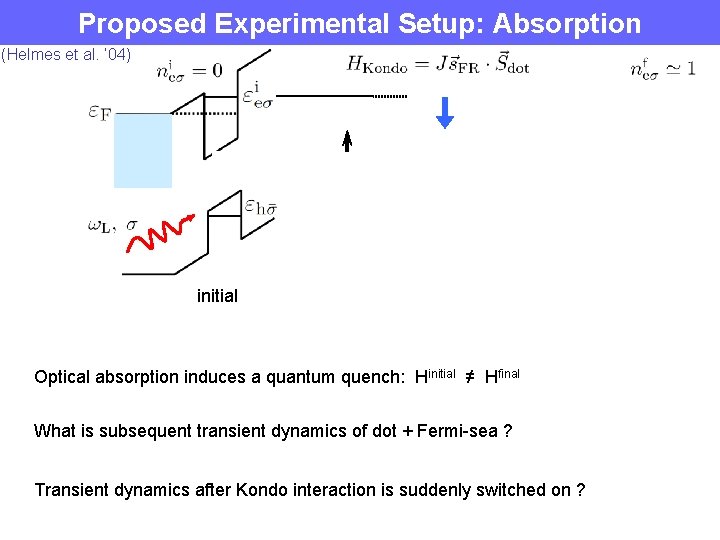
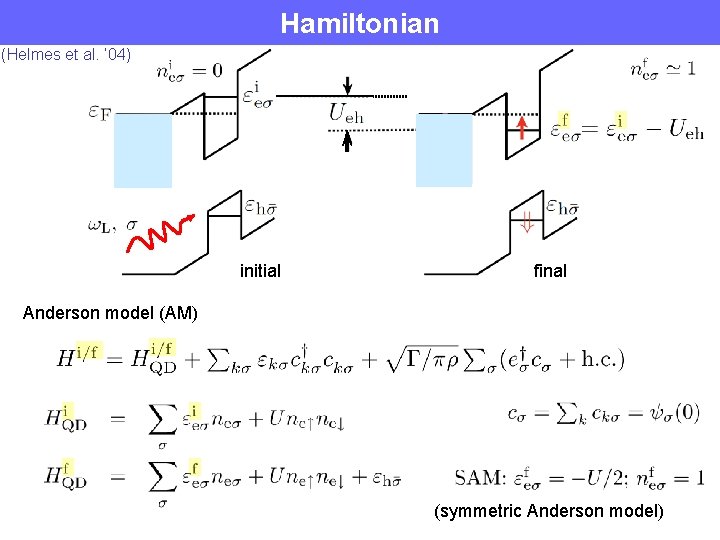
Proposed Experimental Setup: Absorption (Helmes et al. ’ 04) initial final Optical absorption induces a quantum quench: Hinitial ≠ Hfinal What is subsequent transient dynamics of dot + Fermi-sea ? Transient dynamics after Kondo interaction is suddenly switched on ?
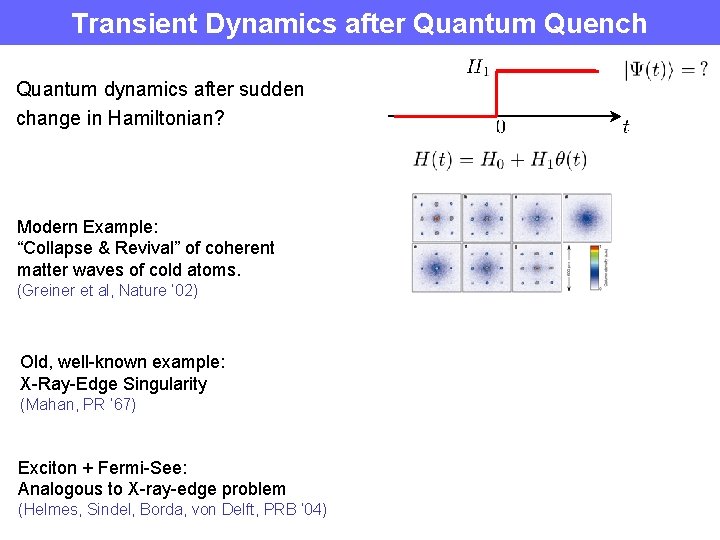
Transient Dynamics after Quantum Quench Quantum dynamics after sudden change in Hamiltonian? Modern Example: “Collapse & Revival” of coherent matter waves of cold atoms. (Greiner et al, Nature ‘ 02) Old, well-known example: X-Ray-Edge Singularity (Mahan, PR ‘ 67) Exciton + Fermi-See: Analogous to X-ray-edge problem (Helmes, Sindel, Borda, von Delft, PRB ‘ 04)
Hamiltonian (Helmes et al. ’ 04) initial final Anderson model (AM) (symmetric Anderson model)
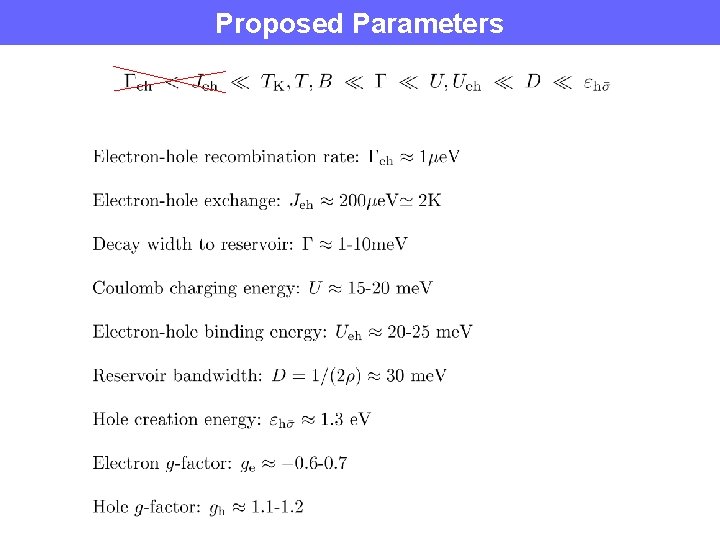
Proposed Parameters
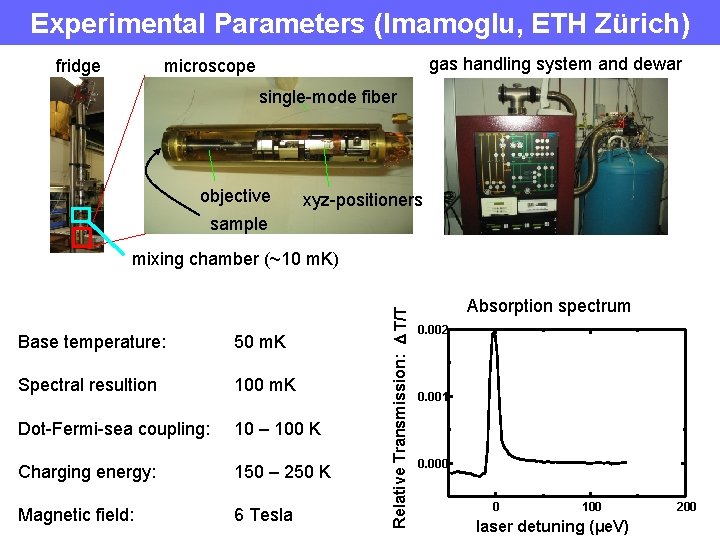
Experimental Parameters (Imamoglu, ETH Zürich) fridge gas handling system and dewar microscope single-mode fiber objective xyz-positioners sample Base temperature: 50 m. K Spectral resultion 100 m. K Dot-Fermi-sea coupling: 10 – 100 K Charging energy: 150 – 250 K Magnetic field: 6 Tesla Relative Transmission: D T/T mixing chamber (~10 m. K) Absorption spectrum 0. 002 0. 001 0. 000 0 100 laser detuning (μe. V) 200
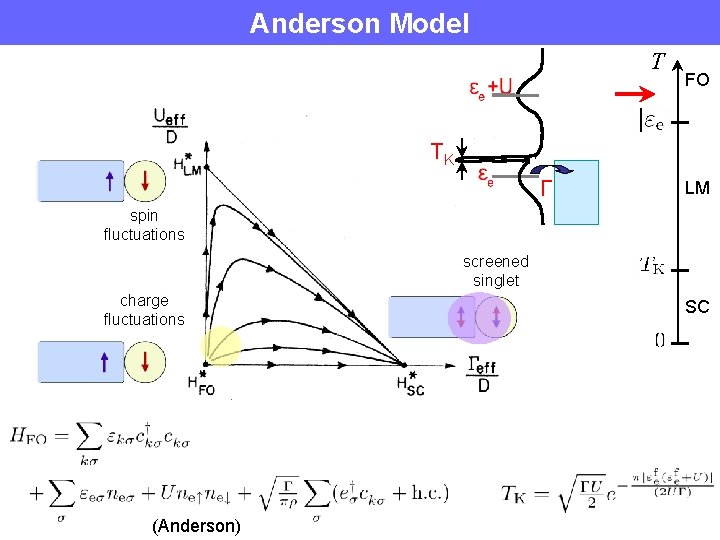
Anderson Model T FO (Kondo) TK Γ LM spin fluctuations screened singlet charge fluctuations SC (Nozières) (Anderson)
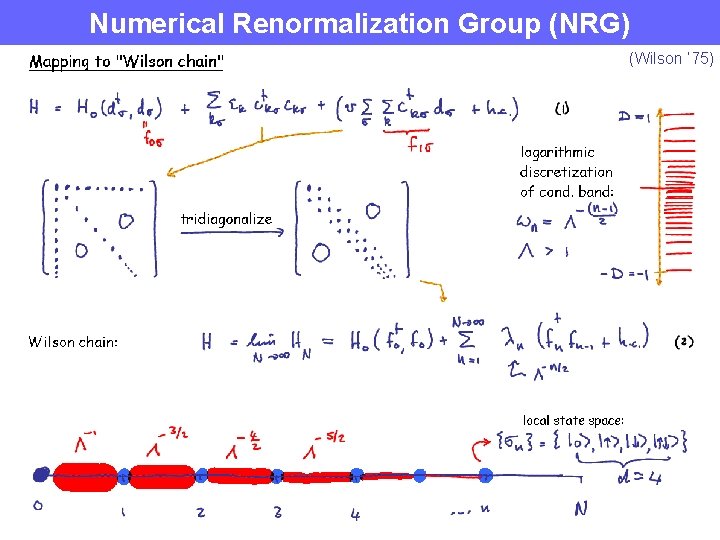
Numerical Renormalization Group (NRG) (Wilson ’ 75)
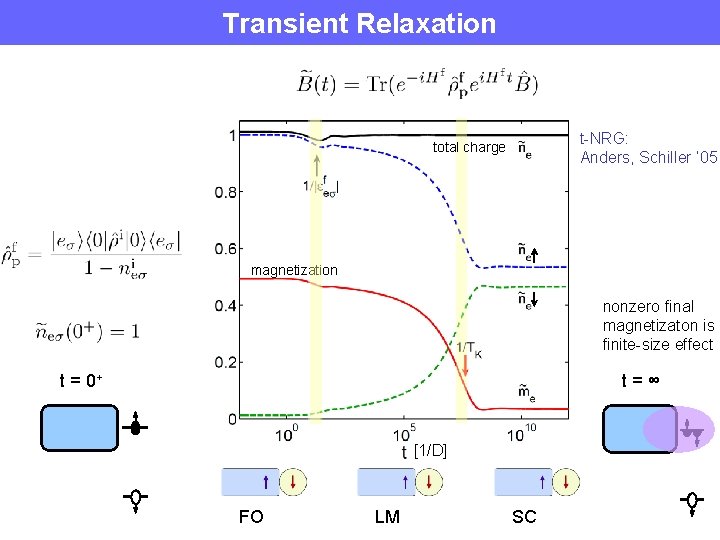
Transient Relaxation t-NRG: Anders, Schiller ‘ 05 total charge magnetization nonzero final magnetizaton is finite-size effect t = 0+ t=∞ [1/D] FO LM SC
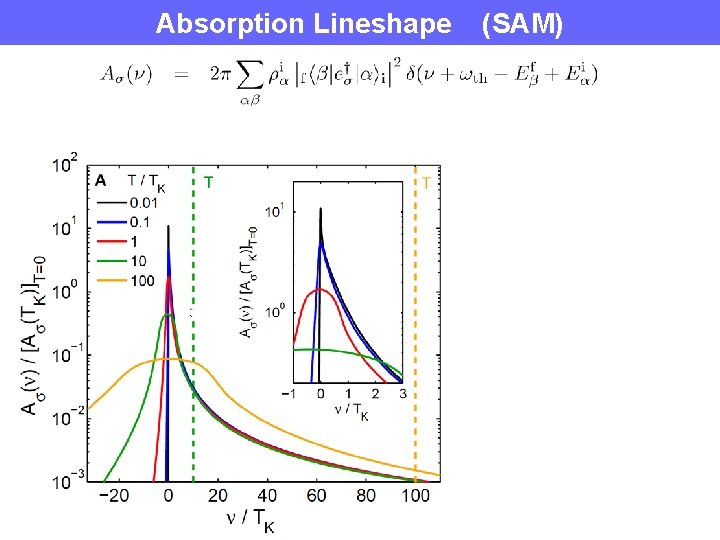
Absorption Lineshape (SAM)
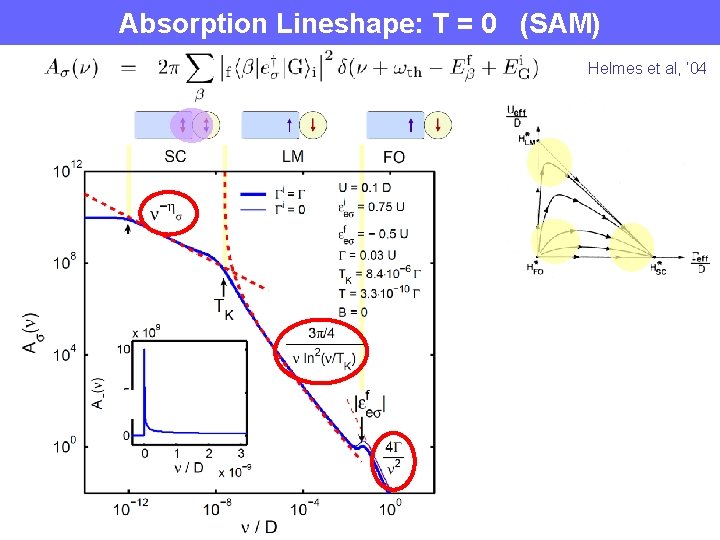
Absorption Lineshape: T = 0 (SAM) Helmes et al, ‘ 04
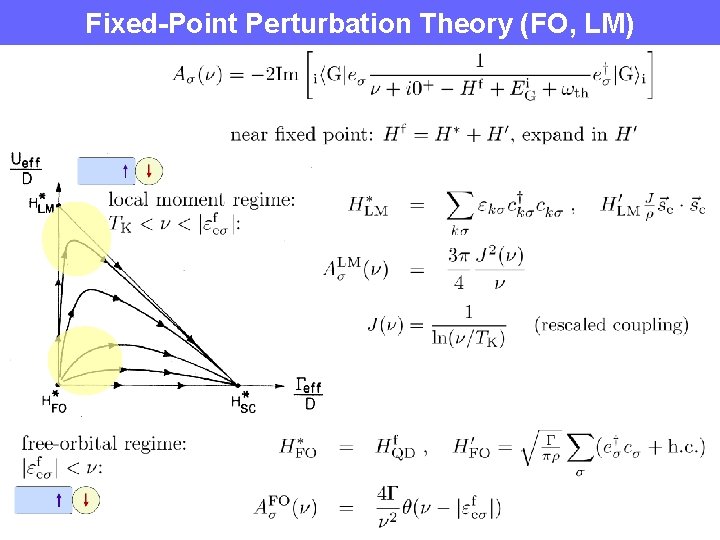
Fixed-Point Perturbation Theory (FO, LM)
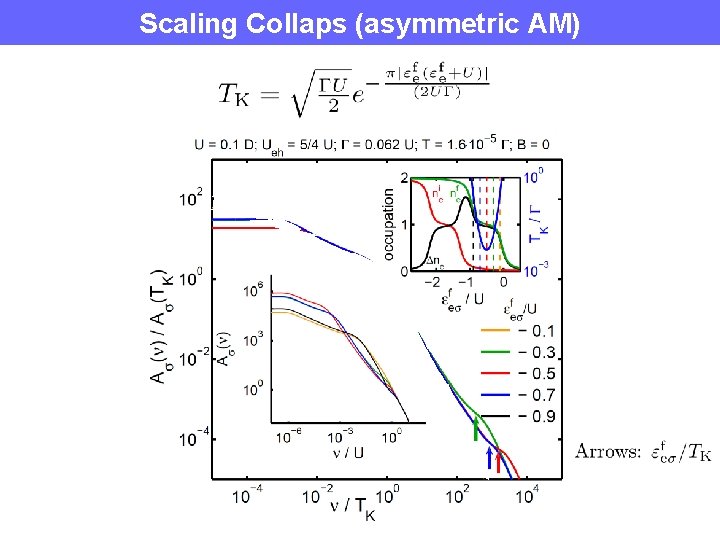
Scaling Collaps (asymmetric AM)
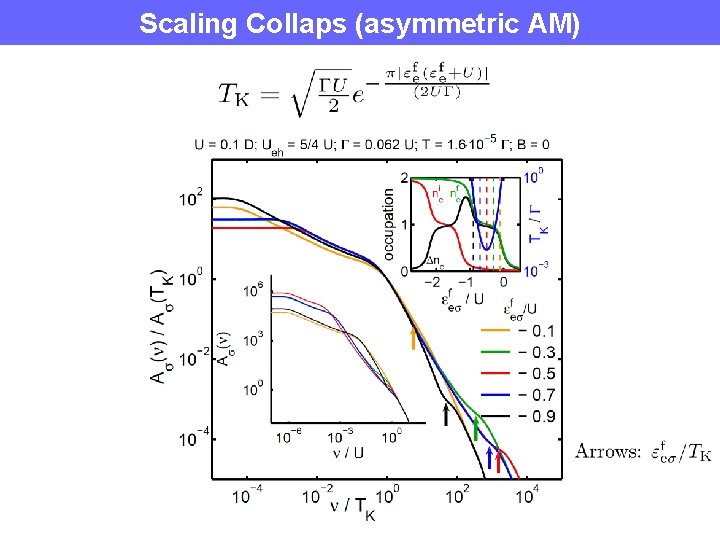
Scaling Collaps (asymmetric AM)
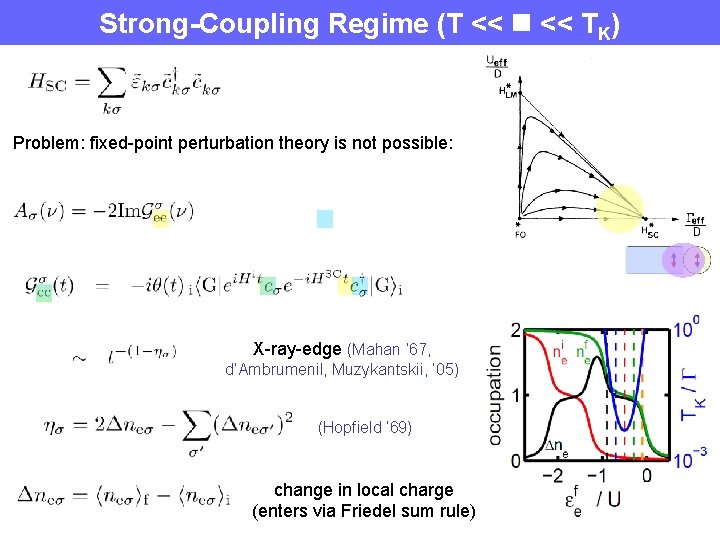
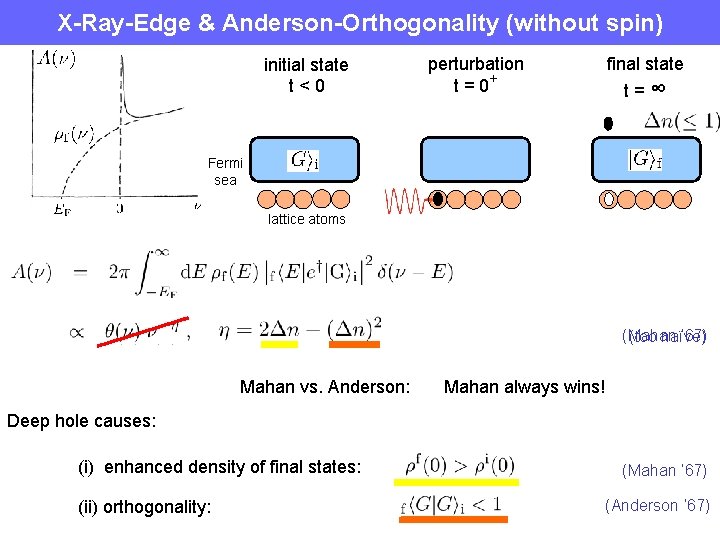
Strong-Coupling Regime (T << TK) Problem: fixed-point perturbation theory is not possible: X-ray-edge (Mahan ’ 67, d’Ambrumenil, Muzykantskii, ‘ 05) (Hopfield ’ 69) change in local charge (enters via Friedel sum rule)
X-Ray-Edge & Anderson-Orthogonality (without spin) initial state t<0 perturbation t = 0+ final state t=∞ Fermi sea lattice atoms (Mahan ‘ 67) (too naïve) Mahan vs. Anderson: Mahan always wins! Deep hole causes: (i) enhanced density of final states: (ii) orthogonality: (Mahan ‘ 67) (Anderson ’ 67)
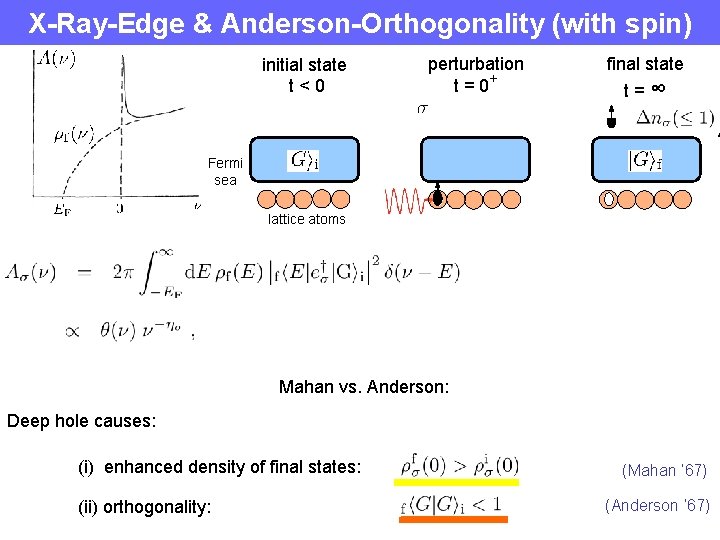
X-Ray-Edge & Anderson-Orthogonality (with spin) initial state t<0 perturbation t = 0+ final state t=∞ Fermi sea lattice atoms Mahan vs. Anderson: Mahan wins, if Deep hole causes: (i) enhanced density of final states: (ii) orthogonality: (Mahan ‘ 67) (Anderson ’ 67)
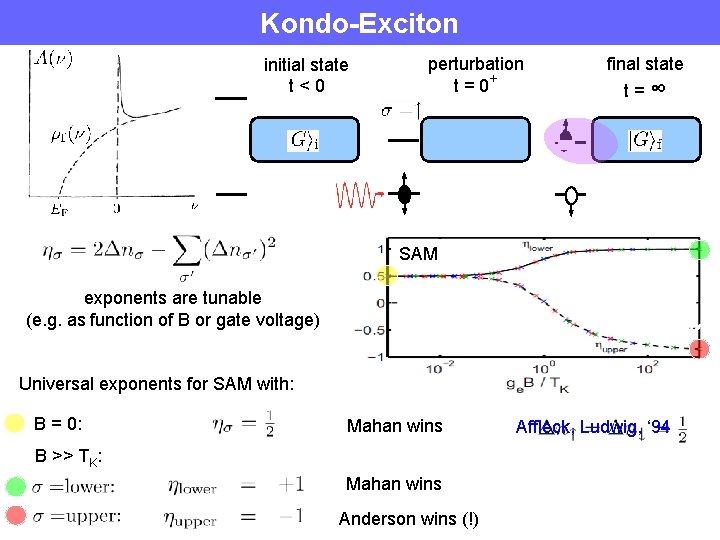
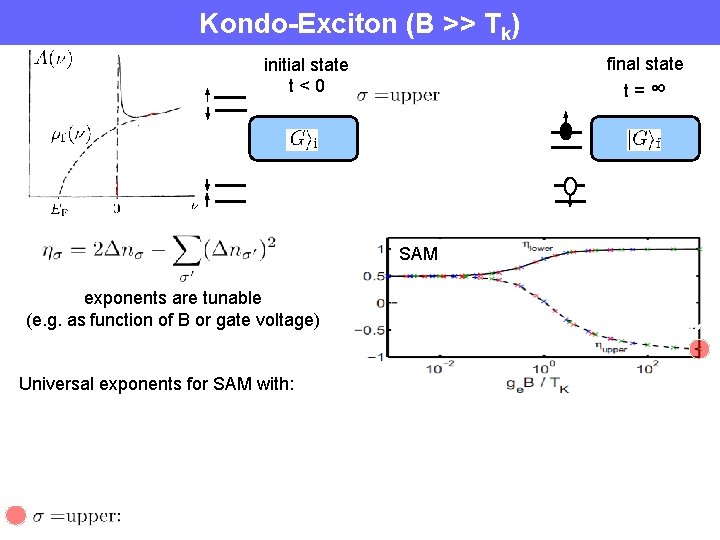
Kondo-Exciton initial state t<0 perturbation t = 0+ final state t=∞ SAM exponents are tunable (e. g. as function of B or gate voltage) Universal exponents for SAM with: B = 0: Mahan wins B >> TK: Mahan wins Anderson wins (!) Affleck, Ludwig, ‘ 94
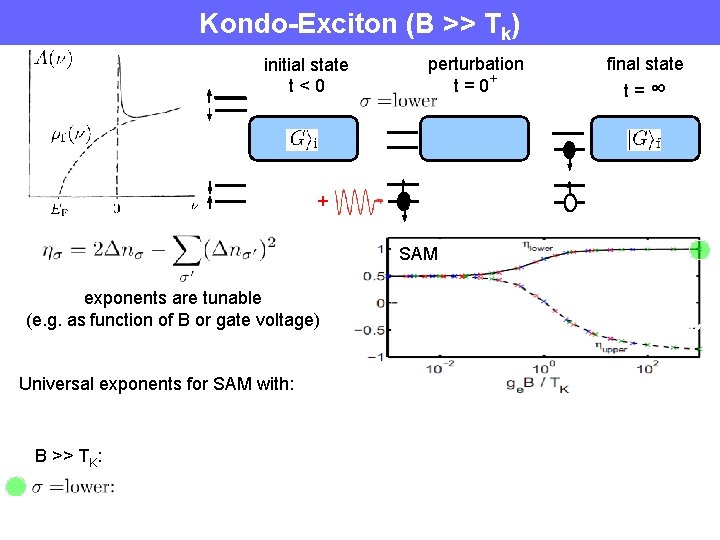
Kondo-Exciton (B >> Tk) initial state t<0 perturbation t = 0+ + SAM exponents are tunable (e. g. as function of B or gate voltage) Universal exponents for SAM with: B = 0: Mahan wins B >> TK: Mahan wins Anderson wins (!) final state t=∞
Kondo-Exciton (B >> Tk) initial state t<0 perturbation t = 0+ SAM exponents are tunable (e. g. as function of B or gate voltage) Universal exponents for SAM with: B = 0: Mahan wins B >> TK: Mahan wins Anderson wins (!) final state t=∞
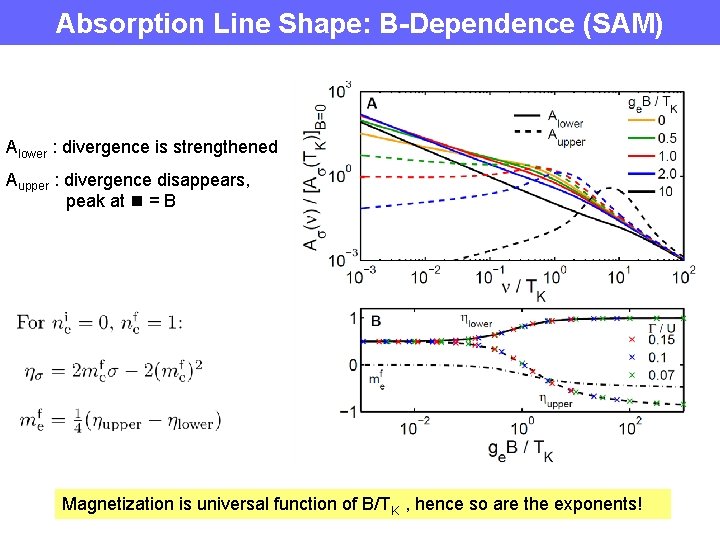
Absorption Line Shape: B-Dependence (SAM) Alower : divergence is strengthened Aupper : divergence disappears, peak at = B Magnetization is universal function of B/TK , hence so are the exponents!
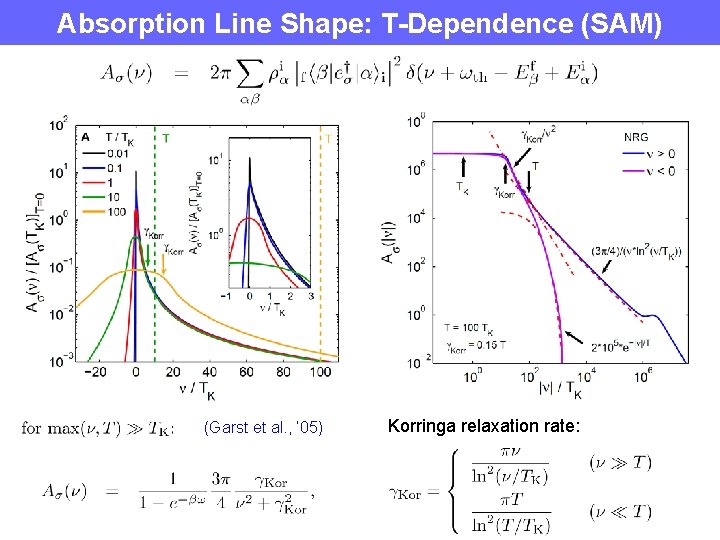
Absorption Line Shape: T-Dependence (SAM) (Garst et al. , ’ 05) Korringa relaxation rate:
B-Dependence of Threshold Frequency (T=0) Threshold: hole GS energy difference of e-level + Fermi sea Shift with B: (neglecting Zeemanshift for leads) In Kondo limit NRG (Tk defined via linear static susceptibility: ) Ground state energy shifts directly accessible via absorption
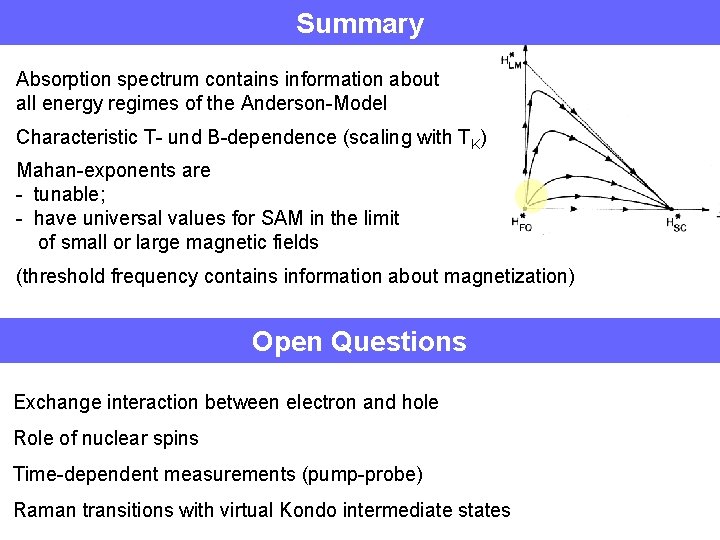
Summary Absorption spectrum contains information about all energy regimes of the Anderson-Model Characteristic T- und B-dependence (scaling with TK) Mahan-exponents are - tunable; - have universal values for SAM in the limit of small or large magnetic fields (threshold frequency contains information about magnetization) Open Questions Exchange interaction between electron and hole Role of nuclear spins Time-dependent measurements (pump-probe) Raman transitions with virtual Kondo intermediate states