q Definition Infection ulceration or destruction of deep






- Slides: 41
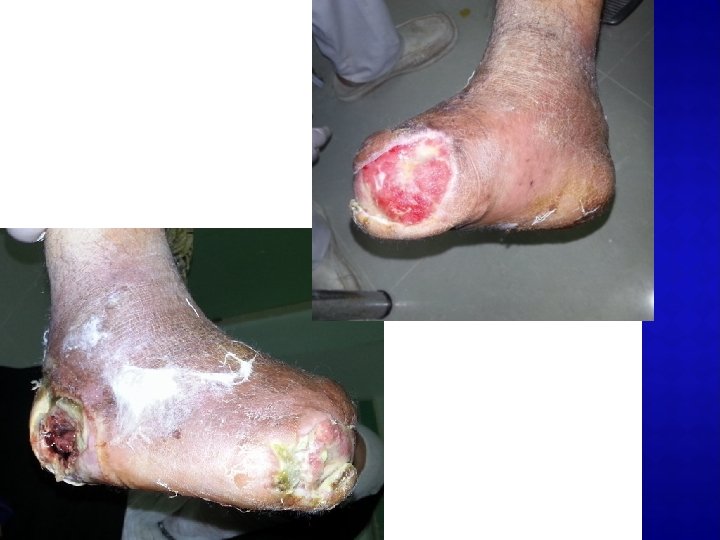
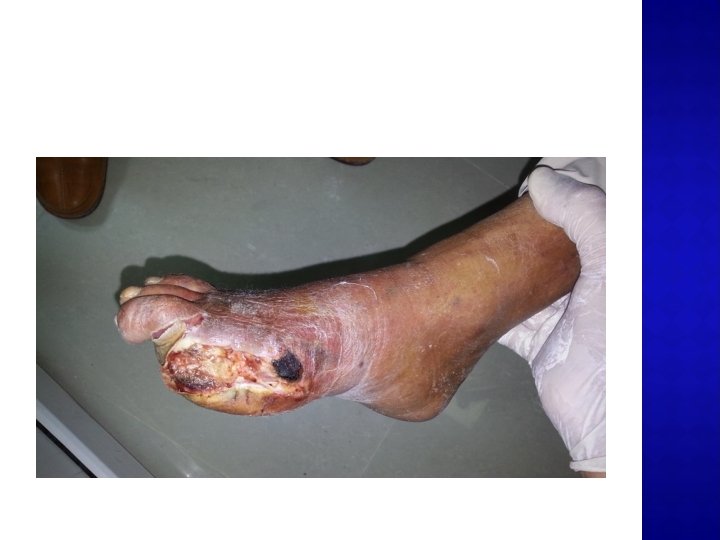
q. Definition: Infection, ulceration or destruction of deep tissues associated with neurological abnormalities & various degrees of peripheral vascular diseases in the lower limb. (based on WHO definition)
Epidemiology Fewer than 20% of diabetic patients are regularly given foot examinations by their primary care physicians � �
q 40% - 60% of all non traumatic lower limb amputation q Majority of patients with type 2 DM and long standing type 1 DM q 85% of diabetic related foot amputation are preceded by foot ulcer q Approximately 15% of DFUs result in amputation
q Good diabetic foot care will decrease amputation in ½ - ¾ cases
q Diabetic foot complications are expensive (cost of healing 7000 -10000 USD) g with amp. 43000 -63000 USD) q Intervention of foot care is cost effective in most societies
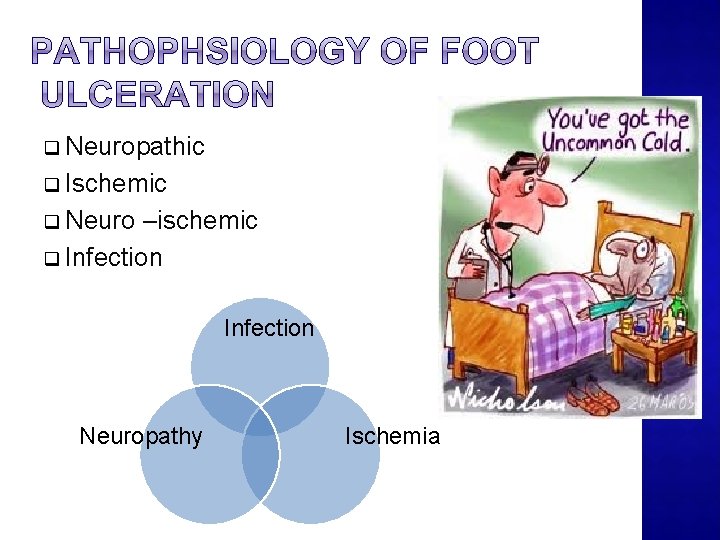
q Neuropathic q Ischemic q Neuro –ischemic q Infection Neuropathy Ischemia
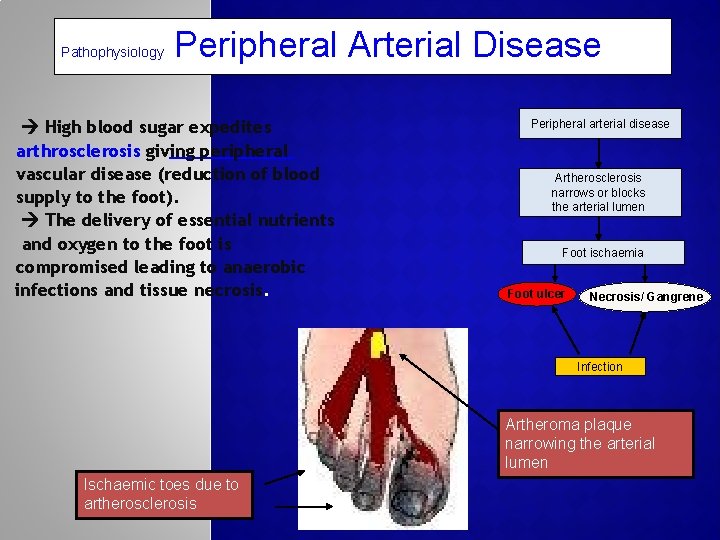
Pathophysiology Peripheral Arterial Disease High blood sugar expedites arthrosclerosis giving peripheral vascular disease (reduction of blood supply to the foot). The delivery of essential nutrients and oxygen to the foot is compromised leading to anaerobic infections and tissue necrosis. Peripheral arterial disease Artherosclerosis narrows or blocks the arterial lumen Foot ischaemia Foot ulcer Necrosis/ Gangrene Infection Artheroma plaque narrowing the arterial lumen Ischaemic toes due to artherosclerosis
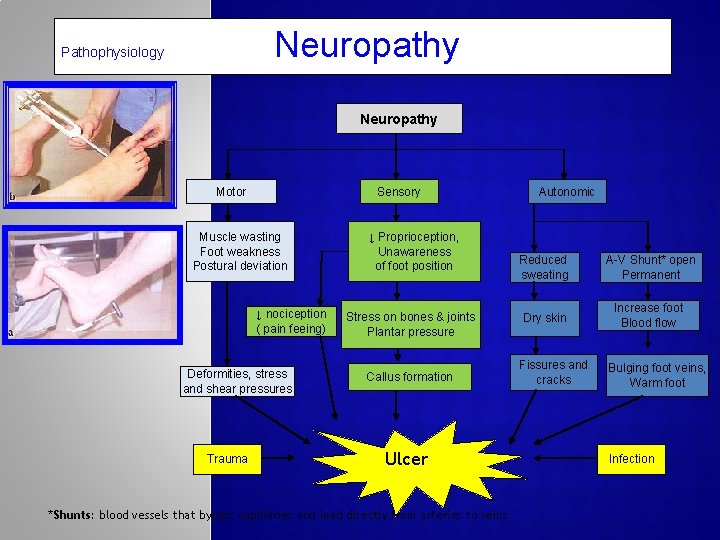
Neuropathy Pathophysiology Neuropathy Motor Sensory Muscle wasting Foot weakness Postural deviation ↓ nociception ( pain feeing) Deformities, stress and shear pressures Trauma ↓ Proprioception, Unawareness of foot position Stress on bones & joints Plantar pressure Callus formation Ulcer *Shunts: blood vessels that bypass capillaries and lead directly from arteries to veins Autonomic Reduced sweating A-V Shunt* open Permanent Dry skin Increase foot Blood flow Fissures and cracks Bulging foot veins, Warm foot Infection
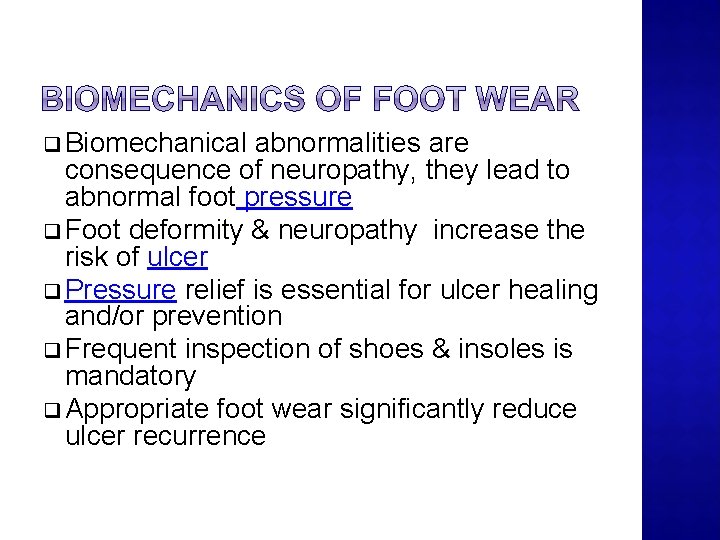
q Biomechanical abnormalities are consequence of neuropathy, they lead to abnormal foot pressure q Foot deformity & neuropathy increase the risk of ulcer q Pressure relief is essential for ulcer healing and/or prevention q Frequent inspection of shoes & insoles is mandatory q Appropriate foot wear significantly reduce ulcer recurrence
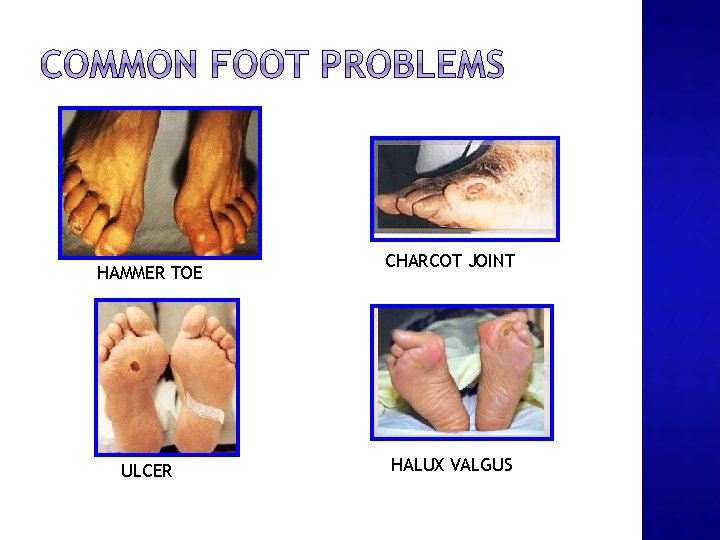
HAMMER TOE ULCER CHARCOT JOINT HALUX VALGUS
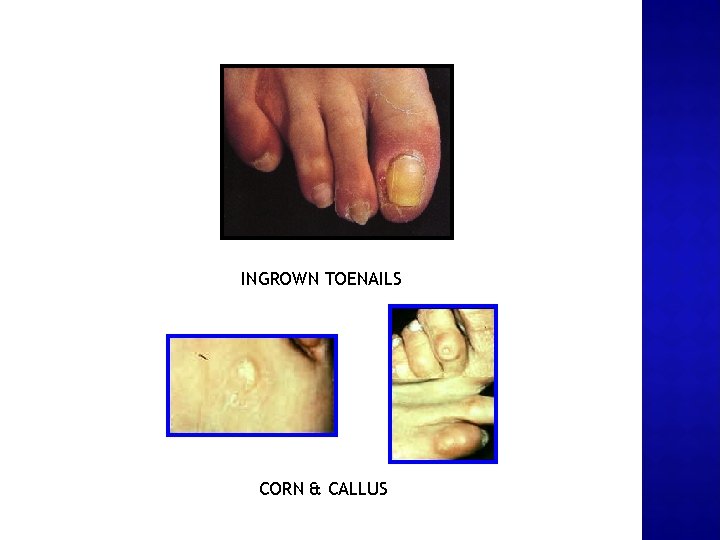
INGROWN TOENAILS CORN & CALLUS
� Diabetic foot problems are becoming more common � Prevention is the best option � The most effective preventative measure for major amputation is screening and referral to a foot care clinic for high risk clients
The primary goal of ulcer treatment is quick and infection free wound closure Three fundamental parts to healing protocol: 1. 2. 3. Regular/skilled debridement and dressing with appropriate wound healing agents. Treatment of soft tissue infection andor amputations Offloading the wound is described by many authors as the single most important aspect of healing.
� Medical � Vascular � Orthopedic � infectious diseases specialist or a medical microbiologist. � Identification of “Foot at Risk”
� Medical �Optimized glucose control �Treatment of other medical problem. Decreases by 50% chance of foot problems
� Vascular �Assessment of peripheral pulses of paramount importance �If any concern, vascular assessment for Bypass surgery.
� Orthopedic �Ulceration �Deformity and prominences �Contractures
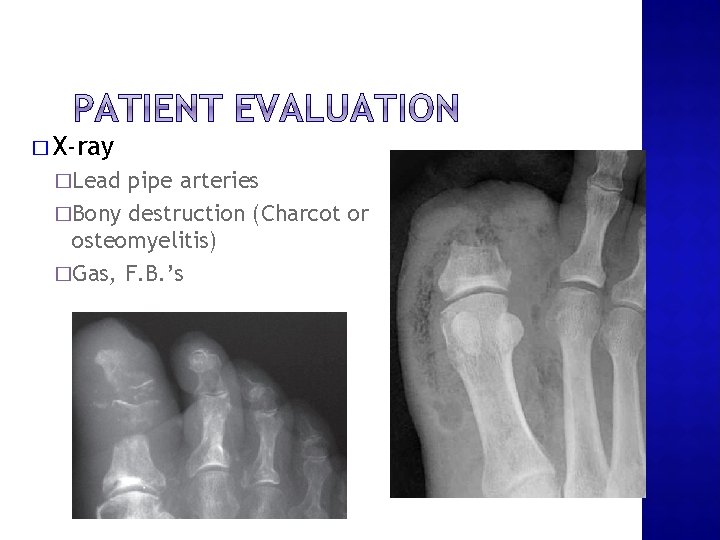
� X-ray �Lead pipe arteries �Bony destruction (Charcot or osteomyelitis) �Gas, F. B. ’s
� CT can be helpful in visualizing bony anatomy for abscess, extent of disease � MRI has a role uncertain cases of osteomyelitis � Angiography and Doppler study.
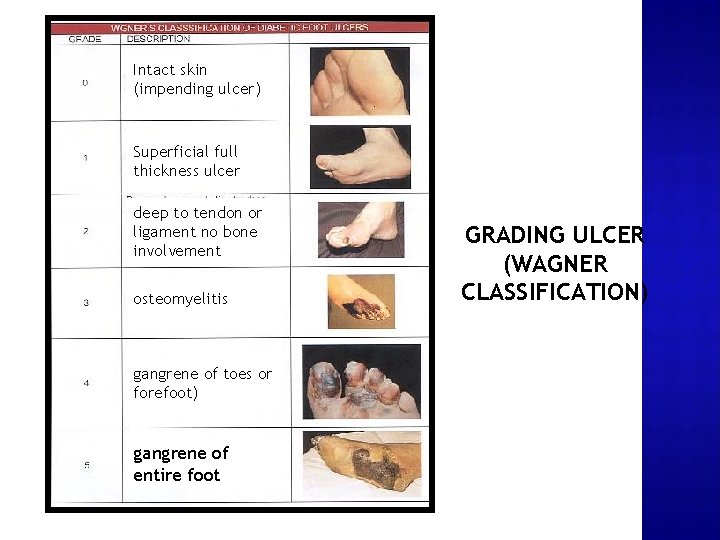
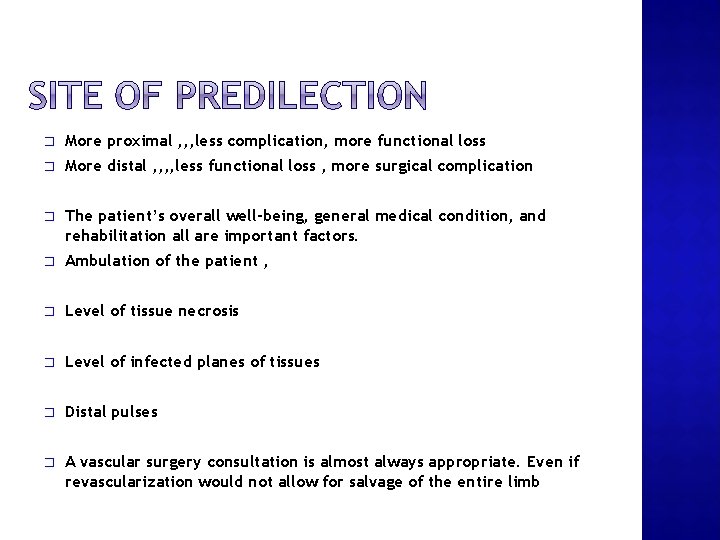
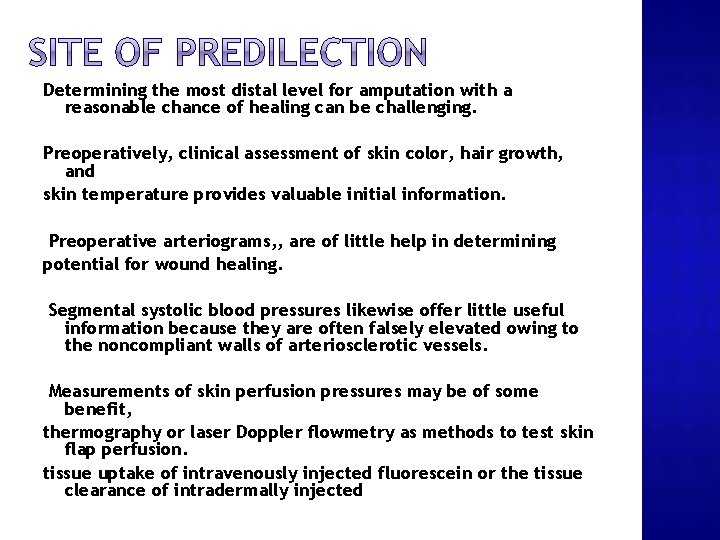
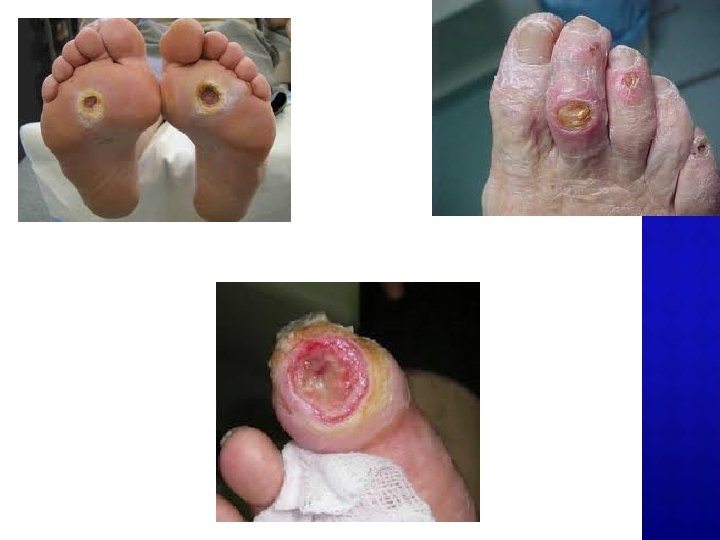
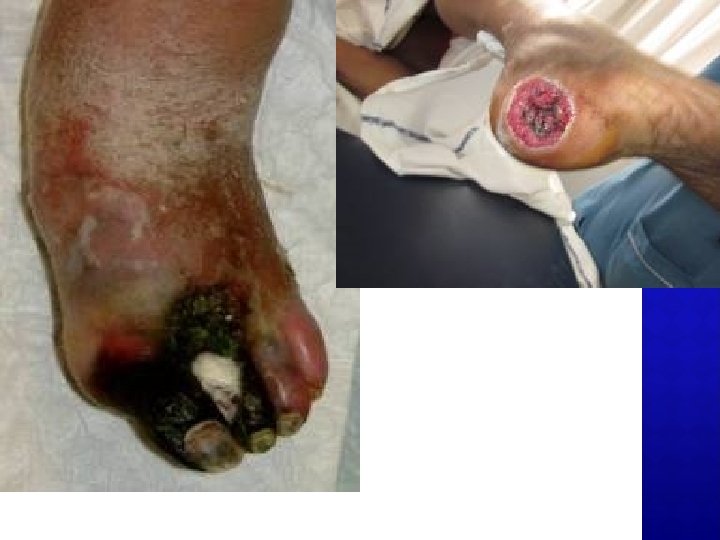
Intact skin (impending ulcer) Superficial full thickness ulcer deep to tendon or ligament no bone involvement osteomyelitis gangrene of toes or forefoot) gangrene of entire foot GRADING ULCER (WAGNER CLASSIFICATION)
�Patient education �Ambulation �Shoe ware �Skin and nail care �Avoiding injury IRRITATIONS, SKIN LESIONS Hot water F. b CUTS BETWEEN YOUR TOES BLISTER
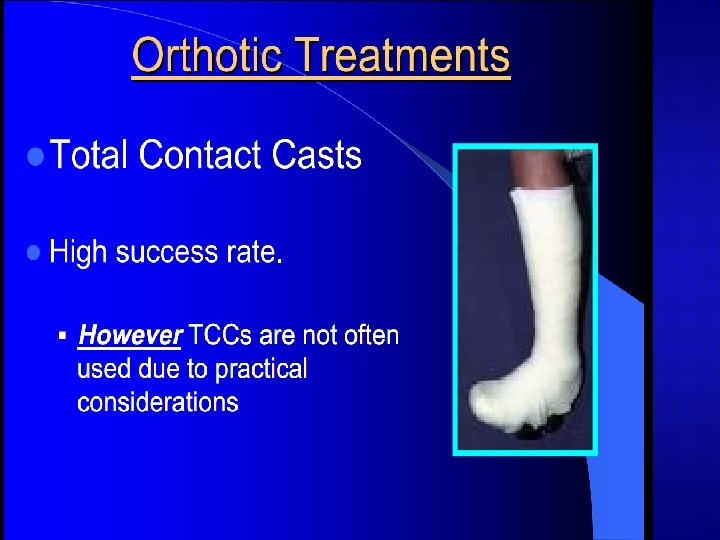
�Wagner 0 -2 �Total contact cast Distributes pressure and allows patients to continue ambulation �Principles of application Changes, Padding, removal �Antibiotics if infected �Surgical if deformity present that will reulcerate Correct deformity exostectomy
� Wagner 3 �Excision of infected bone �Wound allowed to granulate �Grafting (skin or bone) not generally effective � After ulcer healed �Orthopedic shoes with accommodative (custom made insert) �Education to prevent recurrence
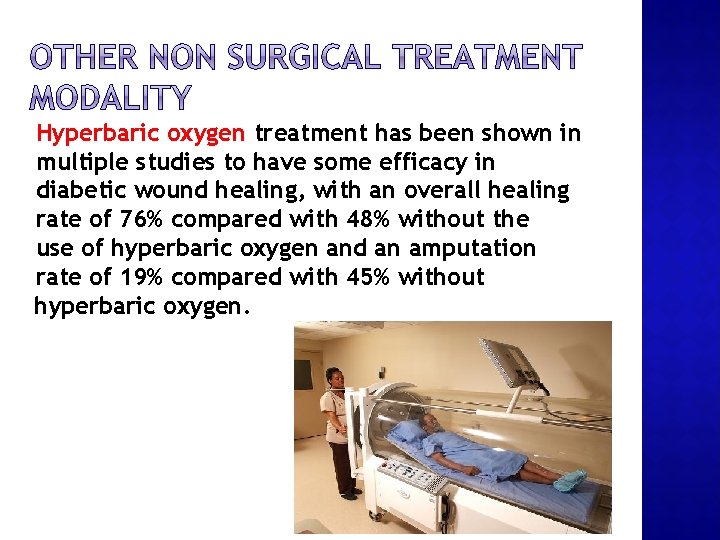
Hyperbaric oxygen treatment has been shown in multiple studies to have some efficacy in diabetic wound healing, with an overall healing rate of 76% compared with 48% without the use of hyperbaric oxygen and an amputation rate of 19% compared with 45% without hyperbaric oxygen.
� VCT The effects of vacuum-compression therapy (VCT)on the healing of ischemic ulcers. a machine with cycles of vacuum and subsequent compression to increase capillary filling. Use of the machine enhances the delivery of oxygen and nutrients to the wound, which, in turn, facilitates healing. � Extracorporeal shockwave treatment can be helpful for healing of chronic ulcers and has been shown in one study to be more successful for healing ulcers than hyperbaric oxygen treatment.
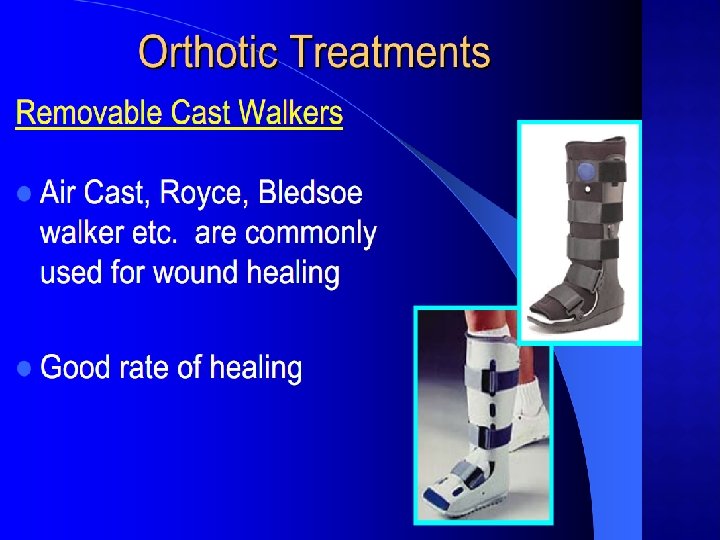
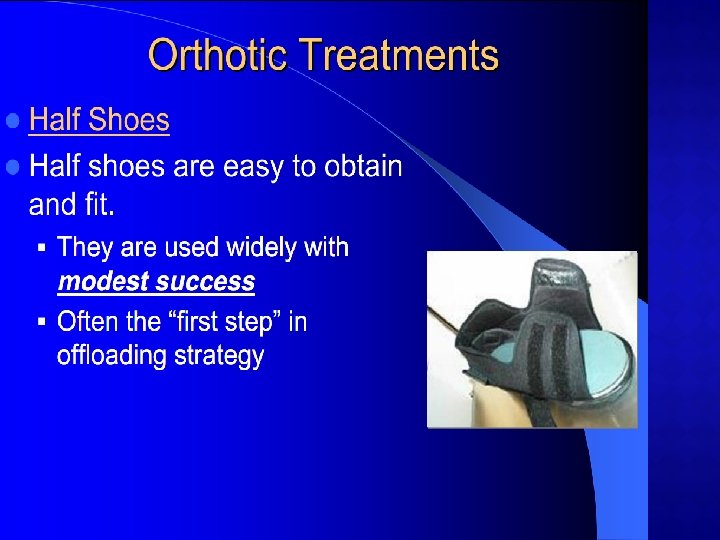
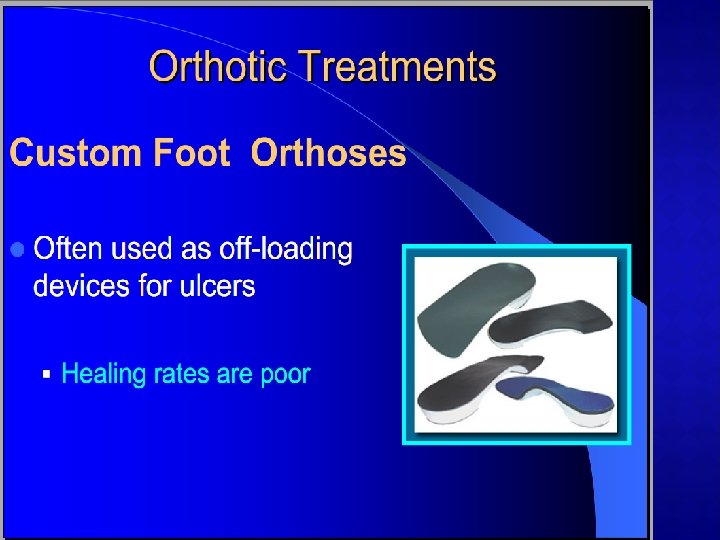
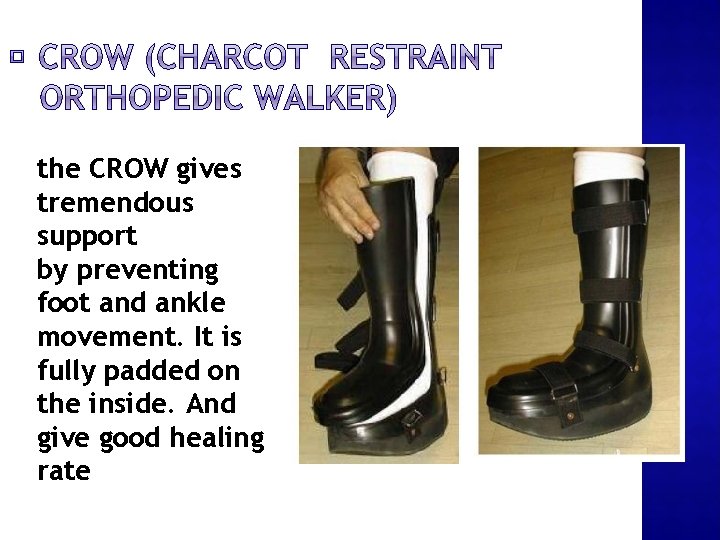
What orthotic treatments are currently being used? • �Total contact casting • �Cast walkers (Air cast, Royce, etc) • �Half shoe • �Therapeutic shoes with Custom foot orthoses • �Shoes with traditional dressing changes • ��CROW (Charcot Restraint Orthopedic Walker)
the CROW gives tremendous support by preventing foot and ankle movement. It is fully padded on the inside. And give good healing rate
� Wagner 4 -5 �Amputation ? level OPERATIVE TREATMENT the indications for urgent surgical intervention include necrotizing infections , wet gangrene or deep abscesses with systemic involvment. Less urgent surgery may be required if • There is a substantially compromised soft tissue envelope, • Loss Of Mechanical Function Of The Foot, Or • Bone Involvement That Is Limb Threatening • Or if the patient prefers to avoid prolonged antibiotic therapy. • Surgical débridement of osteomyelitis is not always required.
� Uncontrollable infection or sepsis � Inability to obtain a plantar grade, dry foot that can tolerate weight bearing � Non-ambulatory patient � Decision not always straightforward
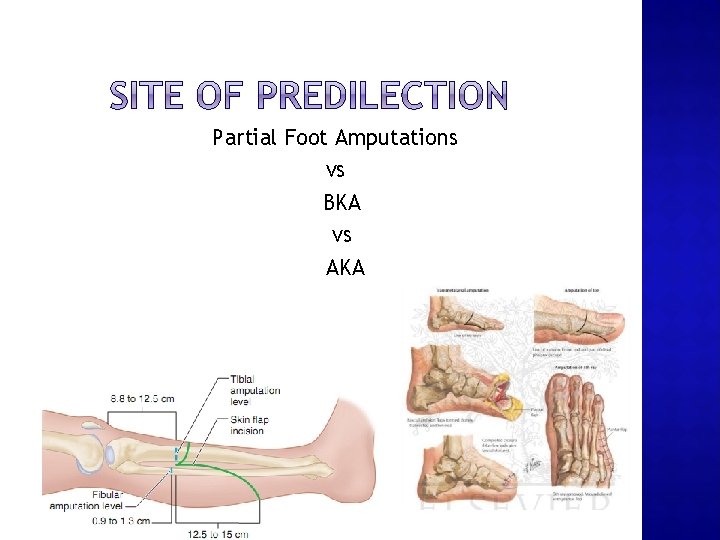
Partial Foot Amputations vs BKA vs AKA
� More proximal , , , less complication, more functional loss � More distal , , less functional loss , more surgical complication � The patient’s overall well being, general medical condition, and rehabilitation all are important factors. � Ambulation of the patient , � Level of tissue necrosis � Level of infected planes of tissues � Distal pulses � A vascular surgery consultation is almost always appropriate. Even if revascularization would not allow for salvage of the entire limb
Determining the most distal level for amputation with a reasonable chance of healing can be challenging. Preoperatively, clinical assessment of skin color, hair growth, and skin temperature provides valuable initial information. Preoperative arteriograms, , are of little help in determining potential for wound healing. Segmental systolic blood pressures likewise offer little useful information because they are often falsely elevated owing to the noncompliant walls of arteriosclerotic vessels. Measurements of skin perfusion pressures may be of some benefit, thermography or laser Doppler flowmetry as methods to test skin flap perfusion. tissue uptake of intravenously injected fluorescein or the tissue clearance of intradermally injected
THANK YOU