PX 3012 The Solid State CM 3020 Solid
- Slides: 19
PX 3012 The Solid State CM 3020 Solid State Chemistry Course coordinator: Dr. J. Skakle Course coordinator: Dr. J. Feldmann
SOLID STATE Crystals Ü Crystal structure basics unit cells symmetry lattices Ü Diffraction how and why - derivation Ü Some important crystal structures and properties close packed structures octahedral and tetrahedral holes basic structures ferroelectricity
Objectives By the end of this section you should: • be able to identify a unit cell in a symmetrical pattern • know that there are 7 possible unit cell shapes • be able to define cubic, tetragonal, orthorhombic and hexagonal unit cell shapes
Why Solids? most elements solid at room temperature atoms in ~fixed position “simple” case - crystalline solid Crystal Structure Why study crystal structures? description of solid comparison with other similar materials classification correlation with physical properties
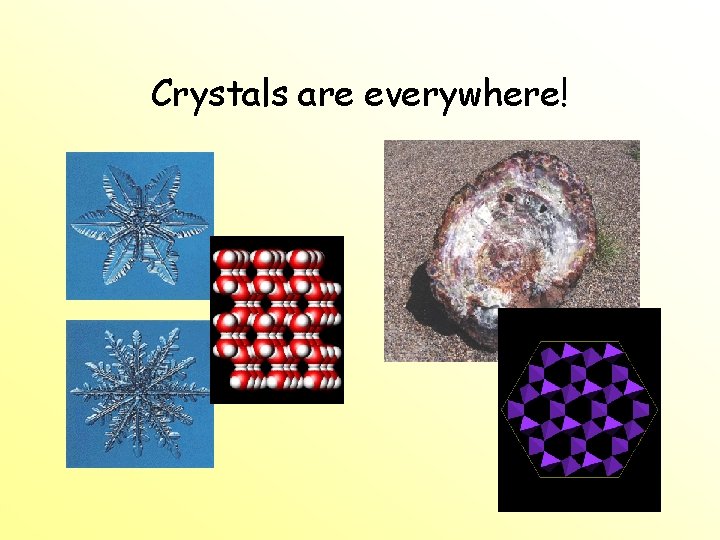
Crystals are everywhere!
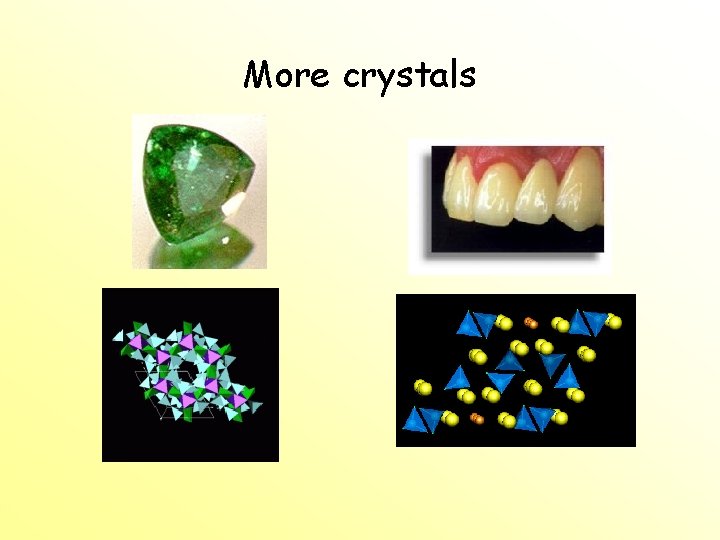
More crystals
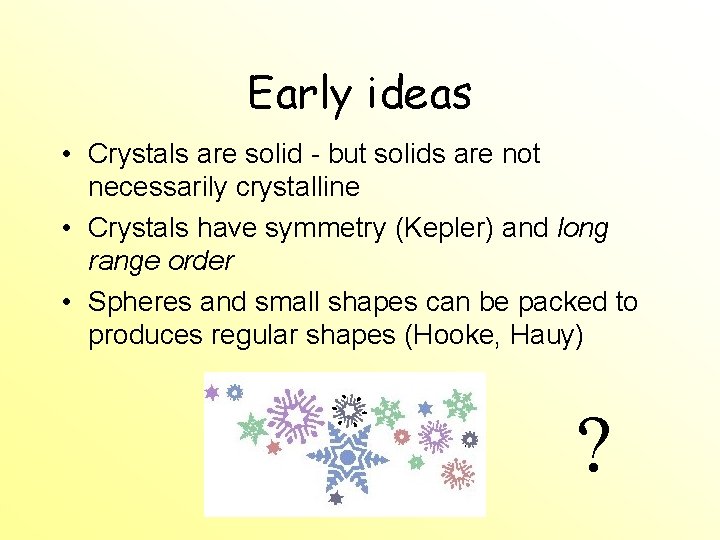
Early ideas • Crystals are solid - but solids are not necessarily crystalline • Crystals have symmetry (Kepler) and long range order • Spheres and small shapes can be packed to produces regular shapes (Hooke, Hauy) ?
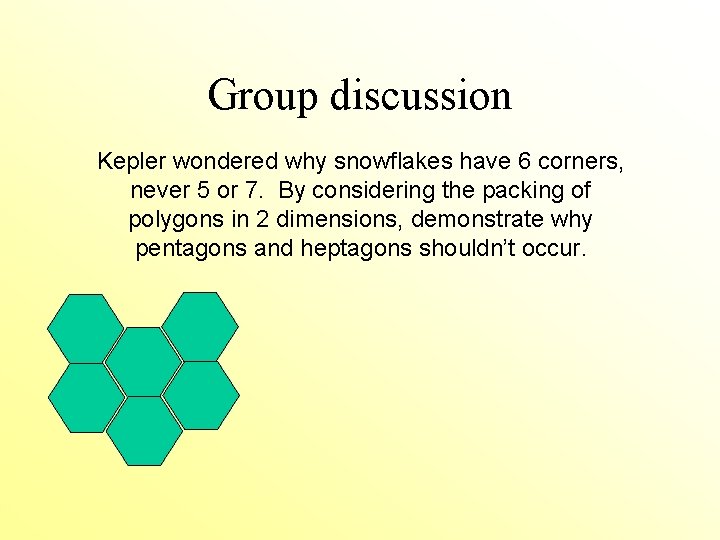
Group discussion Kepler wondered why snowflakes have 6 corners, never 5 or 7. By considering the packing of polygons in 2 dimensions, demonstrate why pentagons and heptagons shouldn’t occur.
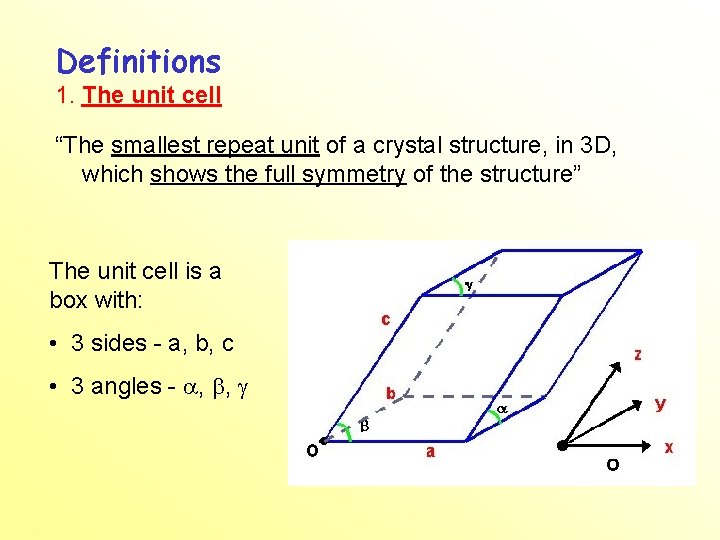
Definitions 1. The unit cell “The smallest repeat unit of a crystal structure, in 3 D, which shows the full symmetry of the structure” The unit cell is a box with: • 3 sides - a, b, c • 3 angles - , ,
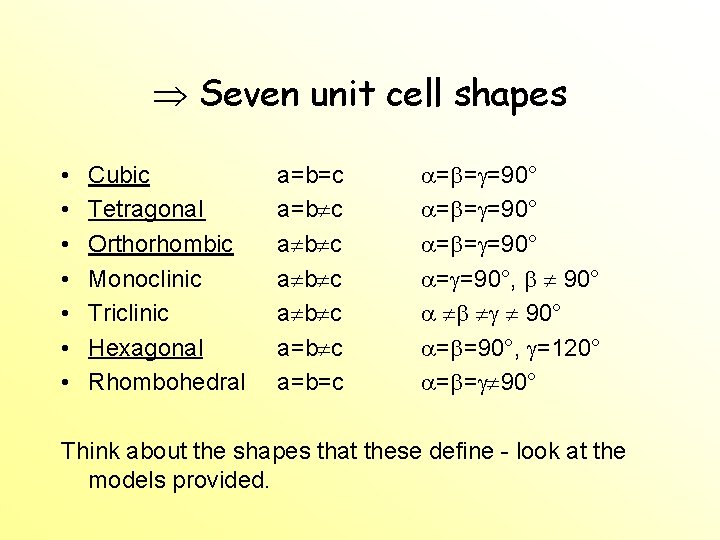
Seven unit cell shapes • • Cubic Tetragonal Orthorhombic Monoclinic Triclinic Hexagonal Rhombohedral a=b=c a=b c a b c a=b=c = = =90°, 90° = =90°, =120° = = 90° Think about the shapes that these define - look at the models provided.
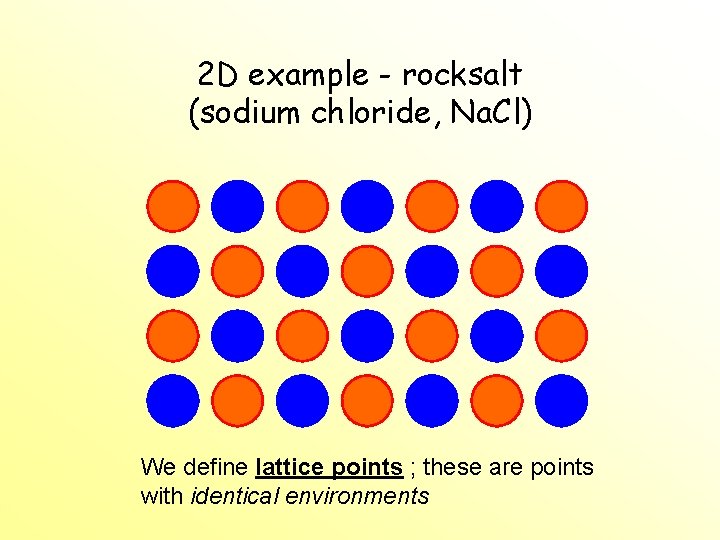
2 D example - rocksalt (sodium chloride, Na. Cl) We define lattice points ; these are points with identical environments
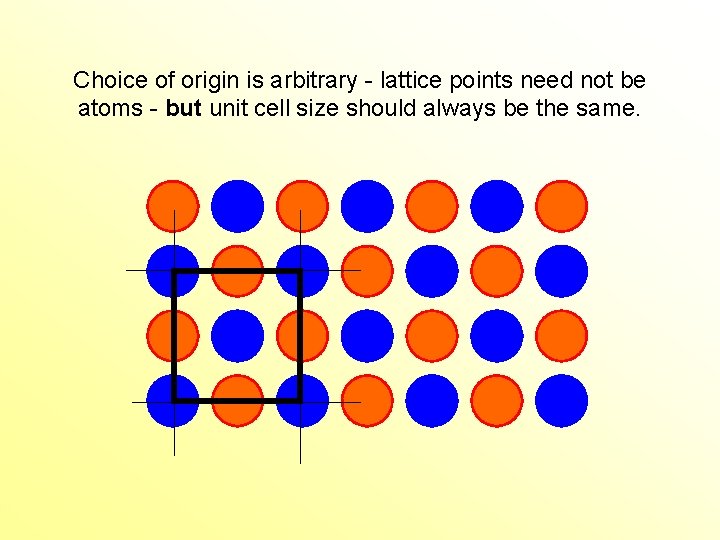
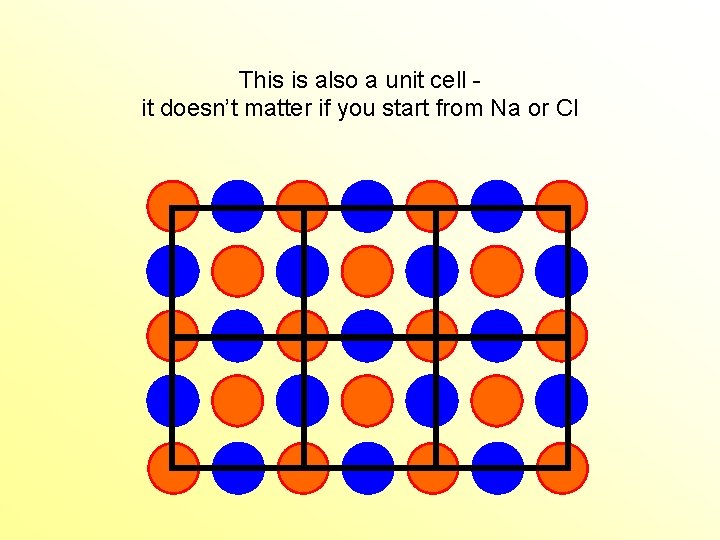
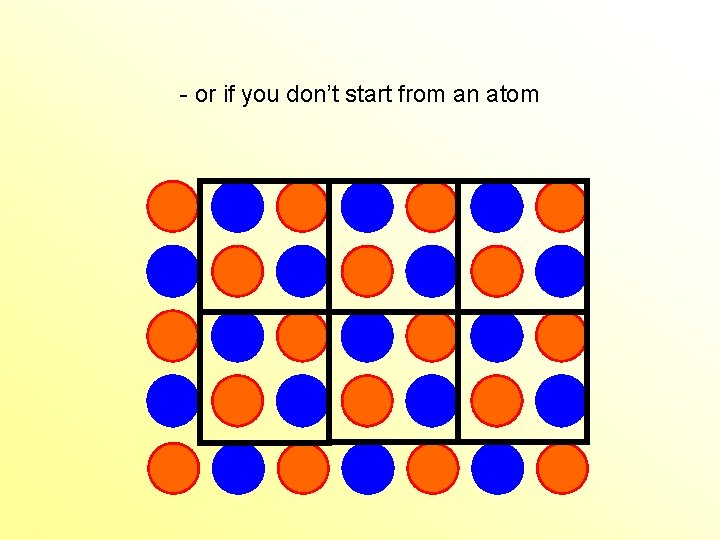
Choice of origin is arbitrary - lattice points need not be atoms - but unit cell size should always be the same.
This is also a unit cell it doesn’t matter if you start from Na or Cl
- or if you don’t start from an atom
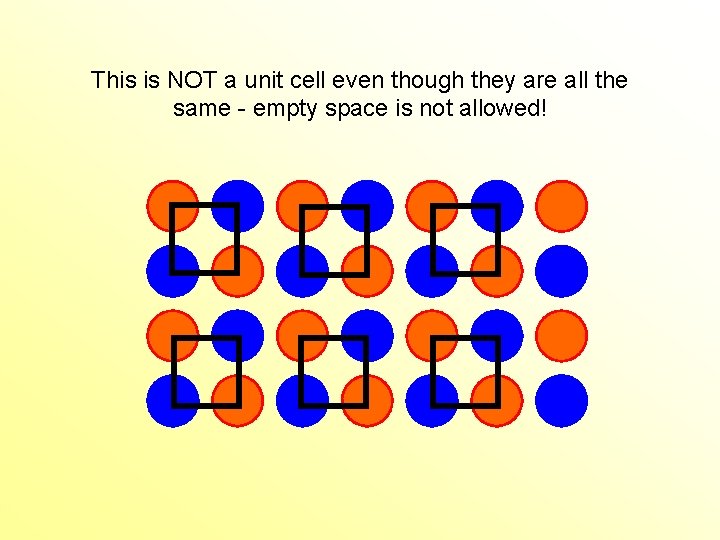
This is NOT a unit cell even though they are all the same - empty space is not allowed!
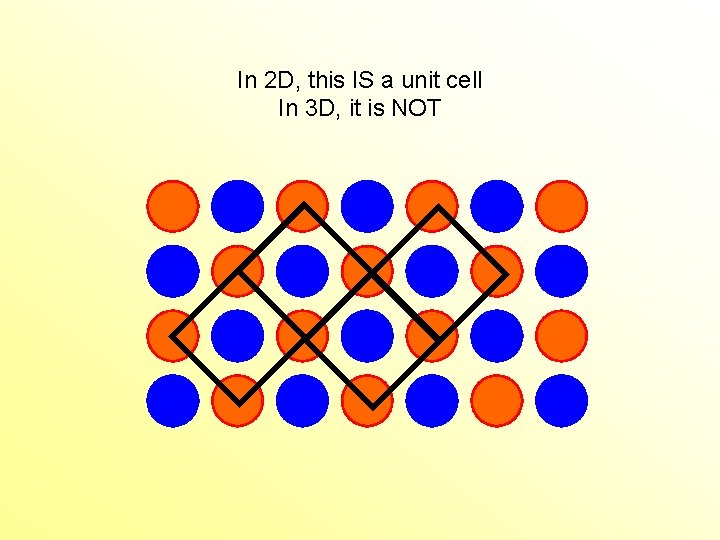
In 2 D, this IS a unit cell In 3 D, it is NOT
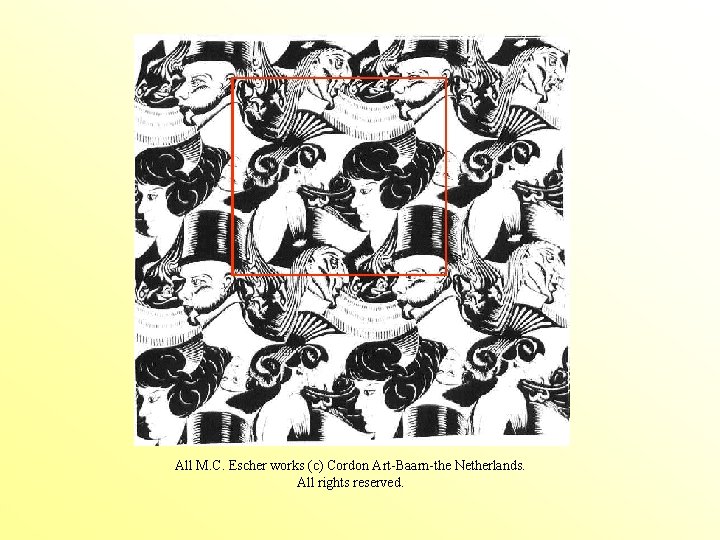
All M. C. Escher works (c) Cordon Art-Baarn-the Netherlands. All rights reserved.
Examples The sheets at the end of handout 1 show examples of periodic patterns. On each, mark on a unit cell. [remembering that there a number of different (correct) answers!]
Summary Ø Unit cells must link up - cannot have gaps between adjacent cells Ø All unit cells must be identical Ø Unit cells must show the full symmetry of the structure next section