
Pitch Relative highness or lowness of a note
![Pitch • [ii: 1] continuous as we move from one note to another](https://slidetodoc.com/presentation_image_h/2ec511b499db69c559bac5b461a2d29a/image-3.jpg "Pitch • [ii: 1] continuous as we move from one note to another")
![Pitch • piano plays a [ii: 2] familiar scale of 12 standard notes per](https://slidetodoc.com/presentation_image_h/2ec511b499db69c559bac5b461a2d29a/image-5.jpg "Pitch • piano plays a [ii: 2] familiar scale of 12 standard notes per")
![Pitch • [ii: 4] Middle C • • • Called C 4 in Csound](https://slidetodoc.com/presentation_image_h/2ec511b499db69c559bac5b461a2d29a/image-10.jpg "Pitch • [ii: 4] Middle C • • • Called C 4 in Csound")
![Octave • a pitch an octave higher than another has [ii: 20] double its](https://slidetodoc.com/presentation_image_h/2ec511b499db69c559bac5b461a2d29a/image-21.jpg "Octave • a pitch an octave higher than another has [ii: 20] double its")
![Harmonic Series • [ii: 22] In any harmonic series, the 2 nd harmonic is](https://slidetodoc.com/presentation_image_h/2ec511b499db69c559bac5b461a2d29a/image-22.jpg "Harmonic Series • [ii: 22] In any harmonic series, the 2 nd harmonic is")
![Pitch • pitches and notes use 7 letter names, [ii: 23] A-A, equivalent to](https://slidetodoc.com/presentation_image_h/2ec511b499db69c559bac5b461a2d29a/image-25.jpg "Pitch • pitches and notes use 7 letter names, [ii: 23] A-A, equivalent to")
- Slides: 28
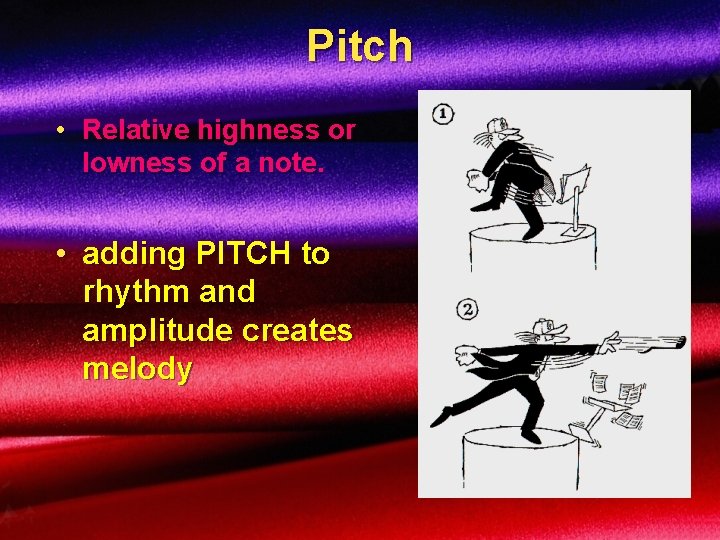
Pitch • Relative highness or lowness of a note. • adding PITCH to rhythm and amplitude creates melody
Pitch • [ii: 1] continuous as we move from one note to another
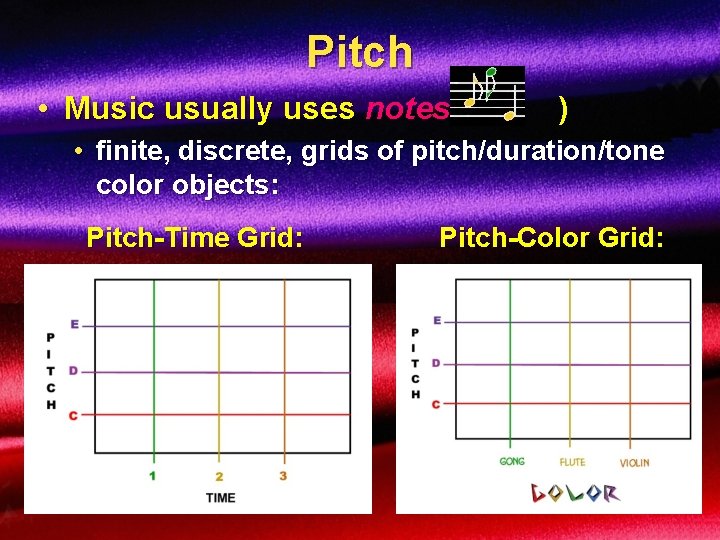
Pitch • Music usually uses notes ( ) • finite, discrete, grids of pitch/duration/tone color objects: Pitch-Time Grid: Pitch-Color Grid:
Pitch • piano plays a [ii: 2] familiar scale of 12 standard notes per octave (see keyboard) 2 1 12
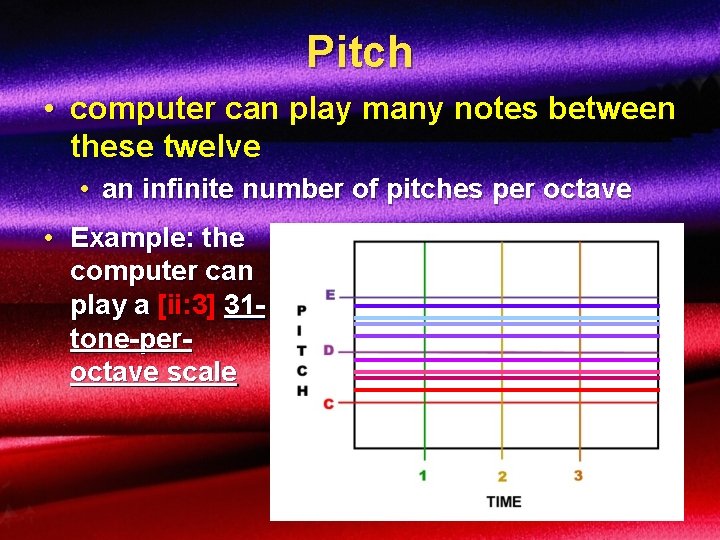
Pitch • computer can play many notes between these twelve • an infinite number of pitches per octave • Example: the computer can play a [ii: 3] 31 tone-peroctave scale
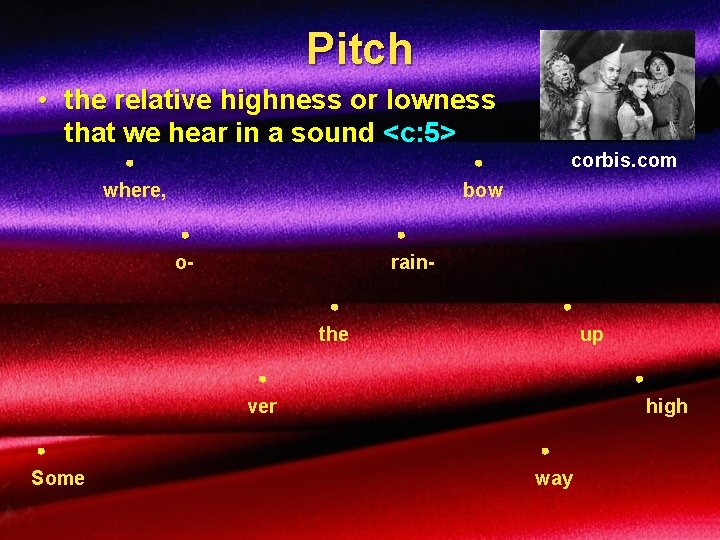
Pitch • the relative highness or lowness that we hear in a sound <c: 5> where, bow o- corbis. com rain the ver Some up high way
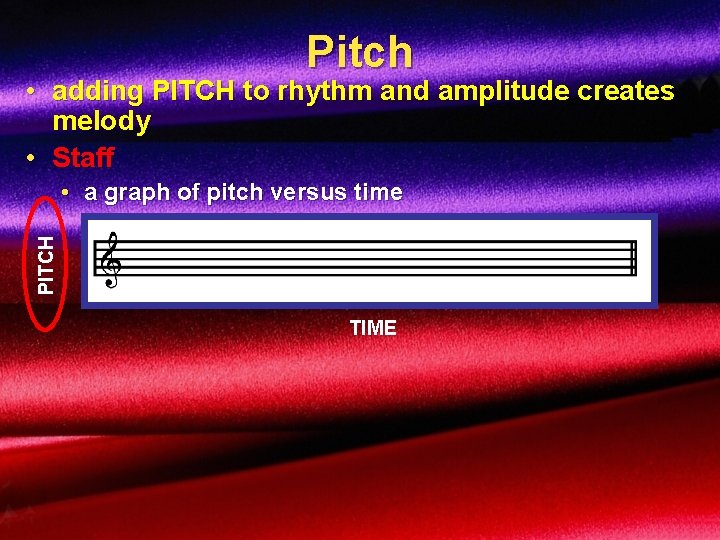
Pitch • adding PITCH to rhythm and amplitude creates melody • Staff PITCH • a graph of pitch versus time TIME
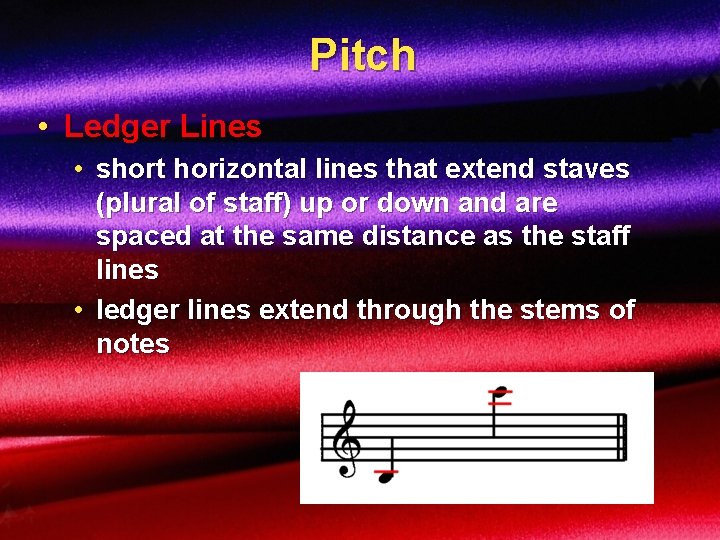
Pitch • Ledger Lines • short horizontal lines that extend staves (plural of staff) up or down and are spaced at the same distance as the staff lines • ledger lines extend through the stems of notes
Pitch • [ii: 4] Middle C • • • Called C 4 in Csound the note in the middle of the two clefs Middle C uses one ledger line below the treble clef staff • Middle C uses one ledger line above the bass clef staff
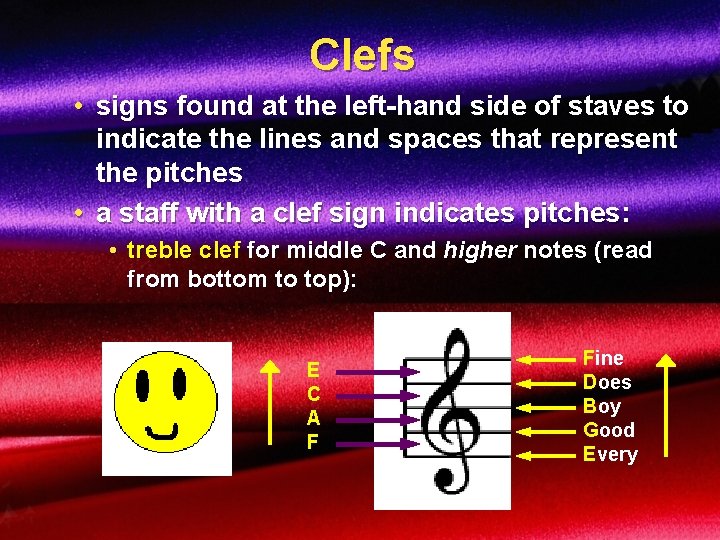
Clefs • signs found at the left-hand side of staves to indicate the lines and spaces that represent the pitches • a staff with a clef sign indicates pitches: • treble clef for middle C and higher notes (read from bottom to top): E C A F Fine Does Boy Good Every
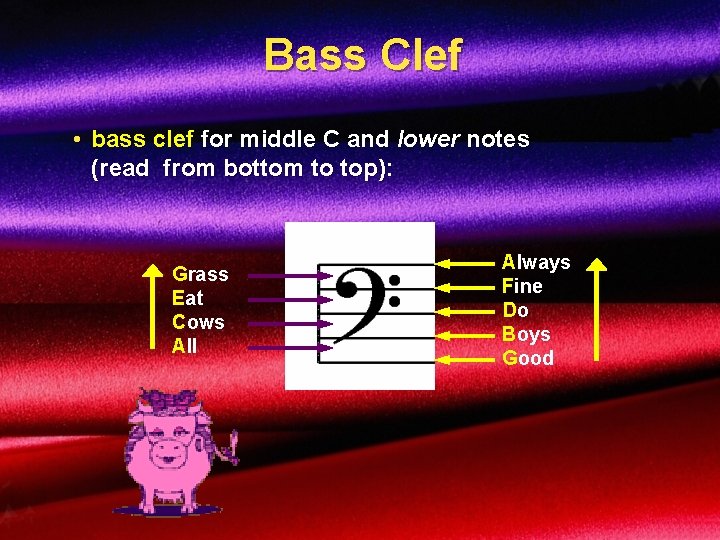
Bass Clef • bass clef for middle C and lower notes (read from bottom to top): Grass Eat Cows All Always Fine Do Boys Good
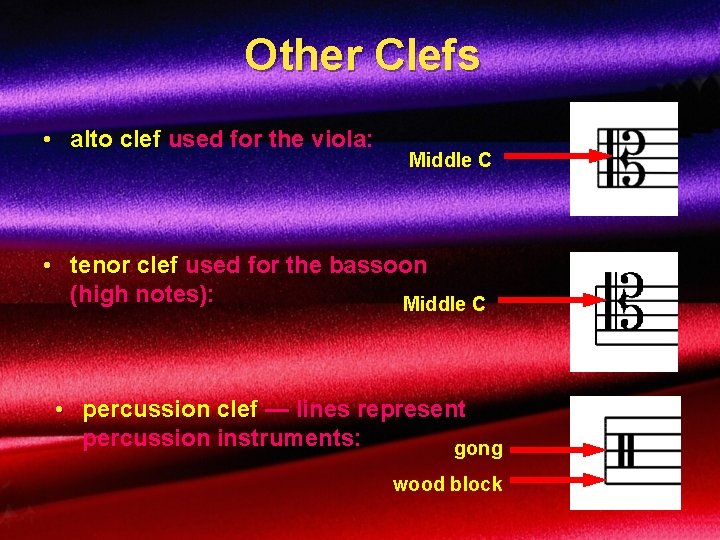
Other Clefs • alto clef used for the viola: Middle C • tenor clef used for the bassoon (high notes): Middle C • percussion clef — lines represent percussion instruments: gong wood block
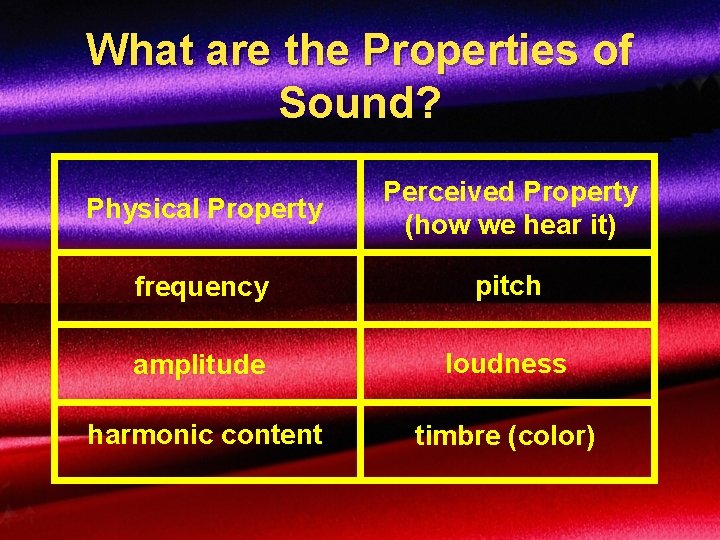
What are the Properties of Sound? Physical Property Perceived Property (how we hear it) frequency pitch amplitude loudness harmonic content timbre (color)
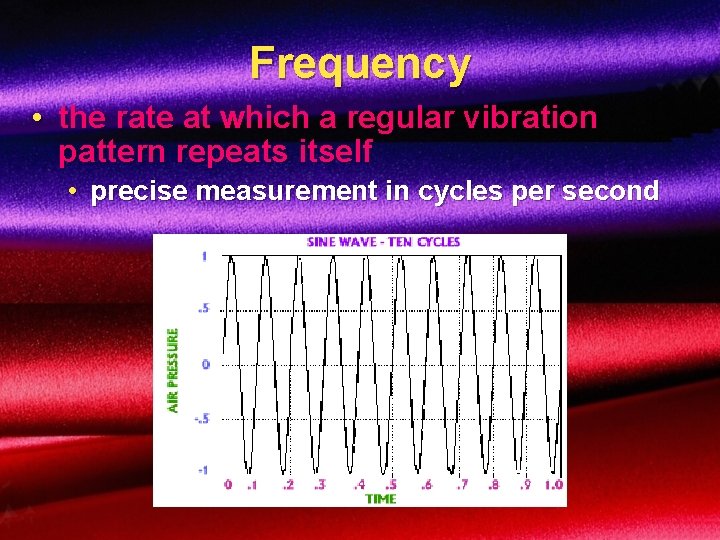
Frequency • the rate at which a regular vibration pattern repeats itself • precise measurement in cycles per second
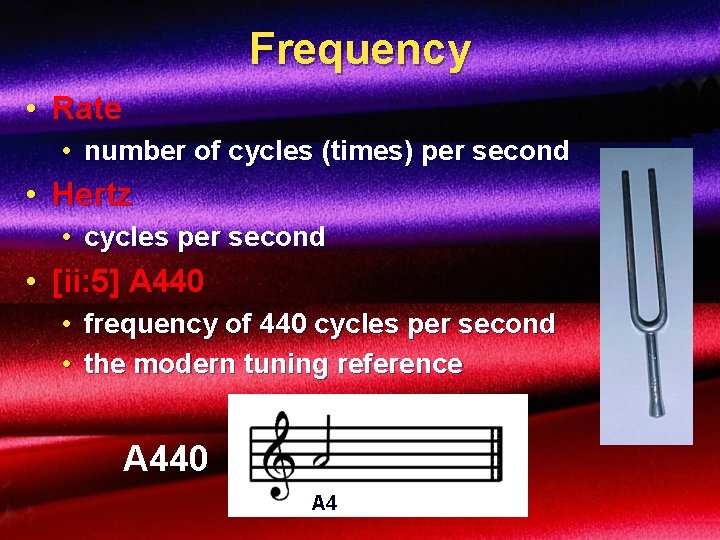
Frequency • Rate • number of cycles (times) per second • Hertz • cycles per second • [ii: 5] A 440 • frequency of 440 cycles per second • the modern tuning reference A 440 A 4
Lowest Frequency We Can Hear • about 20 Hertz • can you hear: • • • [ii: 6] 10 Hertz? [ii: 7] 20 Hertz? [ii: 8] 30 Hertz? [ii: 9] 40 Hertz? [ii: 10] 50 Hertz? • below about 20 Hz, we only hear clicks • limit about 20 Hz for how fast we can perform and hear [ii: 11] separate notes
Highest Frequency We Can Hear • Varies according to age and other individual factors • can you hear: • • • [ii: 12] [ii: 13] [ii: 14] [ii: 15] [ii: 16] [ii: 17] 8000 Hertz? 12000 Hertz? 14000 Hertz? 16000 Hertz? 18000 Hertz? 20000 Hertz?
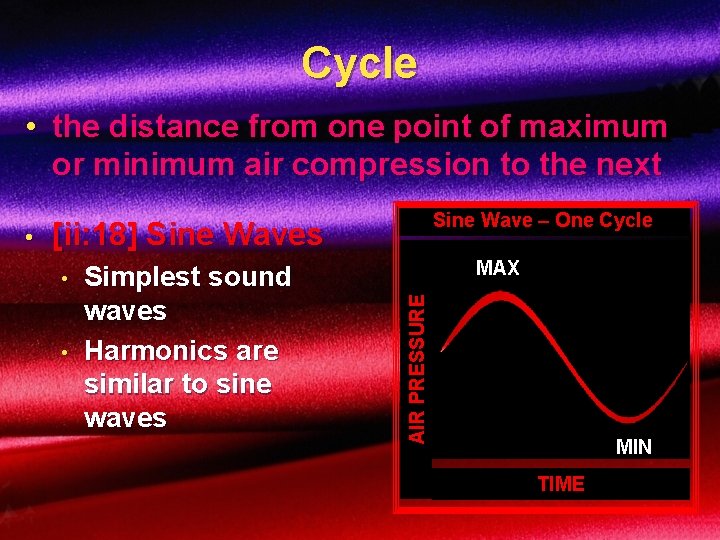
Cycle • the distance from one point of maximum or minimum air compression to the next [ii: 18] Sine Waves • • Simplest sound waves Harmonics are similar to sine waves MAX AIR PRESSURE • Sine Wave – One Cycle MIN TIME
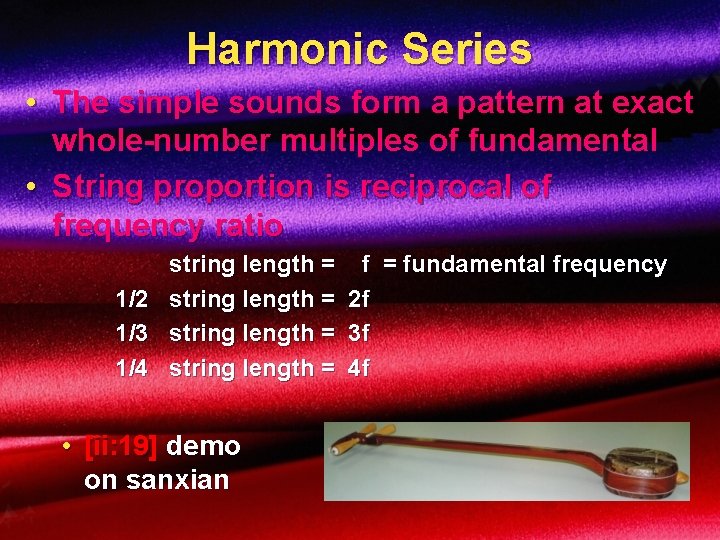
Harmonic Series • The simple sounds form a pattern at exact whole-number multiples of fundamental • String proportion is reciprocal of frequency ratio 1/2 1/3 1/4 string length = • [ii: 19] demo on sanxian f = fundamental frequency 2 f 3 f 4 f
Octave • a pitch an octave higher than another has [ii: 20] double its frequency • Example: 440 Hertz * 2 = 880 Hertz • a pitch an octave lower has [ii: 21] half the frequency • Example: 440 Hertz *. 5 = 220 Hertz A 3 A 4 A 5
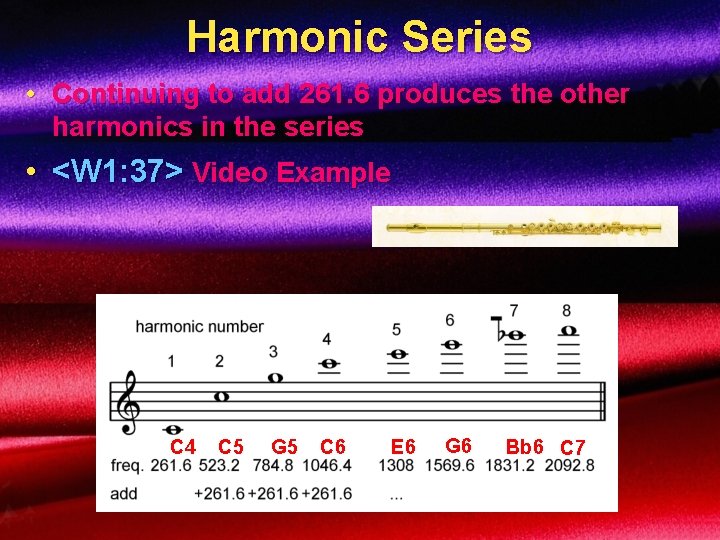
Harmonic Series • [ii: 22] In any harmonic series, the 2 nd harmonic is the octave • For a harmonic series starting on Middle C with a frequency of 261. 6 Hertz, the frequency of the 2 nd harmonic (octave) is 261. 6 x 2 = 523. 2 Hertz … C 4 C 5
Harmonic Series • Continuing to add 261. 6 produces the other harmonics in the series • <W 1: 37> Video Example C 4 C 5 G 5 C 6 E 6 G 6 Bb 6 C 7
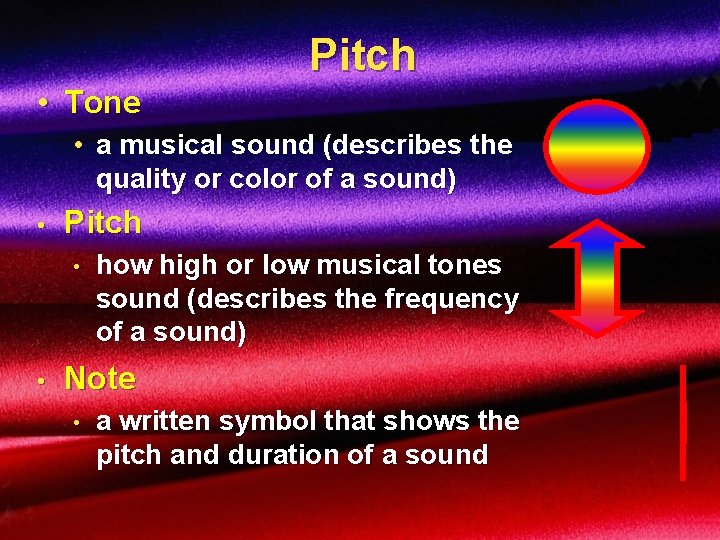
Pitch • Tone • a musical sound (describes the quality or color of a sound) • Pitch • • how high or low musical tones sound (describes the frequency of a sound) Note • a written symbol that shows the pitch and duration of a sound
Pitch • pitches and notes use 7 letter names, [ii: 23] A-A, equivalent to the white keys on the piano keyboard • 7 Letter Names for Pitches and Notes
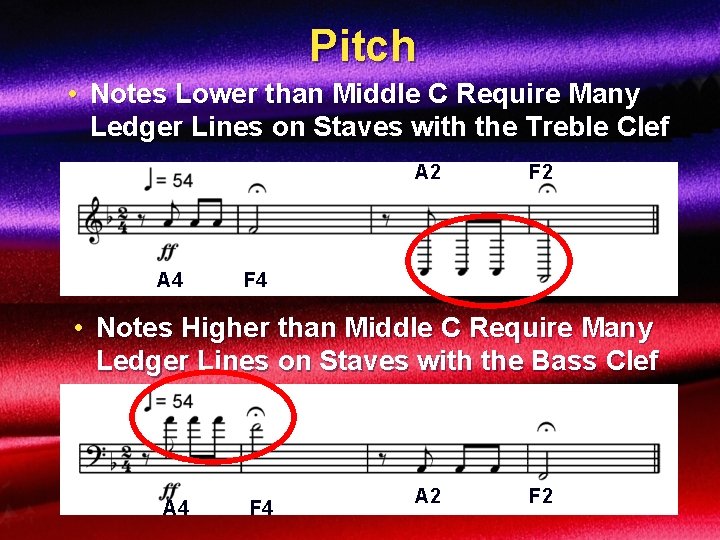
Pitch • Notes Lower than Middle C Require Many Ledger Lines on Staves with the Treble Clef A 2 A 4 F 2 F 4 • Notes Higher than Middle C Require Many Ledger Lines on Staves with the Bass Clef A 4 F 4 A 2 F 2
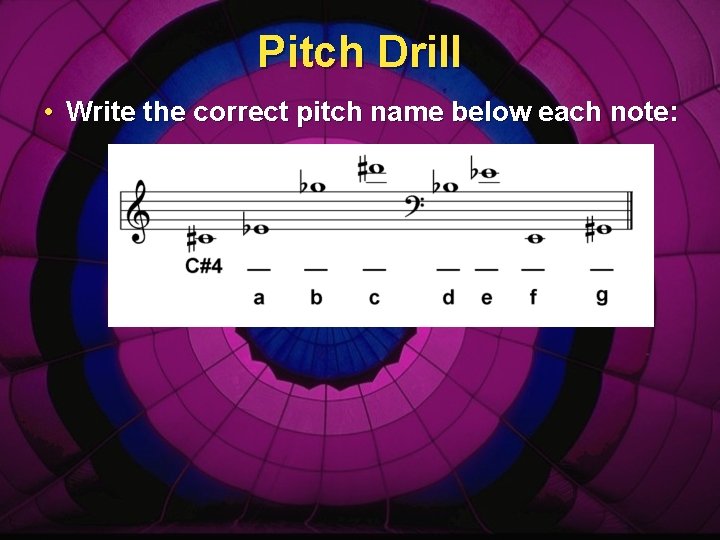
Pitch Drill • Write the correct pitch name below each note:
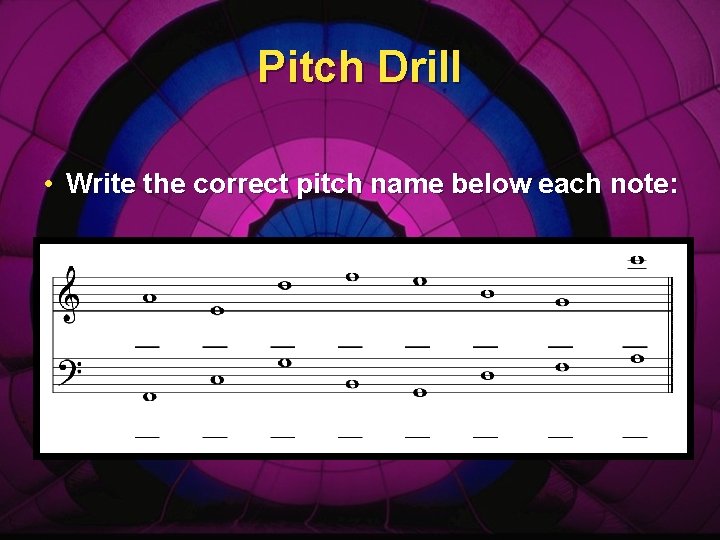
Pitch Drill • Write the correct pitch name below each note: