
Patients Menieres disease Case no 2015 2832165 13
- Slides: 16
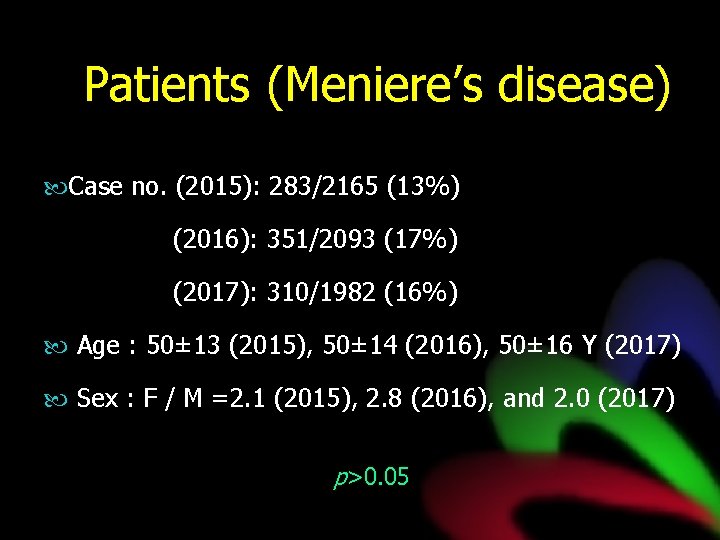
Patients (Meniere’s disease) Case no. (2015): 283/2165 (13%) (2016): 351/2093 (17%) (2017): 310/1982 (16%) Age : 50± 13 (2015), 50± 14 (2016), 50± 16 Y (2017) Sex : F / M =2. 1 (2015), 2. 8 (2016), and 2. 0 (2017) p>0. 05
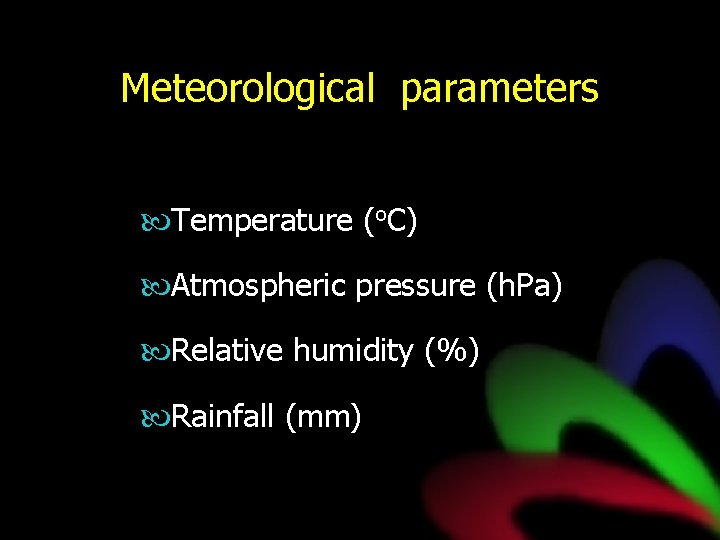
Meteorological parameters Temperature (o. C) Atmospheric pressure (h. Pa) Relative humidity (%) Rainfall (mm)
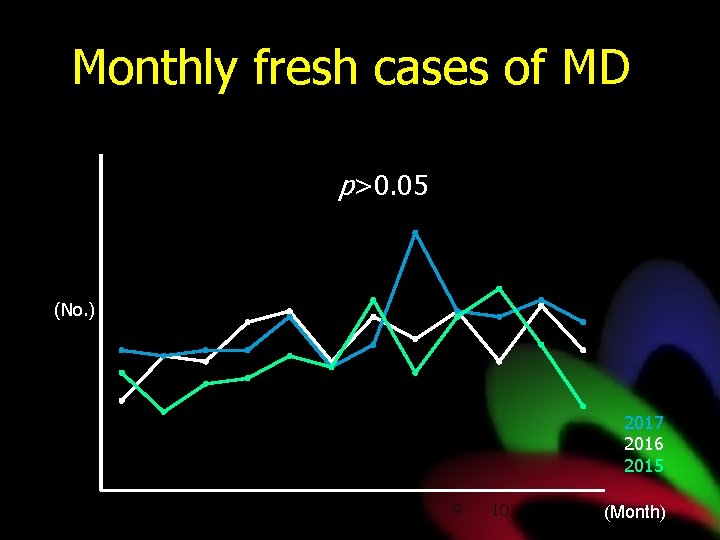
Monthly fresh cases of MD 60 p>0. 05 (No. ) 2017 2016 2015 0 1 2 3 4 5 6 7 8 9 10 11 12 (Month)
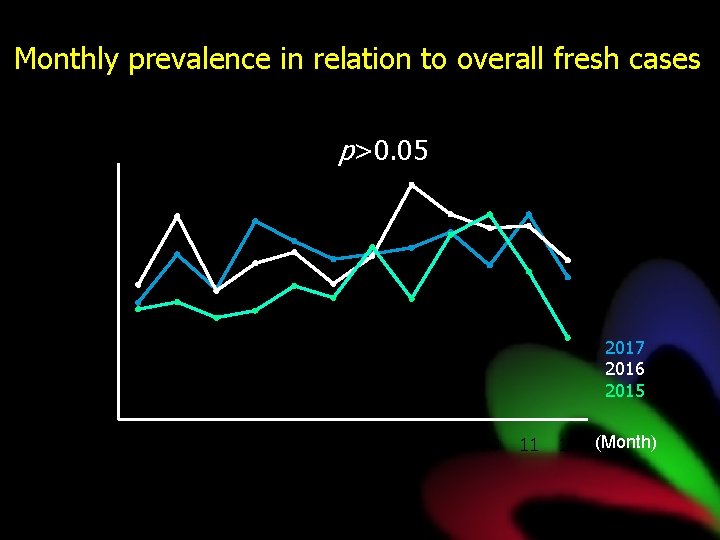
Monthly prevalence in relation to overall fresh cases p>0. 05 25, 0% 2017 2016 2015 0, 0% 1 2 3 4 5 6 7 8 9 10 11 12 (Month)
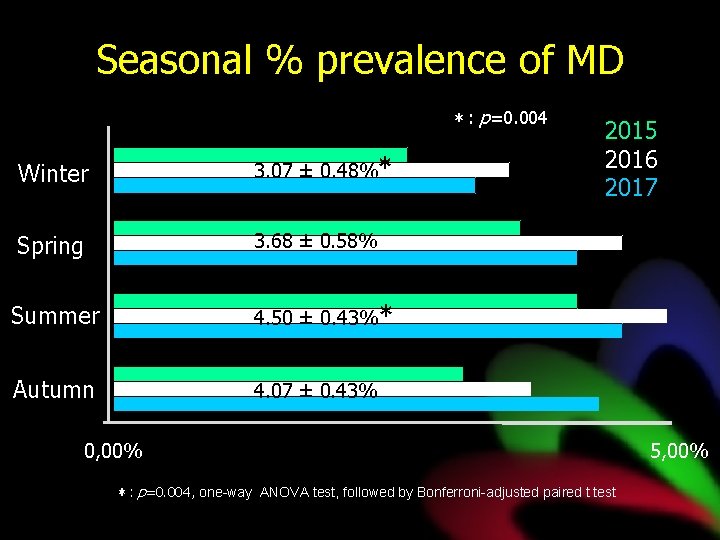
Seasonal % prevalence of MD *: p=0. 004 Winter 3. 07 ± 0. 48%* Spring 3. 68 ± 0. 58% Summer 4. 50 ± 0. 43%* Autumn 4. 07 ± 0. 43% 2015 2016 2017 0, 00% *: p=0. 004, one-way ANOVA test, followed by Bonferroni-adjusted paired t test 5, 00%
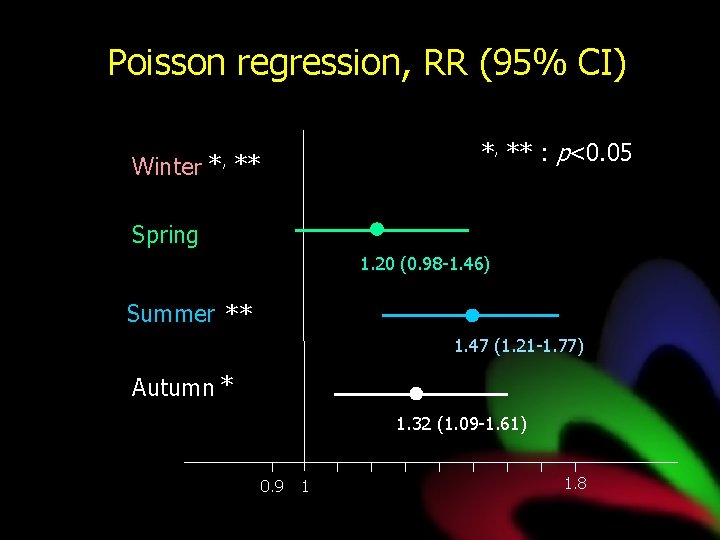
Poisson regression, RR (95% CI) Winter *, ** : p<0. 05 ** Spring 1. 20 (0. 98 -1. 46) Summer ** 1. 47 (1. 21 -1. 77) Autumn * 1. 32 (1. 09 -1. 61) 0. 9 1 1. 8
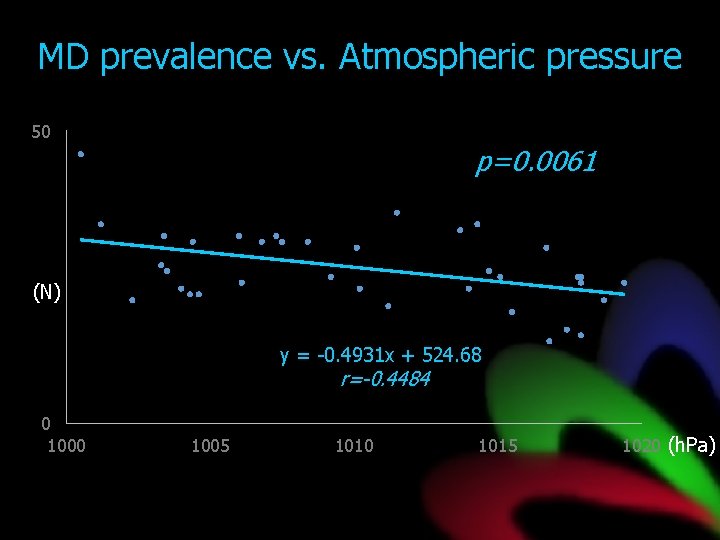
MD prevalence vs. Atmospheric pressure 50 p=0. 0061 (N) y = -0. 4931 x + 524. 68 r=-0. 4484 0 1005 1010 1015 1020 (h. Pa)
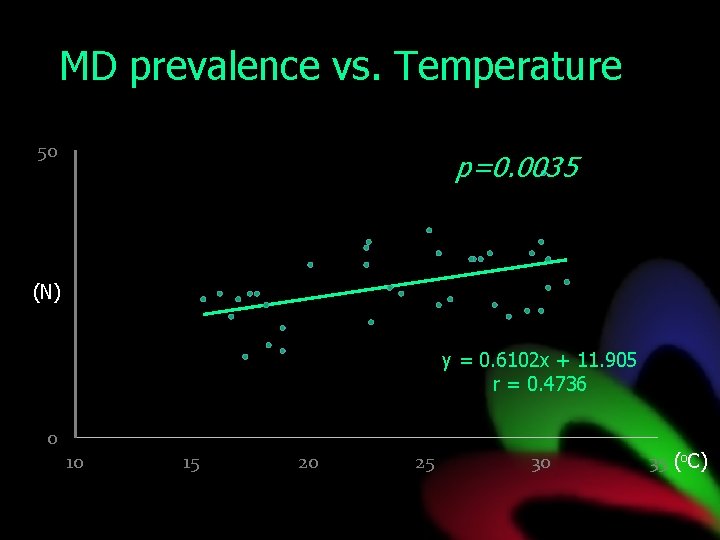
MD prevalence vs. Temperature 50 p=0. 0035 (N) y = 0. 6102 x + 11. 905 r = 0. 4736 0 10 15 20 25 30 35 (o. C)
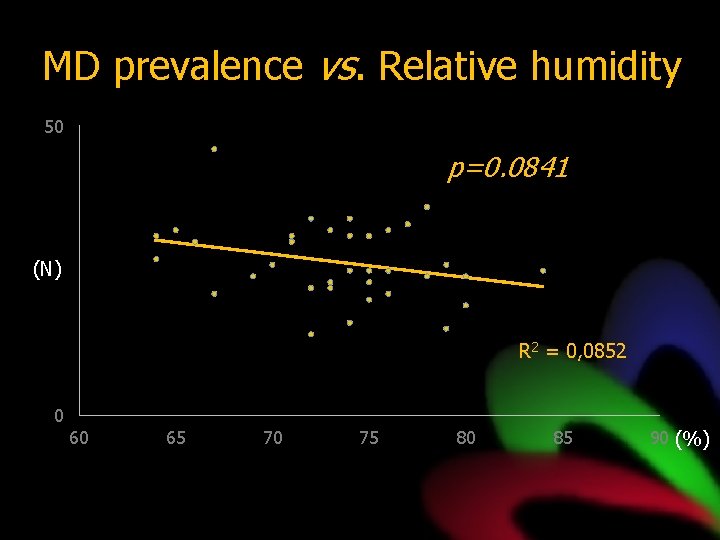
MD prevalence vs. Relative humidity 50 p=0. 0841 (N) R 2 = 0, 0852 0 60 65 70 75 80 85 90 (%)
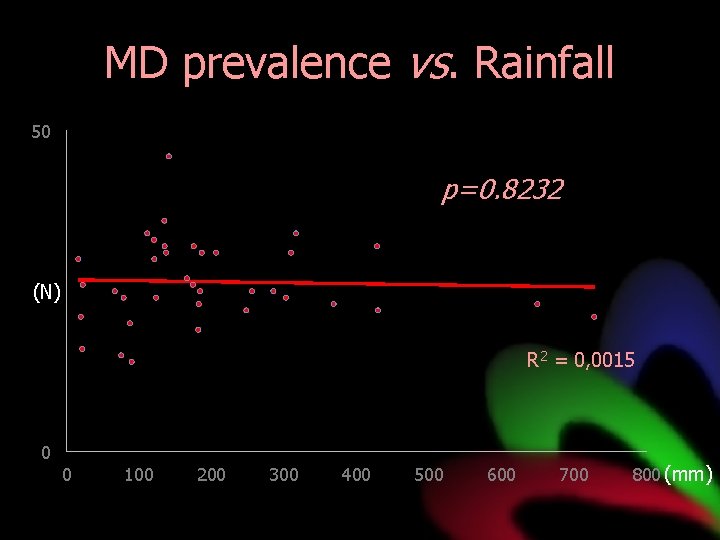
MD prevalence vs. Rainfall 50 p=0. 8232 (N) R 2 = 0, 0015 0 0 100 200 300 400 500 600 700 800 (mm)
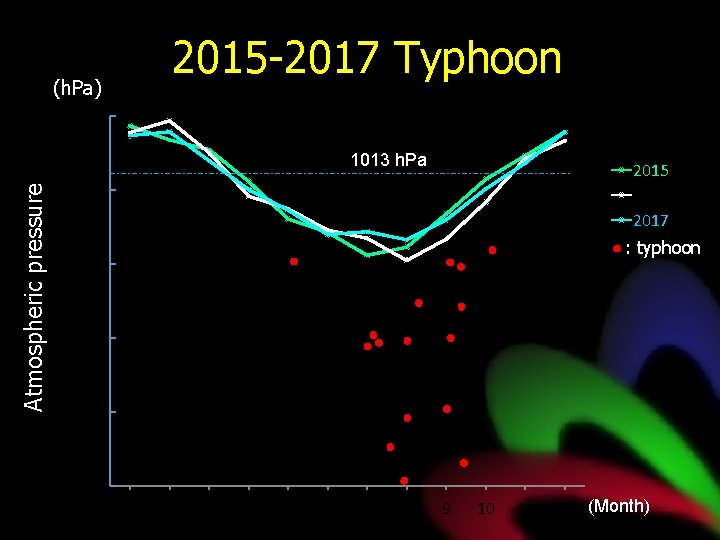
2015 -2017 Typhoon (h. Pa) 1020 Atmospheric pressure 1013 h. Pa 2015 2016 2017 1010 : typhoon 1000 990 980 970 1 2 3 4 5 6 7 8 9 10 11 12 (Month)
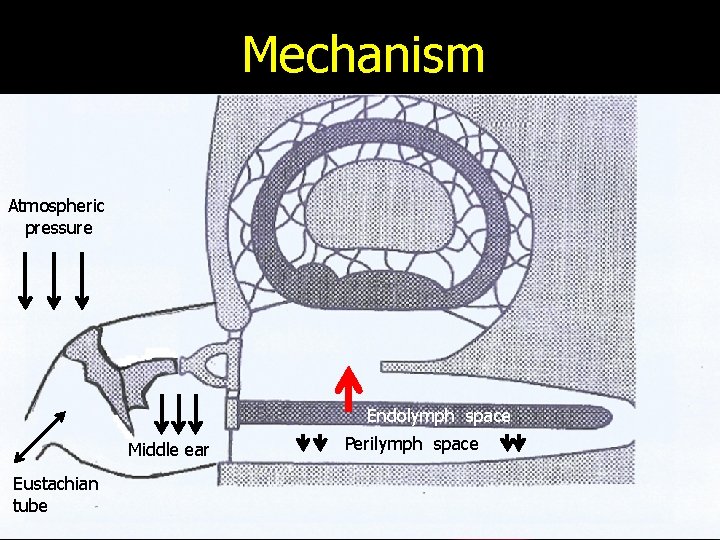
Mechanism Atmospheric pressure Endolymph space Middle ear Eustachian tube Perilymph space
Conclusion Meniere attacks related to atmospheric pressure and temperature. Summer season had higher prevalence of Meniere attack than winter season.
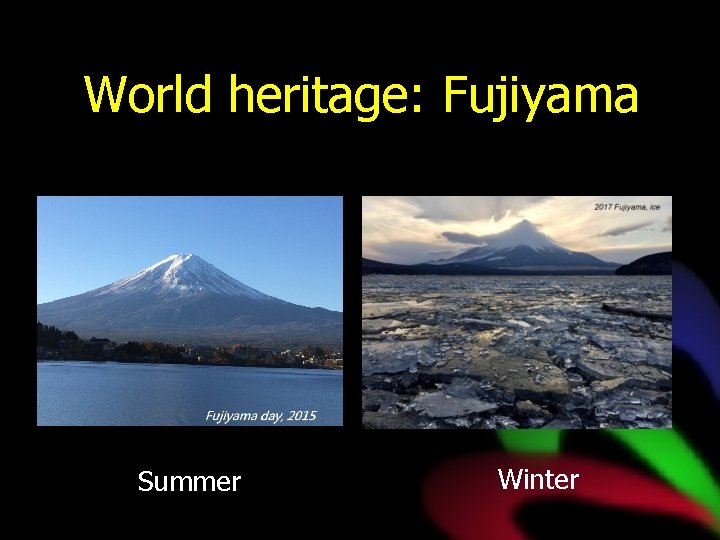
World heritage: Fujiyama Summer Winter