Pathology Visions 2010 Regional Telepathology in Fraser Health



- Slides: 78
Pathology Visions 2010 Regional Telepathology in Fraser Health Authority: A multisite, multimodality, multidiscipline deployment. Dr. I. Scott Cornell Medical Lead, FHA Telepathology Project 1
Project Team Sponsor: IT: Technical Coordinator: Lab Scientists: Physicians: Project Manager: 2 Minnie Downey David Izzard Gagan Atwal James Owen Janet Tunnicliffe – Anatomic Path Val Horak – Hematology Kulvinder Mannan – Microbiology Scott Cornell – AP & Medical Lead Lawrence Haley - Hematology Dale Purych - Microbiology Julie Harrison 2
Introduction 1. Presentation of our 5 year project 2. Results and conclusions to date. 3. Our current deployment. 4. Our take on the future. 3 3
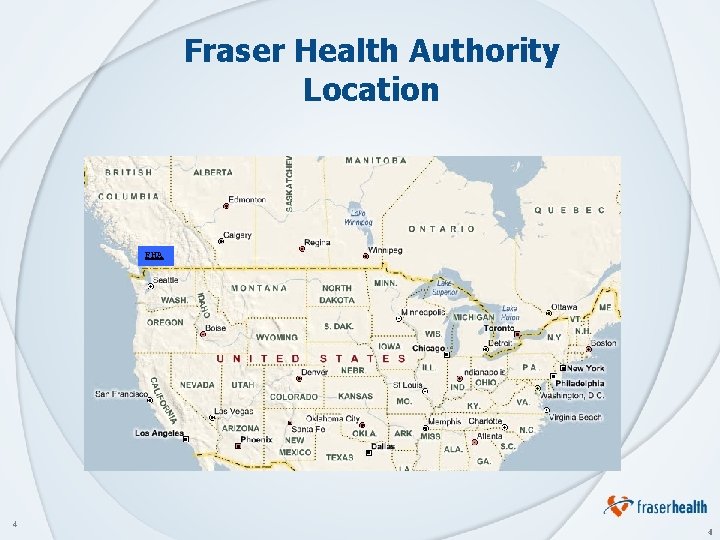
Fraser Health Authority Location FHA 4 4
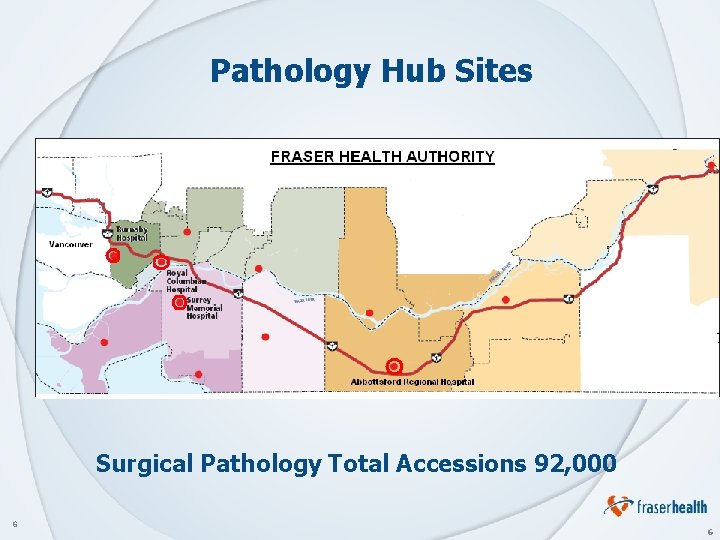
Map of Fraser Health Authority 5 . § 12 Hospital sites § 150 km or 95 miles wide § Serving 1. 5 million people § Over 1750 acute care beds 5
Pathology Hub Sites 1 Surgical Pathology Total Accessions 92, 000 6 6
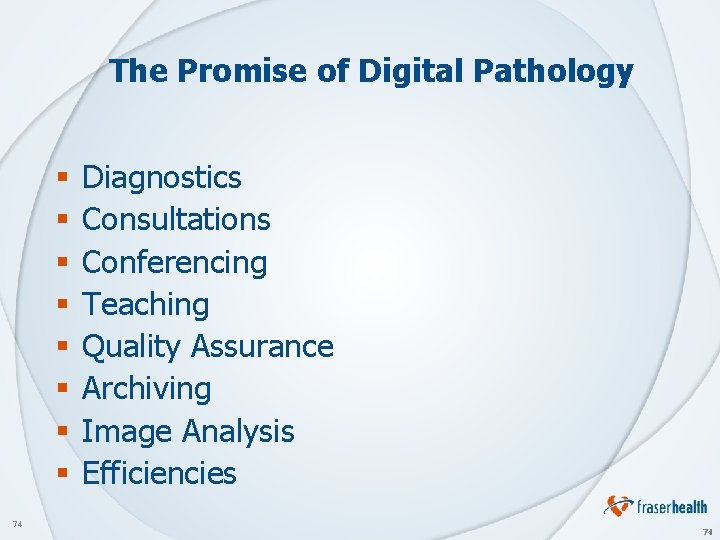
The Promise of Digital Pathology § § § § 7 Diagnostics Consultations Conferencing Teaching Quality Assurance Archiving Image Analysis Efficiencies 7
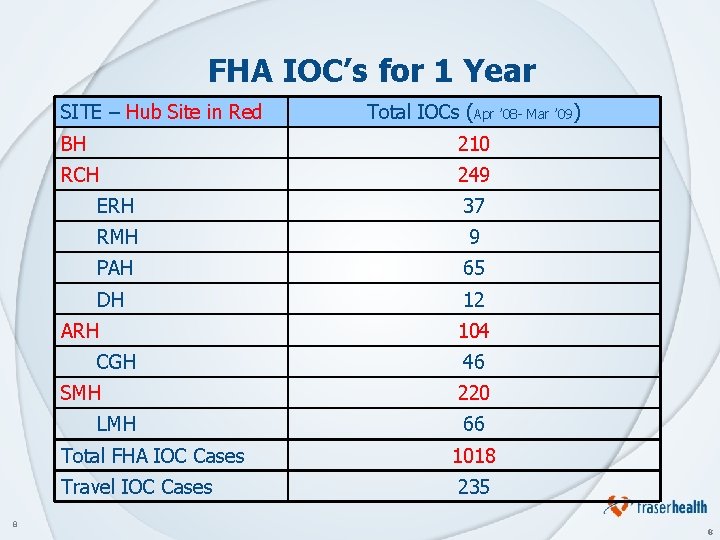
FHA IOC’s for 1 Year SITE – Hub Site in Red BH 210 RCH 249 ERH 37 RMH 9 PAH 65 DH 12 ARH CGH SMH LMH 8 Total IOCs (Apr ’ 08 - Mar ’ 09) 104 46 220 66 Total FHA IOC Cases 1018 Travel IOC Cases 235 8
Project Goals § Evaluate the use of digital imaging technology as part of the Intraoperative Consultation process § Evaluate the potential transition of the technical duties from the pathologist to a qualified Histotechnologist. 9 9
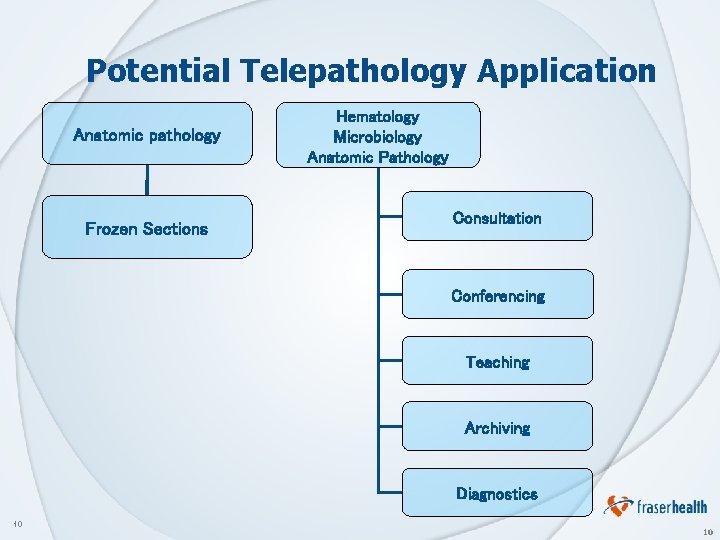
Potential Telepathology Application Anatomic pathology Frozen Sections Hematology Microbiology Anatomic Pathology Consultation Conferencing Teaching Archiving Diagnostics 10 10
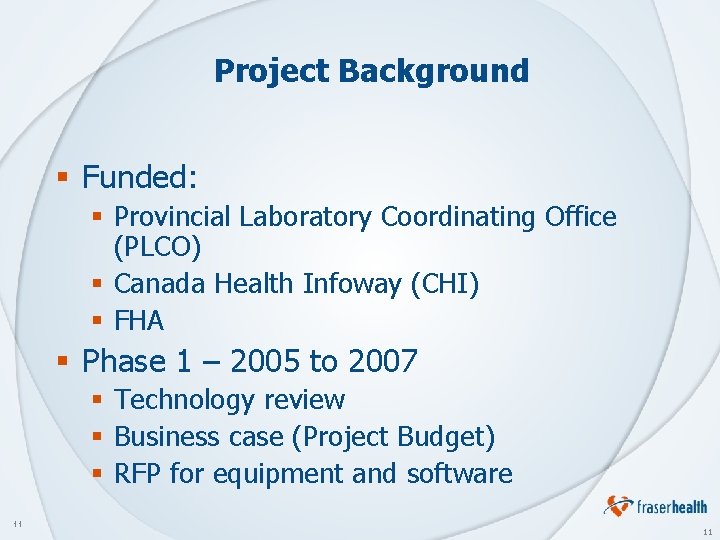
Project Background § Funded: § Provincial Laboratory Coordinating Office (PLCO) § Canada Health Infoway (CHI) § FHA § Phase 1 – 2005 to 2007 § Technology review § Business case (Project Budget) § RFP for equipment and software 11 11
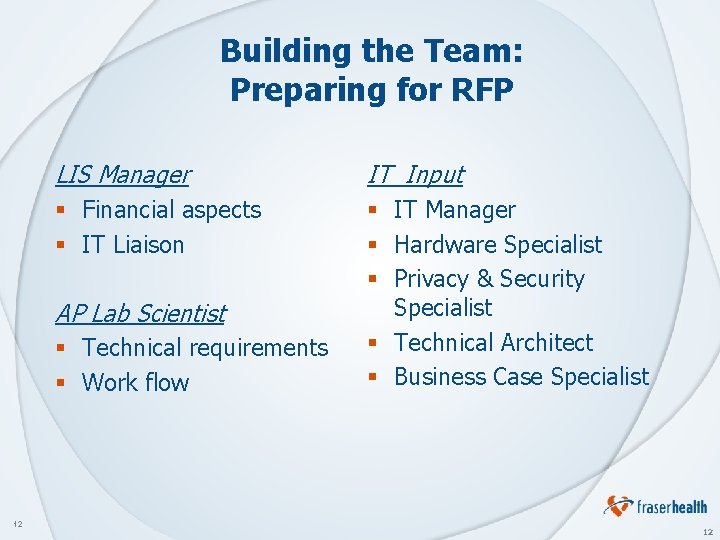
Building the Team: Preparing for RFP LIS Manager § Financial aspects § IT Liaison AP Lab Scientist § Technical requirements § Work flow 12 IT Input § IT Manager § Hardware Specialist § Privacy & Security Specialist § Technical Architect § Business Case Specialist 12
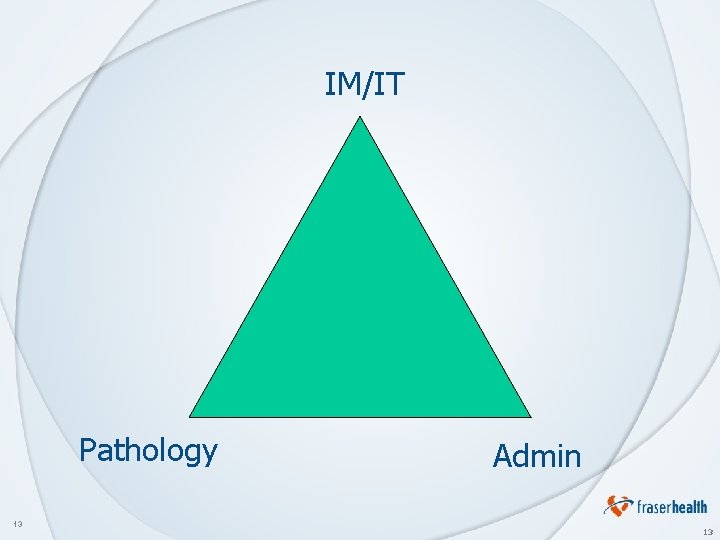
IM/IT Pathology 13 Admin 13
IM/IT: Project Needs 1. 2. 3. 4. 5. 14 Image Quality & Workflow Hardware & Software Evaluation Compatibility with Enterprise Business Case & RFP Development Provincial Advisory Group & Standards Group 14
IM/IT: Enterprise Needs 1. Streaming Impact 2. Storage Impact – integrate with PACS 3. Server Requirements: § § Standard Compatible with FHA desktop 4. Compatible with “Live Meeting” & “Communicator” 5. Security & Privacy Impact 15 15
IM/IT: Specifics Tasks § Hardware & Software Evaluations: § § § 16 Standards Security Impact on network Authentication compatibility Scaleable across our enterprise 16
Phase 2 a Focus Image Quality § WSI § Streaming § Still 17 17
Project AP IOC: RCH Single Site Deployment § Largest FS volume § Proximity to OR § Proximity to path lead & team § Tech training: enroll all Pathologists Hem & Micro: RCH Single Site Deployment § Evaluate all imaging modalities 18 18
Building the Team Technical Coordinator § § § 19 Histopathology skills IT skills Project experience Motivated Interpersonal skills Enthusiasm for concept 19
Phase 2 a August 2007 to April 2008 § Evaluation of digital imaging for Intraoperative Consultations (IOC) at RCH § § Technology – hardware, software, and network Role of Technical Coordinator Collection of IOC metrics Development of operating and training documents § Enhancements § Initial review by Hematology and Medical Microbiology § ? expansion to other FHA sites / users 20 20
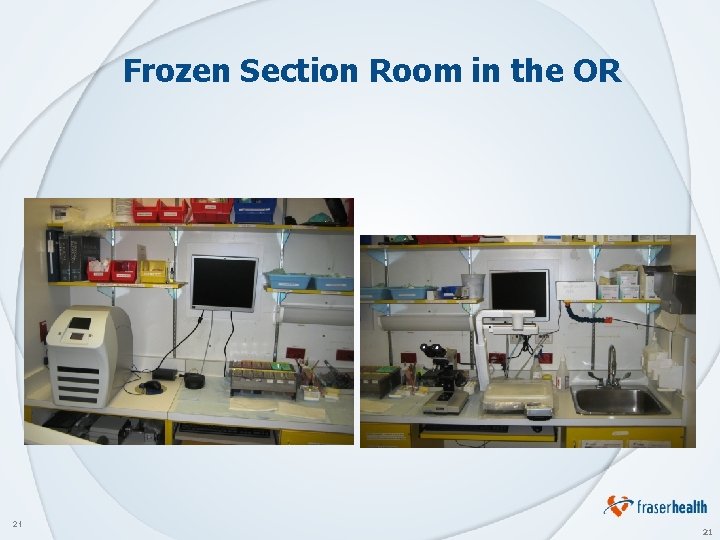
Frozen Section Room in the OR 21 21
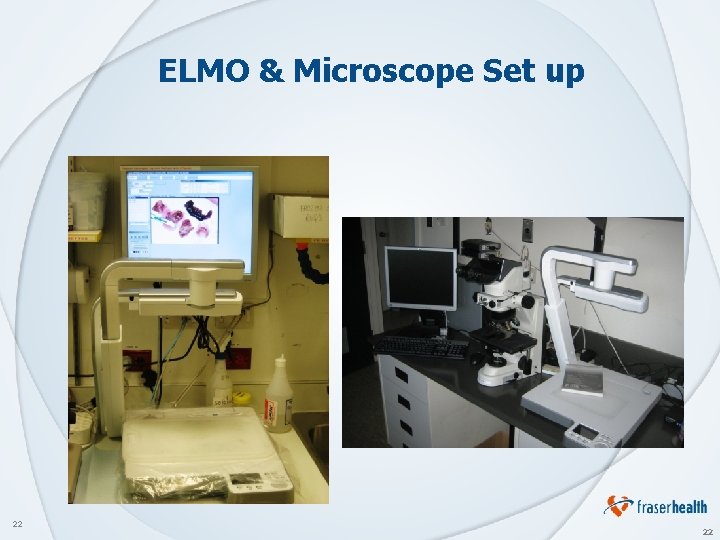
ELMO & Microscope Set up 22 22
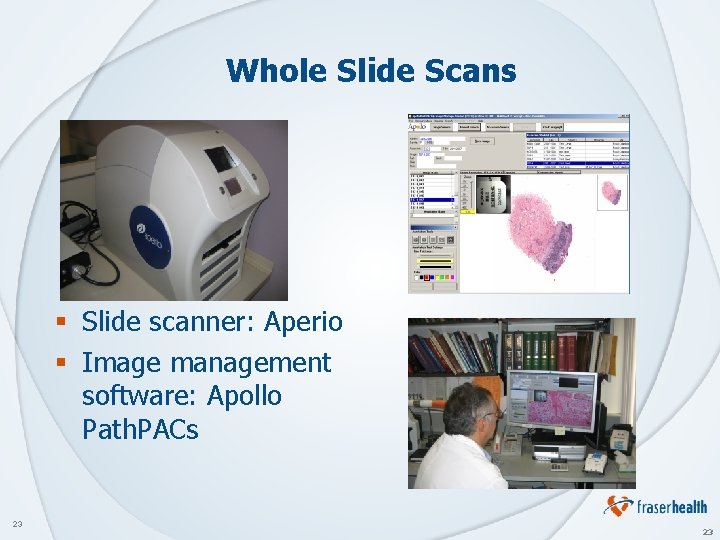
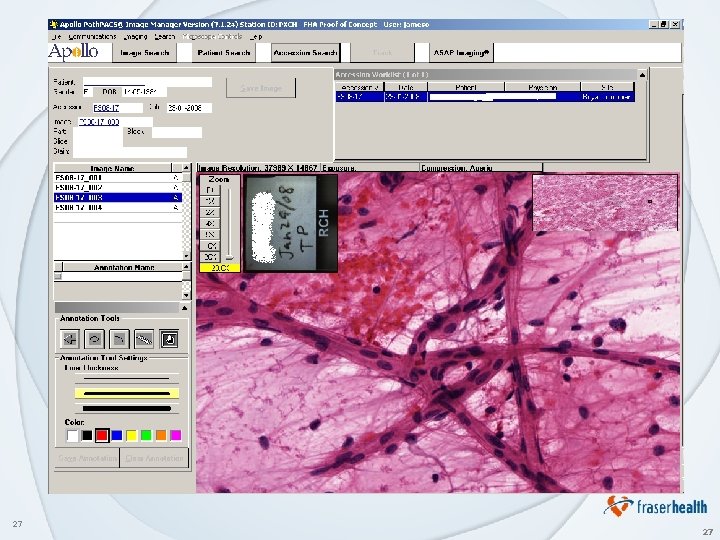
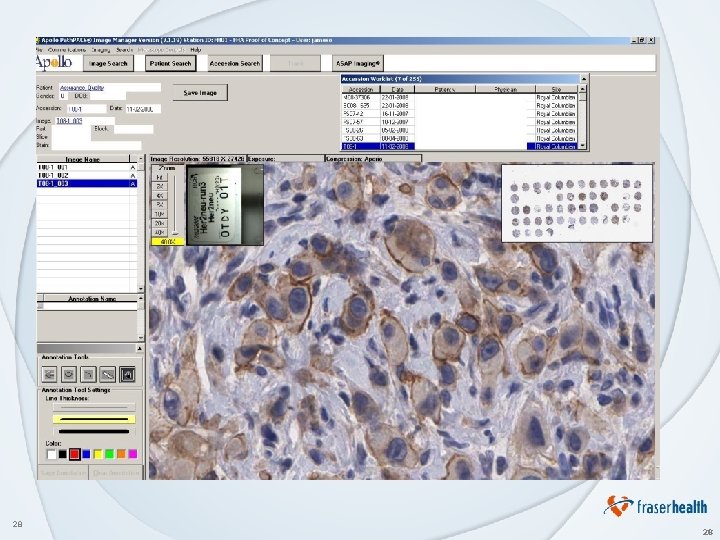
Whole Slide Scans § Slide scanner: Aperio § Image management software: Apollo Path. PACs 23 23
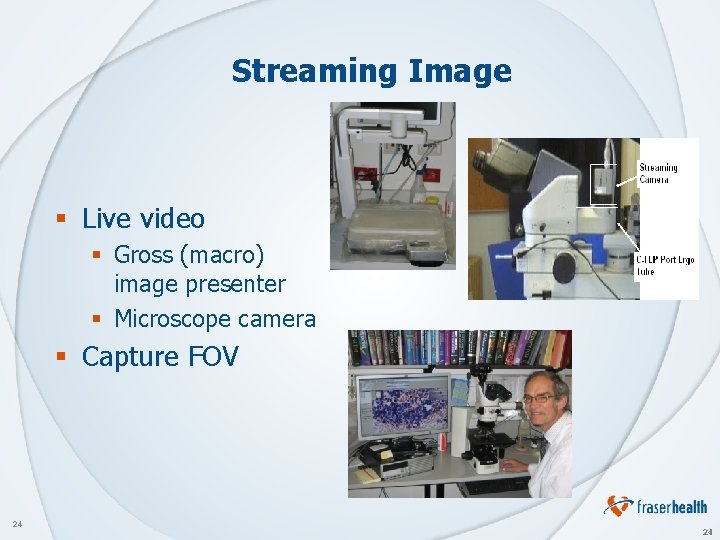
Streaming Image § Live video § Gross (macro) image presenter § Microscope camera § Capture FOV 24 24
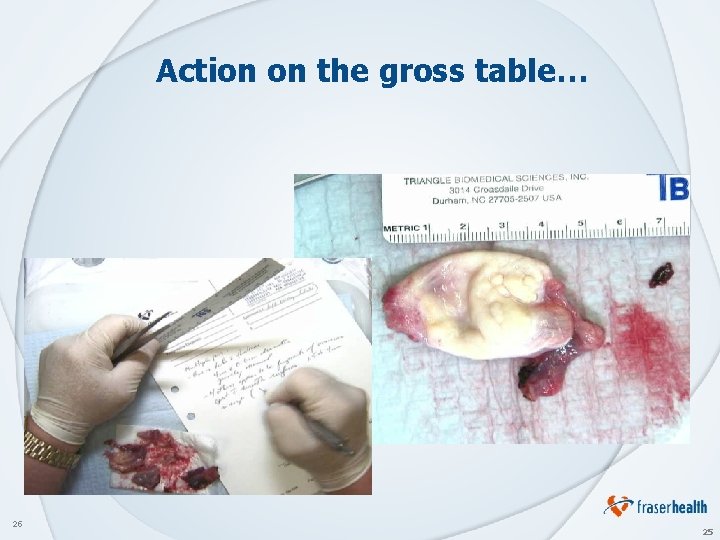
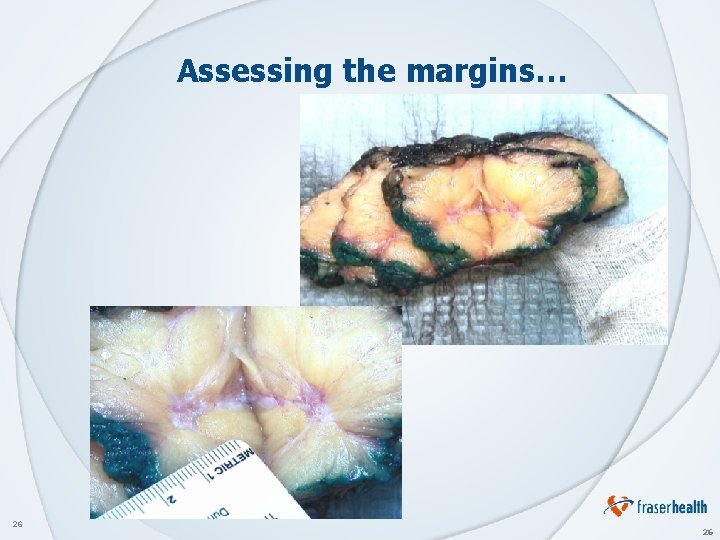
Action on the gross table… 25 25
Assessing the margins… 26 26
27 27
28 28
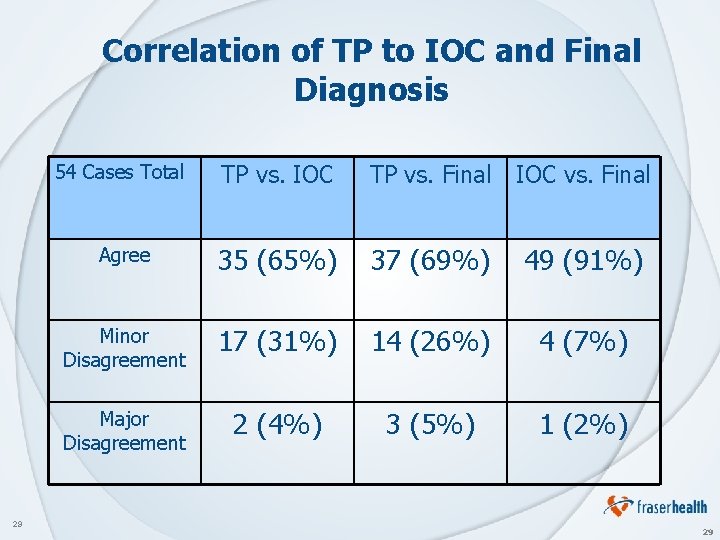
Correlation of TP to IOC and Final Diagnosis 29 54 Cases Total TP vs. IOC TP vs. Final IOC vs. Final Agree 35 (65%) 37 (69%) 49 (91%) Minor Disagreement 17 (31%) 14 (26%) 4 (7%) Major Disagreement 2 (4%) 3 (5%) 1 (2%) 29
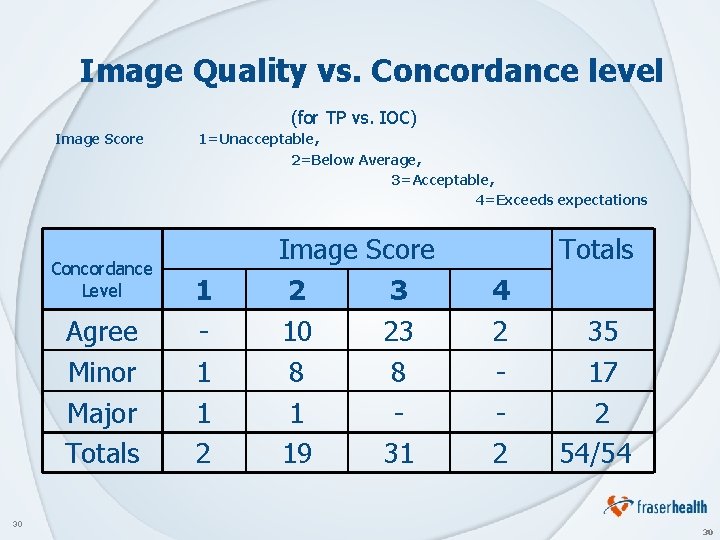
Image Quality vs. Concordance level (for TP vs. IOC) Image Score Concordance Level Agree Minor Major Totals 30 1=Unacceptable, 2=Below Average, 3=Acceptable, 4=Exceeds expectations 1 1 1 2 Image Score 2 3 10 23 8 8 1 19 31 Totals 4 2 2 35 17 2 54/54 30
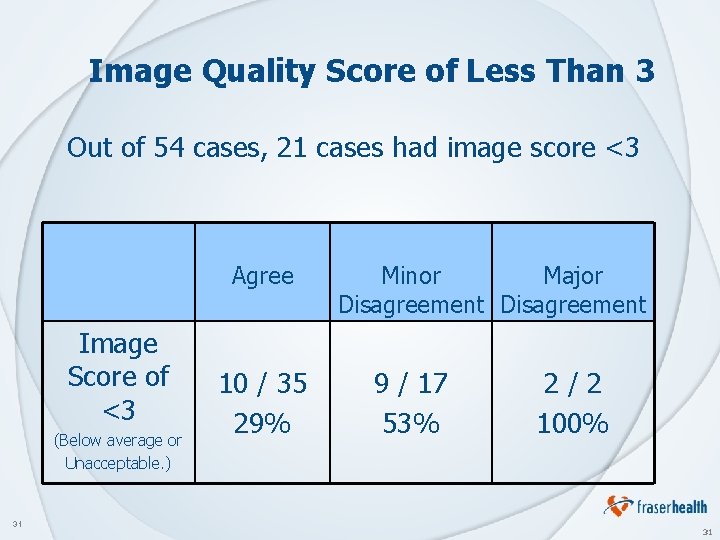
Image Quality Score of Less Than 3 Out of 54 cases, 21 cases had image score <3 Agree Image Score of <3 (Below average or Unacceptable. ) 31 10 / 35 29% Minor Major Disagreement 9 / 17 53% 2/2 100% 31
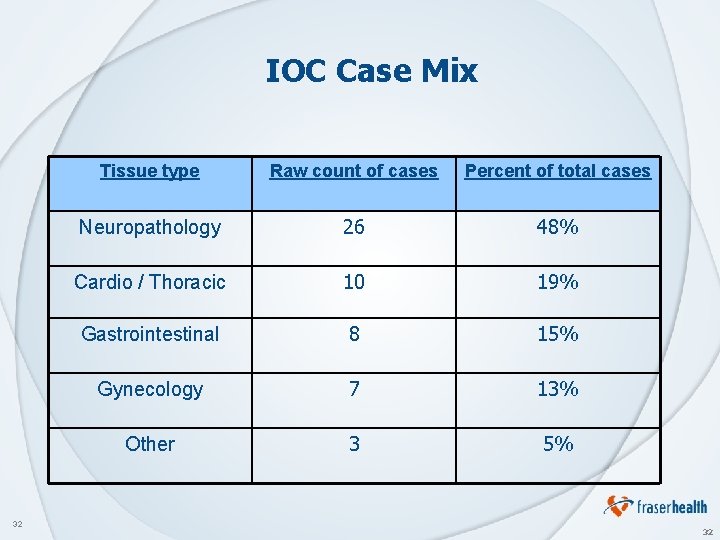
IOC Case Mix 32 Tissue type Raw count of cases Percent of total cases Neuropathology 26 48% Cardio / Thoracic 10 19% Gastrointestinal 8 15% Gynecology 7 13% Other 3 5% 32
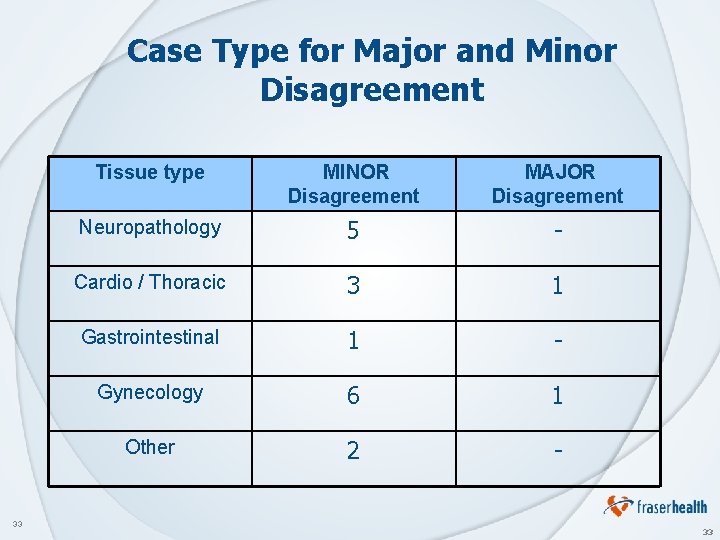
Case Type for Major and Minor Disagreement 33 Tissue type MINOR Disagreement MAJOR Disagreement Neuropathology 5 - Cardio / Thoracic 3 1 Gastrointestinal 1 - Gynecology 6 1 Other 2 - 33
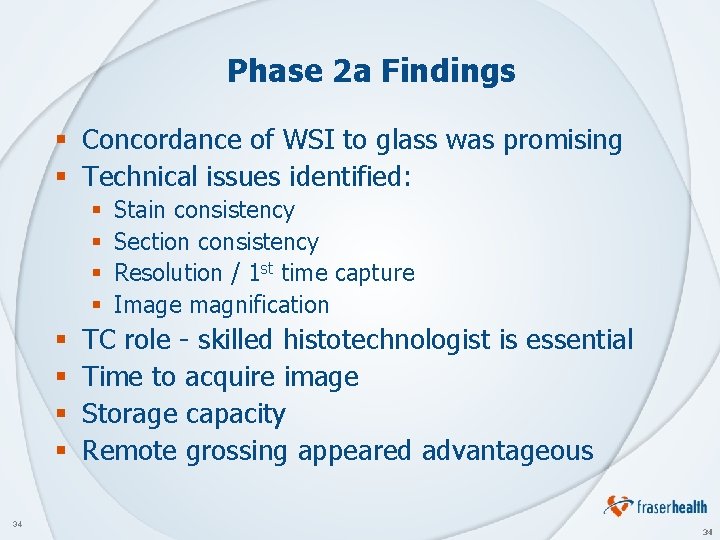
Phase 2 a Findings § Concordance of WSI to glass was promising § Technical issues identified: § § § § 34 Stain consistency Section consistency Resolution / 1 st time capture Image magnification TC role - skilled histotechnologist is essential Time to acquire image Storage capacity Remote grossing appeared advantageous 34
Conclusions We are unable to recommend at this time implementation of this technology for provision of routine frozen sections during intraoperative consultations. 35 35
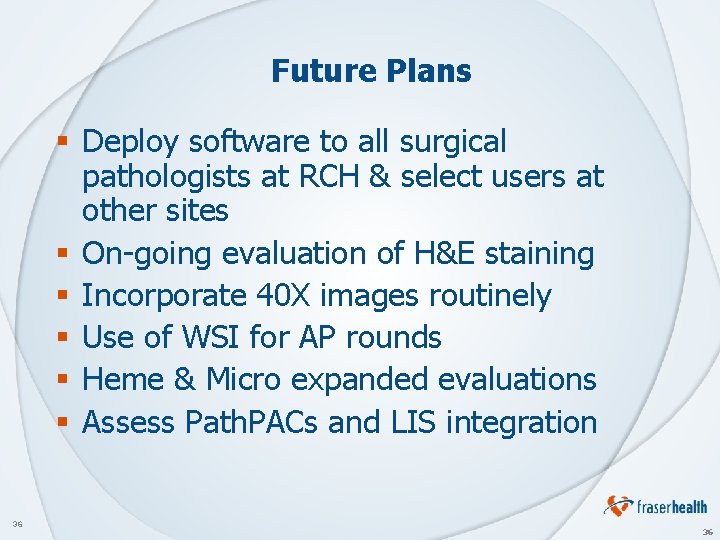
Future Plans § Deploy software to all surgical pathologists at RCH & select users at other sites § On-going evaluation of H&E staining § Incorporate 40 X images routinely § Use of WSI for AP rounds § Heme & Micro expanded evaluations § Assess Path. PACs and LIS integration 36 36
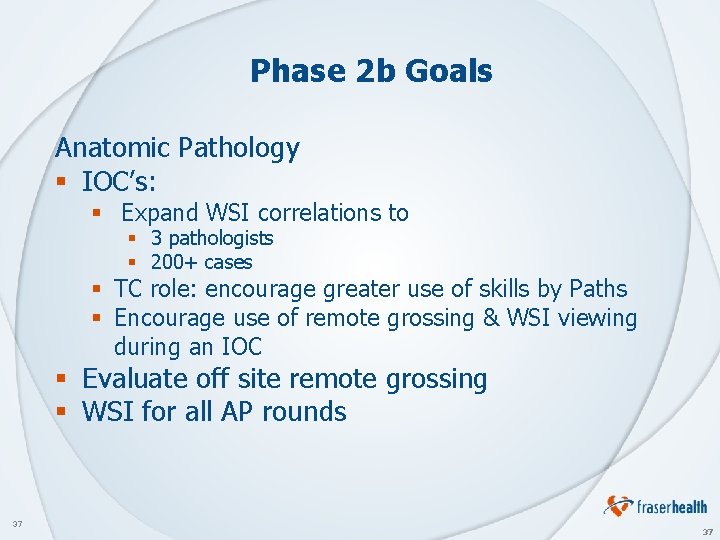
Phase 2 b Goals Anatomic Pathology § IOC’s: § Expand WSI correlations to § 3 pathologists § 200+ cases § TC role: encourage greater use of skills by Paths § Encourage use of remote grossing & WSI viewing during an IOC § Evaluate off site remote grossing § WSI for all AP rounds 37 37
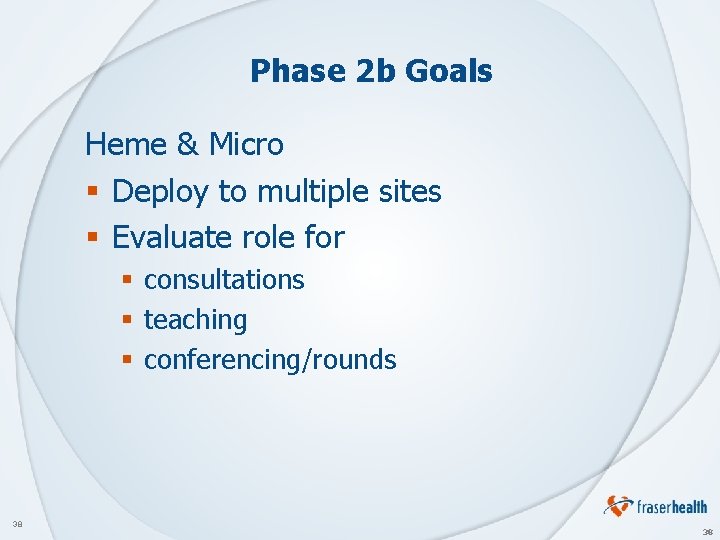
Phase 2 b Goals Heme & Micro § Deploy to multiple sites § Evaluate role for § consultations § teaching § conferencing/rounds 38 38
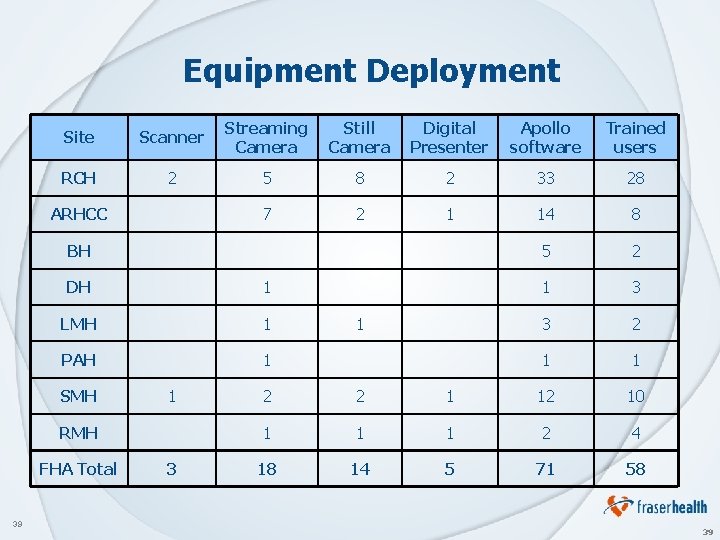
Equipment Deployment Site Scanner Streaming Camera Still Camera Digital Presenter Apollo software Trained users RCH 2 5 8 2 33 28 7 2 1 14 8 5 2 1 3 3 2 1 1 ARHCC BH DH 1 LMH 1 PAH 1 SMH 1 RMH FHA Total 39 3 1 2 2 1 12 10 1 1 1 2 4 18 14 5 71 58 39
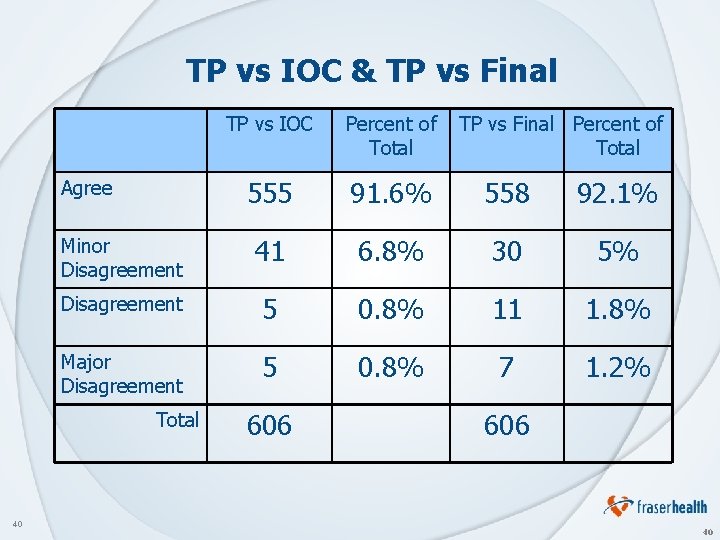
TP vs IOC & TP vs Final TP vs IOC Percent of Total 555 91. 6% 558 92. 1% Minor Disagreement 41 6. 8% 30 5% Disagreement 5 0. 8% 11 1. 8% Major Disagreement 5 0. 8% 7 1. 2% Agree Total 40 606 TP vs Final Percent of Total 606 40
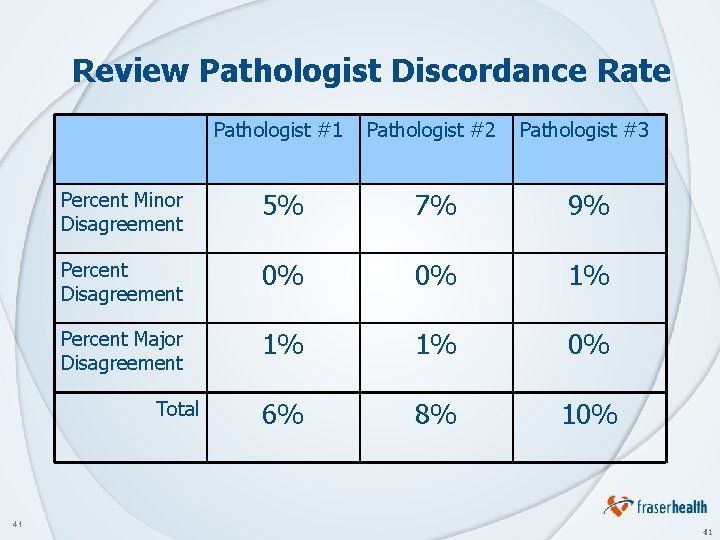
Review Pathologist Discordance Rate Pathologist #1 Pathologist #2 Pathologist #3 Percent Minor Disagreement 5% 7% 9% Percent Disagreement 0% 0% 1% Percent Major Disagreement 1% 1% 0% 6% 8% 10% Total 41 41
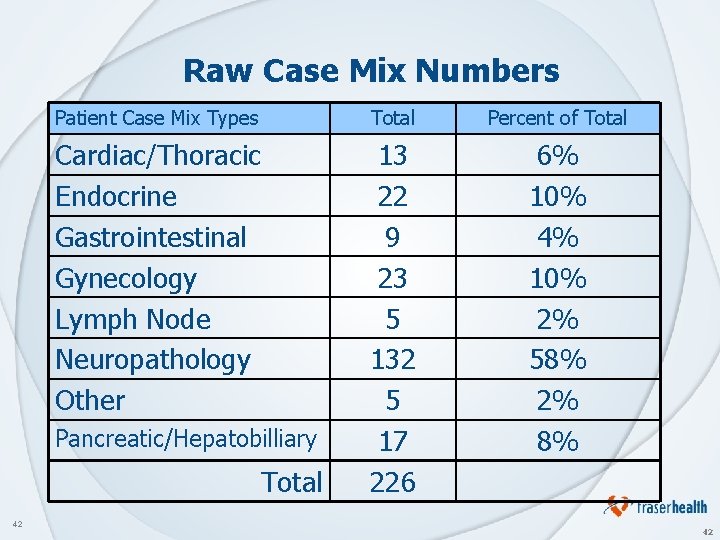
Raw Case Mix Numbers Patient Case Mix Types Total Percent of Total Cardiac/Thoracic Endocrine Gastrointestinal Gynecology Lymph Node Neuropathology Other 13 22 9 23 5 132 5 17 226 6% 10% 4% 10% 2% 58% 2% 8% Pancreatic/Hepatobilliary Total 42 42
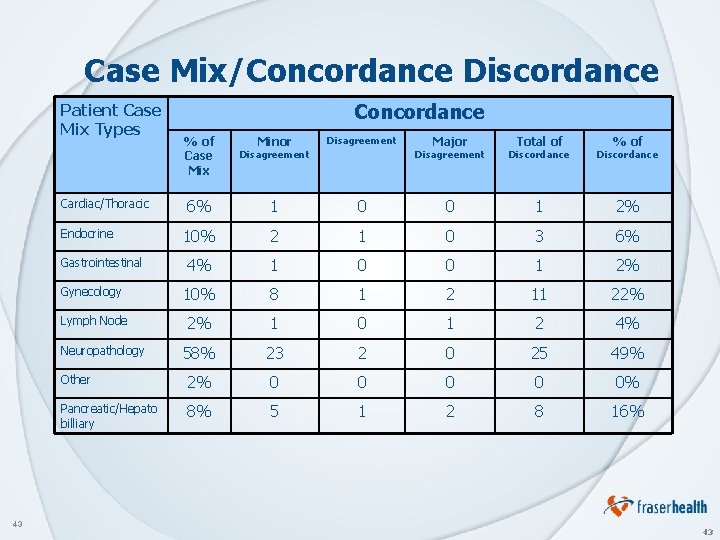
Case Mix/Concordance Discordance Patient Case Mix Types % of Case Mix Minor Disagreement 6% 1 10% Major Total of % of Disagreement Discordance 0 0 1 2% 2 1 0 3 6% 4% 1 0 0 1 2% Gynecology 10% 8 1 2 11 22% Lymph Node 2% 1 0 1 2 4% 58% 23 2 0 25 49% Other 2% 0 0 0% Pancreatic/Hepato billiary 8% 5 1 2 8 16% Cardiac/Thoracic Endocrine Gastrointestinal Neuropathology 43 Concordance 43
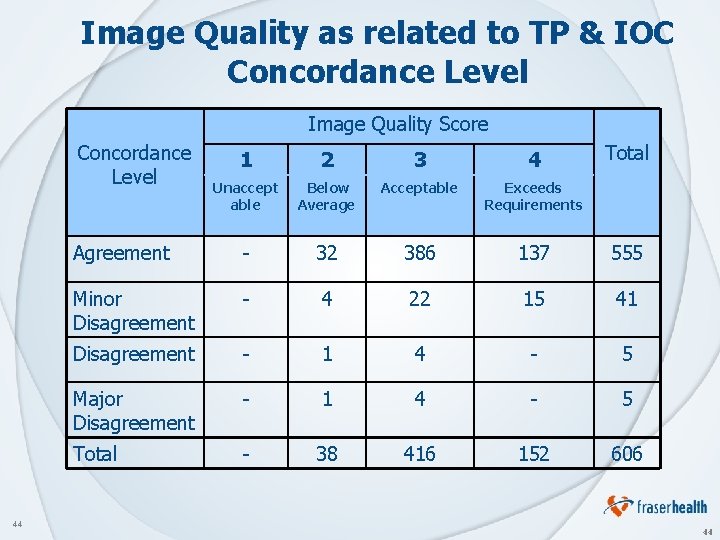
Image Quality as related to TP & IOC Concordance Level Image Quality Score Concordance Level 44 Total 1 2 3 4 Unaccept able Below Average Acceptable Exceeds Requirements Agreement - 32 386 137 555 Minor Disagreement - 4 22 15 41 Disagreement - 1 4 - 5 Major Disagreement - 1 4 - 5 Total - 38 416 152 606 44
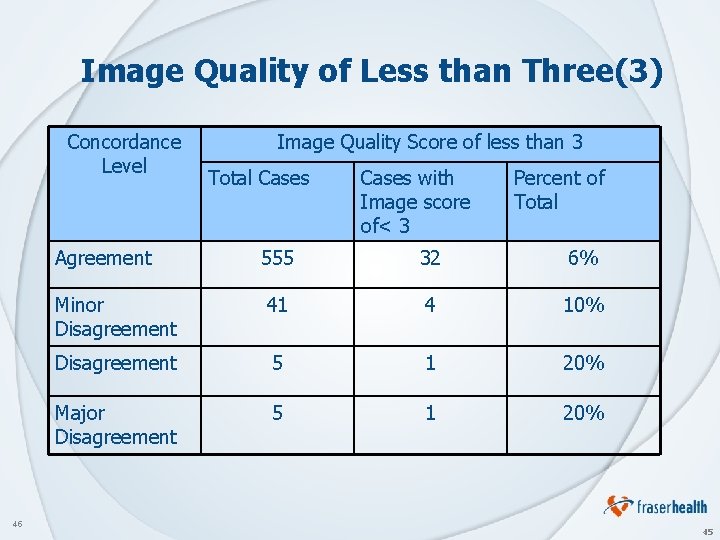
Image Quality of Less than Three(3) Concordance Level 45 Image Quality Score of less than 3 Total Cases with Image score of< 3 Percent of Total Agreement 555 32 6% Minor Disagreement 41 4 10% Disagreement 5 1 20% Major Disagreement 5 1 20% 45
AP Conclusions § Diagnostic Accuracy WSI § Acceptable § Image Quality § Acceptable 46 46
AP Conclusions § Software: § Well acceptable § Minimal training § Easy to operate § Well Trained Technical Coordinator Essential § Technical quality § Hardware/software expertise § Time efficiency 47 47
AP Conculsions § Remote Gross Specimen Viewing § Well accepted § Time efficient § Education & QA Rounds § Enhanced plus § Continue & expand 48 48
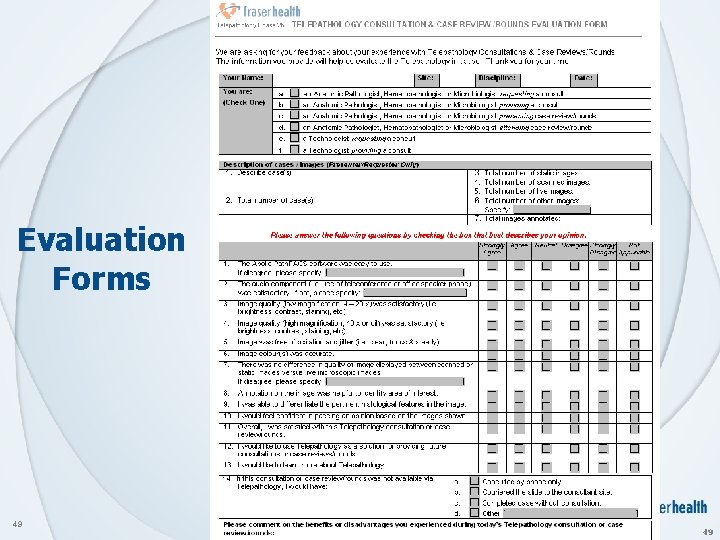
Evaluation Forms 49 49
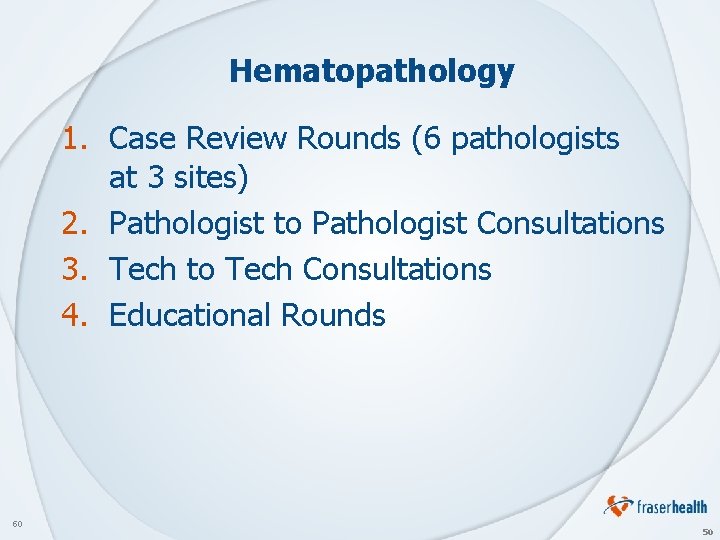
Hematopathology 1. Case Review Rounds (6 pathologists at 3 sites) 2. Pathologist to Pathologist Consultations 3. Tech to Tech Consultations 4. Educational Rounds 50 50
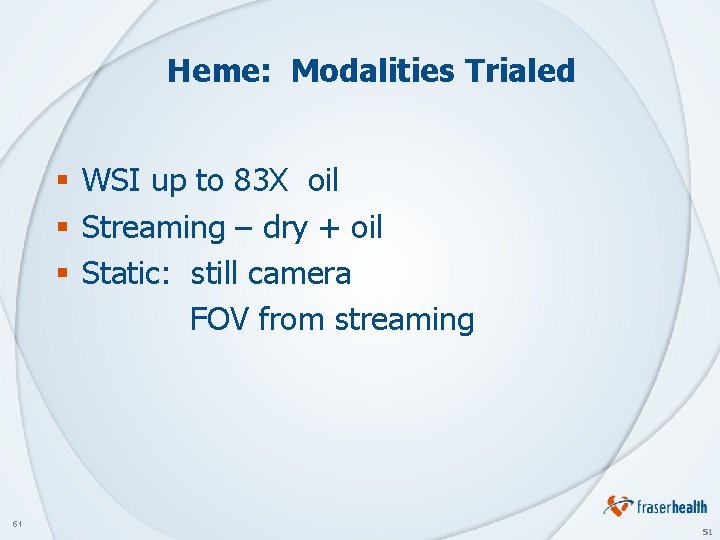
Heme: Modalities Trialed § WSI up to 83 X oil § Streaming – dry + oil § Static: still camera FOV from streaming 51 51
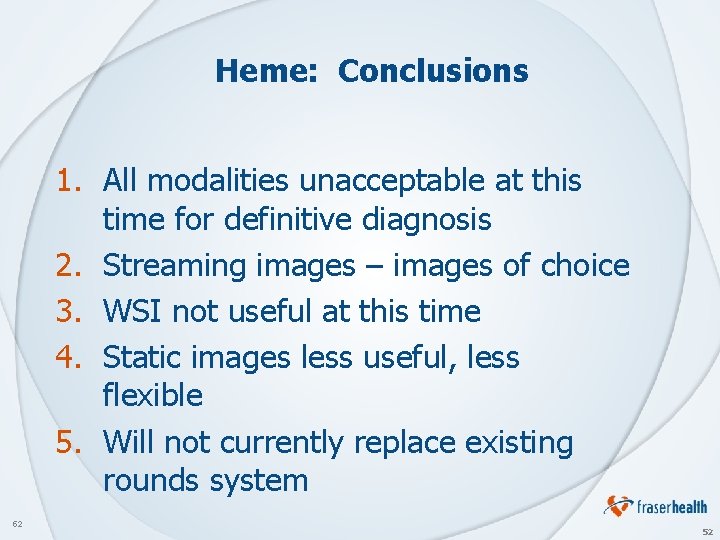
Heme: Conclusions 1. All modalities unacceptable at this time for definitive diagnosis 2. Streaming images – images of choice 3. WSI not useful at this time 4. Static images less useful, less flexible 5. Will not currently replace existing rounds system 52 52
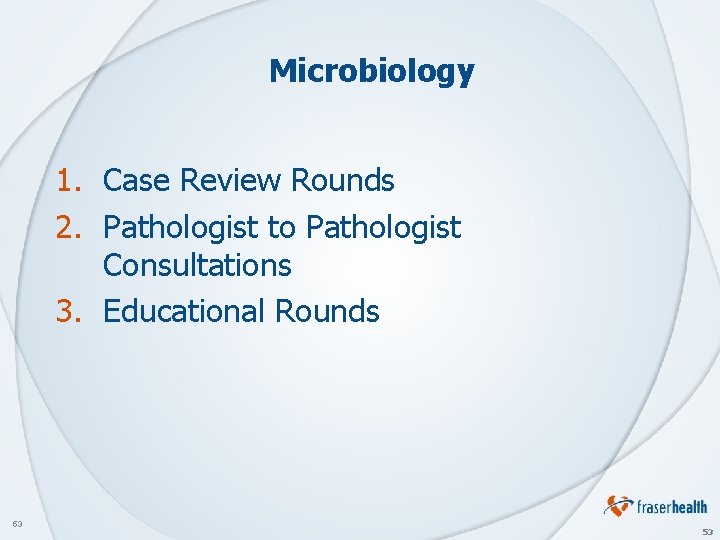
Microbiology 1. Case Review Rounds 2. Pathologist to Pathologist Consultations 3. Educational Rounds 53 53
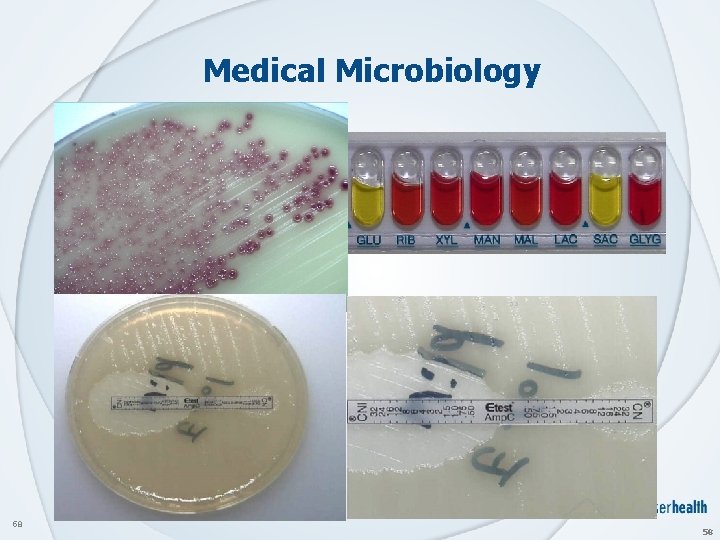
Micro: Modalities Trialed 1. WSI up to 83 X oil 2. Streaming: gross with Elmo micro to 100 X oil 3. Static: still camera FOV from streaming 54 54
Micro: Conclusions 1. Major role at this time - Educational Rounds & Documentation 2. Images by all modalities are not yet adequate for diagnostic uses 3. Imaging not yet adequate to incorporate into routine use 4. Static image capture: still camera best 5. WSI: good for general impression of specimen quality and general morphology 55 55
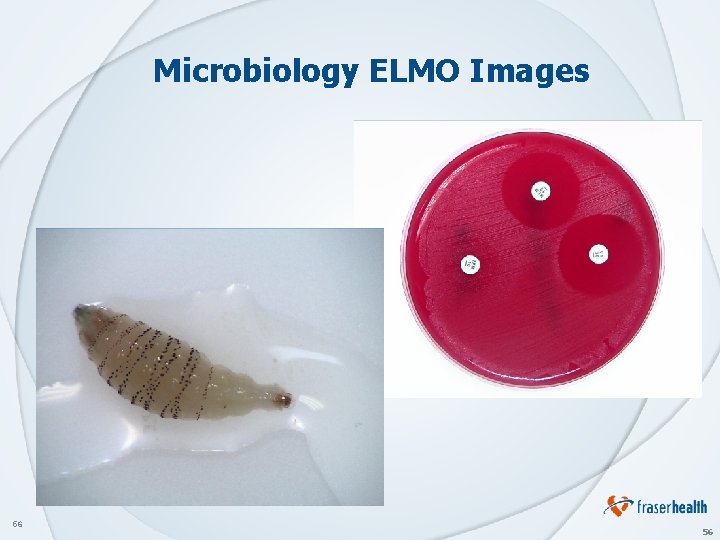
Microbiology ELMO Images 56 56
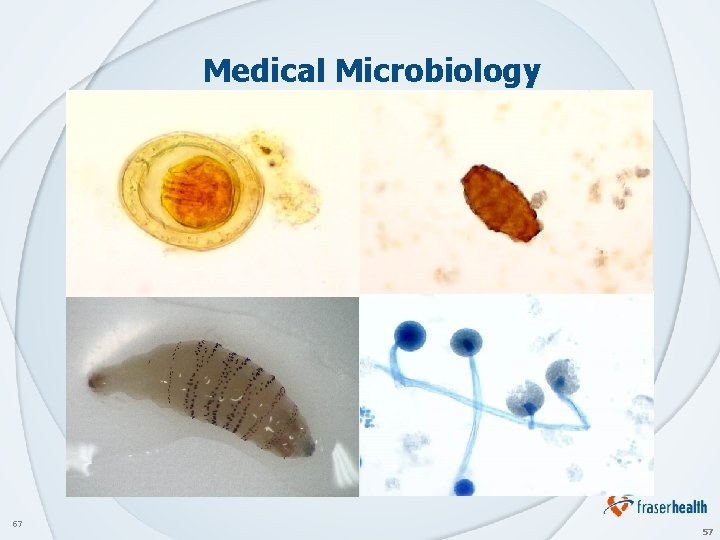
Medical Microbiology 57 57
Medical Microbiology 58 58
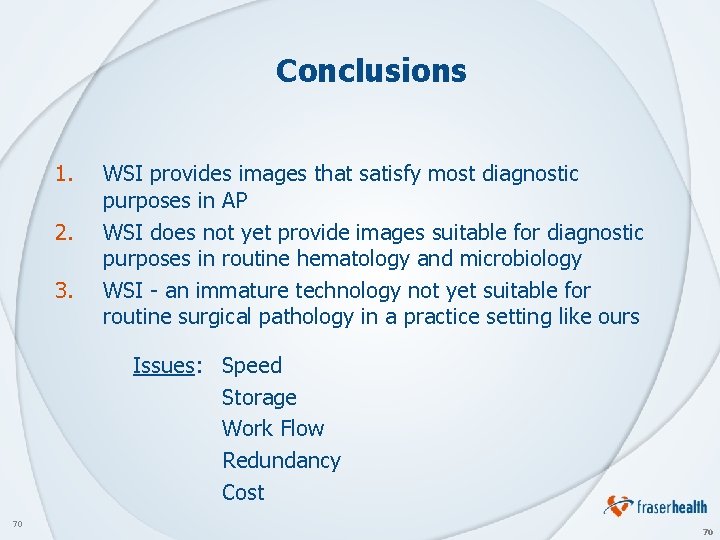
Conclusions 1. 2. 3. 59 WSI provides images that satisfy most diagnostic purposes in AP WSI does not yet provide images suitable for diagnostic purposes in routine hematology and microbiology WSI - an immature technology not yet suitable for routine surgical pathology in a practice setting like ours 59
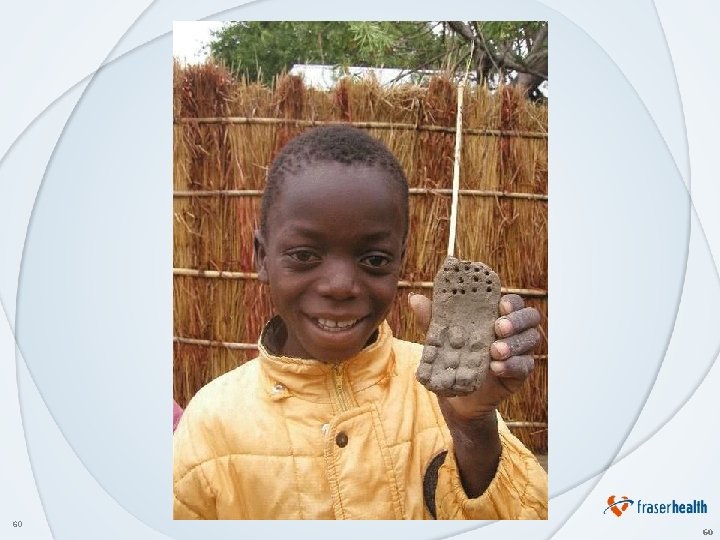
60 60
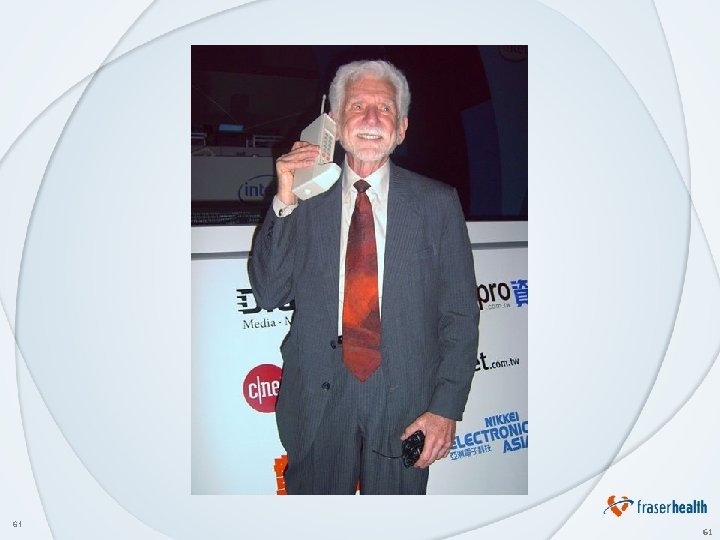
61 61
Conclusions 1. 2. 3. WSI provides images that satisfy most diagnostic purposes in AP WSI does not yet provide images suitable for diagnostic purposes in routine hematology and microbiology WSI - an immature technology not yet suitable for routine surgical pathology in a practice setting like ours Issues: Speed 62 62
63 63
Conclusions 1. 2. 3. WSI provides images that satisfy most diagnostic purposes in AP WSI does not yet provide images suitable for diagnostic purposes in routine hematology and microbiology WSI - an immature technology not yet suitable for routine surgical pathology in a practice setting like ours Issues: Speed Storage 64 64
65 65
Conclusions 1. 2. 3. WSI provides images that satisfy most diagnostic purposes in AP WSI does not yet provide images suitable for diagnostic purposes in routine hematology and microbiology WSI - an immature technology not yet suitable for routine surgical pathology in a practice setting like ours Issues: Speed Storage Work Flow 66 66
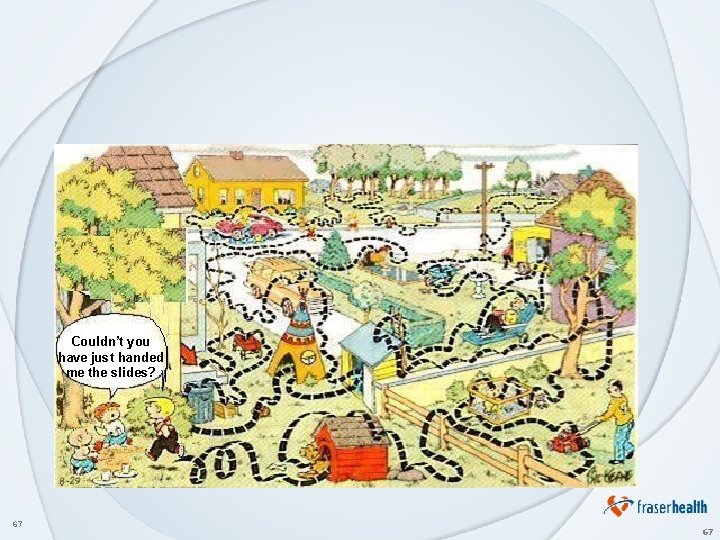
Couldn’t you have just handed me the slides? 67 67
Conclusions 1. 2. 3. WSI provides images that satisfy most diagnostic purposes in AP WSI does not yet provide images suitable for diagnostic purposes in routine hematology and microbiology WSI - an immature technology not yet suitable for routine surgical pathology in a practice setting like ours Issues: Speed Storage Work Flow Redundancy 68 68
69 69
Conclusions 1. 2. 3. WSI provides images that satisfy most diagnostic purposes in AP WSI does not yet provide images suitable for diagnostic purposes in routine hematology and microbiology WSI - an immature technology not yet suitable for routine surgical pathology in a practice setting like ours Issues: Speed Storage Work Flow Redundancy Cost 70 70
71 71
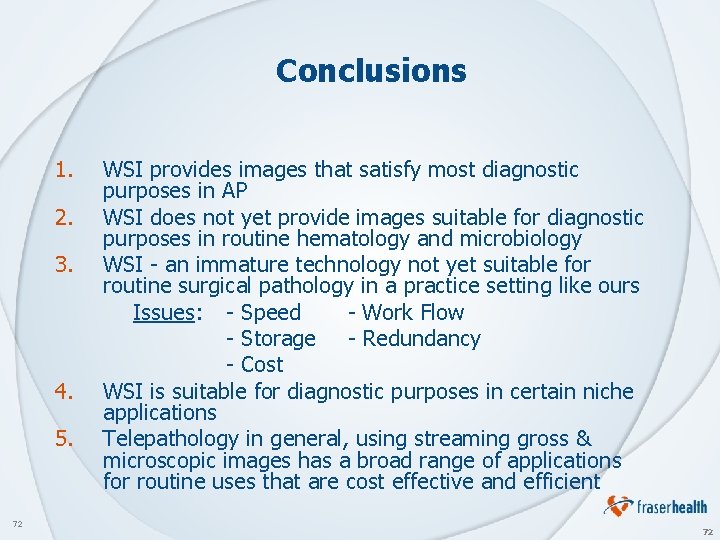
Conclusions 1. 2. 3. 4. 5. 72 WSI provides images that satisfy most diagnostic purposes in AP WSI does not yet provide images suitable for diagnostic purposes in routine hematology and microbiology WSI - an immature technology not yet suitable for routine surgical pathology in a practice setting like ours Issues: - Speed - Work Flow - Storage - Redundancy - Cost WSI is suitable for diagnostic purposes in certain niche applications Telepathology in general, using streaming gross & microscopic images has a broad range of applications for routine uses that are cost effective and efficient 72
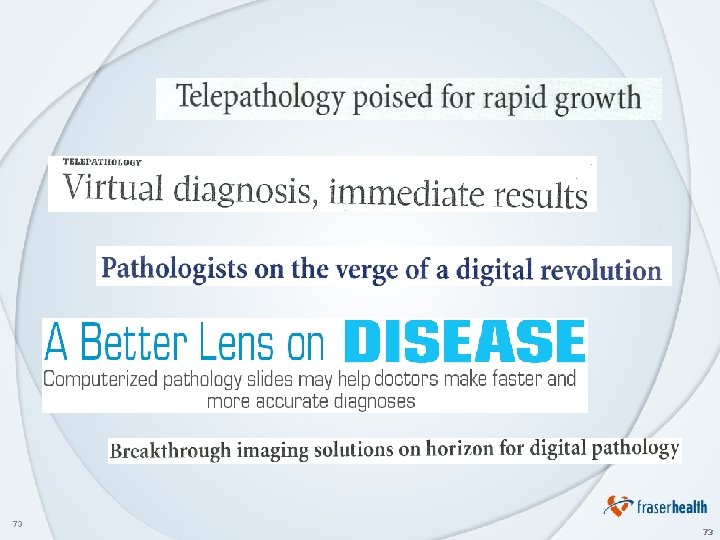
73 73
The Promise of Digital Pathology § § § § 74 Diagnostics Consultations Conferencing Teaching Quality Assurance Archiving Image Analysis Efficiencies 74
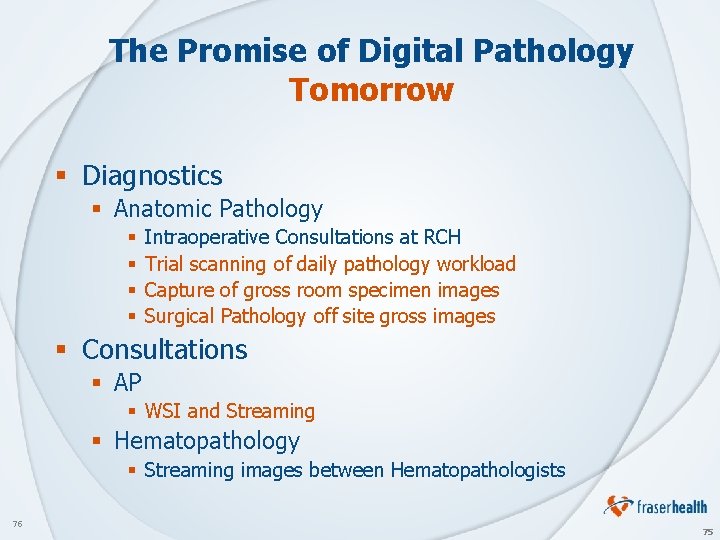
The Promise of Digital Pathology Tomorrow § Diagnostics § Anatomic Pathology § § Intraoperative Consultations at RCH Trial scanning of daily pathology workload Capture of gross room specimen images Surgical Pathology off site gross images § Consultations § AP § WSI and Streaming § Hematopathology § Streaming images between Hematopathologists 75 75
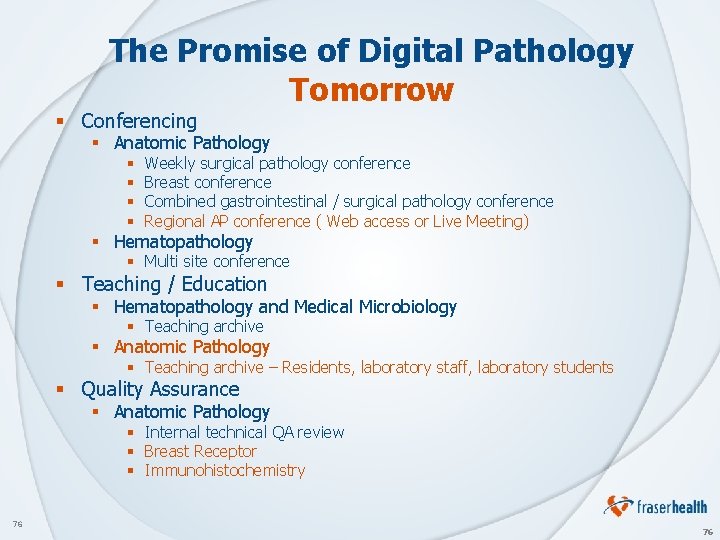
The Promise of Digital Pathology Tomorrow § Conferencing § Anatomic Pathology § § Weekly surgical pathology conference Breast conference Combined gastrointestinal / surgical pathology conference Regional AP conference ( Web access or Live Meeting) § Hematopathology § Multi site conference § Teaching / Education § Hematopathology and Medical Microbiology § Teaching archive § Anatomic Pathology § Teaching archive – Residents, laboratory staff, laboratory students § Quality Assurance § Anatomic Pathology § Internal technical QA review § Breast Receptor § Immunohistochemistry 76 76
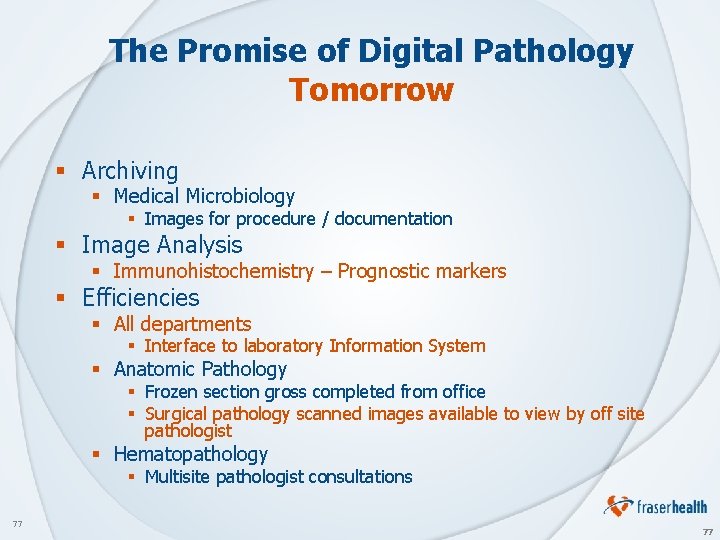
The Promise of Digital Pathology Tomorrow § Archiving § Medical Microbiology § Images for procedure / documentation § Image Analysis § Immunohistochemistry – Prognostic markers § Efficiencies § All departments § Interface to laboratory Information System § Anatomic Pathology § Frozen section gross completed from office § Surgical pathology scanned images available to view by off site pathologist § Hematopathology § Multisite pathologist consultations 77 77
THE END 78