
The Cryopit Fraser Duncan Cryopit Workshop 16 August
- Slides: 23
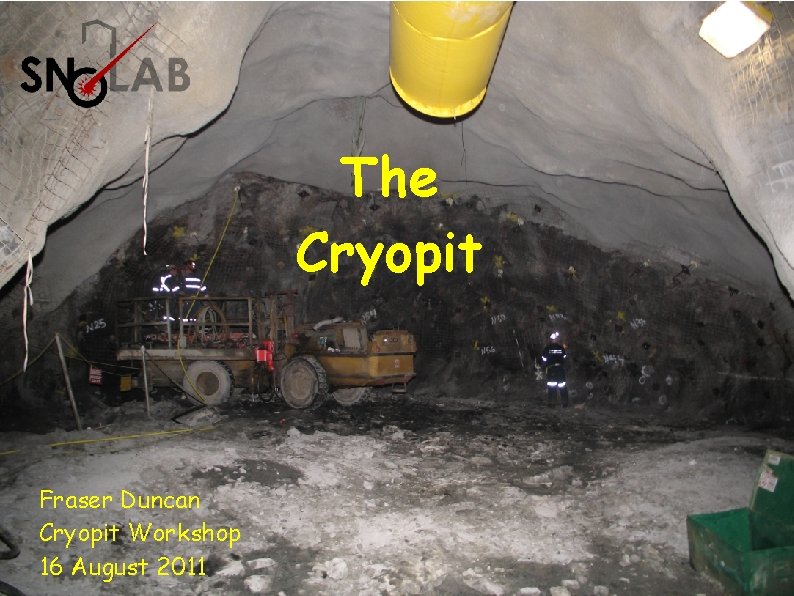
The Cryopit Fraser Duncan Cryopit Workshop 16 August 2011
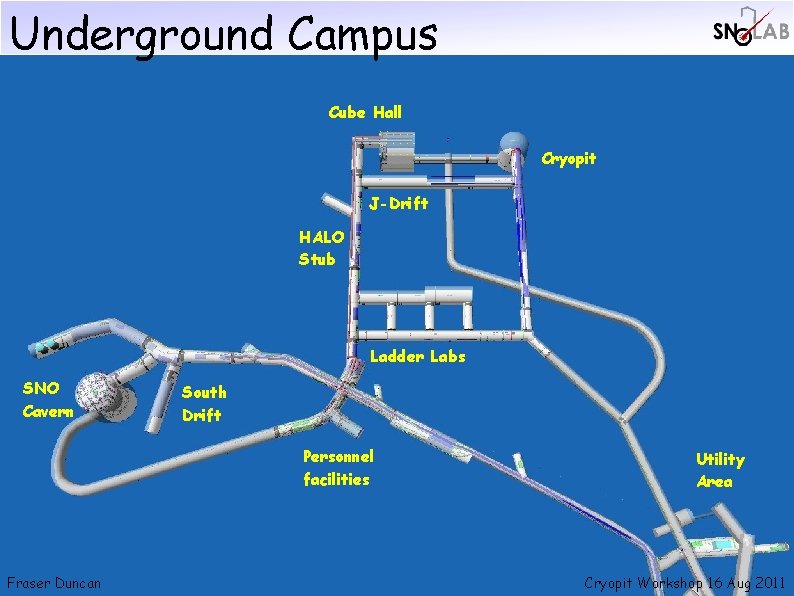
Underground Campus Cube Hall Cryopit J-Drift HALO Stub Ladder Labs SNO Cavern South Drift Personnel facilities Fraser Duncan Utility Area Cryopit Workshop 16 Aug 2011
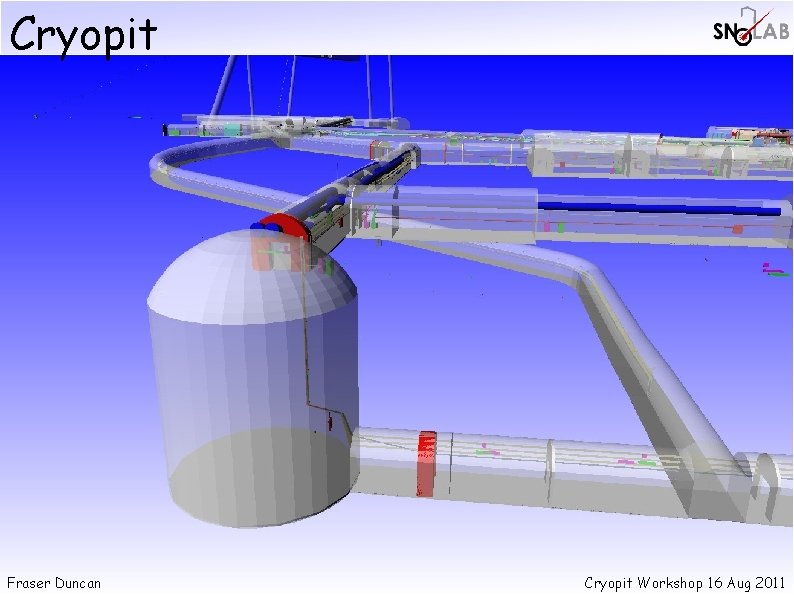
Cryopit Fraser Duncan Cryopit Workshop 16 Aug 2011
History SNOLAB, an expansion of the original SNO laboratory, was proposed by the original SNO Canadian universities (Carleton, Guelph, Laurentian, Queen's and UBC) and University of Montreal with Carleton University as the Lead institution. The project was divided into Phase I (Cube Hall, Ladder Labs, new lab entrance) and Phase II (the Cryopit) to provide a break point to control project cost. The Cryopit, at $16 M, was an addition to the initial SNOLAB grant and was funded 50% from federal and 50% from provincial contributions. It was conceived as a hall that could readily be isolated from the rest of the underground facility in the case that it contained a large inventory of cryogens or other substances that could displace significant volumes of air. Excavation began in 2007 and was completed in 2008. Was brought to a clean room state in March 2011. Third largest cavity after the SNO Cavern and Cube Hall (about 1/3 the size of the SNO Cavern). Fraser Duncan Cryopit Workshop 16 Aug 2011
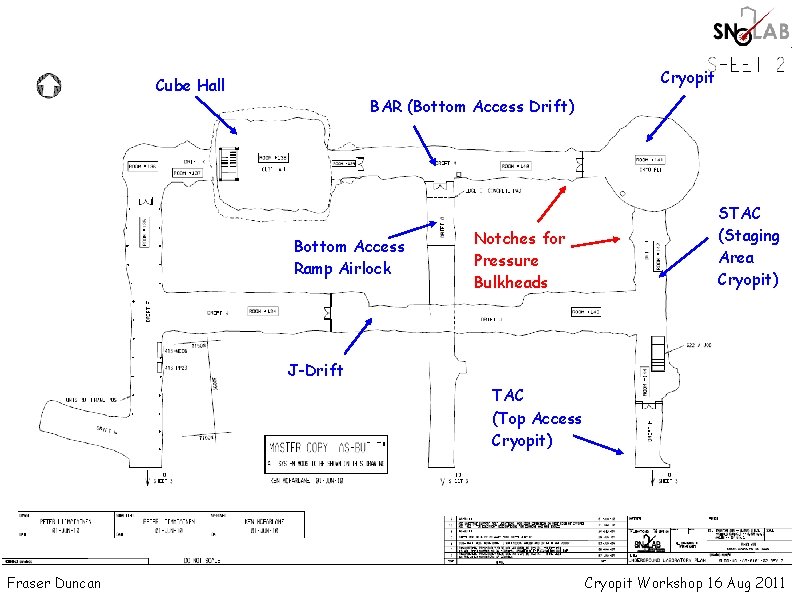
Cryopit Cube Hall BAR (Bottom Access Drift) Bottom Access Ramp Airlock Notches for Pressure Bulkheads STAC (Staging Area Cryopit) J-Drift TAC (Top Access Cryopit) Fraser Duncan Cryopit Workshop 16 Aug 2011
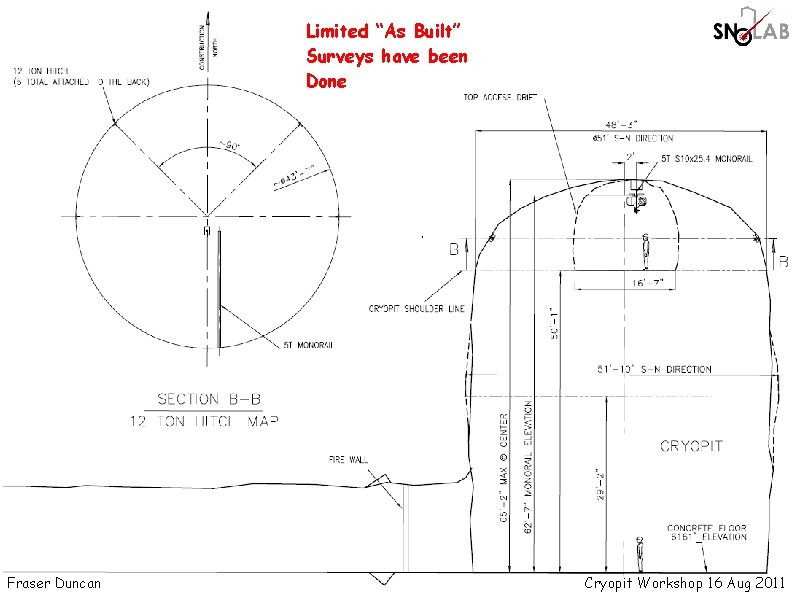
Limited “As Built” Surveys have been Done Fraser Duncan Cryopit Workshop 16 Aug 2011
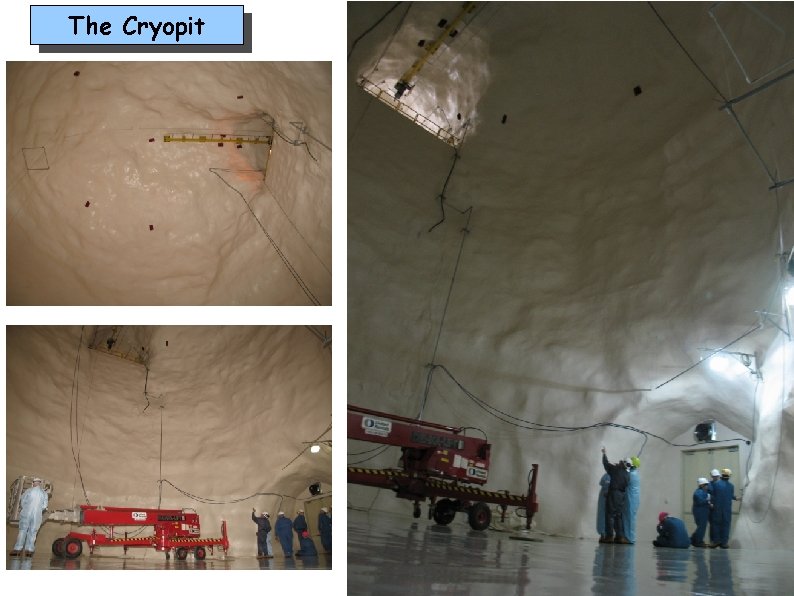
The Cryopit
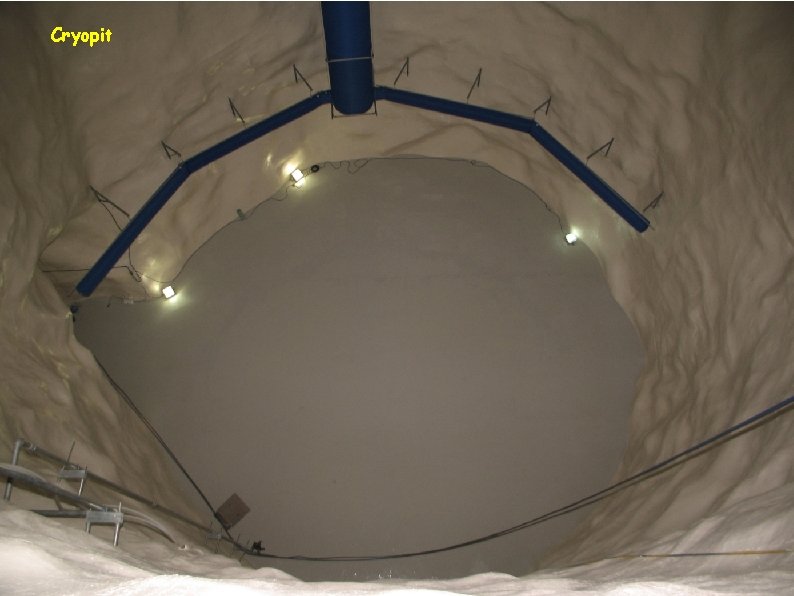
Cryopit
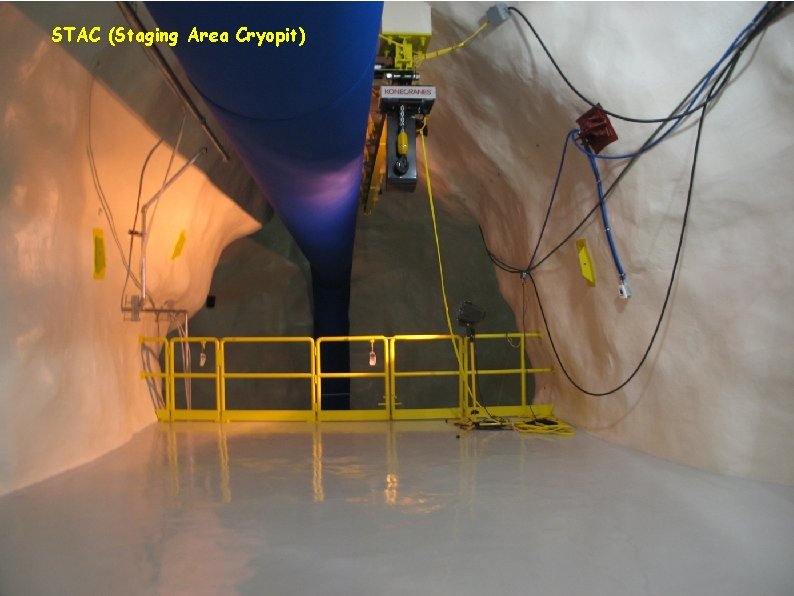
STAC (Staging Area Cryopit)
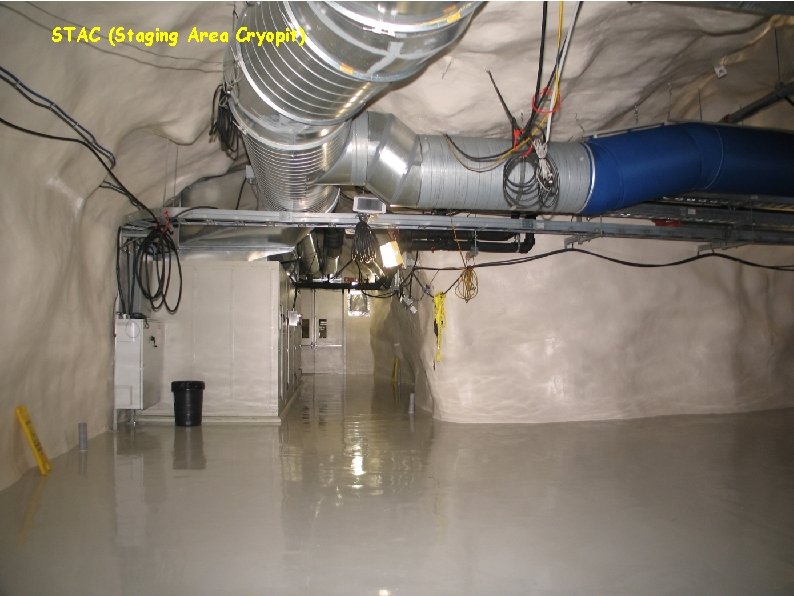
STAC (Staging Area Cryopit)
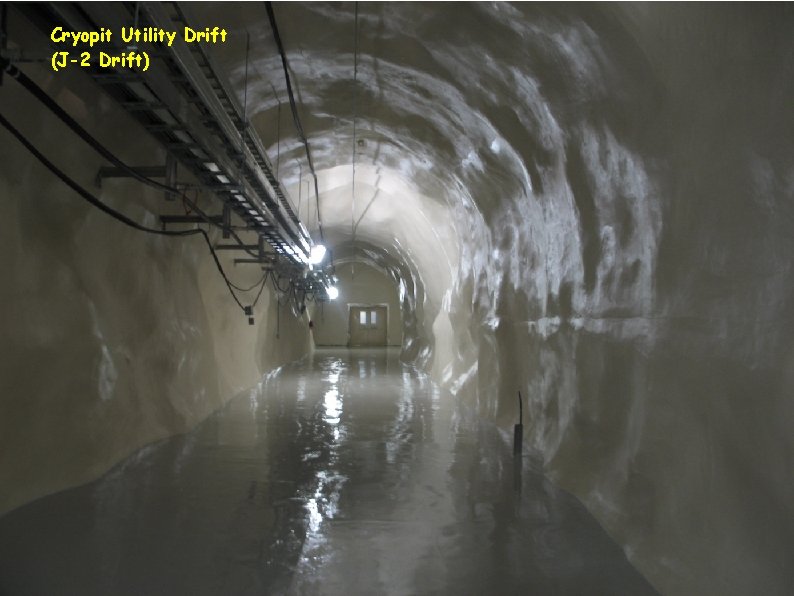
Cryopit Utility Drift (J-2 Drift)
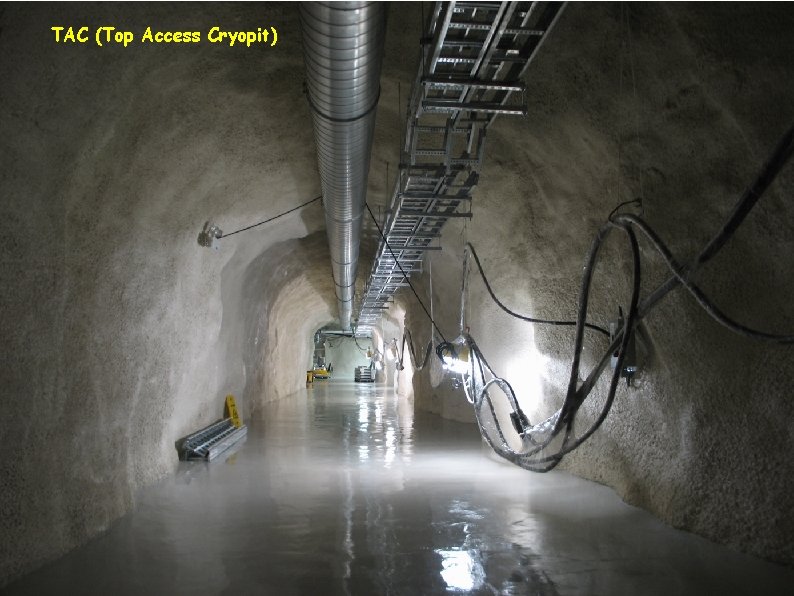
TAC (Top Access Cryopit)
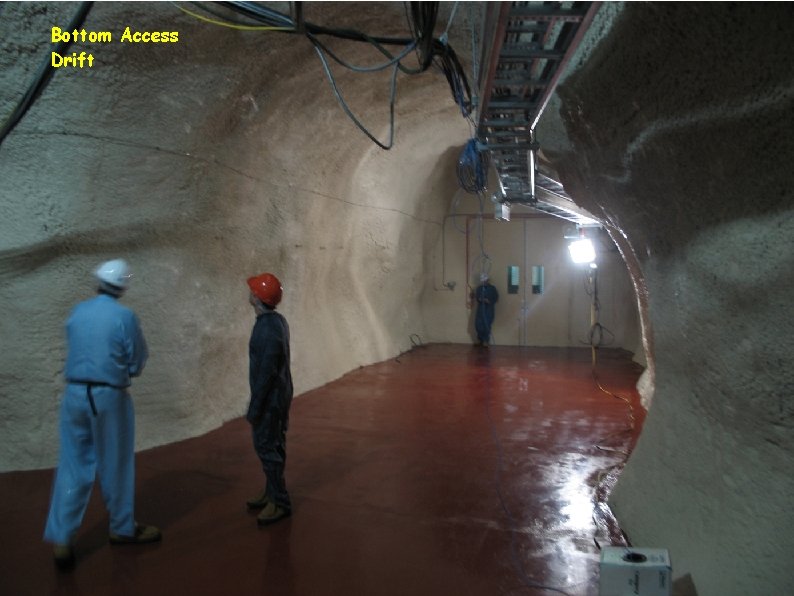
Bottom Access Drift
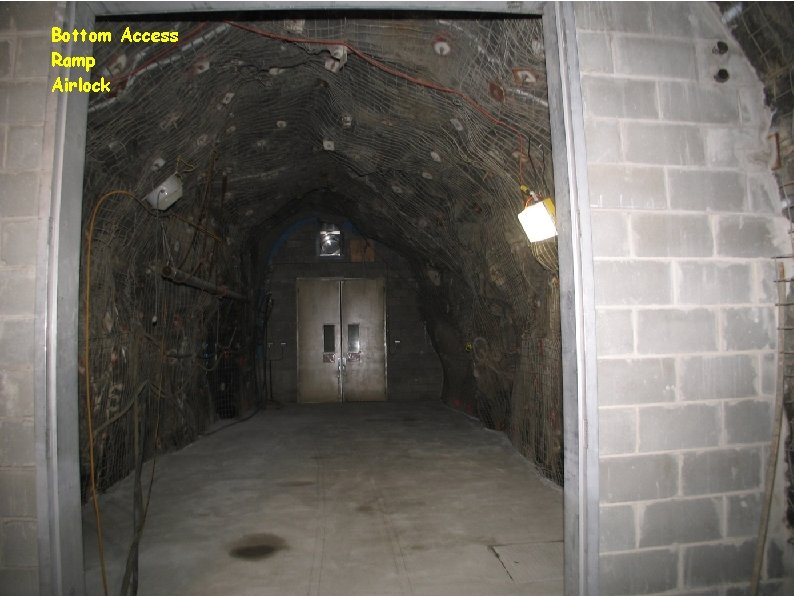
Bottom Access Ramp Airlock
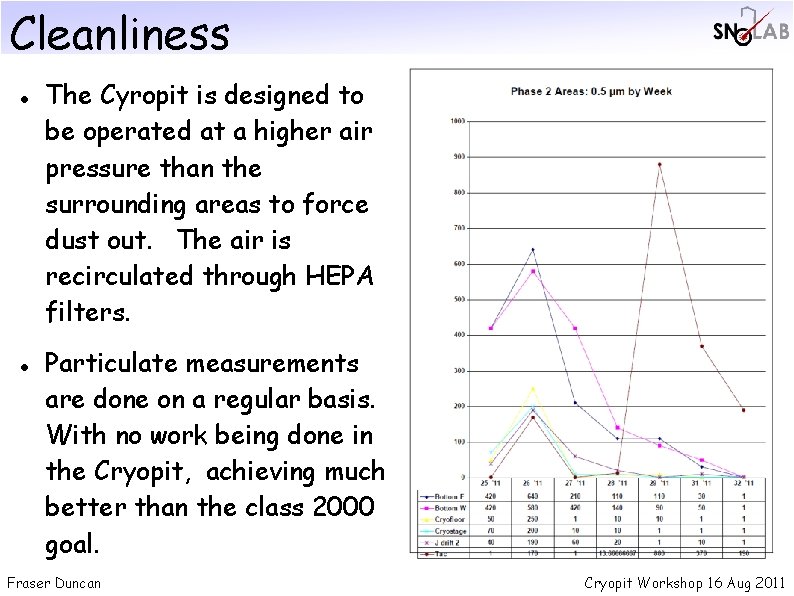
Cleanliness The Cyropit is designed to be operated at a higher air pressure than the surrounding areas to force dust out. The air is recirculated through HEPA filters. Particulate measurements are done on a regular basis. With no work being done in the Cryopit, achieving much better than the class 2000 goal. Fraser Duncan Cryopit Workshop 16 Aug 2011
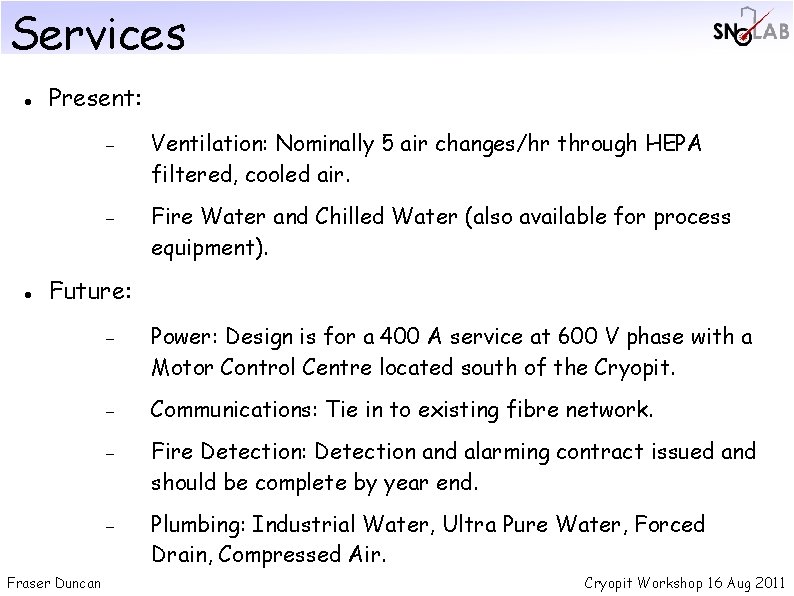
Services Present: Ventilation: Nominally 5 air changes/hr through HEPA filtered, cooled air. Fire Water and Chilled Water (also available for process equipment). Future: Fraser Duncan Power: Design is for a 400 A service at 600 V phase with a Motor Control Centre located south of the Cryopit. Communications: Tie in to existing fibre network. Fire Detection: Detection and alarming contract issued and should be complete by year end. Plumbing: Industrial Water, Ultra Pure Water, Forced Drain, Compressed Air. Cryopit Workshop 16 Aug 2011
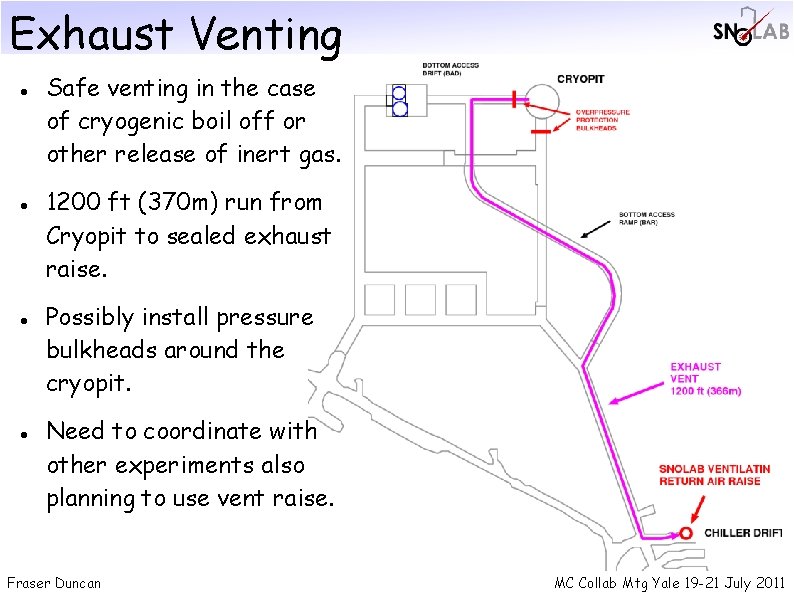
Exhaust Venting Safe venting in the case of cryogenic boil off or other release of inert gas. 1200 ft (370 m) run from Cryopit to sealed exhaust raise. Possibly install pressure bulkheads around the cryopit. Need to coordinate with other experiments also planning to use vent raise. Fraser Duncan MC Collab Mtg Yale 19 -21 July 2011
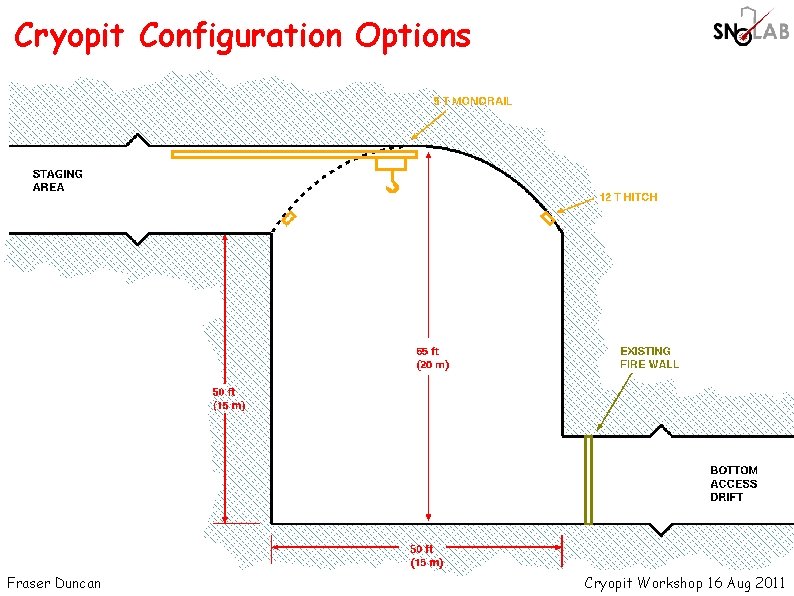
Cryopit Configuration Options Fraser Duncan Cryopit Workshop 16 Aug 2011
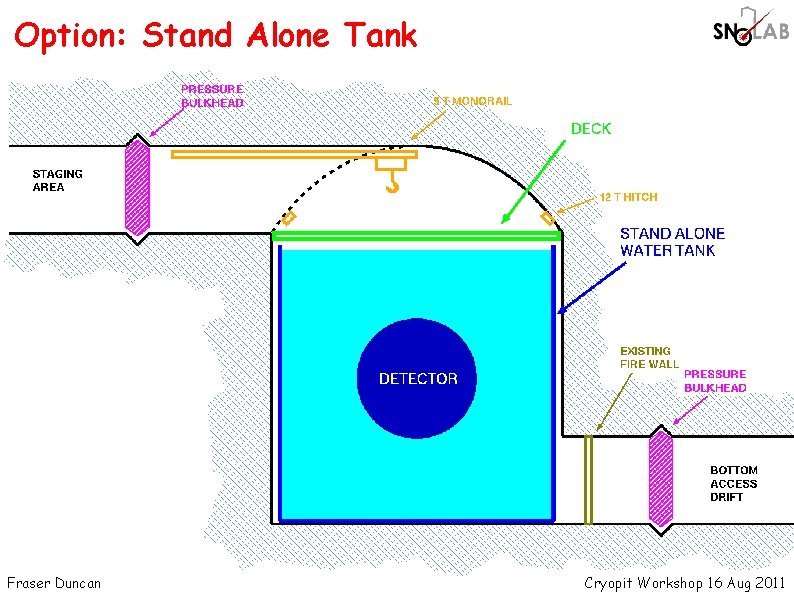
Option: Stand Alone Tank Fraser Duncan Cryopit Workshop 16 Aug 2011
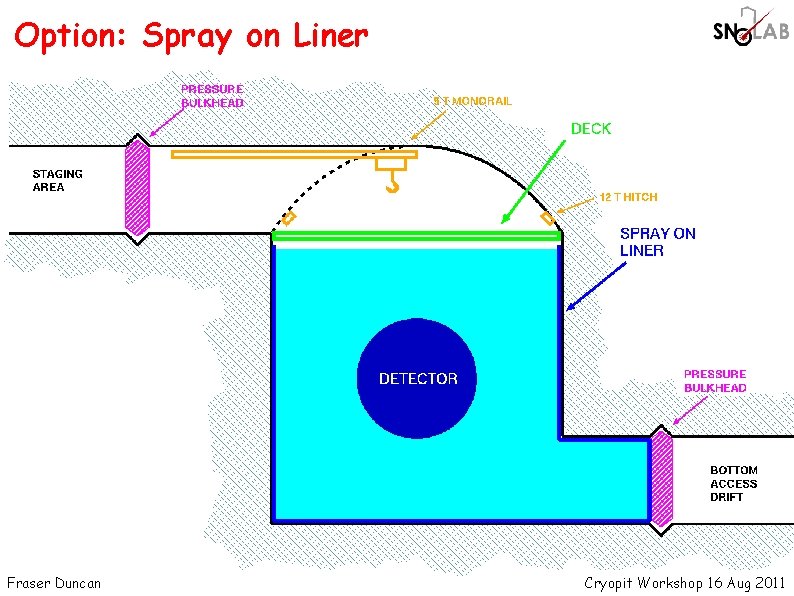
Option: Spray on Liner Fraser Duncan Cryopit Workshop 16 Aug 2011
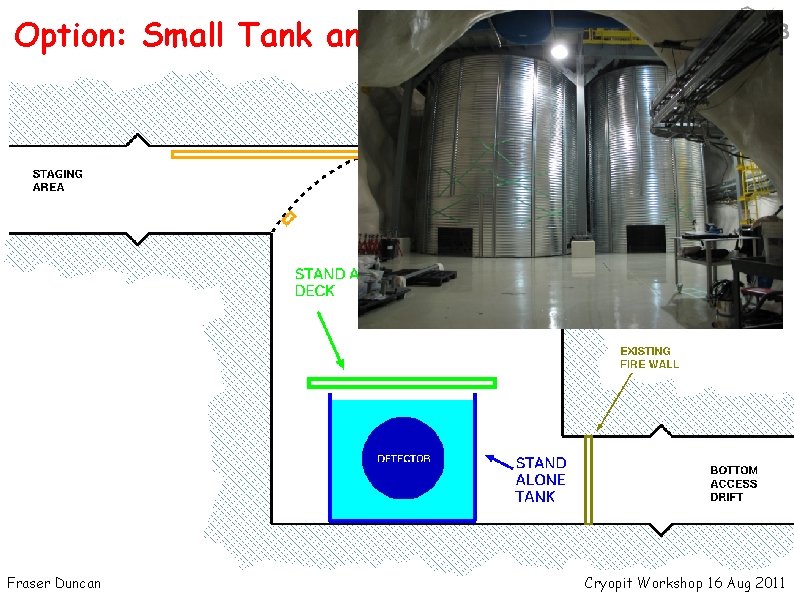
Option: Small Tank and Deck Fraser Duncan Cryopit Workshop 16 Aug 2011
Summary The Cryopit has been a 3, 900 m 3 class 2000 clean room since May 2011. Beneficial occupancy could occur Jan 2011 with completion of fire detection. Electrical infrastructure would also need to be installed. Could deploy a short term experiment almost immediately by constructing a small tank and deck. Fully exploiting the cavity would (likely) require design and installation of large deck and liner/tank. Fraser Duncan Cryopit Workshop 16 Aug 2011
End