
Dr Clare Fraser Parkinsons disease and the eye











- Slides: 50
Dr Clare Fraser Parkinson’s disease and the eye
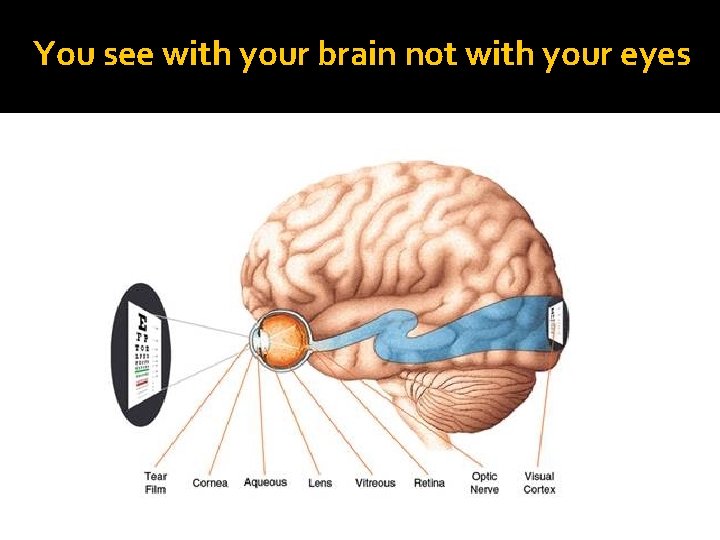
You see with your brain not with your eyes
So why is it blurry?
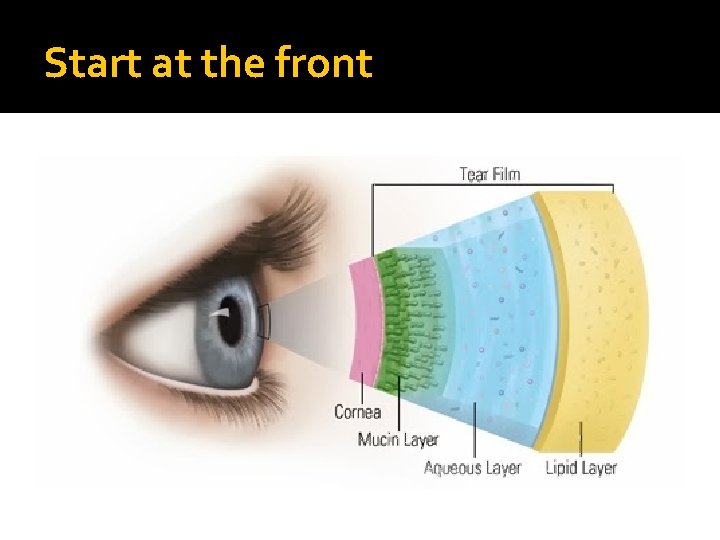
Start at the front
Dirty windshield
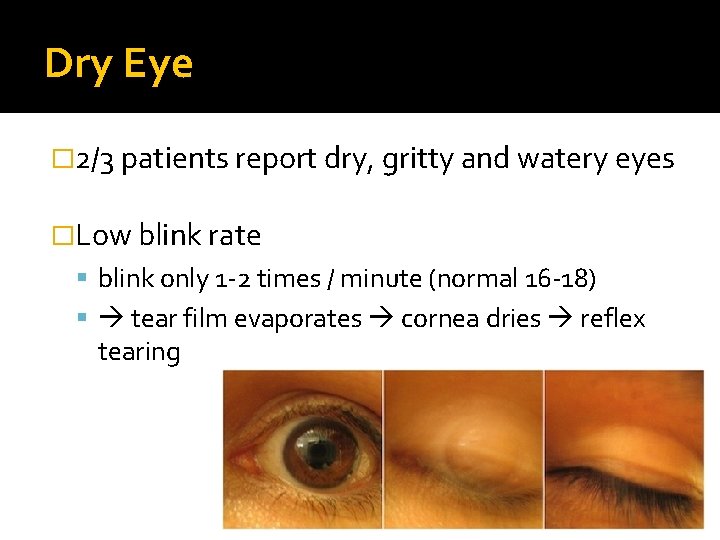
Dry Eye � 2/3 patients report dry, gritty and watery eyes �Low blink rate blink only 1 -2 times / minute (normal 16 -18) tear film evaporates cornea dries reflex tearing
Parkinson’s stare
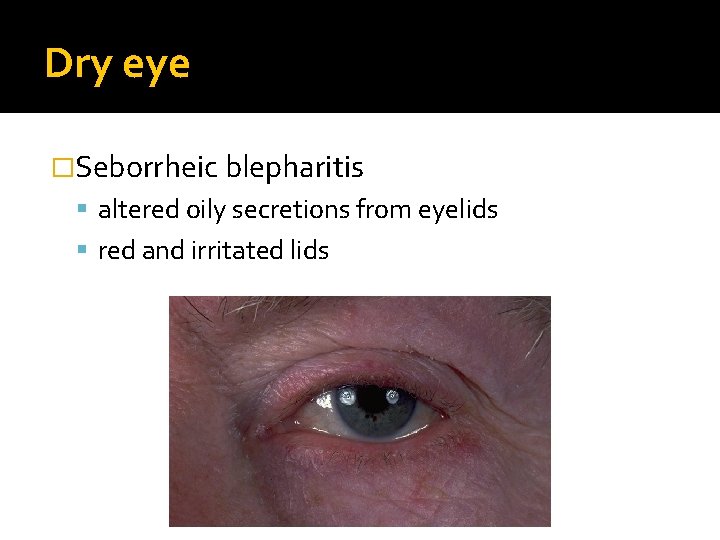
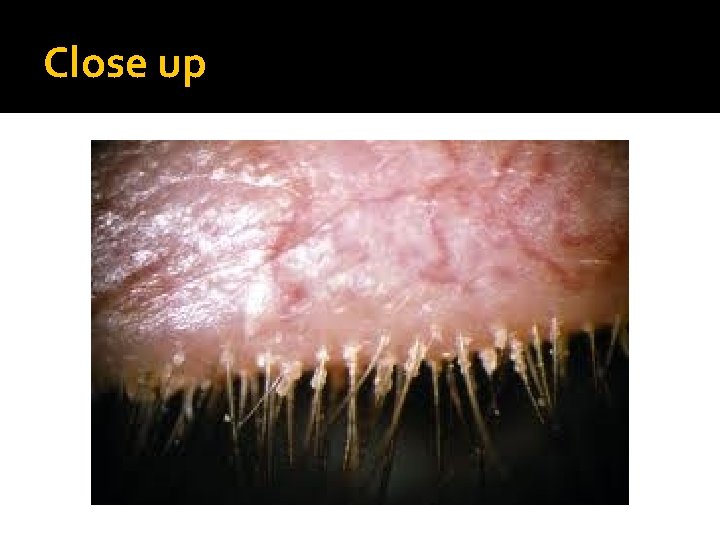
Dry eye �Seborrheic blepharitis altered oily secretions from eyelids red and irritated lids
Close up
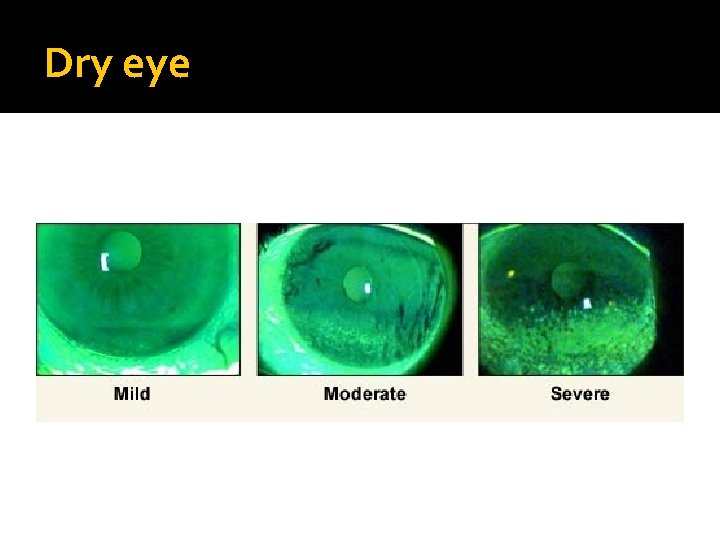
Dry eye
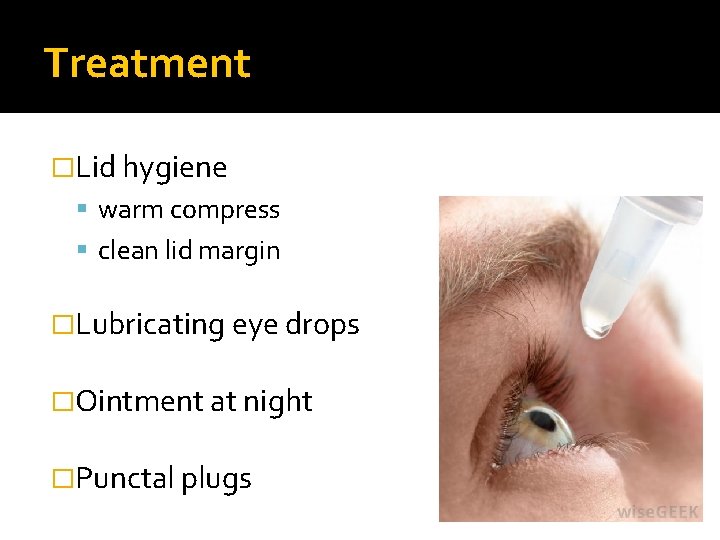
Treatment �Lid hygiene warm compress clean lid margin �Lubricating eye drops �Ointment at night �Punctal plugs
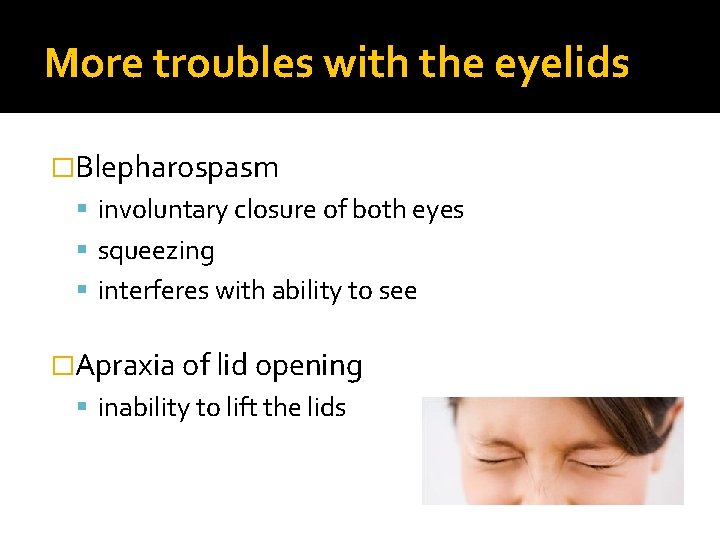
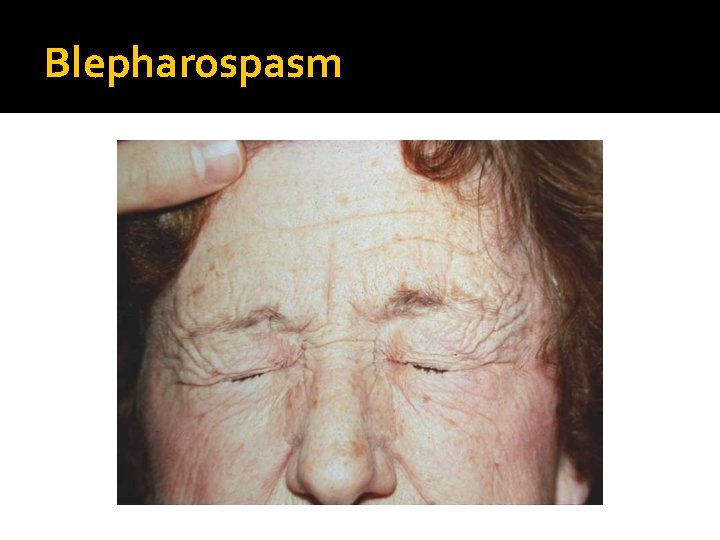
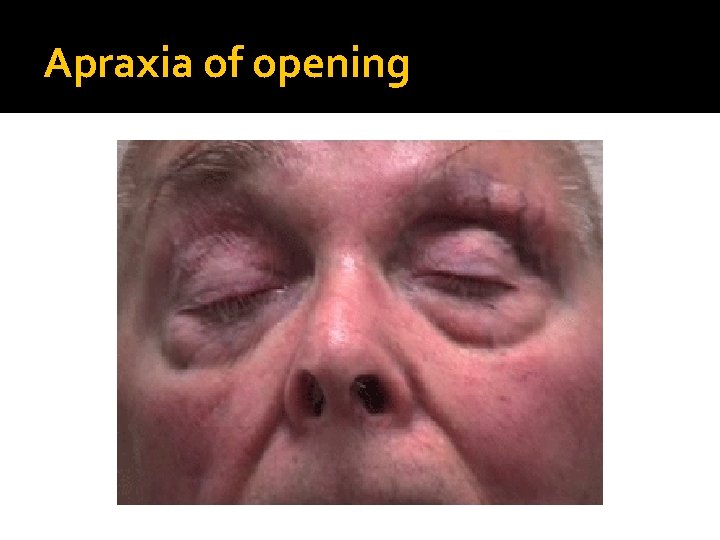
More troubles with the eyelids �Blepharospasm involuntary closure of both eyes squeezing interferes with ability to see �Apraxia of lid opening inability to lift the lids
Blepharospasm
Apraxia of opening
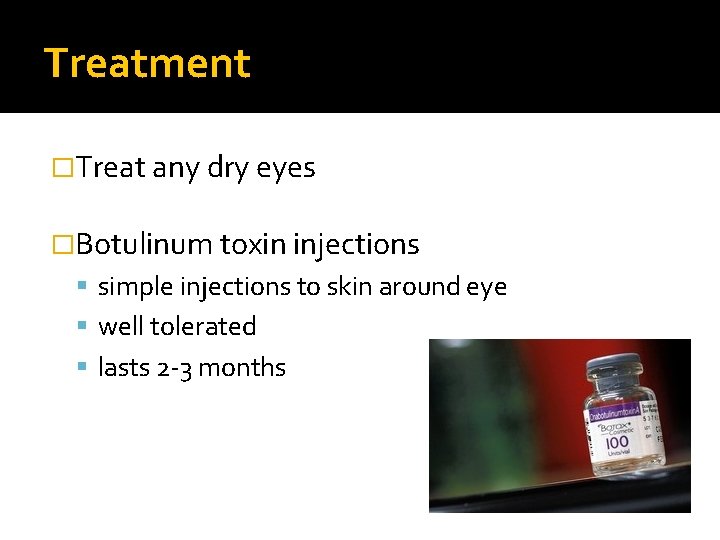
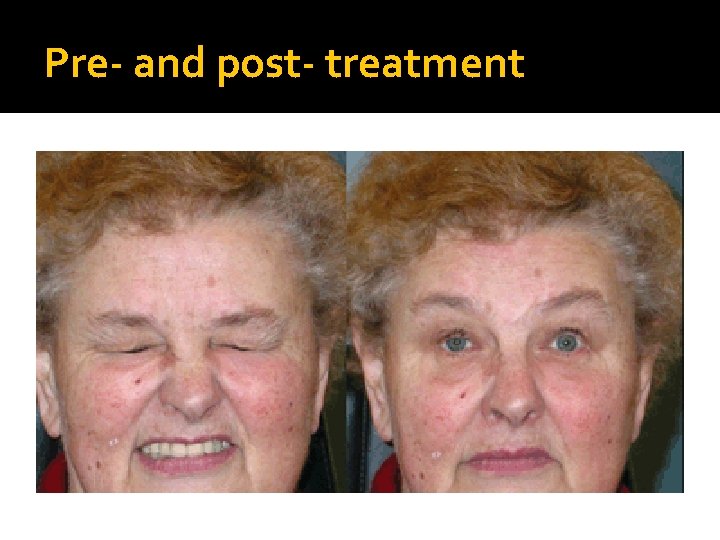
Treatment �Treat any dry eyes �Botulinum toxin injections simple injections to skin around eye well tolerated lasts 2 -3 months
Pre- and post- treatment
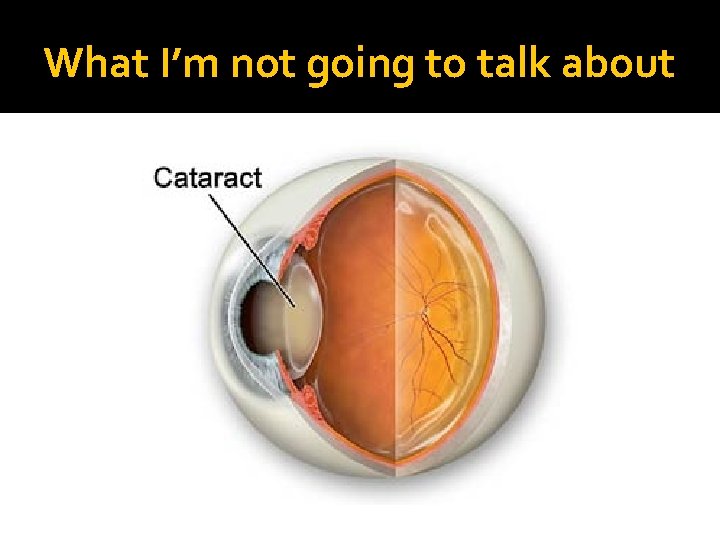
What I’m not going to talk about
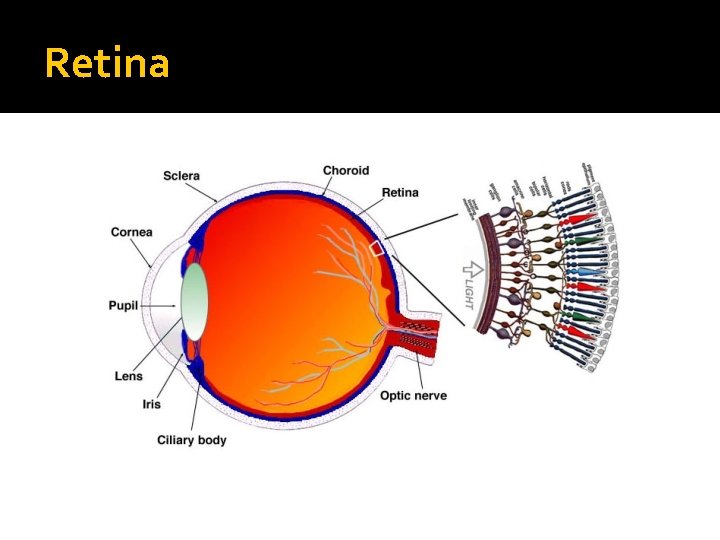
Retina
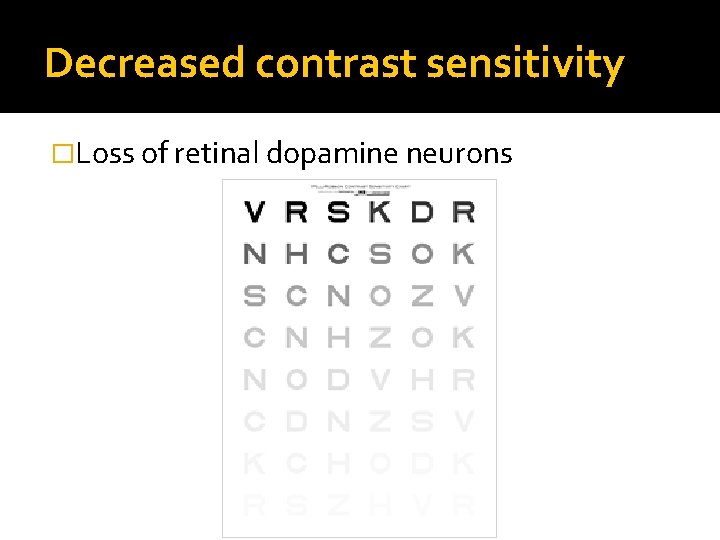
Decreased contrast sensitivity �Loss of retinal dopamine neurons
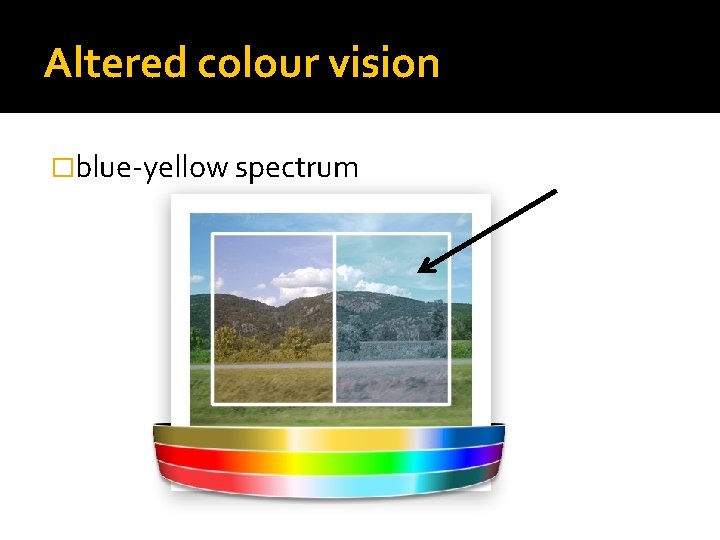
Altered colour vision �blue-yellow spectrum
Treatment
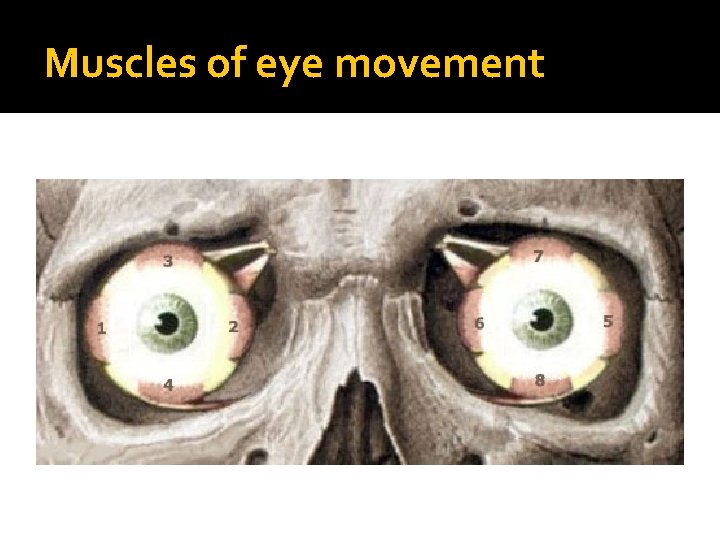
Muscles of eye movement
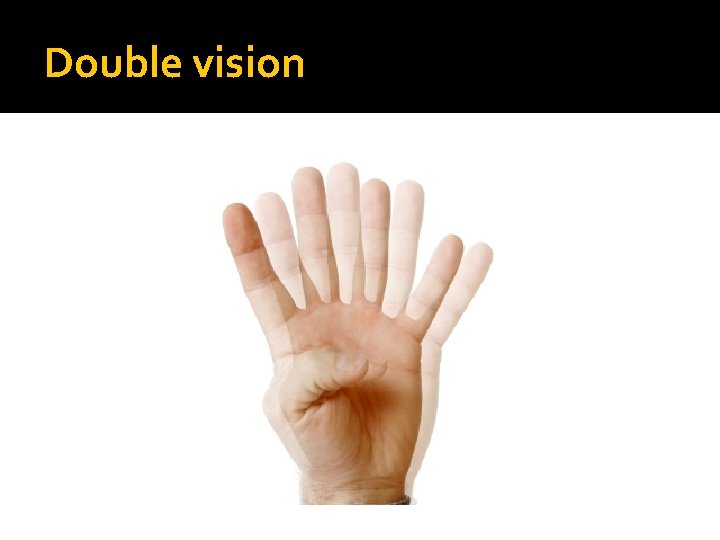
Double vision
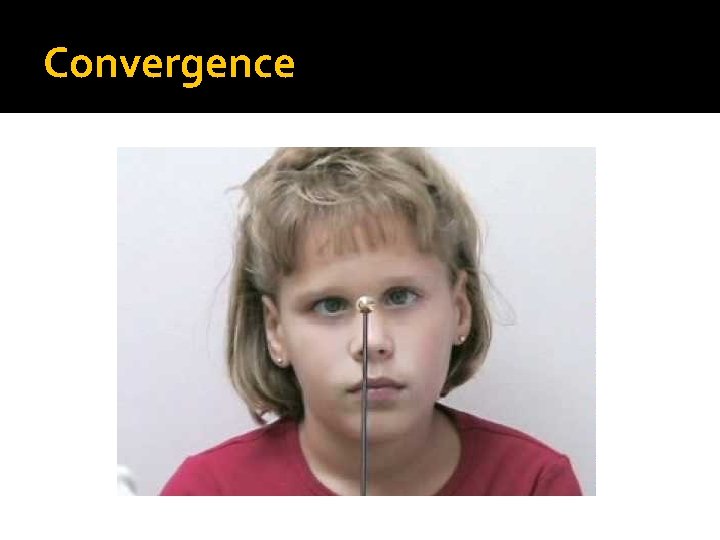
Convergence
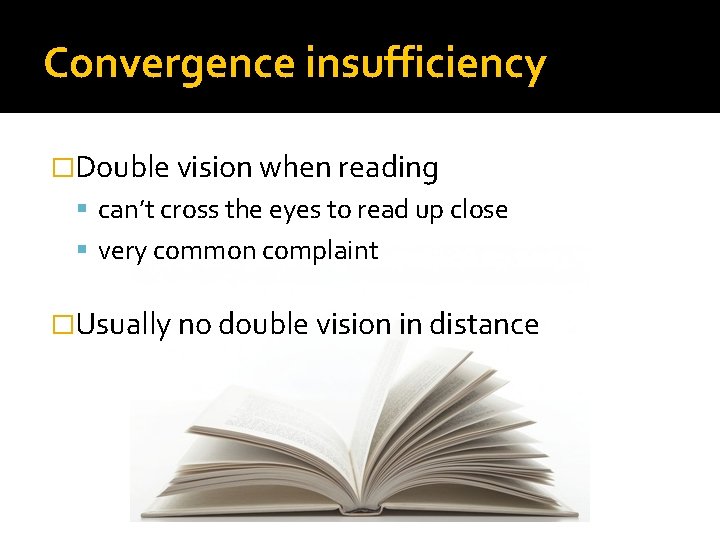
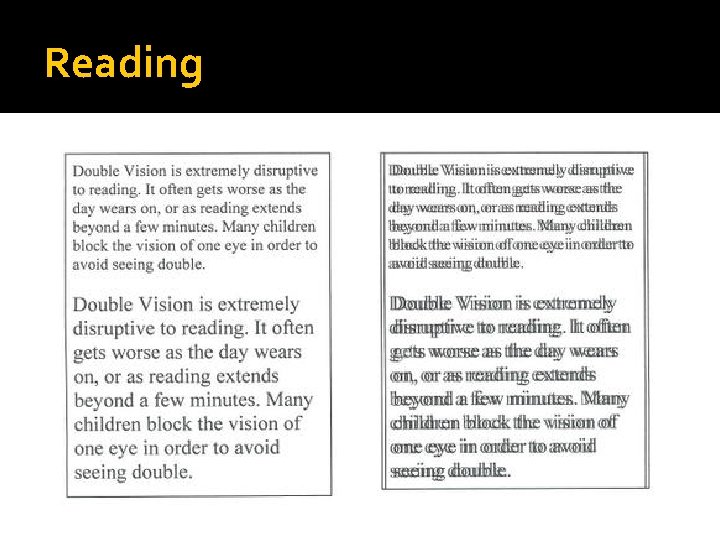
Convergence insufficiency �Double vision when reading can’t cross the eyes to read up close very common complaint �Usually no double vision in distance
Reading
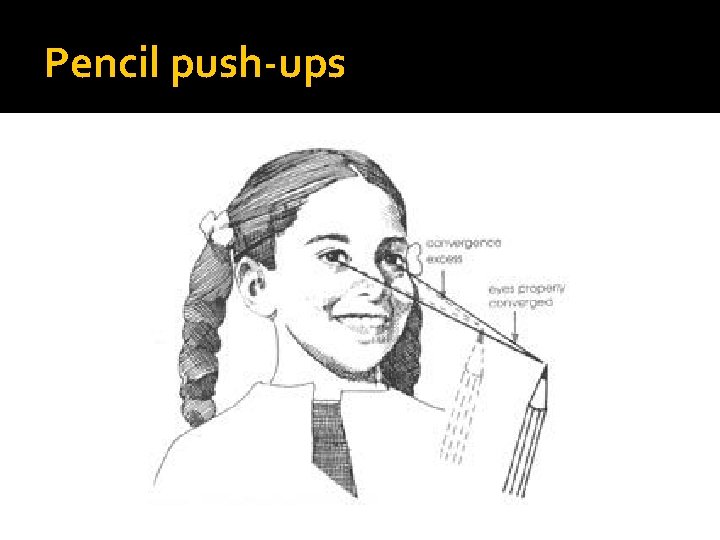
Push-ups? ?
Pencil push-ups
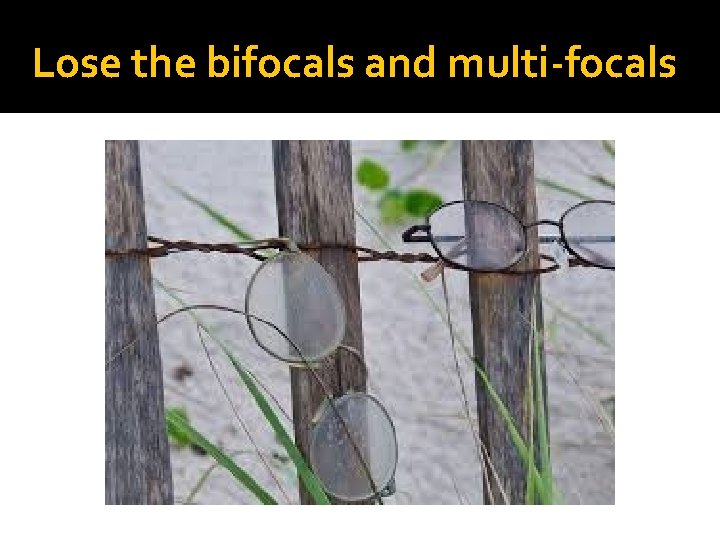
Lose the bifocals and multi-focals
Prisms
Reading also troubled by … �movements needed to follow a line are slowed can’t track across a line of text �difficulty starting to read like gait freezing = due to loss of motor dopamine neurons �Shaking page due to tremor
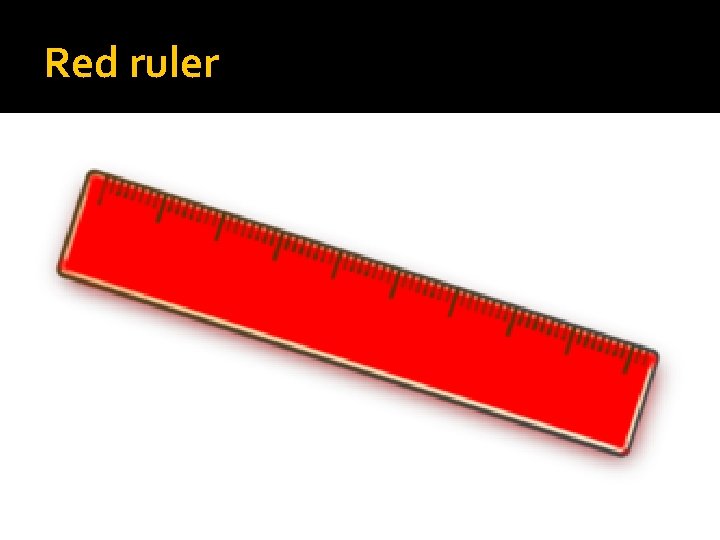
Red ruler
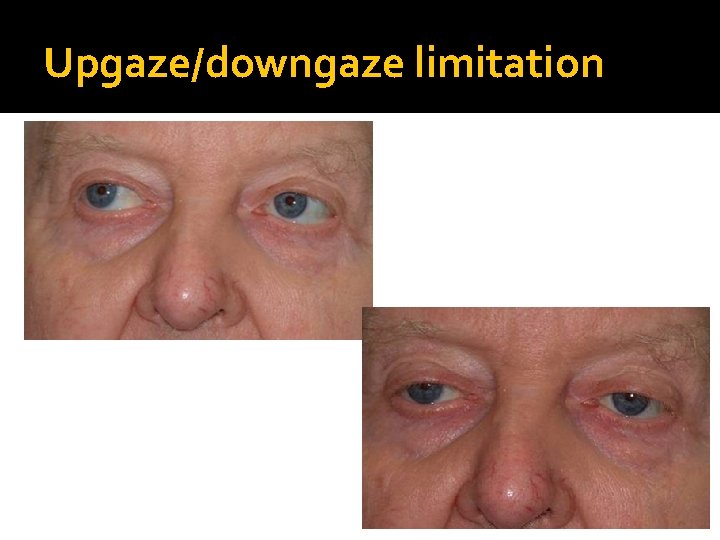
Upgaze/downgaze limitation
Lose the bifocals and multi-focals
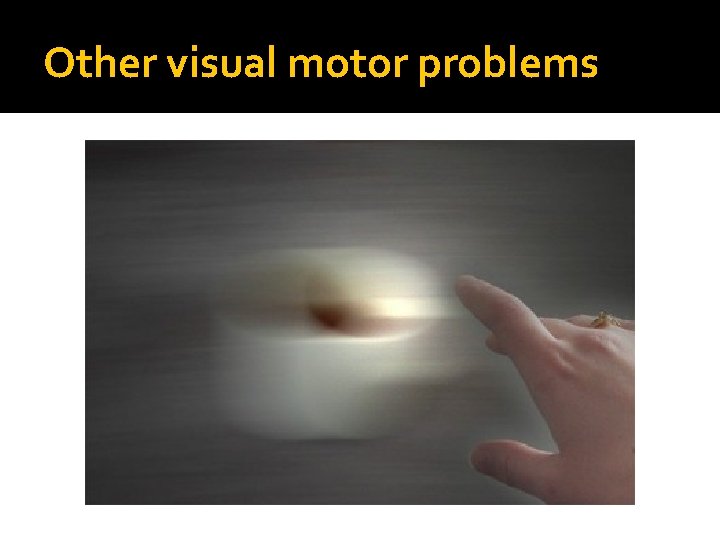
Other visual motor problems
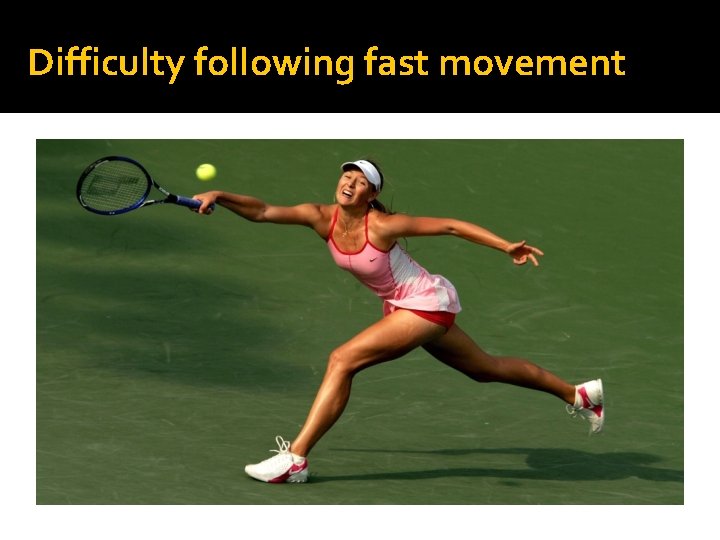
Difficulty following fast movement
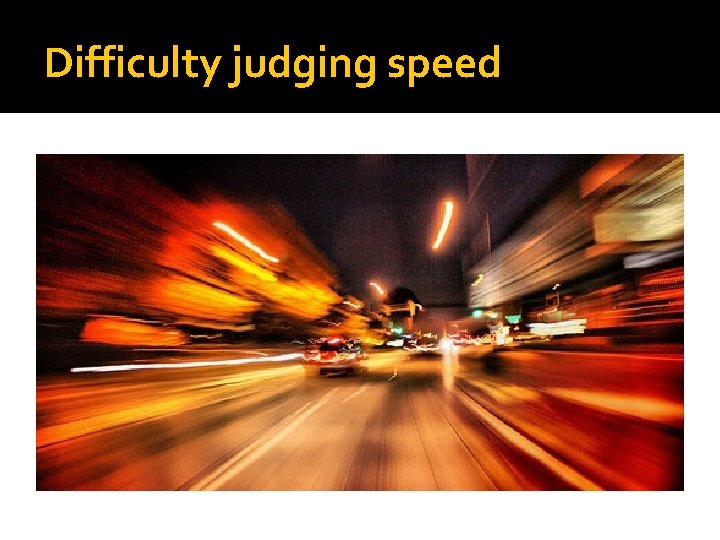
Difficulty judging speed
Visual hallucinations
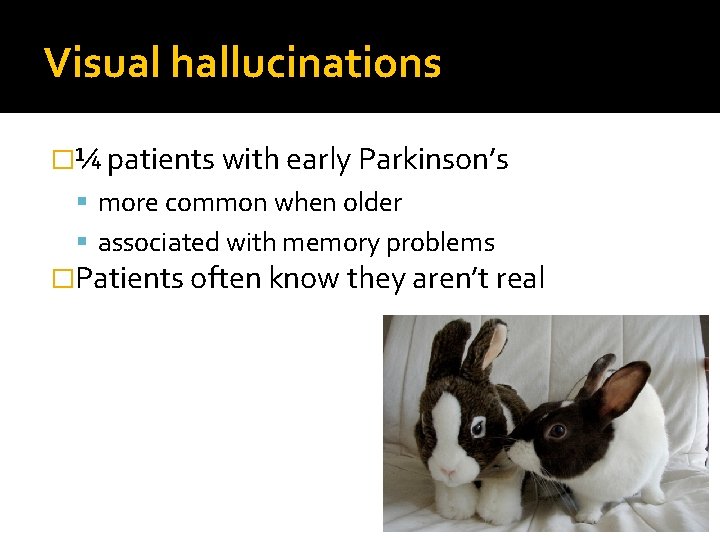
Visual hallucinations �¼ patients with early Parkinson’s more common when older associated with memory problems �Patients often know they aren’t real
Flashes
Shapes
People or objects
Bizarre
Treatment �Speak to your neurologist �certain Parkinson’s medications can: make it worse make it better
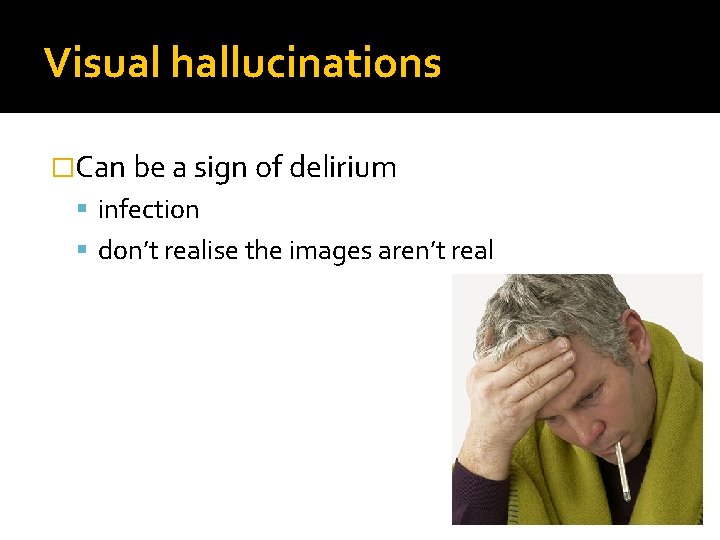
Visual hallucinations �Can be a sign of delirium infection don’t realise the images aren’t real
Driving
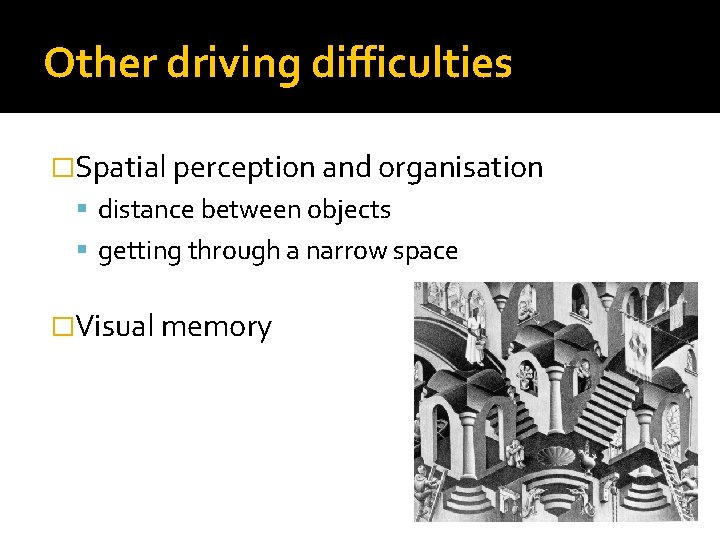
Other driving difficulties �Spatial perception and organisation distance between objects getting through a narrow space �Visual memory
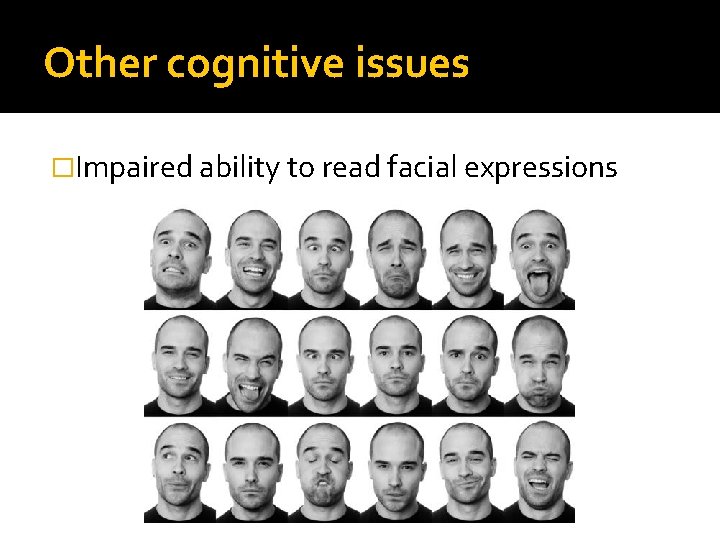
Other cognitive issues �Impaired ability to read facial expressions
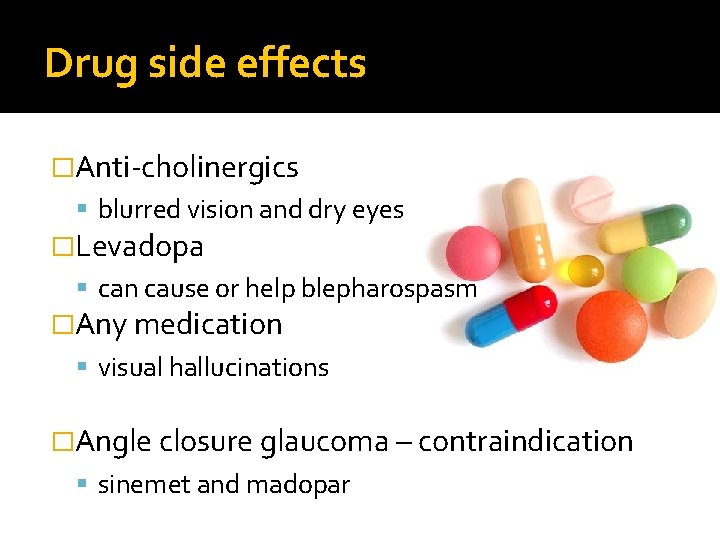
Drug side effects �Anti-cholinergics blurred vision and dry eyes �Levadopa can cause or help blepharospasm �Any medication visual hallucinations �Angle closure glaucoma – contraindication sinemet and madopar
In conclusion …. �Parkinson’s doesn’t cause vision loss �It can significantly affect visual quality of life �BUT there are options available