Origins of Communities of Practice The term community







- Slides: 30
Origins of Communities of Practice The term community of practice was coined to refer to the community that acts as a living curriculum for the apprentice. Jean Lave, Etienne Wenger (1991)
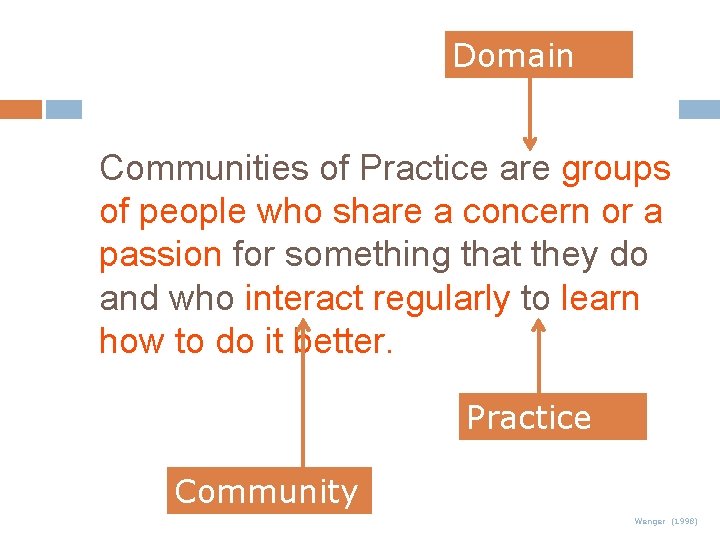
Domain Communities of Practice are groups of people who share a concern or a passion for something that they do and who interact regularly to learn how to do it better. Practice Community Wenger (1998)
Characteristics Domain: a shared competence, identity defined by shared domain Community: build relationships, care about each other and how they learn from each other Practice: shared repertoire, do things together, improve their practice, share ideas Wenger (1998)
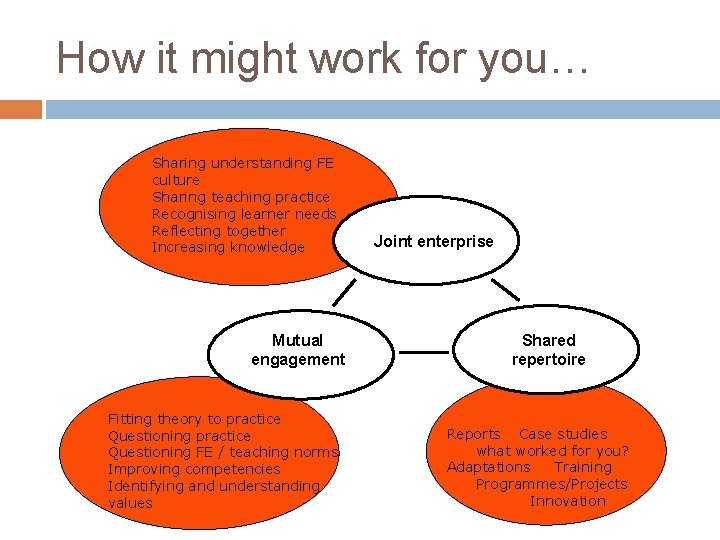
How it might work for you… Sharing understanding FE culture Sharing teaching practice Recognising learner needs Reflecting together Increasing knowledge Mutual engagement Fitting theory to practice Questioning FE / teaching norms Improving competencies Identifying and understanding values Joint enterprise Shared repertoire Reports Case studies what worked for you? Adaptations Training Programmes/Projects Innovation
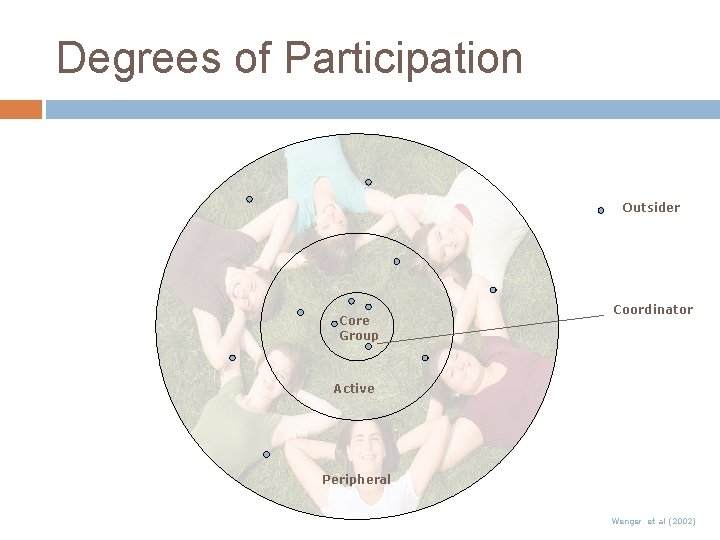
Degrees of Participation Outsider Core Group Coordinator Active Peripheral Wenger et al (2002)
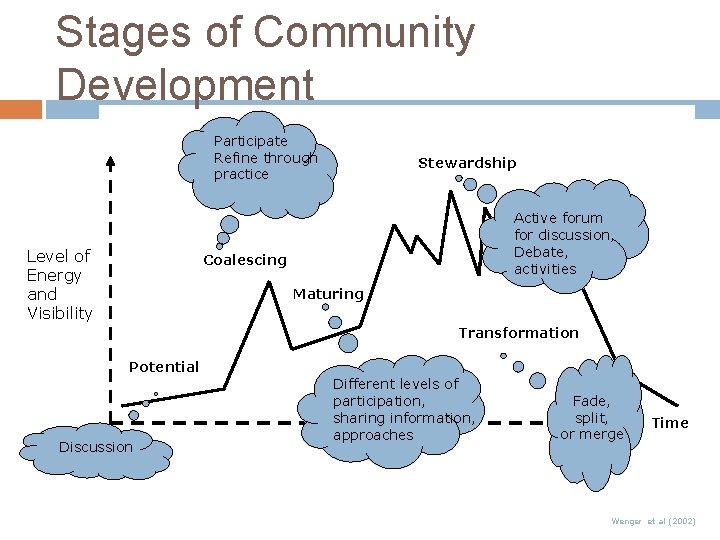
Stages of Community Development Participate Refine through practice Level of Energy and Visibility Stewardship Active forum for discussion, Debate, activities Coalescing Maturing Transformation Potential Discussion Different levels of participation, sharing information, approaches Fade, split, or merge Time Wenger et al (2002)
Communities of Practice In a community of practice, novices and experienced practitioners can learn from observing, asking questions, and actually participating alongside others with more or different experience. Learning is facilitated when novices and experienced practitioners organize their work in ways that allow all participants the opportunity to see, discuss, and engage in shared practices (Levine and Marcus, 2010)
Cultivating Communities of Practice Ø Ø Ø Ø Design for Evolution Open a dialogue between inside and outside perspectives Invite different levels of participation Develop both public and private community spaces Focus on value Combine familiarity and excitement Create a rhythm for the Community Wenger et al (2002)
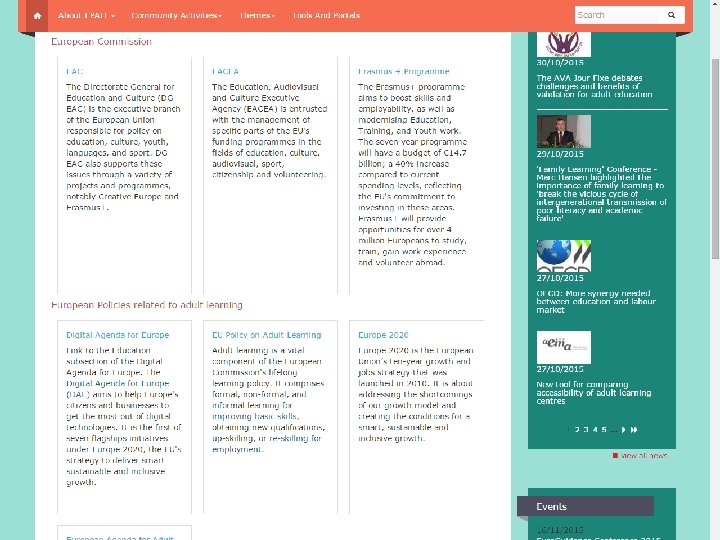
Design for Evolution Ø Ø Builds on existing networks Combining design elements to catalyse development Whatever works! Meetings, coordinators, thought leaders Reflect and improve Wenger et al (2002)
Open a dialogue between inside and outside perspectives Ø Ø Ø Collective experience of members – inside perspective Outside perspective can see possibilities Look to other examples – what are they doing well?
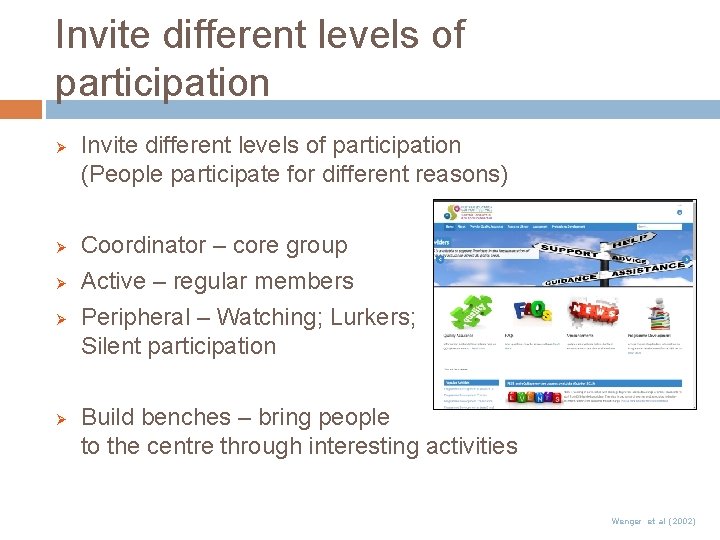
Invite different levels of participation Ø Ø Ø Invite different levels of participation (People participate for different reasons) Coordinator – core group Active – regular members Peripheral – Watching; Lurkers; Silent participation Build benches – bring people to the centre through interesting activities Wenger et al (2002)
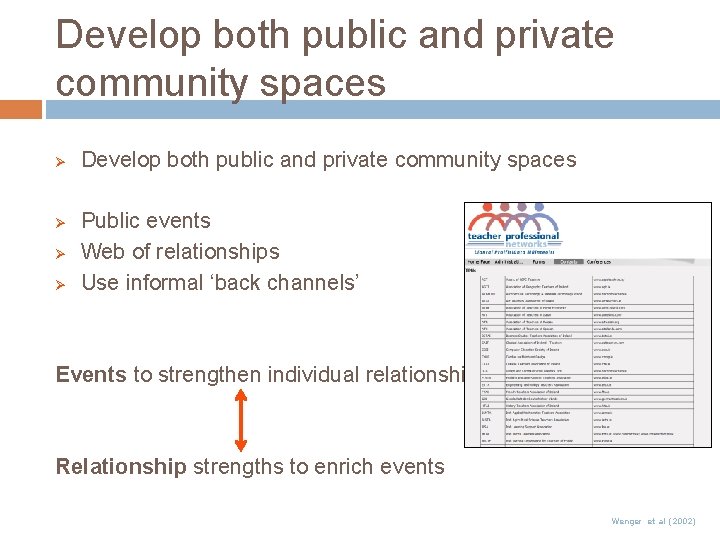
Develop both public and private community spaces Ø Ø Develop both public and private community spaces Public events Web of relationships Use informal ‘back channels’ Events to strengthen individual relationships Relationship strengths to enrich events Wenger et al (2002)
Focus on Value Ø Ø Ø Value changes over the lifespan Value may not be evident immediately Value is difficult to assess although participation may be useful: Learning a new method Having someone to contact to ask questions Wenger et al (2002)
Create a rhythm for the Community Ø Ø Key projects Special events Idea – sharing forums Tool-building projects Wenger et al (2002)
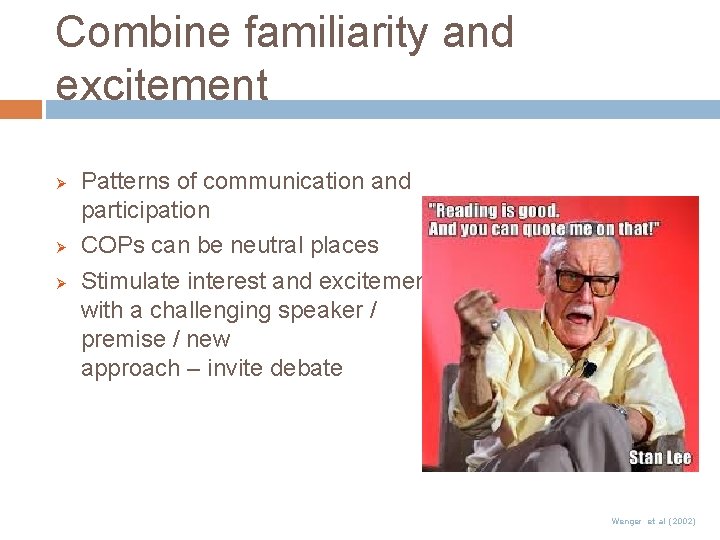
Combine familiarity and excitement Ø Ø Ø Patterns of communication and participation COPs can be neutral places Stimulate interest and excitement with a challenging speaker / premise / new approach – invite debate Wenger et al (2002)
Challenges Excessive documentation (an end in itself) Ø Ø Ø Creating Repositories ‘full of stuff’ No order, no screening, no organisation Comes to define the Community Solution: think through the purpose of the COP, identify documents that would be useful, develop clear roles for managing them Wenger et al (2002)
Challenges Amnesia Ø Ø Opposite of documentism Tend to discuss problems rather than insights No record of insights – “repeating the wheel” Déjà vu – participation is unproductive Solution: record insight and questions so that community activities are cumulative. Wenger et al (2002)
Challenges Dogmatism Ø Ø Ø Strong sense of competence – leads to unbending commitment to established canons and methods Refuse to accommodate variation Relish specialised knowledge and jargon others don’t understand Solution: thought leaders to guide community towards adaptability Wenger et al (2002)
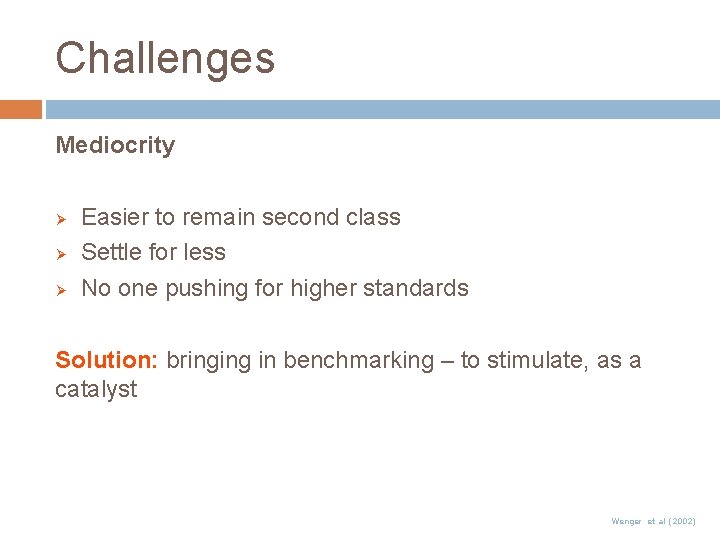
Challenges Mediocrity Ø Ø Ø Easier to remain second class Settle for less No one pushing for higher standards Solution: bringing in benchmarking – to stimulate, as a catalyst Wenger et al (2002)
Teacher Education in Ireland Internationally “Teachers should be supported in taking responsibility for their own learning, that self and peer evaluation should be encouraged, and that communities of practice should be recognised” (Background Report: Teacher Education in Ireland Internationally, The Teaching Council, November 2010)
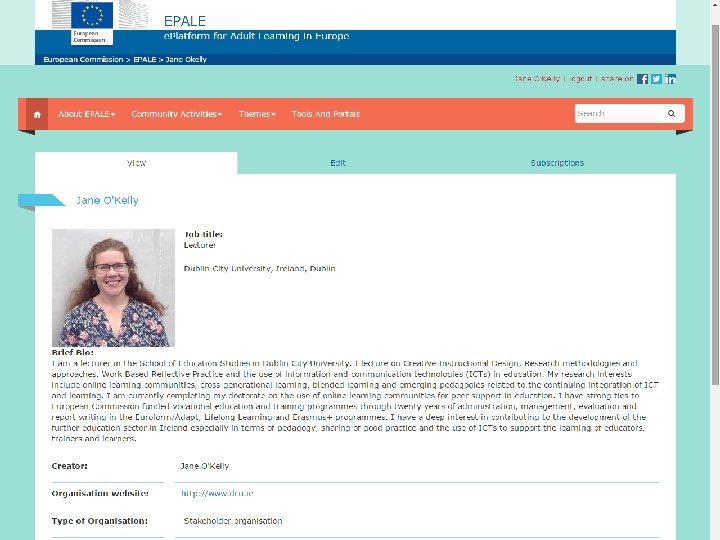
Contact Details Jane O’Kelly School of Education Studies DCU Tel: 01 7007090 Email: jane. okelly@dcu. ie Twitter: @janemurnaghan Research interests: Online learning communities; communities of practice; research, CPD and practice in FET and adult education.
References Wenger, E (1998) Communities of Practice: Learning, Meaning and Identity. NY: Cambridge University Press. Wenger, E. , Mc. Dermott, R. , Snyder, W. M. (2002) Cultivating Communities of Practice, USA: Harvard Business School Press Wenger, E. , White, N. , Smith, J. D. (2009) Digital Habitats. US: Cpsquare Kimble, C. Hildreth, P. , Bourdon, I (Eds. ) (2008) Communities of Practice: Creating Learning Environments for Educators Volume I US: IAP – Information Age Publishing. Kimble, C. , Hildreth, P. , Bourdon, I. (Eds. ) (2008) Communities of Practice: Creating Learning Environments for Educators Volume II US: IAP – Information Age Publishing. Levine, T. H. and Marcus, A. S. (2010). How the structure and focus of teachers’ collaborative activities facilitate and constrain teacher learning. Teaching and Teacher Education. 26, pp. 389– 398 The Teaching Council. (2010) Background Report: Teacher Education in Ireland Internationally. [online] Available from: http: //www. teachingcouncil. ie/en/Publications/Teacher-