Optimal Currency Area Theory The Case of Sweden


- Slides: 27
Optimal Currency Area Theory The Case of Sweden and the EMU Ithurbide: Prévision des taux d’échange Györgyi Kacsandi, Signe Svensson, Stefan Zeugner, 2002 1
Optimum Currency Area Theory The Case of Sweden and the EMU DISPOSITION Overview € € Question Theory € € € What is an asymmetric shock? OCA Criteria Case Application: Sweden € € € Statistic Study Conclusion Academic Results 2
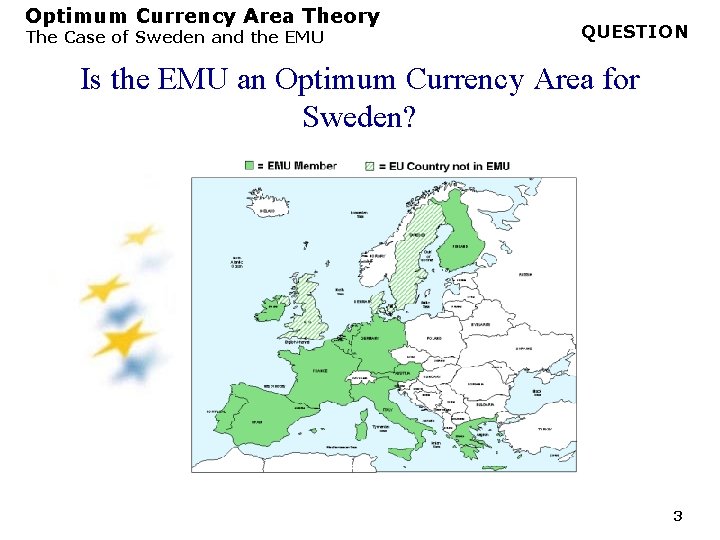
Optimum Currency Area Theory The Case of Sweden and the EMU QUESTION Is the EMU an Optimum Currency Area for Sweden? 3
Optimum Currency Area Theory The Case of Sweden and the EMU QUESTION Time line € 1995 Sweden joins the EU € 1996 The Swedish Government launches «Wait and See» Policy considering EMU € € 1999/2002 The EMU is put into reality by the introduction of the Euro in the 12 member states 2002 Swedish prime minister says that the smooth introduction of the euro advances the date of a possible referendum to not later than 2005, and most likely 2003. 4
Optimum Currency Area Theory The Case of Sweden and the EMU QUESTION Why Sweden adopted « Wait and See » policy in 1996: • Financial Situation of the State • The Rate of Unemployment • Not Sufficient Debate; Legitimacy • Other EU-countries 5
Optimum Currency Area Theory The Case of Sweden and the EMU THEORY Definition An Optimum Currency Area is an area neither so small and open that it would be better off pegging its currency to a neighbor, nor so large that it would be better off splitting into sub-regions with different currencies. 6
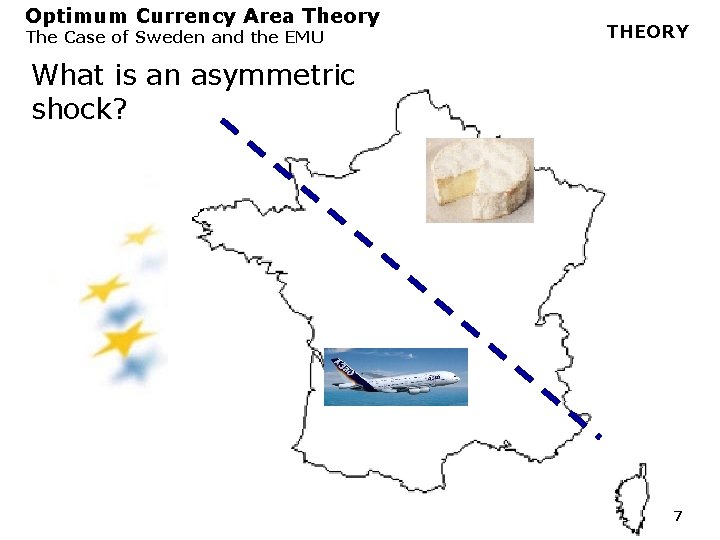
Optimum Currency Area Theory The Case of Sweden and the EMU THEORY What is an asymmetric shock? 7
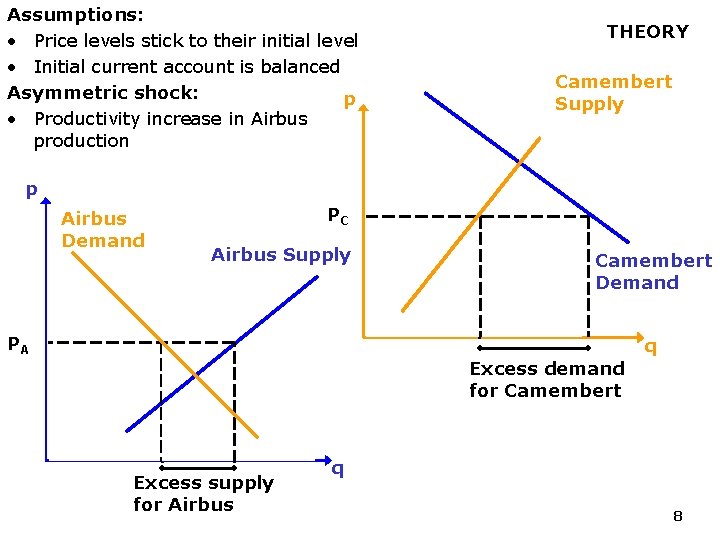
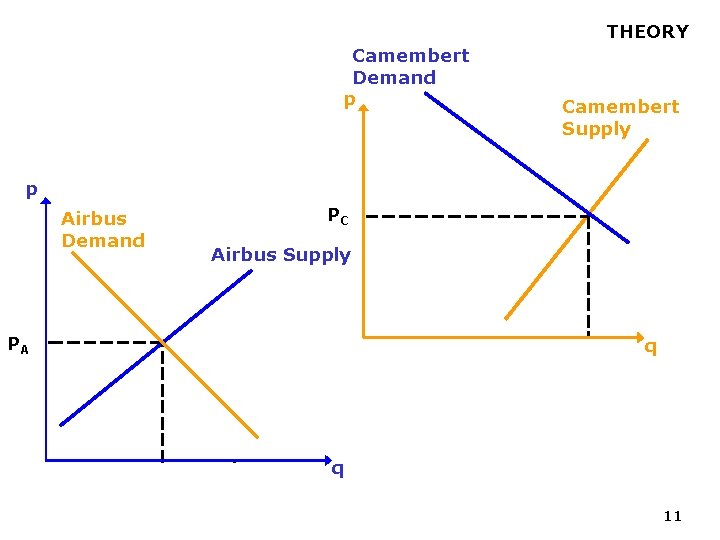
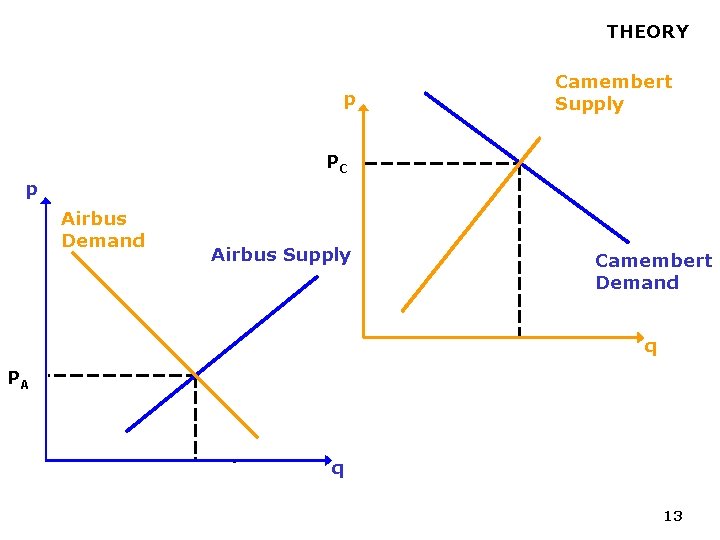
Assumptions: • Price levels stick to their initial level • Initial current account is balanced Asymmetric shock: p • Productivity increase in Airbus production THEORY Camembert Supply p Airbus Demand PC Airbus Supply Camembert Demand PA q Excess demand for Camembert Excess supply for Airbus q 8
Optimum Currency Area Theory The Case of Sweden and the EMU THEORY I. Flexible Exchange Rates France is devided into two currency areas: in the Northeast the NE-Franc and in the Southwest the SW-Franc: In the booming Northeast, interest rates rise – whereas in the staggering Southeast they fall. The NE-Franc appreciates versus the SW-Franc and the justified prices are quickly reached on « international » markets. But there is no inflation in the NE and no monetary-caused unemployment in the SW. Moreover, each region can fine-tune its monetary policy to its particular shock. 9
Optimum Currency Area Theory The Case of Sweden and the EMU THEORY II. Fixed Exchange Rates: Labor mobility In order to decrease the excess supply of Airbuses, workers will « quit » their jobs in the Southwes, move to the Northeast and will become Camembert producers. Camembert supply will increase (shift to the right), Airbus supply will decrease (shift to the left) Þ The price movements are by far not as excessive as in case I. 10
THEORY Camembert Demand p Camembert Supply p Airbus Demand PC Airbus Supply PA q q 11
Optimum Currency Area Theory The Case of Sweden and the EMU THEORY III. Fixed Exchange Rates: Adjustment of Prices Labor productivity has increased Þ one needs less work hours to build an Airbus (relative to work hours for making Camembert) Þ The price of an Airbus in terms of Camemberts falls Þ the producers (workers) of Airbuses receive less Camemberts in total (real wage) i. e. incomes in the Southwest deteriorate, while the Northeast is experiencing a boom. This implies falling wages (along with the prices) in the Southwest – or unemployment. The Northeast will suffer from inflation. 12
THEORY p Camembert Supply PC p Airbus Demand PC Airbus Supply PA Camembert Demand q PA q 13
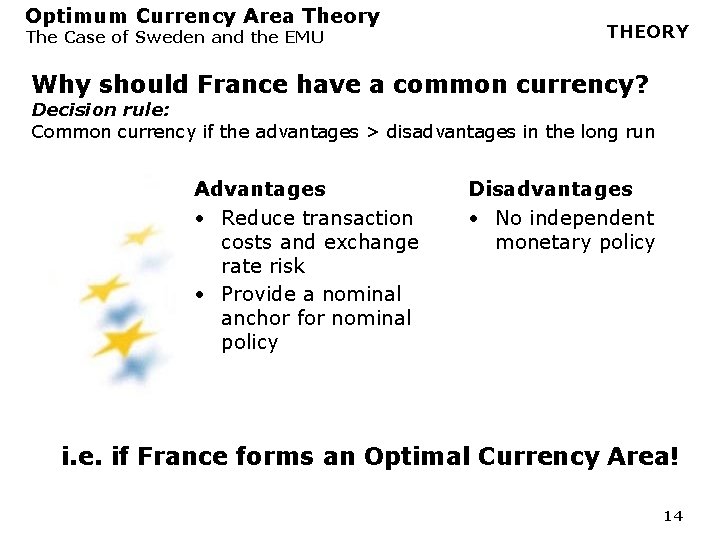
Optimum Currency Area Theory The Case of Sweden and the EMU THEORY Why should France have a common currency? Decision rule: Common currency if the advantages > disadvantages in the long run Advantages • Reduce transaction costs and exchange rate risk • Provide a nominal anchor for nominal policy Disadvantages • No independent monetary policy i. e. if France forms an Optimal Currency Area! 14
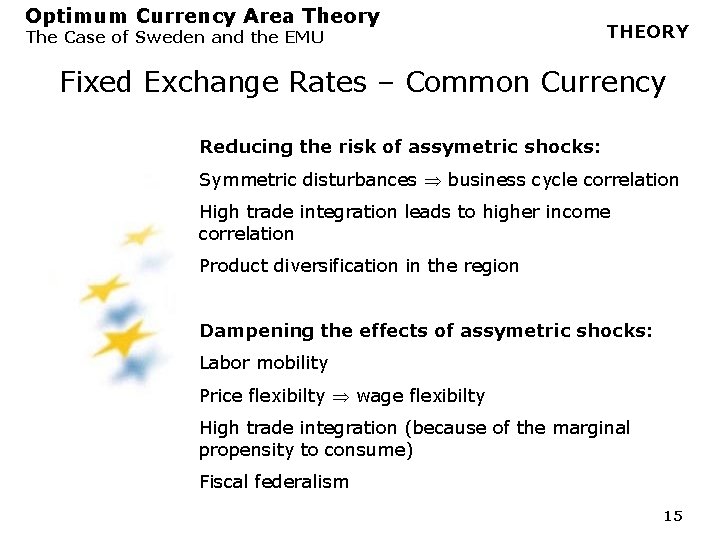
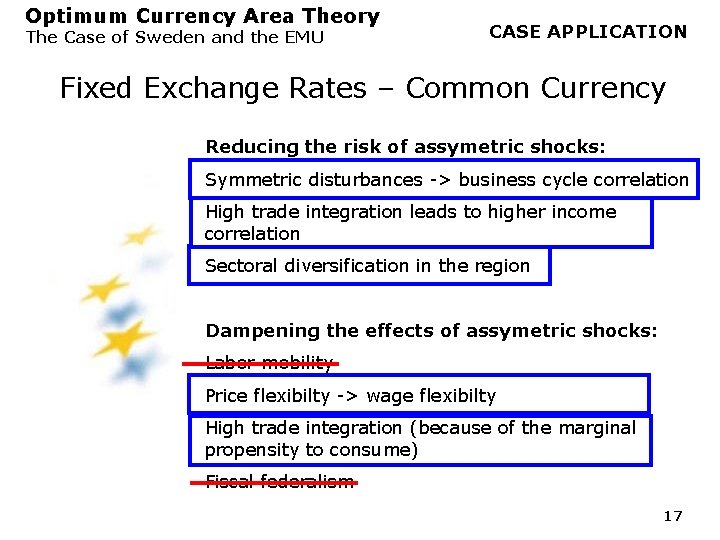
Optimum Currency Area Theory The Case of Sweden and the EMU THEORY Fixed Exchange Rates – Common Currency Reducing the risk of assymetric shocks: Symmetric disturbances Þ business cycle correlation High trade integration leads to higher income correlation Product diversification in the region Dampening the effects of assymetric shocks: Labor mobility Price flexibilty Þ wage flexibilty High trade integration (because of the marginal propensity to consume) Fiscal federalism 15
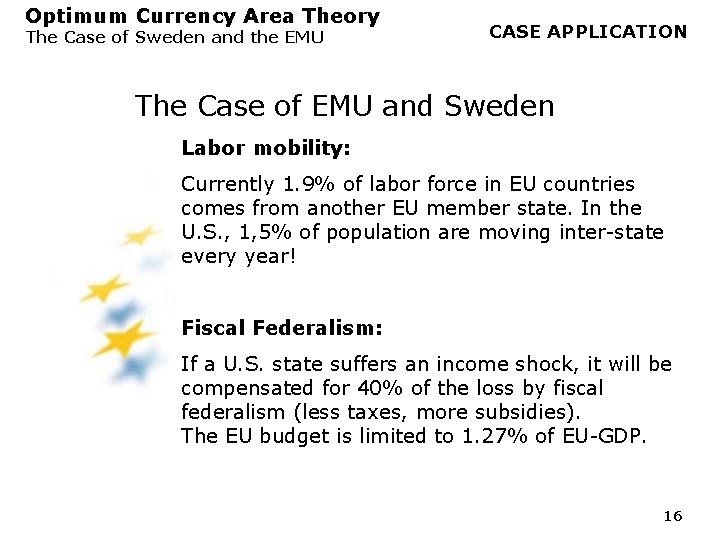
Optimum Currency Area Theory The Case of Sweden and the EMU CASE APPLICATION The Case of EMU and Sweden Labor mobility: Currently 1. 9% of labor force in EU countries comes from another EU member state. In the U. S. , 1, 5% of population are moving inter-state every year! Fiscal Federalism: If a U. S. state suffers an income shock, it will be compensated for 40% of the loss by fiscal federalism (less taxes, more subsidies). The EU budget is limited to 1. 27% of EU-GDP. 16
Optimum Currency Area Theory The Case of Sweden and the EMU CASE APPLICATION Fixed Exchange Rates – Common Currency Reducing the risk of assymetric shocks: Symmetric disturbances -> business cycle correlation High trade integration leads to higher income correlation Sectoral diversification in the region Dampening the effects of assymetric shocks: Labor mobility Price flexibilty -> wage flexibilty High trade integration (because of the marginal propensity to consume) Fiscal federalism 17
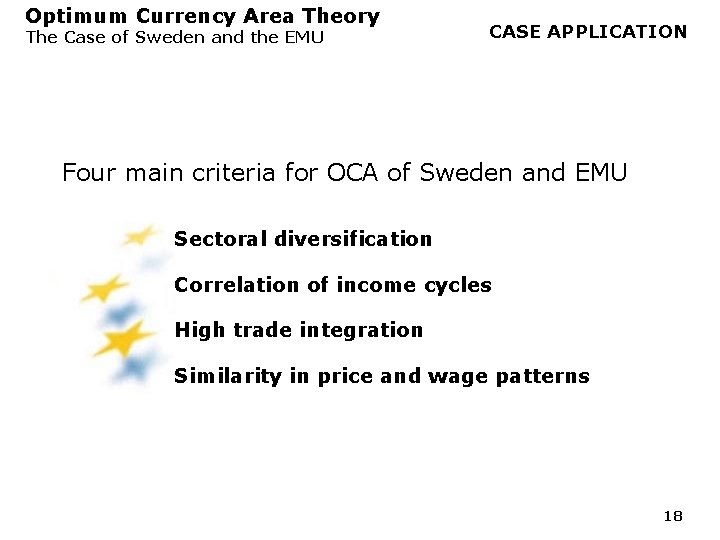
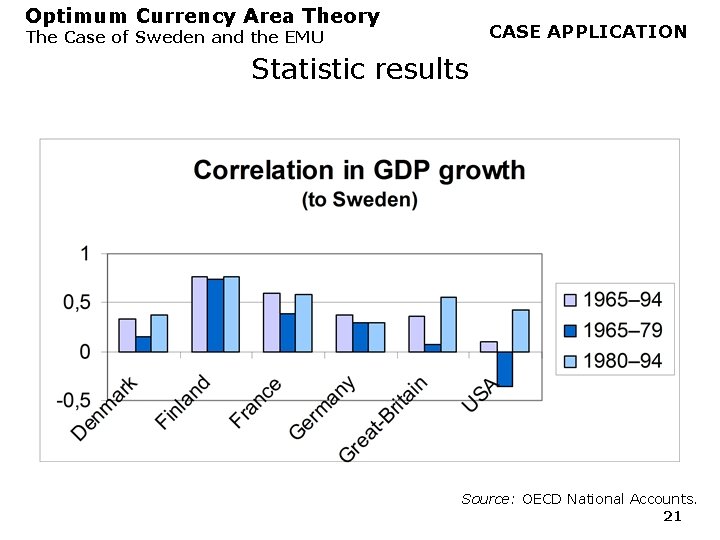
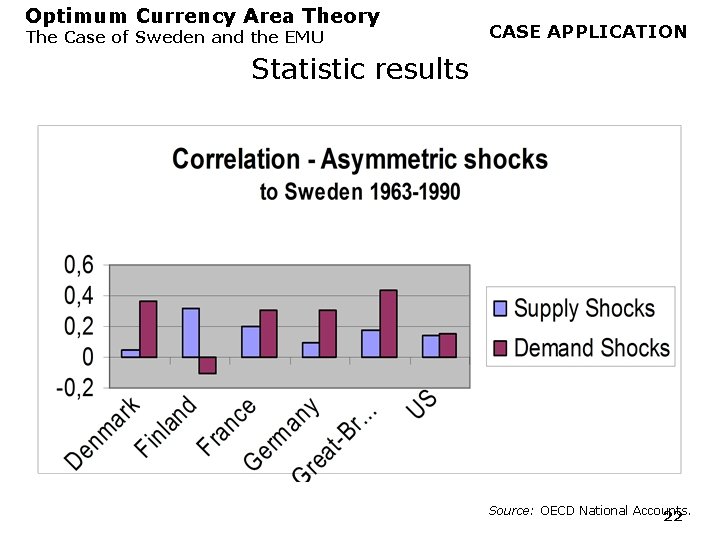
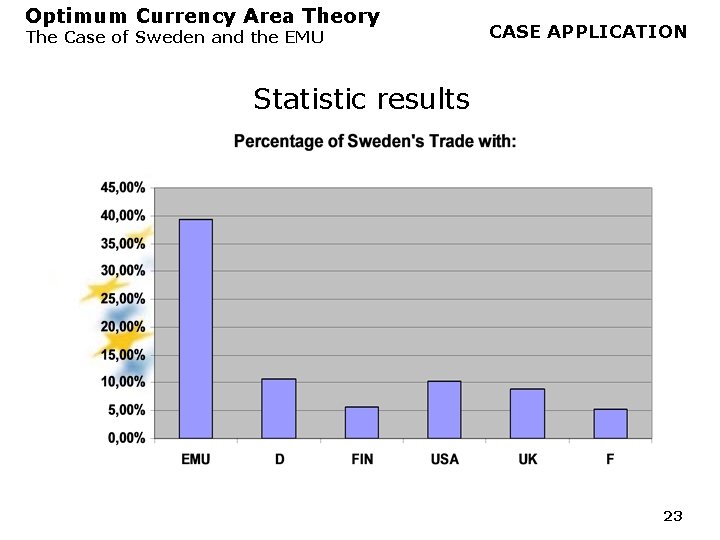
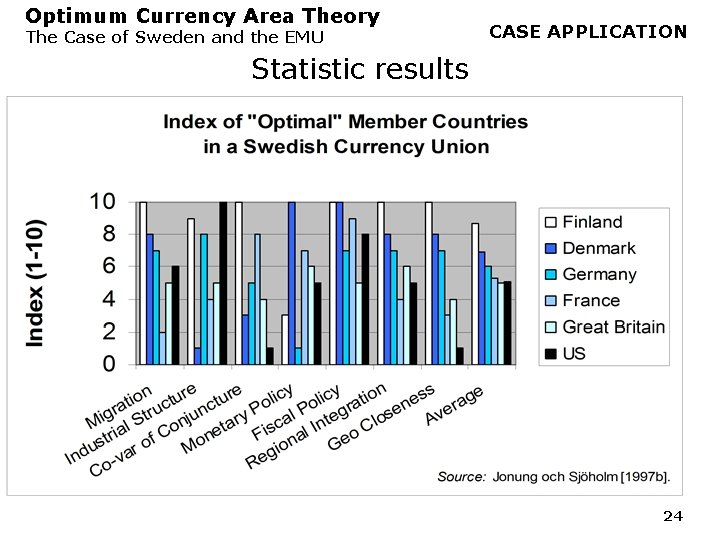
Optimum Currency Area Theory The Case of Sweden and the EMU CASE APPLICATION Four main criteria for OCA of Sweden and EMU Sectoral diversification Correlation of income cycles High trade integration Similarity in price and wage patterns 18
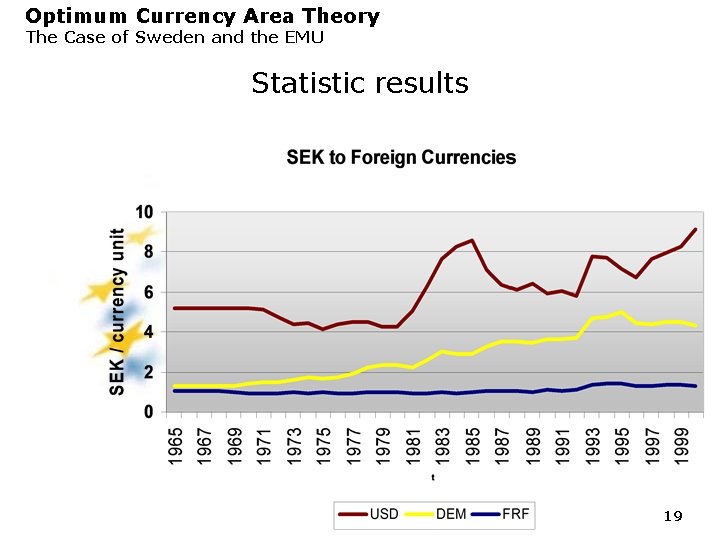
Optimum Currency Area Theory The Case of Sweden and the EMU Statistic results 19
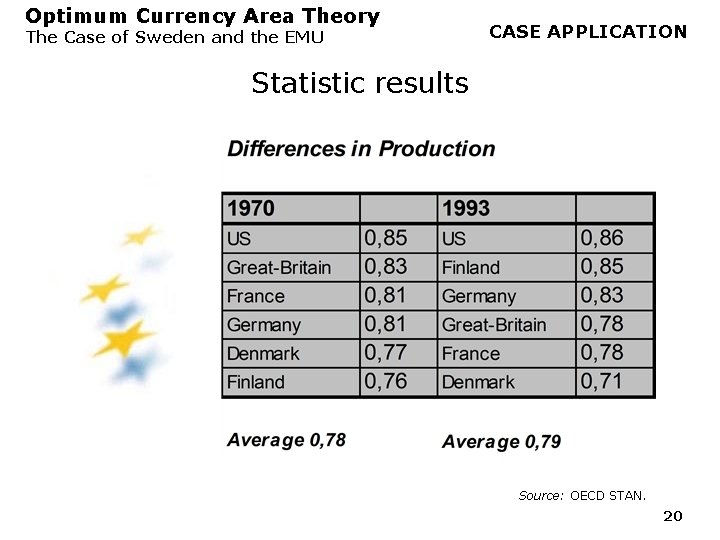
Optimum Currency Area Theory The Case of Sweden and the EMU CASE APPLICATION Statistic results Source: OECD STAN. 20
Optimum Currency Area Theory CASE APPLICATION The Case of Sweden and the EMU Statistic results Source: OECD National Accounts. 21
Optimum Currency Area Theory The Case of Sweden and the EMU CASE APPLICATION Statistic results Source: OECD National Accounts. 22
Optimum Currency Area Theory The Case of Sweden and the EMU CASE APPLICATION Statistic results 23
Optimum Currency Area Theory The Case of Sweden and the EMU CASE APPLICATION Statistic results 24
Optimum Currency Area Theory The Case of Sweden and the EMU CONCLUSION Our conclusion € € € The criteria are not sufficiently fulfilled to make the EMU an Optimum Currency Area for Sweden However, the development shows that the EMU might be so in the future If Sweden chooses to join for political reasons, Þ Sweden might suffer asymmetric shocks due to the little correlation to the other EMU countries Þ Sweden should try to achieve increased price and wage flexibility to damp the socio-economic costs of OCA 25
Optimum Currency Area Theory The Case of Sweden and the EMU ACADEMIC RESULTS Academic results (Rose, 2001) € Assumptions Trade patterns and income correlations are endogenous – what happens in the long run? € How? Econometric research on trade streams € Result? Participating in a common currency area has a large positive impact on trade, which can be quantified. 26
Optimum Currency Area Theory The Case of Sweden and the EMU ACADEMIC RESULTS Statistic results (Rose, 2001) cont. € Prognosis? € € If Sweden joins the EMU for political reasons, it will be more likely to fulfill the OCA Criterions in the future Entering the EMU would also Þ increase Swedish trade with the EU by 50 -300% Þ increase Swedish GDP by about 11 % 27