Neurodevelopmental Disorders Sunderland Pathways Dr Uma Geethanath and
- Slides: 30
Neurodevelopmental Disorders Sunderland Pathways Dr Uma Geethanath and Dr Thamara Athauda Consultant Child and Adolescent Psychiatrists So. Tyne CYPS (Tier 3 CAMHS)
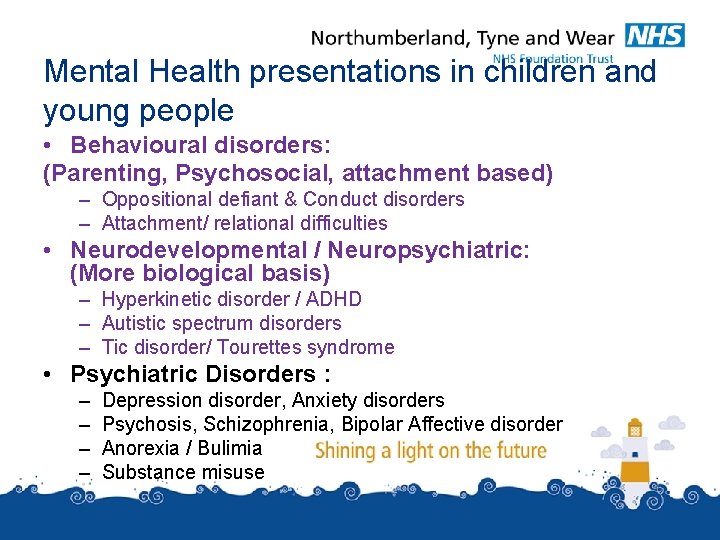
Mental Health presentations in children and young people • Behavioural disorders: (Parenting, Psychosocial, attachment based) – Oppositional defiant & Conduct disorders – Attachment/ relational difficulties • Neurodevelopmental / Neuropsychiatric: (More biological basis) – Hyperkinetic disorder / ADHD – Autistic spectrum disorders – Tic disorder/ Tourettes syndrome • Psychiatric Disorders : – – Depression disorder, Anxiety disorders Psychosis, Schizophrenia, Bipolar Affective disorder Anorexia / Bulimia Substance misuse
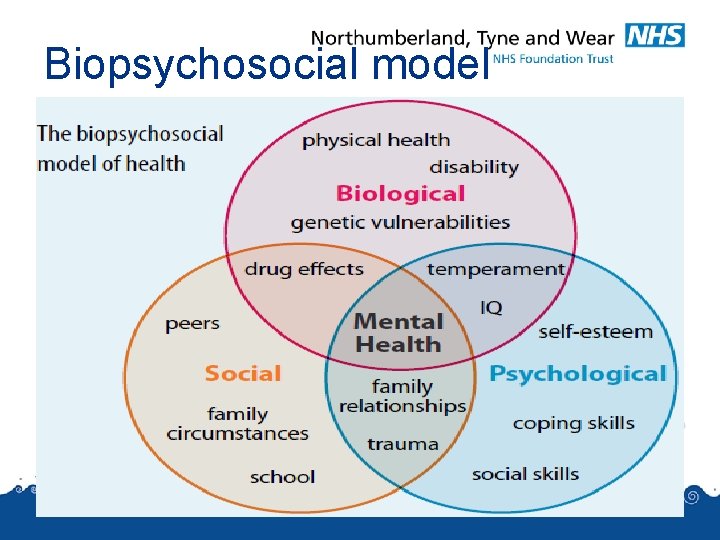
Biopsychosocial model
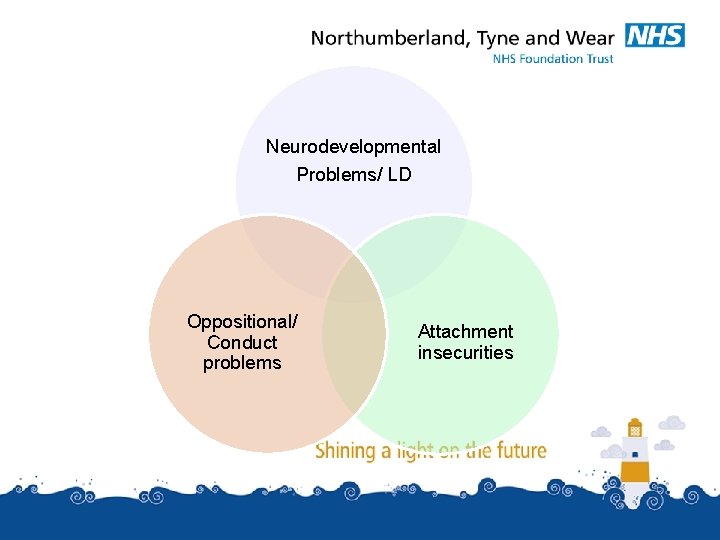
Neurodevelopmental Problems/ LD Oppositional/ Conduct problems Attachment insecurities
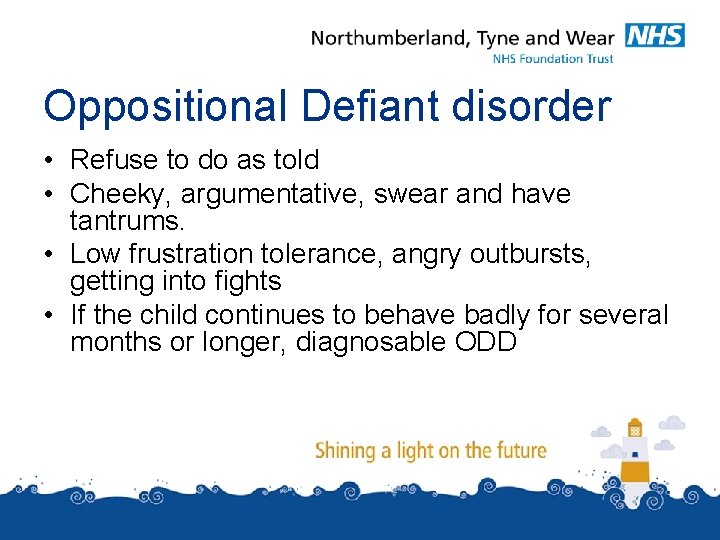
Oppositional Defiant disorder • Refuse to do as told • Cheeky, argumentative, swear and have tantrums. • Low frustration tolerance, angry outbursts, getting into fights • If the child continues to behave badly for several months or longer, diagnosable ODD
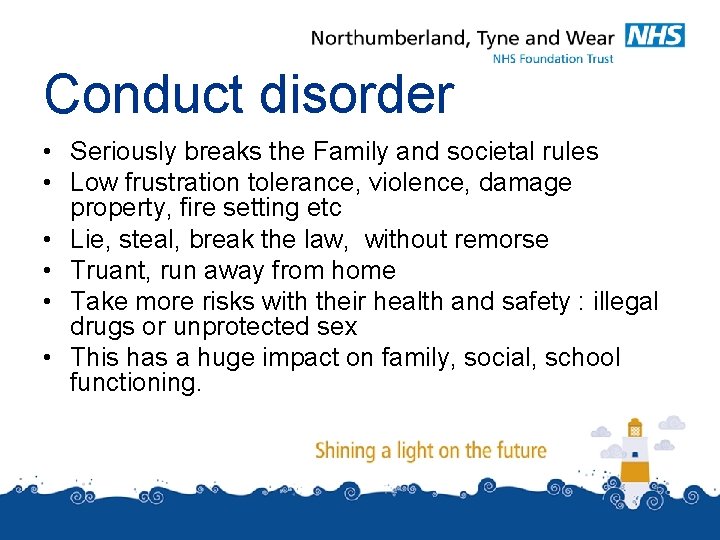
Conduct disorder • Seriously breaks the Family and societal rules • Low frustration tolerance, violence, damage property, fire setting etc • Lie, steal, break the law, without remorse • Truant, run away from home • Take more risks with their health and safety : illegal drugs or unprotected sex • This has a huge impact on family, social, school functioning.
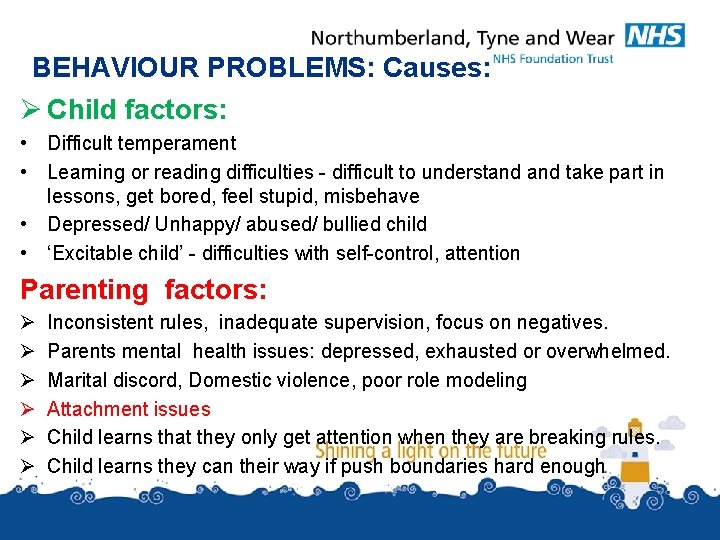
BEHAVIOUR PROBLEMS: Causes: Ø Child factors: • Difficult temperament • Learning or reading difficulties - difficult to understand take part in lessons, get bored, feel stupid, misbehave • Depressed/ Unhappy/ abused/ bullied child • ‘Excitable child’ - difficulties with self-control, attention Parenting factors: Ø Ø Ø Inconsistent rules, inadequate supervision, focus on negatives. Parents mental health issues: depressed, exhausted or overwhelmed. Marital discord, Domestic violence, poor role modeling Attachment issues Child learns that they only get attention when they are breaking rules. Child learns they can their way if push boundaries hard enough
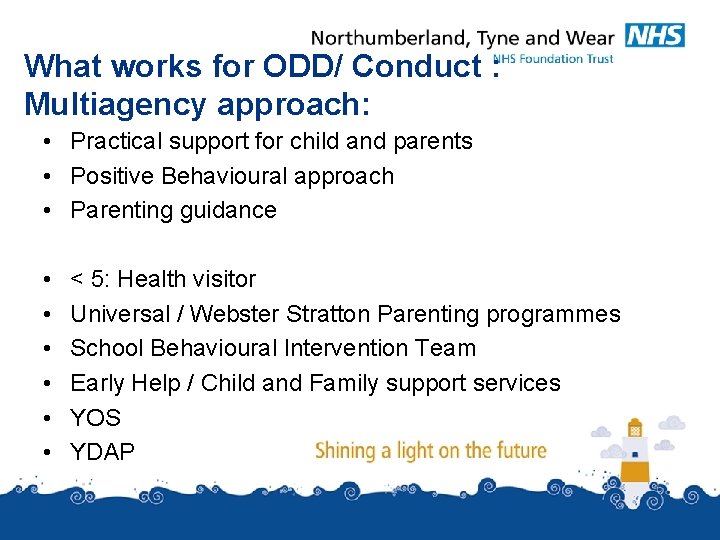
What works for ODD/ Conduct : Multiagency approach: • Practical support for child and parents • Positive Behavioural approach • Parenting guidance • • • < 5: Health visitor Universal / Webster Stratton Parenting programmes School Behavioural Intervention Team Early Help / Child and Family support services YOS YDAP
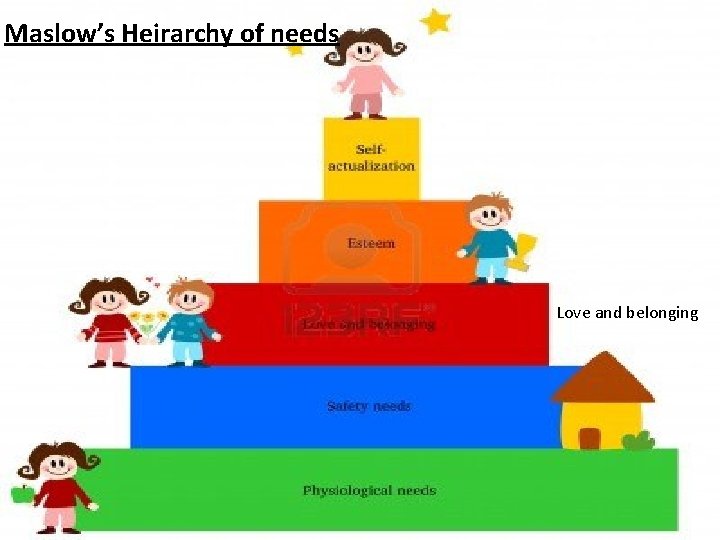
Maslow’s Heirarchy of needs Love and belonging
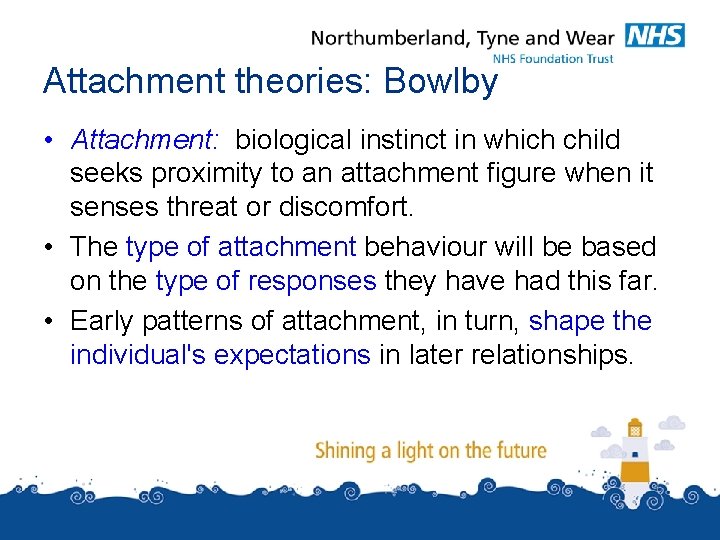
Attachment theories: Bowlby • Attachment: biological instinct in which child seeks proximity to an attachment figure when it senses threat or discomfort. • The type of attachment behaviour will be based on the type of responses they have had this far. • Early patterns of attachment, in turn, shape the individual's expectations in later relationships.
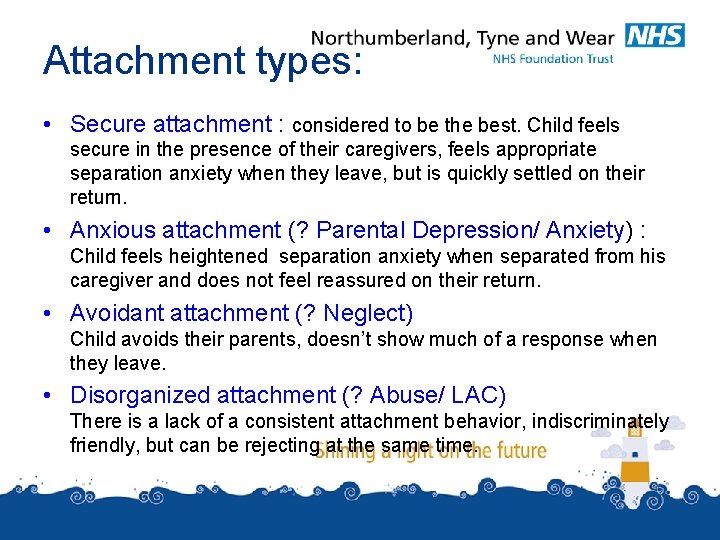
Attachment types: • Secure attachment : considered to be the best. Child feels secure in the presence of their caregivers, feels appropriate separation anxiety when they leave, but is quickly settled on their return. • Anxious attachment (? Parental Depression/ Anxiety) : Child feels heightened separation anxiety when separated from his caregiver and does not feel reassured on their return. • Avoidant attachment (? Neglect) Child avoids their parents, doesn’t show much of a response when they leave. • Disorganized attachment (? Abuse/ LAC) There is a lack of a consistent attachment behavior, indiscriminately friendly, but can be rejecting at the same time.
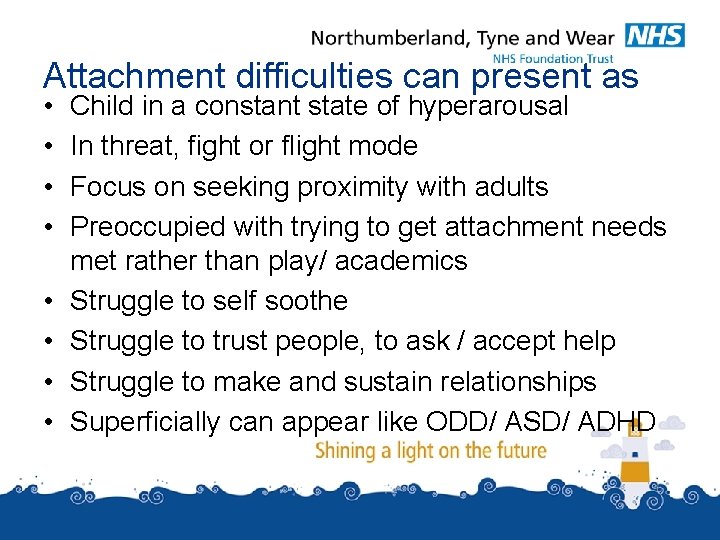
Attachment difficulties can present as • • Child in a constant state of hyperarousal In threat, fight or flight mode Focus on seeking proximity with adults Preoccupied with trying to get attachment needs met rather than play/ academics Struggle to self soothe Struggle to trust people, to ask / accept help Struggle to make and sustain relationships Superficially can appear like ODD/ ASD/ ADHD
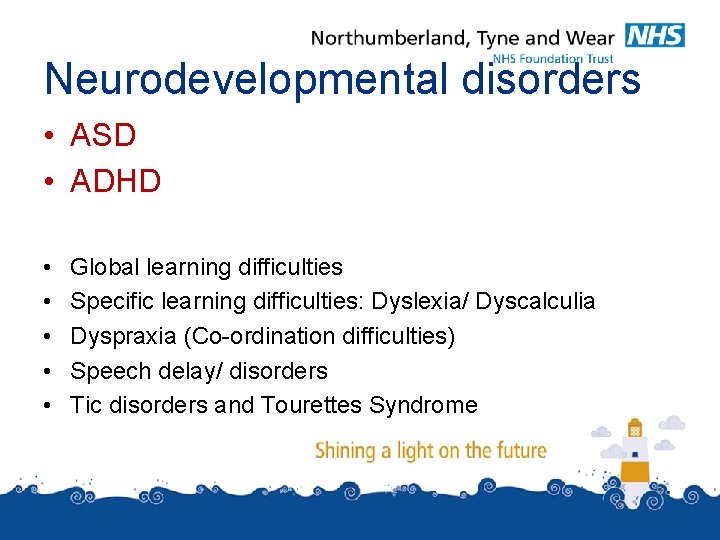
Neurodevelopmental disorders • ASD • ADHD • • • Global learning difficulties Specific learning difficulties: Dyslexia/ Dyscalculia Dyspraxia (Co-ordination difficulties) Speech delay/ disorders Tic disorders and Tourettes Syndrome
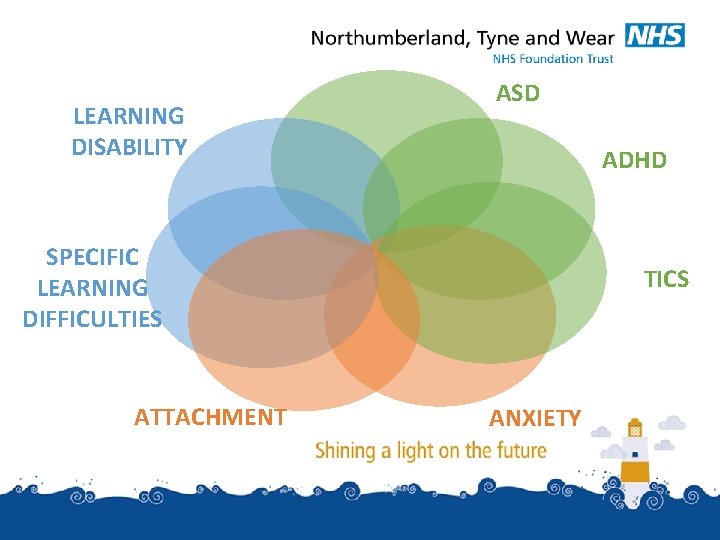
LEARNING DISABILITY ASD ADHD SPECIFIC LEARNING DIFFICULTIES ATTACHMENT TICS ANXIETY
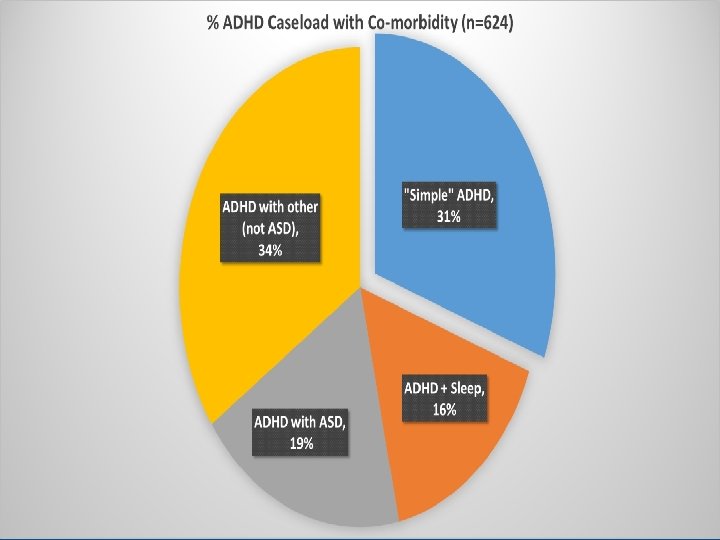
ASD/ ADHD: • • ASD: 1% of school age children ADHD 3 -5% school age children Form 50% or more of our referrals in CYPS All services including schools, ED Psychologists and social services stretched, so increased demand for assessments and diagnoses as a route into support services. • Also increasingly parents seek medical model explanation for behaviours Vs parenting or attachment • Increased demand ++ and waiting times • 40% of referrals not reaching diagnostic threshold, particularly ADHD
Kaizan Events • Two 3 day events hosted by CCG, facilitated by NHS improvement team • Looked at ASD and ADHD Pathways individually • Aimed to improve effectiveness and efficiency by refining and better alignment of existing pathways • Ensure Pathways compliant with NICE • Reduce unnecessary delay and duplication • To get patient the right input first time
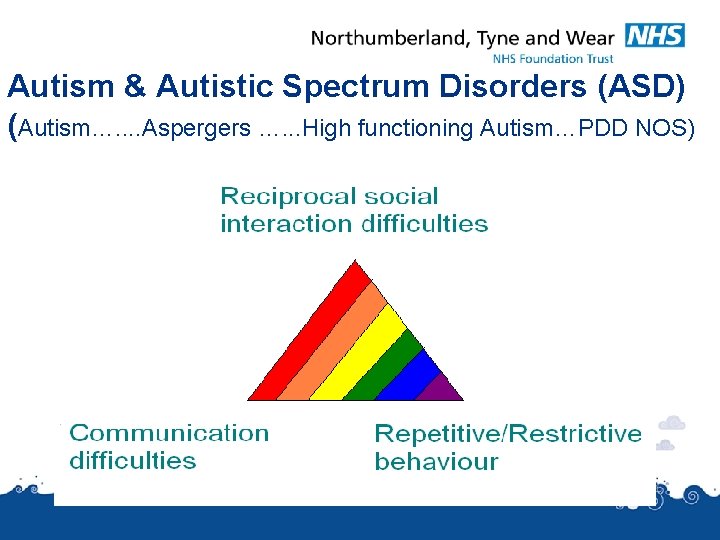
Autism & Autistic Spectrum Disorders (ASD) (Autism…. . Aspergers …. . . High functioning Autism…PDD NOS)
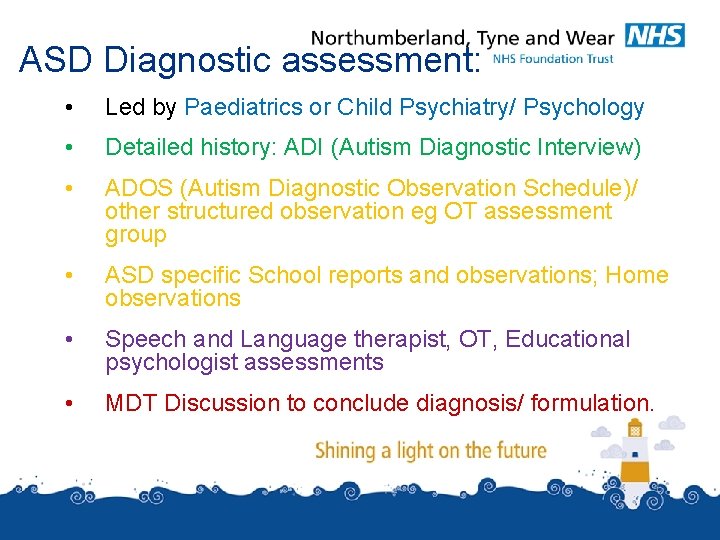
ASD Diagnostic assessment: • Led by Paediatrics or Child Psychiatry/ Psychology • Detailed history: ADI (Autism Diagnostic Interview) • ADOS (Autism Diagnostic Observation Schedule)/ other structured observation eg OT assessment group • ASD specific School reports and observations; Home observations • Speech and Language therapist, OT, Educational psychologist assessments • MDT Discussion to conclude diagnosis/ formulation.
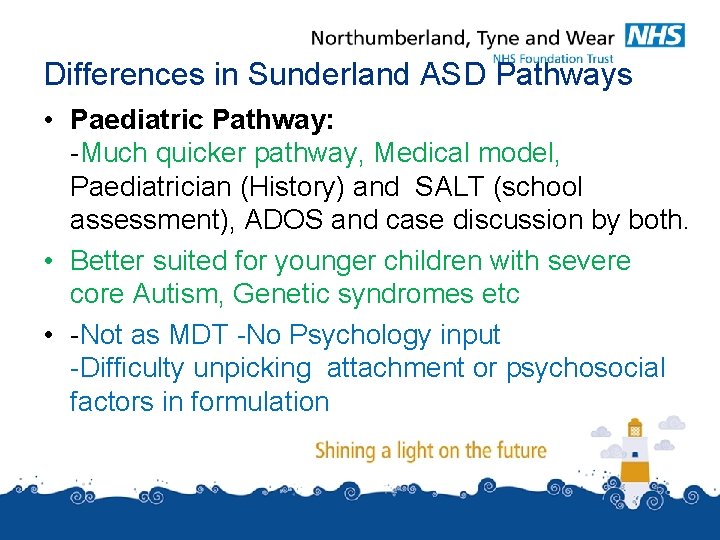
Differences in Sunderland ASD Pathways • Paediatric Pathway: -Much quicker pathway, Medical model, Paediatrician (History) and SALT (school assessment), ADOS and case discussion by both. • Better suited for younger children with severe core Autism, Genetic syndromes etc • -Not as MDT -No Psychology input -Difficulty unpicking attachment or psychosocial factors in formulation
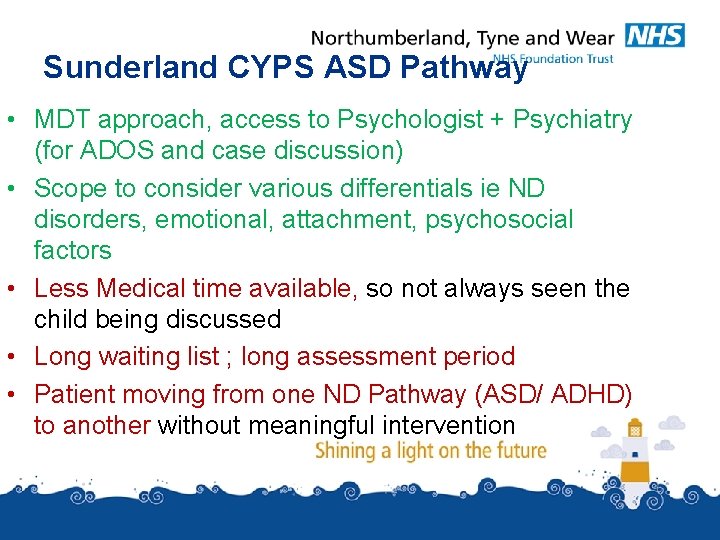
Sunderland CYPS ASD Pathway • MDT approach, access to Psychologist + Psychiatry (for ADOS and case discussion) • Scope to consider various differentials ie ND disorders, emotional, attachment, psychosocial factors • Less Medical time available, so not always seen the child being discussed • Long waiting list ; long assessment period • Patient moving from one ND Pathway (ASD/ ADHD) to another without meaningful intervention
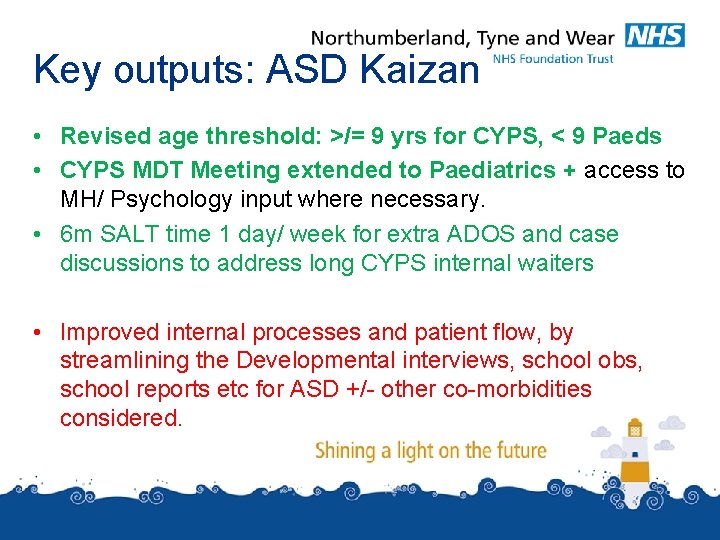
Key outputs: ASD Kaizan • Revised age threshold: >/= 9 yrs for CYPS, < 9 Paeds • CYPS MDT Meeting extended to Paediatrics + access to MH/ Psychology input where necessary. • 6 m SALT time 1 day/ week for extra ADOS and case discussions to address long CYPS internal waiters • Improved internal processes and patient flow, by streamlining the Developmental interviews, school obs, school reports etc for ASD +/- other co-morbidities considered.
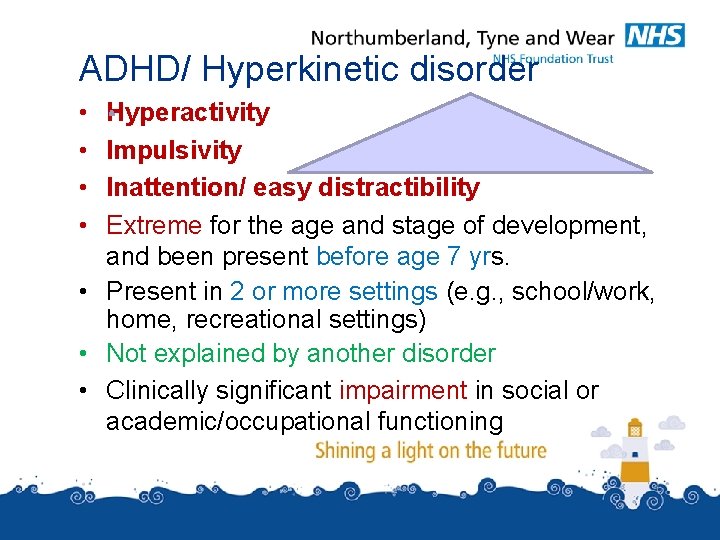
ADHD/ Hyperkinetic disorder • • Hyperactivity Impulsivity Inattention/ easy distractibility Extreme for the age and stage of development, and been present before age 7 yrs. • Present in 2 or more settings (e. g. , school/work, home, recreational settings) • Not explained by another disorder • Clinically significant impairment in social or academic/occupational functioning
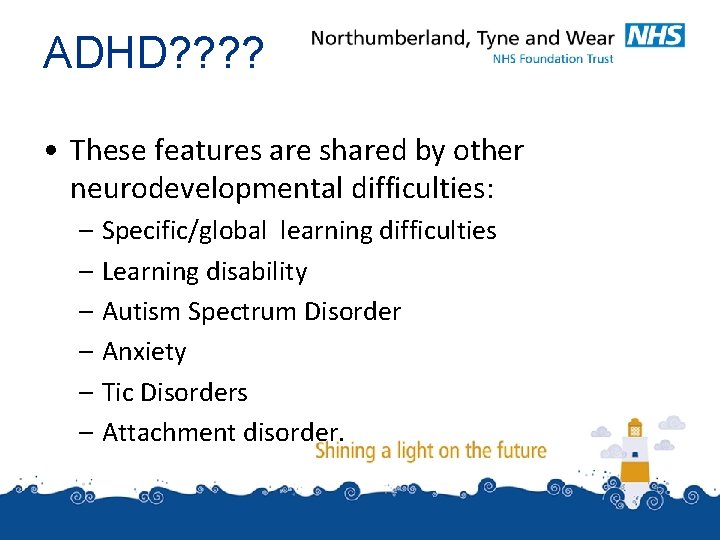
ADHD? ? • These features are shared by other neurodevelopmental difficulties: – Specific/global learning difficulties – Learning disability – Autism Spectrum Disorder – Anxiety – Tic Disorders – Attachment disorder.
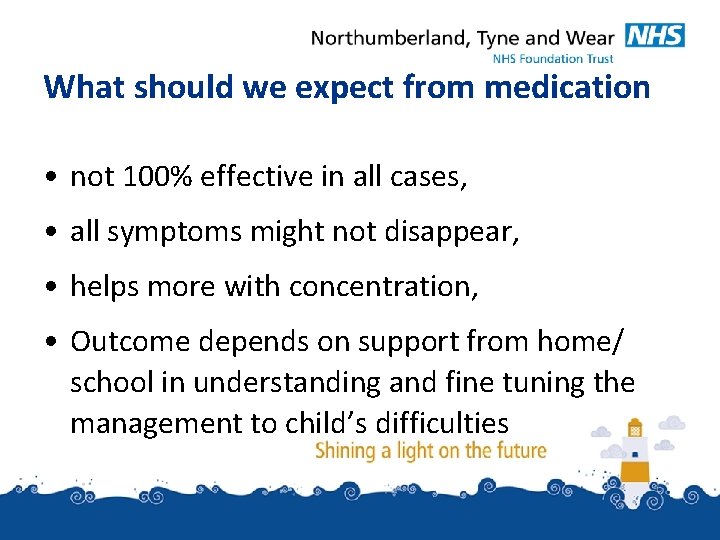
What should we expect from medication • not 100% effective in all cases, • all symptoms might not disappear, • helps more with concentration, • Outcome depends on support from home/ school in understanding and fine tuning the management to child’s difficulties
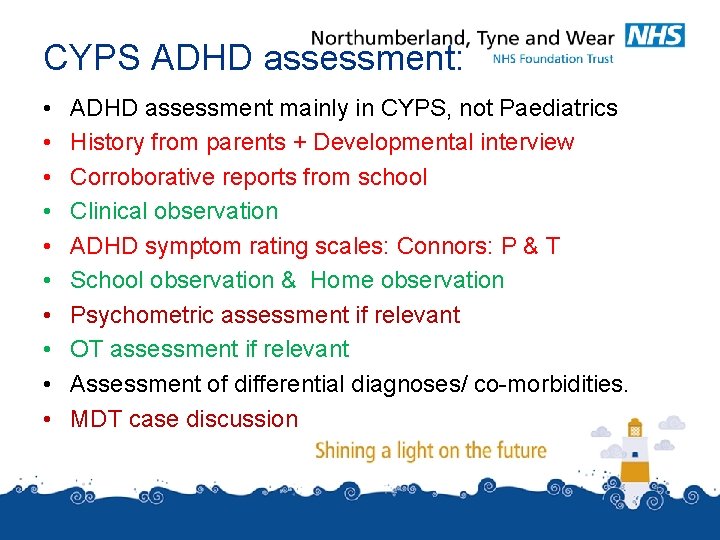
CYPS ADHD assessment: • • • ADHD assessment mainly in CYPS, not Paediatrics History from parents + Developmental interview Corroborative reports from school Clinical observation ADHD symptom rating scales: Connors: P & T School observation & Home observation Psychometric assessment if relevant OT assessment if relevant Assessment of differential diagnoses/ co-morbidities. MDT case discussion
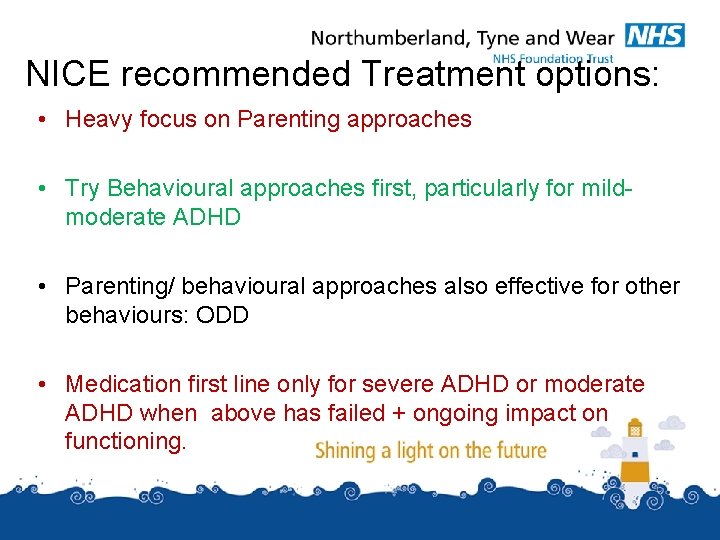
NICE recommended Treatment options: • Heavy focus on Parenting approaches • Try Behavioural approaches first, particularly for mildmoderate ADHD • Parenting/ behavioural approaches also effective for other behaviours: ODD • Medication first line only for severe ADHD or moderate ADHD when above has failed + ongoing impact on functioning.
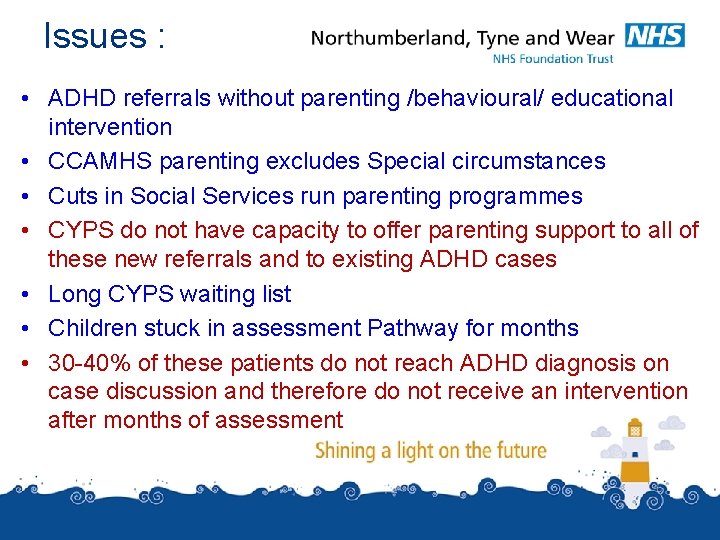
Issues : • ADHD referrals without parenting /behavioural/ educational intervention • CCAMHS parenting excludes Special circumstances • Cuts in Social Services run parenting programmes • CYPS do not have capacity to offer parenting support to all of these new referrals and to existing ADHD cases • Long CYPS waiting list • Children stuck in assessment Pathway for months • 30 -40% of these patients do not reach ADHD diagnosis on case discussion and therefore do not receive an intervention after months of assessment
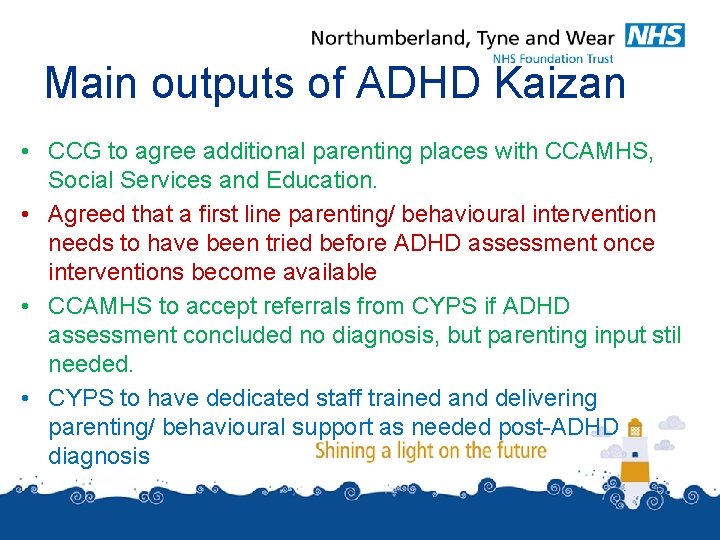
Main outputs of ADHD Kaizan • CCG to agree additional parenting places with CCAMHS, Social Services and Education. • Agreed that a first line parenting/ behavioural intervention needs to have been tried before ADHD assessment once interventions become available • CCAMHS to accept referrals from CYPS if ADHD assessment concluded no diagnosis, but parenting input stil needed. • CYPS to have dedicated staff trained and delivering parenting/ behavioural support as needed post-ADHD diagnosis
Any Questions? . . .