NESC Academy Pyrotechnic Shock Response Stage Separation Ground


- Slides: 27
NESC Academy Pyrotechnic Shock Response
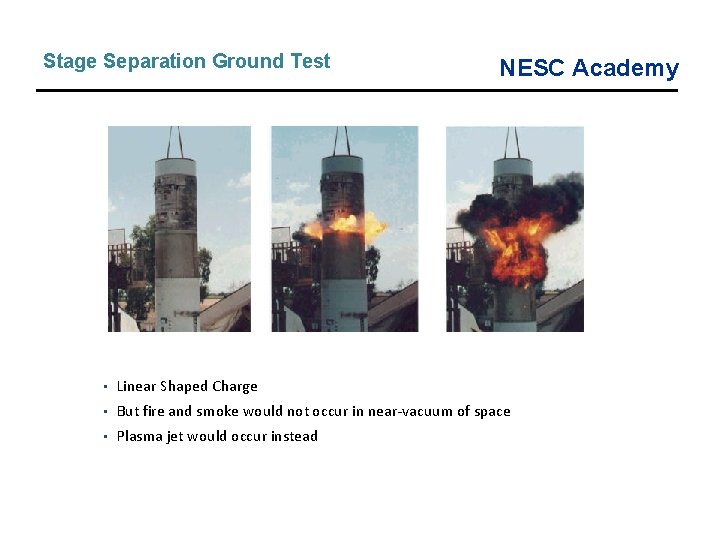
Stage Separation Ground Test NESC Academy • Linear Shaped Charge • But fire and smoke would not occur in near-vacuum of space • Plasma jet would occur instead
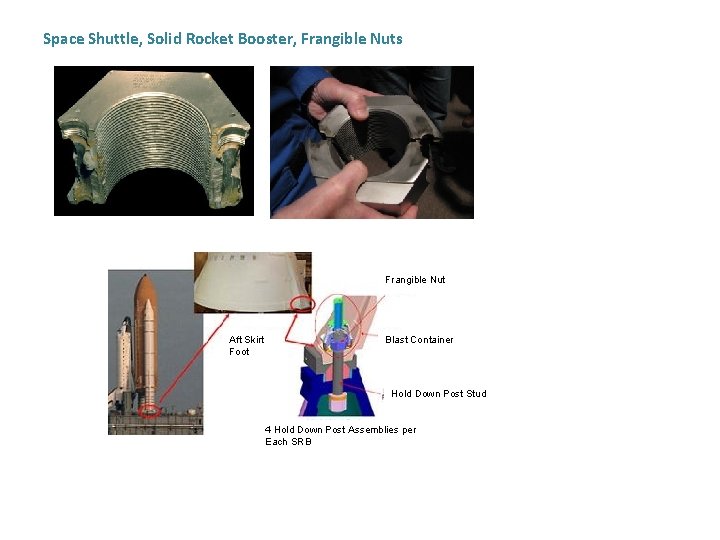
Space Shuttle, Solid Rocket Booster, Frangible Nuts NESC Academy Frangible Nut Aft Skirt Foot Blast Container Aft Skirt Foot Hold Down Post Stud 4 Hold Down Post Assemblies per Each SRB
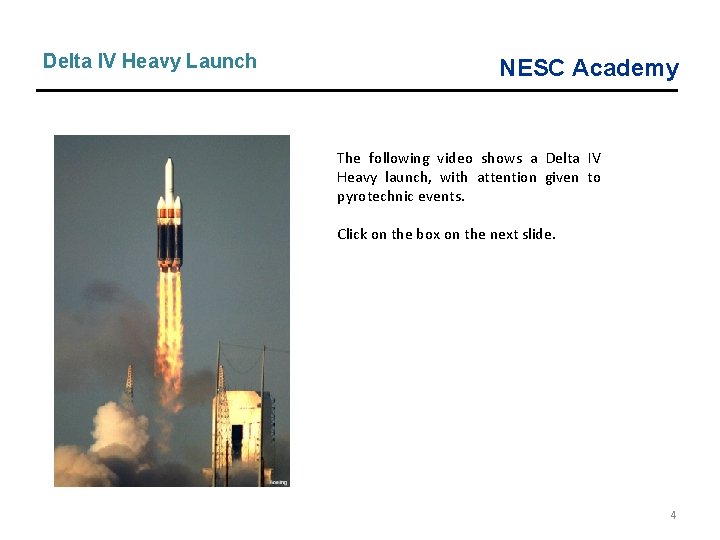
Delta IV Heavy Launch NESC Academy The following video shows a Delta IV Heavy launch, with attention given to pyrotechnic events. Click on the box on the next slide. 4
Delta IV Heavy Launch (click on box) NESC Academy 5
Pyrotechnic Shock Fields NESC Academy • Near Field - near source – shock is dominated by high-frequency wave motion • Mid Field - shock is composed of both wave motion and structural modes • Far Field - lower frequency response from structural modes Avoid mounting avionics component near pyrotechnic device!
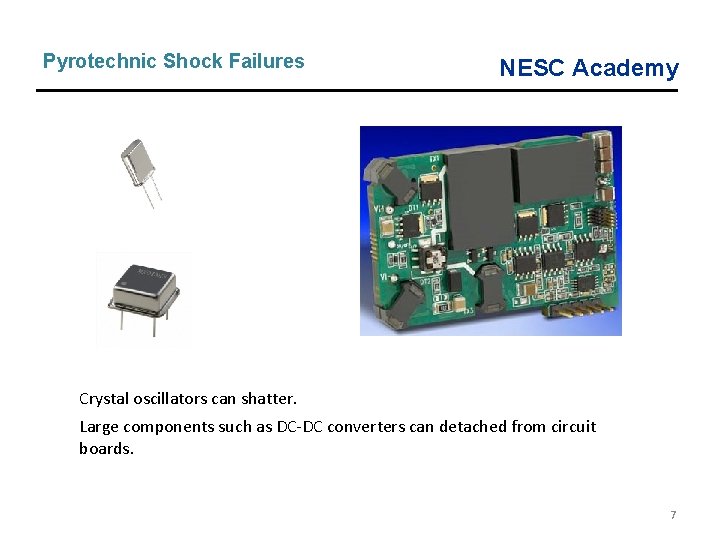
Pyrotechnic Shock Failures NESC Academy Crystal oscillators can shatter. Large components such as DC-DC converters can detached from circuit boards. 7
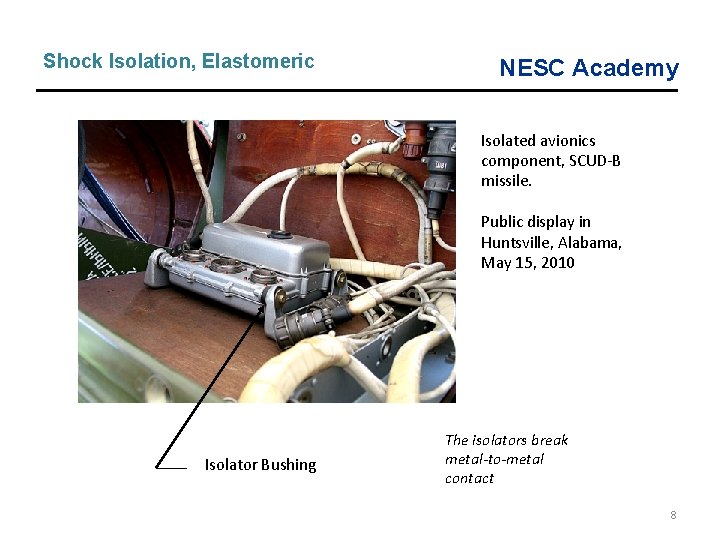
Shock Isolation, Elastomeric NESC Academy Isolated avionics component, SCUD-B missile. Public display in Huntsville, Alabama, May 15, 2010 Isolator Bushing The isolators break metal-to-metal contact 8
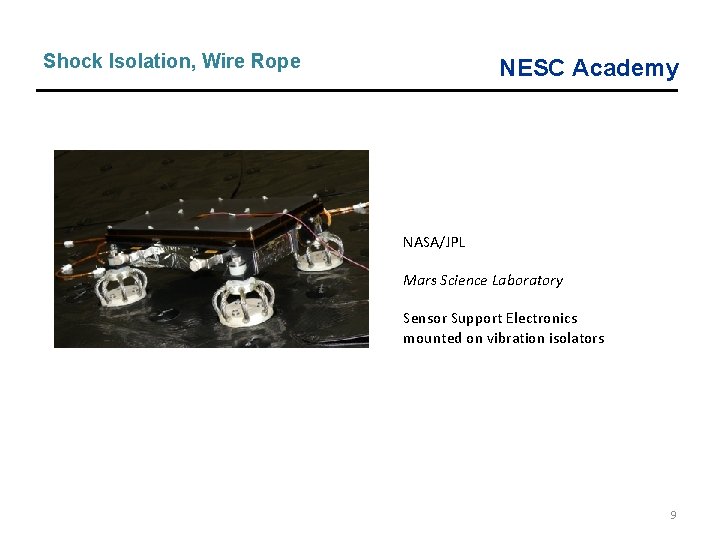
Shock Isolation, Wire Rope NESC Academy NASA/JPL Mars Science Laboratory Sensor Support Electronics mounted on vibration isolators 9
Pyrotechnic Events NESC Academy Avionics components must be designed and tested to withstand pyrotechnic shock from: Separation Events • Strap-on Boosters • Stage separation • Fairing Separation • Payload Separation Ignition Events • Solid Motor • Liquid Engine 10
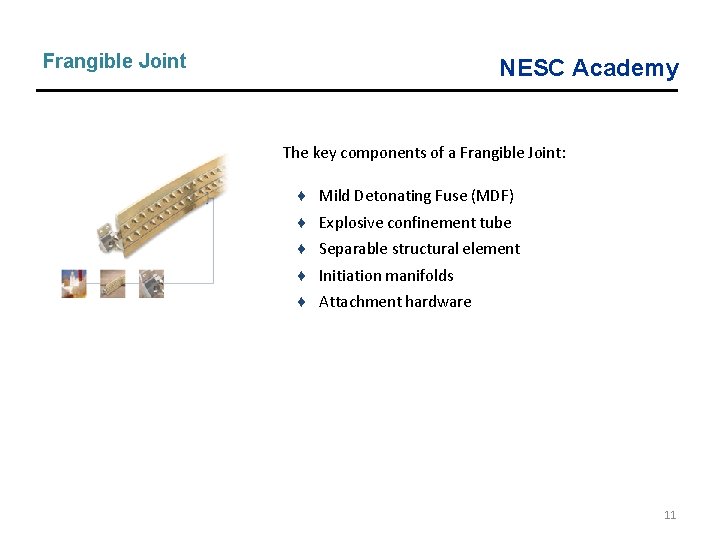
Frangible Joint NESC Academy The key components of a Frangible Joint: ♦ Mild Detonating Fuse (MDF) ♦ Explosive confinement tube ♦ Separable structural element ♦ Initiation manifolds ♦ Attachment hardware 11
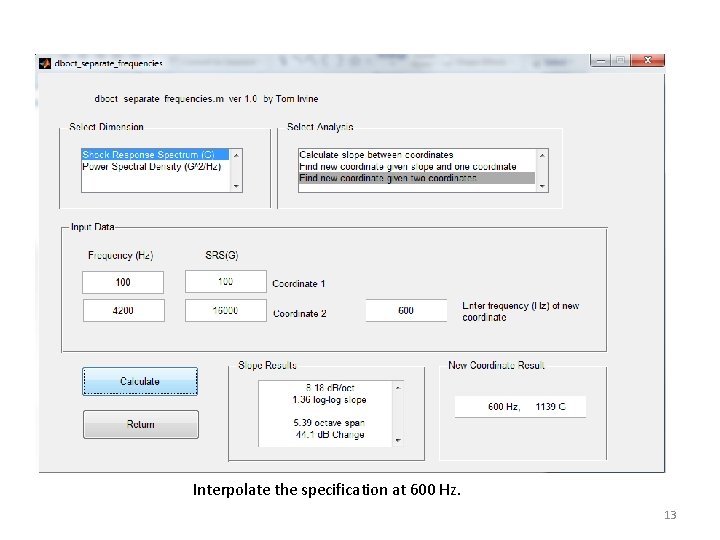
Sample SRS Specification NESC Academy Frangible Joint, 26. 25 grain/ft, Source Shock SRS Q=10 fn (Hz) Peak (G) 100 4200 16, 000 10, 000 16, 000 Used for design and test purposes 12
NESC Academy Interpolate the specification at 600 Hz. 13
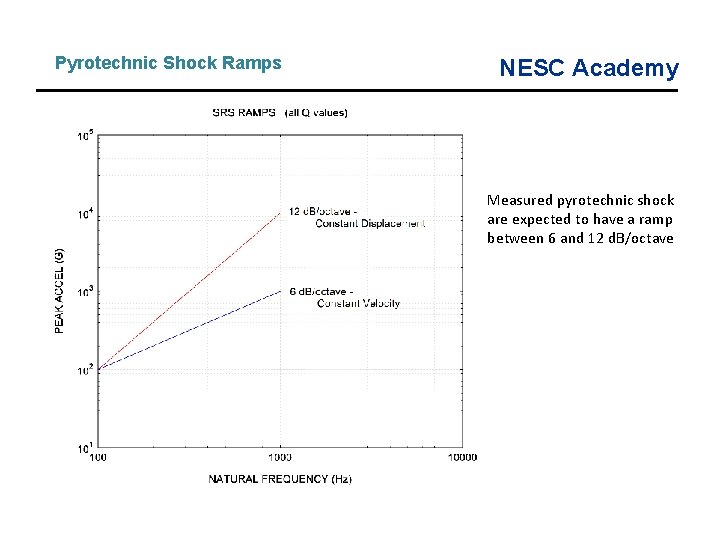
Pyrotechnic Shock Ramps NESC Academy Measured pyrotechnic shock are expected to have a ramp between 6 and 12 d. B/octave
SDOF System NESC Academy 15
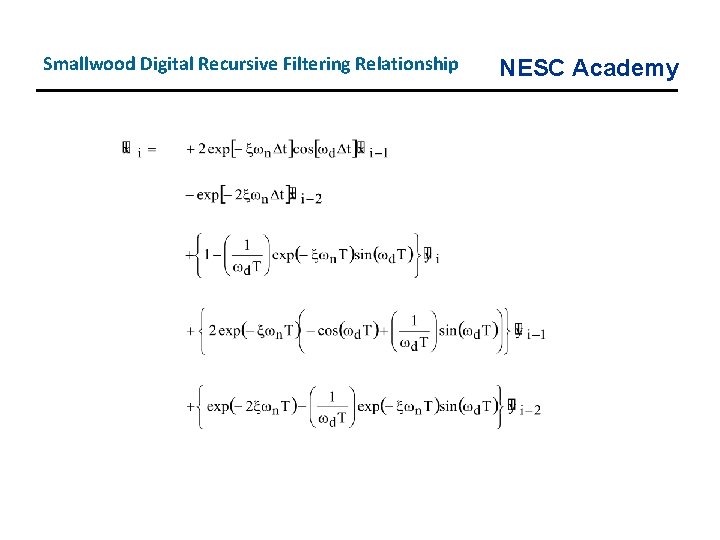
Smallwood Digital Recursive Filtering Relationship NESC Academy
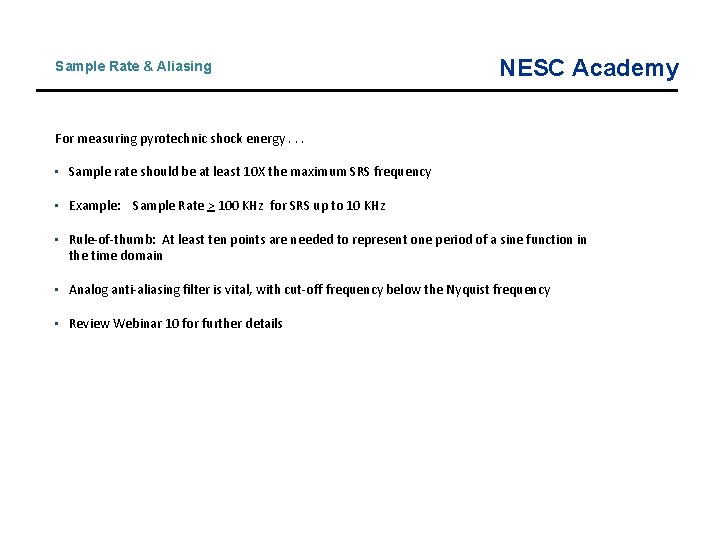
Sample Rate & Aliasing NESC Academy For measuring pyrotechnic shock energy. . . • Sample rate should be at least 10 X the maximum SRS frequency • Example: Sample Rate > 100 KHz for SRS up to 10 KHz • Rule-of-thumb: At least ten points are needed to represent one period of a sine function in the time domain • Analog anti-aliasing filter is vital, with cut-off frequency below the Nyquist frequency • Review Webinar 10 for further details
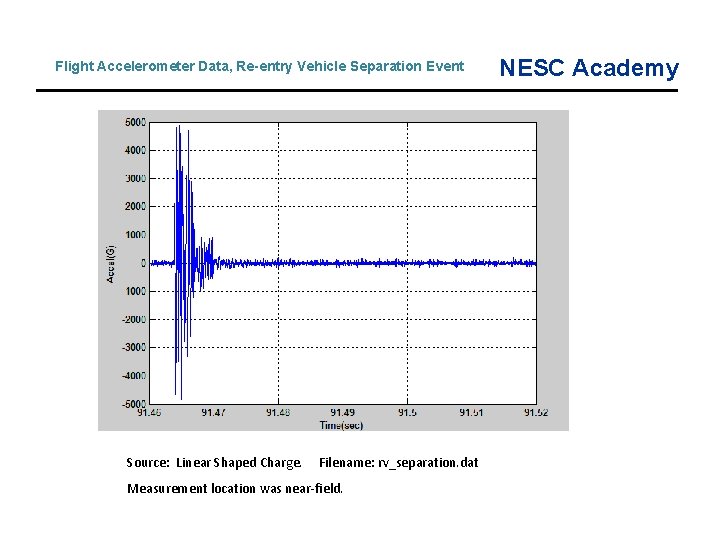
Flight Accelerometer Data, Re-entry Vehicle Separation Event Source: Linear Shaped Charge. Filename: rv_separation. dat Measurement location was near-field. NESC Academy
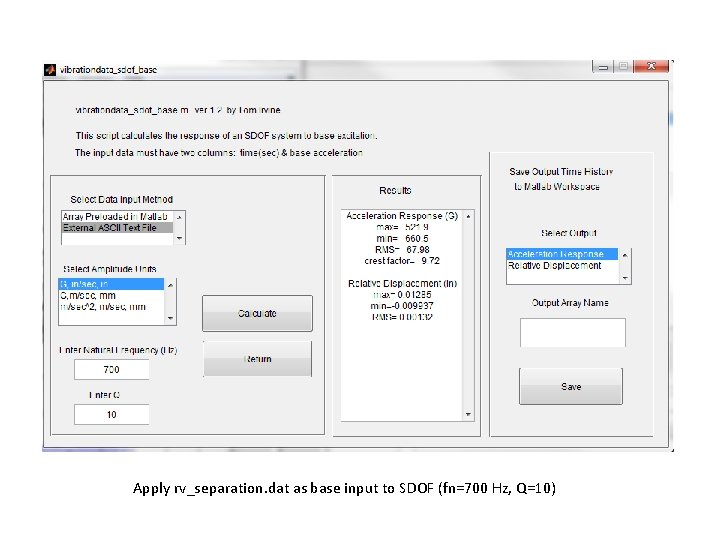
NESC Academy Apply rv_separation. dat as base input to SDOF (fn=700 Hz, Q=10)
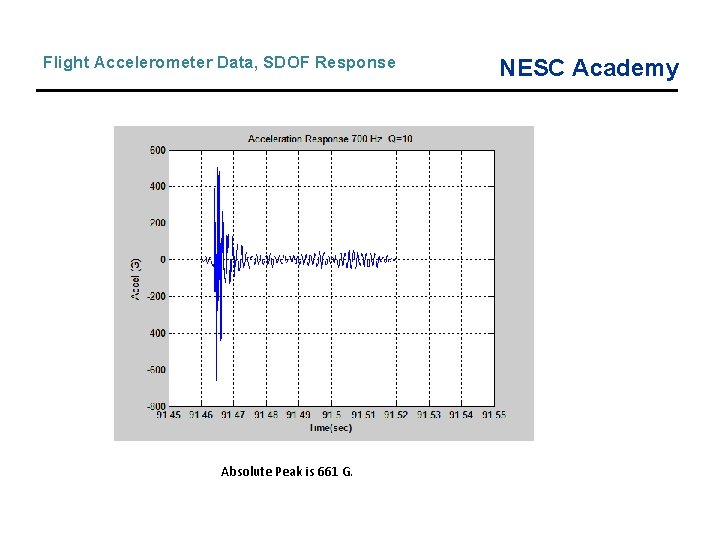
Flight Accelerometer Data, SDOF Response Absolute Peak is 661 G. NESC Academy
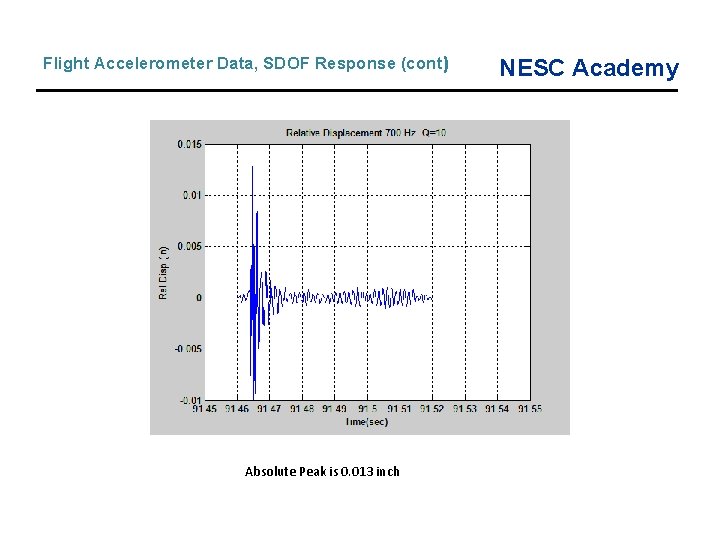
Flight Accelerometer Data, SDOF Response (cont) Absolute Peak is 0. 013 inch NESC Academy
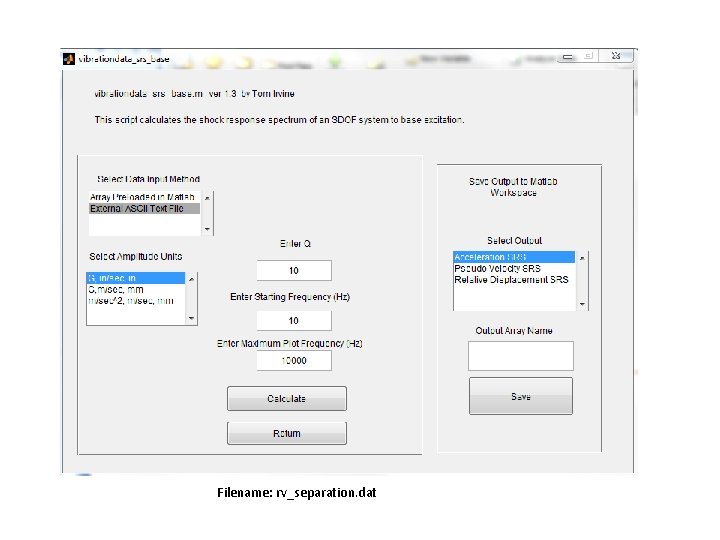
NESC Academy Filename: rv_separation. dat
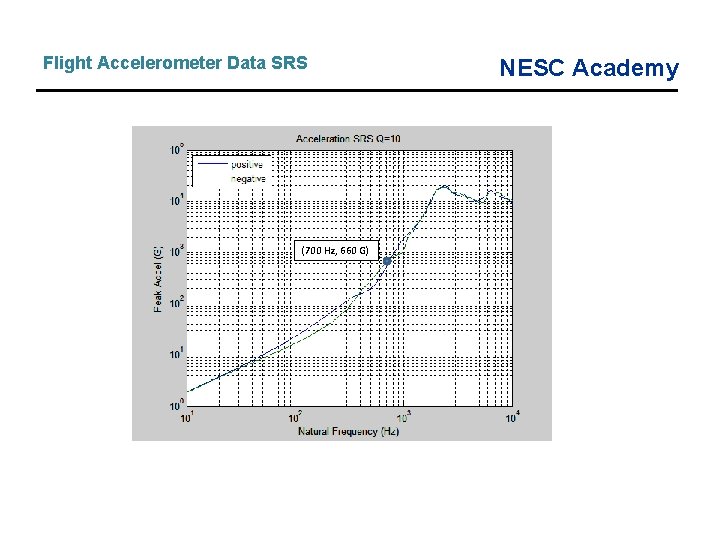
Flight Accelerometer Data SRS (700 Hz, 660 G) NESC Academy
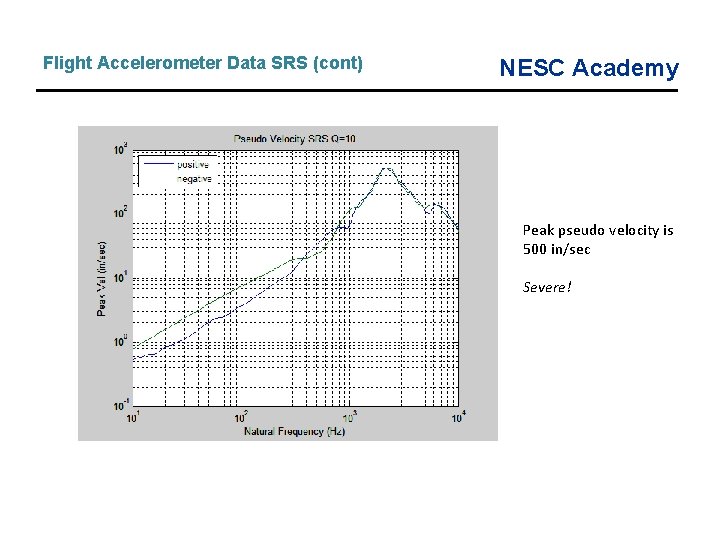
Flight Accelerometer Data SRS (cont) NESC Academy Peak pseudo velocity is 500 in/sec Severe!
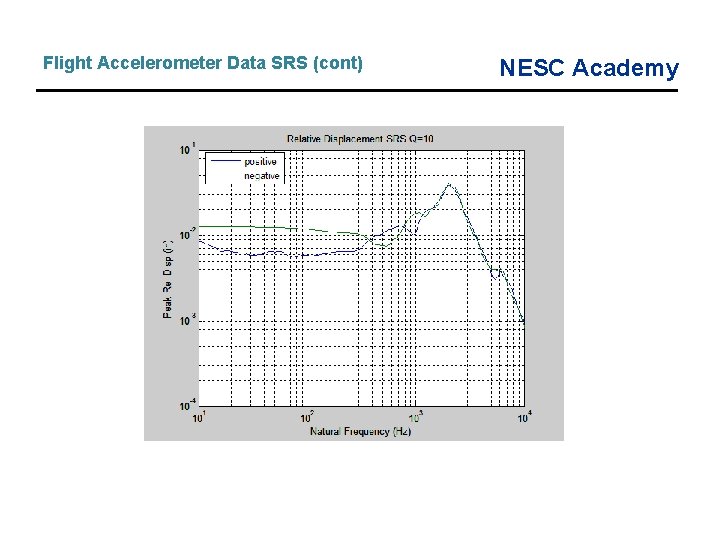
Flight Accelerometer Data SRS (cont) NESC Academy
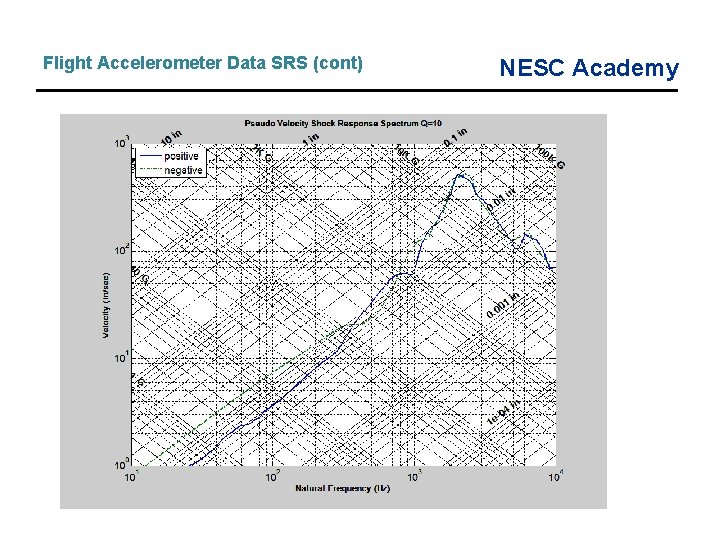
Flight Accelerometer Data SRS (cont) NESC Academy
Historical Velocity Severity Threshold NESC Academy For electronic equipment. . . • An empirical rule-of-thumb in MIL-STD-810 E states that a shock response spectrum is considered severe only if one of its components exceeds the level • Threshold = [ 0. 8 (G/Hz) * Natural Frequency (Hz) ] • For example, the severity threshold at 100 Hz would be 80 G • This rule is effectively a velocity criterion. • MIL-STD-810 E states that it is based on unpublished observations that military-quality equipment does not tend to exhibit shock failures below a shock response spectrum velocity of 100 inches/sec (254 cm/sec) • The above equation actually corresponds to 50 inches/sec • It thus has a built-in 6 d. B margin of conservatism