
Shock Dr Afsar Saeed Shaikh M B B
Shock Dr. Afsar Saeed Shaikh M. B. B. S, M. Phil. Assistant Professor of Chemical Pathology Department, KEMU, Lahore.
INTRODUCTION n n n Cardiovascular Collapse Final common pathway Definition: ‘A clinical entity characterized by systemic hypoperfusion caused by reduction either in cardiac output OR in the effective circulatory blood volume’
INTRODUCTION n Clinical Effects of Shock: Hypotension Ø Impaired tissue perfusion Ø Cellular hypoxia Ø
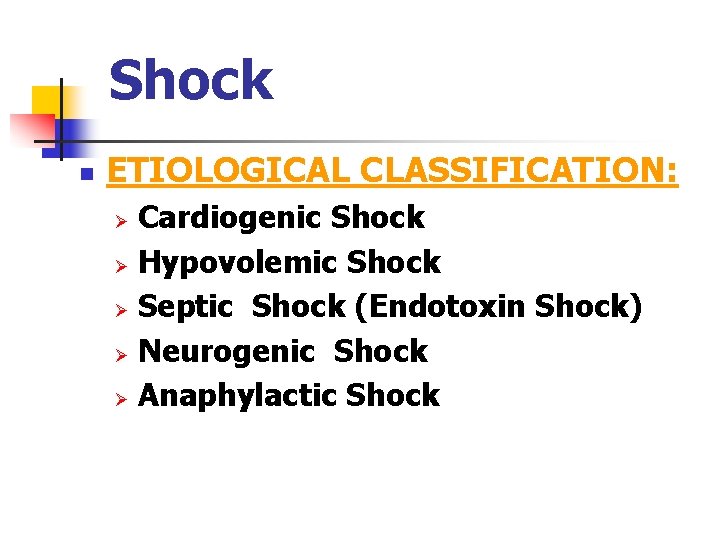
Shock n ETIOLOGICAL CLASSIFICATION: Cardiogenic Shock Ø Hypovolemic Shock Ø Septic Shock (Endotoxin Shock) Ø Neurogenic Shock Ø Anaphylactic Shock Ø
Stages of Shock n FIRST stage; Non-progressive Stage: Reflex compensatory mechanisms are activated Ø Profusion of vital organ is maintained Ø
Stages of Shock n 2 nd Stage; Progressive Stage: Tissue hypoperfusion Ø Circulatory & metabolic imbalances leading to Acidosis Ø
Stages of Shock n 3 rd Stage; Irreversible Stage: Cellular & tissue injury Ø Even with correction of hemodynamic defects, survival is not possible Ø
Mechanism of different Stages of Shock n 1. Non-progressive Stage : Ø • • • Neurohumoral Mechanisms maintain cardiac output and blood pressure: Baroreceptors reflexes Release of catecholamine Activation of renin-angoitensin axis ADH release Generalized sympathetic stimulation
Mechanism of different Stages of shock n 1. Non-progressive Stage : Ø • • • Different Clinical Outcome of these compensatory mechanisms: Tachycardia Peripheral vasoconstriction (cool & pale skin) Renal conservation of fluid
Mechanism of different Stages of shock n 2. Progressive Stage : Ø • • • Widespread hypoxia: Anaerobic glycolysis Production of lactic acidosis p. H lead to blunting of vasomotor response leading to vasodilatation Peripheral pooling of blood cardiac output
Mechanism of different Stages of shock n 2. Progressive Stage : Ø • • • Different Clinical Outcome of these failing mechanisms: Feeble, failing pulse Mental confusion urine output
Mechanism of different Stages of shock n 3. Irreversible Stage : Ø • • Widespread Cellular injury: Damage to the organelle of cells Leakage of lysosomal enzymes Production of nitric oxide by cells Worsened myocardial contractility
Mechanism of different Stages of shock n 3. Irreversible Stage : Ø • • • Different Clinical Outcome of cellular injury: Septic shock (entry of intestinal flora into circulation) Complete renal shutdown (acute tubular necrosis) Downward clinical spiral

THANK YOU!
- Slides: 15