
More Macromolecules Proteins and Nucleic Acids Nucleic Acids

- Slides: 18
More Macromolecules Proteins and Nucleic Acids
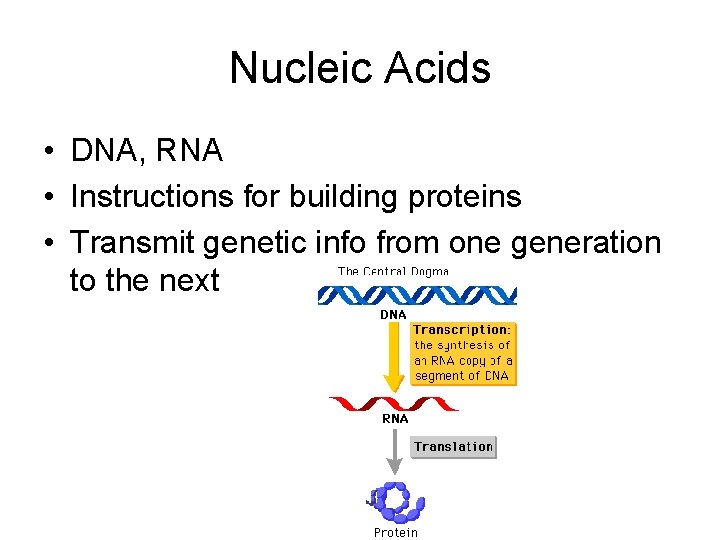
Nucleic Acids • DNA, RNA • Instructions for building proteins • Transmit genetic info from one generation to the next
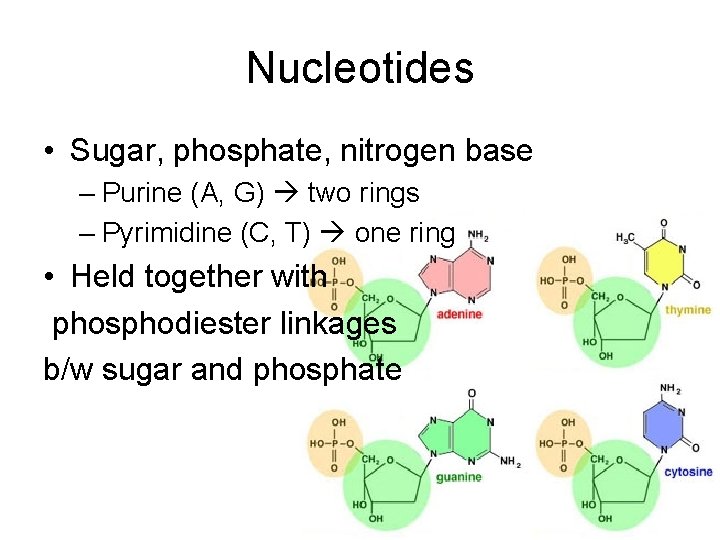
Nucleotides • Sugar, phosphate, nitrogen base – Purine (A, G) two rings – Pyrimidine (C, T) one ring • Held together with phosphodiester linkages b/w sugar and phosphate
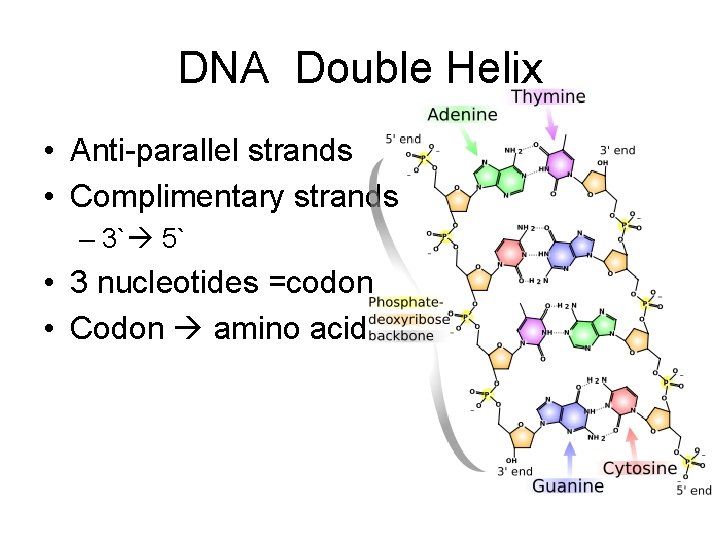
DNA Double Helix • Anti-parallel strands • Complimentary strands – 3` 5` • 3 nucleotides =codon • Codon amino acid
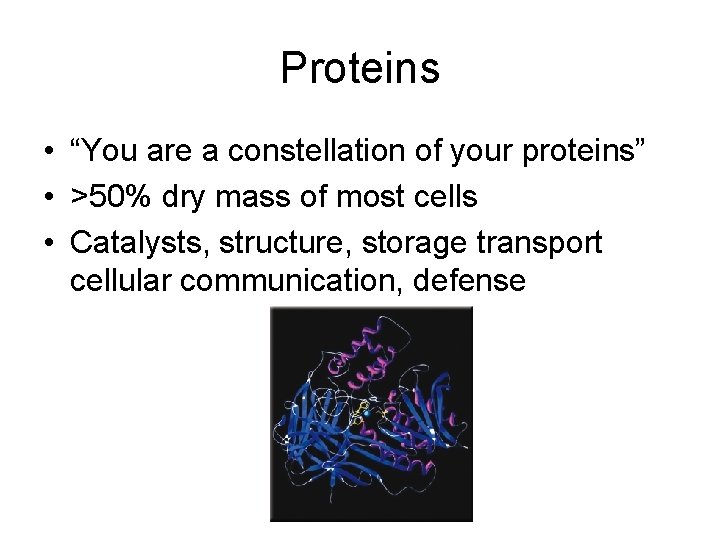
Proteins • “You are a constellation of your proteins” • >50% dry mass of most cells • Catalysts, structure, storage transport cellular communication, defense
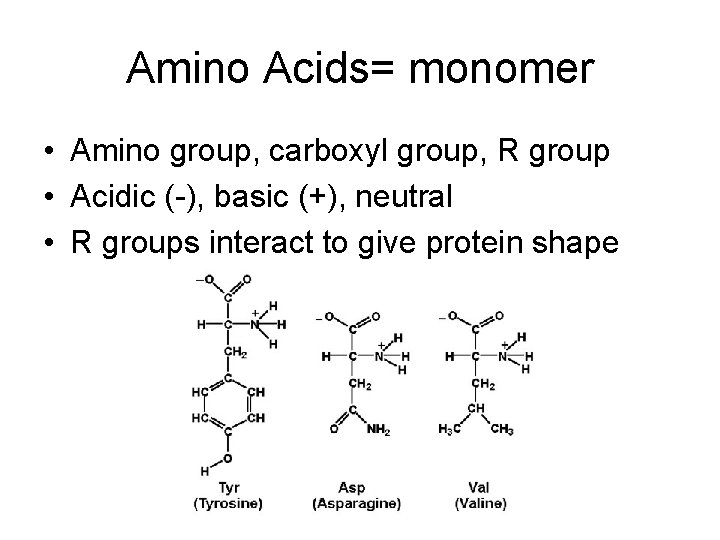
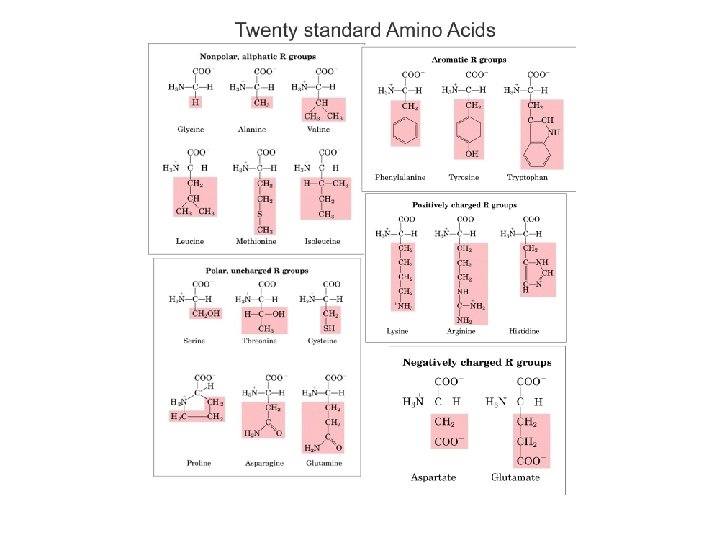
Amino Acids= monomer • Amino group, carboxyl group, R group • Acidic (-), basic (+), neutral • R groups interact to give protein shape
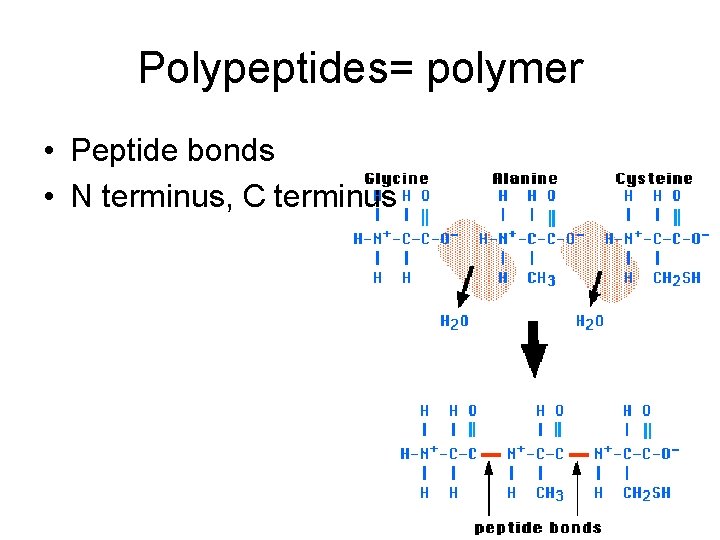
Polypeptides= polymer • Peptide bonds • N terminus, C terminus
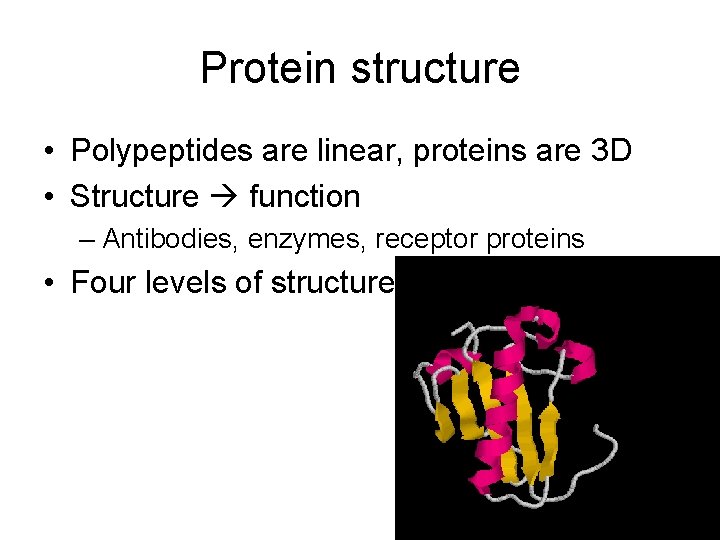
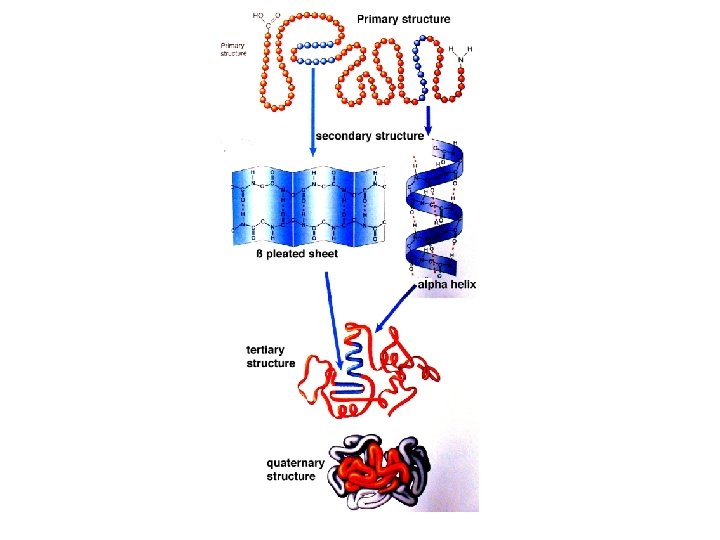
Protein structure • Polypeptides are linear, proteins are 3 D • Structure function – Antibodies, enzymes, receptor proteins • Four levels of structure
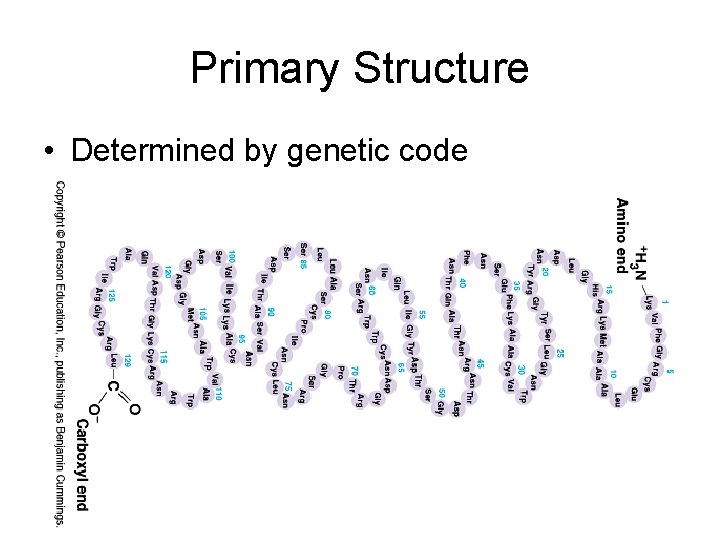
Primary Structure • Determined by genetic code
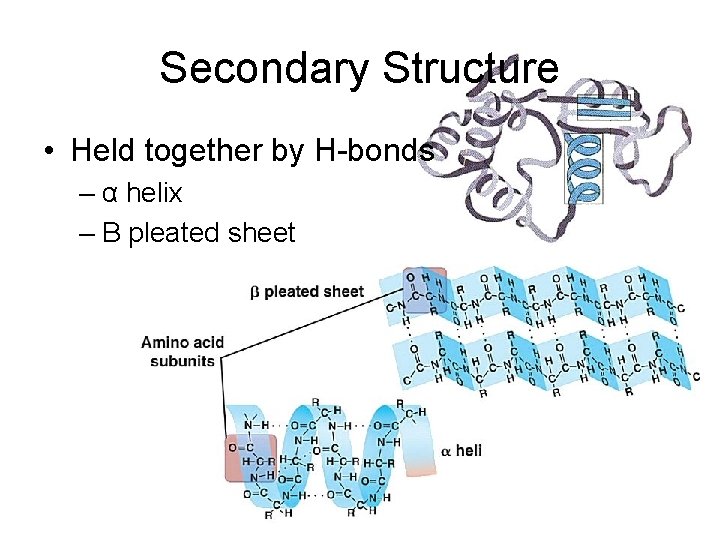
Secondary Structure • Held together by H-bonds – α helix – Β pleated sheet
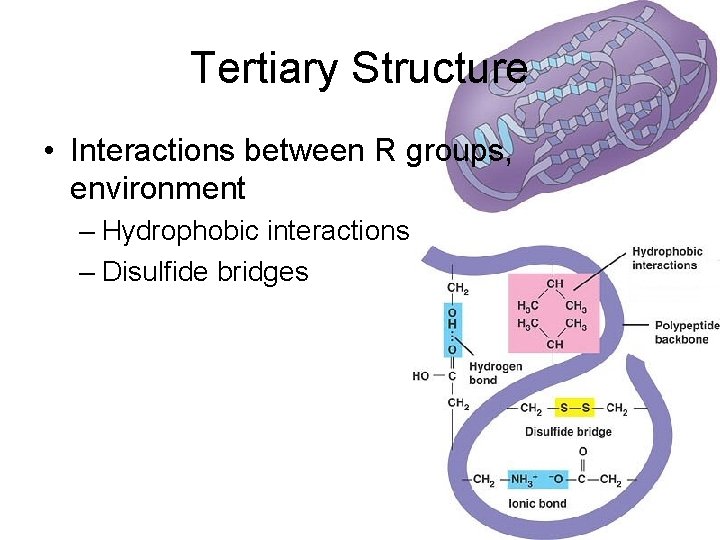
Tertiary Structure • Interactions between R groups, environment – Hydrophobic interactions – Disulfide bridges
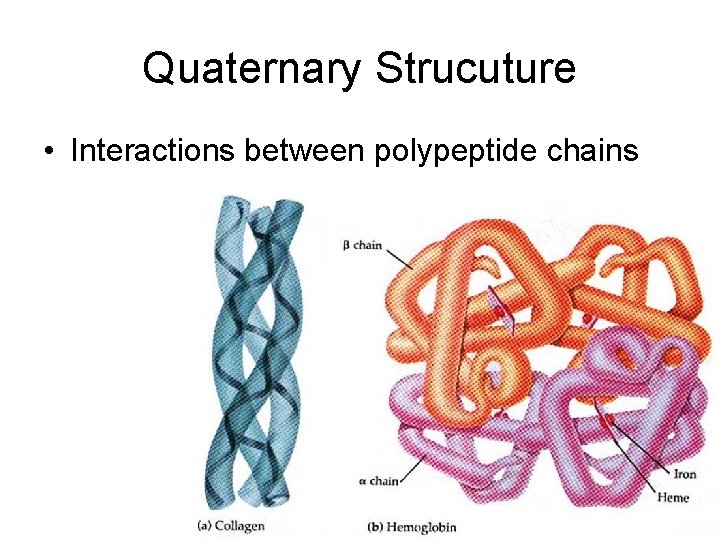
Quaternary Strucuture • Interactions between polypeptide chains
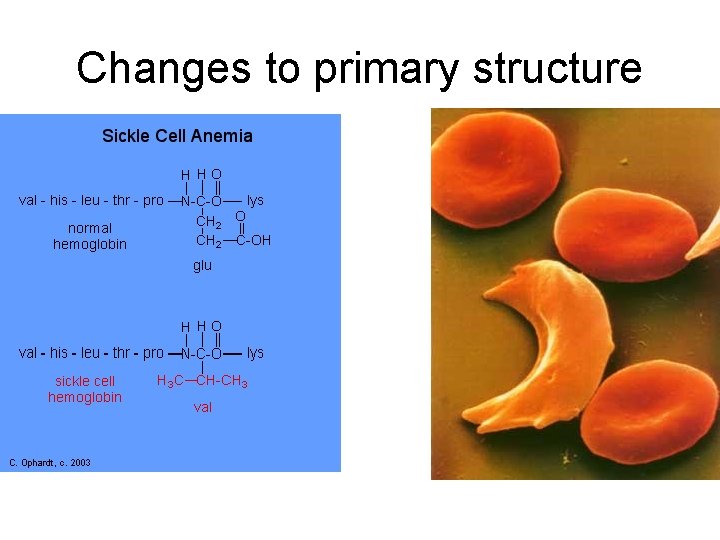
Changes to primary structure
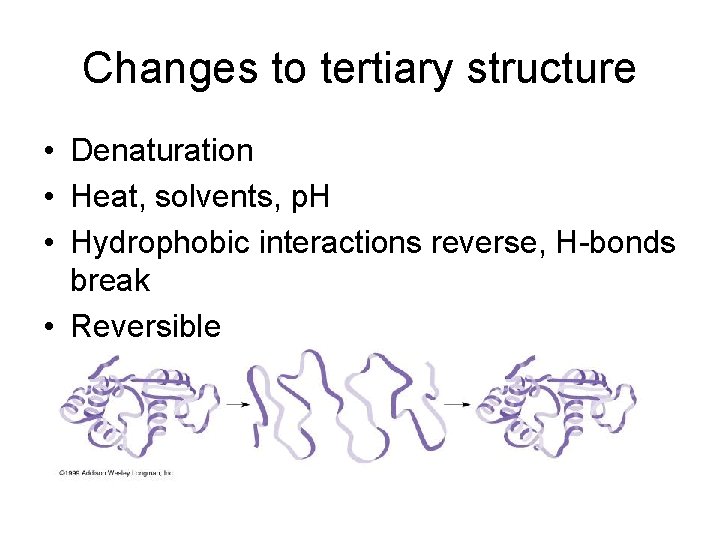
Changes to tertiary structure • Denaturation • Heat, solvents, p. H • Hydrophobic interactions reverse, H-bonds break • Reversible
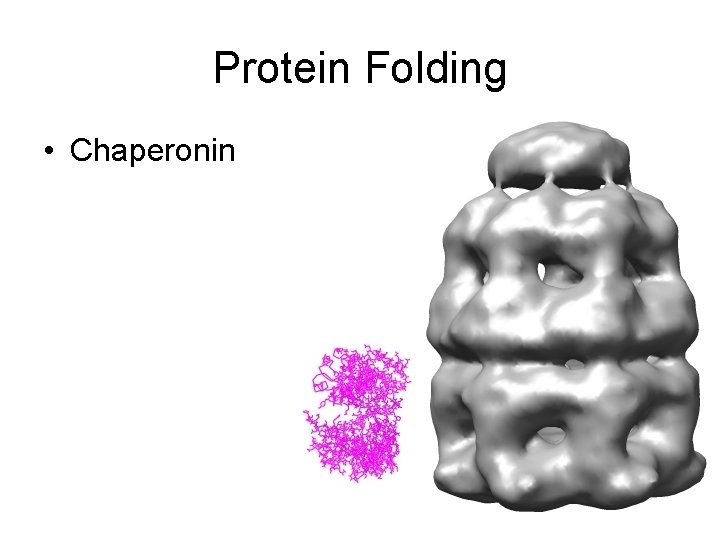
Protein Folding • Chaperonin