Module 1 2 Value of the Master Facility



- Slides: 19
Module 1. 2 Value of the Master Facility List Rollout of Health Facility Registry/Master Facility List for States and Local Government Areas in Nigeria March 2019
Outline § Introduction § Why invest in a master facility list (MFL)? § Visualize distribution of health facilities § Future perspectives § Discussion
Introduction
Nigeria MFL § This MFL is the result of harmonizing distinct lists into a single list. § It is expected to have complete data for each health facility, including signature and service domains. § Data are also expected to be of high quality (duly verified by appropriate officials) and to include accurate geocoordinates. § The MFL is updated regularly and stored in the Health Facility Registry (HFR).
Who needs an MFL? Stakeholders Facility lists are used by a range of stakeholders: § Government for budgeting and allocation of health resources § Backbone for interoperability with other health management information systems (HMIS) § Disease surveillance § Human resource management § Supply chain management § Insurance companies § Donors planning coverage for interventions § Researchers assessing heath system performance
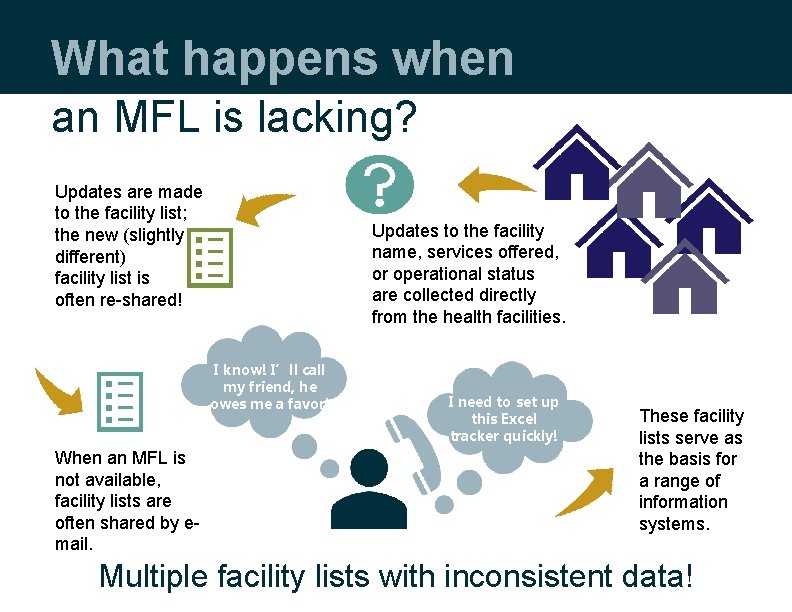
What happens when an MFL is lacking? Updates are made to the facility list; the new (slightly different) facility list is often re-shared! Updates to the facility name, services offered, or operational status are collected directly from the health facilities. I know! I’ll call my friend, he owes me a favor! When an MFL is not available, facility lists are often shared by email. I need to set up this Excel tracker quickly! These facility lists serve as the basis for a range of information systems. Multiple facility lists with inconsistent data!
Why invest in a master facility list?
Integrated approach for effective management § An MFL allows effective use of resources to maintain and update a single list, rather than duplicative efforts by various stakeholders to maintain separate lists. § Pooling or focusing resources to maintain a single list can lead to better-quality facility data. § Data are updated and validated more frequently.
Improved health facility planning and management An MFL that contains geocoordinates for health facilities provides the means of knowing: § What health services are available § Whether health services are distributed equitably § Where new health facilities are needed
Other potential uses of MFL § Strengthens provider referrals to specialized facilities § Allows the general public to access a list of facilities when seeking care § During natural disasters or disease outbreaks, lets first responders know where health facilities are located and what services are available
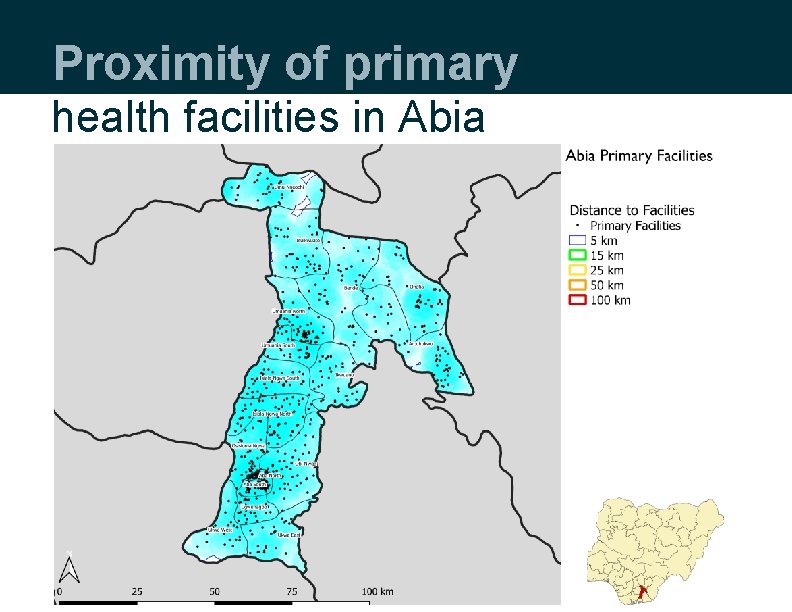
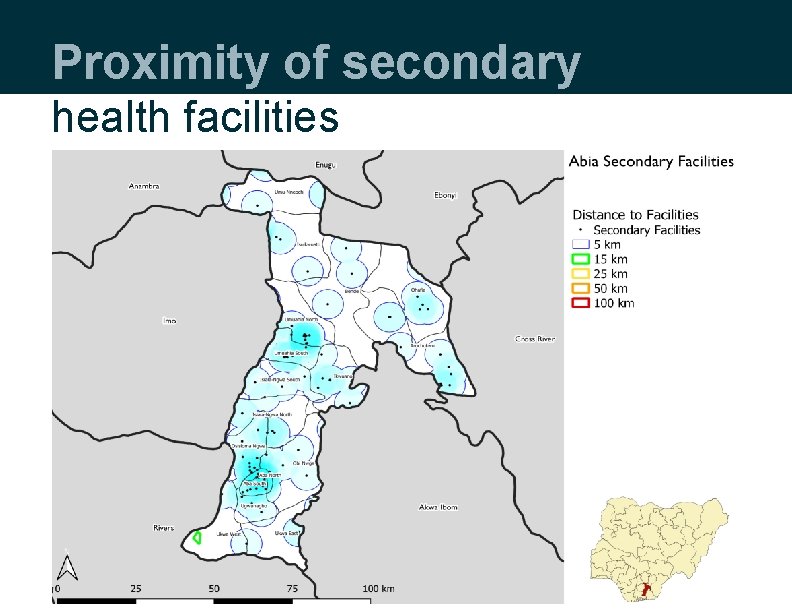
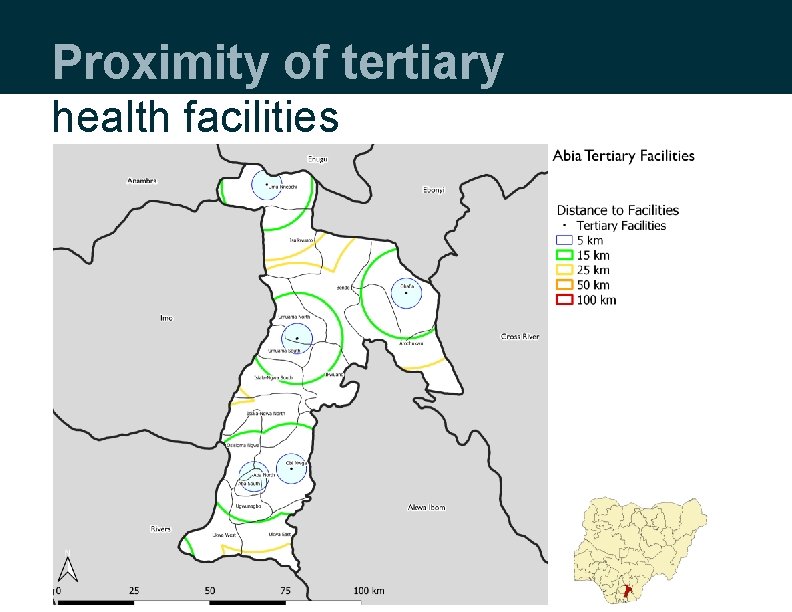
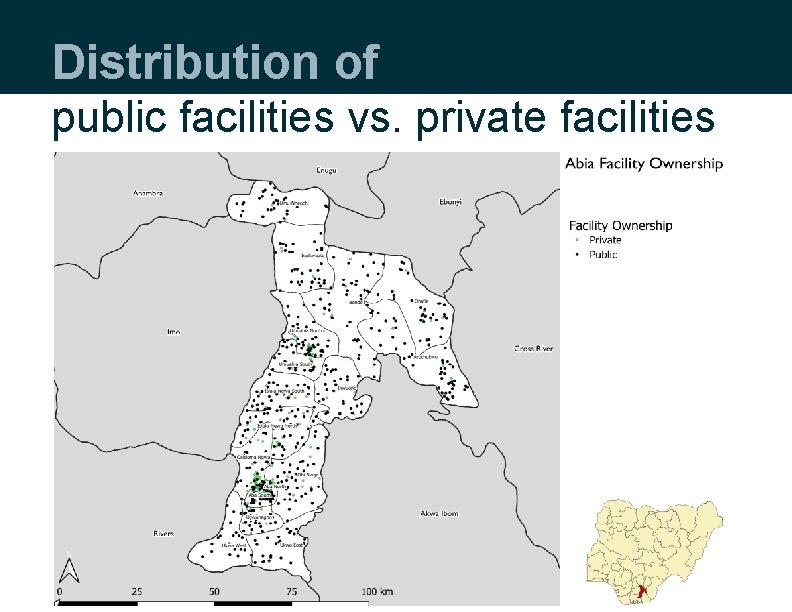
Other potential uses of MFL § Provides researchers a sampling frame for health facility surveys § Makes it possible to visualize facility distribution; for example: ü Proximity of health facilities ü Private vs. public facilities
Proximity of primary health facilities in Abia
Proximity of secondary health facilities
Proximity of tertiary health facilities
Distribution of public facilities vs. private facilities
Future perspectives
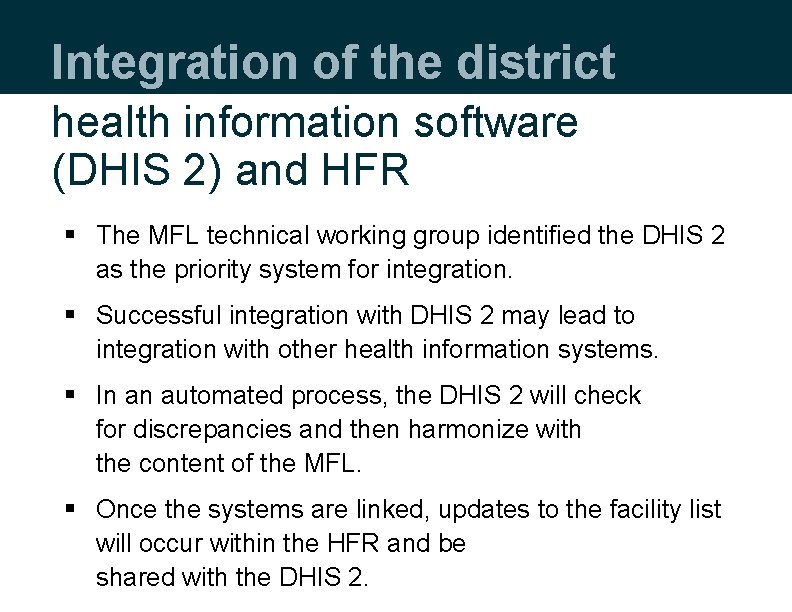
Integration of the district health information software (DHIS 2) and HFR § The MFL technical working group identified the DHIS 2 as the priority system for integration. § Successful integration with DHIS 2 may lead to integration with other health information systems. § In an automated process, the DHIS 2 will check for discrepancies and then harmonize with the content of the MFL. § Once the systems are linked, updates to the facility list will occur within the HFR and be shared with the DHIS 2.
Discussion
This presentation was produced with the support of the United States Agency for International Development (USAID) under the terms of MEASURE Evaluation cooperative agreement AID-OAA-L-14 -00004. MEASURE Evaluation is implemented by the Carolina Population Center, University of North Carolina at Chapel Hill in partnership with ICF International; John Snow, Inc. ; Management Sciences for Health; Palladium; and Tulane University. Views expressed are not necessarily those of USAID or the United States government. www. measureevaluation. org